Dodging a Few Potholes & Pratfalls at Job Screenings That Could Eliminate You from Consideration
By now, I hope all music education college graduates, newcomers to the profession, or transfers who have satisfied the credential and certification requirements for the state in which you intend to live and work, have had at least one interview! With the looming teacher shortage across the country coupled with an onslaught of openings due to retirements, resignations, leaves, etc., this may be the BEST time to apply for a music teacher position. If you have not had much success at recent interviews or the job search process altogether, this blog post, supported by the many other articles I have written on the same topic (see list at the bottom), may “cut to the chase” and highlight any bad habits you may be exhibiting that take you out of the running! I heartily recommend you “dissect” the problem and analyze your less-than-professional communication skills or what “image” you are unintentionally projecting, and then do a self-assessment of your “interview performance” (just like any other performance) to determine what you need to “fix” in order to improve your chances and market yourself for the job offer you always wanted. The bottom line? The advice I always give at workshops is that you need to enlist the help of your family members, friends, or peers, record yourself doing “mock interviews,” and evaluate your “performances” looking for any flaws (and let your onlookers offer feedback, too!). Then it’s time to rewind: PRACTICE-PRACTICE-PRACTICE!
PKFox
FIRST… THE BAD HABITS
Repeated verbal pauses, or exclamations of “Umm” or “Ahhh” or “Like…”
Unsubstantiated or unsupported statements
Use of “weak words” that suggest a lack of conviction (“kind of” or “sort of” or “I feel like”)
Failure to look directly at the interviewer(s)
Verbal clutter (too many long run-on statements)
Fidgeting (tapping your foot, spinning a pen between your fingers, wiggling in your seat, etc.)
Fast talking or dropping the ends of your words
Answers that are too casual, personal, or informal, or “flip” conversation
“Bird walking,” changing of the subject, irrelevant or unclear responses to a question
Touching of your hair, clothes, nose, mouth, or anywhere else on your body
Responses that go overboard and/or volunteer too much
Forceful, dominating, one-sided, opinionated views or arrogant attitudes
Nonverbal cues that reflect nerves, insecurity or lack of confidence (slouching or poor posture, looking down, failure to smile, clenching or keeping hands in lap)
Hollow, insincere, or disingenuous conversation
These additional tips were provided by the Novoresume Career Blog:
Now, from my own past experience in assisting hiring seven new music staff members for my school district, here are a few “interview pet peeves,” common blunders or misdirections which may eliminate you before you even have a chance to get started.
TELL PERSONAL STORIES –
Don’t regurgitate data, titles, grades, and past jobs.
“Stories are up to 22 times more effective than facts alone.”
“We are wired to remember stories much more than data, facts, and figures.”
“A story can illustrate a journey that may more than inform but move or persuade the listener.”
Most interview panels are made up of administrators who have limited knowledge of (and perhaps no personal practice in) the Fine and Performing Arts. You may be surprised that “they” (the ones with the most influence during public school employment screenings) may not be as impressed with your level of virtuosity or artistry… singing a recitative in a Wagner opera or playing a Paganini Caprice. Stick to anecdotes about your interaction with children and dealing with (the number 1, 2, 3 questions) classroom management, assessment of learning, and accommodation of students with special needs.
DON’T “BIRD-WALK” OR GO OFF-TOPIC!
Back up statements with examples. Try to make specific and to-the-point responses to the interview questions. Be careful in talking about the “tough topics” (see https://paulfox.blog/2016/06/04/those-tricky-interview-questions/) and avoid “oversharing” personal reflections on weaknesses. I am always amused at candidates who dig a hole for themselves by sharing too much information or negative past experiences. If somehow a mistake you made in a former job comes up at an interview, tell what you learned from it and how you remediated the problem.
WHO ARE YOU AND WHAT ARE YOUR GOALS?
Are you a specialist or a “total music educator.” DO NOT downgrade your abilities nor broadcast a limited educational philosophy, mission, or vision by stating “I’m a band director.” If you are certified to teach PreK-12 Music and want to promote an image of being “qualified,” than present yourself as proficient in all areas of music. You teach children, not a subject.
MORE DON’TS TO AVOID
NEVER talk negatively about your last employer. Right or wrong, this will usually imply you have poor interpersonal skills and tend to not get along well with other staff or supervisors.
DO NOT bring up questions about salary and benefits (especially in the first or second interviews – in education, these are pre-determined by the teachers’ contract – but you can ask the HR rep about them just before you sign on the dotted line).
If you don’t know an answer or understand the meaning of a term, be honest. Just say so! Inexperience is not a crime!
MORE DO’S
You CAN and SHOULD ask about the definition of the job assignment (grade level/subjects) for which you are under consideration and whether the opening is a permanent contractual position or a long-term substitute offering.
Bring your updated resume, (e-)portfolio, and a business card with the link to your professional website.
Be prepared with a list of your own questions about the school district, community, music program, etc.
Say what you mean – if you get the job, you may be “stuck” with your promises. I would not tell an administrator (just to make yourself look good) that you are interested in becoming the assistant marching band director, choreographer for the musical, yearbook sponsor, and the girls volleyball coach. (Anyway, it would not be practical that you offer to do a boatload of extra-curriculars in your first year that are not a part of your main job assignment!)
NOW THE GOOD HABITS TO PORTRAY AT THE INTERVIEWS
It is easier to share the bad habits, but let’s recap by focusing on the positive recommendations.
Positive First Impressions
Promote a positive and cheerful attitude.
Share a warm greeting and firm handshake
Build rapport and demonstrate an attitude of openness and sensitivity to the interviewers’ style
Show a feeling of mutual responsibility for creating a comfortable atmosphere and establishing common ground
“Be yourself” and model relaxed speech, posture, and body language
Positive Nonverbal Cues
Respond to interviewer with an occasion affirmative nodding of the head
Sit erect in chair with hands, feet, and arms unfolded leaning forward slightly
Offer good eye contact and smile appropriately
Angle your position a little so as not to sit directly across from the interviewer (avoid barriers)
Look interested and listen to the interviewer
DEBRIEFING – Learning from Your Mistakes
Write down everything you feel you handled right and wrong
Note information you need to include in future correspondence/follow-ups
Add names to your contact files.
Write a personalized thank-you letter or email
Follow-up your visit by making phone calls, sending requested materials, etc., but do not become a NAG!
If you are not selected, don’t take it personally. You may not have been the right “fit!” this time.
More Tips, Tricks, & Techniques to Help You Organize
As you can see, it has been awhile since I shared a blog-post. It looks like I went on vacation and skipped the entire month of July!
Well, truth be told, familiar to many of my band director friends, we are hitting the streets with a plethora of summer clinics, rehearsals, and camps to prepare for and usher in the season of parades, halftime shows, pre-games, festivals, competitions, etc., and although I am officially “retired,” I chose to re-up as “admin” to the “Pride of Upper St. Clair” – the marching band of the school from which I left in 2013. Serving as announcer for now more than 37 years, I decided to “put the pedal to the metal” and join the “band leadership team” to discover the joy of watching our ensemble “hatch” their new shows from scratch, re-awaken and build on their technique, inspire and grow their membership, and focus on “practice-practice-practice” and “making music!” I just finished a grueling week of those 12-14 hour band camp days spent in close partnership with 100+ of my favorite high school musicians.
Fantastic? Yes. Exhausting? Absolutely! It reminds me of 30-years-worth of nonstop days and nights of leading the annual spring musical as director/producer, including missing meals, dragging myself home to re-acquaint myself with my wife (who went through this, too), and dropping into bed. I have always said, quoting Ernie Zeliniski in his book How to Retire Happy, Wild and Free, it is important to find PURPOSE, structure, and community in retirement… but this hectic pace of frenzied activity at times tests my endurance. And, it feels a little like I never left teaching….
Therefore, I thought it would be appropriate to share some “advice from the experts” in terms of organizational tools and quick fixes or “hacks.” (See Part 1 on this topic.) This is only a gourmet “taste” of their ideas to simplify your life, work, and teaching. You should do yourself a favor and take more time to research the websites below for a complete explanation of their recommendations. We appreciate their generosity and willingness to be “free and open” to permit us to repeat their ideas in this forum.
“Use rubber pencil grips as inexpensive thumb rest cushions on clarinets by cutting them in thirds. (see photo)
Pink erasers work well as emergency rock stops for your cello and bass players
Purchase golf pencils on the cheap to keep in the classroom so that forgetting a pencil never becomes an excuse. Kids won’t love using these short, little pencils, so they are less likely to walk away at the end of class.
Three ring binders with sheet protectors help students keep organized and also cut down on lost music. If you want to be super-organized, add a pencil pouch and tab dividers in the binder.
Strips of velcro on the carpeting work well as guides to where chairs should go and allow your students to quickly and easily straighten up the rows. (see photo)
Print a sign with important information that your students frequently need (music store phone number, website addresses, etc.) and have them take a picture with their phone so they won’t have to ask you in the future. Do the same for important dates, locker combinations or anything else that is easily forgotten.
Locker mirrors can be purchased cheaply during school supply sales. Buy a class set and use them to check embouchure and more!
Did a clarinet or sax player forget their ligature? Or worse. . . it got stepped on and now it is as flat as a pancake! Use a rubber band to hold the reed on the mouthpiece until the student can get a new one.
Does your baton get buried under all your conductor scores? Use a binder clip on the side of your music stand, and it will always be handy! (see photo)
Do your beginning flute players have trouble remembering which keys the fingers of their left hand go on? Use “Avery Dot” stickers to mark the keys. You can do the same with clarinet pinky keys. Color code the keys on the right and left hand to assist students in learning their alternate fingerings. (see photo)”
There are a lot more “why didn’t I think of that” time management hints throughout the article. Also, be sure to check out her interesting Microsoft Word and Excel templates to use for your seating and locker assignments.
The middle school band directors in South Carolina got together and created a brainstorming session to share teaching tips and strategies with each other in order to improve their music programs. According to Mike Doll, editor of one of the blog posts Band Directors Talk Shop, “After the success of the first meeting, we decided to continue this on a regular basis, and we now do this 2-3 times a year for the past 10 years. These ‘best practices’ gatherings have been very informative, and we always walk away with several new ideas to try in our classrooms.”
1. Music sorter stick “One of our directors shared a neat way to sort music back into score order without multiple piles of different parts scattered around them on the floor. If you go online and search for Plastic Sort All, you will find the tool they use for this trick.”
“The director then used a label maker and created labels for each instrument in score order and attached them to the sorter in place of the letters and numbers on the end. “
2. Lines/tape on the floor for easy chair placement “One director, with a tile floor, mentioned they would check with their maintenance folks and find out when the wax would be stripped from the floor. At that point, they would tie a string to their director stand and measure the distance to the first row. They would then attach a sharpie to the other end of the string and use it like a compass to draw arcs on the floor. Once the floor was waxed, the lines never came up. Gaffers tape also works on carpeted floors. At the end of each class, the director would have everyone look down to make sure the front chair legs were on the arc. Clean neat rows in seconds at the end of each period.”
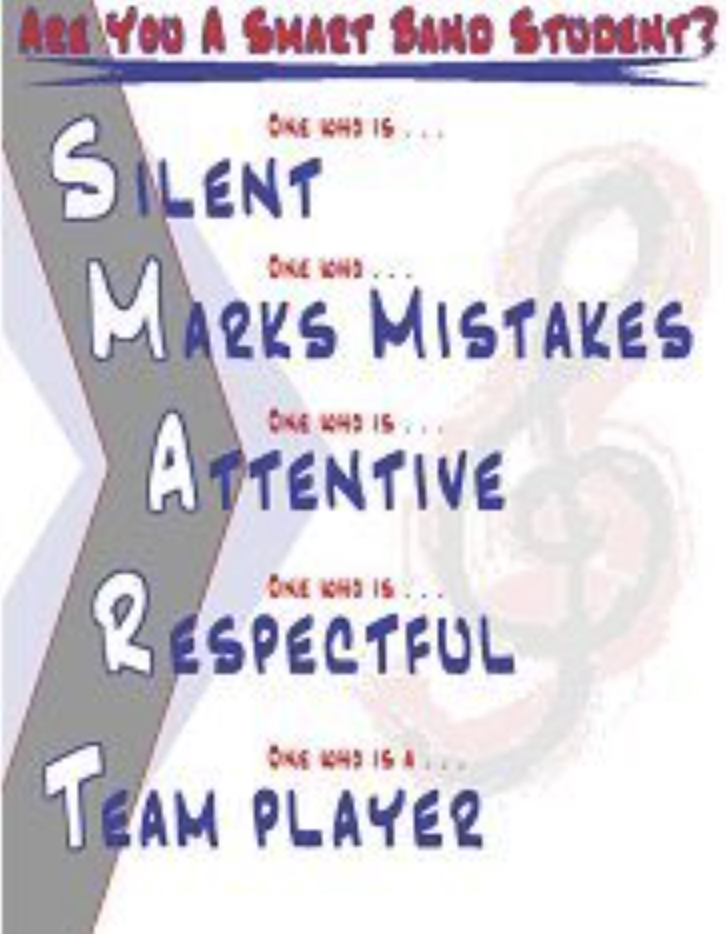
5. SMART Band Student.
“Quick and clean set of expectations for your band students. A SMART band student is one who is:
Silent
Marks Mistakes
Attentive
Respectful
Team Player”
The article’s “Tip #4” on Band Binders is reminiscent of what I had applied to my grades 5-8 string program. My wife utilizes something similar for her online music lessons. Rookie or new teachers, especially, check it out!
In addition, you should peruse their website for an inspiring collection of articles on a host of other topics:
How timely and appropriate! I stumbled on this Pinterest site, Band Room Hacks, a collection by Julia Arenas, and since I did not get advance permission to reprint her library of images, I will invite you to go explore them for yourself. At a quick glance, I see she has assembled from music colleagues a lot of excellent storage solutions as well as music teaching tools that may inspire you to modify/add your own new time-saving shortcuts.
Although productivity experts like Stephen Covey in Seven Habits of Highly Effective People and the originators of the aforementioned (in Part 1) Priority Management System (a favorite of mine) may be most helpful, we can all learn from Ashley as she sums things up with these tips on supercharging ourselves in planning for a good start to the school year. (You’ll have to visit her post to get the full gist of what to do!)
Put all your to-do’s in one place.
Track your time.
Batch related tasks.
Limit social media.
Divide your work-day into time blocks.
Set aside time to send and respond to emails.
Close documents and browser tabs you are not currently using.
Go into meetings with an agenda or outline.
Make templates.
I particularly love this introduction to her article:
“One thing I hear over and over from church musicians and music educators (well, everyone, really) is that there never seems to be enough time to get it all done.”
Time to teach Time to rehearse Time to write Time to practice Time to be with family Time to be a good friend Time to read Time to exercise Time to learn
“We’re always looking for new ways to be more productive, get more done in the little time we seem to have, and save time in places where, like money, we might be overspending. Am I right?”
“That’s one of my favorite ways to think about time – as money. It’s a commodity. We all have the same number of hours in the day – it’s how we spend them that makes the difference.”
“Where (and how) do you want to spend your time? What’s important to you?“
“Once you can answer this question, you’ll be motivated to make it happen – to take control of how you’re spending your time and look for ways to save it, where you can.”
Editor’s Note: For this month’s blog, we bring back guest writer Ed Carter, a retired financial planner. (See his website here.) His piece, perfect for new music parents, summarizes many of the “intangibles” that music education provides to foster child development, especially the enhancement of language skills. In 2019, I wrote the blog “The Importance of Music Education” (click here) based on an interview I did for a local community news program on the essentiality of teaching music that covered many of these concepts. Special thanks go to Ed Carter for sharing his research and perspective.
Parents and educators are always looking for ways to improve their children’s learning – especially when it comes to reading. Sometimes, though, unconventional approaches can work wonders. Experts believe the best way to boost a student’s reading is actually to expand their knowledge and vocabulary by teaching them history, science, literature and the arts.
Understanding the Connection
Children who learn to play an instrument or who join a choir have a longer attention span and better listening skills. Music stimulates the brain in so many ways. In fact, playing music may help the human brain more than any other activity. Some researchers even suggest that musical training can alter the nervous system in a way that improves learning in a way that offsets the academic gap between affluent students and students from lower income backgrounds.
Music improves language skills in particular because there is a neurological connection between maintaining rhythm and reading. Scientific American notes that when children learn how to keep a beat, they are better able to concentrate on a passage and decipher the meanings behind the words. A child’s reading ability relies on making a connection between the symbols they see on the page and the sounds of letters.
The Best Age for Music Lessons?
There is no such thing as a kid being too young for music. Many parents even expose their child to melody and rhythm before they are even born in an attempt to stimulate brain activity. Drumming is a great place to start. It is more important they gain experience with music and learn to develop a meaningful relationship with it at a young age. Children as young as 3 can develop skills like identifying a beat, melody and instruments in music.
By the age of 5, your child may be ready for formal lessons with beginner instruments such as drums, the piano, violin, recorder, guitar or ukulele. If your 5-year-old is not ready to start formal lessons with an instrument, they can still develop their musical skills online. Invest in a kid-friendly laptop and some durable headphones that allow them to interact with online music programs and apps that develop skills that can translate to playing an instrument in time.
To exhibit your genuine interest in your kid’s growing skills, consider creating a music room for them to be able to learn and hone their craft. This dedicated space is a perfect place for distraction-free lessons. It’s a good idea to soundproof the room, too, so others in the home aren’t disturbed. Having a bonus room that can act as a multipurpose room can increase your home’s appraisal value should you decide to sell anytime soon, as such upgrades are what many buyers look for.
Music Mistakes to Avoid
While some children pick up an instrument like a fish to water, all children develop differently. If you push your child into music lessons too early, they can become overwhelmed. Not progressing in their skill can hurt their self-esteem and discourage their progress. Let your child ease into their musical lessons gradually with time.
You can’t just throw money at a music tutor and expect that to be enough. If you want your child to grow in their skills, sit with them as they practice each day. Consistent practice is more effective than long lessons and your presence provides discipline and encouragement.
There is going to be a moment where your child expresses a desire to quit their instrument. Instead of letting them give everything up too soon, always talk with your child about why they feel like quitting and adjust their lesson goals to make playing music fun again rather than a chore. Encouraging your child to stick with it rather than quit teaches your child how important perseverance is in life.
Children all over the country struggle with reading. Adding music lessons to your child’s schooling can help improve their language skills and reading comprehension. There’s no exact age for starting music lessons, but incorporating music into other activities is a great way to start introducing them to rhythm and melody. As they grow up, involve yourself in your child’s learning and measure progress by the goals they reach and the amount of fun they have.
Do you believe in formulating annual goals or drafting a couple “New Year’s Resolutions?”
THE STATS DON’T LIE
Every year around this time, the web highlights many so-called experts touting the benefits of making personal improvement plans… and is just as quick to admonish us for breaking them. The statistics are not encouraging:
Success/Failure rates over the first 6 months
Of those who make a New Year’s resolution, after 1 week, 75% are still successful in keeping it.
After two weeks, the number drops to 71%.
After 1 month, the number drops again to 64%.
And after 6 months, 46% of people who make a resolution are still successful in keeping it.
In comparison, of those people who have similar goals but do not set a resolution, only 4% are still successful after 6 months.
Overall success/failure rates
According to a 2016 study, of the 41% of Americans who make New Years resolutions, by the end of the year only 9% feel they are successful in keeping them.
An earlier study in 2007 showed that 12% of people who set resolutions are successful even though 52% of the participants were confident of success at the beginning.
Reasons for failure
In one 2014 study, 35% of participants who failed their New Year’s Resolutions said they had unrealistic goals.
33% of participants who failed didn’t keep track of their progress.
23% forgot about their resolutions.
About one in 10 people who failed said they made too many resolutions.
Of course, it does not have to be this way! Last year, yours truly made a promise to “practice what music teachers preach” and “make meaningful music” at least a little every day on his instrument. How did it go? Success! I made it to the middle of July without missing a day (until I sprained my left hand). But the goal led me to playing better than I have for decades, more self-confidence, a lot of fun polishing off movements from my favorite sonatas and concertos, and even the purchase of a new viola. Now? It is time for me to find a tuba, dive into my past “brass flame,” and join a community band!
As we succeed in everything else for our lives, the process of setting aside time to analyze our personal pathways, assessing our needs, and making new goals is healthy. For the eternal pursuit of happiness and self-fulfillment in retirement, I found these secrets to a ”winning” set of New Year’s Resolutions in the “Top-10 List” by the UAB School of Medicine:
Start with specific micro-goals. (Keep them small, simple, and easy to accomplish.)
Set resolutions for the right reasons. (Choose what is important to you, not someone else’s expectations.)
Document your progress. (Write it down.)
Practice patience and forgiveness. (No one is perfect. Just keep at it despite the curve balls thrown at you.)
Schedule time to achieve goals. (Dedicate the necessary resolve and resources to accomplish them.)
Embrace the buddy system. (Share in collaborating on group goals. You don’t have to achieve them alone!)
Consider your budget. (Finances may play a role. Stay within your means.)
Slow down and meditate. (Breathe, refocus, and be mindful.)
Reward yourself for achievements. (No matter how big or small, treat yourself for reaching your targets.)
Ask others to keep you accountable. (Publicize your intentions. They might help you achieve your goals.)
You probably do not need someone to suggest things-to-do in 2022 or ways to self-improve. Effective goals and action plans must come from within yourself. However, there are countless advisors “out there” offering ideas to motivate you:
Keep a Positive Mindset
Commit to at least 10 Minutes of Exercise Daily
Make Better Dietary Choices
Stay Young-at-Heart – Surround Yourself with Young People
ENGAGEMENT, ADVOCACY, & ASSOCIATION IN MUSIC EDUCATION
Modeling PROFESSIONALISM, these terms promote the power of “collaboration” and connections among music education colleagues and stakeholders (music students, parents, and the general public). To foster a broader picture and devise “bigger than self” New Year’s Resolutions, we should embrace forming partnerships throughout our pre-service, in-service, and retirement years with enhanced goals of active engagement, advocacy, and support of our professional associations.
On a personal note, besides getting back to my viola practice and resuming my love of playing the tuba, I resolve to continue a focus on “giving back” whenever possible to my local community, PMEA, and the music education profession. How will I do this in 2022? By bestowing the gifts of SERVICE:
Chair of the PMEA Council for Teacher Training, Recruitment, and Retention
Coordinator of PMEA Retired Members
Artistic Director of the South Hills Junior Orchestra
Trustee and Communications Director of the Community Foundation of Upper St. Clair
Volunteer Escort for the St. Clair Health
Author, clinician, and workshop presenter on the topics of educator ethics, interviewing and job search, professional standards, retirement, and self-care
Additional blog posts on the topic of New Year’s Resolutions and helping others in retirement:
The “E” in RETIREMENT is for Energy, Engagement, Excitement, and Endurance
This blog is all about how to stay young and vibrant – BECOMING A VOLUNTEER! Geared to those of us who have retired, this is very personal and unique to every individual, no matter what the age!
Do you remember the song, “Those Were the Days” performed by Mary Hopkins (1968), the Fifth Dimension (1969), and even Dolly Parton (2000)?
Those were the days my friend We thought they’d never end We’d sing and dance forever and a day We’d live the life we choose We’d fight and never lose For we were young and sure to have our way. La la la la Those were the days, oh yes those were the days
In June 2021, I went back to work. Well, not exactly full-time… but it felt that way!
Remember the times as music educators we spent 15-18 hours a day or more thinking, planning, creating, teaching, problem-solving, schlepping stuff, sweating, and working out beyond the regular school day and during summer months with major music projects like the marching band, spring musical, music adjudication trip, etc.?
Asked by my friend and current Upper St. Clair School District performing arts curriculum leader/HS band director Dr. John Seybert, I signed on to the newly-expanded extracurricular activity (ECA) position as administrative assistant and announcer of the marching band for the school from which I had retired. Filling in the gaps, taking attendance, handling mounds of paperwork, interacting with a whole new generation of music students, and learning a few new software applications along the way like FamilyID, Canvas, Remind, and the district’s Blackboard website, I threw my hat in the ring, not just to continue to serve as the voice of the “Pride of Upper St. Clair” at football games halftime shows (now in my 36th year), but to manage the full schedule of rehearsals, meetings, performances, and blessedly (?) exhausting 24/7 week-long band camp. I forgot how it felt to get up at 6 a.m. and return home around 9:30 p.m.
It has been exhilarating. It has been exhausting!
On another stage, when the local COVID stats fell two months ago, I was invited back to our local community hospital to serve as a volunteer – discharging patients from their rooms or escorting them from the outpatient surgery or endoscopy units. Yes, I was called upon to somehow restore the physical demands I (used-to) place on my personal stamina. Fully fatigued and expended after a shift of 4-7 hours of driving my wheelchair taxis (sometimes carrying over-sized people even though we’re only supposed to move those weighing 250 pounds or less), I find myself yearning for a retiree “power-nap,” only to regroup for the next day’s challenging schedule and another early-morning wake-up.
The best part of these 8-15 hours per week? Choosing one of the finest medical facilities in our metropolitan area – St. Clair Hospital (now “Health”) – I have the chance to meet former music students (grown up), their kids, parents and grandparents, friends, and other acquaintances at their greatest need. And, there’s almost no finer escort “call” than going to the family birth center and bringing to the car a new mommy and two-day-old baby… sharing that special moment with an alum or school staff member!
It has been exhilarating. It has been exhausting!
WHAT
In past articles on a satisfying retirement, I often quote the book How to Retire Happy, Wild, and Free, the search for self-reinvention and new avenues for fulfilling those essential needs of “purpose, structure, and community” that employment had previously provided us. Author Ernie Zelinski’s definition of “purpose” are these goals:
To make a difference in people’s lives
To make a contribution
To find creative expression
To take part in discovery
To help preserve the environment
To accomplish or achieve a challenging task
To improve health and well-being
We learn from Revitalizing Retirement: Reshaping Your Identity, Relationships, and Purpose by Nancy Schlossberg that for retirees it is important to feel “needed” and that pursuits that foster “mattering” are crucial to a positive self-esteem, good mental health, and stable life balance.
It has been suggested that one problem of retirement is that one no longer matters; others no longer depend on us…
The reward of retirement, involving a surcease from labor, can be the punishment of not mattering. Existence loses its point and savor when one no longer makes a difference.”
– Rosenberg and McCullough
The opposite of “mattering” is feeling “marginalized.” I would rather feel worn-out than useless/ignored/discarded!
In his book Design Your Dream Retirement, Dave Hughes recaps with his four essential ingredients of life balance:
Physical activity
Mental stimulation
Social interaction
Personal fulfillment
If you read my bio in the “about” tab above, I think all would agree: mission accomplished! I’ve made myself extremely busy. (Perhaps I “matter” a little too much?) “It’s a good thing I am retired… I would not have enough time to do all of these things if I still had a job!”
Yes, it FEELS good!
WHY
Now some rationale from the online pundits. First, review the article “Why Elderly People Should Volunteer.” According to the “experts,” volunteering is:
Socially beneficial
Good for mental cognition
Giving back to the community
Physically engaging
An opportunity to learn something new
Flexible
A strategy to fill up your day
The reason you get out of bed in the morning
Of course, one has to be careful and follow your doctor’s advice on what tasks will not overwhelm you! The CDC and other medical professionals urge adopting a “safe” routine of regular physical activity as a part of an older adult’s life. Check out websites like https://www.cdc.gov/physicalactivity/basics/activities-olderadults.htm and https://www.cdc.gov/mmwr/preview/mmwrhtml/00001482.htm. Besides keeping your mind active, increasing your physical activity as a volunteer while “living the dream” in retirement will:
Reduce the risk of serious illnesses (heart disease, type II diabetes, and depression
Help you manage a “healthy weight”
Improve your balance and coordination
Decrease the risk of falls or other injuries
Talk with your doctor to find out if your health condition limits, in any way, your ability to be active. Then, work with your doctor to come up with a physical activity plan that matches your abilities. If your condition stops you from meeting the minimum recommended activity levels, try to do as much as you can. What’s important is that you avoid being inactive.
Volunteering is all about being more eleemosynary (adjective defined as “generous, charitable, gratuitous, or philanthropic”). In my workshops on retirement transitioning, I frequently quote two gurus on the benefits of “giving back.”
With a frequently untapped wealth of competencies and experiences, older people have much to give. This fact, coupled with fewer requirements for their time, gives them unique opportunity to assume special kinds of helping roles.
Our increased longevity and generally better health has opened our eyes to new and increased opportunities to contribute to the betterment of society through civic, social, and economic engagement in activities we believe in.
But you already knew all of this, right? There are so many ways to “bring it on” and “make a difference” in your “golden years.” (Wow – three cliches in a row!)
There are so many directions you can go to offer your free time to volunteer:
Escort at local hospital or nursing home
Walk dogs at animal shelter
Serve in charitable fund-raising projects
Assist food banks and meals-on-wheels agencies
Enlist as special advocate for abused or neglected children
Work as hospice volunteer
Maintain parks, trails, nature habitats, or recreation centers
Host an international student
Become a youth director, mentor, or scout leader
Teach summer school, night classes or Performing Arts workshops
Give guided tours or lectures as a docent at a local museum
Apply office management and clerical skills to benefit libraries and other nonprofit associations
Run a school club (share your hobby)
As trained music educators, we can share our precious skills in creative self-expression :
Accompany, coach, or guest conduct school/community groups, college ensembles, or music festivals.
Run for office or chair a committee or council of your state or local MEA association
Serve as presiding chair or member of the your state’s MEA planning committee or listening committees for the music in-service conferences
Participate as guest lecturer or panel discussion member at a conference, workshop, or college methods program
Judge adjudication festivals
Help plan or manage a local festival or workshop
Assist the local music teacher in private teaching, piano playing, marching band charting, sectional coaching, set-up of music technology, instrument repair, etc.
Write for your professional organizations’ publications (like PMEA or NAfME)
If you are a retired music teacher and member of PMEA, you could sign-up for the Retiree Resource Registry and serve as an informal consultant to others still “slugging it out” in the trenches. Go to the PMEA retired member focus area for more information.
Anyway, back to a little “bragging!” At least “yours truly” is holding his own and hopefully contributing what he can to the success and welfare of others! Are you? In my retirement pastime, I refuse to sit idle, binge-watch movies on Netflix, or view hours of boring TV. To quote another song’s lyrics, this “senior citizen” will never lament…
Life is so unnerving For a servant who’s not serving He’s not whole without a soul to wait upon Ah, those good old days when we were useful Suddenly those good old days are gone Ten days we’ve been rusting Needing so much more than dusting Needing exercise, a chance to use our skills Most days we just lay around the castle Flabby, fat, and lazy You walked in and oops-a-daisy!
Teachers, you’re in the home stretch now! You are within weeks of a long vacation break and the chance to rest, refresh, recharge, rewind, and rejuvenate. After what COVID-19 dished out to us, you deserve some time off! Here comes much-anticipated trips, family visits, sleeping in, and going dormant for at least 2-3 weeks!
However, most music educators never totally shut down. We seek out new enrichment opportunities by attending conferences or music reading workshops, researching new methods, and “retooling” for our lessons ahead.
Modeling the annual Peanuts comic strip’s January theme of Lucy Van Pelt assigning Charlie Brown a long and unwanted list of New Year’s Resolutions, yours truly (a retired teacher with a lot less stress) is about to do the same and recommend YOU kick off your shoes, climb into a comfortable lounge chair, tune out all extraneous noise and media distractions, and crack open some “serious summer reading…”
Here are my three favorite books for the season to take with you when you go to the beach or sit by the pool!
In keeping with an alliteration of all those “r’s” to promote healing and health during this “recess,” take time to prepare for 2021-2022 and reflect on and restock your reservoir of resilience, robustness, and resourcefulness!
Yes, the values and life skills of emotional/mental/social “balance” begin at home. But the expectation is that schools and teachers are always relied upon to be the “safety net” – pick up the pieces or fulfill the needs not provided at home. And it should not have taken a pandemic for us to discover how important social emotional learning (SEL) is to the health, wellness, and success of every child (and their family members) we serve in our classrooms, ensembles, lessons, and after-school programs.
“Music educators are in a prime position to help students become socially and emotionally competent while at the same time develop excellent musicianship. For every child to be successful in the music classroom, teachers need to be aware of the whole student. How do music educators create success when students every day struggle with social awareness, bullying, communication, problem solving, and other challenges? This pioneering book by Scott Edgar addresses how music educators can utilize Social Emotional Learning (SEL) to maximize learning in the choral, instrumental, and general music classroom at all levels, and at the same time support a student’s social and emotional growth.”
— back cover of Music Education and Social Emotional Learning – The Heart of Teaching Music
“Finally! Thank you, Scott Edgar, for your willingness to walk boldly into this often trodden, but rarely addressed aspect of music education you have rightfully labeled social emotional learning. For every music educator, from preschool through a PhD program, we know the opportunity to “develop the whole person” is right in front of us each and every day. Where else in the academic community is there such a perfect forum that cultivates both the cognitive and effective growth of those involved? Ultimately, the rehearsal room/music classroom becomes a society within society, and the skills needed to grow and succeed at the highest levels are simultaneously offered in content and context. And yet, there are very few resources to guide the mentor in a positive, productive fashion. Now there is and this book is a powerful blueprint leading us to a worthy outcome and more.”
— Foreword by Tim Lautzenheiser for Music Education and Social Emotional Learning – The Heart of Teaching Music
You have a wide variety of choices to explore this topic, and all of these are from Scott Edgar!
The NAfME Professional Learning Community: Music Education and SEL – An Advocacy Tool for Music Educators accessible as a video: https://vimeo.com/426070325
Music for All webinar series:
Episode 1 – Teaching Music Through Social Emotional Learning – Composing with Heart hosted by Scott N. Edgar with guest presenters Brian Balmages, Brandon Boyd, Richard Saucedo, Alex Shapiro (composers) and Bob Morrison https://youtu.be/6HIbK23TmaE
Episode 10 – Teaching Music Through Social Emotional Learning – Narwhals and Waterfalls hosted by Scott N. Edgar with guest presenters Paige Bell and Adrien Palmer: https://youtu.be/BlbxX1DP-5c
Chapter 2: Socialization in the Music Classroom by Jacqueline Kelly-McHale
Chapter 3: Bullying in the Music Classroom by Jared Rawlings
Chapter 4: Music Educators Are Not Counselors
Section Two – Social Emotional Learning (SEL) and Music Education
Chapter 5: Self-Awareness and Self-Management in Music Education – Self-Discipline and the Music WIthin
Chapter 6: Social-Awareness and Relationship Skills in Music Education – Sharing and Communicating Through Music
Chapter 7: Responsible Decision-Making in Music Education – Problem Solving Through Music
Conclusion: The Heart of Music Education – Our Common Bond
SEL – the new “buzz word?” What is Social and Emotional Learning?
“Social and emotional learning (SEL) is the process through which children and adults acquire and effectively apply the knowledge, attitudes, and skills necessary to understand and manage emotions, set and achieve positive goals, feel and show empathy for others, establish and maintain positive relationships, and make responsible decisions.” — Collaborative for Academic, Social, & Emotional Learning
Social emotional learning describes the development of skills in three domains: self, others, and responsible decision making.
“Self” includes:
Self-awareness skills such as ability to identify and recognize emotions
Self management skills such as perseverance in the ability to manage impulse control
“Others” includes:
Relationship skills such as cooperation, empathy, and respectful communication
Social awareness skills such as the ability to recognize diverse thoughts and opinions.
“Responsible decision-making” includes:
Behavioral skills such as situation analysis, anticipating consequences and generating alternative solutions.
Cooperative skills such as balancing personal in group expectations.
The three key pillars of SEL:
identity
belonging
agency
Probably the best conclusion I have ever read about the value of SEL in the arts comes from Scott Edgar in the last section of his book:
“The music classroom is a melting pot of students from different backgrounds, musics of different cultures, varied personalities, and diverse values. All of this diversity is united under the common bond of music… Music classrooms, possibly more profoundly than any other academic setting, can help students and teachers cooperate to recognize diversity, engage in respectful dialogue to resolve conflict, and empathetically respect human dignity, because this is how music has functioned for centuries. Music classrooms are social because making music is, has, and always will be a social activity. In a time when there are so many divisive forces, music and music education can be a powerful uniting weapon. The tenets of SEL interwoven into a musical education strengthens both entities. Emphasizing self- and social-awareness makes music education richer and more personal. Music education brings humanity and culture into a world of personal and interpersonal interactions.”
Seven Teachable Skills to Cultivate & Nurture THRIVERS
The latest book by Michele Borba, Ed.D., Thrivers – The Surprising Reasons Why Some Kids Struggle and Others Shine, is a definite must-read from cover-to-cover.
“Michele Borba has been a teacher, educational consultant, and parent for 40 years – and she’s never been more worried about kids than she is right now. The high-achieving students she talks with every day are more accomplished, better educated, and more privileged than ever before. But the old markers of success (grades, test scores) aren’t what these kids need to thrive in these uncertain times – and they know it. They’re more stressed, unhappier, and struggling with anxiety, depression, and burnout at younger and younger ages – “We’re like pretty packages with nothing inside,” said one teen. Thrivers are different: they flourish in our fast-paced, digital-driven, ever-changing world. Why? Dr. Borba combed scientific studies on resilience, spoke to dozens of researchers/experts in the field, and interviewed more than 100 young people from all walks of life, and she found something surprising: the difference between those who struggle and those who succeed comes down not to grades or test scores, but the seven character traits that set Thrivers apart (and set them up for happiness and greater accomplishment later in life).”
— from the front flap of Thrivers
The first thing you need to do (after you order and read both her original best-seller UnSelfie – Why Empathetic Kids Succeed in Our All-About-Me World and this sequel) is to download her give-away “Core Assets Survey” from https://www.micheleborba.com/wp-content/uploads/2021/03/Thrivers_CoreAssets.pdf. Here is a sample page of her assessment checklist for her seven character strengths.
How to use Borba’s book
Although it is generally marketed as a guide for parents (and grandparents), this is a perfect “program and process” for everyone who serves as youth caregivers and educational professionals. Borba prescribes these steps to use the book with the above evaluation tool:
Assess your child’s character strengths: self-confidence, empathy, integrity, self-control, curiosity, perseverance, and optimism.
Tally up the points, prioritize his needs, and address initially the one or two traits receiving the lowest score.
Read each chapter of “evidence-backed strategies and skills” which can be easily transferred and taught to your child from preschool through high school.
Motivate and help your child to adopt each character strength “as a lifelong habit to optimize his potential in thrive.”
Choose one ability a month, focus on it, and “practice it with your child a few minutes a day until he can use it without reminders.”
For teachers, this is a wonderful “soft curriculum” for nurturing these seven essential personal traits, each broken down into “character strength description,” “abilities to teach,” and “outcomes.” It will become apparent to you that these are directly related to SEL.
Besides the character strengths (#1 above), the reader is introduced to several revised definitions and new acronyms that may help to reshape our perspectives for teaching kids (these are a few samples): C.A.L.M. (chill-assert-look strong-mean it – p. 239), C.A.R.E. (console, assist, reassure, empathize – p. 90), comebacks (p. 240), creativity (p. 178), C.U.R.I.O.U.S (child-driven-unmanaged-risky-intrinsic-open-ended-unusual-solitude, p. 175), digital limits (p. 78), emotions (p. 76), goals (p. 209), gratitude (p. 86), growth mindset (p. 205), micromanaging (p. 171), mindfulness (p. 133), moral identity (p. 148), multitask (p. 110), “the four P’s of peers, passion, projects, and play” (p. 163), parenting styles (dysfunctional) – “enabler,” “impatient,” “coddler,” “competitor,” “rescuer” (p. 127), triggers (p. 121), self-esteem (p. 33), T.A.L.E.N.T. (tenacity-attention-learning-eagerness-need-tone – p. 39), and well-rounded (p. 36).
Activities throughout the book are categorized for age-suitability: Y = young children, toddlers, and preschoolers; s = school-age; t = tweens and older; a = all ages.
In the final pages of the book, Borba poses some excellent group discussion questions to facilitate a thorough review of her work. A few of these especially resonated with me:
Do you think raising children who can thrive today is easier, no different, or more difficult than when your parents raised you? Why?
What influences children’s character and thriving development most: peers, media, education, parents, pop culture, or something else?
Which of the seven character strengths are more difficult to teach to children today? Why?
What kind of person do you want your child (or your student) to become? How will you help your child become that person?
What are some of the sayings, proverbs, or experiences you recall from your childhood that helped you define your values?
[As a teacher] what would you like your greatest legacy to be for your [students]? What will you do to ensure that your [children] attain that legacy?
Her specific anecdotes, object lessons, and research for each character strength are priceless!
Lesley Moffat at Carnegie Hall
LOVE the Job, LOSE the Stress
In my “New Year’s blog” posted on December 29, 2020, I shared my advice on “how to make a difference in 2021” and told readers to find their own good role models and “positive gurus” to sustain their vision, motivation, and drive throughout the year.
Someone who has recently become inspirational to me is the wonderfully uplifting Lesley Moffat, probably an expert on the search for “mindfulness” in personal life and even during her band warm ups. In my opinion, her transformative stories provide the roadmap for happiness and wellbeing! She now has published two books (you need to read both) – I Love My Job But It’s Killing Me, and Love the Job, Lose the Stress, and if you are still teaching music full-time, you need to peruse her website: https://mpowerededucator.com/.
Now her latest book ties in all of the above enrichment and enlightenment – “successful social and emotional learning in the modern music classroom” – and adds an essential focus on teacher self-care and wellness. What was that saying attributed to Molesey Crawford in Unlocking the Queen Code?
Know thyself.
Love thyself.
Heal thyself.
Be thyself.
Lesley Moffat has taught high school band for over 32 years in the Pacific Northwest, with her ensembles earning superior ratings and performing all over the US, Canada, and even in Carnegie Hall. She was planning to retire at the end of 2019-2020 when the pandemic hit. (As far as I know at this time, she has not retired yet – “for the sake of her kids” she stayed throughout this challenging time of COVID-19 and the slow reopening of schools!) She clarifies this in the introduction to her Love the Job, Lose the Stress book:
“I completed the first draft of this manuscript on March 3, 2020. Ten days later, schools across the world began shutting down as the coronavirus began sweeping the globe… The ultimate purpose of this book is to share the protocol I created that has become the basis of the social and emotional learning needs for my students (and truth be told, for me). Everything I talk about in this book was true before the pandemic, and it has proven to be as powerful in a virtual environment as it is in person… The great news is that you can give your students the gift of learning to self-regulate, calm down, and focus without distraction through intentional design and practice.”
She offers an intriguing set of easy-to-read chapters in her “hard to put down” 191-page work.
My Life’s Work Is So Much More Than Just A Job
I Love My Job But It’s Killing Me
The Badass Band Director’s Bible
Step One: The Moffat Music Teacher Mojo Meter
Step Two: Identifying the Three C’s – Care, Clarity, and Consistency
Step Three: Identifying Your Priorities
Step Four: SNaP Strategies for Music Teachers
Step Five: Tuning Our Bodies
Step Six: Creating Your Own First Four Minute Protocols
Coda
Fine
Highlights of suggestions from Love the Job, Lose the Stress
Like her last book, the Moffat Music Teacher Mojo Meter returns. If you are ever privileged to have her as a clinician for a local workshop, it is likely she may send out this survey to the participants in advance. These fifteen questions will provide her an individualized needs assessment of the stressors attendees are experiencing so she can differentiate the planning of her “help session” (page 48).
You’ll have a lot more questions to answer in Chapter 5 (page 50). Read and identify (and define for yourself) her three C’s for success: care, clarity, consistency.
In Chapter 6 (page 67), she wants you to identify your priorities. This is your chance to dream big! You’ll have to read her story (with wide swings of emotion) about her Jackson HS Honors Wind Ensemble performing at Carnegie Hall.
Also returning from her previous book, Chapter 7 (page 81) shares her Start Now and Progress – or SNaP to it – strategies for music teachers. Revisit her amazing tale about doing (of all things) push-ups: “By taking small incremental steps that build upon what I did each day before, I was able to take a skill that was very difficult for me on April 1 and do it 60 times just 30 days later.” She sums up three SNaP Strategies “for busy band directors” (page 90).
Gratitude for the attitude
Time stealers
Reset yourself
Don’t miss her Chapter 10 (page 156) and “Lesley’s Top Ten Badass Band Director Tips!”
Finally, probably worth 1000-times the price of the book and all the time you will put into it is her Chapter 8 “Tuning Our Bodies” (page 103) and Chapter 9 “Creating Your Own First Four Minute Protocol” (page 129). This is where you will take what you read, reflect on her philosophies and system of classroom management and warm-ups, and adapt it to your situation. Adding to your teacher’s toolbox the techniques of mindfulness, breathing exercises, and listening skills – and practicing them with your students daily – will make all the difference in the SEL of your own lessons and overall program.
BRAVO and thank you Lesley for being so intuitive, upfront, and personal… and being so generous in sharing your secrets!
We applaud your efforts, and agree with Dr. Tim Lautzenheiser who said in the Foreword to Love the Job, Lose the Stress:
“This latest-greatest contribution offers a tried-and-true blueprint for vocational success while embracing the critical importance of fueling one’s mental, emotional and physical health. Spot on! Bull’s eye!”
“This is not a book you read and then put on the shelf; rather it is a file cabinet of priceless data certain to boister the health, happiness, and good fortune of every (music) teacher.”
“As music teachers, we teach students how to develop all kinds of skills, from mental to physical, in order for them to be well-rounded musicians. We show them how to properly form and embouchure, the correct fingerings to use, how to read music, what proper posture looks like, how to be artistic and expressive, and so much more. And we always tell them to “pay attention and “focus.” But do we ever teach them how to pay attention and focus? The secret to getting students engaged, focused, and curious so you can teach them all the cool stuff about music is teaching them how to actually build those skills until they become habits. Once you’ve taught them how to learn, then everything else becomes a million times easier for you and for them.”
— from the back cover of the Love the Job, Lose the Stress
Now you have it… a collection of at least three potential life-changing inspirations for summer study.
In addition to these “finds,” I need to mention a couple other educational publications for your consideration (see picture below). But, first-things-first as Stephen Covey would say! Check out Music Education and Social Emotional Learning – The Heart of Teaching Music by Scott Edgar, Thrivers – The Surprising Reasons Why Some Kids Struggle and Others Shine by Michele Borba, and Love the Job, Lose the Stress by Lesley Moffat. PKF
Unraveling “the Puzzle” of Landing a Music Teacher Job
Assembling the pieces: Interview Questions and Assessment Criteria
Soon it will be the season of new school district postings of employment openings and opportunities to be hired! Hurray! At long last, college music education majors have made it through all of the music and methods courses, recitals and concerts, competency exams, field observations, student teaching, and Praxis testing. Or, perhaps you are a veteran teacher looking to relocate and find a new job? You’ve come to the right place!
With rumors of retirements, sabbaticals, teacher shortages, and HR staff and administrators scrambling to find people to fill positions, NOW is the time to “bone up” on marketing yourself and practicing your interviewing skills – to get together with your friends and fellow “rookies” and schedule mock interview sessions to interrogate and evaluate each other. Record your mock interviews and sit back, watch, critique, and learn.
A large number of past blog-posts within this “jobs/training” section were provided to assist prospective new or transferring music educators in preparing for the often-stressful job search process. Scroll down for a summary of “the basics” to help you gain the tools, knowledge, competence, and confidence to succeed at your next interview!
Good luck! PKF
Let’s put the pieces together to ace those employment screenings!
How would YOU respond to these interview questions?
Tell us something about your professional strengths, challenges, and goals for the future.
Who had the greatest influence on you becoming a music teacher and why?
What are the most important qualities of an outstanding music educator?
Describe a successful lesson plan you have developed and how did you assess the learning?
How will you accommodate students with special needs or varied interests in your music program?
How would you recruit/encourage students and “grow” interest and participation in the music program?
Why is it important for students to be actively engaged in the performing arts?
What is the role of sacred music in the school choral program?
Describe the ultimate choral program in your school – types and make-up of ensembles.
You are meeting a middle school student for the first time How would you convince him to join your _____ (band, strings, choir)?
There’s a guidance counselor who is not a supporter of the ___. He discourages students from including music in their schedule. How would you try to improve the situation?
How important are competitions and festivals to you?
How do you select soloists, leadership positions, or rank seating in your ensemble?
Discuss your approach for teaching improvisation for the first time.
Discuss your background in Orff, Kodaly, Gordon, Suzuki, and Dalcroze.
Give some examples of materials you would use to build a diverse repertoire.
Discuss the process you use in developing the singing voice.
How do teach a group of 5th graders who are having trouble mastering dotted note values?
Describe your classroom management procedures. What kind of discipline do you require?
What personal qualities do you have that would make you an effective leader… team member?
If offered the job, how do you see your involvement in our district (both music and nonmusic)?
Name 3 vital emphases in your teaching. What is most important: content, outcome, or process?
How would your students describe you? How would your friends and/or colleagues?
What are the interviewers looking for?
Actual sample candidate rating form
This form was used at the school district from which the author retired:
During the mock sessions, here’s an assessment tool you (and those observing your “performance”) can use. For emphasis, place the letter of the criteria under either the “good” or “bad” column.
Are you missing any more pieces of the puzzle?
TOP-TEN LIST:
The ultimate outline interview primer for pre-service music teachers
“But you got to know the territory…” (The Music Man)
Making connections
Branding yourself
Storytelling about the challenges and triumphs you faced in life
Proving that you have “what it takes” and your skills/experiences would be a “good fit” to the needs, goals, and values of the institution, employer, and position to which you are applying
We Need Your Help to Support Your “Kids” and Make Music Education More Effective
This message was sent to the parents and partners of the nonprofit community ensemble “for instrumentalists of all ages” – The South Hills Junior Orchestra – and participants in the SHJO Online Academy (SHJOOLA), but is applicable to all music families. School music directors everywhere need your assistance!
Another first! A special “reach-out” via Fox’s Fireside geared exclusively to music parents.
Before we start with the nitty-gritty, on behalf of music educators everywhere, let us thank you in advance for all of your commitment and collaborative efforts in support of your child’s music program!
We hope this finds “you and yours” healthy, safe, productive, and happily engaged. Since many of the schools are within a month to the end of their fall semester and second nine-week grading periods, we thought now would be a good time to step back a little and offer our assessment of how things are going.
“When life hands you lemons, you make lemonade.” In spite of the limitations brought on by the pandemic, the directors are doing everything in their power to connect with, stimulate, and enlighten the players and singers. In general, we are satisfied with the musical progress of everyone – the students are showing technical growth, mastery of the music, and even more importantly, great resiliency in dealing with these challenging times. SHJOOLA and other remote teaching or alternative music learning serve only as a temporary stopgap measures until all of us can return to our the normal “live and in-person” rehearsals. However, it looks like this may not be until Spring 2021 or later.
[Feel free to share this blogpost or this PDF link.]
We would like to elicit the help of our music parents to check in and observe the online activities of your son or daughter, and if necessary, intervene on behalf of them. This would help us improve the quality of the virtual music programs run smoothly. We have all found that online teaching is very hard. The limitations of this technology (latency and inability to sync the visual and audio portions of zoom meetings) will not allow the chance to hear in real-time performances of individual players or the group altogether. The most important “takeaway” from this message is the camera on your household device needs to be operativeand used every time we sponsor a class. In addition, it is not satisfactory for anyone to position their device so that we cannot see them, leave the meeting early, mute or disengage from the virtual lesson discussions, or turn off their camera at any time. Video feedback is the only avenue available to “monitor and adjust” our instruction during any “synchronous sessions.” We have found that Zoom runs quite well on smartphones and tablets, and the cameras on these devices will suffice if the computer hardware is not up to the task.
So, effective immediately, if your SHJOOLA child seems to be having trouble with his camera, we will notify you.
(Please let us know if you need any technical assistance. The cost of purchasing a new “web cam,” is as low as $16 at WalMart. If we cannot help you, we’ll find someone who can!)
As the character Jean-Luc Picard says in the Star Trek Next Generation series: ENGAGE! What are the number one concerns of all educators during this disruption to education caused by COVID-19, shared even by the “Plan B” strategies for music? – Loss of individual attention, sensitivity, communications, connectivity, empathy, and self-empowerment towards the pursuit of the students’ own inspired initiatives in learning!
In other words, “distance learning should not be distant.” To be effective, it needs to promote an exchange of dialogue, responsible online citizenship, and goals to reach-out andengage within this unique “music community!” (For those of you who enjoy reading about learning theory, feel free to peruse Mr. Fox’s recent educator blogpost about social emotional learning, “teacher presence,” emotional intelligence, “character” curriculum, and habits of empathy: https://paulfox.blog/2020/11/03/embracing-the-intangibles/.)
[New players may join SHJOOLA at any time. We accept out-of-town musicians, too!]
Following the advice of several members and to keep the team more “connected,” our initial SHJOOLA Zoom meetings will open 10 minutes early to allow for a little informal chit-chat! How are you doing?
REMINDER: Whether hybrid or online, attendance is mandatory. Music directors understand that, on occasion, there will be illness, family, business, or other educational conflicts necessitating the missing of a Zoom meeting. For SHJOOLA, our attendance policy is flexible, but notification of the SHJO Managing Director in advance is mandated: mdirector@shjo.org. (Please include your name and the reason for missing the session.) Considering all of the prep time your music directors are devoting to the lessons, it would only be “common courtesy” for the absentees to keep themselves up to date on what was presented, view any available archived rehearsal videos or slides posted (for SHJOOLA posted weekly at http://www.shjo.org/online-academy), and make-up all missed work within a few days of the absence. Ensembles are teams and rely on camaraderie and responsibility: “the whole is greater than the sum of the parts!”
FYI, the software embedded in our SHJOOLA MusicFirst Classroom provides access to a valuable subscription that will last through June 2021. There are a lot of great applications for members to freely explore asynchronously (on-their-own at their convenience) in order to foster self-improvements in ear training, music theory, performance assessment, sight reading, and writing/analyzing music.
In conclusion, parents, we need you to “stop on by” and observe what’s happening! For SHJOOLA, our goal is to continue offering our free professional services in making meaningful music, playing duets, performing with online soundtracks, learning new (and in greater detail) musical concepts to “grow” our musicianship and comprehension of orchestral literature, and to just have fun being successful. PKF
These things are “NOT COOL” during online music classes…
Arriving late to scheduled meetings (“early is on-time!”)
Missing sessions and not “catching up” on the missed work
Failing to download and print the music in advance
Not having instrument and music (in order) ahead of the start of the meeting
Turning off or re-positioning your camera so we cannot see you
Failing to respond to questions or participate in the discussions
Texting, emailing, or using any other device that distracts your attention
Allowing interruptions or loud noises during the class
Author Trishna Patnaik with a view of the mountains of Darjeeling, India
This special feature reviews something all music teachers, performers, and consumers already know that’s in our DNA… the need for music to sustain our lives! Guest authored by Trishna Patnaik, this poignant message is essential during these challenging times of COVID-19 and in support of many school music/art programs currently under siege.
PKF
Can you envision a life without music?
A world where your favorite musician is a doctor or lawyer, or construction worker because music doesn’t exist?
A life where you can’t turn on your favorite workout playlist while going for a run? Or the pump-up song to boost your confidence right before your big presentation cannot happen?
If you can’t, you are definitely not alone.
Music tends to hit on us a deep level. Whether it is sad music that helps us feel relatable when we are going through hard times or joyful music that adds an extra bounce to your step, music is incredibly powerful!
But, then why is this case? Why does music impact your brain and mood so deeply?
Music is a Universal Language…
…but we don’t always pay enough attention to what it’s saying and how it’s being understood. We wanted to take an important first step toward solving the mystery of how music can evoke so many nuanced emotions. Music has a special ability to pump us up or calm us down.
Listening to music can be entertaining, and it might even make you healthier. Music can be a source of pleasure and contentment, but there are many other psychological benefits as well. Music can relax the mind, energize the body, and even help people better manage pain.
Brain regions involved in movement, attention, planning, and memory consistently showed activation when participants listened to music—these are structures that don’t have to do with auditory processing itself. This means that when we experience music, a lot of other things are going on beyond merely processing sound.
Knowing better how the brain is organized, how it functions, what chemical messengers are working, and how they’re working—that will allow us to formulate treatments for people with brain injury, or to combat diseases or disorders or even psychiatric problems.
The notion that music can influence your thoughts, feelings, and behaviors probably does not come as much of a surprise. If you’ve ever felt pumped up while listening to your favorite fast-paced rock anthem or been moved to tears by a tender live performance, then you easily understand the power of music to impact moods and even inspire action!
The psychological effects of music can be very powerful and wide-ranging. Music therapy is an intervention sometimes used to promote emotional health, help patients cope with stress, and boost psychological well-being. Your taste in music can provide insight into different aspects of your personality.
Why Do People Listen to Music?
Over the past several decades, showcase numerous functions that listening to music might fulfill. Different theoretical approaches, different methods, and different samples have left a heterogeneous picture regarding the number and nature of musical functions.
Principal component analysis suggested three distinct underlying dimensions. People listen to music to regulate arousal and mood, to achieve self-awareness, and as an expression of social relatedness. The first and second dimensions were judged to be much more important than the third—a result that contrasts with the idea that music has evolved primarily as a means for social cohesion and communication. The implications of these results are discussed in light of theories on the origin and the functionality of music listening and also for the application of musical stimuli in all areas of psychology and for research in music cognition.
The psychology of music seeks to interpret musical phenomena in terms of mental function; that is, it seeks to characterize the ways in which people perceive, remember, perform, create, and respond to music. While centred on the empirical findings and theoretical approaches of psychology, the field is highly interdisciplinary, with input from neuroscientists, linguists, geneticists, computational modellers, physicists, anthropologists, music theorists, music performers, and composers.
While the study of music has a long history, dating from the ancient Greeks, the psychology of music as an empirical science did not emerge as a full-fledged discipline until the second part of the 20th century. During the last few decades the field has advanced rapidly, and it interfaces strongly with other branches of psychology, such as the studies of perception, cognition, performance, human development, personality psychology, psycholinguistics, clinical neuropsychology, evolutionary psychology, ability testing, and artificial intelligence.
Musical activity combines perceptual, cognitive, and motor skills in real time and it can offer social and health benefits for diverse populations. While psychologists and neuroscientists probe musical activity for insights about the human mind and brain, music scholars examine its cultural, pedagogical, and theoretical aspects. Though these approaches can complement each other, scientific and humanistic studies of music are often disconnected.
This can result in experiments with flawed musical stimuli and musicological writings with problematic assumptions about human cognitive processes. The human brain contains neural mechanisms specific to music perception. It has identified a neural population in the human auditory cortex that responds selectively to sounds that people typically categorize as music, but not to speech or other environmental sounds. It has been the subject of widespread speculation.
The Benefits of Listening to Music
Brain Focus is Enhanced
Any music listener will agree that music can evoke emotions such as pride, elation, or relaxation. That music does more than that for humans: it stimulates various parts of the brain and bodily responses. How do different kinds of music affect the human body physiologically and psychologically? Is the unconscious experience elicited by the autonomic nervous system analogous to what is experienced consciously through emotions?
Background music, or music that is played while the listener is primarily focused on another activity, can improve performance on cognitive tasks in older adults. One study found that playing more upbeat music led to improvements in processing speed, while both upbeat and downbeat music led to benefits in memory.
So the next time you are working on a task, consider turning on a little music in the background if you are looking for a boost in your mental performance. Do consider choosing instrumental tracks rather than those with complex lyrics, which might end up being more distracting!
Music Can Reduce Stress
It has long been suggested that music can help reduce or even manage stress. Consider the trend centred on meditative music created to soothe the mind and inducing relaxation. Fortunately, this is one trend supported by research. Listening to music can be an effective way to cope with stress.
Listening to music had an impact on the human stress response, particularly the autonomic nervous system. Those who had listened to music tended to recover more quickly following a stressor.
Music Can Help You Eat Less
One of the most surprising psychological benefits of music is that it might be a helpful weight-loss tool. If you are trying to lose weight, listening to mellow music and dimming the lights might help you achieve your goals.
Music and lighting help create a more relaxed setting. Since you are more relaxed and comfortable, then you may consume food more slowly and be more aware of when you began to feel full.
You might try putting this into practice by playing soft music at home while you eat dinner. By creating a relaxing setting, you may be more likely to eat slowly and, therefore, feel fuller sooner!
Music Can Improve Your Memory
Some feel like listening to their favourite music improves memory, while others contend that it simply serves as a pleasant distraction.
It depends upon a variety of factors, including the type of music, the listener’s enjoyment of that music, and even how musically well-trained the listener may be. Musically naive students learned better when listening to positive music, possibly because these songs elicited more positive emotions without interfering with memory formation.
However, musically trained students tended to perform better on learning tests when they listened to neutral music, possibly because this type of music was less distracting and easier to ignore. If you tend to find yourself distracted by music, you may be better off learning in silence or with neutral tracks playing in the background.
Music Can Help Manage Pain
Music can be very helpful in the management of pain. The effects of music on pain management found that patients who listened to music before, during, or even after surgery experienced less pain and anxiety than those who did not listen to music.
While listening to music at any point in time was effective, noted that listening to music pre-surgery resulted in better outcomes. Music listeners require less medication to manage their pain. There was also a slightly greater, though not statistically significant, improvement in pain management results when patients were allowed to select their own music.
Music May Help You Sleep Better
Insomnia is a serious problem that affects people of all age groups. While there are many approaches to treating this problem, it has been demonstrated that listening to relaxing classical music can be a safe, effective, and an affordable remedy. Sleep quality is enhanced for those who listened to soothing music before going to sleep over a period of time without any intervention or breakages.
Music Can Improve Motivation
There is a good reason why you find it easier to exercise while you listen to music. Listening to fast-paced music motivates people to work out harder.
Speeding up the tracks resulted in increased performance in terms of distance covered, the speed of pedalling, and power exerted. Conversely, slowing down the music’s tempo led to decreases in all of these variables.
So if you are trying to stick to a workout routine, consider loading up a playlist filled with fast-paced tunes that will help boost your motivation and enjoyment of your exercise regimen!
Music Can Improve Mood
Another of the science-backed benefits of music is that it just might make you happier! People who listen to music knew an important role in relating arousal and mood. Participants rated music’s ability to help them achieve a better mood and become more self-aware as two of the most important functions of music.
Listening to music is not directed to become happier intentionally! However, if you do so by working to determine your own levels of happiness, you will show improvement in the moods and feeling happier.
Music May Reduce Symptoms of Depression
Music therapy can be a safe and effective treatment for a variety of disorders, including depression. Music therapy was a safe, low-risk way to reduce depression and anxiety in patients suffering from neurological conditions such as dementia, stroke, and Parkinson’s disease.
While music can certainly have an impact on mood, the type of music is also important. Classical and meditation music offer the greatest mood-boosting benefits, while heavy metal and techno music are ineffective and even detrimental.
Music Can Improve Endurance and Performance
Another important psychological benefit of music lies in its ability to boost performance. While people have a preferred step frequency when walking and running, scientists have discovered that the addition of a strong, rhythmic beat, such as fast-paced musical track, could inspire people to pick up the pace.
Runners are not only able to run faster while listening to music; they also feel more motivated to stick with it and display greater endurance. While research has found that synchronizing body movements to music can lead to better performance and increased stamina, the effect tends to be the most pronounced in cases of low to moderate intensity exercise. In other words, the average person is more likely to reap the rewards of listening to music more than a professional athlete might.
So why does music boost workout performance?
Listening to music while working out lowers a person’s perception of exertion. You’re working harder, but it doesn’t seem like you’re putting forth more effort. Because your attention is diverted by the music, you are less likely to notice the obvious signs of exertion such as increased respiration, sweating, and muscle soreness.
Music engages people with learning disabilities
There is evidence that music interventions can offer opportunities for creative, psychological, and social developments for individuals with mild to profound learning disabilities, addressing the disadvantages they face in respect of social outcomes.
Music can change the world
Do you ever listen to a song and find yourself moved so deeply you are almost in tears? Have you ever been to a live performance that turned your worst day into your best? Have you ever heard a song that inspired you? Music has the power to move us and to change us. Yet today’s music mostly does not seem to have the same earth-moving, society-shaping effects as that of the past.
With today’s technology, music has become even more of a part of our life experiences: we listen to it on our drive to work, when we go to parties, while we study, when we exercise, and in so many other settings. There are, however, still musicians who hope that their words will inspire change.
Music with a message
The combination of the right lyrics, rhythm and instruments can build a group identity, stir strong emotions, engage audiences and amass people to take action. This makes music the perfect partner for social change.
The effect of music on emotions
It is undeniable that music can stimulate our emotions, evoking different feelings like sadness, happiness, calmness, relaxing and nostalgic feelings. This emotional stimulation from music is because it activates areas in our brain that process sound features. It also activates the limbic brain areas associated with emotions and the prefrontal areas, which is connected to decision making!
One of the reasons music has a huge impact on our emotions is that our mirror neuron system is activated when music is being played. It may be due to the song’s pitch, volume, and timbre. Indeed, music plays a big part on our emotions. If we are broken hearted, we react accordingly when we hear music or songs that were connected to our failed relationships. We sometimes find ourselves in tears hearing a song that reminds us of these relational memories.
There are also points in our lives when we are feeling so low that listening to something inspirational can often alter our negative mood into a positive one.
The Effect of Music on Intellectual Capacity
Can music make people smarter?
Those who undergo musical training are said to be more cooperative and coordinated than their non-musically trained counterparts. This is probably because people who play an instrument or sing usually work with other people; hence, they learn how to interact and communicate with others, making them more open to social interaction.
People who are into music or those who have undergone musical training show an increase in brain plasticity. Brain plasticity is the innate ability of the brain to change shape and get bigger in response to learning or training.
There is a significant difference in terms of structures of auditory and motor cortices in the brain and other brain areas between musicians and non-musicians. They found out that musicians tend to have a bigger and structured brain areas compared to non-musicians. Musical training affects other domains such as verbal intelligence and executive functions, which often lead to better academic performance.
The Effect of Music on Attainment and Creativity
Music is said to enhance one’s creativity and attainment. There is a strong association between music and attainment of tasks! Music could also make us enter into a “wandering mode.” This wandering mode enables us to daydream or imagine things, which sometimes stimulate our creative side.
Music as a Therapy
Music can improve your mood, quality of life, and self-esteem, but it is also:
Extremely safe
Non-invasive
Easily accessible
Non-expensive
Music Boosts Our Moods
Can your favorite songs be a form of therapy?
It was discovered that music can release dopamine in two main places in the brain, the dorsal and ventral striatum. When you are having a pleasurable experience, such as listening to your favourite song, these areas of the brain light up.
These things happen because musical patterns affect our auditory cortex, which is a part of the neural reward system and other areas involved in memory and emotion.
Music has accompanied major social events throughout the history of mankind. Major gatherings such as weddings, graduations, or birthdays are usually recognized by a familiar tune! There is evidence that music plays a large role in emotional processes within the brain. An individual’s emotional state of mind can directly impact daily cognition and behaviour.
Studies have shown that music has the ability to regulate a wide range of both positive and negative emotions. Determining the degree of music’s influence on aggression using two extremes of genre such as: relaxing yoga music versus aggressive rap music! It is seen that those who listened to yoga music show lower aggression, while those who listened to rap music have higher aggression. Aggressive music can make listeners more aggressive emotionally compared to other types of music!
How Many Emotions Can Music Make You Feel?
The subjective experience of music across cultures can be mapped within at least 13 overarching feelings: amusement, joy, eroticism, beauty, relaxation, sadness, dreaminess, triumph, anxiety, scariness, annoyance, defiance, and feeling pumped up.
So much is the power of music, the vibe of music is so propelling that you must enamour enormous benefits and experiential experiences of music time and again. So that you become as timeless as music itself! This is the very derivative of the psychology of music as poignant, proper and poised as music itself!
Trishna Patnaik is a self-taught visual artist, art therapist, workshop presenter, and full-time professional painter from Mumbai, India. She holds the degrees of BSc (Life Sciences) and MBA (Marketing). Trishna has been practicing art for over 14 years. After a professional stint in various reputed corporates, she realized that she wanted to do something more meaningful. She found her true calling was painting. She says, “It’s a road less travelled but a journey that I look forward to everyday.” Trishna offers this inspiration for the advocacy of music and art at a time we all need to support continuation of school programs in the Fine and Performing Arts, so essential to the social and emotional learning of all students during the pandemic.
Well, I knew this before I married her in 1978, but every day I work “side by side” with her on music education projects like the South Hills Junior Orchestra Online Academy (SHJOOLA – pronounced shah-ZOH-lah), I discover even more of her amazing “hidden” talents and insights!
Donna Stark Fox is the author of 99% of this Fox’s Fireside.
We launched SHJOOLA and other digital/virtual/alternative programs (like SHJO.clips) to keep our community orchestra instrumentalists practicing inspite of the school closure and restrictions caused by the pandemic. We want to foster our players’ self-confidence and motivate even greater focus on new growth and achievement in instrumental technique, key literacy, ear-training, musicianship, personal goal-setting, and artistic enrichment. As the character Jean-Luc Picard from the Star Trek Next Generation series says, ENGAGE… in the pursuit of their own inspired initiatives in music learning!
During the first week of SHJOOLA, we introduced this SMART Practice Primer (download and adapt to your own practice regime). The philosophy comes from my wife’s (ahem) 55+ years in the field of music performance as a violinist and pianist and a versatile career of 38+ years in the public schools teaching strings, band, general music, elementary chorus, musicals, etc.
This article hopes to bring out a new approaches to “practice builds self-confidence…”
Are you ready for SMART Practice?
Schedule time for practice by using a calendar.
Find a quiet place to practice and gather everything you need.
Set goals. Write them down, make them measurable, and be specific and realistic. Check them off and “raise” your goals frequently.
Gather your equipment, including your instrument, music stand, chair, pencils, music folder, metronome, and tuner.
Chart your practice with a list of what to practice, because writing it down is a promise to do it!
Keep a reflective journal to organize your thoughts, to analyze and to set new goals.
Regularly make audio or video recordings of yourself and keep them in a file in a folder on your electronic device.
Success starts with a plan!
Begin with a long-range goal/dream.
I will perform a solo with a symphony orchestra.
I will become a professional musician.
I will play in a college orchestra or band.
I will enjoy music throughout my adult life.
Set medium-range goals.
I will play a Mozart Concerto before I am 16.
I want to upgrade to a better-quality instrument when I am 14.
Set and rest short-term goals on a weekly and even daily basis.
This week, I will play the Bach Fugue with accurate fingerings and pitch.
This week, I will play the Bach Fugue at performance tempo.
Here is an example of one violinist’s SMART Practice plan:
Tips on SMART Practice
Warm-up with drills and exercises.
Identify the key of each selection you are practicing.
Play the scale for the key you have identified, using a rhythm or articulation pyramid.
Select a passage to improve and mark the fingerings in pencil.
Say the note names in half notes. (“If you can say it, you can play it!”)
Be sure you practice every note as a half note using the fingerings provided by the conductor.
Use a metronome to “keep it honest.”
Practice VERY SLOWLY using the original rhythm and bowings/articulations.
Gradually increase the tempo by “inching up” on the metronome.
How many times have you played the passage correctly?
Ten consecutive times right today, and ten more tomorrow, will already make the passage 20 times better than it was before!
Schedule your next practice session.
Reflect in your journal and set new short-term goals for tomorrow!
Training your brain is SMART Practice
Practice is a process.
Practice is all about habit development.
Practice leads to self-confidence.
Practice is an opportunity for self discovery.
Practice is cumulative.
Practice is where you can make mistakes privately.
Amateurs practice to get it right.
Professionals practice so that they never play it wrong.
Variety is the spice of life and music variations challenge the mind!
You may have heard these strategies before:
First make it easier, then progressively harder.
First subtract (e.g. remove slurred notes) and then progressively add more challenging elements to the music (dynamics, longer phrases, articulations, fingerings, positions, memorization, etc.)
First play it slower, then progressively faster.
First take smaller sections (measure by measure, phrase by phrase), then progressively expand to larger sections, eventually being able to play the entire piece.
Try these rhythm and articulation pyramids on your scales, warmups, etudes, and any difficult passage in the music. Taking “baby steps,” create a new way to learn the part…
More to come… Part II will dive into additional recommendations for personal music problem solving with numerous examples.
Keep at it! You’ll make us all proud. Most importantly, especially yourself!
PKF
The mission of the nonprofit South Hills Junior Orchestra is to support and nurture local school band and orchestra programs, to develop knowledge, understanding, performance skills, and an appreciation of music, to increase an individual member’s self-esteem and self-motivation, and to continue to advance a life-long study of music. Members of the Orchestra learn, grow, and achieve positions of leadership to serve their fellow players.
The second half of our 37th season (Spring 2020) was postponed due to school closures and the pandemic. We are now offering SHJOOLA – the South Hills Junior Orchestra Online Academy. The program includes virtual sectional rehearsals, special workshop seminars via Zoom, and remote music learning activities, both synchronous and asynchronous instruction, and provides a one-year subscription to MusicFirst Classroom, PracticeFirst, Sight Reading Factory, Musition (music theory), Noteflight (score notation) and other apps. Western PA instrumentalists are welcome to apply for membership in one of the 25 remaining “seats” in SHJOOLA by contacting Managing Director Janet Vukotich.
This and all Fox’s Fireside blog-posts are free and available to share with other music students, parents, directors, and supporters of the arts. For a printable, hard copy of this article, click here.