Why Senior Travel Projects Centered on Local Music Scenes Boost Well-Being

Guest Blog: Katherine Langford

As we get older, the meaning of the word travel seems to evolve right alongside us. The fast-paced, rush from one sightseeing opportunity to the next, which once occupied all of our time off, is soon replaced with a meaningful combination of connection, learning, and self-awareness. Many older adults find the most moving and life-affirming travels to be the journeys that let them experience the world’s universal, non-verbal form of communication, or music. Travel programs promoting exploration of a destination’s local music scene offer the opportunity for a powerful, health-promoting, and socially integrative experience, which goes far beyond the value of relocating, or an opportunity to take a break. When we step into a rhythm that is not our own, we become a part of the fabric of that community and a far cry from the passive traveler that we once used to be.

Cognitive and Emotional Advantages of Music Engagement

Music has an uncanny, almost magical quality to connect the past and the present. For the elderly, local music of all varieties meaningfully engaging, Folk stories, contemporary Jazz improvisation, global indigenous choral music, etc. stimulate portions of the brain in a coordinated fashion and serves as an exceptional tool for long-term cognitive care. When we are visitors in a new environment and attend a live performance, an amazing thing occurs, complex cognitive processes register a multitude of new sounds and organize orientational movements in three-dimensional space while figuring out the intricate details of the performance. Passive entertainment pales in comparison to the cognitive involvement and emotional engagement required. This creates an environment that maintains optimal functionality of the brain.

Beyond cognitive gains, musical immersion has a deep, restorative emotional benefit. Music-centric travel projects encourage seniors to step out of the familiar and sometimes stagnant daily routines. The combination of a social and physical environment shift, heard new and interesting melodies for the first time, can be a potent solution for the anxiety and social isolation that too often appear during retirement. Sound-directed travel projects give seniors a rewarding reason for navigating a new city. They are not traversing for naught; they are looking for the next sensational music festival, the best acoustic set, or the next hidden music spot. This purposeful step redefines the quality of aging as high and fulfilling.
Building Social Bridges Through Shared Rhythms

A common challenge for retirees is an inability to form or maintain an engaged social support network. Travel that centers on engaging with local communities via their music provides low-stakes opportunities to meet people and form community.

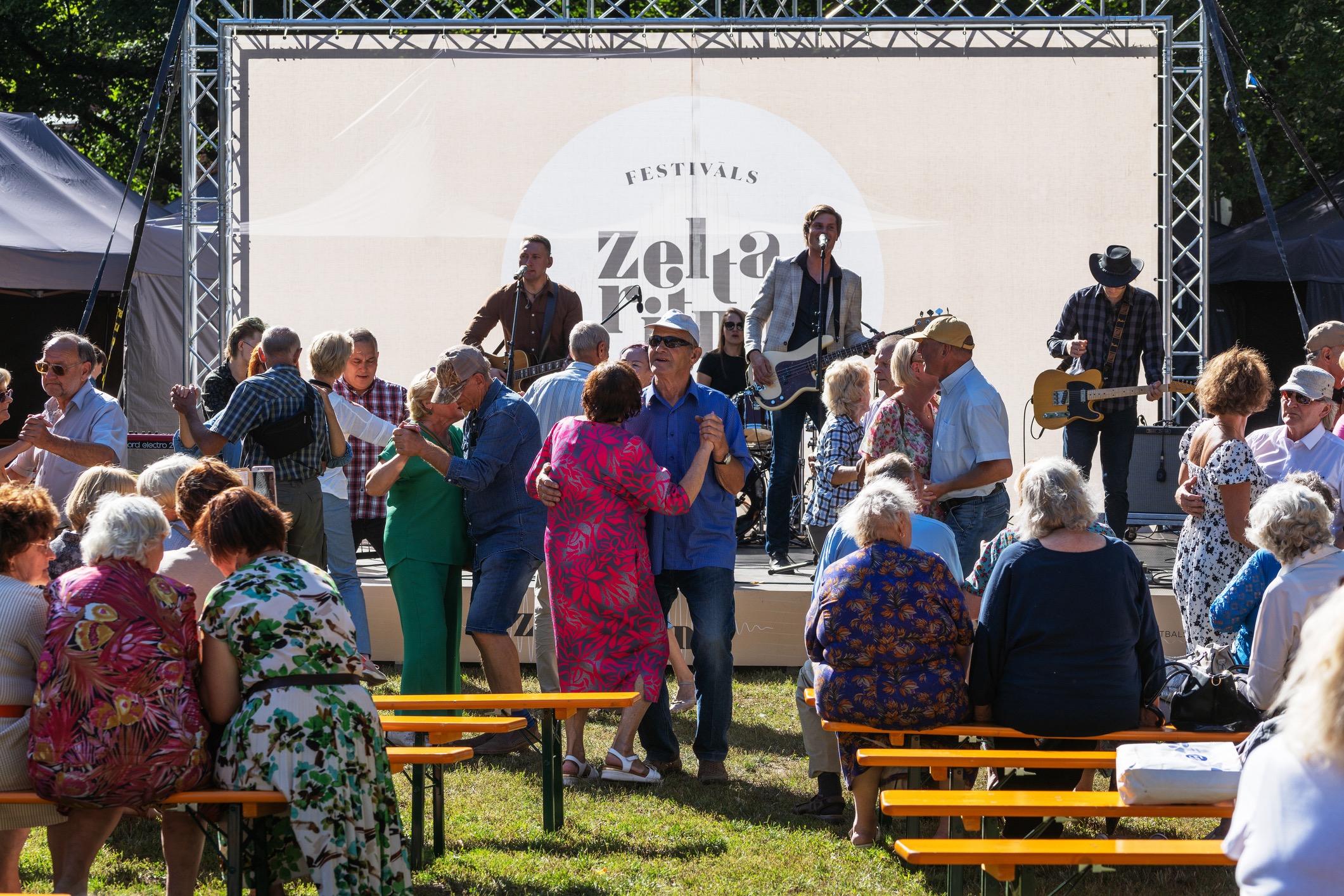
Active listening and interactivity are the hallmarks of most live music. Unlike exhibits in museums or artifacts in libraries, record shops, and music venues encourage a release of energetic expression and participatory appreciation. In an instant, two people engaging with the same live performance, no matter how distant or disconnected they may be, are unified. The challenge for performers and curators alike is that a disengaged audience will most certainly be a silent one.

Sharing a live performance of music as two strangers is an instant ice breaker. It offers immediate opportunity for a thoughtful exchange of the experience and, as often is the case, it spawns conversation about the local history, cultural expression, and personal resonance of the auditory performance to all in attendance.

This type of travel can help bridge generations in meaningful and memorable ways. Exploring the best places to visit in New Zealand allows seniors to connect with music-loving young people, local residents, and travelers of all ages through shared cultural experiences. Local music scenes create opportunities for interaction, helping to break ageism and foster a sense of unity within diverse communities. By traveling to the best places to visit in New Zealand, seniors can experience first-hand the unique blending of Maori choral songs and contemporary music, while also attending workshops and community events that highlight inclusivity. These enriching experiences demonstrate how, regardless of age or background, we are all connected as part of the same beautiful story.

Curating Your Music-Centered Journey

To get the most out of your music project, you must avoid the customary, unnecessary tourist spots and attractions. A project like this needs careful planning, some research, and a readiness to discover the unexpected. Start this process by including specific genres and instruments you have always been curious about. Consider what sounds you have come across that are representative of cultures in which you are interested or have been intrigued by. It will be worthwhile to learn the history of the music in the location you are planning to visit; learn what movements in history and struggles in society contributed to the music you are going to hear. If you learn this before you get to a new place, you will be able to hear music in a more meaningful way than someone with a casual interest.

It is important to have a balance between musical immersion and reflection. Big city festivals are fun and energizing, while small symphony concerts give space for contemplation. You can think, reflect, and further your mental state while listening to small, public, acoustic concerts. Small, curated tours, like those offered by tours New Zealand, specialize in local, artisan music, crafts, and the arts, without the usual sightseeing. With these tours, you can enjoy music while relaxing, without the stress of navigation. However, your trip is your responsibility, and the most important thing is to engage at your own comfort level. Visit local record shops and ask the owner what is popular in town. Ask hotel staff where they go when they want to see live music. The more you do what locals do, the more you will have a one-of-a-kind travel experience.

Cultivating Well-Being Through Long-Term Musical Travel

The positive effects of music-centric traveling are everlasting and continue to develop long after your return home. There is a widespread belief that for many the best part and the most enjoyable aspect of this sort of travel, continue long after the journey has ended. Many travelers snap back to their daily routines but bring back the music and the positive energy of the places they have traveled to. This results in psychologically positive connections to the places they have visited. The music combined with positive memories of this travel and the newfound confidence keeps the traveler in touch with good and positive aspects of their travel for a long time.

The act of writing a personal music travel blog or travel journal, or making a music travel playlist, is a form of therapy. This type of travel actually makes the writer organize their previously jumbled thoughts and makes them reflect on the feelings they experienced throughout their travels. This exercise not only helps the traveler strengthen their memories, but it also increases their creativity because the process incorporates writing and documenting memories. This gives the traveler the opportunity to organize their previously jumbled memories and travel experiences. This offers a traveler the opportunity to reflect on their travel experiences and the memories that have been captured through the lens of music and gives a traveler the motivation to start a new travel journey.

Travel should not only be thought of in the terms of luxury, escapism or being a distraction from the mundane; travel is investment for the traveler, involving the mind, body and soul. With a focus on the local music scenes, travel is transformed in a deeply connective and insightful act, for both the traveler and the community. We introduce new stimuli to the mind, while we challenge ourselves to build connections, both social and emotional, to experiences and places we have yet to explore. This connects not only different cultures, but also transcends language.

More cognitive function and social connections are just the beginning of the positive changes travel has on your life. Travel to discover local music will build your zest for life and a new purpose. Whether it is a long trip or a weekend away, the most important part of travel is to genuinely open your mind to the music and the people. Music has a unique way of connecting us all and reminding us of the beauty of life and that we are never too old to learn and grow.

Thank you!

We appreciate guest blogger Katherine Langford’s contribution to this forum. Click on the following to read her other submissions:

PKF

© 2026 Katherine Langford and Paul K. Fox

Retirement Transitioning Advice from AI?

Season Greetings and Happy New Year from your Pennsylvania Music Educators Association State Retired Member Coordinator. Best wishes for a happy, healthy, and prosperous 2025!

First, on Christmas Eve, here are a few announcements geared to PA music educators… those who have retired from full-time teaching and anyone considering retirement over the next one to five years.

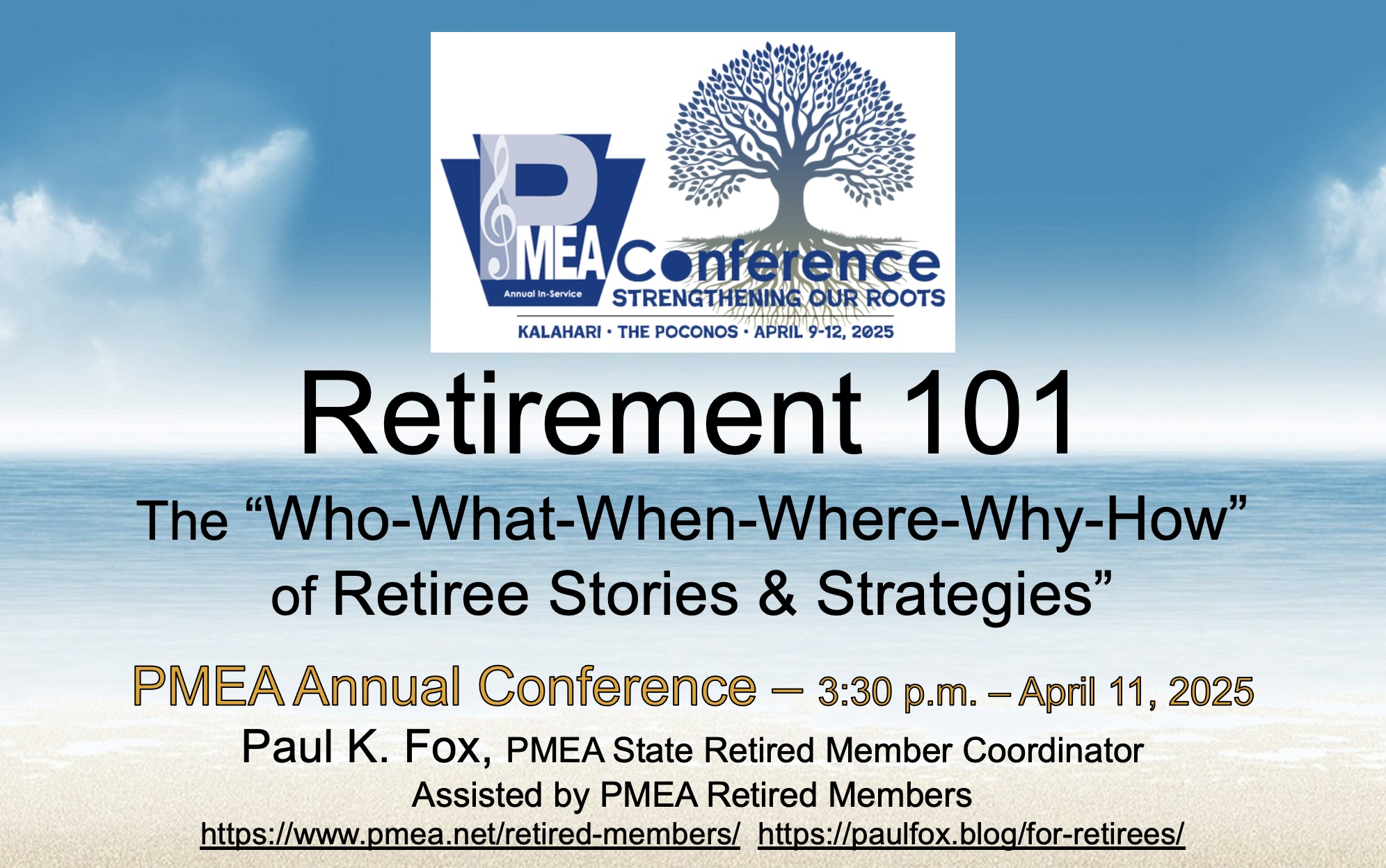
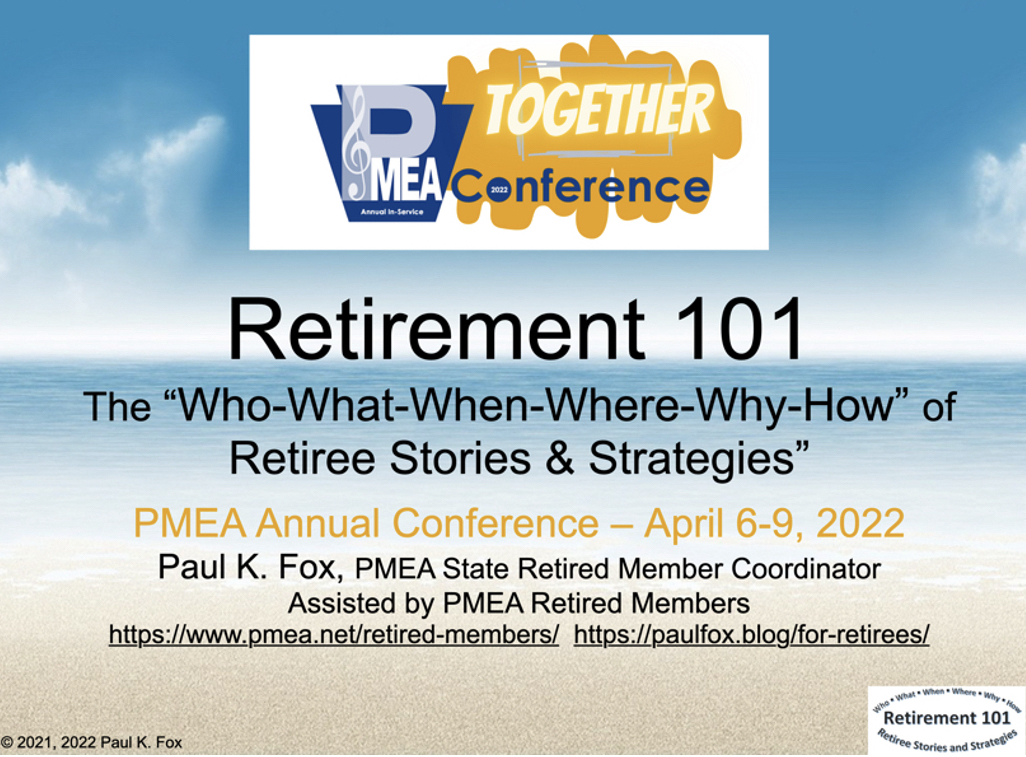
Back by popular demand (or is that just ego and in my head?), we will offer the session “Retirement 101 – the Who, What, When, Where, Why and How of Retiree Stories & Strategies” on Friday, April 11, 2025 (3:30 p.m.) during the PMEA Annual Conference at the Kalahari Resort in the Poconos. A guest panel of PMEA Retired Members will assist and offer their advice answering key questions like the following:

  1. How have you found happiness and success in retirement?
  2. What “new” hobbies, volunteer projects, trips, family connections, and encore careers have you been exploring?
  3. What did you do to reinvent yourself and how did you satisfy those essential “big three” goals of post-full-time employment: finding purpose, structure, and community?
  4. How did you navigate the early phases of retirement? imagination, anticipation, liberation, etc.
  5. What were some of the transitional “ups and downs” you experienced and how did you cope with them?
  6. What are you still doing in music and education?

We are looking for more PMEA retiree volunteers who are planning to attend the conference to join “expert panelists” Rick Coulter, Jeffrey Dent, Dan Klingbeil, Chuck Neidhardt, Louise Victor, and Rich Victor. (Just email me if you’re interested.)

Retired Members are a valuable resource to PMEA. Many of us already serve on PMEA Councils and in District or State official positions. All of us in the profession benefit from the sharing of their extensive “boots-on-the-ground” experiences and wisdom. At the upcoming conference, Retired Members can serve as Presiding Chairs and introduce a session/concert or two. In addition, plans are also underway to sponsor (possibly on Thursday, April 9) a “coffee & conversation” corner or an “ask the expert” lounge. Spaces and the schedule are packed, but if it is possible, Executive Director Abi Young is trying to fit in an informal sitting area with retirees and mentors as “friendly folks” to serve as “gurus” for PCMEA members, newcomers to a music education specialty, or recent transfers to the field. Won’t you join us?

A longstanding tradition, we will be treated to a PMEA Retired Member Breakfast on Friday morning. (Just check the box on the registration form if you are coming… and, by the way, the conference fee is only $20 for Retired Members! What a deal!)

Why Attend the PMEA Annual Conference?

“For some of us, it’s a just chance to catch-up with our colleagues, see our friends, and socialize. Others are more focused and take advantage of the near-perfect opportunity to network with other professionals, perhaps seeking new working relationships, partnerships, or even employment. Many are on a look-out for newly published music, that perfect music lesson or teaching strategy, technology tools, fund-raisers, advance educational venues, or much-needed equipment to purchase for our ensembles or classrooms. Most come to hear/see the “state of the art” in music education – concerts, demonstrations, keynote speeches, panel discussions, exhibits, research presentations, and workshops. PMEA’s PD Council would likely submit that the primary purpose of a conference is for professional self-improvement… What did Stephen Covey call it? His Habit #7 of “sharpening the saw” – to build a balanced program of self-renewal in the four areas of your life: physical, social/emotional, mental, and spiritual. Covey would insist we embrace “the process that empowers us to move on an upward spiral of growth and change, of continuous improvement.” So, in short, conferences help us “grow” – to revive, re-inspire, re-energize, rejuvenate, re-direct, and re-motivate all of us – pre-service, active in-service, and retired teachers towards making successful new connections, updating our knowledge & skills, and forming new goals.”  – PMEA Retired Member Network eNEWS Winter 2024

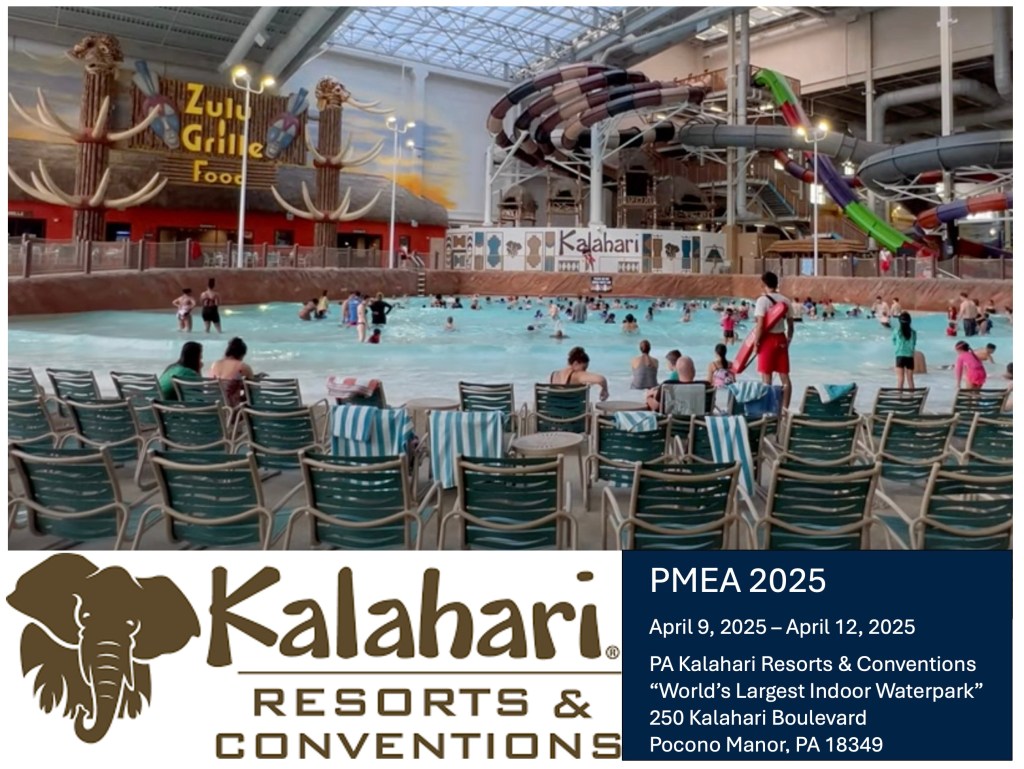
In addition, Kalahari Resort boasts “the world’s largest indoor water park,” the perfect place to bring family members to enjoy… especially (grand)children, (grand)nieces/nephews, etc.

Next month’s retirement blog by guest author Sierra Powell

One final announcement: In several weeks at this blog-site, we plan to feature a new guest blog entitled “Five Things You Need for a Comfortable Retirement” by Sierra Powell, along with updates of other resources for “living the dream!” See you next year?

OK, What is that “AI Thing?”

This 69-year old educator who has spent more than five decades in fostering creative self-expression in his students is fervently opposed to artificial intelligence. Actually, I thought I was allergic to “AI!” Every time I receive an Apple iPhone update or some new download for my computer, I complain, “Why have they moved that button? It doesn’t look or work the same! Why does everything have to change every month?” Slow down, techies!

However, to dabble in this new technology everyone’s talking about, I printed in my last PMEA Retired Member Network eNEWS on page one a sample article (click here for the Winter issue) compiled by AI Overview (Google). I shared this with an adult violin student from my Saturday orchestra who decided to show me the power of AI (not the old AI I am more familiar with – artistic intelligence!). She used her subscription to a ChatGPT to process my brief outline on the topic “retirement transitioning.” Below is the result generated from a few of my random notes. Created in the first person, AI matched my writing style, a chatty/informal letter printed for soon-to-retire colleagues along with research citations. Frankly, it scares me how close this sounds like something I could have composed! Can you tell it was artificially generated? Does this mean we will we have to teach this old dog (fox) new tricks?

Check out these valuable retirement hints courtesy of ChatGPT!

The Retiree Life: Navigating the Art of Reinvention & Emotional Balance

Here with some reflections, tips, and maybe even a little nudge for us all as we continue this grand adventure called retirement. Whether you’re still finding your rhythm or already feel like a pro at this, there’s always room to reflect, grow, and laugh along the way.

This week, let’s talk about something near and dear to every retiree’s journey: reinventing yourself and coping with the emotional ups and downs that come with this new chapter.

Reinventing Yourself: A Second Act Worth Applauding

Remember when we taught our students to embrace creativity and adapt to change? Turns out, retirement demands the same skills. It’s no longer just about what you did—it’s about who you are.

Reinvention isn’t about completely overhauling your identity. Think of it as expanding your repertoire. Studies show that retirees who actively pursue new interests or roles report higher life satisfaction (Wang et al., 2011). Whether it’s picking up the instrument you haven’t touched in decades, volunteering, traveling, or even starting a small business, the key is to stay engaged.

Here’s a thought experiment: What did you always wish you had time to do but never could because of lesson planning, rehearsals, or concerts? Now’s your chance. I’ve recently heard about retirees dabbling in everything from watercolor painting to writing mystery novels. One retiree even became a beekeeper—talk about a sweet second act!

(From past blogs, the Retirement 101 session, and Retired Member Network eNEWS reviews)

The Emotional Journey: Ups, Downs, and Everything in Between

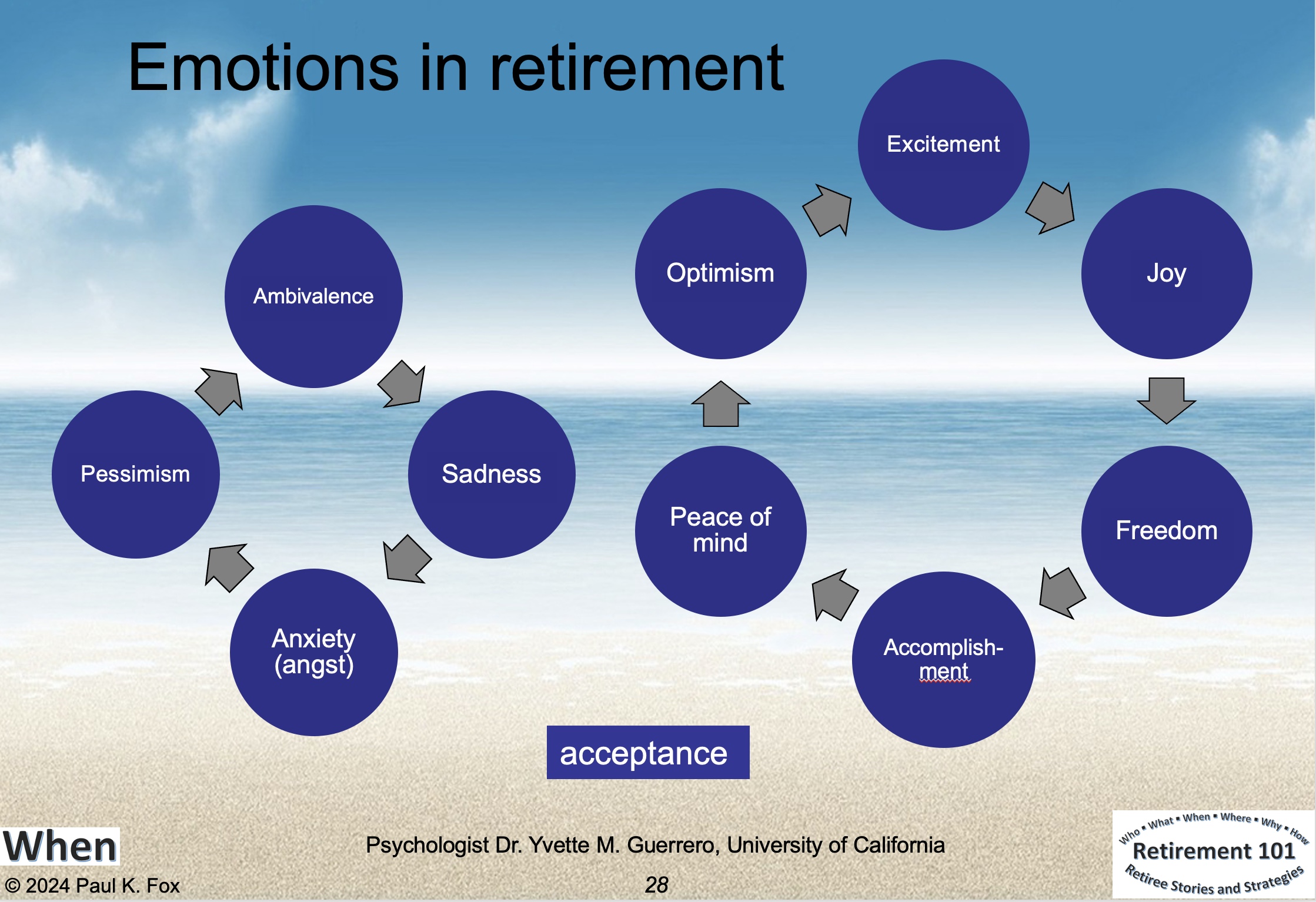
Let’s not sugarcoat it: retirement is a mixed bag. There’s the freedom (hooray!), but also the occasional pang of loss—of identity, routine, or the camaraderie we had in our teaching careers.

The good news? You’re not alone. Research by Pinquart and Schindler (2007) highlights how important it is to acknowledge these feelings rather than sweep them under the rug. Adjusting to retirement is a process, and it’s okay to feel a little off-balance at times.

Here are a few tried-and-true strategies to help you navigate the emotional terrain:

  • Stay Connected: Loneliness can creep in when you least expect it. Keep up with PMEA activities, or start a retirees’ coffee group. Who better to laugh with about the time your marching band got rained out?
  • Practice Mindfulness: Before you roll your eyes, hear me out! Even just five minutes of quiet reflection a day can reduce stress and boost mood (Chopra et al., 2020).
  • Find Meaning: Volunteering or mentoring can give you a sense of purpose that’s deeply fulfilling. You’ve got a wealth of wisdom—share it!

AI of the future?

The Bottom Line

Retirement isn’t a destination; it’s a journey. And like any good road trip, it comes with unexpected detours, scenic overlooks, and, yes, the occasional pothole. The trick is to embrace it all with curiosity and a sense of humor.

If you’re struggling, remember: reinventing yourself doesn’t happen overnight. Take it one day at a time, and don’t be afraid to reach out for support—whether it’s from family, friends, or your fellow PMEA retirees.

Let’s keep the conversation going. What’s your “second act”? Have you discovered a new hobby or way to cope with the emotional shifts of retirement? Shoot me an email or share your story at our next meeting. Together, we’ll continue to learn, grow, and make this chapter one to remember.

Until next time, keep smiling and stay curious!

References:

Wang, M., Henkens, K., & van Solinge, H. (2011). Retirement adjustment: A review of theoretical and empirical advancements. American Psychologist, 66(3), 204–213.

Pinquart, M., & Schindler, I. (2007). Changes of life satisfaction in the transition to retirement: A latent-class approach. Psychology and Aging, 22(3), 442–455.

Chopra, A., Anthonisen, S., & Reeves, A. (2020). The role of mindfulness in retirement satisfaction. Mindfulness in Aging Journal, 7(4), 312–320.

PKF

© 2024 Paul K. Fox

RECAP – Retirement Resources

A Treasure Chest of Tips for Living the Dream!

Are you retiring soon? Thinking about “taking the plunge” and “Crossing the Rubicon” into your “second beginnings” or “next chapter” of senior life?

No matter how busy you are now, you need to “take five” from your work or personal to-do’s and review the following recommendations from past blog posts at this site. Consider this a personal toolbox for the retired and soon-to-retire professional… and assigned HOMEWORK!

A good starting point would be to pick-up “The Myths of Retirement” and “Three Exit Lanes to Self-Help Retirement Guides,” or if you prefer to tackle everything at once, check out the omnibus “monster” resource guide posted here.

Now the top-ten list – a well-balanced collection of online essays. The more you read, the better you will be able to embrace a healthy transition through this major life passage!

1. Plan ahead for retirement: “It’s Not Only About the Money”

Read the entire article here.

It is agreed that a period of adjustment will occur during the first years of “interning” as a retiree, especially critical during the “pre-retirement” stage (believe-it-or-not, as many as six to ten years prior to “taking the big leap” to FREEDOM!). The solution to a smooth transition is to be prepared: communicate your intentions with your family members, and reflect on the vast considerations of the “who, what, when, where, how, and why” of retirement. This prep to your “golden years” is the perfect time for a little self-assessment and self-reinvention in finding new purpose, meaning, and fulfillment in your life.

2. Identify and take steps to alleviate the stress of leaving your job:
“The Good, The Bad, and The Ugly”

Read the entire article here.

The phases of retirement are discussed in greater depth here, as well as different departure scenarios and the usual post-employment “cycles of emotions.” This piece is particularly good if you have ever felt pushed into early retirement or experienced being unappreciated, disrespected, uninspired, unsupported, or “burned out” in your career.

3. Are you really ready? “Signs it is time to retire… OR “Signs is NOT okay.”

Read the entire article here.

This “countdown to retirement” article poses the essential question “Are you psychologically (or emotionally) prepared to retire?” and offers a “road map” of seven easy steps towards closure for prospective music teacher retirees.

For more insight, you should also peruse “When Should You Retire.”

4. Determine your retirement destination:
“Do you know where you’re going to…?”

Read the entire article here.

This early blog post proposed several factors to consider for the choice of where you want to live in retirement… both geography and floor plans. Another good source to read on this topic is the book that was published two years later by the retirement guru and former PMEA session presenter Dave Hughes: The Quest for Retirement Utopia – How to Find the Retirement Spot That’s Right for You.

5. Maintain your professional associations:
“Ask not what PMEA can do for you, but what you can do for PMEA!”

Read several articles:

A retired educator is a valuable resource. If you care about the profession, there are many ways you can continue to contribute your experience and wisdom, albeit less stressful and time-consuming moments, but still assist your colleagues who continue to “fight the good fight” in the field.

6. Acquire a more carefree attitude: “It’s Not Your Sandbox”

Read the entire article here.

It may be at times a challenge to surrender your urge to continue as “an agent of change” or, as E.A. Wynne has written in “The Moral Dimension of Teaching” (Teaching: Theory into Practice, 1995), habits of “moral professionalism.” Learn how chill out and NOT to stress out over someone else’s supposedly poorly run “sandbox” and limit the need to provide unsolicited advice or major problem-solving for other organizations. 

7. Make music: “Dust off your chops” and 8. “Sing your heart out…”

Read the both articles here and here.

What led you to select a career in (and the “calling” of) music education? Retirement is the perfect place and time to expand on your love and skills in creative self-expression. When a music educator retires, among the many joys and fruits of his/her career in the arts is a sudden life-style change – the glorious transformation of being set free from those things you no longer want nor need to do (routine day-to-day drudgery, paperwork, meetings, etc.), embarking on new journeys to explore and embrace revised personal goals – hopefully including a renewed refocus on making your own music!

9. Explore mind-stimulating engagements: “Have you fed your brain today?”

Read the entire article here.

The mind is a terrible thing to waste, even during retirement. Discover something new every day! Maximize your “brain health” with a host of these ideas to consider for your bucket list.

10. Take time to “give back” and volunteer:
“What does it mean to be eleemosynary?”

Read both of these articles here and here.

In the scheduling our free time in retirement, it is important to feel “needed” and find activities that foster “mattering” to promote a positive self-esteem, good mental health, and stable life balance. Are you making choices to contribute to the musical and personal success and welfare of others? For the realization of the mission of this blogger’s retirement pastime: “I refuse to sit idle, binge-watch movies on Netflix, or view hours of boring TV.” To quote the song’s lyrics, this “senior citizen” will never lament…

Life is so unnerving
For a servant who’s not serving
He’s not whole without a soul to wait upon
Ah, those good old days when we were useful
Suddenly those good old days are gone
Ten days we’ve been rusting
Needing so much more than dusting
Needing exercise, a chance to use our skills
Most days we just lay around the castle
Flabby, fat, and lazy
You walked in and oops-a-daisy!

– “Be Our Guest” from Beauty and the Beast

Stay Connected with PA Music Education

PMEA Annual Conference April 6-9, 2022 at the Kalahari Resort (Poconos)

PMEA retired members, please take note of these special events especially geared to YOU:

  • Free Retired Member Breakfast Meeting (including take-away gifts) on April 8 at 8 a.m.
  • Retirement 101 session on April 8 at 11:30 a.m. – Retired music teachers are encouraged to participate on the guest panel to “tell your own story” to help any interested soon-to-retire colleagues.
  • Three keynote speakers will join this year’s event: Dr. Tim Lautzenheiser, Lesley Moffat, and David Wish.
  • The U.S. Army Band “Pershing’s Own” will be featured on Thursday evening (April 7).
  • See last month’s blog for more details on the conference, tentative session schedule and exhibitors, AND the PMEA website.

PKF

© 2022 Paul K. Fox

Graphics from Pixabay.com: