Why Senior Travel Projects Centered on Local Music Scenes Boost Well-Being

Guest Blog: Katherine Langford

As we get older, the meaning of the word travel seems to evolve right alongside us. The fast-paced, rush from one sightseeing opportunity to the next, which once occupied all of our time off, is soon replaced with a meaningful combination of connection, learning, and self-awareness. Many older adults find the most moving and life-affirming travels to be the journeys that let them experience the world’s universal, non-verbal form of communication, or music. Travel programs promoting exploration of a destination’s local music scene offer the opportunity for a powerful, health-promoting, and socially integrative experience, which goes far beyond the value of relocating, or an opportunity to take a break. When we step into a rhythm that is not our own, we become a part of the fabric of that community and a far cry from the passive traveler that we once used to be.

Cognitive and Emotional Advantages of Music Engagement

Music has an uncanny, almost magical quality to connect the past and the present. For the elderly, local music of all varieties meaningfully engaging, Folk stories, contemporary Jazz improvisation, global indigenous choral music, etc. stimulate portions of the brain in a coordinated fashion and serves as an exceptional tool for long-term cognitive care. When we are visitors in a new environment and attend a live performance, an amazing thing occurs, complex cognitive processes register a multitude of new sounds and organize orientational movements in three-dimensional space while figuring out the intricate details of the performance. Passive entertainment pales in comparison to the cognitive involvement and emotional engagement required. This creates an environment that maintains optimal functionality of the brain.

Beyond cognitive gains, musical immersion has a deep, restorative emotional benefit. Music-centric travel projects encourage seniors to step out of the familiar and sometimes stagnant daily routines. The combination of a social and physical environment shift, heard new and interesting melodies for the first time, can be a potent solution for the anxiety and social isolation that too often appear during retirement. Sound-directed travel projects give seniors a rewarding reason for navigating a new city. They are not traversing for naught; they are looking for the next sensational music festival, the best acoustic set, or the next hidden music spot. This purposeful step redefines the quality of aging as high and fulfilling.
Building Social Bridges Through Shared Rhythms

A common challenge for retirees is an inability to form or maintain an engaged social support network. Travel that centers on engaging with local communities via their music provides low-stakes opportunities to meet people and form community.

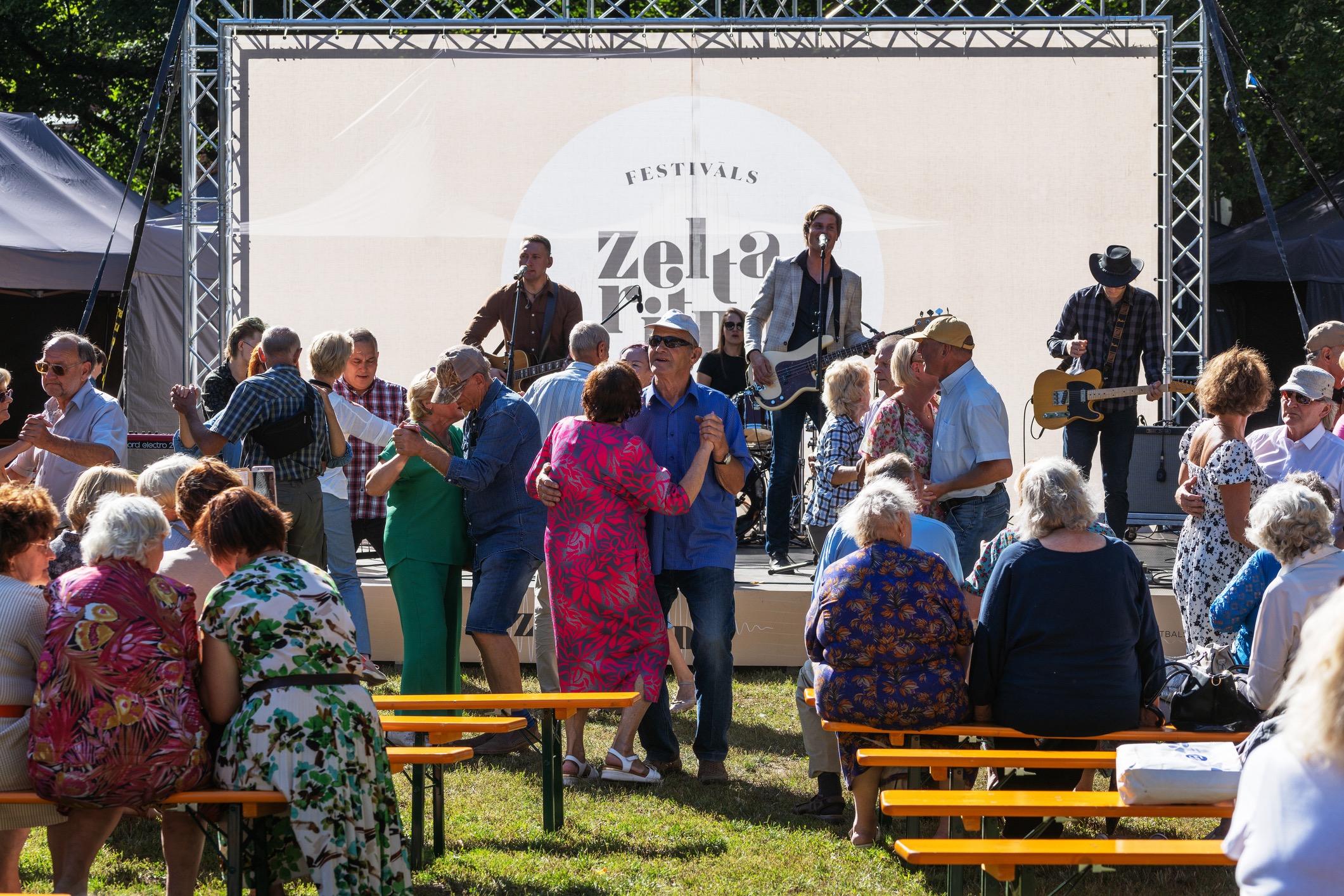
Active listening and interactivity are the hallmarks of most live music. Unlike exhibits in museums or artifacts in libraries, record shops, and music venues encourage a release of energetic expression and participatory appreciation. In an instant, two people engaging with the same live performance, no matter how distant or disconnected they may be, are unified. The challenge for performers and curators alike is that a disengaged audience will most certainly be a silent one.

Sharing a live performance of music as two strangers is an instant ice breaker. It offers immediate opportunity for a thoughtful exchange of the experience and, as often is the case, it spawns conversation about the local history, cultural expression, and personal resonance of the auditory performance to all in attendance.

This type of travel can help bridge generations in meaningful and memorable ways. Exploring the best places to visit in New Zealand allows seniors to connect with music-loving young people, local residents, and travelers of all ages through shared cultural experiences. Local music scenes create opportunities for interaction, helping to break ageism and foster a sense of unity within diverse communities. By traveling to the best places to visit in New Zealand, seniors can experience first-hand the unique blending of Maori choral songs and contemporary music, while also attending workshops and community events that highlight inclusivity. These enriching experiences demonstrate how, regardless of age or background, we are all connected as part of the same beautiful story.

Curating Your Music-Centered Journey

To get the most out of your music project, you must avoid the customary, unnecessary tourist spots and attractions. A project like this needs careful planning, some research, and a readiness to discover the unexpected. Start this process by including specific genres and instruments you have always been curious about. Consider what sounds you have come across that are representative of cultures in which you are interested or have been intrigued by. It will be worthwhile to learn the history of the music in the location you are planning to visit; learn what movements in history and struggles in society contributed to the music you are going to hear. If you learn this before you get to a new place, you will be able to hear music in a more meaningful way than someone with a casual interest.

It is important to have a balance between musical immersion and reflection. Big city festivals are fun and energizing, while small symphony concerts give space for contemplation. You can think, reflect, and further your mental state while listening to small, public, acoustic concerts. Small, curated tours, like those offered by tours New Zealand, specialize in local, artisan music, crafts, and the arts, without the usual sightseeing. With these tours, you can enjoy music while relaxing, without the stress of navigation. However, your trip is your responsibility, and the most important thing is to engage at your own comfort level. Visit local record shops and ask the owner what is popular in town. Ask hotel staff where they go when they want to see live music. The more you do what locals do, the more you will have a one-of-a-kind travel experience.

Cultivating Well-Being Through Long-Term Musical Travel

The positive effects of music-centric traveling are everlasting and continue to develop long after your return home. There is a widespread belief that for many the best part and the most enjoyable aspect of this sort of travel, continue long after the journey has ended. Many travelers snap back to their daily routines but bring back the music and the positive energy of the places they have traveled to. This results in psychologically positive connections to the places they have visited. The music combined with positive memories of this travel and the newfound confidence keeps the traveler in touch with good and positive aspects of their travel for a long time.

The act of writing a personal music travel blog or travel journal, or making a music travel playlist, is a form of therapy. This type of travel actually makes the writer organize their previously jumbled thoughts and makes them reflect on the feelings they experienced throughout their travels. This exercise not only helps the traveler strengthen their memories, but it also increases their creativity because the process incorporates writing and documenting memories. This gives the traveler the opportunity to organize their previously jumbled memories and travel experiences. This offers a traveler the opportunity to reflect on their travel experiences and the memories that have been captured through the lens of music and gives a traveler the motivation to start a new travel journey.

Travel should not only be thought of in the terms of luxury, escapism or being a distraction from the mundane; travel is investment for the traveler, involving the mind, body and soul. With a focus on the local music scenes, travel is transformed in a deeply connective and insightful act, for both the traveler and the community. We introduce new stimuli to the mind, while we challenge ourselves to build connections, both social and emotional, to experiences and places we have yet to explore. This connects not only different cultures, but also transcends language.

More cognitive function and social connections are just the beginning of the positive changes travel has on your life. Travel to discover local music will build your zest for life and a new purpose. Whether it is a long trip or a weekend away, the most important part of travel is to genuinely open your mind to the music and the people. Music has a unique way of connecting us all and reminding us of the beauty of life and that we are never too old to learn and grow.

Thank you!

We appreciate guest blogger Katherine Langford’s contribution to this forum. Click on the following to read her other submissions:

PKF

© 2026 Katherine Langford and Paul K. Fox
How to Peruse www.PaulFox.blog

A Guide for Music Educators at All Stages of their Career

It’s time for a celebration! Since its creation in July 2015, this represents the 217th blog-post at this WordPress website!

My apologies to first-time visitors who may find themselves a bit overwhelmed at the incredible volume of submissions posted to this library.

The purpose of this project after my retirement from public school music in June 2013 was to archive my writings and organize them in one convenient location. As Simon Sinek would emphasize at one of his keynote speeches, the essential “WHY” and rationale for http://www.paulfox.blog is the value I hope my articles could serve to prospective music teachers “in the trenches.” Many of us retirees just want to feel needed and seek opportunities to offer the benefits of our “boots on the ground” to future professionals. We seek to “matter” throughout our retirement and stay active in our post-employment years. The mission and goal of this website is to “make a difference” and share a legacy of more than five decades in the profession, providing the supports of hard-earned lessons learned, anecdotes shared, short cuts developed, perspectives observed, and additional research and practical tips found applicable to the field of music education and creative self-expression.

I write for myself, not to earn credit or receive validation from any external source. But, of course, I hope somewhere out these someone eventually finds these “creations,” reads them, and actually puts some the material to work for them in their job.

Unraveling the Maze of Menus

Articles posted at most blog-sites are published in chronological order… formatted to what computer programmers would term as “sequential.” This structure is similar to a tutorial, directing the reader to consume the contents from beginning to end (Introduction, Chapter 1, Chapter 2, etc.), reading “in sequence” earlier posts for full comprehension. This is the same basic format of paulfox.blog.

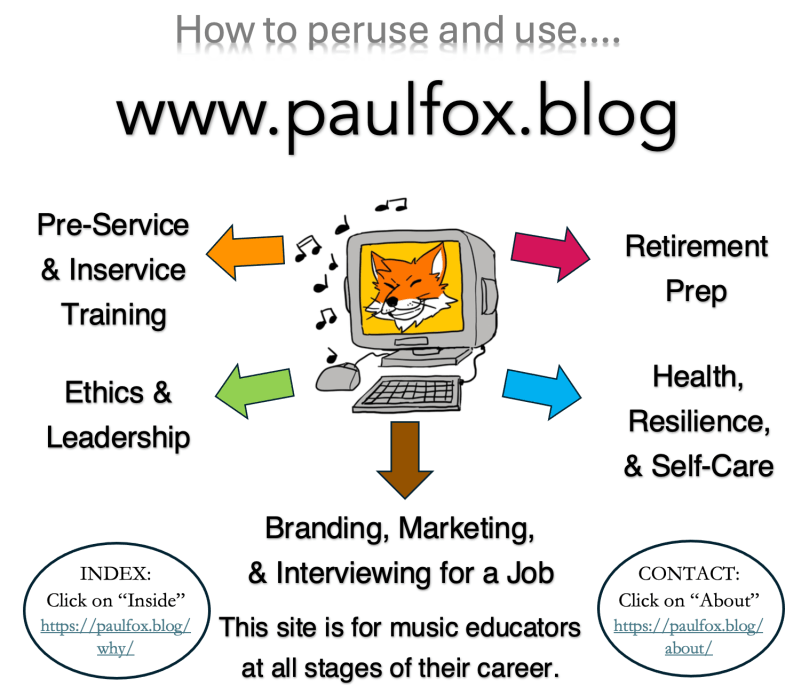
However, for academic or research study, my articles may be viewed in any order, similar to the “random access” format of a reference manual. (Go to the specific relevant section you are seeking information.) Everything is digitally stored under these categories (also accessible from links printed inside the right panel):

A reader might prefer to skim through an outline of potential reading material by clicking on the menu bar at the top of the page:

  • About: My contact information, curriculum vitae, recent workshop or conference presentations, professional brochure, and printer-friendly catalogs of articles and presentations
  • Inside: A frequently updated index (by subject) of all blog-posts at this site
  • Training/Jobs: Listings of articles and online resources (in chronological order) and past workshop/conference slide summaries and handouts (in reverse chronological order – most recent first) on the topics of pre- and inservice training in music education, ethics, building professionalism, and techniques for marketing, interviewing, and landing a job.
  • Care: Presentations, recommended books, and website resources on health, wellness, and burnout/stress remediation, and developing a self-care plan
  • Retirees: Alphabetical reference to articles and other resources on retirement preparation, mostly on post-employment self-reinvention and truly “living the dream” in our senior years
  • Creativity: My three-part series on creativity in education plus a short list of creativity geniuses/educational gurus and their books
  • Firesides: Tips for the enrichment of musicians of all ages, including practice hacks/hints and a collection of PDFs presented in the South Hills Junior Orchestra Online Academy

Explore the Links, But Beware!

Thousands of hours has been spent writing these “epistles,” and whenever possible, I try to reference background information, attributions, follow-ups or research sources. The Internet is an amazing tool, but it should not come as a surprise to anyone that some of the links in my older blogs may have broken connections or return errors. This is best explained by Google AI:

“Links on the internet become inactive, known as link rot, when a website owner deletes a page, changes the URL structure, or shuts down a domain entirely. Over time, servers go offline, companies close, and paid web hosting plans expire, which breaks the digital path to the original content.” [1, 2, 3, 4, 5]

Copyrighted material may be taken down as the authors move on to other pursuits or decide to restrict it to print-publish their work. A case in point, one of my favorite “experts” on creativity and author of Instructional Strategies for Thinking, Collaboration, and Motivation, Dr. Curtis Bonk from the Indiana University of Bloomington removed his amazing graduate course handouts and PowerPoints referred to in several of my creativity blogs. I still lament the fact that his “Best of Bonk” website is gone!

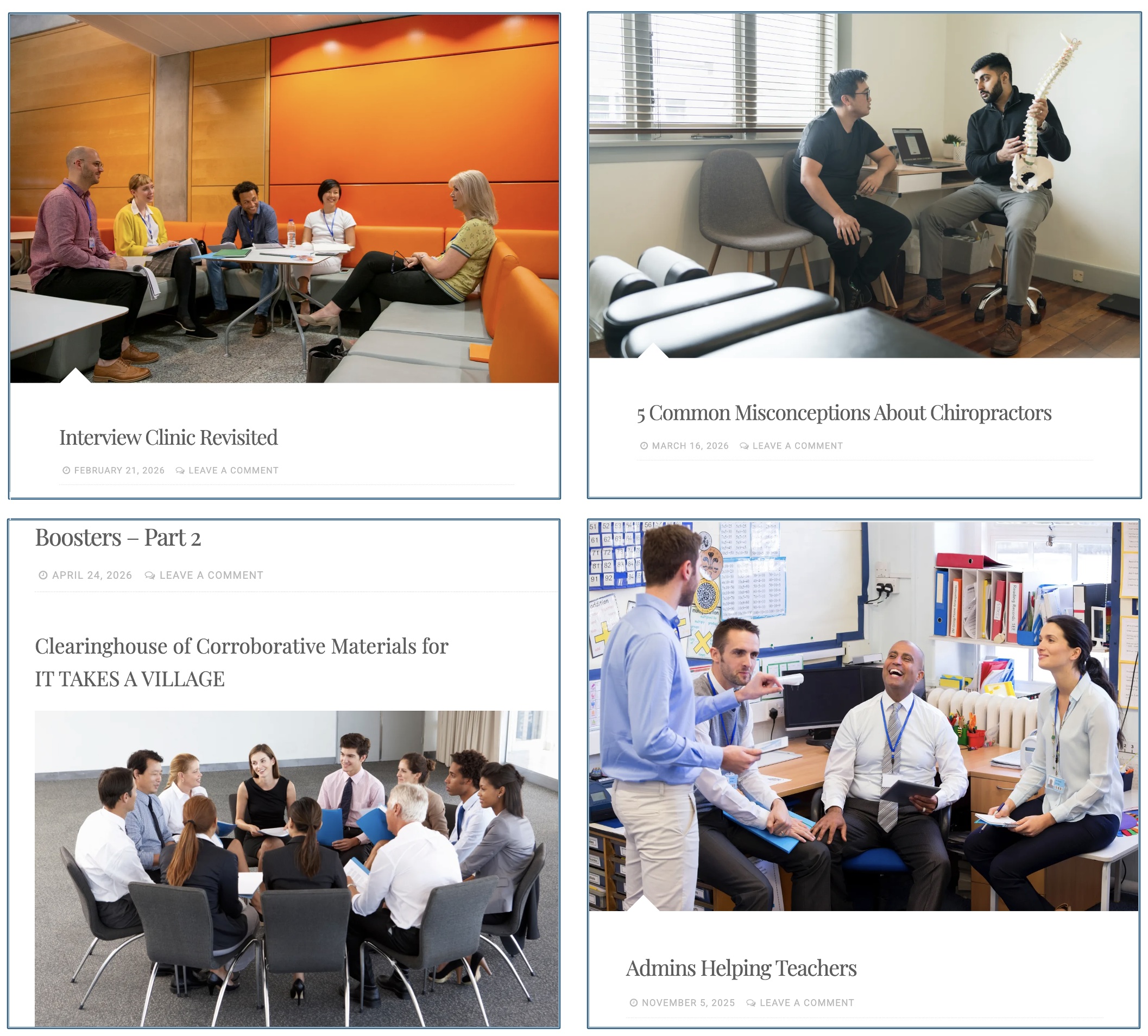
Whenever possible, I “nail down” a snapshot of the data, context, and clarifications with supportive PDF files and copies of my slide decks. At the time of their creation, the links were active. However, it has become necessary to update many of my more recent versions of commonly-repeated presentations, e.g., Retirement 101, Interview Clinic, Take the E-Train (Ethics), etc. The older the conception of the work, the more likely that something in it has become inactive.

If you find something is “broken,” please give me a holler. Send me an email describing the problem to paulkfox.usc@gmail.com.

Comments Welcomed!

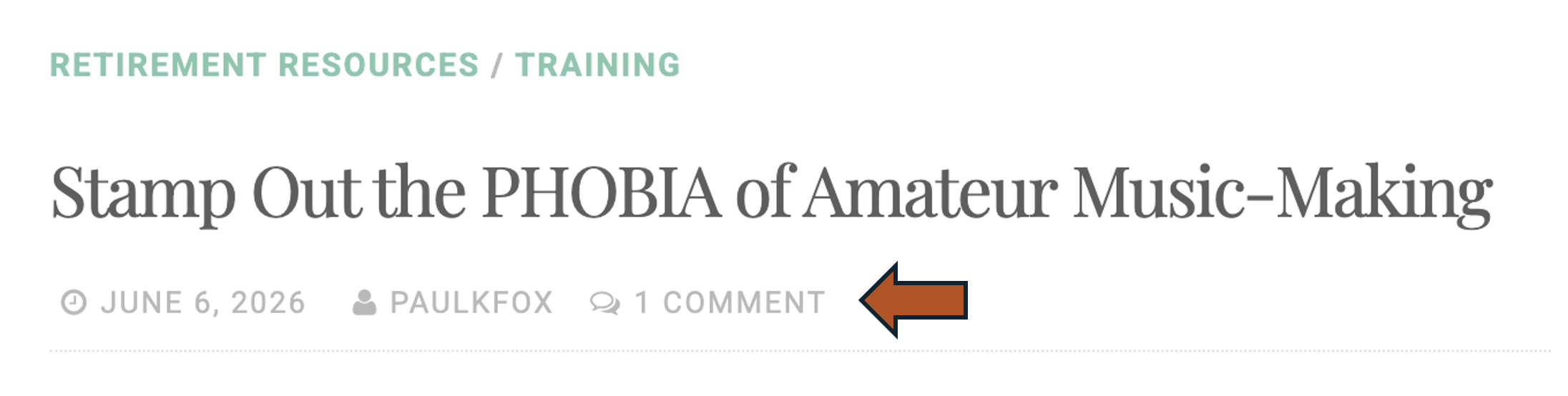
Directly under the title of each blog are printed the date of its creation, my signature, and a small symbol with the text “Leave a Comment.” CLICK ON THIS! I encourage feedback! Share your perspective. Add your own experiences, thoughts, or sources of information. I fervently hope I am not needlessly shouting in a wind storm trying to reach an audience who cannot hear me but could perhaps be best served by this open, two-way communications and divergent opinions.

Some of the posts receive significant initial and repeat traffic. I’ve noticed especially for those blogs on marketing professionalism and interview tips/questions, things pick-up in early spring, perhaps when graduating music education majors may be completing preparations for employment screenings. (Believe-it-or-not, one of the highest rated blogs last month was Dress for Success at Teacher Interviews!) So, if you have anything to add to help pre-service colleagues (soon-to-become teachers), click on the comment symbol or send me an email and share your advice! I would be happy to post your insights in a future blog!

Highlights

These might be my “top ten” blogs (in alphabetical order) to get a good idea what is available for further research.

  1. 52 Creative Tips to Supercharge the School Musical
  2. Creativity in Education
  3. Ethics Follow-up with links to all four parts of a general discussion on school ethics)
  4. The Five Cs of Self-Care – Teachers Take Charge of Your Wellness
  5. Get a Job Toolbox
  6. The Importance of Music Education
  7. Job Interview Rubrics
  8. Leaders Flush
  9. RECAP – Retirement Resources – A Treasure Chest of Tips for “Living the Dream!”
  10. Transitioning from Collegiate to Professional – Part 3 with links to all three parts on career preparation)

Just for fun, on occasion I voiced several “rants and raves” (yes, I am opinionated) and ventured into new topics unrelated to a career in education, such as pets (e.g. In Defense of Dogs, Pet Citizenship, Unconditional Love – Dogs!) and book bucket lists (For Book-Lovers – Retired or Not and Summer Reading).

I still recommend perusing the index (“Inside”) for a more in depth chronological discovery of these topics, or click on the other links in the top menu bar. (Some of these sections offer alphabetical listings of the titles to facilitate a thorough examination.)

Go explore! Happy hunting!

Guest Bloggers

I would be amiss if I did not recognize several talented guest authors who have contributed meaningful articles to this forum.

Ed Carter

Katherine Langford

Booking Speaking Engagements

Conferences and workshops have become a “retirement hobby” for me. Please visit my “About” section for a history of my most recent educational presentations. Contact me if you would like more information on availability. The following represent my most-requested sessions, many of which have sample slide summaries within this blog site for you to download and review:

  • Bookends – The Life Cycle of a Successful & Happy Music Educator
  • Catch the E3-Train – Essential Ethics for the Educator
  • Empowering Educator & Student Leadership
  • Hands-on Conducting
  • The Interview Clinic – Exercises to Improve Your Performances at Employment Screenings
  • Retirement 101 – It’s NOT All About the Money
  • Self-Care Cookbook – Recipes and Resources for Teachers
  • Social Media – Boon or Nemesis?
  • Supercharge the School Musical

Keep Connected! – Looking Forward to Read YOUR Feedback!

PKF

© 2026 Paul K. Fox