Making a $ Difference

Putting Your Money Where You Mouth Is… Today and Tomorrow!

This article was submitted for publication in a future PMEA News – the official state journal of the Pennsylvania Music Educators Association. It is mostly targeting school music educators in the Commonwealth – current and retired – but may be appropriate for all advocates who are willing to “roll up their sleeves” to help the profession and associations who support music education.

This article succeeds PMEA Pride… posted on July 1, 2026.

NOW: Opportunities to Support the Mission of PMEA and School Music Programs

The moniker and stated focus of the PMEA Council for Teacher Training, Recruitment, and Retention –  “the life cycle of a music educator” – nurtures present and future TTRR stakeholders and supports a broad timeline of numerous transitions, beginning with the Future Maestros Gold Star Awards Program (grades 3-6), then progressing to the TRI-M Music Honor Society (grades 6-12), Future Music Educators Honors Symposium (high school seniors accepted at a college or university to major in music education), PA Collegiate Music Educators Association and pre-service training, rookie to veteran years of professional development and participation in PMEA festivals, conferences, workshops, advocacy initiatives, and research programs, and finally self-reinvention and “keeping our hands in it” involvement during retirement.
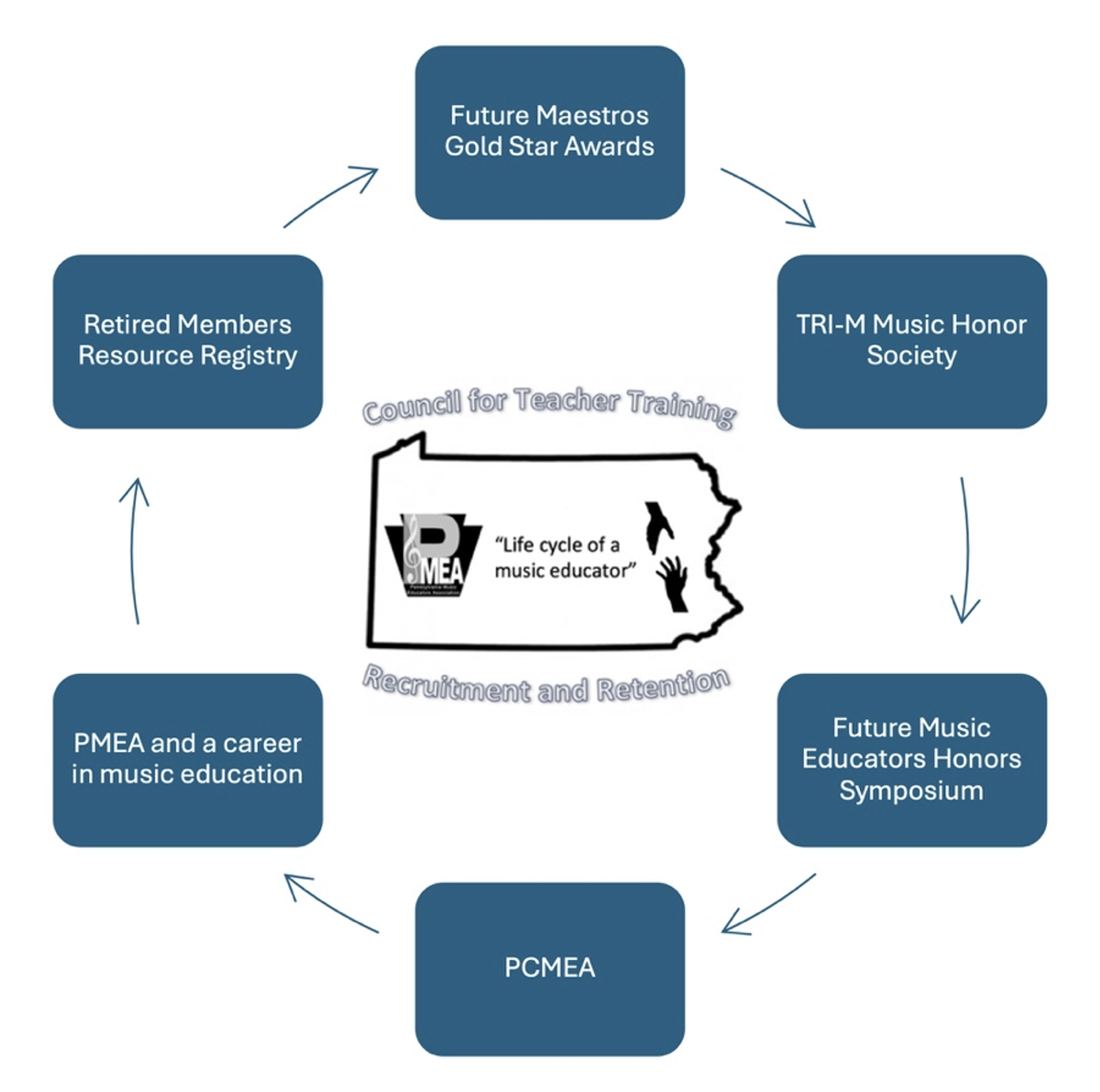
With the goal of “promoting the musical development of all Pennsylvanians,” TEAM PMEA embraces hands-on volunteerism and the value of our collective aspirations to foster the highest standards of collaboration in music education. Throughout our years, our organization offers many meaningful opportunities of giving, becoming eleemosynary (I love this word – look it up!) throughout its members’ upward career trajectory.

I have heard from a former foundation director and school board member that there are two categories of  “volunteers” who make major contributions to the vision and everyday fabric of community outreach groups:

  • “Busy Bees” or “Worker Bees” (Time & Labor): Active, hands-on volunteers who give their time and physical effort to complete tasks.
  • “Money Bees” (Funding & Resources): Donors, sponsors, or fundraisers who support the cause financially rather than with manual labor.

Which one of these roles do you model for PMEA? Both? Obviously, there are countless opportunities for you to serve our PMEA governance, programs, and music education throughout the Commonwealth. I know most of you are already “hands-on” as “busy bees,” fulfilling these essential jobs (just to name a quick dozen):

  • Adjudicators and Auditioners (Festivals, Performances, Scholarships, etc.)
  • Advocates and Booster Representatives
  • Authors (PMEA News) and Arrangers/Composers
  • Committee/Council Members
  • Conference/Workshop Speakers
  • Conference Planners/Screeners and Session Presiders
  • Cooperating/Supervising Teachers
  • Curriculum Writers
  • Festival Hosts
  • Guest Conductors
  • Mentors
  • PMEA Elected Officers

However, for many retired and active members alike, the “money bee” option is also readily available. Depending on your stage in life (and financial resources), you may consider donating a little (or a lot) to these worthwhile PMEA projects:

  • Irene R. Christman Scholarship, named after our late PMEA Executive Director who served from 1955 to 1996, is a $1000 award presented to an outstanding PMEA All-State Ensemble participant who will be attending college to major in music education.
  • Margaret S. Bauer Grant, in honor of our PMEA Executive Director Emerita, is a program for qualifying PMEA members to help fund professional development, resources, equipment, or creative projects which will enhance music instruction, student learning and forward the mission of PMEA.
  • All-State Program Patrons, listed in the printed PMEA All-State Concert Program, are donations that keep costs down for students participating in PMEA’s All-State Festivals.
  • Send a Collegiate to the Conference is available to sponsor needy college students to register for their participation in the PMEA Annual Conference.

It is now easier than ever to direct your charitable wishes. Make your selection on the PMEA website: https://www.pmea.net/give/.

PMEA is classified by the Internal Revenue Service as a 501(c)(3) non-profit, tax-exempt organization.

LATER: The Legacy of Individual Giving

The legacy of individual giving — often called planned or legacy philanthropy — is the practice of making significant charitable contributions through an estate plan or will to support nonprofits beyond a donor’s lifetime. It anchors community institutions, shapes cultural futures, and transforms personal values into enduring generational impact.

Legacy giving provides profound personal fulfillment, expands life meaning, and offers powerful tax advantages  — such as reduced estate taxes and avoided capital gains.

Legacy giving is not reserved exclusively for the super-wealthy. It functions through flexible financial instruments accessible at many economic levels. Key concepts and vehicles:

  • Bequests: Designating a specific dollar amount, a percentage of an estate, or remaining assets to a charity via a will.
  • Retirement Funds: Naming a nonprofit as the beneficiary of an IRA or 401(k) to bypass heavy income and estate taxes.
  • Life Insurance: Assigning a portion or all of a policy’s benefit to an organization.
  • Charitable Gift Annuities: Providing upfront capital to a nonprofit in exchange for fixed annual income payments during the donor’s life.

One of the most satisfying moments for my wife and I as retired educators was the establishment of a Donor-Advised Fund as well as funneling “required minimum distributions” from our IRAs to support recognition awards for PA music education majors as well as STEM majors participating in their collegiate music ensembles. As a memorial tribute to our parents who were educators, engineers, and musicians, we set-up a reliable and perpetual funding source to reimburse stellar college students with their educational expenses. For more information about the two separate Stark-Fox Family Fund Awards (PMEA Council for TTRR and PMEA Music-for-Lifelong-Learning Scholarships), visit https://www.pmea.net/scholarships-and-awards/. Past recipients are archived at https://www.pmea.net/scholarships-and-awards/stark-fox-funded-pmea-scholarships/.
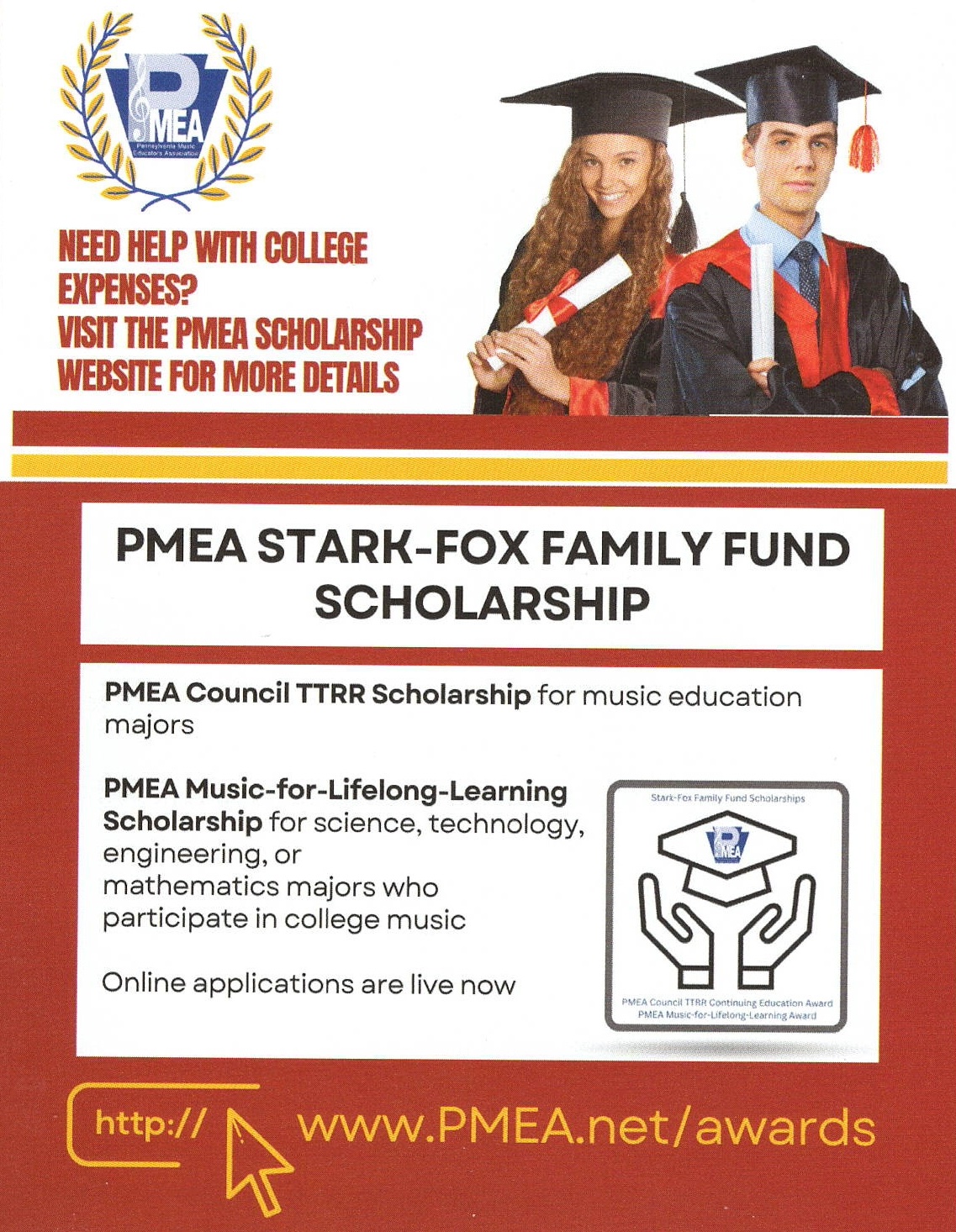
No matter the amount, strategy, or pipeline, your “donations to the cause” will make a difference! Thank you in advance for serving as “busy bees” and whenever possible, “money bees,” to assist PMEA and build on and sustain quality music education programs throughout our state.

Credits and Additional Resources

PKF

© 2026 Paul K. Fox

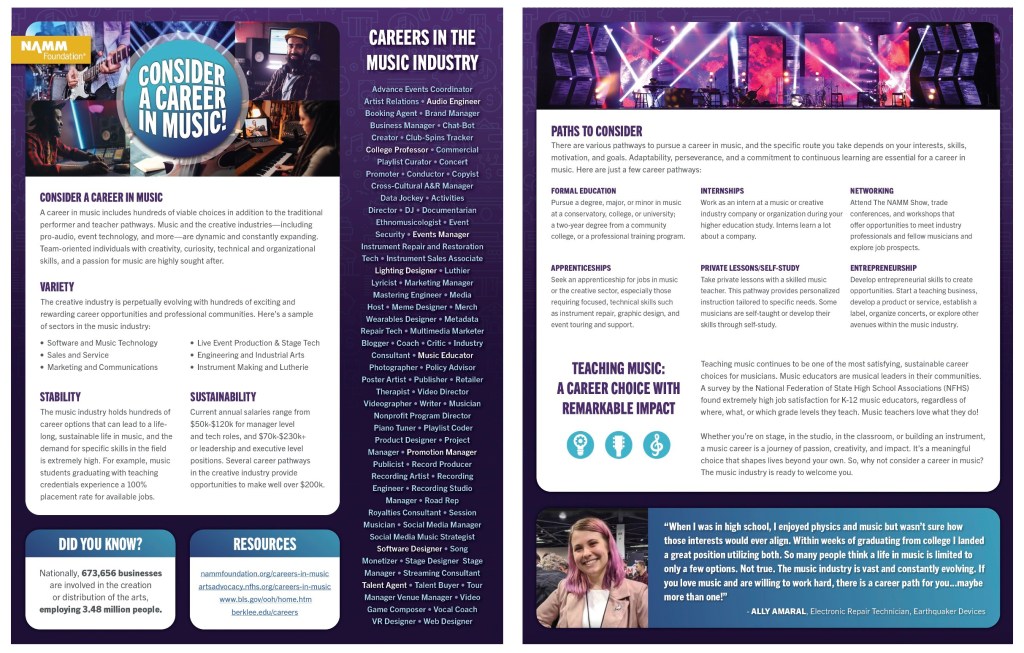
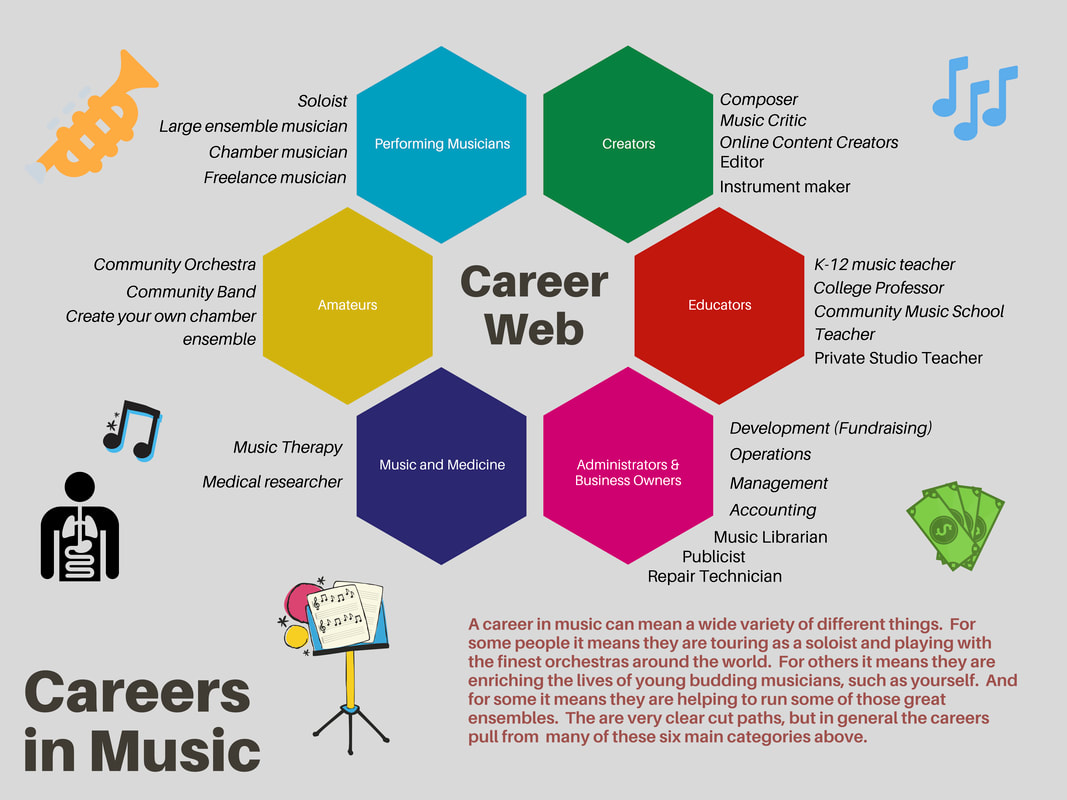
Careers in Music

Virtual Handouts for the Duquesne University Career Connect Event

On October 27, 2027 in Room 322 of the Mary Pappert School of Music, Duquesne University sponsored CAREER CONNECT, the first-ever music-specific career networking event held to help students discover opportunities, build professional connections, and explore the many possibilities available within the music industry.

Hosted by PMEA District 1 President Lucas Beaver and PMEA State Retired Member Coordinator Paul K. Fox, the following resources were shared about the numerous and diverse music-related career possibilities, archiving “places to go, links to see” for further information. The purpose of this super-short blog is to make it easy to share this digital library, a clearinghouse of articles for future study.

Pennsylvania Music Educators Association

PMEA Council for Teacher Training, Recruitment, and Retention

Preparing for a Music Education Major (Council TTRR website)

The following resources are provided for students (and their teachers) to assist in the pre-college training and preparation of potential future music education majors.

PCMEA

Are you considering entering a career in music education? You should be a member of PCMEA. Click here.

NAMM

Majoring in Music

Kristin Leitterman

Credits/Resources

For more information, please peruse other sections in this blog-site or contact Paul K. Fox directly.

PKF

How Artists Can Start Flexible Side Gigs That Boost Income and Creativity

by Ed Carter

Editor’s Note: We welcome back a contribution from our most prolific guest blogger Ed Carter! His piece focuses on visual artwork, a departure from our usual postings about music and music education. (My definition of “a gig” was a performance!) However, there are a lot of people out there who are good at creating digital art (anyone using Canva?). These insights may help tech-savvy retirees fulfill personal projects, hobbies, “bucket lists,” or even start a new “encore career.” And let’s not forget turning another form of “creative self-expression” into ways to generate some extra cash! Are we ready to learn something new? Thanks, Ed! PKF

For working visual artists, the hardest part of earning a living is that paid work often expands to fill every available hour. The core tension is simple: balancing art and work can turn studio time into an afterthought, even when making art is the point. Flexible income sources ease that pressure by separating survival money from creative decisions and supporting steadier creative time management. With the right side gig opportunities for artists, income can stay reliable without letting schedules or clients dictate the work.

Understanding Side Gigs That Fit Your Art Life

At its core, a side gig is a small, repeatable income stream that runs alongside your main art practice. It should support your life without consuming it, letting you earn extra income while you keep making work. The key is matching the gig to your skills, personality, and available hours.

Why it matters: diversification lowers the panic of one slow month, so you can say yes to better projects and no to draining ones. Flexible schedules also protect your peak creative energy, whether you work best in mornings, weekends, or short bursts.

Picture two artists: one outgoing and fast on deadlines, the other quiet and detail-focused. The first thrives in quick client commissions; the second builds steady income with product photos, retouching, or template design.

That fit mindset carries into packaging images so clients can review and approve quickly.

Package Image Drafts Into One Client-Ready PDF

Once you’ve chosen a side gig that fits your schedule, the next win is making it easy for clients to review what you’re making.

When you’re emailing art, graphic, or design ideas, it’s common to compress JPGs so the files are easier to send. The tradeoff is that compression can soften details and degrade image quality, exactly what you don’t want when someone is judging your drafts.

A cleaner option is using a JPG-to-PDF converter: when you convert JPG files to PDF, you can share your images in a format that preserves their quality while presenting them more professionally. Even better, you can combine multiple JPGs into one PDF, so you’re not attaching (and having to track) a long string of separate image files.

With your drafts packaged neatly, you’ll be in a stronger position to find prospects, pitch clearly, and start getting yeses faster in the next step.

Find Art Side Gigs and Turn Them Into Paid Work

Here’s how to move from sharing to getting hired.

This process helps you find flexible local and online art gigs, then present your work clearly so clients can say yes faster. It matters because most paid opportunities come from consistent outreach and simple follow-through, not perfect timing or viral luck.

Step 1: List your “gigs I can do this month” menu. Start with 3 to 5 services you can deliver quickly, like pet portraits, flyer design, album covers, murals, or workshop help. Add a basic price range and turnaround time so you can respond to inquiries without overthinking. This keeps you focused on work that fits your schedule and energy.

Step 2: Search locally and online with two targeted sweeps. Do one local sweep by checking community boards, cafés, coworking spaces, libraries, markets, and small businesses that regularly need visuals. Then do one online sweep using gig platforms, job boards, and social channels with specific keywords like “commission,” “illustration,” “brand refresh,” or “event poster.” Save leads in one note or spreadsheet so you can follow up instead of restarting your search every time.

Step 3: Build a tiny portfolio that answers client questions. Choose 6 to 10 pieces that match the kind of gigs you want, and add one line under each image explaining the goal and what you delivered. Ensure you portfolio isn’t too large; clients decide faster when they are not overwhelmed. Keep one version ready for quick sharing and another version that is tailored for a specific type of job.

Step 4: Send a simple pitch with one clear next step. Write a short message that names the problem you solve, links or attaches your best-matching samples, and offers a specific option like a 15-minute call or a one-page quote. Mention availability and a realistic timeline so the client can make a decision without chasing details. End by asking a yes or no question to move the conversation forward.

Step 5: Network in a way that earns trust, not attention. Aim for steady visibility by posting process clips, finished work, and one helpful tip related to your niche, then comment thoughtfully on posts from local businesses and other creators. A simple starting point is social media marketing that focuses on the right platforms, a basic strategy, and engaging content. Keep a lightweight follow-up habit by checking in with warm contacts every two weeks.

Small, repeatable actions compound into steady gigs and more creative freedom.

Side Gig FAQs for Artists (Money, Marketing, Time)

Here are quick answers to the worries artists mention most.

Q: What if my side gig barely makes money at first?
A: Early income is often uneven, so treat the first month like paid market research. Pick one offer, set a minimum price you can stand behind, and aim for 1 to 3 small wins to learn what buyers actually request. Raise rates in small steps after each completed project.

Q: How can I market myself if I hate posting online?
A: Choose one low-pressure channel and use a repeatable template: one finished piece, one process photo, and one sentence about the problem it solves. Batch 30 minutes to schedule a week of posts, then spend 10 minutes twice a week replying to comments and messages. Consistency beats volume.

Q: Can I balance making art I love with income-focused work?
A: Yes, if you set boundaries in advance. Cap commission slots, limit revisions, and reserve one protected “personal work” session weekly so your style keeps evolving.

Q: What should I do when motivation drops or my schedule slips?
A: Shrink the task until it is restartable: send one follow-up, update one sample, or draft one quote. Artists can use the following method to clarify the goal, generate options, then add your personal touch.

Q: How do I handle clients who ask for too much for the price?
A: Put scope in writing before you begin: deliverables, number of revisions, and deadline. If the request expands, offer two choices: an added fee or a simplified version that fits the original agreement.

Keep it simple, keep it steady, and let small proof-of-work build your confidence.

Turn One Small Art Side Gig Into Steady Income

It’s hard to chase creative growth while worrying about bills, time, and whether a side gig will drain the joy from making art. The way through is a simple mindset: choose flexible work, set gentle boundaries, and build consistency so side gig motivation doesn’t depend on constant hustle. When that approach becomes a habit, starting a freelance art career feels less like a leap and more like a steady path toward financial stability for artists that protects work-life balance. Small, consistent offers beat big plans that never ship. Choose one service to offer and send one pitch or post one clear listing this week. That momentum matters because stability creates the space to keep making, improving, and showing up for the long run.

© 2026 Ed Carter and Paul K. Fox