Surveying my past blogs, I feel like I had to repeat (repackage) the content until my readers reached that particular stage in their career. Once they experience first-hand that sometimes tumultuous “passage,” they would be ready to reflect on this information. But, I doubt they would closely examine it until then. As an example, for more than a decade as the PMEA Retired Member Coordinator, these past articles I wrote for PMEA News and the PMEA Annual Conference’s session Retirement 101 revisit the voluminous insight of gerontologists exploring the “who, what, when, where, and why” of retirement. Regardless at how often it is presented, you tend not to consume advice on coping with post-employment until you feel you are “ready” to retire. This is the same issue for soon-to-graduate collegiates and those transitioning to a new job; who wants to read about branding, marketing, and interviewing until they are in the middle of seeking first-time (or new) employment?
Please click on the “plethora” of links throughout this article to be redirected to these past writings. My apologies in advance to what may seem like to be a lot of duplication!
I went as far as updating the most comprehensive and “perfect” PowerPoint for collegiates: Bookends – The Life Cycle of a Successful and Happy Music Educator– portions of which I have presented several times to Professor Jessica Vaughan-Marra’s Seton Hill University music student teachers. This slide handout starts with the material from the first three bullets in the first paragraph above and then adds information about teacher health and wellness, time management, and retirement. We offer Bookends… to preservice music educators in their junior, senior, or graduate years and “rookies” to the profession. I encourage you to download this resource, visit the PCMEA website (click here/scroll down) to read past issues of Collegiate Communique, and the paulfox.blog posts. While you’re at it, acquire your own copy of the Ultimate Interview Primer. Click away before these links become inactive.
Soon it will time for graduates to enter the workforce… and boy, do we need you! By most accounts in PA and the surrounding states, we are experiencing a teacher shortage. School districts are seeking quality candidates to apply for their open positions. But, much of what happens in the job screening process seems to be influenced by chance. Collegiates, ask yourself: Are you truly prepared to market your experiences and abilities, share your brand and stories of your interactions with children in educational programs, and relate positive anecdotes of your teaching, problem solving skills, and other professional attributes? I may have been a little Type-A when I first applied for those music teaching positions back in 1978, focused on saturation publicity and persistence, and organized with a large paper portfolio of past experiences, but I was clueless in responding to those tricky interview questions and what administrators actually wanted to see in prospective new members of their staff.
One more piece advice for first-year and recent transfers to music education: Seek out a PMEA mentor and/or a member of the Retired Resource Registry (access from the PMEA Retired Member focus area after you login to your member portal)… both are groups of volunteers willing and able to help “newbies.”
Have a question about selecting music for your ensemble, a dynamic lesson plan, classroom management issue, interviewing, curriculum innovation, or a conducting tip? Stop by the “coffee and conversations” informal lounge at the PMEA Annual Conference on April 10 and “sit-a-spell” with us!
In conclusion, the following is a sequential outline – a “to-do in this order” list – a preservice toolbox of past posts and other resources for you to assemble a marketing plan. Take time to sort through these “nuts and bolts” (all links in this blog), process the information, save anything you want to read further, and then “practice, practice, practice!” This “gift” to PCMEA and music education majors embraces my best wishes for successfully finding the job you always wanted and preparing yourself for the greatest “calling” of your life – an enriching and satisfying lifelong career in music education! Good luck!
Using the Collegiate Toolbox – A Roadmap for Becoming a Music Educator
Peruse everything in this and past paulfox.blog postings.
Download the PDF documents to your hard drive. Review a portion of them each week!
On your computer, create a “ME” file documenting your accomplishments, awards, experiences interacting with children, etc. – a library of the things you may wish to include in your future resume, professional website, and (e-)portfolio. Add to this folder throughout your college years.
Prioritize what you think you need most. Write down your goals! Pobody is nerfect!
While you are still attending college, work on shoring up any weak content areas or specialty skills (e.g., how is your “piano chops,” knowledge of specific methods, grade level repertoire, etc.?)
Write a philosophy of school music education (overview) and your mission statement: “Why do you want to teach?”
Be ready to answer the question (and defend your response), “What is your vision of the role of music education in the schools?”
Be ready to define your “brand.” What are your professional attributes? What makes you unique? Why would you be a good candidate for a school music position?
Begin to assemble a list of stories that would “show not tell” your positive attributes.
Practice ethical decision-making (with your peers) by reviewing these mock scenarios, first deciding what level of misconduct (if any) is reached in each case study, and then more discussion on the incident’s effect on the students, parents, staff, and community, and what proactive steps may be taken to remediate the situation.
Join and become active in appropriate music education professional organizations (renew your memberships and add new ones): ACDA,AOSA,ASTA,NAfME,NBA,PMEA, etc. to name a few.
Feel free to leave comments about this blog. (See the link just below the title.) How did you use these tools? What was particularly beneficial? What suggestions would you have for future music teacher applicants?
To PCMEA chapter officers/members, music education majors, and college instructors: I am available to present Bookends or other online or in-person workshops for college students. Send me an email.
ALL ABOARD THE E-TRAIN… Embarking and Embracing a Journey of Essential Educator Ethics
The wheels of the train go round and round…
“All black, well stacked, goin’ down the track clickety clack” = the train looked good on the visual roll-by inspection.
“Highball it out of here” = proceed at maximum permissible speed
“Let’s pull the pin and roll” = uncouple so we can get out of here
The fall season is bringing upon us a series of ethical workshops, classes, and the creation of other resources, and the perfect time to warehouse everything at the main rail terminal! Take an excursion below to learn more about “staying on track” with research on the responsibilities and “regs” for serving as an educator.
Can you name the exact title of your Code of Conduct? What agency enforces it? Do educators have a Code of Ethics? Are school teachers fiduciaries or model exemplars? What does allof this mean?
First, let’s take a pretest of your knowledge and experience on the subject of school ethics. Which of the following statements has the least validity?
Moral professionalism involves being well informed about students, education, and content, confronting parents of underachieving students, cooperating with colleagues to observe school policies, and criticizing unsatisfactory policies and proposing constructive improvement.
Teachers, attorneys, doctors, nurses, counselors, therapists, and the clergy have “fiduciary” duties: own the highest legal duties of good faith and trust and are bound ethically to act in another party’s best interest.
Although not always defined in exact terms of school law or policies, professional ethics are “standards that assist practitioners within situation and systemic contexts in choosing the best course-of-action.”
A code of ethics outlines a set of principles that affect decision making, while a code of conduct delineates specific behaviors that are required or prohibited and governs actions.
The primary goal of professional ethics training is to emphasize the “minimum standards of acceptable behavior” and focus on specific illegal and unethical actions that may result in disciplinary actions.
After a thorough exploration of the materials below, you should feel confident in responding to this question. (If you need help, scroll down to answer at the end of this blog-post.)
Classes and Conferences on Ethics, Oh My!
I am looking forward to sharing insights on ethical issues and especially the seeming “conundrums” or conflicts in the myriad of snap judgments of daily decision-making, both in and outside of our classrooms. Upcoming opportunities are on the ethics e-train schedule.
Currently, we are completing the sixth series of our 25-hour PDE-approved Act 45/PIL online course for school/system leaders, career and technical center directors, and other administrators. Sponsored by my colleague Thomas W. Bailey (check out his website here), the next class “PA Educators: Your Ethical Codes & School Law” begins on October 22 for four consecutive Tuesdays from 4:30 to 7:30 p.m.
Thomas Bailey and I were also invited to present this Act 45/PIL course for the Northeastern Intermediate Unit #19 as a two-day workshop on November 19 and December 16, 2024. Visit http://www.iu19.org or click here to register.
I am venturing out of the Western PA to Eagleville, PA (near Valley Forge) to provide a 70-minute in-service, a school ethics “refresh” for the faculty at Methacton School District on October 14, 2024. Click here to download a copy of the slide summary with all links active.
Finally, I am happy to report that I was invited back to the PDE SAS Institute to do two sessions: “Planning School Ethics Training, Part I – Definitions, Codes, and the Commission” and Planning School Ethics Training, Part II – Model Code of Ethics for Educators. My proposal to present the session “CATCH THE E-TRAIN – Codes, Case Studies, and the Challenges of Ethical Decision-Making” was not approved for the 2025 PMEA Annual Conference in Kalahari Resort (Poconos). However, a facsimile of similar slides from past NAfME/PMEA workshops and webinars on educator ethics is available here.
Supplemental Resources for the Study of Codes, Case Studies, and the Challenges of Daily Decision-Making in Education
And now, the grand daddy of school ethics destinations…
Especially for Pennsylvania educators, pre-service students, and newcomers to the Commonwealth (citing the PA Professional Practices and Standards Commission website)
A code of ethics sets a higher threshold than regulatory codes of conduct or even a nonprofit organization’s bylaws and compliance rules enforced by the government. A code of conduct, such as the Pennsylvania “Code of Professional Practices and Conduct” of the PSPC, provides absolutes for employment, licensure, and/or civil/criminal sanctions. In contrast, the Model Code of Ethics for Educators document serves more as a general compass to help steer professionals towards sound judgment in their daily decision-making. What is unique about a true code of ethics vs. a code of conduct is that the principles are not defined in exact terms of law or policies, nor do they necessarily model family morals or values on which we as individual educators have been raised. The proposed standards are not about definite issues of right/wrong or black/white, but shades of grey. They are more open-ended, offering opportunities to discuss recommendations for consideration from a set of possible choices based on the circumstances of each ethical dilemma or resolution.
– excerpt from “The Ethical Music Educator,” Winter 2020 issue of PMEA News
Teachers are ethical professionals. Our moral aspirations, the “codes” and “standards” we subscribe to, and our professionalism are important to us, our students, our programs, and our communities. Essentially, these are the beliefs for which we stand, the values and behavior we model in our day-to-day decision-making to “make a difference” in the lives of our students, and the overall integrity of the profession. Therefore, the answer to the PRETEST above is #5. (#1-4 are TRUE!) But, as stated in #5, the goal of meaningful ethics training is NOT to emphasize the minimum standards of acceptable behavior or to focus on specific illegal and unethical actions that may result in disciplinary actions.
Do you have anything to add to this collection? ALL ABOARD! The conductor would appreciate feedback! Please feel free to make a comment to this blog (see link next to the title).
June 28-July 1, 2024 Marriott Marquis – Washington D.C
It is my pleasure to be invited to present two sessions at the Educators Rising Conference on June 29, 2024 in the Liberty L/M Room of the Marriott Marquis in Washington D.C.
This is a very unique venue, something in which I encourage other educators and clinicians to consider participating. The event brings together prospective future educators, middle to high school and college education majors, with veteran practitioners and experienced educators in the profession. This is from their website:
Each year, Educators Rising hosts a national conference to convene our network of rising educators and teacher leaders. It’s a unique opportunity for students and their teacher leaders to:
Connect and learn from each other through more than 40 breakout sessions;
Network with other members from across the country;
Compete for national titles in competitive events designed to allow students to develop and showcase their teaching skills; and
Be inspired by keynote presentations from national education leaders
An outline of the conference schedule may be viewed here. Additional information may be found at the conference website here. You can still register for the event.
My two offerings will not come as a surprise to anyone who has been following my work at this site:
GETTING A JOB
My first workshop, “Interviewing & Branding 101” (Saturday, June 29 at 9 a.m.) will provide an overview of important definitions (e.g., “professional,” “total educator,” etc.) and dive into interactive exercises to exploring the basic building blocks of personal self-assessment, building “a brand” and “marketing plan” for the job search, practicing networking and storytelling skills, and analyzing and “playacting” better interviewing techniques. Although I will need to shorten the presentation to fit in the 45-minute time block allotted and provide more focus on the interactive partner and small group exercises, this was the initial outline that was accepted by the Rising Educators Conference Session Selection Committee:
My favorite candy, Hershey Symphony bars, will be distribute as incentives for the more “brave” attendees who volunteer themselves to serve as good (as well as bad) models of the mock interviews.
In conclusion, this is “the session” I wish someone would have provided me before I went out into the labor market! We will have some fun connecting with each other, learning something new about our core values, goals, and strengths – especially those areas we want to broadcast to future employers – building a marketing plan of the essentials to promote ourselves in future employment screenings, and breaking-out into “duos” and small groups to “practice-practice-practice!” The branding and interviewing exercises and suggestions may be applied to finding any job, but will definitely be a big help for landing “the one” teaching position you always wanted.
For the participants who attend my session (facsimile of slides available after June 28), here are links to the printed handouts and other supplemental materials:
My second workshop (offered one hour later), “Embarking the E3 Train – Ethos, Ethics, & Engagement,” brings to fruition my passion for the preparation of future educators to embrace the essential ethical standards of our profession. Again, back in 1977, no college methods course nor student teaching prep covered the meaning behind such terms as “fiduciary,” “ethical equilibrium,” “moral professionalism,” etc. To be fair to my college professors, Pennsylvania had not yet written its Code of Professional Practice and Conduct which now “governs” the educators in our Commonwealth, nor had the National Association of State Directors of Teacher Education and Certification facilitated the creation of the amazing document called The Model Code of Ethics for Educators. It was not until 2017 (four years after I retired) when I was asked to research and present my first educator ethics session for PMEA District 7 did I “discover” the need for interactive, open, peer discussion of these core questions:
How do ethics inform a teacher’s personal and professional actions?
Why is the study of educator ethics essential for all educators entering the profession?
What does it mean to be a “fiduciary” and “moral exemplar” in the community?
What is the difference between a “Code of Conduct” and a “Code of Ethics?” Is one more important than the other?
How do you avoid any action and/or appearance of impropriety, and prevent the “slippery slope” of inappropriate student-teacher relationships, and other ethical problems?
During this presentation on Saturday, June 29 at 10 a.m., we will discuss the thousands of daily rapid-fire decisions (many snap judgments) of teachers and evaluate the potential effects of any who “stray” – “levels of misconduct + consequences.” Furthermore, we will unpack and review a portion of the five principles, 18 sections, and 86 standards in the Model Code of Ethics for Educators. Fostering open and interactive discussion, we will empanel a mock “ethics jury” (volunteers from the attendees) to assess fictitious “fact scenarios” of potential ethical issues, hazardous choices or vulnerabilities, and even tackle a few “conundrums” or problems in educator decision-making. Our jurors will receive our thanks and an Educators Rising Mock Jury t-shirt for their “willingness to serve as guinea-pigs.”
Admittedly, some of our past material on ethics was “for mature audiences only” resulting in the need for adjustments to be made to some of the hypothetical case studies (serious infractions) for group analysis. However, the majority of my work on educator ethics is available for review on this site (in reverse chronological order) by clicking here.
Here are additional case studies for group discussions of ethical dilemmas.
For the participants who attend my Washington D.C. session on June 29, 2024, a facsimile of “Embarking the E3 Train” slides are available. (CLICK HERE.)
Wow! I can’t believe it’s been three whole months since I posted a blog here! Where’s the time gone? Excuses? Well, what first leaps to my mind are several quotes from this Southern Living website about being an extremely busy retiree:
“The trouble with retirement is that you never get a day off.” — Abe Lemons
“I need to retire from retirement.” — Sandra Day O’Connor
“The harder you work, the harder it is to surrender.” — Vince Lombardi
“I wanted to have more time to play and reflect, but I find retirement more stressful than having a nice, steady job because I have to make decisions about where I want to be.” — Walter Cronkite
“I see retirement as just another of these reinventions, another chance to do new things and be a new version of myself.” — Walt Mossberg
“Living each day as if it were your last doesn’t mean your last day of retirement on a remote island. It means to live fully, authentically and spontaneously with nothing being held back.” — Jack Canfield
“Do not grow old, no matter how long you live. Never cease to stand like curious children before the great mystery into which we were born.” —Albert Einstein
To my friends and colleagues in the profession, yes I am “living the dream” and having fun in retirement! Health remains good, and the days of my wife and I are filled with personal enrichment, unique new and renewed adventures, and meaningful service to the causes that matter to us both! Our only complaint? There are only 24 hours in a day… But, that means, as we head to bed each night, we have lots on our ever-expanding to-do lists motivating us to get up even earlier the next day to accomplish!
So, the following will be a quick (?) update, ramblings in the format of “streams of consciousness” of what’s happening in our lives, geared to my more faithful friends and followers, and perhaps modeling the activities of two happily retired music teachers. I promise that future blogs will re-engage with our series on “Bookends…” (life cycle of a music educator), ethics training of educators, and interviewing skills of newcomers to the profession (the season of job screenings will soon be upon us!), not to mention more tips towards a smooth transition to retirement for those who are planning to “pull their pin” and leave their full-time employment in the near future. Thanks for hanging in there with us!
PMEA Conference
Both my wife Donna, her cousin Judy, our two dogs Gracie and Brewster, and I just returned from Erie, PA participating in the PMEA Annual In-Service Conference. This was unique in that, for the first time since we retired in 2013, Donna could attend “the big event” with me. Judy served as our dog babysitter (we don’t believe in “jailing” our pups!), and the Bayfront Sheraton, Courtyard Marriott, and Erie Convention Center were pet-friendly. We reserved adjoining rooms, and the dogs were content to walking all around the Bayfront Area/Lake Erie and returning at night to sleep with us.
To my PMEA colleagues and other PA educators, in case you missed it, here is the link to more than 1,000 photos I took at the conference (sessions, meetings, exhibits, and performances). Attendees, I challenge you: CAN YOU FIND YOURSELF & YOUR STUDENTS?
As usual, Executive Director Abi Young, PD Council Chair Martha Heise and her conference planning committee, PMEA state EXCOM and staffers planned another outstanding event. If you have never gone to a PMEA conference, mark next year’s dates April 9-12, 2025 on your calendar, which will be held in the luxurious Kalahari Resort in the Poconos. Besides, the “world’s largest indoor water park” is a fun place to bring your (grand)children! In addition, several other professional development and career enhancement venues are on the horizon available to members of NAfME and PMEA:
PMEA Summer Summit (Leadership Conference), Reading, PA July 15-17, 2024
NAfME Biennial Music Research and Teacher Education Conference, Atlanta, GA September 25-28, 2024
NAfME Eastern Division Conference and Honors Ensembles Festival, Hartford, CT April 24-26, 2025
At the Erie conference, I hosted my last PMEA Council for Teacher Training, Recruitment, and Retention and TTRR SHOWCASE. At our annual meeting, I stepped down as the state chair, but will continue as State Retired Member Coordinator on the Council TTRR. We’re in excellent hands, with TRI-M Chair Tina Bennett being elected to the state TTRR Council Chair position. Joining her is the visionary leadership of State SMTE Chair Dr. Kathleen Melago, Mentor Co-Chairs Lisa Endler and Eric Plum, PCMEA Student President Ellie Vito, Future Music Teachers Honors Symposium Chairs Aaron and Stephanie Magaro, PDE Fine Arts Education Consultant David Deitz, and Higher Education Representatives Paul Doerksen, Jessica Vaughan-Marra, Sarah Watts, Debbie Wolf, among others.
Below is a copy of the “Everything You Always Wanted to Know About Council TTRR” SHOWCASE slides which were presented to a whopping 60 PCMEA members during our breakfast meeting at the conference. (Perhaps the food motivated more collegiates to get up extra-early for that first session?)
One of the concerns repeatedly expressed at Council TTRR meetings was the funding issues of college students. Besides an anonymous donor funding the PCMEA breakfast at the SHOWCASE on April 18, PMEA instituted a “send a collegiate to the conference” campaign (complimentary registrations) and in 2023, also announced two major scholarship (college expense reimbursement) opportunities endowed by our Stark-Fox Family Fund in memory of our parents:
PMEA Council TTRR Award for Music Education Majors
PMEA Music for Lifelong Learning for STEM Students in College Music
In the spring of 2023, three $5K PMEA Council TTRR Scholarships were awarded to:
Elizabeth Corbett (Duquesne University)
Adam Hanna (Susquehanna University)
Mitchell Hourt (Moravian University
Unfortunately, last year no applications were submitted for the PMEA Music for Lifelong Learning Award. A concerted effort has been made to “reachout” to this population of students who are pursuing a science-related field and participating in their PA college band, chorus, jazz, or orchestra program. Please spread the word! Deadline to register is May 29, 2024. More information is posted here.
Upcoming Workshops
I was pleased to learn that two of my sessions were accepted for the Kappan 2024 Educators Rising National Conference scheduled for June 28-July 1, 2024, in Washington, D.C. at the Marriott Marquis:
Embarking the E3-Train – Essentials for Future Educators – What It Takes to Become a Teacher: Ethos, Ethics, and Engagement
Interviewing and Branding 101 – The Art and Science of Marketing Yourself for Employment Screening
In addition, I remain active in supporting my colleague Thomas Bailey in providing PDE-approved Act 45 and Act 48 ethics training courses for PA educators. Currently, we’re teaching our fifth series of classes (25 PIL hours) for school system leaders and have presented more than 14 additional professional development workshops, webinars, or conference sessions of in depth interactive discussions of ethics and daily educator decision-making. Our next focus area is to help PA administrators to incorporate the newly mandated PA Chapter 49 ethics competencies into their school induction programs.
To learn more about course offerings or read court case blogs on ethics in education, visit Tom Bailey’s website here. This blog-site also provides a comprehensive library of past articles on educator ethics.
Who Really Reads These Blogs?
That’s a good question! Although I have always provided a “comment” link at the top of each posting and seek feedback and even “guest authors” to feature in future blogs, very few people respond to these articles. I have always hoped that “my meanderings” could help music teachers at all stages of their careers, from pre-college and music/music education majors to veteran educators to retirees. At least, this WordPress site allows me to permanently archive my writings with the hope this exhaustive but always-accessible supply of resources, links and viewpoints could be used in the future. Share on!
So recently, I was pleasantly surprised when Becca Robinson, a tutor of homeschooled children, reached out to me and said Jeremy, one of her students, did extra-credit research after reading one of my blogs on retirement resources. We are adding his recommendation for this link to the Transportation Resource Guide for Seniors & Individuals with Disabilities in the “Retiree” menu section at the top of the page. This comprehensive article by Cole Neder documenting the following is a valuable read for senior citizens and anyone who is experiencing personal mobility challenges:
Public Transit
Paratransit Services
Demand Responsive Services
Non-Emergency Transportation
Ride-Sharing and Taxis Services
Service Resources by State
On a Personal Note…
Yes, last week was my 69th birthday! I never imagined getting that old… er, I mean, mature! Neither my mother nor my father made it to their seventh decade! I attribute my positive attitude and active lifestyle (even though at times I could unintentionally forget your name at the drop of a hat) to embracing what Ernie Zelinski, author of How to Retire Happy, Wild and Free, says is absolutely essential to maintain in retirement: “finding purpose, structure, and community.” It is a paramount of importance to feel we matter and are needed every day, exercise both sides of our brain (the analytical and the creative), keep physically fit, jump out of our bed with purpose, maintain busy schedules and accept a lot on our plate, and stay connected to the people surrounding us. To that end, my wife and I continue to teach the pursuit “creative self-expression,” directing a community ensemble (the South Hills Junior Orchestra), teaching, walking our dogs, and pushing wheelchairs at our local hospital. At times, this latter activity allows us to catch up with our former music students, their parents, school staff, and neighbors. What FUN it is to meet someone who I taught many years ago in middle school, now grown up and busy raising their own “band” of musicians! God willing, I hope to continue with good health, a sharp mind, and motivation to live to Moses age (150 years old?), or at least have a ball along the way!
I leave you this month with a copy of the one-of-the-kind birthday card one of my adult students (who claims me as her “adopted father?”) created using Photoshop. Three generations of her family play in our Saturday orchestra. Caption: Left is our Gracie, a bichon frise, and right is Brewster, a yorkie-poo. I’m depicted in the middle with my SHJO bow-tie, of course!)
Happy trails, retirees and active educators alike! Keep in touch!
The Life Cycle of a Successful and Happy Music Educator
Joyous Holidays, Season Greetings, and Happy New Year from “The Foxes!” This is a time for reflection and gratitude… and we feel blessed for all the opportunities allowing us to share our insights, gifts and experiences with other music education professionals.
We hope to inspire YOU and literally model the concepts in this blog series. We continue with our discussion first introduced a month ago in Bookends – Part One – The Life Cycle of a Successful and Happy Music Educator, exploring:
Stage 3: Inservice/Growing Years (this blog)
Stage 4: Veteran/Sustaining Years (future blog)
Stage 5: Next Chapter/Living the Dream (future blog)
This article is an abstract from a session presented to Seton Hill University music education student teachers on October 17, 2023. Click on this link to download the slide summary in PDF format.
“I have written a lot of articles in support of these topics… now compiling them for your easy access. Depending on your current status and interests, feel free to peruse the checklists (links) in this series. It is possible a few of the resources contained within these blogs have gone inactive, but I believe enough are there for you to gain the insight, tools and motivation to achieve professional development for life.”
– Paul Fox
Stage 3 – Inservice/Growing Years
[ ] 8. Becoming a Music Educator:For a review of Bookends – Part One, take a step backward and revisit what you have done to “get ready” for your “rookie years.” Take special note on the things-to-do list (“secrets”) as a first-year educator (perhaps completed during your student teaching semester):
Subscribe to a discounted NAfME + PMEA first-year membership (If you are a recent college graduate in your first year of teaching, or if you are the spouse of a current or retired NAfME member, contact NAfME at 800-336-3768 or email memberservices@nafme.org) to find out if you qualify for a reduced rate.
Hook up to PMEA Mentor or other state’s MEA support program for new teachers.
Need to fill in a few gaps missing from your college courses in skills and knowledge? Continue your “enrichment” viewing PMEA Webinars and the exhaustive video library in the NAfME Academy.
At some point you will be writing/editing curriculum, so research the awesome resource of Model Curriculum Framework (Have to be a PMEA member)
Too busy to participate in the PMEA Annual Conference or NAfME national events? Look into going to a PMEA summer conference (usually at a lower-cost!). Check out your own state’s MEA discounts and offers for collegiate members and new teachers!
[ ] 9. The Care & Feeding of Your Principal:Although not covered in any detail during the Seton Hill University presentation, it is recommended that you read in its entirety “The New Teacher’s Guide to Fostering Positive Relations and Good Interactions with School Administrators” offering a wealth of excellent recommendations from these trustworthy sources:
Enhancing the Professional Practice of Music Teachers: 101 Tips that Principals Want Music Teachers to Know and Do by Paul G. Young (my personal favorite, available from Amazon here)
A favorite question I pose to college music ed seniors is, “In what professional associations are you a member and actively involved?” For the price of consuming one fewer Starbucks latte a week, you can open up the Wonderful World of “C’s” – Contacts, Coachings, and other Connections, including research and resources that will benefit your Continuing Education. You can’t afford NOT to join groups like these.
To help “nail down” a few related definitions critical to personal growth and career development in our profession, especially “engagement,” “professionalism,” “collaboration,” and “networking,” please take a little time to travel and consume the following archived blog postings.
[ ] 10. The Meaning of PRO:This is one of the oldest articles at the paulfox.blog site. How about a little soul searching? Are you truly a professional? Do you have the skills, habits, and attitudes of a professional in the field of education?
[ ] 11. Transitioning from Collegiate to Professional (Part II):New teachers have to move away from “book learning” or higher education research and emphasize “practical application,” and at the same time, assess the precise areas needed for immediate (re-)training… everything from new exposure to specialized teaching areas and grade level focus for the job to which you have been assigned, to the enhanced skills of classroom management, student assessment, curriculum writing, class or ensemble warm-up materials, music repertoire and programming, etc.
While we are on the subject, it is important to intentionally seek out mentors or consultants in your early years of becoming an educator. PMEA offers a mentoring program (read all about it here) and PMEA Retired Members are also an excellent resource to “phone a friend” for advice as needed (see their section on the PMEA website here). That leads us to the next most essential “habit” of attending professional conferences… #12 below.
[ ] 12. Getting the Most Out of Music Conferences:Our PMEA Annual Conference sites are cyclical. This article, written on March 5, 2017, showcased that year’s event at the Erie Bayfront Convention Center – coincidentally the same location for this year’s PMEA Annual Conference: April 17-20, 2023. For a sneak peek at the proposed sessions and guest performers, click here.
There are a myriad of conferences offered every year… something for everybody in just about every state. Make plans to go, “recharge your batteries,” and pick up new state-of-the-art ideas, lessons, music, technology, etc. Again, you cannot afford NOT to attend… or becoming stale in your teaching or “stuck in a rut!” Besides, going to your state’s or national conferences and regional workshops are FUN places to meet other like-minded, inspiring colleagues! This is how professionals network, collaborate, and share their “latest and greatest!“
Photo by Associated Press: Pennsylvania Commonwealth Court
Reviews of Court Cases on PA Education Regulations & School Staff Misconducts
Special thanks to guest blogger Thomas W. Bailey, current attorney-at-law and retired social studies teacher, who provides Act 48 courses of continuing education in professional decision-making, analyzing educator ethics, the law, PA Code of Professional Practices and Conduct, and discussion and interpretation of sample fact scenarios based upon classroom dilemmas.
Previously, this blog site (category = ethics) has offered numerous articles on defining issues of morality, ethics, regulations, professional aspirations, codes of conduct and codes of ethics, teacher-student relationships and boundaries, confidentiality, mandatory reporting, and reviews by “mock juries” of educator misconduct case studies. For my PMEA music education colleagues, PCMEA members, and education majors and newcomers to the profession throughout the Commonwealth, one area that still needs to be addressed is a discussion on Pennsylvania case law. One essential question is applicable to ALL pre- and in-service educators across the country: Have you informed yourself about the structure of YOUR state’s three branches of government, laws governing school staff responsibilities, prohibitions, and discipline, specific codes of conduct and/or ethics, and the judicial review process and case law?
“Ignorantia juris non excusat.”(Ignorance of the law excuses not.)
Thomas Bailey has provided an outstanding resource for learning more about PA regulations, court decisions, and putting into practice the values of ethical decision making. Below is a glimpse of his court case blog. Please visit his website for more detailed information and to sign-up for online classes: https://twbaileylaw.com/.
PA Commonwealth Court Case – Music Teacher Charged with Immorality
A male high school instrumental instructor and band director, M.T., began a romantic relationship with a 10th grade female band student (Student) in 2001 while employed for a Pennsylvania school district (District). M.T. continued the relationship with the Student to include sexual acts during her junior and senior years. The Student testified several sexual acts occurred within the District’s band room and band room office ending in 2004 with her graduation. M.T. continued to contact the Student when she attended college. Her parents complained to the District of continual communication by M.T. while their daughter was in college. In July, 2004 the District gave a written reprimand to M.T. to cease contact with the Student. M.T. continued contacting the Student after the reprimand.
The Student subsequently broke off the relationship with M.T. in the Spring, 2005 and told her parents of their sexual relationship. The parents then contacted the District where M.T. was still employed.
In April, 2005, M.T. was suspended without pay by District based upon the parent complaint.
On November 7, 2007, the Pennsylvania Department of Education (PDE) filed a Notice of Charges with the Professional Standards & Practices Commission (Commission) and served a copy to M.T. Charges from the Educator Discipline Act (EDA) included immorality, negligence, intemperance, cruelty, incompetence, sexual abuse or exploitation, and violations of the Code of Professional Practice and Conduct for Educators (Code of Practices). The violations of the Code of Practices included provisions prohibiting the acceptance of gifts by teachers and prohibiting sexual conduct between a teacher and student. PDE also claimed that M.T. posed an immediate threat to the health, safety, and welfare of students and sought immediate suspension of his certificates.
The Commission appointed a Hearing Officer (HO) who heard three days of testimony from the Student, M.T. and others. M.T. was represented by counsel.
The HO’s recommendation to the Commission include his Findings of Fact and Conclusions of Law which determined PDE had met its burden of proof on all but two charges. The Hearing Officer’s recommendation did not find M.T. to have given a prohibited gift to Student and that he was not an immediate threat to students. M.T. filed many exceptions with the Commission. M.T. claimed the technical rules of admissibility of evidence apply during Commission hearings, that his alleged, immoral conduct was not testified to by third party witnesses and that PDE did not offer sufficient evidence of professional incompetence, among other exceptions. PDE asserted M.T. remained an imminent threat to students.
Upon review, the Commission denied M.T.’s exceptions, found him to be responsible on all charges except the gift and immediately revoked his teaching certificates.
Issues Before the Commonwealth Court
Do the technical rules of courtroom evidence apply during an EDA hearing?
What educator conduct constitutes immorality in a relationship with a student?
What educator conduct constitutes lack of professional competence for an educator engaged in a sexual relationship with a student?
Technical rules of evidence followed in courtroom litigation do not apply to a Commission Hearing Officer. The strict rules of evidence practiced in Pennsylvania Common Pleas Courts and US District Courts are not followed. All relevant evidence of reasonably probative value may be received.
Sexual intercourse with a student inside the band room office constituted educator immorality. “Immorality is conduct which offends the morals of the Commonwealth and is a bad example to the youth whose ideals a professional educator or charter school staff member has a duty to foster and elevate.” Third party testimony to the immoral acts was not necessary. Immorality with a student violated EDA Section 9c(1).
M.T.’s professional competence in teaching kids did not appear to suffer during the sexual relationship with the student. Incompetency is a continuing or persistent mental or intellectual inability or incapacity to perform the services expected of a professional educator or a charter school staff member. Absence evidence of failure to prepare for class or uphold assigned duties, the educator was not proven by the preponderance of evidence presented to be incompetent in his actions. PDE failed to carry its burden to prove this Charge.
Importance
Immorality of educator student sexual relationship defined in detail. Criteria for professional incompetence explained as well as PDE’s burden of proof before the Commission. PDE must prove elements by preponderance of the evidence: over 50% of the evidence produced exhibits culpability. 2-25-21
M.T. v. PA Department of Education 56 A3d 1 (Pa. Commonwealth Court 2010)
M.T. pro se
Attorney Nicole Werner for Pennsylvania Department of Education
Additional Court Case Summaries on the Thomas Bailey Blog Site
It behooves us to learn more about Pennsylvania case law. Read and share these additional analyses They will enlighten you and may foster additional discussion with colleagues. Feel free to post your own comments on Thomas Bailey’s website.
Slater v. PDE & Professional Standards Commission: If an educator is arrested for new criminal charges alleging conduct which appears to pose a threat to the welfare of students, will their certificate immediately be suspended pending outcome of the new charges?
Nichols v. ARIN Intermediate Unit 28: Can a school entity’s local policy restrain employees from wearing religious emblems as jewelry, but allow secular emblems to be worn?
Cleveland Board of Education v. James Loudermill: May a school district employee be dismissed without prior opportunity to respond to allegations of wrongdoing or be forced to wait nine months later to determine if the dismissal was proper?
Horosko v. Mt. Pleasant Township SD:May a school entity terminate an educator if she does not “command respect and good will of the community” surrounding the school?
The final court judgment (Horosko v. Mt. Pleasant Township SD above) is one of the oldest, dating back to 1939, and may be considered the foundation and precedent for current PA school employee regulations and discipline, especially in the confirmation of the following quote from the PA Professional Standards and Practices Commission of the Pennsylvania Department of Education:
“Professional expectations do not always distinguish between teachers’ on or off-duty conduct. Accordingly, teachers must act in their private lives in a way that does not undermine their efficacy in the classroom, demean their employing school entity, or damage their position as a moral exemplars in the community.”
What you say or do, both inside and outside the classroom, can and will affect your teaching effectiveness, professional reputation, and school employment status! But, if it is ever needed, be sure to know and exercise your rights, obtain the advice of a competent attorney, and avail yourself of due process.
Teachers, you’re in the home stretch now! You are within weeks of a long vacation break and the chance to rest, refresh, recharge, rewind, and rejuvenate. After what COVID-19 dished out to us, you deserve some time off! Here comes much-anticipated trips, family visits, sleeping in, and going dormant for at least 2-3 weeks!
However, most music educators never totally shut down. We seek out new enrichment opportunities by attending conferences or music reading workshops, researching new methods, and “retooling” for our lessons ahead.
Modeling the annual Peanuts comic strip’s January theme of Lucy Van Pelt assigning Charlie Brown a long and unwanted list of New Year’s Resolutions, yours truly (a retired teacher with a lot less stress) is about to do the same and recommend YOU kick off your shoes, climb into a comfortable lounge chair, tune out all extraneous noise and media distractions, and crack open some “serious summer reading…”
Here are my three favorite books for the season to take with you when you go to the beach or sit by the pool!
In keeping with an alliteration of all those “r’s” to promote healing and health during this “recess,” take time to prepare for 2021-2022 and reflect on and restock your reservoir of resilience, robustness, and resourcefulness!
Yes, the values and life skills of emotional/mental/social “balance” begin at home. But the expectation is that schools and teachers are always relied upon to be the “safety net” – pick up the pieces or fulfill the needs not provided at home. And it should not have taken a pandemic for us to discover how important social emotional learning (SEL) is to the health, wellness, and success of every child (and their family members) we serve in our classrooms, ensembles, lessons, and after-school programs.
“Music educators are in a prime position to help students become socially and emotionally competent while at the same time develop excellent musicianship. For every child to be successful in the music classroom, teachers need to be aware of the whole student. How do music educators create success when students every day struggle with social awareness, bullying, communication, problem solving, and other challenges? This pioneering book by Scott Edgar addresses how music educators can utilize Social Emotional Learning (SEL) to maximize learning in the choral, instrumental, and general music classroom at all levels, and at the same time support a student’s social and emotional growth.”
— back cover of Music Education and Social Emotional Learning – The Heart of Teaching Music
“Finally! Thank you, Scott Edgar, for your willingness to walk boldly into this often trodden, but rarely addressed aspect of music education you have rightfully labeled social emotional learning. For every music educator, from preschool through a PhD program, we know the opportunity to “develop the whole person” is right in front of us each and every day. Where else in the academic community is there such a perfect forum that cultivates both the cognitive and effective growth of those involved? Ultimately, the rehearsal room/music classroom becomes a society within society, and the skills needed to grow and succeed at the highest levels are simultaneously offered in content and context. And yet, there are very few resources to guide the mentor in a positive, productive fashion. Now there is and this book is a powerful blueprint leading us to a worthy outcome and more.”
— Foreword by Tim Lautzenheiser for Music Education and Social Emotional Learning – The Heart of Teaching Music
You have a wide variety of choices to explore this topic, and all of these are from Scott Edgar!
The NAfME Professional Learning Community: Music Education and SEL – An Advocacy Tool for Music Educators accessible as a video: https://vimeo.com/426070325
Music for All webinar series:
Episode 1 – Teaching Music Through Social Emotional Learning – Composing with Heart hosted by Scott N. Edgar with guest presenters Brian Balmages, Brandon Boyd, Richard Saucedo, Alex Shapiro (composers) and Bob Morrison https://youtu.be/6HIbK23TmaE
Episode 10 – Teaching Music Through Social Emotional Learning – Narwhals and Waterfalls hosted by Scott N. Edgar with guest presenters Paige Bell and Adrien Palmer: https://youtu.be/BlbxX1DP-5c
Chapter 2: Socialization in the Music Classroom by Jacqueline Kelly-McHale
Chapter 3: Bullying in the Music Classroom by Jared Rawlings
Chapter 4: Music Educators Are Not Counselors
Section Two – Social Emotional Learning (SEL) and Music Education
Chapter 5: Self-Awareness and Self-Management in Music Education – Self-Discipline and the Music WIthin
Chapter 6: Social-Awareness and Relationship Skills in Music Education – Sharing and Communicating Through Music
Chapter 7: Responsible Decision-Making in Music Education – Problem Solving Through Music
Conclusion: The Heart of Music Education – Our Common Bond
SEL – the new “buzz word?” What is Social and Emotional Learning?
“Social and emotional learning (SEL) is the process through which children and adults acquire and effectively apply the knowledge, attitudes, and skills necessary to understand and manage emotions, set and achieve positive goals, feel and show empathy for others, establish and maintain positive relationships, and make responsible decisions.” — Collaborative for Academic, Social, & Emotional Learning
Social emotional learning describes the development of skills in three domains: self, others, and responsible decision making.
“Self” includes:
Self-awareness skills such as ability to identify and recognize emotions
Self management skills such as perseverance in the ability to manage impulse control
“Others” includes:
Relationship skills such as cooperation, empathy, and respectful communication
Social awareness skills such as the ability to recognize diverse thoughts and opinions.
“Responsible decision-making” includes:
Behavioral skills such as situation analysis, anticipating consequences and generating alternative solutions.
Cooperative skills such as balancing personal in group expectations.
The three key pillars of SEL:
identity
belonging
agency
Probably the best conclusion I have ever read about the value of SEL in the arts comes from Scott Edgar in the last section of his book:
“The music classroom is a melting pot of students from different backgrounds, musics of different cultures, varied personalities, and diverse values. All of this diversity is united under the common bond of music… Music classrooms, possibly more profoundly than any other academic setting, can help students and teachers cooperate to recognize diversity, engage in respectful dialogue to resolve conflict, and empathetically respect human dignity, because this is how music has functioned for centuries. Music classrooms are social because making music is, has, and always will be a social activity. In a time when there are so many divisive forces, music and music education can be a powerful uniting weapon. The tenets of SEL interwoven into a musical education strengthens both entities. Emphasizing self- and social-awareness makes music education richer and more personal. Music education brings humanity and culture into a world of personal and interpersonal interactions.”
Seven Teachable Skills to Cultivate & Nurture THRIVERS
The latest book by Michele Borba, Ed.D., Thrivers – The Surprising Reasons Why Some Kids Struggle and Others Shine, is a definite must-read from cover-to-cover.
“Michele Borba has been a teacher, educational consultant, and parent for 40 years – and she’s never been more worried about kids than she is right now. The high-achieving students she talks with every day are more accomplished, better educated, and more privileged than ever before. But the old markers of success (grades, test scores) aren’t what these kids need to thrive in these uncertain times – and they know it. They’re more stressed, unhappier, and struggling with anxiety, depression, and burnout at younger and younger ages – “We’re like pretty packages with nothing inside,” said one teen. Thrivers are different: they flourish in our fast-paced, digital-driven, ever-changing world. Why? Dr. Borba combed scientific studies on resilience, spoke to dozens of researchers/experts in the field, and interviewed more than 100 young people from all walks of life, and she found something surprising: the difference between those who struggle and those who succeed comes down not to grades or test scores, but the seven character traits that set Thrivers apart (and set them up for happiness and greater accomplishment later in life).”
— from the front flap of Thrivers
The first thing you need to do (after you order and read both her original best-seller UnSelfie – Why Empathetic Kids Succeed in Our All-About-Me World and this sequel) is to download her give-away “Core Assets Survey” from https://www.micheleborba.com/wp-content/uploads/2021/03/Thrivers_CoreAssets.pdf. Here is a sample page of her assessment checklist for her seven character strengths.
How to use Borba’s book
Although it is generally marketed as a guide for parents (and grandparents), this is a perfect “program and process” for everyone who serves as youth caregivers and educational professionals. Borba prescribes these steps to use the book with the above evaluation tool:
Assess your child’s character strengths: self-confidence, empathy, integrity, self-control, curiosity, perseverance, and optimism.
Tally up the points, prioritize his needs, and address initially the one or two traits receiving the lowest score.
Read each chapter of “evidence-backed strategies and skills” which can be easily transferred and taught to your child from preschool through high school.
Motivate and help your child to adopt each character strength “as a lifelong habit to optimize his potential in thrive.”
Choose one ability a month, focus on it, and “practice it with your child a few minutes a day until he can use it without reminders.”
For teachers, this is a wonderful “soft curriculum” for nurturing these seven essential personal traits, each broken down into “character strength description,” “abilities to teach,” and “outcomes.” It will become apparent to you that these are directly related to SEL.
Besides the character strengths (#1 above), the reader is introduced to several revised definitions and new acronyms that may help to reshape our perspectives for teaching kids (these are a few samples): C.A.L.M. (chill-assert-look strong-mean it – p. 239), C.A.R.E. (console, assist, reassure, empathize – p. 90), comebacks (p. 240), creativity (p. 178), C.U.R.I.O.U.S (child-driven-unmanaged-risky-intrinsic-open-ended-unusual-solitude, p. 175), digital limits (p. 78), emotions (p. 76), goals (p. 209), gratitude (p. 86), growth mindset (p. 205), micromanaging (p. 171), mindfulness (p. 133), moral identity (p. 148), multitask (p. 110), “the four P’s of peers, passion, projects, and play” (p. 163), parenting styles (dysfunctional) – “enabler,” “impatient,” “coddler,” “competitor,” “rescuer” (p. 127), triggers (p. 121), self-esteem (p. 33), T.A.L.E.N.T. (tenacity-attention-learning-eagerness-need-tone – p. 39), and well-rounded (p. 36).
Activities throughout the book are categorized for age-suitability: Y = young children, toddlers, and preschoolers; s = school-age; t = tweens and older; a = all ages.
In the final pages of the book, Borba poses some excellent group discussion questions to facilitate a thorough review of her work. A few of these especially resonated with me:
Do you think raising children who can thrive today is easier, no different, or more difficult than when your parents raised you? Why?
What influences children’s character and thriving development most: peers, media, education, parents, pop culture, or something else?
Which of the seven character strengths are more difficult to teach to children today? Why?
What kind of person do you want your child (or your student) to become? How will you help your child become that person?
What are some of the sayings, proverbs, or experiences you recall from your childhood that helped you define your values?
[As a teacher] what would you like your greatest legacy to be for your [students]? What will you do to ensure that your [children] attain that legacy?
Her specific anecdotes, object lessons, and research for each character strength are priceless!
Lesley Moffat at Carnegie Hall
LOVE the Job, LOSE the Stress
In my “New Year’s blog” posted on December 29, 2020, I shared my advice on “how to make a difference in 2021” and told readers to find their own good role models and “positive gurus” to sustain their vision, motivation, and drive throughout the year.
Someone who has recently become inspirational to me is the wonderfully uplifting Lesley Moffat, probably an expert on the search for “mindfulness” in personal life and even during her band warm ups. In my opinion, her transformative stories provide the roadmap for happiness and wellbeing! She now has published two books (you need to read both) – I Love My Job But It’s Killing Me, and Love the Job, Lose the Stress, and if you are still teaching music full-time, you need to peruse her website: https://mpowerededucator.com/.
Now her latest book ties in all of the above enrichment and enlightenment – “successful social and emotional learning in the modern music classroom” – and adds an essential focus on teacher self-care and wellness. What was that saying attributed to Molesey Crawford in Unlocking the Queen Code?
Know thyself.
Love thyself.
Heal thyself.
Be thyself.
Lesley Moffat has taught high school band for over 32 years in the Pacific Northwest, with her ensembles earning superior ratings and performing all over the US, Canada, and even in Carnegie Hall. She was planning to retire at the end of 2019-2020 when the pandemic hit. (As far as I know at this time, she has not retired yet – “for the sake of her kids” she stayed throughout this challenging time of COVID-19 and the slow reopening of schools!) She clarifies this in the introduction to her Love the Job, Lose the Stress book:
“I completed the first draft of this manuscript on March 3, 2020. Ten days later, schools across the world began shutting down as the coronavirus began sweeping the globe… The ultimate purpose of this book is to share the protocol I created that has become the basis of the social and emotional learning needs for my students (and truth be told, for me). Everything I talk about in this book was true before the pandemic, and it has proven to be as powerful in a virtual environment as it is in person… The great news is that you can give your students the gift of learning to self-regulate, calm down, and focus without distraction through intentional design and practice.”
She offers an intriguing set of easy-to-read chapters in her “hard to put down” 191-page work.
My Life’s Work Is So Much More Than Just A Job
I Love My Job But It’s Killing Me
The Badass Band Director’s Bible
Step One: The Moffat Music Teacher Mojo Meter
Step Two: Identifying the Three C’s – Care, Clarity, and Consistency
Step Three: Identifying Your Priorities
Step Four: SNaP Strategies for Music Teachers
Step Five: Tuning Our Bodies
Step Six: Creating Your Own First Four Minute Protocols
Coda
Fine
Highlights of suggestions from Love the Job, Lose the Stress
Like her last book, the Moffat Music Teacher Mojo Meter returns. If you are ever privileged to have her as a clinician for a local workshop, it is likely she may send out this survey to the participants in advance. These fifteen questions will provide her an individualized needs assessment of the stressors attendees are experiencing so she can differentiate the planning of her “help session” (page 48).
You’ll have a lot more questions to answer in Chapter 5 (page 50). Read and identify (and define for yourself) her three C’s for success: care, clarity, consistency.
In Chapter 6 (page 67), she wants you to identify your priorities. This is your chance to dream big! You’ll have to read her story (with wide swings of emotion) about her Jackson HS Honors Wind Ensemble performing at Carnegie Hall.
Also returning from her previous book, Chapter 7 (page 81) shares her Start Now and Progress – or SNaP to it – strategies for music teachers. Revisit her amazing tale about doing (of all things) push-ups: “By taking small incremental steps that build upon what I did each day before, I was able to take a skill that was very difficult for me on April 1 and do it 60 times just 30 days later.” She sums up three SNaP Strategies “for busy band directors” (page 90).
Gratitude for the attitude
Time stealers
Reset yourself
Don’t miss her Chapter 10 (page 156) and “Lesley’s Top Ten Badass Band Director Tips!”
Finally, probably worth 1000-times the price of the book and all the time you will put into it is her Chapter 8 “Tuning Our Bodies” (page 103) and Chapter 9 “Creating Your Own First Four Minute Protocol” (page 129). This is where you will take what you read, reflect on her philosophies and system of classroom management and warm-ups, and adapt it to your situation. Adding to your teacher’s toolbox the techniques of mindfulness, breathing exercises, and listening skills – and practicing them with your students daily – will make all the difference in the SEL of your own lessons and overall program.
BRAVO and thank you Lesley for being so intuitive, upfront, and personal… and being so generous in sharing your secrets!
We applaud your efforts, and agree with Dr. Tim Lautzenheiser who said in the Foreword to Love the Job, Lose the Stress:
“This latest-greatest contribution offers a tried-and-true blueprint for vocational success while embracing the critical importance of fueling one’s mental, emotional and physical health. Spot on! Bull’s eye!”
“This is not a book you read and then put on the shelf; rather it is a file cabinet of priceless data certain to boister the health, happiness, and good fortune of every (music) teacher.”
“As music teachers, we teach students how to develop all kinds of skills, from mental to physical, in order for them to be well-rounded musicians. We show them how to properly form and embouchure, the correct fingerings to use, how to read music, what proper posture looks like, how to be artistic and expressive, and so much more. And we always tell them to “pay attention and “focus.” But do we ever teach them how to pay attention and focus? The secret to getting students engaged, focused, and curious so you can teach them all the cool stuff about music is teaching them how to actually build those skills until they become habits. Once you’ve taught them how to learn, then everything else becomes a million times easier for you and for them.”
— from the back cover of the Love the Job, Lose the Stress
Now you have it… a collection of at least three potential life-changing inspirations for summer study.
In addition to these “finds,” I need to mention a couple other educational publications for your consideration (see picture below). But, first-things-first as Stephen Covey would say! Check out Music Education and Social Emotional Learning – The Heart of Teaching Music by Scott Edgar, Thrivers – The Surprising Reasons Why Some Kids Struggle and Others Shine by Michele Borba, and Love the Job, Lose the Stress by Lesley Moffat. PKF
We Need Your Help to Support Your “Kids” and Make Music Education More Effective
This message was sent to the parents and partners of the nonprofit community ensemble “for instrumentalists of all ages” – The South Hills Junior Orchestra – and participants in the SHJO Online Academy (SHJOOLA), but is applicable to all music families. School music directors everywhere need your assistance!
Another first! A special “reach-out” via Fox’s Fireside geared exclusively to music parents.
Before we start with the nitty-gritty, on behalf of music educators everywhere, let us thank you in advance for all of your commitment and collaborative efforts in support of your child’s music program!
We hope this finds “you and yours” healthy, safe, productive, and happily engaged. Since many of the schools are within a month to the end of their fall semester and second nine-week grading periods, we thought now would be a good time to step back a little and offer our assessment of how things are going.
“When life hands you lemons, you make lemonade.” In spite of the limitations brought on by the pandemic, the directors are doing everything in their power to connect with, stimulate, and enlighten the players and singers. In general, we are satisfied with the musical progress of everyone – the students are showing technical growth, mastery of the music, and even more importantly, great resiliency in dealing with these challenging times. SHJOOLA and other remote teaching or alternative music learning serve only as a temporary stopgap measures until all of us can return to our the normal “live and in-person” rehearsals. However, it looks like this may not be until Spring 2021 or later.
[Feel free to share this blogpost or this PDF link.]
We would like to elicit the help of our music parents to check in and observe the online activities of your son or daughter, and if necessary, intervene on behalf of them. This would help us improve the quality of the virtual music programs run smoothly. We have all found that online teaching is very hard. The limitations of this technology (latency and inability to sync the visual and audio portions of zoom meetings) will not allow the chance to hear in real-time performances of individual players or the group altogether. The most important “takeaway” from this message is the camera on your household device needs to be operativeand used every time we sponsor a class. In addition, it is not satisfactory for anyone to position their device so that we cannot see them, leave the meeting early, mute or disengage from the virtual lesson discussions, or turn off their camera at any time. Video feedback is the only avenue available to “monitor and adjust” our instruction during any “synchronous sessions.” We have found that Zoom runs quite well on smartphones and tablets, and the cameras on these devices will suffice if the computer hardware is not up to the task.
So, effective immediately, if your SHJOOLA child seems to be having trouble with his camera, we will notify you.
(Please let us know if you need any technical assistance. The cost of purchasing a new “web cam,” is as low as $16 at WalMart. If we cannot help you, we’ll find someone who can!)
As the character Jean-Luc Picard says in the Star Trek Next Generation series: ENGAGE! What are the number one concerns of all educators during this disruption to education caused by COVID-19, shared even by the “Plan B” strategies for music? – Loss of individual attention, sensitivity, communications, connectivity, empathy, and self-empowerment towards the pursuit of the students’ own inspired initiatives in learning!
In other words, “distance learning should not be distant.” To be effective, it needs to promote an exchange of dialogue, responsible online citizenship, and goals to reach-out andengage within this unique “music community!” (For those of you who enjoy reading about learning theory, feel free to peruse Mr. Fox’s recent educator blogpost about social emotional learning, “teacher presence,” emotional intelligence, “character” curriculum, and habits of empathy: https://paulfox.blog/2020/11/03/embracing-the-intangibles/.)
[New players may join SHJOOLA at any time. We accept out-of-town musicians, too!]
Following the advice of several members and to keep the team more “connected,” our initial SHJOOLA Zoom meetings will open 10 minutes early to allow for a little informal chit-chat! How are you doing?
REMINDER: Whether hybrid or online, attendance is mandatory. Music directors understand that, on occasion, there will be illness, family, business, or other educational conflicts necessitating the missing of a Zoom meeting. For SHJOOLA, our attendance policy is flexible, but notification of the SHJO Managing Director in advance is mandated: mdirector@shjo.org. (Please include your name and the reason for missing the session.) Considering all of the prep time your music directors are devoting to the lessons, it would only be “common courtesy” for the absentees to keep themselves up to date on what was presented, view any available archived rehearsal videos or slides posted (for SHJOOLA posted weekly at http://www.shjo.org/online-academy), and make-up all missed work within a few days of the absence. Ensembles are teams and rely on camaraderie and responsibility: “the whole is greater than the sum of the parts!”
FYI, the software embedded in our SHJOOLA MusicFirst Classroom provides access to a valuable subscription that will last through June 2021. There are a lot of great applications for members to freely explore asynchronously (on-their-own at their convenience) in order to foster self-improvements in ear training, music theory, performance assessment, sight reading, and writing/analyzing music.
In conclusion, parents, we need you to “stop on by” and observe what’s happening! For SHJOOLA, our goal is to continue offering our free professional services in making meaningful music, playing duets, performing with online soundtracks, learning new (and in greater detail) musical concepts to “grow” our musicianship and comprehension of orchestral literature, and to just have fun being successful. PKF
These things are “NOT COOL” during online music classes…
Arriving late to scheduled meetings (“early is on-time!”)
Missing sessions and not “catching up” on the missed work
Failing to download and print the music in advance
Not having instrument and music (in order) ahead of the start of the meeting
Turning off or re-positioning your camera so we cannot see you
Failing to respond to questions or participate in the discussions
Texting, emailing, or using any other device that distracts your attention
Allowing interruptions or loud noises during the class
Spring 2020 Final Lecture to the Music Education Graduate Students
by Rich Victor, PMEA Past State President and Adjunct Instructor for the University at Buffalo Graduate School Online
Originally posted in the Facebook group PLAN: The PA Leadership Advocacy Network
This course, “Supervision of Music Learning Programs,” was focused on programs as they existed before this year. Obviously, some things have changed.
What has changed and what has stayed the same? To answer that question let’s take another look at this graphic from Unit 4.
All decisions should flow from the mission statement. That should not change.
As you discovered, most school district mission statements focus on ideals such as “success, life-long learning, and becoming responsible citizens in the community.” An effective music department mission statement will be in alignment with the stated district mission. It will inform the administration and the community how the study of music helps the district achieve their stated mission through the skills and knowledge children learn in music. It also explains what children would lose if the subject were not offered because no other discipline is available in the school district where children can learn those skills and knowledge as well as in music classes.
The school mission and the department mission define the WHY.
Once the WHY has been determined, then the district must determine the WHAT. WHAT learning activities need to be offered to the students in the district in order to help them achieve the desired outcomes stated in the mission? The answer to that question should help determine the curriculum for music.
The content for the music curriculum is determined partially by the district and department missions, partially by state mandated Arts Standards, partially by local school district inter-disciplinary curriculum requirements, and partially by the music department’s desire to provide each child with a comprehensive and high-quality music education based on National Standards.
The outcomes from those learning activities – the WHAT – should not change.
In pre-COVID-19 times, the next decision would be to determine how much time is needed for students to master the curriculum and succeed in their activities. How many years will each facet of that curriculum require? How many hours of instruction should be allocated in each year and WHEN should that time be scheduled in order to provide the maximum number of learning opportunities for each child?
The WHEN might stay synchronous or change to asynchronous instruction. The number of instructional hours provided to each teacher and each subject may need to be flexible. That is yet to be determined and we should prepare for all possibilities. However, keep in mind that the WHEN should not alter the WHAT.
Once it is decided how many hours of instruction should be allocated annually and when those hours would be scheduled, then the district must figure out exactly how many teachers will be needed to deliver that instruction and what qualifications those teachers should possess. The “WHO” part of the process – the staffing piece of the puzzle – should still be driven by the needs of the curriculum and should not change.
It will be the HOW and WHERE parts of this process where the largest changes will occur.
Obviously, the decision WHERE teachers and students will be in the fall will impact HOW music will be taught and what equipment and materials can be used for learning activities.
Facilities in school buildings must be adapted to provide appropriate space for instructional activities to take place and to conveniently store all of the materials and equipment used in those activities while following whatever social distancing protocols and approved procedures for safely handling musical materials are adopted. The WHERE may continue to be the student’s home or a combination of school and distance learning. Once again, we need to prepare for all possibilities.
The most important thing to keep in mind is that the outcomes of the K-12 music curriculum – the WHAT – should not change. Teachers need to keep “the end in mind” rather than just focusing in on their own period of time with each student. Then, following the principles of Understanding by Design, K-12 music staff must work as a team to create appropriate learning activities that are designed to help each student make progress through each grade and ultimately achieve the specific learning outcomes of the K-12 music program using the WHEN, WHO, HOW and WHERE pieces that we will have to work with.
As my friend and colleague Bob Morrison said in a recent presentation “Change the HOW not the WHAT!”
Yes, it will be challenging. The challenges caused by these changes may appear to be daunting at first, but they are not insurmountable!
Fortunately, there are some great thinkers in our profession who are already coming up with ideas to make the best of the situation for both classroom and performance teachers. Even if you are the only music teacher in your school district – you are NOT alone! Wonderful ideas for solutions to these challenges can be found in social media and through webinars.
The most important thing to know at this time is that discussions are occurring right now in every school district throughout the country. When students might return to school, and how classes might be scheduled will be determined soon. You must be proactive and become part of that decision-making process BEFORE the decisions are made! Be at the table so that decisions affecting music education in your district happen WITH you and not TO you.
The future of music education is in YOUR hands. It will be what you make it. Good luck and keep in touch!
Editor’s note: As a follow-up to Rich Victor’s article, check out these PMEA webpages:
Richard Victor is currently Adjunct Instructor for the University at Buffalo Graduate School Online.
Richard Victor had a 37-year career as State College Area High School Band Director. In 1987, he was also appointed to the position of Coordinator of Music for the State College Area School District. He was President of the Pennsylvania Music Educators Association (PMEA) from 2000-2002 and served as its Advocacy Chair. He was President of the PA Unit of the International Association of Jazz Educators (IAJE) from 1989-1993, the PMEA All-State Jazz Coordinator and PMEA News Jazz Editor from 1993-1998, and chair for the NAfME Council for Jazz Education from 2014-2018. He has also served on the advisory board for the NAfME Teaching Music magazine and held the office of President of the Penn State Alumni Blue Band Association. Other professional memberships include Phi Beta Mu and The Gordon Institute for Music Learning (GIML).
Mr. Victor has been a guest conductor and adjudicator for concert band and jazz events in Delaware, Maryland, Pennsylvania, and Virginia, and currently serves as an instrumental adjudicator for Music in the Parks. He frequently provides services as a clinician, consultant, and/or featured speaker for school districts and music events throughout Pennsylvania. He has presented sessions at five NAfME (formerly MENC) national conferences, three NAfME Eastern Division conferences, and the 2008 Americans for the Arts National Convention. He also has been a presenter for six different MEA state conferences, three JEN National Conferences, and three International Conferences on Music Learning Theory.
Asks for “The Before,” “The During,” and “The After”
These Responses Are Critical for Marketing Yourself & Landing a Job
This article was inspired by my recent participation in virtual mock interviews on Zoom for PCMEA members and senior music education majors.
It is up to you to do the research and plan ahead!
What is that “scout’s motto?” Be prepared!
Or, to put it another way, more “near and dear” to the average music student:
“How do you get to Carnegie Hall?” (Practice, practice, practice!)
“How do you get a job?” (Practice, practice, practice!) AND (Prepare, prepare, prepare!) –
a focus on the BEFORE, DURING, and AFTER phases of an interview!
The Before
Prior to every job screening, walk in well-informed. Investigate in advance the background information of the school district:
The job opening and responsibilities
Details about the overall music program, number of staff, courses offered, etc.
School district’s mission/vision/value statements
Validation of administrative support for the arts
Examples of community support for music education
Work environment and employee attitudes
Be a detective! Look for responses to these inquiries “surfing the ‘Net,” studying the district’s website, reading local media releases, and, if you are able to, finding someone who is already employed there:
What do you know about this school district?
What is the average make-up (socioeconomic, education, racial, etc.) of the community? Is it mostly urban, rural, suburban? Are the majority of the jobs blue collar, white collar, entrepreneurial, agricultural, or mixed?
What educational, cultural, and sport/leisure activities are available to the residents in and around the area?
What philosophies or approaches are emphasized in the school district’s strategic plan and/or annual Board of School Director’s goals?
What are samples of student, staff, building, and school district awards and traditions?
How many class periods (not counting lunch) are structured for the academic day? Are specific grade levels or buildings organized in block scheduling, “period 0” and/or before/after-school curricular or co-curricular classes, lesson pullouts, period rotations or A/B weeks, etc.?
How often is the curriculum revised or updated?
What is the school district grading scale and music grading policy/practice?
What music classes and extra-curricular activities are offered?
Are any specialties or disciplines emphasized or promoted, e.g. Kodaly, Orff, Dalcroze, Little Kids Rock or Modern Band, World Drumming, Suzuki, Competitive Marching Band, Strolling Strings, etc.?
What position(s) is(are) open and what duties are required?
What avenues of professional development exist?
What percentage of students are in the music program?
What percentage of the music students own instruments, take lessons, and seek participation in outside ensembles?
What indicators of cooperative parental and community support exist (concert attendance, private teachers, booster groups, community arts organizations, etc.)?
What resources are budgeted (sheet music, music technology, field trips, piano tuning, instruments and instrumental repair, teacher in-service, festivals, etc.)
What answers you cannot find, you may ask at the end of the interview.
The During
So much has already been written about commonly asked interview questions. (Please revisit the blogs posted at https://paulfox.blog/becoming-a-music-educator/.) To “let the cat out of the bag,” when I am asked to do “mock interviews” for music education majors, the following are “my favorites.” You may also want to read my last article, “Coaching Advice for Acing Those Employment Interview Questions” at https://paulfox.blog/2020/01/26/more-on-teacher-interviews/.
Tell us something about yourself… your strengths, weaknesses, and goals for the future.
Who had the greatest influence on you becoming a music teacher and why?
What are the most important qualities of an outstanding music educator?
Describe a successful lesson plan you have developed.
How will you accommodate students with special needs or varied interests in your music program?
How would you recruit/encourage students and “grow” interest and participation in the music program?
Describe your approach to introducing a musical concept: singing matching pitches, keeping a steady
Why is it important for students to be actively engaged in the performing arts?
Why should I hire you for this position?
Describe your background and knowledge of each of the following methodologies, and for a general music position, which one is your favorite? Orff, Kodaly, Dalcroze?
Describe a lesson that did not materialize in a manner that you expected. What did you learn from this experience?
If you were hired as a high school band director at the last minute the third week of September, and the marching style was contrary to your preference to teach, how would you adapt?
What are three adjectives students would use to describe you?
How would you assess the learning in your rehearsals?
What is most important to you? Music outcomes, content, or process?
You will probably be asked, “Do you have any questions for me?” by the interviewer. You should show your interest, forethought, and advanced preparation by coming up with a few, or adapt several of the 16 pre-interview samples in the “Before” section above. At the very least, if the principal or supervisor of the posted position happens to be in the room, you could inquire: “Where do you see the program in 10 years?” or “What is the most valued attribute of a ______ School District educator?”
The After
As soon as it is over (immediately when you get home – don’t put it off!), debrief yourself. Do an assessment of your positives and areas for improvement or needs for further practice. To formalize this process, try any number of evaluative rubrics (for examples, visit https://paulfox.blog/2019/05/14/job-interview-rubrics/). Or, just summarize your observations into strengths (+) and weaknesses (-) referencing the elements of attitude, speech, language, body language, content/on topic, and preparation. (See the first box above.)
Are you telling me it’s time to bring up more questions? Yep, to finalize your interview’s “postmortem,” reflect on these queries, which will become your focal points in preparation of your next job screening.
The first “biggie critique” might take a little while to follow-up and re-train. This is important since most of the professionals who serve on interview screening committees are administrators, HR staff members, or curriculum supervisors (not music content specialists). And, in the same breath, most music education majors are not well versed on these “buzz words” since they may be only briefly mentioned during their music courses.
CCCC (The Four C’s) – 21st Century Learning Skills of Creativity, Collaboration, Communication, and Critical Thinking
Classroom Management and the concepts of “Assertive Discipline” and “Ladder of Referral”
Charlotte Danielson’s Four Domains – Planning and Preparation, Classroom Environment, Instruction, and Professional Responsibilities
DOK – Depth of Knowledge and HOTS – Higher Order Thinking Skills
ESSA – Every Student Succeeds Act (2015), successor to NCLB (No Child Left Behind)
IEPs – Individualized Education Program, including IDEA (disabilities), 504 plans, accommodations for special needs, differentiated and customized learning, etc.
LMS – Learning Management System (software used by schools to track grades, take attendance, deliver curriculum, and offer/evaluate courses, etc.)
Middle School (or Middle Level Learner) Philosophy
PLN/PLC – A Personal Learning Network or Professional Learning Community
PBL – One of two different concepts: Project-Based or Problem-Based Learning
SEL – Social-Emotional Learning
SAS – Standards Aligned Systems of the PDE (Pennsylvania Department of Education)
STEAM – Science, Technology, Engineering, Arts, and Math
UBD – Understanding by Design, “backwards-design” curriculum development with EU (Enduring Understandings) and EQ (Essential Questions)
Of course, if you were “nailed” by not knowing terminology or acronyms of which you never heard, don’t “fake it!” Just be honest with the interviewers (they cannot expect a “raw recruit” fresh out of college to know everything), but never-the-less, look it up as soon as you return home. You’ll be ready for the next interview. (“Catch me once, shame on you. Catch me twice, shame on me!”)
More questions to help you evaluate your performance:
2. At the interview, did you project the image that you are solely qualified to serve as a specific music content-area specialist? In other words, are you only a “band director,” “vocal conductor,” EL/MS general music teacher, piano/guitar accompanist, jazz instructor, music theorist, or string “maestro?” Did you basically imply to the screener(s) that you would not accept any assignment outside your “comfort zone,” and that your Music Pre-K-12 Instructional I Certificate is not worth the paper on which it is printed?
3. If you had videotaped the interview, how would you characterize your rapport with the screening individual or committee? To what extent did you demonstrate an attitude of openness, cooperation, sensitivity to the interviewer’s style/personality, and fostering of the four C’s of the model interviewee behavior – be calm, caring (motivated), congenial, and considerate?
4. Were you “engaged” in treating the session as a mutually beneficial exchange of information?
5. Did you respond to the interviewer’s questions “on topic” with clear, concise, and substantiated statements, supported by specific anecdotes/stories or examples of your skills or experiences?
6. Did you avoid “bird walking,” “tap-dancing,” having verbal clutter (too many run-on statements), rambling, fast talking, sounding verbose, being flip or too casual/informal in conversation, or going overboard with your answers?
7. How many times (count them) did you use the words “ah,” “um,” or “like?”
8. Did you promote your strengths and all experiences (musical and non-musical) you have had interacting positively with children, and not discount your potential and capabilities due to a limited past job record or shortened time in student teaching?
9. How successful were you in controlling your nerves, looking interested, “being yourself,” and demonstrating good eye contact, pleasant facial expressions, and relaxed and professional speech, posture, and body language?
10. Did you avoid the use of “weak words” that suggest a lack of conviction: “kind of,” or “sort of,” or “I feel like?”
11. Did you limit any form of “fidgeting,” such as tapping or shuffling feet, cracking knuckles, touching hair or face, drumming or spinning a pen between your fingers, wiggling in your seat, etc.?
12. How many times did you use the name of the interviewer(s) during your interview? It shows respect and is the best way to get/keep his/her attention.
In summary, treat the job search process more scientific:
Be diligent in practicing mock interviewing with classmates, friends, and family members,
Plan ahead, and
Formalize your questions and self-assessments.
The jobs are out there… waiting for you to “hook them in,” and as every good fisherman knows: “Nothing replaces time on the water, patience, and the ability to admit to yourself there is always something to learn and a better way to do it.”



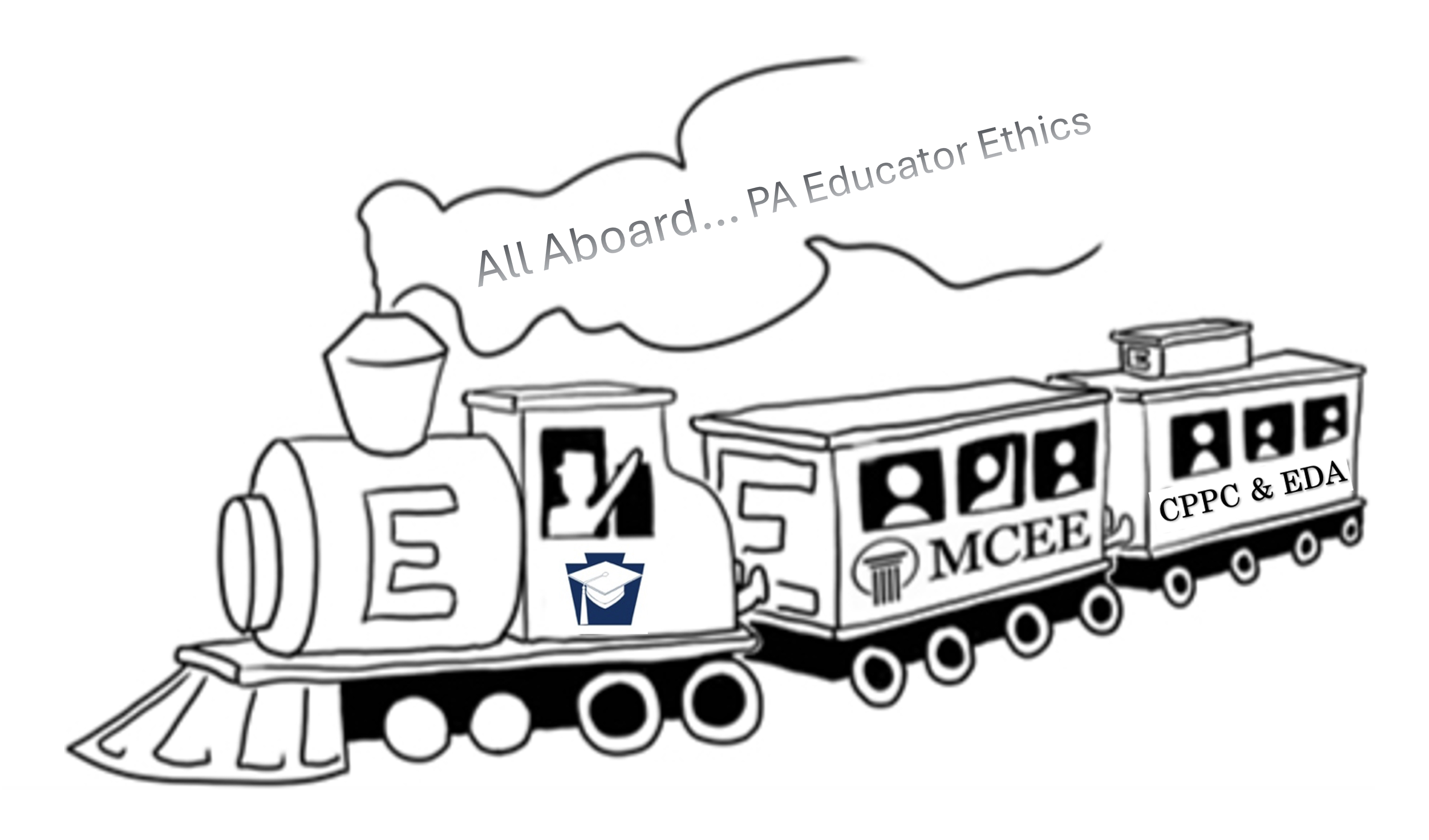







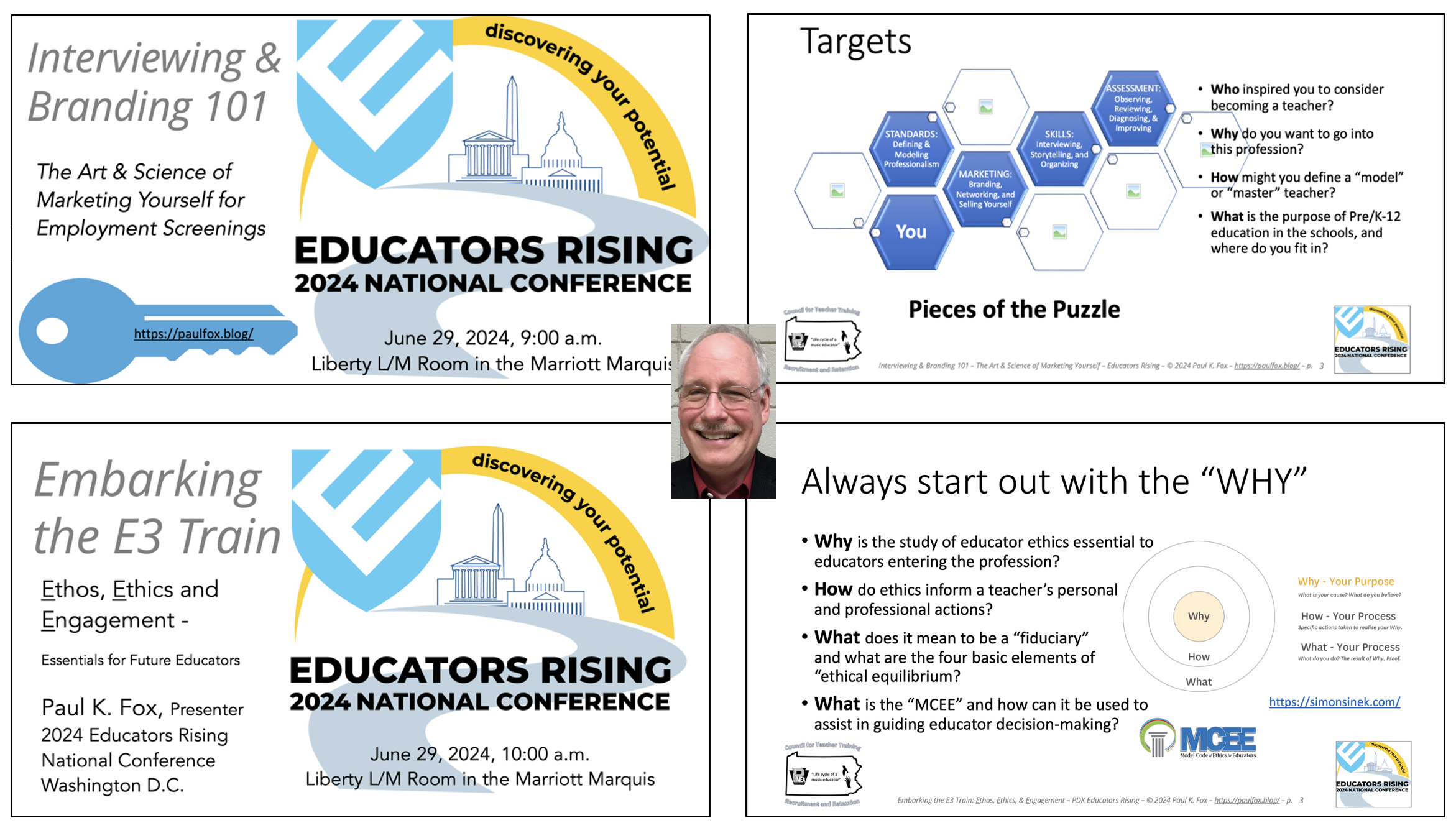
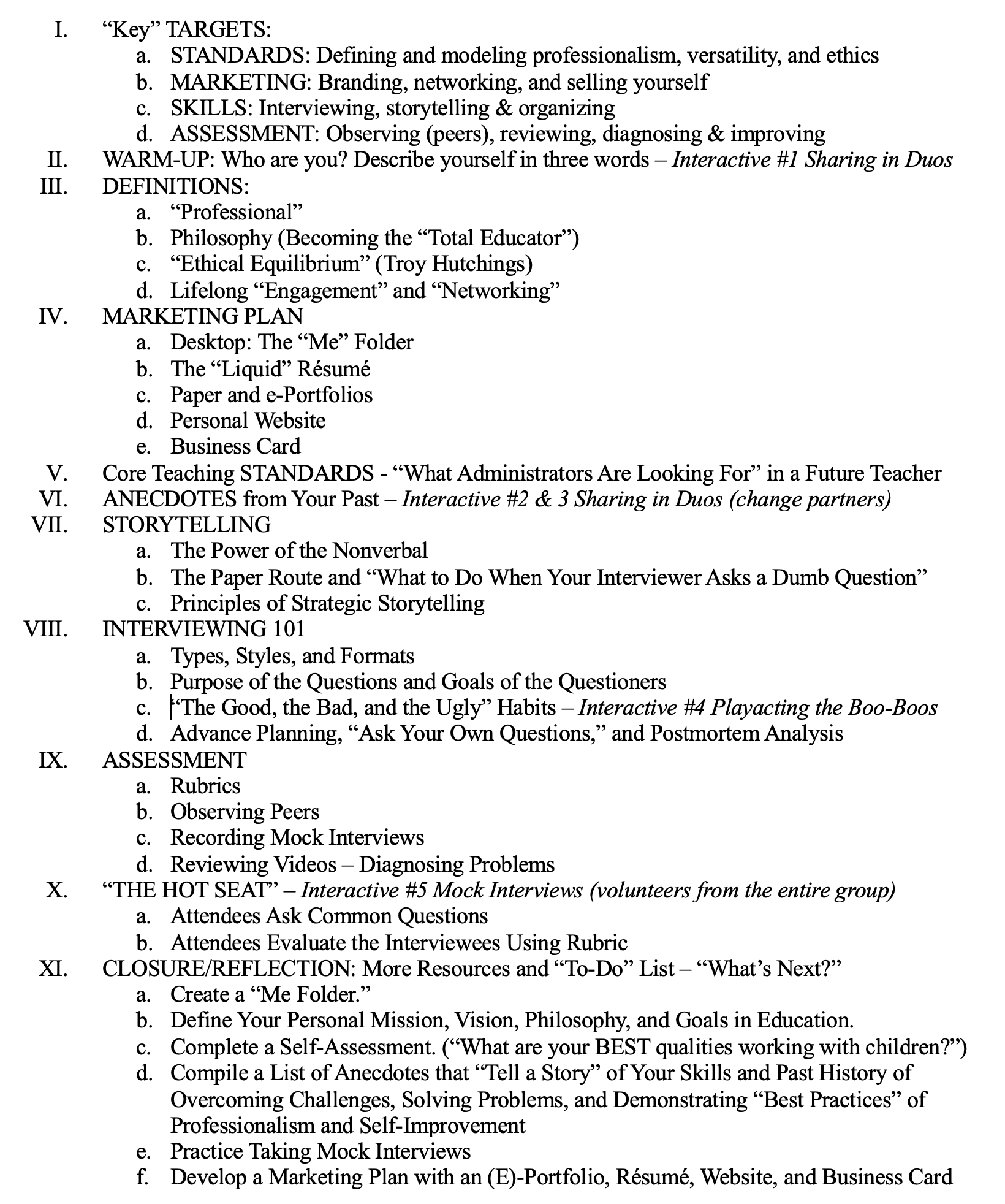

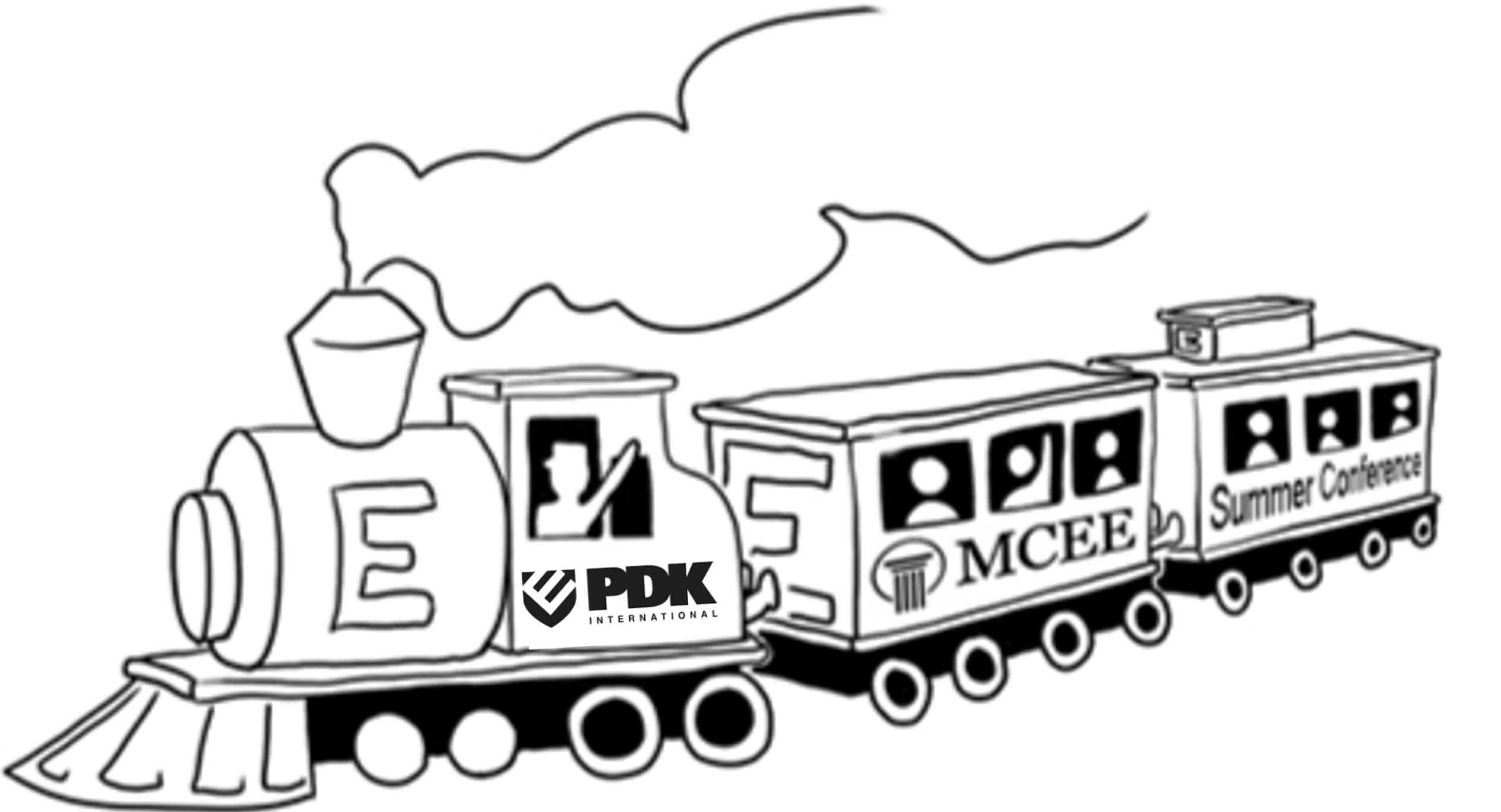
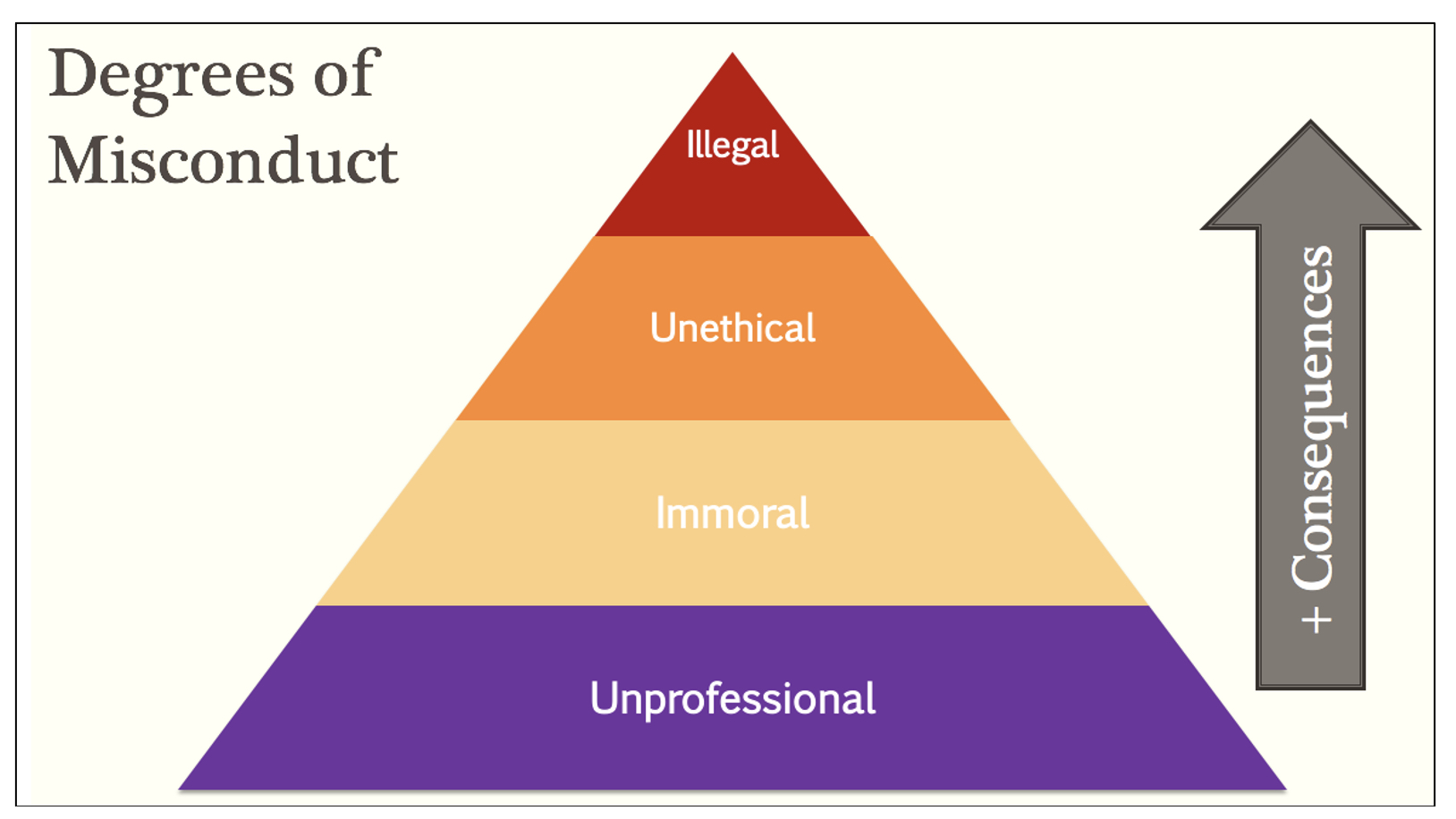



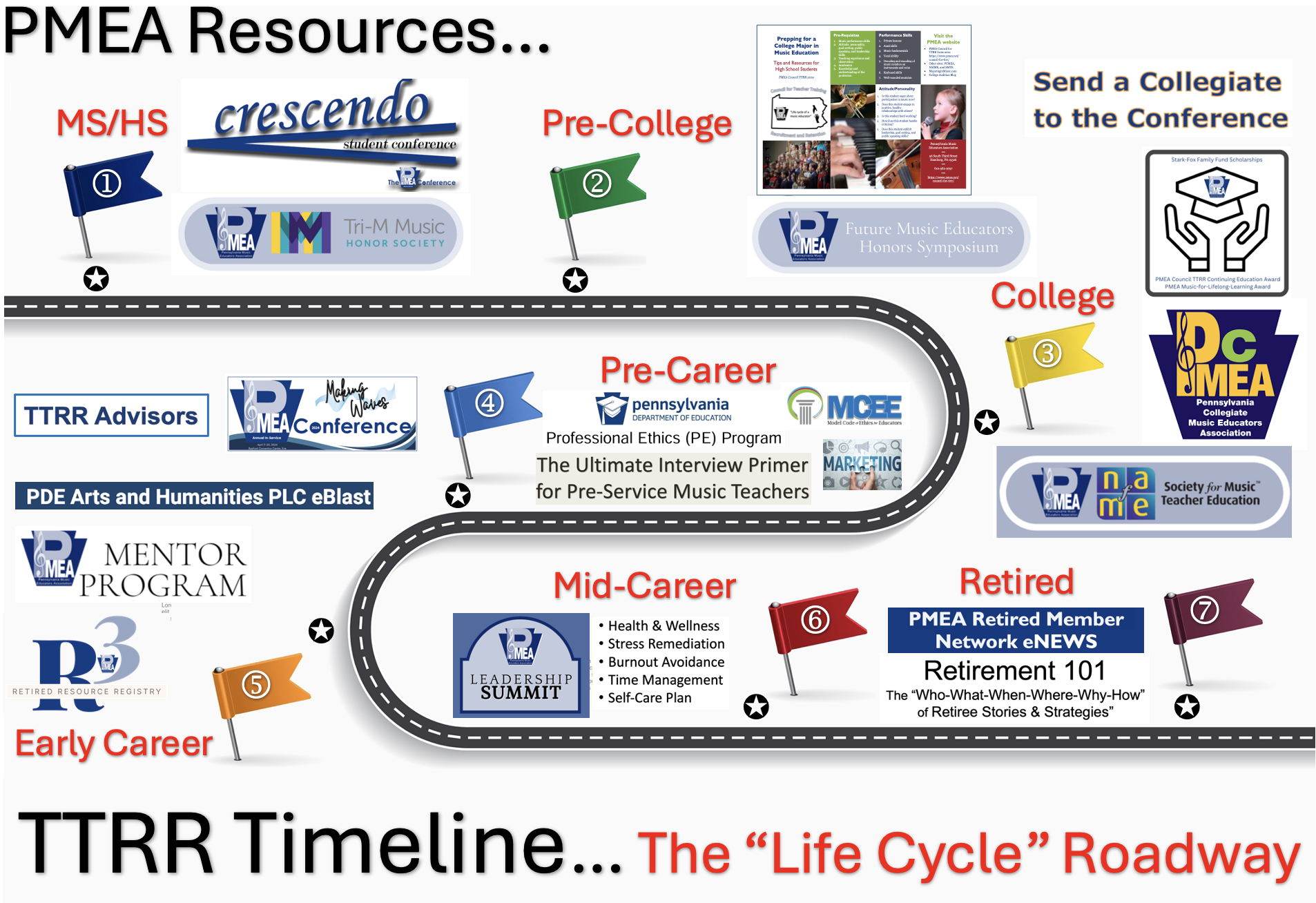

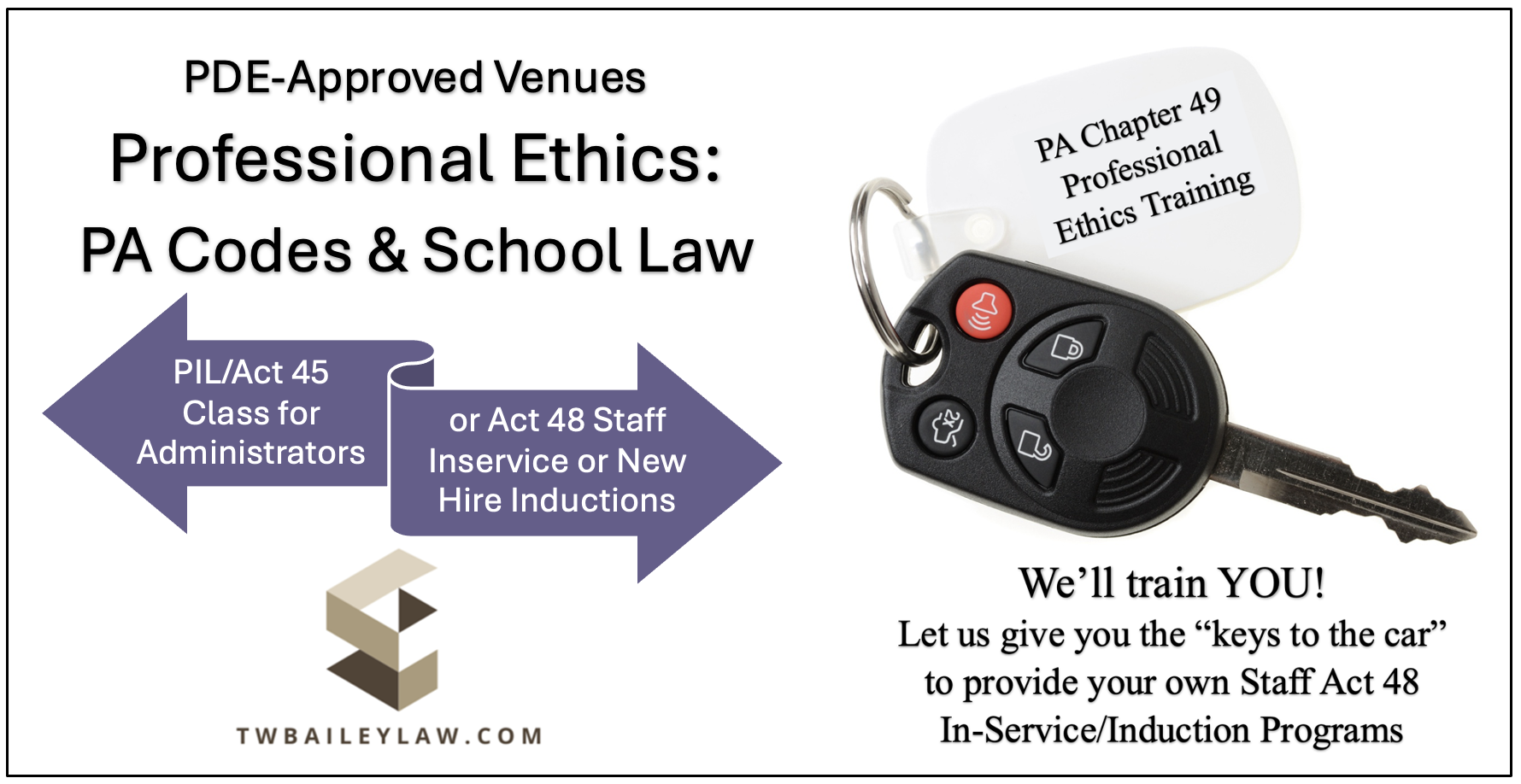







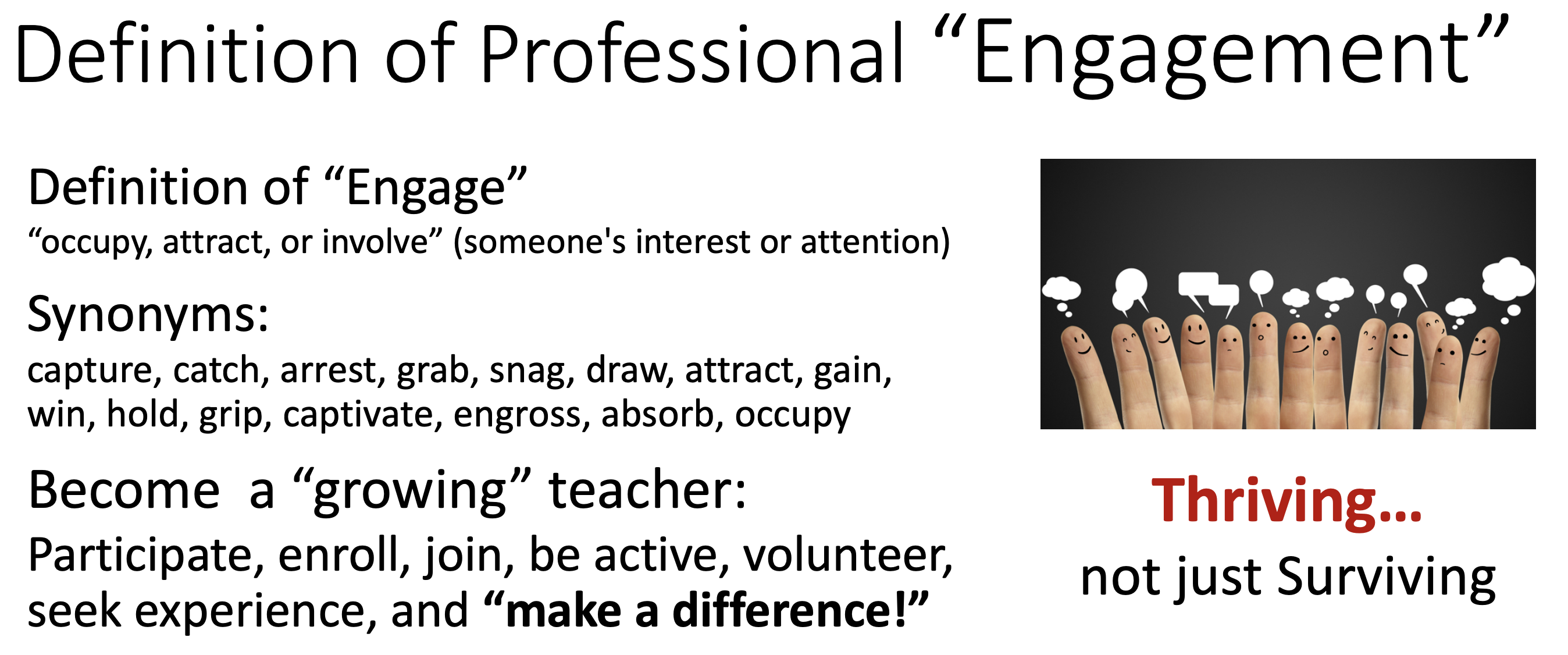



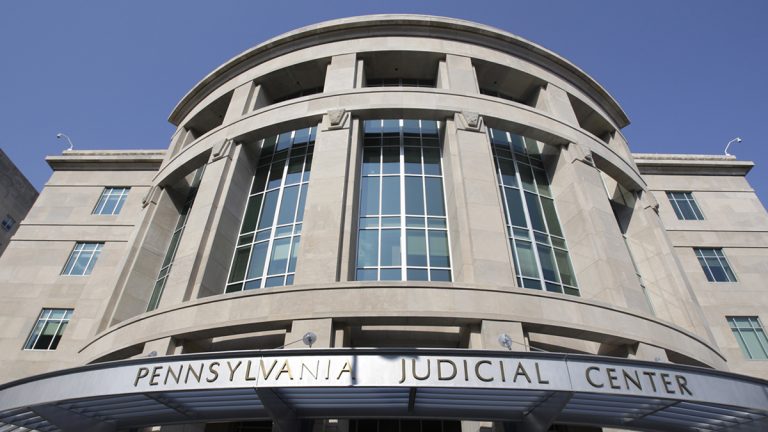
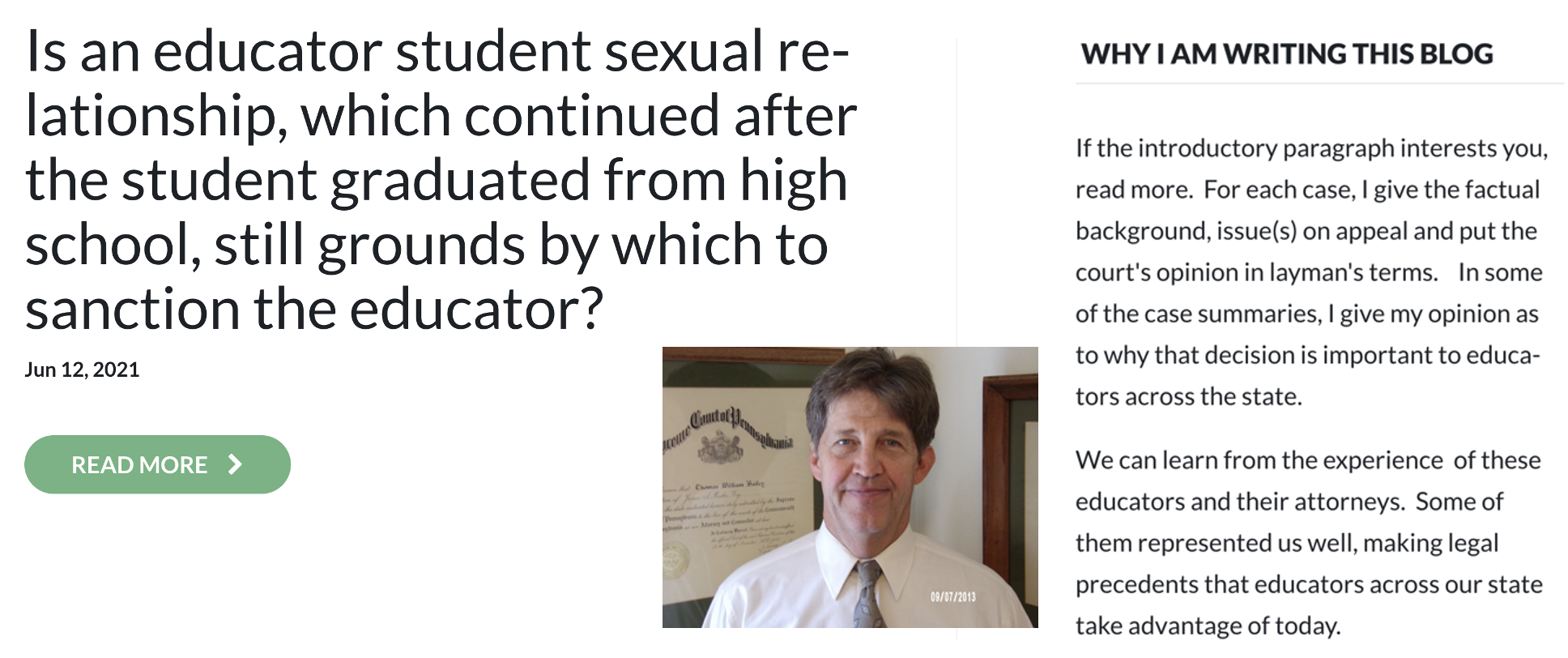

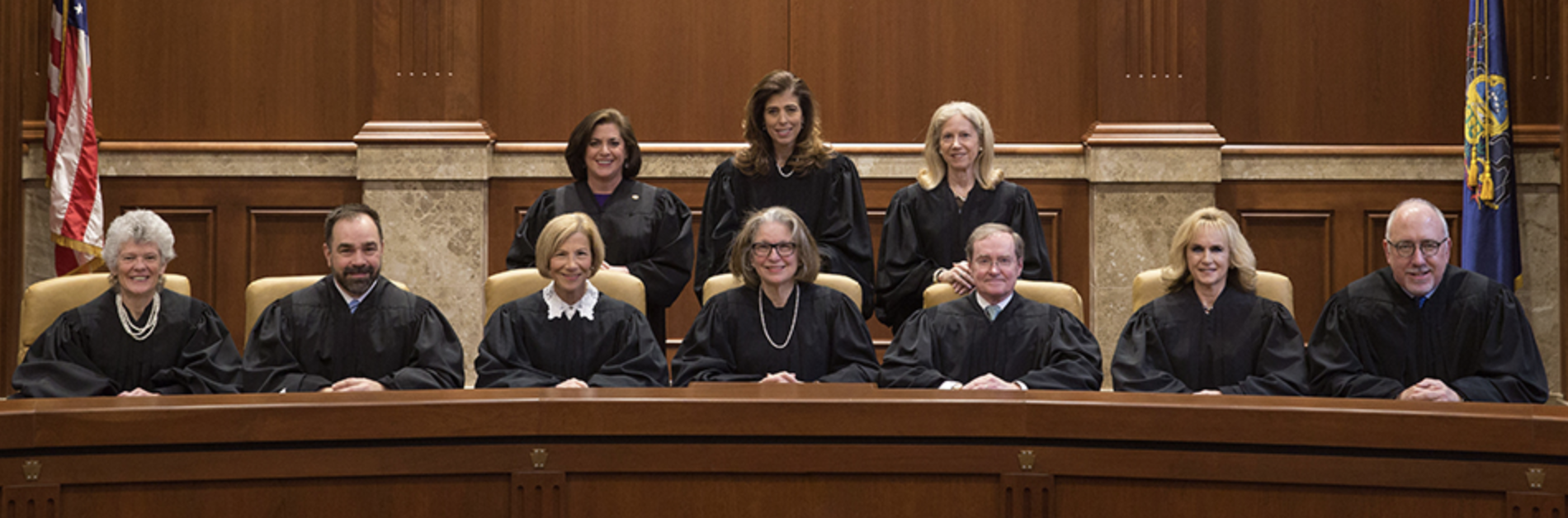



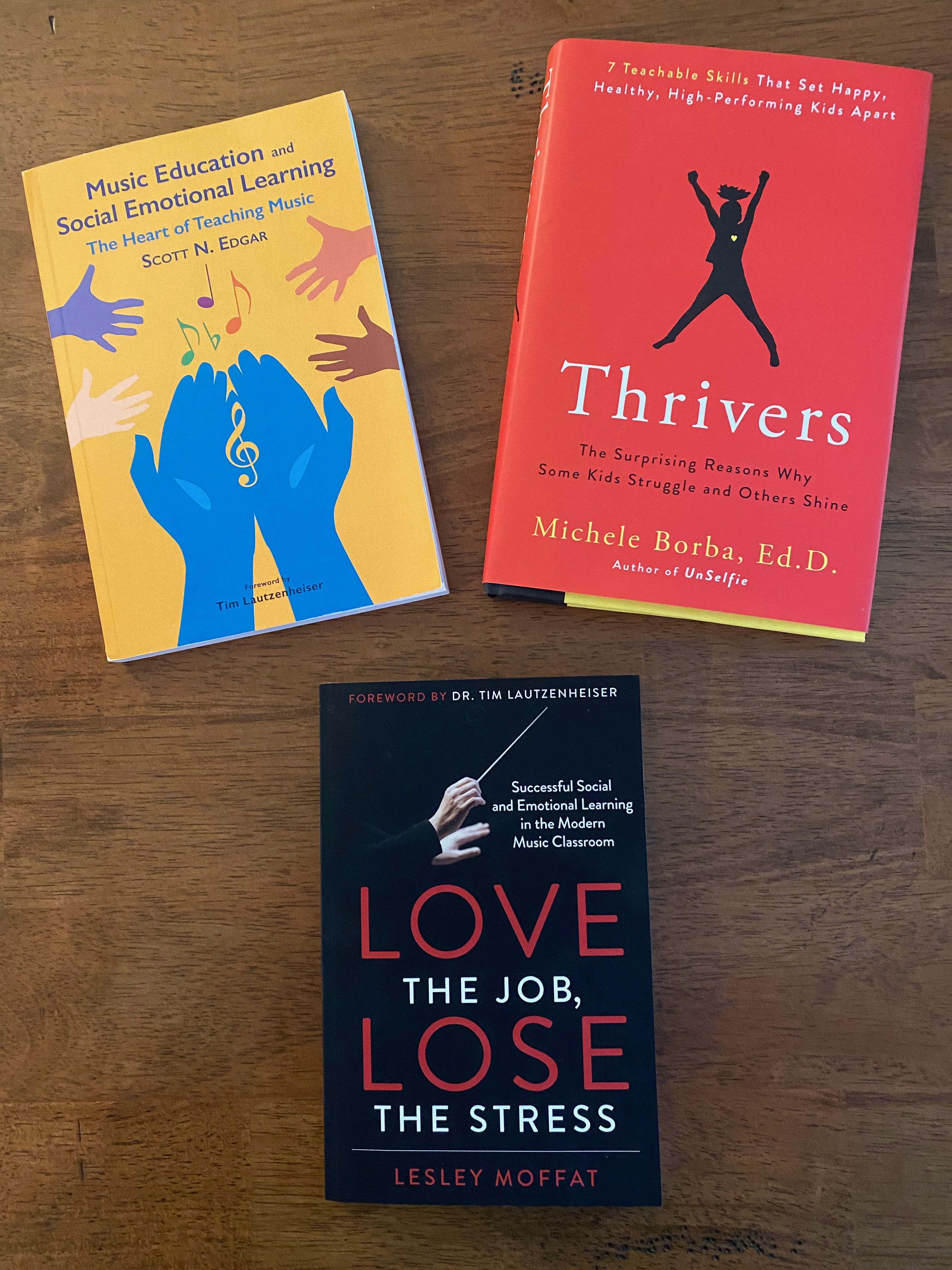

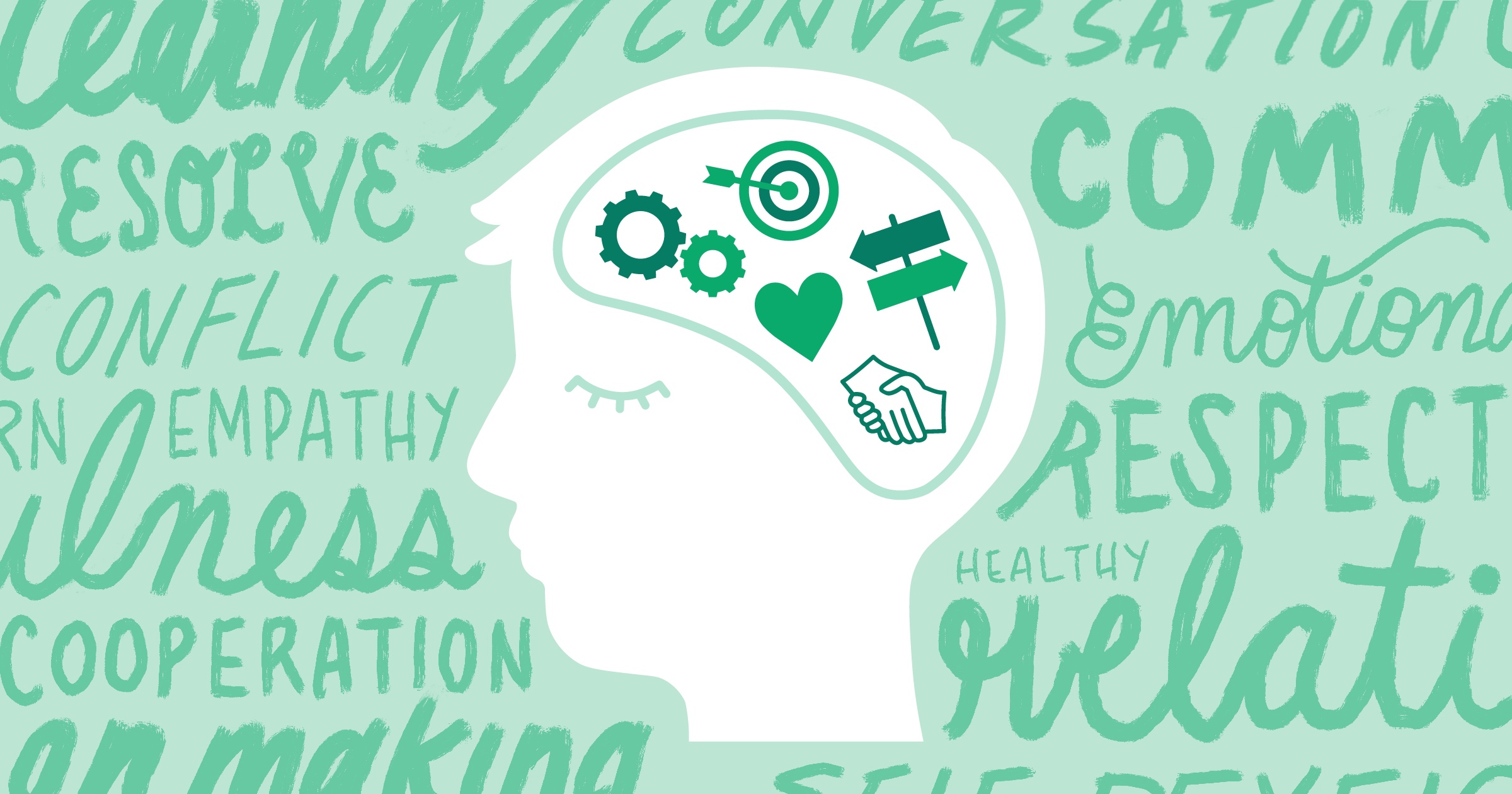

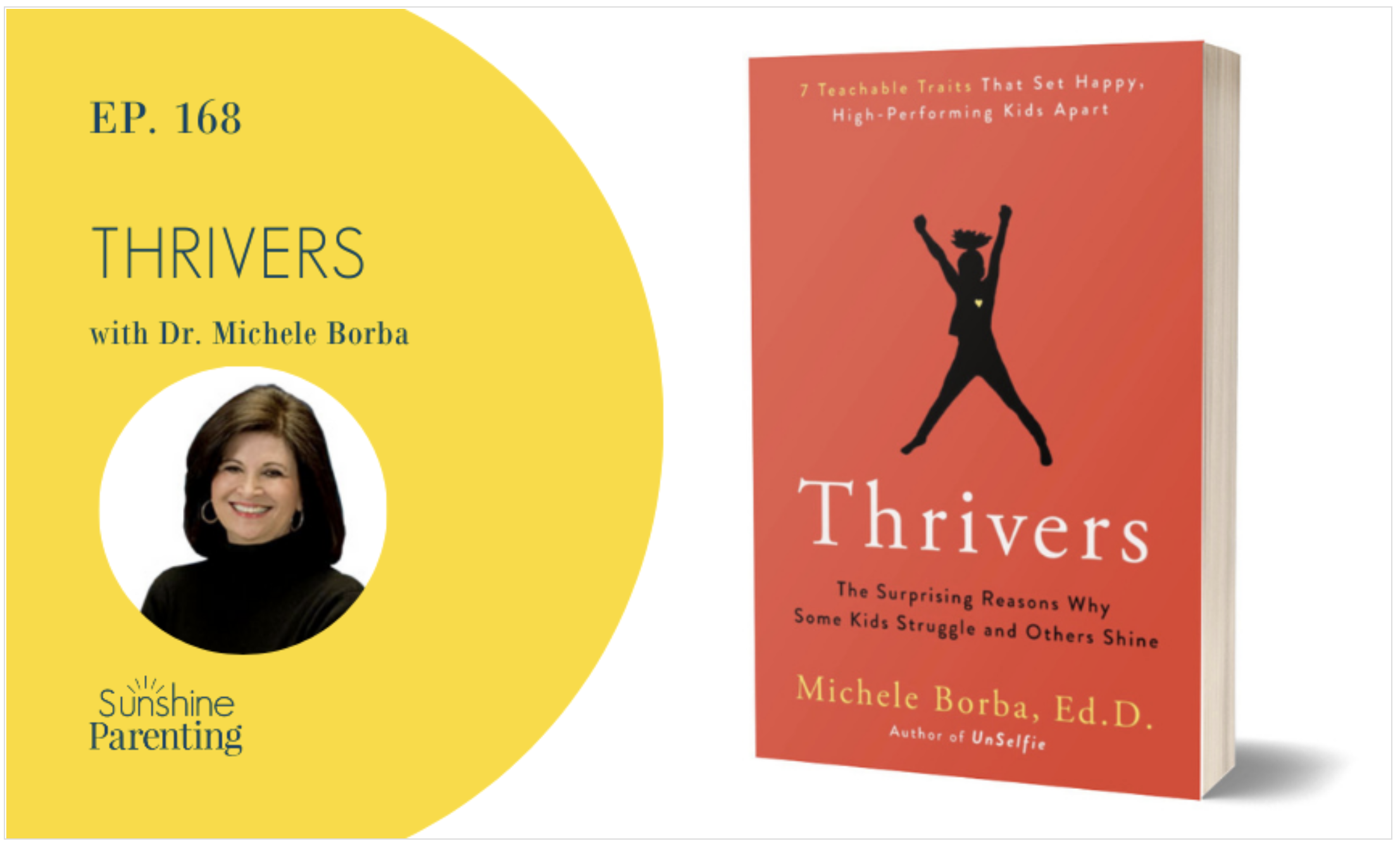
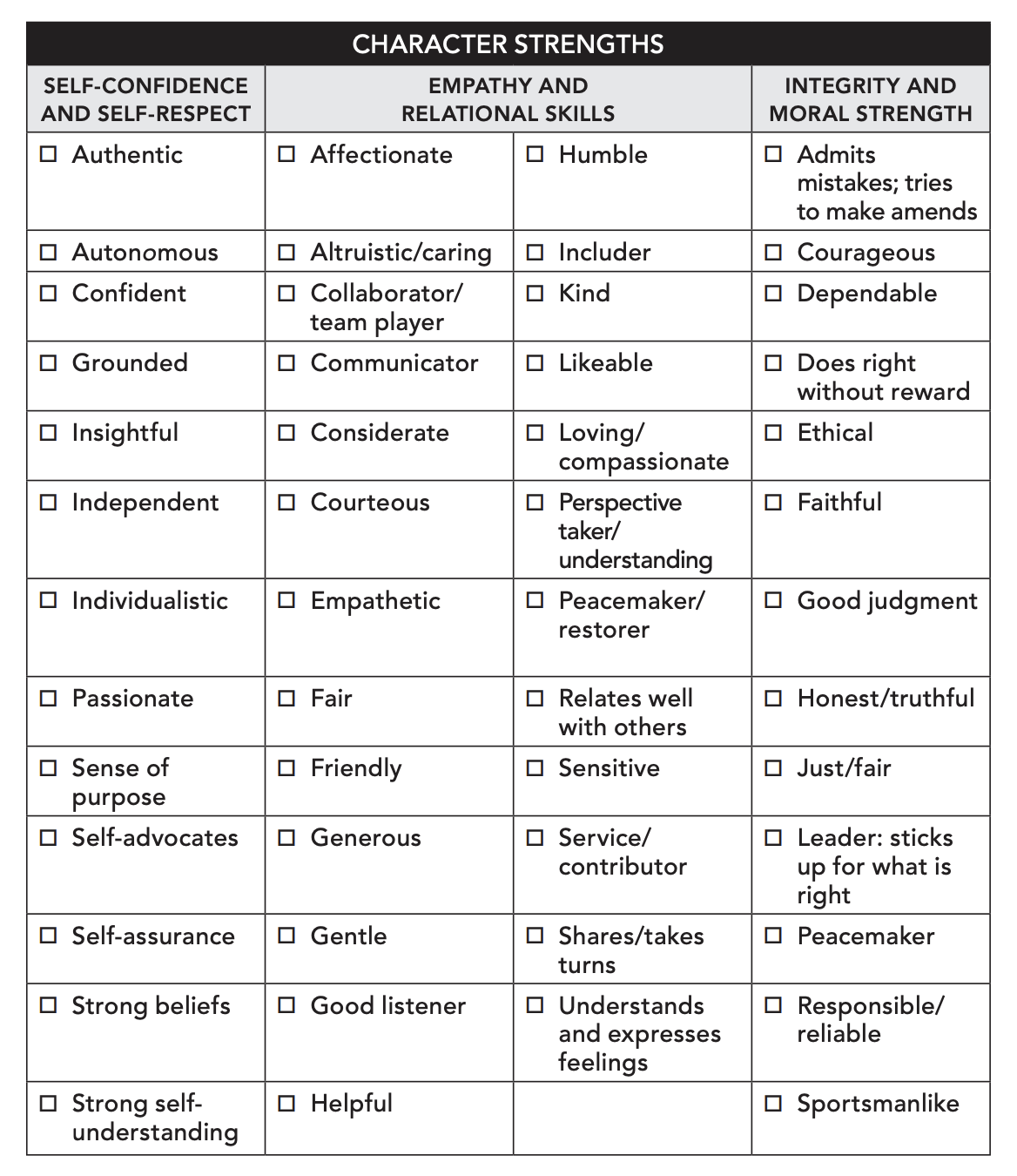
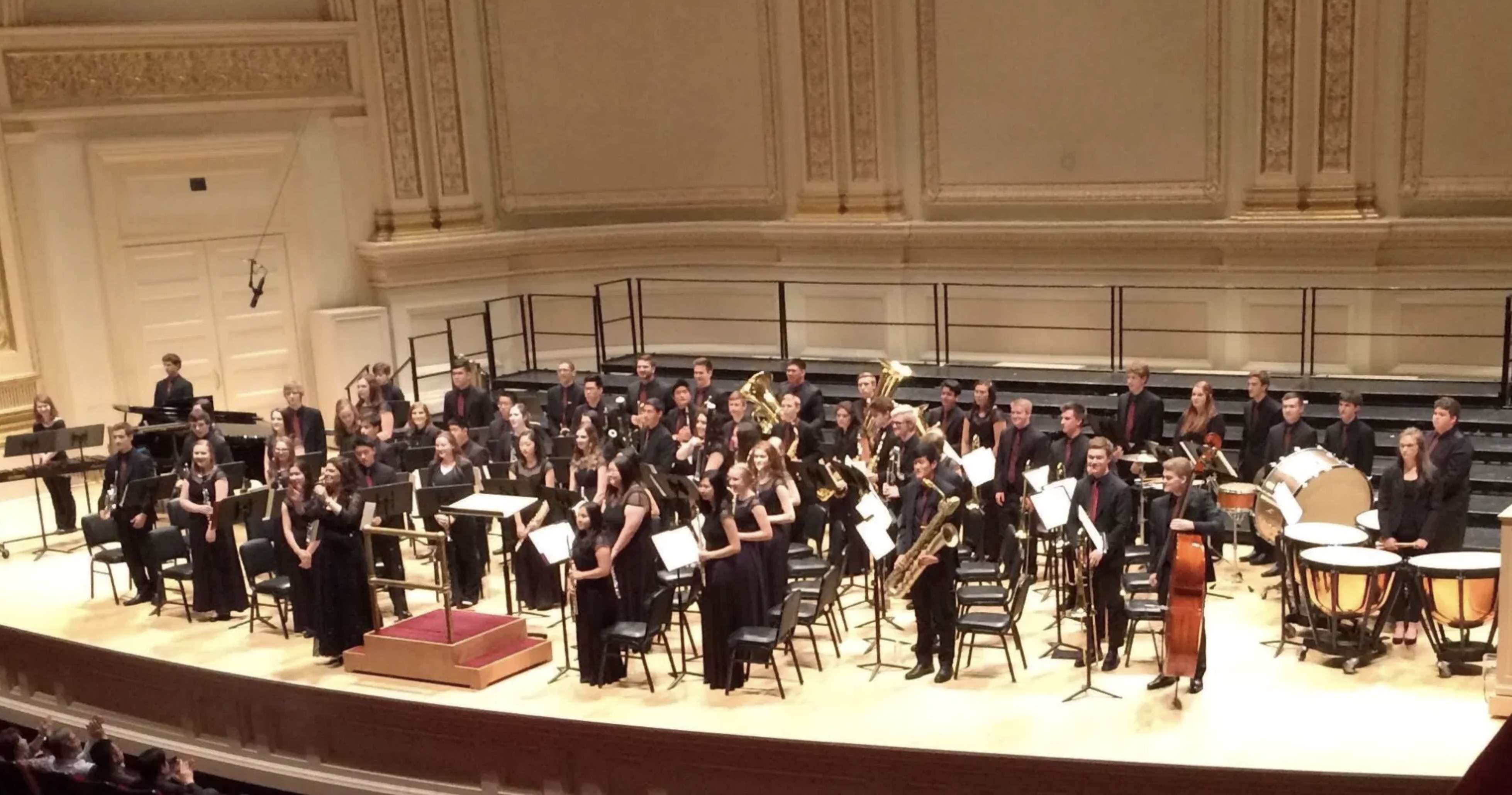
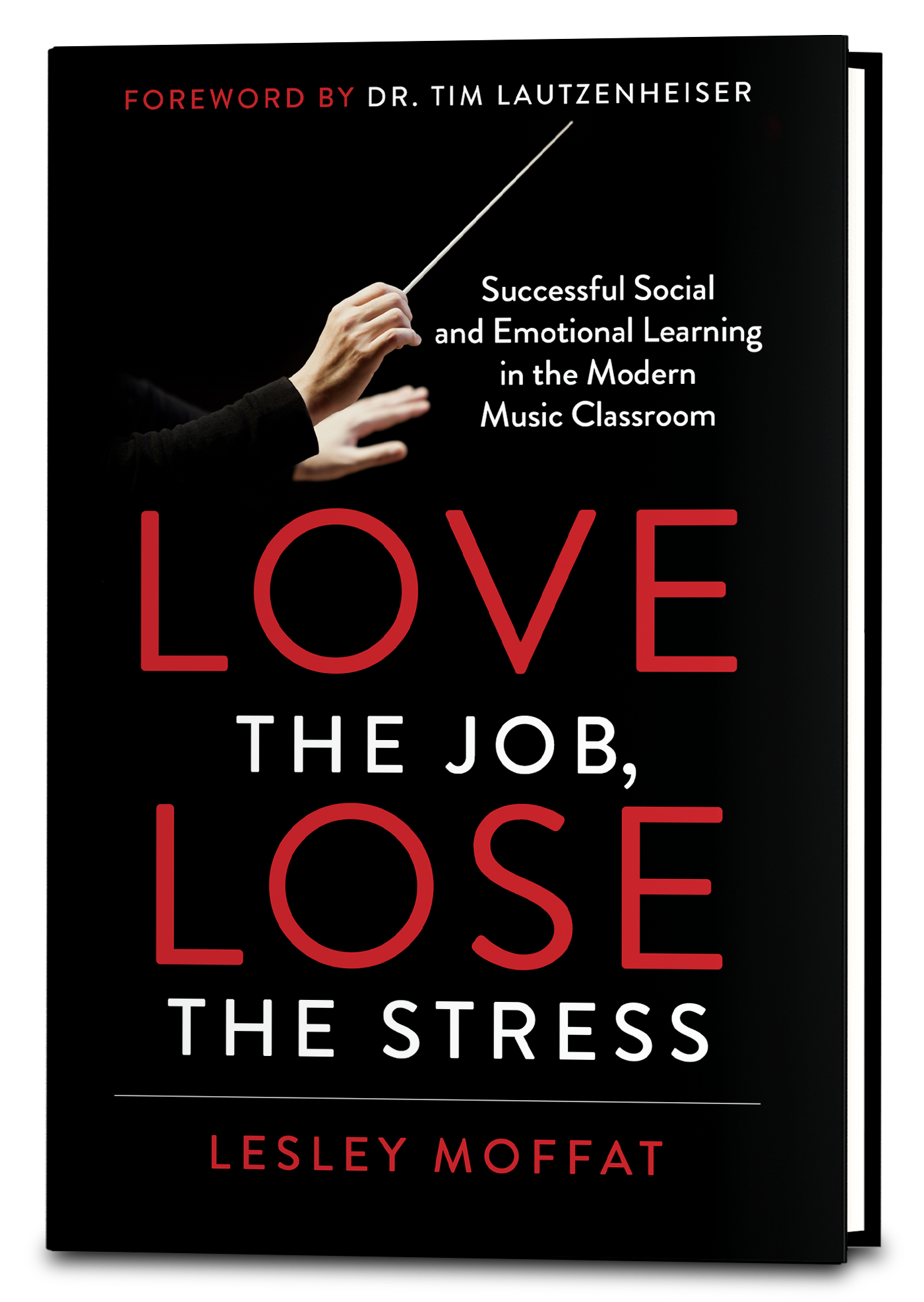
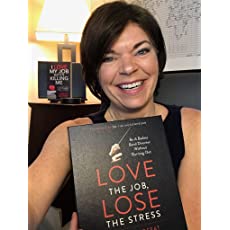
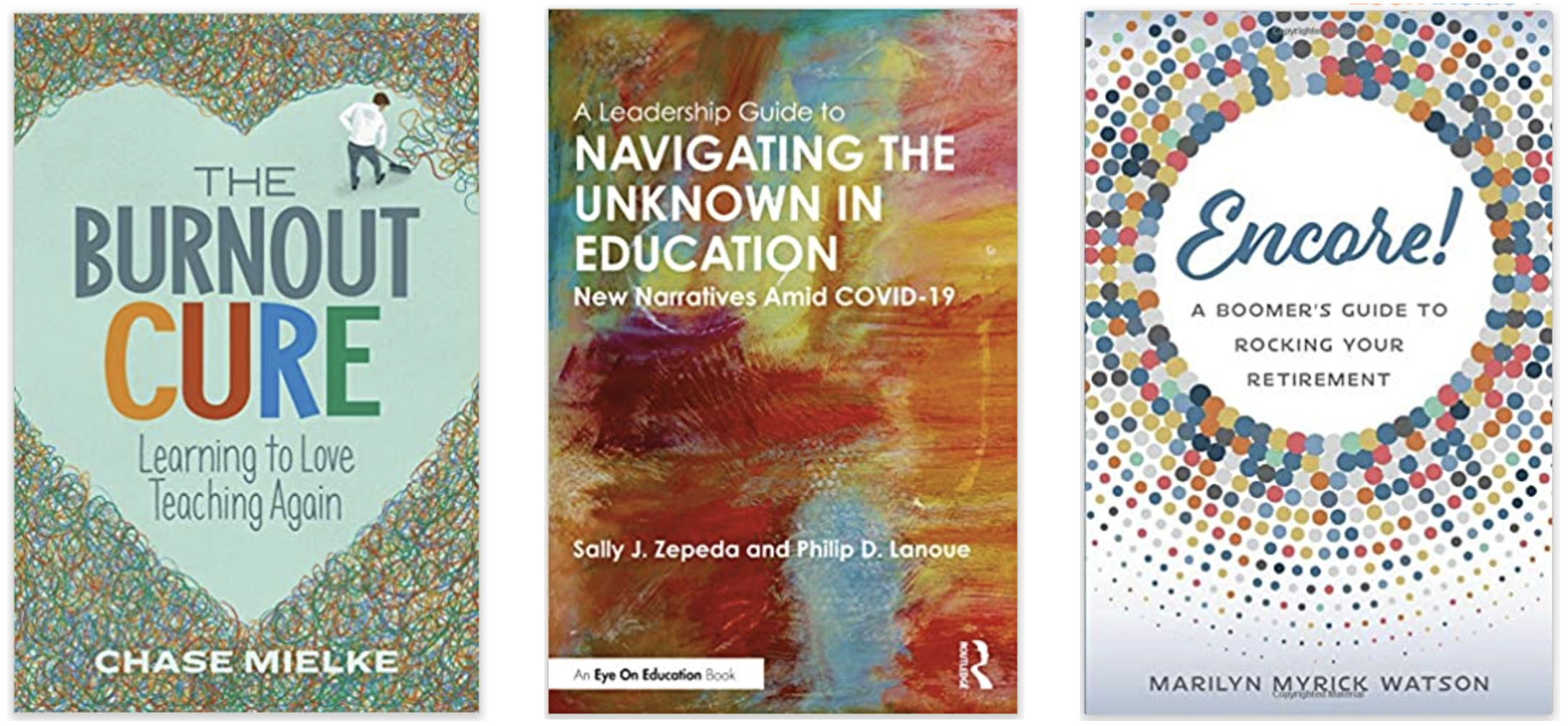





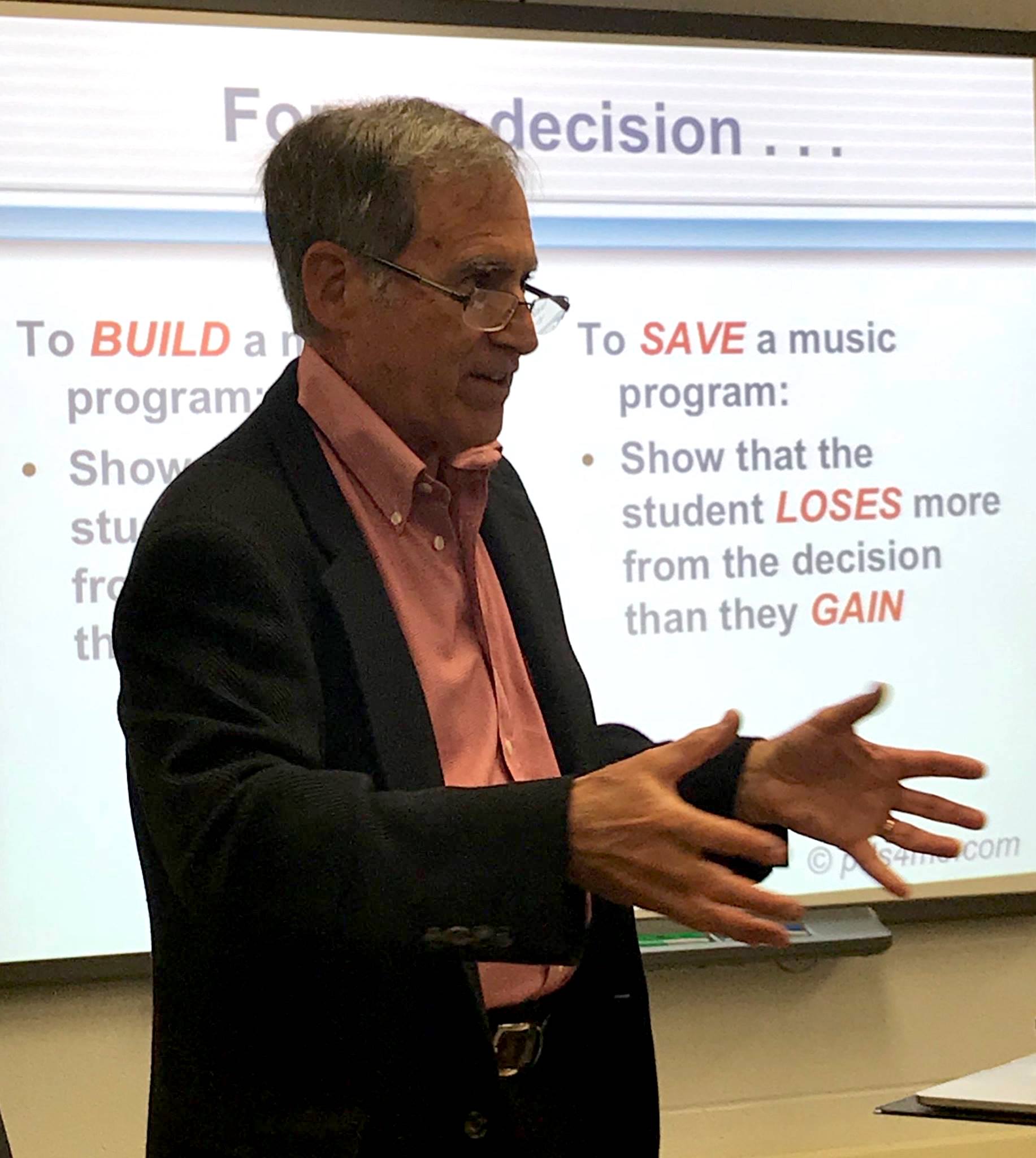 Once the WHY has been determined, then the district must determine the WHAT. WHAT learning activities need to be offered to the students in the district in order to help them achieve the desired outcomes stated in the mission? The answer to that question should help determine the curriculum for music.
 those hours would be scheduled, then the district must figure out exactly how many teachers will be needed to deliver that instruction and what qualifications those teachers should possess. The “WHO” part of the process – the staffing piece of the puzzle – should still be driven by the needs of the curriculum and should not change.
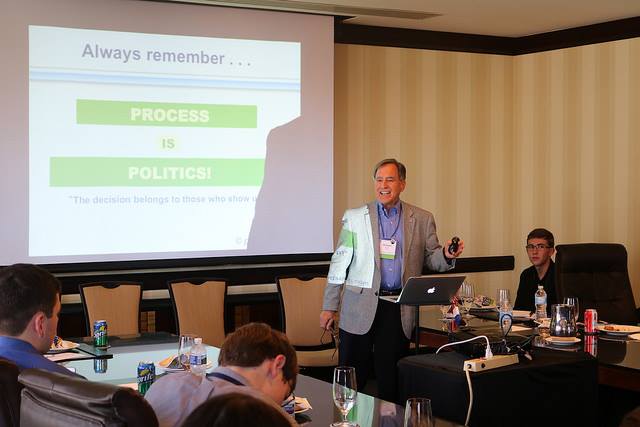 of the K-12 music program using the WHEN, WHO, HOW and WHERE pieces that we will have to work with.
 Richard Victor is currently Adjunct Instructor for the University at Buffalo Graduate School Online.

 How many class periods (not counting lunch) are structured for the academic day? Are specific grade levels or buildings organized in block scheduling, “period 0” and/or before/after-school curricular or co-curricular classes, lesson pullouts, period rotations or A/B weeks, etc.?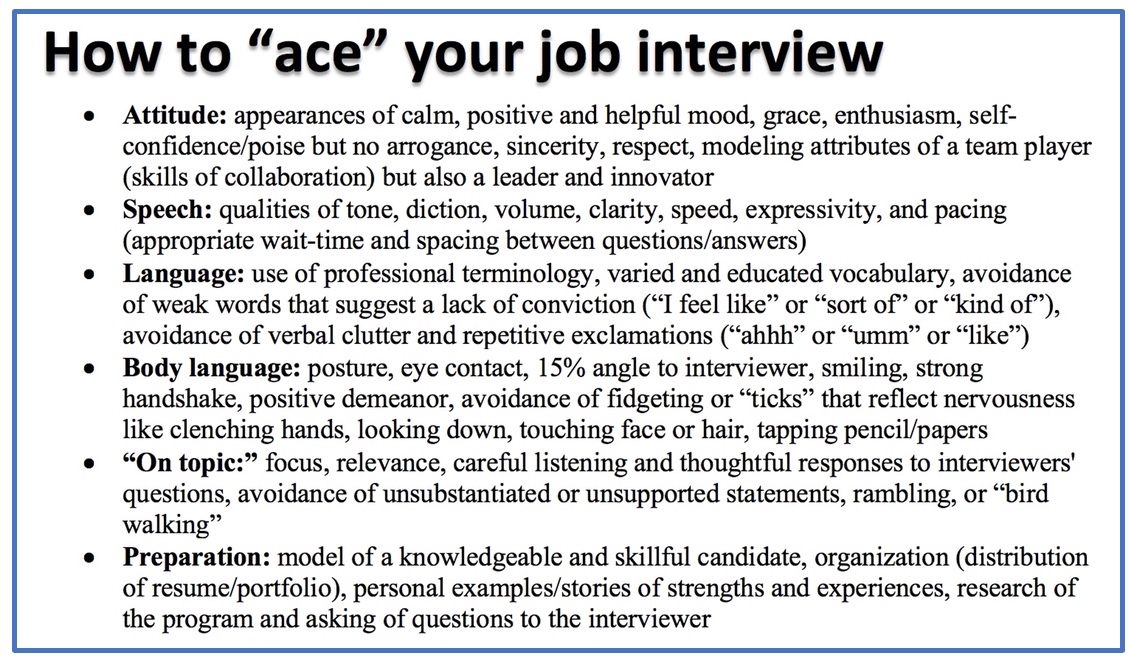
 Describe your approach to introducing a musical concept: singing matching pitches, keeping a steady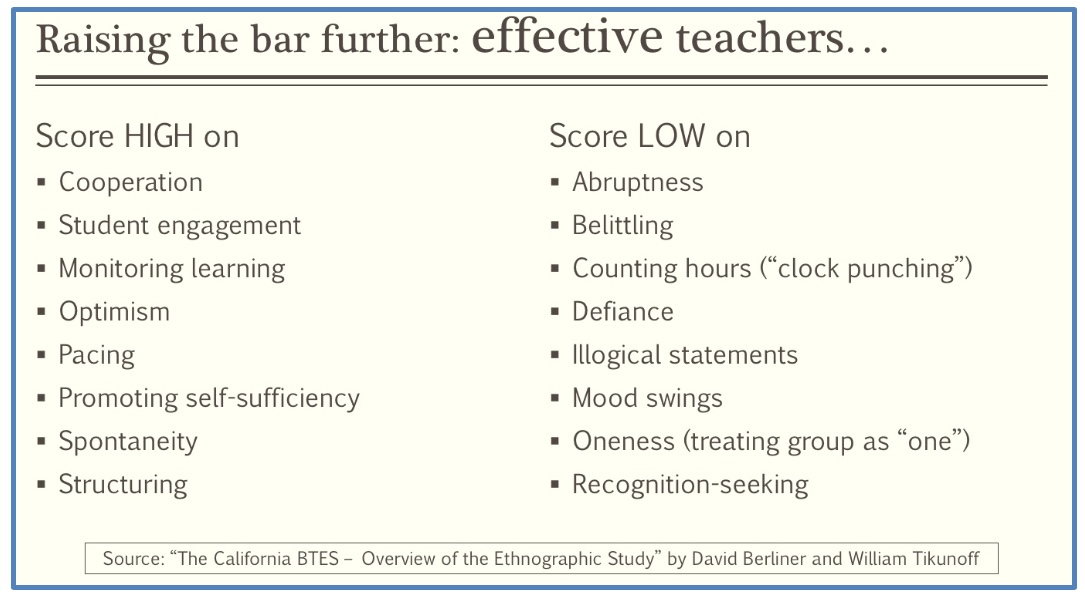
 Are you telling me it’s time to bring up more questions? Yep, to finalize your interview’s “postmortem,” reflect on these queries, which will become your focal points in preparation of your next job screening.
 IEPs – Individualized Education Program, including IDEA (disabilities), 504 plans, accommodations for special needs, differentiated and customized learning, etc.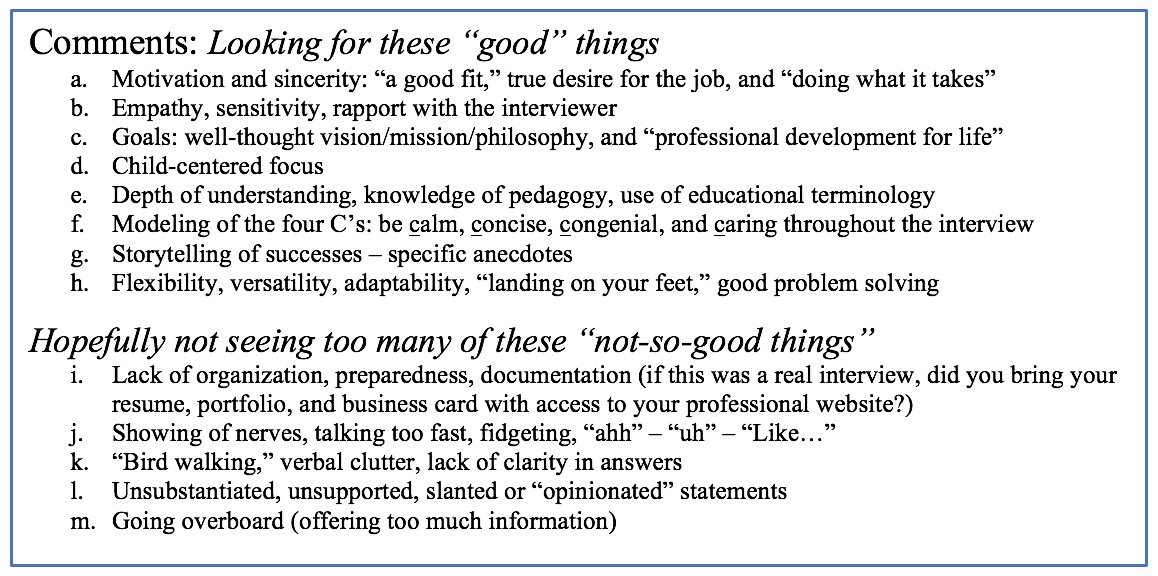

 paulfox.blog