Photo by Associated Press: Pennsylvania Commonwealth Court
Reviews of Court Cases on PA Education Regulations & School Staff Misconducts
Special thanks to guest blogger Thomas W. Bailey, current attorney-at-law and retired social studies teacher, who provides Act 48 courses of continuing education in professional decision-making, analyzing educator ethics, the law, PA Code of Professional Practices and Conduct, and discussion and interpretation of sample fact scenarios based upon classroom dilemmas.
Previously, this blog site (category = ethics) has offered numerous articles on defining issues of morality, ethics, regulations, professional aspirations, codes of conduct and codes of ethics, teacher-student relationships and boundaries, confidentiality, mandatory reporting, and reviews by “mock juries” of educator misconduct case studies. For my PMEA music education colleagues, PCMEA members, and education majors and newcomers to the profession throughout the Commonwealth, one area that still needs to be addressed is a discussion on Pennsylvania case law. One essential question is applicable to ALL pre- and in-service educators across the country: Have you informed yourself about the structure of YOUR state’s three branches of government, laws governing school staff responsibilities, prohibitions, and discipline, specific codes of conduct and/or ethics, and the judicial review process and case law?
“Ignorantia juris non excusat.”(Ignorance of the law excuses not.)
Thomas Bailey has provided an outstanding resource for learning more about PA regulations, court decisions, and putting into practice the values of ethical decision making. Below is a glimpse of his court case blog. Please visit his website for more detailed information and to sign-up for online classes: https://twbaileylaw.com/.
PA Commonwealth Court Case – Music Teacher Charged with Immorality
A male high school instrumental instructor and band director, M.T., began a romantic relationship with a 10th grade female band student (Student) in 2001 while employed for a Pennsylvania school district (District). M.T. continued the relationship with the Student to include sexual acts during her junior and senior years. The Student testified several sexual acts occurred within the District’s band room and band room office ending in 2004 with her graduation. M.T. continued to contact the Student when she attended college. Her parents complained to the District of continual communication by M.T. while their daughter was in college. In July, 2004 the District gave a written reprimand to M.T. to cease contact with the Student. M.T. continued contacting the Student after the reprimand.
The Student subsequently broke off the relationship with M.T. in the Spring, 2005 and told her parents of their sexual relationship. The parents then contacted the District where M.T. was still employed.
In April, 2005, M.T. was suspended without pay by District based upon the parent complaint.
On November 7, 2007, the Pennsylvania Department of Education (PDE) filed a Notice of Charges with the Professional Standards & Practices Commission (Commission) and served a copy to M.T. Charges from the Educator Discipline Act (EDA) included immorality, negligence, intemperance, cruelty, incompetence, sexual abuse or exploitation, and violations of the Code of Professional Practice and Conduct for Educators (Code of Practices). The violations of the Code of Practices included provisions prohibiting the acceptance of gifts by teachers and prohibiting sexual conduct between a teacher and student. PDE also claimed that M.T. posed an immediate threat to the health, safety, and welfare of students and sought immediate suspension of his certificates.
The Commission appointed a Hearing Officer (HO) who heard three days of testimony from the Student, M.T. and others. M.T. was represented by counsel.
The HO’s recommendation to the Commission include his Findings of Fact and Conclusions of Law which determined PDE had met its burden of proof on all but two charges. The Hearing Officer’s recommendation did not find M.T. to have given a prohibited gift to Student and that he was not an immediate threat to students. M.T. filed many exceptions with the Commission. M.T. claimed the technical rules of admissibility of evidence apply during Commission hearings, that his alleged, immoral conduct was not testified to by third party witnesses and that PDE did not offer sufficient evidence of professional incompetence, among other exceptions. PDE asserted M.T. remained an imminent threat to students.
Upon review, the Commission denied M.T.’s exceptions, found him to be responsible on all charges except the gift and immediately revoked his teaching certificates.
Issues Before the Commonwealth Court
Do the technical rules of courtroom evidence apply during an EDA hearing?
What educator conduct constitutes immorality in a relationship with a student?
What educator conduct constitutes lack of professional competence for an educator engaged in a sexual relationship with a student?
Technical rules of evidence followed in courtroom litigation do not apply to a Commission Hearing Officer. The strict rules of evidence practiced in Pennsylvania Common Pleas Courts and US District Courts are not followed. All relevant evidence of reasonably probative value may be received.
Sexual intercourse with a student inside the band room office constituted educator immorality. “Immorality is conduct which offends the morals of the Commonwealth and is a bad example to the youth whose ideals a professional educator or charter school staff member has a duty to foster and elevate.” Third party testimony to the immoral acts was not necessary. Immorality with a student violated EDA Section 9c(1).
M.T.’s professional competence in teaching kids did not appear to suffer during the sexual relationship with the student. Incompetency is a continuing or persistent mental or intellectual inability or incapacity to perform the services expected of a professional educator or a charter school staff member. Absence evidence of failure to prepare for class or uphold assigned duties, the educator was not proven by the preponderance of evidence presented to be incompetent in his actions. PDE failed to carry its burden to prove this Charge.
Importance
Immorality of educator student sexual relationship defined in detail. Criteria for professional incompetence explained as well as PDE’s burden of proof before the Commission. PDE must prove elements by preponderance of the evidence: over 50% of the evidence produced exhibits culpability. 2-25-21
M.T. v. PA Department of Education 56 A3d 1 (Pa. Commonwealth Court 2010)
M.T. pro se
Attorney Nicole Werner for Pennsylvania Department of Education
Additional Court Case Summaries on the Thomas Bailey Blog Site
It behooves us to learn more about Pennsylvania case law. Read and share these additional analyses They will enlighten you and may foster additional discussion with colleagues. Feel free to post your own comments on Thomas Bailey’s website.
Slater v. PDE & Professional Standards Commission: If an educator is arrested for new criminal charges alleging conduct which appears to pose a threat to the welfare of students, will their certificate immediately be suspended pending outcome of the new charges?
Nichols v. ARIN Intermediate Unit 28: Can a school entity’s local policy restrain employees from wearing religious emblems as jewelry, but allow secular emblems to be worn?
Cleveland Board of Education v. James Loudermill: May a school district employee be dismissed without prior opportunity to respond to allegations of wrongdoing or be forced to wait nine months later to determine if the dismissal was proper?
Horosko v. Mt. Pleasant Township SD:May a school entity terminate an educator if she does not “command respect and good will of the community” surrounding the school?
The final court judgment (Horosko v. Mt. Pleasant Township SD above) is one of the oldest, dating back to 1939, and may be considered the foundation and precedent for current PA school employee regulations and discipline, especially in the confirmation of the following quote from the PA Professional Standards and Practices Commission of the Pennsylvania Department of Education:
“Professional expectations do not always distinguish between teachers’ on or off-duty conduct. Accordingly, teachers must act in their private lives in a way that does not undermine their efficacy in the classroom, demean their employing school entity, or damage their position as a moral exemplars in the community.”
What you say or do, both inside and outside the classroom, can and will affect your teaching effectiveness, professional reputation, and school employment status! But, if it is ever needed, be sure to know and exercise your rights, obtain the advice of a competent attorney, and avail yourself of due process.
Teachers, you’re in the home stretch now! You are within weeks of a long vacation break and the chance to rest, refresh, recharge, rewind, and rejuvenate. After what COVID-19 dished out to us, you deserve some time off! Here comes much-anticipated trips, family visits, sleeping in, and going dormant for at least 2-3 weeks!
However, most music educators never totally shut down. We seek out new enrichment opportunities by attending conferences or music reading workshops, researching new methods, and “retooling” for our lessons ahead.
Modeling the annual Peanuts comic strip’s January theme of Lucy Van Pelt assigning Charlie Brown a long and unwanted list of New Year’s Resolutions, yours truly (a retired teacher with a lot less stress) is about to do the same and recommend YOU kick off your shoes, climb into a comfortable lounge chair, tune out all extraneous noise and media distractions, and crack open some “serious summer reading…”
Here are my three favorite books for the season to take with you when you go to the beach or sit by the pool!
In keeping with an alliteration of all those “r’s” to promote healing and health during this “recess,” take time to prepare for 2021-2022 and reflect on and restock your reservoir of resilience, robustness, and resourcefulness!
Yes, the values and life skills of emotional/mental/social “balance” begin at home. But the expectation is that schools and teachers are always relied upon to be the “safety net” – pick up the pieces or fulfill the needs not provided at home. And it should not have taken a pandemic for us to discover how important social emotional learning (SEL) is to the health, wellness, and success of every child (and their family members) we serve in our classrooms, ensembles, lessons, and after-school programs.
“Music educators are in a prime position to help students become socially and emotionally competent while at the same time develop excellent musicianship. For every child to be successful in the music classroom, teachers need to be aware of the whole student. How do music educators create success when students every day struggle with social awareness, bullying, communication, problem solving, and other challenges? This pioneering book by Scott Edgar addresses how music educators can utilize Social Emotional Learning (SEL) to maximize learning in the choral, instrumental, and general music classroom at all levels, and at the same time support a student’s social and emotional growth.”
— back cover of Music Education and Social Emotional Learning – The Heart of Teaching Music
“Finally! Thank you, Scott Edgar, for your willingness to walk boldly into this often trodden, but rarely addressed aspect of music education you have rightfully labeled social emotional learning. For every music educator, from preschool through a PhD program, we know the opportunity to “develop the whole person” is right in front of us each and every day. Where else in the academic community is there such a perfect forum that cultivates both the cognitive and effective growth of those involved? Ultimately, the rehearsal room/music classroom becomes a society within society, and the skills needed to grow and succeed at the highest levels are simultaneously offered in content and context. And yet, there are very few resources to guide the mentor in a positive, productive fashion. Now there is and this book is a powerful blueprint leading us to a worthy outcome and more.”
— Foreword by Tim Lautzenheiser for Music Education and Social Emotional Learning – The Heart of Teaching Music
You have a wide variety of choices to explore this topic, and all of these are from Scott Edgar!
The NAfME Professional Learning Community: Music Education and SEL – An Advocacy Tool for Music Educators accessible as a video: https://vimeo.com/426070325
Music for All webinar series:
Episode 1 – Teaching Music Through Social Emotional Learning – Composing with Heart hosted by Scott N. Edgar with guest presenters Brian Balmages, Brandon Boyd, Richard Saucedo, Alex Shapiro (composers) and Bob Morrison https://youtu.be/6HIbK23TmaE
Episode 10 – Teaching Music Through Social Emotional Learning – Narwhals and Waterfalls hosted by Scott N. Edgar with guest presenters Paige Bell and Adrien Palmer: https://youtu.be/BlbxX1DP-5c
Chapter 2: Socialization in the Music Classroom by Jacqueline Kelly-McHale
Chapter 3: Bullying in the Music Classroom by Jared Rawlings
Chapter 4: Music Educators Are Not Counselors
Section Two – Social Emotional Learning (SEL) and Music Education
Chapter 5: Self-Awareness and Self-Management in Music Education – Self-Discipline and the Music WIthin
Chapter 6: Social-Awareness and Relationship Skills in Music Education – Sharing and Communicating Through Music
Chapter 7: Responsible Decision-Making in Music Education – Problem Solving Through Music
Conclusion: The Heart of Music Education – Our Common Bond
SEL – the new “buzz word?” What is Social and Emotional Learning?
“Social and emotional learning (SEL) is the process through which children and adults acquire and effectively apply the knowledge, attitudes, and skills necessary to understand and manage emotions, set and achieve positive goals, feel and show empathy for others, establish and maintain positive relationships, and make responsible decisions.” — Collaborative for Academic, Social, & Emotional Learning
Social emotional learning describes the development of skills in three domains: self, others, and responsible decision making.
“Self” includes:
Self-awareness skills such as ability to identify and recognize emotions
Self management skills such as perseverance in the ability to manage impulse control
“Others” includes:
Relationship skills such as cooperation, empathy, and respectful communication
Social awareness skills such as the ability to recognize diverse thoughts and opinions.
“Responsible decision-making” includes:
Behavioral skills such as situation analysis, anticipating consequences and generating alternative solutions.
Cooperative skills such as balancing personal in group expectations.
The three key pillars of SEL:
identity
belonging
agency
Probably the best conclusion I have ever read about the value of SEL in the arts comes from Scott Edgar in the last section of his book:
“The music classroom is a melting pot of students from different backgrounds, musics of different cultures, varied personalities, and diverse values. All of this diversity is united under the common bond of music… Music classrooms, possibly more profoundly than any other academic setting, can help students and teachers cooperate to recognize diversity, engage in respectful dialogue to resolve conflict, and empathetically respect human dignity, because this is how music has functioned for centuries. Music classrooms are social because making music is, has, and always will be a social activity. In a time when there are so many divisive forces, music and music education can be a powerful uniting weapon. The tenets of SEL interwoven into a musical education strengthens both entities. Emphasizing self- and social-awareness makes music education richer and more personal. Music education brings humanity and culture into a world of personal and interpersonal interactions.”
Seven Teachable Skills to Cultivate & Nurture THRIVERS
The latest book by Michele Borba, Ed.D., Thrivers – The Surprising Reasons Why Some Kids Struggle and Others Shine, is a definite must-read from cover-to-cover.
“Michele Borba has been a teacher, educational consultant, and parent for 40 years – and she’s never been more worried about kids than she is right now. The high-achieving students she talks with every day are more accomplished, better educated, and more privileged than ever before. But the old markers of success (grades, test scores) aren’t what these kids need to thrive in these uncertain times – and they know it. They’re more stressed, unhappier, and struggling with anxiety, depression, and burnout at younger and younger ages – “We’re like pretty packages with nothing inside,” said one teen. Thrivers are different: they flourish in our fast-paced, digital-driven, ever-changing world. Why? Dr. Borba combed scientific studies on resilience, spoke to dozens of researchers/experts in the field, and interviewed more than 100 young people from all walks of life, and she found something surprising: the difference between those who struggle and those who succeed comes down not to grades or test scores, but the seven character traits that set Thrivers apart (and set them up for happiness and greater accomplishment later in life).”
— from the front flap of Thrivers
The first thing you need to do (after you order and read both her original best-seller UnSelfie – Why Empathetic Kids Succeed in Our All-About-Me World and this sequel) is to download her give-away “Core Assets Survey” from https://www.micheleborba.com/wp-content/uploads/2021/03/Thrivers_CoreAssets.pdf. Here is a sample page of her assessment checklist for her seven character strengths.
How to use Borba’s book
Although it is generally marketed as a guide for parents (and grandparents), this is a perfect “program and process” for everyone who serves as youth caregivers and educational professionals. Borba prescribes these steps to use the book with the above evaluation tool:
Assess your child’s character strengths: self-confidence, empathy, integrity, self-control, curiosity, perseverance, and optimism.
Tally up the points, prioritize his needs, and address initially the one or two traits receiving the lowest score.
Read each chapter of “evidence-backed strategies and skills” which can be easily transferred and taught to your child from preschool through high school.
Motivate and help your child to adopt each character strength “as a lifelong habit to optimize his potential in thrive.”
Choose one ability a month, focus on it, and “practice it with your child a few minutes a day until he can use it without reminders.”
For teachers, this is a wonderful “soft curriculum” for nurturing these seven essential personal traits, each broken down into “character strength description,” “abilities to teach,” and “outcomes.” It will become apparent to you that these are directly related to SEL.
Besides the character strengths (#1 above), the reader is introduced to several revised definitions and new acronyms that may help to reshape our perspectives for teaching kids (these are a few samples): C.A.L.M. (chill-assert-look strong-mean it – p. 239), C.A.R.E. (console, assist, reassure, empathize – p. 90), comebacks (p. 240), creativity (p. 178), C.U.R.I.O.U.S (child-driven-unmanaged-risky-intrinsic-open-ended-unusual-solitude, p. 175), digital limits (p. 78), emotions (p. 76), goals (p. 209), gratitude (p. 86), growth mindset (p. 205), micromanaging (p. 171), mindfulness (p. 133), moral identity (p. 148), multitask (p. 110), “the four P’s of peers, passion, projects, and play” (p. 163), parenting styles (dysfunctional) – “enabler,” “impatient,” “coddler,” “competitor,” “rescuer” (p. 127), triggers (p. 121), self-esteem (p. 33), T.A.L.E.N.T. (tenacity-attention-learning-eagerness-need-tone – p. 39), and well-rounded (p. 36).
Activities throughout the book are categorized for age-suitability: Y = young children, toddlers, and preschoolers; s = school-age; t = tweens and older; a = all ages.
In the final pages of the book, Borba poses some excellent group discussion questions to facilitate a thorough review of her work. A few of these especially resonated with me:
Do you think raising children who can thrive today is easier, no different, or more difficult than when your parents raised you? Why?
What influences children’s character and thriving development most: peers, media, education, parents, pop culture, or something else?
Which of the seven character strengths are more difficult to teach to children today? Why?
What kind of person do you want your child (or your student) to become? How will you help your child become that person?
What are some of the sayings, proverbs, or experiences you recall from your childhood that helped you define your values?
[As a teacher] what would you like your greatest legacy to be for your [students]? What will you do to ensure that your [children] attain that legacy?
Her specific anecdotes, object lessons, and research for each character strength are priceless!
Lesley Moffat at Carnegie Hall
LOVE the Job, LOSE the Stress
In my “New Year’s blog” posted on December 29, 2020, I shared my advice on “how to make a difference in 2021” and told readers to find their own good role models and “positive gurus” to sustain their vision, motivation, and drive throughout the year.
Someone who has recently become inspirational to me is the wonderfully uplifting Lesley Moffat, probably an expert on the search for “mindfulness” in personal life and even during her band warm ups. In my opinion, her transformative stories provide the roadmap for happiness and wellbeing! She now has published two books (you need to read both) – I Love My Job But It’s Killing Me, and Love the Job, Lose the Stress, and if you are still teaching music full-time, you need to peruse her website: https://mpowerededucator.com/.
Now her latest book ties in all of the above enrichment and enlightenment – “successful social and emotional learning in the modern music classroom” – and adds an essential focus on teacher self-care and wellness. What was that saying attributed to Molesey Crawford in Unlocking the Queen Code?
Know thyself.
Love thyself.
Heal thyself.
Be thyself.
Lesley Moffat has taught high school band for over 32 years in the Pacific Northwest, with her ensembles earning superior ratings and performing all over the US, Canada, and even in Carnegie Hall. She was planning to retire at the end of 2019-2020 when the pandemic hit. (As far as I know at this time, she has not retired yet – “for the sake of her kids” she stayed throughout this challenging time of COVID-19 and the slow reopening of schools!) She clarifies this in the introduction to her Love the Job, Lose the Stress book:
“I completed the first draft of this manuscript on March 3, 2020. Ten days later, schools across the world began shutting down as the coronavirus began sweeping the globe… The ultimate purpose of this book is to share the protocol I created that has become the basis of the social and emotional learning needs for my students (and truth be told, for me). Everything I talk about in this book was true before the pandemic, and it has proven to be as powerful in a virtual environment as it is in person… The great news is that you can give your students the gift of learning to self-regulate, calm down, and focus without distraction through intentional design and practice.”
She offers an intriguing set of easy-to-read chapters in her “hard to put down” 191-page work.
My Life’s Work Is So Much More Than Just A Job
I Love My Job But It’s Killing Me
The Badass Band Director’s Bible
Step One: The Moffat Music Teacher Mojo Meter
Step Two: Identifying the Three C’s – Care, Clarity, and Consistency
Step Three: Identifying Your Priorities
Step Four: SNaP Strategies for Music Teachers
Step Five: Tuning Our Bodies
Step Six: Creating Your Own First Four Minute Protocols
Coda
Fine
Highlights of suggestions from Love the Job, Lose the Stress
Like her last book, the Moffat Music Teacher Mojo Meter returns. If you are ever privileged to have her as a clinician for a local workshop, it is likely she may send out this survey to the participants in advance. These fifteen questions will provide her an individualized needs assessment of the stressors attendees are experiencing so she can differentiate the planning of her “help session” (page 48).
You’ll have a lot more questions to answer in Chapter 5 (page 50). Read and identify (and define for yourself) her three C’s for success: care, clarity, consistency.
In Chapter 6 (page 67), she wants you to identify your priorities. This is your chance to dream big! You’ll have to read her story (with wide swings of emotion) about her Jackson HS Honors Wind Ensemble performing at Carnegie Hall.
Also returning from her previous book, Chapter 7 (page 81) shares her Start Now and Progress – or SNaP to it – strategies for music teachers. Revisit her amazing tale about doing (of all things) push-ups: “By taking small incremental steps that build upon what I did each day before, I was able to take a skill that was very difficult for me on April 1 and do it 60 times just 30 days later.” She sums up three SNaP Strategies “for busy band directors” (page 90).
Gratitude for the attitude
Time stealers
Reset yourself
Don’t miss her Chapter 10 (page 156) and “Lesley’s Top Ten Badass Band Director Tips!”
Finally, probably worth 1000-times the price of the book and all the time you will put into it is her Chapter 8 “Tuning Our Bodies” (page 103) and Chapter 9 “Creating Your Own First Four Minute Protocol” (page 129). This is where you will take what you read, reflect on her philosophies and system of classroom management and warm-ups, and adapt it to your situation. Adding to your teacher’s toolbox the techniques of mindfulness, breathing exercises, and listening skills – and practicing them with your students daily – will make all the difference in the SEL of your own lessons and overall program.
BRAVO and thank you Lesley for being so intuitive, upfront, and personal… and being so generous in sharing your secrets!
We applaud your efforts, and agree with Dr. Tim Lautzenheiser who said in the Foreword to Love the Job, Lose the Stress:
“This latest-greatest contribution offers a tried-and-true blueprint for vocational success while embracing the critical importance of fueling one’s mental, emotional and physical health. Spot on! Bull’s eye!”
“This is not a book you read and then put on the shelf; rather it is a file cabinet of priceless data certain to boister the health, happiness, and good fortune of every (music) teacher.”
“As music teachers, we teach students how to develop all kinds of skills, from mental to physical, in order for them to be well-rounded musicians. We show them how to properly form and embouchure, the correct fingerings to use, how to read music, what proper posture looks like, how to be artistic and expressive, and so much more. And we always tell them to “pay attention and “focus.” But do we ever teach them how to pay attention and focus? The secret to getting students engaged, focused, and curious so you can teach them all the cool stuff about music is teaching them how to actually build those skills until they become habits. Once you’ve taught them how to learn, then everything else becomes a million times easier for you and for them.”
— from the back cover of the Love the Job, Lose the Stress
Now you have it… a collection of at least three potential life-changing inspirations for summer study.
In addition to these “finds,” I need to mention a couple other educational publications for your consideration (see picture below). But, first-things-first as Stephen Covey would say! Check out Music Education and Social Emotional Learning – The Heart of Teaching Music by Scott Edgar, Thrivers – The Surprising Reasons Why Some Kids Struggle and Others Shine by Michele Borba, and Love the Job, Lose the Stress by Lesley Moffat. PKF
We Need Your Help to Support Your “Kids” and Make Music Education More Effective
This message was sent to the parents and partners of the nonprofit community ensemble “for instrumentalists of all ages” – The South Hills Junior Orchestra – and participants in the SHJO Online Academy (SHJOOLA), but is applicable to all music families. School music directors everywhere need your assistance!
Another first! A special “reach-out” via Fox’s Fireside geared exclusively to music parents.
Before we start with the nitty-gritty, on behalf of music educators everywhere, let us thank you in advance for all of your commitment and collaborative efforts in support of your child’s music program!
We hope this finds “you and yours” healthy, safe, productive, and happily engaged. Since many of the schools are within a month to the end of their fall semester and second nine-week grading periods, we thought now would be a good time to step back a little and offer our assessment of how things are going.
“When life hands you lemons, you make lemonade.” In spite of the limitations brought on by the pandemic, the directors are doing everything in their power to connect with, stimulate, and enlighten the players and singers. In general, we are satisfied with the musical progress of everyone – the students are showing technical growth, mastery of the music, and even more importantly, great resiliency in dealing with these challenging times. SHJOOLA and other remote teaching or alternative music learning serve only as a temporary stopgap measures until all of us can return to our the normal “live and in-person” rehearsals. However, it looks like this may not be until Spring 2021 or later.
[Feel free to share this blogpost or this PDF link.]
We would like to elicit the help of our music parents to check in and observe the online activities of your son or daughter, and if necessary, intervene on behalf of them. This would help us improve the quality of the virtual music programs run smoothly. We have all found that online teaching is very hard. The limitations of this technology (latency and inability to sync the visual and audio portions of zoom meetings) will not allow the chance to hear in real-time performances of individual players or the group altogether. The most important “takeaway” from this message is the camera on your household device needs to be operativeand used every time we sponsor a class. In addition, it is not satisfactory for anyone to position their device so that we cannot see them, leave the meeting early, mute or disengage from the virtual lesson discussions, or turn off their camera at any time. Video feedback is the only avenue available to “monitor and adjust” our instruction during any “synchronous sessions.” We have found that Zoom runs quite well on smartphones and tablets, and the cameras on these devices will suffice if the computer hardware is not up to the task.
So, effective immediately, if your SHJOOLA child seems to be having trouble with his camera, we will notify you.
(Please let us know if you need any technical assistance. The cost of purchasing a new “web cam,” is as low as $16 at WalMart. If we cannot help you, we’ll find someone who can!)
As the character Jean-Luc Picard says in the Star Trek Next Generation series: ENGAGE! What are the number one concerns of all educators during this disruption to education caused by COVID-19, shared even by the “Plan B” strategies for music? – Loss of individual attention, sensitivity, communications, connectivity, empathy, and self-empowerment towards the pursuit of the students’ own inspired initiatives in learning!
In other words, “distance learning should not be distant.” To be effective, it needs to promote an exchange of dialogue, responsible online citizenship, and goals to reach-out andengage within this unique “music community!” (For those of you who enjoy reading about learning theory, feel free to peruse Mr. Fox’s recent educator blogpost about social emotional learning, “teacher presence,” emotional intelligence, “character” curriculum, and habits of empathy: https://paulfox.blog/2020/11/03/embracing-the-intangibles/.)
[New players may join SHJOOLA at any time. We accept out-of-town musicians, too!]
Following the advice of several members and to keep the team more “connected,” our initial SHJOOLA Zoom meetings will open 10 minutes early to allow for a little informal chit-chat! How are you doing?
REMINDER: Whether hybrid or online, attendance is mandatory. Music directors understand that, on occasion, there will be illness, family, business, or other educational conflicts necessitating the missing of a Zoom meeting. For SHJOOLA, our attendance policy is flexible, but notification of the SHJO Managing Director in advance is mandated: mdirector@shjo.org. (Please include your name and the reason for missing the session.) Considering all of the prep time your music directors are devoting to the lessons, it would only be “common courtesy” for the absentees to keep themselves up to date on what was presented, view any available archived rehearsal videos or slides posted (for SHJOOLA posted weekly at http://www.shjo.org/online-academy), and make-up all missed work within a few days of the absence. Ensembles are teams and rely on camaraderie and responsibility: “the whole is greater than the sum of the parts!”
FYI, the software embedded in our SHJOOLA MusicFirst Classroom provides access to a valuable subscription that will last through June 2021. There are a lot of great applications for members to freely explore asynchronously (on-their-own at their convenience) in order to foster self-improvements in ear training, music theory, performance assessment, sight reading, and writing/analyzing music.
In conclusion, parents, we need you to “stop on by” and observe what’s happening! For SHJOOLA, our goal is to continue offering our free professional services in making meaningful music, playing duets, performing with online soundtracks, learning new (and in greater detail) musical concepts to “grow” our musicianship and comprehension of orchestral literature, and to just have fun being successful. PKF
These things are “NOT COOL” during online music classes…
Arriving late to scheduled meetings (“early is on-time!”)
Missing sessions and not “catching up” on the missed work
Failing to download and print the music in advance
Not having instrument and music (in order) ahead of the start of the meeting
Turning off or re-positioning your camera so we cannot see you
Failing to respond to questions or participate in the discussions
Texting, emailing, or using any other device that distracts your attention
Allowing interruptions or loud noises during the class
Spring 2020 Final Lecture to the Music Education Graduate Students
by Rich Victor, PMEA Past State President and Adjunct Instructor for the University at Buffalo Graduate School Online
Originally posted in the Facebook group PLAN: The PA Leadership Advocacy Network
This course, “Supervision of Music Learning Programs,” was focused on programs as they existed before this year. Obviously, some things have changed.
What has changed and what has stayed the same? To answer that question let’s take another look at this graphic from Unit 4.
All decisions should flow from the mission statement. That should not change.
As you discovered, most school district mission statements focus on ideals such as “success, life-long learning, and becoming responsible citizens in the community.” An effective music department mission statement will be in alignment with the stated district mission. It will inform the administration and the community how the study of music helps the district achieve their stated mission through the skills and knowledge children learn in music. It also explains what children would lose if the subject were not offered because no other discipline is available in the school district where children can learn those skills and knowledge as well as in music classes.
The school mission and the department mission define the WHY.
Once the WHY has been determined, then the district must determine the WHAT. WHAT learning activities need to be offered to the students in the district in order to help them achieve the desired outcomes stated in the mission? The answer to that question should help determine the curriculum for music.
The content for the music curriculum is determined partially by the district and department missions, partially by state mandated Arts Standards, partially by local school district inter-disciplinary curriculum requirements, and partially by the music department’s desire to provide each child with a comprehensive and high-quality music education based on National Standards.
The outcomes from those learning activities – the WHAT – should not change.
In pre-COVID-19 times, the next decision would be to determine how much time is needed for students to master the curriculum and succeed in their activities. How many years will each facet of that curriculum require? How many hours of instruction should be allocated in each year and WHEN should that time be scheduled in order to provide the maximum number of learning opportunities for each child?
The WHEN might stay synchronous or change to asynchronous instruction. The number of instructional hours provided to each teacher and each subject may need to be flexible. That is yet to be determined and we should prepare for all possibilities. However, keep in mind that the WHEN should not alter the WHAT.
Once it is decided how many hours of instruction should be allocated annually and when those hours would be scheduled, then the district must figure out exactly how many teachers will be needed to deliver that instruction and what qualifications those teachers should possess. The “WHO” part of the process – the staffing piece of the puzzle – should still be driven by the needs of the curriculum and should not change.
It will be the HOW and WHERE parts of this process where the largest changes will occur.
Obviously, the decision WHERE teachers and students will be in the fall will impact HOW music will be taught and what equipment and materials can be used for learning activities.
Facilities in school buildings must be adapted to provide appropriate space for instructional activities to take place and to conveniently store all of the materials and equipment used in those activities while following whatever social distancing protocols and approved procedures for safely handling musical materials are adopted. The WHERE may continue to be the student’s home or a combination of school and distance learning. Once again, we need to prepare for all possibilities.
The most important thing to keep in mind is that the outcomes of the K-12 music curriculum – the WHAT – should not change. Teachers need to keep “the end in mind” rather than just focusing in on their own period of time with each student. Then, following the principles of Understanding by Design, K-12 music staff must work as a team to create appropriate learning activities that are designed to help each student make progress through each grade and ultimately achieve the specific learning outcomes of the K-12 music program using the WHEN, WHO, HOW and WHERE pieces that we will have to work with.
As my friend and colleague Bob Morrison said in a recent presentation “Change the HOW not the WHAT!”
Yes, it will be challenging. The challenges caused by these changes may appear to be daunting at first, but they are not insurmountable!
Fortunately, there are some great thinkers in our profession who are already coming up with ideas to make the best of the situation for both classroom and performance teachers. Even if you are the only music teacher in your school district – you are NOT alone! Wonderful ideas for solutions to these challenges can be found in social media and through webinars.
The most important thing to know at this time is that discussions are occurring right now in every school district throughout the country. When students might return to school, and how classes might be scheduled will be determined soon. You must be proactive and become part of that decision-making process BEFORE the decisions are made! Be at the table so that decisions affecting music education in your district happen WITH you and not TO you.
The future of music education is in YOUR hands. It will be what you make it. Good luck and keep in touch!
Editor’s note: As a follow-up to Rich Victor’s article, check out these PMEA webpages:
Richard Victor is currently Adjunct Instructor for the University at Buffalo Graduate School Online.
Richard Victor had a 37-year career as State College Area High School Band Director. In 1987, he was also appointed to the position of Coordinator of Music for the State College Area School District. He was President of the Pennsylvania Music Educators Association (PMEA) from 2000-2002 and served as its Advocacy Chair. He was President of the PA Unit of the International Association of Jazz Educators (IAJE) from 1989-1993, the PMEA All-State Jazz Coordinator and PMEA News Jazz Editor from 1993-1998, and chair for the NAfME Council for Jazz Education from 2014-2018. He has also served on the advisory board for the NAfME Teaching Music magazine and held the office of President of the Penn State Alumni Blue Band Association. Other professional memberships include Phi Beta Mu and The Gordon Institute for Music Learning (GIML).
Mr. Victor has been a guest conductor and adjudicator for concert band and jazz events in Delaware, Maryland, Pennsylvania, and Virginia, and currently serves as an instrumental adjudicator for Music in the Parks. He frequently provides services as a clinician, consultant, and/or featured speaker for school districts and music events throughout Pennsylvania. He has presented sessions at five NAfME (formerly MENC) national conferences, three NAfME Eastern Division conferences, and the 2008 Americans for the Arts National Convention. He also has been a presenter for six different MEA state conferences, three JEN National Conferences, and three International Conferences on Music Learning Theory.
Asks for “The Before,” “The During,” and “The After”
These Responses Are Critical for Marketing Yourself & Landing a Job
This article was inspired by my recent participation in virtual mock interviews on Zoom for PCMEA members and senior music education majors.
It is up to you to do the research and plan ahead!
What is that “scout’s motto?” Be prepared!
Or, to put it another way, more “near and dear” to the average music student:
“How do you get to Carnegie Hall?” (Practice, practice, practice!)
“How do you get a job?” (Practice, practice, practice!) AND (Prepare, prepare, prepare!) –
a focus on the BEFORE, DURING, and AFTER phases of an interview!
The Before
Prior to every job screening, walk in well-informed. Investigate in advance the background information of the school district:
The job opening and responsibilities
Details about the overall music program, number of staff, courses offered, etc.
School district’s mission/vision/value statements
Validation of administrative support for the arts
Examples of community support for music education
Work environment and employee attitudes
Be a detective! Look for responses to these inquiries “surfing the ‘Net,” studying the district’s website, reading local media releases, and, if you are able to, finding someone who is already employed there:
What do you know about this school district?
What is the average make-up (socioeconomic, education, racial, etc.) of the community? Is it mostly urban, rural, suburban? Are the majority of the jobs blue collar, white collar, entrepreneurial, agricultural, or mixed?
What educational, cultural, and sport/leisure activities are available to the residents in and around the area?
What philosophies or approaches are emphasized in the school district’s strategic plan and/or annual Board of School Director’s goals?
What are samples of student, staff, building, and school district awards and traditions?
How many class periods (not counting lunch) are structured for the academic day? Are specific grade levels or buildings organized in block scheduling, “period 0” and/or before/after-school curricular or co-curricular classes, lesson pullouts, period rotations or A/B weeks, etc.?
How often is the curriculum revised or updated?
What is the school district grading scale and music grading policy/practice?
What music classes and extra-curricular activities are offered?
Are any specialties or disciplines emphasized or promoted, e.g. Kodaly, Orff, Dalcroze, Little Kids Rock or Modern Band, World Drumming, Suzuki, Competitive Marching Band, Strolling Strings, etc.?
What position(s) is(are) open and what duties are required?
What avenues of professional development exist?
What percentage of students are in the music program?
What percentage of the music students own instruments, take lessons, and seek participation in outside ensembles?
What indicators of cooperative parental and community support exist (concert attendance, private teachers, booster groups, community arts organizations, etc.)?
What resources are budgeted (sheet music, music technology, field trips, piano tuning, instruments and instrumental repair, teacher in-service, festivals, etc.)
What answers you cannot find, you may ask at the end of the interview.
The During
So much has already been written about commonly asked interview questions. (Please revisit the blogs posted at https://paulfox.blog/becoming-a-music-educator/.) To “let the cat out of the bag,” when I am asked to do “mock interviews” for music education majors, the following are “my favorites.” You may also want to read my last article, “Coaching Advice for Acing Those Employment Interview Questions” at https://paulfox.blog/2020/01/26/more-on-teacher-interviews/.
Tell us something about yourself… your strengths, weaknesses, and goals for the future.
Who had the greatest influence on you becoming a music teacher and why?
What are the most important qualities of an outstanding music educator?
Describe a successful lesson plan you have developed.
How will you accommodate students with special needs or varied interests in your music program?
How would you recruit/encourage students and “grow” interest and participation in the music program?
Describe your approach to introducing a musical concept: singing matching pitches, keeping a steady
Why is it important for students to be actively engaged in the performing arts?
Why should I hire you for this position?
Describe your background and knowledge of each of the following methodologies, and for a general music position, which one is your favorite? Orff, Kodaly, Dalcroze?
Describe a lesson that did not materialize in a manner that you expected. What did you learn from this experience?
If you were hired as a high school band director at the last minute the third week of September, and the marching style was contrary to your preference to teach, how would you adapt?
What are three adjectives students would use to describe you?
How would you assess the learning in your rehearsals?
What is most important to you? Music outcomes, content, or process?
You will probably be asked, “Do you have any questions for me?” by the interviewer. You should show your interest, forethought, and advanced preparation by coming up with a few, or adapt several of the 16 pre-interview samples in the “Before” section above. At the very least, if the principal or supervisor of the posted position happens to be in the room, you could inquire: “Where do you see the program in 10 years?” or “What is the most valued attribute of a ______ School District educator?”
The After
As soon as it is over (immediately when you get home – don’t put it off!), debrief yourself. Do an assessment of your positives and areas for improvement or needs for further practice. To formalize this process, try any number of evaluative rubrics (for examples, visit https://paulfox.blog/2019/05/14/job-interview-rubrics/). Or, just summarize your observations into strengths (+) and weaknesses (-) referencing the elements of attitude, speech, language, body language, content/on topic, and preparation. (See the first box above.)
Are you telling me it’s time to bring up more questions? Yep, to finalize your interview’s “postmortem,” reflect on these queries, which will become your focal points in preparation of your next job screening.
The first “biggie critique” might take a little while to follow-up and re-train. This is important since most of the professionals who serve on interview screening committees are administrators, HR staff members, or curriculum supervisors (not music content specialists). And, in the same breath, most music education majors are not well versed on these “buzz words” since they may be only briefly mentioned during their music courses.
CCCC (The Four C’s) – 21st Century Learning Skills of Creativity, Collaboration, Communication, and Critical Thinking
Classroom Management and the concepts of “Assertive Discipline” and “Ladder of Referral”
Charlotte Danielson’s Four Domains – Planning and Preparation, Classroom Environment, Instruction, and Professional Responsibilities
DOK – Depth of Knowledge and HOTS – Higher Order Thinking Skills
ESSA – Every Student Succeeds Act (2015), successor to NCLB (No Child Left Behind)
IEPs – Individualized Education Program, including IDEA (disabilities), 504 plans, accommodations for special needs, differentiated and customized learning, etc.
LMS – Learning Management System (software used by schools to track grades, take attendance, deliver curriculum, and offer/evaluate courses, etc.)
Middle School (or Middle Level Learner) Philosophy
PLN/PLC – A Personal Learning Network or Professional Learning Community
PBL – One of two different concepts: Project-Based or Problem-Based Learning
SEL – Social-Emotional Learning
SAS – Standards Aligned Systems of the PDE (Pennsylvania Department of Education)
STEAM – Science, Technology, Engineering, Arts, and Math
UBD – Understanding by Design, “backwards-design” curriculum development with EU (Enduring Understandings) and EQ (Essential Questions)
Of course, if you were “nailed” by not knowing terminology or acronyms of which you never heard, don’t “fake it!” Just be honest with the interviewers (they cannot expect a “raw recruit” fresh out of college to know everything), but never-the-less, look it up as soon as you return home. You’ll be ready for the next interview. (“Catch me once, shame on you. Catch me twice, shame on me!”)
More questions to help you evaluate your performance:
2. At the interview, did you project the image that you are solely qualified to serve as a specific music content-area specialist? In other words, are you only a “band director,” “vocal conductor,” EL/MS general music teacher, piano/guitar accompanist, jazz instructor, music theorist, or string “maestro?” Did you basically imply to the screener(s) that you would not accept any assignment outside your “comfort zone,” and that your Music Pre-K-12 Instructional I Certificate is not worth the paper on which it is printed?
3. If you had videotaped the interview, how would you characterize your rapport with the screening individual or committee? To what extent did you demonstrate an attitude of openness, cooperation, sensitivity to the interviewer’s style/personality, and fostering of the four C’s of the model interviewee behavior – be calm, caring (motivated), congenial, and considerate?
4. Were you “engaged” in treating the session as a mutually beneficial exchange of information?
5. Did you respond to the interviewer’s questions “on topic” with clear, concise, and substantiated statements, supported by specific anecdotes/stories or examples of your skills or experiences?
6. Did you avoid “bird walking,” “tap-dancing,” having verbal clutter (too many run-on statements), rambling, fast talking, sounding verbose, being flip or too casual/informal in conversation, or going overboard with your answers?
7. How many times (count them) did you use the words “ah,” “um,” or “like?”
8. Did you promote your strengths and all experiences (musical and non-musical) you have had interacting positively with children, and not discount your potential and capabilities due to a limited past job record or shortened time in student teaching?
9. How successful were you in controlling your nerves, looking interested, “being yourself,” and demonstrating good eye contact, pleasant facial expressions, and relaxed and professional speech, posture, and body language?
10. Did you avoid the use of “weak words” that suggest a lack of conviction: “kind of,” or “sort of,” or “I feel like?”
11. Did you limit any form of “fidgeting,” such as tapping or shuffling feet, cracking knuckles, touching hair or face, drumming or spinning a pen between your fingers, wiggling in your seat, etc.?
12. How many times did you use the name of the interviewer(s) during your interview? It shows respect and is the best way to get/keep his/her attention.
In summary, treat the job search process more scientific:
Be diligent in practicing mock interviewing with classmates, friends, and family members,
Plan ahead, and
Formalize your questions and self-assessments.
The jobs are out there… waiting for you to “hook them in,” and as every good fisherman knows: “Nothing replaces time on the water, patience, and the ability to admit to yourself there is always something to learn and a better way to do it.”
Once the COVID-19 emergency was declared and universally all schools and outside activities were cancelled (for who knows how long?), the 37th spring season of my community youth (of all ages) orchestra was also “clobbered!” Up to this time, the Western PA-based South Hills Junior Orchestra (SHJO) regularly met on Saturdays from 10:30 a.m. to 12:30 p.m. at the school from where I retired: Upper St. Clair High School.
It immediately became apparent I must reach-out to my instrumentalists and keep them “at it” to continue their music practice and artistic enrichment. How should we stimulate our music students and embrace those activities most of us “traditional” music teachers may be less skilled/experienced in approaching:
digital
virtual
remote
alternative or
distance music learning?
First, using a free-version of Mailchimp, a software tool that helps generate and send out group emails, we messaged our ensemble players, trying to inspire “re-connections” and independent learning, and giving them “pep talks” like this one on March 30, 2020: https://mailchi.mp/129b1cfdc54e/music-and-artistic-enrichment-3922957.
The results of all of this are the following SHJO.clips, being distributed to our SHJO families several times a week. This is an ongoing process, and we welcome YOUR COMMENTS – questions, concerns, and new suggestions, too.
Ever wonder how a music teacher knows what and when to teach a specific musical concept? Here’s the “rubric!” Start at the bottom and work yourself up “step by step.” Take a passage from our music. How high can you go?
Level 12: I played expressively.
Level 11: I played with self-confidence.
Level 10: I played with phrasing.
Level 9: I played with the dynamics as marked.
Level 8: I played with characteristic tone (with vibrato).
Level 7: I played with the correct bowing style (legato/detaché, staccato/martelé, or spiccato).
Level 6: I played with the correct articulation (legato, marcato, or staccato).
Level 5: I played the bowings (down and up) and slurs correctly.
Level 4: I played the pitches with accurate intonation.
Level 3: I played the correct fingerings and pitches.
Level 2: I played the rhythm accurately.
Level 1: I held a steady beat.
CLIP #3
Create: Learning to Hear & Compose Harmony for Our Favorite Theme
Not sure if SHJO members have access to Noteflight, a free program for generating sheet music, but just watching the video, you can learn a lot about creating harmony. If you are interested in “jumping into” learning Noteflight, go to their website above (ask for permission to sign-up – purchasing the premium version is not needed).
Listen: “Warren Music” series
Although focused on “popular” music and at times a bit repetitious, WARRENMUSIC provides a library of music theory and ear-training (even play-by-ear) lessons, enough to keep you busy for hours! Do you play guitar? You’ll love Warren! See samples below. If you want to “hit the street running,” peruse #5 and then videos #9 on.
Practice: “The Ladder of Music Achievement – Part 2”
Now let’s assess your practice. Pick out a passage from the SHJO folder or any excerpt (several measures or lines) from other challenging solo/ensemble repertoire. Play the same section every day for a week. Create a journal with the date, problem solving observations, other comments, and rate your daily achievement using this meter:
Level 12: I played expressively. _______________________________________
Level 11: I played with self-confidence. _______________________________________
Level 10: I played with phrasing. _______________________________________
Level 9: I played with the dynamics as marked. _______________________________________
Level 8: I played with characteristic tone (with vibrato). _______________________________________
Level 7: I played with the correct bowing style (legato/detaché, staccato/martelé, or spiccato). _______________________________________
Level 6: I played the correct articulation (legato, marcato, staccato). _______________________________________
Level 5: I played bowings (down/up) & slurs correctly. _______________________________________
Level 4: I played the pitches with accurate intonation. _______________________________________
Level 3: I played the correct fingerings and pitches. _______________________________________
Level 2: I played the rhythm accurately. _______________________________________
Level 1: I held a steady beat. _______________________________________
Check the above link of MusicTechTeacher’s entire collection! You can review concepts while having fun GAMING!
CLIP #4
Inspire: “A Message from The Foxes’ Favorite Master Motivator”
“Dr. Tim!”
Did you sit down and view “A Message from Dr. Tim Lautzenheiser” we sent out in the last Mailchimp newsletter? If you do nothing else today, this should be your number one priority! (Share this with your family members.)
We are always looking for more SHJO.clips, and Mackenzie Cloutier researched and found this link of five videos! Even live performances of the PSO have been cancelled, but they are playing “on the web” just for you! Go to:
Do you need help deciding on WHAT TO PRACTICE? How about going tech with an online SPINNER to SELECT what you should work on? Mrs. Fox found this cool website: https://pickrandom.com/random-wheel/.
Spin to cover at least 3 categories a day. Use the setting that removes the number after you spin it (no repeats).
Zero = WARMUPS
One = SCALES
Two = ETUDES
Three = SOLOS
Four = ENSEMBLE MUSIC
Five = MEMORIZE A TUNE
Six = SIGHT-READ SOMETHING NEW
Seven = “OLDIES”
Eight = RECORD A SELECTION
Nine = PLAY A DUET WITH YOURSELF
Ten = PERFORM FOR SOMEONE
Share: We’re looking for more online games…
…that review music theory, history, notation, terms, etc.
For this activity, you will need a device with voice recording capabilities, and a different device to listen to music selections, such as a radio or a record player, CD player, tape recorder, Music Choice channels on cable TV, or a computer on which you can view a YouTube selection, etc. Listen to an orchestral music selection or a recording of a selection for the instrument you play. (Examples: Bach Fugue in G minor, “The Lesser” or Haydn Trumpet Concerto, and so on.) As you listen to the music on one device, have you voice recorder ready to make running comments, just like a music reviewer or “play by play” sports event reporter. Download all of the instructions here: http://www.shjo.org/s/Music-Reporter-032620.pdf
Inspire:“The Musicologist”
Free music theory review, courtesy of musictheory.net
We learned a lot last year using our Alfred Music Theory series. How much of it can you recall defining the “fundamentals of music notation?” (You do not have to purchase their Tenuto app as advertised on the website, although it is a reasonably priced option for further study! If you are a serious musician, Mr. Fox recommends it.)
Do you need a good laugh… conductors losing batons, concert disruptions, and much more? If you can get past the hideously out-of-tune and badly played introduction, see if you can find a violist making fun of a cell phone going off during his recital: https://www.youtube.com/watch?v=vPA31kvEUyY
Practice: “Mr. Fox’s Music Bingo”
A few ideas to keep on practicing and “give back” your music!
If you prefer a more cerebral plan, download/read/apply the excellent manual “What to Do When You Practice” written by the band director from Hollidaysburg Area Senior High School (PA), and the new President-Elect of the National Association for Music Education: http://www.shjo.org/s/What-to-Do-When-You-Practice-Booklet.pdf
CLIP #6
Share: “Easy Classical Music Games”
Teach a younger sibling or neighbor the “basics of music!”
SHJO has a membership of all ages. Some of these clever activities are pretty easy, so “show your stuff” to a friend or family member: https://www.classicsforkids.com/games.html
Inspire: “Budding Composers: How to Avoid Getting Sued”
Mr. Fox’s latest YouTube video “find!”
How many Classical music themes seemed to be “borrowed” in popular music? A few tips on copyright law, too! Closer to home, do you remember SHJO’s playing of “Aura Lee?” Do you know the origins of the tune, who originally wrote the lyrics and music, and what popular piece/group used the melody? (Hint: Elvis Presley)
Start off with a “scavenger hunt” of researching music. First roll is the row, second is the column. (SEE ABOVE GRAPHIC)
Then, try a simpler dice game for individual practice on your instrument, rolling only once:
Major or minor (alternate) scale and arpeggio
A band or orchestra warmup (long tones, tuning, etc.)
Slow lyrical section from your SHJO music (alternate)
Favorite piece (solo, school ensemble, or SHJO)
Fast passage from your SHJO music
Section of a memorized piece (solo, school or SHJO) OR play along with a recording
Create: “Musical Dice II”
This time, YOU create-your-own practice game with the dice!
Write down and number six musical objectives you have, short school or SHJO sections, technical exercises, or solo pieces you want to learn. Divide up each “goal” into gradually more challenging success levels – focus on different excerpts, more measures, faster speeds, add dynamics, phrasing, articulations, etc.
CLIP #7
Listen: “YouTube Kids Playlist”
Discover new online music videos!
Parents: Did you know you can set up a free account for “completely safe viewings” of YouTube media? Go to https://www.youtubekids.com/. Mr. Fox took an entire afternoon off perusing these recordings, a little something for everyone (a flute player, cellists, sax quartet, etc. who will “knock your socks off!”) The marble machine is just for fun… one link is a machine, the other a live band. What is “looping?” Registration may be required to access links:
Resources for Teaching Music Online During the COVID-19 Pandemic
The dreaded messages came to almost every educator:
EMERGENCY ALERT:
Out of an abundance of caution relating to the prevention of spreading the coronavirus, beginning on _____, all after-school, extra-curricular, and outside group meetings and rehearsals are postponed until further notice.
* * *
Dear Students, Parents, and Staff:
All ______ school programs such as sports, band and jazz concert, spring musical, choir festival, dance and voice recitals, booster meetings and fund-raisers, and the music department adjudication trip, are cancelled.
* * *
Important announcement:
The spring concert scheduled for March 28 at the Performance Hall will not take place. A decision about whether to cancel this performance or postpone it to another date will be made as the community health situation continues to evolve.
And then, the Governor closed the schools for two to eight weeks (or more?).
Pennsylvania Governor Tom Wolf
Dear Families,
Thanks for your patience as we work through the events that have been occurring and planning for what lies ahead. We hope you and your family are staying well, and we know that many of you are looking forward to a Virtual Learning experience for your child.
We want to share some important information with all of you as we prepare this transition. While we do not know how long our buildings will be closed, we want to be prepared for ______ Virtual Learning for as long as it is necessary.
The immediate effect? Suddenly, our kids were sent home for an extra-early spring break, hopefully remembering to bring their instruments and music! Trying to “embrace” this world emergency (from a safe distance, of course), no one had a “crystal ball” to predict or even imagine the far-reaching effects, many of which we are still awaiting answers!
When will we be able to go back to school?
How can we collaborate, grow, and share our music learning, personal progress, repertoire and skills learned over the past year?
What will happen to everything all of us were forced to leave unscheduled, unfinished, or “in production?”
Will commencement be cancelled, too?
Worst yet, will our seniors fail to graduate, receive their diplomas, and start college on time next fall?
Every music teacher I know cried out, “How can I reach-out to my students to help them find alternative avenues to making music? The challenge is now thrust upon us to find ways to inspire our students to continue building on their “musical momentum” in daily practice, as well as stimulate other sources of artistic enrichment and the self-motivation to create new music goals.
My first act as a community youth director was to “fire up” my orchestra’s website and Facebook page. We regularly send out Fox’s Firesides of articles on practice tips, music problem-solving techniques, goal-setting, keeping a journal, developing teamwork, learning to conduct, acquiring college references, showing concert etiquette, etc. and other notices to the members and parents using a free-version of Mailchimp.
In addition, we launched something called SHJO.clips, low-tech but hopefully effective in “exciting” future music enrichment and exploration: online music games, worksheets, sample recordings and videos, practice excerpts, music theory exercises, sight-reading and ear training assignments, and much more… a treasure chest of FUN things-to-do or c.l.i.p.s. to do ON THEIR OWN: Create, Listen, Inspire, Practice, Share.
Archives of both Fox’s Firesides and SHJO.clips are available by clicking the menu at the top or visiting http://www.shjo.org/ (look under “resources”).
Are we permitted access to our students and classes online during the official closures? Does your school use Canvas or other virtual educational environments to hold digital classes, post learning activities, make assignments, provide feedback, and/or assess your students’ achievement? (Are you even allowed to do so? I cannot answer this essential question because I do not know school law and I retired from the public schools in 2013.)
Are you one of the “lucky ones” who had previously set-up either the Smartmusic or MusicFirst online platforms (and the students know how to use the it) and can continue encouraging your band instrumentalists, string players, or vocalists to sight-read, practice, explore new literature, perform, record, and assess themselves?
Do you and your students need cheering up with a “pep-talk” by Dr. Tim Lautzenheiser, the famous “music educator’s guru,” guest speaker and expert motivator often presented as the kick-off keynote session at music conferences. “Dr. Tim” challenges us all to focus on what’s important and how we can put our time to good use:
“Life is about 10% what happens to me and 90% how I react to it.”
The pessimist sees the challenge in every opportunity, but the optimist sees the opportunity in every challenge.”
Set aside 17 minutes to recharge with this video. Then, share it with your students!
I am proud to admit that, in a single act, our profession has so far risen to the occasion. In an effort to help our “stranded” programs and motivate music educators and their students, so many tech experts jumped into the fray to post their recommendations and resources. At the end of this blog-post is a (very long) list of links from them, at least active as of today, for distance learning strategies and virtual music education.
We have taken the time to compile many of these suggestions and warehouse them on the Pennsylvania Music Educators Association State Council for Teacher Training, Recruitment, and Retention website here. Look under the heading “Virtual Music Learning – Engaging Students During the Break.” This is the impetus for this article. The samples provided below (probably only the “tip of the iceberg” and already out-of-date) are by no means all-comprising and fully comprehensive. With every minute of the day dragging on during this crisis and we are still “shut in” our homes away from our music students, new solutions are being posted to Facebook groups like Music Educators Creating Online Learning.
Click here if you would like a printable PDF file of this revision of resources.
Take the time to research what might work for you. At the very least, pass on the music games and puzzles offered at sites like Music Tech Teacher or Cornerstone Confessions. Venture into learning new apps like Zoom.com for webinar/meeting management.
Music does make a difference in all of our lives… and we need to keep our musicians and singers “at it” even during this catastrophe!
Best wishes to you and yours. Stay safe and healthy! Thank you for your dedication and contributions to music education!
(Editor’s Note: We have continued adding many more updates to the list below at the website of the PMEA Council for Teacher Training, Recruitment, and Retention accessible from this link.)
“App”lying Music Skills: Rethinking Technology for Assessment and Creativity – and other previously recorded PMEA webinars https://www.pmea.net/webinars/
“App”lying Music Skills: Rethinking Technology for Assessment and Creativity in the Classroom” PMEA WEBINAR on March 24, 2020 by Kristy Piper https://www.pmea.net/webinars/
Book Review: I Love My Job But It’s Killing Me – The Teacher’s Guide to Conquering Chronic Stress and Sickness by Lesley Moffat
Have you read this “International Bestseller” written by a band director?
Where was this when I was still teaching full-time, managing a crazy 24/7 schedule of music teaching and administration, fulfilling a myriad of self-assigned extracurricular activities like band, choir, strings, fall play, spring musical, adjudications and festivals?
How many of you struggle to
Fall and stay asleep?
Avoid “brain fog” and exhaustion brought on by stress?
Alleviate (or ignore) aches and pains or illnesses that interfere with your work?
Reclaim and maintain enough energy to support your work and family life.
Resolve feelings that your life is falling apart or you are “burned-out?”
Well, instead of sitting around and whining about your hectic schedule or other challenges in your life, ruining your health, mood, and relationships with your family, friends, and students, or “throwing in the towel” and giving up altogether… take a look at this comprehensive guide to walk you through the problem — “baby steps” towards a complete self-care plan — providing assessments and action plans towards better personal health and wellness.
This blog provides a few highlights from Lesley Moffat’s work. You owe it to yourself to break down and buy this inexpensive and easy-to-read paperback! Although it is meant for individuals who are serious about starting a comprehensive self-improvement project, this book is not long nor laborious! With a supposed “read time” of 132 minutes (according to the back cover), I would devote probably a couple weeks to thoroughly consume it. For even more clarity, I have even taken to reading sections of it to my wife, also a retired music teacher! Both of us have “been there” in coping with many of the issues of job-related stress and life-style choices.
The Why — Chapter 12: “Put on Your Own Oxygen Mask First” (Page 109)
After a quick scan of the first couple chapters, I recommend jumping to Chapter 12 to absorb the priority of “me first” in order to be able to care for others. I love the airline safety announcement analogy about “place the oxygen mask on yourself before helping others.” The central focus of her book, this is something I ignored for 35+ years.
You must take care of yourself. First. You can’t give what you haven’t got.
This is perhaps the hardest lesson of all, yet it is so important. Chances are you got where you are because you ran yourself ragged taking care of other people’s needs. I bet you never said no to requests to be on one more committee, drive carpool, watch a friend’s kids, and every other favor someone made of you, yet I’d also bet there’s a good chance you never take the time to take of your own needs. When was the last time you read a book for fun? Or went to a movie you wanted to see? Or pursued a creative endeavor that made you happy? Or any one of a million things you want to do? I bet it’s been a long time. — Lesley Moffat
What an incredible story! Lesley Moffat gets personal and tells her own tale of total exhaustion, lack of mental focus (she calls ADHD), numerous aches and pains, arthritis, weight gain, bouts of illnesses like pneumonia, restless leg syndrome (a sleep disorder), and migraines, needed medical procedures like back surgery, hip replacement, bunion removal, etc. At times, her narratives are explicit and most graphic.
This profession is hard. Until my generation, women weren’t high school band directors, so there were no role models for me to look up to when I struggled with finding a balance between raising a family and having this career path. I had to learn things the hard way and make up my own solutions when there weren’t resources for me to use. My peer group is primarily men. How could my male band directing colleagues relate to my struggles? They may have kids, but they didn’t have to spend nine months making those babies while teaching (an exhausting combination that cost me a miscarriage during a band trip), and then pump breast milk during their planning periods to feed each of those babies for the first six months of their lives. And how many of them had to ask a spouse to make a ninety-minute drive with their newborn baby in the car behind the school buses where the band had to play for basketball playoffs so they could nurse the baby in the bathroom when they weren’t directing the band? — Lesley Moffat
The good news? Moffat reports that after a long and often discouraging search to restore her health and vitality and “to get back to the job I love,” today she has found peace, health, and happiness, and is back in the classroom with a renewed vigor, on her way to fulfilling her personal and professional goals.
The What — Chapter 4: “Let’s Get Started!” (Page 23)
Lesley Moffat introduces her mPower Method (and a perfection alliteration) of four key components: meals, movement, music, and mindfulness. She says it all starts with administering a self-evaluation called the Mojo Meter (sample of the 40 questions below):
I have a lot of aches and pains. T F
I often feel tired after eating. T F
My memory doesn’t seem to be as sharp as it used to be. T F
Other people have mentioned that I seem down, upset, or not myself. T F
I experience a lot of brain fog.* T F
etc.
*She describes examples of “brain fog” more than a dozen times throughout the book. Do you experience any of these symptoms?
Brain fog isn’t a medical condition itself, but rather a symptom of other medical conditions. It’s a type of cognitive dysfunction involving:
memory problems
lack of mental clarity
poor concentration
inability to focus
Some people also describe it as mental fatigue. Depending on the severity of brain fog, it can interfere with work or school. But it doesn’t have to be a permanent fixture in your life. — https://www.healthline.com/health/brain-fog
In her Mojo Meter assessment, if you answered “true” to 11 or more of these statements, then Moffat responds, “I know why you are here… It’s time to reclaim your health and energy, so get ready to amaze yourself.”
The How — Chapter 9: “SNaP Strategies” (Page 79)
If you want to change your life, first change your mindset. You can’t find opportunity when you are looking for excuses. — Anonymous
Moffat’s “My SNaP Strategies” (Start Now and Progress) will give the reader examples of ways to develop new skills by changing habits one step at a time. Some of my favorites:
Take a break from social media.
Seek out opportunities to compliment others.
Allow someone to go ahead of you in line at the store.
Set your alarm for nine minutes earlier and use those nine minutes to listen to an inspiring song.
Turn off notifications on your phone.
In addition, she urges you to “do the homework” and dive into her Action Plans at the end of most chapters.
I Love My Job But It’s Killing Me Page 47: “mPower Method Mojo Meter for Meals”
More Sneak Peeks
Using the observations you made in the self-administered Mojo Meter forms, the end of Chapter 5 offers an extensive “plan” for evaluating and removing the foods to which you may be allergic. (See above assessment form.)
I can heartily endorse her suggestion of using a food journal in Chapter 5, keeping track of every food choice and “how it makes you feel.” My wife discovered her sensitivity to gluten, and removing it from her diet has made all the difference!
One of her funniest anecdotes described her first-days participating in a yoga class! (Chapter 6)
Do you have on-hand and regularly use specific self-designed music playlists for meals, exercise sessions, and getting ready for bed? (Chapter 7)
A simple definition (but not so easy acquisition) of “mindfulness” — “being fully present in the here and now.” (Chapter 8)
Check out her “advice for driving during rush hour” (Chapter 11), tips for staying calm during all stressful moments: slow down, simplify, sense, surrender, self-care.
On Pages 9 and 10, there are amazing “before” and “after” photos of the author!
Coda: Summary of Advice for Better Self-Care (Chapter 10)
Take deep breaths when you encounter speed bumps and stop signs during your daily commute.
Write a cover page to your syllabus outlining appropriate times and methods for parents and students to contact you.
Have a work space that is exclusively yours, including a “do not disturb” sign, closed door, and/or noise-cancelling headphones.
Talk to your boss about reasonable expectations, including how many after-school and evening events are anticipated.
Enlist the help of others (volunteers, boosters, etc.).
Start your mornings in a way that charges you up for the day.
Re-evaluate your work space and make changes changes that will be conducive for more efficiency.
Plan meals and make time to eat them.
Stay hydrated.
Incorporate time to upgrade yourself.
Ask yourself, “Does this choice align with who I am?”
Come up with a self-care plan that is sustainable.
This is just the “tip of the iceberg” analyzing pathways for improved health and wellness. We are thankful that Lesley Moffat was so bold and open about sharing her own journey. Everyone can “take home” the causation of being “sick and tired of being sick and tired” and wrap their arms around implementing new strategies towards a happier living!
Author’s Bio (excerpts from the book)
Now in her fourth decade as a high school band director, Lesley Moffat has worked with thousands of people, helping them not only achieve musical goals (including repeated performances at Carnegie Hall, Disney Theme Parks, Royal Caribbean cruise ships, and competitions and festivals all over the US and Canada), but also teaching them how to develop the long-term life skills they need to be successful in the world.
Lesley has been a presenter at the National Association for Music Education (NAfME) and WMEA Conferences, served on the board for the Mount Pilchuck Music Educators Association, and has been an adjudicator and guest conductor in the Pacific Northwest.
After completing her undergraduate degree at Indiana University, she returned to her roots and moved back to the Pacific Northwest, where she and her husband, George, raised their three daughters, all of whom were students in her high school band program. Fun fact: Lesley, George, all three of their daughters, and Lesley’s dad have performed at Carnegie Hall.
It’s been awhile since I have ventured back into searches for “creativity in education” with blogging on the philosophy and practice of creative learning and creative teaching, two of the most essential needs (and deficiencies) in public school education.
After being inspired by the likes of Sir Ken Robinson (especially from his TedTalks), Ronald A. Beghetto and James C. Kaufman, Curtis Bonk, Eric Booth, Susan M. Brookhart, Susan Engel, Daniel Pink, Robert J. Sternberg and Wendy M. Williams, Robert and Michele Root-Bernstein, Roger von Oechand, Peter Webster, and many others, I periodically try to fulfill my ongoing mission of spreading the importance of fostering creativity in education, and finding research (and hands-on) material on the related subjects of innovation, inventiveness, curiosity, flexibility, adaptability, critical thinking, artistry, and self-expression.
Here is the latest installment of newly found resources for your perusal.
Creativity at Work
Linda Naiman, the founder of Creativity at Work, an international consortium of creativity and innovation experts, design thinkers, and arts-based learning practitioners, offers “trainings and workshops to help leaders and their teams develop the creativity, innovation and leadership capabilities required to adapt to change, stay competitive, improve business performance, and make a positive difference in the world. Clients include Fortune 500 companies, non-profits, educational institutions and government organizations.”
From a Creativity at Work blog, Seven Habits of Highly Creative People, the following points are outlined in homage to Stephen Covey (Oct 24, 1932 – July 16, 2012):
Prepare the ground
Plant seeds for creativity
Live in the question
Feed your brain
Experiment and explore
Replenish your creative stock
Play like a child: the secret to liberating your creativity
The Creativity Crisis
I don’t know how I missed this… Bo Bronson and Ashley Merryman wrote an education article, The Creativity Crisis, for Newsweek, posted on their website on July 10, 2010. Selected excerpts:
Back in 1958, Ted Schwarzrock was an 8-year-old third grader when he became one of the “Torrance kids,” a group of nearly 400 Minneapolis children who completed a series of creativity tasks newly designed by professor E. Paul Torrance. Schwarzrock still vividly remembers the moment when a psychologist handed him a fire truck and asked, “How could you improve this toy to make it better and more fun to play with?” He recalls the psychologist being excited by his answers. In fact, the psychologist’s session notes indicate Schwarzrock rattled off 25 improvements, such as adding a removable ladder and springs to the wheels. That wasn’t the only time he impressed the scholars, who judged Schwarzrock to have “unusual visual perspective” and ‘an ability to synthesize diverse elements into meaningful products.”
Today, Schwarzrock is independently wealthy—he founded and sold three medical-products companies and was a partner in three more. His innovations in health care have been wide ranging, from a portable respiratory oxygen device to skin-absorbing anti-inflammatories to insights into how bacteria become antibiotic-resistant. His latest project could bring down the cost of spine-surgery implants 50 percent. “As a child, I never had an identity as a ‘creative person,’ ” Schwarzrock recalls. “But now that I know, it helps explain a lot of what I felt and went through.”
Creativity has always been prized in American society, but it’s never really been understood. While our creativity scores decline unchecked, the current national strategy for creativity consists of little more than praying for a Greek muse to drop by our houses. The problems we face now, and in the future, simply demand that we do more than just hope for inspiration to strike. Fortunately, the science can help: we know the steps to lead that elusive muse right to our doors.
— Newsweek: Bo Bronson and Ashley Merryman
Not to be outdone by Newsweek, TIME published a compilation The Science of Creativity – a series of articles divided into four large chapters:
The Creative Animal
The Creative Mind
Creativity in Action
Creativity at Any Age
The essays, penned by a myriad of authors, are eclectic and intriguing, many of which have appeared in past issues of TIME magazine:
Introduction: Striving for the New
This Is Your Brain on Creativity
Learning from Leonardo
Under the Hood
Are Neurotics More Creative?
A Fine Madness
The Power of Sleep
Inside the Creative Space
Seven Secrets to Unleashing Creativity
Pushing Your Envelope
Does Screen Time Stunt Kids’ Creativity?
You’re Never Too Old
When Schools Get Creative
How Parents Can Excite and Inspire
Eureka Moments
The Last Word
Creativity is one of the most human of qualities. But what is creativity, and what makes us creative? The Science of Creativity takes a look at both the science and the art of this world-changing trait—how we define it, how we measure it and what encourages it. With insights from the editors of TIME, this new Special Edition features thought-provoking articles on the meaning of creativity, its part in human history and its role in our future.
— Amazon review of TIME special edition
Creativity in Orchestra
A recent NAfME article was written specifically for orchestral players and their music directors. Even after more than 43 years of conducting orchestras, I would have to admit that helping my instrumentalists to become more creative musicians has always been a challenge. In the Music Educators Journal, Volume 105, Number 3, March 2019, “Integrating Creative Practices into the Orchestra Classroom,” author Leon Park seeks to explore the realm of the “less traditional” in rationale, goals, and techniques to build the capacity of his students’ imagination, innovation, and creativity.
My primary objective as a high school orchestra educator is to help students develop and refine their perpetual and technical acuities as orchestra musicians – from understanding and applying proper instrument-playing technique in functional music theory as they relate to repertoire to reading and translating music notation with accuracy and confidence to interpreting musical compositions with an understanding of the composer’s intent and a sensitive sensitivity toward performing in an expressive manner.
The daily regime of helping my students of achieve these objectives is an extraordinarily enriching yet time-consuming endeavor. As such, I find that opportunities to engage students in experiences that reach beyond the purview of traditional orchestra musicianship – such as improvisation, songwriting, remixing, soundscape in, recording, and looping – are rare.
— Leo Park
After providing a list of hardware, devices, web apps, software, and iOS apps, Park proposes a series of exercises and other creative practices:
Drone Improvisation
Circle Stringing
Soundscapes
Melodizing over Chords
Recontextualization
Songwriting
He also shares a video playlist of creative approaches, primarily string players engaging in creative music-making.
If you currently teach instrumental music, I recommend you read this piece. (You must be a member of the National Association of Music Education for access to its periodical Music Educators Journal.)
Creativity should be at the heart of all the affective areas of the curriculum. Its context is imagination, origination, and invention; but it goes beyond that to include interpretation and personalized imitation. Characteristically it calls upon preference and decision to a greater extent than other modes of thought. It is especially important as “a way of coming to know” through independent, innovative responses to ideas into means of expression.
— John Paynter in Sound and Structure
Educational Commission of the States
In a more recent release of EdNote (July 2018), How School Leaders Can Inspire Daily Creativity makes a good case that, “As building-level leaders, school principals play a key role in ensuring every student has access to high-quality and equitable arts learning as part of a well-rounded education,” citing numerous supportive sources:
The article concluded with the following salient statements:
From identifying the arts in a school’s budget to supporting student performances and gallery displays, principals can engage parents and the school community in the school’s educational goals.
While our [administrators’] daily routines may feel less inspired than other activities, it is through innovative ideas and acts of self-expression that shape everyday life as we know it. The arts can provide students with these same opportunities, setting them up for success in school, work and life.
Associate Professor of Psychology and Creative Studies, University of British Columbia, Gabora explores “the creative process” in studies from the Interdisciplinary Creativity Research Group.
She examines sorting out these apparently antipodal/opposing concepts:
inventors vs. imitators
creators vs. conformers
innovation vs. over-stimulation
devaluation of creative personality attributes such as risk taking, impulsivity and independence vs. focus on the reproduction of knowledge and obedience at school
She shares three insightful suggestions on cultivating creativity in the classroom:
“Focus less on the reproduction of information and more on critical thinking and problem solving.”
“Curate activities that transcend traditional disciplinary boundaries…”
“Pose questions and challenges, and follow up with opportunities for solitude and reflection.”
Hopefully, readers/followers of this website will send in their own “gems” on creativity. Please feel free to comment and share your own references… so we can collaborate on and re-energize this dialogue.
If you have not had the opportunity to read my past blog-posts on creativity, please take a moment and examine these:
3 by 3: Essential Books + Websites for Music Ed Majors
By now, at least several weeks after the holiday/winter break, most of you have probably returned to school and are “back at it” fulfilling your studies in music and education methods. Welcome to the New Year (2019) and good luck on meeting your goals!
It has been my pleasure to present numerous workshops and conference sessions for pre-service, in-service, and retired music educators on a variety of topics: interviewing for a job, marketing professionalism, ethics, transitioning to retirement, supercharging the musical, etc., and have been asked on occasion, “Where do you find all of the information, research, and resources for your blog-posts and talks?
Well.. I’m glad you asked!
It would be hard to credit one or a few sources on reliable data, insights, and recommendations for career development. The following “gems” – a few ideas from someone who has taught music for more than 40 years – are just my New Year’s “gifts” to you… hopefully useful in your undergraduate or advance degree studies. Please enjoy!
This is probably the wrong time to suggest making a few “buys” for the sake of educational enrichment. College students are bombarded with many required readings of their (often expensive) textbooks and handouts from their comprehensive higher education courses of study. It is somewhat daunting to “cover all the bases,” especially when you may want specific advice and “answers” as a result of being recently thrown into “the real world” of field observations and student teaching. What else would a prospective music teacher need or have time to read? How can we better prepare you for the challenges of our profession?
Since you have to order books (or borrow them from a library), we’ll start with the printed publications. Here are my “top three” for your immediate consideration.
My Many Hats
In the category of “things I wishes someone would have told me before I was hired to be a school music educator,” the inspirational book, My Many Hats: Juggling the Diverse Demands of a Music Teacher by Richard Weymuth, is a recommended “first stop” and easy “quick-read.” Published by Heritage Music Press (2005), the 130-page paperback serves as an excellent summary of the attributes (or “hats”) of a “master music teacher.” Based on the photos in his work (great “props”), I would have loved to have seen Weymuth’s conference presentations in person as he donned each hat symbolizing the necessary skill-set for a successful educator.
A quote from the author in his Introduction:
“I want my hats to put a smile on your face as you read this book, just as they do for the airport security guards as they go through my bags at the airport. They ask, “Are you a magician? A clown? An entertainer?” My answer is, “Yes, I am a teacher.”
His Table of Contents tells it all:
The Hat of a Ringmaster: Managing your classroom and your time
The Hat of a Leader: Setting the direction and tone of your classroom
The Hat of a Scholar: Learning when “just the facts” are just fine, and when they aren’t
The Hat of a Disciplinarian: The Three C’s: Caring, Consistency, and Control
The Hat of an Eagle: Mastering your eagle eye
The Hat of a Crab: Attitude is everything; what’s yours?
The Hat of a Juggler: Balancing a complicated and demanding class schedule
The Hat of a Banker: Fund raising and budgeting
The Hat of an Artistic Director: Uniforms and musicals and bulletin boards, oh my!
The Hat of a Lobster: Establishing the proper decorum with your students
The Hat of a Pirate: Finding a job you will treasure
The Hat of a Bear: Learning to “grin and bear it” in difficult situations
The Hat of a Peacock: Having and creating pride in your program
The Hat of Applause: Rewarding and recognizing yourself
The Hat of a Flamingo: Sticking out your neck and flapping your wings
Here are a couple sections that should be emphasized if you are currently a junior or senior music education major.
All student or first-year teachers should focus on his/her three C’s of class discipline in Chapter 4: “Caring, Consistency, and Control.” In order to resolve problems and seek advice from local mentors (especially help from second and third-year teachers who may have just gone through similar conflicts), he poses these questions:
What is the specific discipline problem that is currently bothering you?
Who could you interview in your educational community to help with this problem?
How did they handle the problem?
What discipline solutions worked and what didn’t work?
Those getting ready for the job search and interviewing process this year must turn to Chapter 11 immediately! “Just like a pirate, you are searching for your treasure, or at least a job you will treasure.” Suggesting that first-year teachers should stay in their assignment for a minimum of three years (to show “you are a stable teacher and are dedicated to the district”), Weymuth offers guidance in these areas:
The Application Process
Cover Letter
Résumé
The Interview
Make a Good Impression
The First-Class Interview
Frequently Asked Questions
The Second Interview
The book is worth the $17.95 price alone for the interview questions on pages 85-88.
Once you “land a job” and are assigned extra-curricular duties like directing after-school ensembles, plays, and perhaps fund-raising for trips, shows, uniforms, or instruments, come back to Chapter 8 for “The Hat of a Banker” and Chapter 9 for “The Hat of an Artistic Director.” His guidelines for moneymaking and record-keeping include insightful sub-sections on:
Planning and Administering a Fund-Raising Activity
Possible Fund-Raisers
Motivating Students to Sell, Sell, Sell (Set Goals, Prizes, and Tracking)
Budgeting
Having previously posted a blog on “Supercharging the School Musical,” I was impressed with his pages 65-69 on “Show and Concert Choir Dress” and The Musical,” and especially the “Appendix – Resources Books for Producing a Musical” in the back of the book.
Case Studies in Music Education
Next, I would like to direct pre-service and new music teachers to Case Studies in Music Education by Frank Abrahams and Paul D. Head. This would be an invaluable aid to “facilitate dialogue, problem posing, and problem solving” from college students (in methods classes?) and “rookie” teachers to veteran educators.
Using the format of Introduction, Exposition, Development, Improvisation, and Recapitulation known by all music professionals, each chapter presents a scenario with a moral dilemma that many music educators face in the daily execution of their teaching responsibilities.
“How should a music teacher balance learning and performing? What is the best way to handle an angry parent? What are the consequences of the grades teachers assign? What are the best ways to discipline students? How should teachers relate to the administrators and to other teachers? The emphasis here is not on the solution, but on the process. There are many viable approaches to nearly every obstacle, but before any meaningful long-term solutions can be made, teachers must identify their own personal philosophy of music education and recognize those traits that are admirable in another’s style.”
―Excerpt from back cover of Case Studies in Music Education, Second Edition, by Frank Abrahams and Paul D. Head
Case Studies in Music Education provides a frank discussion about the critical real-world issues music teachers face but are rarely addressed in college courses:
Balancing the goals of learning and performing music
Communications and relationships with parents, administrators, and other staff
“Fair use” and other copyright laws
If you are seeking more reflection and peer review of ethical issues in the music education profession, good for you! Few music teachers ever talk about the “e” word. What’s important is not only becoming aware of your state’s/district’s statues on the “teacher’s code of conduct” and dress/behavior expectations, but developing your own ethical “compass” for all professional decision-making. A good companion to the Abrahams and Head book is to peruse my previous blogs on ETHICS (posted in reverse chronological order).
Enhancing the Professional Practice of Music Teachers
“Book number three” is probably the most expensive, and I could only wish you were already exposed to it in one of your music education courses. If you have not seen it, go ahead and “bite the bullet” in the purchase of Enhancing the Professional Practice of Music Teachers: 101 Tips that Principals Want Music Teachers to Know and Do by Paul G. Young, published by Rowman & Littlefield in 2009. [Note: Be sure to give them your NAfME membership number for a 25% discount!]
“If you want to improve your professional performance and set yourself apart from your colleagues—in any discipline—these tips are for you. If you desire anything less than achieving the very best, you won’t want this book. Rather than addressing research and theory about music education or the “how-to’s” of teaching, Enhancing the Professional Practice of Music Teachers focuses on common-sense qualities and standards of performance that are essential for success-everywhere. Whether you’re considering a career in music education, entering your first year of teaching, or nearing the end of a distinguished tenure, this advice applies to musicians in any setting. Affirming quality performance for experienced teachers and guiding, nurturing, and supporting the novice, Young outlines what great music teachers do. Easy to read and straightforward, read it from beginning to end or focus on tips of interest. Come back time and again for encouragement, ideas, and affirmation of your choice to teach music.”
Tips That Establish Effective Practice with Students
Tips That Support Recruitment
Tips That Enhance Instruction
Tips That Enhance the Profession
Tips for Personal Growth
Tips for Professional Growth
Paul Young is a musician and band director who later became an elementary school principal. His book is derived from his experience as a music student, music teacher, and educational leader. The intent of the publication is to guide both new and experienced teachers in continued personal and professional growth. He uses his experience as an administrator to point out to music teachers the traits he has seen in individuals who have become successful in the profession.
Now that you ordered at least one of these for personal research and growth, I should point out other sources of book recommendations for the budding music educator, courtesy of NAfME:
Okay, now comes the “easy-peasy” part, and even more importantly, it’s mostly FREE!
The first thing I want you to do (and you don’t even have to be a member of NAfME yet, although you should be!) is to take at least a half-hour, scroll down, and read through numerous NAfME “Music in a Minuet” blog-posts, bookmarking any you want to return to at a later date. Go to https://nafme.org/category/news/music-in-a-minuet/.Get ready to be totally immersed into the music education profession in a way no college professor can do, with articles like the following (just a recent sampling):
Hopefully you did receive a little cash in your Christmas stocking… or something from grandma! Now is time to “belly up to the bar” and pay your dues. Every professional school music educator should be a member of their “national association…” NAfME!
Once you do this, get ready to reap countless benefits! First, besides offering a discounted rate for all collegiate members, you will be eligible for a significant price break for full active membership renewal during your first-year of teaching! Then, the doors will open wide to you for all of the many NAfME member services such as classroom resources,professional development,news and publications,special offers for members, etc.
Once you are a NAfME member, open up your browser, and go immediately to the NAfME AMPLIFY community discussion platform, instructions posted here. Getting started on AMPLIFY is easy:
Edit your profile using your NAfME.org member username and personal password.
Control what information is visible on your profile.
Join/subscribe to communities of your choice – you will automatically be enrolled in Music Educator Central, our general community for all NAfME Members.
Control the frequency and format of email notifications from Amplify.
If you prefer, they have created a video or quick-start guide here to set-up your account’s profile, demonstrate the features, and provide some help navigating through the AMPLIFY menus.
Once you familiarize yourself with the forum, find the “Music Educator Central” and “Collegiate” discussion groups… and start reading. If you have a question, post it. AMPLIFY connects you with as many as 60,000 other NAfME members… a powerful resource for networking and finding out “tried and true” techniques, possible solutions to scenarios or problems in the varied settings of school music assignments, and the sharing of news, trends, perspectives, and more!
Try it… you’ll like it! When you feel comfortable with the platform, contribute your own posts, thoughtful responses to comments from the reflections of your “colleagues,” teaching anecdotes, personal pet-peeves, and ??? – you name it! The sky is the limit!
Tooting My Own Horn… the “Paulkfoxusc” Website (now paulfox.blog)
Finally, if you have indeed “blown the budget” over family holiday purchases, I can suggest one freebie website that archives a comprehensive listings of blog-posts, links, and books. Under the category of “marketing professionalism,” you can search through blogs placed online in reverse chronological order at https://paulkfoxusc.wordpress.com/category/marketing-professionalism/ or you can “take everything in” from one super-site entitled “Becoming a Music Educator” at https://paulkfoxusc.wordpress.com/becoming-a-music-educator/.
Of course, I have a few “favorite” articles which may provide you a great start to your journey of self-fulfillment:
Photo credits in order from Pixabay.com: “student” by geralt, “book” by PourquoiPas, “girl” by nastya_gepp, “fatigued” by sasint, “learn” by geralt, “brass” by emkanicepic, and “iPad” by fancycrave1


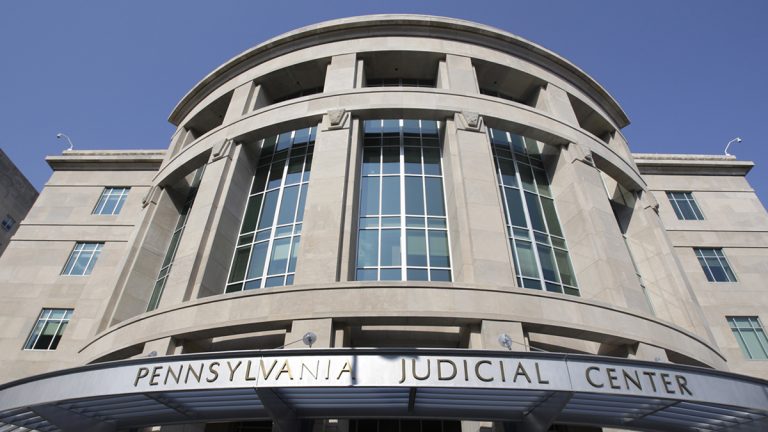
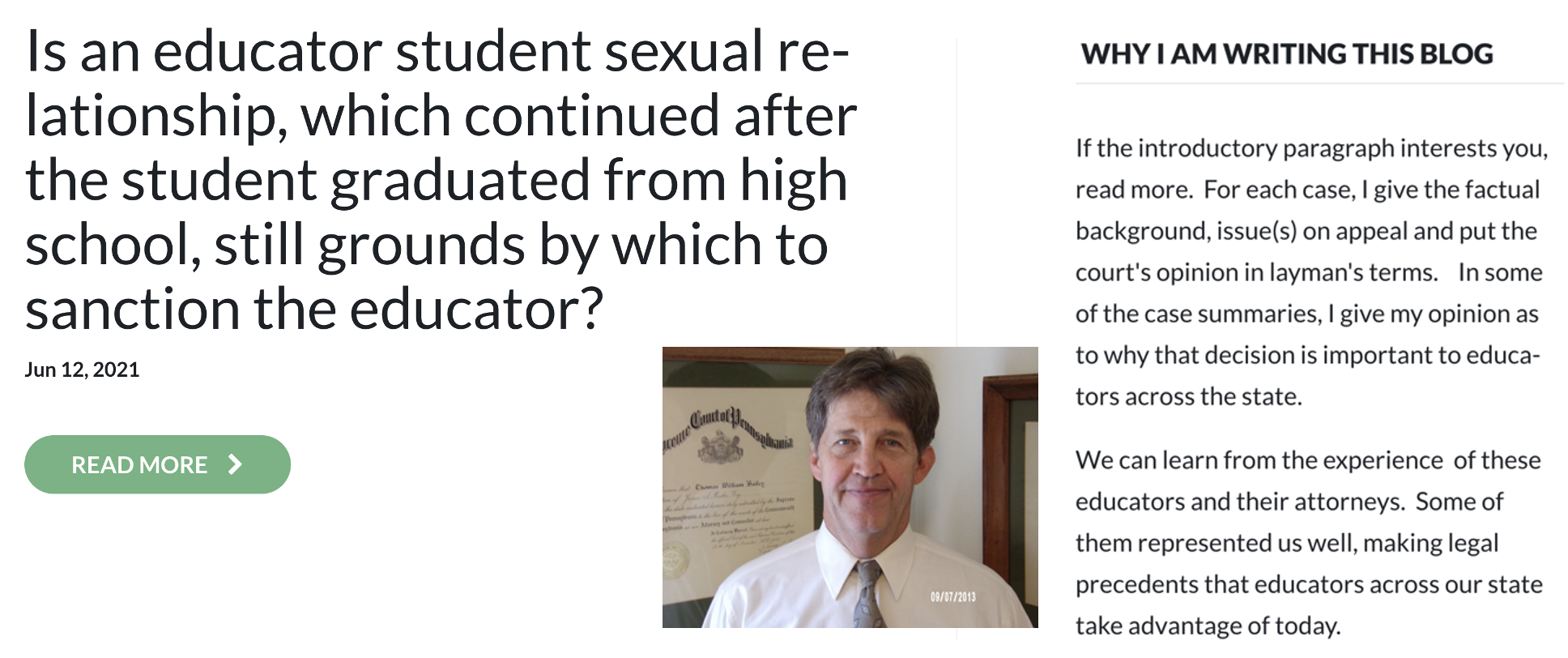

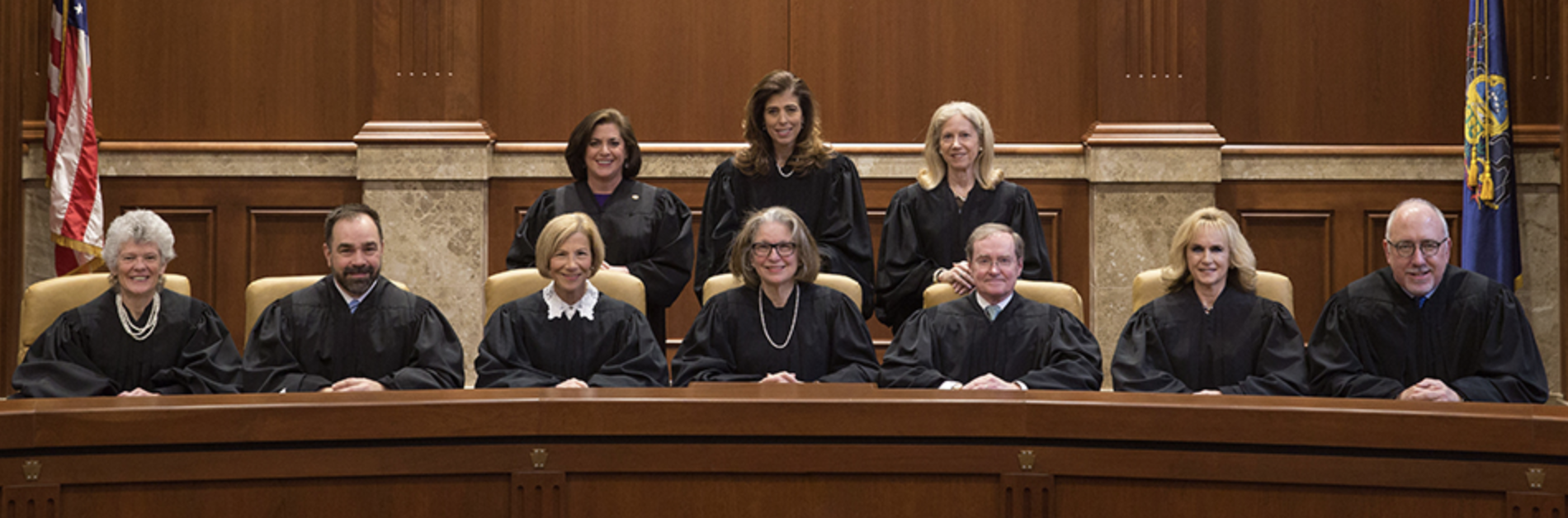



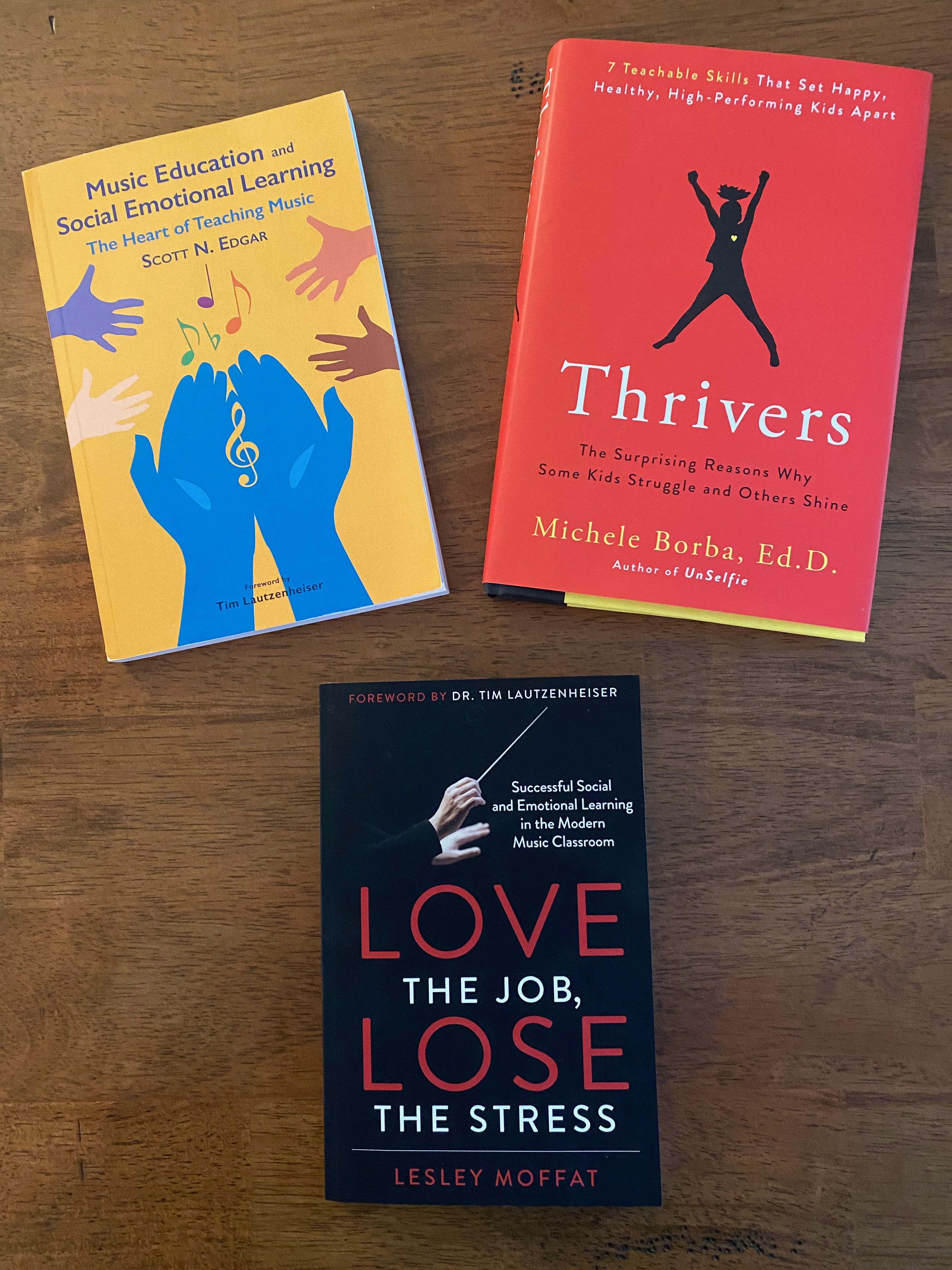

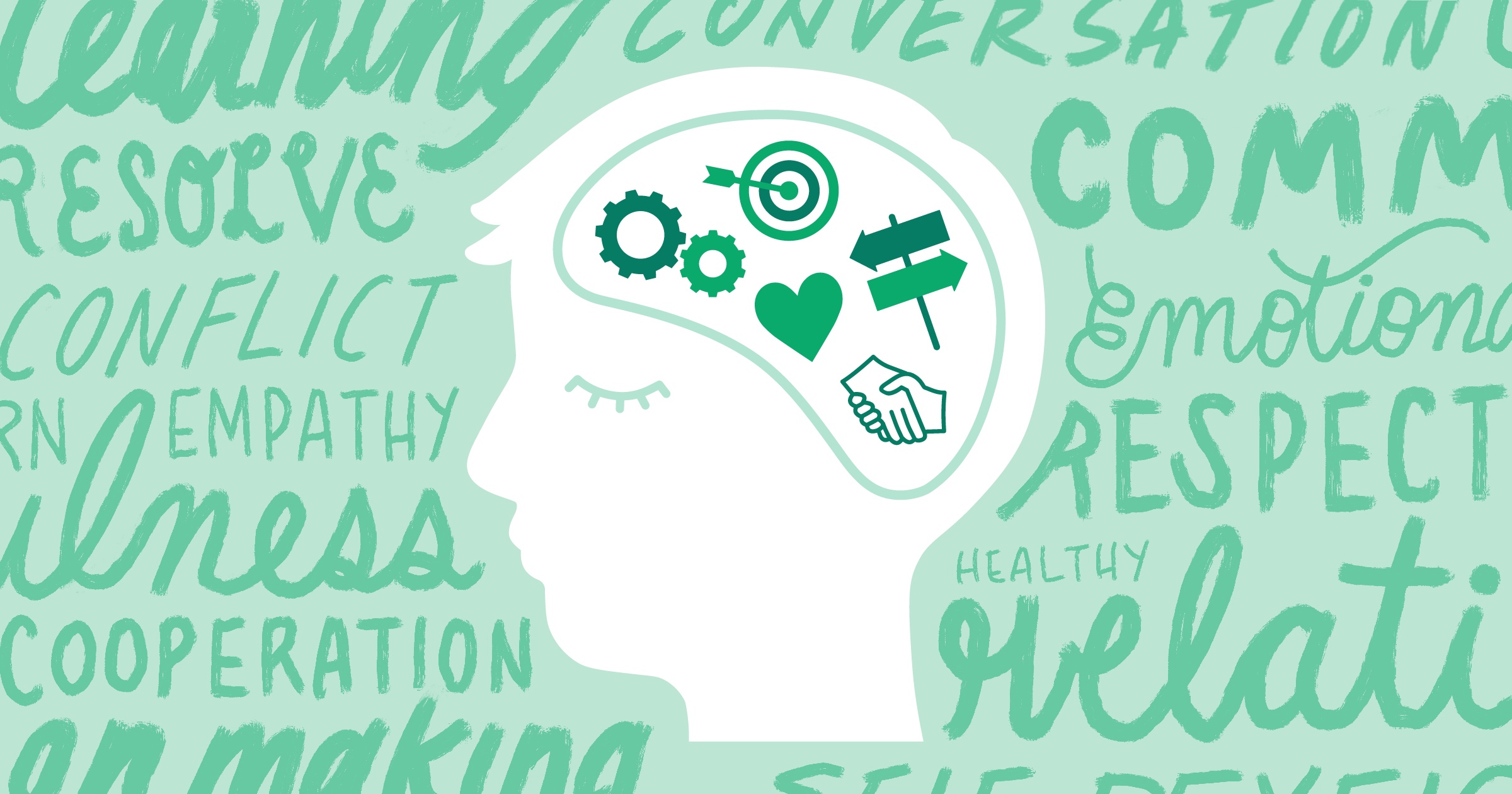

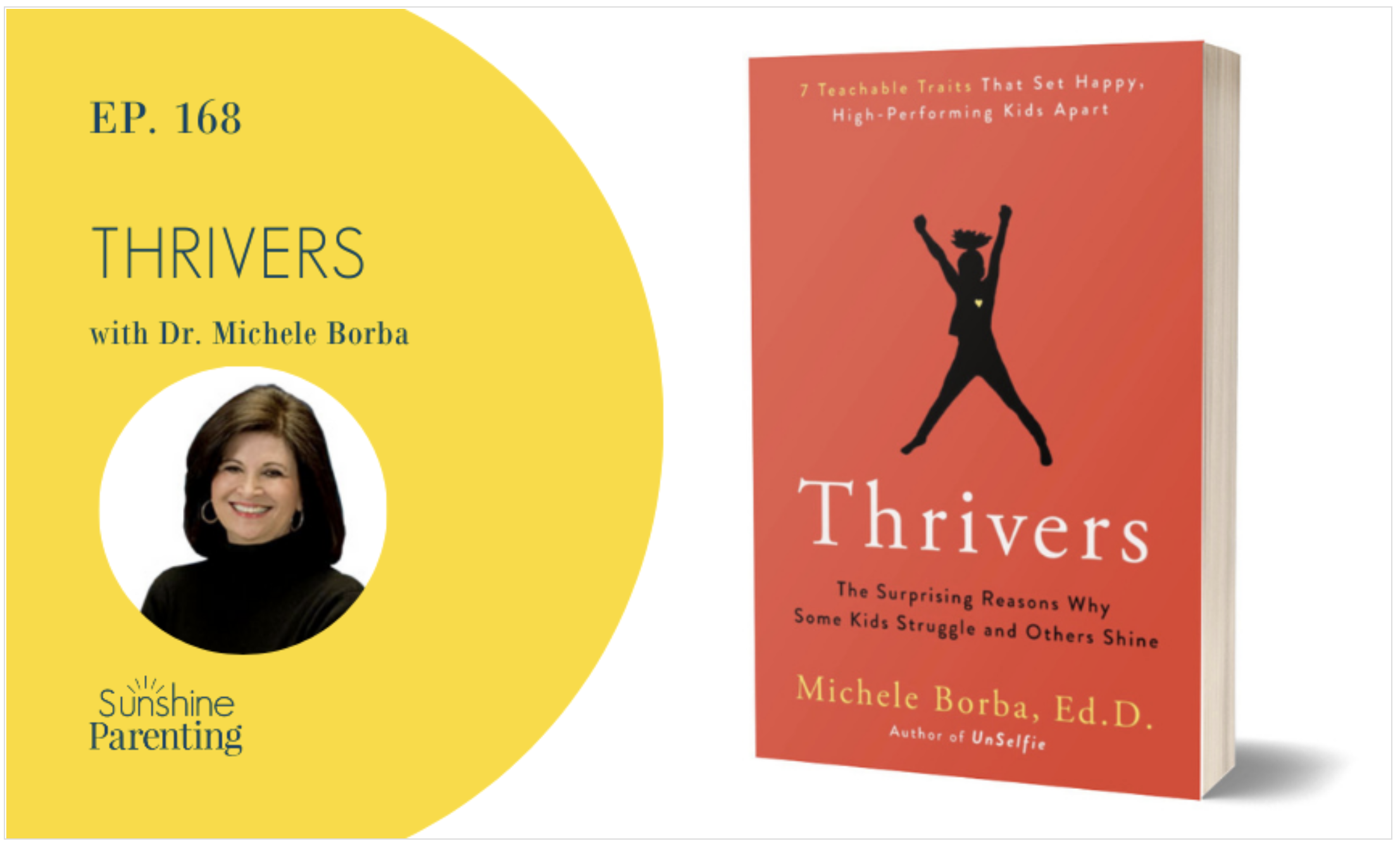
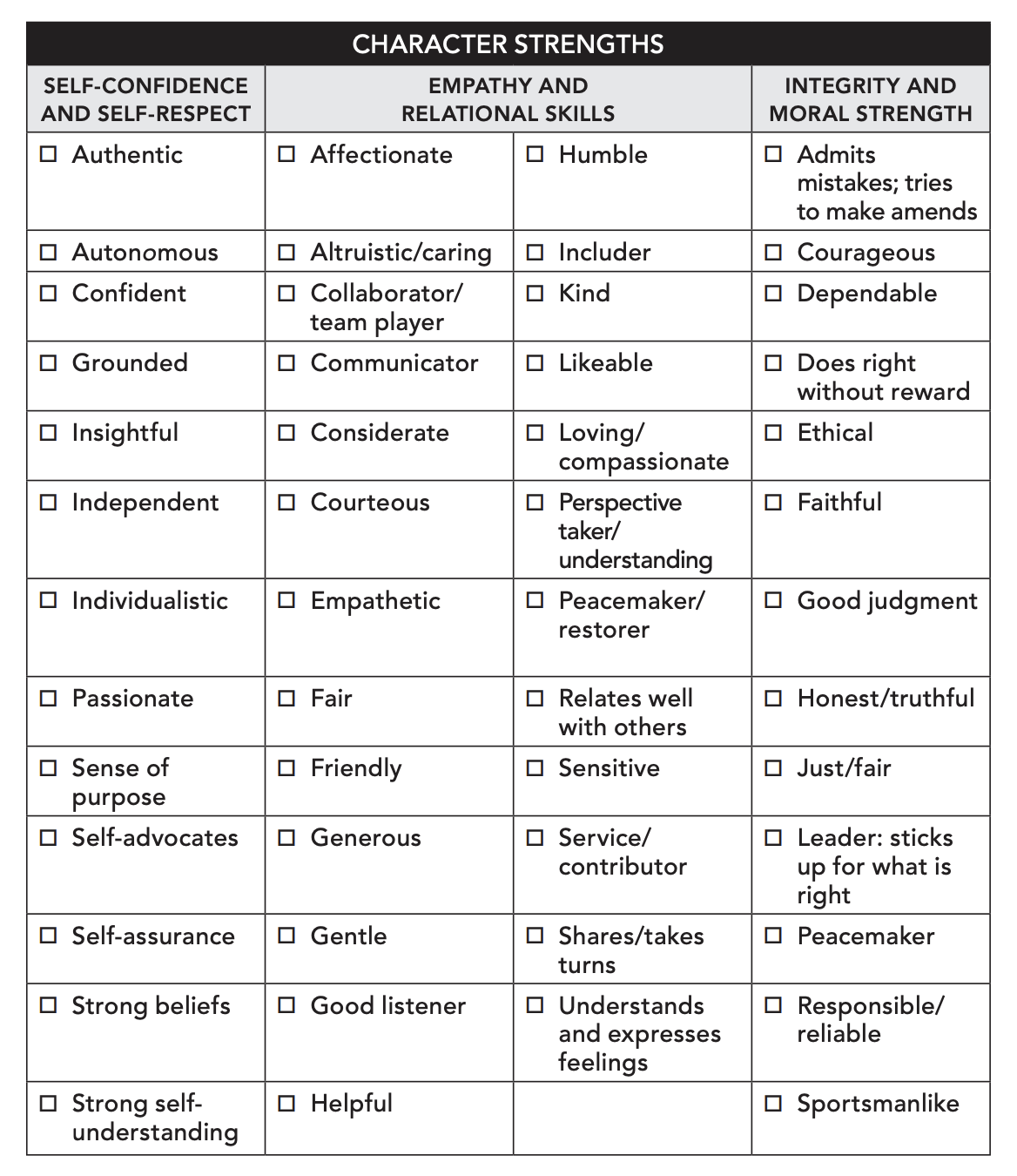
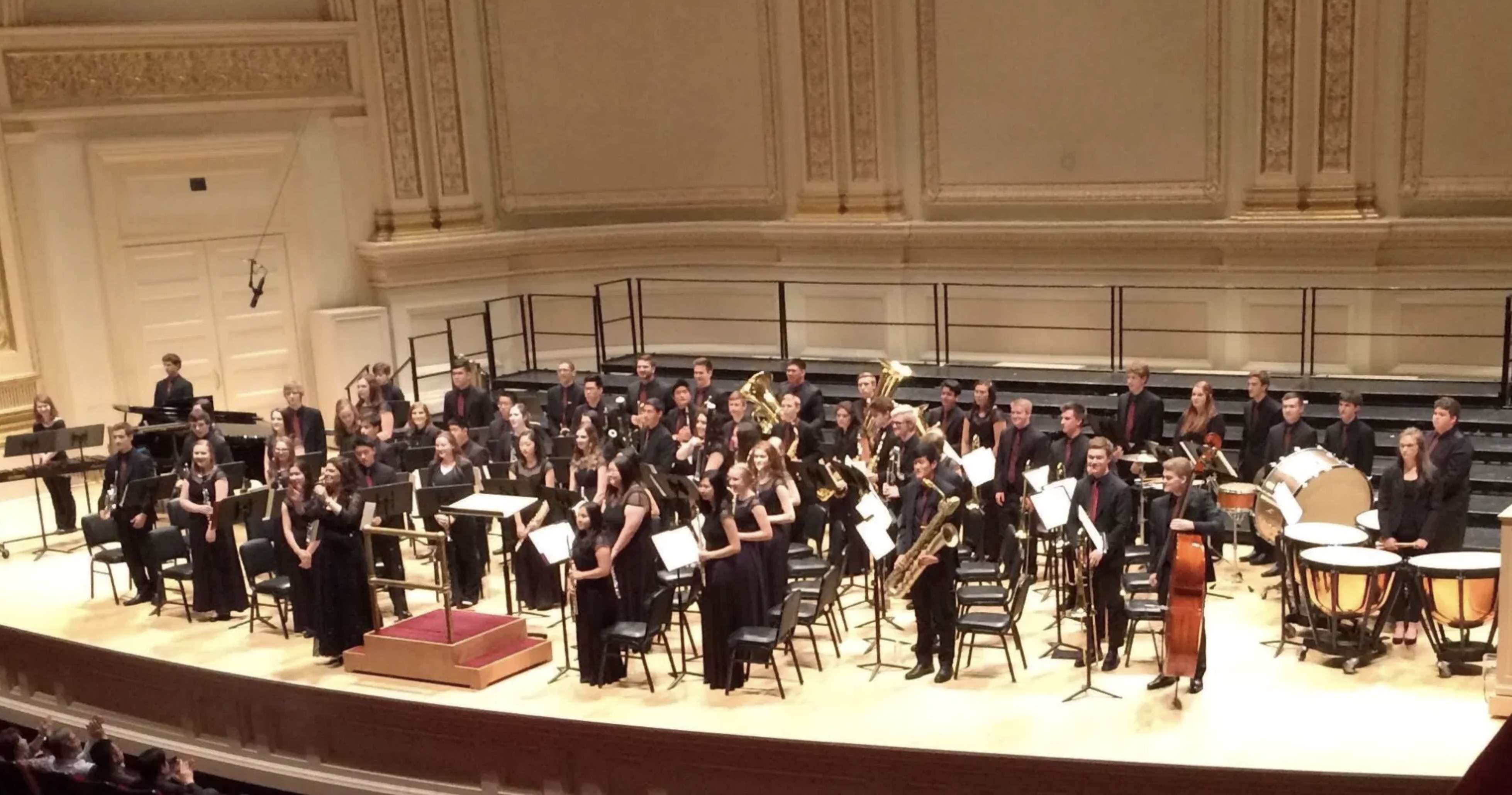
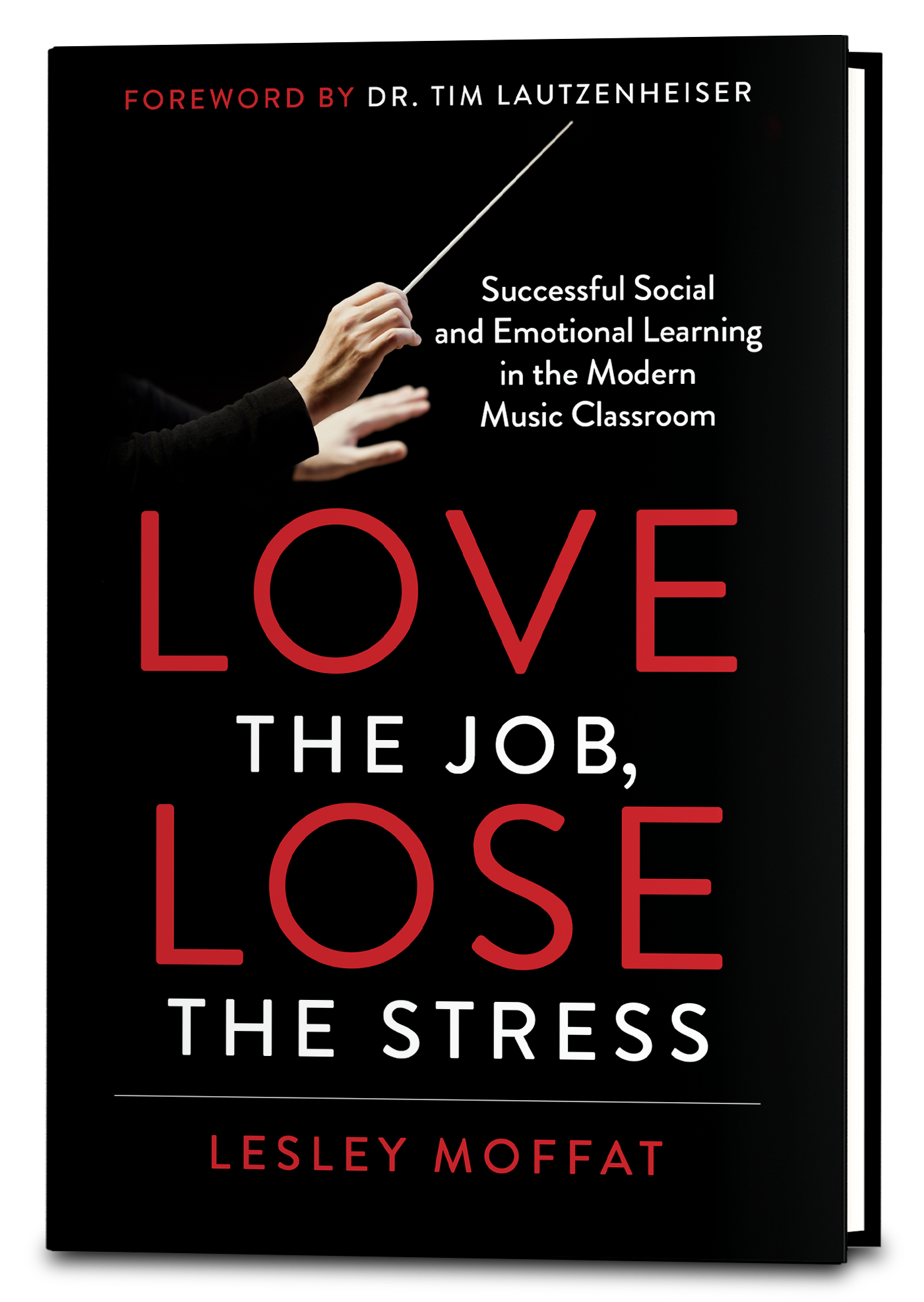

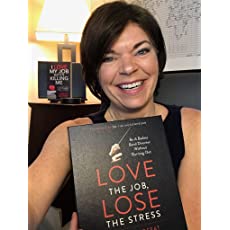
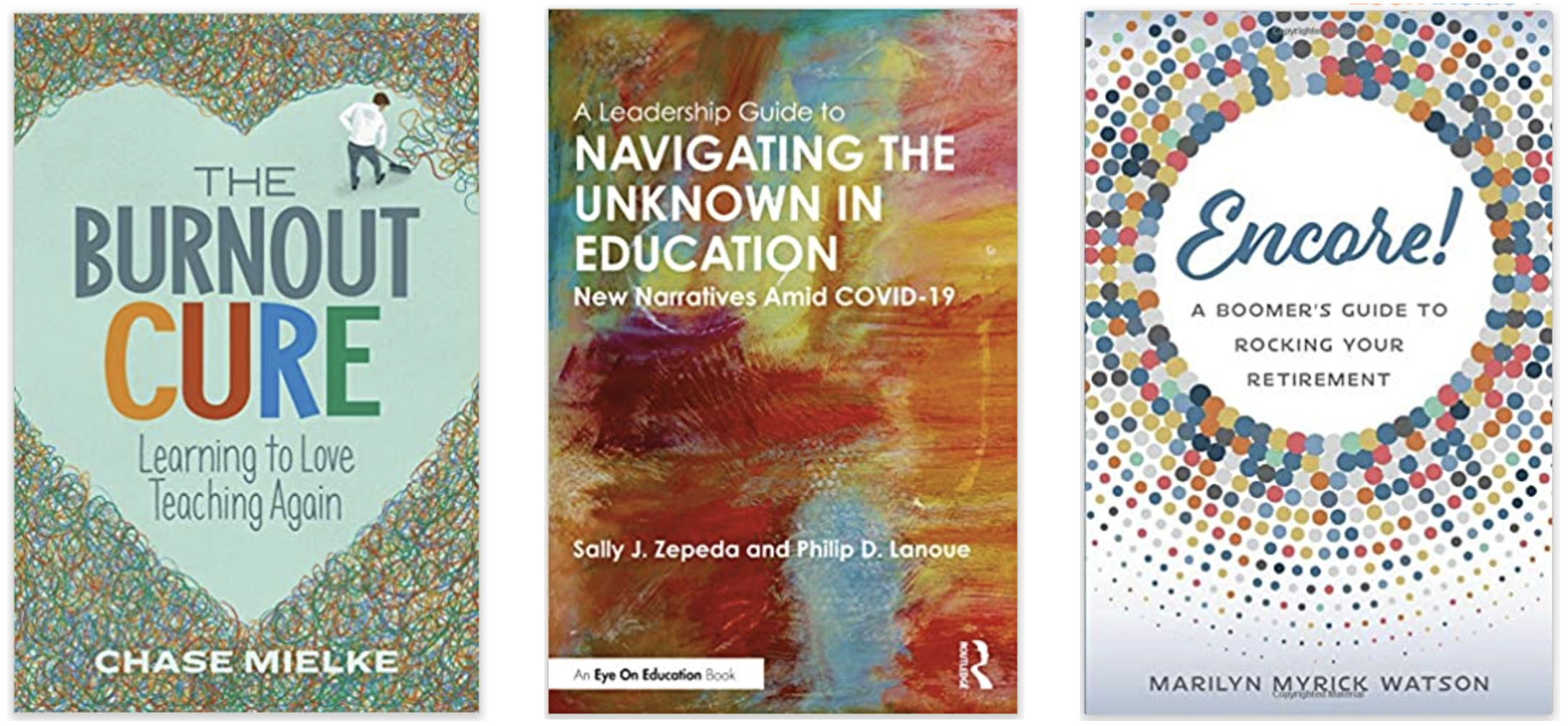




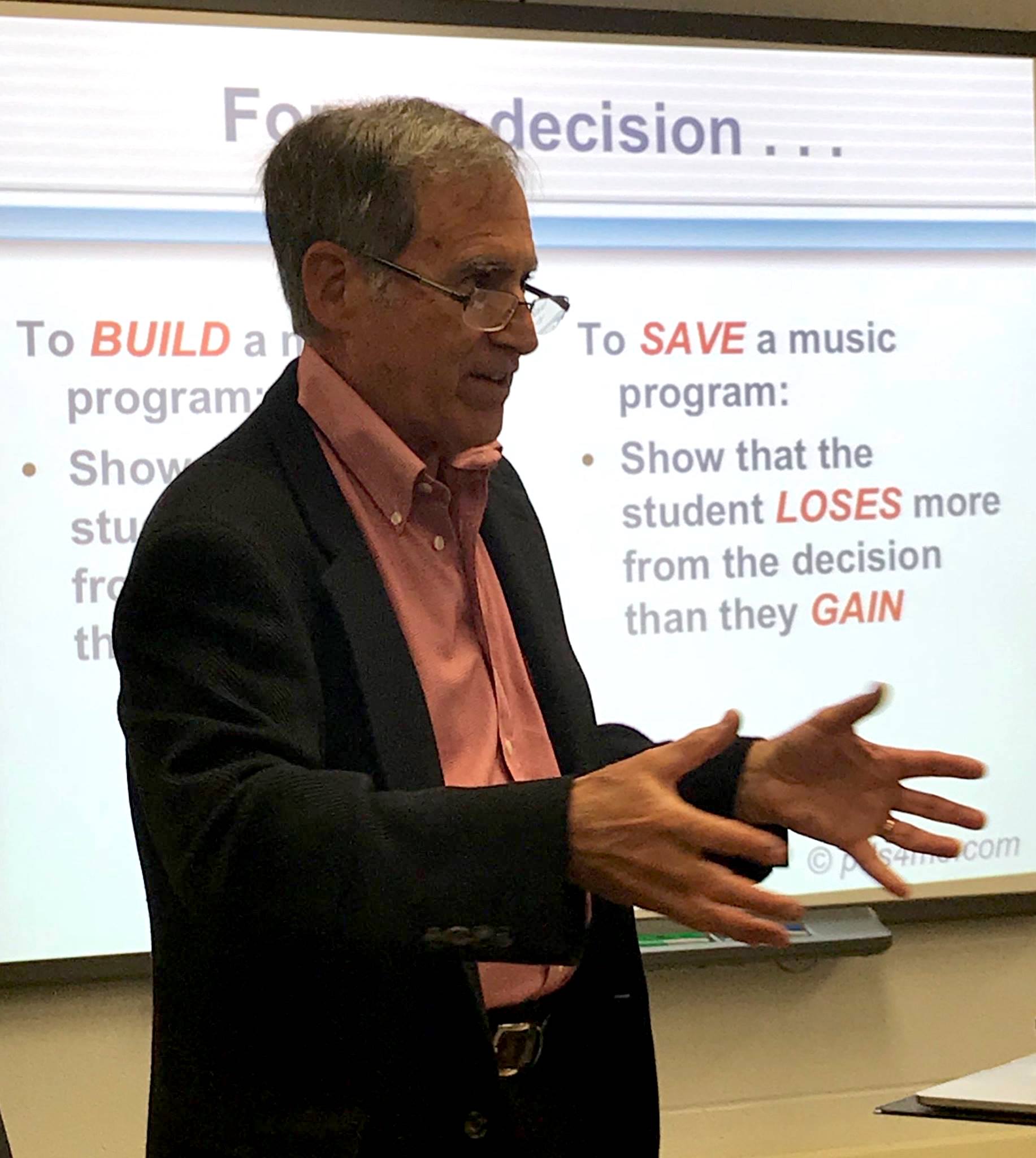 Once the WHY has been determined, then the district must determine the WHAT. WHAT learning activities need to be offered to the students in the district in order to help them achieve the desired outcomes stated in the mission? The answer to that question should help determine the curriculum for music.
 those hours would be scheduled, then the district must figure out exactly how many teachers will be needed to deliver that instruction and what qualifications those teachers should possess. The “WHO” part of the process – the staffing piece of the puzzle – should still be driven by the needs of the curriculum and should not change.
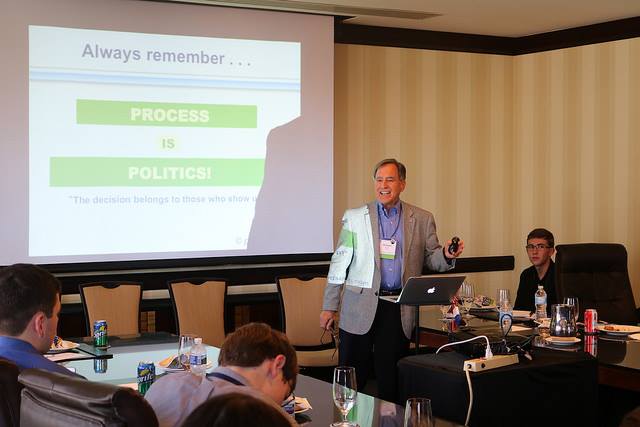 of the K-12 music program using the WHEN, WHO, HOW and WHERE pieces that we will have to work with.
 Richard Victor is currently Adjunct Instructor for the University at Buffalo Graduate School Online.


 How many class periods (not counting lunch) are structured for the academic day? Are specific grade levels or buildings organized in block scheduling, “period 0” and/or before/after-school curricular or co-curricular classes, lesson pullouts, period rotations or A/B weeks, etc.?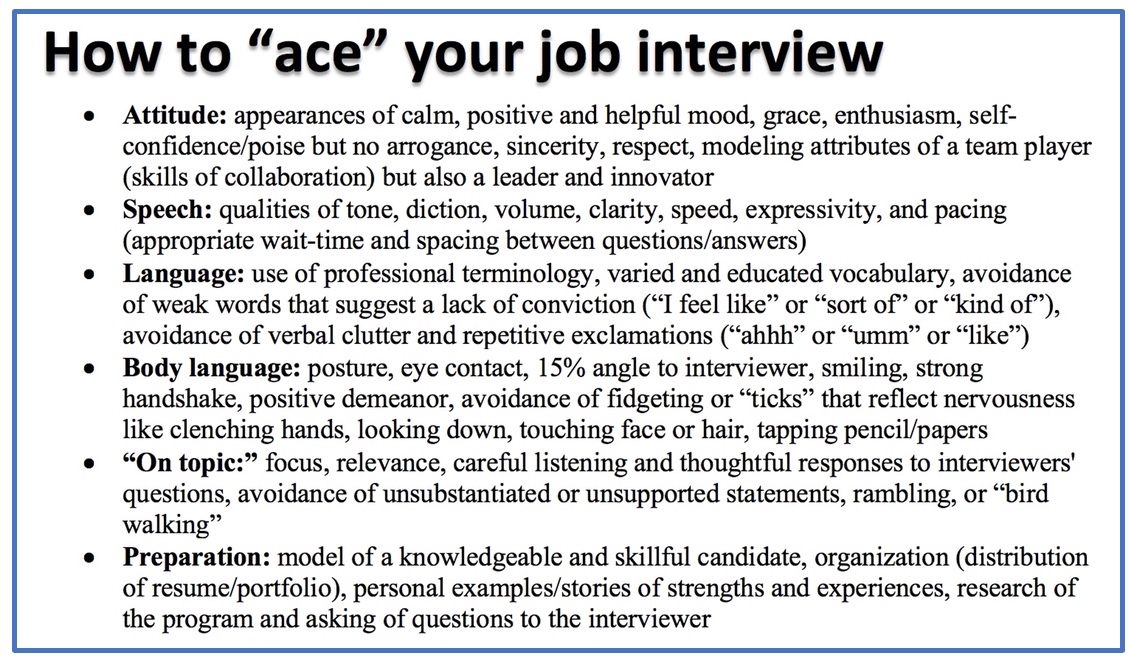
 Describe your approach to introducing a musical concept: singing matching pitches, keeping a steady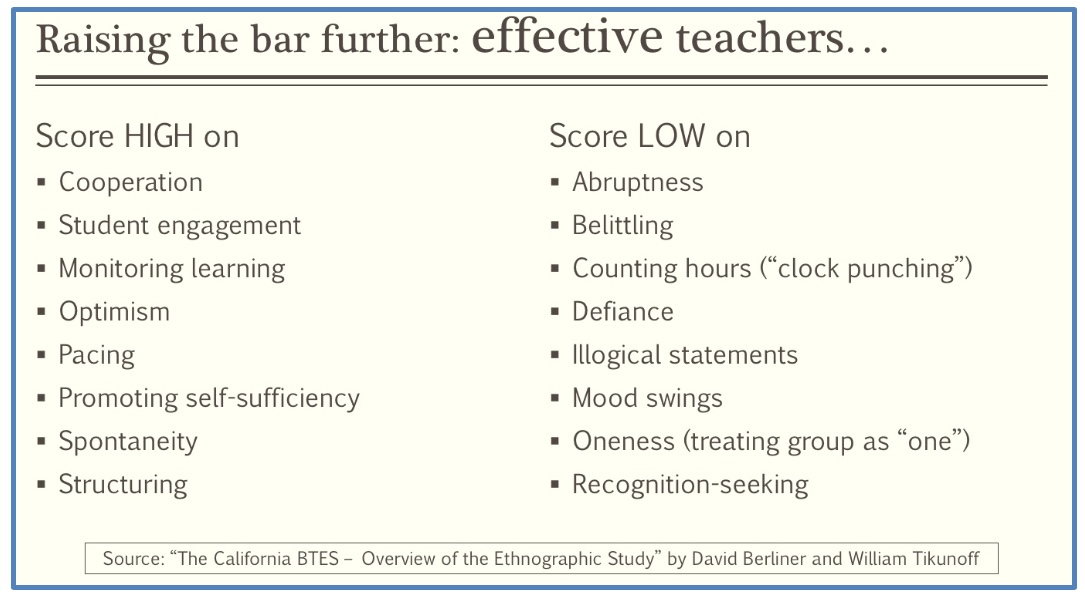
 Are you telling me it’s time to bring up more questions? Yep, to finalize your interview’s “postmortem,” reflect on these queries, which will become your focal points in preparation of your next job screening.
 IEPs – Individualized Education Program, including IDEA (disabilities), 504 plans, accommodations for special needs, differentiated and customized learning, etc.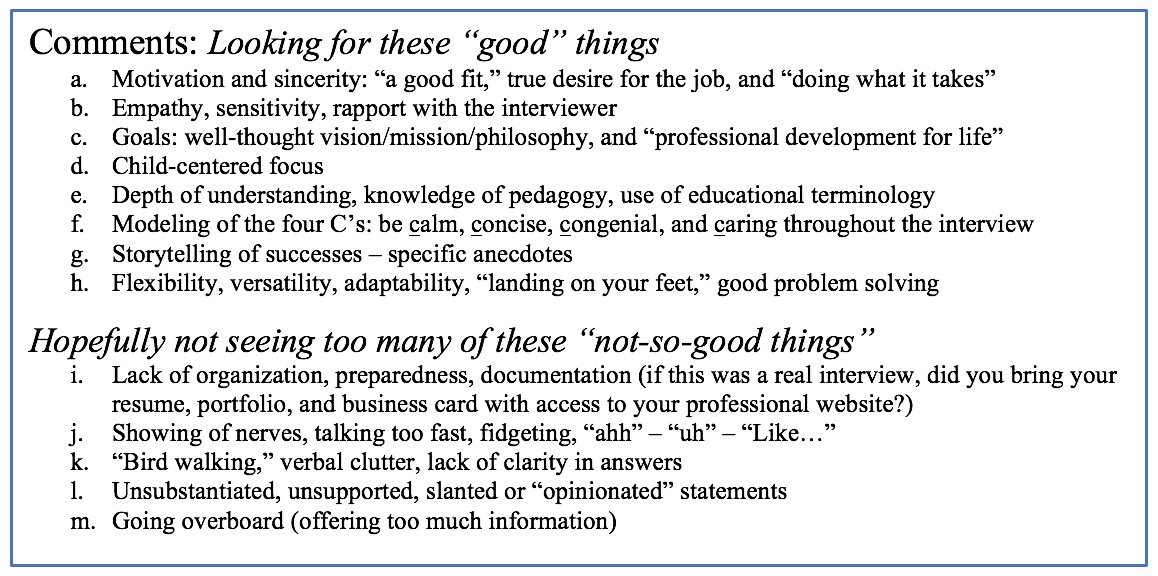

 Once the COVID-19 emergency was declared and universally all schools and outside activities were cancelled (for who knows how long?), the 37th spring season of my community youth (of all ages) orchestra was also “clobbered!” Up to this time, the Western PA-based South Hills Junior Orchestra (SHJO) regularly met on Saturdays from 10:30 a.m. to 12:30 p.m. at the school from where I retired: Upper St. Clair High School.



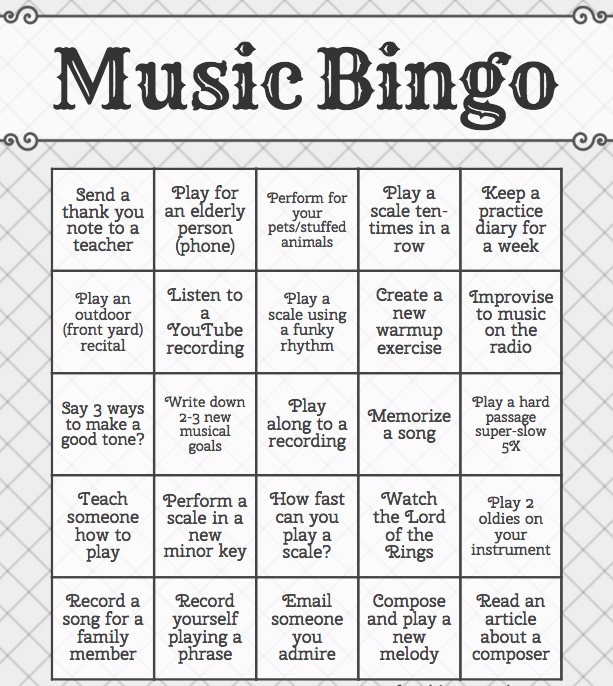
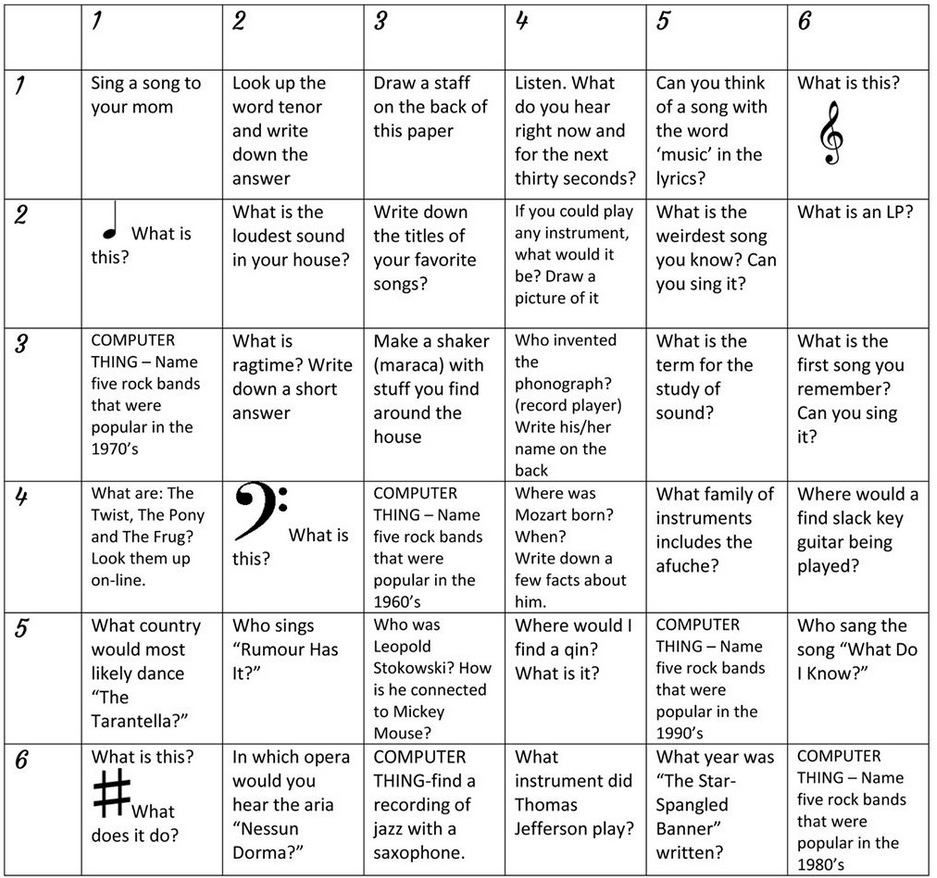
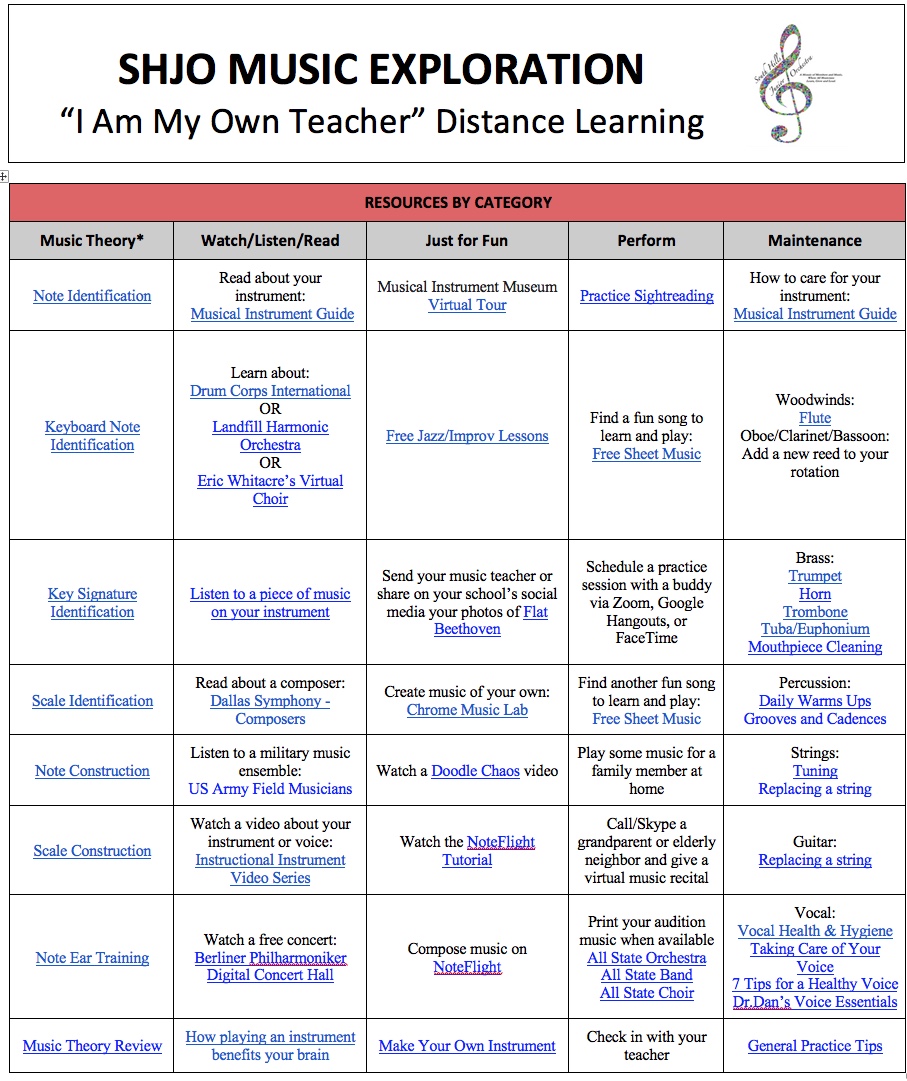

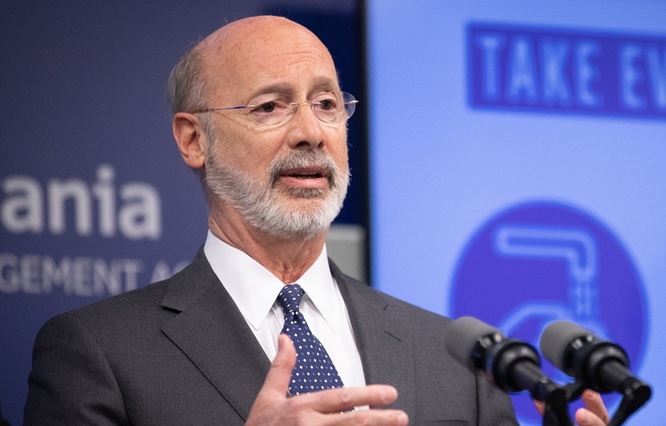



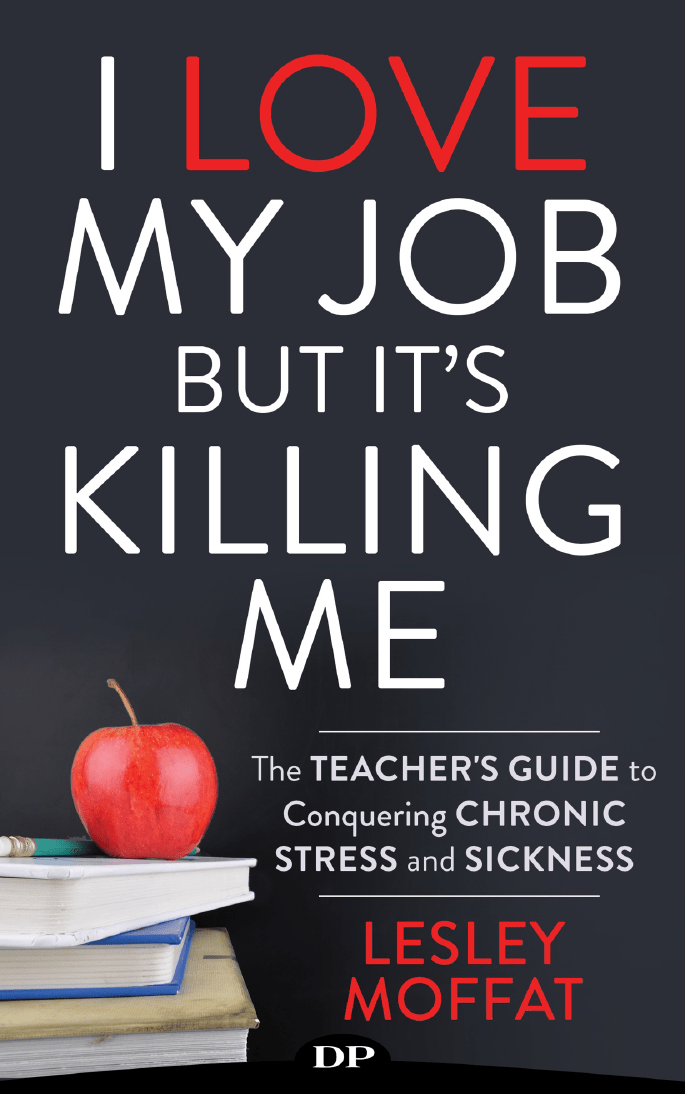



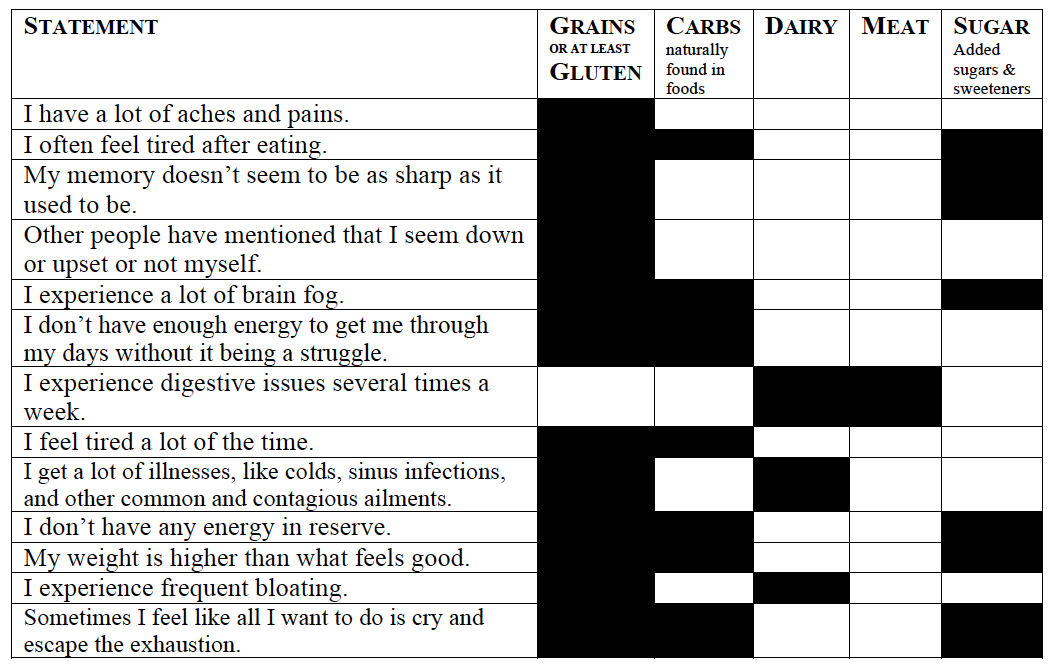

 Now in her fourth decade as a high school band director, Lesley Moffat has worked with thousands of people, helping them not only achieve musical goals (including repeated performances at Carnegie Hall, Disney Theme Parks, Royal Caribbean cruise ships, and competitions and festivals all over the US and Canada), but also teaching them how to develop the long-term life skills they need to be successful in the world.



 Introduction: Striving for the New
 Drone Improvisation
 In a more recent release of EdNote (July 2018),
 inventors vs. imitators



 In the category of “things I wishes someone would have told me before I was hired to be a school music educator,” the inspirational book, My Many Hats: Juggling the Diverse Demands of a Music Teacher by Richard Weymuth, is a recommended “first stop” and easy “quick-read.” Published by Heritage Music Press (2005), the 130-page paperback serves as an excellent summary of the attributes (or “hats”) of a “master music teacher.” Based on the photos in his work (great “props”), I would have loved to have seen Weymuth’s conference presentations in person as he donned each hat symbolizing the necessary skill-set for a successful educator.
 Next, I would like to direct pre-service and new music teachers to Case Studies in Music Education by Frank Abrahams and Paul D. Head. This would be an invaluable aid to “facilitate dialogue, problem posing, and problem solving” from college students (in methods classes?) and “rookie” teachers to veteran educators.
 His chapters are organized into six tips:
 The first thing I want you to do (and you don’t even have to be a member of NAfME yet, although you should be!) is to take at least a half-hour, scroll down, and read through numerous NAfME “Music in a Minuet” blog-posts, bookmarking any you want to return to at a later date. Go to