“A teacher affects eternity; he can never tell where his influence stops.” – Henry Adams
One Music Teacher Retiree’s Soapbox: “I Paid My Dues – Now It’s Time to Reap the Rewards!”
 I write these blogs to “get things off my chest.” Fair warning! Unlike other articles on this site, I may project a little negative attitude in this piece, griping in response to what I consider is unfair public opinion.
One thing you discover very quickly during your career and in retirement, when you’re socializing at a party of mixed company, it is never a good idea to bring up the subject of teacher pay and benefits.
You want to start an argument? In particular, discuss teacher pensions. Jealousy? Disrespect? Certainly not gratitude or understanding!
There’s a view out there that school employees are “public servants” (or should I say “slaves?”) deserving lower salaries, especially considering the fact that their compensation and fringes are funded almost entirely by taxes. “Don’t raise my taxes!” Possibly this is a translation of another unspoken sentiment: “You should not be making more than me!”
 While on this rant, I would also like to complain that I am tired of hearing how teachers only work nine months a year. Someone’s math is really bad when you look at the calendar. Most schools in Pennsylvania start by the fourth week in August for teacher in-service days (definitely before Labor Day) and end by the second week in June, depending on how many snow days or vacation breaks are scheduled in the school year. Closer to ten months?
Anyway, the real point is that I know very few educational professionals who do not constantly bring work home nights and over weekends, and spend their summer months researching, retraining, retooling, and finding new ways to reach their students for the coming term.
 There will always be criticism and negative comments about the value of our teachers. Part of this is due to the fact we have all been there. Everyone knows a “bad teacher” who modeled laziness, incompetency, or neglect of duty. You may have had one of these “rotten apples,” or perhaps were forced to endure an educator or coach who demonstrated “abuse of power.”
That being said, I was mystified that some of our greatest parent critics were also the same people who made the most of demands on the educator. It seems crazy that these parents who cried out “no more teacher raises” are the ones who asked me for a last-minute recommendation for their college applicant, extra practices for or rides to/from music festivals, or requested a detailed analysis and recommendations for improvement when their son or daughter didn’t achieve what they wanted at an audition.
So, while these pet peeves are fresh on my mind, I would like to share a retrospective – the benefits and drawbacks of our profession – and why, in balance, I believe music teaching is still one of the most honorable, personally satisfying, and valuable of life’s pursuits!
Public School Music – The Good, The Bad, and The Ugly
- Music education is a “calling,” not just a career. Another definition (applicable to all teaching subjects) is a professional “practice!” Like doctors and lawyers, we
 “practice” our job, applying different techniques to each unique situation, focusing on the needs of our “charges,” constantly re-assessing ourselves, retraining and updating our skills, and solving problems.
- Most music teachers agree that the profession demands a 24/7 schedule (at least, it feels like it!!)… and yes, that means most Saturdays and many Sundays, not to mention numerous afternoons and evenings after the classes are dismissed. Even when we are not at school, we think about our next lesson/unit, select new music, look for ways to inspire new knowledge and self-expression in our students, prepare the scores or instructional aides, and practice the accompaniments.
- For the HS music teacher, what are the five seasons of the year? (1) Fall Festival Auditions/Fall Play/Marching Band, (2) Winter Festivals/Concerts, (3) School Musical/All-States, (4) Spring Concerts/Adjudication Trips, and (5) Summer Camps/Curriculum Writing/Reading Workshops/Professional Development.
- I have absolutely no regrets. Having said this, make no mistake about it… the sacrifices were many! We had no time to start a family of our own. Since my wife (also a music teacher) and I were never at home, it would have been considered animal cruelty to purchase a dog. We enjoyed few summer vacations, and those trips we did take had to be short in duration… scheduled around string camp, summer conferences, and marching band rehearsals.
 No one goes into education to make a lot of money. With the same level of post-graduate work, nearly every other entry-level job or even being self-employed will fetch much more compensation.This is why it has been hard finding math and science teachers in some localities. They would have to accept major pay-cuts declining jobs in engineering, chemistry, computer science, and the technology industry as opposed to becoming a first-year teacher.
- The pay? You have to consider the salaries spanning over 30-40 years! In those early years in public school education (when I started), if you had a family with kids, you were eligible for food stamps. I suppose one should compare the usual range of corporate compensations (much higher) during those active years of employment vs. teacher pensions (higher) during retirement. Does it really equalize in the end?
- Compared to other proprietary consultants with highly specialized skills, many music teachers provide free or very-low-cost extra services, uncompensated on-the-spot lessons, etc. I remember on one occasion, a computerized lighting board service technician was able to charge my school district more than $1000 to come from Ohio to fix our controller… as opposed to “Johnny” randomly dropping in to see me after-school for some help in learning to play “a lick” for the concert.
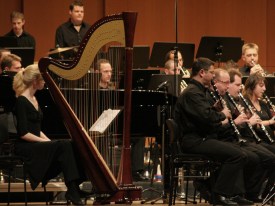 At least, we are doing something we love, and we can take “the joy of making music” to the grave!
- Music educators often sponsor fundraisers for their programs (tickets, sales, etc.), and also pour back a lot of their own finances into the extra-curricular activities of their classes/ensembles. I was seldom reimbursed for everything I contributed, although one year, my tax accountant allowed me a $2300 deduction in pizza “gifts” made to my after-school programs!
- Musical directors, how much do you dole out? I recall there were always significant out-of-pocket expenses for props, scenery pieces, costumes, etc.
- Music education professionals spend time and resources advocating for their programs (indeed even their own music students’ existence). Music and the arts are the first subjects to be cut during school budget crises. Unlike our English or math colleagues, instrumental teachers must recruit for and retain participants in their classes. A significant drop in band or orchestra enrollment is the fastest way to compel the school district to furlough the last-hired music staff member.
- Worse yet, it was always demoralizing when a parent came to me to pull his/her child from the ensemble. More often than not, the “quitter” is a musician showing
 great potential and one for whom you have spent much time and effort helping. It was always a crushing blow to hear “Johnny wants to give up playing,” “he is bored,” or “now we will try something new like (ahem) intramural tiddly-winks.” Parents/guardians conceded that it was hard to “make him practice.” My initial response (if I have the guts to say it, but by then, it was usually too late): “Who is in charge here? Do you make your kids brush their teeth or do their math homework?”
- Being a music teacher at a student-centered pro-arts school district in Western Pennsylvania was incredibly satisfying and inspirational. I was one of the lucky ones. At Upper St. Clair School District where I taught for 33 years, the emphasis is/was on “customized learning” and “The Whole Child.” I received all of the administrative help and community support anyone could ask. I was encouraged to take risks, build the string and drama programs, direct countless concerts, plays, musicals, and other lessons in creativity and self-expression, and seek new avenues of professional development.
- I also have no regrets in retiring… I knew it was time to turn over a new chapter in my life, recapturing the freedom to try new directions in the journey of retirement.
 I was relieved that, during a time of state and local budget crunches (when many school districts were not filling retired staff positions), my administration and school directors were true to their mission statement: “Developing lifelong learners and responsible citizens for a global society is the mission of the Upper St. Clair School District, served by a responsive and innovative staff who in partnership with the community provides learning experiences that nurture the uniqueness of each child and promote happiness and success.” When I retired, they hired excellent replacements for all of my former positions: Secondary Orchestra/String Teacher, Grades 1-12 Performing Arts Curriculum Leader, and Spring Musical/Fall Play Director/Producer.
- The benefits of retirement are wonderful. Yes, my wife and I enjoy a comfortable public school pension and, although it is now a “fixed income” that will never go up, we really do not have any financial worries… at this point.
- With our health and future secured, the “earlier then industry-standard” retirement allows us to do whatever we want… fill and fulfill “bucket lists!”
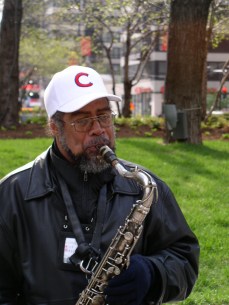 Now we can “catch-up” on travel, pets, hobbies, volunteer work, gardening, home improvements, and revisiting our “creativity roots” which got us started in the first place towards a career in music and education.
- There is still a lot of joy running into appreciative former students and their parents at shopping centers or the grocery store. Our former “music stars” represent the kids we never had, and seeing them move on successfully to raise their own batch of musicians, singers, composers, conductors, or music teachers, literally moves me to tears. There is nothing better than being a music teacher and feeling appreciated!
Why Would Anyone Become a Music Educator?
My father could not understand why all three of his children ended up in music. When he visited my first 4th grade musical production in the spring of 1979 (Edgewood School District, now Woodland Hills), he asked me, “Why in the world would you choose to make your life’s work as a teacher?” Comparing our salaries (the difference of a decimal point – $8,000 for a teacher vs. $80,000 for a nuclear engineer) and the hectic 24/7 nature of my work, he pointed out that if I would go into business with him, as partners we could each make so much more than even he was earning as a manager at Westinghouse.
Although he briefly complimented my performance, he made these remarks after the show, and it burst my bubble. It hurt. I mustered a response like, “Thanks dad for coming, but you should know I always wanted to be a music teacher… to bring to others the incredible joy of making music.”
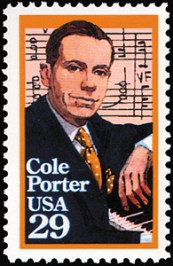 There is nothing worse than feeling that your father does not approve of who you are or what you want to do with the rest of your life. Of course, I am not alone in having this kind of parental disapproval. American composer and songwriter Cole Porter (who wrote Anything Goes) experienced a similar problem. At the insistence of his rich maternal grandfather for whom he was named after, he entered Yale University and then the Harvard Law School to become a lawyer. However, his true love was music. While at Yale (and secretively from his family), he wrote 300 songs and the words and music to six full-length student shows. Eventually he switched to studying harmony and counterpoint with the Harvard music faculty… the rest is history!
However, my story gets better. When my father attended my Upper St. Clair High School winter production of Scrooge (1982) involving nearly 200 choral students and the orchestra, he began to understand and accept a new perspective – what has become for me “the calling” of music education, theater, and creative collaboration with students. I sat him in the front row, while I conducted the pit orchestra literally feet from him. It was an “Upper St. Clair production” – the beginnings of what we do today – very high levels of artistry and professionalism and strong community support.
After the performance, my dad totally redeemed himself. He asked me, “You did all of this?” He praise me, said it was the greatest thing he had ever seen, and told me how proud he was of me. That was the last time he ever saw one of my shows… he died suddenly of a heart attack two years later almost on the day of my next choral musical, Joseph and the Amazing Technicolor Dreamcoat.
 Why choose education? Well, the status of a teacher in some cultures is at the pinnacle of the society’s most cherished and respected. In fact, in some Asian countries, tradition dictates that the eldest rules the entire family, and is often considered a master teacher. The career of a teacher is on the top of the spectrum. The merchant is at the bottom. This is exactly the opposite for today’s Western countries… a worship of wealth, stockbrokers, millionaires, “things,” etc. (Of course, it should be mentioned that, using this analogy, Asian musicians are also at the bottom… considered to be nearly useless in lower socioeconomic agrarian societies.)
A wide-body of research proves that the arts help develop 21st Century learning skills, especially success in creative self-expression, critical thinking, problem solving, collaboration, and communications. We know practitioners of the Performing Arts find meaning and discover their talents and interests, and being involved in music and art brings out the appreciation of the beauty in our lives.
Although, now I’m retired, I was once there… and helped to make this happen!
For more articles on retirement by Paul K. Fox, go to https://paulkfoxusc.wordpress.com/category/retirement-resources/.

PKF
© 2016 Paul K. Fox


 Reprinted from the Spring 2016 issue of PMEA News, the state journal of the Pennsylvania Music Educators Association.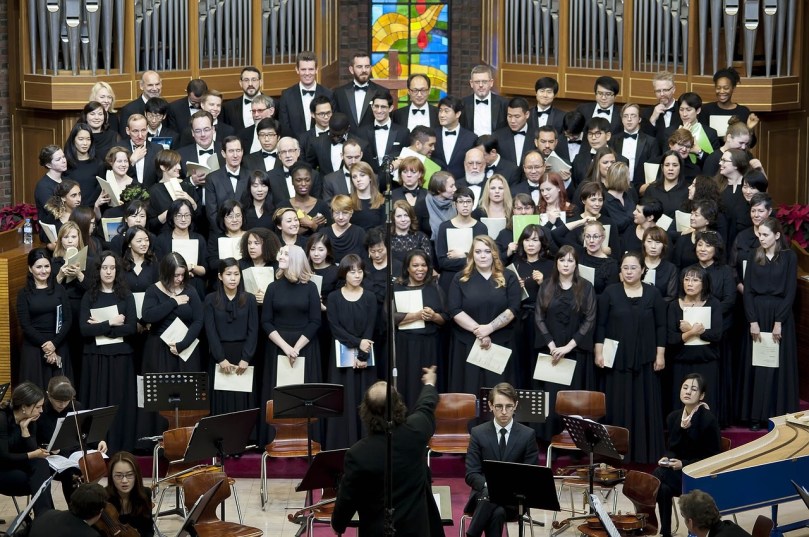
If you’ve ever been in a choir, you’ve probably been told that the proper way to sing is from your belly.
As the popularity of group singing grows, science has been hard at work trying to explain why it has such a calming yet energizing effect on people. What researchers are beginning to discover is that singing is like an infusion of the perfect tranquilizer, the kind that both soothes your nerves and elevates your spirits.
Regular exercising of the vocal cords can even prolong life, according to research done by leading vocal coach and singer Helen Astrid, from The Helen Astrid Singing Academy in London. “It’s a great way to keep in shape because you are exercising your lungs and heart.”
Colette Hiller, director of Sing The Nation, is convinced that singing builds social confidence by helping individuals connect to each other, and to their environment. “Think of a football stadium with everyone singing,” she says. “There’s an excitement, you feel part of it, singing bonds people and always has done. There’s a ‘goosebumpy’ feeling of connection.”
Studies have linked singing with a lower heart rate, decreased blood pressure, and reduced stress, according to Patricia Preston-Roberts, a board-certified music therapist in New York City. She uses song to help patients who suffer from a variety of psychological and physiological conditions.
The seniors involved in the chorale (as well as seniors involved in two separate arts groups involving writing and painting) showed significant health improvements compared to those in the control groups. Specifically, the arts groups reported an average of:
 Okay, besides that crack about “elderly” in that last article (we’re not “old,” yet!), the evidence seems conclusive! For our general health, feelings of well-being, improved social connections, and “just having fun,” we should all be motivated TODAY to go out and find a community choir and start singing regularly in a group. Enough said?
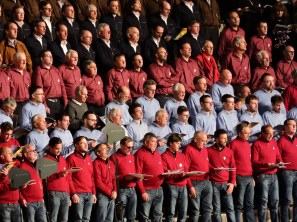 For both the instrumental and choral groups, we are most thankful to the contributions of our “dream team” of PMEA researchers and editors (as of April 13, 2016): Jan Burkett, Craig Cannon, Jo Cauffman, Deborah Confredo, Susan Dieffenbach, Timothy Ellison, Paul Fox, Joshua Gibson, Rosemary Haber, Estelle Hartranft, Betty Hintenlang, Ada Jean Hoffman, Thomas Kittinger, Chuck Neidhardt, Sarah Riggenbach, Ron Rometo, Joanne Rutkowski, Marie Weber, Lee Wesner, and Terri Winger-Wittreich. We are especially grateful to the efforts of Director of Member Engagement Joshua Gibson who located the counties and e-mail addresses in the choir directory.

 On the subject of music teachers exiting the job market, one area we have not ventured into with these blogs on “retirement resources” is the most difficult to handle – having to face a forced resignation or involuntary leave.
 Depression

 Evaluate your response to stress since you were summarily eliminated from your district. It is worth reviewing the definition of PTSD and see if it should be applied to your behavior and the emotional upheaval you are feeling (from the online blog of the Dr. Oz Show at
  It’s time to “dust off your chops” (join a community band/orchestra)


 Take up a new hobby. Now that you have the time, go exploring… and the skies the limit! But don’t forget, anything worth doing “engages the mind!”
 If you have not read a previous blog of mine, “Advice from Music Teacher Retirees to Soon-To-Be Retirees,” check out the reprinted version on the Edutopia website:
  Just like a rehearsal – start off with a mind warm-up! Go to the website
  Leo the Tech Guy program and site at
  Finally, hobbyist websites are a wonderful resource. Examples: photography
  health is all about nurturing our skills/talents, exploring new pathways, facing new challenges, engaging our minds, and enjoying the “good life” after full-time employment. Nothing is stopping you from starting a new career, learning a new language, writing a book (or reading everything you always wanted to at the library), learning (better) how to act/dance/sing/play a new instrument, taking a trip to a new country (or city in the US) or journey to your backyard with a camera, and modeling the essence of the Robert Frost message, “I took the road less traveled by…. and, that has made all the difference.”


 The Romans giving tribute to the god Janus, for whom the month of January is named.
 my top-ten recommendations to help you “grow” and enjoy a glorious 2016!
 grandchildren (your own or adopted ones), enjoy them! Not only is your generous super-competent babysitting services providing ever-so-essential care-taking of your love-ones, “playing with the kids” is wonderful for your own mood and mental health. “Keep around young people and you will stay forever young!” However, invest your time wisely. You deserve a life of your own and unstructured time off. It is easy to be taken advantage of, so don’t let this childcare schedule dominate everything you do in your retirement.
 The single most satisfying pastime for all of us is to be or do something creative. With few exceptions, every day you need to find venue(s) to express yourself. This could mean pulling out your instrument or singing, with a renewed focus on exploring your musicianship, interpretation, composition, or improvisational skills. Creating new musical works, like adding to your own “Mr. Holland’s Opus,” can “make your day!” Other projects in creativity could involve conducting, acting, dancing, creating two or three-dimensional artworks, sewing, gardening, and my personal favorite, writing. Whether it is fiction or nonfiction, articles, books, poems, letters-to-editors – the activity is very personal – and possibly profitable? Try to assemble in words your long-practiced insights and experiences acquired working as a teacher. I am particularly inspired by the prospects of creating and posting blogs on just about any subject that motivates or moves me. Check out the opportunities that WordPress.com can give you. (I am not too shy to refer you to my own website, showing off my articles and “pet peeves” on the subjects of creativity in education, marketing professionalism, and retirement resources:
  Every week for the rest of your life, spend some time “giving back!” Volunteer or share your hobbies, interests, or expertise helping out wherever it is most needed… in local churches, hospitals, charitable organizations, schools, pet sanctuaries, or senior care centers. I never understood why some enterprising entrepreneur does not buy a large piece of land to build a combined animal shelter, childcare center, and assisted-living facility, connected with easy access to each other… mutually beneficial opportunities for needy children, lonely seniors, and rescued pets for interaction with each other! That’s a “win-win-win!”
 Stay involved in PMEA. Help new or recently transferred music teachers by joining the PMEA Retiree Resource Registry, the free (but priceless!) adviser/ consultant service


 It used to be that the coming winter recess of seven or more days off from full-time public school music teaching mostly meant catching up on much-needed sleep, tackling a few of those deferred household chores, performing or conducting a couple holiday concerts, visiting family and friends, and “pigging out” at a few gigantic holiday feasts.
 family gatherings during the holidays are rarely stress-free… Sometimes these situations are small, unpleasant blips in otherwise enjoyable celebrations. But for some, the feelings go deeper—many people dread the holidays, becoming stressed or anxious in the weeks leading up to a family get-together.”
 So, here is some timely advice to bring down your anxiety levels and cope with the changing season.
 Know your spending limit (set a budget and stick to it).
 Tell jokes, like “Why do reindeer stop for coffee on their Christmas run? Because they’re Santa’s star bucks.” A whole collection of quick one-liners are available at her website, which she says are guaranteed to add humor to your holiday and de-stress awkward episodes.
 If your stress is made worse mostly due to the transition of a recent retirement, there are numerous resources to help you through this “significant life passage.” First of all, you should know it is not unusual to feel this way. In his book, The Retiring Mind, Dr. Robert P. Delamontagne estimates that “50% of retirees will suffer some form of acute emotional distress.” Now all we have to do is learn how to deal with this change… sounds easy?
 stress-reduction strategies: “Realize that your brain’s reward center likes variety, so give yourself a variety of experiences.”