

Asks for “The Before,” “The During,” and “The After”
These Responses Are Critical for Marketing Yourself & Landing a Job
This article was inspired by my recent participation in virtual mock interviews on Zoom for PCMEA members and senior music education majors.
It is up to you to do the research and plan ahead!
What is that “scout’s motto?” Be prepared!
Or, to put it another way, more “near and dear” to the average music student:
- “How do you get to Carnegie Hall?” (Practice, practice, practice!)
- “How do you get a job?” (Practice, practice, practice!) AND
(Prepare, prepare, prepare!) –
a focus on the BEFORE, DURING, and AFTER phases of an interview!

The Before
Prior to every job screening, walk in well-informed. Investigate in advance the background information of the school district:
- The job opening and responsibilities
- Details about the overall music program, number of staff, courses offered, etc.
- School district’s mission/vision/value statements
- Validation of administrative support for the arts
- Examples of community support for music education
- Work environment and employee attitudes
Be a detective! Look for responses to these inquiries “surfing the ‘Net,” studying the district’s website, reading local media releases, and, if you are able to, finding someone who is already employed there:
- What do you know about this school district?
- What is the average make-up (socioeconomic, education, racial, etc.) of the community? Is it mostly urban, rural, suburban? Are the majority of the jobs blue collar, white collar, entrepreneurial, agricultural, or mixed?
- What educational, cultural, and sport/leisure activities are available to the residents in and around the area?
- What philosophies or approaches are emphasized in the school district’s strategic plan and/or annual Board of School Director’s goals?
- What are samples of student, staff, building, and school district awards and traditions?
 How many class periods (not counting lunch) are structured for the academic day? Are specific grade levels or buildings organized in block scheduling, “period 0” and/or before/after-school curricular or co-curricular classes, lesson pullouts, period rotations or A/B weeks, etc.?
- How often is the curriculum revised or updated?
- What is the school district grading scale and music grading policy/practice?
- What music classes and extra-curricular activities are offered?
- Are any specialties or disciplines emphasized or promoted, e.g. Kodaly, Orff, Dalcroze, Little Kids Rock or Modern Band, World Drumming, Suzuki, Competitive Marching Band, Strolling Strings, etc.?
- What position(s) is(are) open and what duties are required?
- What avenues of professional development exist?
- What percentage of students are in the music program?
- What percentage of the music students own instruments, take lessons, and seek participation in outside ensembles?
- What indicators of cooperative parental and community support exist (concert attendance, private teachers, booster groups, community arts organizations, etc.)?
- What resources are budgeted (sheet music, music technology, field trips, piano tuning, instruments and instrumental repair, teacher in-service, festivals, etc.)
What answers you cannot find, you may ask at the end of the interview.
The During
So much has already been written about commonly asked interview questions. (Please revisit the blogs posted at https://paulfox.blog/becoming-a-music-educator/.) To “let the cat out of the bag,” when I am asked to do “mock interviews” for music education majors, the following are “my favorites.” You may also want to read my last article, “Coaching Advice for Acing Those Employment Interview Questions” at https://paulfox.blog/2020/01/26/more-on-teacher-interviews/.
- Tell us something about yourself… your strengths, weaknesses, and goals for the future.
- Who had the greatest influence on you becoming a music teacher and why?
- What are the most important qualities of an outstanding music educator?
- Describe a successful lesson plan you have developed.
- How will you accommodate students with special needs or varied interests in your music program?
- How would you recruit/encourage students and “grow” interest and participation in the music program?
 Describe your approach to introducing a musical concept: singing matching pitches, keeping a steady
- Why is it important for students to be actively engaged in the performing arts?
- Why should I hire you for this position?
- Describe your background and knowledge of each of the following methodologies, and for a general music position, which one is your favorite? Orff, Kodaly, Dalcroze?
- Describe a lesson that did not materialize in a manner that you expected. What did you learn from this experience?
- If you were hired as a high school band director at the last minute the third week of September, and the marching style was contrary to your preference to teach, how would you adapt?
- What are three adjectives students would use to describe you?
- How would you assess the learning in your rehearsals?
- What is most important to you? Music outcomes, content, or process?
You will probably be asked, “Do you have any questions for me?” by the interviewer. You should show your interest, forethought, and advanced preparation by coming up with a few, or adapt several of the 16 pre-interview samples in the “Before” section above. At the very least, if the principal or supervisor of the posted position happens to be in the room, you could inquire: “Where do you see the program in 10 years?” or “What is the most valued attribute of a ______ School District educator?”
The After
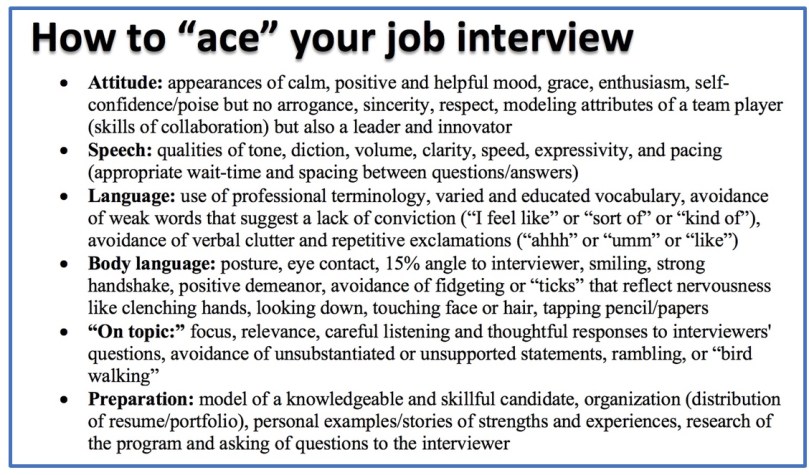
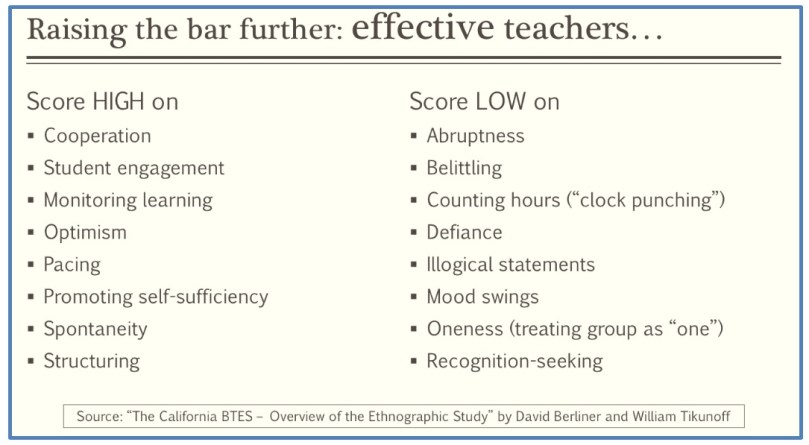
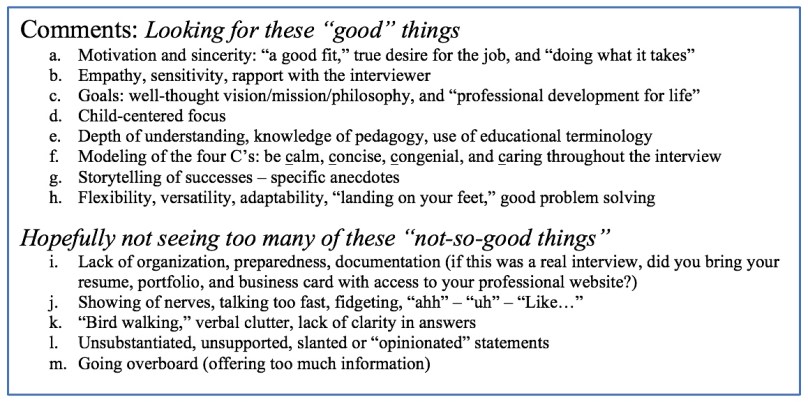
As soon as it is over (immediately when you get home – don’t put it off!), debrief yourself. Do an assessment of your positives and areas for improvement or needs for further practice. To formalize this process, try any number of evaluative rubrics (for examples, visit https://paulfox.blog/2019/05/14/job-interview-rubrics/). Or, just summarize your observations into strengths (+) and weaknesses (-) referencing the elements of attitude, speech, language, body language, content/on topic, and preparation. (See the first box above.)
 Are you telling me it’s time to bring up more questions? Yep, to finalize your interview’s “postmortem,” reflect on these queries, which will become your focal points in preparation of your next job screening.
The first “biggie critique” might take a little while to follow-up and re-train. This is important since most of the professionals who serve on interview screening committees are administrators, HR staff members, or curriculum supervisors (not music content specialists). And, in the same breath, most music education majors are not well versed on these “buzz words” since they may be only briefly mentioned during their music courses.
1. How many times did you use appropriate general educational terminology and current school jargon? Here are a few samples of “the ABCs.” If you do not know the meanings, Google search them or look up sites like https://resilienteducator.com/classroom-resources/education-terminology-jargon/, https://www.teachervision.com/dictionary-educational-jargon, and https://wwndtd.wordpress.com/education-jargon/. (If you really want to dive into an interesting “lingo generator,” experiment with https://www.sciencegeek.net/lingo.html, which may also help you define associations among related educational terms used in the composition of reports, grant applications, and other documents for accreditation.)
- Assessments – Authentic, Formative (“for learning”), Summative (“of learning”), and Diagnostic
- CCCC (The Four C’s) – 21st Century Learning Skills of Creativity, Collaboration, Communication, and Critical Thinking
- Classroom Management and the concepts of “Assertive Discipline” and “Ladder of Referral”
- Charlotte Danielson’s Four Domains – Planning and Preparation, Classroom Environment, Instruction, and Professional Responsibilities
- DOK – Depth of Knowledge and HOTS – Higher Order Thinking Skills
- ESSA – Every Student Succeeds Act (2015), successor to NCLB (No Child Left Behind)
 IEPs – Individualized Education Program, including IDEA (disabilities), 504 plans, accommodations for special needs, differentiated and customized learning, etc.
- LMS – Learning Management System (software used by schools to track grades, take attendance, deliver curriculum, and offer/evaluate courses, etc.)
- Middle School (or Middle Level Learner) Philosophy
- PLN/PLC – A Personal Learning Network or Professional Learning Community
- PBL – One of two different concepts: Project-Based or Problem-Based Learning
- SEL – Social-Emotional Learning
- SAS – Standards Aligned Systems of the PDE (Pennsylvania Department of Education)
- STEAM – Science, Technology, Engineering, Arts, and Math
- UBD – Understanding by Design, “backwards-design” curriculum development with EU (Enduring Understandings) and EQ (Essential Questions)
Of course, if you were “nailed” by not knowing terminology or acronyms of which you never heard, don’t “fake it!” Just be honest with the interviewers (they cannot expect a “raw recruit” fresh out of college to know everything), but never-the-less, look it up as soon as you return home. You’ll be ready for the next interview. (“Catch me once, shame on you. Catch me twice, shame on me!”)
More questions to help you evaluate your performance:
2. At the interview, did you project the image that you are solely qualified to serve as a specific music content-area specialist? In other words, are you only a “band director,” “vocal conductor,” EL/MS general music teacher, piano/guitar accompanist, jazz instructor, music theorist, or string “maestro?” Did you basically imply to the screener(s) that you would not accept any assignment outside your “comfort zone,” and that your Music Pre-K-12 Instructional I Certificate is not worth the paper on which it is printed?
3. If you had videotaped the interview, how would you characterize your rapport with the screening individual or committee? To what extent did you demonstrate an attitude of openness, cooperation, sensitivity to the interviewer’s style/personality, and fostering of the four C’s of the model interviewee behavior – be calm, caring (motivated), congenial, and considerate?
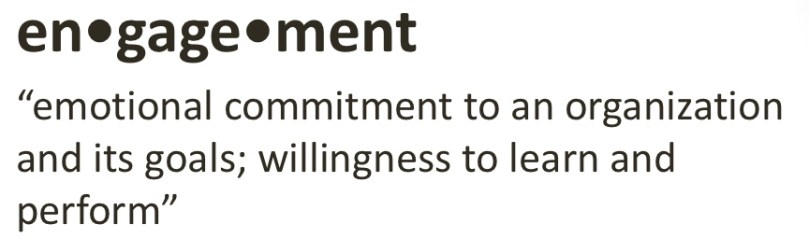
4. Were you “engaged” in treating the session as a mutually beneficial exchange of information?
5.  Did you respond to the interviewer’s questions “on topic” with clear, concise, and substantiated statements, supported by specific anecdotes/stories or examples of your skills or experiences?
6. Did you avoid “bird walking,” “tap-dancing,” having verbal clutter (too many run-on statements), rambling, fast talking, sounding verbose, being flip or too casual/informal in conversation, or going overboard with your answers?
7. How many times (count them) did you use the words “ah,” “um,” or “like?”
8. Did you promote your strengths and all experiences (musical and non-musical) you have had interacting positively with children, and not discount your potential and capabilities due to a limited past job record or shortened time in student teaching?
9. How successful were you in controlling your nerves, looking interested, “being yourself,” and demonstrating good eye contact, pleasant facial expressions, and relaxed and professional speech, posture, and body language?
10. Did you avoid the use of “weak words” that suggest a lack of conviction: “kind of,” or “sort of,” or “I feel like?”
11. Did you limit any form of “fidgeting,” such as tapping or shuffling feet, cracking knuckles, touching hair or face, drumming or spinning a pen between your fingers, wiggling in your seat, etc.?
12. How many times did you use the name of the interviewer(s) during your interview? It shows respect and is the best way to get/keep his/her attention.
In summary, treat the job search process more scientific:
- Be diligent in practicing mock interviewing with classmates, friends, and family members,
- Plan ahead, and
- Formalize your questions and self-assessments.
The jobs are out there… waiting for you to “hook them in,” and as every good fisherman knows: “Nothing replaces time on the water, patience, and the ability to admit to yourself there is always something to learn and a better way to do it.”
PKF

Photo credits from Pixabay.com by Gerd Altmann (geralt):
- “Businesswoman”
- “Interview”
- “Magnifying Glass”
- “Magnifying Glass Closeup”
- “Interview-Superior-Staff”
- “Feedback”
- “Did You Know?”
- “Never Stop Learning”
- “You Are Hired”
© 2020 Paul K. Fox






 What are your greatest weaknesses?
 Because we all have weaknesses but rarely want to admit to them, it’s best to begin with a truthful answer and build your script from there. Select an answer that a hiring manager would not consider to be essential qualities or skills for the position as well as qualities that you are actively improving.
 Example weakness: Difficulty with an area of expertise
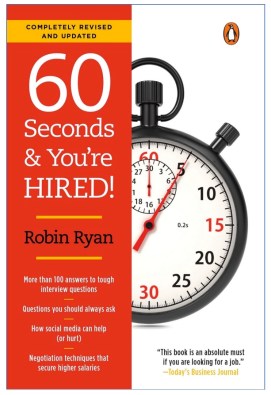 Focusing on Robin Ryan’s “interview tools” such as “the five-point agenda” and “60-second sell,” her book 60 Seconds and You’re Hired ” is inspiring and provides much greater depth (76 pages!) on answering those “thorny” interview questions. Nearly all of the sample questions above are also analyzed, offering easy-to-understand comments and recommendations for specific career paths. For example, Robin Ryan also weighs in on that inquiry “What is your greatest weakness?” – first offering to joke about it “I cannot resist chocolate!” and then, if it is reiterated, endorsing a strategy to share a work habit problem (like being a “Type-A” person) on which you are currently improving but is not critical for the position they are seeking to fill.


 Discounted NAfME + PMEA first-year membership: only $90. (If you are a recent college graduate in your first year of teaching, or if you are the spouse of a current or retired NAfME member, contact NAfME at 800-336-3768 or email
 Bring to any employment screening your resume, business card, and an e-portfolio referencing a professional website which archives everything in #1 and #2 above.
 Clean-up and curate your social media sites, treating your Facebook pages as another “personal branding resource.” Experts recommend that “your profile information should reflect integrity and responsibility… You should expand or add content that projects a professional image, shows a friendly, positive personality, demonstrates that you are well-rounded with wide range of interests, and models… great communication skills.”


 now would be the perfect time to explore supplemental resources and get a “head-start” on additional pre-service training for next fall. These tips are especially valuable to anyone entering his/her senior or final year as a music education major, finely honing in and marketing your skills as a professional in order to be prepared for finding and succeeding at your first job.


 Mix and mingle to improve your networking opportunities

 Understanding specific educational jargon and the latest approaches, applications, and technologies in the profession (e.g. Backwards Design, The Common Core, Whole Child Initiatives, Multiple Intelligences, Depth of Knowledge and Higher Order of Thinking Skills, Formative, Summative, Diagnostic, and Authentic Assessment, etc. – Do you know the meaning of these terms?)
 You need to ask yourself the question, “What are my greatest weaknesses in music education?” Or, to put it another way, “What school assignments would I feel the least confident to teach? After earning your state’s all-essential credential, your certificate will likely be general and only say “music Pre-K to Grade 12.” Administrators will expect you can “do it all” – introducing jazz improvisation at the middle school, accompany on the piano or guitar all of the songs in the grades 1-6 music textbook series, directing the marching band at the high school or the musical at the middle school, starting an elementary string program, etc.
 Since music teachers are all “fiduciaries” (do you know the meaning of the word?) and legally responsible for our “charges,” wouldn’t it be a good idea to review our state’s regulations and code of conduct, and hear about the challenges and pitfalls of ethical decision-making before we jump in and get “over our heads,” so-to-speak?
 ask your cooperating teacher (or his/her supervisor’s) permission. Some school districts have “do not photo” rosters. (However, in my district, only a few elementary students were “on the list” and most defaulted to a “permissible” status unless the parent opted out. The principal’s secretary had a record of all exceptions.) It is also suggested that you focus your camera mostly on YOU and not the students, from the back of the classroom or rehearsal facility (possibly from afar), so that the student faces are not clearly discernible. To respect their privacy, in the recorded excerpts, do not use any segment announcing the names of your students.
 To “wrap-up” our final segment, we will review the development of a professional “marketing plan.” This is blog #3 out of 3. (Be sure to also check out
 Shama Hyder posted “7 Things You Can Do to Build an Awesome Personal Brand” at
 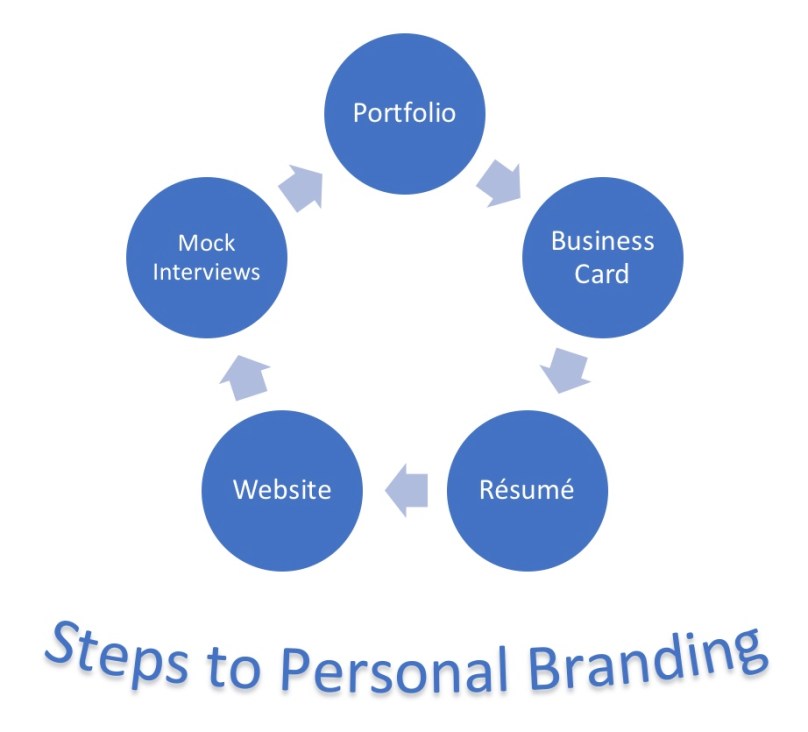 The branding process involves first developing your philosophy of music education, archiving your awards and accomplishments, documenting your grades and
  experiences, and collecting stories/personal anecdotes of your strengths. The next steps include the creation of a written and electronic portfolio, business card, resume, and website. Finally, you must compile/assemble everything together and practice (and self-assess) your “story-telling skills” to answer those important questions at well-rehearsed “mock interviews.”
 As I laid out in a previous blog “Networking Niceties: The ‘How-To Schmooze’ Guide for Prospective Music Teachers” at
  The above blog-post also explores setting up a good organizational system to manage your professional contacts.
 Self-reflection of the professional’s teaching practices and modification of these as needed to match changes in the environment and circumstances




 musical or athletic events, coaching or working with children in a coaching capacity, as a leader and role model.”
 If you can afford it, purchasing a simple domain name like your first and last name (something easy to remember) would be a great idea. Prospective employers will not have to write down a bunch of numbers, know your birthday, learn your nickname, etc. to find your e-portfolio. If you have an unique middle name or surname, you might luck out and be able to snag (and register) the perfect domain name. This was not possible for me! Do you know how many Paul Fox’s (even Paul K. Fox) are “out there” already taken?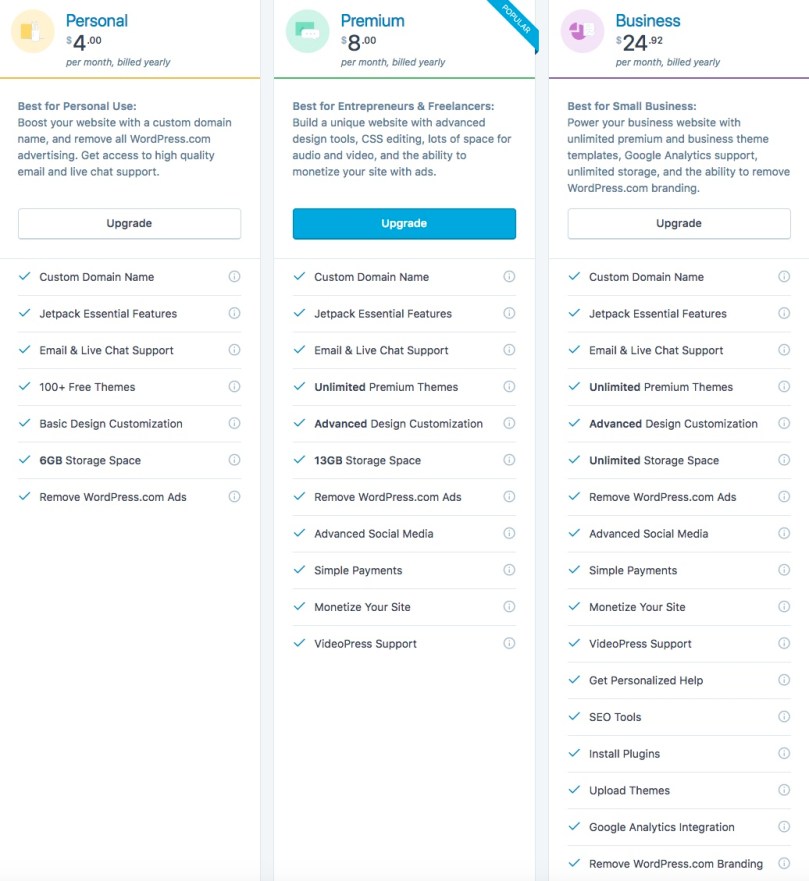
 To create your web site’s identity, WordPress will remove the dots and add their company’s moniker “.wordpress.com” at the end of your email name. That is how
 Showing your versatility, try to assemble a collection of still photos, audio examples, and videos that ideally represent all specialties in music education: choral, dance, general music, concert band and string instrumental, marching band, jazz, theater, etc., and demonstrate your proficiency in multiple settings at all grade levels.

 Even though it is from a book on post-employment transitioning (Purposeful Retirement: How to Bring Happiness and Meaning to Your Retirement), the author Hyrum W. Smith suggests several thought-provoking questions on prioritizing time:
 Yours truly, a “late baby boomer,” never enjoyed that prophesied and romanticized revolution of a “paperless society.” Did you? PM recommends the creation of a “future reading” file, a subcategory of “date it.” Experts on Google Mail will extol the merits of creating a folder and categorizing/storing messages such as emailed issues of MEJ, Kappan, SB&O, and other digital editions of professional newsletters. I have found that this doesn’t work very well, even in retirement. The file folder just fills up, and I never seem to get around to reviewing the things I thought were so important to save. Nor did the practice of our grandmothers’ generation clipping articles (and coupons) out of newspapers. You would think you could solve this media overload by just printing a small excerpt of what you want to peruse later and putting it in a letter tray near your desk? Nope. It just piles up! However, probably the ideal solution would be to designate a specific 15 minutes or more every day for something they used to give to the middle school students I taught: “silent and sustained reading.”
 How many times have you heard it? Make your plans and goals “intentional!” Besides all of the upcoming deadlines and appointments to which you are committed, include in your daily and weekly schedule opportunities for individual reflection and growth.
 in response to feeling a little “stressed over the schedule” could be to “get used to the 24/7 nature of the job.” A music teacher works from sun-up (and before) to sun-down (and after), and constantly has to juggle multi-tasking on a wide variety of to-do’s, all landing at the same time: writing lesson plans, arranging music or drills, preparing scores or accompaniments, planning and rehearsing ensembles, managing the grade book and attendance records, attending faculty meetings and parent conferences, writing curriculum, student assessments, and lesson targets, preparing for extra-curricular activities like marching band, chorus, or the musical, finishing your own homework for graduate courses, district inductions, or professional development assignments, ETC.
 As a “professional,” you have an open, inquisitive mind, constantly strive for self-improvement, continuing education, and retooling, embrace change and better ways of doing something, and “practice” your craft. This means you read your educational publications from cover to cover. For example, these were a few of the tips in a recent PMEA News article, “I’ve Got an Interview, Now What?” shared by Dr. Kathleen Melago, PCMEA State Advisor and Associate Professor of Music Education at Slippery Rock University, and Doug Bolasky, retired band and orchestra teacher and former Department Chair of the Southern Lehigh School District:


 This article’s focus will be on the seemingly intangible… “body language!” Many say that during the interview, first impressions are critical — “the first ten seconds will create the interviewer’s first judgments about you, and then after four minutes, it’s all over.” The research also suggests that during the interview, the evaluation of your merit is based 7% on what you say, 38% on your voice or how you say it, and 55% on our facial expressions and non-verbal cues.
 Some of Cuddy’s assertions:
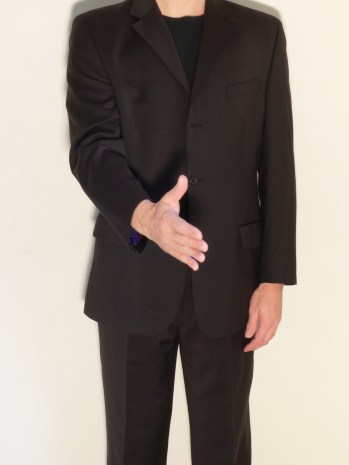 Practice handshaking with a friend before taking interviews.
 Although “the experts” are not always in consensus, especially on the subjects of eye contact and leaning posture, Desta’s tips summarized below provide additional enlightenment on how to use body language to promote a positive image:
