
New Getting a Job Tips for Prospective Music Teachers
The Interview Playbook: Directing a Showstopping Performance in Interpreting and Reciting Your Lines!
All the world’s a stage,
And all the men and women merely players;
They have their exits and their entrances,
And one man in his time plays many parts… – William Shakespeare
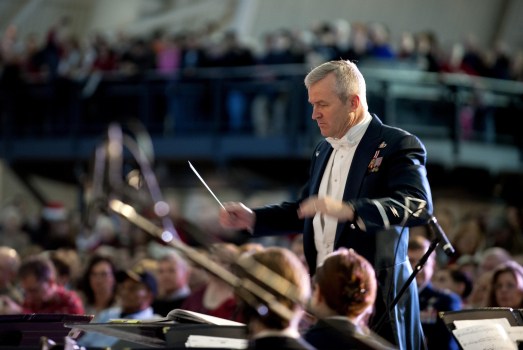
How do you get to Carnegie Hall? Practice, practice, practice! How do you market yourself, take interviews, and succeed in landing a job? Practice, practice, practice!
This article reviews rationale and methods to intentionally prepare, rehearse, “stage,” and “act out” your answers to interview questions.
 Depending on the structure of the interview, the hiring procedures of the institution, and the type of session (whether it is a general screening prior to any job opening, or the first round, second round, demonstration lesson, final round with the superintendent, etc. in order to fill a specific position), you will be exposed to many different kinds of questions.
Listed below are 71 samples of what might be asked at interviews for a school music posting. As they say, it is time to “woodshed” your upcoming performances!
The first step is to think up as many examples as possible of past incidents that exhibit your mastery of core standards in teaching, critical thinking and problem solving, professionalism, music and academic accomplishments, and all positive interactions with children, in both musical and non-musical settings. Assemble and catalog these successful “scenes” (even write them down) to prep your responses for the interview.
 As I go out to help at job fairs and mock interviews for music education majors, I advise the soon-to-be candidates to practice their storytelling skills and recall relevant personal anecdotes in order to satisfy the interviewers’ questioning, promote an image of competency and self-confidence, “show that you have what it takes” and would be a “good fit” for their school district, and ultimately “ace” the examination.
One example I give the “recruits” is probably more suitable to a sales position. If an interviewer asks something like, “What was your first job?” – your response should not be a quick rejoinder of several words like “a paper route.” To enhance your “personal brand” and illustrate your character, proficiency, and work history, you should take the opportunity to tell a story about that first “gig.” Describe what you did as the neighborhood paperboy, perhaps revealing a little insight into the kind of entrepreneur  you are, adoption of “customer-first” philosophy and habits, a savvy business sense, focused motivation, and a strong work ethic. Narrate an anecdote rather than list facts. Plan (and dress rehearse) something like this script: “My route was small, so I surveyed my existing customers, asked about their needs, desires, and their definition of a ‘perfect paper delivery,’ and how I could help them. I tagged and followed-up on their unique requests, like ‘hiding the pile of papers that end up accumulating during vacation periods’ (advertising to the world that homeowner is out-of-town), and ‘when NOT to place the paper in the screen door early in the morning so as to avoid waking up the dogs and the whole household.’ I also solicited business from non-subscribers, asking them how I could be of assistance. Pretty soon, word got around, and my enhanced customer-care translated into almost doubling the number of the people on my route.”
Next, with or without help from your peers (your future competitors in the job market), set-up one or more video recording sessions of “mock interviews.” Put yourself in the shoes of the both the interviewer and the interviewee… randomize and select questions from the lists below (take representative samples from all three categories for multiple  settings) and form your responses. View and assess your performances. What are your strengths and weaknesses, and what improvements could be recommended? Besides the content and clarity of your answers, monitor and evaluate your body language, eye contact, and posture, vocal tone and projection, and those intangibles like “charm,” “attitude,” and “first impressions.” If you do this in a group (roommates, collegiate music education chapter, methods class, etc.), request feedback from your “critics.”
Finally, here are five more considerations for successful interviews:
- Answer the questions as truthfully as possible. Be true to yourself. Never try to predict or recite what you think the interview panel wants to hear. Also, keep in mind, “anything you say may be held against you…” such as declaring a willingness to participate in a host of extracurricular activities, sports, student council, and other clubs. If you claim you want to become the marching band director, musical choreographer, swim coach, Sadie Hawkins dance organizer, and yearbook sponsor, the administrators (who are always seeking to fill these positions) will expect you to sign up for all of these extra-duties in your first year!
- Some questions may be designed to see how you respond to stress. Although no longer considered a valid measurement of intellectual capacity or emotional stability,
 “stress interviews” are still conducted by some institutions. You’ll know immediately if for some reason you are thrown into one of these seemingly “hostile environments.” No matter what you say or how you respond to a question, the interviewer(s) will exhibit a negative attitude, look disinterested, inattentive, unimpressed, or disappointed, or even act angry, belligerent, or argumentative. Talk about “playing to a dead crowd!” Actually, their sole purpose is to evaluate your behavior during artificially-induced tension or conflict. Your only strategy? Play the game! Stay calm, cool, and collected.
 - It is not a crime not knowing the meaning of a single educational term, solution to a problem, or failing to answer a question. If you are just starting out in your career, recently completed coursework in music education, don’t be surprised if a question or two is beyond your study or experience. Just admit it! You could say something
 like, “I haven’t had the pleasure of teaching long enough to totally comprehend what I would do in that situation.” Or perhaps, “I am not to familiar with that term/method/philosophy, but I am willing to research it, ask my building principal or supervisor for his/her advice,” etc.
 - Don’t get carried away, offer too much information, or share irrelevant personal information or random opinions. Listen carefully to the question. Be precise and stay “on topic.” Refine your response to a specific story to back up your perspective, understanding, and/or success in dealing with the issue. And, as the dictionary defines “run on,” don’t “blab, blubber, blurt, cackle, chat, gossip, gush, jabber, mumble, mutter, prattle, rant, rave, run off at the mouth, trivialize, or yak!”
- Search and consume every job resource and advice you can get your hands on. Peruse the numerous articles about marketing your professionalism, branding yourself, creating e-portfolios, taking interviews, etc., and additional materials in the “Becoming a Music Educator” menu link at the top of this page.

“The world is a stage” and now you need to “act your part” when participating in employment interviews. Carefully prepare to show-off the best elements of your training, skill sets, and personality traits. In the field of music and music education, we preach “perfect practice makes perfect,” so apply your performance know-how to interview storytelling and get ready for the questions! The stage is now yours! “Break a leg!”
The word “theater” comes from the Greeks. It means “the seeing place.” It is the place people come to see the truth about life and the social situation. – Stella Adler
Most Popular Interview Questions
- Who had the greatest influence on you to become a music teacher and why?
- What are the most important qualities of an outstanding educator?
- What is your personal philosophy of student discipline?
- How would you assess the learning in your classroom/rehearsal?
- What purpose does music education serve in the public schools?
- What is the importance of professional development and how will you apply it to your career?
- What are your personal goals? Where do you see yourself in ten years?
- How do you recruit students to “grow” a music program?
Questions on Philosophy or Core Teaching Standards
- Concerning music education, what is your philosophy, vision, and mission? (Educational Philosophy)
 What is your view of the teacher’s role in the classroom? (Educational Philosophy)
- What is most important to you (and why): music content, outcome, or process? (Educational Philosophy)
- Describe a successful lesson plan you have developed. (Knowledge/Education)
- What rules and expectations would you establish in your classroom? (Classroom Management)
- How will you control behavior in large ensembles? (Classroom Management)
- How would you deal with a difficult student who has gotten off-task? (Classroom Management)
- How will you incorporate the use of technology in your classroom? (Technology)
- How have you utilized technology to assist in instructional preparation? (Technology)
- Summarize a list of software programs and other technology you have mastered. (Technology)
- Describe your strengths in oral communications and public relations. (Oral Expression)
- How would you disseminate information to the students in support of your daily lesson targets? (Oral Expression)
- Provide sample announcements you could make at an a) open house or b) public performance? (Oral Expression)
- Discuss your strengths in writing and/or written communications. (Written Expression)
 What role does the Common Core have in general music (or music ensembles)? (Written Expression)
- Describe your last or favorite college essay or article on music or curriculum. (Written Expression)
- Describe your leadership style. (Leadership)
- What actions would you take to get a group of peers refocused on the task at hand? (Leadership)
- Illustrate your role in a group project or collaborative assignment. (Leadership or Teamwork)
- How would you involve students in the decision-making or planning of your classes/ensembles? (Teamwork)
- How would you involve parents in your music program? (Teamwork)
- How would your musical peers describe you? (Judgment)
- How do you typically model professionalism and judgment in dealing with conflict? (Judgment)
- How do you differentiate and teach to diverse levels of achievement in your music classes? (Problem Solving)
- Describe a difficult decision you had to make and how you arrived at your decision. (Problem Solving)
- How will you accommodate students who want to participate in both music and sports? (Problem Solving)
- How do you insure that long-term plans and music objectives are met? (Planning and Organization)
- Illustrate a typical musical (or marching band or ensemble) production schedule. (Planning and Organization)
 How would you structure a general music (or ensemble rehearsal) classroom of the future? (Innovation)
- Share an anecdote about a new or innovative teaching technique you have used in music. (Innovation)
- Describe a project you initiated (or would initiate) in your teaching or extra-curricular activity. (Initiative)
- What motivates you to try new things? (Initiative)
- How much time outside the school day should a music teacher be expected to work? (Initiative)
- How would you define professional commitment in terms of music education? (Dependability)
- What after-school activities do you plan to become involved? (Dependability)
- How do you cope with stress? (Adaptability)
- How do you manage shifting priorities or changing deadlines? (Adaptability)
- Why did you choose to become a music teacher? (Self-Insight/Development)
- In your own music-making or teaching, of which are you most proud (and why)? (Self-Insight/Development)
- If you could write a book, what would the title be? (Self-Insight/Development)
- What hobbies or special skills do you have which may influence your future activities? (Energy/Enthusiasm)
- In what extra-curricular activities did you participate at the HS and college level? (Energy/Enthusiasm)
Content-Specific Questions & Demonstration Lessons
- How would you teach “steady beat” or pitch matching in the primary grades? [GENERAL MUSIC]
- How and when would you teach syncopation to the intermediate grades? [GENERAL MUSIC]
- Describe in detail an introductory lesson on improvisation using 12-bars blues progression. [JAZZ]
- How would you assess the learning in EL/MS music classes? [GENERAL MUSIC]
- What marching band style do you prefer to teach and perform in the halftime show, and how would you organize the marching auxiliary units (majorettes, color guard, dance team, and/or drum line)? [BAND]
 How would you improve the intonation/tone quality/bow technique of a string players? [STRINGS]
- Describe the selections you would program for a EL/MS/HS choral/band/orchestra concert in December/May. [ALL]
- How would you assist fifth graders performing dotted quarter/eighth combinations hesitantly or incorrectly? [ALL]
- When and how do you present the concepts of shifting/spiccato/vibrato to string students? [STRINGS]
- Describe a lesson in which you would use classroom instruments. [GENERAL MUSIC]
- How do you advise/assist in the student’s selection of a beginning band instrument? [BAND]
- What criteria and methods should be used assign voice types for your EL/MS/HS chorus? [CHORAL]
- What steps would you take to improve an ensemble’s phrasing/blend/balance? [BAND/STRINGS/CHORAL]
- Discuss the process you use in developing the singing voice. [GENERAL MUSIC/CHORAL]
- Describe your background and knowledge of each of the following methodologies: Orff, Kodaly, Gordon, Suzuki, Dalcroze. [ALL]
- What are your keyboard skills like? Vocal skills? Secondary instrument skills? [ALL]
- How would you warm-up a band/chorus/orchestra? How do you tune instruments? [ALL]
- Show us how you would start a piece in general music/band/chorus/orchestra. [ALL]
- Tell us about a composition/improvisation/multimedia project you have done with students. [ALL]
- How would you integrate music with the other academic subjects in the EL/MS/HS? [ALL]
- What are the most common problems for beginning instrumentalists/vocalists? [ALL]

PKF
© 2016 Paul K. Fox

 I will probably never tire writing articles for new or prospective music educators seeking a public school position. I am subject to a flash of inspiration – epiphanies or revelations – at any moment, many of which come while I am walking the dogs or driving the car. Here are some random loose-ends I have not covered before, the results of recent bouts of brainstorming and mind wandering! Hopefully, they will provide you additional insight towards success in the job hunt process. Good luck!
 their school administration in the months of February, March or April to receive some of their “golden handshake” benefits. For the school district, it helps them plan for future hiring. For you, it should focus your attention and organize your work at a time when the jobs are just becoming available. (Don’t wait for summer vacation!)
 PA-educator.com which broadcast data on the pool of candidates. Regardless, I sent a custom-designed letter to every superintendent of school “in my hot zone” announcing that I was interested, met all education and certification requirements, and was available for immediate employment consideration. You should prominently share the name/location of your professional website. In addition, this would be the perfect place to mention if you student-taught or served as a private teacher, coach, summer camp counselor, or marching band/musical assistant in their area. For me, this meant a lot of extra work (looking-up the names/addresses, and you can’t just send a blanket form-letter “To Whom It May Concern”), but it seemed to give me a little edge, a foot in the door so-to-speak, and the opportunity to place follow-up calls later to the HR department to confirm they received the letter and did not need anything to add to the file (transcripts/portfolio, etc.). If you’re not restricted to a specific geographic area, saturation this way would probably not be feasible.
 domain name (something simple like yourname.edu or .com). Graduating this year from West Virginia University, my former student David Dockan
  anything trendy, mod, or “cool,” and guys, this means you wear a tie and a jacket. Unkempt or unusual length/coloring of hair, extra body piercings, and visible tattoos will not help project the classic corporate image of “conservatism” which most administrators seek in teachers. Sure, you do have the right to be “unconventional,” “artsy,” “one-of-kind” or “make a statement,” but you also have the right never to get a public school job!
 n your portfolio. This would look particularly good fulfilling Charlotte Danielson’s Domain 4c “Communicating with Families” in
  When Facing the Job Market” at http://majoringinmusic.com/7-things-music-education-majors-can-do-make-themselves-more-employable-2/,
 employment search process and preparation for interviews. For examples, you already have many lists of employment screening questions:



 Start thinking of yourself as a brand


 If you have time, design a personal logo, a symbol of you wherever you go on websites, e-mail footer, digital and printed portfolios, business cards, etc. Although I retired in 2013, I created the illustration at the above right. It implies that I am “a happy fox” (my last name), involved in music, and especially love a certain Beethoven symphony, reinforcing that I am an orchestral musician.