
Collegiates: You snooze, you lose!
After a well-deserved break from your academics and other college or work deadlines,  now would be the perfect time to explore supplemental resources and get a “head-start” on additional pre-service training for next fall. These tips are especially valuable to anyone entering his/her senior or final year as a music education major, finely honing in and marketing your skills as a professional in order to be prepared for finding and succeeding at your first job.
Actually I hate to admit it, I enjoy assigning college students a little “homework!” But, most of this you can do from the comfort of your patio, beach blanket, swimming pool lounge chair, or couch in the game room. With the exception of “getting your feet wet” and diving into enriching music teaching field experiences and a summer workshop or two, all you need is a pencil to take notes and a device with access to the Internet.
There’s a lot to-do right now, and you only have the rest of July and August. Please try to “keep your eyes on the target” and squeeze in a few of these self-improvement plans around your vacation trips (seven lessons – see sections below) :
- Summer practicum
- Conferences
- Online research
- Skill gap-filling
- Ethics training
- Digital archiving
- Interview prep

1. Are you really ever “on vacation” from music education?
Most veteran music educators would respond with “NEVER!” We maintain our professionalism by participating in workshops, reading teacher journals and online articles, perusing lesson materials and new music, practicing and advancing our personal musicianship, undergoing technology “tune-ups,” and focusing on other career development. This is a 12-month, even 7-day process, and academic breaks when they appear on our calendar allow us to “double-down” in areas we need the most help.
“Hands-on” training not only “fills-up your resume” with primary employment/volunteer sources, but more importantly, exposes you to realistic opportunities to expand your skills and knowledge of the “best practices” in music education and leadership training, while building techniques for handling student motivation and discipline best learned from “the school of hard knocks.”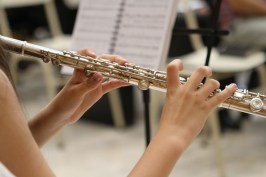
These placements don’t always come “knocking at your door.” Go out and seek a little adventure! For leads, talk to your high school band, string, or choir director. Your purpose is to find something that allows you some contact with children… free (usually) or paid, in or outside the field of music and the arts. Here are a few ideas:
- Coach summer band sectionals, field rehearsals, marching or dance practices, etc.
- “Put up your shingle” and teach private or small class music lessons.
- Offer to arrange music or or provide choreography for local school drum-lines, marching bands and/or auxiliary units, or theater groups.
- Sing in a community or church choir, and offer to help accompany, vocal coach, or conduct.
- Sign-up to assist in local youth ballet, modern dance, or drama programs.
- Sing, play, or teach solo or chamber music for summer religion or music camps, childcare facilities, hospitals, or senior citizen centers.
- Volunteer (in almost any capacity) at a preschool or daycare center.

2. The tools of the trade – CONFERENCES!
Summer is a GREAT time to grow your network of valuable opportunities for future collaboration, do a little goal setting, and “push the envelope” with professional development of the “latest and greatest” and “state of the art” music and methods. The primary source for professional development is the education conference. There still may be time for you to find one close to you, perhaps in conjunction with a little sightseeing or visits with friends and relatives in the same city, like the following:
- PMEA July 17-18, 2018 in Harrisburg, PA
- NJMEA August 7, 2018 in Ewing, NJ
- NYSSMA August 12-14, 2018 in Albany, New York
- WYSMA various July and August 2018 dates in Wisconsin
Thanks to www.takeflyte.com/reasons-to-attend-conferences, we know that attending workshop sessions are “good for you!” Participating in a conference helps you to…
- Sharpen the saw (sharpen your skills – Stephen Covey’s seventh habit of highly effective people)
- Meet experts and influencers face-to-face
 Mix and mingle to improve your networking opportunities
- Find new tools and innovations
- Learn in a New Space
- Break out of your comfort zone
- Be exposed to new tips and tactics
- Relearn classic techniques with greater focus
- Share experiences with like-minded individuals
- Discover the value of the serendipity in a random workshop
- Invest in yourself
- Have fun!
If you really need any additional rationale for spending the money, click on the blog-post “Getting the Most Out of Music Conferences” at https://majoringinmusic.com/music-conferences/.
Finally, believe-it-or-not, you can bring the conferences to YOU! For the annual $20 subscription fee, you can view NAfME Academy professional development videos on almost any topic you can imagine. Check out the NAfME library of webinars: https://nafme.org/community/elearning/.
3a. A winning website
The aforementioned Majoring in Music website is an excellent place to visit. It is amazingly extensive. You should read these articles for your “final year of prep.”
- https://majoringinmusic.com/finding-first-music-teaching-job/
- https://majoringinmusic.com/7-things-music-education-majors-can-do-make-themselves-more-employable-2/
- https://majoringinmusic.com/music-teacher-job-interviews/
- https://majoringinmusic.com/music-education/
- https://majoringinmusic.com/teaching-music-inner-city-schools/
- https://majoringinmusic.com/el-sistema-music-education/
- https://majoringinmusic.com/teaching-music-abroad/
3b. These “awesome” resources are brought to you by NAfME
Besides the broad-based music subject matter and specific teaching skills, here’s some valuable advice, including how to “run a music program” (first link). I hope I am not stating the obvious: You should become a member of this national association for the advancement of music education.
- https://nafme.org/7-things-dont-teach-music-education-majors-youll-wish/
- https://nafme.org/advice-for-first-year-teachers/
- https://nafme.org/easy-ways-deal-pesky-parents/
- https://nafme.org/three-easy-steps-classroom-discipline/
- https://nafme.org/one-thing-every-new-music-teacher-know/
- https://nafme.org/clever-music-teacher-hacks-will-make-year-amazing/
- https://nafme.org/help-one-keep/https://nafme.org/reading-list-music-educators/

I also want to point you to the community discussion social media platform called Amplify, a benefit of NAfME membership. We are stockpiling a lot articles for college music education students, as well as sharing dialogue on everything from pedagogical issues to music equipment purchasing recommendations in both the collegiate member group and “music education central.” Go to https://nafme.org/introducing-amplify-largest-community-music-educators-country/.
4. “Filling in the gaps”
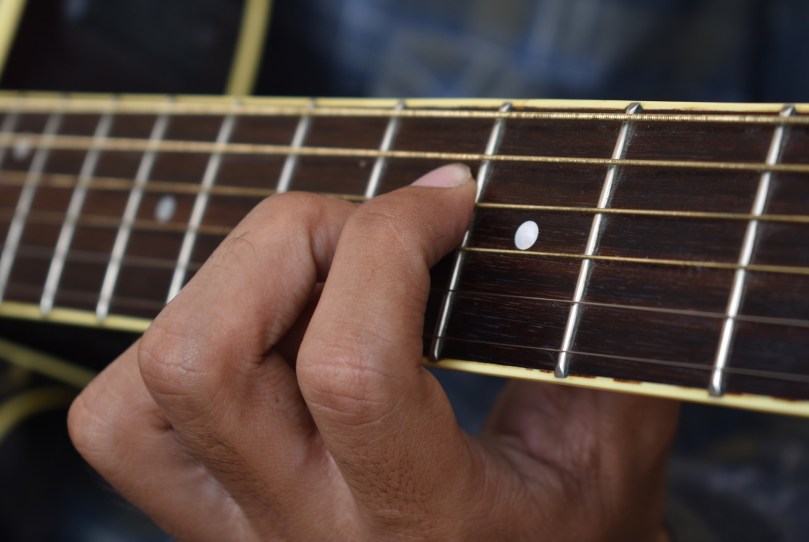
Your music education methods courses and other college classes were never expected to provide 100% of the necessary tools to become a competent teacher in every setting. This spotlights the need for professionalism. Once you land a job, you will have to “catch-up” and seek additional training to improve those areas in which you feel inadequate or unfamiliar. You can begin NOW to explore a few of these areas while enjoying your less stressful off-campus schedule:
 Understanding specific educational jargon and the latest approaches, applications, and technologies in the profession (e.g. Backwards Design, The Common Core, Whole Child Initiatives, Multiple Intelligences, Depth of Knowledge and Higher Order of Thinking Skills, Formative, Summative, Diagnostic, and Authentic Assessment, etc. – Do you know the meaning of these terms?)
- Teaching outside your “major” area or specialty (e.g. instrumental music for voice students, etc.)
- Comprehending behavior management techniques and suggestive preventive disciplinary procedures
- Mastering the use of valid assessments (e.g. can you give specific examples of diagnostic, authentic, formative, and summative assessments?) as well as a variety of music rubrics and evaluative criteria
- Knowing the provisions of the Family Educational Rights and Privacy Act and other confidentiality statutes, Individual Education Plans and service agreements, and accommodating students with disabilities
 You need to ask yourself the question, “What are my greatest weaknesses in music education?” Or, to put it another way, “What school assignments would I feel the least confident to teach? After earning your state’s all-essential credential, your certificate will likely be general and only say “music Pre-K to Grade 12.” Administrators will expect you can “do it all” – introducing jazz improvisation at the middle school, accompany on the piano or guitar all of the songs in the grades 1-6 music textbook series, directing the marching band at the high school or the musical at the middle school, starting an elementary string program, etc.
Figure out and face your greatest fears or worse skill areas. Work on them now! Take a few lessons, join a new ensemble of the “uncomfortable specialty,” ask help from your peers, etc.
More about this was printed in a previous post: https://paulkfoxusc.wordpress.com/2018/03/11/transitioning-from-collegiate-to-professional-part-ii/.

5. The ABC’s of professional ethics
So far, have you been given any ethics training in college? Most pre-service educators only receive a cursory introduction to such things as codes of conduct, moral professionalism, guidelines to avoid conflicts in relationships with students, use of social media, confidentiality regulations, copyright infringement, pedagogical and economic decision-making, etc.
Now in my 46th year working in the field of music education (although retired from the public schools in 2013), I unblushingly admit I never had a full-blown course in ethics. Music colleagues have confirmed to me that it was barely (or not at all) touched-on in music methods classes, introduction to student teaching, school district orientation or induction sessions, or back-to-school in-service programs. 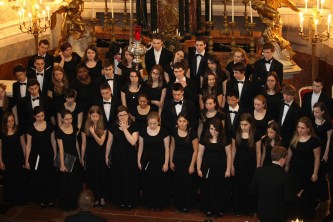 Since music teachers are all “fiduciaries” (do you know the meaning of the word?) and legally responsible for our “charges,” wouldn’t it be a good idea to review our state’s regulations and code of conduct, and hear about the challenges and pitfalls of ethical decision-making before we jump in and get “over our heads,” so-to-speak?
I can offer you two ways to immerse yourself into music education ethics. If you are a PCMEA or PMEA member and an “auditory learner,” you might prefer the FREE PMEA online webinar video (two-part) plus handouts at https://www.pmea.net/webinars/. Otherwise, visual learners and others may like this five-part blog series:
- https://paulkfoxusc.wordpress.com/2017/08/28/ethics-for-music-educators-i/
- https://paulkfoxusc.wordpress.com/2017/08/30/ethics-for-music-educators-ii/
- https://paulkfoxusc.wordpress.com/2017/09/01/ethics-for-music-educators-iii/
- https://paulkfoxusc.wordpress.com/2017/10/19/ethics-follow-up/
- https://paulkfoxusc.wordpress.com/2018/04/29/social-media-boon-or-nemesis/

6. “A picture says a thousand words” in marketing yourself
Have you been archiving your last several year’s of field assignments? Have you recorded numerous moments of teaching, music directing, performing, and working with students? Are you prepared for the coming year’s student teaching, getting ready to take still photos, audio samples, and video excerpts?
“We cannot emphasize the power of pictures enough when it comes to portfolios. During interviews, committee members are trying to get to know you and trying to envision you teaching. Don’t trust their imaginations to do so, give them pictures… photos or newspaper articles of you teaching students in the classroom, with students on field trips, learning excursions or outside class activities, with children while you are serving in adviser roles, with your students at musical or athletic events, coaching or working with children in a coaching capacity, as a leader and role model.” – http://www.theeduedge.com/top-five-must-haves-top-five-could-haves-your-teacher-interview-portfolio/
As I mentioned in a previous blog, be careful to obtain permission in advance to video record students for your e-portfolio. During your field experiences or student teaching,  ask your cooperating teacher (or his/her supervisor’s) permission. Some school districts have “do not photo” rosters. (However, in my district, only a few elementary students were “on the list” and most defaulted to a “permissible” status unless the parent opted out. The principal’s secretary had a record of all exceptions.) It is also suggested that you focus your camera mostly on YOU and not the students, from the back of the classroom or rehearsal facility (possibly from afar), so that the student faces are not clearly discernible. To respect their privacy, in the recorded excerpts, do not use any segment announcing the names of your students.
What would be ideal to place on/in your website/e-portfolio? Show a wide spectrum of experience and training: elementary and/or middle school general music, band, choral and string ensembles (all grades), marching band, musicals, dance, music technology, piano and guitar accompanying, Dalcroze eurhythmics, Orff instruments, etc. Competency, versatility, and being well-rounded are the keys here.
7. Teacher interviews – “practice makes perfect”
I have written a lot on the subjects of assembling a collection of your teaching anecdotes and stories, marketing your “personal brand,” and preparing for the employment screening process. (Have you wandered through the comprehensive listing at https://paulkfoxusc.wordpress.com/becoming-a-music-educator/?)
However, I recently came upon several new-to-me online articles that summarize the basics. Please take a look at these:
- https://midnightmusic.com.au/2017/04/music-teacher-interview-questions/
- http://www.klsriley.com/2011/04/02/interview-tips-for-music-teachers/
After reading all of these (and compile your own list of interview questions), you should get together informally with your fellow juniors and seniors and hold mock interviews, record them, and jointly assess the “try out” of your interviewing skills to land a job.
Finally, have you recently updated your resume, and created (or revised) your professional business card, website, and e-portfolio?
Okay, I admit it. I got a little carried away. You would need TEN SUMMERS to cover everything above. What’s that saying? “There’s never enough hours in a day…”
Hopefully these resources and recommendations are helpful “food for thought!” You cannot accomplish anything by procrastination… or just “sleeping in!”
Many have said that aspiring to be a music educator is a lot like a “calling.” Using your summer “free time” is all about “professional engagement.” One of my superintendents said he expected prospective new music teacher recruits to show high energy, enthusiasm, sense of purpose, and dedication during the interview… even a supposed willingness to “lay down in front of a school bus” or “do whatever it takes” to make the students (and the educational program) successful. Regardless of the hyperbole, that’s engagement!
So, what are you waiting for? Pass the sunscreen and the ice tea. Then, after a quick swim, jog, round of golf, or game of tennis, get started on your summer assignments!
PKF
© 2018 Paul K. Fox


 According to the above study by Peter Webster, Scholar-in-Residence at the Thornton School of Music, University of Southern California in Los Angeles, “good music teaching” involves the practice and observation of three types of musical behaviors:
 Peter Webster’s definition of “creativity in music” is succinct: “the engagement of the mind in the active, structured process of thinking in sound for the purpose of producing some product that is new for the creator.” Furthermore, this is a thought process and “we are challenged, as educators, to better understand how the mind works in such matters — hence the term creative thinking.” (Webster, 1987)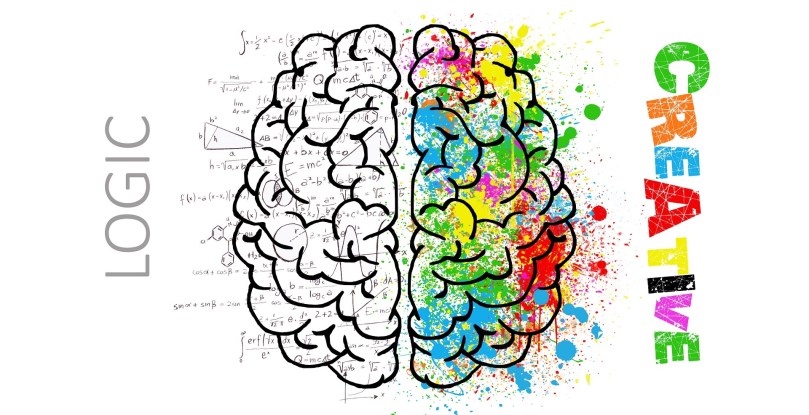
 A heighten interest in the young child and invented music notation and their discussion of it as a window to understanding the child’s knowledge (Barrett, Gromko, MacGregor)
 Related to this are the issues of teacher control: when do we step in to change something or suggest a new path.


 The Common Core
 Behavior management, disciplinary procedures (especially preventive practices) and posting class or ensemble rules
 However, in the methods classes that come later (perhaps in the second through fourth year?), the basics of “how-to teach” will come. Of course, as you sit in a class teaching you to “cross the break” on a clarinet or play a scale on the flute with good tone, you must also absorb (and remember) the finite steps required in the lesson to pass on this knowledge and skill, not just honk or squeak a few times to master the proficiency exam for yourself.
 Of course, these are “trick questions.” The answer should be “I want to teach music,” or even better, “I want to teach children.” In most of the school districts across the country (with a few exceptions in the Midwest and places that accept teaching specialty certification by grade level or subject area), you are licensed to teach music in grades Pre-K to 12. At no point in any conversation with a potential administrator (or colleague who may become a member of the screening committee for a music opening) do you want to be “pigeon-holed,” or give the impression “I can only teach_____.”
 Accompany, direct/teach the drama, and choreograph the middle school musical.
 Ego and arrogance has no place in the teaching profession. Where did I hear this saying? “The more you think you know, the less you actually know.” Joining a mentoring program or finding a formal or informal veteran teacher “buddy” will go far to insuring your professional success and dodging those first-year teacher “pot holes” (dumb but common blunders) and “rookie blues.”

 Retired music teachers are another excellent resource. For example, if you live or work in Pennsylvania, many post-employed PMEA members have placed their name and contact information on the Retiree Resource Registry to serve as willing, capable, and informal consultants for pre-service, novice, or other members recently transferred into a non-major specialty “outside their comfort zone.”
 Please feel free to comment on this blog-post. What are your thoughts?
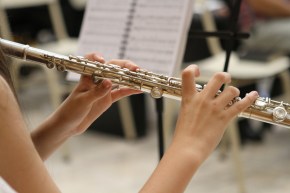 Before long, you will shed the label and function of a “college student” (although still remaining a life-long learner… and never stop the quest for new knowledge and self-improvement!). The focus will shift from YOU to YOUR STUDENTS. The prerequisites for a career in education are unique and do not resemble the same challenges as success in business, manufacturing, retail, service industry, or becoming an entrepreneur, blue-collar worker, or even a composer or professional musician. The sooner you realize these are world’s apart, the better, and now is the time to finish your major and life-changing transformation to… a professional music educator.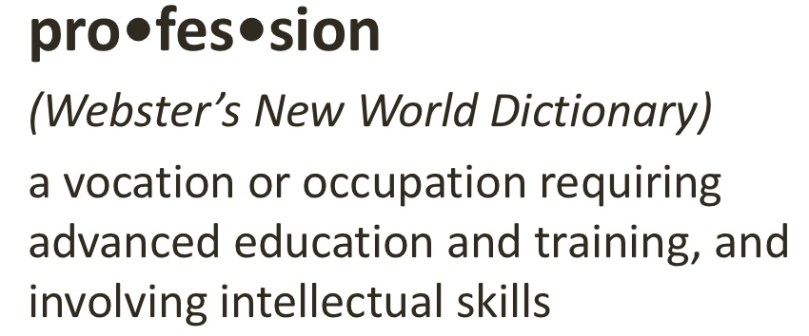
 Updates self with “constant education” and retooling
 Cooperation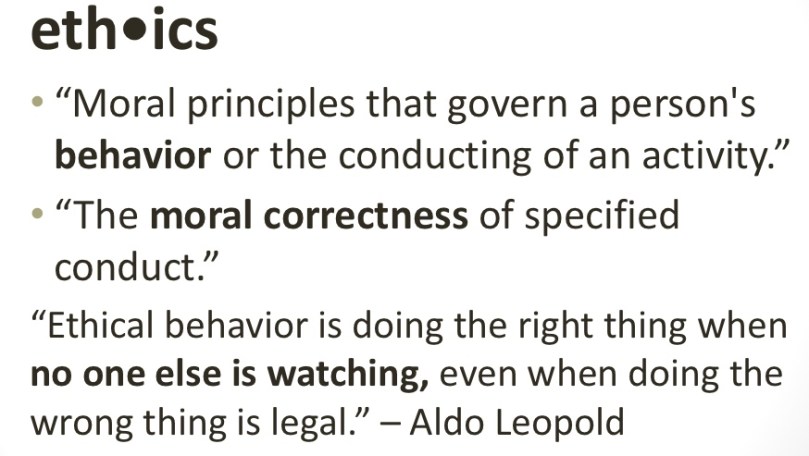
 National Association of State Directors of Teacher Education and Certification proposes these principles:
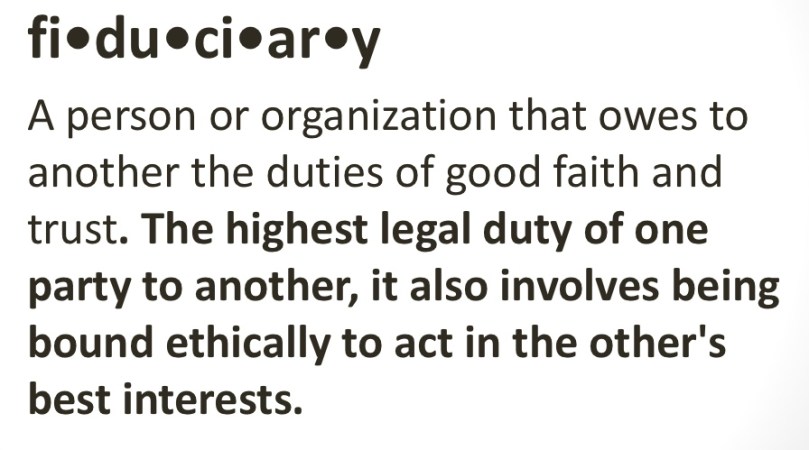 Here’s another query. What five groups of people are both “professionals” and “fiduciaries…” and have a legal responsibility to serve the best interests of their “clients?” The answer is… doctors/nurses, lawyers, counselors (both mental health and investment), the clergy, and… teachers.
  Although teachers seem to be the only one of these who DO NOT have formal pre- or in-service ethics training, and our “charges” represent a “captive audience,” our duty is clear: to act as a fiduciary for our students’ best interest, and to create and maintain a safe environment for them at all times.
 What do you believe about teaching?
 Take time to peruse these and others. Most of these sites also offer excellent examples of personal branding and marketing of the prospective job hunters’ experiences, skills, and achievements… material for our next blog on this topic.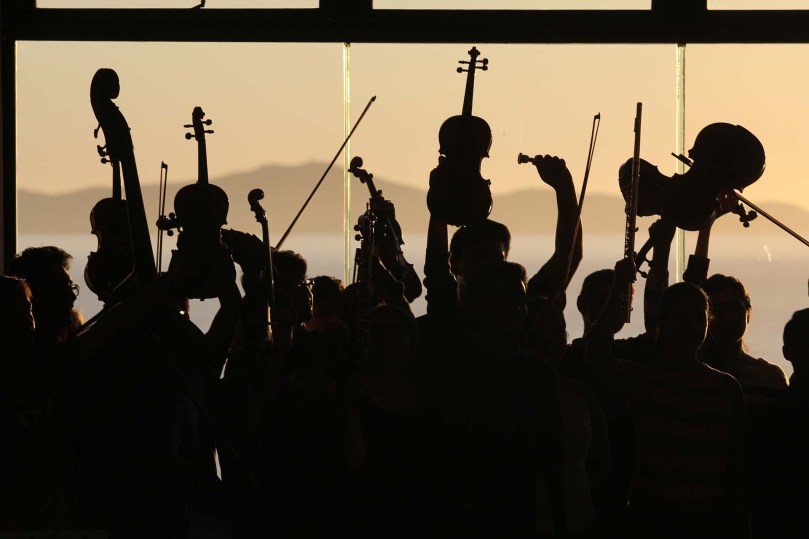

 It can’t get any better than this! Probably the most comprehensive one-stop vault of articles and “friends of NRN” sources for further study, the NCN provides an extensive collection of creativity tools: news stories (still current as of the week of April 7, 2017), quotes, webinars, blog-posts, past competitions like the USA Creative Business Cup, and a Board of Directors from across North America including many “giants in the field” like one of my heroes Sir Ken Robinson (California), along with George Tzougros (Wisconsin), Margaret Collins (North Carolina), Steve Dahlberg (Connecticut), Carrie Fitzsimmons (Massachusetts), Peter Gamwell (Ottawa, Canada), Jean Hendrickson (Oklahoma), Wendy Liscow (New Jersey), Susan McCalmont (Oklahoma), Robert Morrison, Scott Noppe Brandon, David O’Fallon (Minnesota), Andrew Ranson, Susan Sclafani (Washington D.C.), and Haley Simons (Alberta, Canada).
 According to their website,
 Spark local, regional, state and provincial, and national movements to create environments—in homes, schools, workplaces, communities and public offices—where every person is inspired to grow creatively.


 Two years ago, I wrote a three-part series on the critical need, rationale of, and techniques for developing skills in teaching creativity as well as teaching more creatively. I based my compilations on the February 2013 issue “Creativity Now!” of the ASCD Educational Leadership magazine, and passed on the research and insight of creativity experts, self-expression advocates, and/or self-proclaimed ”right-brain” educational gurus
  The continued fixation on “error-free” convergent thinking, a priority of the one-answer-only mentality, baffles me. 1+1+1 does not always equal three. I can give you at least two alternative answers: 11 or 1 (the sum in a binary system for the former and the result of drawing the Roman numeral “I” with one vertical line and two horizontal lines for the latter). This is an example of divergent thinking (“process or method used to generate creative ideas by exploring many possible solutions”), and sits at the top of the charts for higher order of thinking skills (HOTS) and depth of knowledge (DOK). Use of divergent thinking is much more valued in higher education circles, future employment, and especially research and development in a host of careers from medicine to engineering to technology innovation to consumer markets… probably the foundation of future success in our whole economy.
 My next blog on the subject of creativity in education will explore additional resources, including new websites and books on the subjects of innovation, ingenuity, originality, and self-expression released over the last several years.
