The “New” Model for Modern Music Education

by Katherine Langford

We welcome this month’s guest blogger, Katherine Langford, who describes herself as “a digital marketing consultant, writer, freelancer, WordPress enthusiast, and coffee lover.” Thank you, Katherine! PKF

Music education has transformed dramatically in recent years. Traditional classrooms and rigid lessons are giving way to creative, flexible learning models that blend technology, collaboration, and real-world experience. The new model for modern music education isn’t just about mastering an instrument anymore—it’s about nurturing creativity, adaptability, and digital fluency.

Whether you’re a teacher, a student, or a parent trying to understand this shift, this guide will walk you through everything you need to know about the new model for modern music education and how it’s reshaping the way we learn, teach, and perform music.

What Defines the “New” Model for Modern Music Education?

The new model for modern music education is built on accessibility, inclusivity, and innovation. In the past, learning music often required private lessons, expensive instruments, and long practice hours under strict instruction. Now, technology has made learning more interactive, affordable, and engaging.

This model integrates online platforms, digital tools, and peer learning to create a dynamic environment. Students can watch video tutorials, join virtual ensembles, or even receive online class help from experienced musicians. It allows learners to progress at their own pace while receiving instant feedback and guidance.

Another major shift is the focus on creativity over perfection. Instead of emphasizing technical mastery alone, educators now encourage improvisation, digital composition, and personal expression. This approach builds confidence and helps students connect emotionally with their craft.

The Rise of Online Learning in Music Education

Online learning has become a cornerstone of modern music education. With platforms like YouTube, MasterClass, and specialized e-learning sites, anyone can access lessons from world-class musicians. Students can now learn piano, guitar, singing, or music production without leaving home.

These online classes are highly interactive, offering personalized feedback and practice tools. Some programs include live sessions, enabling real-time interaction with instructors and classmates. The flexibility to study from anywhere attracts learners of all ages and skill levels.

Online music education also supports busy professionals and students balancing multiple commitments. Many ask, Can I take my online class for music while working full-time? The answer is yes. With self-paced modules, recorded lessons, and flexible scheduling, anyone can continue learning without disrupting daily life.

Key Features of Modern Music Education

The new model for music learning focuses on a few core features that make it different from traditional instruction.

1. Technology Integration
Modern classrooms use music software, apps, and digital instruments. Tools like GarageBand, Ableton Live, and Sibelius help students compose, record, and edit their music. This hands-on digital experience prepares them for real-world music careers.

2. Collaboration and Global Access
Students can collaborate with others worldwide through online jam sessions or group projects. This exposure broadens cultural understanding and inspires new creative styles.

3. Personalized Learning Paths
AI-driven platforms now assess student progress and customize lesson plans. Learners receive targeted exercises that focus on areas needing improvement. This keeps motivation high and ensures steady progress.

4. Performance and Portfolio Building
Instead of graded recitals, students can build online portfolios, showcasing their songs or performances. This practical experience helps them prepare for music schools or careers in the industry.

Why Modern Music Education Matters Today

Music education today goes beyond traditional training. It prepares students for an evolving creative economy where adaptability and digital literacy matter.

The new model equips students with real-world skills such as sound design, audio editing, and digital marketing for music. These are essential for anyone pursuing a career in the modern music industry.

Additionally, it nurtures emotional intelligence. Creating and performing music helps students manage stress, improve focus, and build resilience. These soft skills translate into better academic and personal outcomes.

Another reason this new approach matters is its inclusivity. Learners who once couldn’t access quality lessons due to location or cost can now participate through online classes. Music education is no longer limited to elite institutions—it’s open to everyone.

The Role of Teachers in Modern Music Education

Teachers remain at the heart of music education, but their role has evolved. Instead of being strict evaluators, they now act as mentors, facilitators, and collaborators.

Educators guide students through self-directed learning, helping them explore interests while mastering key concepts. They encourage experimentation and critical thinking rather than rote memorization.

Teachers also integrate multimedia tools into lessons, using interactive notation software, metronome apps, and virtual instruments. This keeps learning engaging and relevant.

Modern instructors understand that today’s learners consume music differently. They balance traditional techniques with contemporary styles, helping students connect classical foundations to genres like pop, jazz, or digital soundscapes.

The Impact of Technology on Music Learning

Technology has completely reshaped how music is created and taught. From recording studios to smartphone apps, innovation drives engagement and creativity.

Students can record, mix, and share their music instantly. They can join online communities, collaborate virtually, or receive detailed feedback through smart analysis tools.

Some schools use virtual reality to simulate live performance environments. This helps students overcome stage anxiety and refine their skills before performing in real-life situations.

Moreover, digital sheet music platforms make learning more interactive. Instead of flipping pages, learners can annotate, loop sections, and practice efficiently.

Technology also enables inclusive learning. Students with disabilities can use adaptive devices or apps that make instruments more accessible. This reinforces the principle that music truly belongs to everyone.

How Online Class Help Supports Music Learners

Many students struggle with consistency or technical challenges while learning online. That’s where online class help becomes valuable. Expert tutors assist learners in managing lessons, assignments, and projects.

They provide feedback, correct mistakes, and ensure students stay on track. This type of support bridges the gap between traditional mentoring and independent study.

For example, if a student is learning music theory but struggles with notation, they can seek online class help for one-on-one guidance. This approach ensures understanding without the stress of falling behind.

It’s especially useful for those pursuing formal music degrees remotely. Expert assistance ensures academic integrity while keeping the learning experience enriching.

Common Question: Is Online Music Education as Effective as In-Person Lessons?

Many learners wonder if virtual learning can match the impact of face-to-face instruction. The short answer is yes, it can be just as effective—sometimes even more.

Online music education offers flexibility and access to diverse expertise that local lessons may lack. You can study jazz composition with a teacher from New York or classical violin from a maestro in Vienna.

Additionally, digital lessons allow unlimited practice and playback. Students can review recorded sessions anytime, reinforcing understanding and mastery.

However, success depends on commitment and quality instruction. Active participation, consistent practice, and seeking feedback are key to thriving in online music education.

Challenges Facing the New Model for Modern Music Education

While modern approaches have many benefits, challenges still exist. Internet connectivity, lack of physical interaction, and screen fatigue can affect engagement.

Students may also struggle with motivation when learning alone. This is where teacher support and community involvement become crucial. Encouraging virtual collaborations and online performances helps maintain enthusiasm.

Another concern is access to instruments. Not every learner can afford quality equipment or digital tools. Schools and institutions need to bridge this gap by providing resources or scholarships for talented students.

Despite these obstacles, the benefits of digital and hybrid learning far outweigh the drawbacks. With ongoing innovation, these challenges are gradually being addressed.

The Future of Modern Music Education

The future of music education looks bright and interconnected. We’ll see more hybrid classrooms combining online and offline experiences. Students might attend physical rehearsals while collaborating digitally with international peers.

Artificial intelligence will continue shaping learning paths, analyzing performances, and suggesting improvements. Virtual and augmented reality will simulate live concerts and recording studios for immersive training.

Most importantly, inclusivity and creativity will remain the foundation of this evolving system. Every learner, regardless of background, will have the opportunity to express themselves musically.

The new model is creating musicians who not only play instruments but also understand technology, production, and storytelling. They’ll be ready to thrive in an industry that values both art and innovation.

How Students Can Get the Most Out of Modern Music Education

If you’re a student exploring the new world of music learning, here are some helpful tips:

  1. Set clear goals. Decide what you want to achieve before starting lessons.
  2. Stay consistent. Practice regularly, even if only for short sessions.
  3. Use technology wisely. Try apps, online lessons, and recording tools to track progress.
  4. Engage with others. Join online groups, perform live sessions, and exchange feedback.
  5. Seek guidance. Don’t hesitate to reach out for online class help when needed.

These small steps ensure that your learning remains enjoyable and productive.

The Cultural Shift in How We Value Music Education

In the past, music education was often viewed as a luxury. Today, it’s recognized as a vital part of cognitive and emotional development. Studies show that learning music improves memory, discipline, and communication skills.

The modern model has made music more inclusive, integrating it into mainstream education and digital life. Whether through school programs, online platforms, or personal study, students now see music as both an art and a skill for life.

Cultural acceptance has grown too. Parents now appreciate the value of creative subjects, realizing they develop critical thinking and empathy. This shift has expanded the reach of music education across age groups and professions.

Conclusion: Embracing the New Model for Modern Music Education

The new model for modern music education is more than just a trend, it’s a necessary evolution. It reflects how we live, learn, and connect in the digital age.

By combining technology, collaboration, and creativity, this approach empowers learners to explore their potential fully. Whether you’re learning to produce music, master an instrument, or compose original songs, the tools and opportunities are at your fingertips.

PKF

© 2025 Katherine Langford and Paul K. Fox
Leaders Flush!

Leadership lessons for the classroom or staff development

This blog is a follow-up resource for my Empowering Educator and Student Leadership presentation at the PA Department of Education SAS INSTITUTE state conference on December 9, 2025 and provides a “fill-in-the-gap” narrative about many of the concepts we have already presented at this blog site:

If you would like to review my PDF slide summary from the SAS INSTITUTE, click here.

Did the main title (above) get your attention? What on earth could “leaders flush” have to do with this topic? In teaching (and modeling) leadership skills to my students, we discuss what it means to Faire sans Dire or “do without saying,” the English translation to this crest:

Heraldry coat of arms emblem: Earl of Ilchester

In other words, if you see something that needs to be done (flush the toilet?), don’t assume it’s someone else’s job. A true leader embraces the philosophy Carpe Diem (“seize the day”), identifies the problem and its solution, rolls up his/her sleeve, and “gets it done!”

Why teach leadership in the curriculum & extracurricular activities?

“Leadership is an essential skill that extends beyond the classroom, shaping how students engage with the world around them. Whether leading a group project, organizing an event, or voicing their opinions in discussions, leadership skills empower students to take initiative and make meaningful contributions. These abilities are not only beneficial during school years but also serve as the foundation for lifelong personal and professional success.”
Bloomster

In the past, I have used a multitude of opportunities and settings to teach these life skills in summer leadership camps, section leader and student conductor seminars, drum major and marching band captain auditions, student director, producer, and musical crew head staff meetings, and for 25+ years, preparing student counselors for a comprehensive, six-day, grades 8-12 Township String Camp program.

To sum it up, teaching leadership in Grades K-12 and college settings will:

  • Develop communication skills
  • Build confidence & self-awareness
  • Enhance problem-solving abilities
  • Encourage teamwork & collaboration
  • Shape future success

Why teach leadership to educators?

My December session at SAS Institute was geared to school/system leaders, department heads, and other administrators, but actually the focus on leadership as a skill set necessary for school/staff/individual professional improvement is essential for all educators and school support staff.

From district administrators and school principals to instructional coaches and curriculum coordinators, leaders in education have a direct impact on the learning outcomes of all students. According to UNESCO, educational leadership is considered one of the most influential factors on student outcomes, falling just behind engaging teaching. As a result, leadership training for educators has become an essential part of the professional development experience for teachers at all levels of education.
“Building Leadership Skills – From Classroom Teacher to Educational Leader”

School improvement rarely occurs without effective leadership, and school leadership is only second to classroom teaching in its influence on student achievement. A new evidence review report from Global School Leaders paints a complex and ever-changing picture of school leaders, with their roles, responsibilities, and impact varying around the world.
3 Reasons Why School Leadership Is Vital to Teacher Success”

The literature suggests that empowering educators with leadership training will:

  • Improve student achievement
  • Empower and retain teachers
  • Support new staff members
  • Drive innovation and adaptability
  • Bridge the gap between instruction and administration
  • Build/model a positive attitude
  • Enhance strategic thinking and decision-making
  • Promote a positive and collaborative school climate
  • Develop soft skills such as communication, conflict resolution, and building trust… both in and outside the classroom

Leadership assessments

“A leadership skills assessment is a formal evaluation used to identify and measure a person’s leadership potential and competencies, such as communication, decision-making, and emotional intelligence. These assessments can be used by organizations to evaluate current leaders, identify high-potential candidates for promotions, and inform hiring decisions. Common methods include personality tests, scenario-based assessments, and 360-degree feedback, with tools like CliftonStrengths, Hogan Assessments, and DISC being popular examples.” 
“Leadership Assessment Test – A Complete Guide 2025”

There is a large body of information out there, especially commercial resources, for evaluating the leadership quotient and achievement of corporate managers, CEOs, CFOs, etc. I was impressed with the scope and depth of the research, including these sample firms advertising the availability of third-party consultants and advisors.

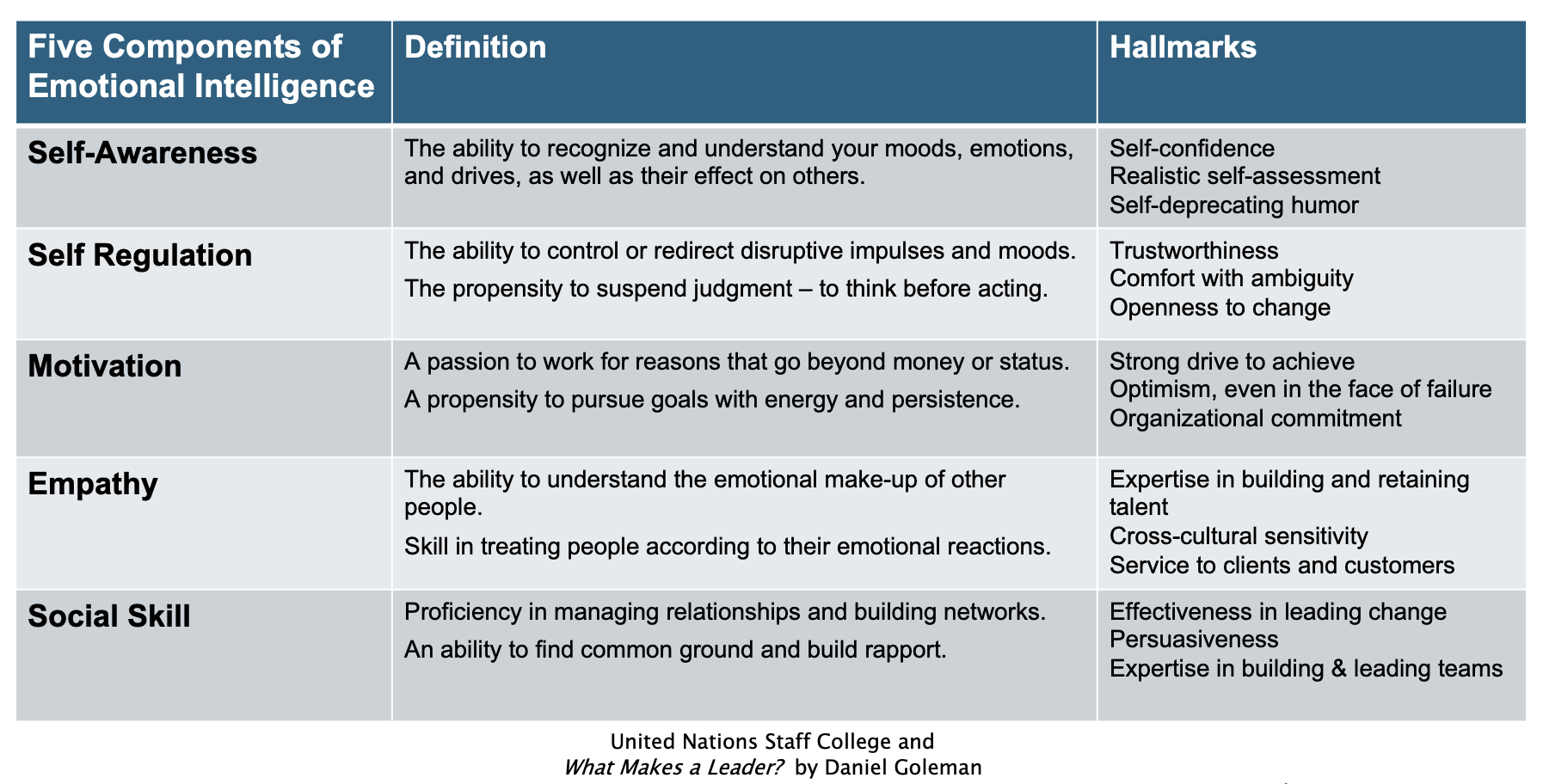
One night I randomly scanned through a handful of YouTube reels of company fraud and mismanagement (e.g., “Revenge of the Coffee Pot,” “Revenge with Karen,” and “Silent Revenge”), painting (fictitious) stories of bosses stealing intellectual property or assuming credit for the innovations/achievements of their subordinates, patent infringement, nepotism or incompetent hirings… all with arrogance, lack of professionalism, the total disregard of employee morale, and blatant patterns of poor executive decision-making, communication, emotional intelligence, strategic thinking, and the ability to influence and guide a team. “Emotional intelligence” (as defined above by Daniel Goleman in What Makes a Leader? also attributed to the United Nations Staff College) should include the “best practices” of self-awareness, self regulation, motivation, empathy, and social skills. Added to these YouTube (fake) scripted deficiencies are the mitigating effects of corporate politics, inconsistent application of compliance or HR policies, unclear contract language, and problems in the chain of command… with the eventual result of the boss receiving a fall from grace, termination, and other legal consequences. Most of these episodes imply only the Board of Directors evaluates the top executives (like school superintendents?), and even with the inclusion of employee satisfaction surveys, staff retention data, third-party auditors, and whistle-blower protections in some instances, the catastrophic actions of these leaders nearly destroy the businesses. For these videos, it seems that leadership assessments and goals are never ongoing, the benchmarks are seldom reviewed, and nothing is PROACTIVE… and therefore not preventive. Therefore, for the school district and corporate worlds alike, we need to intentionally provide formative assessments of our leaders (and ourselves). Exactly what do we need to know and do to improve?

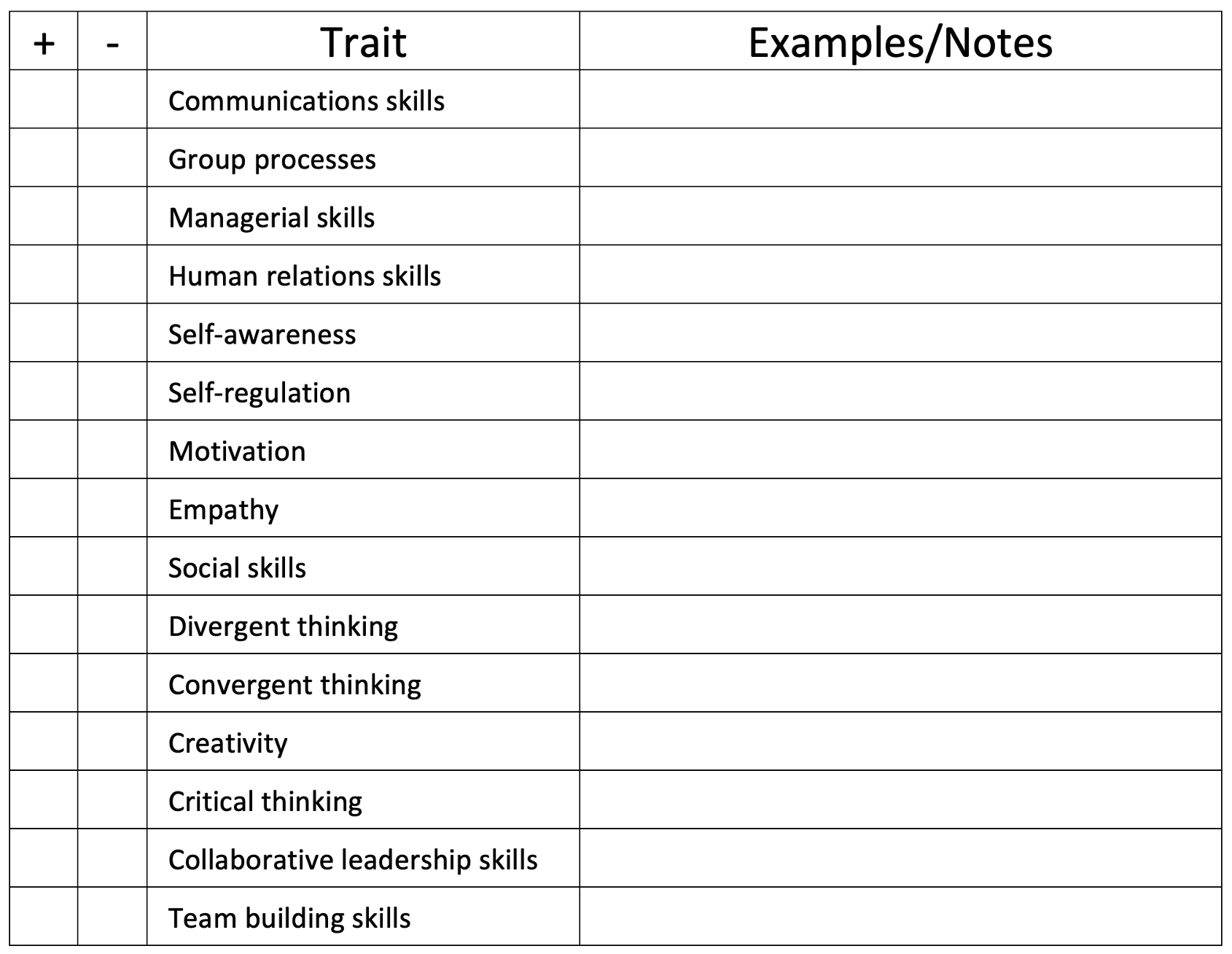
In my blog Growing Student Leaders and the SAS Institute 2025 presentation, I offered the above image as an informal personal checklist to evaluate leadership traits. Coincidentally, while I was writing this article, a scholarship committee of the Community Foundation of Upper St. Clair (for which I serve as Communications Director and Arts Chair) was developing an assessment rubric for ranking applications of a new student leadership scholarship. Although still under development, here are a few of the categories being considered:

  • Communication: Includes listening skills, clarity in speaking, and the ability to make others feel heard.
  • Integrity: Acting ethically, being trustworthy, and aligning actions with words.
  • Accountability: Taking ownership of actions and commitments.
  • Collaboration: Working effectively with others, valuing different perspectives, and resolving conflicts.
  • Self-awareness: Understanding one’s own strengths, weaknesses, and biases.
  • Drive/Initiative: A bias for action and the ability to move projects forward.
  • Courage: The bravery to speak truthfully, admit shortcomings, and make difficult decisions.
  • Humility: Recognizing the contributions of others and remaining a lifelong learner.

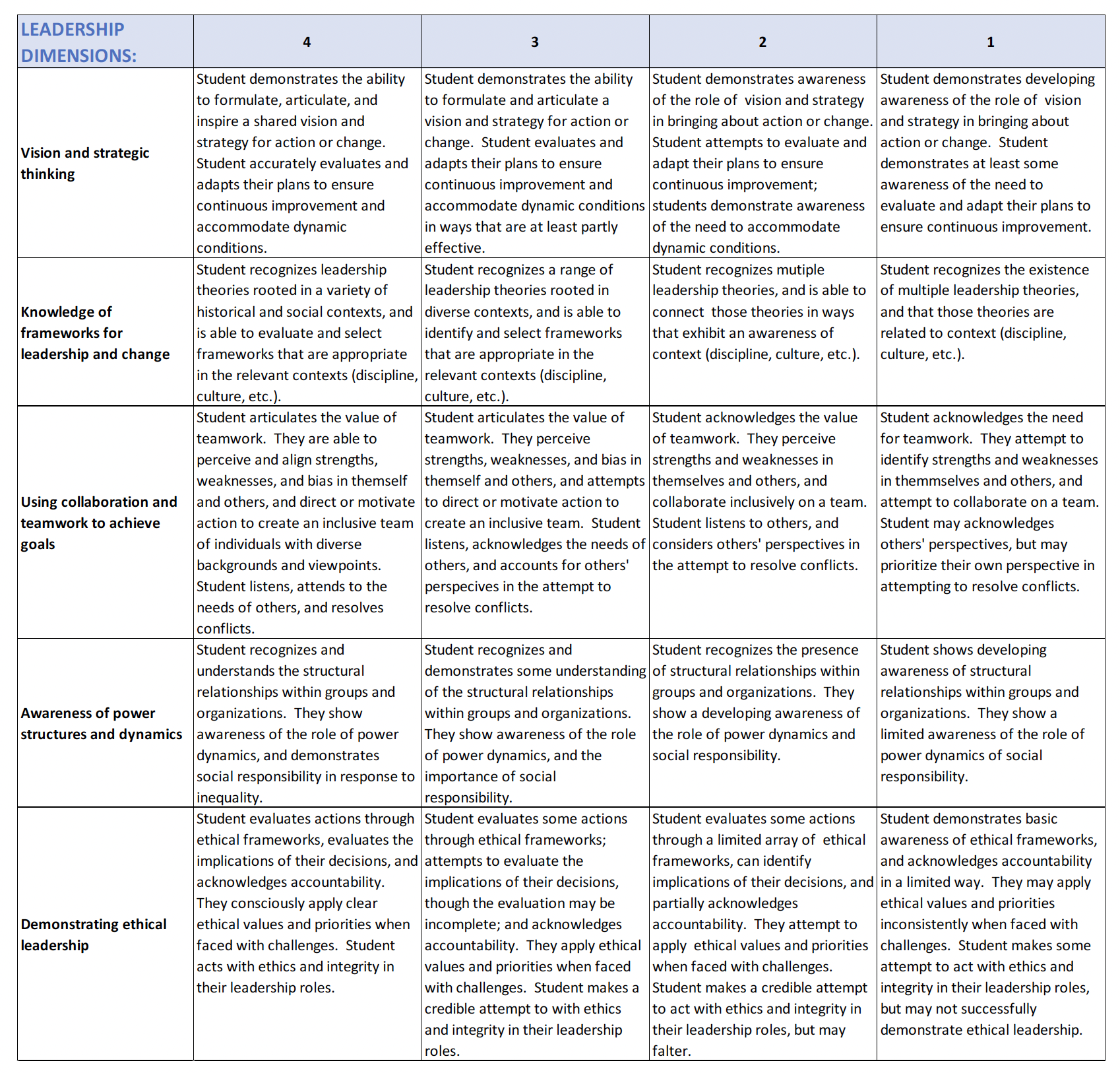
The University of Massachusetts Lowell developed the above rubric for their River Hawk Experience Distinction Leadership Program, defining specific criteria with a clear description of what each trait should look like at different performance levels, in order to provide a standardized way of measuring and assessing leadership skills

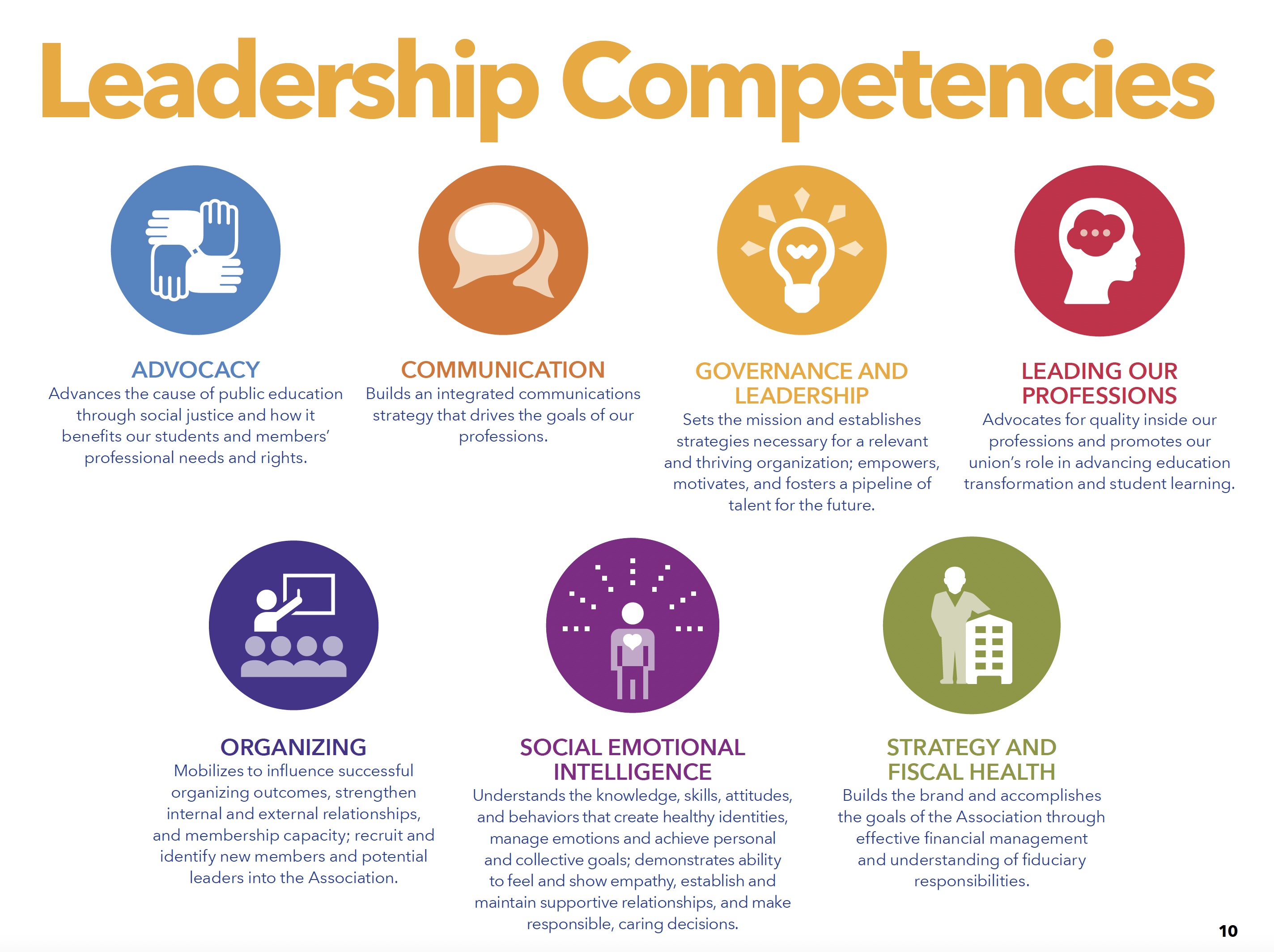
In addition, the National Education Association has created the above NEA Leadership Competency Guide worth downloading.

My favorite inspirational speaker Simon Sinek has also weighed in on this topic of “What Makes a Great Leader?” refining/simplifying it to just three traits:

  • Courage
  • Integrity
  • Communication

Additional resources

If you are an educator looking for supplemental material on developing leadership skills in your students, besides these SAS INSTITUTE 2025 slides (of which the original PowerPoint file is available to download for free in order to adapt for your classroom – please email me), I recommend perusing the full-blown “Building Leaders for Life” (second edition) curriculum (94 lessons in five subject areas, 355 pages of lesson materials, 137 student handouts) created by the Association of Washington Student Leaders (a division of the Washington School Principals’ Education Foundation). Click here to view their website. They also have a middle school and elementary series!

If you attend my SAS INSTITUTE workshop on December 9, 2025 (starting at 9:40 a.m. in Magnolia C, Hershey Lodge & Convention Center), ask me to see sample materials from their high school course of study.

Finally, here is the “homework for future leaders” I provided at the SAS INSTITUTE and during a 2024 summer camp at Upper St. Clair High School, providing additional links to many inspiring minds. Enjoy!


Leadership is not about being in charge. It is about taking care of those in your charge. — Simon Sinek

A leader is one who knows the way, goes the way, and shows the way. — John C. Maxwell

Do not follow where the path may lead. Go instead where there is no path and leave a trail.
— Ralph Waldo Emerson

The greatest leader is not necessarily the one who does the greatest things. He is the one who gets people to do the greatest things. — Ronald Reagan

What you do has far greater impact than what you say. — Stephen Covey

PKF

© 2025 Paul K. Fox

Admins Helping Teachers

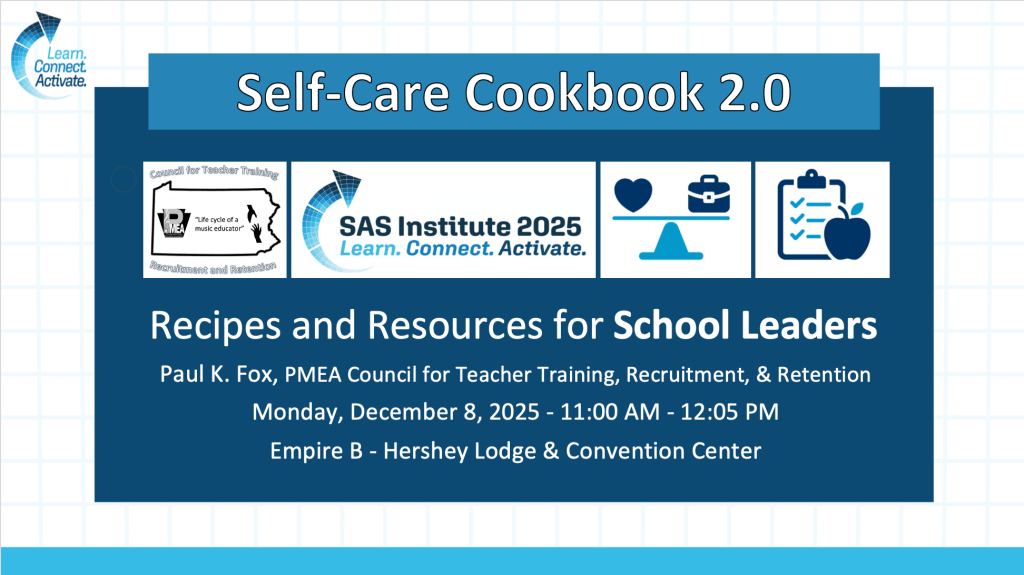
This is an introductory blog-post perusing my early research and resources on supporting educator health/wellness in advance to my presentation Self-Care Cookbook 2.0 – Recipes and Resources for School Leaders for the PA Department of Education’s SAS Institute 2025 state conference scheduled for December 8-10, 2025 in Hershey, PA. Here is the summary description for the workshop:

“Do you find the harried pace of our profession overwhelming and at times crushing when buried beneath decades of keeping our noses to the grindstone and putting everyone else’s needs above our own? Do some of your staff members say they are stressed out, constantly tired, plagued by one ailment after another, or wondering how they’re going to “keep up?” If health is interfering with your colleagues’ abilities to do their jobs and find success, balance, and meaning in their lives, then it is time for change. The purpose of this session is to empower school leaders and teachers with skills and attitudes needed to make informed decisions to promote self-improvements in their lifelong health and wellbeing, to LEARN tools for better time management and to help remediate fatigue, stress and burnout, CONNECT and collaborate with your staff to inspire unique strategies for better personal self-care, and ACTIVATE creative new approaches to foster an improved workplace environment.”

Actually, previous articles at this site have dived into this subject of educator stress, burnout, and the development of a health and wellness self-care plan to build resilience, work/life balance, and reignite our motivation and passion for teaching. For a complete overview, I recommend you revisit these:

Always start with “THE WHY”

(Inspired by keynote speaker/author Simon Sinek): Why is this discussion so important now?

When I mentioned my research to my colleague (and former student) Dr. Timothy Wagner, Principal, Upper St. Clair High School (my former placement for full-time employment), he mentioned that this topic was timely and highly relevant, and suggested that perhaps there might be more statistics and resources “out there” on the stress of health-care workers and first-responders, which I found to be true. However, early looks have shown numerous parallels to the information in my 2023 Self-Care session.

My PDE SAS Institute session will become a “two-for-one” presentation, including the opportunity for school/system leaders, building administrators, and directors of school district professional development to also download my original “Self-Care Cookbook” (1.0) slides, recently updated for the DCMEA Annual State Conference (January 20, 2026). This self-help workshop is geared for educators to “on-their-own” explore strategies, implement use of individualized tools/remedies, and formulate new goals to improve health and wellness. Both sessions hope to cover these key questions:

  • Why is it essential to personal health to achieve balance in our lives, and how can we achieve it?
  • How does dedication to wellness lower the risk of illness, injury, and the quality of a person’s life?
  • What are the consequences of our choices in terms of time and stress management?
  • How do effective decision-making skills and goal setting influence healthier lifestyle choices?
  • What are suggestions, strategies, and samples for the development of a personal self-care plan?

Using a facsimile of a prescription pad in Self-Care 1.0, I posed these personal reflections:

  1. How do I usually feel daily throughout the school year?
  2. What are the emotional and physical tolls of my job?
  3. What specific self-care activities do I need to incorporate to recharge and prevent burnout? 
  4. What boundaries do I need to set around my work to honor personal time?
  5. What support systems can I build and/or professional help should I seek to create a sustainable practice?

Good ideas…

How can school admins support their staff in dealing with the climbing incidences of health problems, teacher exhaustion, call-offs, evidence of burnout, and high turnover rate? Sorting through a compendium of online research, these recommendations for school leaders occur repeatedly:

  1. Probably should go without saying: Show high visibility (“be seen by all”), recognition, and know everybody’s name. This goes a long way in building a sense of belonging of the staff and students.
  2. Provide more time for breaks and planning. Engage teachers in problem solving teams to identify and implement substantive ways to give them more time. Examples: cutting back on testing and data analysis; holding fewer and shorter meetings; putting a hold on new academic initiatives while increasing mental health initiatives conducted by school-based mental health professionals; hiring individuals who can assist with administrative tasks; compensating teachers for extra work; protecting classroom time by minimizing interruptions; reducing teaching hours to allow for more prep time and follow-up time.
  3. Foster a supportive community through mentorship programs.
  4. Distill high-impact strategies into a handful of manageable priorities. Once the goals are set, give teachers specific time within the school day or week to focus solely on them.
  5. Communicate directly, clearly, and frequently. “Supportive administrators know that a teacher’s time is valuable and that administrative meetings compete with individualized education programs, data teams, professional learning committees, cross-curricular planning meetings, and much more. So if a meeting is only for sharing straightforward information, it can be an email instead. It’s not necessary to have a meeting simply because the schedule says that faculty meetings are in the cafeteria on Mondays.” – Edutopia: “4 Practical Ways Administrators Support Teachers”
  6. Treat teachers with respect like the professionals they are, increasing mutual trust by decreasing micromanagement or reducing unnecessary accountability documentation.
  7. Shadow multiple teachers to experience first-hand the reality of their typical day.
  8. Allow educators the option to attend meetings and professional development activities virtually.
  9. Involve teachers in the creation of targeted professional development activities that are the most meaningful for them.
  10. Ask teachers about what specific help they need to improve classroom management.
  11. Develop a plan (with the Board of Education?) to increase teacher compensation over time, taking into account that many administrative and clerical tasks that are now required of teachers might ultimately be delegated to less highly compensated individuals.
  12. Address staff performance issues on an individual basis rather than issuing global reprimands that don’t apply to most teachers.
  13. Implement policies that encourage work-life balance. For example, recognize measurable indications of quality teaching rather than behaviors that signal a “more is better” approach (always coming in early and staying late, volunteering for everything, talking about working all weekend to catch up, etc.).
  14. Support educators by acknowledging stress, providing professional development on self-care, and creating a culture where asking for help is normalized.
  15. Ask teachers what mental health or other supports they need to cope with their own distress. Research has demonstrated the effectiveness of introducing trauma-informed strategies, including an emphasis on compassion fatigue and secondary trauma, as well as mindfulness strategies that are part of institutionalized wellness routines.
  16. Provide “safe spaces” (SEL) where educators can express themselves without fear of being judged, and practice “Mindful Leadership” to connect with and listen to them. “Getting to know your teachers on a more personal level makes it easier to identify the best thing you can do to support them, even if teachers aren’t sure what they need. The goal should be making sure everyone made it to work okay and that they’re in good spirits and ready to tackle the day.” – 7 MINDSETS: “5 Ways Administrators Can Support SEL for Teachers”
  17. Counteract “toxic positivity” by acknowledging that teachers are hurting and need space to grieve the continued losses associated with the pandemic.

Bad ideas…

These strategies cited by Effective School Solutions will NOT help teachers in the long-term:

  1. While “wear your jeans to work” days and offering coffee and donuts occasionally are nice employee appreciation efforts, they do nothing to address the underlying issues.
  2. Offering one-shot seminars or newsletters with suggestions about individual self-care activities (breathing exercises, physical exercise, time for self, etc.) can inadvertently place further burdens on teachers, conveying the impression that they are responsible for both creating and addressing the stress that is structural in nature.
  3. Don’t conduct teacher surveys or focus groups about how to reduce teacher stress and then proceed to ignore their suggestions about what would make things better.
  4. Don’t assume that short bursts of extra time (e.g., ending a meeting early to give teachers more time) is useful. Small, unexpected pieces of free time do not help teachers catch up with work that requires concentration and focus.
  5. Don’t avoid difficult conversations to address the performance problems of individual teachers by making blanket statements/warnings to all teachers, most of whom are not engaging in the problem behavior.

“Be careful not to adopt a stance of “Toxic Positivity,” that is, a stance that accentuates the positive (“we are all in this together,” “we are strong,” “it could be worse,” “look on the bright side”) while invalidating the very real pain that everyone is experiencing. Denying or ignoring unpleasant emotions tends to make them worse, not better.
Effective School Solutions

Free Downloads

I am putting on the final touches to the SAS INSTITUTE 2025 Self-Care Cookbook 2.0 session, but have already assembled a huge bibliography of resources for your review (see below). For a “sneak preview” of my slide summary, click here. Future updates will be posted here: https://paulfox.blog/care/.

Better yet, register for the SAS Institute 2025 to see everything in person.

Sample Books

  • 180 Days of Self-Care for Busy Educators by Tina H. Boogren, Solution Tree Press (2020)
  • Awakened – Change Your Mindset to Transform Your Teaching by Angela Watson, Due Season Press & Educational Services (2023)
  • The Balanced Band Director – Productivity and Wellness Tips to Amplify Your Impact, Not Your Workload by Lesley Moffat, Morgan James Publishing (2025)
  • Demoralized – Why Teachers Leave the Profession They Love and How They Can Stay by Doris Santoro, Harvard Education Press (2018)
  • Exhausted – Why Teachers Are So Tired and What They Can Do About It by Paul Murphy, CreateSpace Independent Publishing Platform (2017)
  • Fewer Things, Better by Angela Watson (2019)
  • The Happy Teacher Habits by Michael Linsin, JME Publishing (2016)
  • Love the Job, Lose the Stress: Successful Social and Emotional Learning in the Modern Music Classroom by Lesley Moffat (2022)
  • Positive Mindset Habits for Teachers by Grace Stevens, Red Lotus 2018
  • Rekindle Your Professional Fire – Powerful Habits for Becoming a More Well-Balanced Teacher by Mike Anderson, ASCD (2024)
  • The Teacher’s Guide to Self-Care – Build Resilience, Avoid Burnout, and Bring a Happier and Healthier You to the Classroom by Sarah Forst, The Designer Teacher (2020)
  • The Teacher’s Guide to Self-Care – The Ultimate Cheat Sheet for Thriving Through the School Year by Melanie J. Pellowski, Skyhorse Publishing (2020)
  • Upbeat – Mindset, Mindfulness, and Leadership in Music Education and Beyond by Matthew Arau (GIA Publications (2022)
  • The Weekend Effect: The Life-Changing Benefits of Taking Time Off and Challenging the Cult of Overwork by Katrina Onstad, HarperOne (2024)

Sample Websites

PKF

© 2025 Paul K. Fox

Sharing is Caring!

Join the “Fox Network”

“There is no joy in possession without sharing.”
— Erasmus

“Share your knowledge. It is a way to achieve immortality.”
— His Holiness the Dalai Lama

“There is no delight in owning anything unshared.”
— Seneca

“The miracle is this: The more we share the more we have.”
— Leonard Nimoy

This is a quick blog-post to announce my upcoming professional development initiatives, and an invitation to share your own pet peeves or “thoughts, theories, and teachings.” Of course, I will give you full credit for any contributions, “tips and techniques,” background research, or “quotables” provided!

It has been a challenge motivating any reactions to these articles. Although they would be most welcomed, we typically receive very few online remarks. (If you would like to voice your opinion or add anything to the conversation, PLEASE click on the “comment” button next to the title at the top of the page.)

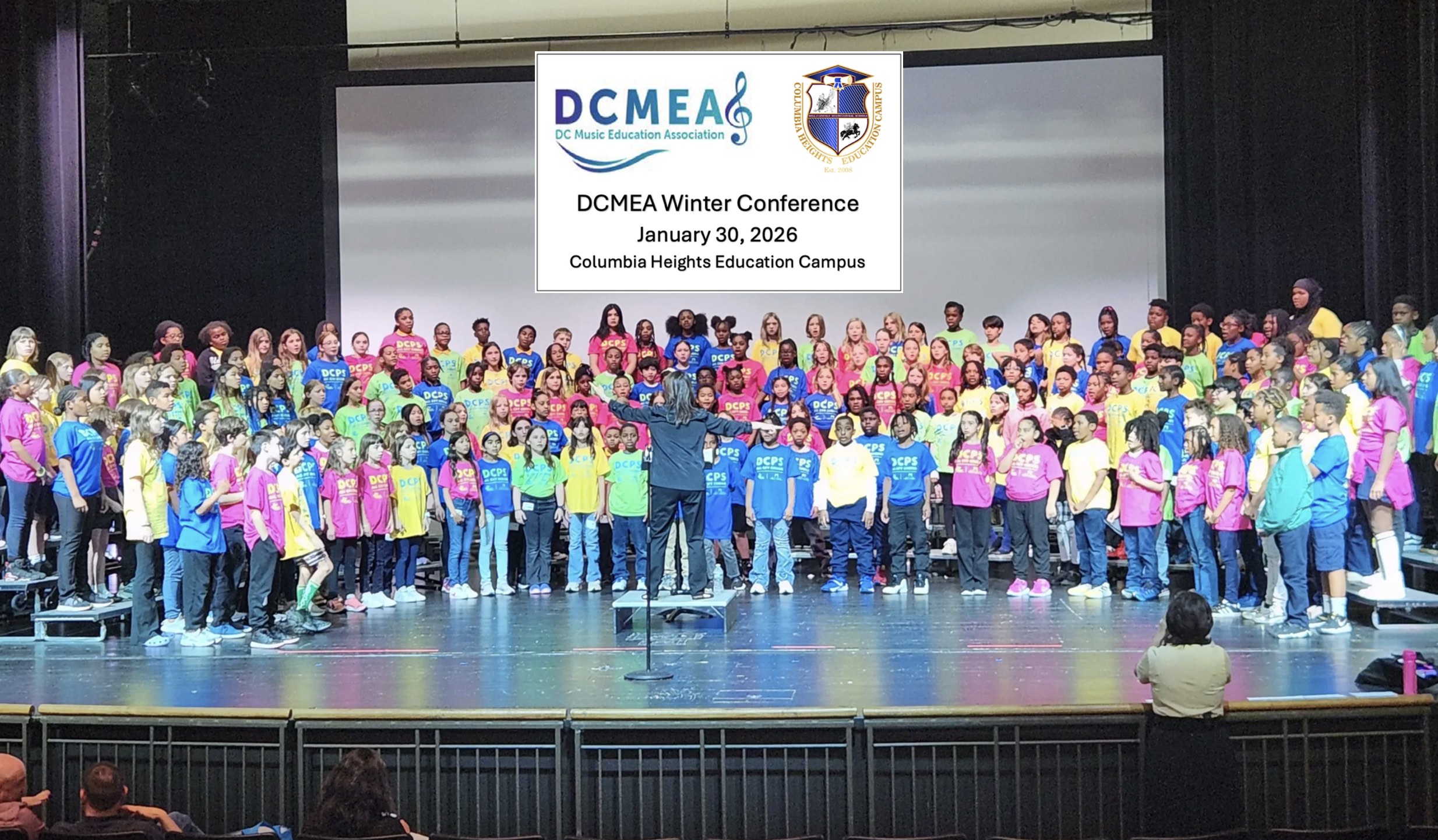
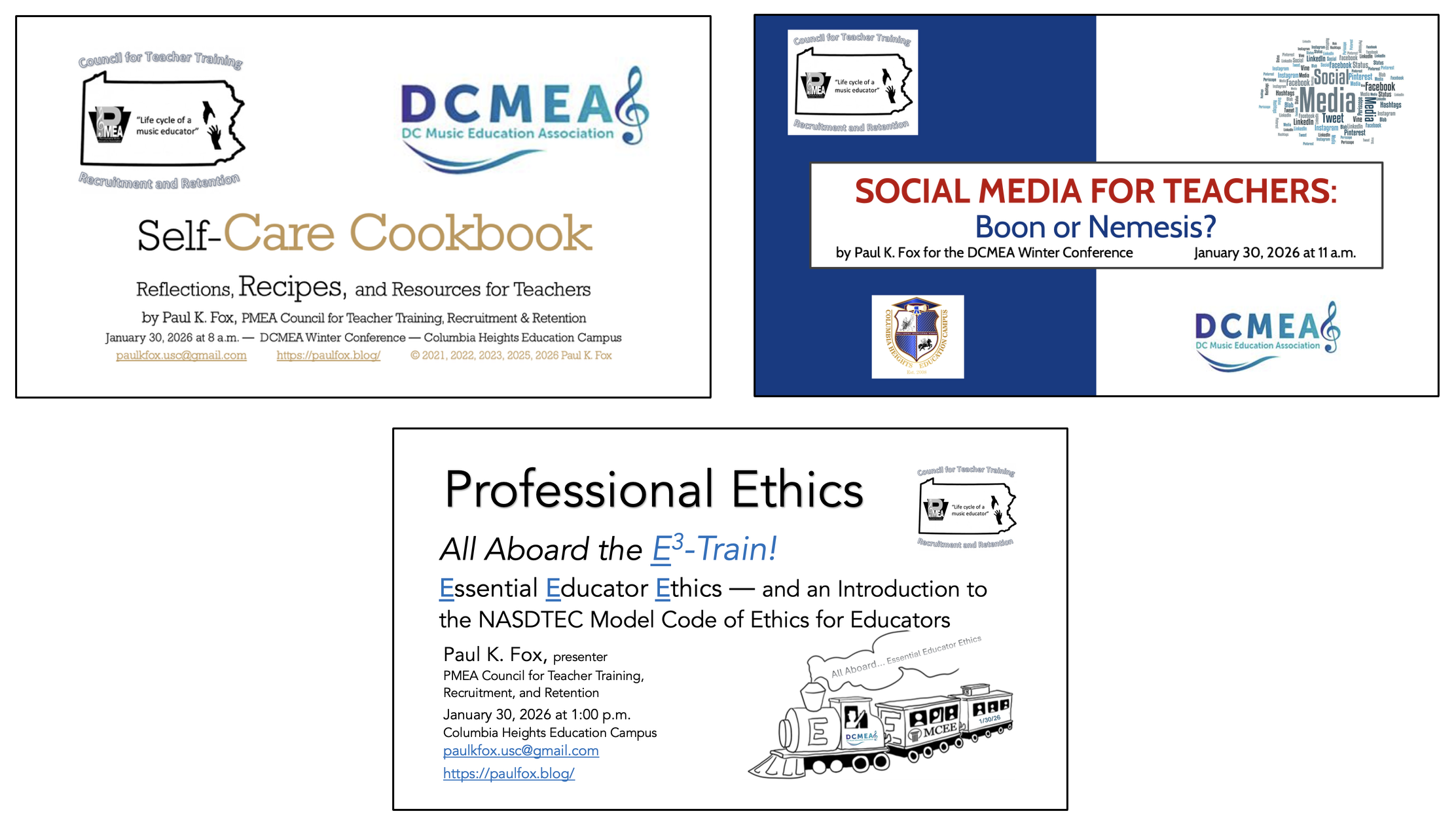
I feel privileged to have been asked to present three sessions at the DCMEA Winter Conference at the Columbia Heights Education Campus (3101 16th St NW, Washington, DC 20010) on January 30, 2026. These are for music educators undergoing pre- and in-service training and include the following:

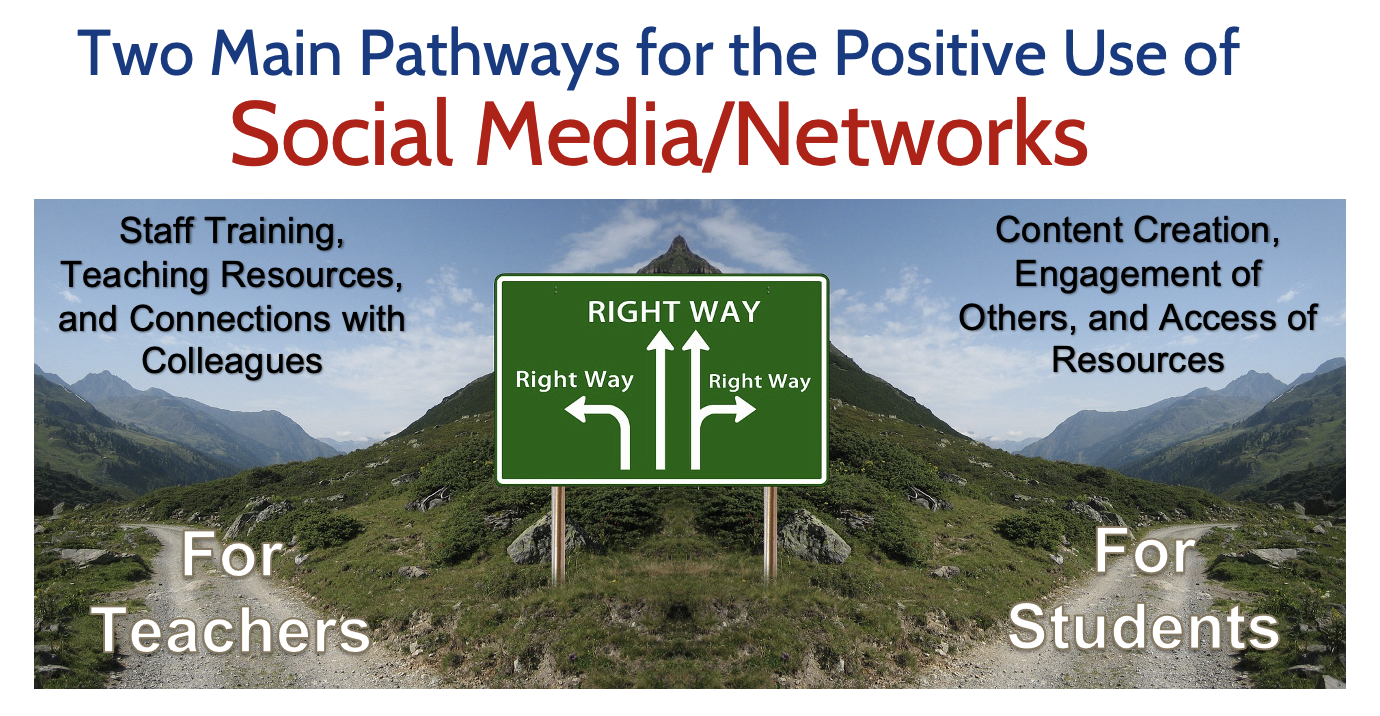
  • SOCIAL MEDIA – Boon or Nemesis?
  • ALL ABOARD THE E3 TRAIN – Essential Ethics for Educators
  • SELF-CARE COOKBOOK – Reflections, RECIPES, and Resources for Music Teachers

I would especially appreciate learning about any of YOUR “success stories” or resources on…

  • Favorite examples of “safe and meaningful” social media for teaching music students.
  • Anecdotes of ethical “conundrums” or issues in the daily decision-making of music educators.
  • Sample “stress-reducers,” time management tips, and other self-care strategies to avoid music teacher burnout.

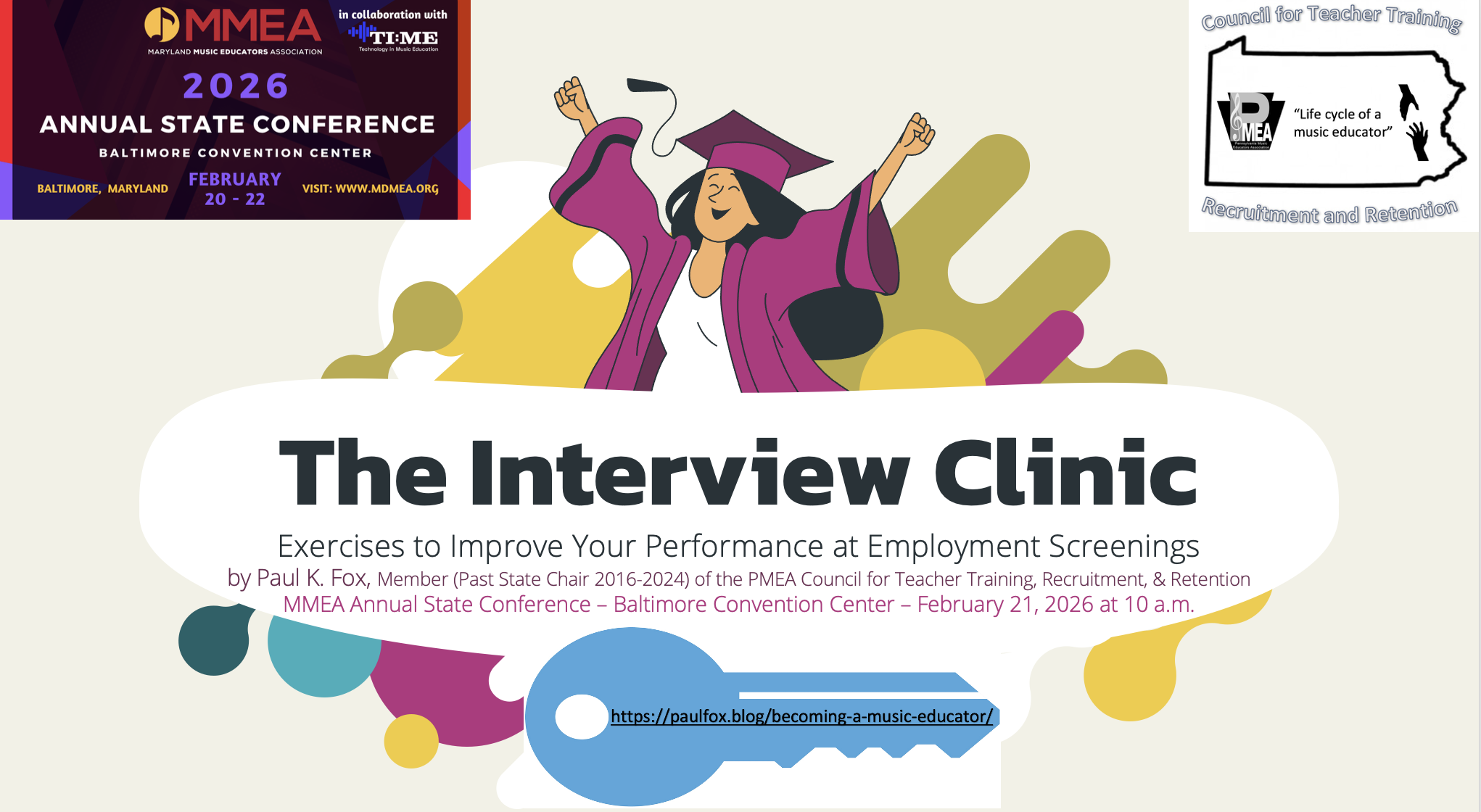
In addition, I am in the process of updating my INTERVIEW 101 and EMPOWERING EDUCATOR & STUDENT LEADERSHIP clinics for future blog posts and clinics. Any thoughts?

Finally, I would also love to hear from you if you have any feedback on a proposed future sharing session for the parents of music students called ADVICE TO MUSIC BOOSTERS. If you have ever sponsored a music parents advocacy group for your school music program, what suggestions would you give to your colleagues and booster officers?

Feel free to reach out to me via email here. Thank you for your willingness to help our profession!

Editor’s Note (things to look forward to): In mid-July, our next blog for this series geared to “the life cycle of a music educator” will be from guest author Ed Carter entitled “Bigger Dreams, Bigger Home: How Retirees Can Upsize for Homesteading and Hosting.” In addition, I plan to share links to materials of the “Retirement 101 – It’s Not All About the Money,” a free workshop I am presenting to residents at the Upper St. Clair Township Library on July 10, 2025.

PKF

© 2025 Paul K. Fox
Wander with Whiskers

How to Become a Digital Nomad With a Pet in Tow

Written by Ed Carter – Featured “black cat” photo by Ruca Souza (Pexels)

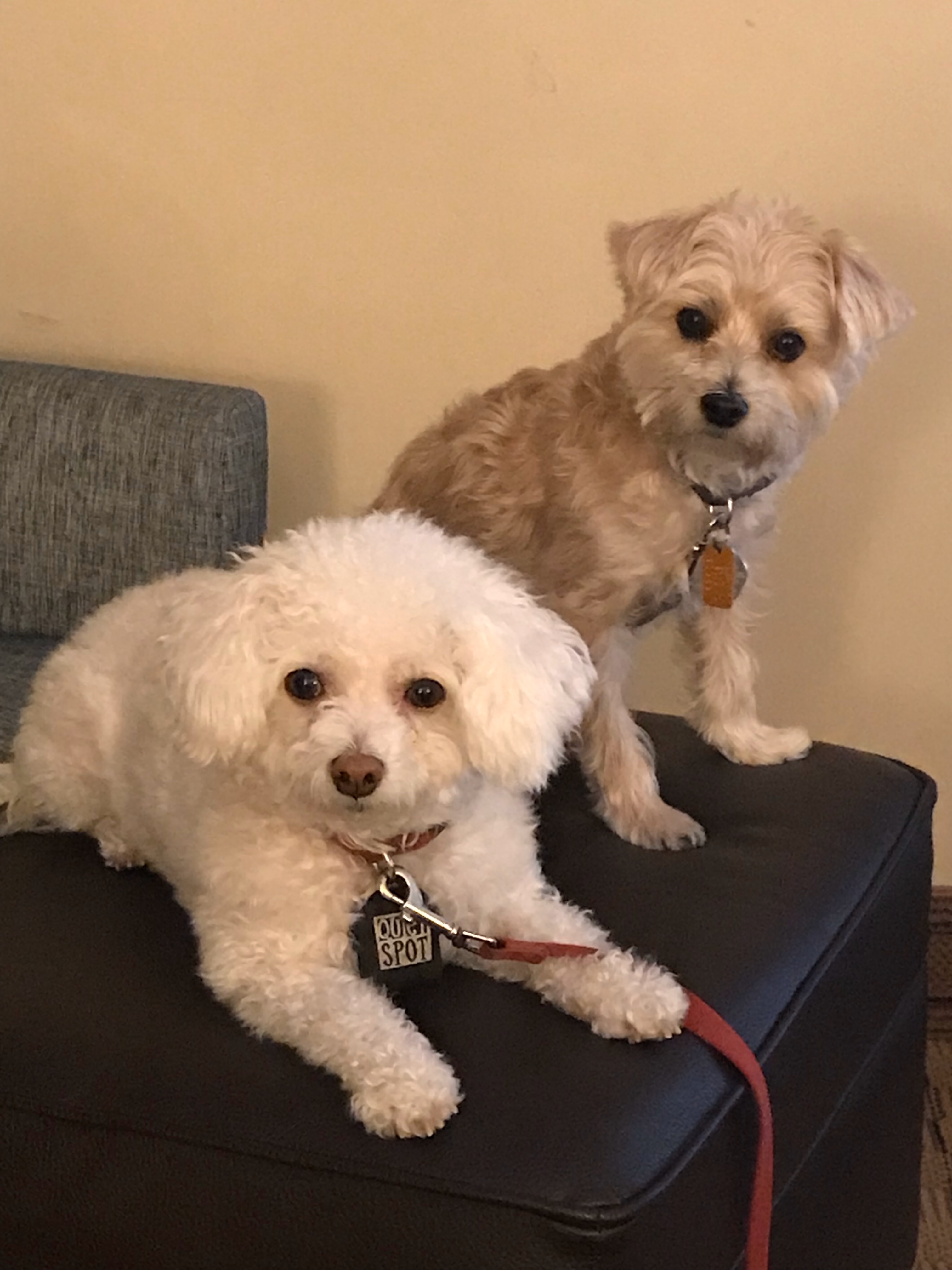
Editor’s Note: We welcome yet another blog by guest author Ed Carter on a subject near and dear to my heart. It was not until I retired before I discovered the joy, responsibilities (and challenges) of pet ownership. I have two little doggies (one bichon frise named “Gracie” and a yorkie-poo named “Brewster”) who keep me engaged and occupied throughout the day. “Daddy, I’m hungry.” “Can I have a bone?” “It’s time to go out…” Those frequent walks are good for me and part of this retiree’s long term wellness plan! But, pets may also restrict the flexibility of your schedule and limit travel. You cannot necessarily “drop everything” at the last minute and take a cruise or long car trip. (I’m not putting my “kids” in a pet jail, aka a kennel!) Planning is essential. Ed shares new perspectives on merging the demands of your digital job (encore career, business or retirement pursuit) with the needs of your sometimes fussy furry family members. PKF

Deciding to pack up and chase the digital nomad dream isn’t as easy when you have a pet depending on you. But it’s not impossible. You’ll just need a different kind of strategy—one that balances your professional goals with your animal companion’s comfort and safety. If you’re ready to take your work on the road without leaving your dog, cat, or other furry friend behind, here’s how to make it happen and thrive.

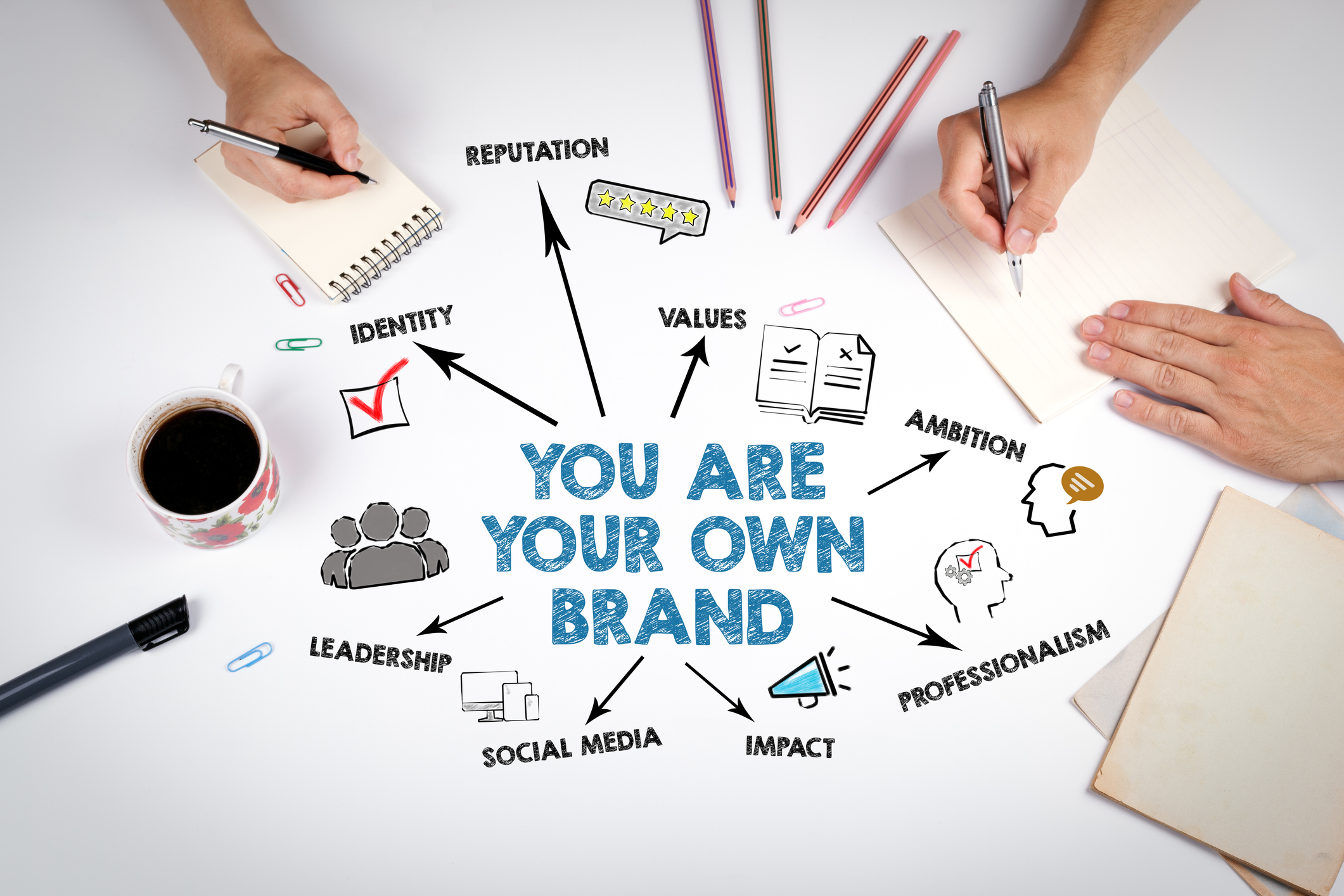
You Are the Brand—Market Like It

You’ve probably heard this before, but now it’s even more true: your personal brand matters. When your lifestyle is non-traditional, clients and employers want reassurance that you’re still professional and reliable. Build an online presence that highlights your experience, your skills, and the unique flavor you bring to the table. Whether it’s a clean portfolio website, a LinkedIn page with testimonials, or social proof via Twitter threads or TikToks, you’ll want your digital footprint to reflect someone who gets the job done—dog barking in the background or not.

How Education Can Reboot Your Career Path

If you’re feeling stuck in your current role or ready to transition into something more dynamic, going back to school can be the smartest move you make. For instance, by exploring a Bachelor of Science in Computer Science, you’ll open the door to new opportunities in tech, where the demand for problem-solvers and creative thinkers never slows down. Also, learning online means you’ll have the flexibility to pursue your degree at your own pace, so you can continue working while you build your future.

Pick a Job That Gives You Breathing Room

Not all remote jobs are built equally, especially when you’ve got a pup tugging at your sleeve or a cat trying to walk across your laptop. Jobs with flexible hours or asynchronous communication are a goldmine here. Think virtual assistance, freelance writing, UI/UX design, social media management, or coding—anything that lets you pause when you need to and doesn’t expect you to be online at 9:00 a.m. sharp in someone else’s time zone. It’s also worth considering pet-focused work like blogging about your travels together or offering online pet training consultations if you’ve got the skillset.

Stretching the Budget Is an Art

Moving around with a pet in tow doesn’t just cost more—it requires creative budgeting. Flights often come with extra fees for animals, and not every country has affordable vet care. To save, consider slow travel, staying in each spot for at least a month to cut down on housing costs. Sign up for loyalty programs, travel with collapsible gear to avoid bulky luggage fees, and always build an emergency buffer for unexpected pet expenses.

Downtime for You, Uptime for Them

You’ve got Zoom calls and deadlines, but your pet doesn’t care. Their boredom can quickly become your stress. To keep them occupied, build routines they can count on—morning walks, midday playtime, and evening snuggles. Fun pet toys, lick mats, and interactive feeders are your new best friends. If you’re in a location for a while, look into local pet daycare options or even trusted pet-sitters who can help when your calendar’s packed.

Communication Is Still the Currency

When your lifestyle is flexible, your communication needs to be rock solid. Clients shouldn’t have to guess if you’re off-grid or just ignoring their messages. Use tools like Slack, Notion, or Trello to keep everyone aligned. Set expectations upfront about your availability, stick to response time windows, and always double-check your time zone math before scheduling meetings. Transparency builds trust, and it’s the one thing you can’t afford to fumble when you’re juggling time zones, Wi-Fi hiccups, and a restless Labrador.

Get Paid Without the Headache

No matter where you’re working from, you still need to get paid like a pro. Skip the international wire transfer chaos and set yourself up with services like Wise, Payoneer, or Deel that cater to global freelancers. These platforms help cut down on currency conversion fees, and many now offer debit cards linked to your earnings. Just make sure you’re still handling taxes back home—yes, even if you’re on a beach in Bali.

Plug Into the Right Tools

Your tech stack can make or break your setup, especially when your “office” might be a hammock or a hostel lounge. A reliable VPN keeps your data secure on public Wi-Fi, while apps like Clockify help you track billable hours. Backup power banks and a universal adapter are non-negotiables, and a noise-canceling headset can turn a chaotic café into a client-ready zone. For pet tracking, consider a GPS collar if your dog has wanderlust, or a camera you can check from your phone to ease any separation anxiety.

Taking your life and career on the road with a pet isn’t going to be flawless. There’ll be missed trains, barking during meetings, and that one time your cat jumped on your keyboard mid-presentation. But with some intentional planning, the right tools, and a healthy dose of flexibility, the rewards far outweigh the bumps. You’re not just choosing freedom for yourself—you’re creating a life where your companion gets to come along for the adventure.

Check out other articles by Guest Author Ed Carter at this blog site:

© 2025 by Paul K. Fox and Ed Carter

Returning to the Classroom in Retirement

Smart Planning for a Fulfilling Experience

Blog photo credit: pexels-cottonbro-6158658

In a past retirement articles (e.g. this one) and conference or workshop presentations for soon-to-retire music educators, I echoed the views of my esteemed music education colleague Dr. John D’Ascenzo on the importance of post-employment learning. (He earned his PhD after his retirement from teaching!) John shared three primary concepts with references: “Swim like a shark” (encouraging retirees to continue long-term pursuits that involve personal and professional growth; the analogy: sharks never stop swimming – even in their sleep!); “Lose the fear of failure and need for approval” (promoting strategies to build confidence and self-efficacy); “Network, Network, Network.” (developing more social and professional interactions, activities not necessarily centered on music or education, but those that broaden horizons by producing personal satisfaction and a sense of purpose and maintaining overall health). See page 5 in the PMEA Retired Member Network eNEWS, August 2018

Ed Carter, our guest blogger for March 2025, brings us new perspectives on a return to education and self-reinvention once retirees choose to “pull their pin” and leave their initial profession. Previous articles by Ed Carter at this site include Monetizing Our Skills and Passions – Creative Ways for Musicians to Make Money Beyond Gigs, Unleashing Your Sound – A Musicians Guide to Making Waves and Gaining Fans, Music and Literacy Skills – How to Use One to Improve the Other, and Do You Have a Side-Gig? Four Tips for Artists Seeking An Extra Income Stream. Thank you, Ed! (PKF)

Article by Ed Carter

Retirement marks the beginning of a new chapter, and for many, that includes the pursuit of education. Whether it’s earning a degree, gaining new skills, or exploring personal interests, going back to school later in life offers intellectual stimulation, social engagement, and personal fulfillment. However, it’s important to approach this decision with careful planning – considering financial factors, time commitments, and the right learning environment. With the right strategy, furthering education in retirement can be both rewarding and transformative.

Improving Campus Accessibility for Retirees

When considering a return to school during retirement, evaluating campus accessibility is vital. With a significant portion of retirees no longer driving, understanding available transportation options becomes crucial. Many campuses offer amenities like elevators and ramps, but these may not be comprehensive, posing challenges for those with mobility issues. By thoroughly researching and planning for these logistical aspects, you can significantly enhance your educational experience and ensure a smoother transition back to academia.

Upgrading Your Retirement with Online Education

Pursuing an online degree during retirement offers a flexible and convenient way to enrich your skills and knowledge. This approach allows you to balance studies with other commitments, making it an ideal choice for lifelong learning. Also, if you’re looking to enhance your leadership and project management abilities, the importance of bachelor of business management studies cannot be overstated. Plus the networking opportunities provided by such programs can lead to valuable connections and potential job prospects, as many positions are filled through personal referrals.

Rediscovering the Joy of Learning

When considering a return to school during retirement, it’s essential to focus on the joy of learning rather than career advancement. Embracing lifelong learning can significantly enhance your personal growth and satisfaction, offering a chance to stay mentally active and engaged. By adopting this mindset, you enrich your life and maintain relevance in a rapidly changing world, even if re-entering the workforce is not your primary goal.

Budgeting for Education in Retirement

When planning to return to school during retirement, it’s essential to anticipate and budget for potential educational expenses. These costs can include commuting, whether through maintaining a personal vehicle or using public transportation. While these expenses might not be as high as when you were working, they remain significant. Additionally, technology expenses, such as purchasing a new laptop or software, can quickly add up. Supplies like textbooks and other materials are another area where costs can unexpectedly rise, impacting your overall retirement budget.

Choosing Between In-Person and Online Learning

When planning to return to education during retirement, weighing the benefits of in-person versus online learning is essential. Attending classes on campus can be challenging due to daily travel, which might be inconvenient if you live far from the institution. This could lead to increased costs and time spent on transportation, potentially affecting your overall learning experience. On the other hand, online classes offer the convenience of studying from home, eliminating the need for a commute and providing access to course materials at any time. This flexibility not only saves time and money but also allows you to manage other commitments more effectively. However, it’s important to consider potential feelings of isolation that can come with online learning.

Protecting Your Data in Educational Platforms

As you plan to return to school during retirement, it’s essential to understand the importance of safeguarding your personal data on educational platforms. The digital education sector is a significant repository of personal information, making it a target for cybercriminals. The education industry has been experiencing high rates of cyber threats, including phishing scams and ransomware attacks. To protect your data, it’s crucial to implement strong cybersecurity practices, such as being cautious of suspicious emails and ensuring your devices are secure against malware.

Volunteering: A Path to Enriching Retirement

Engaging in campus volunteering during retirement offers a fulfilling way to connect with diverse individuals and make a positive societal impact. By participating in community projects, you can build relationships with students, faculty, and local residents, fostering a sense of shared purpose. These initiatives often tackle important issues like environmental sustainability and educational support, allowing you to contribute to meaningful causes. Volunteering not only enhances personal growth by developing valuable skills but also strengthens community bonds.

Returning to school in retirement is more than just an academic pursuit – it’s an opportunity to grow, connect, and embrace lifelong learning. Choosing the right program, managing costs, and setting realistic goals can help ensure a meaningful and enjoyable experience. Whether for career advancement, personal enrichment, or the joy of learning, education at any age is a powerful investment in yourself and your future.

© 2025 Paul K. Fox and Ed Carter
February Updates…

PROfessional Development!

Education, ethics, professionalism, and lifelong learning.

Hope you are enjoying the winter season and, for many of you, the anticipation of warmer weather returning soon! Sorry, skiers! I am sick of shoveling snow!!

Here’s a quick “catch-up” on things going on in educator professional development.

For PA School Administrators & Educators

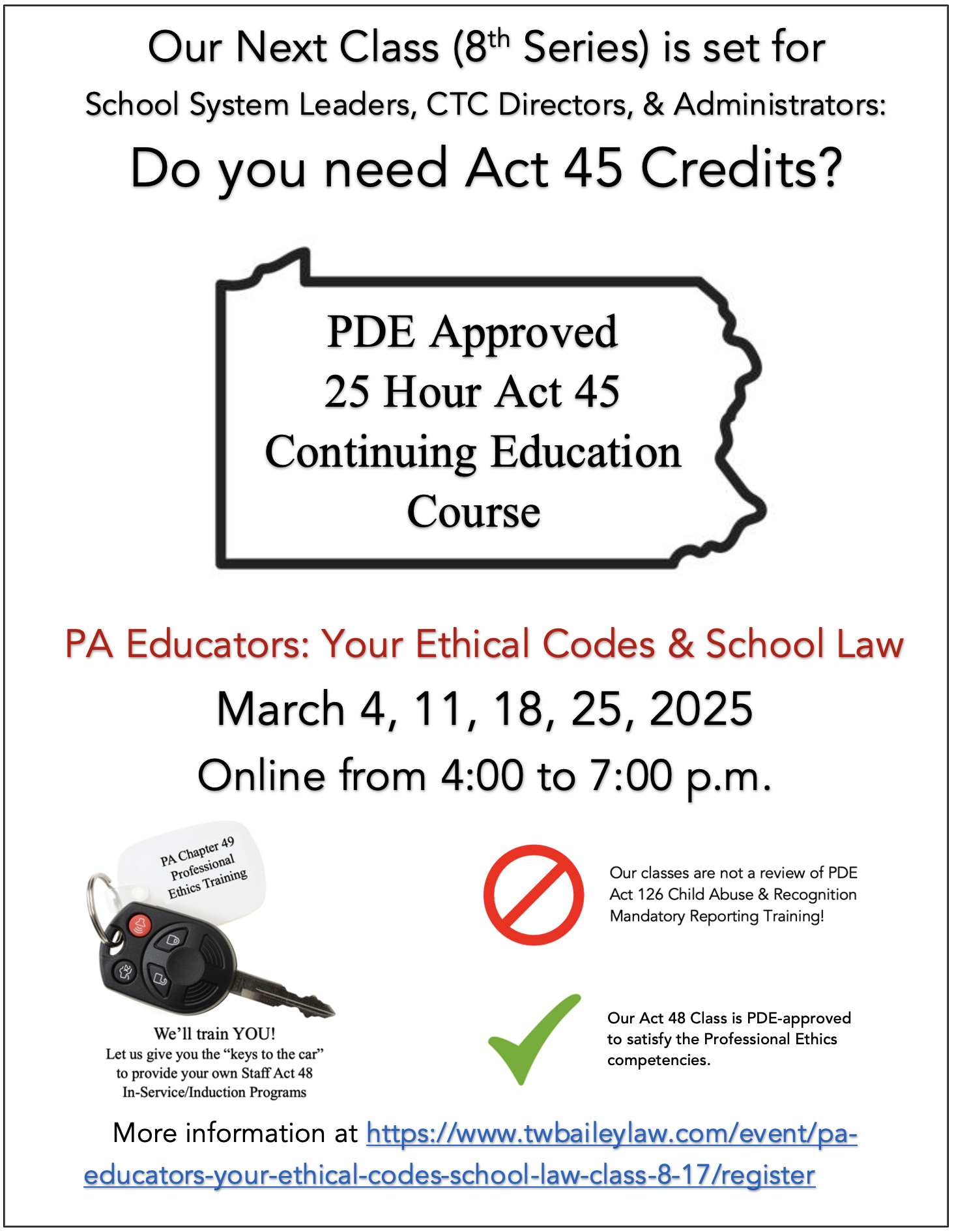
There is still time to register for the upcoming 25-hour, PDE-approved, Act 45 course, “PA Educators: Your Ethical Codes & School Law,” which will cover the recently mandated PA Title 22 Chapter 49 (Certification) Professional Ethics Competencies. The next online series of Act 45 classes will be held Tuesday afternoons in March, and provide “the keys to the car” planning for your own school district’s future continuing education and induction programs in ethics training as required by the PDE.

Now sponsoring our eighth series of classes, I am designated a “qualified instructor” in partnership with the course’s creator/facilitator, retired social studies teacher and attorney Thomas W. Bailey. For more information, please click on these links to his website:

In addition, since over the past year PDE revised their website (and changed most of the content links), I compiled a super-index of “places-to-go” and “things-to-read,” sites of supplemental resources on school ethics here. I recommend visiting this blog if you are interested in our library of links to the Pennsylvania Code of Professional Practice and Conduct, the Model Code of Ethics for Educators, the PA Educators Discipline Act, and research and citations from the PDE, PA Professional Standards and Practices Commission, Connecticut State Department of Education, and Iowa Board of Educational Examiners, among many others.

If you would like to see the kind of things we cover in these classes, take a look at the slide summaries I posted from my presentation at the PDE SAS Institute “Purposeful Leadership” state conference last December:

From Pre-Service to Veteran Music Teachers!

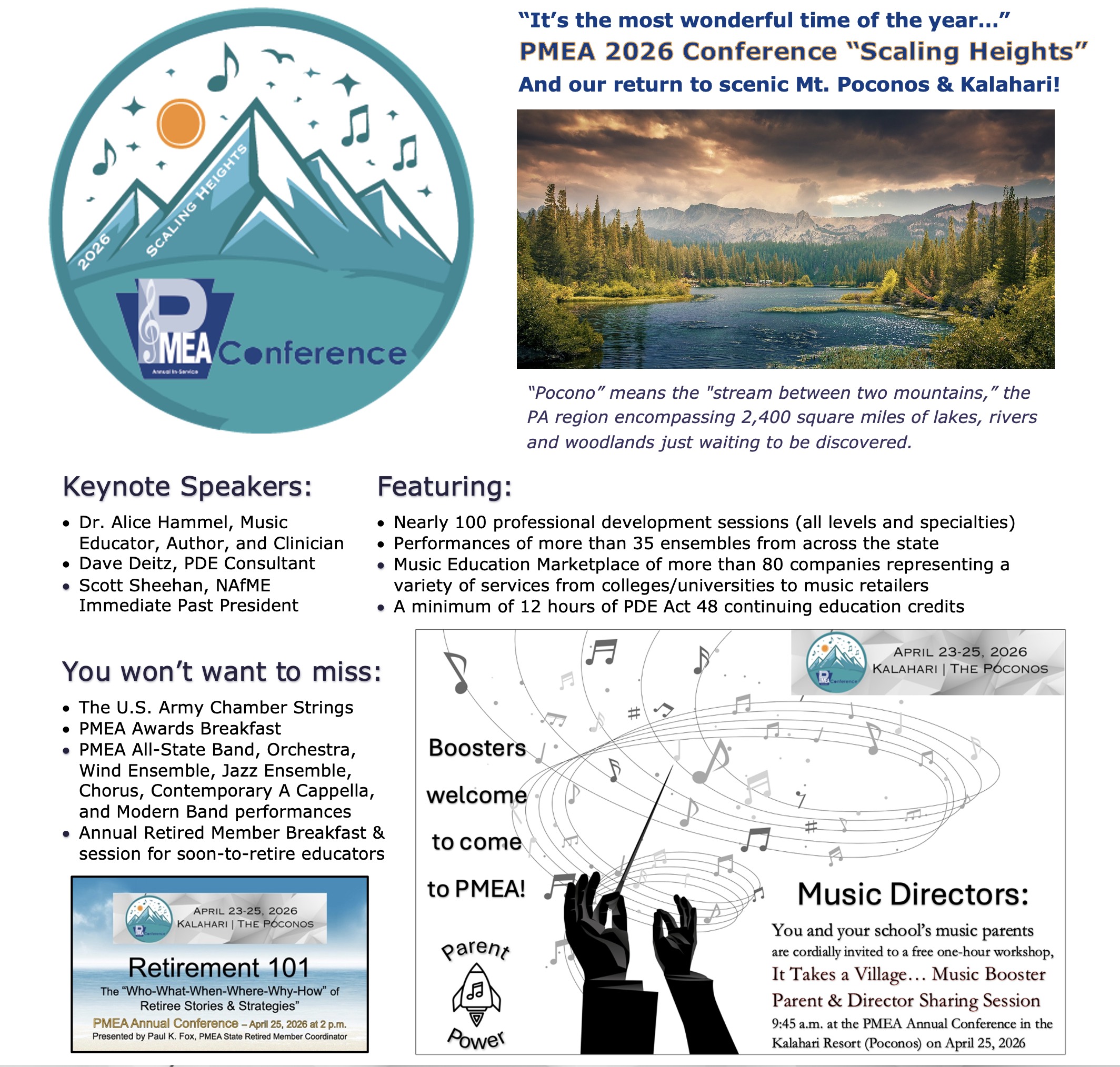
It’s that time of the year… again! The PMEA Annual Conference on April 9-12, 2025 will be held in the family-friendly, perfect-for-a-mini-vacation spot in northeastern PA: the Kalahari Resort in the Poconos.

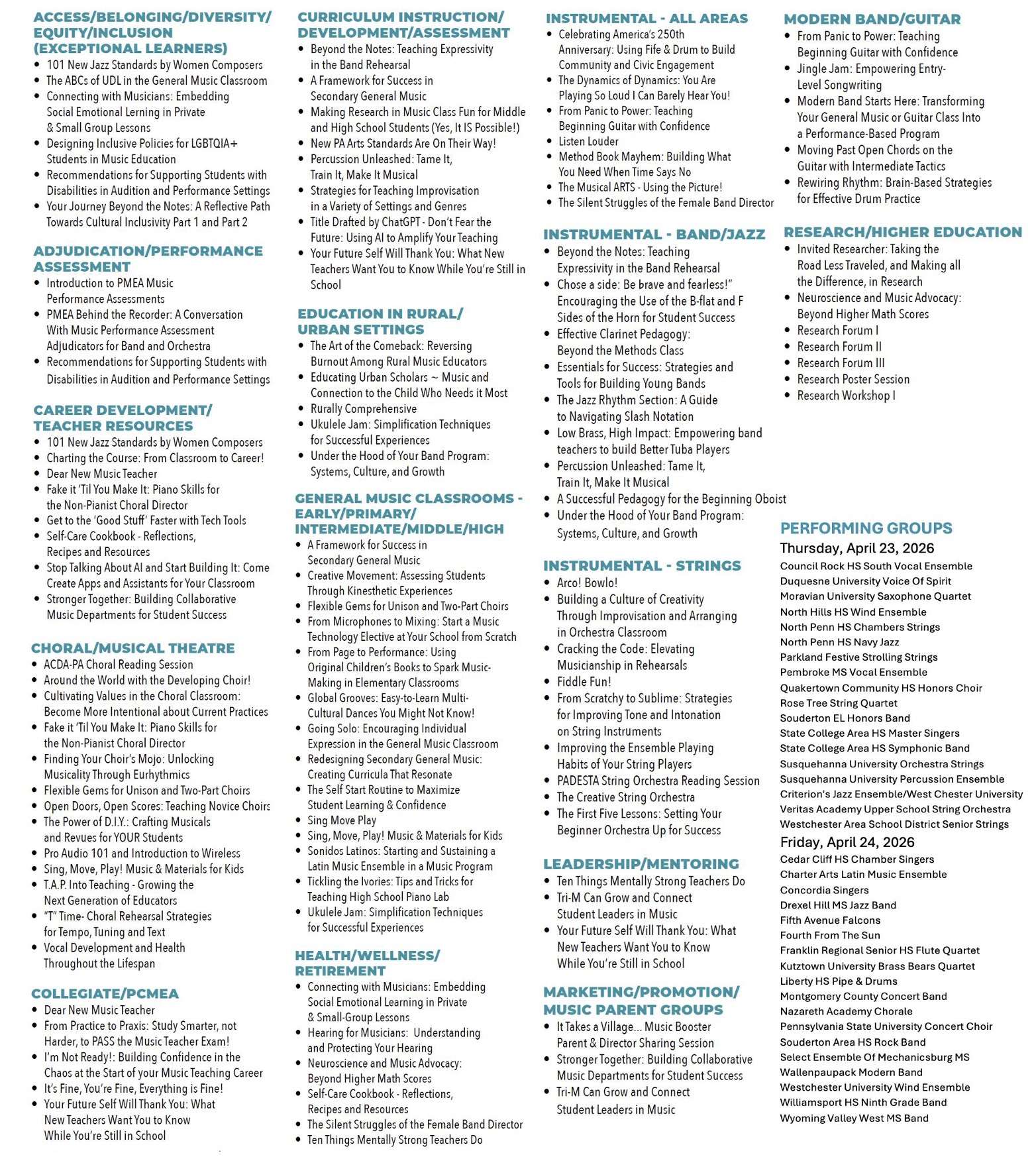
There is still time to register! (Click here.) If you would like to see a summary of the sessions and performances, go to the PMEA website here or download this PDF brochure.

Why attend the conference? In my five-plus decades in education, I may have missed only two or three of the annual PMEA state events, and heartily recommend you remain actively involved in your professional association. This is what I wrote about it in a recent PMEA Retired Member Network eNEWS:

For some of us, it’s a just chance to catch-up with our colleagues, see our friends, and socialize. Others are more focused and take advantage of the near-perfect opportunity to network with other professionals, perhaps seeking new working relationships, partnerships, or even employment. Many are on a look-out for newly published music, that perfect music lesson or teaching strategy, technology tools, fundraisers, advance educational venues, or much-needed equipment to purchase for our ensembles or classrooms. Most come to hear/see the “state of the art” in music education – concerts, demonstrations, keynote speeches, panel discussions, exhibits, research presentations, and workshops. PMEA’s PD Council would likely submit that the primary purpose of a conference is for professional self-improvement… What did Stephen Covey call it? His Habit #7 of “sharpening the saw” – to build a balanced program of self-renewal in the four areas of your life: physical, social/emotional, mental, and spiritual. Covey would insist we embrace “the process that empowers us to move on an upward spiral of growth and change, of continuous improvement.” So, in short, conferences help us “grow” – to revive, re-inspire, re-energize, rejuvenate, re-direct, and re-motivate all of us – pre-service, active in-service, and retired teachers towards making successful new connections, updating our knowledge and skills, and forming new goals. This is how we “keep up” with all the new standards, benchmarks, and cutting-edge advances, and meet the “movers-and-shakers,” visionaries, and leaders in the profession!

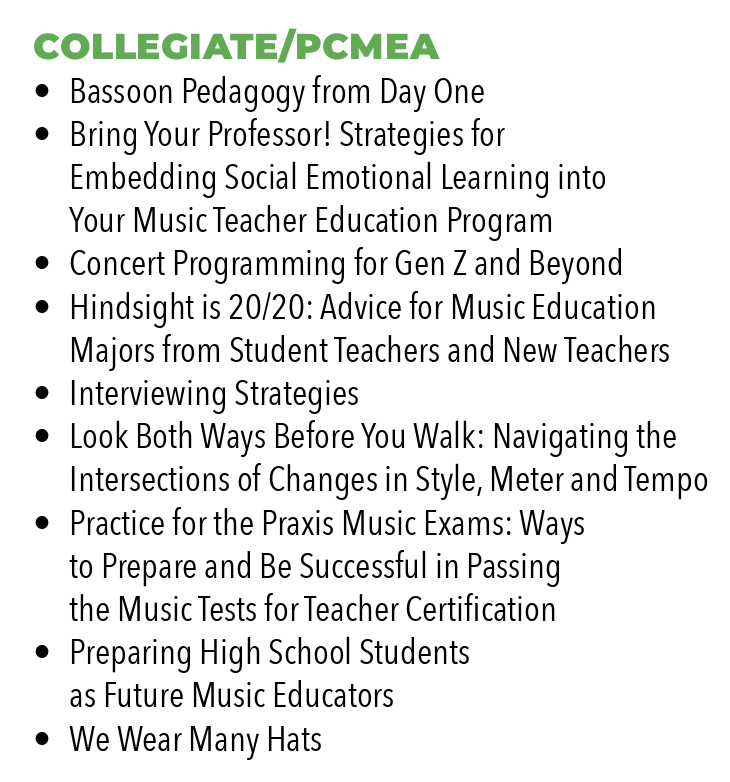
There’s a lot in store for college music education majors. Besides the aforementioned state meetings, concerts, clinics, and keynote addresses no one should miss, the music industry exhibits (new innovations in sheet music, instruments, technology, summer school and graduate programs, etc.), and the chance to introduce yourself to other music colleagues (aren’t some of you looking for a job soon?), there will be a “coffee and connections” informal lounge to ASK-AN-EXPERT on Thursday afternoon to pick-the-brains of PMEA mentors and retirees on any subject. Do you have a question about conducting technique, musical literature, lesson plan idea, classroom or time management tip, or teaching method? And, just take look these sessions the PMEA Professional Development Council has targeted specifically for YOU:

For Retirees… They are special, too!

PMEA Retired Members, consider this your personal invitation to join us at the Kalahari Resort in the Poconos for the chance to catch-up, connect, collaborate and communicate with other colleagues throughout the Commonwealth! (a plethora of “C’s!”)

As usual, we will “break bread” together Friday morning (April 11, 2025) with the annual retiree breakfast. Be sure to register soon for the PMEA Annual Conference (now only $25) and check the “yes” box that you will attend our meeting. Those in attendance will be treated to some “conference swag!”

Retirees are a valuable resource to PMEA! Our experienced retired members are among the best-trained (unofficial) mentors in PMEA. Facing many years of “boots on the ground,” we have at our fingertips numerous strategies to solve problems in education. Frankly, in my opinion, we have a lot to offer “the future of the profession!”

If you are a retired PA music educator, hopefully you have maintained your PMEA membership (dues significantly discounted), and have signed up for the Retired Member Resource Registry to help future “rookie” music educators. (To reach the R3, first login to your PMEA portal here.)

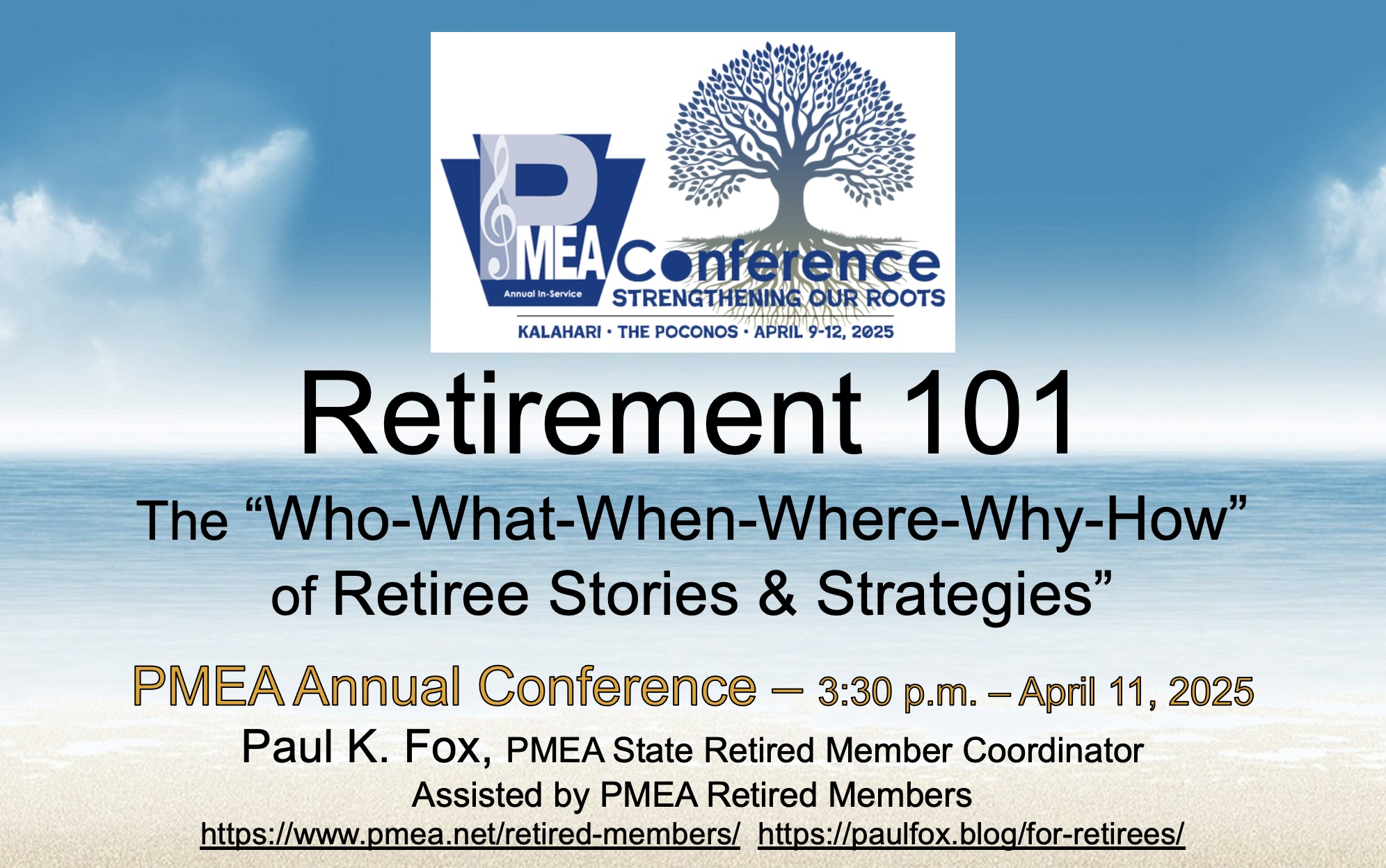
On Friday, April 11, at 3:30 p.m., we are offering a special sharing session for soon-to-retire teachers… the annual one-hour Retirement 101 workshop joined by a panel of experienced retirees: Rick Coulter, Jeffrey Dent, Sister Kathleen Doutt, Dan Klingbeil, Chuck Neidhardt, and Louise & Richard Victor. Active educators who plan to retire over the 1-5 years can learn valuable techniques from us for a smooth transition to post-full-time employment and successfully reinvent, reprogram, and “recharge” themselves to modifying those essential elements of purpose, structure, and community throughout their “golden years!”

My Professional Advertisement

You may have noticed in my last blog-post an outline of past article topics archived at this site, and a complaint that I feel I must repeat myself (or repackage the material) to meet the changing personalized “bookends” – life cycles – specific passages of my readers. The earlier February post was mostly for job seekers. If you were not looking for employment or coming fresh out of college, it may have seemed irrelevant. The same goes for specialty articles on self-care, ethics training, or retirement transitioning… WHEN WOULD YOU BE MOTIVATED TO STUDY THESE?

I have decided to maintain a comprehensive index of my writings (see “Inside” link in the top menu bar). Please visit the sections of this blog-site that matter to you most… and, when things change, come back and look again. You may find something that “hits the spot” or satisfies the needs of your new journey in education or personal/professional life.

I remain willing and able (aka “very interested”) in doing in-person or online sessions for college methods classes, PCMEA chapter meetings, PMEA festival directors’ meetings, PMEA District or Regional PD workshops, or school district/department inservices. Just give me a call. My contact information can be found in the top “About” link. Please visit this section for catalogs of my presentations and articles. FYI, I created this trifold of some of my past work.

Best wishes on your future successes in career development and professional goal setting.

PKF

© 2025 Paul K. Fox
The Get-a-Job Toolbox

Preparing for Those Upcoming Employment Screenings

So much of what I do at this blog-site is to archive articles offering advice on a host of topics:

Surveying my past blogs, I feel like I had to repeat (repackage) the content until my readers reached that particular stage in their career. Once they experience first-hand that sometimes tumultuous “passage,” they would be ready to reflect on this information. But, I doubt they would closely examine it until then. As an example, for more than a decade as the PMEA Retired Member Coordinator, these past articles I wrote for PMEA News and the PMEA Annual Conference’s session Retirement 101 revisit the voluminous insight of gerontologists exploring the “who, what, when, where, and why” of retirement. Regardless at how often it is presented, you tend not to consume advice on coping with post-employment until you feel you are “ready” to retire. This is the same issue for soon-to-graduate collegiates and those transitioning to a new job; who wants to read about branding, marketing, and interviewing until they are in the middle of seeking first-time (or new) employment?

Please click on the “plethora” of links throughout this article to be redirected to these past writings. My apologies in advance to what may seem like to be a lot of duplication!

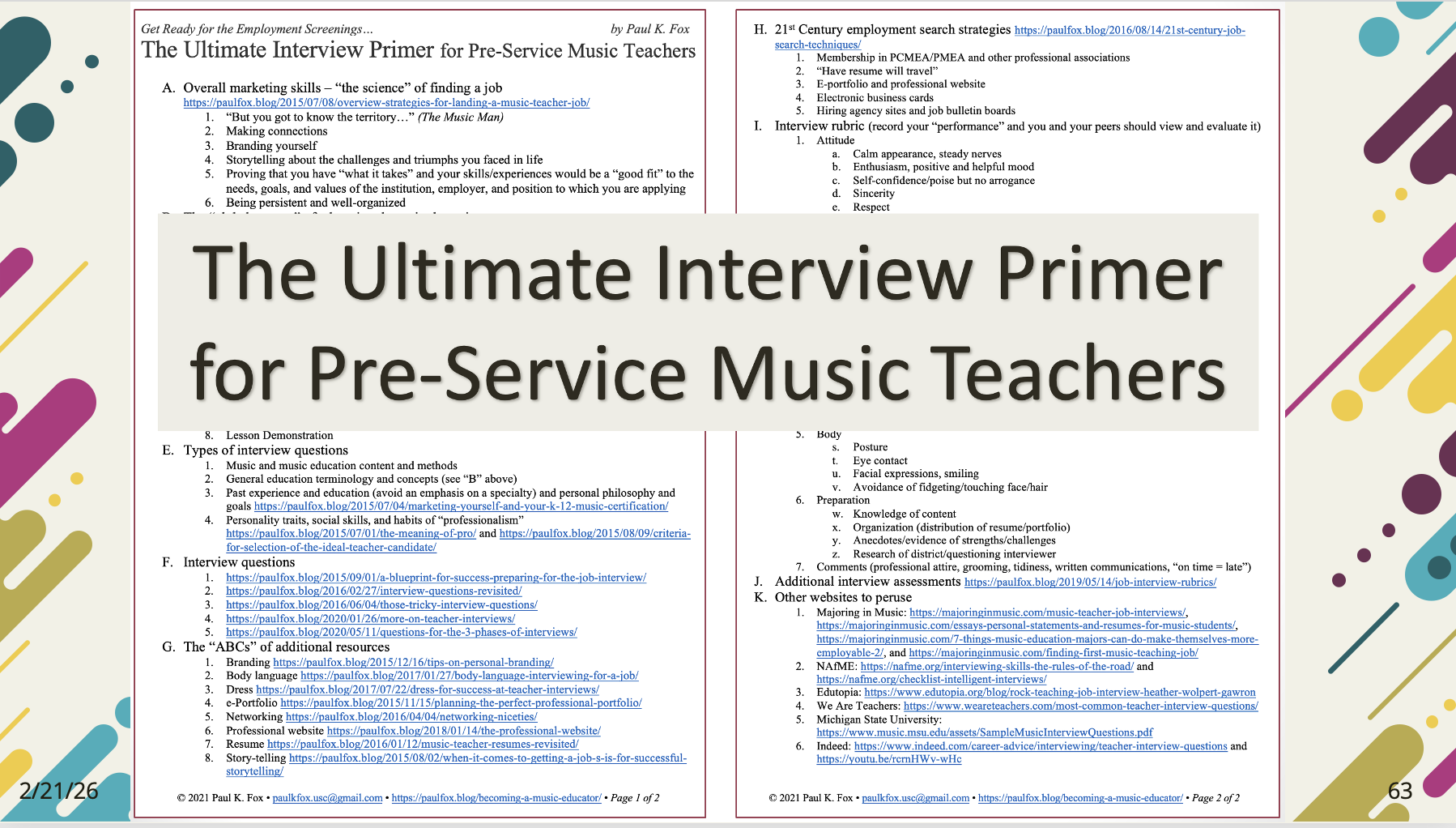
I went as far as updating the most comprehensive and “perfect” PowerPoint for collegiates: Bookends – The Life Cycle of a Successful and Happy Music Educator – portions of which I have presented several times to Professor Jessica Vaughan-Marra’s Seton Hill University music student teachers. This slide handout starts with the material from the first three bullets in the first paragraph above and then adds information about teacher health and wellness, time management, and retirement. We offer Bookends… to preservice music educators in their junior, senior, or graduate years and “rookies” to the profession. I encourage you to download this resource, visit the PCMEA website (click here/scroll down) to read past issues of Collegiate Communique, and the paulfox.blog posts. While you’re at it, acquire your own copy of the Ultimate Interview Primer. Click away before these links become inactive.

Soon it will time for graduates to enter the workforce… and boy, do we need you! By most accounts in PA and the surrounding states, we are experiencing a teacher shortage. School districts are seeking quality candidates to apply for their open positions. But, much of what happens in the job screening process seems to be influenced by chance. Collegiates, ask yourself: Are you truly prepared to market your experiences and abilities, share your brand and stories of your interactions with children in educational programs, and relate positive anecdotes of your teaching, problem solving skills, and other professional attributes? I may have been a little Type-A when I first applied for those music teaching positions back in 1978, focused on saturation publicity and persistence, and organized with a large paper portfolio of past experiences, but I was clueless in responding to those tricky interview questions and what administrators actually wanted to see in prospective new members of their staff.

One more piece advice for first-year and recent transfers to music education: Seek out a PMEA mentor and/or a member of the Retired Resource Registry (access from the PMEA Retired Member focus area after you login to your member portal)… both are groups of volunteers willing and able to help “newbies.”

Have a question about selecting music for your ensemble, a dynamic lesson plan, classroom management issue, interviewing, curriculum innovation, or a conducting tip? Stop by the “coffee and conversations” informal lounge at the PMEA Annual Conference on April 10 and “sit-a-spell” with us!

In conclusion, the following is a sequential outline – a “to-do in this order” list – a preservice toolbox of past posts and other resources for you to assemble a marketing plan. Take time to sort through these “nuts and bolts” (all links in this blog), process the information, save anything you want to read further, and then “practice, practice, practice!” This “gift” to PCMEA and music education majors embraces my best wishes for successfully finding the job you always wanted and preparing yourself for the greatest “calling” of your life – an enriching and satisfying lifelong career in music education! Good luck!

Using the Collegiate Toolbox – A Roadmap for Becoming a Music Educator

  1. Peruse everything in this and past paulfox.blog postings.
  2. Download the PDF documents to your hard drive. Review a portion of them each week!
  3. On your computer, create a “ME” file documenting your accomplishments, awards, experiences interacting with children, etc. – a library of the things you may wish to include in your future resume, professional website, and (e-)portfolio. Add to this folder throughout your college years.
  4. To reflect on your perceived strengths and weaknesses, complete a self-assessment of YOU from a typical professional evaluation form, these ideal effective teacher attributes and more criteria
  5. Prioritize what you think you need most. Write down your goals! Pobody is nerfect!
  6. While you are still attending college, work on shoring up any weak content areas or specialty skills (e.g., how is your “piano chops,” knowledge of specific methods, grade level repertoire, etc.?)
  7. Write a philosophy of school music education (overview) and your mission statement: “Why do you want to teach?”
  8. Be ready to answer the question (and defend your response), “What is your vision of the role of music education in the schools?”
  9. Be ready to define your “brand.” What are your professional attributes? What makes you unique? Why would you be a good candidate for a school music position?
  10. Begin to assemble a list of stories that would “show not tell” your positive attributes.
  11. Identify the impressions you want to “sell” yourself, and practice strategic storytelling.
  12. Practice answering interview questions and use a rubric to evaluate your performance. If you can, share all of this with your peers and sponsor mock interview sessions. Record/assess yourself.
  13. Get started on drafting the marketing tools you will need (e.g., your professional website, resume, portfolio, etc.)
  14. Review educational acronyms, jargon, and terminology such as this list plus these recent additions: CR-SE (Culturally Relevant & Sustaining Education), DEIB (Diversity, Equity, Inclusion, Belonging), and SEL (Social-Emotional Learning). These terms may come up at your next interview.
  15. Read cover-to-cover your PA code of conduct (CPPC) and the Model Code of Ethics for Educators.
  16. Practice ethical decision-making (with your peers) by reviewing these mock scenarios, first deciding what level of misconduct (if any) is reached in each case study, and then more discussion on the incident’s effect on the students, parents, staff, and community, and what proactive steps may be taken to remediate the situation.
  17. Join and become active in appropriate music education professional organizations (renew your memberships and add new ones): ACDA, AOSA, ASTA, NAfME, NBA, PMEA, etc. to name a few.
  18. Attend a conference of your professional association(s) and network with other colleagues. For PA colleagues, register for the PMEA Annual Conference (April 9-12) at the Kalahari Resort (Poconos).

Feel free to leave comments about this blog. (See the link just below the title.) How did you use these tools? What was particularly beneficial? What suggestions would you have for future music teacher applicants?

To PCMEA chapter officers/members, music education majors, and college instructors: I am available to present Bookends or other online or in-person workshops for college students. Send me an email.

© 2025 Paul K. Fox
Educator Ethics Training Revisited!

ALL ABOARD THE E-TRAIN… Embarking and Embracing a Journey of Essential Educator Ethics

The wheels of the train go round and round…

“All black, well stacked, goin’ down the track clickety clack” = the train looked good on the visual roll-by inspection.

“Highball it out of here” = proceed at maximum permissible speed

“Let’s pull the pin and roll” = uncouple so we can get out of here

The fall season is bringing upon us a series of ethical workshops, classes, and the creation of other resources, and the perfect time to warehouse everything at the main rail terminal! Take an excursion below to learn more about “staying on track” with research on the responsibilities and “regs” for serving as an educator.

Can you name the exact title of your Code of Conduct? What agency enforces it? Do educators have a Code of Ethics? Are school teachers fiduciaries or model exemplars? What does all of this mean?

First, let’s take a pretest of your knowledge and experience on the subject of school ethics. Which of the following statements has the least validity?

  1. Moral professionalism involves being well informed about students, education, and content, confronting parents of underachieving students, cooperating with colleagues to observe school policies, and criticizing unsatisfactory policies and proposing constructive improvement.
  2. Teachers, attorneys, doctors, nurses, counselors, therapists, and the clergy have “fiduciary” duties: own the highest legal duties of good faith and trust and are bound ethically to act in another party’s best interest.
  3. Although not always defined in exact terms of school law or policies, professional ethics are “standards that assist practitioners within situation and systemic contexts in choosing the best course-of-action.”
  4. A code of ethics outlines a set of principles that affect decision making, while a code of conduct delineates specific behaviors that are required or prohibited and governs actions.
  5. The primary goal of professional ethics training is to emphasize the “minimum standards of acceptable behavior” and focus on specific illegal and unethical actions that may result in disciplinary actions.

After a thorough exploration of the materials below, you should feel confident in responding to this question. (If you need help, scroll down to answer at the end of this blog-post.)

Classes and Conferences on Ethics, Oh My!

I am looking forward to sharing insights on ethical issues and especially the seeming “conundrums” or conflicts in the myriad of snap judgments of daily decision-making, both in and outside of our classrooms. Upcoming opportunities are on the ethics e-train schedule.

Currently, we are completing the sixth series of our 25-hour PDE-approved Act 45/PIL online course for school/system leaders, career and technical center directors, and other administrators. Sponsored by my colleague Thomas W. Bailey (check out his website here), the next class “PA Educators: Your Ethical Codes & School Law” begins on October 22 for four consecutive Tuesdays from 4:30 to 7:30 p.m.

Thomas Bailey and I were also invited to present this Act 45/PIL course for the Northeastern Intermediate Unit #19 as a two-day workshop on November 19 and December 16, 2024. Visit http://www.iu19.org or click here to register.

I am venturing out of the Western PA to Eagleville, PA (near Valley Forge) to provide a 70-minute in-service, a school ethics “refresh” for the faculty at Methacton School District on October 14, 2024. Click here to download a copy of the slide summary with all links active.

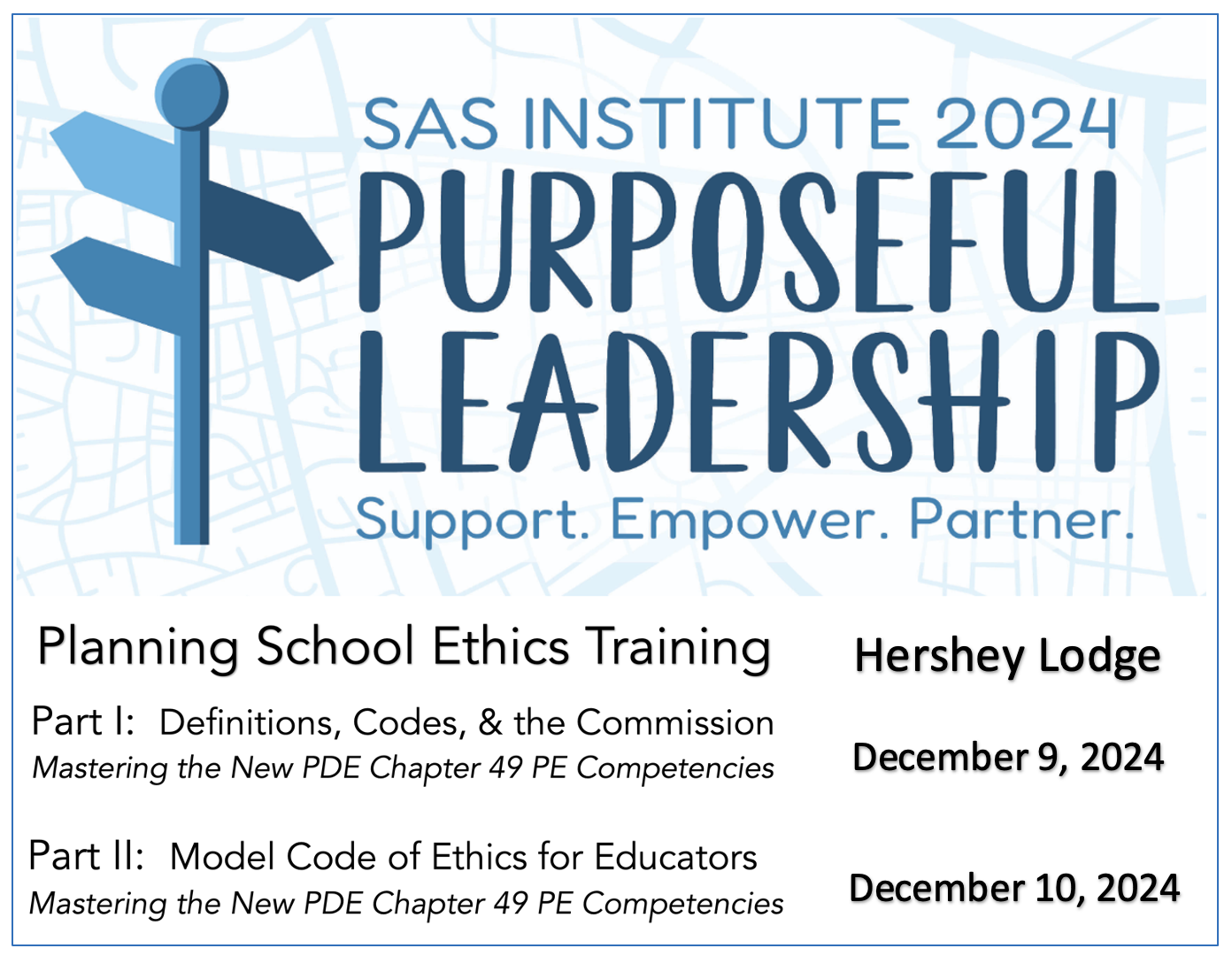
Finally, I am happy to report that I was invited back to the PDE SAS Institute to do two sessions: “Planning School Ethics Training, Part I – Definitions, Codes, and the Commission” and Planning School Ethics Training, Part II – Model Code of Ethics for Educators. My proposal to present the session “CATCH THE E-TRAIN – Codes, Case Studies, and the Challenges of Ethical Decision-Making” was not approved for the 2025 PMEA Annual Conference in Kalahari Resort (Poconos). However, a facsimile of similar slides from past NAfME/PMEA workshops and webinars on educator ethics is available here.

Supplemental Resources for the Study of Codes, Case Studies, and the Challenges of Daily Decision-Making in Education

And now, the grand daddy of school ethics destinations…

Past paulfox.blog posts on educator ethics

Especially for Pennsylvania educators, pre-service students, and newcomers to the Commonwealth (citing the PA Professional Practices and Standards Commission website)

From other state governments (all rights reserved)

An additional sampling of articles

WHY STUDY ETHICS? Answer to the PRETEST above.

A code of ethics sets a higher threshold than regulatory codes of conduct or even a nonprofit organization’s bylaws and compliance rules enforced by the government. A code of conduct, such as the Pennsylvania “Code of Professional Practices and Conduct” of the PSPC, provides absolutes for employment, licensure, and/or civil/criminal sanctions. In contrast, the Model Code of Ethics for Educators document serves more as a general compass to help steer professionals towards sound judgment in their daily decision-making. What is unique about a true code of ethics vs. a code of conduct is that the principles are not defined in exact terms of law or policies, nor do they necessarily model family morals or values on which we as individual educators have been raised. The proposed standards are not about definite issues of right/wrong or black/white, but shades of grey. They are more open-ended, offering opportunities to discuss recommendations for consideration from a set of possible choices based on the circumstances of each ethical dilemma or resolution.

– excerpt from “The Ethical Music Educator,” Winter 2020 issue of PMEA News

Teachers are ethical professionals. Our moral aspirations, the “codes” and “standards” we subscribe to, and our professionalism are important to us, our students, our programs, and our communities. Essentially, these are the beliefs for which we stand, the values and behavior we model in our day-to-day decision-making to “make a difference” in the lives of our students, and the overall integrity of the profession. Therefore, the answer to the PRETEST above is #5. (#1-4 are TRUE!) But, as stated in #5, the goal of meaningful ethics training is NOT to emphasize the minimum standards of acceptable behavior or to focus on specific illegal and unethical actions that may result in disciplinary actions.

Do you have anything to add to this collection? ALL ABOARD! The conductor would appreciate feedback! Please feel free to make a comment to this blog (see link next to the title).

PKF

© 2024 Paul K. Fox
Rising Educators Conference

June 28-July 1, 2024
Marriott Marquis – Washington D.C

It is my pleasure to be invited to present two sessions at the Educators Rising Conference on June 29, 2024 in the Liberty L/M Room of the Marriott Marquis in Washington D.C.

This is a very unique venue, something in which I encourage other educators and clinicians to consider participating. The event brings together prospective future educators, middle to high school and college education majors, with veteran practitioners and experienced educators in the profession. This is from their website:

Each year, Educators Rising hosts a national conference to convene our network of rising educators and teacher leaders. It’s a unique opportunity for students and their teacher leaders to:

  • Connect and learn from each other through more than 40 breakout sessions;
  • Network with other members from across the country;
  • Compete for national titles in competitive events designed to allow students to develop and showcase their teaching skills; and
  • Be inspired by keynote presentations from national education leaders

Want to learn more about what you can look forward to for 2024? Check out the 2023 National Conference Program Book, 2023’s Conference Daily, and our conference highlight video to see what current and future educators experienced last year.

An outline of the conference schedule may be viewed here. Additional information may be found at the conference website here. You can still register for the event.

My two offerings will not come as a surprise to anyone who has been following my work at this site:

GETTING A JOB

My first workshop, “Interviewing & Branding 101” (Saturday, June 29 at 9 a.m.) will provide an overview of important definitions (e.g., “professional,” “total educator,” etc.) and dive into interactive exercises to exploring the basic building blocks of personal self-assessment, building “a brand” and “marketing plan” for the job search, practicing networking and storytelling skills, and analyzing and “playacting” better interviewing techniques. Although I will need to shorten the presentation to fit in the 45-minute time block allotted and provide more focus on the interactive partner and small group exercises, this was the initial outline that was accepted by the Rising Educators Conference Session Selection Committee:

My favorite candy, Hershey Symphony bars, will be distribute as incentives for the more “brave” attendees who volunteer themselves to serve as good (as well as bad) models of the mock interviews.

In conclusion, this is “the session” I wish someone would have provided me before I went out into the labor market! We will have some fun connecting with each other, learning something new about our core values, goals, and strengths – especially those areas we want to broadcast to future employers – building a marketing plan of the essentials to promote ourselves in future employment screenings, and breaking-out into “duos” and small groups to “practice-practice-practice!” The branding and interviewing exercises and suggestions may be applied to finding any job, but will definitely be a big help for landing “the one” teaching position you always wanted.

For the participants who attend my session (facsimile of slides available after June 28), here are links to the printed handouts and other supplemental materials:

EDUCATOR ETHICS

My second workshop (offered one hour later), “Embarking the E3 Train – Ethos, Ethics, & Engagement,” brings to fruition my passion for the preparation of future educators to embrace the essential ethical standards of our profession. Again, back in 1977, no college methods course nor student teaching prep covered the meaning behind such terms as “fiduciary,” “ethical equilibrium,” “moral professionalism,” etc. To be fair to my college professors, Pennsylvania had not yet written its Code of Professional Practice and Conduct which now “governs” the educators in our Commonwealth, nor had the National Association of State Directors of Teacher Education and Certification facilitated the creation of the amazing document called The Model Code of Ethics for Educators. It was not until 2017 (four years after I retired) when I was asked to research and present my first educator ethics session for PMEA District 7 did I “discover” the need for interactive, open, peer discussion of these core questions:

  • How do ethics inform a teacher’s personal and professional actions?
  • Why is the study of educator ethics essential for all educators entering the profession?
  • What does it mean to be a “fiduciary” and “moral exemplar” in the community?
  • What is the difference between a “Code of Conduct” and a “Code of Ethics?” Is one more important than the other?
  • How do you avoid any action and/or appearance of impropriety, and prevent the “slippery slope” of inappropriate student-teacher relationships, and other ethical problems?

During this presentation on Saturday, June 29 at 10 a.m., we will discuss the thousands of daily rapid-fire decisions (many snap judgments) of teachers and evaluate the potential effects of any who “stray” – “levels of misconduct + consequences.” Furthermore, we will unpack and review a portion of the five principles, 18 sections, and 86 standards in the Model Code of Ethics for Educators. Fostering open and interactive discussion, we will empanel a mock “ethics jury” (volunteers from the attendees) to assess fictitious “fact scenarios” of potential ethical issues, hazardous choices or vulnerabilities, and even tackle a few “conundrums” or problems in educator decision-making. Our jurors will receive our thanks and an Educators Rising Mock Jury t-shirt for their “willingness to serve as guinea-pigs.”

Admittedly, some of our past material on ethics was “for mature audiences only” resulting in the need for adjustments to be made to some of the hypothetical case studies (serious infractions) for group analysis. However, the majority of my work on educator ethics is available for review on this site (in reverse chronological order) by clicking here.

Here are additional case studies for group discussions of ethical dilemmas.

For the participants who attend my Washington D.C. session on June 29, 2024, a facsimile of “Embarking the E3 Train” slides are available. (CLICK HERE.)

PKF

© 2024 Paul K. Fox