Make The First Visit Easier
by Liuba Doga
We welcome a new guest blogger to this forum and thank her for timely contribution. Her article supports my persistent soapbox on adult amateurs eliminating the fear of returning to recreational music-making. (See my rant “Stamp Out the PHOBIA of Amateur Music-Making” here.) In Southwestern PA, we are attempting to promote community music groups with an ensemble directory and a concert calendar posted here in the arts section of my local Community Foundation of Upper St. Clair website. Are you participating regularly in a band, chamber group, chorus, jazz combo, theater production, or orchestra? WHY NOT? What are you waiting for? PKF

An adult thinking about returning to singing may have a practical question before a musical one: “What will happen when I walk through the door?” They may remember a school choir, have sung privately for years, or be starting again after a long break. None of those histories tells a teacher exactly what the person wants now.
For a choir leader or voice teacher, the welcome begins before the first note. Clear information, a considerate introduction and an achievable way to join in can make the first visit less mysterious. The aim is to give the singer enough information and choice to take a useful next step.
Explain the first visit before it happens
Read your invitation as someone who has never attended. Does it explain whether there is an audition, whether music-reading experience is expected, and what newcomers will be asked to do? “All welcome” leaves those questions unanswered.
Tell people how long the meeting lasts, what to bring and whom to ask for on arrival. If the session is online, explain how to join and whether each person will sing individually. Describe recording arrangements in advance and ask permission before recording anyone.
Where there is an audition, explain its purpose and format. If a group cannot accommodate a returning beginner, say so kindly and suggest an appropriate alternative when you know one. A clear description helps adults choose a setting that fits their current needs.

Ask what they want to return to
Begin with the person’s musical interests. They might want to sing at home, join a community choir, take lessons or participate more comfortably in congregational singing. Ask, “What would you like singing to be part of in your life now?”
Follow with an invitation to share relevant experience: “Is there anything you would like me to know before we begin?” Let the singer decide how much to explain. They do not need to account for every year away from music or disclose a difficult experience to deserve a thoughtful welcome.
Avoid treating previous participation as a complete assessment. A former chorister may want help following a score again; someone who has never joined a group may know a large repertoire by ear. Listen to the person in front of you.
Give newcomers a clear way to participate
Choose an opening activity with a clear purpose and explain it before asking someone to sing. In an individual lesson, that might mean offering a familiar song or a short phrase as a starting point, then choosing a suitable key together. There is no need to make the first activity a demonstration of everything the voice can do.
In a group, explain which part people should follow, where to find the starting point and what the leader’s cues mean. Where your format allows it, offer newcomers the option to listen to a passage before joining the repeat. Make that option explicit so they do not have to guess whether listening is permitted.
A small practical detail can carry much of the welcome: the right score, a visible page number, or someone who can quietly point out the next entry. Ask before pairing a newcomer with another singer, and make sure that person is willing to help.

Preserve adult choice
Returning to music does not mean returning to childhood. Explain why you are asking for an activity and make room for questions. Avoid surprise solos or public introductions that require a newcomer to describe their musical history.
Be specific about what participation involves without making promises about confidence, range or speed of progress. “Today we can explore this song and discuss what you would like to work on” is a clear invitation. It leaves room to discover what the singer needs.
If someone describes themselves as “rusty,” you do not need to argue with the word or offer an instant verdict on their ability. You can acknowledge the time away and move toward a concrete task: “Let’s begin with a song you know and take it from there.”
Make the second visit easy to understand
Before the singer leaves, explain what would happen next. For a choir, confirm the next rehearsal, any joining arrangements and how to obtain the music. For lessons, discuss a realistic next step that fits the singer’s interests and available time.
Invite an honest response: “Was anything unclear today?” or “Is there something you would like explained before another session?” These questions give the newcomer a way to raise practical concerns without having to evaluate their own singing on the spot.
An invitation to return should leave room for choice. Someone may want time to think, a different group or another way into music. A considerate first encounter still matters, even when it does not lead to immediate enrolment.
Review the welcome as carefully as the music
Afterward, look at the experience from the newcomer’s position. Which instructions depended on knowledge a regular member would already have? Was there a clear person to ask for help? Did the singer leave knowing how to return?
Welcoming adults back to singing is practical teaching work. A clear invitation, respectful choices and an understandable next step give people a place to begin. The music can grow from there.

About the author
Liuba Doga is the founder of Singing Attitude, providing online vocal coaching for adults worldwide. Her approach brings together Technique, Attitude and Expression, with attention to each singer’s musical interests and goals.
© 2026 Liuba Doga and Paul K. Fox


 Reprinted from the Spring 2016 issue of PMEA News, the state journal of the Pennsylvania Music Educators Association.
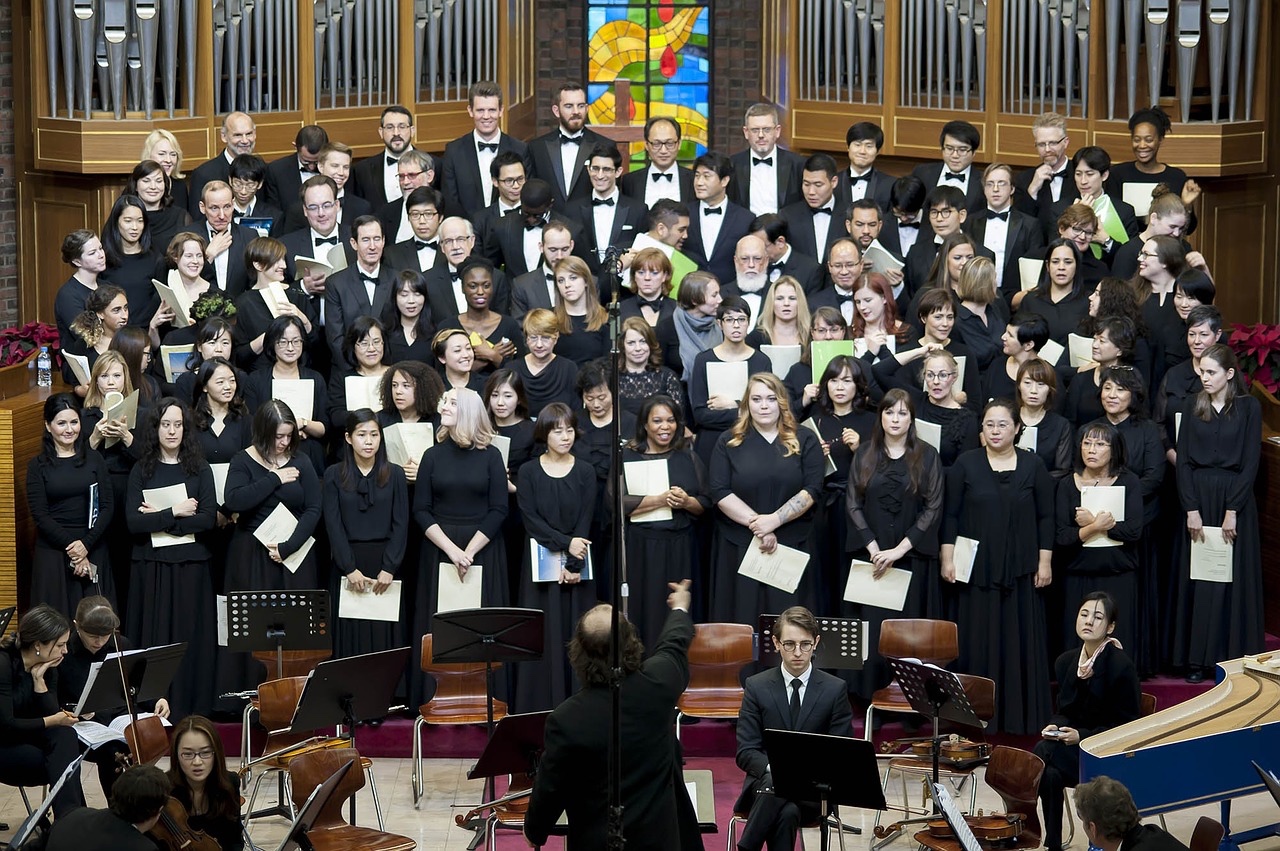
 If you’ve ever been in a choir, you’ve probably been told that the proper way to sing is from your belly.
 As the popularity of group singing grows, science has been hard at work trying to explain why it has such a calming yet energizing effect on people. What researchers are beginning to discover is that singing is like an infusion of the perfect tranquilizer, the kind that both soothes your nerves and elevates your spirits.
 Regular exercising of the vocal cords can even prolong life, according to research done by leading vocal coach and singer Helen Astrid, from The Helen Astrid Singing Academy in London. “It’s a great way to keep in shape because you are exercising your lungs and heart.”
 Colette Hiller, director of Sing The Nation, is convinced that singing builds social confidence by helping individuals connect to each other, and to their environment. “Think of a football stadium with everyone singing,” she says. “There’s an excitement, you feel part of it, singing bonds people and always has done. There’s a ‘goosebumpy’ feeling of connection.”
 Studies have linked singing with a lower heart rate, decreased blood pressure, and reduced stress, according to Patricia Preston-Roberts, a board-certified music therapist in New York City. She uses song to help patients who suffer from a variety of psychological and physiological conditions.
 The seniors involved in the chorale (as well as seniors involved in two separate arts groups involving writing and painting) showed significant health improvements compared to those in the control groups. Specifically, the arts groups reported an average of:
 Okay, besides that crack about “elderly” in that last article (we’re not “old,” yet!), the evidence seems conclusive! For our general health, feelings of well-being, improved social connections, and “just having fun,” we should all be motivated TODAY to go out and find a community choir and start singing regularly in a group. Enough said?
 For both the instrumental and choral groups, we are most thankful to the contributions of our “dream team” of PMEA researchers and editors (as of April 13, 2016): Jan Burkett, Craig Cannon, Jo Cauffman, Deborah Confredo, Susan Dieffenbach, Timothy Ellison, Paul Fox, Joshua Gibson, Rosemary Haber, Estelle Hartranft, Betty Hintenlang, Ada Jean Hoffman, Thomas Kittinger, Chuck Neidhardt, Sarah Riggenbach, Ron Rometo, Joanne Rutkowski, Marie Weber, Lee Wesner, and Terri Winger-Wittreich. We are especially grateful to the efforts of Director of Member Engagement Joshua Gibson who located the counties and e-mail addresses in the choir directory.