A Musician’s Guide to Staying Curious and Creative
by Ed Carter
For musicians, educators, professionals and soon-to-be retirees everywhere, guest blogger Ed Carter returns with this article on exploring new pastimes and adventures while “living the dream” during and after full-time employment. What are you planning to be (or do) when you grow up? PKF
Musicians are lifelong learners by nature. Whether you’re a touring guitarist, a bedroom producer, or a choir director, you already know that growth happens when curiosity meets practice. Learning new skills and hobbies isn’t just a way to pass the time—it’s a way to deepen musicianship, prevent burnout, and build a richer creative life. From hands-on crafts to movement and language, the right skill can feed your music in surprising ways.
The Fast Takeaway Most Musicians Need
Learning something new works best when it’s low-pressure, connected to your existing creative instincts, and practiced in short, repeatable sessions. Choose skills that train your ears, hands, body, or sense of story. Let progress be uneven. Consistency matters more than talent.
Skills That Pair Surprisingly Well With Music
Here’s a quick, varied list of skills and hobbies that musicians often enjoy—and actually benefit from:
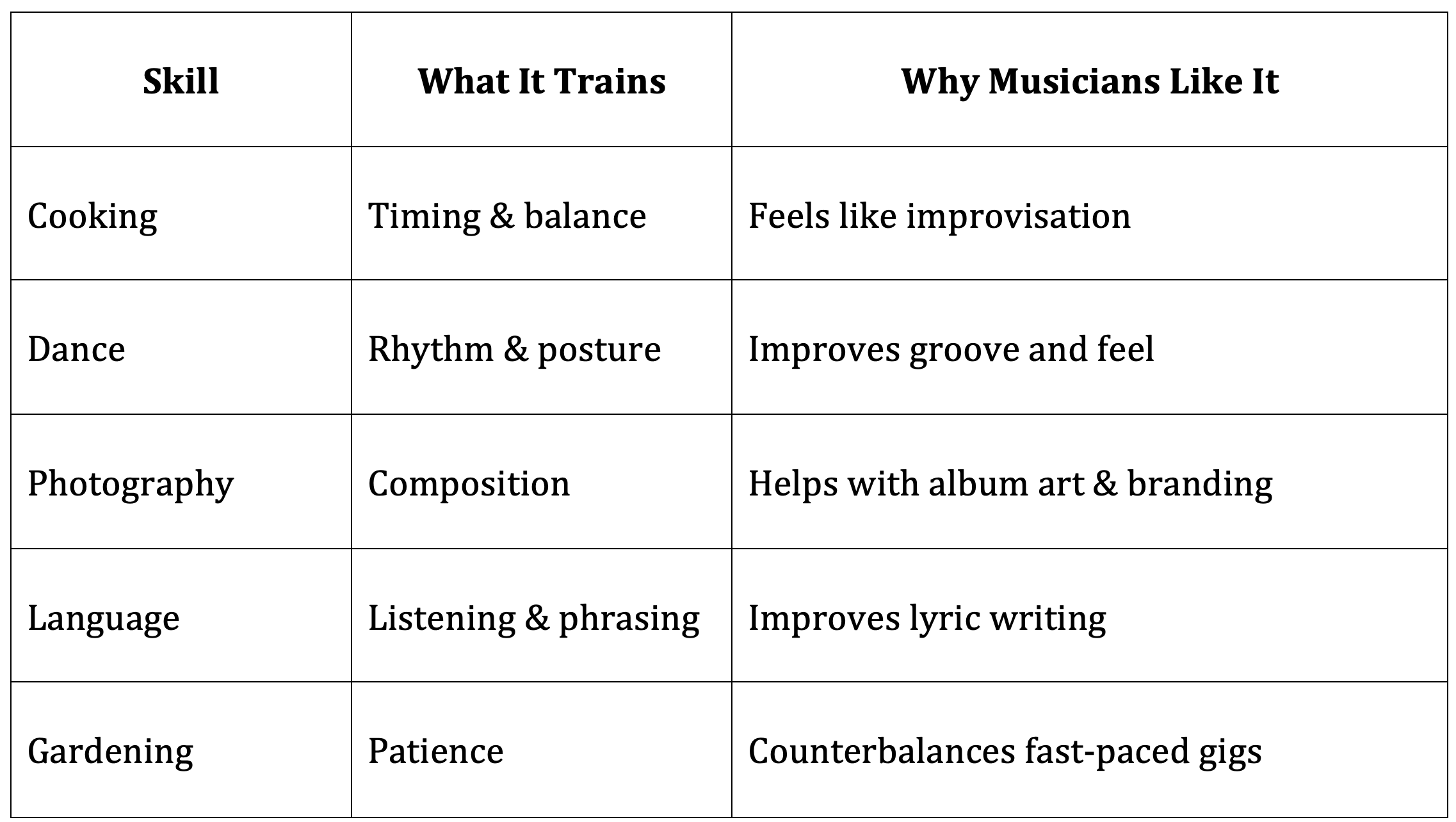
Cooking: Teaches timing, improvisation, and sensory awareness
Gardening: Builds patience, seasonal thinking, and long-term care
Photography: Sharpens composition, contrast, and mood
Sewing or basic clothing repair: Encourages precision and rhythm
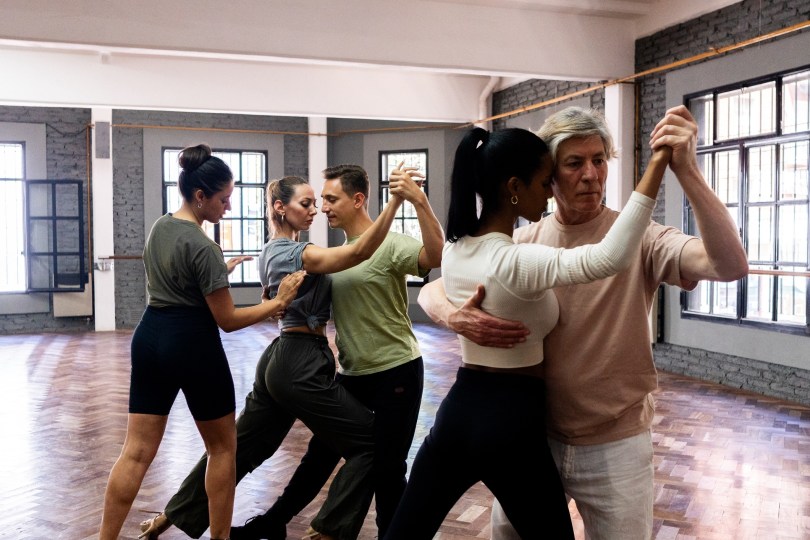
Dancing: Improves mood, posture, and body awareness
Visual art (drawing, painting, collage): Expands emotional expression
Learning a new language: Trains listening, phrasing, and memory
Playing a second (or third) instrument: Resets beginner’s mind
Each of these taps into skills musicians already use—just in a different form.
A Simple How-To for Learning Any New Skill
Use this checklist-style approach to avoid overwhelm and keep momentum:
Start smaller than you think Commit to 10–15 minutes a few times a week. That’s enough to build a habit.
Choose tools, not perfection One good knife, one sketchbook, one dance class, one app. Avoid overbuying.
Practice in public (a little) Share a photo, cook for a friend, attend a beginner class. Light accountability helps.
Connect it back to music Ask: How does this change how I listen, move, or think creatively?
Let yourself be bad Beginners progress faster when they’re not trying to impress anyone.
Learning Skills Side-by-Side: A Comparison
When a Hobby Turns Into a Calling
Sometimes a skill stops being “just for fun.” You fall in love with it, invest more time, and start wondering if it could become part of your career. Many musicians eventually return to school to formalize a passion—whether that’s audio engineering, education, therapy, or technology. Finding a program that supports your interests matters; for example, if you want to build skills in IT, programming, and computer science theory, earning a computer science degree can open doors, and this may be a good option. Online programs can be especially helpful for busy musicians, allowing you to study around rehearsals, gigs, and tours.
A Resource Worth Exploring
If you’re curious about picking up creative skills at your own pace, Skillshare offers beginner-friendly classes in photography, illustration, writing, productivity, and more. Many courses are short, project-based, and taught by working creatives.
Frequently Asked Questions
Do I need to be “talented” to start a new hobby? No. Skill comes from repetition, not personality traits.
How many hobbies is too many? If you feel scattered or stressed, scale back. One or two at a time is plenty.
What if I quit? Quitting is data. You learned what didn’t fit—and that still counts.
Final Thoughts
Learning new skills and hobbies keeps musicians adaptable, curious, and creatively healthy. You don’t need a master plan—just a willingness to start small and stay open. Some skills will quietly support your music; others may change your direction entirely. Either way, the act of learning itself keeps you in tune with growth.
According to the Smithsonian, 2026 is “The Year of the Fire Horse.”
The Chinese Lunar New Year begins February 17, 2026, and starts the Spring Festival season that ends fifteen days later on the evening of the Lantern Festival. The Chinese zodiac rotates through a 12-year cycle of animals and the traditional five elements: wood, fire, earth, metal, and water… The horse ushers in the seventh year of the 12-year cycle, following the Year of the Snake. Different regions across Asia celebrate Lunar New Year in many ways and may follow a different zodiac. – Smithsonian
The Horse embodies enthusiasm, speed and fieriness, bringing a year focused on bold moves and exploration, according to Chengxin Li from Astrala. Those born in a Year of the Horse are often seen as confident, agreeable, and responsible, although they also tend to dislike being reined in by others. Celebrities born in a Year of the Horse include Nelson Mandela, Paul McCartney, Barbra Streisand, Calvin Klein, Jerry Seinfeld, Jackie Chan, John Travolta, Janet Jackson, Usher, Kobe Bryant and Jennifer Lawrence. “In their zodiac year, Horses experience highs and lows in love, work, and health. Breakthroughs are possible through persistence, while balanced self-care and steady finances ensure long-term success,” according to Sophie Song from Astrala. – Lauren Kobley
Colligating these online sources, one might say that this could be the year we all embrace “enthusiasm,” “exploration,” “breakthroughs,” “boldness,” and “persistence.” In other words – “professional development!”
I heartily recommend you remain actively involved in your professional music/education association and attend at least one state or national conference or regional workshop every year. Yes, this suggestion is good for pre-service (collegiate or soon-to-be) educators and retirees, too! This often-repeated quote from a past issue of PMEA Retired Member Network eNEWS clearly states “the why” (“rationale” – the focal point of many keynoter Simon Sinek’s presentations) to participate in continuing professional development sessions:
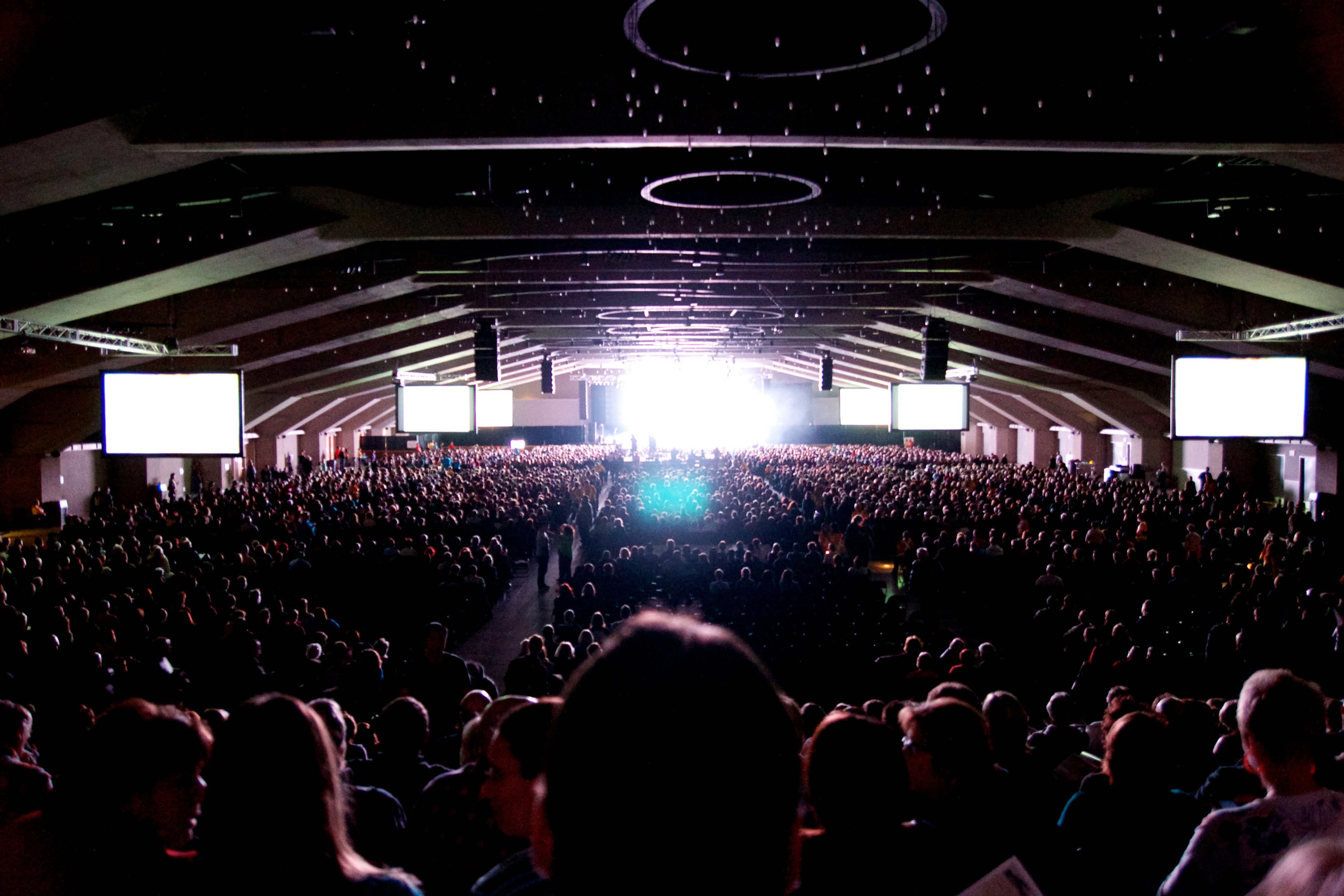
For some of us, it’s a just chance to catch-up with our colleagues, see our friends, and socialize. Others are more focused and take advantage of the near-perfect opportunity to network with other professionals, perhaps seeking new working relationships, partnerships, or even employment. Many are on a look-out for newly published music, that perfect music lesson or teaching strategy, technology tools, fundraisers, advance educational venues, or much-needed equipment to purchase for our ensembles or classrooms. Most come to hear/see the “state of the art” in music education – concerts, demonstrations, keynote speeches, panel discussions, exhibits, research presentations, and workshops. PMEA’s PD Council would likely submit that the primary purpose of a conference is for professional self-improvement… What did Stephen Covey call it? His Habit #7 of “sharpening the saw” – to build a balanced program of self-renewal in the four areas of your life: physical, social/emotional, mental, and spiritual. Covey would insist we embrace “the process that empowers us to move on an upward spiral of growth and change, of continuous improvement.” So, in short, conferences help us “grow” – to revive, re-inspire, re-energize, rejuvenate, re-direct, and re-motivate all of us – pre-service, active in-service, and retired teachers towards making successful new connections, updating our knowledge and skills, and forming new goals. This is how we “keep up” with all the new standards, benchmarks, and cutting-edge advances, and meet the “movers-and-shakers,” visionaries, and leaders in the profession!
Where to go? What to see? What’s YOUR pleasure? Pick a location: Washington D.C., Baltimore, or The Poconos in Northeastern Pennsylvania! I’ll be attending all three!
DCMEA
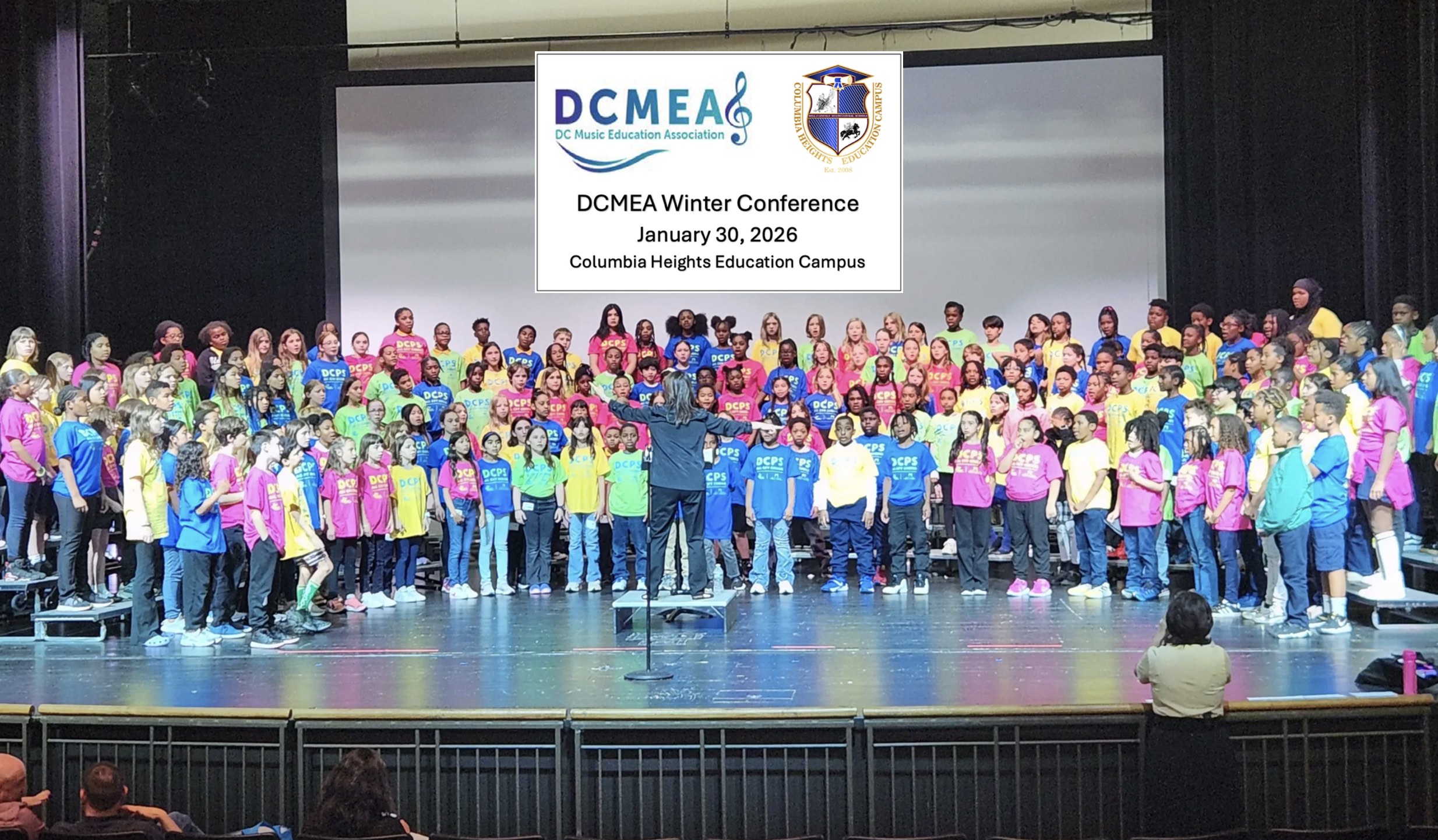
The earliest conference workshop series on my docket for 2026 is coming up in three weeks: DCMEA Winter Conference. For out-of-town attendees, DCMEA offers a discounted hotel stay at the Line Hotel D.C.
Keynote Speaker: Nationally recognized leader, educator, and advocate, NAfME Past President Scott Sheehan will present ideas to ignite your passion and commitment to a fulfilling career in music education.
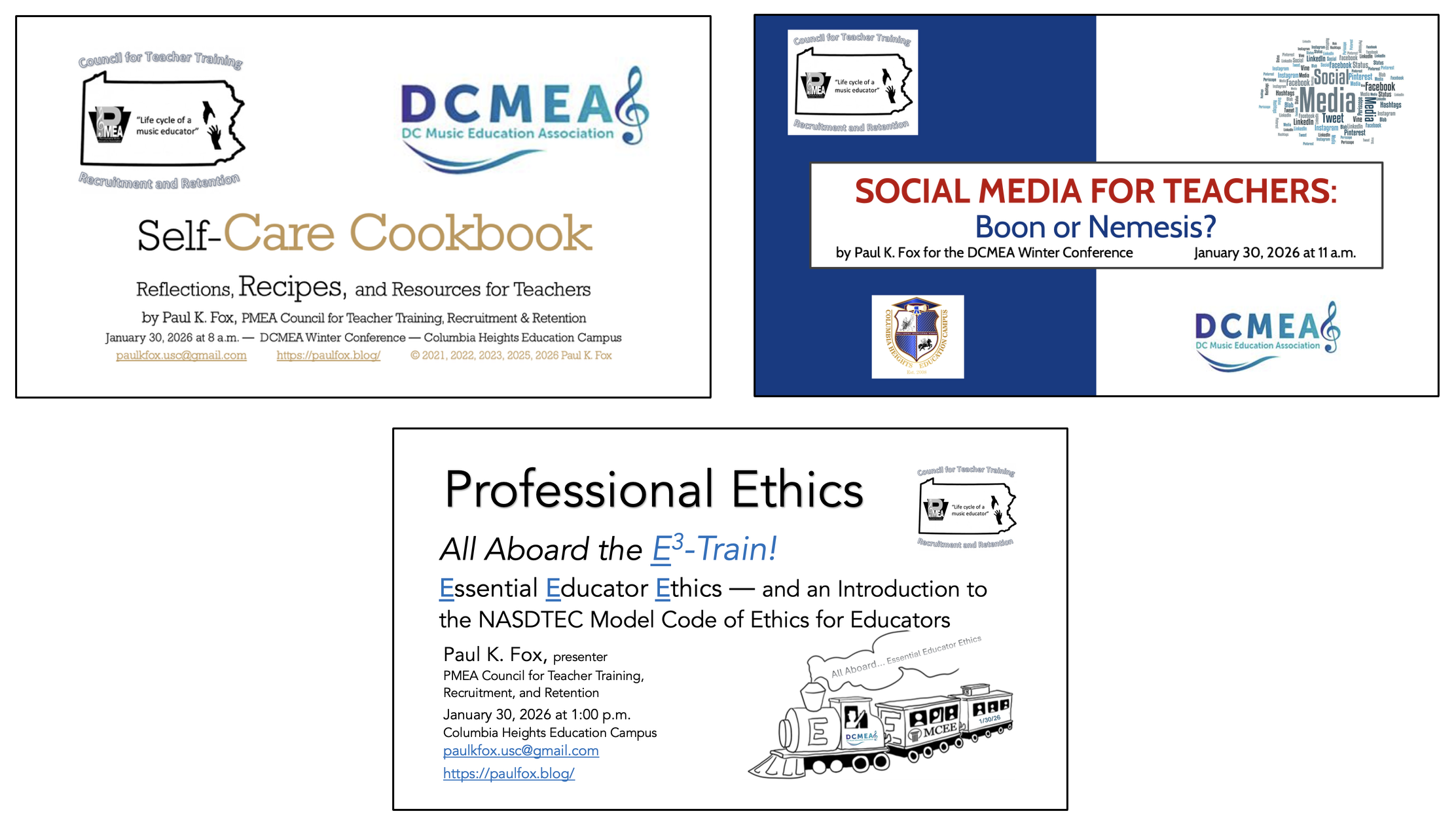
I feel privileged to have been invited to present the following three sessions at DCMEA Winter Conference.
Self-Care Cookbook – Reflections, Recipes, and Resources
Description: The purpose of this session is to empower teachers with skills and attitudes needed to make informed decisions to promote their own lifelong health and wellbeing, and to remediate stress and burnout. With the introduction of new resources for self-assessment and study, we will explore these essential questions:
What are suggestions, strategies, and samples for the development of a personal self-care plan?
Why is it essential to personal health to achieve balance in our lives, and how can we achieve it?
How does dedication to wellness impact the risk of illness, injury, and the quality of a person’s life?
What are the consequences of our choices in terms of time and stress management?
How do effective decision-making skills and goal setting influence healthier lifestyle choices?
This workshop will provide the takeaway of “two-for-one” follow-up slide decks: Self-Care (1.0) to foster in the individual teachers themselves the acquisition of new techniques for self-assessment, self-care goal setting, and work/life balance, and the other, Self-Care 2.0 recently presented at the PA Department of Education’s state conference SAS INSTITUTE for school leaders to cultivate in their staff better habits of health and wellness and to improve school climate and culture.
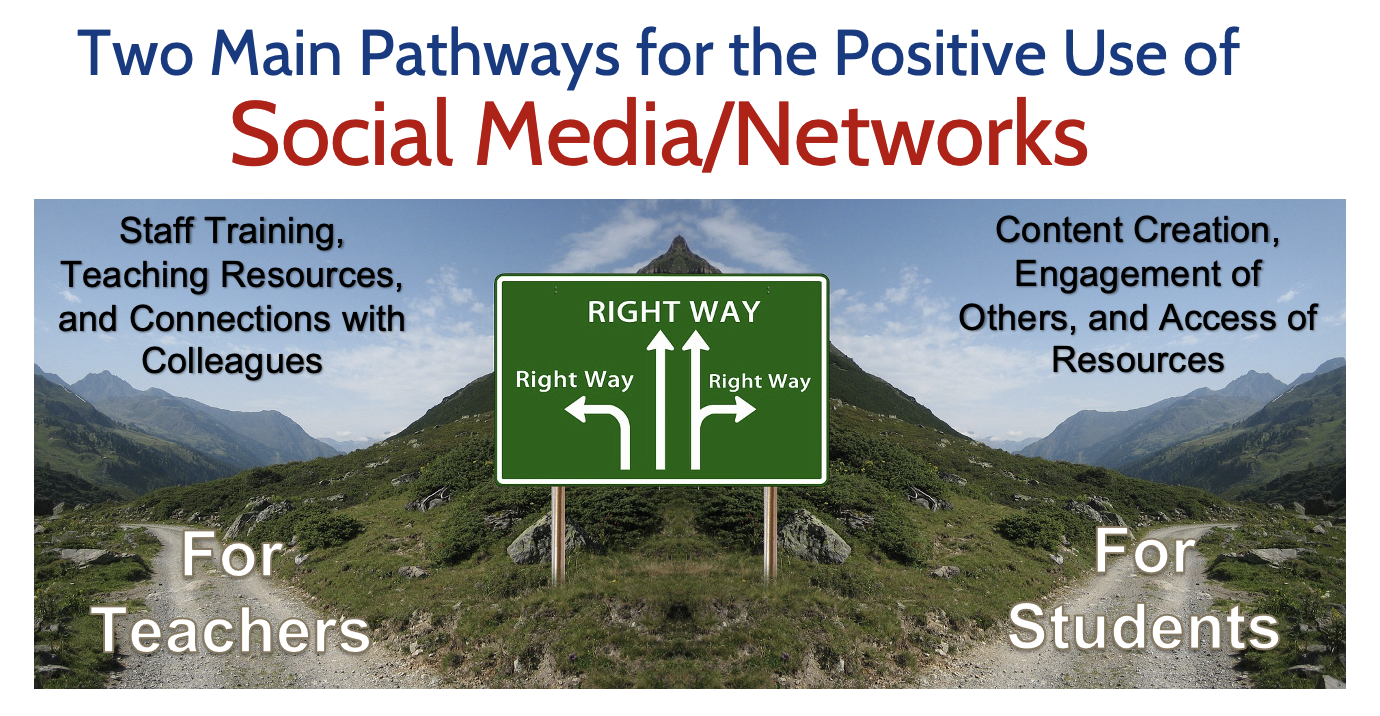
Description: The presentation will touch-on various legal issues, the ethical framework necessary to guide teacher decision-making and the avoidance of unacceptable “appearances or actions,” and precautions for the use of digital communications and social networks. Sample success stories, “exemplars,” and resources for the safe use of tech tools and applications of social media/remote/alternative/distance learning will be shared.
All Aboard the E3-Train! ⏤ Essential Educator Ethics…
and introducing NASDTEC’s Model Code of Ethics for Educators
Description: Teachers make thousands of decisions every day resolving conflicts in pedagogy, enforcement, resource allocation, relationships, and diversity. Many of these are “snap judgments” relying on gut feelings, intuition, past experiences, and a personal moral compass. And, although Johnny Cash may have sung “I walk the line…” in his love song, in education it is often a perilous “fine line” to maintain the standards and appearances of professionalism, integrity, and ethical codes both in and outside the school community.
This workshop will foster interactive facilitated discussions on risk assessment and resolution of ethical disputes and “conundrums” both in and outside the workplace. We will introduce the National Association of State Directors of Teacher Education and Certification Model Code of Ethics for Educators (MCEE) and empanel a mock jury of volunteer attendees to analyze and judge sample (real or hypothetical – “what would you do?”) scenarios for new perspectives in managing day-to-day decision-making in music education.
MMEA
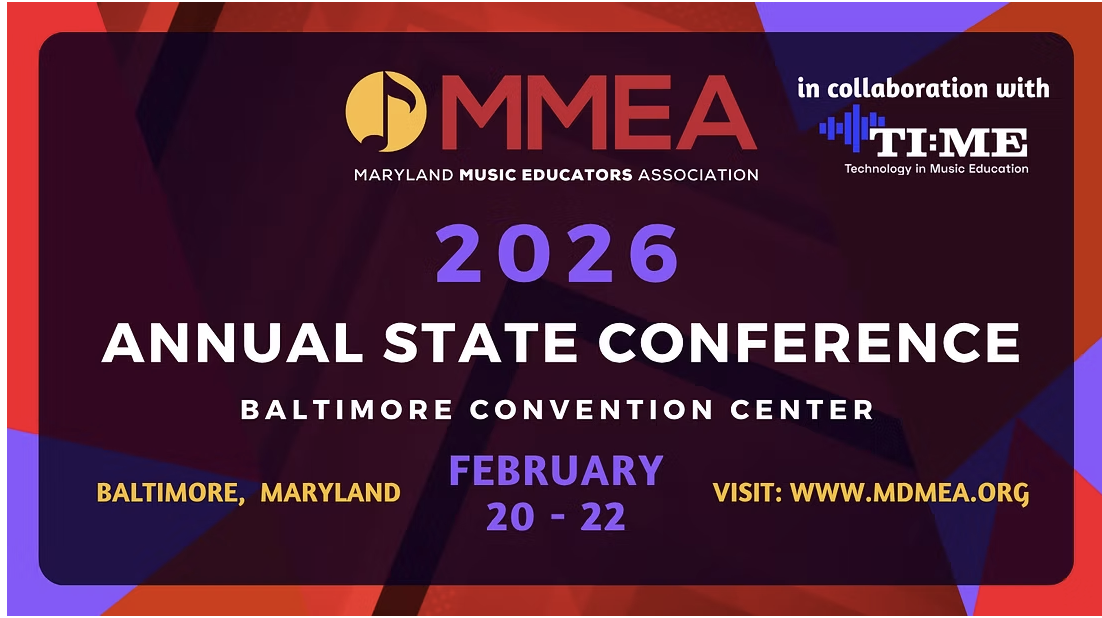
Our next professional development journey takes us to the three-day MMEA Annual State Conference in Baltimore.
Keynote Speaker: John Jacobson, a celebrated author and composer whose musicals have been performed by millions of children worldwide. Session is sponsored by Musicplay.
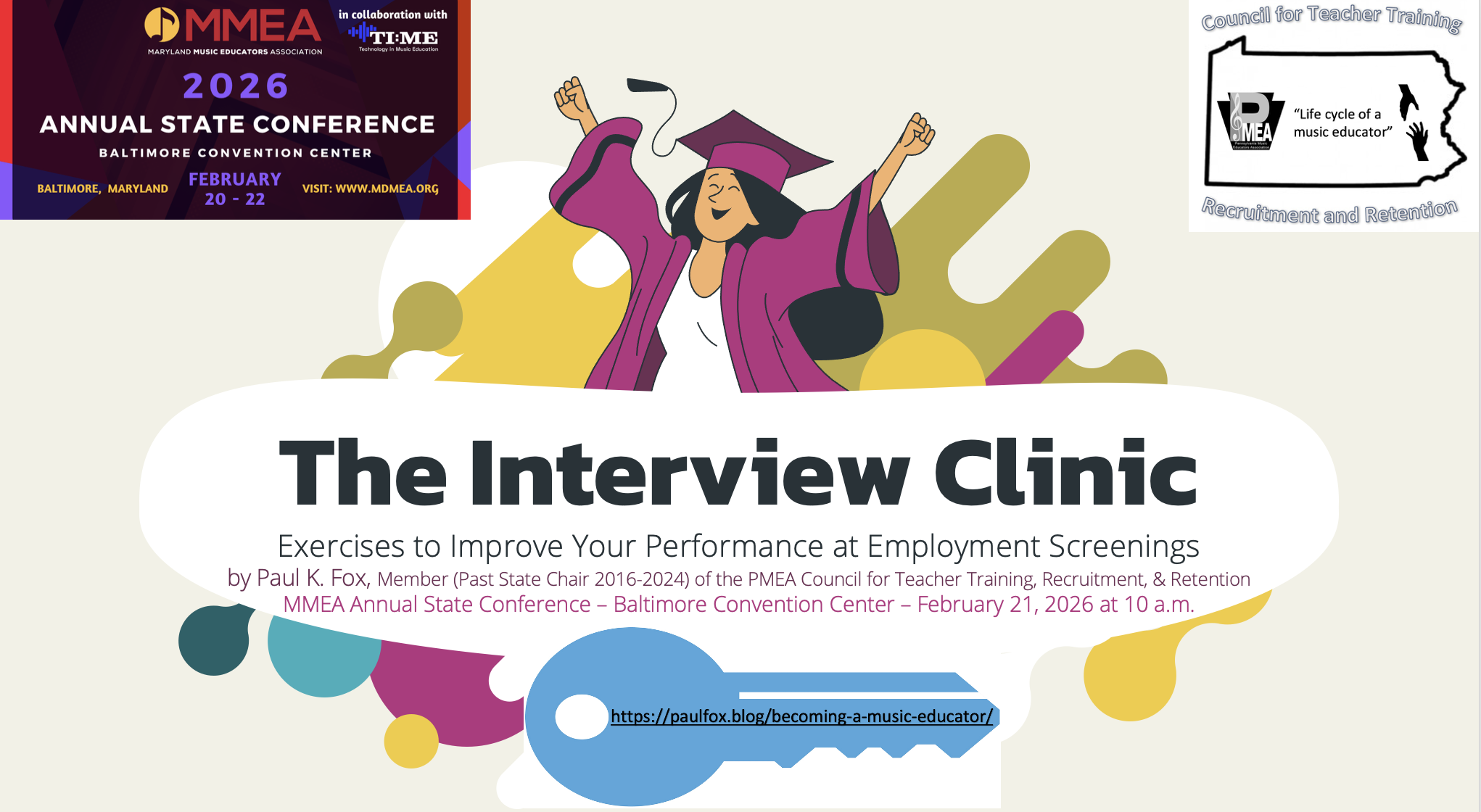
My session The Interview Clinic will be presented on Saturday, February 21 at 10:00 a.m. in Room 325. Geared to the coaching of college music majors, pre-service, unemployed, educators in transition, or those teachers seeking new positions, this workshop will provide hands-on interactive exercises to improve candidate performance at employment screenings.
Description: How do you get to Carnegie Hall? Practice, practice, practice! How do you succeed at job interviews? Practice, practice, practice! Are you looking for your first job over the next year or so? Or, are you trying to “move up” to a better position? This workshop will provide hands-on tips, tricks, techniques, and trial exercises for developing skills in professional marketing, branding, storytelling, and networking.
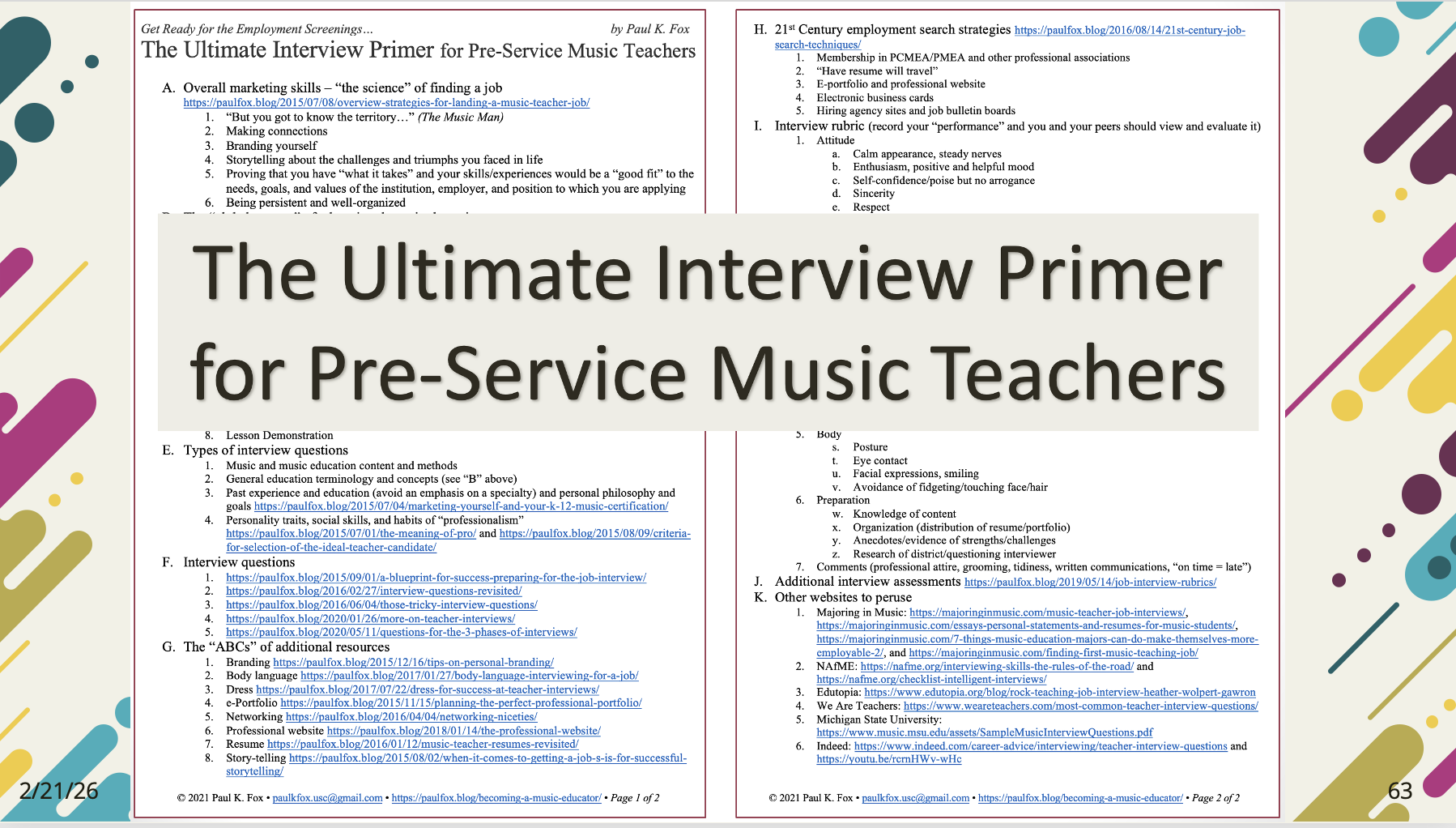
The valuable resource, The Ultimate Interview Primer for the Preservice Music Teacher, will be shared archiving an extensive library of supplemental self-help links to interview questions, good/bad habits at employment screenings, and additional strategies for landing the job you always wanted.
PMEA
It probably will not come as a surprise to readers of this blog that my favorite professional development venue is the Pennsylvania Music Educators Association Annual Conference… of which I have missed perhaps only three of these “celebrations” over nearly five decades of involvement in music education, all starting with my HS participation in PMEA All-State Band (tuba) and PMEA All-State Orchestra (viola). PMEA Annual Conference is the main event providing “state of the art” keynoters, clinicians, educators, expert innovators, performers, curriculum designers, and supportive vendors, and more than any other source, probably has had the greatest influence on sustaining my growth as a music educator. Like many other “diversified colleagues,” throughout my career I had to go through transitions of teaching new grade levels and content specialties (although orchestra and strings were my “thing,” new job assignments required retooling and fostering renewed skills in music theory, technology, choral, musicals, and even elementary band)… and PMEA’s professional development offerings were always my “go to!”
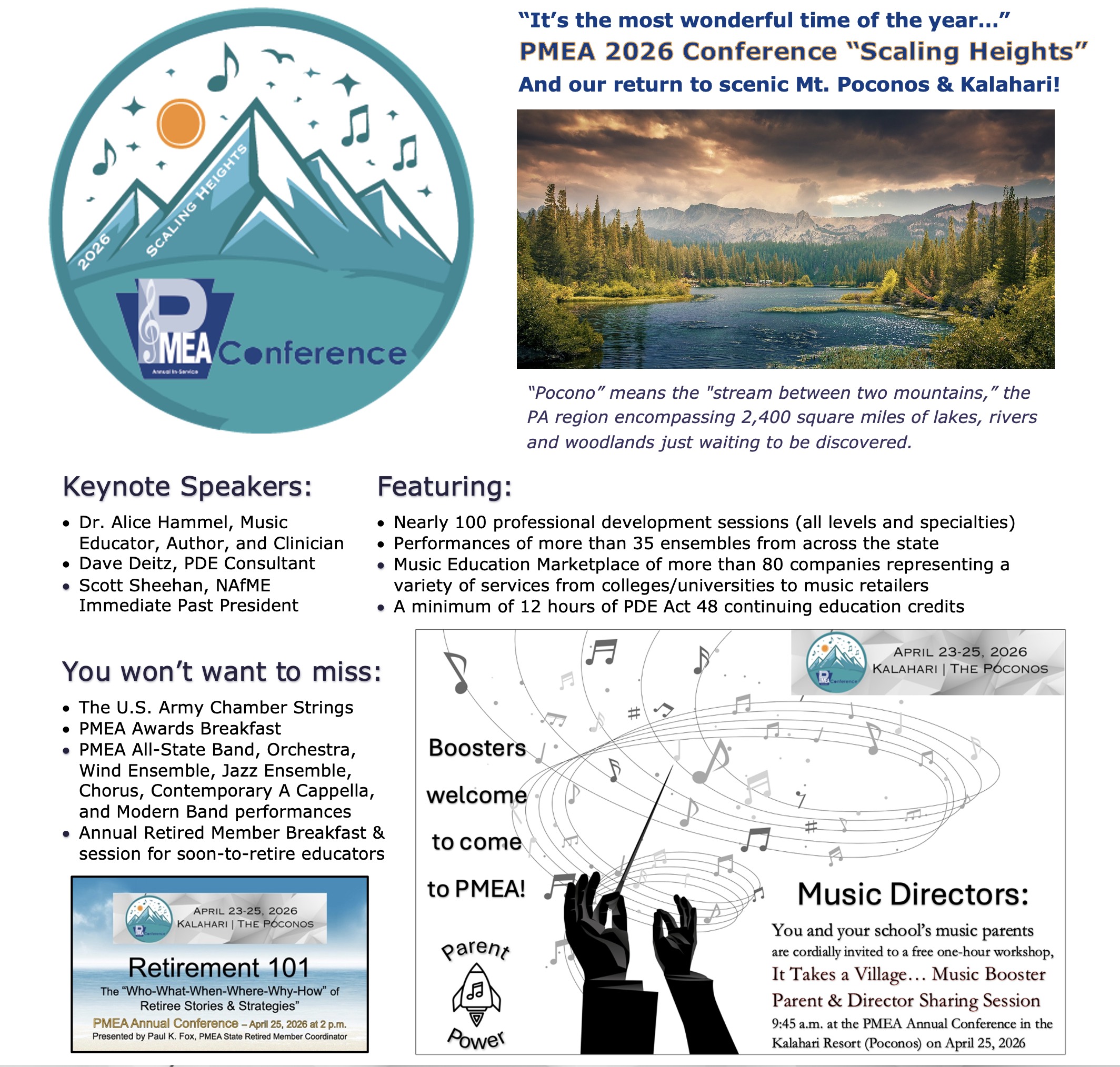
If you live in or near the Commonwealth, you should drop everything today and register for the PMEA Annual Conference at the Kalahari Resort in the Poconos.
I am happy to announce that I will present/facilitate several sessions at PMEA’s Scaling Heights 2026:
April 23: Self-Care Cookbook – Reflections, Recipes, and Resources
April 24: Retirement 101 – Retiree Stories and Strategies
April 25: It Takes a Village – Music Booster Parent and Director Sharing Session
More details about these session will be coming in future blog posts.
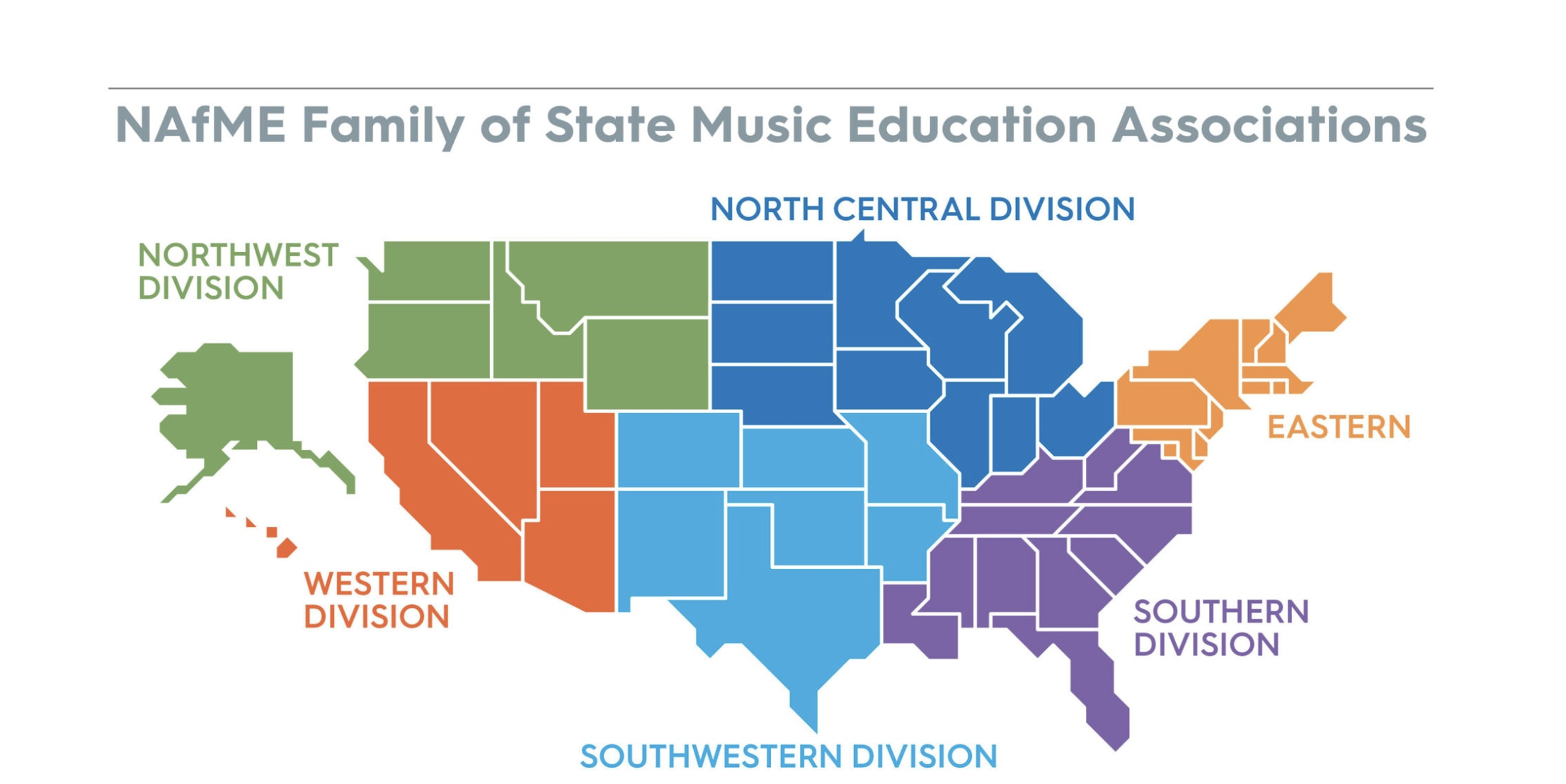
These conferences are only the tip of the iceberg! If you need to consider other MEA sites or more convenient locations to where you live, peruse the NAfME website here, where there is a quick count of more than 52 (state) music education associations, most with one or more conferences per year!
So, now are you interested in galloping or just trotting through The Year of the Fire Horse? Make a New Year’s Resolution to attend one MEA event in 2026. Apathy is not an option! Excuses will NOT be accepted!
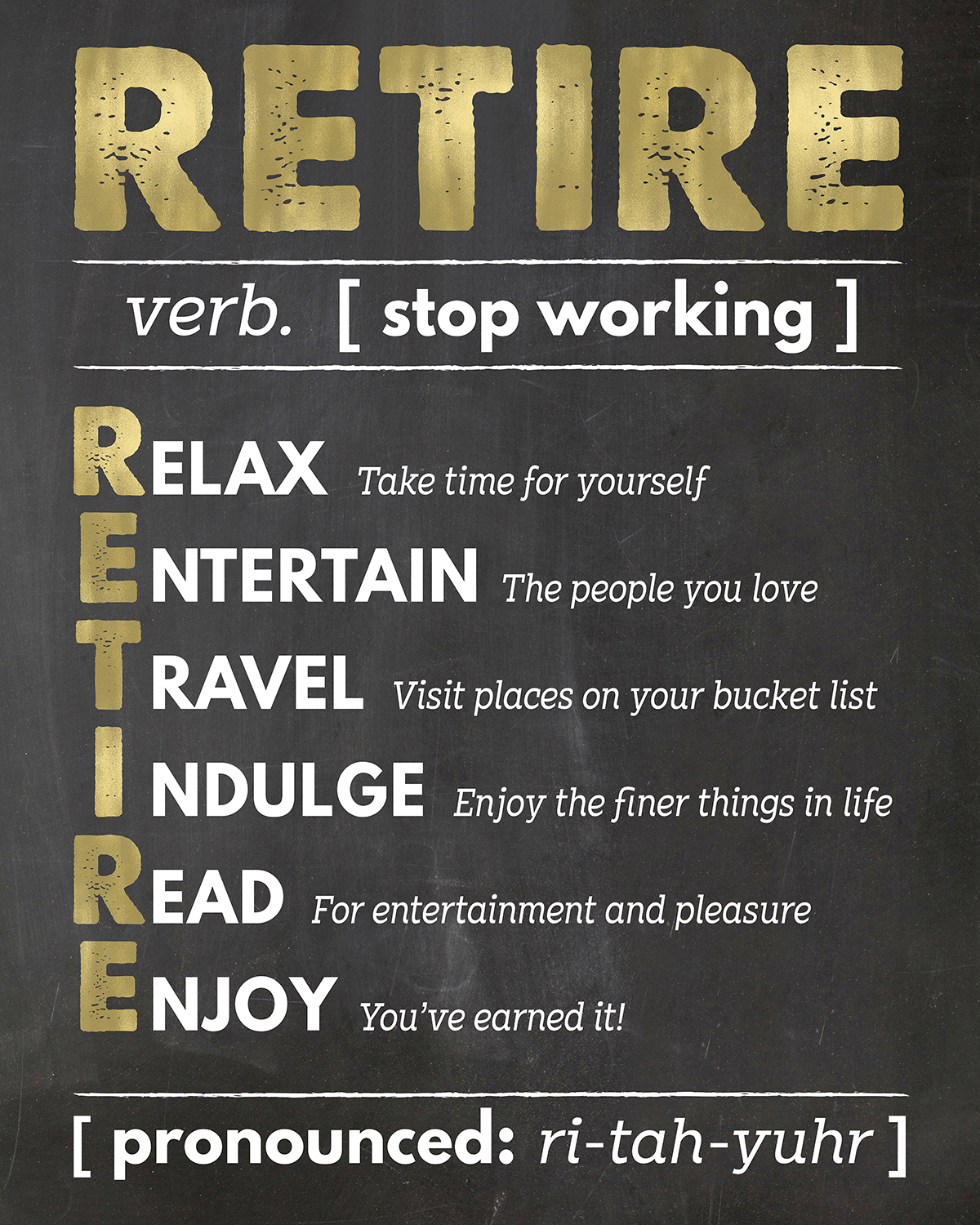
Surfing the ‘Net, I found an appropriate acronym for R.E.T.I.R.E. by Tangled Tulip Designs in pinterest – Relax, Entertain, Travel, Indulge, Read and Enjoy! Most retirees would probably agree! The cessation of full-time employment may offer a great release from the day-to-day stress and drudgery of the job and the freedom to venture out, self-reinvent, make future goals, nurture relationships, and explore new personal growth opportunities.
Many attribute embracing a career in music education as “a calling” as opposed to just a form of employment or livelihood. From my experience, I have witnessed that most music educators are passionate for the cause of fostering creative self-expression in their students, more of a 24/7 mission, bringing intense focus and dedication to their lifework.
More to the point: Do we ever truly retire from making music ourselves and fostering this love in others?
THE “WHY!” Retirees matter and are critically needed!
One of my favorite inspirational speakers (Simon Sinek) would say, “start with the WHY!” WHY is this discussion on professional engagement of retired educators so important today?
Their need: An informal poll of my former local educators and administrators revealed that half of them “hate retirement!” According to Dr. Robert P. Delamontagne in his book Retiring Mind (Fairview Imprints), “50% of retirees will suffer some form of acute emotional distress. This is potentially a very large problem given the fact that 10,000 people are becoming eligible for Social Security every day for the next 20 years in the US alone.” Remember this statistic the next time a senior citizen cuts you off on the road or bangs a shopping cart into your leg at the checkout!
Our need: We are facing shortages of qualified teaching candidates across the country with unfilled openings in public school music positions and the critical need of training/mentoring the new hires.
Society’s need: All of our voices should be combined to support the advocacy of music education, actively promoting access to school music by sharing its academic and social benefits with decision-makers, building relationships with administrators and policymakers, and utilizing resources from organizations like NAfME and the NAMM Foundation.
Despite its proven benefits, music education is often the first program to face budget cuts in schools. This is especially concerning in underserved communities, where access to music programs can be life-changing. Now more than ever, we must advocate for music education to ensure that every child has the opportunity to experience its benefits. Investing in music education is an investment in the future of our communities — helping to cultivate the next generation of creative, resilient, and innovative leaders. – “Why Music Education Matters More Now Than Ever” by Music Will, February 2025
For eleven years (and counting), I serve as the Pennsylvania Music Educators Association (PMEA) Retired Member State Coordinator, as well as the Past State Chair (current member) of the PMEA Council for Teacher Training, Recruitment and Retention. I believe my responsibility to the state association is two-fold:
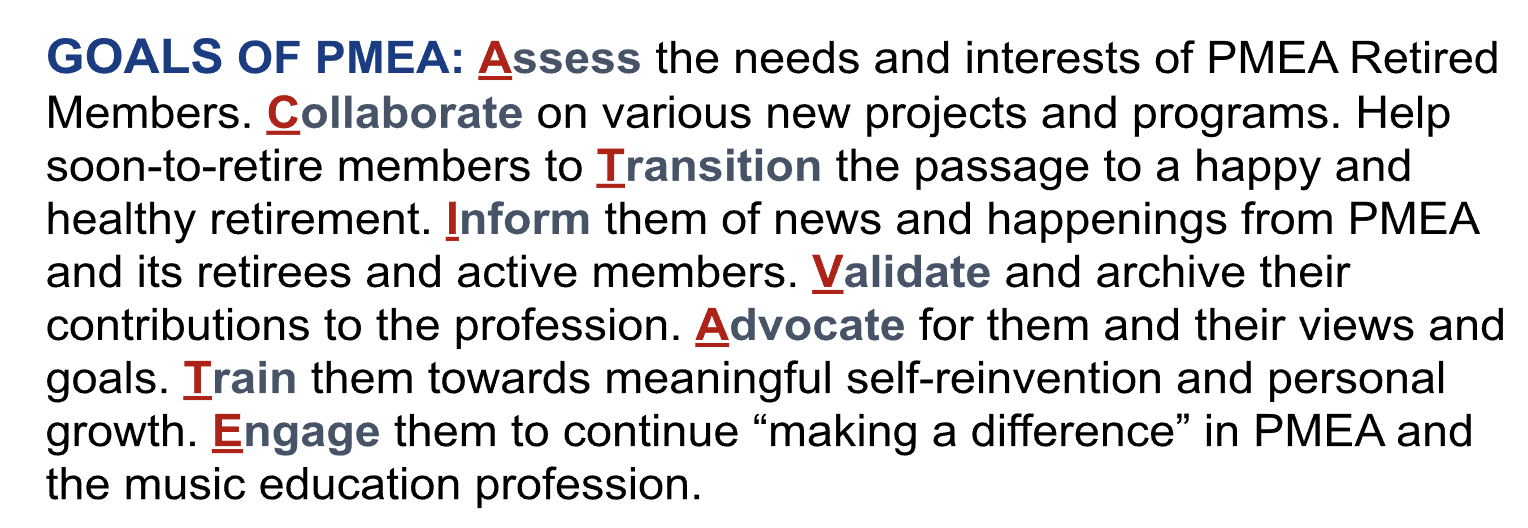
Assist soon-to-retire professionals in achieving a smooth transition to a happy and satisfying retirement; to help them cope with the commonly-experienced emotional ups-and-downs of this life passage, wrestling with the question “what do you want to be or do when you grow up?” and making new life lesson plans and personal goals.
Reach out to and build meaningful connections with retirees in order to fully engage them towards becoming active in their professional association; to recount, represent, and revitalize the activities of our post full-time employed music educators.
This article proposes a roadmap of crucial pathways to help music teachers approach “retirement bliss” while tapping into their hard-earned knowledge, strengths, and experiences by cultivating the benefits of their renewed participation in our professional associations.
What can NAfME and State MEAs offer retirees?
You have devoted your entire life to inspiring the development of personal artistry and “ah-ha” musical moments in others. Now it is your turn to reap the benefits (and privileges) of this commitment to the profession. NAfME and your MEAs can provide the resources and motivation of “sharing and caring,” directing retirees “places to go, people to meet, and things to do” for fulfilling that “next chapter” or (perhaps better terms) the “refirement” or “rewirement” of senior living.
Do you feel “needed” and know you “make a difference?” Research has shown that the one of the most important motivators for involvement in a professional association is that its members recognize that they are essential to its success. This quote is from Revitalizing Retirement: Reshaping Your Identity, Relationships, and Purpose by Nancy Schlossberg, attributed to Rosenberg/McCullough:
“It has been suggested that one problem of retirement is that one no longer matters; others no longer depend on us… The reward of retirement, involving a surcease from labor, can be the punishment of not mattering. Existence loses its point and savor when one no longer makes a difference.”
Most people who are one to five years away from “pulling their pin” and putting in their walking papers “do not know what they do not know.” Experts agree: “Retirement preparation is not only about the money!” Our silver-haired colleagues who have already Crossed the Rubicon and are now “living the dream” in retirement can share their trials, tribulations, and (more importantly) numerous success stories about coping with this transition!
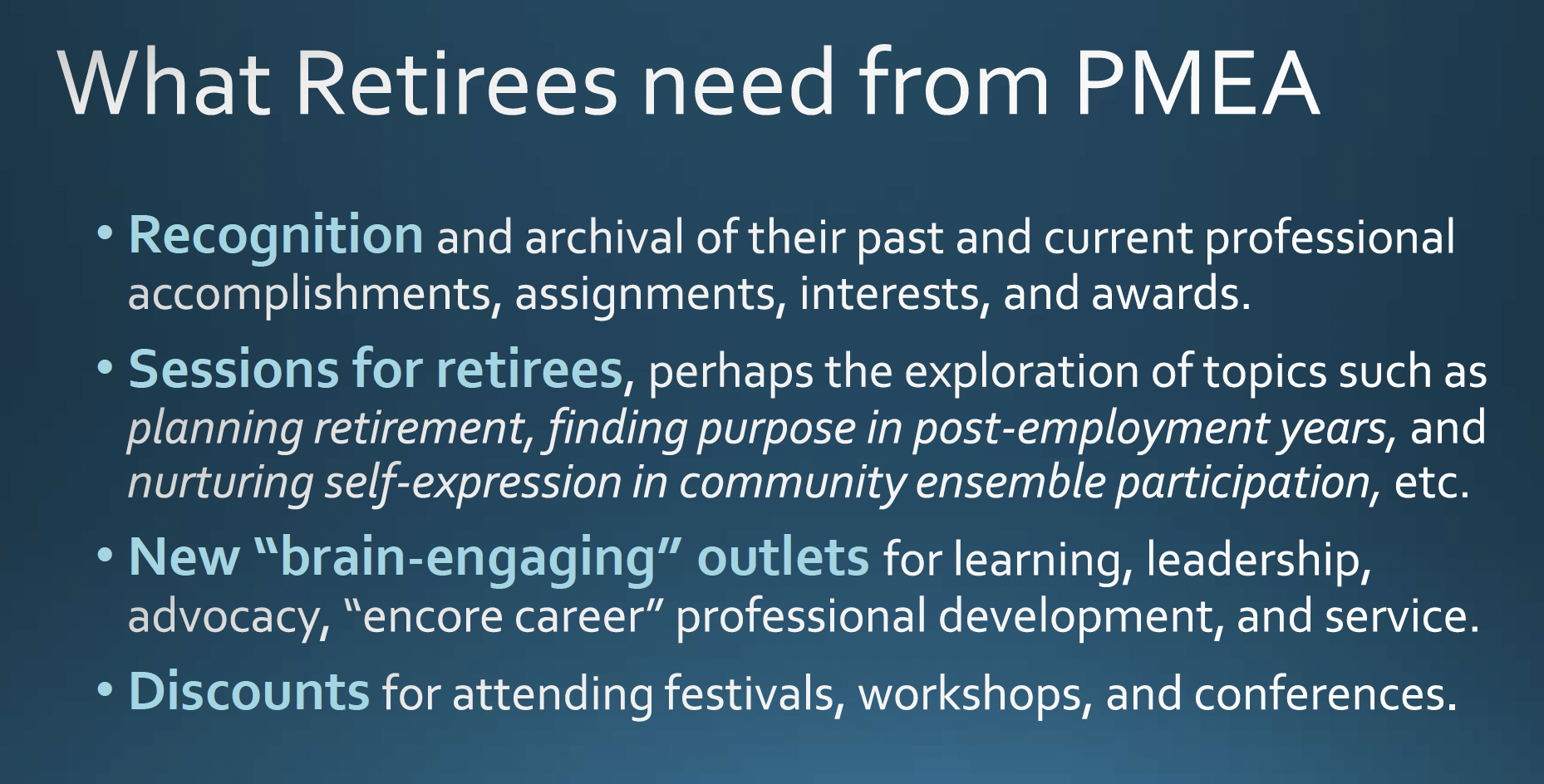
The benefits of retired MEA membership are numerous. Besides providing helpful transitioning advice, these advantages also come to mind:
Answers to questions like “What have you always wanted to sing, compose, play, record, conduct, write, publish or present?” and “Where can I share my hard-won expertise and help others in the field?”
Networks and contacts to help you develop “encore careers” in other musical or educational arenas (e.g., higher education, music industry, festival organization, travel/tour planning, composition, guest conducting, private studio teaching, church music, etc.)
Opportunities to “rekindle your expressiveness” by participation in adult community or full/part time performance groups (playing “gigs”)
Places to go/things to see/hear: NAfME/MEA conferences, workshops, and concerts
Exclusive discounts and other benefits (reduced dues and registration fees)
What can retirees offer NAfME and their state MEA?
The relationship of active and retired membership in our MEAs is symbiotic. We know from the history of our associations, “giving back to the profession” remains a high priority with most retirees. This may come in many forms and settings:
Leadership or membership in local, state, or national MEA/NAfME office, staff, advisor, or council/committee position
Advocates for the promotion of music education to local and state government officials
Service as presiding chair or member of the conference or workshop planning committee
Service as evaluator of performance groups, conference sessions, or articles for publication
Judges of local/state MEA adjudication or commercial festival
Accompanists, coaches, arrangers, or guest conductors for festivals or school/community groups
Services to the local music teacher in private teaching, piano playing, marching band charting, sectional coaching, choreography, music technology, instrumental repair, stage tech, etc.
Writers for state MEA and NAfME publications and blog sites
Contributors to online music education forums or the NAfME Connections
Donors to and/or fund-raisers of music education charitable projects, scholarship initiatives, etc.
The PMEA Model of Retired Member Participation
PMEA values the vast wealth of experience and contributions of our retired members. We’re proud of the many programs we offer to retirees and invite you to visit our website to peruse additional information and sample digital newsletters and articles.
Retired members in Pennsylvania are involved in:
PMEA elected and appointed offices, staff, committee chairs, and membership on councils
PMEA Strategic Plan and Bylaws, Conference Planning, and other state/regional committees
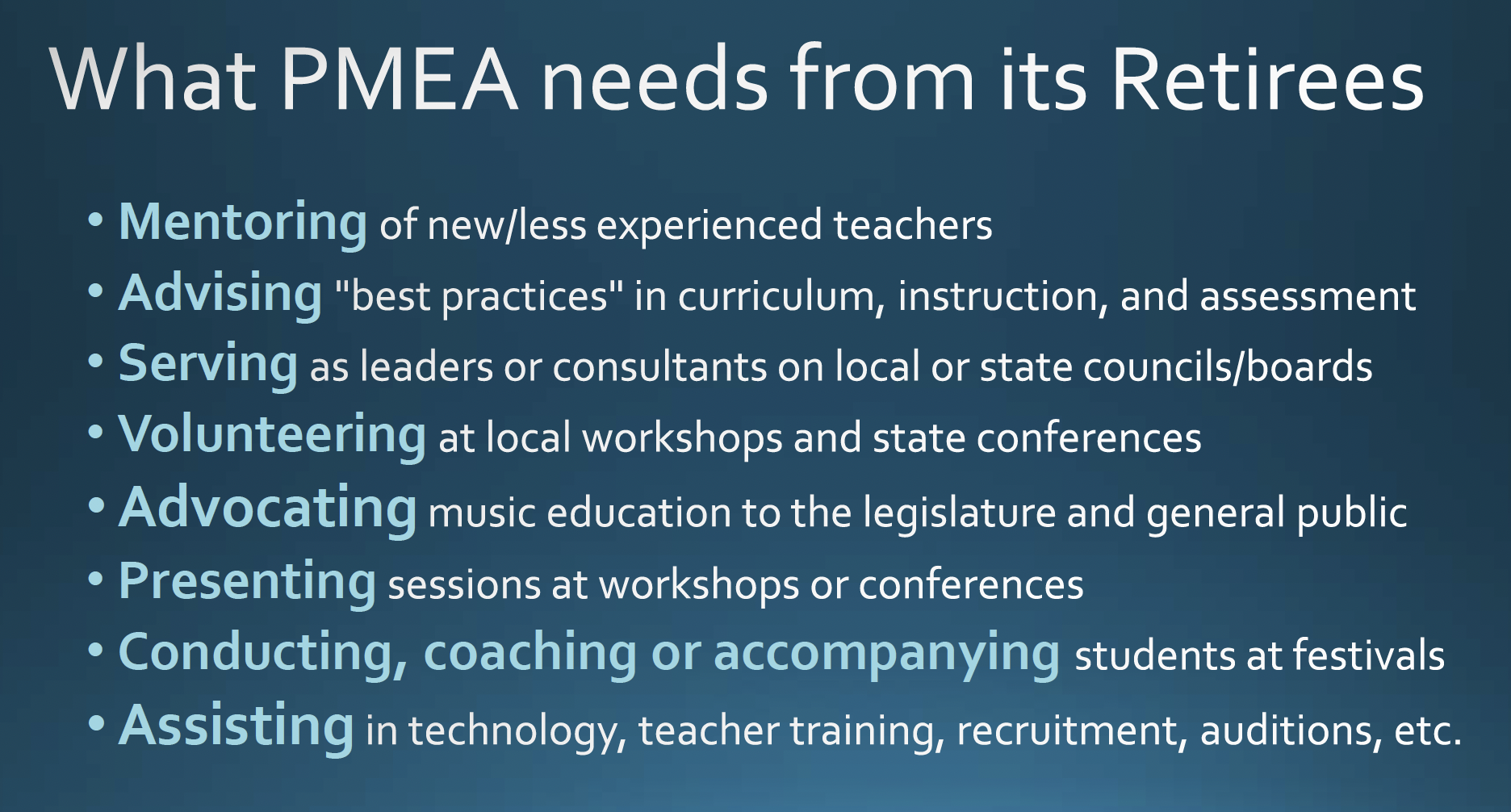
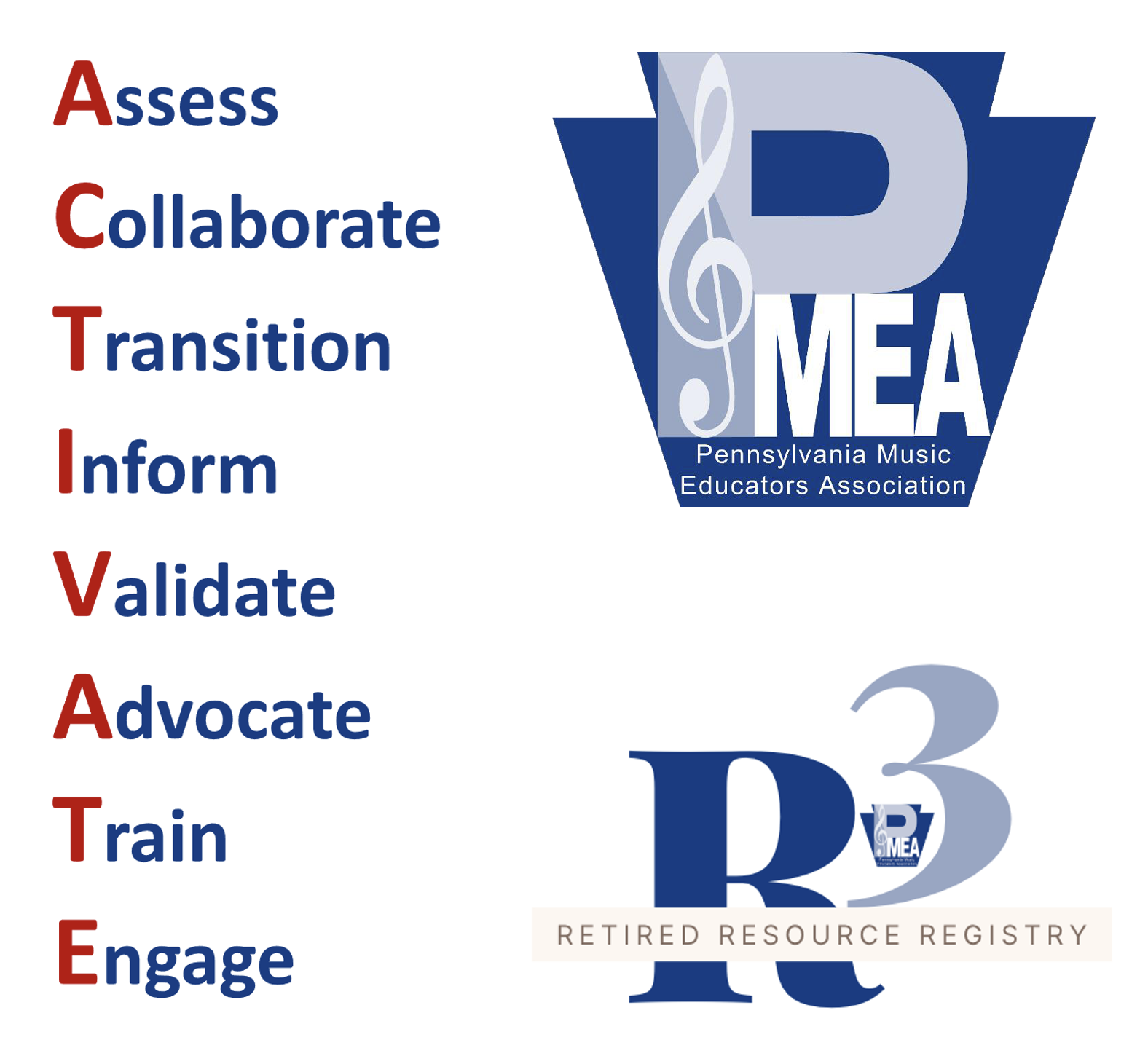
Retired Resource Registry* (informal mentoring for new teachers and transfers)
How-to-Retire Webinar, Prepping for Retirement, and the Ultimate Retiree Resource Guide
Retired Member Breakfast at PMEA Annual Conference
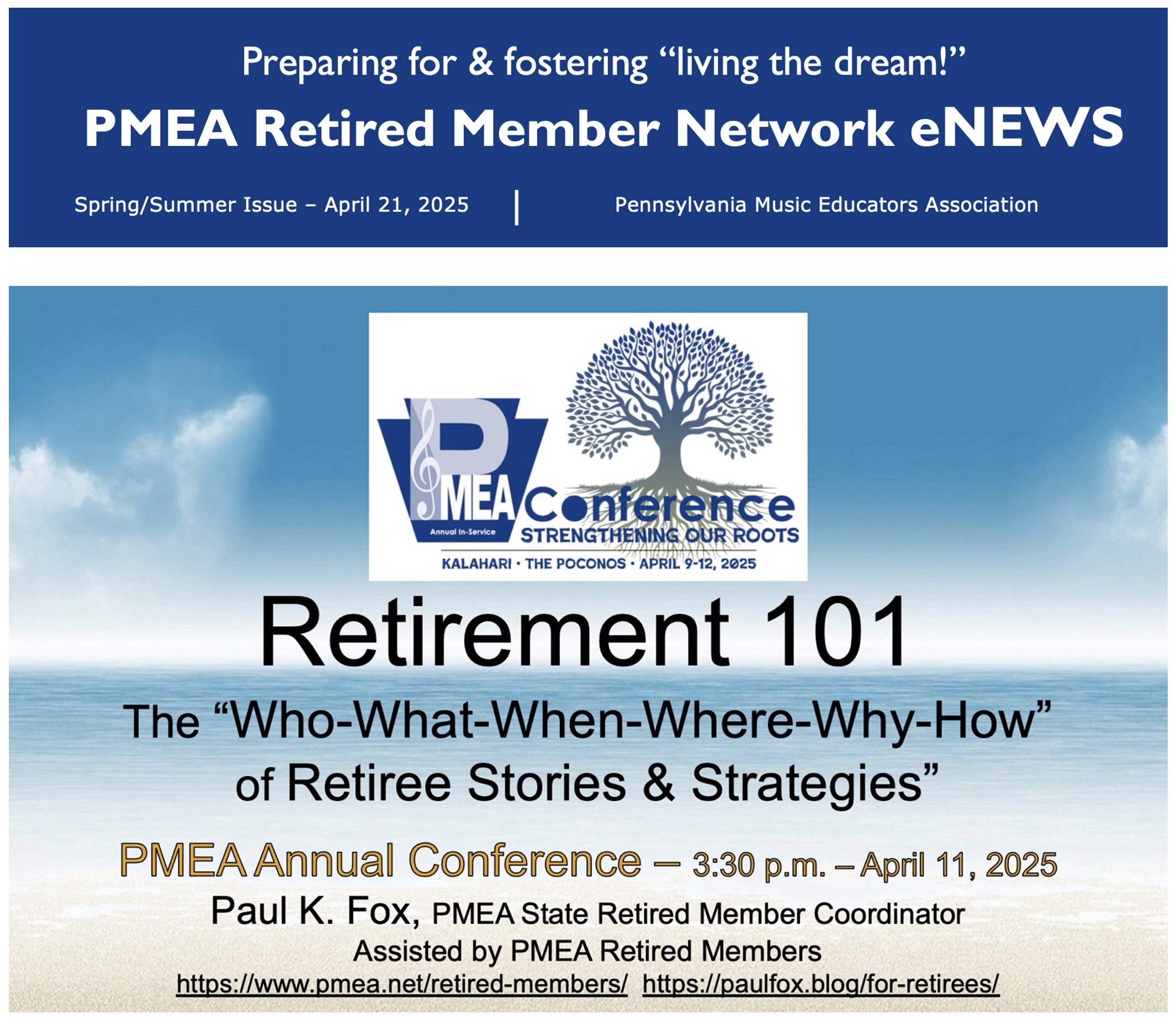
Retirement 101 (The Who, What, When, Where, Why, and How) session at PMEA Annual Conference (training for all members retiring or soon-to-retire)
Maintenance of PA Community Band, Chorus, Orchestra, and Theater group catalogs
Maintenance of PMEA member compositions library
Mock Job Interview Committee for music education majors
Coffee & Conversations informal “ask an expert” lounge at PMEA Annual Conference
Volunteering as presiding chairs for sessions and registration aides at conferences/workshops
Pool of conference clinicians, guest lecturers, and members on discussion panels
Participation in “Sponsor a Collegiate to Attend the Conference” campaigns
All-State Program Patron, or contributor to the annual Irene Christman Scholarship or Margaret Bauer Grant programs.
As of October 1, 2025, there are 61 advisors in the PMEA Retired Resource Registry.
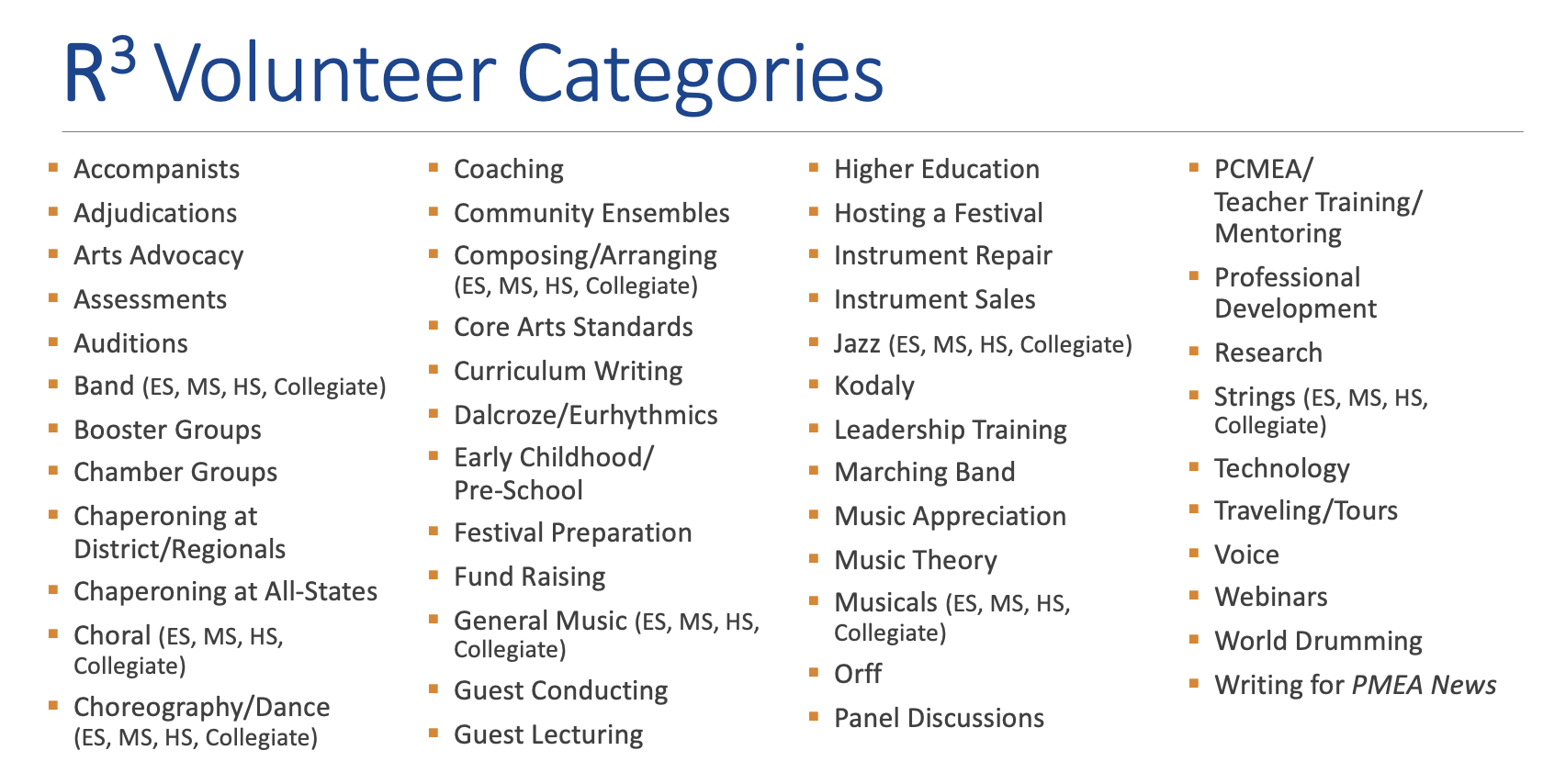
*During their annual membership registration, PMEA Retired Members may choose to sign-up for the R3 Retired Member Registry (above volunteer categories) to become available to informally offer advice to college music education majors, new hires, transfers, and newcomers to any music specialty. R3 members may handle inquiries like “What warm-up would you recommend for my middle school choir?” OR “Do you have an idea for an elementary string ensemble concert opener?” OR “How do you teach improvisation… steady beat… breath support?”
The other option with more time commitment is that Retired Members can be officially “trained” as a PMEA Mentor and be assigned to specific individuals who request assistance in their early career assignments.
Coda
How can we help?
What is the future of retired music educator professional engagement? In a word: connections!
Ms. Lasko encouraged me to “reach out to retirees” beginning with this article. At the next NAfME Eastern Division Conference, I plan to hold a meeting of retired members, and also connect with all state MEA retired member coordinators (those states who have them). We’re available and on the move! Let’s collaborate and share our resources!
Finally, just for fun, I recently posted the blog “For Book Lovers – Retired or Not” on NAfME Connections (formerly called Amplify). There are already 1,810 members in the NAfME “Retired Members Community.” Please JOIN US! Using this forum, get in touch with me, and respond with YOUR OWN retirement stories, strategies, perspectives on this “life passage,” and more ideas to grow the professional engagement of our music teacher retirees.
[Editor’s Note: My favorite and most prolific “guest blogger” Ed Carter has returned with a piece on upsizing NOT downsizing in retirement. Please enjoy (below) “Bigger Dreams, Bigger Home.” Thanks, Ed!
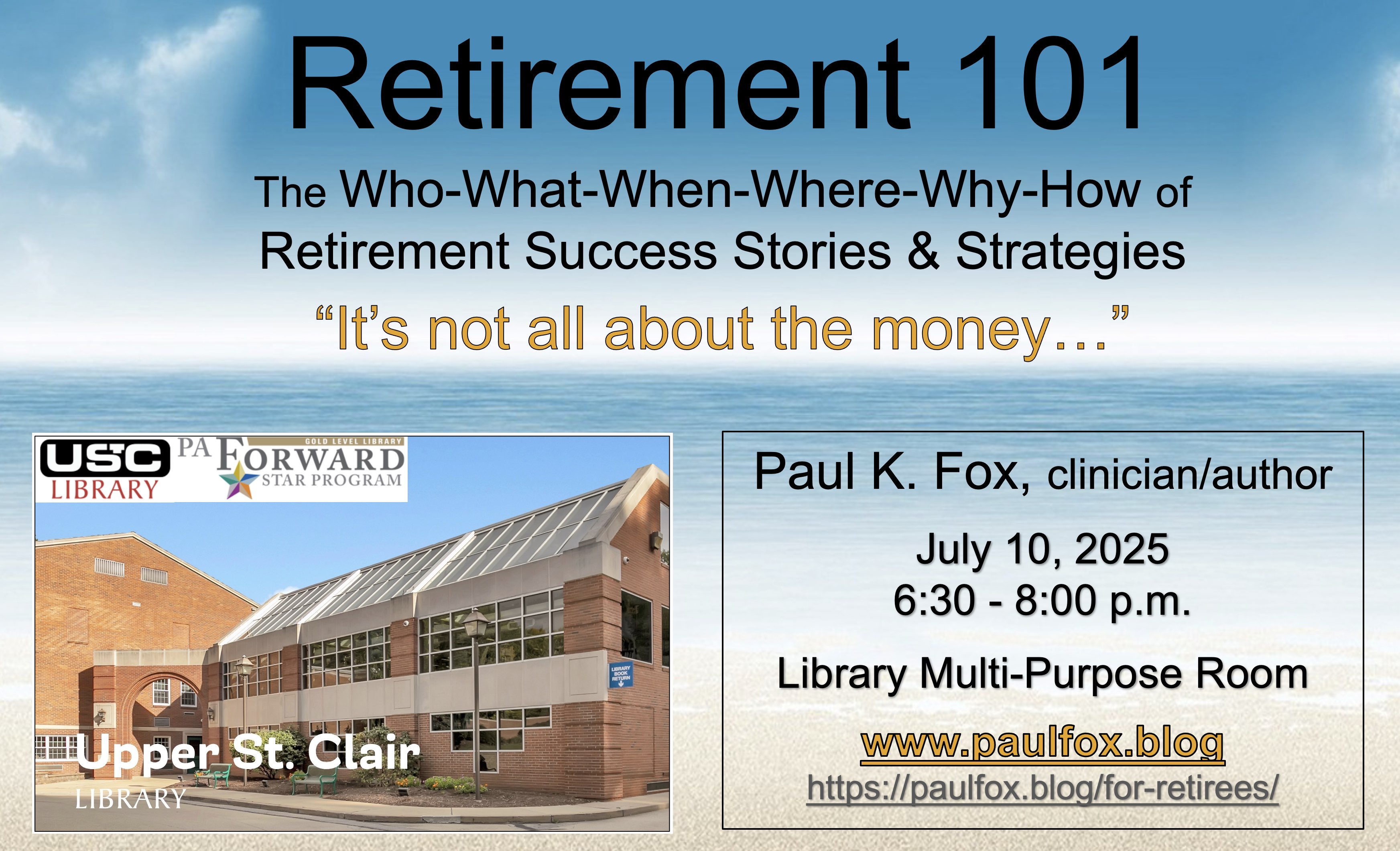
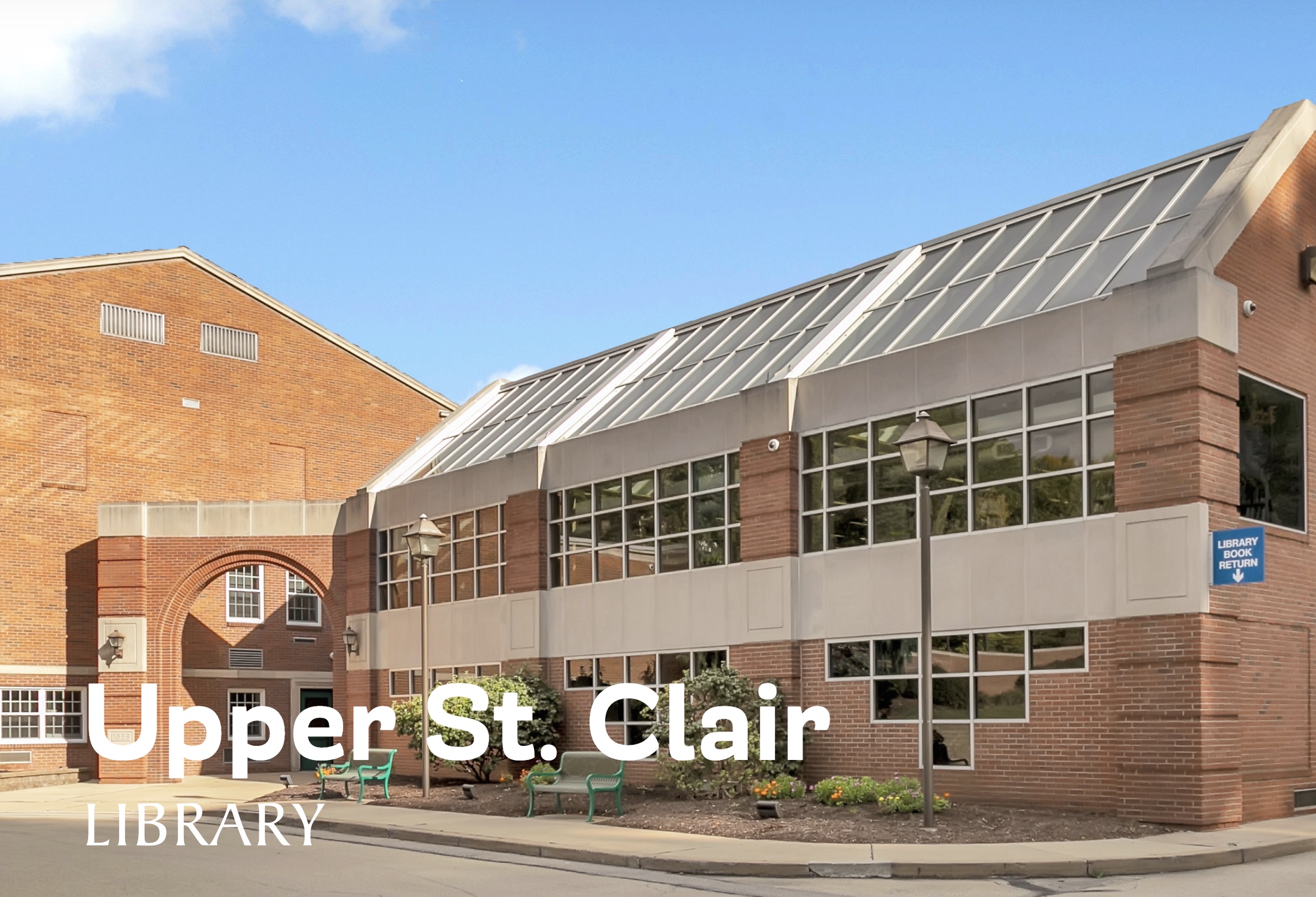
In addition, for attendees to my “Retirement 101 – It’s Not All About the Money” session at the Upper St. Clair Township Library on July 10, 2025 (and any other interested retired or soon-to-retire individuals), please click on the following links to printer-friendly copies of my slide handouts and the updated “Ultimate Retiree Resource Guide.”]
Retirement doesn’t always mean downsizing. For many retirees, it’s the perfect time to invest in a larger home—one with room to explore new hobbies, welcome visiting family, and enjoy the lifestyle they’ve spent years working toward. If you’re dreaming about homesteading or want to transform your home into a hub of activity and connection, buying a bigger property may be more practical than it sounds. With the right planning, you can find a home that fits your vision and your budget.
Know What You Really Want
Before you start searching, take the time to clarify what matters most to you in this “next chapter.” Are you dreaming of cultivating your own garden, raising chickens, or simply having more space to host grandkids and holiday gatherings? Think about square footage, land size, and features that support your lifestyle, like a home office, workshop, or playroom. Visualizing your daily routines in your new home can help you prioritize what’s essential versus what’s just nice to have.
Focus on Land and Layout
Homesteading takes space—and not just any kind of space. You’ll want to look for properties with usable land that’s suitable for gardening, small livestock, or even fruit trees. Check for sun exposure, drainage, fencing, and access to water. A good layout indoors is just as important; think open kitchens for canning or entertaining, extra rooms for hobbies or guests, and easy access from the house to outdoor areas. A few extra acres can go a long way when your goal is to live more sustainably and independently.
Transform Your Homesteading Hobby Into Income
Many retirees find that homesteading isn’t just fulfilling—it’s also a gateway to a small business. Whether you’re selling fresh eggs, handmade soaps, canned goods, or seasonal vegetables, turning your passion into profit can be deeply rewarding. Going back to school for a business degree can sharpen your skills in marketing, operations, and financial planning—key tools for running your homestead as a business. Online degrees make it easier to balance learning with daily responsibilities, and there are many inspiring online business degree success stories that prove it’s never too late to invest in yourself.
Set a Budget That Reflects Your Goals
Buying a bigger home doesn’t mean blowing through your retirement savings. Start with a clear picture of what you can comfortably spend, keeping in mind property taxes, insurance, maintenance, and any future upgrades. Talk to a financial advisor about how to structure your budget based on your income sources, and consider using proceeds from the sale of a current home if you’re upsizing. You may even find that relocating to a rural or semi-rural area gives you more for your money than staying in a high-cost urban zone.
Explore All the Financing Options
Just because you’re retired doesn’t mean you’re out of options when it comes to financing. Many retirees use a mix of cash, retirement funds, or home equity to buy a new property. Others explore mortgage options like a reverse mortgage (with careful consideration) or traditional loans with manageable terms. It’s essential to speak with a lender who understands your unique income structure post-retirement. The right financing plan ensures you get the home you want without financial stress down the line.
Use a Realtor Who Understands Your Vision
A real estate agent who knows the homesteading lifestyle can help you find properties that truly fit. They’ll understand the value of extra land, zoning laws for small-scale farming, and the features that can make your homestead thrive. Share your vision early in the process—whether it’s selling homegrown produce, raising bees, or hosting family reunions—so they can narrow your options to homes that support both functionality and comfort.
Turn Space Into Opportunity
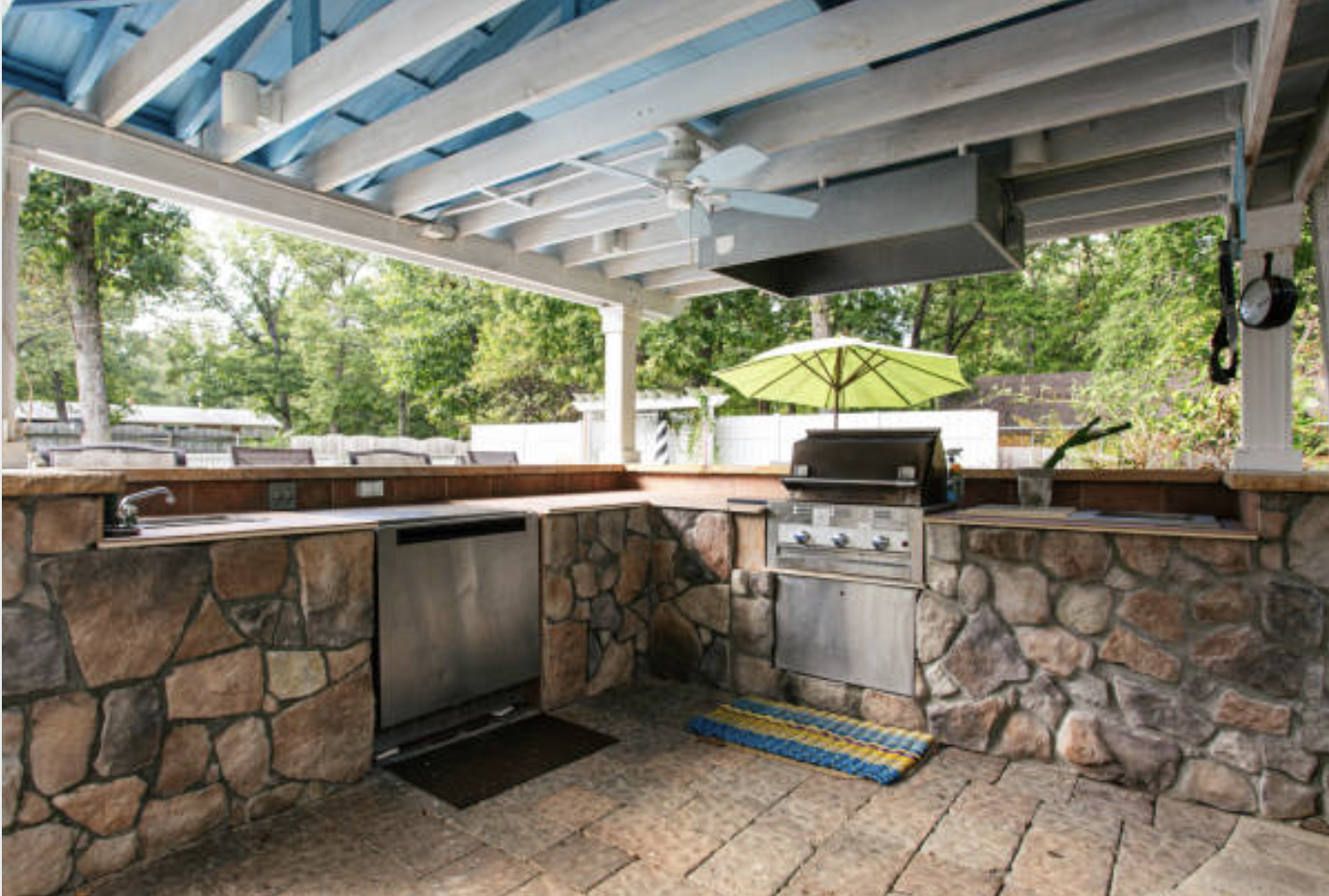
Once you find your home, think about all the ways to make the most of it. Spare bedrooms can become artist studios or guest rooms for visiting grandchildren. Garages can be converted into workshops or woodworking spaces. Basements can turn into cozy family rooms or even a small business headquarters. Outdoor space can serve multiple purposes: vegetable gardens, orchards, outdoor kitchens, or shaded play areas. With a little imagination, your home becomes a full-time lifestyle—one that supports both your hobbies and your relationships.
Buying a bigger home as a retiree isn’t about having more—it’s about doing more. It’s about designing a life that reflects your passions, supports your independence, and brings your family closer. Whether you want to dig into the soil, start a new business, or simply have space to live fully and comfortably, this move can be the start of something deeply fulfilling. With the right property, the right plan, and the right support, your next chapter can be your most exciting yet.
Peruse more insightful articles and resources here at paulfox.blog, where every post is a step towards a more fulfilling and informed life journey!
The character “Robert McCall” (played by Denzel Washington) in the vigilante action-thriller film series The Equalizer (directed by Antoine Fuqua) mentioned that his late wife was working through “The 100 Books Everybody Should Read” when she died, so he decided to carry on the tradition. It is not clear the exact list he was referring to, but we found a blog by Gillian that settled on Goodreads 100 Books from The Equalizer, for which a checklist is provided by https://uncomplicatedspaces.substack.com/p/100-books-everyone-should-read-pdf.
How many of these can you claim to have read?
Personally, I go through stages… seeking new releases, exploring best-sellers, perusing used or discounted book stores and thrift shops, and revisiting past favorites in my library.
Recently, I have “relaunched a personal voyage” to consume the entire series in sequence of the memorable adventures of classic historical fiction from the Napoleonic Wars, featuring Captains Horatio Hornblower (by C.S. Forester), Richard Bolitho and his nephew Adam Pascoe Boltho (by Alexander Kent, pseudonym of Douglas Reeman), and Lord Nicholas Ramage (by Dudley Pope). You should “cruise” samples of all of these!
If you are a history buff, please enjoy each edition slowly, reveling in the authors’ craftsmanship and immersing yourself in the language, settings, culture, customs, and what life must have been like during that period (~1800-1850) of intense conflicts between France (led by Napoleon Bonaparte) and England (most notably, paralleling the real-life of British naval hero, Horatio Nelson) and the coalition of European powers following the French Revolutionary Wars. A previously blog (here) related the relevance of Hornblower and learning leadership principles. However, I am especially amazed at the depth and breadth (similar style and content) of the Alexander Kent collection. But, better schedule a lot of uninterrupted quiet time on vacation or at the pool, deck, patio, or beach! It will take you awhile to read all 30 of the Kent books (list below provided in order by www.addall.com):
Midshipman Bolitho (1975)
Midshipman Bolitho and the Avenger (1976)
Band of Brothers (2005)
Stand Into Danger (1976)
In Gallant Company (1977)
Sloop of War (1972)
To Glory We Steer (1968)
Command a King’s Ship (1973)
Passage to Mutiny (1976)
With All Despatch (1988)
Form Line of Battle (1969)
Enemy in Sight (1970)
The Flag Captain (1971)
Signal, Close Action! (1974)
The Inshore Squadron (1978)
A Tradition of Victory (1981)
Success to the Brave (1983)
Colours Aloft! (1986)
Honour This Day (1987)
The Only Victor (1990)
Beyond the Reef (1992)
The Darkening Sea (1993)
For My Country’s Freedom (1995)
Cross of St. George (1996)
Sword of Honour (1998)
Second to None (1999)
Relentless Pursuit (2001)
Man of War (2003)
Heart of Oak (2007)
In the King’s Name (2011)
Yes, we should be turning our attention to nonfiction books, too. According to financial guru and famous talk-show host Dave Ramsey, all of us should have a nonfiction book or two on our bed stand.
Want to be a millionaire? Turn off your television. The average millionaire reads a nonfiction book a month. This is how you make your life better: having knowledge tomorrow that you didn’t have today, and then applying it. – Ramsey on Facebook
Dave’s list of books starts off with one of his own: The Total Money Makeover. He also recommends The 7 Habits of Highly Effective People by Stephen Covey, Think and Grow Rich by Napoleon Hill, Good to Great by James C. Collins, The Richest Man in Babylon by George Samuel Clason, Who Moved My Cheese by Spencer Johnson, The E-Myth Revisited by Michael E. Gerber, and How to Win Friends and Influence People by Dale Carnegie.
On a slow day pushing wheelchairs at the local hospital in the Western PA suburbs where I live, my fellow volunteers (Jerry, Rod, and Douglas) and I, all true “bibliophiles” and retirees, brainstormed what were our most inspiring reads. Their list is more spiritual, faith-based, or metaphysical than most:
Book of Joy by Dalai Lama and Archbishop Desmond Tutu
Conversations with God by Neale Donald Walsch
Jesus CEO by Laurie Beth Jones
Many Lives, Many Masters by Dr. Brian L. Weiss
Mutant Message Down Under by Marlo Morgan
Return to Laugher by Elenore Smith Bowen
Tying Rocks to Clouds by William Elliott
When Bad Christians Happen to Good People by Dave Burchett
Now to the “how-to section,” especially focusing on the quest for “living the dream” in our senior years.
Some of the best books about retirement are really about living life well. It’s been said that a reader lives a thousand lives before he dies. So, if words on a page can introduce us to what it’s like to live in another century or a faraway land, then why not introduce us to life in retirement, too?
Die with Zero: Getting All You Can from Your Money and Your Life by Bill Perkins
My Brilliant Friend by Elena Ferrante
From Strength to Strength: Finding Success, Happiness and Deep Purpose in the Second Half of Life by Arthur Brooks
The Midnight Library by Matt Haig
The Year of Magical Thinking by Joan Didion
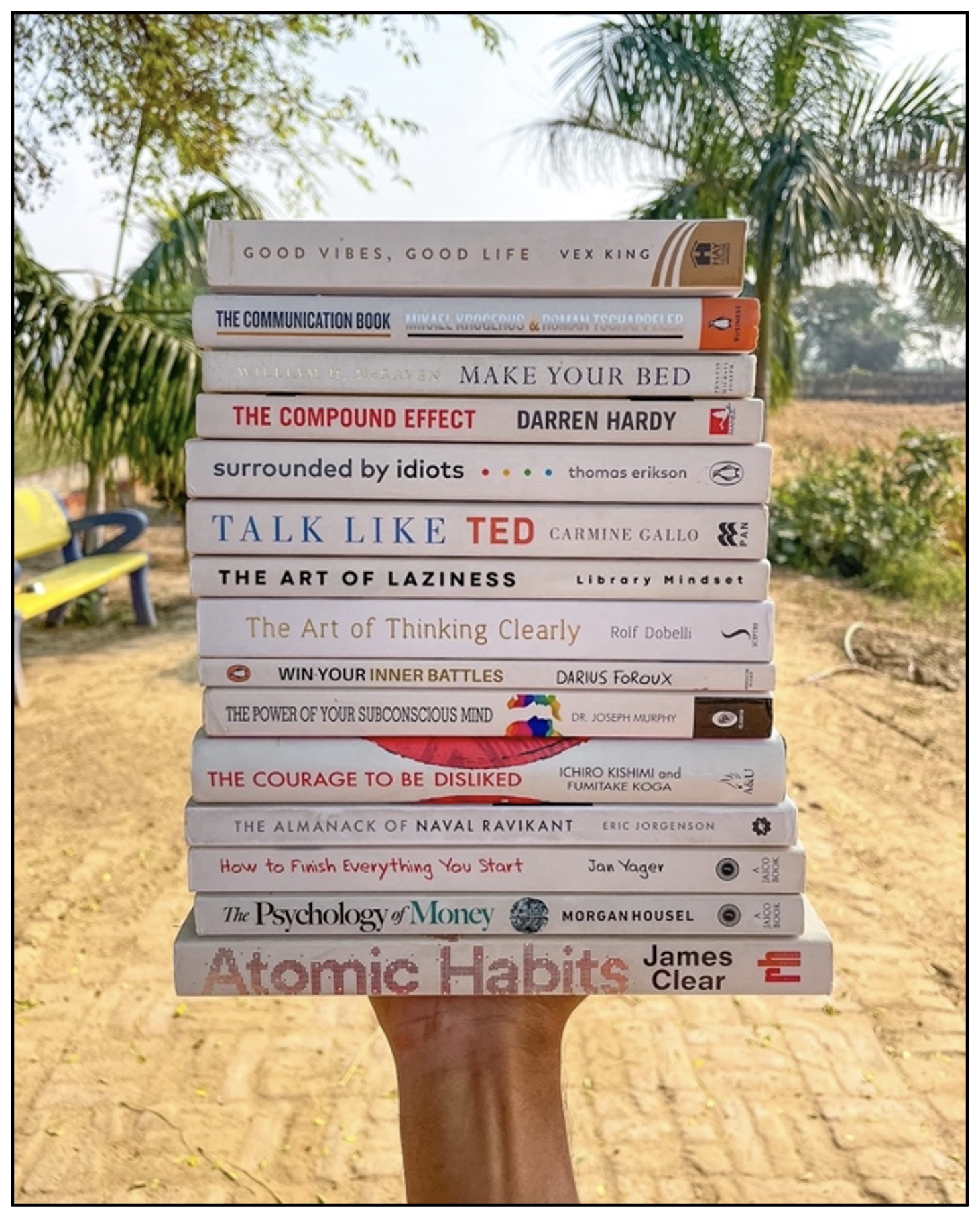
As PMEA State Retired Member Coordinator and editor of Retired Member Network eNEWS, I “float” many images of recommended retirement books to my PA music educator colleagues. If you did not attend the Retirement 101 session at the recent PMEA Annual Conference at Kalahari Resort in the Poconos, take a peek at my annual session’s PDF handout: https://www.pmea.net/wp-content/uploads/2025/04/Retirement-101-PMEA-conference-revised-s041125.pdf.
1820 McLaughlin Run Road, Pittsburgh, PA 15241
I am presenting this workshop at the Upper St. Clair Library on July 10, 2025 at 6:30 p.m. in the Multi-Purpose Room. To my local (Western PA) friends: Come see it for yourself!
Finally, if you are looking for additional resources on how to prepare for that major life passage of transitioning to retirement, many books and websites suggested by numerous expert “silver-haired” colleagues who have already “Cross the Rubicon,” all you need do is visit the Retired Member focus area on the PMEA website. (This is a benefit of PMEA membership and why everyone should continue participating in their professional association even after a complete retirement!) For a sneak preview, click on these links:
Best wishes to you and yours. Feel free to comment on this post (top right link near title), or even refer us to other sites of book lists and retirement prep resources.
Editor’s Note: Sorry! I don’t usually use this forum to rant or rave and complain… but, since I am almost flat on my back right now, I need to vent. Hopefully, other “seniors” who read this blog will find some benefits to this article and the research links below.
Keep up the “good fight” to maintain your own health and wellness! PKF
Mobility!
It’s the single most important thing in retirement! “If you ain’t got it, you’ve got nothing.”
There’s nothing worse than losing one’s ability to get around.
When I retired, I couldn’t imagine any limitation to my physical activities (with the exception of doing those ambitious squat thrusts of my youth or running a full gallop with my Yorkiepoo). Sure, as we age, many of us may experience more minor aches and pains caused by the effects slowly progressing arthritis, a touch of foot neuropathy or plantar fasciitis, overuse of our muscles in strenuous activity, lifting, or carrying heavy objects, or other issues, but these “challenges” don’t usually slow us down too much. And yes, I explored a few of those media-hyped over-the-counter topical remedies “everyone” claims will alleviate foot and muscular pain. How many of these do you recognize? Alphabetically I dabbled in Advil Targeted Relief, Aspercreme with Lidocaine, Blue Emu, IcyHot, Nervive, Penetrex, Salonpas, and Voltaren. I even bought several pairs of expensive shoes with custom insoles and orthotics. The foot pain has since mysteriously “gone away” (probably due to some excellent PT and regular bouts of stretching/flexing), which has led me to focus more on a new, annoying development – slight knee pain – for which the docs say may be early onset “bone-on-bone” (Knee Osteoarthritis).
Be proactive, Mr. Fox, I said!
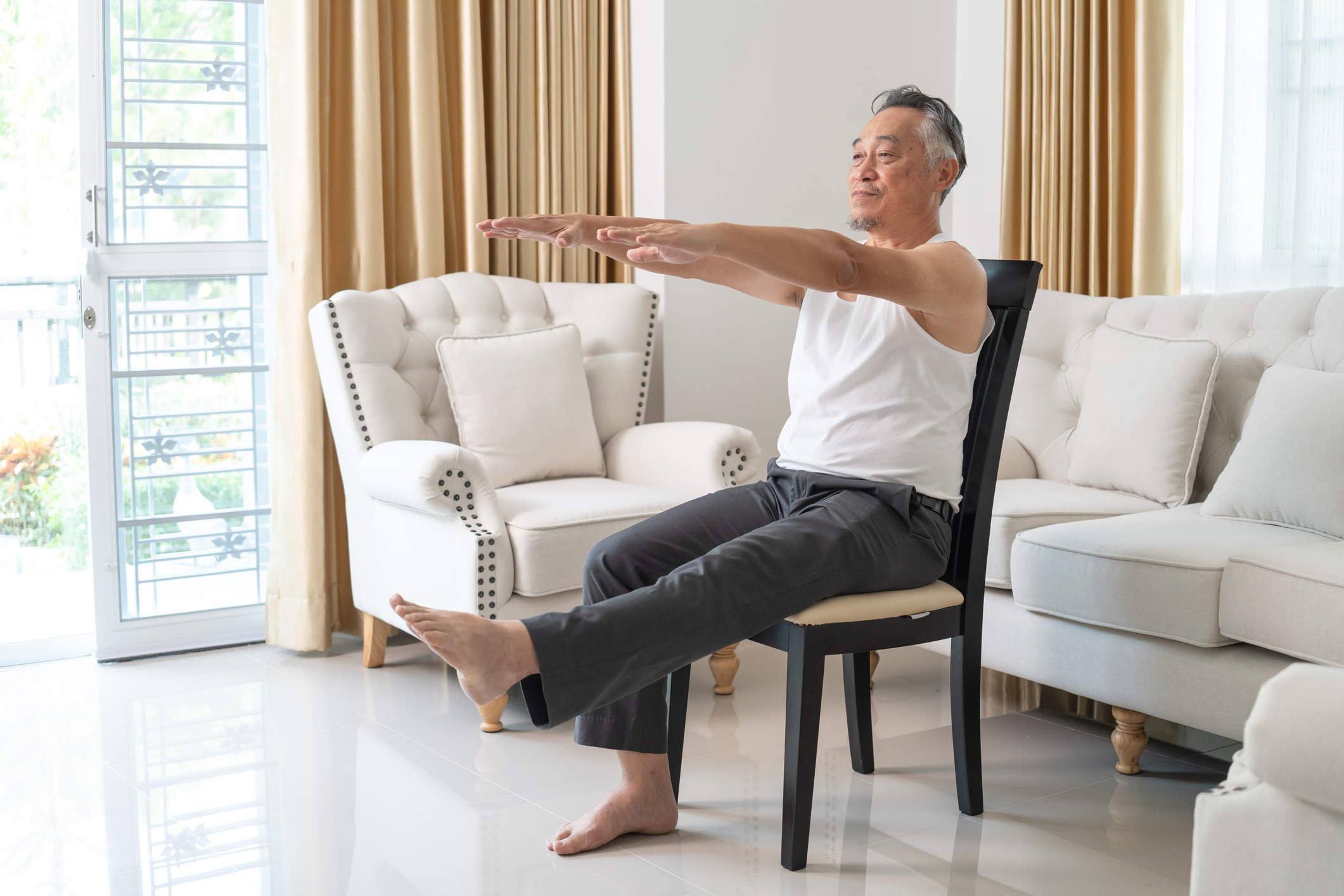
Get off your duff, stretch, and move around more. (At regular intervals, my loving wife and the Apple Watch on my arm continually nag me to stand, move, and exercise!) So I can brag I made a concerted effort to lose weight (down 30 pounds and no longer need blood pressure medicine) and even put myself on a regime of online “old man yoga/chair” exercises (an app costing $38/month – but, after some progress in “core tightening” over several months, I abandoned them!). I’ve sought the services of a good physical therapist to help me through what will eventually be knee replacement surgery (but, if I do their daily prescriptions to build my leg muscles, perhaps the cutting won’t be needed for another decade or two! By the way, musicians/music teachers make good patients of PT because we know the importance of practicing regularly – even on the day of the lesson!) I have a good orthopedic surgeon in my back pocket, and during my last visit with him, I was able to say “no” to cortisone injections. Things seemed to be getting better!
But, all of this came to a crashing halt.
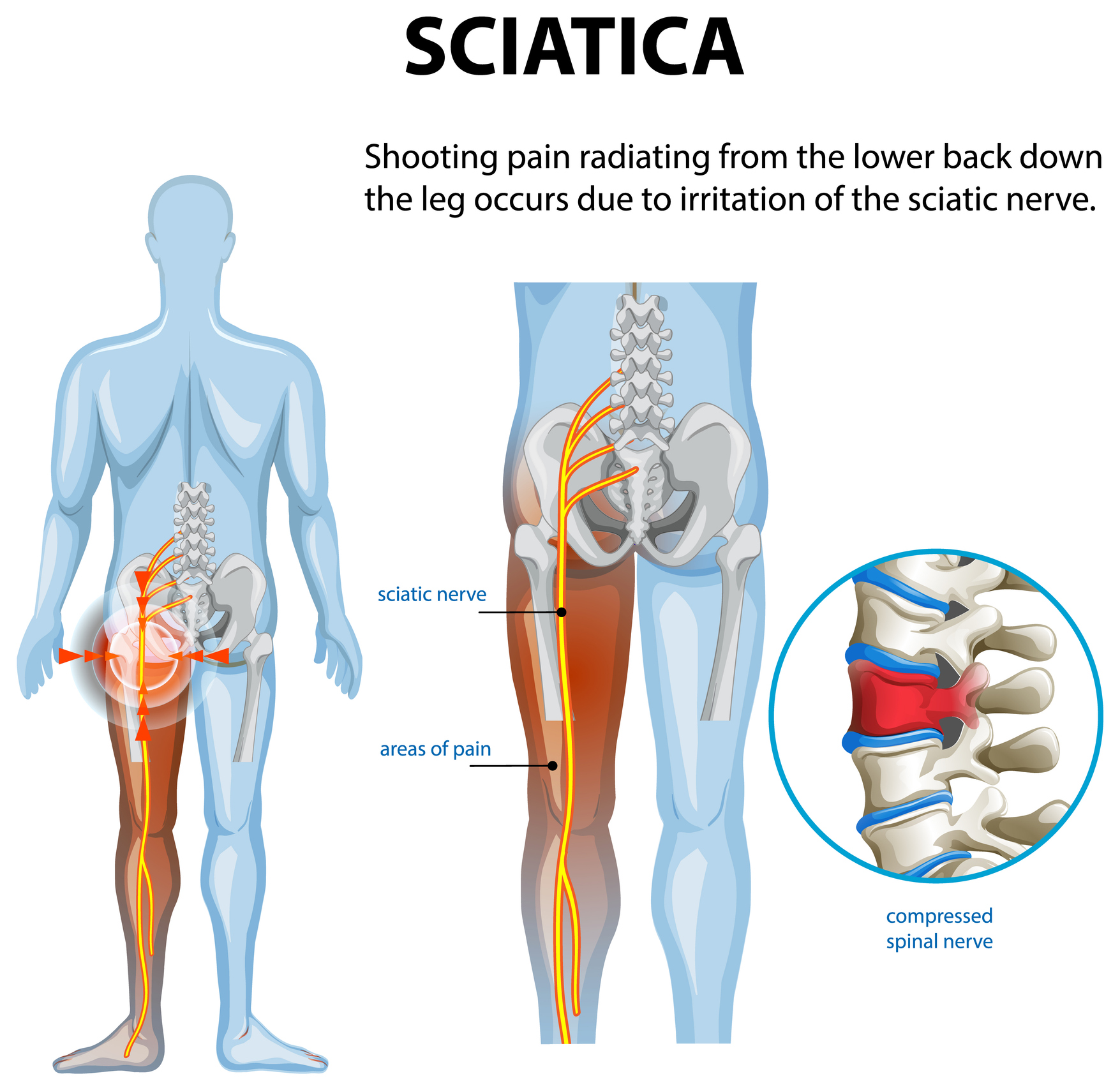
Several weeks ago, I struggled to raise a very heavy conductor’s stand (to which I will eventually chew-out the manufacturer of a poorly designed/awkward-positioned height adjustment screw). After my first dose of extra-strength Advil wore off, I felt like I had pulled a muscle in my back. It went away in a day or two, so I didn’t think much of it. But, five days later, when I woke up and climbed out of bed, suddenly any pressure I placed on my right leg gave me excruciating pain. I have been told this is probably sciatica or a “pinched nerve.” The pain is so bad that when I first get up or stand for even a few minutes on my right foot, I double-over and cannot move. I use any object around me to support myself such as countertops, tables, desks, shelving, etc., and feeling helpless literally “hobble around” trying to get from place to place. Even rolling over in bed the wrong way can cause an extreme surge of this pain which radiates down the entire leg. It has slowed down my activity to a crawl.
The timing could not have been more perfect!
Last week, I attended our state music teachers’ conference. After the five-and-a-half hour trip to the other end of the state (which everyone says with sciatica, you are never supposed to sit that long!), I planted myself in an electric wheelchair to get from place to place, fulfilling my normal PMEA duties such as taking candid photographs of the events and running a session or two. The (level 9) intense pain seems to come and go and I have gone to a doctor to receive a new script for physical therapy including an analysis to pinpoint the exact location of this unhappy nerve and what exercises may help. X-rays so far have shown only a little arthritis of the spine; apparently no herniated disks. (Is this what we all have to look forward to – “a little arthritis” – as we mature?) If it does not get better soon, I may consider going to a chiropractor. Have you had your first introduction to a cane? At the conference, I went to the local Rite Aid and bought one (along with a “TENS-machine,” although I have not unwrapped it yet and will need help setting up the “Transcutaneous Electrical Nerve Stimulation” device). Thank God for the Internet, because I even needed to search for instructions on which hand to use the cane and how to adjust its length (my physical therapist checked it). It does provide some stability so that I can walk around without knocking books off shelves or outside, but it’s not a long-term solution.
I wish I could tell you I have some good news to report, but… as of today, we have not figured out the cause or location of the problem. I am on prednisone and it is only slightly alleviating the pain. Sitting in my office chair (right now) gives me a dull pain (number 2-3). Weight bearing can raise that number up to 8-9. My wife (who is a saint) has been waiting on me hand-and-foot (and she has a few of her own aches and pains!). My doggies are unhappy because they are receiving fewer long walks and they were kicked out of the bed so I can stretch (and so my restlessness would not keep them up all night). I have had to postpone my hospital volunteer work (I can’t push wheelchairs) and curtail a lot of other scheduled activities. With several concerts coming up for our local community orchestra, I am considering conducting in a chair from the podium… and I may have to miss marching in the annual Community Day Parade on May 17 when I usually serve as the “duck maestro” for the Community Foundation of Upper St. Clair’s GREAT DUCK RACE fundraiser.
I’m turning 70 next week!
Several weeks ago, I would have told you I am CELEBRATING the big 7-0! I revel in the freedom of retirement, the joy of “refiring” or “rewiring” myself to explore new projects, refocusing energy on favorite past hobbies and “mindful” pursuits, catching up with former students and colleagues, helping others as a music educator mentor, presenting workshops on teacher self-care, ethics training, interviewing, and retirement transitioning (take a look at my latest professional brochure here), subscribing to the retiree doctrine “it’s not my sandbox anymore” avoiding the jobs/tasks I no longer want to do, and literally… “living the dream.”
Now, I must face these new challenges head-on, and I will! I will not allow myself to “retire” (that old definition to “withdraw” or “resign”). I will fight any acquiescent acceptance of increasing disability, disengagement, depression, unnecessary significant medical intervention, or long-term advanced pain management! Yes, this is a SELF TALK: They say most recovery from sciatica is very slow! If you share this condition, don’t get discouraged!
Mobility.
I want it back! I want to return to modeling what author Ernie Zelinski says in his book How to Retire Happy, Wild and Free are the essential ingredients for a meaningful and satisfying retirement and life passage to self-reinvention, renewing the quest of finding “purpose, structure, and community” throughout our golden years.
In a past retirement articles (e.g. this one) and conference or workshop presentations for soon-to-retire music educators, I echoed the views of my esteemed music education colleague Dr. John D’Ascenzo on the importance of post-employment learning. (He earned his PhD after his retirement from teaching!) John shared three primary concepts with references: “Swim like a shark” (encouraging retirees to continue long-term pursuits that involve personal and professional growth; the analogy: sharks never stop swimming – even in their sleep!); “Lose the fear of failure and need for approval” (promoting strategies to build confidence and self-efficacy); “Network, Network, Network.” (developing more social and professional interactions, activities not necessarily centered on music or education, but those that broaden horizons by producing personal satisfaction and a sense of purpose and maintaining overall health). See page 5 in the PMEA Retired Member Network eNEWS, August 2018
Retirement marks the beginning of a new chapter, and for many, that includes the pursuit of education. Whether it’s earning a degree, gaining new skills, or exploring personal interests, going back to school later in life offers intellectual stimulation, social engagement, and personal fulfillment. However, it’s important to approach this decision with careful planning – considering financial factors, time commitments, and the right learning environment. With the right strategy, furthering education in retirement can be both rewarding and transformative.
Improving Campus Accessibility for Retirees
When considering a return to school during retirement, evaluating campus accessibility is vital. With a significant portion of retirees no longer driving, understanding available transportation options becomes crucial. Many campuses offer amenities like elevators and ramps, but these may not be comprehensive, posing challenges for those with mobility issues. By thoroughly researching and planning for these logistical aspects, you can significantly enhance your educational experience and ensure a smoother transition back to academia.
Upgrading Your Retirement with Online Education
Pursuing an online degree during retirement offers a flexible and convenient way to enrich your skills and knowledge. This approach allows you to balance studies with other commitments, making it an ideal choice for lifelong learning. Also, if you’re looking to enhance your leadership and project management abilities, the importance of bachelor of business management studies cannot be overstated. Plus the networking opportunities provided by such programs can lead to valuable connections and potential job prospects, as many positions are filled through personal referrals.
Rediscovering the Joy of Learning
When considering a return to school during retirement, it’s essential to focus on the joy of learning rather than career advancement. Embracing lifelong learning can significantly enhance your personal growth and satisfaction, offering a chance to stay mentally active and engaged. By adopting this mindset, you enrich your life and maintain relevance in a rapidly changing world, even if re-entering the workforce is not your primary goal.
Budgeting for Education in Retirement
When planning to return to school during retirement, it’s essential to anticipate and budget for potential educational expenses. These costs can include commuting, whether through maintaining a personal vehicle or using public transportation. While these expenses might not be as high as when you were working, they remain significant. Additionally, technology expenses, such as purchasing a new laptop or software, can quickly add up. Supplies like textbooks and other materials are another area where costs can unexpectedly rise, impacting your overall retirement budget.
Choosing Between In-Person and Online Learning
When planning to return to education during retirement, weighing the benefits of in-person versus online learning is essential. Attending classes on campus can be challenging due to daily travel, which might be inconvenient if you live far from the institution. This could lead to increased costs and time spent on transportation, potentially affecting your overall learning experience. On the other hand, online classes offer the convenience of studying from home, eliminating the need for a commute and providing access to course materials at any time. This flexibility not only saves time and money but also allows you to manage other commitments more effectively. However, it’s important to consider potential feelings of isolation that can come with online learning.
Protecting Your Data in Educational Platforms
As you plan to return to school during retirement, it’s essential to understand the importance of safeguarding your personal data on educational platforms. The digital education sector is a significant repository of personal information, making it a target for cybercriminals. The education industry has been experiencing high rates of cyber threats, including phishing scams and ransomware attacks. To protect your data, it’s crucial to implement strong cybersecurity practices, such as being cautious of suspicious emails and ensuring your devices are secure against malware.
Volunteering: A Path to Enriching Retirement
Engaging in campus volunteering during retirement offers a fulfilling way to connect with diverse individuals and make a positive societal impact. By participating in community projects, you can build relationships with students, faculty, and local residents, fostering a sense of shared purpose. These initiatives often tackle important issues like environmental sustainability and educational support, allowing you to contribute to meaningful causes. Volunteering not only enhances personal growth by developing valuable skills but also strengthens community bonds.
Returning to school in retirement is more than just an academic pursuit – it’s an opportunity to grow, connect, and embrace lifelong learning. Choosing the right program, managing costs, and setting realistic goals can help ensure a meaningful and enjoyable experience. Whether for career advancement, personal enrichment, or the joy of learning, education at any age is a powerful investment in yourself and your future.
Education, ethics, professionalism, and lifelong learning.
Hope you are enjoying the winter season and, for many of you, the anticipation of warmer weather returning soon! Sorry, skiers! I am sick of shoveling snow!!
Here’s a quick “catch-up” on things going on in educator professional development.
For PA School Administrators & Educators
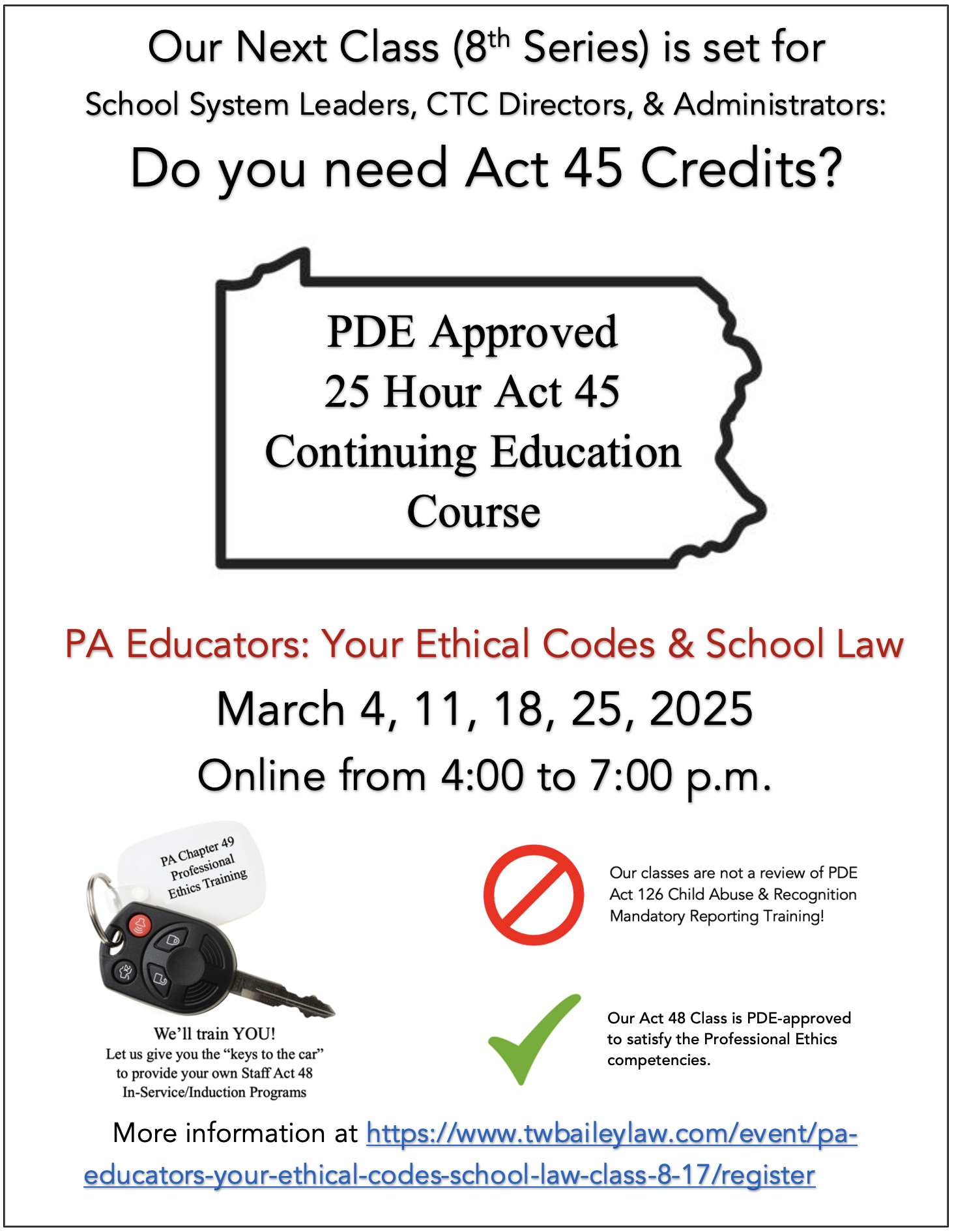
There is still time to register for the upcoming 25-hour, PDE-approved, Act 45 course, “PA Educators: Your Ethical Codes & School Law,” which will cover the recently mandated PA Title 22 Chapter 49 (Certification) Professional Ethics Competencies. The next online series of Act 45 classes will be held Tuesday afternoons in March, and provide “the keys to the car” planning for your own school district’s future continuing education and induction programs in ethics training as required by the PDE.
Now sponsoring our eighth series of classes, I am designated a “qualified instructor” in partnership with the course’s creator/facilitator, retired social studies teacher and attorney Thomas W. Bailey. For more information, please click on these links to his website:
In addition, since over the past year PDE revised their website (and changed most of the content links), I compiled a super-index of “places-to-go” and “things-to-read,” sites of supplemental resources on school ethics here. I recommend visiting this blog if you are interested in our library of links to the Pennsylvania Code of Professional Practice and Conduct, the Model Code of Ethics for Educators, the PA Educators Discipline Act, and research and citations from the PDE, PA Professional Standards and Practices Commission, Connecticut State Department of Education, and Iowa Board of Educational Examiners, among many others.
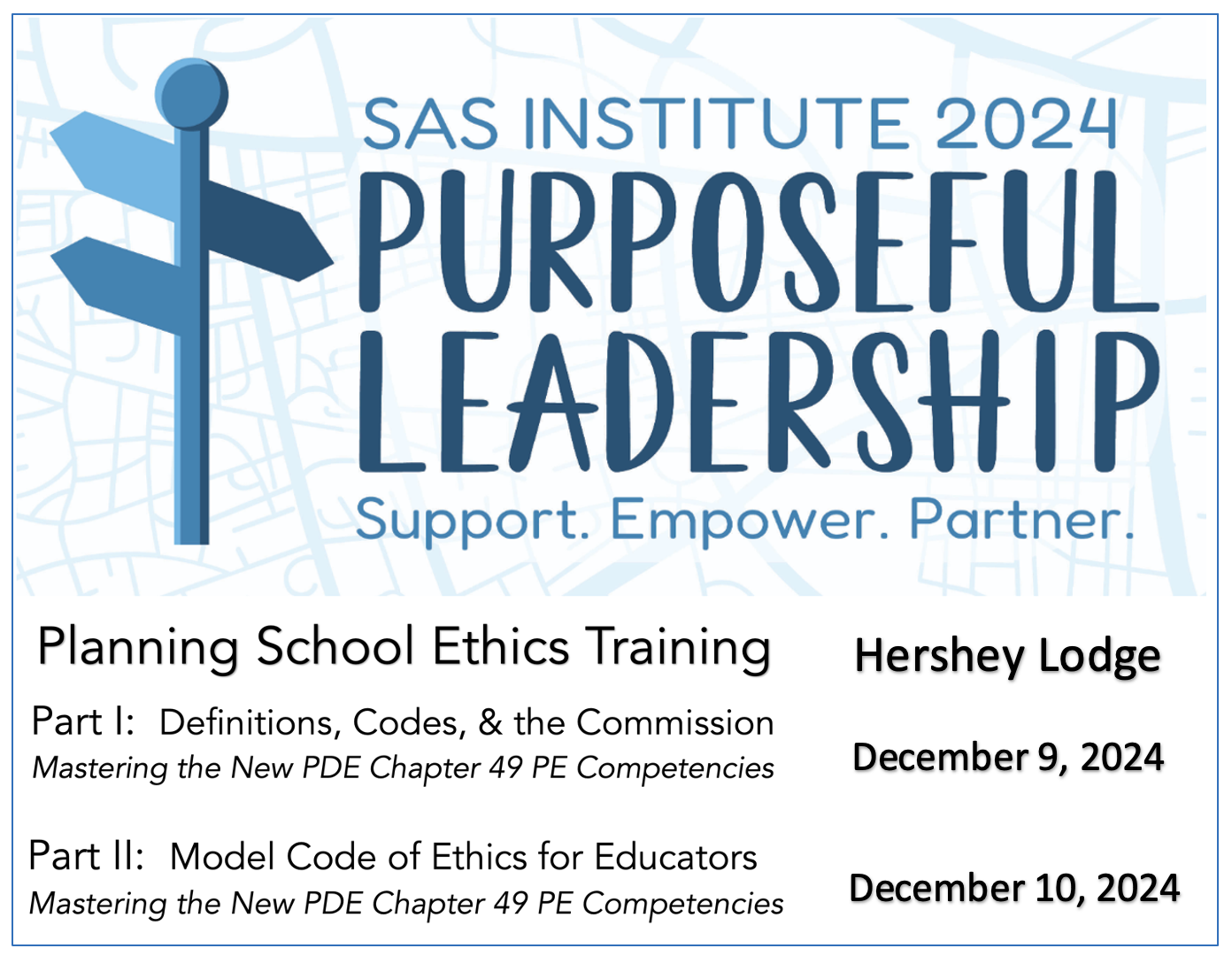
If you would like to see the kind of things we cover in these classes, take a look at the slide summaries I posted from my presentation at the PDE SAS Institute “Purposeful Leadership” state conference last December:
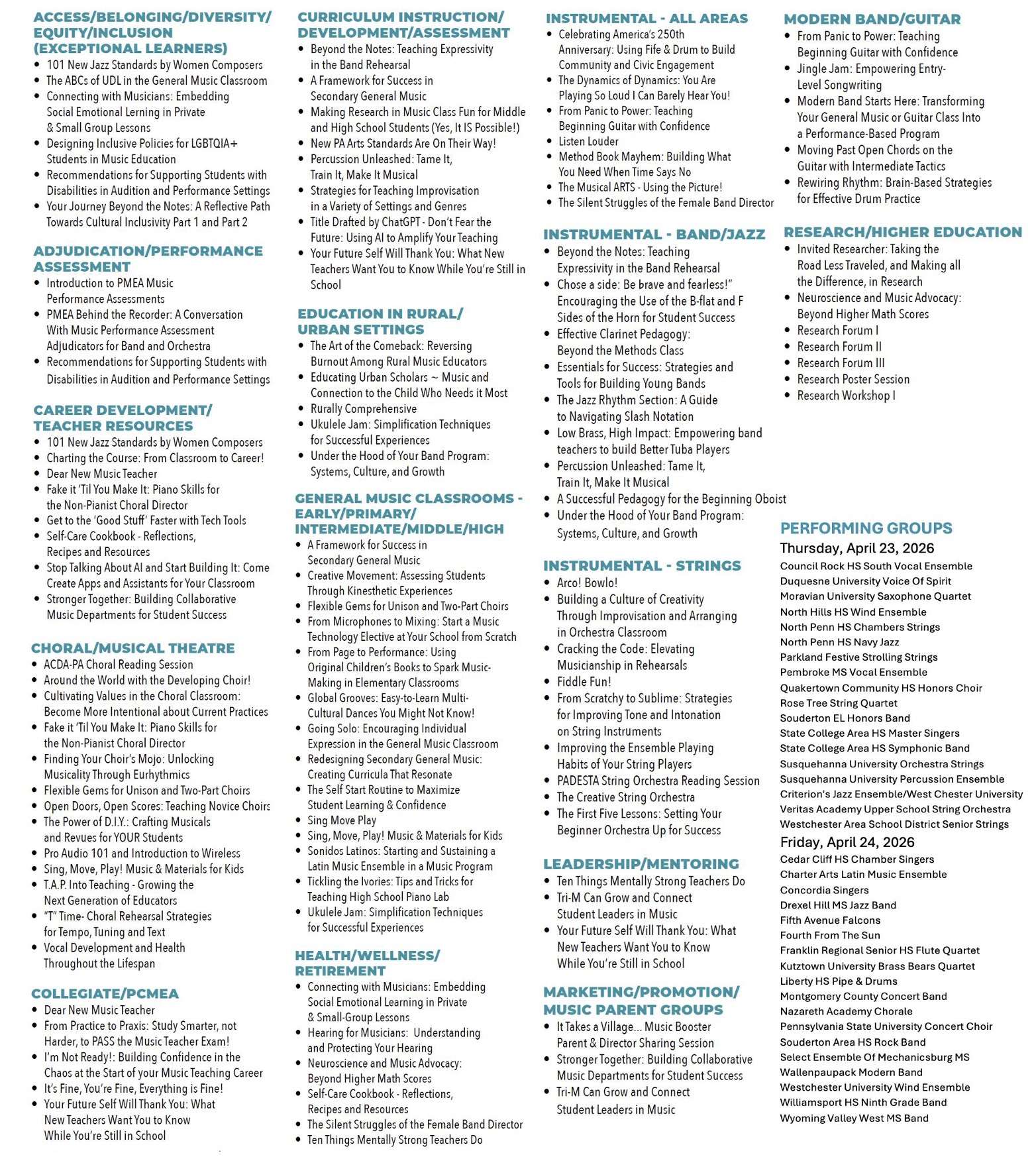
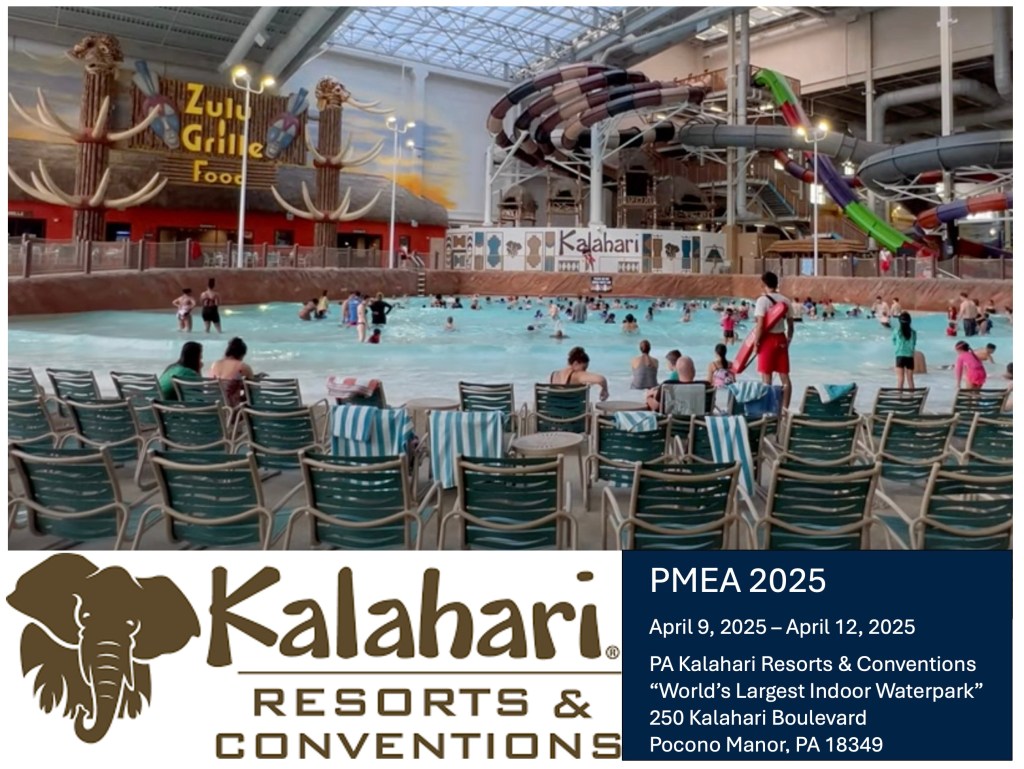
It’s that time of the year… again! The PMEA Annual Conference on April 9-12, 2025 will be held in the family-friendly, perfect-for-a-mini-vacation spot in northeastern PA: the Kalahari Resort in the Poconos.
There is still time to register! (Click here.) If you would like to see a summary of the sessions and performances, go to the PMEA website here or download this PDF brochure.
Why attend the conference? In my five-plus decades in education, I may have missed only two or three of the annual PMEA state events, and heartily recommend you remain actively involved in your professional association. This is what I wrote about it in a recent PMEA Retired Member Network eNEWS:
For some of us, it’s a just chance to catch-up with our colleagues, see our friends, and socialize. Others are more focused and take advantage of the near-perfect opportunity to network with other professionals, perhaps seeking new working relationships, partnerships, or even employment. Many are on a look-out for newly published music, that perfect music lesson or teaching strategy, technology tools, fundraisers, advance educational venues, or much-needed equipment to purchase for our ensembles or classrooms. Most come to hear/see the “state of the art” in music education – concerts, demonstrations, keynote speeches, panel discussions, exhibits, research presentations, and workshops. PMEA’s PD Council would likely submit that the primary purpose of a conference is for professional self-improvement… What did Stephen Covey call it? His Habit #7 of “sharpening the saw” – to build a balanced program of self-renewal in the four areas of your life: physical, social/emotional, mental, and spiritual. Covey would insist we embrace “the process that empowers us to move on an upward spiral of growth and change, of continuous improvement.” So, in short, conferences help us “grow” – to revive, re-inspire, re-energize, rejuvenate, re-direct, and re-motivate all of us – pre-service, active in-service, and retired teachers towards making successful new connections, updating our knowledge and skills, and forming new goals. This is how we “keep up” with all the new standards, benchmarks, and cutting-edge advances, and meet the “movers-and-shakers,” visionaries, and leaders in the profession!
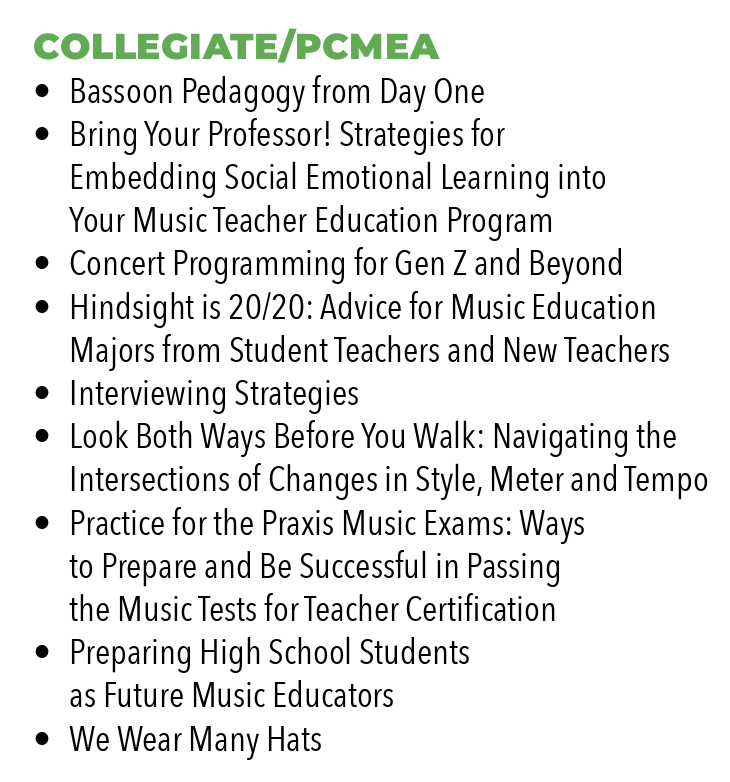
There’s a lot in store for college music education majors. Besides the aforementioned state meetings, concerts, clinics, and keynote addresses no one should miss, the music industry exhibits (new innovations in sheet music, instruments, technology, summer school and graduate programs, etc.), and the chance to introduce yourself to other music colleagues (aren’t some of you looking for a job soon?), there will be a “coffee and connections” informal lounge to ASK-AN-EXPERT on Thursday afternoon to pick-the-brains of PMEA mentors and retirees on any subject. Do you have a question about conducting technique, musical literature, lesson plan idea, classroom or time management tip, or teaching method? And, just take look these sessions the PMEA Professional Development Council has targeted specifically for YOU:
For Retirees… They are special, too!
PMEA Retired Members, consider this your personal invitation to join us at the Kalahari Resort in the Poconos for the chance to catch-up, connect, collaborate and communicate with other colleagues throughout the Commonwealth! (a plethora of “C’s!”)
As usual, we will “break bread” together Friday morning (April 11, 2025) with the annual retiree breakfast. Be sure to register soon for the PMEA Annual Conference (now only $25) and check the “yes” box that you will attend our meeting. Those in attendance will be treated to some “conference swag!”
Retirees are a valuable resource to PMEA! Our experienced retired members are among the best-trained (unofficial) mentors in PMEA. Facing many years of “boots on the ground,” we have at our fingertips numerous strategies to solve problems in education. Frankly, in my opinion, we have a lot to offer “the future of the profession!”
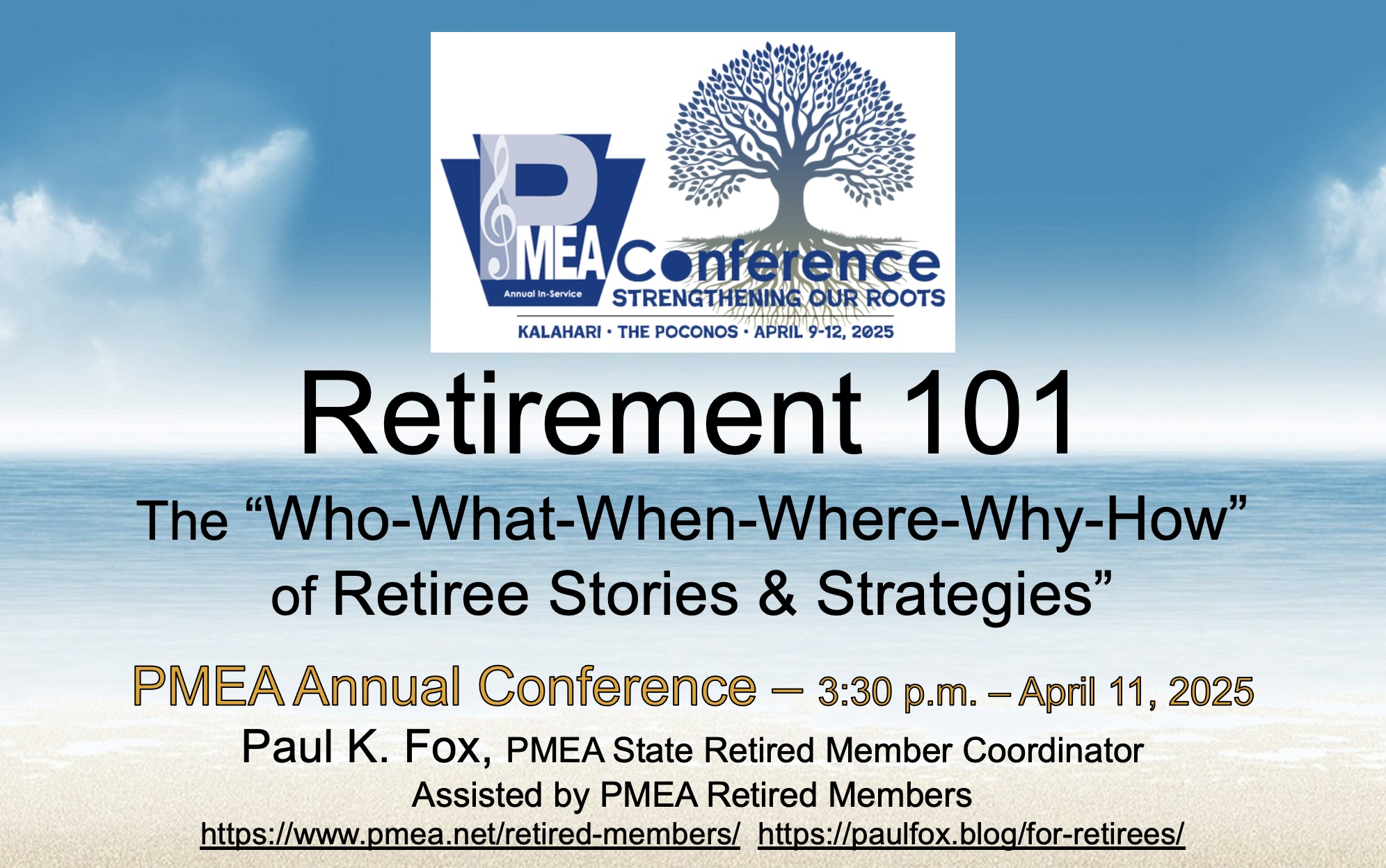
On Friday, April 11, at 3:30 p.m., we are offering a special sharing session for soon-to-retire teachers… the annual one-hour Retirement 101 workshop joined by a panel of experienced retirees: Rick Coulter, Jeffrey Dent, Sister Kathleen Doutt, Dan Klingbeil, Chuck Neidhardt, and Louise & Richard Victor. Active educators who plan to retire over the 1-5 years can learn valuable techniques from us for a smooth transition to post-full-time employment and successfully reinvent, reprogram, and “recharge” themselves to modifying those essential elements of purpose, structure, and community throughout their “golden years!”
My Professional Advertisement
You may have noticed in my last blog-post an outline of past article topics archived at this site, and a complaint that I feel I must repeat myself (or repackage the material) to meet the changing personalized “bookends” – life cycles – specific passages of my readers. The earlier February post was mostly for job seekers. If you were not looking for employment or coming fresh out of college, it may have seemed irrelevant. The same goes for specialty articles on self-care, ethics training, or retirement transitioning… WHEN WOULD YOU BE MOTIVATED TO STUDY THESE?
I have decided to maintain a comprehensive index of my writings (see “Inside” link in the top menu bar). Please visit the sections of this blog-site that matter to you most… and, when things change, come back and look again. You may find something that “hits the spot” or satisfies the needs of your new journey in education or personal/professional life.
I remain willing and able (aka “very interested”) in doing in-person or online sessions for college methods classes, PCMEA chapter meetings, PMEA festival directors’ meetings, PMEA District or Regional PD workshops, or school district/department inservices. Just give me a call. My contact information can be found in the top “About” link. Please visit this section for catalogs of my presentations and articles. FYI, I created this trifold of some of my past work.
Best wishes on your future successes in career development and professional goal setting.
Editor’s Note: We are happy to post this retirement article by guest author Sierra Powell… concise and solid advice for all current and prospective retirees. Photo credit: https://www.pexels.com/photo/people-on-seashore-1377070/
Retirement is a new chapter– An opportunity to savor the results of years of diligence, to follow your interests, and to unwind, free from the demands of 9-to-5 employment. Reaching a comfortable retirement calls for careful decisions supporting your lifestyle and future requirements. Whether you desire to see the world, spend time with loved ones, or just enjoy a slower paced life, several essential components will enable you to have all you need for a safe, happy retirement.
Creating a Comprehensive Financial Plan
A good financial plan is the foundation of a comfortable retirement since it provides a clear road map for handling your money in the next few years. This approach covers forecasting your spending, figuring out revenue sources, and developing a plan for withdrawing money without quickly running out of savings. It goes beyond simple saving. First, project your monthly costs using the lifestyle you want. Add needs such as food, healthcare, and shelter; also include discretionary expenditures for entertainment, vacation, and hobbies. Knowing your planned costs helps you to decide if your revenue sources are adequate to meet them. You can also opt for a good local financial advisor. For example, if you live in Florida, seek afinancial advisor in Tampa if you need guidance in selecting the best plan for yourself and your family.
Prioritizing Health and Wellness
Enjoying a nice retirement depends on keeping excellent health. It becomes difficult to enjoy your newly acquired independence without bodily well-being fully. Emphasize keeping active, following a healthy diet, and planning frequent doctor visits. Time spent in wellness not only improves your mood but also lowers your chance of chronic diseases that could affect your finances or quality of life. Think about adding pursuits that keep your body and mind active. Without taxing your joints too much, low-impact activities like yoga, swimming, or walking provide excellent advantages. Just as crucial is mental stimulation; consider picking up a pastime that tests your brain, acquiring a new skill, or club membership.
Building a Strong Social Network
A strong social life improves your retirement experience by offering company, encouragement, and chances to remain active. Retirement typically alters your daily schedule, particularly if most of your prior social life came from employment. By means of actions to establish and preserve a solid network of friends, family, and community ties, you may prevent emotions of isolation and loneliness, therefore influencing both mental and physical health. To meet new people and be active, join clubs, volunteer groups, or neighborhood organizations that fit your interests. To keep your social calendar full, get in touch with old pals, throw events, or schedule visits with loved ones.
Ensuring Housing Stability
Your degree of retirement comfort depends mostly on your choice of living environment. Your house should fit your way of life, be reasonably priced, and call for little upkeep. Downsizing to a smaller house, condo, or senior living complex provides the ideal balance for some between cost and convenience. Smaller spaces cut maintenance, decrease utilities and liberate resources for additional uses. Think about things like family, closeness to hospitals, and services supporting your everyday requirements. If you would like to keep your present house, think about implementing changes that would help keep aging in place. Simple adjustments that improve mobility and safety include adding grab bars in the restroom or substituting ramps for stairs.
Creating a Flexible Budget
Unexpected expenses might develop in retirement even with the finest financial preparation. Creating a flexible budget lets you negotiate these shocks without sacrificing your general financial situation. Set aside some of your savings, especially for unexpected vacation demands, house repairs, or medical bills. An emergency fund serves as a financial cushion so you may handle pressing needs without compromising your monthly income flow. Your budget should also contain a provision for discretionary expenditure for unplanned events such as family visits, holidays, or new interests. This adaptability lets you enjoy the advantages of retirement without feeling limited by your means.
Conclusion
Making decisions according to your beliefs and future vision can help you to create a comfortable retirement. Every component of your retirement plan supports your way of life and well-being, thereby enabling you to savor this new chapter with peace of mind. Accept the chance to live life on your terms, knowing that your careful planning has set a firm foundation for your next years.
Season Greetings and Happy New Year from your Pennsylvania Music Educators Association State Retired Member Coordinator. Best wishes for a happy, healthy, and prosperous 2025!
First, on Christmas Eve, here are a few announcements geared to PA music educators… those who have retired from full-time teaching and anyone considering retirement over the next one to five years.
Back by popular demand (or is that just ego and in my head?), we will offer the session “Retirement 101 – the Who, What, When, Where, Why and How of Retiree Stories & Strategies” on Friday, April 11, 2025 (3:30 p.m.) during the PMEA Annual Conference at the Kalahari Resort in the Poconos. A guest panel of PMEA Retired Members will assist and offer their advice answering key questions like the following:
How have you found happiness and success in retirement?
What “new” hobbies, volunteer projects, trips, family connections, and encore careers have you been exploring?
What did you do to reinvent yourself and how did you satisfy those essential “big three” goals of post-full-time employment: finding purpose, structure, and community?
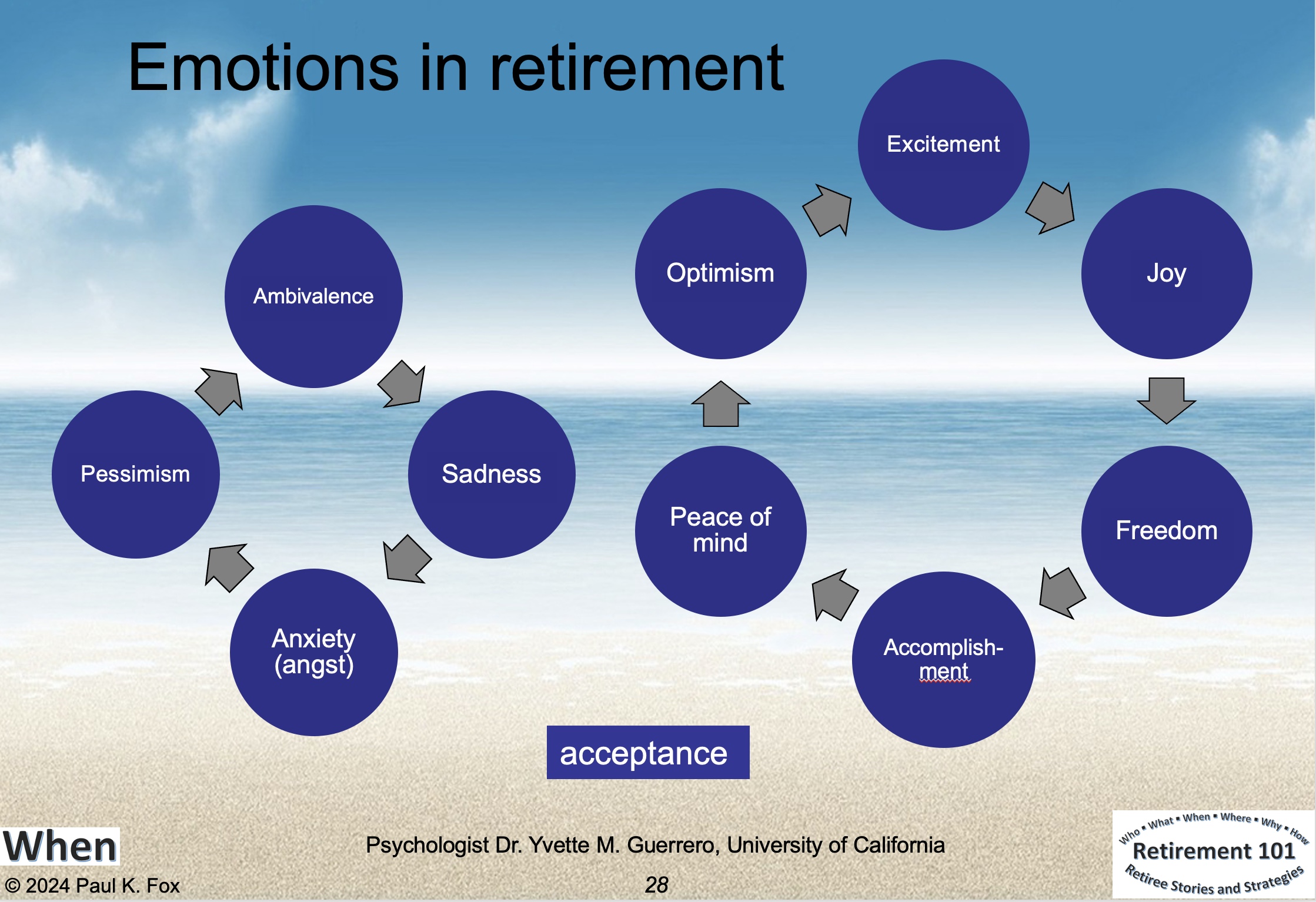
How did you navigate the early phases of retirement? imagination, anticipation, liberation, etc.
What were some of the transitional “ups and downs” you experienced and how did you cope with them?
What are you still doing in music and education?
We are looking for more PMEA retiree volunteers who are planning to attend the conference to join “expert panelists” Rick Coulter, Jeffrey Dent, Dan Klingbeil, Chuck Neidhardt, Louise Victor, and Rich Victor. (Just email me if you’re interested.)
Retired Members are a valuable resource to PMEA. Many of us already serve on PMEA Councils and in District or State official positions. All of us in the profession benefit from the sharing of their extensive “boots-on-the-ground” experiences and wisdom. At the upcoming conference, Retired Members can serve as Presiding Chairs and introduce a session/concert or two. In addition, plans are also underway to sponsor (possibly on Thursday, April 9) a “coffee & conversation” corner or an “ask the expert” lounge. Spaces and the schedule are packed, but if it is possible, Executive Director Abi Young is trying to fit in an informal sitting area with retirees and mentors as “friendly folks” to serve as “gurus” for PCMEA members, newcomers to a music education specialty, or recent transfers to the field. Won’t you join us?
A longstanding tradition, we will be treated to a PMEA Retired Member Breakfast on Friday morning. (Just check the box on the registration form if you are coming… and, by the way, the conference fee is only $20 for Retired Members! What a deal!)
Why Attend the PMEA Annual Conference?
“For some of us, it’s a just chance to catch-up with our colleagues, see our friends, and socialize. Others are more focused and take advantage of the near-perfect opportunity to network with other professionals, perhaps seeking new working relationships, partnerships, or even employment. Many are on a look-out for newly published music, that perfect music lesson or teaching strategy, technology tools, fund-raisers, advance educational venues, or much-needed equipment to purchase for our ensembles or classrooms. Most come to hear/see the “state of the art” in music education – concerts, demonstrations, keynote speeches, panel discussions, exhibits, research presentations, and workshops. PMEA’s PD Council would likely submit that the primary purpose of a conference is for professional self-improvement… What did Stephen Covey call it? His Habit #7 of “sharpening the saw” – to build a balanced program of self-renewal in the four areas of your life: physical, social/emotional, mental, and spiritual. Covey would insist we embrace “the process that empowers us to move on an upward spiral of growth and change, of continuous improvement.” So, in short, conferences help us “grow” – to revive, re-inspire, re-energize, rejuvenate, re-direct, and re-motivate all of us – pre-service, active in-service, and retired teachers towards making successful new connections, updating our knowledge & skills, and forming new goals.” – PMEA Retired Member Network eNEWS Winter 2024
In addition, Kalahari Resort boasts “the world’s largest indoor water park,” the perfect place to bring family members to enjoy… especially (grand)children, (grand)nieces/nephews, etc.
Next month’s retirement blog by guest author Sierra Powell
One final announcement: In several weeks at this blog-site, we plan to feature a new guest blog entitled “Five Things You Need for a Comfortable Retirement” by Sierra Powell, along with updates of other resources for “living the dream!” See you next year?
OK, What is that “AI Thing?”
This 69-year old educator who has spent more than five decades in fostering creative self-expression in his students is fervently opposed to artificial intelligence. Actually, I thought I was allergic to “AI!” Every time I receive an Apple iPhone update or some new download for my computer, I complain, “Why have they moved that button? It doesn’t look or work the same! Why does everything have to change every month?” Slow down, techies!
However, to dabble in this new technology everyone’s talking about, I printed in my last PMEA Retired Member Network eNEWS on page one a sample article (click here for the Winter issue) compiled by AI Overview (Google). I shared this with an adult violin student from my Saturday orchestra who decided to show me the power of AI (not the old AI I am more familiar with – artistic intelligence!). She used her subscription to a ChatGPT to process my brief outline on the topic “retirement transitioning.” Below is the result generated from a few of my random notes. Created in the first person, AI matched my writing style, a chatty/informal letter printed for soon-to-retire colleagues along with research citations. Frankly, it scares me how close this sounds like something I could have composed! Can you tell it was artificially generated? Does this mean we will we have to teach this old dog (fox) new tricks?
Check out these valuable retirement hints courtesy of ChatGPT!
The Retiree Life: Navigating the Art of Reinvention & Emotional Balance
Here with some reflections, tips, and maybe even a little nudge for us all as we continue this grand adventure called retirement. Whether you’re still finding your rhythm or already feel like a pro at this, there’s always room to reflect, grow, and laugh along the way.
This week, let’s talk about something near and dear to every retiree’s journey: reinventing yourself and coping with the emotional ups and downs that come with this new chapter.
Reinventing Yourself: A Second Act Worth Applauding
Remember when we taught our students to embrace creativity and adapt to change? Turns out, retirement demands the same skills. It’s no longer just about what you did—it’s about who you are.
Reinvention isn’t about completely overhauling your identity. Think of it as expanding your repertoire. Studies show that retirees who actively pursue new interests or roles report higher life satisfaction (Wang et al., 2011). Whether it’s picking up the instrument you haven’t touched in decades, volunteering, traveling, or even starting a small business, the key is to stay engaged.
Here’s a thought experiment: What did you always wish you had time to do but never could because of lesson planning, rehearsals, or concerts? Now’s your chance. I’ve recently heard about retirees dabbling in everything from watercolor painting to writing mystery novels. One retiree even became a beekeeper—talk about a sweet second act!
(From past blogs, the Retirement 101 session, and Retired Member Network eNEWS reviews)
The Emotional Journey: Ups, Downs, and Everything in Between
Let’s not sugarcoat it: retirement is a mixed bag. There’s the freedom (hooray!), but also the occasional pang of loss—of identity, routine, or the camaraderie we had in our teaching careers.
The good news? You’re not alone. Research by Pinquart and Schindler (2007) highlights how important it is to acknowledge these feelings rather than sweep them under the rug. Adjusting to retirement is a process, and it’s okay to feel a little off-balance at times.
Here are a few tried-and-true strategies to help you navigate the emotional terrain:
Stay Connected: Loneliness can creep in when you least expect it. Keep up with PMEA activities, or start a retirees’ coffee group. Who better to laugh with about the time your marching band got rained out?
Practice Mindfulness: Before you roll your eyes, hear me out! Even just five minutes of quiet reflection a day can reduce stress and boost mood (Chopra et al., 2020).
Find Meaning: Volunteering or mentoring can give you a sense of purpose that’s deeply fulfilling. You’ve got a wealth of wisdom—share it!
AI of the future?
The Bottom Line
Retirement isn’t a destination; it’s a journey. And like any good road trip, it comes with unexpected detours, scenic overlooks, and, yes, the occasional pothole. The trick is to embrace it all with curiosity and a sense of humor.
If you’re struggling, remember: reinventing yourself doesn’t happen overnight. Take it one day at a time, and don’t be afraid to reach out for support—whether it’s from family, friends, or your fellow PMEA retirees.
Let’s keep the conversation going. What’s your “second act”? Have you discovered a new hobby or way to cope with the emotional shifts of retirement? Shoot me an email or share your story at our next meeting. Together, we’ll continue to learn, grow, and make this chapter one to remember.
Until next time, keep smiling and stay curious!
References:
Wang, M., Henkens, K., & van Solinge, H. (2011). Retirement adjustment: A review of theoretical and empirical advancements. American Psychologist, 66(3), 204–213.
Pinquart, M., & Schindler, I. (2007). Changes of life satisfaction in the transition to retirement: A latent-class approach. Psychology and Aging, 22(3), 442–455.
Chopra, A., Anthonisen, S., & Reeves, A. (2020). The role of mindfulness in retirement satisfaction. Mindfulness in Aging Journal, 7(4), 312–320.









































 paulfox.blog