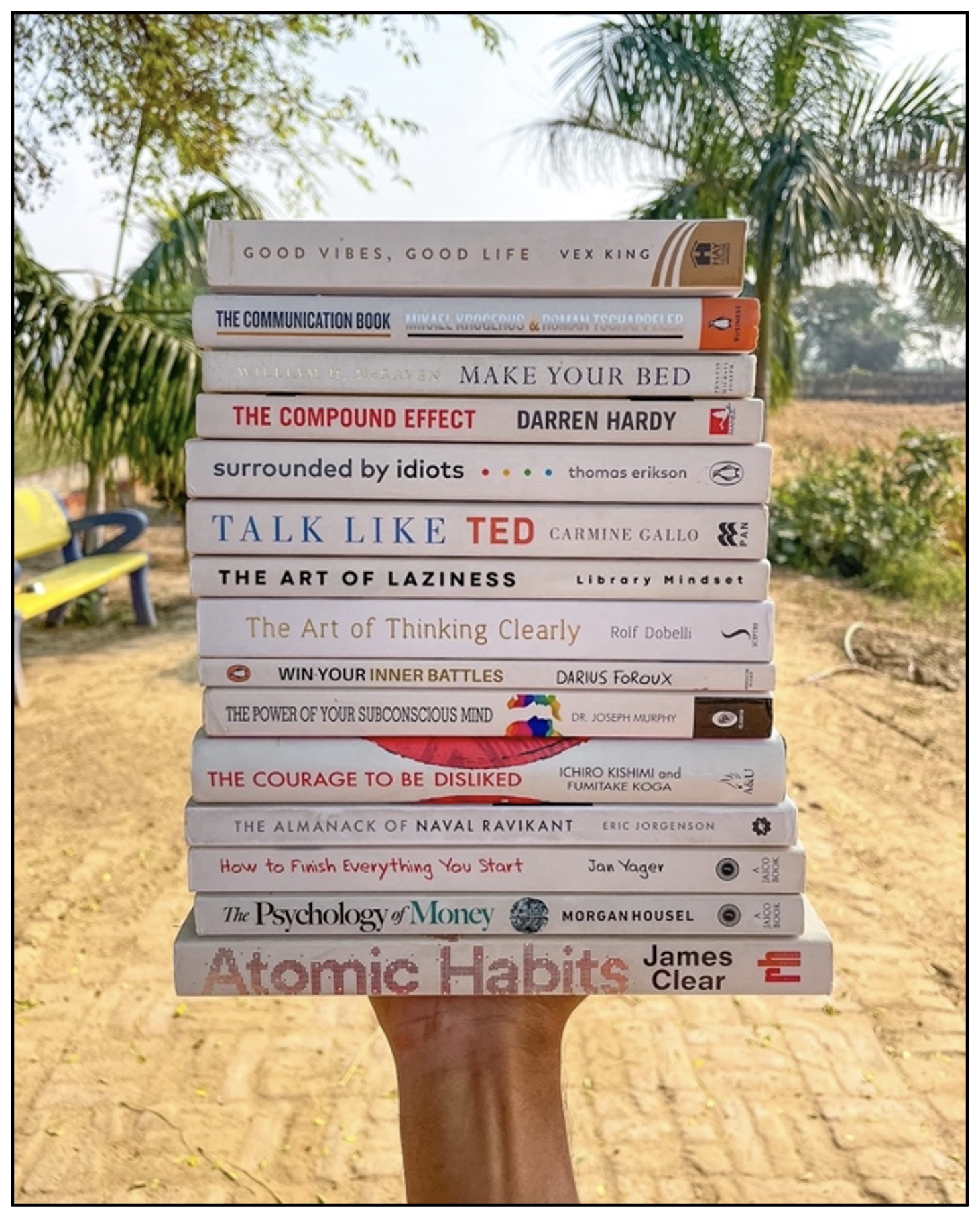
For Book-Lovers (Retired or Not)

Summer is the Time to Catch-up on Your Reading!

The character “Robert McCall” (played by Denzel Washington) in the vigilante action-thriller film series The Equalizer (directed by Antoine Fuqua) mentioned that his late wife was working through “The 100 Books Everybody Should Read” when she died, so he decided to carry on the tradition. It is not clear the exact list he was referring to, but we found a blog by Gillian that settled on Goodreads 100 Books from The Equalizer, for which a checklist is provided by https://uncomplicatedspaces.substack.com/p/100-books-everyone-should-read-pdf.

How many of these can you claim to have read?

Personally, I go through stages… seeking new releases, exploring best-sellers, perusing used or discounted book stores and thrift shops, and revisiting past favorites in my library.

Recently, I have “relaunched a personal voyage” to consume the entire series in sequence of the memorable adventures of classic historical fiction from the Napoleonic Wars, featuring Captains Horatio Hornblower (by C.S. Forester), Richard Bolitho and his nephew Adam Pascoe Boltho (by Alexander Kent, pseudonym of Douglas Reeman), and Lord Nicholas Ramage (by Dudley Pope). You should “cruise” samples of all of these!

If you are a history buff, please enjoy each edition slowly, reveling in the authors’ craftsmanship and immersing yourself in the language, settings, culture, customs, and what life must have been like during that period (~1800-1850) of intense conflicts between France (led by Napoleon Bonaparte) and England (most notably, paralleling the real-life of British naval hero, Horatio Nelson) and the coalition of European powers following the French Revolutionary Wars. A previously blog (here) related the relevance of Hornblower and learning leadership principles. However, I am especially amazed at the depth and breadth (similar style and content) of the Alexander Kent collection. But, better schedule a lot of uninterrupted quiet time on vacation or at the pool, deck, patio, or beach! It will take you awhile to read all 30 of the Kent books (list below provided in order by www.addall.com):

  1. Midshipman Bolitho (1975)
  2. Midshipman Bolitho and the Avenger (1976)
  3. Band of Brothers (2005)
  4. Stand Into Danger (1976)
  5. In Gallant Company (1977)
  6. Sloop of War (1972)
  7. To Glory We Steer (1968)
  8. Command a King’s Ship (1973)
  9. Passage to Mutiny (1976)
  10. With All Despatch (1988)
  11. Form Line of Battle (1969)
  12. Enemy in Sight (1970)
  13. The Flag Captain (1971)
  14. Signal, Close Action! (1974)
  15. The Inshore Squadron (1978)
  16. A Tradition of Victory (1981)
  17. Success to the Brave (1983)
  18. Colours Aloft! (1986)
  19. Honour This Day (1987)
  20. The Only Victor (1990)
  21. Beyond the Reef (1992)
  22. The Darkening Sea (1993)
  23. For My Country’s Freedom (1995)
  24. Cross of St. George (1996)
  25. Sword of Honour (1998)
  26. Second to None (1999)
  27. Relentless Pursuit (2001)
  28. Man of War (2003)
  29. Heart of Oak (2007)
  30. In the King’s Name (2011)

Yes, we should be turning our attention to nonfiction books, too. According to financial guru and famous talk-show host Dave Ramsey, all of us should have a nonfiction book or two on our bed stand.

Want to be a millionaire? Turn off your television. The average millionaire reads a nonfiction book a month. This is how you make your life better: having knowledge tomorrow that you didn’t have today, and then applying it.  –  Ramsey on Facebook

Dave’s list of books starts off with one of his own: The Total Money Makeover. He also recommends The 7 Habits of Highly Effective People by Stephen Covey, Think and Grow Rich by Napoleon Hill, Good to Great by James C. Collins, The Richest Man in Babylon by George Samuel Clason, Who Moved My Cheese by Spencer Johnson, The E-Myth Revisited by Michael E. Gerber, and How to Win Friends and Influence People by Dale Carnegie.

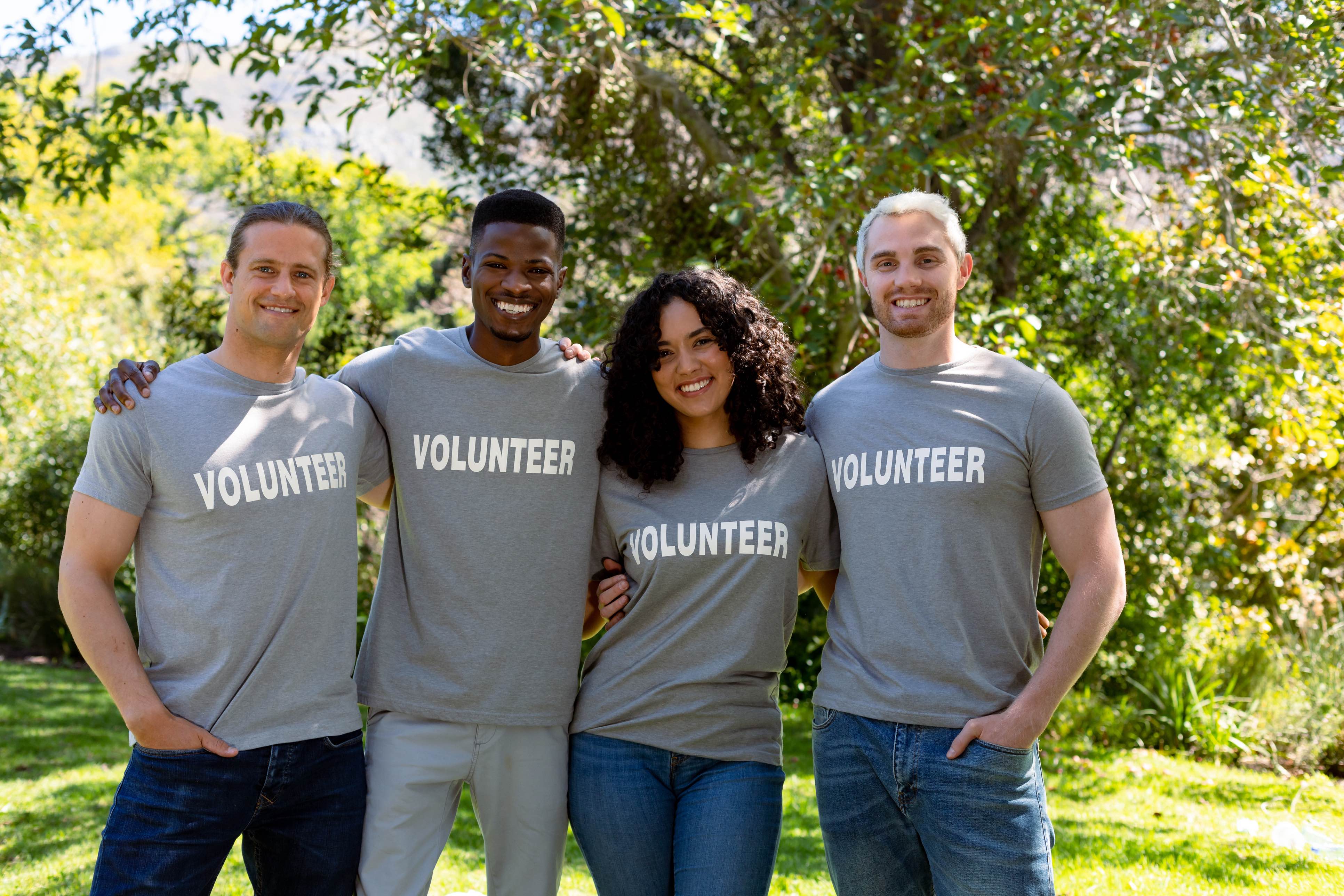
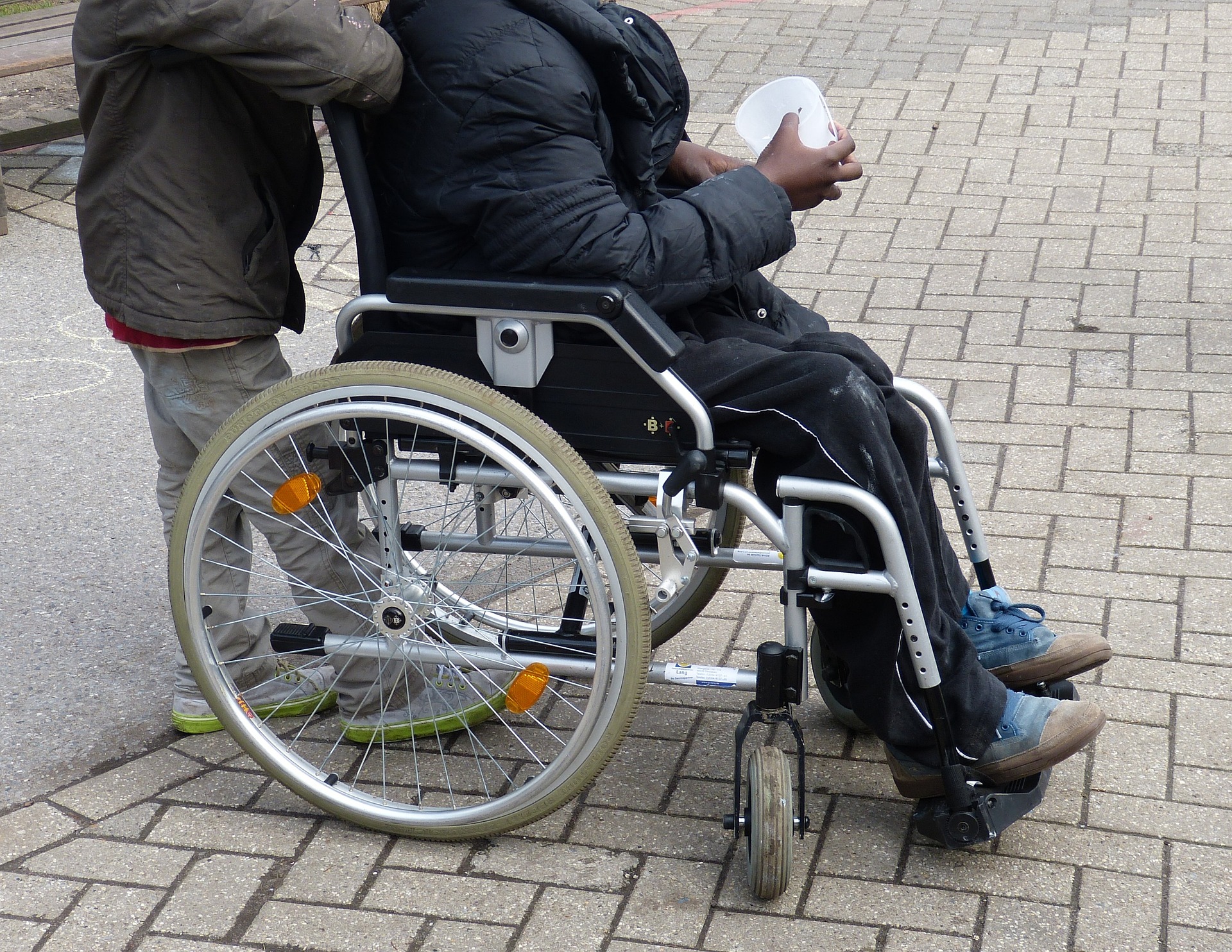
On a slow day pushing wheelchairs at the local hospital in the Western PA suburbs where I live, my fellow volunteers (Jerry, Rod, and Douglas) and I, all true “bibliophiles” and retirees, brainstormed what were our most inspiring reads. Their list is more spiritual, faith-based, or metaphysical than most:

  • Book of Joy by Dalai Lama and Archbishop Desmond Tutu
  • Conversations with God by Neale Donald Walsch
  • Jesus CEO by Laurie Beth Jones
  • Many Lives, Many Masters by Dr. Brian L. Weiss
  • Mutant Message Down Under by Marlo Morgan
  • Return to Laugher by Elenore Smith Bowen
  • Tying Rocks to Clouds by William Elliott
  • When Bad Christians Happen to Good People by Dave Burchett

Now to the “how-to section,” especially focusing on the quest for “living the dream” in our senior years.

Some of the best books about retirement are really about living life well. It’s been said that a reader lives a thousand lives before he dies. So, if words on a page can introduce us to what it’s like to live in another century or a faraway land, then why not introduce us to life in retirement, too?

Want something new and refreshing for those of us who are already retired or will soon retire? I found this November 2024 Kiplinger post offering “Five Books About Retirement to Prepare You for Your Golden Years” by Jacob Schroeder: https://www.kiplinger.com/retirement/books-about-retirement-prepare-you-for-golden-years

  1. Die with Zero: Getting All You Can from Your Money and Your Life by Bill Perkins
  2. My Brilliant Friend by Elena Ferrante
  3. From Strength to Strength: Finding Success, Happiness and Deep Purpose in the Second Half of Life by Arthur Brooks
  4. The Midnight Library by Matt Haig
  5. The Year of Magical Thinking by Joan Didion
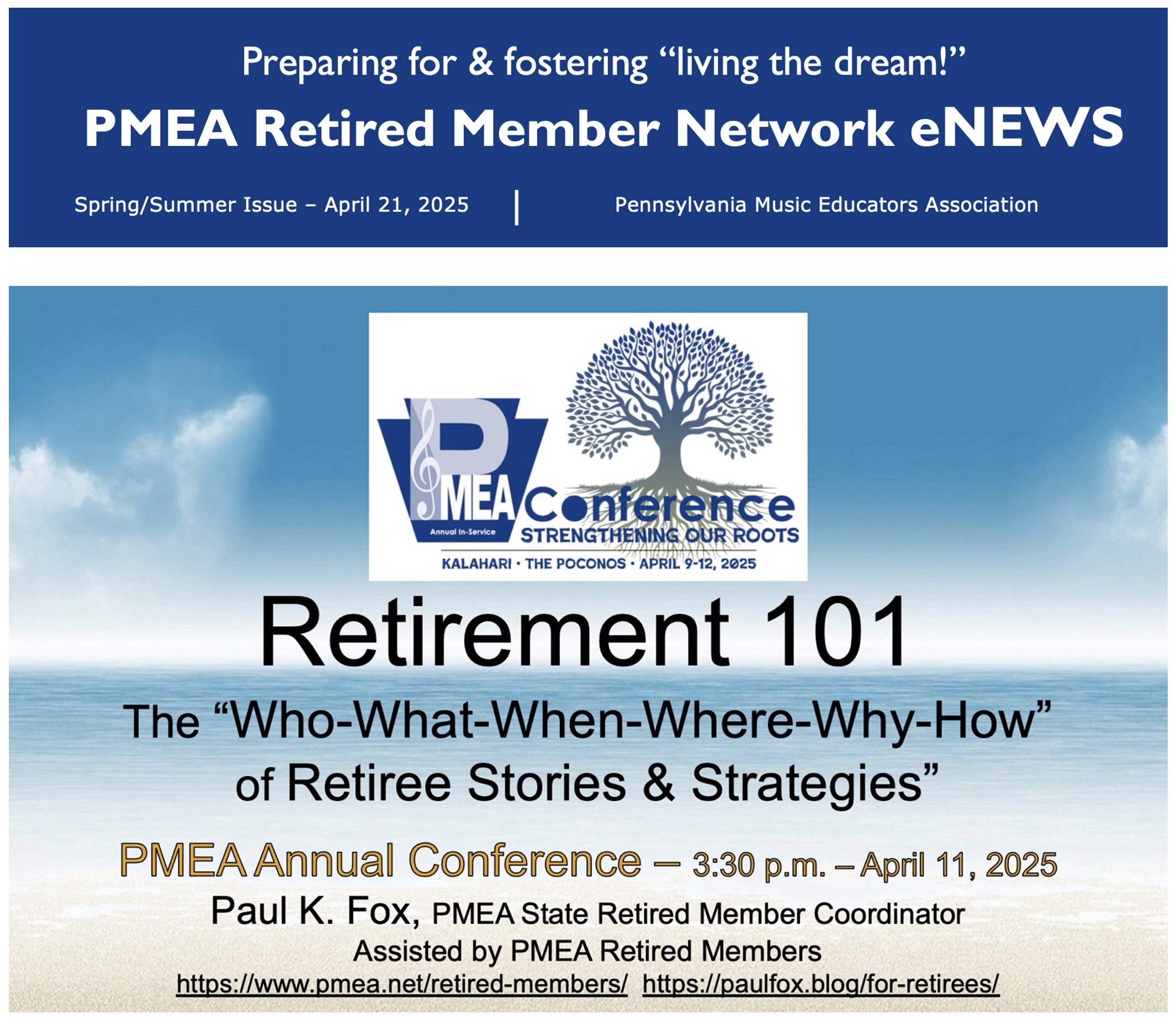
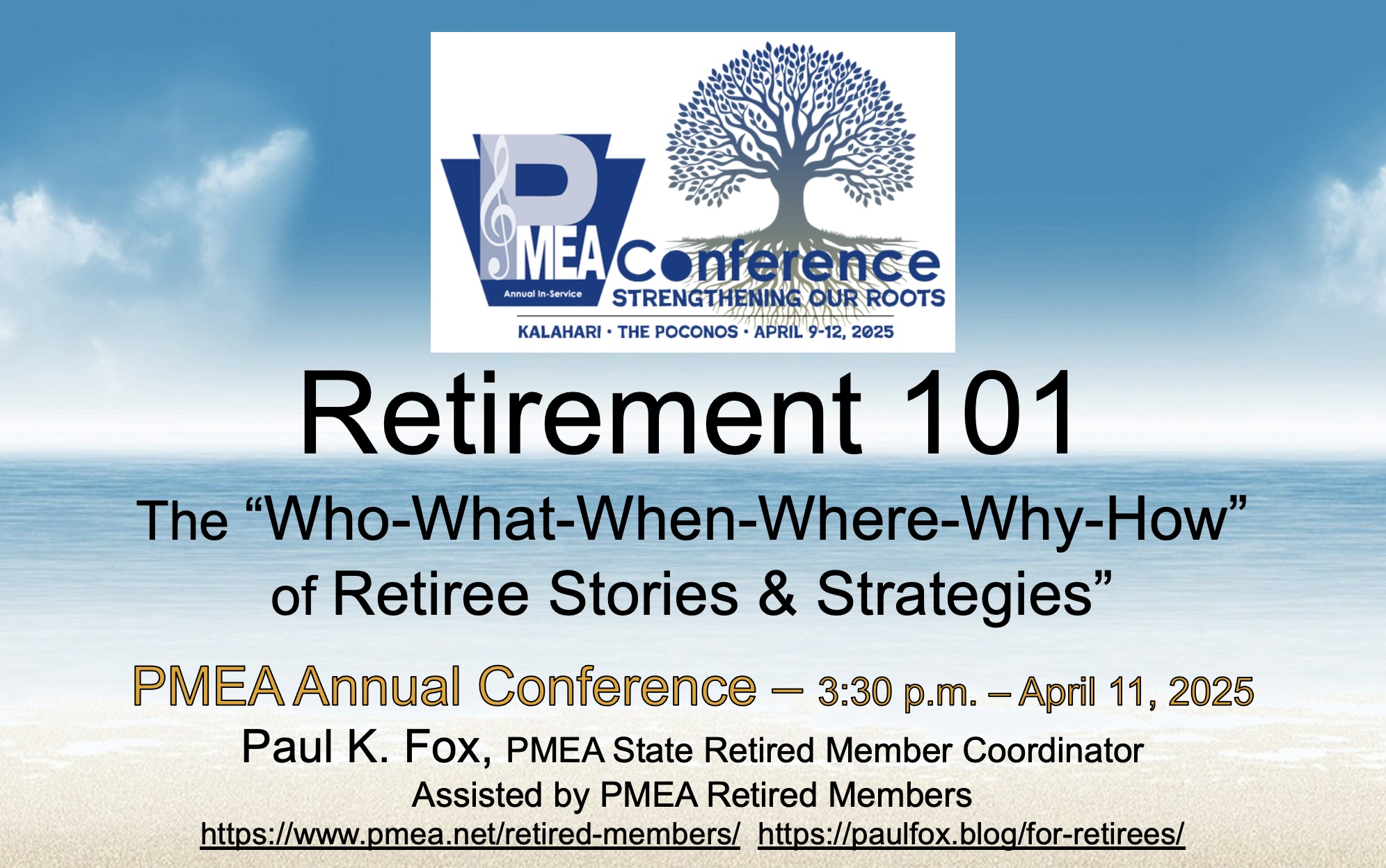
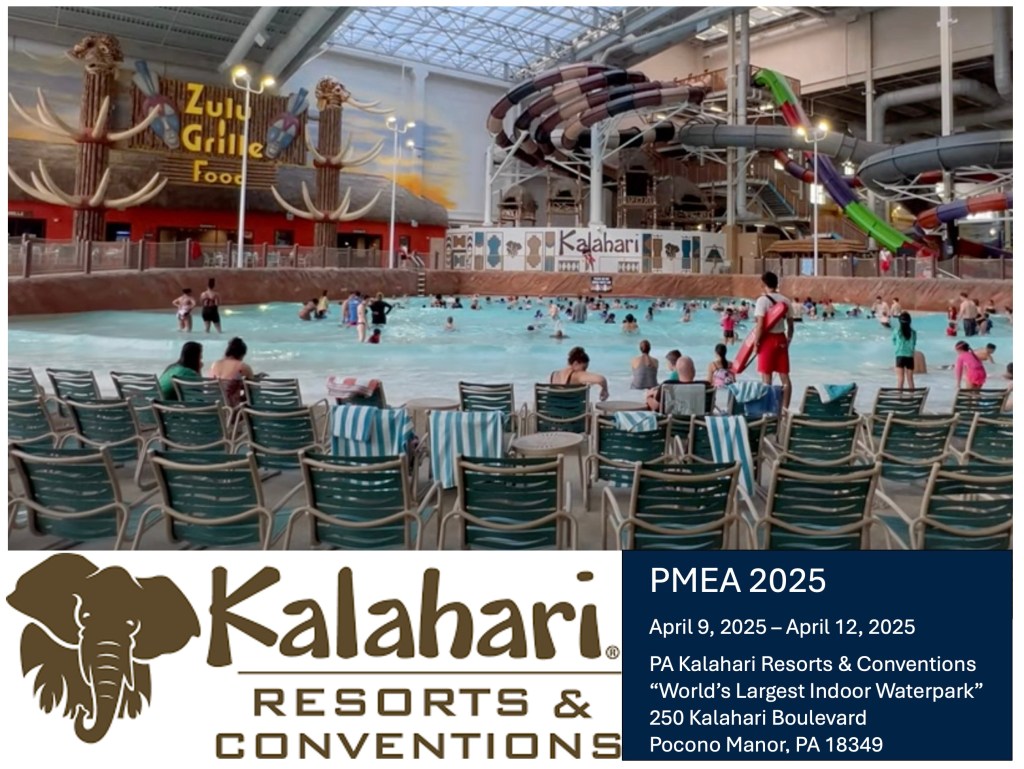
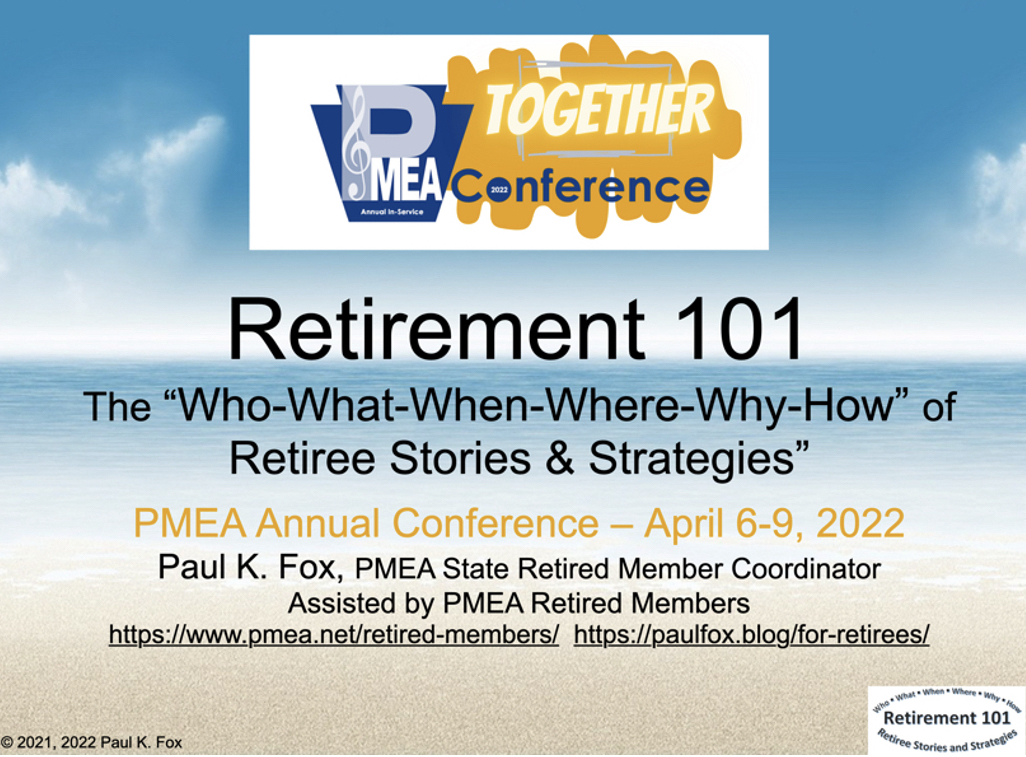
As PMEA State Retired Member Coordinator and editor of Retired Member Network eNEWS, I “float” many images of recommended retirement books to my PA music educator colleagues. If you did not attend the Retirement 101 session at the recent PMEA Annual Conference at Kalahari Resort in the Poconos, take a peek at my annual session’s PDF handout: https://www.pmea.net/wp-content/uploads/2025/04/Retirement-101-PMEA-conference-revised-s041125.pdf.
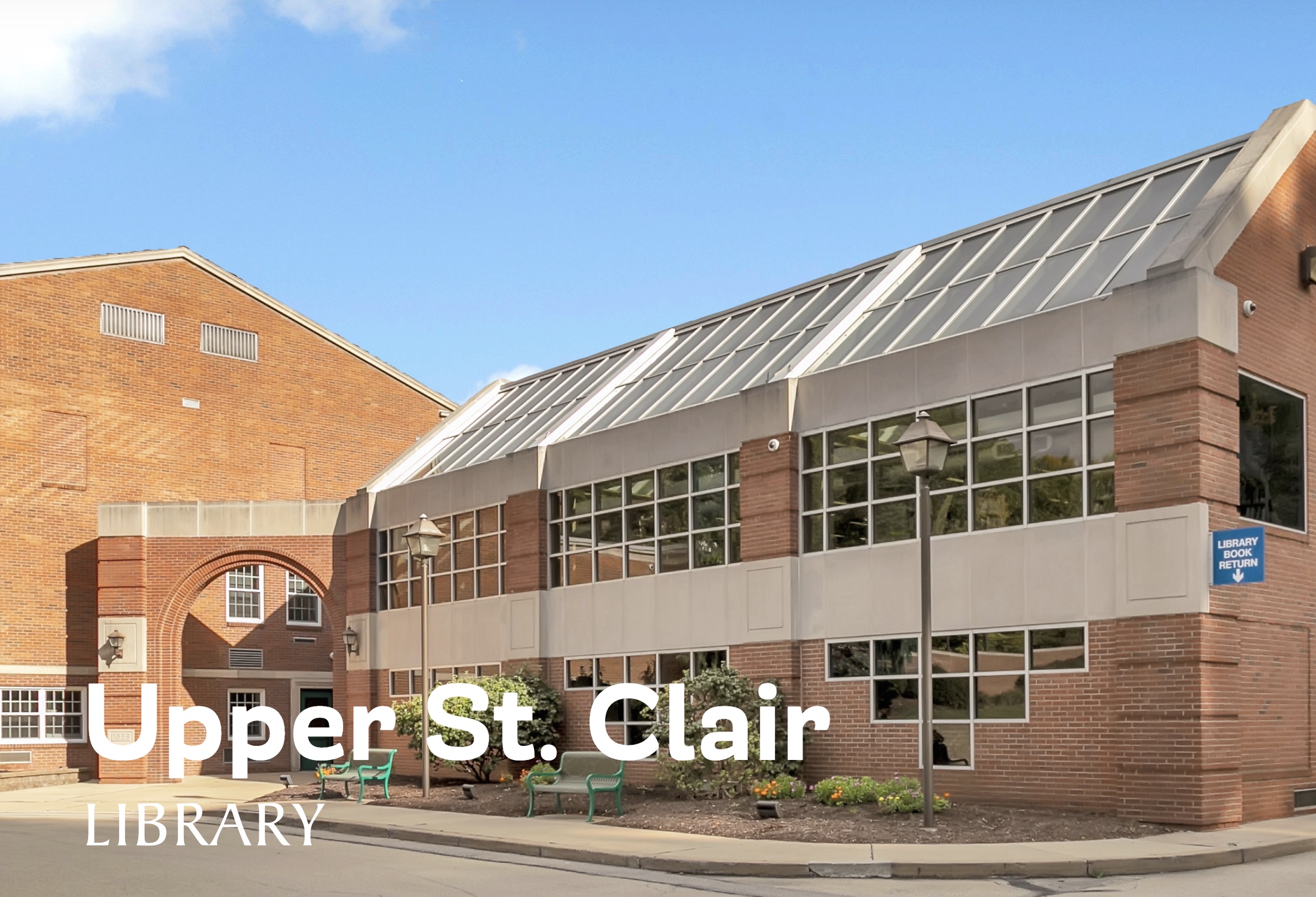
1820 McLaughlin Run Road, Pittsburgh, PA 15241

I am presenting this workshop at the Upper St. Clair Library on July 10, 2025 at 6:30 p.m. in the Multi-Purpose Room. To my local (Western PA) friends: Come see it for yourself!

Finally, if you are looking for additional resources on how to prepare for that major life passage of transitioning to retirement, many books and websites suggested by numerous expert “silver-haired” colleagues who have already “Cross the Rubicon,” all you need do is visit the Retired Member focus area on the PMEA website. (This is a benefit of PMEA membership and why everyone should continue participating in their professional association even after a complete retirement!) For a sneak preview, click on these links:

Best wishes to you and yours. Feel free to comment on this post (top right link near title), or even refer us to other sites of book lists and retirement prep resources.

PKF

© 2025 Paul K. Fox

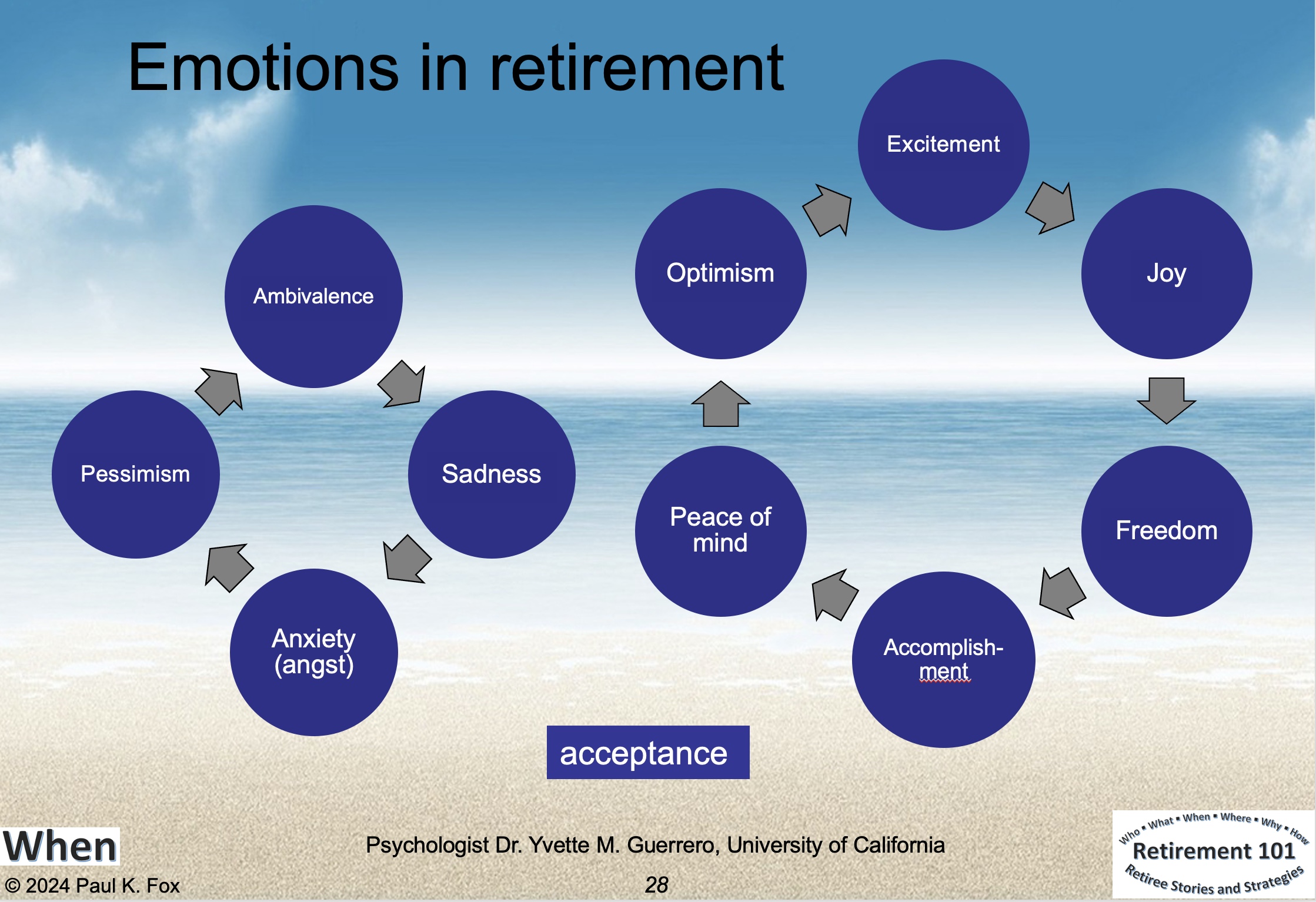
Retirement Transitioning Advice from AI?

Season Greetings and Happy New Year from your Pennsylvania Music Educators Association State Retired Member Coordinator. Best wishes for a happy, healthy, and prosperous 2025!

First, on Christmas Eve, here are a few announcements geared to PA music educators… those who have retired from full-time teaching and anyone considering retirement over the next one to five years.

Back by popular demand (or is that just ego and in my head?), we will offer the session “Retirement 101 – the Who, What, When, Where, Why and How of Retiree Stories & Strategies” on Friday, April 11, 2025 (3:30 p.m.) during the PMEA Annual Conference at the Kalahari Resort in the Poconos. A guest panel of PMEA Retired Members will assist and offer their advice answering key questions like the following:

  1. How have you found happiness and success in retirement?
  2. What “new” hobbies, volunteer projects, trips, family connections, and encore careers have you been exploring?
  3. What did you do to reinvent yourself and how did you satisfy those essential “big three” goals of post-full-time employment: finding purpose, structure, and community?
  4. How did you navigate the early phases of retirement? imagination, anticipation, liberation, etc.
  5. What were some of the transitional “ups and downs” you experienced and how did you cope with them?
  6. What are you still doing in music and education?

We are looking for more PMEA retiree volunteers who are planning to attend the conference to join “expert panelists” Rick Coulter, Jeffrey Dent, Dan Klingbeil, Chuck Neidhardt, Louise Victor, and Rich Victor. (Just email me if you’re interested.)

Retired Members are a valuable resource to PMEA. Many of us already serve on PMEA Councils and in District or State official positions. All of us in the profession benefit from the sharing of their extensive “boots-on-the-ground” experiences and wisdom. At the upcoming conference, Retired Members can serve as Presiding Chairs and introduce a session/concert or two. In addition, plans are also underway to sponsor (possibly on Thursday, April 9) a “coffee & conversation” corner or an “ask the expert” lounge. Spaces and the schedule are packed, but if it is possible, Executive Director Abi Young is trying to fit in an informal sitting area with retirees and mentors as “friendly folks” to serve as “gurus” for PCMEA members, newcomers to a music education specialty, or recent transfers to the field. Won’t you join us?

A longstanding tradition, we will be treated to a PMEA Retired Member Breakfast on Friday morning. (Just check the box on the registration form if you are coming… and, by the way, the conference fee is only $20 for Retired Members! What a deal!)

Why Attend the PMEA Annual Conference?

“For some of us, it’s a just chance to catch-up with our colleagues, see our friends, and socialize. Others are more focused and take advantage of the near-perfect opportunity to network with other professionals, perhaps seeking new working relationships, partnerships, or even employment. Many are on a look-out for newly published music, that perfect music lesson or teaching strategy, technology tools, fund-raisers, advance educational venues, or much-needed equipment to purchase for our ensembles or classrooms. Most come to hear/see the “state of the art” in music education – concerts, demonstrations, keynote speeches, panel discussions, exhibits, research presentations, and workshops. PMEA’s PD Council would likely submit that the primary purpose of a conference is for professional self-improvement… What did Stephen Covey call it? His Habit #7 of “sharpening the saw” – to build a balanced program of self-renewal in the four areas of your life: physical, social/emotional, mental, and spiritual. Covey would insist we embrace “the process that empowers us to move on an upward spiral of growth and change, of continuous improvement.” So, in short, conferences help us “grow” – to revive, re-inspire, re-energize, rejuvenate, re-direct, and re-motivate all of us – pre-service, active in-service, and retired teachers towards making successful new connections, updating our knowledge & skills, and forming new goals.”  – PMEA Retired Member Network eNEWS Winter 2024

In addition, Kalahari Resort boasts “the world’s largest indoor water park,” the perfect place to bring family members to enjoy… especially (grand)children, (grand)nieces/nephews, etc.

Next month’s retirement blog by guest author Sierra Powell

One final announcement: In several weeks at this blog-site, we plan to feature a new guest blog entitled “Five Things You Need for a Comfortable Retirement” by Sierra Powell, along with updates of other resources for “living the dream!” See you next year?

OK, What is that “AI Thing?”

This 69-year old educator who has spent more than five decades in fostering creative self-expression in his students is fervently opposed to artificial intelligence. Actually, I thought I was allergic to “AI!” Every time I receive an Apple iPhone update or some new download for my computer, I complain, “Why have they moved that button? It doesn’t look or work the same! Why does everything have to change every month?” Slow down, techies!

However, to dabble in this new technology everyone’s talking about, I printed in my last PMEA Retired Member Network eNEWS on page one a sample article (click here for the Winter issue) compiled by AI Overview (Google). I shared this with an adult violin student from my Saturday orchestra who decided to show me the power of AI (not the old AI I am more familiar with – artistic intelligence!). She used her subscription to a ChatGPT to process my brief outline on the topic “retirement transitioning.” Below is the result generated from a few of my random notes. Created in the first person, AI matched my writing style, a chatty/informal letter printed for soon-to-retire colleagues along with research citations. Frankly, it scares me how close this sounds like something I could have composed! Can you tell it was artificially generated? Does this mean we will we have to teach this old dog (fox) new tricks?

Check out these valuable retirement hints courtesy of ChatGPT!

The Retiree Life: Navigating the Art of Reinvention & Emotional Balance

Here with some reflections, tips, and maybe even a little nudge for us all as we continue this grand adventure called retirement. Whether you’re still finding your rhythm or already feel like a pro at this, there’s always room to reflect, grow, and laugh along the way.

This week, let’s talk about something near and dear to every retiree’s journey: reinventing yourself and coping with the emotional ups and downs that come with this new chapter.

Reinventing Yourself: A Second Act Worth Applauding

Remember when we taught our students to embrace creativity and adapt to change? Turns out, retirement demands the same skills. It’s no longer just about what you did—it’s about who you are.

Reinvention isn’t about completely overhauling your identity. Think of it as expanding your repertoire. Studies show that retirees who actively pursue new interests or roles report higher life satisfaction (Wang et al., 2011). Whether it’s picking up the instrument you haven’t touched in decades, volunteering, traveling, or even starting a small business, the key is to stay engaged.

Here’s a thought experiment: What did you always wish you had time to do but never could because of lesson planning, rehearsals, or concerts? Now’s your chance. I’ve recently heard about retirees dabbling in everything from watercolor painting to writing mystery novels. One retiree even became a beekeeper—talk about a sweet second act!

(From past blogs, the Retirement 101 session, and Retired Member Network eNEWS reviews)

The Emotional Journey: Ups, Downs, and Everything in Between

Let’s not sugarcoat it: retirement is a mixed bag. There’s the freedom (hooray!), but also the occasional pang of loss—of identity, routine, or the camaraderie we had in our teaching careers.

The good news? You’re not alone. Research by Pinquart and Schindler (2007) highlights how important it is to acknowledge these feelings rather than sweep them under the rug. Adjusting to retirement is a process, and it’s okay to feel a little off-balance at times.

Here are a few tried-and-true strategies to help you navigate the emotional terrain:

  • Stay Connected: Loneliness can creep in when you least expect it. Keep up with PMEA activities, or start a retirees’ coffee group. Who better to laugh with about the time your marching band got rained out?
  • Practice Mindfulness: Before you roll your eyes, hear me out! Even just five minutes of quiet reflection a day can reduce stress and boost mood (Chopra et al., 2020).
  • Find Meaning: Volunteering or mentoring can give you a sense of purpose that’s deeply fulfilling. You’ve got a wealth of wisdom—share it!

AI of the future?

The Bottom Line

Retirement isn’t a destination; it’s a journey. And like any good road trip, it comes with unexpected detours, scenic overlooks, and, yes, the occasional pothole. The trick is to embrace it all with curiosity and a sense of humor.

If you’re struggling, remember: reinventing yourself doesn’t happen overnight. Take it one day at a time, and don’t be afraid to reach out for support—whether it’s from family, friends, or your fellow PMEA retirees.

Let’s keep the conversation going. What’s your “second act”? Have you discovered a new hobby or way to cope with the emotional shifts of retirement? Shoot me an email or share your story at our next meeting. Together, we’ll continue to learn, grow, and make this chapter one to remember.

Until next time, keep smiling and stay curious!

References:

Wang, M., Henkens, K., & van Solinge, H. (2011). Retirement adjustment: A review of theoretical and empirical advancements. American Psychologist, 66(3), 204–213.

Pinquart, M., & Schindler, I. (2007). Changes of life satisfaction in the transition to retirement: A latent-class approach. Psychology and Aging, 22(3), 442–455.

Chopra, A., Anthonisen, S., & Reeves, A. (2020). The role of mindfulness in retirement satisfaction. Mindfulness in Aging Journal, 7(4), 312–320.

PKF

© 2024 Paul K. Fox

Volunteering is Vital

Stories from a Wheelchair Jockey

“Wherever you turn, you can find someone who needs you. Even if it is a little thing, do something for which there is no pay but the privilege of doing it. Remember, you don’t live in the world all of your own.”

— Albert Schweitzer

“You make a living by what you get. You make a life by what you give.”

— Winston Churchill

“Volunteers are the only human beings on the face of the earth who reflect this nation’s compassion, unselfish caring, patience, and just plain loving one another.”

— Erma Bombeck

Besides spending more time with family and friends, the most precious benefit of the freedom afforded to you “living the dream” in retirement is… (drum roll, please)… becoming eleemosynary! (Look it up!) It’s crucial to make it a priority to give back to your community!

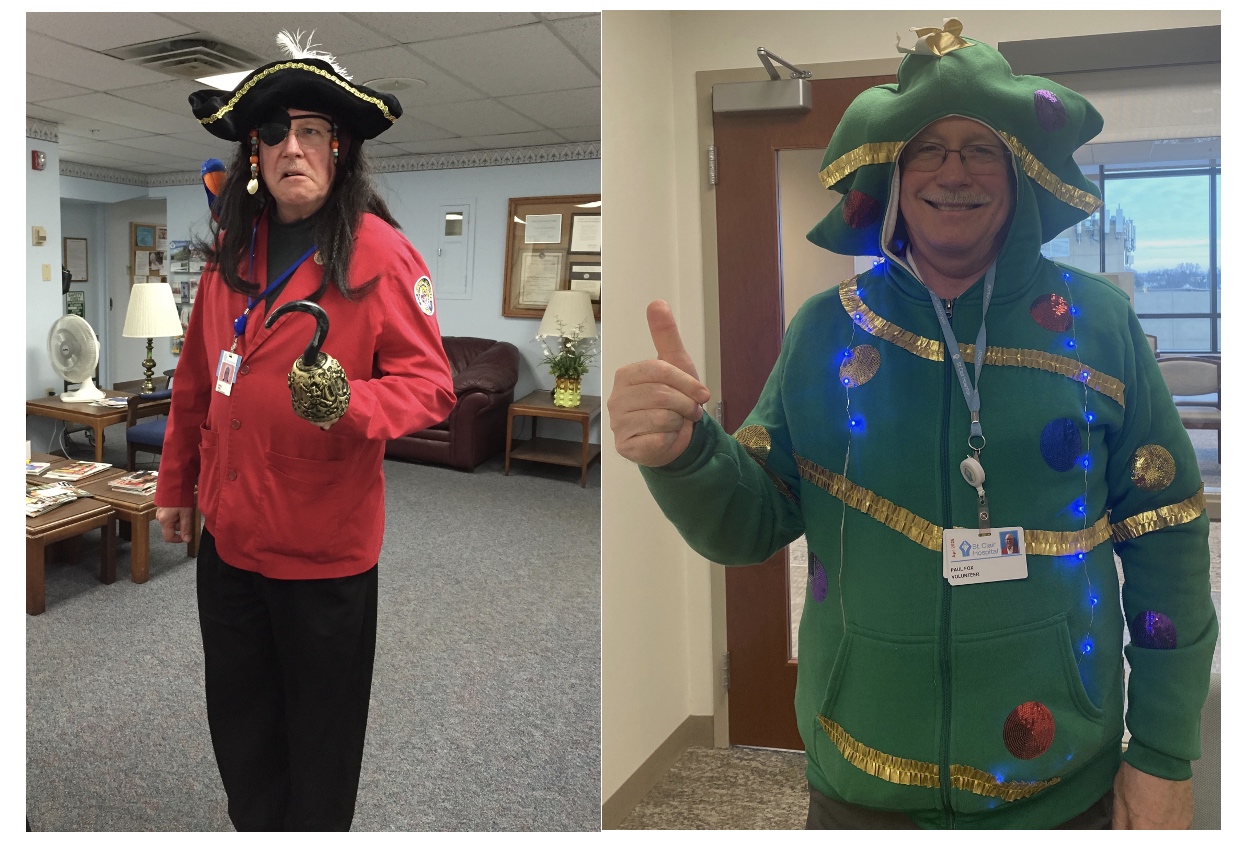
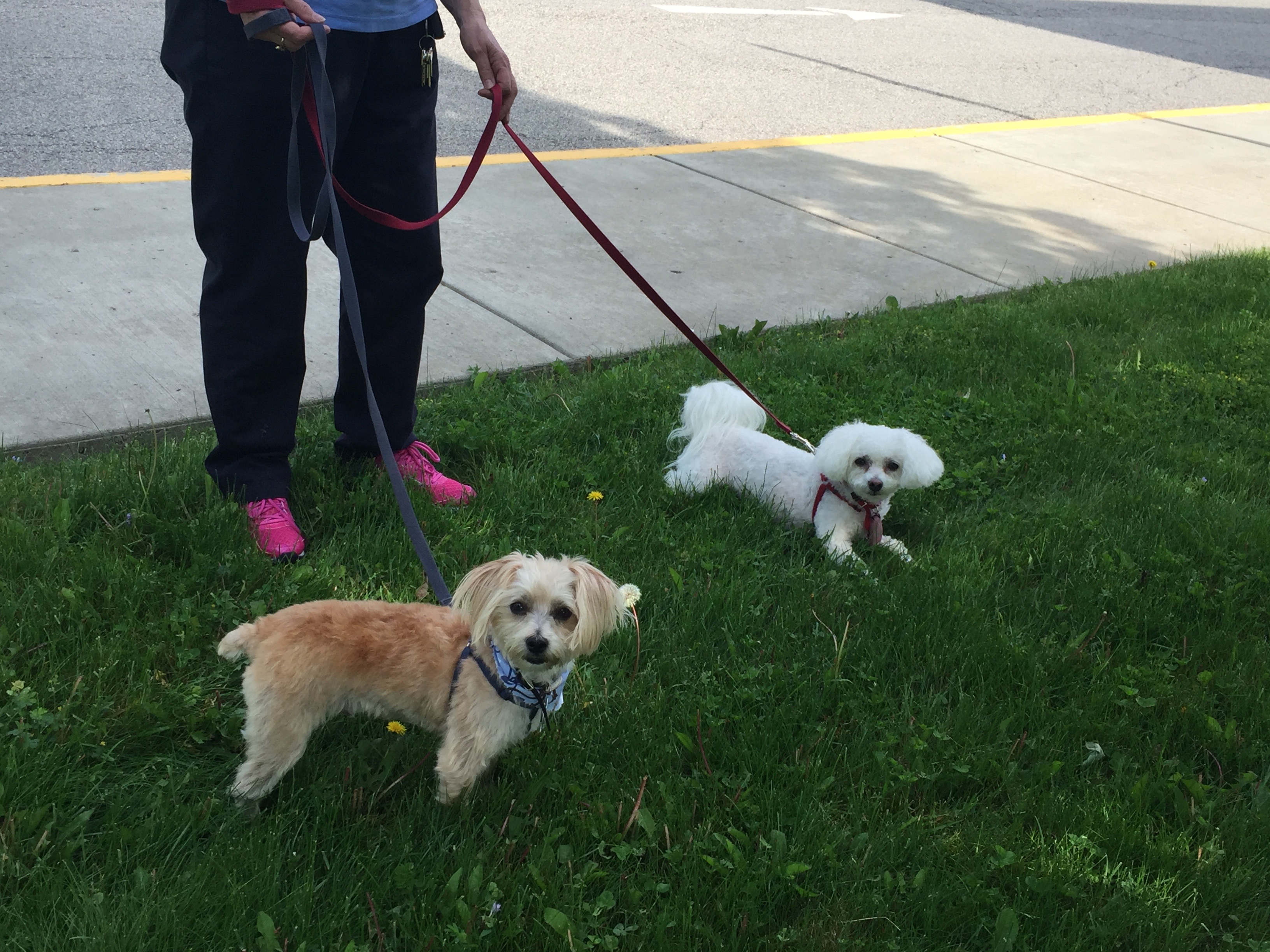
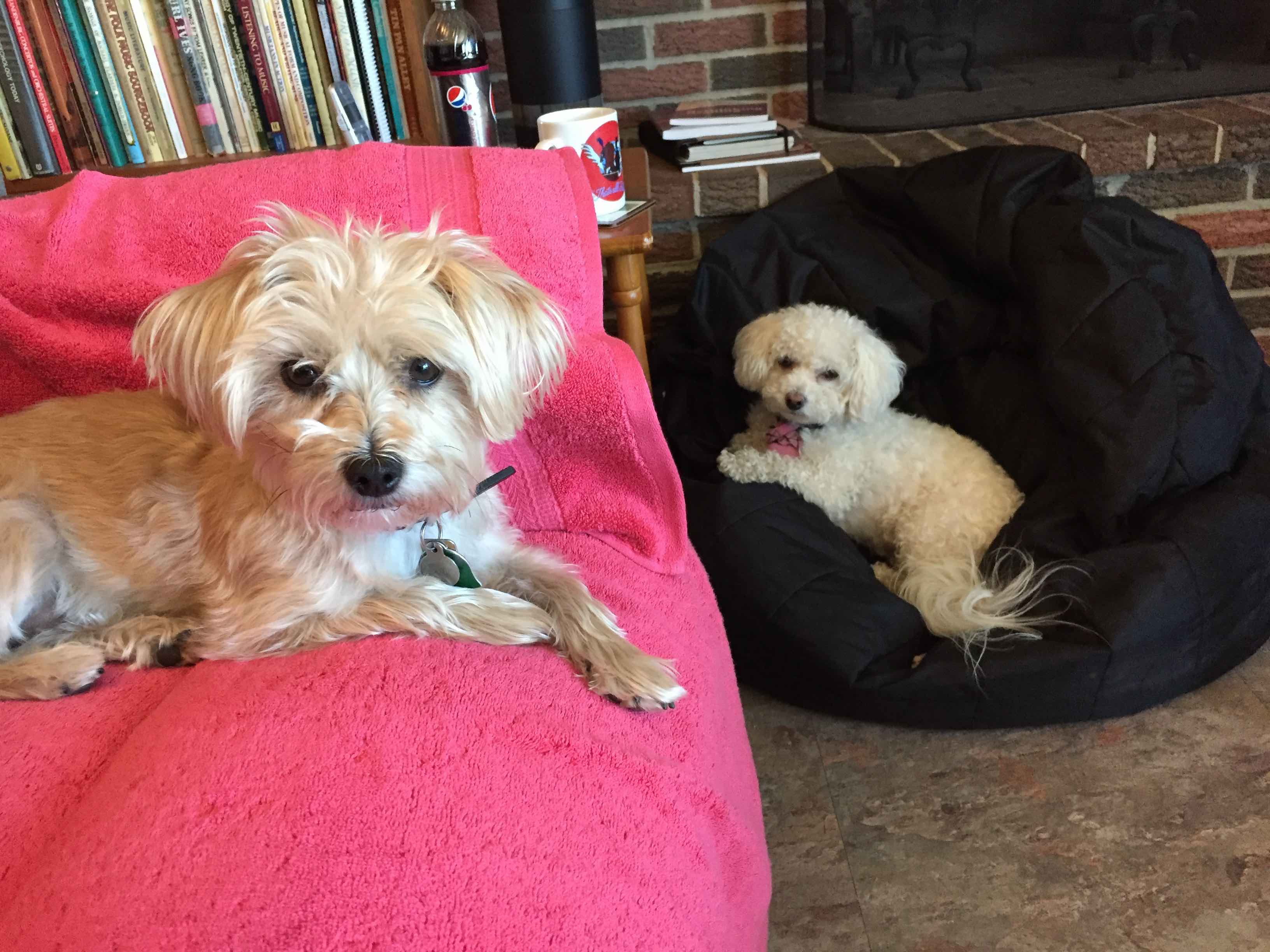
I wrote an article in our local community magazine UPPER ST. CLAIR TODAY. (Yes, I guess I’m bragging a bit – find it here on page 20 and you’ll see pictures of my Pirate costume for escorting at the hospital and holding my doggies!) I cite many reasons for becoming a volunteer. (Disclaimer: Some of the statistics below are a few years old, but you get the idea… The trend is ever-growing!)

The Surge of Volunteerism

Did you know?

My home state Pennsylvania does its fair share, too. These figures are from AmeriCorp:

  • 3,506,834 PA volunteers contribute 341.0 million hours of service
  • 34.2% of PA residents volunteer, ranking them 21st among states
  • Volunteer service worth an estimated $8.2 billion
  • 98.8% of PA residents regularly talk or spend time with friends and family
  • 58.9% of PA residents do favors for neighbors
  • 22.1% of PA residents do something positive for the neighborhood
  • 33.4% participate in local groups or organizations
  • 59.8% of PA residents donate $25 or more to charity

Volunteering and Wellness

Volunteering has been documented to be good for your physical and mental wellness. Do you need any convincing? According to Track-It-Forward at https://www.trackitforward.com/content/use-these-volunteer-stats-boost-your-volunteer-program:

  1. Volunteering connects you with your community, which can lower the morality rate by 2.7%.
  2. Volunteering helps physical health – including decreasing the likelihood of high blood pressure development by 40%.
  3. Volunteering can help decrease high-stress levels, anxiety, or depression.
  4. Volunteering increases self-confidence and self-esteem by 6%.
  5. 96% of volunteers claim they feel a sense of purpose, therefore happier and healthier!

I recently found this website with more detailed rationale offered by Volgistics – Volunteer Logistics at https://www.volgistics.com/blog/volunteering-good-for-health:

Mental and Emotional Benefits of Volunteering

  1. Connects you with other people
  2. Allows you to contribute to a cause
  3. Gets you out of the house
  4. Connects you to the community
  5. Reduces depression and stress
  6. Improves self confidence
  7. Boosts happiness
  8. Encourages learning

Physical and Health Benefits of Volunteering

  1. Encourages physical activity
  2. Lowers your blood pressure
  3. Promotes heart health
  4. Extends your life

If you have any doubts about WHY you should volunteer, revisit my August 2021 blog “Those Were the Good ‘Ol Days – The E in RETIREMENT is for Energy, Engagement, Excitement, and Endurance” here. For retirees everywhere, this is worth repeating.

“It has been suggested that one problem of retirement is that one no longer matters; others no longer depend on us… The reward of retirement, involving a surcease from labor, can be the punishment of not mattering. Existence loses its point and savor when one no longer makes a difference.” 

– Rosenberg and McCullough

We learn from Revitalizing Retirement: Reshaping Your Identity, Relationships, and Purpose by Nancy Schlossberg that for retirees, it is important to feel “needed” and that pursuits that foster “mattering” are crucial to a positive self-esteem, good mental health, and stable life balance.

What to Do with Your Free Time?

This, too, has been covered in past blog-posts, conference sessions, webinars, and articles in PMEA News. A quick recap:

  • Walk dogs at animal shelter
  • Assist food banks and meals-on-wheels agencies
  • Enlist as special advocate for abused or neglected children
  • Work as a hospice volunteer
  • Maintain parks, trails, nature habitats, or recreation centers
  • Host an international student
  • Assist at local hospital, senior center, or nursing home
  • Serve in charity fund-raising projects
  • Become a youth director, mentor, or scout leader
  • Share your hobby or experiences in a specialty and teach night classes or summer school
  • Give guided tours or lectures as a docent at a local museum
  • Apply office management and clerical skills to benefit libraries and other nonprofit associations
  • Run a school club or coach a sport

A quick scan of the website https://www.volunteermatch.org/ would fetch many specific volunteer job openings (these for the Pittsburgh, PA area where I live):

  • Provide hospitality at Pittsburgh sporting events
  • Serve coffee and snacks at winter warming stations
  • Write articles or submit photographs to local publications and e-media
  • Visit hospice patients and provide other free-care services
  • Crochet, knit, or sew blankets for needy families
  • Connect with local veterans
  • Manage nonprofit events and organizations
  • Ring the Salvation Army kettle bells all year long
  • Mentor an underserved child (everything from athletics to computer skills)
  • Make weekly reassurance calls or personal welfare checks of senior citizens
  • Become a delivery driver of “care packages” of food, baby items, pet necessities, household items, and more

Retired music educators have an advantage, a valued skill which also represents their “calling” and “life’s work” – fostering creative self-expression. There’s so much “we” can do to “bring on more music” in our community, and if you wish, several of these may provide supplemental income:

  • Performing gigs locally
  • Directing community or church ensembles
  • Accompanying community or church ensembles
  • Coaching/assisting local music programs
  • Teaching college music education methods or supervising student teachers
  • Composing/arranging music
  • Adjudicating or guest conducting music festivals
  • Serving in the music industry

The best part of retirement is you can say “NO” anytime you want. You can cut out any perceived drudgery, routine “chores,” and excessive paperwork that “the institution” may demand, but still assist in collaborating and sharing your experience, expertise, vision in working with “the kids.” You can continue to develop your own personal artistry (now with more time to practice) and leave your “musical stamp” on other programs and projects whenever and wherever you please.

Adventures in Volunteer Escorting

Every hospital, outpatient facility, and senior nursing/assisted living center I know needs volunteers… a lot of able-body helpers. Have you considered lending a hand in pushing patients to/from their procedures, discharges, etc. in your community? I have, and it is truly a joyful experience.

For two days a week, I spend the better part of my day at St. Clair Health in Mt. Lebanon/Scott Township in the South Hills area of Western PA. (If you live in the area, visit their website here.) Although on occasion, I get to visit the Family Birth Center (my favorite) and hospital rooms to help check out patients, most of my shift is assigned to the Dunlap Family Outpatient Center, a new state-of-the-art facility (opened in May 2021 – still has that “new car” smell) for “in and out” procedures. It would not be an exaggeration that I escort as many as 50 individuals per day undergoing outpatient surgeries, endoscopies, colonoscopies, or other diagnostic testing, along with an equal number of family members to/from the treatment rooms. On a given Thursday or Friday, I can check my Apple Watch and iPhone digital health monitors and find I take as many 17,000 steps!

The best part? Do I have to tell you that since I retired to the same basic geographic area in which I spent my entire career, how many of my school colleagues, former students, and their parents I have discharged? One thing you realize helping out in your hometown (the place you taught all those years)… you will run into many of your former “charges” now grown up with kids of their own. It is a real joy to see them again (albeit due to the need for a colonoscopy or surgical procedure), and catch up with all those shared memories, their life’s happenings and successes, and future dreams.

So many stories…

Several weeks ago, I brought down to the main floor a delightful lady from our pre-post anesthesia unit to connect with her ride home, and I saw her driver was in a Uber-lit-up car. I remarked to the patient, “Wow, the only Uber driver I ever knew was one of my former choral students named Lisa…” and sure enough, that’s who came to pick up her mother-in-law. Even though we always wear masks in the hospital, I guess my Upper St. Clair HS marching band “broadcaster’s voice” is recognizable, and countless people in the lobby (usually accompanying family members) stop me, “Hey, is that you Mr. Fox?” Of course, HIPPA dictates we never repeat their identities or any confidential information…

Being a music teacher, I cannot help myself. My mission is to be “the distracter” – divert their attention from the inevitable? – and to help calm, reassure, and perhaps even entertain the patients for a few moments transitioning through those awkward (and sometimes fearful) medical procedures. They need a bright, cheerful, and funny if not somewhat crazy escort. I provide the jokes and the songs!

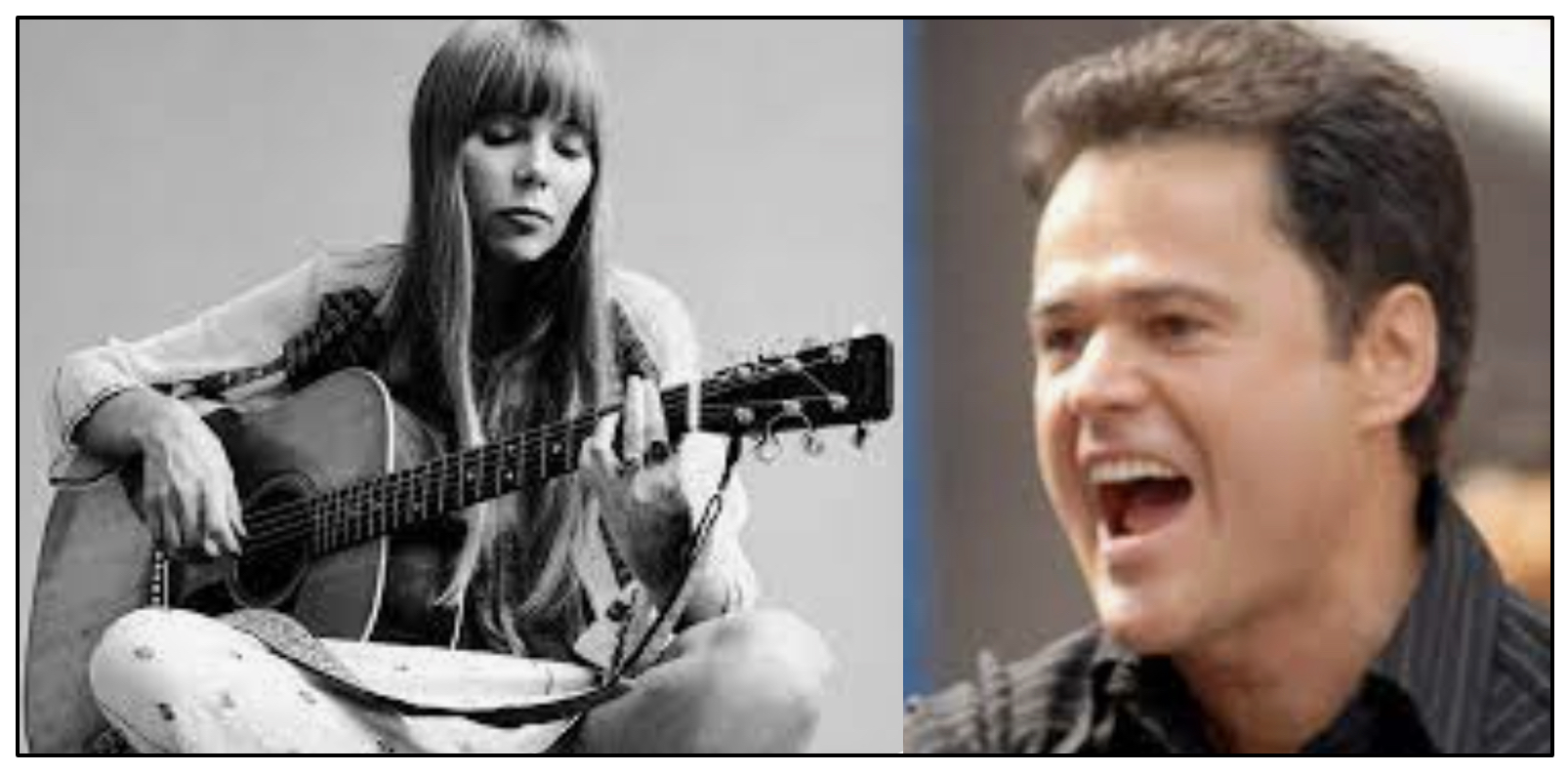
One day, I was literally singing Maria from West Side Story while pushing Maria-the-patient to her endoscopy, and another person walking with us for her own test said, “Well, it’s nice you are singing to us. But, my name is Sharon, and they don’t have a song for my name. No, Sharona is NOT my name,” she added with emphasis! After I took both ladies to their respective rooms, I had to do some research, but came back after Sharon was prepped and received her IV waiting for the doctor. “You forgot about The Song for Sharon composed and sung by Joni Mitchell,” I said (perhaps not my favorite example from the artist’s albums).

The hallway from the waiting room to the procedure suites is long and offers time for my style of “interaction and distraction.” Another funny episode, I was escorting two men to their appointments in the outpatient surgery unit. To the first, I said, “Did you know they wrote an entire musical featuring your name? Joseph and the Amazing Technicolor Dreamcoat. He replied he had never heard of it. I sang a few bars of several theme songs, and told him to look up Donny Osmond’s Close Evr’y Door and other tunes from the show. We were almost at the nurse’s station when the second gentleman turned to me and said, “Don’t you dare!” I looked down at my call slip and saw his name was George, and searched my mind. What song could was he concerned about? “Oh, oh, not that cartoon theme George of the Jungle? ending with the lyrics “…watch out for that tree?” He told me he was tormented mercilessly by his brothers, sisters, son, daughter, and now the grandchildren re-enacting painful renditions of “his song!” In this quiet, pristine, antiseptically-clean environment, we all took a moment and enjoyed a good horse laugh together (even the head nurse)!

The male volunteers usually dress up in an all-red jacket (one giant candy stripe), but on occasion, I have been known to bring a costume… for Halloween or Christmas, to try to bring a little joy and good humor to the patients.

I feel blessed to have the good health and mobility to serve as a volunteer escort, and the opportunity to meet with on a daily basis so many wonderful people. Many of my retired colleagues (even those from where I last taught) have joined the force. To say the least, we appreciate the comradeship, gratitude, and feelings of being eleemosynary for what we can share with others!

Anyone from my neck of the woods? Visit this website and sign-up! WE NEED YOU!

As if you need any additional urging, for the young and young-at-heart alike, Joi Henry of the 2013-2014 Youth Leadership Council (21st Century Leaders) probably said it best commenting on why community service is essential:

Community service involvement is important because volunteering teaches people of all ages and backgrounds compassion and understanding. One thing I like about community service is that there are opportunities to improve and leave your mark on your global and local community. Volunteering and putting on service events can be used as a way to advocate for causes that you are personally passionate about. Community service… can also be the avenue to explore areas that you express interest. Volunteering is something that has no time limit; you can volunteer as much or as little as you’d like or have time for and still feel some type of fulfillment from it.

https://www.21stcenturyleaders.org/why-is-community-service-important/

So what are YOU waiting for?

PKF

© 2022 Paul K. Fox
In Case You’re Worried… the Status of “The Fox”

If you are a frequent visitor to this blog site, you may have noticed that, for some reason, I haven’t posted anything for almost two whole months. Cat got my tongue? Nothing to add? Busy with other things?

We have been doing what comes naturally! The most important “stuff!” Although hectic at times and in a frenzied pace, all is well! My wife and I are healthy, happy, actively engaged in the projects that matter to us, and mastering those all-essential ingredients in a healthy lifestyle (retired or not): “finding purpose, structure, and community” (reference to the book How to Retire Happy, Wild, and Free by Ernie Zelinski).

Well, I can tell you I am still vested in volunteering my expertise, experiences, and services on a number of fronts. Normally extremely verbal, I just have not had a couple hours to spare to write anything down or contribute to the voluminous material to what has become a massive archive of articles (editorials and how-to’s), links, and other resources.

What have I been doing lately?

First off, we are just finishing up our marching band season. As the official admin and announcer for the “Pride of Upper St. Clair” Marching Band (I spend my time inside, not directing practices on the fields), I attend all rehearsals as attendance bookkeeper, forms manager, librarian, quasi-nurse, and when necessary, act as a sounding board or shoulder to lean on for “the band director.” This was our first year going “competitive,” participating in regional festivals of Pennsylvania Interscholastic Marching Band Association (PIMBA), and by all accounts, “we” achieved excellence. The band is unrecognizable from past years – the students are much more committed and focused – but we still have a ways to go!

Of course, all during this, our football team made it to the playoffs. On Friday, we will support our team in the “first round” WPIAL Class 5A match at Gateway HS. The extended season brings with it challenges of its own (keeping the band members on-task and embracing new goals), but the rewards outweigh the extra rehearsals. And, all through this, we are making plans (and building excitement) for the launch of the first-ever USCHS winter guard and drumline programs!

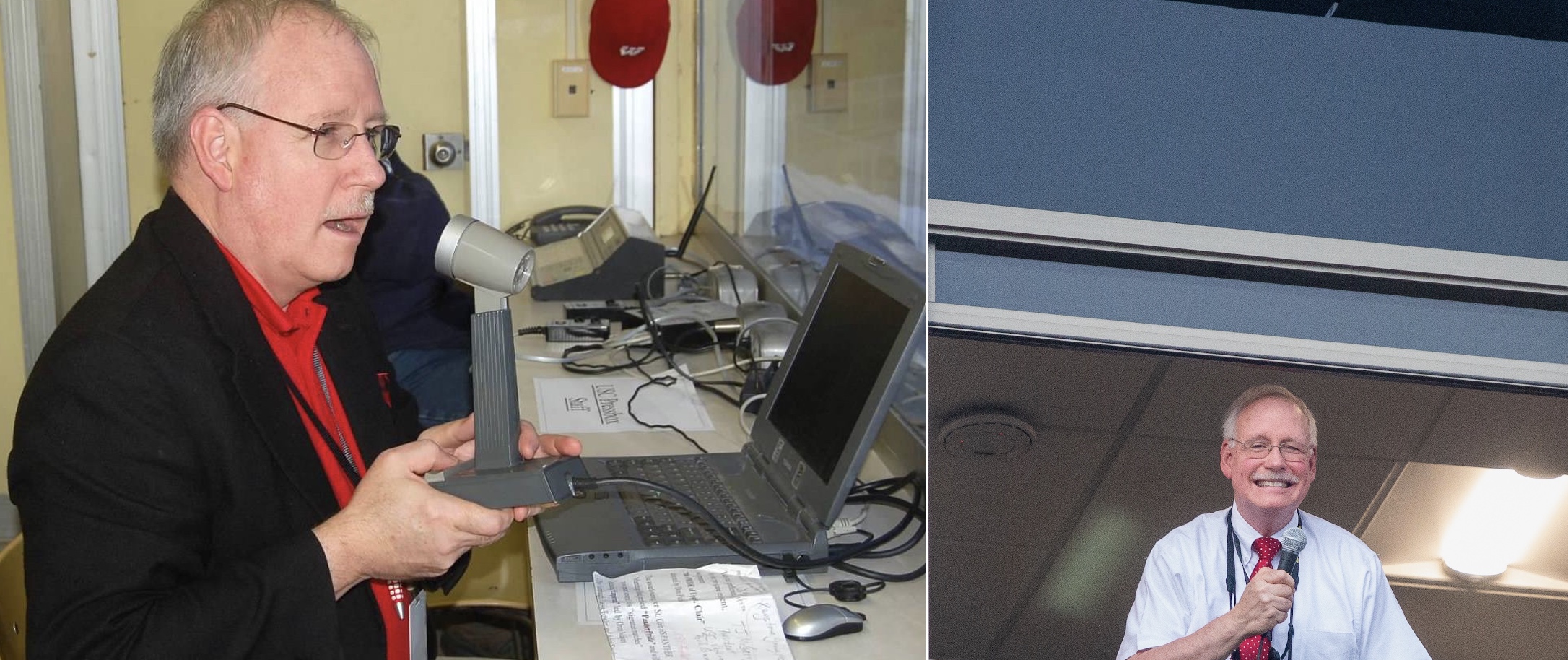
Funny thing! I’m now a part of the band’s “brand.” For 38+ years, I have been “the voice” announcing the pregame and halftime shows for Upper St. Clair High School. I’ve also emceed a couple dozen of the USCHS Marching Band Festivals, plus senior recognitions, USC Halls-of-Fame exhibitions in the stadium, and outside music invitationals. It is truly a joy to “cheerlead” our musicians… and my wife would tell you, I have a very loud broadcaster’s voice! And now, ladies and gentlemen…

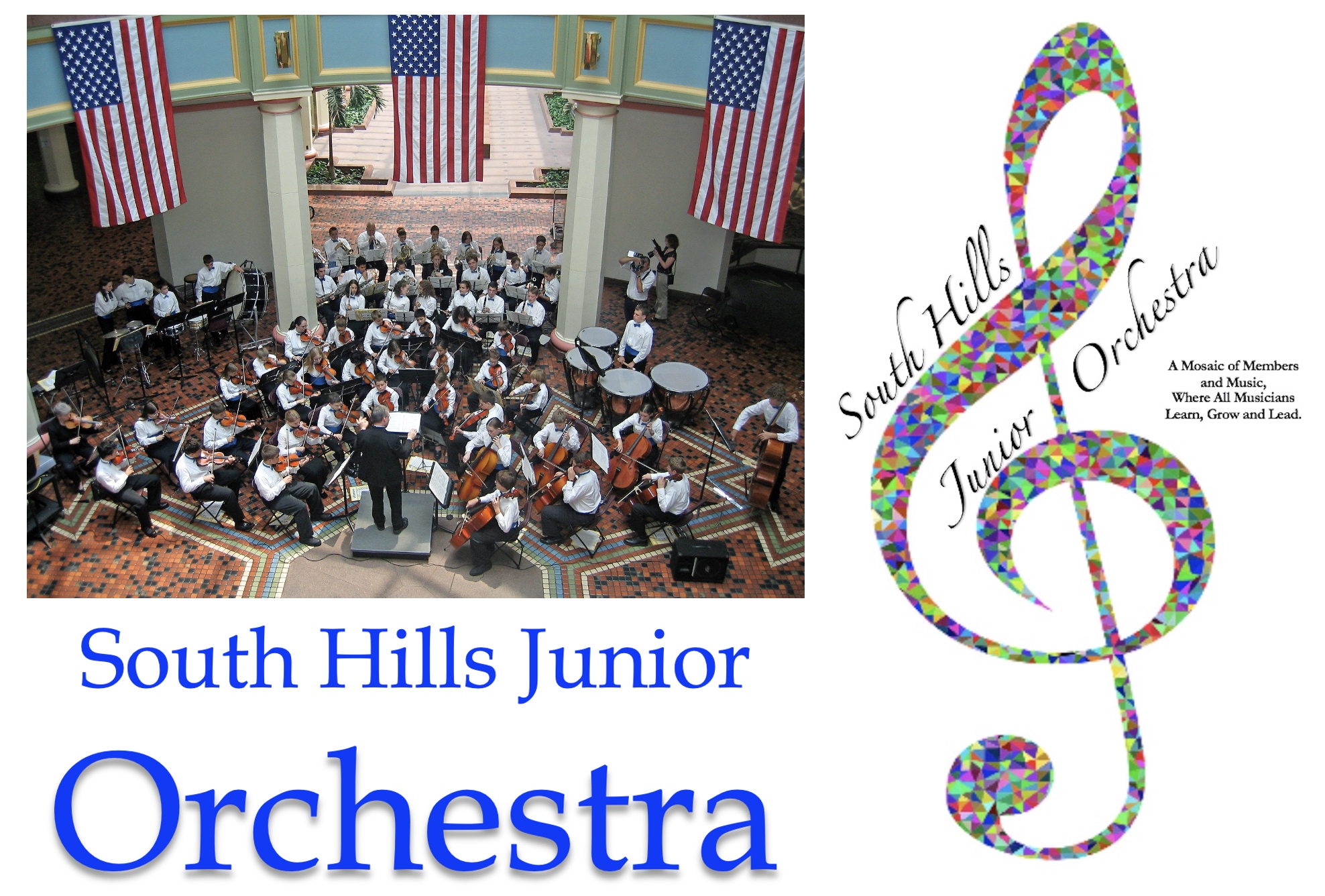
In two weeks, I will conduct the fall concert of our community ensemble South Hills Junior Orchestra, now in its 40th year. Although COVID did its best to wipe out our enrollments and recruitment efforts, our online academy kept things going, and we now support a small but dedicated chamber group. (Surprisingly, I have a good balance of instrumentation including sometimes rarely-found musicians on French Horn, bassoon, bass clarinet, electric bass, and piano, but one of my trumpet players is having to read clarinet parts.) Our theme is in support of Ukraine. We just “stumbled upon” several appropriate folk songs from the region, including the tribal tunes of Russian Fantasy (Robert Bennett Brown), the ever-popular Ukrainian Bell Carol, Dance of the Slave Maidens from “Prince Igor” (by Borodin, part of the “Russian Five”), and Slovakian Folk Songs (bordering Ukraine).

After this concert, we will prepare a holiday program for a nearby assisted-living facility with most of the SHJO members each taking a turn to conduct the sing-along of carols and seasonal favorites.

If interested, we warehoused a lot of our old SHJO Online Academy media and lessons here. (Use the password symphony.)

Staying involved in my professional associations, I am happy to report I was accepted to present at two conferences, the National Association for Music Education (NAfME) Eastern Division event in Rochester, NY on April 13-16, 2023 and the Pennsylvania Music Educators Association (PMEA) Annual In-Service at the Kalahari Resort/Poconos on April 20-22, 2023. I have been asked to do my interview clinic session at both conferences and a workshop for PMEA on music educator burnout remediation, self-care, health and wellness.

In the meanwhile, not to let any grass grow under my feet (or more leaves to fall on my head), locally I have been giving teacher ethics presentations at Slippery Rock University of Pennsylvania (a wonderful class of 44 freshman music education majors – the future looks good!) and Washington & Jefferson College undergraduate and graduate education majors.

I open my session offering to give a hundred dollar bill to the first student who can correctly name the exact title of their educator’s code of conduct (PA Code of Professional Practice and Conduct – CPPC) and identify the agency which enforces it (PA Professional Standards and Practices Commission – PSPC). No one ever guesses it. (I could also likely get away with this challenge at any school faculty meeting in the Commonwealth! Educators seldom receive formal ethics training in our state – that’s why I am sharing these recent updates from the PA Department of Education!) Now that I have publicized “the big question,” I guess I’d better put away that C-note for good!

A sampling of my slides and handouts are available for perusal from the top section of the “Training/Jobs” menu bar link here, or you can find past blogs on the subject of educator decision-making presented in reverse chronological order here.

In a similar vein (and with equal passion), I have teamed-up with retired social studies teacher and attorney-at-law Thomas Bailey to sponsor continuing education classes for both educators and administrators. I am inspired by Tom’s knowledge of the PA regulation framework and school law. We just finished an excellent 25-hour approved non-PDE Act 45 course for school system leaders. You should visit his informative website here, and especially check out his court case blog here. If you are a school superintendent or administrator, our next series of online classes will begin on November 29; register for the course here.

Additional future projects include assisting on the PMEA Strategic Planning committee for “member engagement,” planning for the PMEA CRESCENDO virtual student conference scheduled for January 31, 2023 (more info here), and serving on the PMEA Council for Teacher Training, Recruitment, and Retention (I am state chair) – “the life cycle of an educator.” A wealth of free information for music educators (which I try to revise frequently) is available on sections of the PMEA website: the Council TTRR focus area (click here) and Retired Members (click here).

Outside the scope of teaching profession, I have been active as Communications Director, Fine and Performing Arts Chair, and Trustee of the Community Foundation of Upper St. Clair (CFUSC). I publicize a weekly eUPDATE (samples on the website here) to announce our township events for donors and supporters, serve as “the duck maestro” – the mascot for the annual duck races on USC Community Day, and look forward to organizing “a really big party” in celebration of the CFUSC’s 30th anniversary on April 21, 2023 at the St. Clair Country Club… although I will be in the Poconos on the same date doing a PMEA workshop! The Fox calendar is bursting with a few overlapping dates!

Besides all of the above, I am still volunteering at the hospital several days a week, pushing wheelchairs to/from procedure rooms at St. Clair Health. One thing you realize helping out in your hometown (the place you taught all those years)… you will run into many of your former students now grown up with kids of their own. It is a real joy to see them again (albeit due to the need for a colonoscopy or surgical procedure), and catch up with all those memories, their life’s successes, and future dreams.

The only personal goal that remains unfinished is consideration on how I can better distribute (dare I say “promote”) the numerous blogs that remain timely and relevant at this website. It’s just a little too overwhelming (and dense) for some passersby. A few of the links in the earlier postings may have expired and need to be updated. However, a lot of my insight, hard earned perspective (with sweat and tears), and past experiences have been poured into these writings, and I could only hope many of them could become useful tools for college music education majors, the rookie educator, those feeling challenged by today’s post-COVID times, or anyone recently transferring into the profession. Here’s another list of menus… go ahead, sight-see and enjoy the journey!

As you can see, I am not really retired… perhaps a better term would be “refired” or “redirected” or “reinvented.” If you are already “living the dream” in your post-full-time employment years or anticipate this happening in the near future, that’s how it’s done. That’s what I wish for you, too! Do you want to live-it-up to Moses’ age – supposedly 120 years old? Then, you better plan to be physically and mentally active and engaged! After all, a mind is a terrible thing to waste!

PKF

© 2022 Paul K. Fox

RECAP – Retirement Resources

A Treasure Chest of Tips for Living the Dream!

Are you retiring soon? Thinking about “taking the plunge” and “Crossing the Rubicon” into your “second beginnings” or “next chapter” of senior life?

No matter how busy you are now, you need to “take five” from your work or personal to-do’s and review the following recommendations from past blog posts at this site. Consider this a personal toolbox for the retired and soon-to-retire professional… and assigned HOMEWORK!

A good starting point would be to pick-up “The Myths of Retirement” and “Three Exit Lanes to Self-Help Retirement Guides,” or if you prefer to tackle everything at once, check out the omnibus “monster” resource guide posted here.

Now the top-ten list – a well-balanced collection of online essays. The more you read, the better you will be able to embrace a healthy transition through this major life passage!

1. Plan ahead for retirement: “It’s Not Only About the Money”

Read the entire article here.

It is agreed that a period of adjustment will occur during the first years of “interning” as a retiree, especially critical during the “pre-retirement” stage (believe-it-or-not, as many as six to ten years prior to “taking the big leap” to FREEDOM!). The solution to a smooth transition is to be prepared: communicate your intentions with your family members, and reflect on the vast considerations of the “who, what, when, where, how, and why” of retirement. This prep to your “golden years” is the perfect time for a little self-assessment and self-reinvention in finding new purpose, meaning, and fulfillment in your life.

2. Identify and take steps to alleviate the stress of leaving your job:
“The Good, The Bad, and The Ugly”

Read the entire article here.

The phases of retirement are discussed in greater depth here, as well as different departure scenarios and the usual post-employment “cycles of emotions.” This piece is particularly good if you have ever felt pushed into early retirement or experienced being unappreciated, disrespected, uninspired, unsupported, or “burned out” in your career.

3. Are you really ready? “Signs it is time to retire… OR “Signs is NOT okay.”

Read the entire article here.

This “countdown to retirement” article poses the essential question “Are you psychologically (or emotionally) prepared to retire?” and offers a “road map” of seven easy steps towards closure for prospective music teacher retirees.

For more insight, you should also peruse “When Should You Retire.”

4. Determine your retirement destination:
“Do you know where you’re going to…?”

Read the entire article here.

This early blog post proposed several factors to consider for the choice of where you want to live in retirement… both geography and floor plans. Another good source to read on this topic is the book that was published two years later by the retirement guru and former PMEA session presenter Dave Hughes: The Quest for Retirement Utopia – How to Find the Retirement Spot That’s Right for You.

5. Maintain your professional associations:
“Ask not what PMEA can do for you, but what you can do for PMEA!”

Read several articles:

A retired educator is a valuable resource. If you care about the profession, there are many ways you can continue to contribute your experience and wisdom, albeit less stressful and time-consuming moments, but still assist your colleagues who continue to “fight the good fight” in the field.

6. Acquire a more carefree attitude: “It’s Not Your Sandbox”

Read the entire article here.

It may be at times a challenge to surrender your urge to continue as “an agent of change” or, as E.A. Wynne has written in “The Moral Dimension of Teaching” (Teaching: Theory into Practice, 1995), habits of “moral professionalism.” Learn how chill out and NOT to stress out over someone else’s supposedly poorly run “sandbox” and limit the need to provide unsolicited advice or major problem-solving for other organizations. 

7. Make music: “Dust off your chops” and 8. “Sing your heart out…”

Read the both articles here and here.

What led you to select a career in (and the “calling” of) music education? Retirement is the perfect place and time to expand on your love and skills in creative self-expression. When a music educator retires, among the many joys and fruits of his/her career in the arts is a sudden life-style change – the glorious transformation of being set free from those things you no longer want nor need to do (routine day-to-day drudgery, paperwork, meetings, etc.), embarking on new journeys to explore and embrace revised personal goals – hopefully including a renewed refocus on making your own music!

9. Explore mind-stimulating engagements: “Have you fed your brain today?”

Read the entire article here.

The mind is a terrible thing to waste, even during retirement. Discover something new every day! Maximize your “brain health” with a host of these ideas to consider for your bucket list.

10. Take time to “give back” and volunteer:
“What does it mean to be eleemosynary?”

Read both of these articles here and here.

In the scheduling our free time in retirement, it is important to feel “needed” and find activities that foster “mattering” to promote a positive self-esteem, good mental health, and stable life balance. Are you making choices to contribute to the musical and personal success and welfare of others? For the realization of the mission of this blogger’s retirement pastime: “I refuse to sit idle, binge-watch movies on Netflix, or view hours of boring TV.” To quote the song’s lyrics, this “senior citizen” will never lament…

Life is so unnerving
For a servant who’s not serving
He’s not whole without a soul to wait upon
Ah, those good old days when we were useful
Suddenly those good old days are gone
Ten days we’ve been rusting
Needing so much more than dusting
Needing exercise, a chance to use our skills
Most days we just lay around the castle
Flabby, fat, and lazy
You walked in and oops-a-daisy!

– “Be Our Guest” from Beauty and the Beast

Stay Connected with PA Music Education

PMEA Annual Conference April 6-9, 2022 at the Kalahari Resort (Poconos)

PMEA retired members, please take note of these special events especially geared to YOU:

  • Free Retired Member Breakfast Meeting (including take-away gifts) on April 8 at 8 a.m.
  • Retirement 101 session on April 8 at 11:30 a.m. – Retired music teachers are encouraged to participate on the guest panel to “tell your own story” to help any interested soon-to-retire colleagues.
  • Three keynote speakers will join this year’s event: Dr. Tim Lautzenheiser, Lesley Moffat, and David Wish.
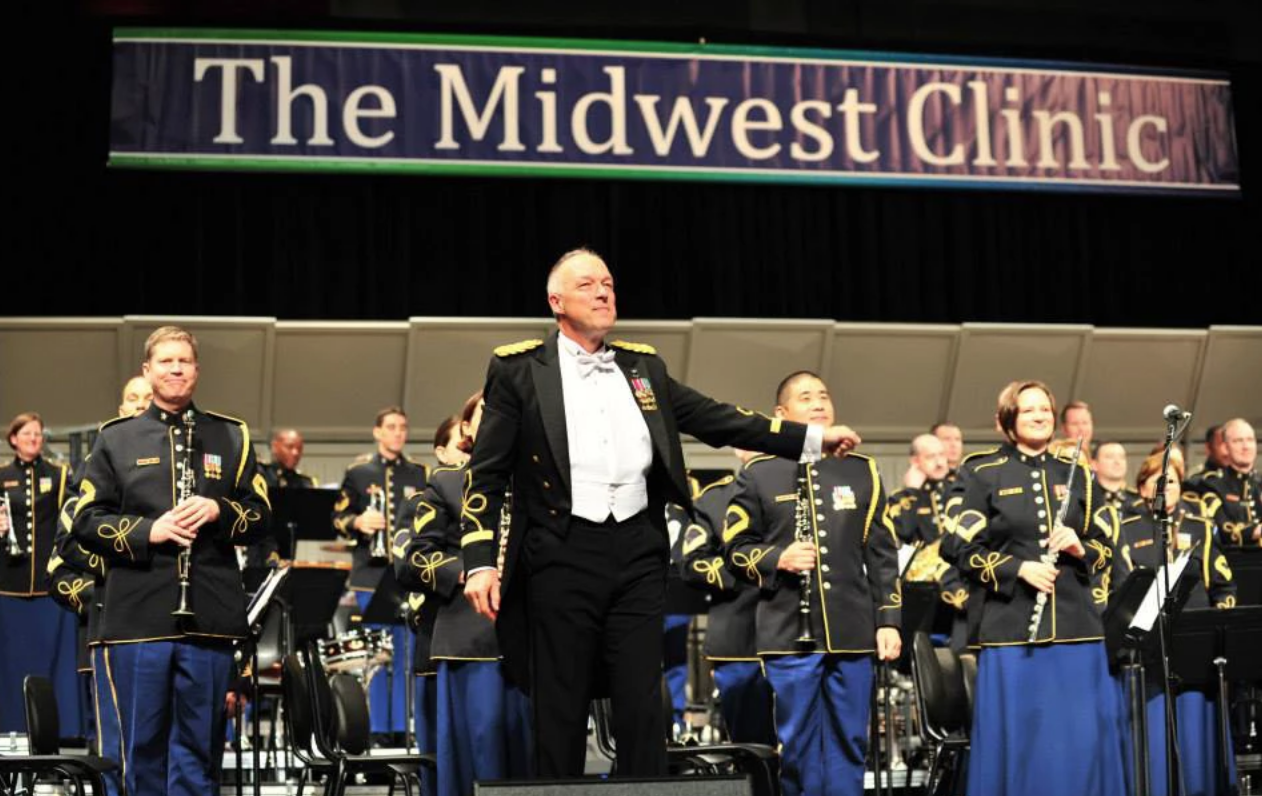
  • The U.S. Army Band “Pershing’s Own” will be featured on Thursday evening (April 7).
  • See last month’s blog for more details on the conference, tentative session schedule and exhibitors, AND the PMEA website.

PKF

© 2022 Paul K. Fox
Graphics from Pixabay.com:

Now What?

Guest blog-post by Colonel (Retired) Thomas H. Palmatier


Originally printed in the School Band and Orchestra (SB&O) Digital Magazine, June 2019. Reprinted with permission. All rights reserved. http://digitaleditiononline.com/publication/?i=593349#{%22issue_id%22:593349,%22page%22:26}

This was also featured in the August 2019 edition of the PMEA Retired Member Network eNEWS, archived at https://www.pmea.net/retired-member-network-enews-archive/.

Motor City Band Festival Palmatier

At some point, every band or orchestra director will either retire or move to another career. While there is much emphasis on mentorship and other ways to assist new directors, there are almost no programs to help us with the potential a more difficult transition. The U.S. Army has a mandatory program for anyone leaving the service to prepare them for the next phase of their life. Even without assistance, leaving a job that you love is tough for everyone. I want to share some lessons that I learned in the research I’ve done into this issue.

Pershing's OwnIn my case, I had over 37 years where I had established an identity as a music director and as a soldier. Prior to retirement from the army, I was the senior music director in the U.S. Armed Forces and was on speed dial of many officials in the department of defense, the Congress, and of course, the media. I received 500 to 600 emails daily from all over the world. By the way, I also was leader and commander of the US Army Band “Pershing‘s Own,” one of the largest (and busiest) military music units in the world. Then, one day I was no longer in the army, my phone wasn’t ringing constantly, the email stopped, and my schedule was mostly free. Sounds great, right? As a band or orchestra director, you were probably the most well-known and well liked person in your community. You have students, parents, and administrators who rely on you. And then suddenly, you are not that person any longer. For each of us there are emotional/psychological, social/family, and financial impacts of this transition.

MotorCityFestival Palmatier

The identity that you have developed over the years is now essentially gone. I was fortunate to have a colleague warm me up that about six months after retiring, I would hit a wall of depression, and he was so right. Because I have been warned about it, I was able to act with my health care provider.  Now, imagine if upon your transition, you are now spending more time with your spouse/partner then you would ever have before but then find yourself unhappy. Studied show increased divorce rates soon after retirement or a career transition because people make the mistake and assumption that their Brett_Favre_Super_Bowl_50depression is related to spending time with their spouse.

Brett Favre reportedly said when ending his first retirement from pro football that “the one thing about having nothing to do is that it doesn’t take long to do it.” To overcome boredom (and depression), it’s important that you know how you see yourself now and how you want others to see you. For many years, your identity was band/orchestra director. What’s your identity going to be now?

The impact on your social relationships can be equally challenging. Most of us develop the circle of friends in the music and education communities. When you are no longer in “the biz,” who will your friends be now? What will you talk about besides the awesome halftime show that you are no longer writing? This all goes back to who you are now, not who you used to be.

MidWest Clinic Palmatier

The financial impacts of retirement or transition are unique to every individual. However, if you intended to now be self-employed, be serious about it. Create a limited liability company (LLC). Most states let you do it online and it usually cost no more than $100. Keep meticulous records and don’t mess with the IRS. Done right, you can legally deduct lots of things as business expenses. Remember, you don’t have a music library anymore so you will be buying lots of scores (don’t be one of those folks whose library is full of illegal photocopies!).

If you’re going to follow the self-employed path, be aware of that self marketing, maintaining a website (see mine at ThomasPalmatier.com), and bookkeeping take a lot of time.

Palmatier at Liberty North.png

There is one terrific way to stay relevant in our profession – being a mentor. I encourage you to read my article in the August 2018 issue of SBO Digital Magazine called “Be a Mentor – Get a Mentor.”

Here are my top five takeaways for those approaching retirement or a career transition:

  • Start preparing as far in advance as possible.
  • Be prepared for the inevitable challenges. If you were unhappy or depressed, get help!
  • You get to define yourself now.
  • Stay relevant – be a mentor.
  • Enjoy it!


Col. Thomas H. Palmatier
Colonel Palmatier served as guest conductor of the 2017 PA Intercollegiate Band Festival at Grove City College in PA

Colonel (retired) Thomas H. Palmatier is the former leader and commander of the U.S. Army Band “Pershing‘s Own” and commander and conductor of the United States Army Field Band. He holds degrees in music education from the Crane School of Music (State University of New York at Potsdam) and Truman State University, as well as a Master if Strategic Studies degree from the US Army War College. He is an active clinician, adjudicator, and guest conductor of concert bands, orchestras, British-style brass bands, jazz ensembles, and marching bands. He is a Conn-Selmer clinician and a member of the American Bandmasters Association.

© 2019 Paul K. Fox
Retirees: It’s Not YOUR Sandbox!

It's Not Your Sandbox!

It is time that this saying should be made into a bumper sticker, added to a t-shirt design, or automatically displayed on the home page (or screen-saver) of all retired music teachers’ smartphones, tablets, and computers.

I first mentioned this notion as “surrendering your urge to be an agent of change” in a previous blog, entitled “Retiree Concepts.”

children-1730248_1920_qimono

As observed in many unhappy incidents involving fellow retirees, this deserves a repeat mention here with much greater emphasis.

[Teachers] consistently seek ways to reform “the system,” much like efficiency experts. In other words, ‘break it if it needs fixed,’ or seek new practices or approaches to solve problems or improve the student learning. This means we seldom accept the status quo or “that’s the way it’s always have been done.”

I found that in my volunteer work, when I come up to a challenge like a policy that isn’t working, I look for better ways of doing it. Teachers always self-assess and seek changes for “the good of the order,” but these “systems” are not our classrooms. Educators were expected to “modify and adjust,” revise our lesson targets, rip down old bulletin boards and put up new with more exciting media, re-write curriculum, etc., always with the mission to “build a better mouse trap” for the more efficient delivery of instruction to all.

In retirement, this can be frustrating. You can’t tell somebody else how to run their operation. Some people do not want to hear criticism, nor do they care what your opinion is, nor do they want to change their traditions or fine-tuned (?) step-by-step procedures. You on the other hand want things to improve, e.g. better training, more consistent application of the rules, etc., and therefore you feel “unrequited” stress.

Throughout my whole “professional life,” I never looked the other way. I try to fix things. But that’s not everybody’s inclination, and the world is not going to come to end if someone doesn’t take your advice. As retirees, remove the unnecessary hassle. You have two choices. Resign from the activity, or step back from being its self-appointed critic, accept the situation, and let everyone go back to playing their own way in their sandbox. — Paul Fox in “Retiree Concepts”

doctor-73117_1920_geralt

My own personal hands-on experience with this has to do with volunteering to push wheelchairs at a local hospital. Taking it very seriously, I was thoroughly trained on all aspects of the transport of patients, including the mandated safety rules for locking both wheels on the wheelchair, going down backwards on ramps and into elevators, and the avoidance of hazards like discharging someone to their car “over a curb” or other obstacles. We knew the hospital policies for contact precautions (isolation), carrying oxygen tanks, and moving overweight patients.

But, almost daily, we watch other medical personnel pushing wheelchairs failing to adhere to these “basics” – resulting in safety infractions too numerous to count!

Yep, it’s not our sandbox!

children-1006255_1920_Ben_Kerckx

Retiring professionals have to learn to de-stress and take ourselves “out of the loop” for every organizational decision, training program, and generation/enforcement of an practices, policies, and regulations of an institution. The reason we retired in the first place was to enjoy the privilege of leaving all of this behind.

As teachers, we embraced “moral professionalism.” That meant, according to E.A. Wynne in “The Moral Dimension of Teaching (Teaching: Theory into Practice, 1995), we were charged with the responsibility to “follow to the letter” school policies and procedures, and if we saw somebody who wasn’t compliant or “on board,” we were supposed to instruct or intervene. (As “fiduciaries” looking out for the students’ best interests and welfare, we were required by law to report serious misconducts.)

Wynne also confirmed that, when a rule was simply not working, we were also obligated to firmly but tactfully suggest a better way of do something.

Past tense! Now that we’re retired, we no longer need to solve these kinds of problems – they belong to the head-honchos. The people who have the privilege (or curse) of “running the show” may not appreciate hearing from us. What was that saying by Robert Heinlein? “Never attempt to teach a pig to sing; it wastes your time and annoys the pig.”

young-3852491_1920_vinsky2002

More importantly, stressing over someone else’s poorly run “sandbox” will cause you to waste energy, become irritated and short tempered, lower your mood, raise your blood pressure, withdraw from socialization and the things you like doing, or begin to hate with whom you are interacting. No, it’s not worth trying to teach that pig to sing!

Finally, here’s a little more sage advice from “the experts” on stress and retirement. Please pardon any of their references to the term “senior.” GOOD LUCK!

PKF

© 2019 Paul K. Fox

 

Photo credits in order from Pixabay.com: “sandbox” by RAMillu, “children” by qimono, “doctor” by geralt, “children” by Ben_Kerckx, “young” by vinsky2002, and “wooden-train-toys-train-first-class” by Couleur.

wooden-train-2066492_1920_Couleur

WHEN Should You Retire?

The Skills and Models of a Happy Retirement

[Portions reprinted from the state journal of the Pennsylvania Music Educators Association, PMEA News, Spring 2019 issue – All rights reserved.]


man-2546107_1920_geralt

Is It TIME to Retire?

This is a personal question that no one but YOU can answer… not even your PMEA Retired Member Coordinator! By the time you read this article in the Spring edition of PMEA News, this choice may be uppermost in your mind, especially if you are within a couple years of that so-called “retirement age.” Most school districts require advance notification of an employee’s plan to retire in order to retain full benefits and exit bonuses, and to allow planning for the job replacement search and screening process. (Check your teacher’s contract!)

In music educator conference sessions, director meetings at festivals, and printed in PMEA News and the online e-publication Retired Member Network eNEWS, much has pmeabeen discussed about the “what,” “how,” and most recently, “where” of retirement, even issues of “privacy” regarding your decision. For a review of these areas and a bibliography of resources, please visit:

The “why” of retirement is also relevant. There may be a lot of influences for someone to consider leaving their full-time career:

  1. Boredom or lack of stimulation in the current job
  2. Changing employment status or responsibilities
  3. Health problems (yours or other members of your family)
  4. Spouse retiring
  5. Your or family member’s desire to relocate
  6. Needs for caregiving (grandchildren, parents, or elderly family members)
  7. Travel opportunities
  8. Acceptance of a new position or the start or expansion of an “encore career” (higher education, music industry, travel/tour planning, or another field)

Other involuntary or more negative motivations may “encourage” you to resign your position:

  • Music and/or staff are eliminated from the curriculum or building in which you teach.
  • You are experiencing a decline in music program enrollment or participation.
  • You feel unappreciated, unsupported, devalued, or ignored as a professional.
  • You conclude you must retire early to avoid losing existing contractual benefits.

elderly-lady-4025995_1920_MabelAmber

However, the most important reflection on WHEN to retire should begin with the question, “Are you ready for retirement?” and…

Do You Have What It Takes for a Happy Retirement?

A successful retirement is not “all about the money.” Certainly, you are well-advised to make an appointment with an estate planner, elder attorney, and/or financial advisor (probably all three). Bring a copy of your bank and investment statements, annual reports on your pension, social security, annuities, and insurance documents. Make sure you have the “big picture” of your net worth and accomplish the following (https://www.fisherinvestments.com/en-us):

  • Determine your goals, objectives and time horizon;
  • Make key distinctions between income and cash flow;
  • Develop a basic plan to help achieve your retirement goals.

However, probably even more important, experts say there are many other requirements that foster preparedness to enjoying your post-full-time employment years. For example, proposed by the editorial team of the NewRetirement website, there are eight essential keys to a potential retiree’s “happy transition.” (Read the entire article for a greater perspective at https://www.newretirement.com/retirement/8-skills-you-need-for-best-retirement/.)

  1. A Knack for Dealing with Uncertainty
  2. Resilience: Can You Overcome Adversity?
  3. Capability to Maintain a Set of Friends
  4. Cash Flow Mastery
  5. Ability to Set Your Own Schedule and Stay Motivated
  6. Can You Relax?
  7. Capacity to Have a Purpose and Follow Passions
  8. Do You Know How to Manage an Overall Retirement Plan?

senior-2642041_1920_RitaE2

These concepts are supported by the book Happy Retirement: The Psychology of Reinvention by Kenneth S. Shultz (DK Publishing, 2015) which focuses on the question, “Are you psychologically prepared to retire?”

  1. How important is your job when it comes to getting a sense of life satisfaction?
  2. How many non-work activities do you have that  give you a sense of purpose?
  3. How do you imagine your life to be once you stop working?
  4. How do you think retirement will affect your relationship with family and friends?
  5. How much energy for work do you have these days?

Being “psyched” for the “big day” also involves learning personal coping skills, modeling these characteristics of good mental health (from the book The Psychology of Retirement: Coping with the Transition from Work by Derek Milne, 2013):

  • Being able to use your talents and energy productively
  • Enjoying challenges and gaining pleasure from accomplishing tasks
  • Being capable of sustaining a meaningful love relationship
  • Finding meaning in belonging and contributing to your community
  • Being responsive, sensitive, and empathic to other people’s needs and feelings
  • Appreciating and responding to humor
  • Coming to terms with painful experiences from the past
  • Being comfortable and at ease in social situations;
  • Being energetic and outgoing
  • Being conscientious and responsible.


woman-3186741_1920_silviarita

Should I or Shouldn’t I Go Now?

No, this won’t be an easy decision… but, you knew that, right? There seems to be a plethora of free advice “out there” to help (?) you deliberate. (Well, you get what you pay for!) A few samples from the Internet:

7 Signs It Is Time (http://www.plannersearch.org/financial-planning/7-signs-its-time-to-retire)

  1. Your bank accounts
  2. Your bucket lists
  3. Your health
  4. The markets
  5. Health care benefits
  6. Social Security benefits
  7. Your spouse

10 Signs It Is Not Time (https://www.investopedia.com/articles/personal-finance/021716/10-signs-you-are-not-ok-retire.asp)

  1. Struggling to pay bills
  2. You have lots of debt
  3. Have major expenses
  4. Don’t know your SS benefits?
  5. Need monthly financial plan
  6. Need long term financial plan
  7. What about the effects of inflation?
  8. Need to re-balance portfolio
  9. Retirement worries you
  10. You love your job

old-couple-2435629_1920_MonicaVolpin_

Happy retirement = busy retirement. We keep going back to what PMEA MIOSM Chair Chuck Neidhardt said about venturing into retirement – also the perfect bumper-sticker: “Have a plan!” In almost every case study, retiring music teachers must “move on” to an equally engaging and active life style, finding new purpose and meaning in their “senior years!” Considering that many professionals are “addicted to achievement” and the sudden cessation from work may cause some emotional turmoil (Sydney Lagier in US News and World Report, July 20, 2010), we should study examples of those who have happily “Crossed the Rubicon” ahead of us into “retirement bliss.”

Leaving your school employment does not mean you won’t continue doing what you have always enjoyed… personal music (or dance or drama) making, performing in or conducting an ensemble, composing, accompanying, etc. The PMEA Retiree Resource Registry – the proverbial “directory of past leaders in PA music programs” – lists many retired members who continue to offer their talents and experience to help others in the profession. This is a good place to start for asking “advice from the experts” on just about any topic… perhaps even tips on deciding WHEN to retire: https://www.pmea.net/retired-members/.

How about a couple more “models and mentors” who made this “change of life” adjustment and explored new directions towards self-reinvention in retirement?

ben-franklin-3589235_1920_ericdunham

Ben Franklin, Founding Father
“Having worked as a successful shopkeeper with a keen eye for investments, Franklin had earned his leisure, but rather than cultivate the fine art of indolence, ‘retirement,’ he said, was ‘time for doing something useful.’ Hence, the many activities of Franklin’s retirement were: scientist, statesman, and sage, as well as one-man civic society for the city of Philadelphia. His post-employment accomplishments earned him the sobriquet of ‘The First American’ in his own lifetime, and yet, for succeeding generations, the endeavor that was considered his most ‘useful’ was the working life he left behind when he embarked on a life of leisure….”

https://www.theatlantic.com/business/archive/2015/09/how-america-lost-track-of-benjamin-franklins-definition-of-success/400808/

2000 – “The Year of Retirement?” for two musical superstars
Barbra Streisand, singer, songwriter, actress, and filmmaker
Garth Brooks, country-music singer and songwriter
“In 2000, Barbra Streisand performed four farewell concerts to mark her retirement from performing live. At the time, she was 58 years old and wanted to focus more on acting, directing and recording albums, reported ABC News.”

“Her retirement ended in 2016 when she returned to the stage for her The Music… The Mem’ries… The Magic! tour, which grossed $53 million over 16 performances, according to Billboard.”

“Garth Brooks shocked fans in October 2000 when he announced his plan to retire to Oklahoma until the youngest of his three daughters graduated from high school, reported Billboard. The country music superstar was 42 years old when he began his early retirement.”

“During his semi-retirement, he did a few sold-out stints at arenas and a 186-show Las Vegas residency with wife Trisha Yearwood, according to Billboard, but he largely stayed out of the spotlight. Brooks returned to touring in September 2014 and continued until December 2017, performing a total of 390 shows, reported Billboard. Forbes cited his 2017 earnings as $60 million. Together, Brooks and Yearwood are one of the richest celebrity couples.”

https://www.gobankingrates.com/net-worth/celebrities/celebrities-who-came-out-of-retirement/

grandma-736004_1920_fujidreams_

“If money can buy you happiness,” supposedly these ten athletes were financially more successful after retirement, as opposed to the total earnings they generated during their original sports careers:

  • Muhammad Ali
  • Jim Brown
  • Oscar De La Hoya
  • Lenny Dykstra
  • George Foreman
  • Dwayne Johnson (“The Rock”)
  • Magic Johnson
  • Michael Jordan
  • Nolan Ryan
  • Dave Whelan

https://www.complex.com/sports/2012/01/10-athletes-who-made-more-money-after-retiring/


Agatha Christie, British writer
Finally, to answer the question, “What would Agatha Christie do in retirement?” best-selling author Ernie Zelinski quoted in his The Retirement Cafe website the following list of activities proposed to be “her favorite things” from the publication Agatha Christie: An Autobiography (Dodd, Mead & Co., 1977).

  • Sunshine
  • Apples
  • Almost any kind of music
  • Railway trains
  • Numerical puzzles and anything to do with numbers
  • Going to the sea
  • Bathing and swimming
  • Silence
  • Sleeping
  • Dreaming
  • Eating
  • The smell of coffee
  • Lilies of the valley
  • Most dogs
  • Going to the theatre

Ernie concluded, “This list of activities and things that Christie loved may trigger some of the stuff that turns you on and which you can use for an active retirement. This will go a long way towards conquering retirement boredom.”

http://www.retirement-cafe.com/Fun-Things-to-Do-When-You-Retire.html

fisherman-1624704_1920_paulbr75_

Is the time ripe for you to retire? Again, only YOU can answer that!

When it becomes the right moment for you to make that “big plunge” to “living your dreams…” KUDOS and BEST WISHES on your rebirth as you explore your own pursuit of retirement self-reinvention and post-employment “freedom!”

PKF

© 2019 Paul K. Fox


Photo credits in order from Pixabay.com: “old” by dietcheese, “man” by geralt, “elderly lady” by mabelamber, “senior” by ritae, “woman” by silviarita, “old couple” by monicavolpin, “ben-franklin” by ericdunham, “Fisherman” by paulbr75, “grandma” by fujidreams, and “wooden-train-toys-train-first-class” by Couleur.

wooden-train-2066492_1920_Couleur


Unconditional Love (Dogs!)

Pets + Retirees… They Go Together!

dog-2729805_1280_gdjHappy Valentine’s Day to all of my readers. I could not think of a better way to “celebrate” our appreciation of “heart-day” with reflections on what our pets bring us… adulation, affection, attachment, companionship, devotion, enjoyment, good will, involvement, passion, stimulation, tenderness, understanding…

“The power of love!” They say that all you have to do is look at the face of a sleeping baby, or cuddle up next to a puppy or kitten, and it will slow down your respiration rate, lower your blood pressure, reduce cholesterol and triglycerides in your blood, and increase in your body the levels of serotonin and dopamine, two neurochemicals that play big roles in the promoting feelings of calm and well-being.

people-1749382_1920_herney

From personal experience, having two of the most adorable and loving dogs… If you’re contemplating retirement and you have never owned a pet, let me be the first to tell you:

“Pets can change your life.”

I invite you to peruse several other blogs I’ve written on this subject:

If you are almost ready to retire, or you’re going through your first couple years of your post-employment “internship,” there’s a good chance that psychologically it would be good for you to “get out of Dodge” as you adjust to your new status. This might be a good time for you to take a cruise, tour Europe, go ice fishing up north, or plan a long road trip out west. Pack up everything and takeoff. Celebrate all those years that you put your nose to the grind stone.

But eventually, you may want to come back “to nest,” and “taste” a little transitioning into things that seem to go well together, e.g. small doses of (human) babysitting, grandparent/child interaction, and/or rescuing a pet. Becoming a homebody may also suggest the consideration of planning small or large renovation projects: fix up your garden or backyard, design your ideal kitchen, remodel the bathrooms, do a garage remake, downsize and de-clutter, etc. After the first several years of simply resting and exploring the options of your self-reinvention, NOW might be the perfect moment to add a furry friend to your family!

animals-2198994_1920_gellinger

Why get a pet?

Goodnet (“Gateway to Doing Good”) summarizes nine reasons you should adopt a pet:

  1. Pets have their perks when it comes to your health. (More on that later.)
  2. A pet will love you unconditionally. (Thus the title of this blog!)
  3. Adopting a pet is easy on your wallet. (Pet rescue from a shelter is less expensive.)
  4. Adopting a pet means saving a life. (Millions of animals are euthanized per year.)
  5. By adopting a pet, you’re giving an animal a second chance. (Another go at life!)
  6. Pets keep you active. (Dog walking provides owner aerobic exercise.)
  7. Pets bring joy and fulfillment. (Pet care enhances a sense of purpose for retirees.)
  8. dog-3243734_1920_kandykandooPets boost your social life. (Research indicates pets decrease social isolation.)
  9. Besides, how could you possibly resist this face?


Medical benefits including psychological health

There’s an avalanche of online research that backs up claims that pet ownership is actually “good for you!”

Pet owners know how much their furry friend improves their quality of life. But it’s not all about unconditional love—although that actually provides a wellness boost, too. On an emotional level, owning a pet can decrease depression, stress and anxiety; health-wise, it can lower your blood pressure, improve your immunity, and even decrease your risk of heart attack and stroke.

— Alexandra Gekas


dog-3128192_1920_maja7777

Here are my “top dozen” reasons and resources to peruse:

  1. Having a pet decreases stress: Promises Treatment Centers
  2. Caring for a pet lowers your blood pressure: WebMD
  3. Owning a dog reduces cholesterol and triglyceride levels: Harvard
  4. Pets keep you fit and active: Gerontologist
  5. Daily dog walking helps you to lose weight: Healthy People
  6. Owning a dog can help detect, treat, and manage disease and injuries: HuffPost
  7. Pet therapy eases pain management and reduces anxiety: Loyola University
  8. Pets may reduce doctor’s visits: American Psychological Association PsycNet
  9. Having a dog may make you (at least feel) safer: LifeHack
  10. Pets help you build friendships and find social support: Harvard
  11. Dog owners are less prone to depression: GrandParents.com
  12. Pet ownership adds meaning and purpose: BestFriends


Believe it or not, pets can be the best medicine, especially when a person is dealing with chronic pain such as migraines or arthritis. Just like Valium, it reduces anxiety. The less anxiety, the less pain…

People who have pets are less harried; there’s more laughter in their life. When you come home, it’s like you’re George Clooney. You’re a star. This is a primary reason pets are used in various forms of therapy.

If you have a dog around, your blood pressure is lower. A lot of it goes back to reducing stress: You might lose your job, your house, your 401(k)—but you’ll never lose the unconditional love of your pet.

— Dr. Marty Becker, DVM, veterinary consultant for Good Morning America and author of the book Your Dog: The Owner’s Manual.


doggies 2017 to 2018 - 3

Increasing your regular habits of exercise

The experts say that physical activity promotes flexibility, muscle strength, stamina, and balance, and helps us to remain mobile into our 70s and 80s. Caring for a pet may help! For example, studies from the National Center for Biotechnology of the U.S. National Library of Medicine (like this one) indicate that older adults who walked dogs with frequent moderate to vigorous exercise are associated with lower body mass index and faced fewer limitations to their daily living activities.

Having trouble sticking to an exercise program? Research shows that dogs are actually Nature’s perfect personal trainers—loyal, hardworking, energetic and enthusiastic. And, unlike your friends, who may skip an exercise session because of appointments, extra chores or bad weather, dogs never give you an excuse to forego exercising.

In 2008, the U.S. Department of Labor reported that only 16 percent of Americans ages 15 and older exercised at all on an average day! This is where your canine personal trainer can help.

—Dawn Marcus

walking-2797219_1280_mohamed_hassanHow much exercise is enough? Well, according to the World Health Organization, the “best practices” of a good health and wellness program includes:

  • 60 minutes of moderate to vigorous activity daily for children 5 to 17 years old
  • 30 minutes of moderate-intensity exercise five days per week for adults 18 to 65 years old, plus strengthening exercises two days per week
  • 30 minutes of moderate-intensity exercise five days per week, with modifications as needed in seniors over 65 years old, plus flexibility and balance exercises.

The good news? From Bark, “Researchers at the University of Western Australia found that seven in every 10 adult dog owners achieved 150 minutes of physical exercise per week, compared with only four in every 10 non-owners.” We already know that grabbing that leash, whistling for the pup, going for a brisk walk, and getting out to see what’s going on in your neighborhood, may help to reduce stress, depression, lethargy, the risks of obesity, and many other medical problems.


dog-1027549_1920_haidi2002

The all-essential quest for “mattering” and “feeling needed”

In the past blog “Retiree Concepts,” I mentioned the book, Revitalizing Retirement: Reshaping Your Identity, Relationships, and Purpose by Nancy Schlossberg (definitely an excellent buy), and reviewed the issues of “marginality” (bad) and “mattering” (good). The essential question is worth repeating here: “Do you feel “needed” and that you “make a difference” to others?”

Caring for a pet does a great job of fulfilling our need to find in our retired lives the “purpose, community, and structure” referred to Ernie Zelinski in his book, How to Retire Happy, Wild and Free.

As we grow older—especially after we retire—it can be difficult to find structure and meaning day in and day out. Dogs take care of that.

— Kristen Sturt

They force people to continue to do things. So, even if you’re not feeling well emotionally or physically, the dog doesn’t care. I mean, they care, but they still want you to feed them and take them for a walk.”

— Kristi Littrell, Adoption Manager at Best Friends Animal Society in Utah

At Walter Reed Army Medical Center, they’re using dogs to help soldiers dealing with post-traumatic stress disorder. They’re finding the guys who have a pet are able to re-enter society a little bit easier. They’re showing a decreased suicide rate, one of the biggest health threats [veterans] face. These guys who have a pet have someone they’re responsible for, someone who cares about them. And they don’t have to explain what they’ve been through.

— Dr. Katy Nelson, associate emergency veterinarian at the VCA Alexandria Animal Hospital in Alexandria, Virginia


It’s not only about the tangibles – physical, medical, mental

It’s simple… every day, my pooches make me feel good!

Oh, we have all witnessed the “life-changing power of pets” (Psychology Today) and the tremendous social bond partnering a dog (or cat) with a human. We agree, “Pet owners have big hearts and bestow good feelings on both animals and people. Having a pet does not replace a human social network, but rather enhances and enlarges it. Cats, dogs, birds—and pets of all species, shapes, and sizes—bring wellness.”

our two pups 051216 - 1On personal observation, I can attest that walking my dogs in the neighborhood can be one of the most contemplative (almost meditative) experiences of the day. I commune with nature, let my imagination wander (dream “wide-awake”), notice things I have never before stopped to see, hear, or smell, and reflect on my life goals. I find the “pause” in my daily routine (or should I say “paws”) makes me feel refreshed, thoughtful, more calm, tolerant, and patient while at the same time more alert and focused, and always leaves me in a better mood.

Dr. John V. DiAscenzo, my talented friend and PMEA music education colleague with great background in research, would now demand of me, “Show me the specific studies that support your claim that walking dogs make people feel happy!” Got it! I found numerous references, including this article from the National Institutes of Health.


You can’t buy this kind of shared love… a snapshot

  • No matter how good or bad my day is, the moment of my return to home, stepping into “puppy heaven,” Gracie and Brewster rushing up in full gallop to lick (kiss) and welcome me, jumping up as if to say, “Oh, we’re so glad he’s back!”
  • The vigorous wagging of her tail and the “happy dance” Gracie does when I reach for her favorite bone
  • The “nesting” impulse of Brewster as he paws his towel on top of our bed, just before he curls up in a small ball, leaning into the small of my back (giving me great lumbar support) and falling asleep
  • Gracie pushing Brewster out of the way when jockeying position to receive pats on the head from a visitor
  • canine club 2Expert cuddlier Brewster flipping on his back so you rub his tummy, and when you are distracted, gently pawing at you begging you not to stop
  • Gracie’s “happy barks” and squeals of excitement when mommy brings in the supper dish
  • Gracie jumping up onto the extra desk chair to watch daddy type on his computer (we even had to buy her own chair)
  • Brewster winning a contest for the most puppy-pushups (up/sit/down) in dog (people) training classes
  • Having totally original “dog-o-nalities” and never failing to amaze me every day, being awakened by them at 6 a.m.
  • But, after going out, all three of us climbing into the La-Z-Boy® combo recliners and falling back to sleep, Gracie between my legs with her chin on my ankle, and Brewster on my left shoulder like a violin shoulder pad


Lowering the numbers of neglected pets in overcrowded sanctuaries

Finally, although perhaps not the most significant rationale for a retiree to go rescue a pet, these are estimated animal shelter statistics from the ASPCA and the American Pet Products Association (source):

  • Approximately 6.5 million companion animals enter U.S. animal shelters nationwide every year. Of those, approximately 3.3 million are dogs and 3.2 million are cats.
  • Each year, approximately 1.5 million shelter animals are euthanized (670,000 dogs and 860,000 cats).
  • pit-bull-2047469_1920_rescuewarriorApproximately 3.2 million shelter animals are adopted each year (1.6 million dogs and 1.6 million cats).
  • About 710,000 animals who enter shelters as strays are returned to their owners. Of those, 620,000 are dogs and only 90,000 are cats.
  • It’s estimated that 78 million dogs and 85.8 million cats are owned in the United States. Approximately 44% of all households in the United States have a dog, and 35% have a cat.
  • According to the APPA, these are the most common sources from which primary methods cats and dogs are obtained as pets:

appa stats

LiveScience posted “A Blueprint for Ending the Euthanasia of Healthy Animals.”

Do you have Kleenex handy? Read “10 Shelter Stories That Will Make you Smile.”

Simply put, if you have it in you to consider pet adoption, your action will probably save the life of a sheltered animal and give it (and you) a second chance!


dog-3108509_1920_groesswang

Additional resources

Do you need more research? Be sure to visit the final link in the bulleted list below, which also has an exhaustive bibliography worth viewing.


CODA: The “‘last words” as a recap and a final website for you to check out:

Studies have shown that owning a pet can be physically and mentally beneficial for people of all ages. In the case of senior citizens, just 15 minutes bonding with an animal sets off a chemical chain reaction in the brain, lowering levels of the fight-or-flight hormone, cortisol, and increasing production of the feel-good hormone serotonin. The result: heart rate, blood pressure and stress levels immediately drop. Over the long term, pet and human interactions can lower cholesterol levels, fight depression and may even help protect against heart disease and stroke.

— Seniors and Pets

But, you knew all about this, right? So, what are you waiting for?

For me, I gotta go… and take Gracie and Brewster out for another walk!

Have a Happy PET Valentine’s Day!

PKF

pretty-girl-2039181_1920_terric

© 2019 Paul K. Fox

 

dog-1517090_1280_leunert

Besides the numerous pictures of Gracie and Brewster, photo credits in order from Pixabay.com: “puppies” by kko699, “dog” by GDJ, “people” by Herney, “animals” by Gellinger, “dog” by kandykandoo, “dog” by maja7777, “walking” by mohamed_hassan, “dog” by haidi2002, “pit-bull” by RescueWarrior, “dog” by groesswang, “kitten” by creades, “pretty-girl” by TerriC, and “dog” by Leunert,


Resolutions for Retirees

[Portions reprinted from the PMEA Retired Member Network eNEWS, January 3, 2019]


Twas the morning after Christmas, and all through the house.

Not a creature was stirring, not even a mouse…

Wouldn’t this be the perfect time to make a New Year’s Resolution?


hate-1216881_1280_cabrasjoan

Many do believe that ushering in the New Year is all about pursuing new directions, a sort of “rebirth,” analyzing and revising our personal goals/visions, and making promises for self-improvements… perhaps a little like the personal renaissance of retirement.

However, it is likely that after all the festive celebrations and squarely facing the first several weeks in January, if you had made New Year’s resolutions, you may have forgotten them or fell short of even starting your 2019 aspirations. My new approach is to examine and expand on what I was planning to do anyway… not to propose lofty ambitions like losing 30 pounds or exercising an hour a day (both not likely to ever happen, no matter my best intentions). What I have learned about setting personal goals (and I taught these concepts during student leadership training sessions) is that you need to “keep them simple,” “write them down,” “make them measurable,” “revisit and revise your plans often” and “publish or announce them” somehow. Tell your spouse, “This is what I am going to accomplish in the New Year.” A great place to post your “promises” for everyone to see is where you get up in the morning… perhaps on or near your bedroom or bathroom mirror.

The last time I wrote an article about New Year’s resolutions for retirees was back in December 2015. You can see it here (also printed in a Retired Member Network eNEWS): https://paulkfoxusc.wordpress.com/2015/12/22/random-acts-and-other-resolutions/

new-years-eve-3865292_1920_Gellinger

Well, I suppose I better sketch out a “new plan!” Let’s see if any of these “strike a chord” with you… possible your own considerations for 2019? (I admit this is a little self-serving like the Peanuts cartoon character Lucy van Pelt dictating New Year’s resolutions for Charlie Brown. Well, as they say, if the shoe fits…)

  1. Read at least one new book each month.
  2. Take time for regular physical exercise.
  3. “Keep around young people and you will stay forever young!”
  4. Enjoy travel and “see the world,” and go on trips while the kids you used to teach are still in school.
  5. Do something creative every day: make/create music, art, dance, drama, photography, writing, etc.
  6. Complete one new “random act of kindness” every week (but don’t call attention or take any credit for it!).
  7. Continue to be an advocate for music education.* (see last link below)

The American Psychological Association at https://www.apa.org/helpcenter/resolution.aspx recommends these tips on “making your New Year’s resolution stick.”

  1. Start small.
  2. Change one behavior at a time.
  3. Talk about it.
  4. Don’t beat yourself up.
  5. Ask for support.

The online Self magazine has even more suggestions: https://www.self.com/story/new-year-resolution-handbook.

Some even say, skip the formal process of adopting a New Year’s resolution altogether: https://www.rd.com/advice/quitting-new-years-resolutions/ or https://www.pocketmindfulness.com/why-you-shouldnt-set-new-years-resolution/ or https://www.lifehack.org/articles/featured/new-years-resolutions-dont-work-heres-why.html.

idea-3857708_1920_geralt

Here are additional links to “inspire” your own “pursuit of self-reinvention,” that is, if you decide you are willing to truly commit the time and energy for a “growth-spurring” exercise. My apologies for the multiple references to the term “seniors” below. I don’t know about you, but I don’t consider myself a senior until I hit a hundred years old!

The final bullet above is from Mike Blakeslee, our NAfME CEO/Executive Director. Even though most of us now have “less contact” with music students, his message is still timely and relevant. Many retired music teachers are still involved in supervising student teachers, conducting youth ensembles, performing in church or community groups, coaching sports, voice or instrumental sections, or teaching private lessons… so be an advocate and active supporter (leading by example) to help achieve diversity and inclusion in the profession… bringing quality music education for all!

doors-1767563_1920-1_qimono

Best wishes for a happy, healthy, prosperous, meaningful, and musical New Year!

PKF

© 2018 Paul K. Fox

Photo credits in order from Pixabay.com: “start-line” by mohamed_hassa, “hate” by cabrasjoan, “new-years-eve” by Gellinger, “idea” by geralt, and “doors” by qimono.