

A Pep Talk for Teachers to Become “Team Members!”
I found myself this past Monday morning with a few extra minutes checking my almost empty “to-do” list and, with the exception of planning to watch the Pittsburgh Steelers football game and the endless chore of raking leaves in my yard (I immediately rejected the latter), I discovered I had very few professional or personal priorities to focus on this week! Wow! Some additional “free time!” Shh… don’t tell anyone!
Down time? As I mentioned in a previous blog-post, since the summer, things had been a little hectic for “this retiree.” When I accepted the position of “admin” to the marching band of the school from where I retired, I discovered how fast we can fill up our schedules with meetings, rehearsals, and performances… to the point that it is hard to imagine how I could possibly have done all of this unless I retired from the regular job! My wife jokingly said, “Those were the days!” (perhaps a little unsympathetically?) as she watched me takeoff for band camp, parent salute nights, late night away football games, etc., while she remained cozy at home. “Been there. Done that! Not anymore!”

Only one professional association got me through more than five decades in music education and 35+ years of full-time directing, equipping me to handle the twists and turns of an ever-changing career (e.g., becoming a choral director even though I had never sang in a high school or college choir), and even attending music festivals as a viola and tuba student for four years in the Penn Hills school district. Who do I credit for giving me this “life force,” “teacher chops,” and music mastery? PMEA. We are so fortunate to have this priceless “collaboration of our colleagues,” numerous resources for the benefit of our own professional development, and services we provide to our music students. Cut me and I bleed PMEA blue!
How Are YOU Feeling?
This blog’s “call to action” is necessary because of the turmoil the pandemic has left the arts education community, new school health and safety mandates, re-prioritization of district resources (in some places away from the arts in spite of the need for more not less social emotional learning), reports of the drop in music participant enrollments, decrease in membership renewals, and teacher shortages.
The crush of COVID-19 and all of the program delays, suspensions, (and hopefully not) permanent losses have made this one of the most challenging times I can ever recall. The only way we can get through this is “together…” and frankly, “if you’re not part of the solution, you’re part of the problem!” This is NO TIME to let your membership and involvement lapse! PMEA and other professional music education organizations (like NAfME, ACDA, ASTA) need your “dedication to the cause,” willingness to help “the team” and one other, and active participation.
Collegiate members, full active members, and retired members – all of us joining forces – can truly “make a difference!” No matter how busy or stressed you are and how much you feel you are “slugging it out in the trenches” alone, we all need to become partners and devote time for and dedication to the associations we are blessed to have right now that support music educators in the Commonwealth, the nation, and the profession.
The Essential Role of Associations

It does not matter which profession you have chosen! You NEED an ASSOCIATION!
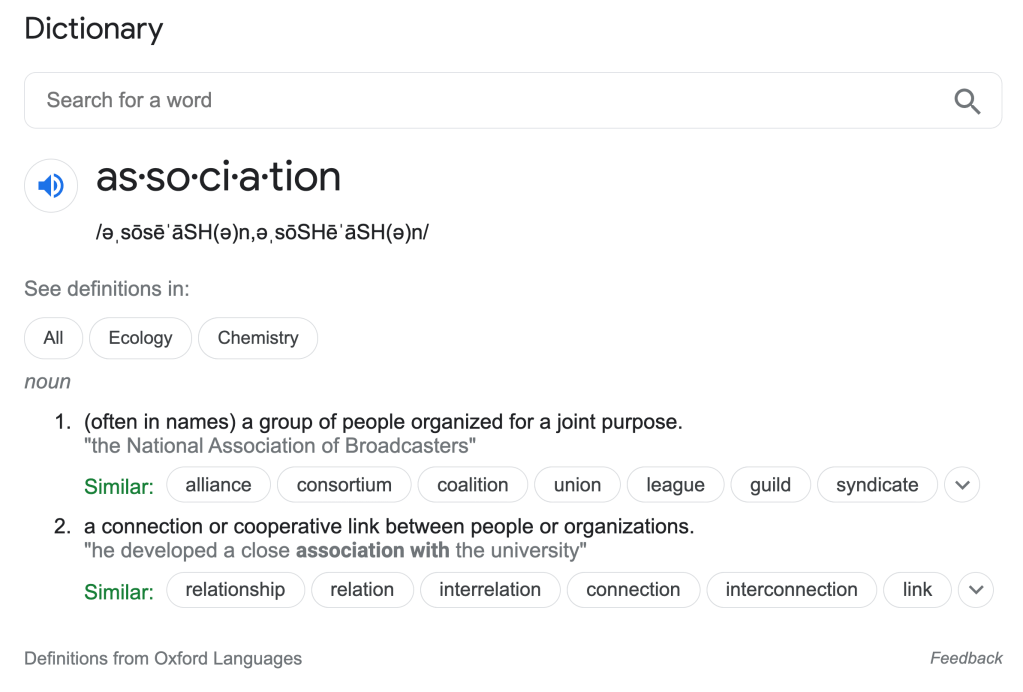
The architects may have defined “this essential bond” best:
Membership in the relevant professional organization is one of the things that separates a profession from a conventional job. It is a key element that defines a professional. Membership in one’s professional organization is expected of all professionals. It is important to support the advancement of one’s profession, and becoming a member of the professional organization is a part of that advancement.
Involvement with a professional society will afford the participant an opportunity to network with other colleagues in industry and practice. Making connections with others who have similar interests reinforces why one has chosen this career. It enables new professionals to associate with senior members of the profession and learn from them. Joining a professional organization is critical in keeping abreast of the latest knowledge and practices locally, regionally, and globally. It helps the professional to stay abreast of current issues and opportunities and will also assist in personal advancement for the member who becomes involved.
Many professional organizations offer continuing education, seminars, and lectures along with other opportunities for learning. An active participant will have the opportunity to serve in professional development. Working with people outside of one’s own firm and volunteering will build leadership skills. Opportunities for working with the community for the betterment of society and the local economy will be available. There will be possibilities for making real contributions to the human condition through projects the professional organization may take on as a part of giving back to the community. There are events that will call for public speaking skills and professional visibility which will assist in moving one’s career to another level by connecting with other professions and local leaders in the area. The profession will benefit from members’ service and the members will be rewarded in return by such things as personal fulfillment, professional enrichment, and building a stronger resume as a result.
Further definition of the professional responsibilities and ethical practices will come in part from the professional organization. It is a central core for regulation, education, revitalization, networking and service. Joining a professional organization provides occasions and experiences to renew one’s enthusiasm for the practice of interior design. The interaction can be both inspirational and enlightening. Being a member of a professional organization is a symbiotic relationship between the organization and the member that will benefit them both.
Alabama Board for Registered Interior Designers

My “top-ten” benefits for membership in a professional association like PMEA are:
- Development and sharing of the standards and best practices of the profession
- Student festivals and music performance assessments
- Professional development and career advancement opportunities: workshops, conferences, and publications
- Leadership training
- Collaborative projects such as health and wellness seminars, ethics training, library of online resources, etc.
- Networking opportunities
- Models and resources for curriculum writing
- Coaching and mentoring resources
- Resources in job hunting and interviewing techniques
- Advocacy of music education and “a voice” (more political “clout”) in defining future government public policy
So, What’s in it for Me?
Review a few of the synonyms of “association” mentioned above: “alliance,” “consortium,” “coalition,” “connection,” etc. I am sure you’ve heard the saying: “TEAM stands for Together Everyone Achieves More.” Or, to quote the philosopher Aristotle: “the whole is greater than the sum of its parts.”

The easiest way for me to show the value of joining PMEA and becoming more active, engaged, and successful in your teaching assignment (no matter what the primary specialty – general music, vocal, band, strings, jazz, music theory, technology, etc) is to take a snapshot of the benefits displayed on the www.pmea.net website. Why try to reinvent the wheel? You might be surprised the extent of the HELP that is available just around the corner! Go ahead… click away! Take a peek at what you may be missing!
- Advocacy and Public Policy
- Annual Conference 2022 (Kalahari Resorts/Poconos) – sessions to be shared in a future blog-post – and the Summer Conference in the Doubletree Hotel/Reading.
- Composition Program (deadline January 5, 2022)
- Collegiate Communique (archives)
- Council for Teacher Training, Recruitment, and Retention
- Crescendo Student Conference
- Early Childhood
- Educating Students with Special Needs
- Fest and Festival Information
- Future Music Educators Honors Symposium
- Higher Education and Society for Music Teacher Education
- Interactive Model Curriculum Framework and Curriculum & Standards Information
- Job Board
- Leadership Academy
- Lending Library
- Mentor Program
- Music Performance Assessments
- News and Updates including PMEA “Take Note” Podcasts and Community Happenings
- PA Collegiate Music Educators Association
- PA Department of Education Information
- PMEA News (archives)
- Research
- Retirement Resources and Retired Member Network eNEWS (archives)
- Scholarships and Awards
- Teaching Resources
- TRI-M
- Webinars
On a personal note, PMEA has provided me the insight, inspiration, and opportunities for substantial career growth, “places to go and people to meet” to fill-in-the-gaps of the skill training I may have felt were missing, for example methods and media for teaching a high school choral program for more than 16 years and directing/producing 37+ musicals. In addition, PMEA and NAfME have been the sole institutions that I have turned to for more than 50 years for their sponsorship of choral and orchestral music festivals and other enrichment that have provided my students new and highly motivating musical challenges and countless state-of-the-art once-in-a-lifetime experiences.
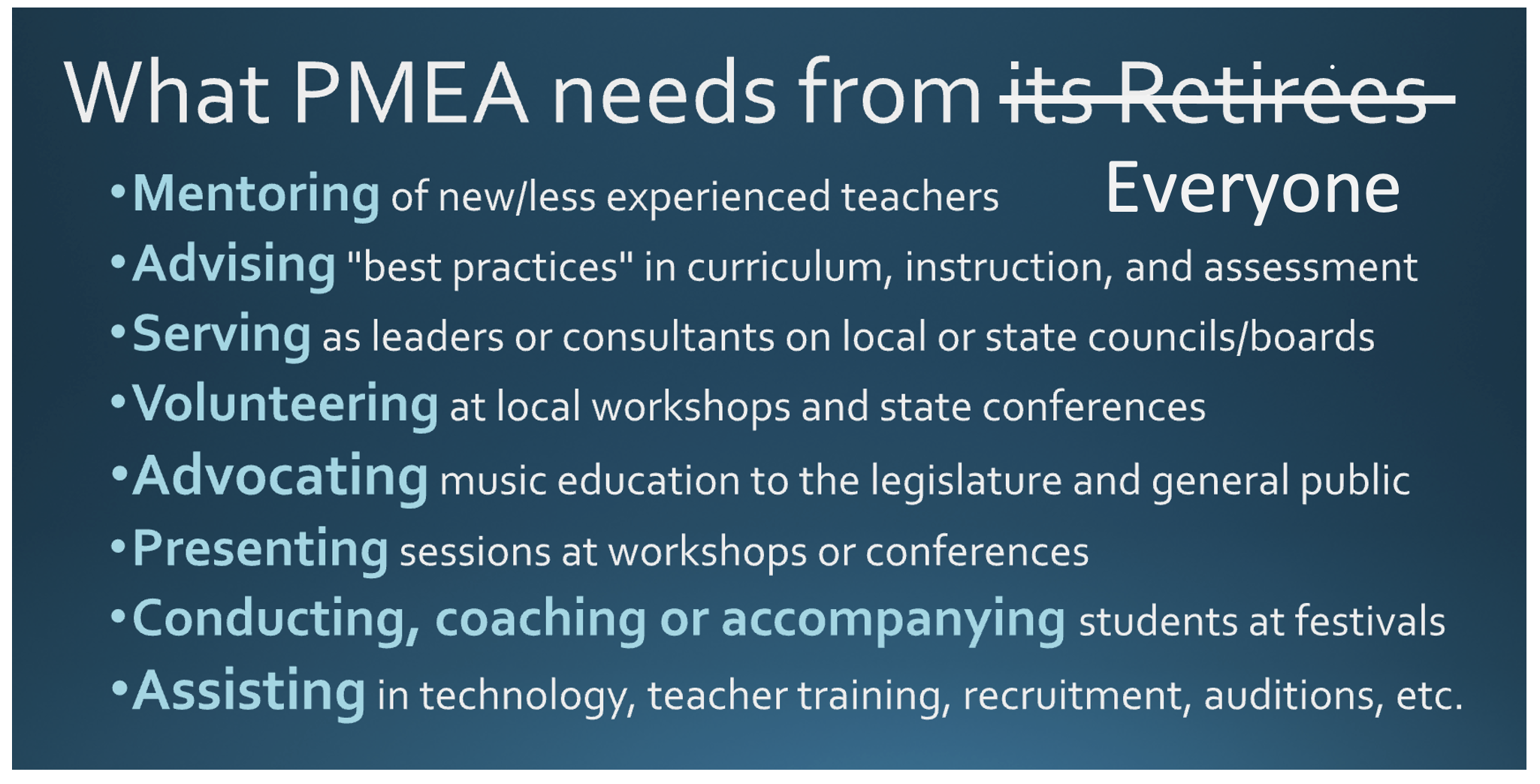
So now, reflect on the title of this blog! It is essential to give back to our association – to help it achieve its mission: “to advance comprehensive and innovative music education for all students through quality teaching, rigorous learning, and meaningful music engagement.” We’re all in this together, and together we can make it better! Slide #6 at the bottom of the retired members’ webpage proposes what PMEA needs from all members (not just retirees):
The number one thing you can do for ANY association is to pay your annual dues, attend its meetings, be active and HELP OUT! In return, PMEA can assist you in finding and sustaining your passions! What are you waiting for? If you have not renewed for the 2021-2022 year, please visit this PMEA membership webpage.
PKF
© 2021 Paul K. Fox
Pictures from Pixabay.com by artist Augusto Ordóñez












 His latest book, Leaders Eat Last, brings up the rationale of mutual collaboration and prioritizing the mission and the needs of your team members. Sinek observed that some teams were able to trust each other 100%, so much so that they would be willing to put their lives on the line for each other, while other groups, no matter what enticements or special incentives were offered, were “doomed to infighting, fragmentation and failure.” Why was this true?
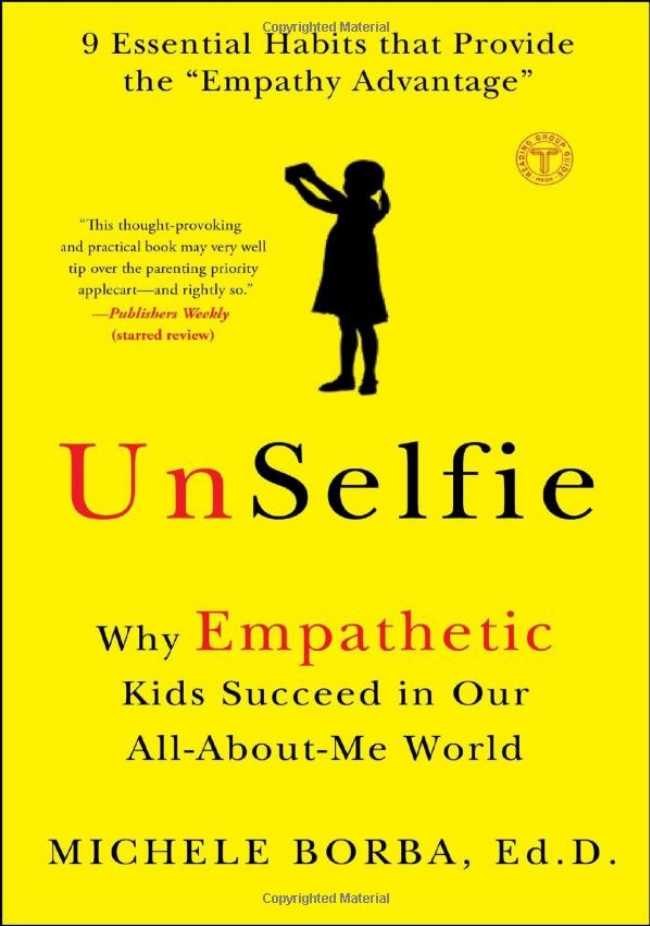 Also intriguing is an expanded Chapter 24 and Appendix section in the book called “A Practical Guide to Leading Millennials.” Similar to another suggestion for summer perusal, UnSelfie: Why Empathetic Kids Succeed in Our All-About-Me World by Michele Borba, Ed.D (Simon & Schuster, 2017) which focuses more on our current young “charges,” Sinek’s differentiation is provided to inspire and educate the ultimate multitaskers of the “distracted generation.”

![US Navy SEAL Team Three [ST3][Patch][1.5]](https://paulfox.blog/wp-content/uploads/2020/07/us-navy-seal-team-three-st3patch1.5.png) No Bad Teams, Only Bad Leaders
No Bad Teams, Only Bad Leaders

 One Minute Manager by Ken Blanchard and Spencer Johnson

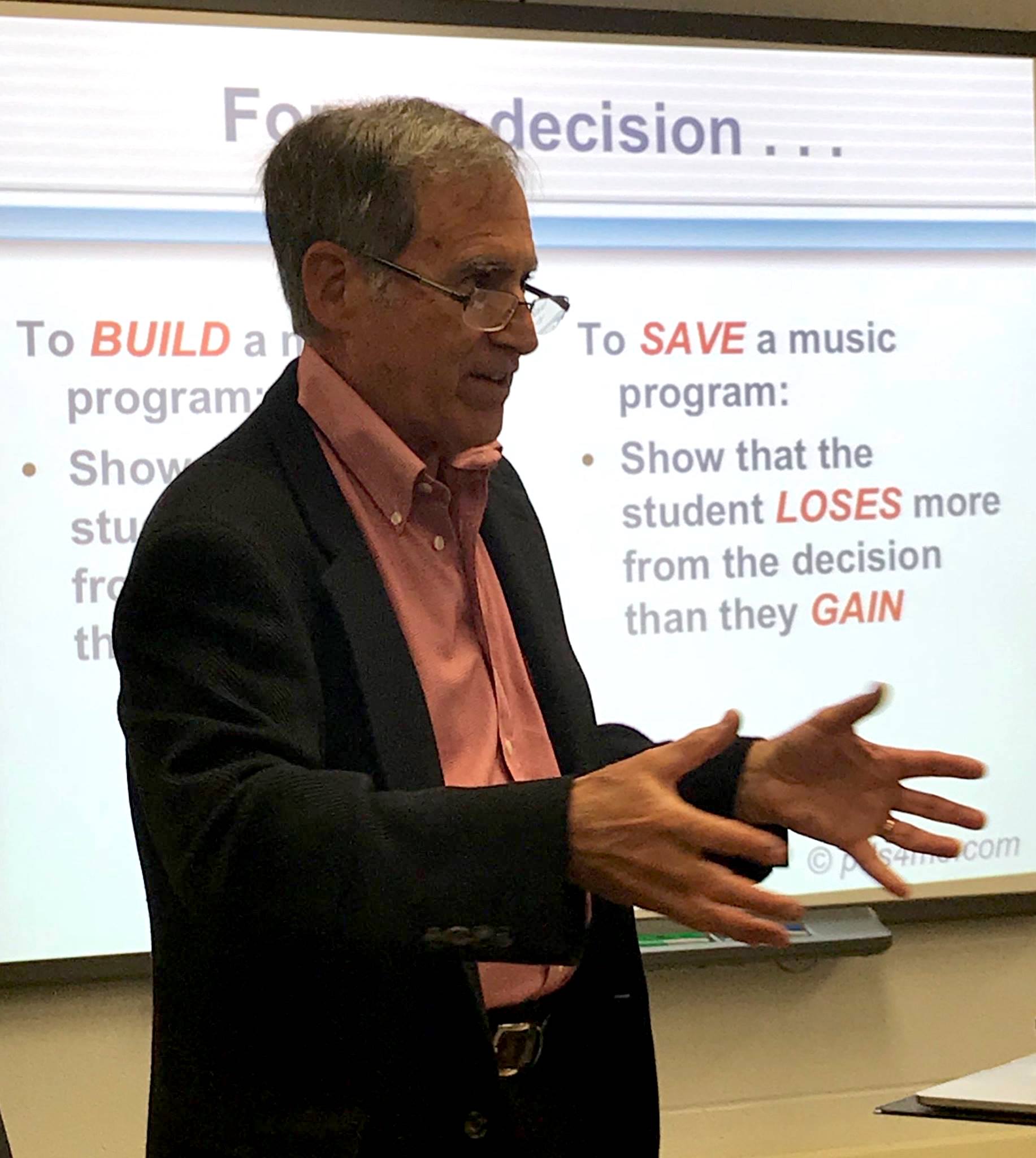 Once the WHY has been determined, then the district must determine the WHAT. WHAT learning activities need to be offered to the students in the district in order to help them achieve the desired outcomes stated in the mission? The answer to that question should help determine the curriculum for music.
 those hours would be scheduled, then the district must figure out exactly how many teachers will be needed to deliver that instruction and what qualifications those teachers should possess. The “WHO” part of the process – the staffing piece of the puzzle – should still be driven by the needs of the curriculum and should not change.
 of the K-12 music program using the WHEN, WHO, HOW and WHERE pieces that we will have to work with.
 Richard Victor is currently Adjunct Instructor for the University at Buffalo Graduate School Online.
 “Our students are feeling it too. Typically, nationwide, one in three teenagers has experienced clinically significant anxiety in their lifetime (Merikangas et al., 2010). It’s probable that during a pandemic that heavily impacts everyday life, levels of anxiety in children and teens are even higher, and the possibility of subsequent trauma greater.”



 For some, this has made matters worse… an “overload of abundance!” The multitude of venues and opportunities (too many unexplored “new technologies” for many of us baby-boomers!) included information about virtual ensembles, YouTube libraries, music games, lessons plans and platforms for synchronous and asynchronous e-learning, video-conferencing techniques, hardware and software reviews, etc.
 Go ahead and sign-up for a webinar or planned learning community meeting or two. Many professional development workshops are provided with “no extra fees” right now, like the NAfME library
  Five tips for coaching overwhelm:


 “It’s hard to create a work-life balance when life is filled with work. Teachers are known for working long hours off-the-clock for no additional compensation. This is even more prevalent in music education. We add performances, competitions, musicals, individual lessons, fundraising, data entry, and even music composition and arranging to our task list.”

 Her book should be required reading for all music teachers, even retirees who want to remain active in the profession. (Read my previous review
  Make self-care PRIORITY ONE for YOU! I know, you have heard all of these before:



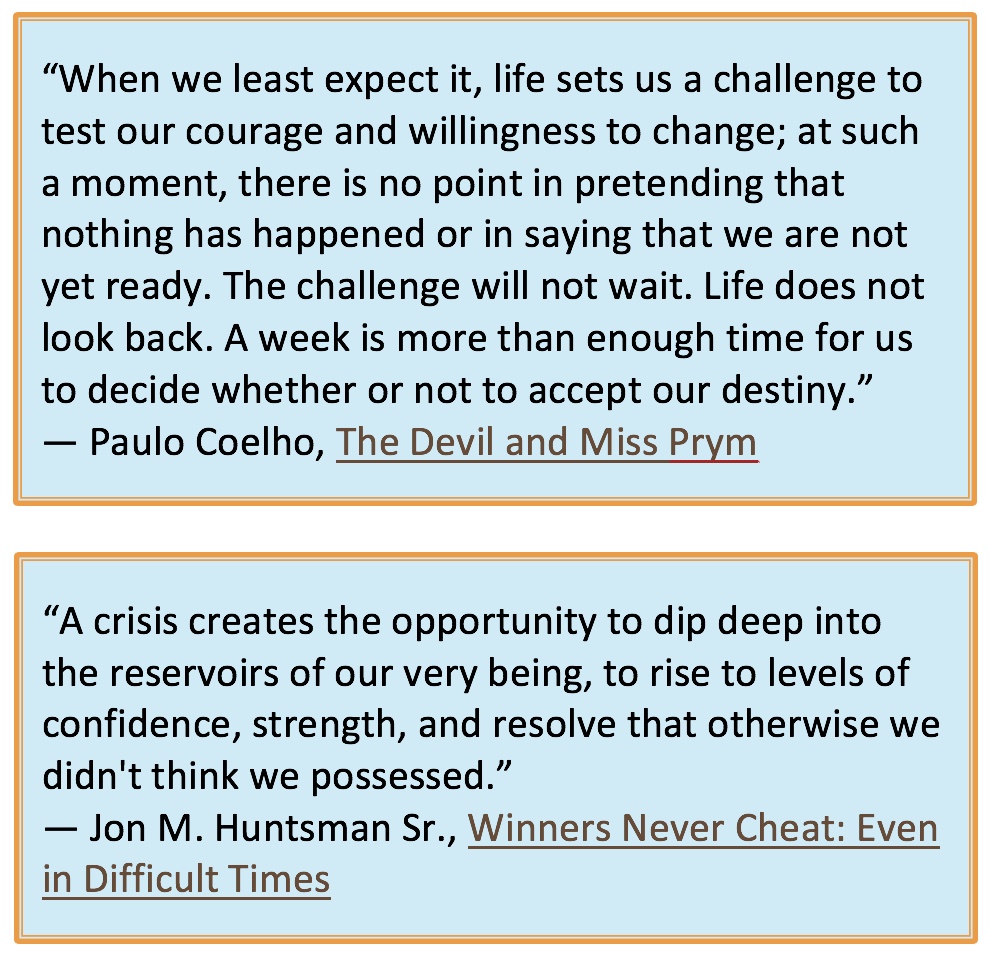
 No teacher will have any patience listening to your whining or remarks of “could have,” “would have,” or “should have been” excuses. What have we always wished for? “If only I had enough time to learn that new scale, étude, or song!” “With all of my other academic assignments, sports events, and extracurricular activities, how can I fit in moments for listening to bands, orchestras, or classical virtuoso artists performing on the web?” “When am I ever going to have the chance to compose…” (or “arrange” or “record” or “memorize” or “conduct” or “choreograph”) “…that piece?” “When will I get around to learn this new technique, practice sight-reading, or dive into those drills designed to improve my key literacy, rhythmic precision, tone, intonation, range, form, coordination, embouchure, stick rudiments, or bow control?
 The mission of South Hills Junior Orchestra, which rehearses and performs at the Upper St. Clair High School in Pittsburgh, PA, is to support and nurture local school band and orchestra programs, to develop knowledge, understanding, performance skills, and an appreciation of music, to increase an individual member’s self-esteem and self-motivation, and to continue to advance a life-long study of music. Members of the Orchestra learn, grow, and achieve positions of leadership to serve their fellow players.




 Anyone contemplating retiring over the next three years should visit their state’s retired member section and Retired Member focus area on the PMEA website:








 What are your greatest weaknesses?
 Because we all have weaknesses but rarely want to admit to them, it’s best to begin with a truthful answer and build your script from there. Select an answer that a hiring manager would not consider to be essential qualities or skills for the position as well as qualities that you are actively improving.
 Example weakness: Difficulty with an area of expertise
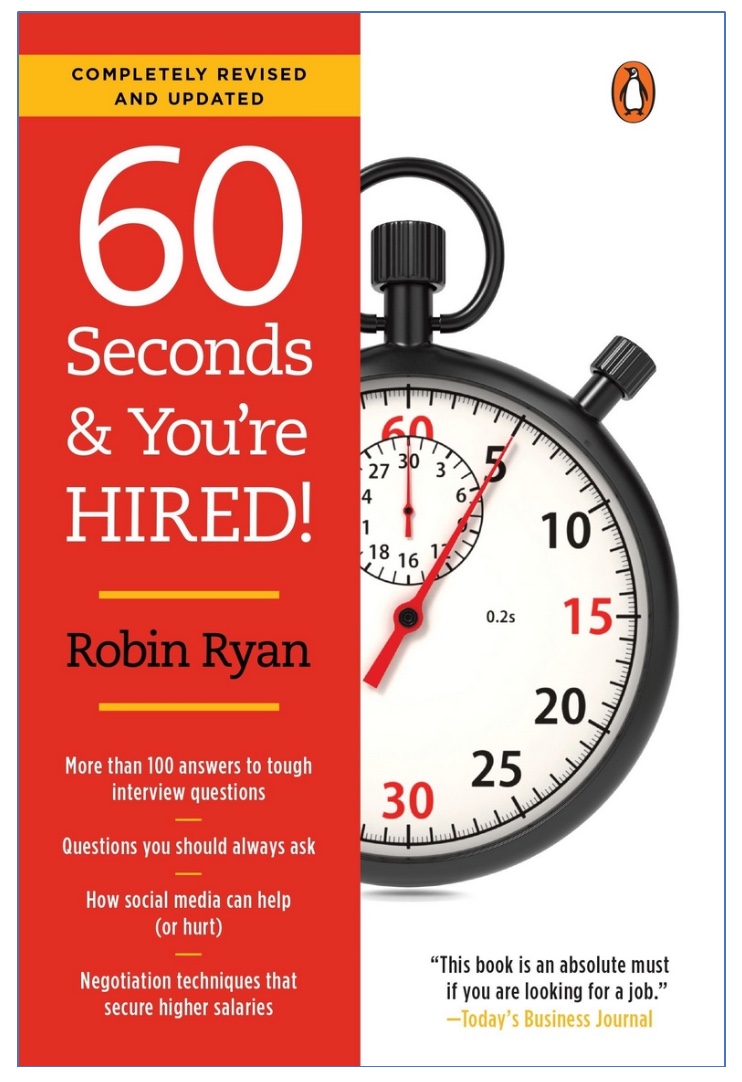 Focusing on Robin Ryan’s “interview tools” such as “the five-point agenda” and “60-second sell,” her book 60 Seconds and You’re Hired ” is inspiring and provides much greater depth (76 pages!) on answering those “thorny” interview questions. Nearly all of the sample questions above are also analyzed, offering easy-to-understand comments and recommendations for specific career paths. For example, Robin Ryan also weighs in on that inquiry “What is your greatest weakness?” – first offering to joke about it “I cannot resist chocolate!” and then, if it is reiterated, endorsing a strategy to share a work habit problem (like being a “Type-A” person) on which you are currently improving but is not critical for the position they are seeking to fill.





 13 years ago, I first learned about an ancient tradition for passing on personal values, beliefs, blessings, and advice to future generations called an “ethical will.” At a subconscious level, I must remember the custom, because when my father was diagnosed with lung cancer in 1990, I asked him to write a letter about the things that he valued. About a month before he died, my dad gave me two hand-written pages in which he spoke about the importance of being honest, getting a good education, helping people in need, and always remaining loyal to family. That letter – his ethical will – meant more to me than any material possession he could have bequeathed.
 Support the people and causes that are important to you.
 Directing the South Hills Junior Orchestra (non-salaried sharing of my teaching)


 paulfox.blog