Growing Student Leaders

The following course content, outline and supplemental materials were presented at the Upper St. Clair High School Leadership Academy on July 24, 2024.

As a follow-up to my workshop for the attendees and to grant full access to important links, a facsimile of the slide presentation, and printable handouts, please download the PDF documents below.

Below is a comprehensive summary of “Leadership 101.”
7/27/24 Update – Leadership Presentation

At the invitation of Upper St. Clair High School (USCHS) German teacher and summer leadership instructor Jacob Reis, it was my pleasure to meet and share my thoughts on “Leadership 101” with students in phase 2 of the USCHS Leadership Academy on Wednesday, July 24, 2024.

The national award-winning USCHS Leadership Academy is a one-week summer workshop offering students exposure to leadership concepts and practices. Students identify their leadership strengths and learn how these skills may be used to make them successful in all stages of life. Through experiential learning strategies, group projects, and hands-on activities, students experience the application of leadership skills, building confidence in their abilities and enhancing their capacity to serve in leadership roles. https://www.uscsd.k12.pa.us/Page/495

I enjoyed my interactions with about 30 rising sophomores who demonstrated they were already well on their way to becoming significant student leaders… and the proof was taking a week off from their summer vacation to enroll in the academy and then enthusiastically participating in my 45-minute workshop right after lunch! (Instead of nap time?) Hopefully, I was able to provoke some new thinking on the further development of their advancing leadership skills.

The only negative comment about the day is that I did not fully cover everything I intended (probably needing at least a full hour but would have enjoyed a half-day!)… thus the rationale for creating this blog-post. I only hope these budding “future leaders” will revisit this material and devote more time on it in research and self-analysis… and complete my optional homework to explore more perspectives on “the definitions of, distinctions in, and directions to becoming a dynamic and dedicated leader.”

Let the Games Begin

With a backdrop of more than 52 years in the field of education (beginning with my own HS days offering private lessons) and incorporating the experiences of an ongoing 44-year relationship in the Upper St. Clair schools, I was able to share philosophies, “best practices,” and anecdotes of lessons learned in working with countless past Fine and Performing Arts student leaders… so many “cream of the crop” drum majors, section leaders, concertmasters, producers, directors, rehearsal assistants, crew heads, leads, etc. Several of the hands-on interactive exercises we have explored in past student staff meetings and even at PMEA/PCMEA conferences were beneficial (“doing” works better than “saying!”), including:

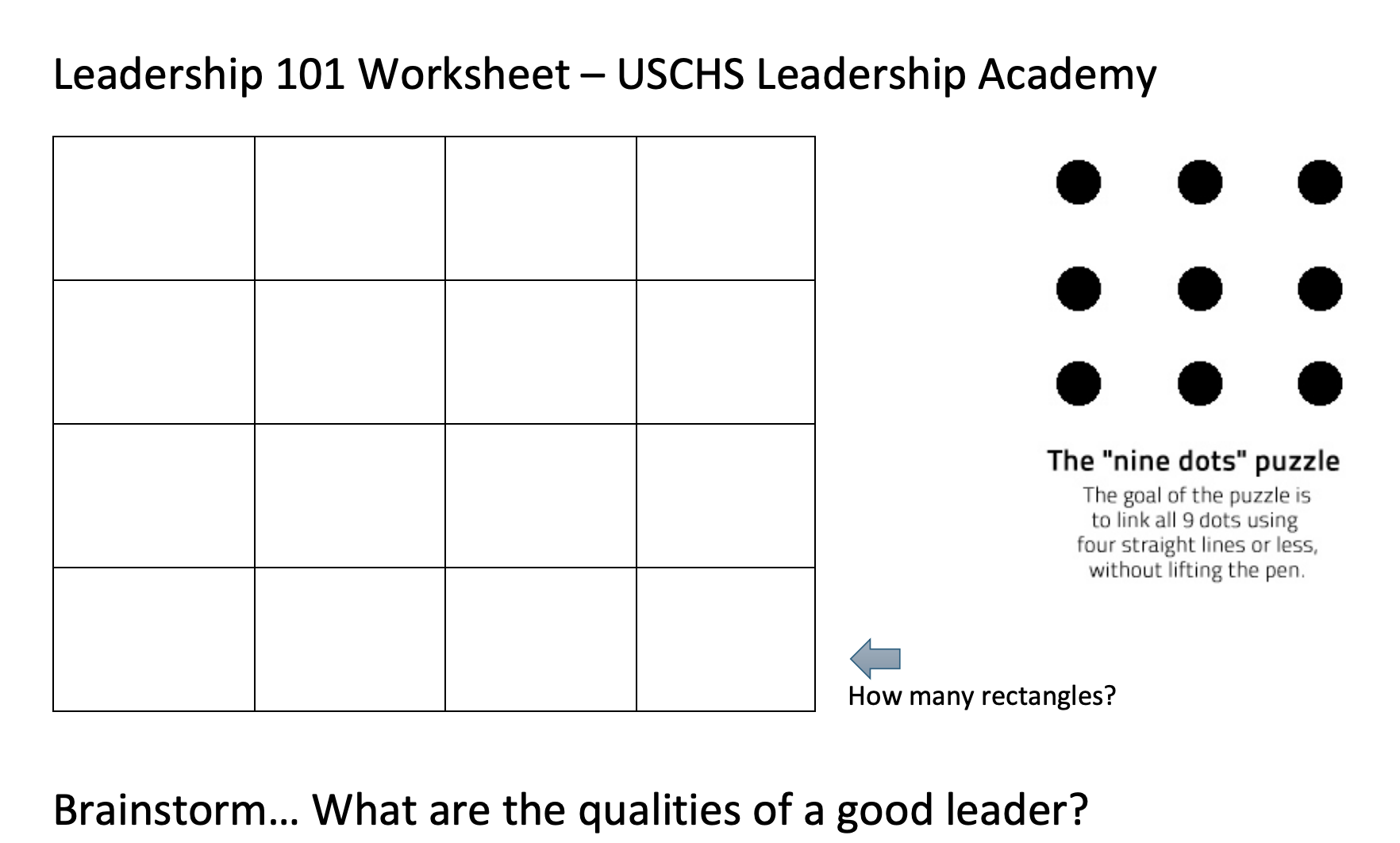
  • How Many Rectangles (thinking outside the box): See this 2015 Part II blog-post on Creativity.
  • The Clapping Game (stepping outside your comfort zone): “Put your hands together, clap and hold. Is your right thumb over your left or vice versa? Now try it the opposite way… until you can do it just as confidently! Now you have expanded your comfort zone! This is how we GROW!”
  • The Nine-Dot Puzzle (how creative are you?): See this 2015 Part I blog-post on Creativity.

Now Some Definitions

We reviewed some common “leadership vocabulary” during the session. Recognizing that there is a wide divergence in opinion on what makes a great leader, I chose to focus on portraying three triple-threat skill types that LEADERS ARE…

  • Visionaries
  • Coaches
  • Managers

I have always felt that leaders need to embrace change, not be afraid to “upset the apple cart,” foster a shift in new directions, create goals, and make improvements to the status quo… to bravely go out and figuratively “break something!” Things to do with a problem:

  • Ignore it
  • Resist it
  • Define it
  • Enjoy it
  • Find a use for it
  • Find a bigger problem

Numerous giants in the field of coaching and education have shared these one-line gems:

  • Leaders embrace new ideas or challenges.
  • Leaders are catalysts for change.
  • Leaders make goals and define targets.
  • Leaders model commitment and passion.
  • Leadership is all about creativity, innovation, and problem solving.
  • Leadership is about taking risks.
  • Leaders have positive self-esteem.
  • Leaders master good listening skills.

Extra handouts: Last week, I was not able to distribute these leadership quotes or the stuff and tasks of leadership, including words of wisdom from “leader luminaries” like the late great Babe Ruth, Abraham Lincoln, Vince Lombardi, Theodore Roosevelt, and my first USC school administrator and mentor Thomas Harshman.
Citing elements from the “curriculum” created by The Association of Washington Student Leaders (AWSL), a division of the Washington School Principals’ Education Foundation, we briefly touched on these leadership effectiveness goals (peruse my slides #18-25):

  • Communication skills
  • Group processes
  • Managerial skills
  • Self-awareness
  • Human relations skills

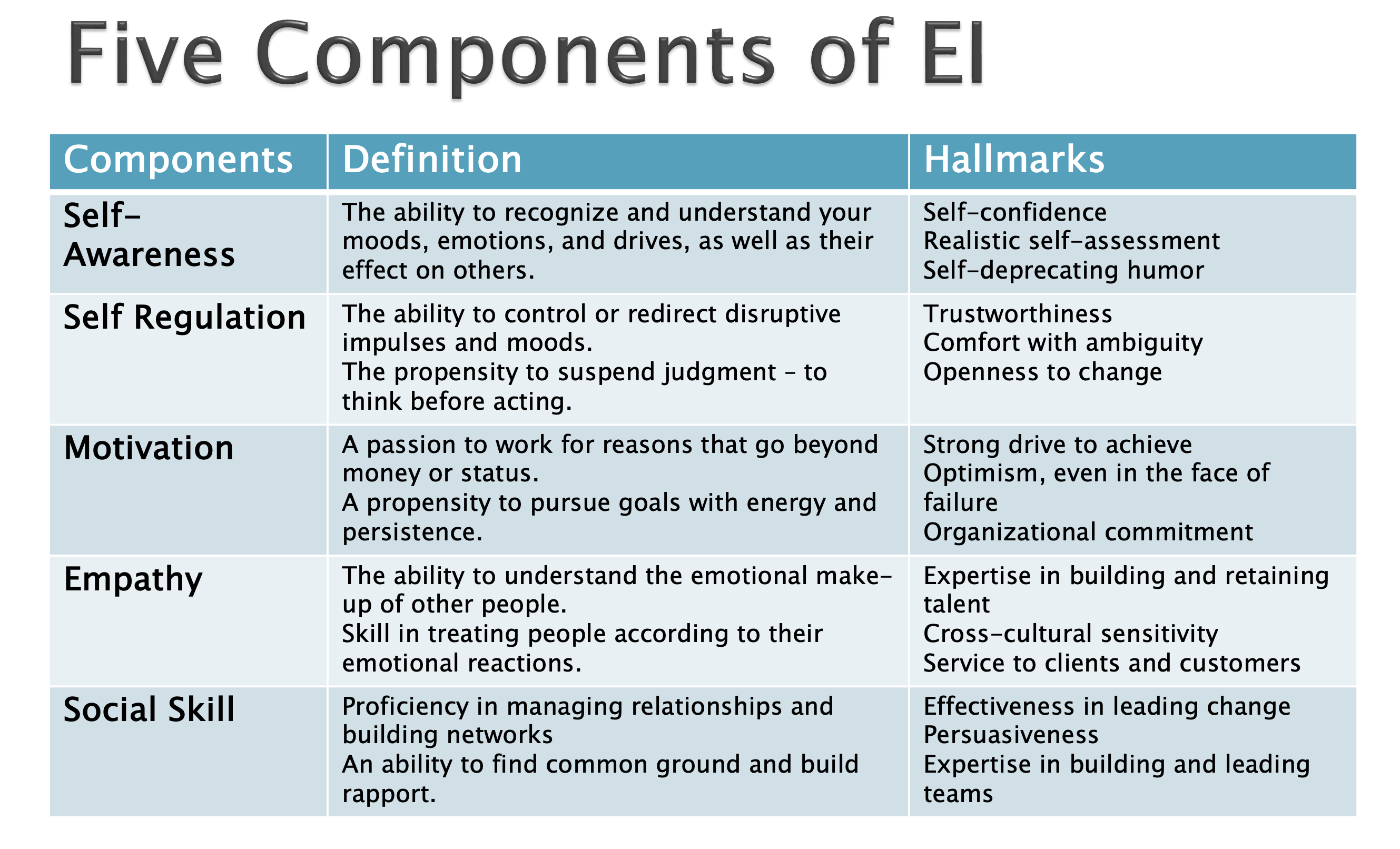
…which led us into diving into this table of emotional intelligence (EI) skills, supporting the self-awareness goals of AWSL and prescribed by the United Nations System Staff College and a book by Daniel Goleman What Makes a Great Leader:
Types of Thinking… and Leading

There was not enough time to unpack these “chapters,” much of it inspired by the research and work of Professor Curtis Bonk from Indiana University of Bloomington (check out slides #32-52 for descriptions):

  • Divergent thinking
  • Convergent thinking
  • Critical thinking
  • Cooperative/collaborative thinking
    (team-building)

Are You in the Right (or Left) Mind?
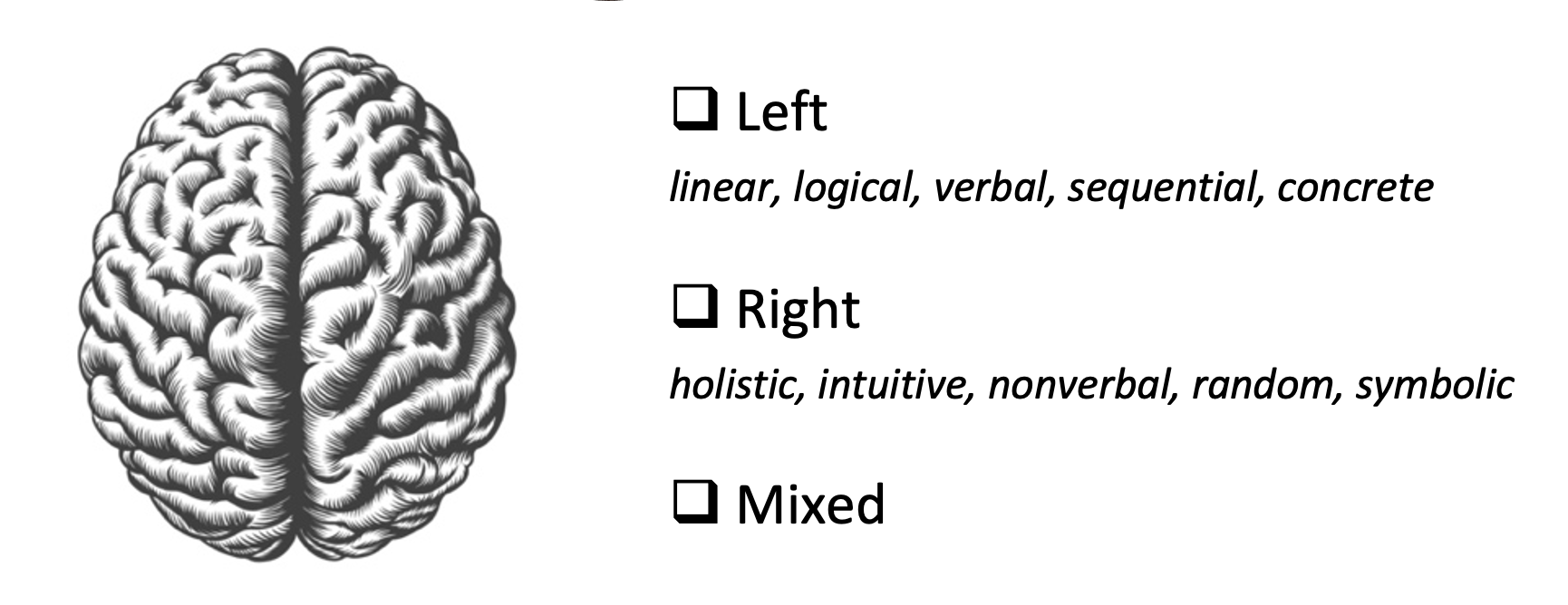
At the Leadership Academy session, we did enjoy taking an insightful quiz about left or right brain hemispheric dominance (although we were unable to finish scoring it), something which was first introduced to me at a teacher in-service led by USC Supervisor of Curriculum John Small, and many years later, shared in a virtual session of my community orchestra during the pandemic. Examples of the type of questions: Would you choose to complete a crossword puzzle (left-brain) or a jigsaw puzzle (right-brain), or view a movie (right) or read a book (left)?

This test introduces “thinking styles” and a taste of lateral brain research. (Disclaimer: There has been a lot of scientific debate on whether there is any value in measuring brain dominance. In addition, a true test of hemispheric brain dominance would take hours, MANY MORE questions, and still only offer a few generalizations! This exercise is only provided to give us a little more understanding in the way we think and how others may respond to our attempts to lead them.) I concluded with the following statement:

Now apply this to the “types” of people you may lead. The lefty “analyticals” may want meetings to start and end on time, keep to the agenda, follow Robert’s Rules of Order, receive written documentation, etc. “Righties” (a.k.a. “spatials”) may arrive late, prefer more time for free discussion (“bird-walking?”), enjoy more charts/graphs, demonstrations, and “hands-on,” offer good brainstorming… but fewer restrictions or rules to organizing the meeting.

More Self-Reflection Exercises and the “Oreo Cookie Technique”

Back to interactive “show-don’t-tell” FUN activities! We introduced several tools to motivate additional self-analysis (insights into current leadership skills/tendencies and future needs):

  • Brainstorming of Leadership Habits: “Close your eyes and visualize a ‘model leader’ you have known and admired. What were his/her outstanding personality characteristics? In 30 seconds, write down as many of these traits and others that would define a great leader.”
  • Step #2 Brainstorming: “Circle three of these qualities you feel are the most important for success.
  • Step #3 Brainstorming: “Highlight, underline, or star two of these traits that YOU model – your most developed skills. Now print these in the top two bubbles of the pink graphic below.
  • Step #4 Brainstorming: “Review the EI chart of the Union Nations Systems Staff College, outline of AWSL leadership skills, and the types of thinking/leading skills (above), and add one or two characteristics you feel YOU are well on your way to mastering (understanding that, as my wife would remind me, ‘pobody is nerfect!’ and there’s always room for even more work on them.”
  • Step #5 Brainstorming: “Once you have completed a self-analysis of the material covered in this session (blog-post + handouts + slides), select up to four ‘challenges’ you would consider for further study or goals for self-improvement.”
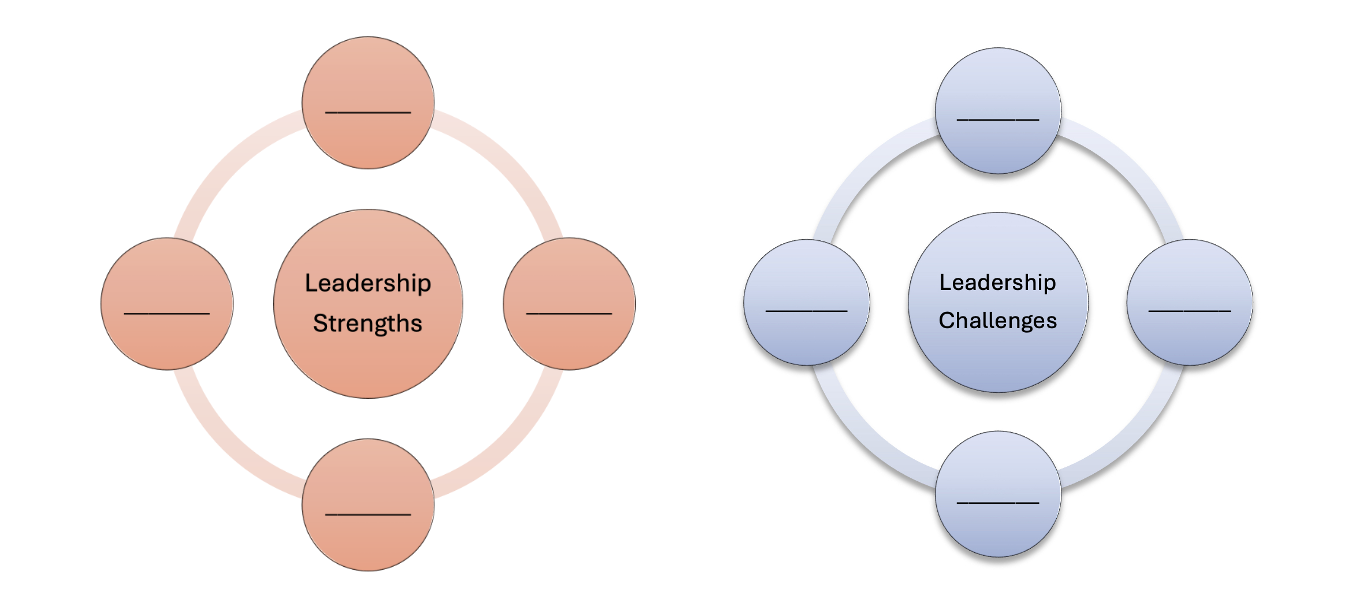
Now, the process for “peeling back the onion skin” and doing a deep dive into a critique of an individual’s strengths and weaknesses (without crushing egos) is best done by first using positive reinforcement (what are the good things already accomplished?), followed by the problem(s), need(s), or trait(s) that resoundly land “outside the comfort zone.” This punch list of one or more items will be the basis for generating an action plan for making positive changes. Finally, you should always end everything with the positive… a reflection on the progress that has already been made, observation of past achievements or gifts, and confidence that a set of recently adopted S.M.A.R.T. goals (below) would be attainable:

  • Specific
  • Measurable
  • Achievable
  • Relevant
  • Time-bound

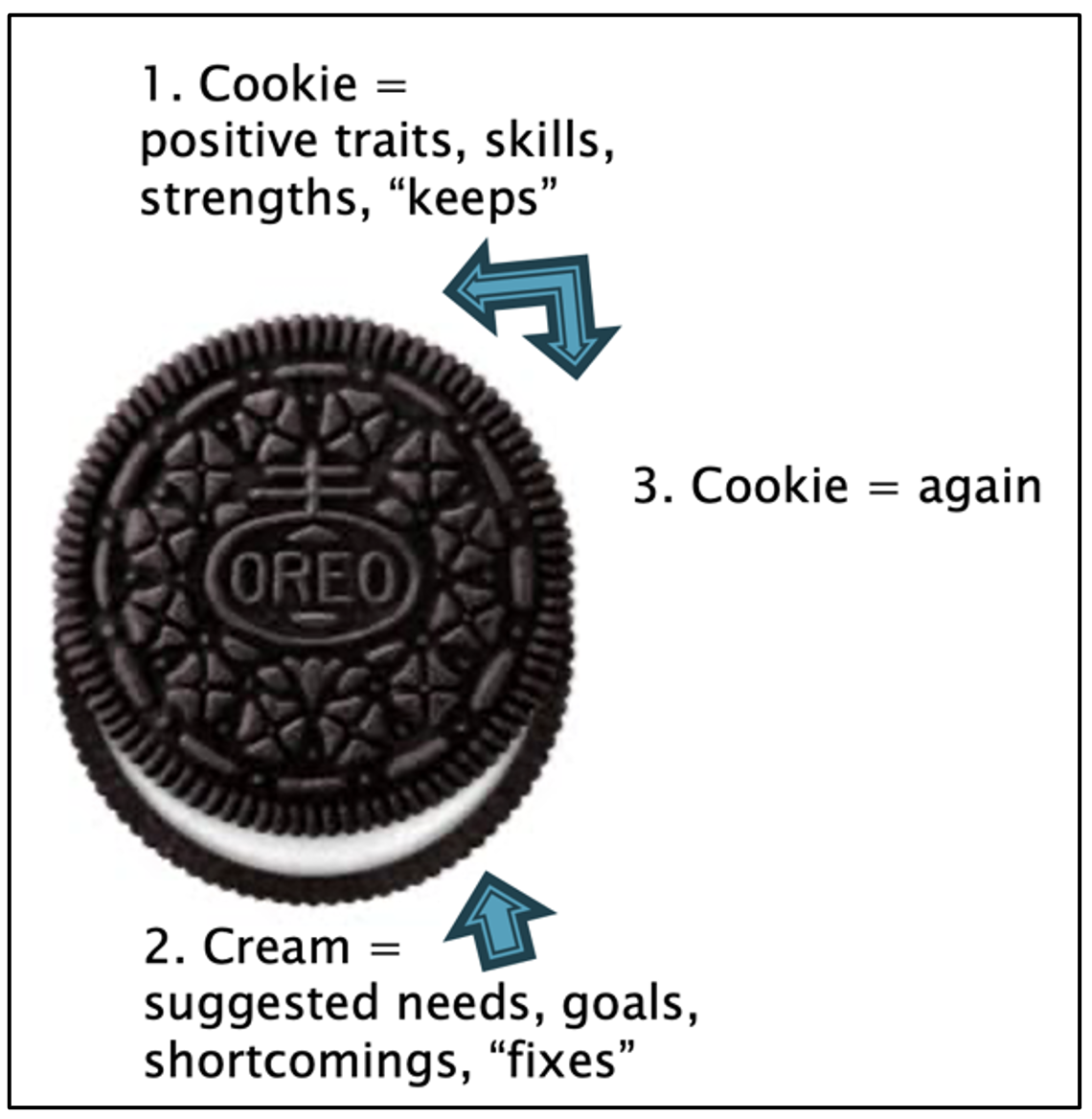
The Oreo cookie symbolizes layers, a progression from top to bottom, starting with the chocolate cookie (dunk it in milk if you wish!) which represents “the positives,” next going to the cream which depicts a “focus on improvements,” and then finishing off the bottom cookie (return to “the positives”). This is relevant for self-analysis as well as a model for the care and motivation of team members. The experienced and empathetic leader knows that “you catch more flies with honey than with vinegar…” and most people respond better to positive-first feedback along with a little sensitivity and diplomacy when pointing out their shortcomings. Whenever you can, “sandwich” the cocoa’s good things (“keeps”) around the cream’s criticism (“fixes”)… for yourself and in others within all work/school settings!
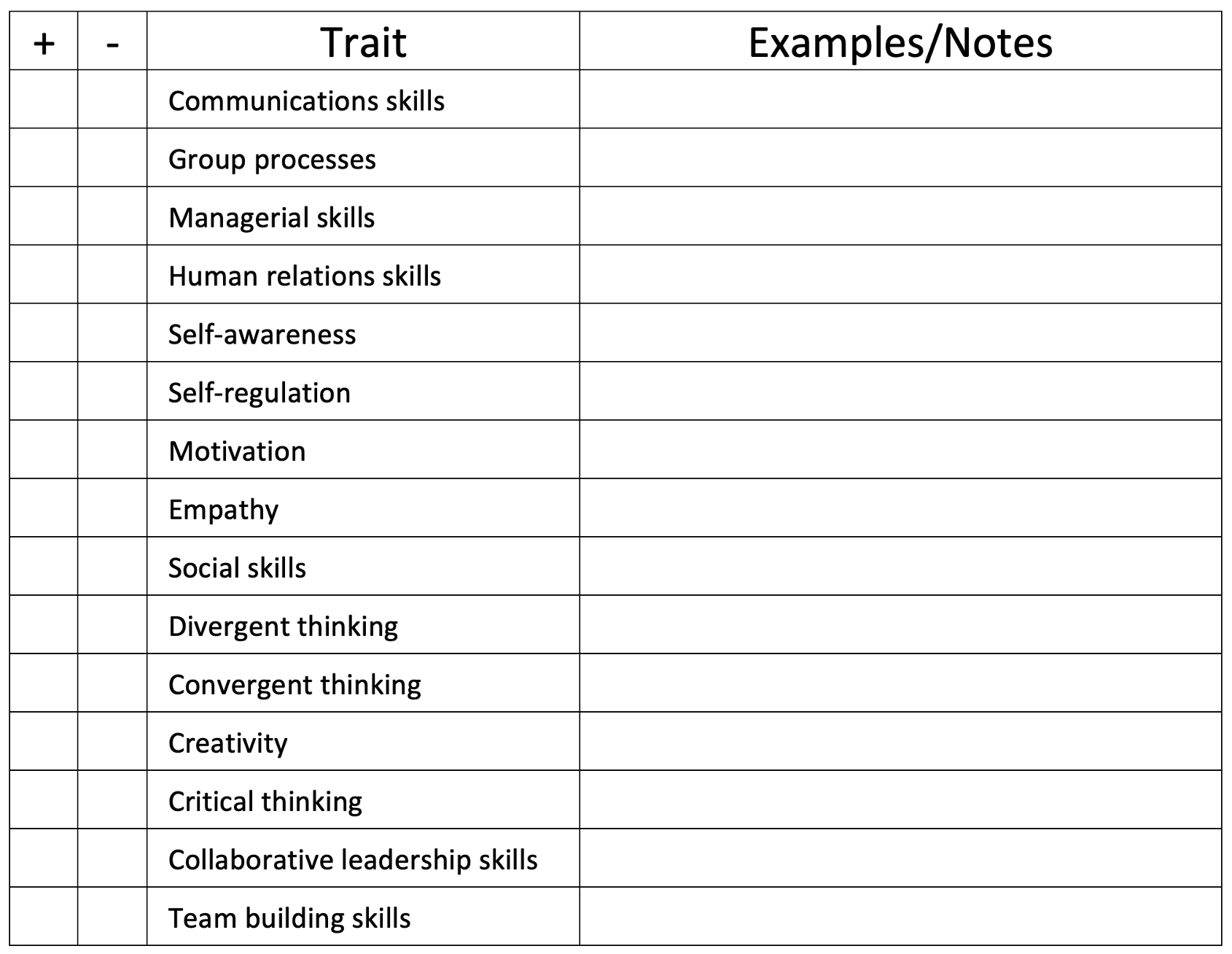
Coda: Personal Inventory Profile

I hope throughout this workshop attendees will self-assess their leadership potential and make a few plans for ongoing personal development. The above checklist outlining my USCHS leadership academy content was provided in this handout to help examine areas of interest and to formulate new goals. I also recommend taking time to peruse the homework for future leaders and especially read a few of my past posts on creativity in education and leadership showcasing several exemplary models of leadership… outstanding visionaries, coaches, and managers:

How’s your LQ = leadership quotient?

PKF

© 2024 Paul K. Fox

Music and Literacy Skills

How to Use One to Improve the Other

Editor’s Note: For this month’s blog, we bring back guest writer Ed Carter, a retired financial planner. (See his website here.) His piece, perfect for new music parents, summarizes many of the “intangibles” that music education provides to foster child development, especially the enhancement of language skills. In 2019, I wrote the blog “The Importance of Music Education” (click here) based on an interview I did for a local community news program on the essentiality of teaching music that covered many of these concepts. Special thanks go to Ed Carter for sharing his research and perspective. 

Parents and educators are always looking for ways to improve their children’s learning –
especially when it comes to reading. Sometimes, though, unconventional approaches can work wonders. Experts believe the best way to boost a student’s reading is actually to expand their knowledge and vocabulary by teaching them history, science, literature and the arts.

Understanding the Connection

Children who learn to play an instrument or who join a choir have a longer attention span and better listening skills. Music stimulates the brain in so many ways. In fact, playing music may help the human brain more than any other activity. Some researchers even suggest that musical training can alter the nervous system in a way that improves learning in a way that offsets the academic gap between affluent students and students from lower income backgrounds.

Music improves language skills in particular because there is a neurological connection between maintaining rhythm and reading. Scientific American notes that when children learn how to keep a beat, they are better able to concentrate on a passage and decipher the meanings behind the words. A child’s reading ability relies on making a connection between the symbols they see on the page and the sounds of letters.

The Best Age for Music Lessons?

There is no such thing as a kid being too young for music. Many parents even expose their child to melody and rhythm before they are even born in an attempt to stimulate brain activity. Drumming is a great place to start. It is more important they gain experience with music and learn to develop a meaningful relationship with it at a young age. Children as young as 3 can develop skills like identifying a beat, melody and instruments in music.

By the age of 5, your child may be ready for formal lessons with beginner instruments such as drums, the piano, violin, recorder, guitar or ukulele. If your 5-year-old is not ready to start formal lessons with an instrument, they can still develop their musical skills online. Invest in a kid-friendly laptop and some durable headphones that allow them to interact with online music programs and apps that develop skills that can translate to playing an instrument in time.

To exhibit your genuine interest in your kid’s growing skills, consider creating a music room for them to be able to learn and hone their craft. This dedicated space is a perfect place for distraction-free lessons. It’s a good idea to soundproof the room, too, so others in the home aren’t disturbed. Having a bonus room that can act as a multipurpose room can increase your home’s appraisal value should you decide to sell anytime soon, as such upgrades are what many buyers look for.

Music Mistakes to Avoid

While some children pick up an instrument like a fish to water, all children develop differently. If you push your child into music lessons too early, they can become overwhelmed. Not progressing in their skill can hurt their self-esteem and discourage their progress. Let your child ease into their musical lessons gradually with time.

You can’t just throw money at a music tutor and expect that to be enough. If you want your child to grow in their skills, sit with them as they practice each day. Consistent practice is more effective than long lessons and your presence provides discipline and encouragement.

There is going to be a moment where your child expresses a desire to quit their instrument. Instead of letting them give everything up too soon, always talk with your child about why they feel like quitting and adjust their lesson goals to make playing music fun again rather than a chore. Encouraging your child to stick with it rather than quit teaches your child how important perseverance is in life.

Children all over the country struggle with reading. Adding music lessons to your child’s schooling can help improve their language skills and reading comprehension. There’s no exact age for starting music lessons, but incorporating music into other activities is a great way to start introducing them to rhythm and melody. As they grow up, involve yourself in your child’s learning and measure progress by the goals they reach and the amount of fun they have.

PKF

© 2022 Paul K. Fox

Photo credits:

RECAP – Retirement Resources

A Treasure Chest of Tips for Living the Dream!

Are you retiring soon? Thinking about “taking the plunge” and “Crossing the Rubicon” into your “second beginnings” or “next chapter” of senior life?

No matter how busy you are now, you need to “take five” from your work or personal to-do’s and review the following recommendations from past blog posts at this site. Consider this a personal toolbox for the retired and soon-to-retire professional… and assigned HOMEWORK!

A good starting point would be to pick-up “The Myths of Retirement” and “Three Exit Lanes to Self-Help Retirement Guides,” or if you prefer to tackle everything at once, check out the omnibus “monster” resource guide posted here.

Now the top-ten list – a well-balanced collection of online essays. The more you read, the better you will be able to embrace a healthy transition through this major life passage!

1. Plan ahead for retirement: “It’s Not Only About the Money”

Read the entire article here.

It is agreed that a period of adjustment will occur during the first years of “interning” as a retiree, especially critical during the “pre-retirement” stage (believe-it-or-not, as many as six to ten years prior to “taking the big leap” to FREEDOM!). The solution to a smooth transition is to be prepared: communicate your intentions with your family members, and reflect on the vast considerations of the “who, what, when, where, how, and why” of retirement. This prep to your “golden years” is the perfect time for a little self-assessment and self-reinvention in finding new purpose, meaning, and fulfillment in your life.

2. Identify and take steps to alleviate the stress of leaving your job:
“The Good, The Bad, and The Ugly”

Read the entire article here.

The phases of retirement are discussed in greater depth here, as well as different departure scenarios and the usual post-employment “cycles of emotions.” This piece is particularly good if you have ever felt pushed into early retirement or experienced being unappreciated, disrespected, uninspired, unsupported, or “burned out” in your career.

3. Are you really ready? “Signs it is time to retire… OR “Signs is NOT okay.”

Read the entire article here.

This “countdown to retirement” article poses the essential question “Are you psychologically (or emotionally) prepared to retire?” and offers a “road map” of seven easy steps towards closure for prospective music teacher retirees.

For more insight, you should also peruse “When Should You Retire.”

4. Determine your retirement destination:
“Do you know where you’re going to…?”

Read the entire article here.

This early blog post proposed several factors to consider for the choice of where you want to live in retirement… both geography and floor plans. Another good source to read on this topic is the book that was published two years later by the retirement guru and former PMEA session presenter Dave Hughes: The Quest for Retirement Utopia – How to Find the Retirement Spot That’s Right for You.

5. Maintain your professional associations:
“Ask not what PMEA can do for you, but what you can do for PMEA!”

Read several articles:

A retired educator is a valuable resource. If you care about the profession, there are many ways you can continue to contribute your experience and wisdom, albeit less stressful and time-consuming moments, but still assist your colleagues who continue to “fight the good fight” in the field.

6. Acquire a more carefree attitude: “It’s Not Your Sandbox”

Read the entire article here.

It may be at times a challenge to surrender your urge to continue as “an agent of change” or, as E.A. Wynne has written in “The Moral Dimension of Teaching” (Teaching: Theory into Practice, 1995), habits of “moral professionalism.” Learn how chill out and NOT to stress out over someone else’s supposedly poorly run “sandbox” and limit the need to provide unsolicited advice or major problem-solving for other organizations. 

7. Make music: “Dust off your chops” and 8. “Sing your heart out…”

Read the both articles here and here.

What led you to select a career in (and the “calling” of) music education? Retirement is the perfect place and time to expand on your love and skills in creative self-expression. When a music educator retires, among the many joys and fruits of his/her career in the arts is a sudden life-style change – the glorious transformation of being set free from those things you no longer want nor need to do (routine day-to-day drudgery, paperwork, meetings, etc.), embarking on new journeys to explore and embrace revised personal goals – hopefully including a renewed refocus on making your own music!

9. Explore mind-stimulating engagements: “Have you fed your brain today?”

Read the entire article here.

The mind is a terrible thing to waste, even during retirement. Discover something new every day! Maximize your “brain health” with a host of these ideas to consider for your bucket list.

10. Take time to “give back” and volunteer:
“What does it mean to be eleemosynary?”

Read both of these articles here and here.

In the scheduling our free time in retirement, it is important to feel “needed” and find activities that foster “mattering” to promote a positive self-esteem, good mental health, and stable life balance. Are you making choices to contribute to the musical and personal success and welfare of others? For the realization of the mission of this blogger’s retirement pastime: “I refuse to sit idle, binge-watch movies on Netflix, or view hours of boring TV.” To quote the song’s lyrics, this “senior citizen” will never lament…

Life is so unnerving
For a servant who’s not serving
He’s not whole without a soul to wait upon
Ah, those good old days when we were useful
Suddenly those good old days are gone
Ten days we’ve been rusting
Needing so much more than dusting
Needing exercise, a chance to use our skills
Most days we just lay around the castle
Flabby, fat, and lazy
You walked in and oops-a-daisy!

– “Be Our Guest” from Beauty and the Beast

Stay Connected with PA Music Education

PMEA Annual Conference April 6-9, 2022 at the Kalahari Resort (Poconos)

PMEA retired members, please take note of these special events especially geared to YOU:

  • Free Retired Member Breakfast Meeting (including take-away gifts) on April 8 at 8 a.m.
  • Retirement 101 session on April 8 at 11:30 a.m. – Retired music teachers are encouraged to participate on the guest panel to “tell your own story” to help any interested soon-to-retire colleagues.
  • Three keynote speakers will join this year’s event: Dr. Tim Lautzenheiser, Lesley Moffat, and David Wish.
  • The U.S. Army Band “Pershing’s Own” will be featured on Thursday evening (April 7).
  • See last month’s blog for more details on the conference, tentative session schedule and exhibitors, AND the PMEA website.

PKF

© 2022 Paul K. Fox

Graphics from Pixabay.com:

Psychology of Music

Why Does Music Affect Our Emotions?

by Trishna Patnaik
Author Trishna Patnaik with a view of the mountains of Darjeeling, India

This special feature reviews something all music teachers, performers, and consumers already know that’s in our DNA… the need for music to sustain our lives! Guest authored by Trishna Patnaik, this poignant message is essential during these challenging times of COVID-19 and in support of many school music/art programs currently under siege.

PKF

Can you envision a life without music?

A world where your favorite musician is a doctor or lawyer, or construction worker because music doesn’t exist?

A life where you can’t turn on your favorite workout playlist while going for a run? Or the pump-up song to boost your confidence right before your big presentation cannot happen?

If you can’t, you are definitely not alone.

Music tends to hit on us a deep level. Whether it is sad music that helps us feel relatable when we are going through hard times or joyful music that adds an extra bounce to your step, music is incredibly powerful!

But, then why is this case? Why does music impact your brain and mood so deeply?

Music is a Universal Language…

…but we don’t always pay enough attention to what it’s saying and how it’s being understood. We wanted to take an important first step toward solving the mystery of how music can evoke so many nuanced emotions. Music has a special ability to pump us up or calm us down.

Listening to music can be entertaining, and it might even make you healthier. Music can be a source of pleasure and contentment, but there are many other psychological benefits as well. Music can relax the mind, energize the body, and even help people better manage pain.

Brain regions involved in movement, attention, planning, and memory consistently showed activation when participants listened to music—these are structures that don’t have to do with auditory processing itself. This means that when we experience music, a lot of other things are going on beyond merely processing sound.

Knowing better how the brain is organized, how it functions, what chemical messengers are working, and how they’re working—that will allow us to formulate treatments for people with brain injury, or to combat diseases or disorders or even psychiatric problems.

The notion that music can influence your thoughts, feelings, and behaviors probably does not come as much of a surprise. If you’ve ever felt pumped up while listening to your favorite fast-paced rock anthem or been moved to tears by a tender live performance, then you easily understand the power of music to impact moods and even inspire action!

The psychological effects of music can be very powerful and wide-ranging. Music therapy is an intervention sometimes used to promote emotional health, help patients cope with stress, and boost psychological well-being. Your taste in music can provide insight into different aspects of your personality.

Why Do People Listen to Music?

Over the past several decades, showcase numerous functions that listening to music might fulfill. Different theoretical approaches, different methods, and different samples have left a heterogeneous picture regarding the number and nature of musical functions.

Principal component analysis suggested three distinct underlying dimensions. People listen to music to regulate arousal and mood, to achieve self-awareness, and as an expression of social relatedness. The first and second dimensions were judged to be much more important than the third—a result that contrasts with the idea that music has evolved primarily as a means for social cohesion and communication. The implications of these results are discussed in light of theories on the origin and the functionality of music listening and also for the application of musical stimuli in all areas of psychology and for research in music cognition.

The psychology of music seeks to interpret musical phenomena in terms of mental function; that is, it seeks to characterize the ways in which people perceive, remember, perform, create, and respond to music. While centred on the empirical findings and theoretical approaches of psychology, the field is highly interdisciplinary, with input from neuroscientists, linguists, geneticists, computational modellers, physicists, anthropologists, music theorists, music performers, and composers.

While the study of music has a long history, dating from the ancient Greeks, the psychology of music as an empirical science did not emerge as a full-fledged discipline until the second part of the 20th century. During the last few decades the field has advanced rapidly, and it interfaces strongly with other branches of psychology, such as the studies of perception, cognition, performance, human development, personality psychology, psycholinguistics, clinical neuropsychology, evolutionary psychology, ability testing, and artificial intelligence.

Musical activity combines perceptual, cognitive, and motor skills in real time and it can offer social and health benefits for diverse populations. While psychologists and neuroscientists probe musical activity for insights about the human mind and brain, music scholars examine its cultural, pedagogical, and theoretical aspects. Though these approaches can complement each other, scientific and humanistic studies of music are often disconnected.

This can result in experiments with flawed musical stimuli and musicological writings with problematic assumptions about human cognitive processes. The human brain contains neural mechanisms specific to music perception. It has identified a neural population in the human auditory cortex that responds selectively to sounds that people typically categorize as music, but not to speech or other environmental sounds. It has been the subject of widespread speculation.

The Benefits of Listening to Music

  1. Brain Focus is Enhanced

Any music listener will agree that music can evoke emotions such as pride, elation, or relaxation. That music does more than that for humans: it stimulates various parts of the brain and bodily responses. How do different kinds of music affect the human body physiologically and psychologically? Is the unconscious experience elicited by the autonomic nervous system analogous to what is experienced consciously through emotions?

Background music, or music that is played while the listener is primarily focused on another activity, can improve performance on cognitive tasks in older adults. One study found that playing more upbeat music led to improvements in processing speed, while both upbeat and downbeat music led to benefits in memory.

So the next time you are working on a task, consider turning on a little music in the background if you are looking for a boost in your mental performance. Do consider choosing instrumental tracks rather than those with complex lyrics, which might end up being more distracting!

  1. Music Can Reduce Stress

It has long been suggested that music can help reduce or even manage stress. Consider the trend centred on meditative music created to soothe the mind and inducing relaxation. Fortunately, this is one trend supported by research. Listening to music can be an effective way to cope with stress.

Listening to music had an impact on the human stress response, particularly the autonomic nervous system. Those who had listened to music tended to recover more quickly following a stressor.

  1. Music Can Help You Eat Less

One of the most surprising psychological benefits of music is that it might be a helpful weight-loss tool. If you are trying to lose weight, listening to mellow music and dimming the lights might help you achieve your goals.

Music and lighting help create a more relaxed setting. Since you are more relaxed and comfortable, then you may consume food more slowly and be more aware of when you began to feel full.

You might try putting this into practice by playing soft music at home while you eat dinner. By creating a relaxing setting, you may be more likely to eat slowly and, therefore, feel fuller sooner!

  1. Music Can Improve Your Memory

Some feel like listening to their favourite music improves memory, while others contend that it simply serves as a pleasant distraction.

It depends upon a variety of factors, including the type of music, the listener’s enjoyment of that music, and even how musically well-trained the listener may be. Musically naive students learned better when listening to positive music, possibly because these songs elicited more positive emotions without interfering with memory formation.

However, musically trained students tended to perform better on learning tests when they listened to neutral music, possibly because this type of music was less distracting and easier to ignore. If you tend to find yourself distracted by music, you may be better off learning in silence or with neutral tracks playing in the background.

  1. Music Can Help Manage Pain

Music can be very helpful in the management of pain. The effects of music on pain management found that patients who listened to music before, during, or even after surgery experienced less pain and anxiety than those who did not listen to music.

While listening to music at any point in time was effective, noted that listening to music pre-surgery resulted in better outcomes. Music listeners require less medication to manage their pain. There was also a slightly greater, though not statistically significant, improvement in pain management results when patients were allowed to select their own music.

  1. Music May Help You Sleep Better

Insomnia is a serious problem that affects people of all age groups. While there are many approaches to treating this problem, it has been demonstrated that listening to relaxing classical music can be a safe, effective, and an affordable remedy.​ Sleep quality is enhanced for those who listened to soothing music before going to sleep over a period of time without any intervention or breakages.

  1. Music Can Improve Motivation

There is a good reason why you find it easier to exercise while you listen to music. Listening to fast-paced music motivates people to work out harder.

Speeding up the tracks resulted in increased performance in terms of distance covered, the speed of pedalling, and power exerted. Conversely, slowing down the music’s tempo led to decreases in all of these variables.

So if you are trying to stick to a workout routine, consider loading up a playlist filled with fast-paced tunes that will help boost your motivation and enjoyment of your exercise regimen!

  1. Music Can Improve Mood

Another of the science-backed benefits of music is that it just might make you happier!  People who listen to music knew an important role in relating arousal and mood. Participants rated music’s ability to help them achieve a better mood and become more self-aware as two of the most important functions of music.

Listening to music is not directed to become happier intentionally!  However, if you do so by working to determine your own levels of happiness, you will show improvement in the moods and feeling happier.

  1. Music May Reduce Symptoms of Depression

Music therapy can be a safe and effective treatment for a variety of disorders, including depression. Music therapy was a safe, low-risk way to reduce depression and anxiety in patients suffering from neurological conditions such as dementia, stroke, and Parkinson’s disease.

While music can certainly have an impact on mood, the type of music is also important. Classical and meditation music offer the greatest mood-boosting benefits, while heavy metal and techno music are ineffective and even detrimental.

  1. Music Can Improve Endurance and Performance

Another important psychological benefit of music lies in its ability to boost performance. While people have a preferred step frequency when walking and running, scientists have discovered that the addition of a strong, rhythmic beat, such as fast-paced musical track, could inspire people to pick up the pace.

Runners are not only able to run faster while listening to music; they also feel more motivated to stick with it and display greater endurance. While research has found that synchronizing body movements to music can lead to better performance and increased stamina, the effect tends to be the most pronounced in cases of low to moderate intensity exercise. In other words, the average person is more likely to reap the rewards of listening to music more than a professional athlete might.

So why does music boost workout performance?

Listening to music while working out lowers a person’s perception of exertion. You’re working harder, but it doesn’t seem like you’re putting forth more effort. Because your attention is diverted by the music, you are less likely to notice the obvious signs of exertion such as increased respiration, sweating, and muscle soreness.

Music engages people with learning disabilities

There is evidence that music interventions can offer opportunities for creative, psychological, and social developments for individuals with mild to profound learning disabilities, addressing the disadvantages they face in respect of social outcomes.

Music can change the world

Do you ever listen to a song and find yourself moved so deeply you are almost in tears? Have you ever been to a live performance that turned your worst day into your best? Have you ever heard a song that inspired you? Music has the power to move us and to change us. Yet today’s music mostly does not seem to have the same earth-moving, society-shaping effects as that of the past. 

With today’s technology, music has become even more of a part of our life experiences: we listen to it on our drive to work, when we go to parties, while we study, when we exercise, and in so many other settings. There are, however, still musicians who hope that their words will inspire change.  

Music with a message

The combination of the right lyrics, rhythm and instruments can build a group identity, stir strong emotions, engage audiences and amass people to take action. This makes music the perfect partner for social change.

The effect of music on emotions

It is undeniable that music can stimulate our emotions, evoking different feelings like sadness, happiness, calmness, relaxing and nostalgic feelings. This emotional stimulation from music is because it activates areas in our brain that process sound features. It also activates the limbic brain areas associated with emotions and the prefrontal areas, which is connected to decision making!

One of the reasons music has a huge impact on our emotions is that our mirror neuron system is activated when music is being played. It may be due to the song’s pitch, volume, and timbre. Indeed, music plays a big part on our emotions. If we are broken hearted, we react accordingly when we hear music or songs that were connected to our failed relationships. We sometimes find ourselves in tears hearing a song that reminds us of these relational memories.

There are also points in our lives when we are feeling so low that listening to something inspirational can often alter our negative mood into a positive one.

The Effect of Music on Intellectual Capacity

Can music make people smarter?

Those who undergo musical training are said to be more cooperative and coordinated than their non-musically trained counterparts. This is probably because people who play an instrument or sing usually work with other people; hence, they learn how to interact and communicate with others, making them more open to social interaction.

People who are into music or those who have undergone musical training show an increase in brain plasticity. Brain plasticity is the innate ability of the brain to change shape and get bigger in response to learning or training.

There is a significant difference in terms of structures of auditory and motor cortices in the brain and other brain areas between musicians and non-musicians.  They found out that musicians tend to have a bigger and structured brain areas compared to non-musicians. Musical training affects other domains such as verbal intelligence and executive functions, which often lead to better academic performance.

The Effect of Music on Attainment and Creativity

Music is said to enhance one’s creativity and attainment. There is a strong association between music and attainment of tasks! Music could also make us enter into a “wandering mode.” This wandering mode enables us to daydream or imagine things, which sometimes stimulate our creative side.

Music as a Therapy

Music can improve your mood, quality of life, and self-esteem, but it is also:

  • Extremely safe
  • Non-invasive
  • Easily accessible
  • Non-expensive
  • Music Boosts Our Moods

Can your favorite songs be a form of therapy?

It was discovered that music can release dopamine in two main places in the brain, the dorsal and ventral striatum. When you are having a pleasurable experience, such as listening to your favourite song, these areas of the brain light up.

These things happen because musical patterns affect our auditory cortex, which is a part of the neural reward system and other areas involved in memory and emotion.

Music has accompanied major social events throughout the history of mankind. Major gatherings such as weddings, graduations, or birthdays are usually recognized by a familiar tune!  There is evidence that music plays a large role in emotional processes within the brain. An individual’s emotional state of mind can directly impact daily cognition and behaviour.

Studies have shown that music has the ability to regulate a wide range of both positive and negative emotions. Determining the degree of music’s influence on aggression using two extremes of genre such as: relaxing yoga music versus aggressive rap music!  It is seen that those who listened to yoga music show lower aggression, while those who listened to rap music have higher aggression. Aggressive music can make listeners more aggressive emotionally compared to other types of music!

How Many Emotions Can Music Make You Feel?

The subjective experience of music across cultures can be mapped within at least 13 overarching feelings: amusement, joy, eroticism, beauty, relaxation, sadness, dreaminess, triumph, anxiety, scariness, annoyance, defiance, and feeling pumped up.

So much is the power of music, the vibe of music is so propelling that you must enamour enormous benefits and experiential experiences of music time and again. So that you become as timeless as music itself! This is the very derivative of the psychology of music as poignant, proper and poised as music itself!

References

Guest blogger Trishna Patnaik

Trishna Patnaik is a self-taught visual artist, art therapist, workshop presenter, and full-time professional painter from Mumbai, India. She holds the degrees of BSc (Life Sciences) and MBA (Marketing). Trishna has been practicing art for over 14 years. After a professional stint in various reputed corporates, she realized that she wanted to do something more meaningful. She found her true calling was painting. She says, “It’s a road less travelled but a journey that I look forward to everyday.” Trishna offers this inspiration for the advocacy of music and art at a time we all need to support continuation of school programs in the Fine and Performing Arts, so essential to the social and emotional learning of all students during the pandemic.

© 2020 Paul K. Fox
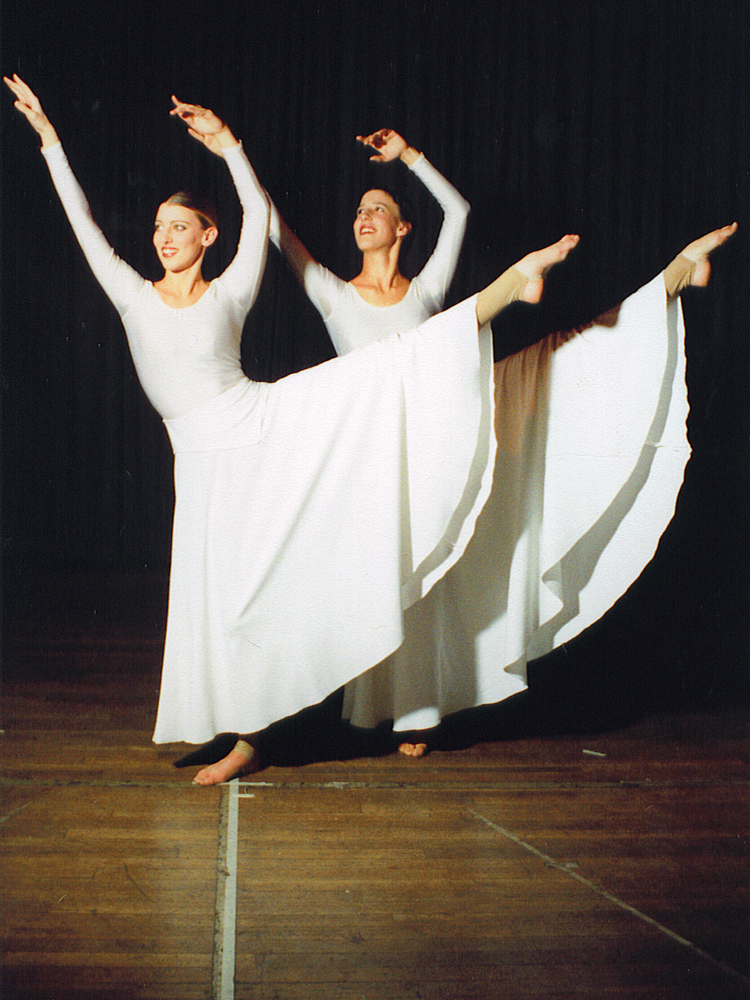
Photo credit from Pixabay.com by Gerd Altmann: music-sheet-in-a-shadow-flute-piano.” Vector graphics by Gordon Johnson.

An Engaged Mind Makes for a Happy Retiree

Boost Your Health and Outlook on Life with Brain Stimulating Activities!

shiny-brain-1150907-1

Have you fed your brain today? The mind is a terrible thing to waste, retired or not! How do you maximize your brain health and have fun doing it?

Intentionally Energize Your Mind

According to Dr. Angela K. Troyer in her August 2014 Psychology Today blog , “One great way is to find leisure activities that challenge and engage you, and to participate in them often.”

Dr. Troyer says the research is clear. “In recent years, there has been accumulating evidence that participating in activities that make you think hard and learn new things is good for your brain health. People with such active, engaged lifestyles tend to do better on memory and other cognitive tests than people who are less engaged. Even more encouraging is research showing these same individuals are less likely to develop dementia – such as Alzheimer’s disease – than those with less active lifestyles.”

She summarizes her top 6 ways to engage your brain with advice for new and challenging learning. She concludes, “It’s important to pick something that makes you think a bit.”

  1. Nurture your inner artist. You have heard me rant about this before. Music educators, go back to your “creativity roots” which inspired you to enter into this profession and “make your own music.”
  2. dancers-in-white-1440514Take up a new hobby. Now that you have the time, go exploring… and the skies the limit! But don’t forget, anything worth doing “engages the mind!”
  3. Explore cultural activities. Near or far, this is a no-brainer! We are talking about the very things we love and have experienced most of our lives: the symphony, ballet, theater, opera, museums, etc.
  4. Do old activities in new ways. How creative are you? Dr. Troyer asks, “If you already have some favorite activities, think about how you could ‘shake them up’ and make them into novel, challenging activities.”
  5. Learn something new, just for the fun of it. How courageous are you? What are you waiting for? You should have an extensive to-do list of things to try for the first time.
  6. Take the ultimate “formal learning” challenge. Enroll in a course at the local community college, community center, or library, or sign-up to volunteer in a new organization doing something you have never done before.

Read Dr. Troyer’s full article at https://www.psychologytoday.com/blog/living-mild-cognitive-impairment/201408/6-ways-engage-your-brain.

curious-cat-cutout-1405973Curiosity does not kill the cat… or the retired person either!

Do you know the differences among IQ (intelligence quotient), EQ (emotional quotient), and CQ (curiosity quotient)?

Citing issues of solving the complexity of life (ever try to set-up a new printer?), the article “Curiosity is as Important as Intelligence” of The Harvard Business Review (see https://hbr.org/2014/08/curiosity-is-as-important-as-intelligence/), touches on the value of the curiosity quotient. “CQ… concerns having a hungry mind. People with higher CQ are more inquisitive and open to new experiences. They find novelty exciting and are quickly bored with routine. They tend to generate many original ideas…”

Author Tomas Chamorro-Premuzic makes two important conclusions.

  1. Knowledge and expertise (like experience) translate complex situations into familiar ones, so CQ is the ultimate tool to produce simple solutions for complex problems.
  2. Although IQ is hard to coach, EQ and CQ can be developed. As Albert Einstein famously said: ““I have no special talents. I am only passionately curious.”

Although we no longer have to spend our lives at school solving “complex problems” and motivating students to study and appreciate music, being passionately curious is exactly what all retirees should strive to be and do every day!

How do retirees face the tumultuous passage of leaving full-time employment?

heart-in-your-hands-1311548.jpgIf you have not read a previous blog of mine, “Advice from Music Teacher Retirees to Soon-To-Be Retirees,” check out the reprinted version on the Edutopia website: http://www.edutopia.org/discussion/advice-music-teacher-retirees-soon-be-retirees. The act of retirement is a very stressful transition, and what would be worse is sitting around mindlessly watching television or allowing your brain to “atrophy!” In the article, I refer to Dr. Amit Sood’s writings, author of The Mayo Clinic Guide to Stress-Free Living: “This a time of enormous change. You are leaving your job and friendships with colleagues and finding new things to do.” He recommends, “Find meaning in new passions, including possibly using your work skills in a new job or volunteer work.”

My own ideas on stimulating our brains have more to do with a journey into the unknown… to steal a quote from Star Trek, “to boldly go where no one has gone before!” If you have not experienced any of these, take a gander. However, you should customize (and frequently revise) your own unique list.

One retiree’s bucket list of “brainy engagements!” Not enough hours in the day…

  1. face-questions-1567164Just like a rehearsal – start off with a mind warm-up! Go to the website https://curiosity.com/. You will be amazed to read topics from the sublime to the ridiculous – examples like “Cats and Dogs Drink Very Differently” to “How Does Memory Work in Your Brain.”

  2. Have you perused the awesome coursework and lectures in iTunes University? Download the app to your smartphone… it’s free and you won’t be sorry!
  3. You need to visit the “Best of Bonk” website about creativity and critical thinking in education, hosted by a modern-day genius Dr. Curtis J. Bonk from the Indiana University of Bloomington: http://www.indiana.edu/~bobweb/cv_hand.html. Almost makes you wish you were still teaching?  
  4. Also, don’t forget to sample the inexhaustible iTunes library of free video and audio podcasts on nearly every subject in the world.
  5. In a thousand years, one could never consume all of the material available from Ted (the famous “Ted Talks” either online at http://www.ted.com/ or the TED Radio Hour hosted by Guy Raz) and YouTube.
  6. computer-monitor-tablet-and-mobile-1241520Leo the Tech Guy program and site at www.twit.tv and www.tech guylabs.com offer an extensive archive of broadcasts solving problems and recommending purchases of computers, software/apps, smartphones, cameras, home theater, and other devices.
  7. Here are a few more “very educational” and “mind nourishing” websites and television channels, many with online versions of full length episodes and videos: The Discovery Channel http://www.discovery.com/, National Geographic Channel http://channel.nationalgeographic.com/, The History Channel http://www.history.com – to name a few.
  8. Believe it or not, there are many free brain-games websites, such as http://www.games.com/brain-games and http://www.brainbashers.com/. I cannot vouch for their educational value, but word games, Sudoku, and logic puzzles can be… stimulating.
  9. If you miss being a teacher and creating tests (did we ever enjoy assessments?), there is a even website for taking and sharing quizzes: http://www.quibblo.com/.
  10. chess-world-1415252Finally, hobbyist websites are a wonderful resource. Examples: photography Flickr,  Shutterbug, and Tips from the Top Floor; family history research programs www.ancestry.com, www.familylink.com, and https://www.myheritage.com/; sewing http://www.sewingsupport.com/general-sources/sewing-websites.html;  woodworking http://www.highlandwoodworking.com/highland-woodworking-links-woodworking.aspx and http://www.woodworkers-online.com/p/top-100-woodworking-sites.html; gardening http://www.gardenguides.com/ and http://www.garden.org/; cooking http://www.epicurious.com/, http://www.bestcookingsites.com/, and http://online-recipe-websites.no1reviews.com/cooking-websites.html.

Blogs are all about sharing ideas. Comments to this site are welcome! You are invited to “join in the fun” and submit your own “engaging mind” resources!

Make it a point in your life to discover something new every day. Happiness and good mark-learns-to-row-1468576health is all about nurturing our skills/talents, exploring new pathways, facing new challenges, engaging our minds, and enjoying the “good life” after full-time employment. Nothing is stopping you from starting a new career, learning a new language, writing a book (or reading everything you always wanted to at the library), learning (better) how to act/dance/sing/play a new instrument, taking a trip to a new country (or city in the US) or journey to your backyard with a camera, and modeling the essence of the Robert Frost message, “I took the road less traveled by…. and, that has made all the difference.”

Additional Resources:

PKF

© 2016 Paul K. Fox