A Family-Friendly Checklist to Plan Your Final Affairs
Four years ago, I wrote the blog Estate Planning: Final Instructions, and as I said at the time, “The Elephant in the Room” (rarely or awkwardly talked about) was “How to Prepare Your Family for the End” – sharing your final wishes and necessary financial, legal, and estate information.
Our guest author for this month, Charlie Baker from the law office of Travis R. Walker, recaps a more detailed listing of the needs to make your end-of-life transition as smooth and stress-free as possible for your heirs. Although you won’t be around to hear them thank you for this advance planning, no matter how busy you are right now (or how uncomfortable thinking about this eventual “final passage”), don’t put it off! PKF
Here is the summary the essential categories of TO-DOs:
Estate planning doesn’t have to be a grim affair. This 25-step checklist will make it easier for your family to settle your affairs after your passing. Even if you already have a will or trust in place, there may be additional steps you can take to give your family the peace of mind they need in the days after your death.
Assemble Necessary Information
[ ] 1. Itemize Inventory
Before you write out your will, take note of the material things you own. These may include:
Property
Physical investments
Precious belongings like jewelry or art
Expensive at-home equipment
It’s in your best interest to create an inventory of your belongings in an electronic spreadsheet, but you can also work with your family members to create a physical copy.
Make sure you share the finished copy of your inventory with your executor.
[ ] 2. Itemize Non-Physical Assets
You can also create a separate inventory detailing your intangible investments, including your:
Once again, share this document with your executor. You can also keep an additional physical copy with your tax returns and any documents regarding your insurance policies.
[ ] 3. Assemble Insurance Policies
Regarding your insurance policies, print out all information relevant to your life insurance, home/renters insurance, car insurance, and related coverage. It’s in your best interest to keep this information in a fire-safe or at a bank.
Your executor can receive instructions on accessing these documents if they don’t already have copies on hand.
[ ] 4. Note List of Debts
There’s a chance you’ll leave behind debts upon your passing. These can range from credit card debts to essential mortgage debts to unanticipated medical expenses.
You can work with trusted family members to take account of these debts. Your family can then address those expenses as painlessly and simply as possible.
[ ] 5. Make a Membership List
If you’re a member of an organization that offers life insurance benefits at no additional cost to you or your loved ones, note those institutions among your documents. Your loved ones may have the right to collect additional benefits after passing.
[ ] 6. Gather Titles and Deeds of Properties
While creating an inventory of your belongings, ensure that you produce any related proprietorial documents and include them in your estate planning kit. These documents can include vehicle titles and deeds of property.
You may want to retitle any relevant properties if you have a trust in place, so that said property falls under the trust’s protection at the time of your death.
[ ] 7. Gather Proof of Identity Documents
You can also find the original copies of your social security card, birth certificate, marriage certificate, divorce certificate, and any discharge papers. Consider making copies of relevant documents and storing them in a fire-safe or bank box.
Again, make sure your executor knows how to access these documents or comes into possession of relevant copies.
[ ] 8. List Digital Logins and Passwords
In this increasingly digital age, your death may see you leave behind a litany of online accounts. With this in mind, list your social media accounts, financial accounts, email addresses, and passwords. You could also invest in terabyte storage blocks so you can make copies of any pictures or relevant documents you may have stored on your computer(s).
Manage and Review Finances
[ ] 9. Consolidate Your Finances
If possible, ensure you can transfer your finances to a single bank or create a paper trail that your loved ones can later follow to consolidate your finances. You want to make it easy for your executor to distribute your applicable finances upon your passing.
[ ] 10. Review Retirement Account Beneficiaries
The beneficiaries you name in your retirement account will receive the benefits before anyone noted in your will. Make sure you’ve named the appropriate beneficiaries and add those parties you want to be protected. You can also remove certain parties from your retirement account after you first establish that account.
[ ] 11. Review Insurance Beneficiaries
Similarly, double-check your insurance beneficiaries and take the time to add any parties you want to benefit from your chosen protections.
[ ] 12. Prepare for Estate Tax Obligations
While you may not have the opportunity to get ahead of your loved ones’ tax obligations, you can work with a personal executor to prepare your loved ones for your state’s specific estate and inheritance taxes. You can also note any federal laws that might impact your loved ones’ inheritances.
[ ] 13. Take Advantage of College Funding Accounts
If you want to create a college fund for any children or grandchildren, you can establish a 529 account during estate planning. Establishing a 529 account comes with tax advantages you can discuss with an accountant or an estate planning attorney, depending on your circumstances.
Decide on Your Plan
[ ] 14. Talk with an Estate Attorney
Between the emotional stress and the sheer number of documents you need to establish a postmortem action plan, you may find you need a hand planning your estate. You can work with an estate attorney to gather the necessary documents and establish the appropriate support nets for your family.
[ ] 15. Choose an Executor or Administrator of Your Estate
Most estate planning attorneys prompt you to elect a personal estate executor when you first draft your will. If you have not elected this individual at this point, you must do so.
Your executor should be someone you trust to be responsible with your loved one’s feelings and your estate. Choosing an executor who is financially stable and mentally fit is also advisable.
[ ] 16. Assign Transfer on Death Designation
When you take the time to assign a transfer of your accounts upon the designation of your death — provided you can do so — you can prevent your loved ones from waiting through a lengthy probate process to take control of your assets.
You can work with an aide to connect with the relevant institutions and ensure your accounts are handled correctly. You have the right to ease the transference of your IRAs, retirement funds, 401ks, and insurance policies in addition to your bank accounts.
[ ] 17. Select Guardians for Children and Pets
Most people don’t forget to declare a guardian for their children in the event of their death. If there’s a specific party you want to watch over your loved ones — including your pets — you need to declare as such in your will.
You can connect with an estate planning attorney if you need to modify an existing will to account for a new family member or pet under your guardianship.
Complete Important Documents
[ ] 18. Last Will and Testament
Your last will and testament identifies your executor, giving them your instructions regarding how you want your property to be distributed. This document must be witnessed and notarized, ensuring you were of sound mind when you distributed control over your estate.
[ ] 19. Living Trust
You can use a living trust to distribute a portion of your estate to a specific designee. Living trusts come with explicit instructions about how portions of your estate should be distributed upon your passing.
You can choose to create either a revocable or irrevocable trust.
You retain control over a revocable trust until your death.
An irrevocable trust technically owns itself and thus places less of a taxable burden upon its recipient.
[ ] 20. Living Will
A living will specifies your desired actions in the event that you can no longer make medical decisions for yourself. You can also use a living will to issue “do not resuscitate” orders.
[ ] 21. Power of Attorney
The power of attorney title determines who wields control over your estate and affairs if you can no longer do so due to your death or a severe injury.
[ ] 22. Statement of Wishes
You can include a statement of wishes along with your will, but it’s not an essential document. Instead, it’s a statement of wishes outlining what you would like your loved ones to do upon your passing regarding your funeral arrangements and additional postmortem care. You can also use a statement of wishes to elaborate on decisions made in your will.
Updating and Managing Your Estate
[ ] 23. Store Documents in a Safe and Accessible Place
You must store your postmortem documents in a location safe from environmental harm and foul play. It’s best to store multiple copies of essential documents in a fire-safe or bank box.
[ ] 24. Make Copies of Your Documents
Having multiple copies of your postmortem documents is always a good idea. You can create physical copies of your estate plans to divide among the relevant parties. You can also make digital copies of these documents to store in the Cloud or on a personal storage drive.
If necessary, you can request that your executor distribute access to these documents to the relevant parties upon your death.
[ ] 25. Reassess Your Plan
There is always a chance your plans for the future may change after you’ve assembled your estate planning documents. With that in mind, make sure you revisit your documents after significant life changes, such as marriage, divorce, and the birth of a child.
You can also revisit your plan if the person you named as your executor or a beneficiary passes away. An estate planning attorney can help you rework your plan upon your request.
Visit this website for the Law Offices of Travis R. Walker based in Florida.
Dodging a Few Potholes & Pratfalls at Job Screenings That Could Eliminate You from Consideration
By now, I hope all music education college graduates, newcomers to the profession, or transfers who have satisfied the credential and certification requirements for the state in which you intend to live and work, have had at least one interview! With the looming teacher shortage across the country coupled with an onslaught of openings due to retirements, resignations, leaves, etc., this may be the BEST time to apply for a music teacher position. If you have not had much success at recent interviews or the job search process altogether, this blog post, supported by the many other articles I have written on the same topic (see list at the bottom), may “cut to the chase” and highlight any bad habits you may be exhibiting that take you out of the running! I heartily recommend you “dissect” the problem and analyze your less-than-professional communication skills or what “image” you are unintentionally projecting, and then do a self-assessment of your “interview performance” (just like any other performance) to determine what you need to “fix” in order to improve your chances and market yourself for the job offer you always wanted. The bottom line? The advice I always give at workshops is that you need to enlist the help of your family members, friends, or peers, record yourself doing “mock interviews,” and evaluate your “performances” looking for any flaws (and let your onlookers offer feedback, too!). Then it’s time to rewind: PRACTICE-PRACTICE-PRACTICE!
PKFox
FIRST… THE BAD HABITS
Repeated verbal pauses, or exclamations of “Umm” or “Ahhh” or “Like…”
Unsubstantiated or unsupported statements
Use of “weak words” that suggest a lack of conviction (“kind of” or “sort of” or “I feel like”)
Failure to look directly at the interviewer(s)
Verbal clutter (too many long run-on statements)
Fidgeting (tapping your foot, spinning a pen between your fingers, wiggling in your seat, etc.)
Fast talking or dropping the ends of your words
Answers that are too casual, personal, or informal, or “flip” conversation
“Bird walking,” changing of the subject, irrelevant or unclear responses to a question
Touching of your hair, clothes, nose, mouth, or anywhere else on your body
Responses that go overboard and/or volunteer too much
Forceful, dominating, one-sided, opinionated views or arrogant attitudes
Nonverbal cues that reflect nerves, insecurity or lack of confidence (slouching or poor posture, looking down, failure to smile, clenching or keeping hands in lap)
Hollow, insincere, or disingenuous conversation
These additional tips were provided by the Novoresume Career Blog:
Now, from my own past experience in assisting hiring seven new music staff members for my school district, here are a few “interview pet peeves,” common blunders or misdirections which may eliminate you before you even have a chance to get started.
TELL PERSONAL STORIES –
Don’t regurgitate data, titles, grades, and past jobs.
“Stories are up to 22 times more effective than facts alone.”
“We are wired to remember stories much more than data, facts, and figures.”
“A story can illustrate a journey that may more than inform but move or persuade the listener.”
Most interview panels are made up of administrators who have limited knowledge of (and perhaps no personal practice in) the Fine and Performing Arts. You may be surprised that “they” (the ones with the most influence during public school employment screenings) may not be as impressed with your level of virtuosity or artistry… singing a recitative in a Wagner opera or playing a Paganini Caprice. Stick to anecdotes about your interaction with children and dealing with (the number 1, 2, 3 questions) classroom management, assessment of learning, and accommodation of students with special needs.
DON’T “BIRD-WALK” OR GO OFF-TOPIC!
Back up statements with examples. Try to make specific and to-the-point responses to the interview questions. Be careful in talking about the “tough topics” (see https://paulfox.blog/2016/06/04/those-tricky-interview-questions/) and avoid “oversharing” personal reflections on weaknesses. I am always amused at candidates who dig a hole for themselves by sharing too much information or negative past experiences. If somehow a mistake you made in a former job comes up at an interview, tell what you learned from it and how you remediated the problem.
WHO ARE YOU AND WHAT ARE YOUR GOALS?
Are you a specialist or a “total music educator.” DO NOT downgrade your abilities nor broadcast a limited educational philosophy, mission, or vision by stating “I’m a band director.” If you are certified to teach PreK-12 Music and want to promote an image of being “qualified,” than present yourself as proficient in all areas of music. You teach children, not a subject.
MORE DON’TS TO AVOID
NEVER talk negatively about your last employer. Right or wrong, this will usually imply you have poor interpersonal skills and tend to not get along well with other staff or supervisors.
DO NOT bring up questions about salary and benefits (especially in the first or second interviews – in education, these are pre-determined by the teachers’ contract – but you can ask the HR rep about them just before you sign on the dotted line).
If you don’t know an answer or understand the meaning of a term, be honest. Just say so! Inexperience is not a crime!
MORE DO’S
You CAN and SHOULD ask about the definition of the job assignment (grade level/subjects) for which you are under consideration and whether the opening is a permanent contractual position or a long-term substitute offering.
Bring your updated resume, (e-)portfolio, and a business card with the link to your professional website.
Be prepared with a list of your own questions about the school district, community, music program, etc.
Say what you mean – if you get the job, you may be “stuck” with your promises. I would not tell an administrator (just to make yourself look good) that you are interested in becoming the assistant marching band director, choreographer for the musical, yearbook sponsor, and the girls volleyball coach. (Anyway, it would not be practical that you offer to do a boatload of extra-curriculars in your first year that are not a part of your main job assignment!)
NOW THE GOOD HABITS TO PORTRAY AT THE INTERVIEWS
It is easier to share the bad habits, but let’s recap by focusing on the positive recommendations.
Positive First Impressions
Promote a positive and cheerful attitude.
Share a warm greeting and firm handshake
Build rapport and demonstrate an attitude of openness and sensitivity to the interviewers’ style
Show a feeling of mutual responsibility for creating a comfortable atmosphere and establishing common ground
“Be yourself” and model relaxed speech, posture, and body language
Positive Nonverbal Cues
Respond to interviewer with an occasion affirmative nodding of the head
Sit erect in chair with hands, feet, and arms unfolded leaning forward slightly
Offer good eye contact and smile appropriately
Angle your position a little so as not to sit directly across from the interviewer (avoid barriers)
Look interested and listen to the interviewer
DEBRIEFING – Learning from Your Mistakes
Write down everything you feel you handled right and wrong
Note information you need to include in future correspondence/follow-ups
Add names to your contact files.
Write a personalized thank-you letter or email
Follow-up your visit by making phone calls, sending requested materials, etc., but do not become a NAG!
If you are not selected, don’t take it personally. You may not have been the right “fit!” this time.
Creative Ways for Musicians to Make Money Beyond Gigs
Most of us who chose becoming music educators were motivated by our own experiences in creative self-expression and playing or singing in ensembles, and inspired by our incredibly dedicated school and private music teachers and ensemble directors. The “calling” of entering this profession was due to wanting to share this joy of making music! The best part of all of these musical experiences and training? Most of us retain these skills throughout our careers and even in retirement — many participating in community bands, orchestras, choirs, or jazz combos — some for hire!
Guest blogger Ed Carter reminds us that there are many ways to literally “cash in” our musicianship and supplement our income.
Article by Ed Carter
As a musician, making money can be challenging, especially when starting out. However, there are unique and unconventional ways through which musicians can earn extra money. Here are some ideas worth considering.
Live Streaming
Live streaming has become a popular way to reach audiences, especially because of its convenience and cost-effectiveness. As a musician, you can leverage this platform by hosting online concerts, meet-and-greet sessions, and private performances. To earn money from these events, consider using these platforms.
Selling Merchandise
Merchandise sales are a great way to promote yourself while creating extra income. Consider offering merch such as hats, stickers, or even signed t-shirts. The key is to make your offerings unique and appealing to your fans. To ensure maximum exposure and sales, consider selling your merchandise at live events and through your website or social media channels.
Starting a YouTube Channel
YouTube has proven to be a powerful platform for musicians to gain exposure, build their fan base, and earn money. You can create a channel hosting content such as behind-the-scenes clips, tutorials, or even live performances. To earn money through YouTube, consider joining the YouTube Partner Program or utilizing sponsored content. Additionally, use other forms of social media platforms to promote your channel and gain more subscribers.
Tutoring
By sharing skills and experience, musicians can earn money through teaching. Consider offering lessons to beginners or those looking to advance their skills. To ensure consistent income, you can offer both in-person and online lessons. Creating a lesson plan, setting a reasonable rate, and marketing your services online will help you attract students.
Networking
Getting involved in your local music scene is essential to connecting with other musicians and growing your fan base. Consider attending open mics, local concerts or festivals, joining a band or musical group, or even volunteering. By building relationships with other musicians, you can collaborate on projects, gain valuable experience, and increase your exposure.
Playing Gigs
Playing for events is a great way to not only earn extra money but also gain exposure to potential fans. Consider contacting event planners, wedding coordinators, and event organizers to offer your services. To succeed in this avenue, be reliable, punctual, and consistently produce quality music. By offering a unique musical experience, you will earn more referrals and increase your client base.
Composing
If you have experience in musical arrangement and composition, there is a high demand for those skills. Consider working with bands, orchestras, and other musical groups to create unique arrangements. To get started, create a portfolio of past arrangements, market your services online, and network with other musicians in your community.
Striking a First Impression
If you are a musician, having an engaging and memorable business card can help you stand out from the crowd and promote yourself. One solution to create professional and visually appealing cards is to use online tools. You can include your contact information, social media handles, and music style description on your card and distribute them at events, live performances, and networking opportunities. This may be a solution to help you make a lasting impression and expand your fanbase.
As a musician, there are various ways to earn extra money while building your career. By leveraging different platforms and services, such as live streaming, YouTube, and merchandise sales, you can increase your revenue and grow your brand. Remember, consistent quality and hard work are key to achieving success in the music industry.
I’m Ed Carter, and I am a retired financial planner. Over the years, I’ve worked with clients of all ages, backgrounds and incomes. About 10 years into my career, I saw a need for financial planners who specialize in helping individuals and families living with disabilities. Regardless of their nature or how long they’ve affected someone, physical and mental limitations often cause stress and confusion when it comes to financial planning. Many people are unaware of just how many options they have when it comes to financial assistance and planning, so it’s an honor to offer my experience and change people’s lives for the better.
Now that I’m retired, I’m committed to continuing my services, even though I work on a broader scale than when I was working 9 to 5. I now spend my free time writing financial literacy articles for people to share on their blogs, collecting resource links for people to share on their websites, and collaborating with like-minded folks who want to make a difference.
Free Five-Part Series on PA Educator Ethics Updates
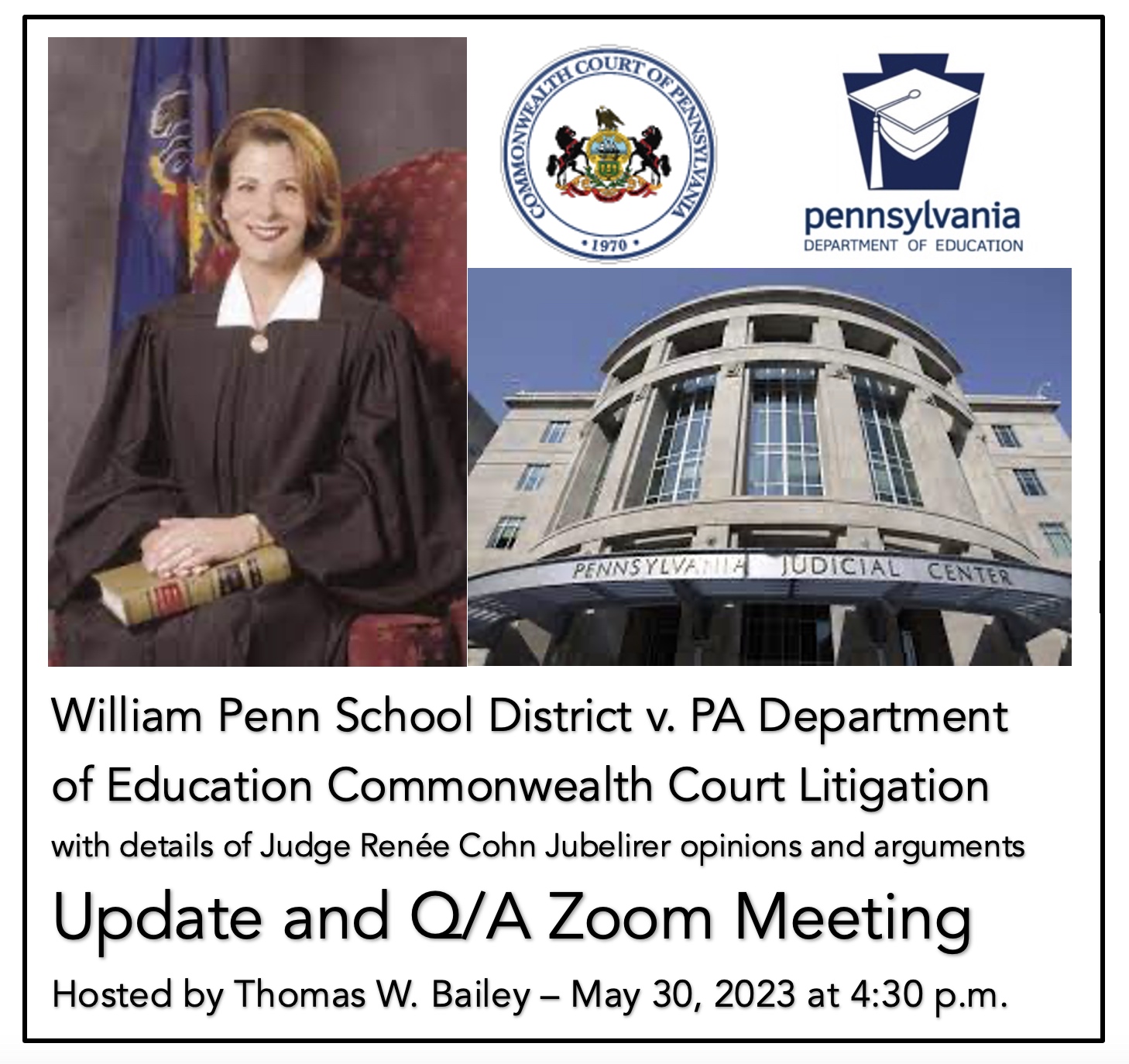
Since the NAfME and PMEA conferences in April, we have been busy creating additional opportunities for professional development in PA educator ethics training. My colleague Thomas Bailey and I have been preparing a Zoom meeting/video series for interested Pennsylvania school system leaders, administrators, department heads, educators, and PA Act 45 or 48 continuing education providers.
Please see the schedule below. The first seminar was recorded.
Session 1: William Penn vs. PDE – May 30, 2023 @ 4:30 p.m. Click here to view the video.
Session 2: Model Code of Ethics for Educators – June 6, 2023 @ 4:30 p.m.
Session 3: PA Code of Professional Practice and Conduct – June 13, 2023 @ 4:30 p.m.
Session 4: PA Professional Standards & Practices Commission – June 20 @ 4:30 p.m.
To join the Zoom meetings and participate “live” in the upcoming question-and-answer sessions with our speakers, go to this link and scroll down to the bottom of the page. After completion, the YouTube URL for each seminar will also be posted here.
An intriguing follow-up resource is to visit Thomas Bailey’s website, especially the informative educator blog he has published including analysis of the William Penn vs. PDE hearings on equitable school funding in the PA Commonwealth Court (first session above) and other “ethical conundrums” and issues in the news.
I am also happy to report that we are expanding our PIL Act 45 professional development class offerings and Thomas has reapplied for PDE approval of a revised version of our Act 48 workshop on “PA Educators – Your Ethical Codes and School Law.” Click below to download a copy of our trifold brochure on the PIL course and summer in-service programs.
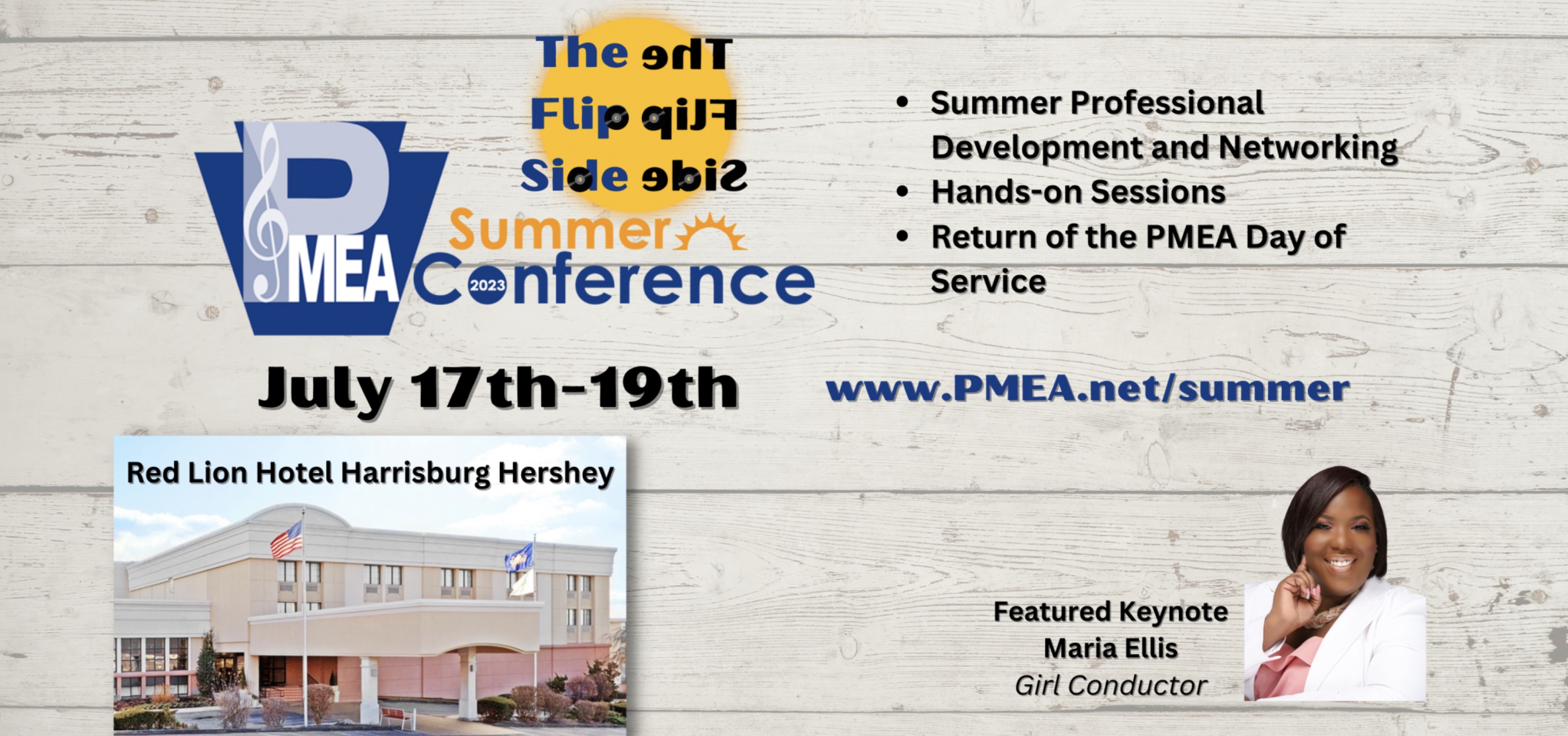
Finally, to all of my music educator friends in the Commonwealth, I hope you have registered for the PMEA Summer Conference, being held in the Red Lion Hotel Harrisburg/Hershey on July 17-19, 2023. This event is in conjunction with the annual PMEA Board of Directors meeting on July 17 and the PMEA “Day of Service” assisting the Harrisburg Symphony and the Whitaker Center for Science and the Arts on July 19. In addition, I am looking forward hearing a performance of the Yankee Brass Band:
Since 1987, the Yankee Brass Band has both entertained audiences throughout New England and championed the cause of “historically informed performance” within the field of American band music. 2023 marks our 36th season. Using rare and authentic period instruments, and outfitted in appropriate uniforms, the Yankee Brass Band presents the music of the “Golden Age of Bands” played in much the same manner as in the mid to late 19th century.
The workshops, clinicians, and details for registration are posted on the PMEA website here.
“Doing My Thing…” — Professional Development Conferences for Music Educators
It’s been awhile since I posted here… arguably the longest editorial break I have taken since retirement and starting this blog-site. What’s that line retirees often say? “It’s a good thing I am retired from my job; otherwise I would not have enough time to do everything!”
This has been an extremely busy couple months of renovating three bathrooms, promoting the 30th Anniversary Gala Celebration of the Community Foundation of Upper St. Clair featuring a CASINO NIGHT & the local band NO BAD JUJU (to which I can’t even go because it is on the same day as PMEA), staffing a transition of new editors and an office manager for the UPPER ST. CLAIR TODAY community magazine, “keeping my hand in” by conducting a small nonprofit community ensemble (now in our 40th season of the South Hills Junior Orchestra), volunteering at the hospital (see my Tales from a Wheelchair Jockey article), developing new PDE Act 45 and 48 programs on ethics (school system leaders and educators respectively), and… (deep breath): preparing four PowerPoint presentations for two music conferences in April. Yes, and loving every minute of this frenzied activity!
Pennsylvania and Eastern Division music education colleagues: Hopefully by now, you have registered for the coming conferences on the horizon:
NAfME Eastern Division Conference, April 13-16, 2023, Rochester, NY
PMEA Annual Conference, April 19-22, 2023, in the Poconos
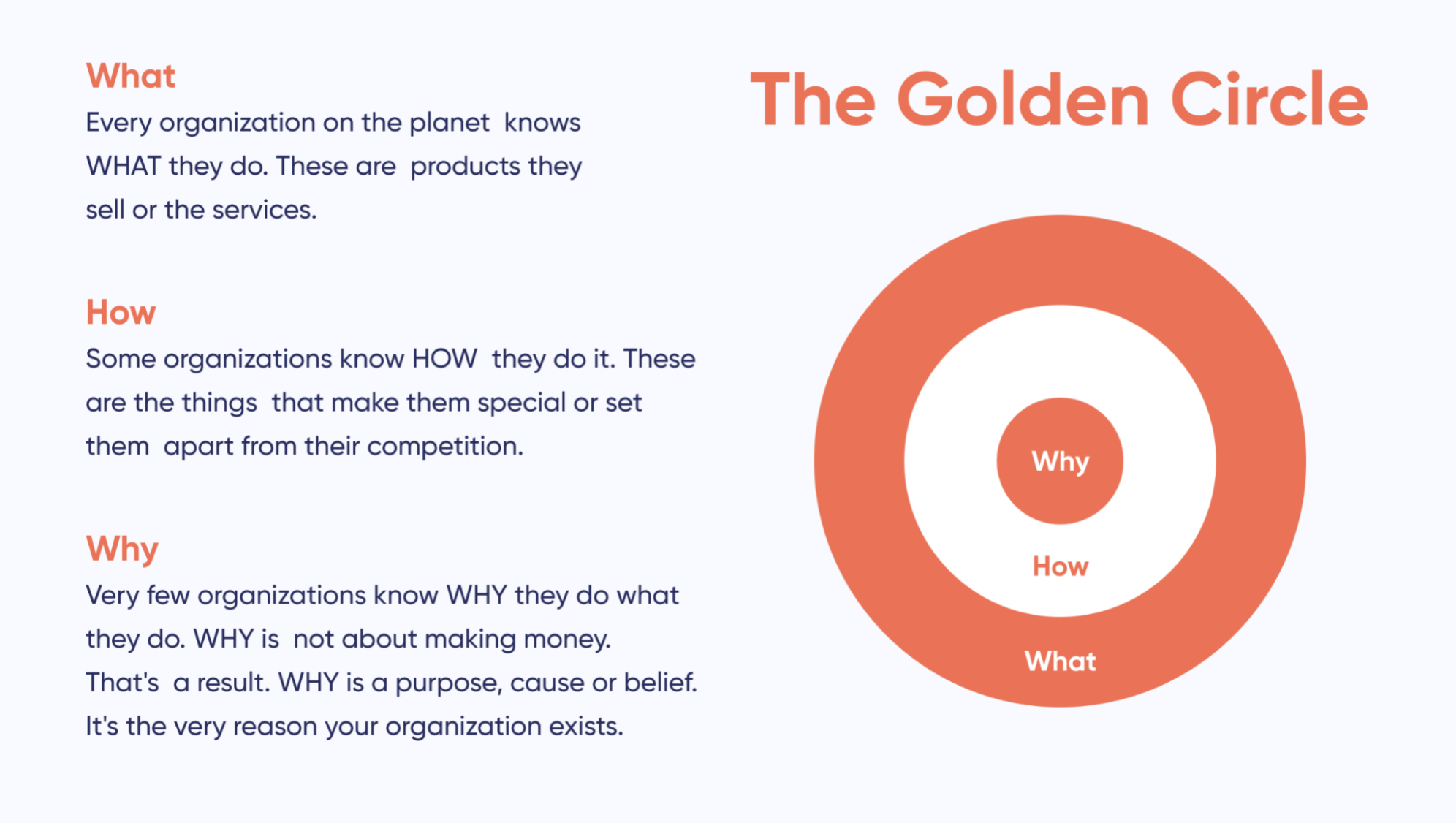
Now to quote the inspiration of Simon Sinek — his theory of value proposition to ‘start with why’ — how leaders can inspire cooperation, trust, and change based on research into how the most successful organizations think, act, and communicate if they start with why. Check out his rationale with The Golden Circle:
The “why” of attending your professional development conferences, “sharpening your saw” (self-renewal by Stephen Covey) aka “recharging your batteries,” learning what’s new and innovative on the forefront of “the state of the art,” and networking with colleagues, and has been addressed often in past blogs:
Simply put — to maintain your mastery of music and methods and build on your “best practices” and professionalism, you MUST attend as many educational conferences and workshops as possible!
Now to my “bags of tricks” for April 2023
Mark your calendars:
April 15, 2023 at 10:45 a.m. in Hyatt Susan B. Anthony (NAfME) – OR – April 21, 2023 at 11:30 p.m. in Kalahari Suite 40/50 (PMEA)
I was blessed to have been asked to present THE INTERVIEW CLINIC — Practicing & Playacting to Improve Your Performance at Employment Screenings at both the NAfME and PMEA conferences. This will be FUN! Perfect for college music education majors, soon-to-be or recent graduates, new transfers to the profession, teachers seeking to change positions while openings seem to be “heating up,” or first-timers looking for employment, the session targets will provide interactive exercises to build self-confidence and develop better insights, practices, and strategies to successfully land a job. “The key is in the preparation” of:
Standards—Defining/modeling professionalism, versatility, and ethics
Marketing—Branding, networking, and selling yourself
Skills—Interviewing, storytelling, and organizing
Assessment—Observing, reviewing, diagnosing, and improving
Interactive exercises, you say? Yes! Get ready to meet new people and perhaps dive into a few activities slightly outside your “comfort zone!” (We promise NOT to embarrass anyone!) We will break up into small groups or “duet partners,” and explore defining our professional “essence,” telling anecdotes about our strengths and past problems we have “crushed,” and focusing on learning “the golden gift of gab” — storytelling.
As always, articles, resources, and slide summaries will be posted under the “Training/Jobs” menu tab (above).
Mark your calendars:
April 20, 2023 at 3:00 p.m. in Kalahari Suite 30 (PMEA)
How many of you feel at times a little overwhelmed, exhausted,stressed out,disorganized, demoralized, or disenfranchised?
Are you at the end of your rope and wondering how you’re going to “keep it all together” over the next week, month, year?
Is your health is interfering with your ability to do your job and find success, balance, and meaning in your personal life and relationships? Then… it is time for a change.
We are still dealing with the effects of the pandemic which has brought on a “gap year” to most of our music programs, the stress of “working harder not smarter,” more teacher burnouts, and the resulting bail outs, staff shortages, and/or job cuts. We need to embrace NEW strategies for personal self-care and SEL (social and emotional learning). Do you still enjoy teaching? How have you coped with all of the changes? How will you achieve a better work/life balance and skills in time/priority management and personal health and wellness?
The prescriptions and RECIPES towards stress reduction and developing a self-care plan are here! Doug Sands, a consulting hypnotist and founder of AnywhereHypnosis.com, joins me to “throw in everything and the kitchen sink” to alleviate these problems, with NO cookie-cutter, “one-size-fits-all” solutions from the chefs:
What has COVID done to all of us?
Instant personal online stress assessment
Taking an inventory of the ingredients towards a healthier lifestyle
Definitions, symptoms, and remediations for teacher stress and burnout
Why teachers are so exhausted and what to do about it
Time management tips
Breathe like a Navy SEAL
Coping and learning “acceptance”
How to “coach overwhelm!”
The role of meals, movement, music, and mindfulness (thank you, Lesley Moffat!)
From MEJ: A suggested self-care plan and “cognitive distortions” to avoid
Focusing on ONE self-care strategy from a “sea of solutions”
We’re in this together… so we need to join forces and SHARE the secret recipes for a happier life! Add your own “baking tips,” and I promise, you’ll leave with a better understanding of how we all can celebrate the coming year or decades in music education!
By the way, my “mindfulness partner” for this workshop, Doug Sands, promises us he will not hypnotize any of us during this session (although he could!).
For more about his work, including “15 Rapid Tools (and Counting) to Wipe Out Anxiety, Stress, and Panic,” please go to his website here.
You are invited to stop in to see him at his PMEA booth in the Kalahari exhibit hall.
POST-CONFERENCE NOTE: Doug sent us his Anti-Panic Toolkit entitled, 15 Rapid Tools (and Counting) to Wipe out Anxiety, Stress, and Panic – Wherever They Strike! Click here.
If you would like a sneak preview of the revised handout for the Self-Care workshop, go to the Care menu section at the top menu bar.
Taking a peek at our recent past…
Workshop for Orchestra & String Teachers
In case you missed the PMEA District 5 Professional Development Day, my wife Donna and I presented “Plucking Our Minds” at Grove City College on February 20, 2023.
We were privileged to “share some of our secret sauces” gleaned from over 80 combined years of experience on a variety of topics:
CommUNITY Music-Making
Online Academy
Summer String Camp
Assessment Projects
Collaborative/Creativity Projects
Library of “Fox Firesides”
If would be a shame to waste these resources… and reading them could inspire new adaptations to your instrumental program.
Click here for a copy of the slide handouts. Feel free to comment (above) or send an email to me (paulkfox.usc@gmail.com) if you have any questions.
Our Crystal Ball
Future Accredited Workshops on Ethics in Education
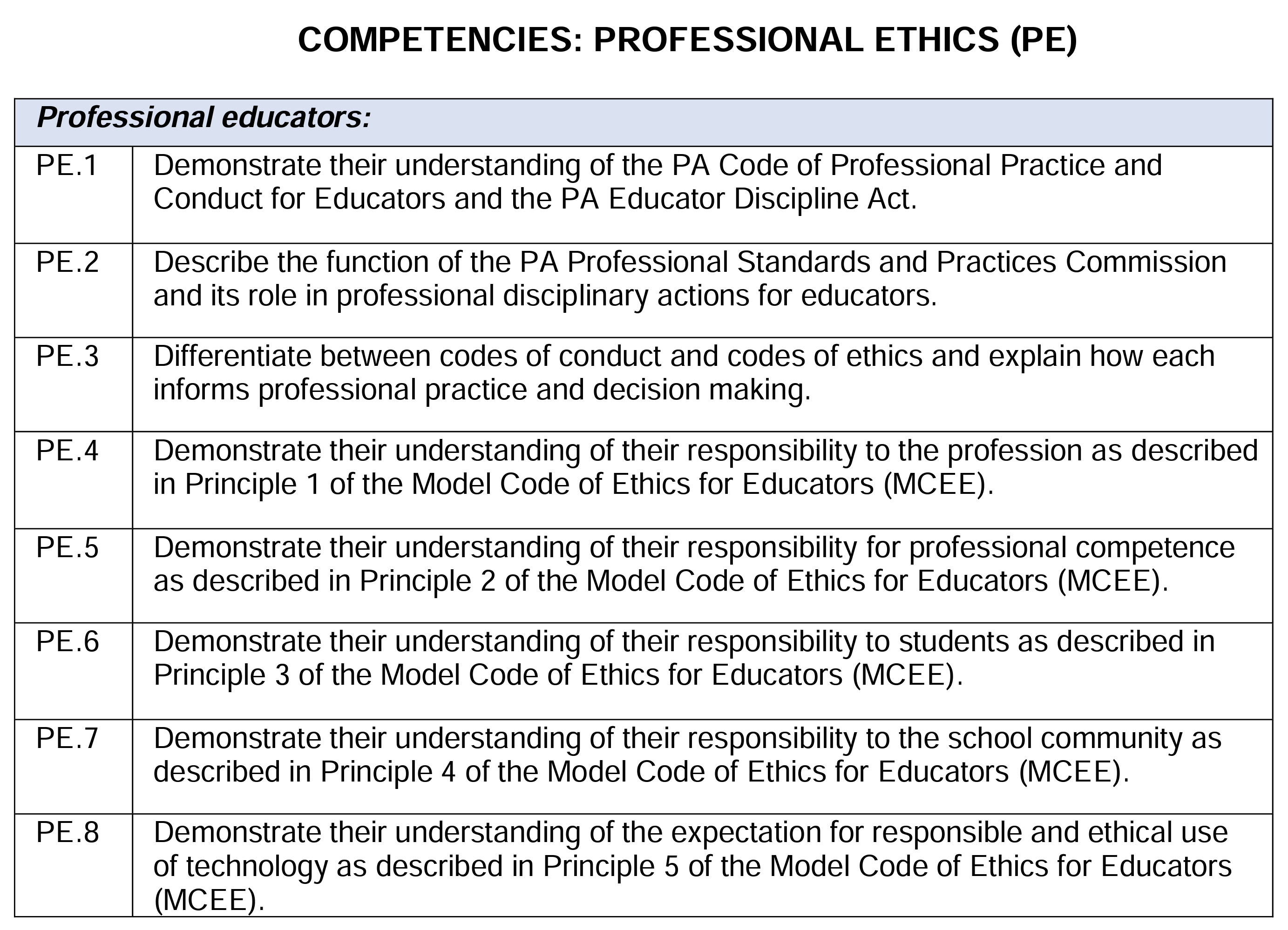
Are you aware that the Pennsylvania Department of Education (PDE) has recently revised the PA educators’ Code of Professional Practice and Conduct AND adopted the Model Code of Ethics for Educators developed by the National Association of State Directors for Teacher Education and Certification? Have you seen the new Professional Ethics Program Framework Guidelines? PA Chapter 49 requires instruction in professional ethics to be integrated in educator preparation, induction, and continuing professional development programs as follows:
Continuing professional development programs must integrate the professional ethics competencies no later than the 2023-24 academic year.
Educator preparation and induction programs must integrate the professional ethics competencies no later than the 2024-25 academic year.
Not one to let grass grow (or mud sink) under his feet, retired social studies teacher, current attorney-at-law, and past PMEA conference presenter Thomas Bailey has partnered with me to design new ethics training classes for school system leaders (25-hour Act 45 PIL course) and educators (four-hour Act 48 continuing education course). In addition, we are introducing a new “hybrid” program for school administrators involving four-hour pre-recorded asynchronous webcasts (site license), along with a three-hour synchronous webinar using the webcast videos and adding facilitated interactive discussions of three ethical case studies either via Zoom OR in-person follow-up workshops led by both clinicians.
Kathy Merlino is the author of kathysretirementblog.com, a blog about her perspective and thoughts on the emotional side of retirement and her journey as a caregiver. She is one of the most thought-provoking and influential writers on non-financial retirement topics. Kathy believes retirement is a journey, not a destination. Readers can leave a comment on Twitter:@kathysretiremnt
Kathy’s article was originally posted on November 26, 2022.All rights reserved. Reprinted with permission.
PKF: This personal reflection is timely for all of us retiring and retired individuals, especially those of us with elderly or ailing family members. For a loss of a loved one, we all have to face and cope with the five stages of grief:
Denial
Anger
Bargaining
Depression
Acceptance
Grief is personal and individual, and every person experiences its nuances differently. Your personality, your support system, your natural coping mechanisms and many other things will determine how loss will affect you. There are no rules, no timetables, and no linear progression. Some people feel better after a few weeks or months, and for others it may take years. And in the midst of recovery there may be setbacks — this nonlinear process can’t be controlled. It’s critical that you treat yourself with patience and compassion and allow the process to unfold.
PKF: Check out their excellent article on the common signs and symptoms, triggers, myths and facts about grief as well as ways to take care of yourself, posted by healgrief.org here.
A Penny by Kathy Merlino
Shortly after Martin died, I walked down my long driveway to fetch the mail. Usually, I have little or none. But, in the days following his death, my mailbox held more than junk mail. There were sympathy cards and official letters from various institutions. As I pulled out the cache of the day, I saw something I’d never seen in my mail. A penny. It lay underneath the cards and letters and the ubiquitous junk mail. A penny so tarnished it almost faded into the background of the black metal floor of the box.
My mind flooded with the rhetorical questions. Who would leave a penny in my mailbox and why and how? I lived on a busy road, so someone walking by was unlikely. The leaving must have been thoughtful, intentional. “A penny for your thoughts” (Sir Thomas More) came to mind. Was it my faithful mail lady who left it? I lifted the penny out, slid it into my jean pocket, and walked back to the house. Inside, before turning my attention to the mail, I fished it out and set it on a mosaic trivet Martin had made in an art class.
Over the next couple of days, I eyed the penny still wondering how it got in my mailbox. Did a penny have any significance? “See a penny and pick it up and all day you’ll have good luck” (Mother Goose Nursery Rhymes). Since we can pretty much Google anything these days, my curiosity finally gave way to asking Google. To my surprise, a penny has significance for the deceased or their loved ones. In the case of a veteran, a penny left at the grave means someone visited. For a widow like myself, a penny in the mailbox represents a new beginning, a rebirth, renewal of your life. A penny being first and one represents singularity. If you are part of a couple, one of you will die first leaving the other alone, single.
I’ve been alone for nearly eighteen months. While Martin still lived, it was not with me. If there is a silver lining here, it’s that I had ample time to adapt to my aloneness and grieve this impending, profound, enormous loss in my life. The outcome? I was not filled with the expected feelings of grief. Rather, as I held Martin during his final moments, I cried tears of gratitude for the end of his suffering. He was free of this disease. I was free of this disease. Our family was free of this disease. Relief instead of deep sorrow. Comfort in knowing he was at peace. As I stroked his face, I noted how serene his countenance. Peace at last.
Though I’ve had fits of grief, I’ve also felt immense joy when contemplating my future. During the last year, I deliberately divested myself of anything which smacked of negativity in my life. I decluttered the house paring my personal belongings. I feel washed clean, ready for a new start. Martin would want that for me. A friend asked if I thought Martin’s spirit left the penny. I would like to think so. I may never know who left the penny in my mailbox, but it is now my talisman for fresh beginnings, rebirth, a reawakening of my life’s potential. And a second chance at the retirement we dreamed of.
Other articles by Kathy Merlino. Thank you for sharing!
This message goes out to all of my Pennsylvania music education colleagues and especially any currently enrolled Freshman through Graduate college students in the Commonwealth.
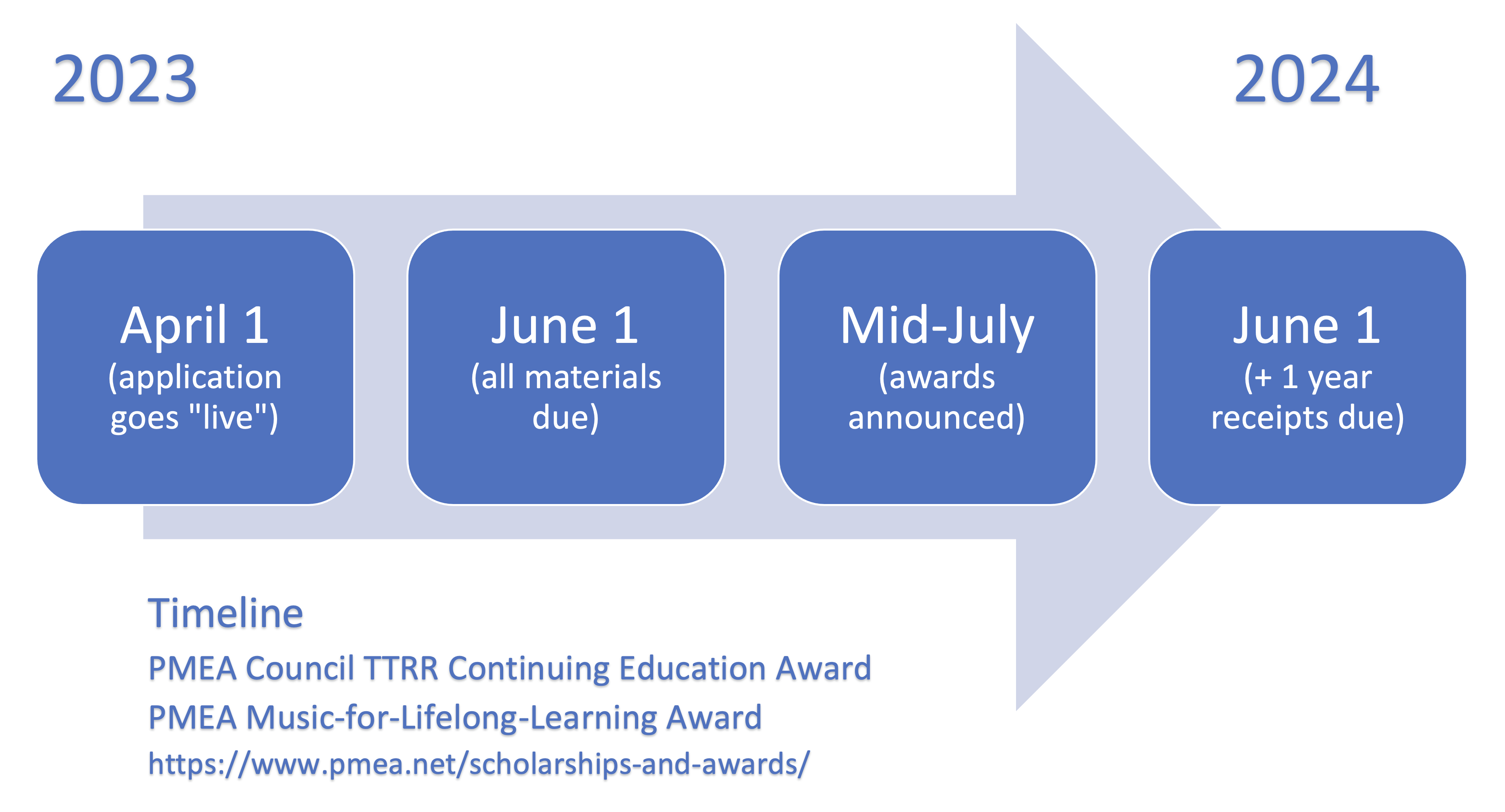
My wife and I are proud to announce the launch of two new scholarships for the 2023-24 school year, financed by the Stark-Fox Family Fund, and managed by the Pennsylvania Music Educators Association (PMEA). Official applications will be available soon (spring semester 2023) on the PMEA website here. All materials are due on or before June 1, 2023.
Do you know someone who is currently attending a PA university, college, or conservatory? Is he or she majoring in music education AND is a member of Pennsylvania Collegiate Music Educators Association (PCMEA) OR majoring in a science-technology-engineering-mathematics (or related) field of study AND participating in their collegiate music ensemble for credit?
Then… SPREAD THE WORD!
Here is a general summary of the eligibility requirements and expectations for application approval, subject to change by the PMEA EXCOM and staff. A performance video (or submission of an original composition) is required for either scholarship, and interested candidates could begin now (during the semester break) to prepare their piece(s), update their resume, assemble a digital portfolio, and write the essay.
PMEA Council TTRR Continuing Music Education Award
Amount and number of scholarships may vary from year-to-year
Full-time enrollment of at least one year (two complete semesters) as an undergraduate or graduate music education major in an accredited PA institution
Nonrenewable (selection of a different candidate each year)
Paid directly to candidate as reimbursement for college tuition, dorm/apartment rent, meals on campus, textbook purchases, and/or the purchase of a new instrument (must provide receipts)
Blind judging by PMEA members with at least one member from the PMEA Council of Teacher Training, Recruitment, and Retention, PMEA EXCOM, and/or PMEA staff
Criteria for selection
A minimum of at least one year as PCMEA member in good standing with letter of affirmation from the PCMEA sponsor
Submission of college transcript reflecting 3.5 GPA or higher
Demonstration of solo performance skills (recorded video) or submission of composition(s)
Presentation of a music education portfolio with sample lesson plans, philosophy, and development of creative instructional activities with a focus on the arts at the center of STEAM
Participation in at least one PMEA-sponsored professional development program e.g., the Annual Conference, Summer Conference, Webinar, or Regional Workshop
Completion of essay in response to the question “Why have you chosen a career in music education?” and portrayal of leadership and well-defined goals and aspirations towards a career in music education.
Letter of recommendation from at least one music education professor
Full-time enrollment of at least one year (two complete semesters) as an undergraduate or graduate science-technology-engineering-mathematics major in an accredited PA institution
Enrollment for at least one semester in a music performance course e.g., band, chamber music, chorus, jazz, or orchestra earning the letter grade of an “A” or equivalent with submission of letter of recommendation (and transcript) from ensemble director
Nonrenewable (selection of a different candidate each year)
Paid directly to candidate as reimbursement for college tuition, dorm/apartment rent, meals on campus, textbook purchases, and/or the purchase of a new instrument (must provide receipts)
Blind judging by PMEA members with at least one member from the PMEA Council of Teacher Training, Recruitment, and Retention, PMEA EXCOM, and/or PMEA staff
Criteria for selection
3.5 GPA or higher on college transcripts
Demonstration of solo performance skills (recorded video)
Presentation of a music portfolio with high school and college history of participation in music ensembles and pursuits in creative self-expression, concert programs, and/or evidence of the development of creative activities or projects with a focus on the arts at the center of STEAM
Completion of essay that reflects musical leadership, community service, and/or the ccandidate’s rationale and aspirations for the continuation of “music study as a life-skill”
Response to the question, “How does the study of music enhance your knowledge, skills, and depth of understanding for a career in science-technology-engineering-mathematics?”
We are hopeful that these will become annual awards of substantial amounts (with a goal of at least $5K to $15K per person based on market conditions), provided as reimbursement of the scholarship recipient’s higher education expenses. If you are a potentially eligible candidate, get to work on the selection process and documentation NOW and… good luck!
“Wherever you turn, you can find someone who needs you. Even if it is a little thing, do something for which there is no pay but the privilege of doing it. Remember, you don’t live in the world all of your own.”
— Albert Schweitzer
“You make a living by what you get. You make a life by what you give.”
— Winston Churchill
“Volunteers are the only human beings on the face of the earth who reflect this nation’s compassion, unselfish caring, patience, and just plain loving one another.”
— Erma Bombeck
Besides spending more time with family and friends, the most precious benefit of the freedom afforded to you “living the dream” in retirement is… (drum roll, please)… becoming eleemosynary! (Look it up!) It’s crucial to make it a priority to give back to your community!
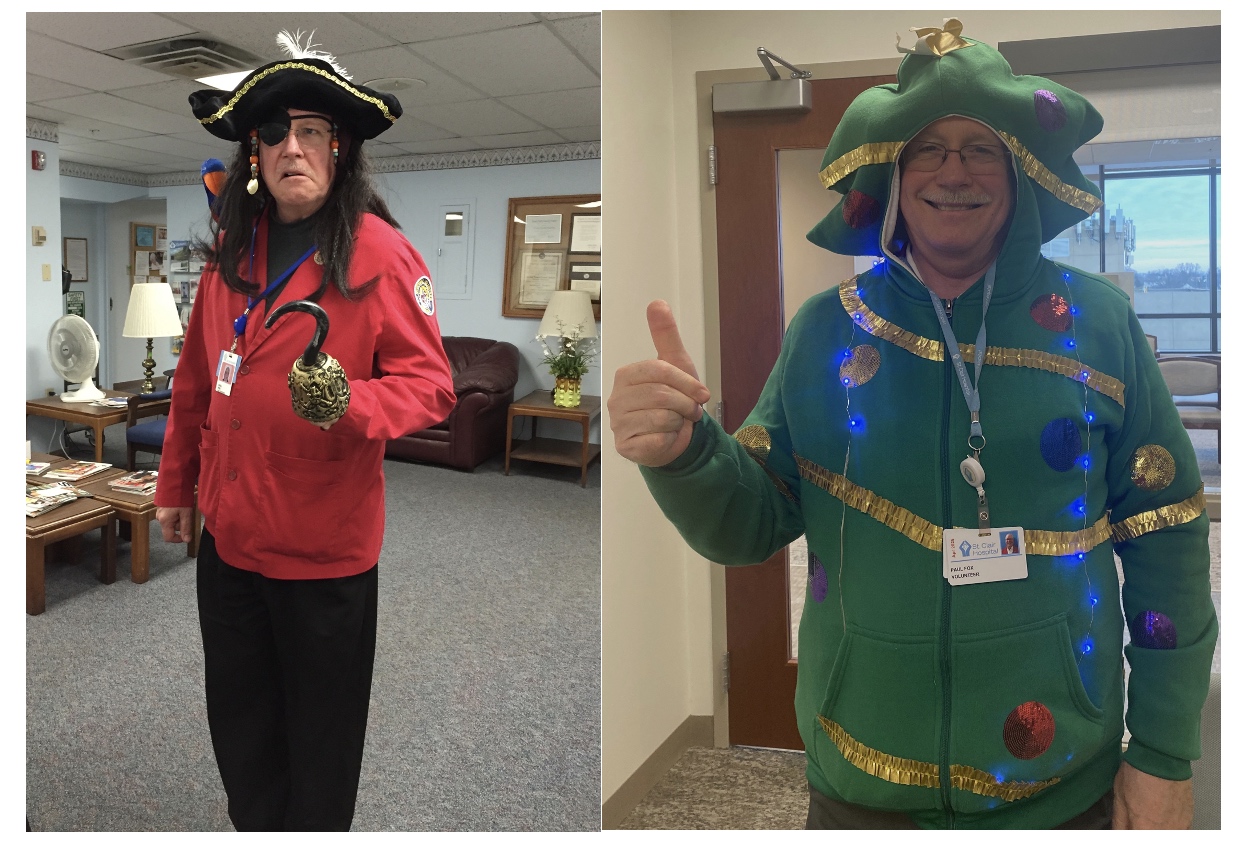
I wrote an article in our local community magazine UPPER ST. CLAIR TODAY. (Yes, I guess I’m bragging a bit – find it hereon page 20 and you’ll see pictures of my Pirate costume for escorting at the hospital and holding my doggies!) I cite many reasons for becoming a volunteer. (Disclaimer: Some of the statistics below are a few years old, but you get the idea… The trend is ever-growing!)
The Surge of Volunteerism
Did you know?
There are 77.4 million volunteers in America alone.
6.9 billion volunteer hours were recorded in 2018 (last Volunteer Demographic Statistics/National & Community Service Report)
33.8% of the female population and 26.5% of the male population volunteer
30.7% of Baby Boomers (1944-1964) who are U.S. residents volunteer
36.4% of Gen X (1965-1979) U.S. residents volunteer – the winning group!
28.2% of Millenial (1980-1996) U.S. residents volunteer
If you have any doubts about WHY you should volunteer, revisit my August 2021 blog “Those Were the Good ‘Ol Days – The E in RETIREMENT is for Energy, Engagement, Excitement, and Endurance” here. For retirees everywhere, this is worth repeating.
“It has been suggested that one problem of retirement is that one no longer matters; others no longer depend on us… The reward of retirement, involving a surcease from labor, can be the punishment of not mattering. Existence loses its point and savor when one no longer makes a difference.”
– Rosenberg and McCullough
We learn from Revitalizing Retirement: Reshaping Your Identity, Relationships, and Purpose by Nancy Schlossberg that for retirees, it is important to feel “needed” and that pursuits that foster “mattering” are crucial to a positive self-esteem, good mental health, and stable life balance.
What to Do with Your Free Time?
This, too, has been covered in past blog-posts, conference sessions, webinars, and articles in PMEA News. A quick recap:
Walk dogs at animal shelter
Assist food banks and meals-on-wheels agencies
Enlist as special advocate for abused or neglected children
Work as a hospice volunteer
Maintain parks, trails, nature habitats, or recreation centers
Host an international student
Assist at local hospital, senior center, or nursing home
Serve in charity fund-raising projects
Become a youth director, mentor, or scout leader
Share your hobby or experiences in a specialty and teach night classes or summer school
Give guided tours or lectures as a docent at a local museum
Apply office management and clerical skills to benefit libraries and other nonprofit associations
Run a school club or coach a sport
A quick scan of the website https://www.volunteermatch.org/ would fetch many specific volunteer job openings (these for the Pittsburgh, PA area where I live):
Provide hospitality at Pittsburgh sporting events
Serve coffee and snacks at winter warming stations
Write articles or submit photographs to local publications and e-media
Visit hospice patients and provide other free-care services
Crochet, knit, or sew blankets for needy families
Connect with local veterans
Manage nonprofit events and organizations
Ring the Salvation Army kettle bells all year long
Mentor an underserved child (everything from athletics to computer skills)
Make weekly reassurance calls or personal welfare checks of senior citizens
Become a delivery driver of “care packages” of food, baby items, pet necessities, household items, and more
Retired music educators have an advantage, a valued skill which also represents their “calling” and “life’s work” – fostering creative self-expression. There’s so much “we” can do to “bring on more music” in our community, and if you wish, several of these may provide supplemental income:
Performing gigs locally
Directing community or church ensembles
Accompanying community or church ensembles
Coaching/assisting local music programs
Teaching college music education methods or supervising student teachers
Composing/arranging music
Adjudicating or guest conducting music festivals
Serving in the music industry
The best part of retirement is you can say “NO” anytime you want. You can cut out any perceived drudgery, routine “chores,” and excessive paperwork that “the institution” may demand, but still assist in collaborating and sharing your experience, expertise, vision in working with “the kids.” You can continue to develop your own personal artistry (now with more time to practice) and leave your “musical stamp” on other programs and projects whenever and wherever you please.
Adventures in Volunteer Escorting
Every hospital, outpatient facility, and senior nursing/assisted living center I know needs volunteers… a lot of able-body helpers. Have you considered lending a hand in pushing patients to/from their procedures, discharges, etc. in your community? I have, and it is truly a joyful experience.
For two days a week, I spend the better part of my day at St. Clair Health in Mt. Lebanon/Scott Township in the South Hills area of Western PA. (If you live in the area, visit their website here.) Although on occasion, I get to visit the Family Birth Center (my favorite) and hospital rooms to help check out patients, most of my shift is assigned to the Dunlap Family Outpatient Center, a new state-of-the-art facility (opened in May 2021 – still has that “new car” smell) for “in and out” procedures. It would not be an exaggeration that I escort as many as 50 individuals per day undergoing outpatient surgeries, endoscopies, colonoscopies, or other diagnostic testing, along with an equal number of family members to/from the treatment rooms. On a given Thursday or Friday, I can check my Apple Watch and iPhone digital health monitors and find I take as many 17,000 steps!
The best part? Do I have to tell you that since I retired to the same basic geographic area in which I spent my entire career, how many of my school colleagues, former students, and their parents I have discharged? One thing you realize helping out in your hometown (the place you taught all those years)… you will run into many of your former “charges” now grown up with kids of their own. It is a real joy to see them again (albeit due to the need for a colonoscopy or surgical procedure), and catch up with all those shared memories, their life’s happenings and successes, and future dreams.
So many stories…
Several weeks ago, I brought down to the main floor a delightful lady from our pre-post anesthesia unit to connect with her ride home, and I saw her driver was in a Uber-lit-up car. I remarked to the patient, “Wow, the only Uber driver I ever knew was one of my former choral students named Lisa…” and sure enough, that’s who came to pick up her mother-in-law. Even though we always wear masks in the hospital, I guess my Upper St. Clair HS marching band “broadcaster’s voice” is recognizable, and countless people in the lobby (usually accompanying family members) stop me, “Hey, is that you Mr. Fox?” Of course, HIPPA dictates we never repeat their identities or any confidential information…
Being a music teacher, I cannot help myself. My mission is to be “the distracter” – divert their attention from the inevitable? – and to help calm, reassure, and perhaps even entertain the patients for a few moments transitioning through those awkward (and sometimes fearful) medical procedures. They need a bright, cheerful, and funny if not somewhat crazy escort. I provide the jokes and the songs!
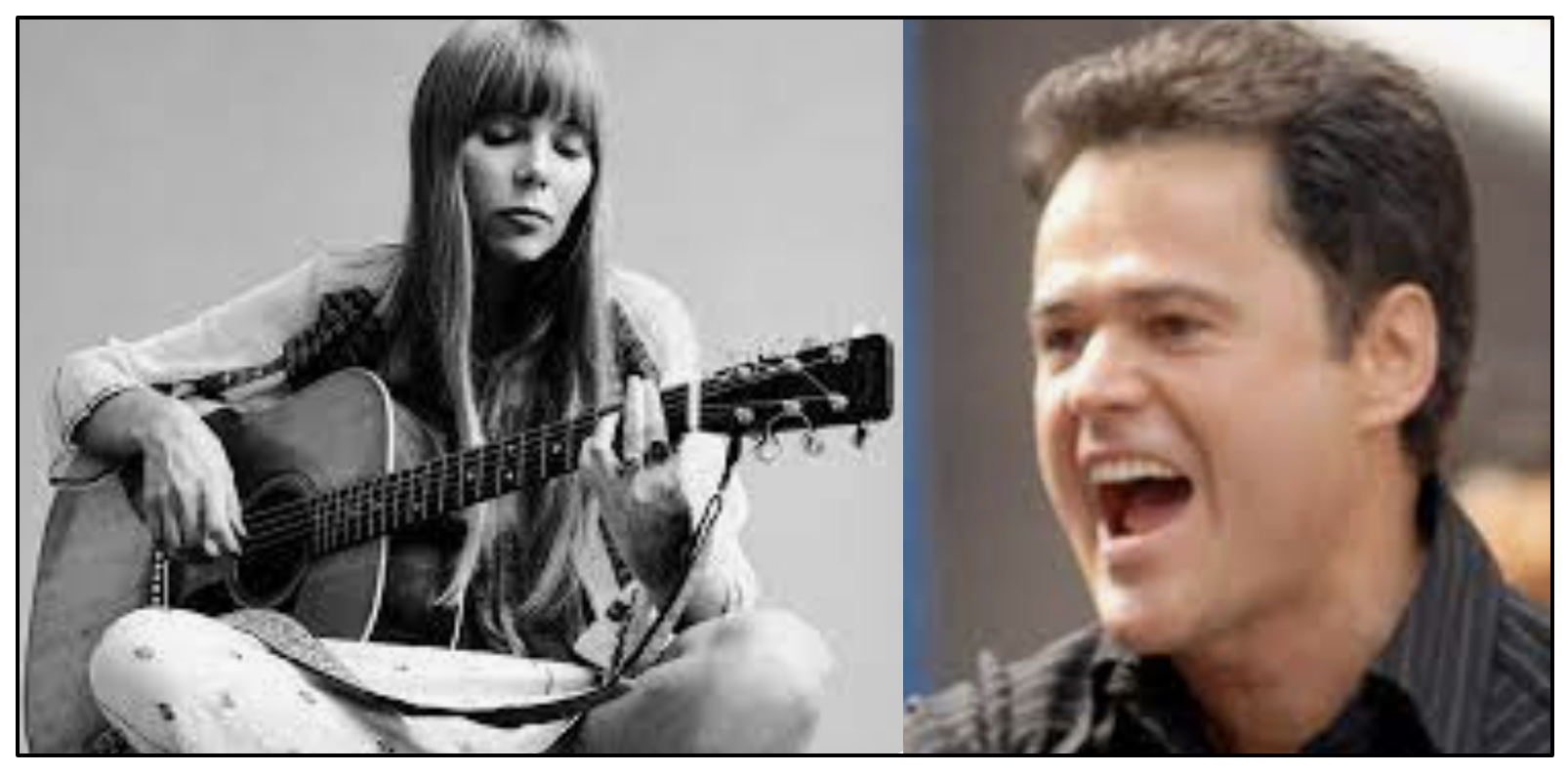
One day, I was literally singing Maria from West Side Story while pushing Maria-the-patient to her endoscopy, and another person walking with us for her own test said, “Well, it’s nice you are singing to us. But, my name is Sharon, and they don’t have a song for my name. No, Sharona is NOT my name,” she added with emphasis! After I took both ladies to their respective rooms, I had to do some research, but came back after Sharon was prepped and received her IV waiting for the doctor. “You forgot about The Song for Sharon composed and sung by Joni Mitchell,” I said (perhaps not my favorite example from the artist’s albums).
The hallway from the waiting room to the procedure suites is long and offers time for my style of “interaction and distraction.” Another funny episode, I was escorting two men to their appointments in the outpatient surgery unit. To the first, I said, “Did you know they wrote an entire musical featuring your name? Joseph and the Amazing Technicolor Dreamcoat. He replied he had never heard of it. I sang a few bars of several theme songs, and told him to look up Donny Osmond’s Close Evr’y Door and other tunes from the show. We were almost at the nurse’s station when the second gentleman turned to me and said, “Don’t you dare!” I looked down at my call slip and saw his name was George, and searched my mind. What song could was he concerned about? “Oh, oh, not that cartoon theme George of the Jungle? ending with the lyrics “…watch out for that tree?” He told me he was tormented mercilessly by his brothers, sisters, son, daughter, and now the grandchildren re-enacting painful renditions of “his song!” In this quiet, pristine, antiseptically-clean environment, we all took a moment and enjoyed a good horse laugh together (even the head nurse)!
The male volunteers usually dress up in an all-red jacket (one giant candy stripe), but on occasion, I have been known to bring a costume… for Halloween or Christmas, to try to bring a little joy and good humor to the patients.
I feel blessed to have the good health and mobility to serve as a volunteer escort, and the opportunity to meet with on a daily basis so many wonderful people. Many of my retired colleagues (even those from where I last taught) have joined the force. To say the least, we appreciate the comradeship, gratitude, and feelings of being eleemosynary for what we can share with others!
Anyone from my neck of the woods? Visit this website and sign-up! WE NEED YOU!
As if you need any additional urging, for the young and young-at-heart alike, Joi Henry of the 2013-2014 Youth Leadership Council (21st Century Leaders) probably said it best commenting on why community service is essential:
“Community service involvement is important because volunteering teaches people of all ages and backgrounds compassion and understanding. One thing I like about community service is that there are opportunities to improve and leave your mark on your global and local community. Volunteering and putting on service events can be used as a way to advocate for causes that you are personally passionate about. Community service… can also be the avenue to explore areas that you express interest. Volunteering is something that has no time limit; you can volunteer as much or as little as you’d like or have time for and still feel some type of fulfillment from it.“
If you are a frequent visitor to this blog site, you may have noticed that, for some reason, I haven’t posted anything for almost two whole months. Cat got my tongue? Nothing to add? Busy with other things?
We have been doing what comes naturally! The most important “stuff!” Although hectic at times and in a frenzied pace, all is well! My wife and I are healthy, happy, actively engaged in the projects that matter to us, and mastering those all-essential ingredients in a healthy lifestyle (retired or not): “finding purpose, structure, and community” (reference to the book How to Retire Happy, Wild, and Free by Ernie Zelinski).
Well, I can tell you I am still vested in volunteering my expertise, experiences, and services on a number of fronts. Normally extremely verbal, I just have not had a couple hours to spare to write anything down or contribute to the voluminous material to what has become a massive archive of articles (editorials and how-to’s), links, and other resources.
What have I been doing lately?
First off, we are just finishing up our marching band season. As the official admin and announcer for the “Pride of Upper St. Clair” Marching Band (I spend my time inside, not directing practices on the fields), I attend all rehearsals as attendance bookkeeper, forms manager, librarian, quasi-nurse, and when necessary, act as a sounding board or shoulder to lean on for “the band director.” This was our first year going “competitive,” participating in regional festivals of Pennsylvania Interscholastic Marching Band Association (PIMBA), and by all accounts, “we” achieved excellence. The band is unrecognizable from past years – the students are much more committed and focused – but we still have a ways to go!
Of course, all during this, our football team made it to the playoffs. On Friday, we will support our team in the “first round” WPIAL Class 5A match at Gateway HS. The extended season brings with it challenges of its own (keeping the band members on-task and embracing new goals), but the rewards outweigh the extra rehearsals. And, all through this, we are making plans (and building excitement) for the launch of the first-ever USCHS winter guard and drumline programs!
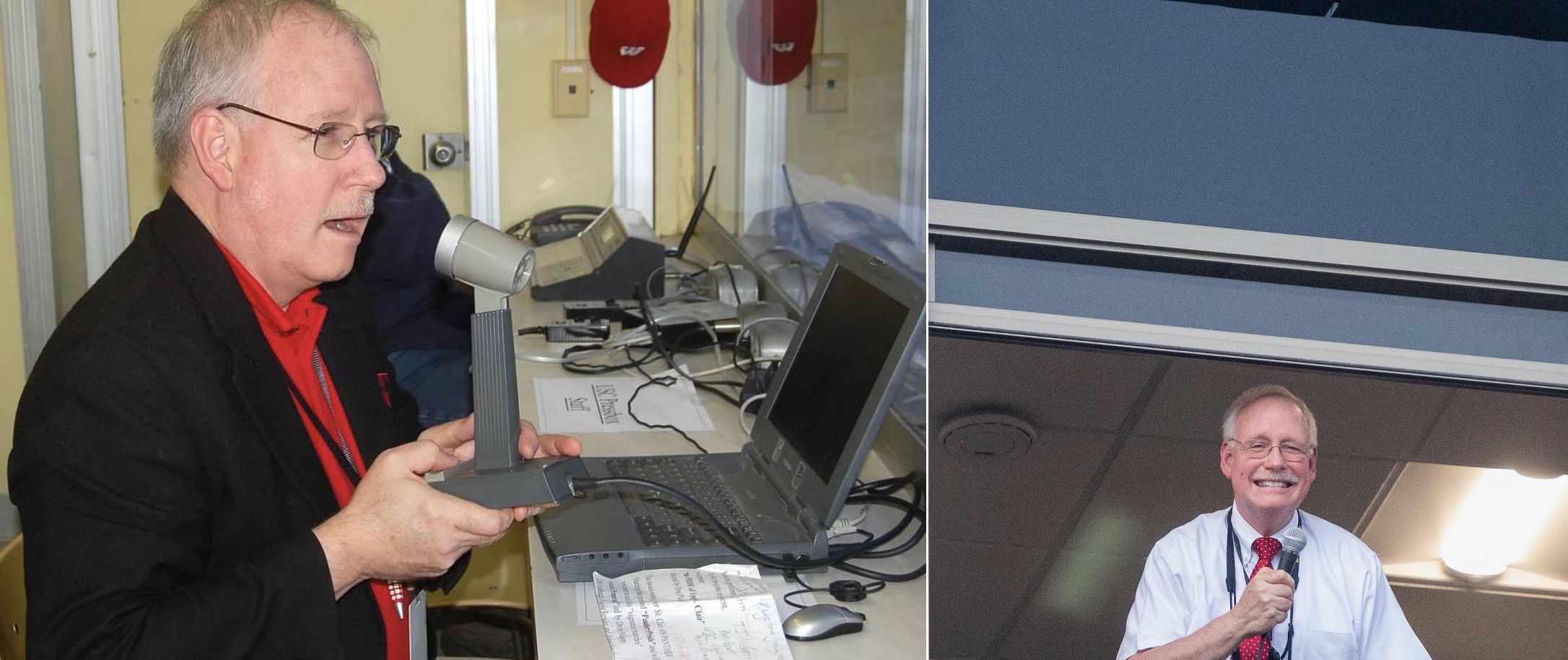
Funny thing! I’m now a part of the band’s “brand.” For 38+ years, I have been “the voice” announcing the pregame and halftime shows for Upper St. Clair High School. I’ve also emceed a couple dozen of the USCHS Marching Band Festivals, plus senior recognitions, USC Halls-of-Fame exhibitions in the stadium, and outside music invitationals. It is truly a joy to “cheerlead” our musicians… and my wife would tell you, I have a very loud broadcaster’s voice! And now, ladies and gentlemen…
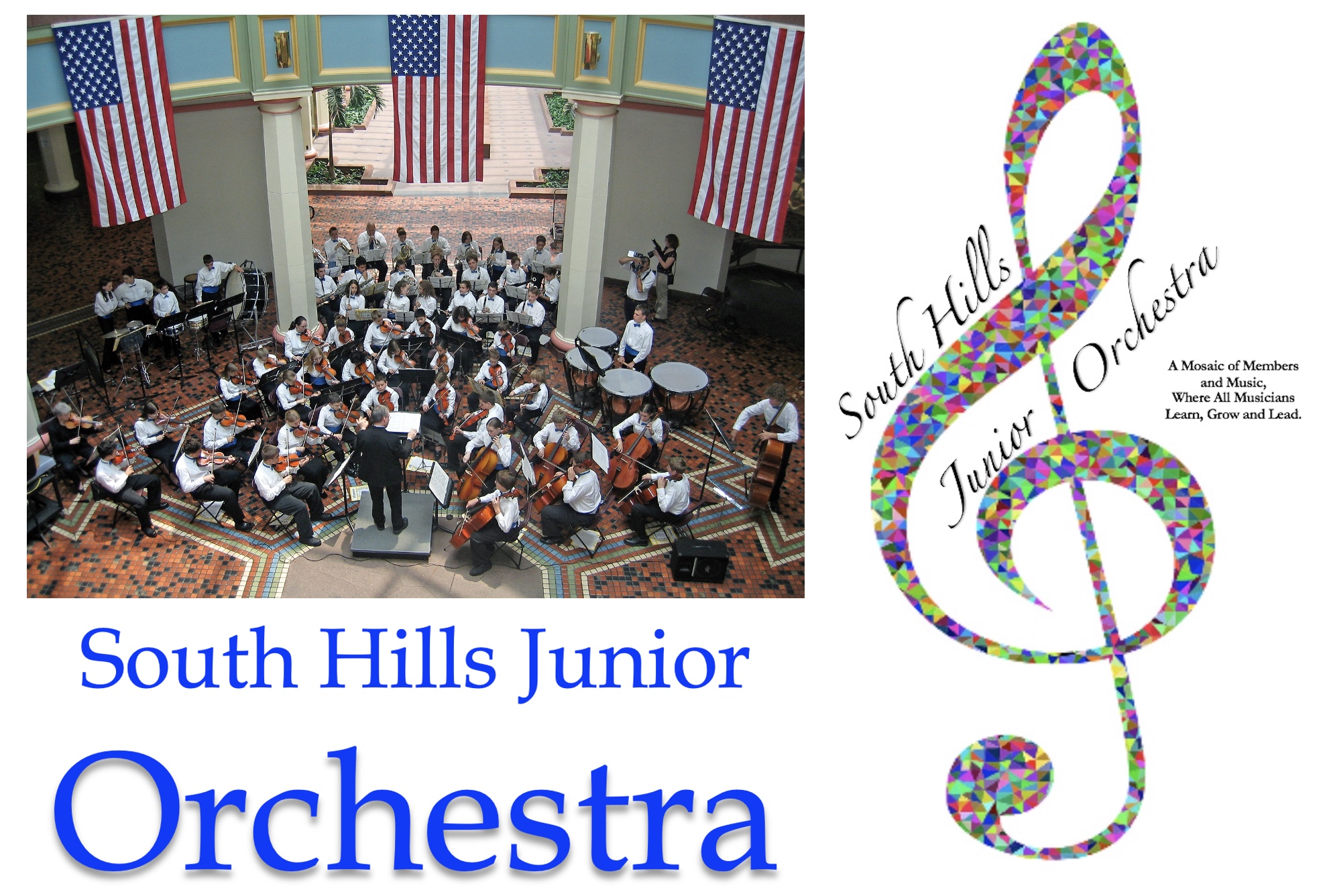
In two weeks, I will conduct the fall concert of our community ensemble South Hills Junior Orchestra, now in its 40th year. Although COVID did its best to wipe out our enrollments and recruitment efforts, our online academy kept things going, and we now support a small but dedicated chamber group. (Surprisingly, I have a good balance of instrumentation including sometimes rarely-found musicians on French Horn, bassoon, bass clarinet, electric bass, and piano, but one of my trumpet players is having to read clarinet parts.) Our theme is in support of Ukraine. We just “stumbled upon” several appropriate folk songs from the region, including the tribal tunes of Russian Fantasy (Robert Bennett Brown), the ever-popular Ukrainian Bell Carol, Dance of the Slave Maidens from “Prince Igor” (by Borodin, part of the “Russian Five”), and Slovakian Folk Songs (bordering Ukraine).
After this concert, we will prepare a holiday program for a nearby assisted-living facility with most of the SHJO members each taking a turn to conduct the sing-along of carols and seasonal favorites.
If interested, we warehoused a lot of our old SHJO Online Academy media and lessons here. (Use the password symphony.)
Staying involved in my professional associations, I am happy to report I was accepted to present at two conferences, the National Association for Music Education (NAfME) Eastern Division event in Rochester, NY on April 13-16, 2023 and the Pennsylvania Music Educators Association (PMEA) Annual In-Service at the Kalahari Resort/Poconos on April 20-22, 2023. I have been asked to do my interview clinic session at both conferences and a workshop for PMEA on music educator burnout remediation, self-care, health and wellness.
In the meanwhile, not to let any grass grow under my feet (or more leaves to fall on my head), locally I have been giving teacher ethics presentations at Slippery Rock University of Pennsylvania (a wonderful class of 44 freshman music education majors – the future looks good!) and Washington & Jefferson College undergraduate and graduate education majors.
I open my session offering to give a hundred dollar bill to the first student who can correctly name the exact title of their educator’s code of conduct (PA Code of Professional Practice and Conduct – CPPC) and identify the agency which enforces it (PA Professional Standards and Practices Commission – PSPC). No one ever guesses it. (I could also likely get away with this challenge at any school faculty meeting in the Commonwealth! Educators seldom receive formal ethics training in our state – that’s why I am sharing these recent updates from the PA Department of Education!) Now that I have publicized “the big question,” I guess I’d better put away that C-note for good!
A sampling of my slides and handouts are available for perusal from the top section of the “Training/Jobs” menu bar link here,or you can find past blogs on the subject of educator decision-making presented in reverse chronological order here.
In a similar vein (and with equal passion), I have teamed-up with retired social studies teacher and attorney-at-law Thomas Bailey to sponsor continuing education classes for both educators and administrators. I am inspired by Tom’s knowledge of the PA regulation framework and school law. We just finished an excellent 25-hour approved non-PDE Act 45 course for school system leaders. You should visit his informative website here, and especially check out his court case blog here. If you are a school superintendent or administrator, our next series of online classes will begin on November 29; register for the course here.
Additional future projects include assisting on the PMEA Strategic Planning committee for “member engagement,” planning for the PMEA CRESCENDO virtual student conference scheduled for January 31, 2023 (more info here), and serving on the PMEA Council for Teacher Training, Recruitment, and Retention (I am state chair) – “the life cycle of an educator.” A wealth of free information for music educators (which I try to revise frequently) is available on sections of the PMEA website: the Council TTRR focus area (click here) and Retired Members (click here).
Outside the scope of teaching profession, I have been active as Communications Director, Fine and Performing Arts Chair, and Trustee of the Community Foundation of Upper St. Clair (CFUSC). I publicize a weekly eUPDATE (samples on the website here) to announce our township events for donors and supporters, serve as “the duck maestro” – the mascot for the annual duck races on USC Community Day, and look forward to organizing “a really big party” in celebration of the CFUSC’s 30th anniversary on April 21, 2023 at the St. Clair Country Club… although I will be in the Poconos on the same date doing a PMEA workshop! The Fox calendar is bursting with a few overlapping dates!
Besides all of the above, I am still volunteering at the hospital several days a week, pushing wheelchairs to/from procedure rooms at St. Clair Health. One thing you realize helping out in your hometown (the place you taught all those years)… you will run into many of your former students now grown up with kids of their own. It is a real joy to see them again (albeit due to the need for a colonoscopy or surgical procedure), and catch up with all those memories, their life’s successes, and future dreams.
The only personal goal that remains unfinished is consideration on how I can better distribute (dare I say “promote”) the numerous blogs that remain timely and relevant at this website. It’s just a little too overwhelming (and dense) for some passersby. A few of the links in the earlier postings may have expired and need to be updated. However, a lot of my insight, hard earned perspective (with sweat and tears), and past experiences have been poured into these writings, and I could only hope many of them could become useful tools for college music education majors, the rookie educator, those feeling challenged by today’s post-COVID times, or anyone recently transferring into the profession. Here’s another list of menus… go ahead, sight-see and enjoy the journey!
As you can see, I am not really retired… perhaps a better term would be “refired” or “redirected” or “reinvented.” If you are already “living the dream” in your post-full-time employment years or anticipate this happening in the near future, that’s how it’s done. That’s what I wish for you, too! Do you want to live-it-up to Moses’ age – supposedly 120 years old? Then, you better plan to be physically and mentally active and engaged! After all, a mind is a terrible thing to waste!
More Tips, Tricks, & Techniques to Help You Organize
As you can see, it has been awhile since I shared a blog-post. It looks like I went on vacation and skipped the entire month of July!
Well, truth be told, familiar to many of my band director friends, we are hitting the streets with a plethora of summer clinics, rehearsals, and camps to prepare for and usher in the season of parades, halftime shows, pre-games, festivals, competitions, etc., and although I am officially “retired,” I chose to re-up as “admin” to the “Pride of Upper St. Clair” – the marching band of the school from which I left in 2013. Serving as announcer for now more than 37 years, I decided to “put the pedal to the metal” and join the “band leadership team” to discover the joy of watching our ensemble “hatch” their new shows from scratch, re-awaken and build on their technique, inspire and grow their membership, and focus on “practice-practice-practice” and “making music!” I just finished a grueling week of those 12-14 hour band camp days spent in close partnership with 100+ of my favorite high school musicians.
Fantastic? Yes. Exhausting? Absolutely! It reminds me of 30-years-worth of nonstop days and nights of leading the annual spring musical as director/producer, including missing meals, dragging myself home to re-acquaint myself with my wife (who went through this, too), and dropping into bed. I have always said, quoting Ernie Zeliniski in his book How to Retire Happy, Wild and Free, it is important to find PURPOSE, structure, and community in retirement… but this hectic pace of frenzied activity at times tests my endurance. And, it feels a little like I never left teaching….
Therefore, I thought it would be appropriate to share some “advice from the experts” in terms of organizational tools and quick fixes or “hacks.” (See Part 1 on this topic.) This is only a gourmet “taste” of their ideas to simplify your life, work, and teaching. You should do yourself a favor and take more time to research the websites below for a complete explanation of their recommendations. We appreciate their generosity and willingness to be “free and open” to permit us to repeat their ideas in this forum.
“Use rubber pencil grips as inexpensive thumb rest cushions on clarinets by cutting them in thirds. (see photo)
Pink erasers work well as emergency rock stops for your cello and bass players
Purchase golf pencils on the cheap to keep in the classroom so that forgetting a pencil never becomes an excuse. Kids won’t love using these short, little pencils, so they are less likely to walk away at the end of class.
Three ring binders with sheet protectors help students keep organized and also cut down on lost music. If you want to be super-organized, add a pencil pouch and tab dividers in the binder.
Strips of velcro on the carpeting work well as guides to where chairs should go and allow your students to quickly and easily straighten up the rows. (see photo)
Print a sign with important information that your students frequently need (music store phone number, website addresses, etc.) and have them take a picture with their phone so they won’t have to ask you in the future. Do the same for important dates, locker combinations or anything else that is easily forgotten.
Locker mirrors can be purchased cheaply during school supply sales. Buy a class set and use them to check embouchure and more!
Did a clarinet or sax player forget their ligature? Or worse. . . it got stepped on and now it is as flat as a pancake! Use a rubber band to hold the reed on the mouthpiece until the student can get a new one.
Does your baton get buried under all your conductor scores? Use a binder clip on the side of your music stand, and it will always be handy! (see photo)
Do your beginning flute players have trouble remembering which keys the fingers of their left hand go on? Use “Avery Dot” stickers to mark the keys. You can do the same with clarinet pinky keys. Color code the keys on the right and left hand to assist students in learning their alternate fingerings. (see photo)”
There are a lot more “why didn’t I think of that” time management hints throughout the article. Also, be sure to check out her interesting Microsoft Word and Excel templates to use for your seating and locker assignments.
The middle school band directors in South Carolina got together and created a brainstorming session to share teaching tips and strategies with each other in order to improve their music programs. According to Mike Doll, editor of one of the blog posts Band Directors Talk Shop, “After the success of the first meeting, we decided to continue this on a regular basis, and we now do this 2-3 times a year for the past 10 years. These ‘best practices’ gatherings have been very informative, and we always walk away with several new ideas to try in our classrooms.”
1. Music sorter stick “One of our directors shared a neat way to sort music back into score order without multiple piles of different parts scattered around them on the floor. If you go online and search for Plastic Sort All, you will find the tool they use for this trick.”
“The director then used a label maker and created labels for each instrument in score order and attached them to the sorter in place of the letters and numbers on the end. “
2. Lines/tape on the floor for easy chair placement “One director, with a tile floor, mentioned they would check with their maintenance folks and find out when the wax would be stripped from the floor. At that point, they would tie a string to their director stand and measure the distance to the first row. They would then attach a sharpie to the other end of the string and use it like a compass to draw arcs on the floor. Once the floor was waxed, the lines never came up. Gaffers tape also works on carpeted floors. At the end of each class, the director would have everyone look down to make sure the front chair legs were on the arc. Clean neat rows in seconds at the end of each period.”
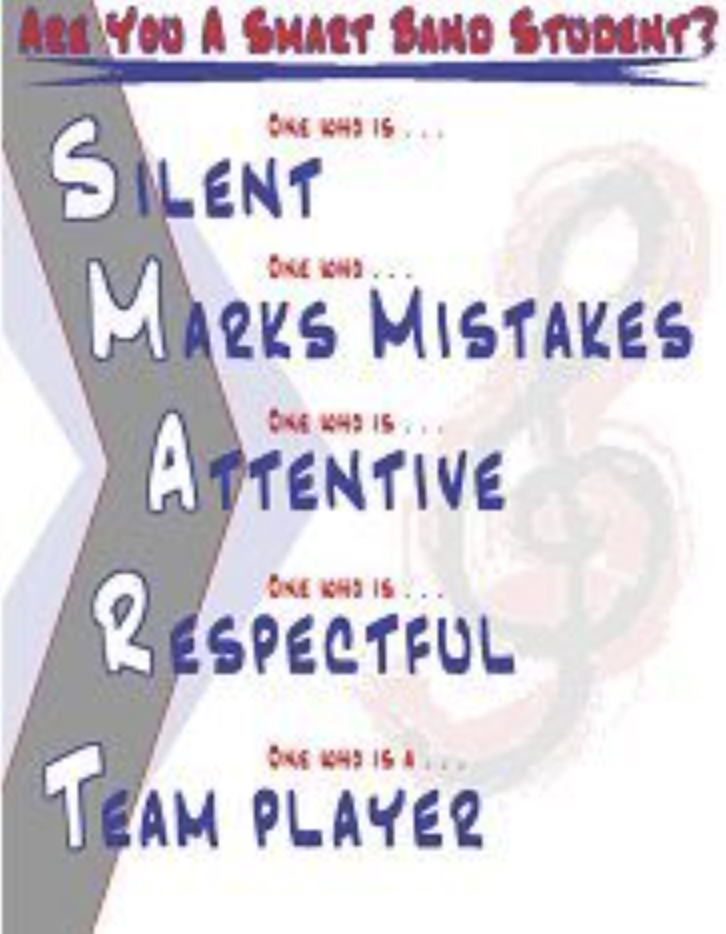
5. SMART Band Student.
“Quick and clean set of expectations for your band students. A SMART band student is one who is:
Silent
Marks Mistakes
Attentive
Respectful
Team Player”
The article’s “Tip #4” on Band Binders is reminiscent of what I had applied to my grades 5-8 string program. My wife utilizes something similar for her online music lessons. Rookie or new teachers, especially, check it out!
In addition, you should peruse their website for an inspiring collection of articles on a host of other topics:
How timely and appropriate! I stumbled on this Pinterest site, Band Room Hacks, a collection by Julia Arenas, and since I did not get advance permission to reprint her library of images, I will invite you to go explore them for yourself. At a quick glance, I see she has assembled from music colleagues a lot of excellent storage solutions as well as music teaching tools that may inspire you to modify/add your own new time-saving shortcuts.
Although productivity experts like Stephen Covey in Seven Habits of Highly Effective People and the originators of the aforementioned (in Part 1) Priority Management System (a favorite of mine) may be most helpful, we can all learn from Ashley as she sums things up with these tips on supercharging ourselves in planning for a good start to the school year. (You’ll have to visit her post to get the full gist of what to do!)
Put all your to-do’s in one place.
Track your time.
Batch related tasks.
Limit social media.
Divide your work-day into time blocks.
Set aside time to send and respond to emails.
Close documents and browser tabs you are not currently using.
Go into meetings with an agenda or outline.
Make templates.
I particularly love this introduction to her article:
“One thing I hear over and over from church musicians and music educators (well, everyone, really) is that there never seems to be enough time to get it all done.”
Time to teach Time to rehearse Time to write Time to practice Time to be with family Time to be a good friend Time to read Time to exercise Time to learn
“We’re always looking for new ways to be more productive, get more done in the little time we seem to have, and save time in places where, like money, we might be overspending. Am I right?”
“That’s one of my favorite ways to think about time – as money. It’s a commodity. We all have the same number of hours in the day – it’s how we spend them that makes the difference.”
“Where (and how) do you want to spend your time? What’s important to you?“
“Once you can answer this question, you’ll be motivated to make it happen – to take control of how you’re spending your time and look for ways to save it, where you can.”