
3 by 3: Essential Books + Websites for Music Ed Majors
By now, at least several weeks after the holiday/winter break, most of you have probably returned to school and are “back at it” fulfilling your studies in music and education methods. Welcome to the New Year (2019) and good luck on meeting your goals!
It has been my pleasure to present numerous workshops and conference sessions for pre-service, in-service, and retired music educators on a variety of topics: interviewing for a job, marketing professionalism, ethics, transitioning to retirement, supercharging the musical, etc., and have been asked on occasion, “Where do you find all of the information, research, and resources for your blog-posts and talks?
Well.. I’m glad you asked!

It would be hard to credit one or a few sources on reliable data, insights, and recommendations for career development. The following “gems” – a few ideas from someone who has taught music for more than 40 years – are just my New Year’s “gifts” to you… hopefully useful in your undergraduate or advance degree studies. Please enjoy!
This is probably the wrong time to suggest making a few “buys” for the sake of educational enrichment. College students are bombarded with many required readings of their (often expensive) textbooks and handouts from their comprehensive higher education courses of study. It is somewhat daunting to “cover all the bases,” especially when you may want specific advice and “answers” as a result of being recently thrown into “the real world” of field observations and student teaching. What else would a prospective music teacher need or have time to read? How can we better prepare you for the challenges of our profession?
Since you have to order books (or borrow them from a library), we’ll start with the printed publications. Here are my “top three” for your immediate consideration.
My Many Hats
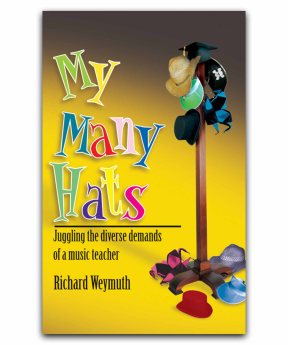 In the category of “things I wishes someone would have told me before I was hired to be a school music educator,” the inspirational book, My Many Hats: Juggling the Diverse Demands of a Music Teacher by Richard Weymuth, is a recommended “first stop” and easy “quick-read.” Published by Heritage Music Press (2005), the 130-page paperback serves as an excellent summary of the attributes (or “hats”) of a “master music teacher.” Based on the photos in his work (great “props”), I would have loved to have seen Weymuth’s conference presentations in person as he donned each hat symbolizing the necessary skill-set for a successful educator.
A quote from the author in his Introduction:
“I want my hats to put a smile on your face as you read this book, just as they do for the airport security guards as they go through my bags at the airport. They ask, “Are you a magician? A clown? An entertainer?” My answer is, “Yes, I am a teacher.”
His Table of Contents tells it all:
- The Hat of a Ringmaster: Managing your classroom and your time
- The Hat of a Leader: Setting the direction and tone of your classroom
- The Hat of a Scholar: Learning when “just the facts” are just fine, and when they aren’t
- The Hat of a Disciplinarian: The Three C’s: Caring, Consistency, and Control
- The Hat of an Eagle: Mastering your eagle eye
- The Hat of a Crab: Attitude is everything; what’s yours?
- The Hat of a Juggler: Balancing a complicated and demanding class schedule
- The Hat of a Banker: Fund raising and budgeting
- The Hat of an Artistic Director: Uniforms and musicals and bulletin boards, oh my!
- The Hat of a Lobster: Establishing the proper decorum with your students
- The Hat of a Pirate: Finding a job you will treasure
- The Hat of a Bear: Learning to “grin and bear it” in difficult situations
- The Hat of a Peacock: Having and creating pride in your program
- The Hat of Applause: Rewarding and recognizing yourself
- The Hat of a Flamingo: Sticking out your neck and flapping your wings
Here are a couple sections that should be emphasized if you are currently a junior or senior music education major.
All student or first-year teachers should focus on his/her three C’s of class discipline in Chapter 4: “Caring, Consistency, and Control.” In order to resolve problems and seek advice from local mentors (especially help from second and third-year teachers who may have just gone through similar conflicts), he poses these questions:
- What is the specific discipline problem that is currently bothering you?
- Who could you interview in your educational community to help with this problem?
- How did they handle the problem?
- What discipline solutions worked and what didn’t work?

Those getting ready for the job search and interviewing process this year must turn to Chapter 11 immediately! “Just like a pirate, you are searching for your treasure, or at least a job you will treasure.” Suggesting that first-year teachers should stay in their assignment for a minimum of three years (to show “you are a stable teacher and are dedicated to the district”), Weymuth offers guidance in these areas:
- The Application Process
- Cover Letter
- Résumé
- The Interview
- Make a Good Impression
- The First-Class Interview
- Frequently Asked Questions
- The Second Interview
The book is worth the $17.95 price alone for the interview questions on pages 85-88.
Once you “land a job” and are assigned extra-curricular duties like directing after-school ensembles, plays, and perhaps fund-raising for trips, shows, uniforms, or instruments, come back to Chapter 8 for “The Hat of a Banker” and Chapter 9 for “The Hat of an Artistic Director.” His guidelines for moneymaking and record-keeping include insightful sub-sections on:
- Planning and Administering a Fund-Raising Activity
- Possible Fund-Raisers
- Motivating Students to Sell, Sell, Sell (Set Goals, Prizes, and Tracking)
- Budgeting
Having previously posted a blog on “Supercharging the School Musical,” I was impressed with his pages 65-69 on “Show and Concert Choir Dress” and The Musical,” and especially the “Appendix – Resources Books for Producing a Musical” in the back of the book.
Case Studies in Music Education
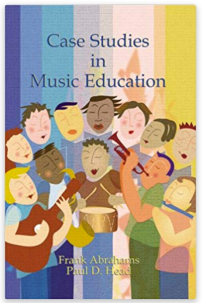 Next, I would like to direct pre-service and new music teachers to Case Studies in Music Education by Frank Abrahams and Paul D. Head. This would be an invaluable aid to “facilitate dialogue, problem posing, and problem solving” from college students (in methods classes?) and “rookie” teachers to veteran educators.
Using the format of Introduction, Exposition, Development, Improvisation, and Recapitulation known by all music professionals, each chapter presents a scenario with a moral dilemma that many music educators face in the daily execution of their teaching responsibilities.
“How should a music teacher balance learning and performing? What is the best way to handle an angry parent? What are the consequences of the grades teachers assign? What are the best ways to discipline students? How should teachers relate to the administrators and to other teachers? The emphasis here is not on the solution, but on the process. There are many viable approaches to nearly every obstacle, but before any meaningful long-term solutions can be made, teachers must identify their own personal philosophy of music education and recognize those traits that are admirable in another’s style.”
―Excerpt from back cover of Case Studies in Music Education, Second Edition, by Frank Abrahams and Paul D. Head
Case Studies in Music Education provides a frank discussion about the critical real-world issues music teachers face but are rarely addressed in college courses:
- Balancing the goals of learning and performing music
- Communications and relationships with parents, administrators, and other staff
- “Fair use” and other copyright laws
If you are seeking more reflection and peer review of ethical issues in the music education profession, good for you! Few music teachers ever talk about the “e” word. What’s important is not only becoming aware of your state’s/district’s statues on the “teacher’s code of conduct” and dress/behavior expectations, but developing your own ethical “compass” for all professional decision-making. A good companion to the Abrahams and Head book is to peruse my previous blogs on ETHICS (posted in reverse chronological order).

Enhancing the Professional Practice of Music Teachers
“Book number three” is probably the most expensive, and I could only wish you were already exposed to it in one of your music education courses. If you have not seen it, go ahead and “bite the bullet” in the purchase of Enhancing the Professional Practice of Music Teachers: 101 Tips that Principals Want Music Teachers to Know and Do by Paul G. Young, published by Rowman & Littlefield in 2009. [Note: Be sure to give them your NAfME membership number for a 25% discount!]
“If you want to improve your professional performance and set yourself apart from your colleagues—in any discipline—these tips are for you. If you desire anything less than achieving the very best, you won’t want this book. Rather than addressing research and theory about music education or the “how-to’s” of teaching, Enhancing the Professional Practice of Music Teachers focuses on common-sense qualities and standards of performance that are essential for success-everywhere. Whether you’re considering a career in music education, entering your first year of teaching, or nearing the end of a distinguished tenure, this advice applies to musicians in any setting. Affirming quality performance for experienced teachers and guiding, nurturing, and supporting the novice, Young outlines what great music teachers do. Easy to read and straightforward, read it from beginning to end or focus on tips of interest. Come back time and again for encouragement, ideas, and affirmation of your choice to teach music.”
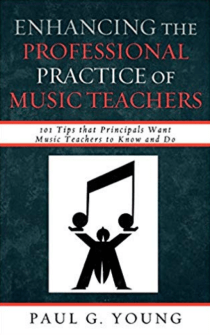 His chapters are organized into six tips:
- Tips That Establish Effective Practice with Students
- Tips That Support Recruitment
- Tips That Enhance Instruction
- Tips That Enhance the Profession
- Tips for Personal Growth
- Tips for Professional Growth
Paul Young is a musician and band director who later became an elementary school principal. His book is derived from his experience as a music student, music teacher, and educational leader. The intent of the publication is to guide both new and experienced teachers in continued personal and professional growth. He uses his experience as an administrator to point out to music teachers the traits he has seen in individuals who have become successful in the profession.
Now that you ordered at least one of these for personal research and growth, I should point out other sources of book recommendations for the budding music educator, courtesy of NAfME:
- “A Reading List for Music Educators”
- “Five Music Books You Need on Your Summer Reading List”
- “Categorized List of Selected NAfME Books”
Online Resources
Okay, now comes the “easy-peasy” part, and even more importantly, it’s mostly FREE!
 The first thing I want you to do (and you don’t even have to be a member of NAfME yet, although you should be!) is to take at least a half-hour, scroll down, and read through numerous NAfME “Music in a Minuet” blog-posts, bookmarking any you want to return to at a later date. Go to https://nafme.org/category/news/music-in-a-minuet/. Get ready to be totally immersed into the music education profession in a way no college professor can do, with articles like the following (just a recent sampling):
- “Friendship as Mentorship” by Lori Schwartz Reichl
- “The Beginner’s Guide to Improvising” by Richard Grennor
- “Timeless Tips for Concert Etiquette” by Paul Fox
- “Interviewing Skills: The Rules of the Road” by Marcia Neel
- “What Type of Choir Director Are You?” by Ashley Danyew
- “Ideas for an Awesome Music Classroom” by Audrey Carbello
- “Professionalism in the Education Workplace” by Tina Krawcyk
- “Teaching Lessons to Children with Special Needs” by Brian Wagner
- “7 Things They Don’t Teach Music Education Majors (That You Wish They Did!) by Elisa Jones
Hopefully you did receive a little cash in your Christmas stocking… or something from grandma! Now is time to “belly up to the bar” and pay your dues. Every professional school music educator should be a member of their “national association…” NAfME!
Once you do this, get ready to reap countless benefits! First, besides offering a discounted rate for all collegiate members, you will be eligible for a significant price break for full active membership renewal during your first-year of teaching! Then, the doors will open wide to you for all of the many NAfME member services such as classroom resources, professional development, news and publications, special offers for members, etc.

Once you are a NAfME member, open up your browser, and go immediately to the NAfME AMPLIFY community discussion platform, instructions posted here. Getting started on AMPLIFY is easy:
- Go to community.nafme.org.
- Edit your profile using your NAfME.org member username and personal password.
- Control what information is visible on your profile.
- Join/subscribe to communities of your choice – you will automatically be enrolled in Music Educator Central, our general community for all NAfME Members.
- Control the frequency and format of email notifications from Amplify.
If you prefer, they have created a video or quick-start guide here to set-up your account’s profile, demonstrate the features, and provide some help navigating through the AMPLIFY menus.
Once you familiarize yourself with the forum, find the “Music Educator Central” and “Collegiate” discussion groups… and start reading. If you have a question, post it. AMPLIFY connects you with as many as 60,000 other NAfME members… a powerful resource for networking and finding out “tried and true” techniques, possible solutions to scenarios or problems in the varied settings of school music assignments, and the sharing of news, trends, perspectives, and more!
Try it… you’ll like it! When you feel comfortable with the platform, contribute your own posts, thoughtful responses to comments from the reflections of your “colleagues,” teaching anecdotes, personal pet-peeves, and ??? – you name it! The sky is the limit!

Tooting My Own Horn… the “Paulkfoxusc” Website (now paulfox.blog)
Finally, if you have indeed “blown the budget” over family holiday purchases, I can suggest one freebie website that archives a comprehensive listings of blog-posts, links, and books. Under the category of “marketing professionalism,” you can search through blogs placed online in reverse chronological order at https://paulkfoxusc.wordpress.com/category/marketing-professionalism/ or you can “take everything in” from one super-site entitled “Becoming a Music Educator” at https://paulkfoxusc.wordpress.com/becoming-a-music-educator/.
Of course, I have a few “favorite” articles which may provide you a great start to your journey of self-fulfillment:
- “Transitioning from Collegiate to Professional”
- “inteReviewing the Situation… and Jobs”
- “Social Media – Boon or Nemesis?”
- “Ethics for Music Educators”
- “The Professional Website”
- “A to Z – Job Interview Checklist” (also posted on AMPLIFY)

Best wishes on you continuing your advancement and personal enrichment towards the realization of a wonderful career in music education!
PKF
© 2019 Paul K. Fox
Photo credits in order from Pixabay.com: “student” by geralt, “book” by PourquoiPas, “girl” by nastya_gepp, “fatigued” by sasint, “learn” by geralt, “brass” by emkanicepic, and “iPad” by fancycrave1


 Supported by Dan Ariely and his team at Timeful (a company acquired by Google), Srinivas Rao writes at
  Easy to set-up
 As musicians and music teachers, this suggestion may hit home: Do something that stimulates your “right brain” with acts of personal self-expression or artistry every day, and schedule it both intentionally and early!
 developing innovations, trends, and movements in their field, and embrace better instructional techniques and use of media for their students!
 The answer is… probably not.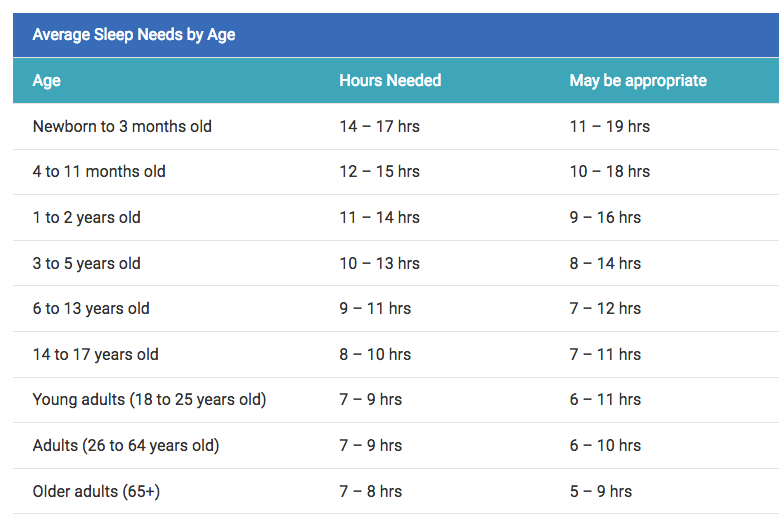
 I remember when I taught full-time and was in the middle of a full-blown musical production, I sometimes laid awake feeling “stirred up” inside trying to think of all the things I needed to do the next day. #5 of Brittney’s list is solved by putting a legal pad and a good pen by your bed stand, and without awakening your spouse, roll over and jot down a few of your “don’t forgets.” Or if you prefer to use the magic of technology, you can do this digitally… take a minute or so and use your tablet or smartphone, but don’t stay up very long and let the screen’s blue-light make your insomnia worse. Revisit title heading #2 above for note-taking apps.
 “Much like Gilligan and his infamous “three hour tour,” what I thought might be a quick clean-out extravaganza turned into an epic, six-month journey through the nether reaches of my closets and my psyche. Along the way, I learned many things from Maeve about organization — and more than a few things about myself that changed my relationship with my stuff.”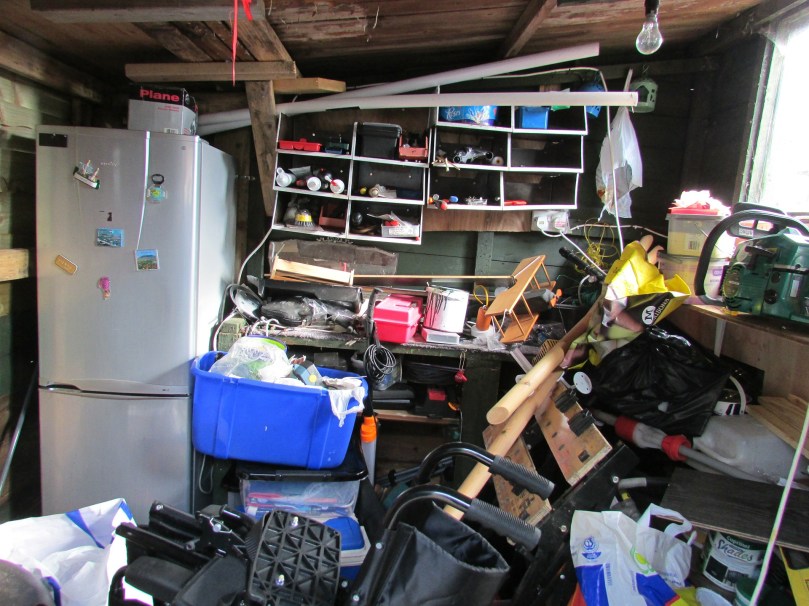



 Albert Einstein did not speak until he was four years old and didn’t read until he was seven. HIs teacher described him as “mentally slow, unsociable, and adrift in his foolish dreams.” He was expelled and was refused admittance to the Zurich Polytechnic School.
 The mission of South Hills Junior Orchestra, which rehearses and performs at the Upper St. Clair High School in Pittsburgh, PA, is to support and nurture local school band and orchestra programs, to develop knowledge, understanding, performance skills, and an appreciation of music, to increase an individual member’s self-esteem and self-motivation, and to continue to advance a life-long study of music. Members of the Orchestra learn, grow, and achieve positions of leadership to serve their fellow members.








 (Getting a little revenge? On trip #6, when we hooked up to the Apple Store’s computer, our Time Capsule crashed their hardware.) With all of my wife’s documents long-gone from the computer and a couple terabytes of data on the Time Capsule now inaccessible, we were “saved” by our subscription to the cloud-based backup program Carbonite which did restore most of her files… but took five days 24/7 via WIFI to bring them back!
 One way to help educate yourself on all of these 21st Century “innovations” is to watch the podcast
  The original saved document is considered Copy #1. You need to then transfer this to an external location, outside your hard drive. Copy #2 could be sent to a flash or jump drive (just plug it into your USB port), or an external hard drive. (Understandably, my wife is no longer willing to trust the Apple Time Capsule which uses a program called Time Machine that automatically backups every file you save via WIFI… but there are other brands you could consider.)
 From password management to virus protection, and simply knowing not to click on any random link or attachment in email are essential. Online security has become a very important issue. The experts tell us we should not have the same password for all of our applications, and it should not have any portion of our name, phone number, or other easy-to-guess info. My solution to resolve the conundrum of being safe and catering to a “senior citizen’s memory” was to create a core password that I could remember but no one else could figure out, and then add a prefix or suffix of a couple additional letters that describes the name of the applications. (Whatever you do, don’t use “123” as a password!) You should write down on paper an alphabetical listing of your user names and passwords, store the journal in your safety deposit box away from fire, flood, or theft, and share another copy of it with your spouse or at least one other family member. But, don’t forget to update the catalog frequently! (Passwords should change from time to time.)
 for your eye glasses to avoid scratching the lenses?


 The purpose of this short SHJO “Series to Share” is to get you started with some basic “how-to steps” to learn how to conduct. Truly, for success in directing an ensemble, the only thing you need to do is “give it a try” and practice those beat patterns with your favorite musical selections. During the Saturday SHJO rehearsals in December, we will give you the opportunity to direct the entire group and provide you a few hints!
 The mission of South Hills Junior Orchestra, which rehearses and performs at the Upper St. Clair High School in Pittsburgh, PA, is to support and nurture local school band and orchestra programs, to develop knowledge, understanding, performance skills, and an appreciation of music, to increase an individual member’s self-esteem and self-motivation, and to continue to advance a life-long study of music. Members of the Orchestra learn, grow, and achieve positions of leadership to serve their fellow members.
 documented to a great extent, stress, burnout, and stage fright have become real concerns for music education majors completing their coursework, juries/recitals/concerts, methods exams, student teaching, and other field experiences. This may be affecting statistics on college enrollments, graduation rates, and job placements!
 College funding
 Music Teacher Education
 Learning to “manage your burdens,” class schedules, assignments, calendar, etc.
 2009), “deep listening” as “a way of hearing in which we are fully present with what is happening in the moment” (Barbezat and Bush 2014), contemplative movement activities including methodologies of Orff, Kodaly, Dalcroze, and Gordon adapted for other music teaching contexts (Benedict, 2010), walking meditation, tai chi ch’uan, yoga, and labyrinth walking (Center for Contemplative Mind in Society, 2016), contemplative reading, writing, and other self-help practices.



 “When musicians think about performing, they eventually think about performance anxiety — ‘stage fright.’ Performance anxiety can be defined as a physical and mental deviation from a ‘normal state’ and is perhaps one of the most misunderstood areas of performance practice… A reduction in anxiety levels especially with musicians with extensive formal training may actually diminish performance quality. For musicians with low mastery skills, the prudent approach would seem to be to undertake more formal training.” — Donald L. Hamann

 Job placement


















 you to reflect and respond to “what would you do?” and even re-orient you to the paradoxes in which you may encounter that may not seem to offer an obvious resolution.
 Use of social media networks to support student learning versus the risk of crossing the student/teacher boundary with inappropriate informal communications? (See
  To foster meaningful scrutiny and study of the bulleted issues in bold above, we will sort these problems by Principle III “Responsibility to Students” and Principle IV “Responsibility to the School Community” of the National Association of State Directors of Teacher Education and Certification (NASDTEC) “Model Code of Ethics for Educators” (MCEE):



 MY SOLUTION: This is more common than you would like. This episode compels you to figure out how to wear two unique hats simultaneously – the educator and the judge. Assuming you were clear (in writing) on the requirements of the try-outs, even sharing the blank rubric that would be used for the evaluations, you are now charged to find the “best” person for each lead assignment based on a number of criteria:
 Workplace” are applicable