When Your Car (or Smartphone or Computer or Soundbar) is Smarter Than You
Okay, I know I am not a “technology native,” but at least I have become more savvy as a well-informed “technology immigrant.” (Just don’t tell Donald Trump!) But, I just can’t seem to keep up! What is it about “our generation” missing that part of the brain that somehow intuitively informs us which link or button to push in a long series of options on a menu bar? (The ones that only have symbols or pictures really puzzle me!)
I bought a new Chevy (a used but current-model-year demo from the dealer), and I am struggling to understand it! Oh, not just the basics of the radio, three-zone HVAC system, cruise control, or all of the other nifty buttons on the steering wheel…
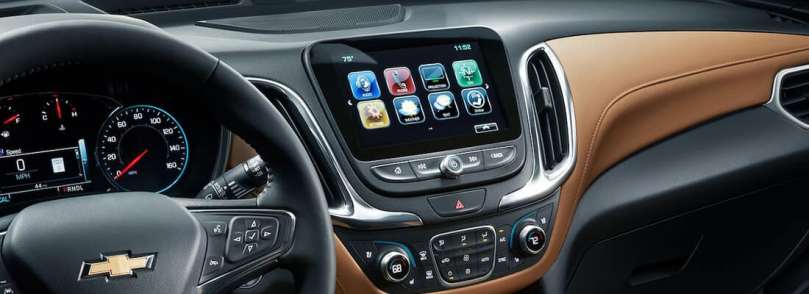
But, this car talks to me. It tells me when I am not driving straight within the lane. It reprimands me when I am following too close to the car in front of me. In case I forgot to notice the speed limit sign, the reminder pops up next to the speedometer. It even tells me to stop reading the dashboard while I am driving (which is somewhat ironic since the notice comes up randomly while my car is moving).
Our devices are all becoming more interconnected and even “seamless!” For example, my GM vehicle offers OnStar, turn-by-turn navigation, and Sirius/XM-Radio. When I plug my iPhone into the special interface next to the cigarette lighter, the home screen shows up on the main window of my car, making it a cinch to play music from my iTunes library!
If I need to hear female voices “tell me where to go” (besides my wife, of course), I have the opportunity of either letting Siri give me the street directions or listen to another digital woman (who or where she comes from I do not know – a Google Maps cyborg?). One trip, I turned them both on. Number 2 came through the car speakers, while Siri spoke through the phone itself. They both nearly simultaneously gave me the wrong directions to Hershey Lodge (Harrisburg), having me exit the PA Turnpike two exits too soon. (Go figure. I should have taken the advice of my wife who said, “Harrisburg East.”)
This “trouble in tech paradise” is not limited to automobiles. Every appliance is becoming smarter than me! Here’s another example that I may have bought “too many toys” for my own good. Both my Samsung TV and soundbar seem to automatically update themselves using my household WIFI network. The funniest moment in my installation of the Bose sound equipment connected to our cable box in the living room was when I downloaded their app for my iPhone, and inadvertently turned on from a remote location a streaming country music service blaring throughout my house. (Scared my wife to death!)

This is an “equal opportunity” rant, and I do not discriminate: Apple vs. Windows OS, Apple vs. Android iOS, or Apple Genius vs. Best Buy Geek Squad. It makes little difference… embracing the tools of “new age” media and scientific innovations are complicated! For example, why does one need to have a PhD in computer science to use Mail Merge and print labels from Excel and Word on either platform? It should never be that hard to prepare your Christmas card mailing list!
Nearly the only time my “marital bliss” with my wife has been challenged is when something BAD happens to a file, app, or program on our iPhone, iPad, or Mac computer… and we try (with loads of mistakes) to fix it “together.” Even the dogs know to stay away from technology when we are in the middle of a hardware or software “bug!”
Your worst fear – a “crashing” computer
It’s hard to know who to trust in this technology-overloaded environment. Several weeks ago, when my wife’s Mac crashed and was “trapped” in an endless loop of restarts, we picked up our entire 27-inch, awkward-shaped/sized piece of equipment and carried it to the Apple Store for a consult with the “Almighty Apple Genius Department.” We brought with us the printed error message that said the problem was due to a “kernel panic.” Placing our faith in AppleCare, we accepted their experts’ prognosis, and allowed them to erase half-a-million documents from her hard drive, strip it clean, and re-install the operating system. Big problem, but an even bigger mistake.

Here’s the short version of our sad story (the retelling of which raises my blood pressure). After seven trips to the mall over five days, “they” (who are supposed to know better) discovered that our backup external hard drive, the Apple Time Capsule bought 18 months ago (now out-of-warranty, but of course!), was the source of the problem, not the Mac.  (Getting a little revenge? On trip #6, when we hooked up to the Apple Store’s computer, our Time Capsule crashed their hardware.) With all of my wife’s documents long-gone from the computer and a couple terabytes of data on the Time Capsule now inaccessible, we were “saved” by our subscription to the cloud-based backup program Carbonite which did restore most of her files… but took five days 24/7 via WIFI to bring them back!
However, we “learned” that this process is excruciating slow if you have a stray colon or backslash within the title of any document. Many of these files had to be reloaded by hand. And, to date, we still have not been able to get our Family Tree application to work!
Morale to the story: Don’t always believe in the “geniuses!”
Don’t give up on your existing tech skills
Regardless of our age, many of us music teachers are a little more fortunate to have been exposed to innovative software and other technological tools during our teaching years.
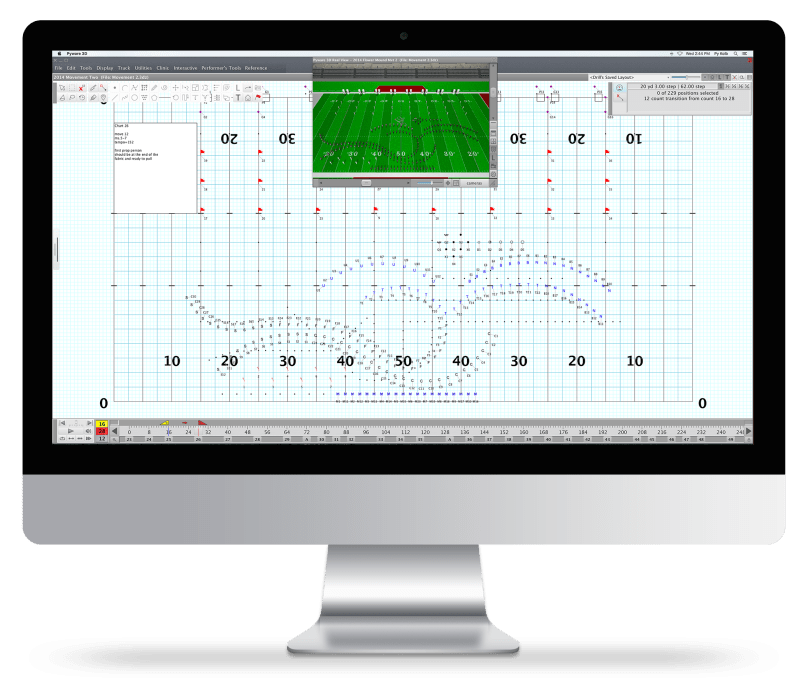
If you were a band director, you might know Pyware 3D Drill Design or some of the video editing programs to compare your the halftime show on Friday night with the schematic drawings “count by count” on how it should look. If you were involved in printing programs, senior yearbooks, posters, or other graphic media, you’re probably not afraid of desktop publishing projects. Those versed in Sibelius, Finale, or other music creation programs, or who introduced MusicFirst or SmartMusic applications to your music students, are much further along than many of the other teachers from our generation. If you’re retiring or have retired in the last five or 10 years, you were probably trained in your school district’s proprietary grade-book programs or attendance record system, and even may call yourself well-versed on creating/posting material on a website like “teacher pages,” skills that can be easily transferred to applications like WordPress or Wicks.com. So, don’t be afraid to venture out of your “comfort zone!” Unlike your father or father-in-law, who may have only had a taste of Applesoft Basic programming or a little TurboPascal coding before they retired, you may be “ahead of the game!”
Here are a few more gleams of “tech illuminations” that I have learned from being baptized and then thrown into this 21st-century topsy-turvy madhouse.
Turn yourself into a “tech-streetwise” retiree
 One way to help educate yourself on all of these 21st Century “innovations” is to watch the podcast “Leo the Tech Guy” at https://techguylabs.com/. Leo Laporte brings all of this confusion down to our level… simple/easy terms and step-by-step instructions, and his reviews on future computers, smartphones, tablets, televisions, home security, software applications, and other technology are excellent. His FREE talk show airs every Saturday and Sunday from 11 a.m. – 2 p.m. Pacific Time, but all of the episodes are archived and you can search on specific topics.
The subjects he returns to on a frequent basis include:
- Backup and Recovery
- Business
- Gaming
- Hardware
- Home Theater
- Internet and The Web
- Media
- Mobile Phones
- Networking
- Peripherals
Backup the backup
Leo says we should have at least three copies of every important file… one on our hard drive, one on an external drive, and one in the cloud. If you don’t believe this, reread the agonizing anecdote above (“…crashing computer”). Backup #1 was erase by Apple Genius. Backup #2 was damaged or made inaccessible by the “kernel panic.” That left us with Backup #3… Carbonite. Thank god!
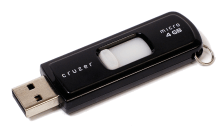 The original saved document is considered Copy #1. You need to then transfer this to an external location, outside your hard drive. Copy #2 could be sent to a flash or jump drive (just plug it into your USB port), or an external hard drive. (Understandably, my wife is no longer willing to trust the Apple Time Capsule which uses a program called Time Machine that automatically backups every file you save via WIFI… but there are other brands you could consider.)
However, keep in mind that if a fire occurs in the room you store your computer and external hard drive, all could be lost! The final copy #3 should be the automatic online back-up created by a cloud-based application. Carbonite saved my ***, but there are many subscription services out there that offer file syncing, encrypted backup, and data restoration at a reasonable cost:
- Acronis True Image
- Backblaze
- Carbonite
- IDrive
- SOS Online Backup
- SpiderOak One
What is the core reason that all of this is worth the money? Cloud-based programs do their magic behind-the-scenes (automatic redundancy saves the day) and won’t let you you forget to backup! If you are looking for an assessment like Consumer Reports on these products, advisers say, “Go to a computer nerd!” Perhaps PC Magazine comes the closest in being comprehensive: https://www.pcmag.com/article2/0,2817,2288745,00.asp.
Manage passwords carefully.
 From password management to virus protection, and simply knowing not to click on any random link or attachment in email are essential. Online security has become a very important issue. The experts tell us we should not have the same password for all of our applications, and it should not have any portion of our name, phone number, or other easy-to-guess info. My solution to resolve the conundrum of being safe and catering to a “senior citizen’s memory” was to create a core password that I could remember but no one else could figure out, and then add a prefix or suffix of a couple additional letters that describes the name of the applications. (Whatever you do, don’t use “123” as a password!) You should write down on paper an alphabetical listing of your user names and passwords, store the journal in your safety deposit box away from fire, flood, or theft, and share another copy of it with your spouse or at least one other family member. But, don’t forget to update the catalog frequently! (Passwords should change from time to time.)
I also found there are several ingenuous apps out there to help you with creating really random passwords, storing and accessing them with one “master password,” and even the provision of a “digital will,” designating a trusted friend and family member access to your virtual password vault in the event of an emergency or crisis. Now, all that is left for you is figuring out how to download one of these on all of your devices:
- LastPass (my favorite)
- Keeper Password Manager
- DashLane
- Sticky Password
- Password Boss
- RoboForm
- True Key, etc.
Again, an analysis courtesy of PC Magazine provides additional insight: https://www.pcmag.com/article2/0,2817,2407168,00.asp.
Sanitize your smart devices.
They used to say that a tie is one of the most germ-ridden articles of men’s clothing. (In some hospitals, they recommend that doctors “lose the tie” as part of their dress code.) What do you see at the entrance of most grocery stores… disinfectant wipes for the shopping cart handles? Perhaps your cellphone tops the list of tech articles you rarely sterilize. When was the last time you cleaned your tablet? Your door knob to the bathroom probably gets more attention! Can you imagine anything containing more bacteria than the surface of your computer’s keyboard?
Whatever you do, be careful not to immerse your tech tool and cause harm to the internal circuits! Even if they say your phone is “water resistant,” don’t test it!
There are a lot of products out there to help you kill the microbes… specialized wipes for touch screens and others for hard surface areas. Read the precautions. What do you use 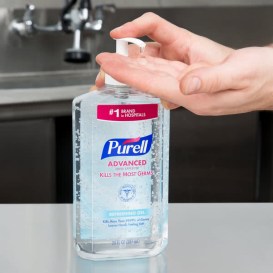 for your eye glasses to avoid scratching the lenses?
Be aware of “operator error” in making this worse. How often do you wash your hands prior to picking up your wallet or smartphone? PURELL Hand Sanitizer was invented in 1988 by GOJO to meet the needs of healthcare providers and restaurants operators looking for ways to reduce the spread of germs. I have a container of PURELL sitting next to my computer.
Merry Maids offer these tips on cleaning your electronic devices: https://www.merrymaids.com/blog/quick-tips/clean-and-disinfect-electronic-devices/.
I also liked Design Mom’s “Eleven Secrets to Cleaning your Tech” at https://www.designmom.com/living-well-11-secrets-to-cleaning-your-tech-devices/.
Again, read their advice and all warnings. For a low budget solution, I would look into buying an antibacterial micro-fiber cloth and for the keyboards, consider using a very light application of isopropyl alcohol (on a rag, not directly on the device!).
Speaking of sanitizing… clear your “cookies” and “cache!”
What a strange language we use for our tech tools! Well, in the middle of writing this blog, I found that my Firefox browser was “giving me fits” for doing an online credit card transaction. Taking time out to find out why there were error messages (calling the 1-800 customer support people), I confirmed they always seem to ask you three questions:
- What is the make, model, and year of your computer (or other device)?
- What is the version of your computer’s operating system? (Mine is almost always updated to the most current edition. This is normally good advice for surviving the always-fluctuating tech landscape.)
- What browser are you using?
For some reason, the techies will recommend you clear your browser history, including all forms, downloads, cookies, and cache… “translate” this mumble-jumble as cleaning out some of the temporary files and other “things in the buffer.” If you are having trouble reaching a known website or filling out digital applications or other forms, give this a try. It works for me almost every time. When in doubt, sanitize!

When you’re in real trouble, be quick to reach-out for support
Remember that game show, “Who Wants to Be a Millionaire?” In the original series, one of the “lifelines” to help the “stumped” contestant deal with a difficult question was the option to “phone a friend.” Latch onto a “technician tutor,” perhaps a student graduate or close family member. With how fast technology is evolving, I have been so appreciative of a former student stage crew member who came back to the school district employed as a tech aide, and was willing to do “house calls” and set up and improve the overall security of my network, install multiple routers, computers, printers, smart TVs, etc.
What about becoming a “web(inar) maestro?”
Finally, have you considered making an education video or presenting a webinar? Do you think you, another “technology immigrant” and retired music teacher (like me) would be the last one to ever venture out to do this? Well, perhaps not!
Think of all of that expert “stuff” you have swimming around your head. Pass it on… it’s all about leaving a legacy. You should share your experiences and knowledge earned from that old “school of hard-knocks!”
And, it isn’t that hard to do. If you are comfortable with PowerPoint, Keynote, or Prezi, all you need to do is find someone who has a subscription of Zoom or Go-To Meeting. If you are a member of a state education association like NAfME or an affiliated state unit like PMEA, they could set you up to host a webinar or record a professional development video. It’s “easy peasy!” Most would welcome your contribution to their online professional development library, like the NAfME Academy.
You might even have a few ready-made presentations sitting idle on your hard drive. What about those old music appreciation lessons, marching band leadership seminars, Orff/Kodaly/Dalcroze workshops, string pedagogy tips, or ??? Dust them off, review/edit/update, or as they say, “repackage” your work. What’s that quote? “A mind is a terrible thing to waste.”

This started out as a “rant” lamenting the fact we have all but lost what seemed to be a calmer, simpler lifestyle. But, technology is here to stay, and we either learn to cope with it, or go back to the caveman era and put our heads in the sand (to mix metaphors). At least, be happy to know you are not alone in riding this “bucking bronco” of the digital age. Here are even more online hints on surviving technology:
P.S. My wife says she’s still mad at Apple! Well, we do have to move on… a little wiser, more resilient, and possibly less gullible in trusting future “experts.”
PKF
© 2018 Paul K. Fox
Photo credits in order from Pixabay.com: “banner” by geralt, “imac-ipad-iphone-macbook-laptop” by Tim_H, “computer problem” by OpenClipart-Vectors, “man” by Tikwa, “thumb-drive” by skeeze, “key” by 3Dman_eu, “maze” by qimono, and “smartphone manipulation” by Funky Focus.










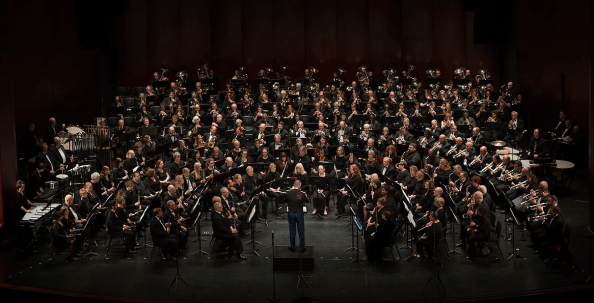
 In my case, I had over 37 years where I had established an identity as a music director and as a soldier. Prior to retirement from the army, I was the senior music director in the U.S. Armed Forces and was on speed dial of many officials in the department of defense, the Congress, and of course, the media. I received 500 to 600 emails daily from all over the world. By the way, I also was leader and commander of the US Army Band “Pershing‘s Own,” one of the largest (and busiest) military music units in the world. Then, one day I was no longer in the army, my phone wasn’t ringing constantly, the email stopped, and my schedule was mostly free. Sounds great, right? As a band or orchestra director, you were probably the most well-known and well liked person in your community. You have students, parents, and administrators who rely on you. And then suddenly, you are not that person any longer. For each of us there are emotional/psychological, social/family, and financial impacts of this transition.
 depression is related to spending time with their spouse.




 Okay, since retirement, for the first time in my life, I may call myself a “good neighbor!”
 Well, now I have two dogs (Gracie and Brewster) that I walk religiously several times a day. This means that, unless it is raining hard, I am “out and about” in my neighborhood, a wonderful “bedroom-community” with sidewalks and neatly manicured lawns, flower beds, and trees. One could say I have become a “watch dog” on things “coming and going.” Strangers should beware! We serve as an informal “fox and hounds” security service! The three of us know if you don’t belong on our block (although the pups love the mailman, and would probably bark first and then strain the leash to run over and kiss any other newcomer).
 Gracie, Brewster, and I don’t trespass. We try to model “good citizenship.” We do our best to honor the wishes of our neighbors, respecting any of their issues for privacy, restricted access, fears, or phobias. For the six years I have become a pet owner, only two people have told us, “Don’t let your dogs pee in my yard.”













 been discussed about the “what,” “how,” and most recently, “where” of retirement, even issues of “privacy” regarding your decision. For a review of these areas and a bibliography of resources, please visit:









 Pets boost your social life. (Research indicates pets decrease social isolation.)

 How much exercise is enough? Well, according to the World Health Organization, the “best practices” of a good health and wellness program includes:
 On personal observation, I can attest that walking my dogs in the neighborhood can be one of the most contemplative (almost meditative) experiences of the day. I commune with nature, let my imagination wander (dream “wide-awake”), notice things I have never before stopped to see, hear, or smell, and reflect on my life goals. I find the “pause” in my daily routine (or should I say “paws”) makes me feel refreshed, thoughtful, more calm, tolerant, and patient while at the same time more alert and focused, and always leaves me in a better mood.


 Expert cuddlier Brewster flipping on his back so you rub his tummy, and when you are distracted, gently pawing at you begging you not to stop
 Approximately 3.2 million shelter animals are adopted each year (1.6 million dogs and 1.6 million cats).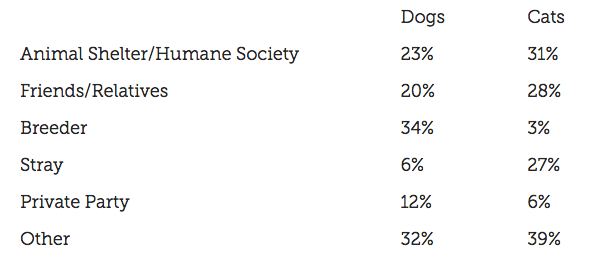






 Supported by Dan Ariely and his team at Timeful (a company acquired by Google), Srinivas Rao writes at
  Easy to set-up
 As musicians and music teachers, this suggestion may hit home: Do something that stimulates your “right brain” with acts of personal self-expression or artistry every day, and schedule it both intentionally and early!
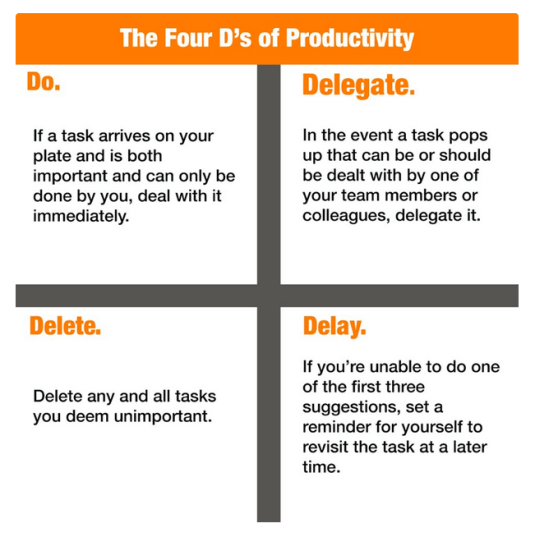
 developing innovations, trends, and movements in their field, and embrace better instructional techniques and use of media for their students!
 The answer is… probably not.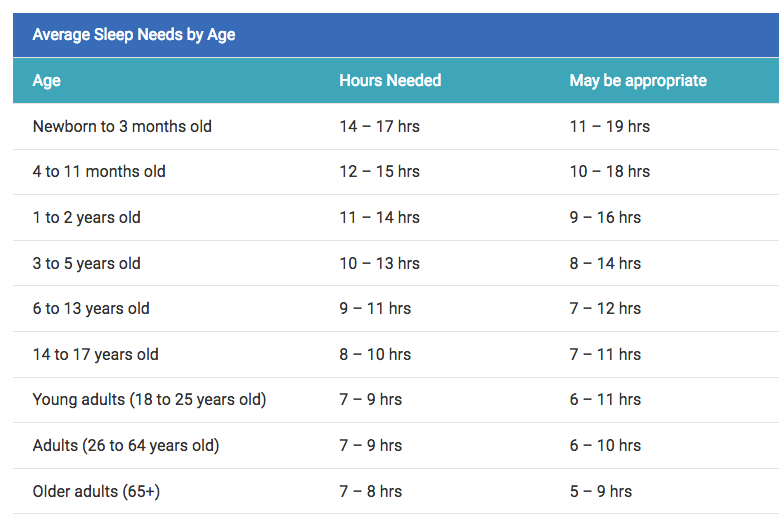
 I remember when I taught full-time and was in the middle of a full-blown musical production, I sometimes laid awake feeling “stirred up” inside trying to think of all the things I needed to do the next day. #5 of Brittney’s list is solved by putting a legal pad and a good pen by your bed stand, and without awakening your spouse, roll over and jot down a few of your “don’t forgets.” Or if you prefer to use the magic of technology, you can do this digitally… take a minute or so and use your tablet or smartphone, but don’t stay up very long and let the screen’s blue-light make your insomnia worse. Revisit title heading #2 above for note-taking apps.
 “Much like Gilligan and his infamous “three hour tour,” what I thought might be a quick clean-out extravaganza turned into an epic, six-month journey through the nether reaches of my closets and my psyche. Along the way, I learned many things from Maeve about organization — and more than a few things about myself that changed my relationship with my stuff.”