Admins Helping Teachers

This is an introductory blog-post perusing my early research and resources on supporting educator health/wellness in advance to my presentation Self-Care Cookbook 2.0 – Recipes and Resources for School Leaders for the PA Department of Education’s SAS Institute 2025 state conference scheduled for December 8-10, 2025 in Hershey, PA. Here is the summary description for the workshop:
“Do you find the harried pace of our profession overwhelming and at times crushing when buried beneath decades of keeping our noses to the grindstone and putting everyone else’s needs above our own? Do some of your staff members say they are stressed out, constantly tired, plagued by one ailment after another, or wondering how they’re going to “keep up?” If health is interfering with your colleagues’ abilities to do their jobs and find success, balance, and meaning in their lives, then it is time for change. The purpose of this session is to empower school leaders and teachers with skills and attitudes needed to make informed decisions to promote self-improvements in their lifelong health and wellbeing, to LEARN tools for better time management and to help remediate fatigue, stress and burnout, CONNECT and collaborate with your staff to inspire unique strategies for better personal self-care, and ACTIVATE creative new approaches to foster an improved workplace environment.”

Actually, previous articles at this site have dived into this subject of educator stress, burnout, and the development of a health and wellness self-care plan to build resilience, work/life balance, and reignite our motivation and passion for teaching. For a complete overview, I recommend you revisit these:

Always start with “THE WHY”

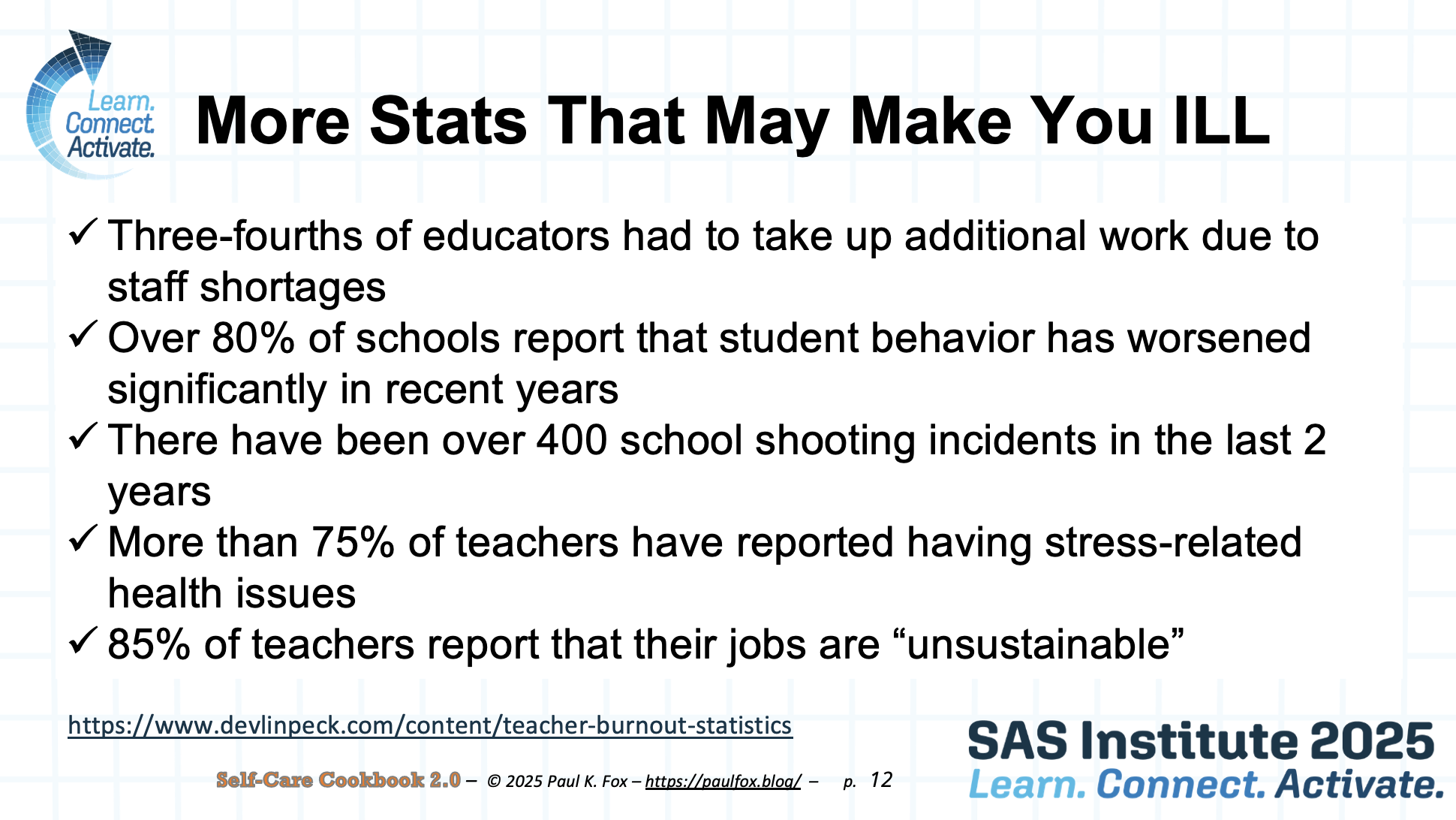
(Inspired by keynote speaker/author Simon Sinek): Why is this discussion so important now?
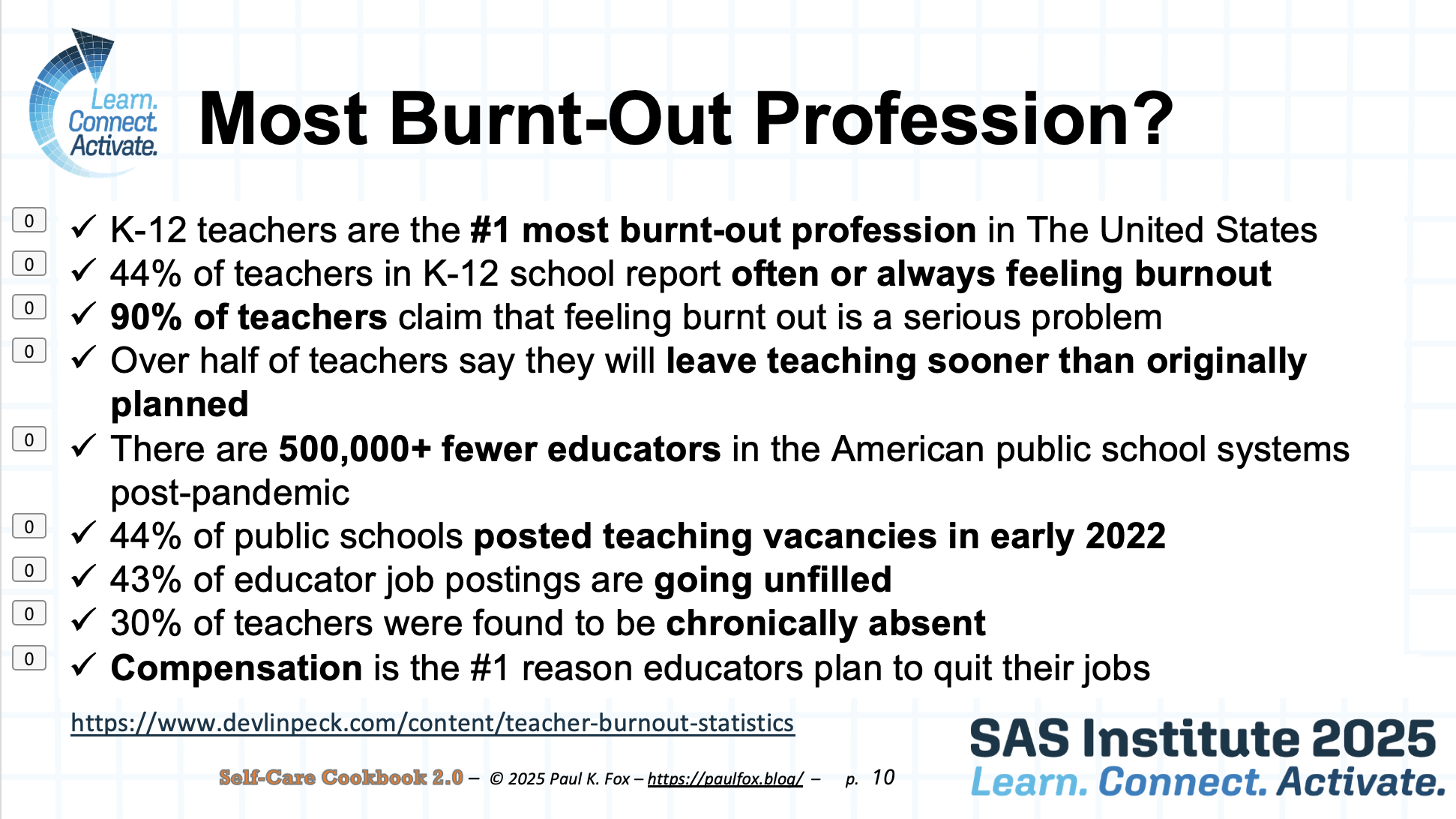
When I mentioned my research to my colleague (and former student) Dr. Timothy Wagner, Principal, Upper St. Clair High School (my former placement for full-time employment), he mentioned that this topic was timely and highly relevant, and suggested that perhaps there might be more statistics and resources “out there” on the stress of health-care workers and first-responders, which I found to be true. However, early looks have shown numerous parallels to the information in my 2023 Self-Care session.

My PDE SAS Institute session will become a “two-for-one” presentation, including the opportunity for school/system leaders, building administrators, and directors of school district professional development to also download my original “Self-Care Cookbook” (1.0) slides, recently updated for the DCMEA Annual State Conference (January 20, 2026). This self-help workshop is geared for educators to “on-their-own” explore strategies, implement use of individualized tools/remedies, and formulate new goals to improve health and wellness. Both sessions hope to cover these key questions:

  • Why is it essential to personal health to achieve balance in our lives, and how can we achieve it?
  • How does dedication to wellness lower the risk of illness, injury, and the quality of a person’s life?
  • What are the consequences of our choices in terms of time and stress management?
  • How do effective decision-making skills and goal setting influence healthier lifestyle choices?
  • What are suggestions, strategies, and samples for the development of a personal self-care plan?
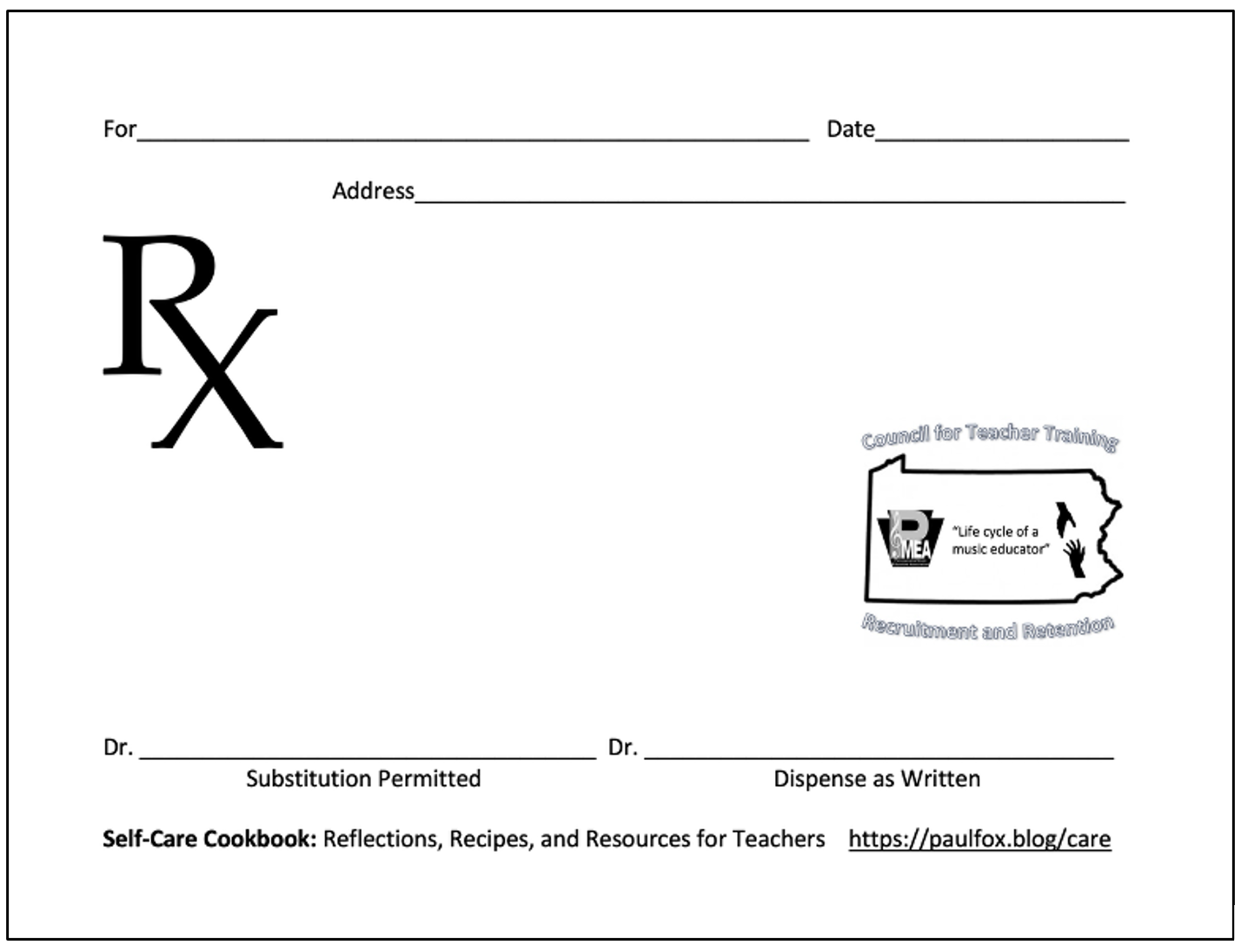
Using a facsimile of a prescription pad in Self-Care 1.0, I posed these personal reflections:

  1. How do I usually feel daily throughout the school year?
  2. What are the emotional and physical tolls of my job?
  3. What specific self-care activities do I need to incorporate to recharge and prevent burnout? 
  4. What boundaries do I need to set around my work to honor personal time?
  5. What support systems can I build and/or professional help should I seek to create a sustainable practice?
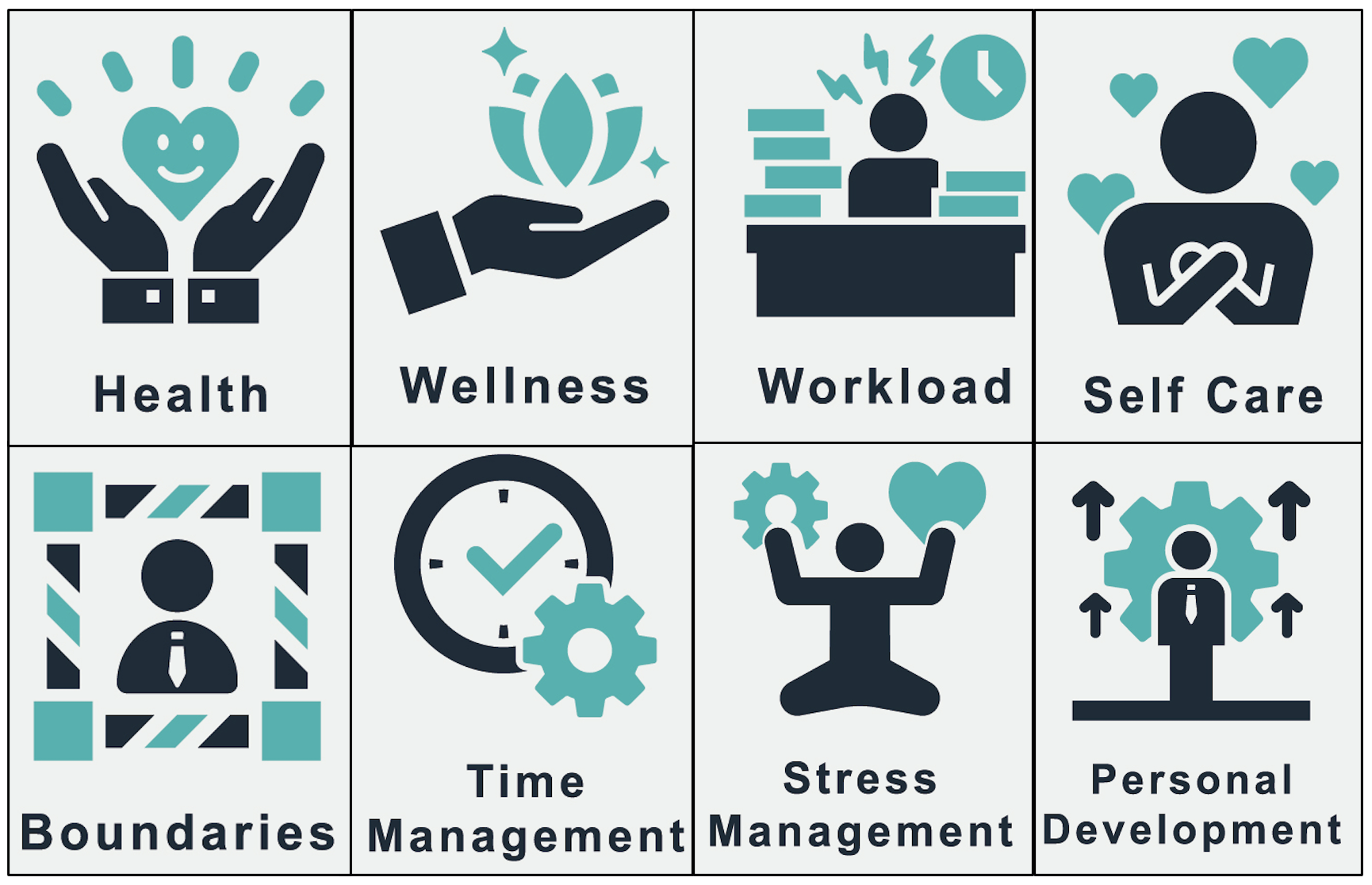
Good ideas…

How can school admins support their staff in dealing with the climbing incidences of health problems, teacher exhaustion, call-offs, evidence of burnout, and high turnover rate? Sorting through a compendium of online research, these recommendations for school leaders occur repeatedly:

  1. Probably should go without saying: Show high visibility (“be seen by all”), recognition, and know everybody’s name. This goes a long way in building a sense of belonging of the staff and students.
  2. Provide more time for breaks and planning. Engage teachers in problem solving teams to identify and implement substantive ways to give them more time. Examples: cutting back on testing and data analysis; holding fewer and shorter meetings; putting a hold on new academic initiatives while increasing mental health initiatives conducted by school-based mental health professionals; hiring individuals who can assist with administrative tasks; compensating teachers for extra work; protecting classroom time by minimizing interruptions; reducing teaching hours to allow for more prep time and follow-up time.
  3. Foster a supportive community through mentorship programs.
  4. Distill high-impact strategies into a handful of manageable priorities. Once the goals are set, give teachers specific time within the school day or week to focus solely on them.
  5. Communicate directly, clearly, and frequently. “Supportive administrators know that a teacher’s time is valuable and that administrative meetings compete with individualized education programs, data teams, professional learning committees, cross-curricular planning meetings, and much more. So if a meeting is only for sharing straightforward information, it can be an email instead. It’s not necessary to have a meeting simply because the schedule says that faculty meetings are in the cafeteria on Mondays.” – Edutopia: “4 Practical Ways Administrators Support Teachers”
  6. Treat teachers with respect like the professionals they are, increasing mutual trust by decreasing micromanagement or reducing unnecessary accountability documentation.
  7. Shadow multiple teachers to experience first-hand the reality of their typical day.
  8. Allow educators the option to attend meetings and professional development activities virtually.
  9. Involve teachers in the creation of targeted professional development activities that are the most meaningful for them.
  10. Ask teachers about what specific help they need to improve classroom management.
  11. Develop a plan (with the Board of Education?) to increase teacher compensation over time, taking into account that many administrative and clerical tasks that are now required of teachers might ultimately be delegated to less highly compensated individuals.
  12. Address staff performance issues on an individual basis rather than issuing global reprimands that don’t apply to most teachers.
  13. Implement policies that encourage work-life balance. For example, recognize measurable indications of quality teaching rather than behaviors that signal a “more is better” approach (always coming in early and staying late, volunteering for everything, talking about working all weekend to catch up, etc.).
  14. Support educators by acknowledging stress, providing professional development on self-care, and creating a culture where asking for help is normalized.
  15. Ask teachers what mental health or other supports they need to cope with their own distress. Research has demonstrated the effectiveness of introducing trauma-informed strategies, including an emphasis on compassion fatigue and secondary trauma, as well as mindfulness strategies that are part of institutionalized wellness routines.
  16. Provide “safe spaces” (SEL) where educators can express themselves without fear of being judged, and practice “Mindful Leadership” to connect with and listen to them. “Getting to know your teachers on a more personal level makes it easier to identify the best thing you can do to support them, even if teachers aren’t sure what they need. The goal should be making sure everyone made it to work okay and that they’re in good spirits and ready to tackle the day.” – 7 MINDSETS: “5 Ways Administrators Can Support SEL for Teachers”
  17. Counteract “toxic positivity” by acknowledging that teachers are hurting and need space to grieve the continued losses associated with the pandemic.

Bad ideas…

These strategies cited by Effective School Solutions will NOT help teachers in the long-term:

  1. While “wear your jeans to work” days and offering coffee and donuts occasionally are nice employee appreciation efforts, they do nothing to address the underlying issues.
  2. Offering one-shot seminars or newsletters with suggestions about individual self-care activities (breathing exercises, physical exercise, time for self, etc.) can inadvertently place further burdens on teachers, conveying the impression that they are responsible for both creating and addressing the stress that is structural in nature.
  3. Don’t conduct teacher surveys or focus groups about how to reduce teacher stress and then proceed to ignore their suggestions about what would make things better.
  4. Don’t assume that short bursts of extra time (e.g., ending a meeting early to give teachers more time) is useful. Small, unexpected pieces of free time do not help teachers catch up with work that requires concentration and focus.
  5. Don’t avoid difficult conversations to address the performance problems of individual teachers by making blanket statements/warnings to all teachers, most of whom are not engaging in the problem behavior.

“Be careful not to adopt a stance of “Toxic Positivity,” that is, a stance that accentuates the positive (“we are all in this together,” “we are strong,” “it could be worse,” “look on the bright side”) while invalidating the very real pain that everyone is experiencing. Denying or ignoring unpleasant emotions tends to make them worse, not better.
Effective School Solutions

Free Downloads

I am putting on the final touches to the SAS INSTITUTE 2025 Self-Care Cookbook 2.0 session, but have already assembled a huge bibliography of resources for your review (see below). For a “sneak preview” of my slide summary, click here. Future updates will be posted here: https://paulfox.blog/care/.

Better yet, register for the SAS Institute 2025 to see everything in person.

Sample Books

  • 180 Days of Self-Care for Busy Educators by Tina H. Boogren, Solution Tree Press (2020)
  • Awakened – Change Your Mindset to Transform Your Teaching by Angela Watson, Due Season Press & Educational Services (2023)
  • The Balanced Band Director – Productivity and Wellness Tips to Amplify Your Impact, Not Your Workload by Lesley Moffat, Morgan James Publishing (2025)
  • Demoralized – Why Teachers Leave the Profession They Love and How They Can Stay by Doris Santoro, Harvard Education Press (2018)
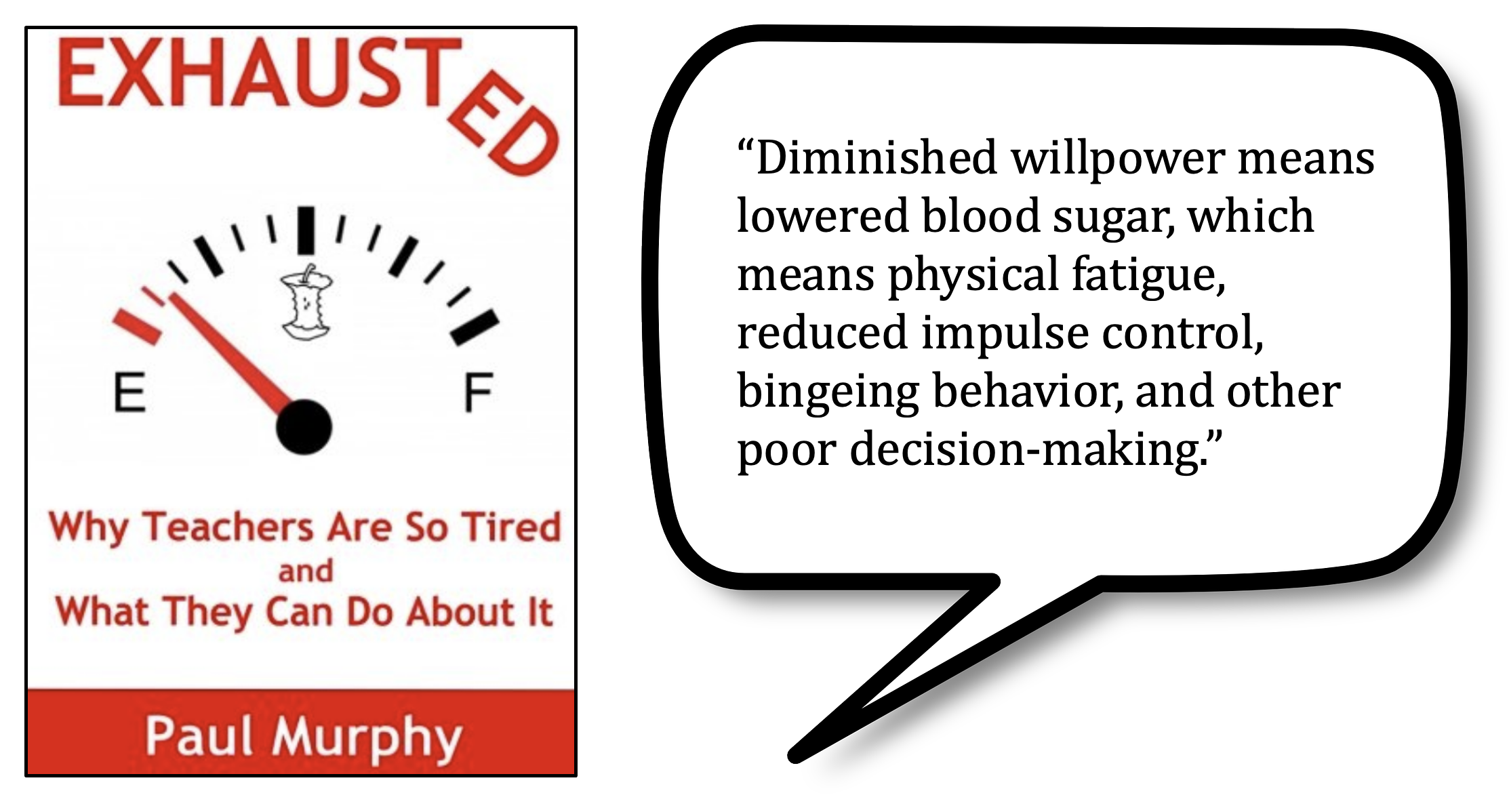
  • Exhausted – Why Teachers Are So Tired and What They Can Do About It by Paul Murphy, CreateSpace Independent Publishing Platform (2017)
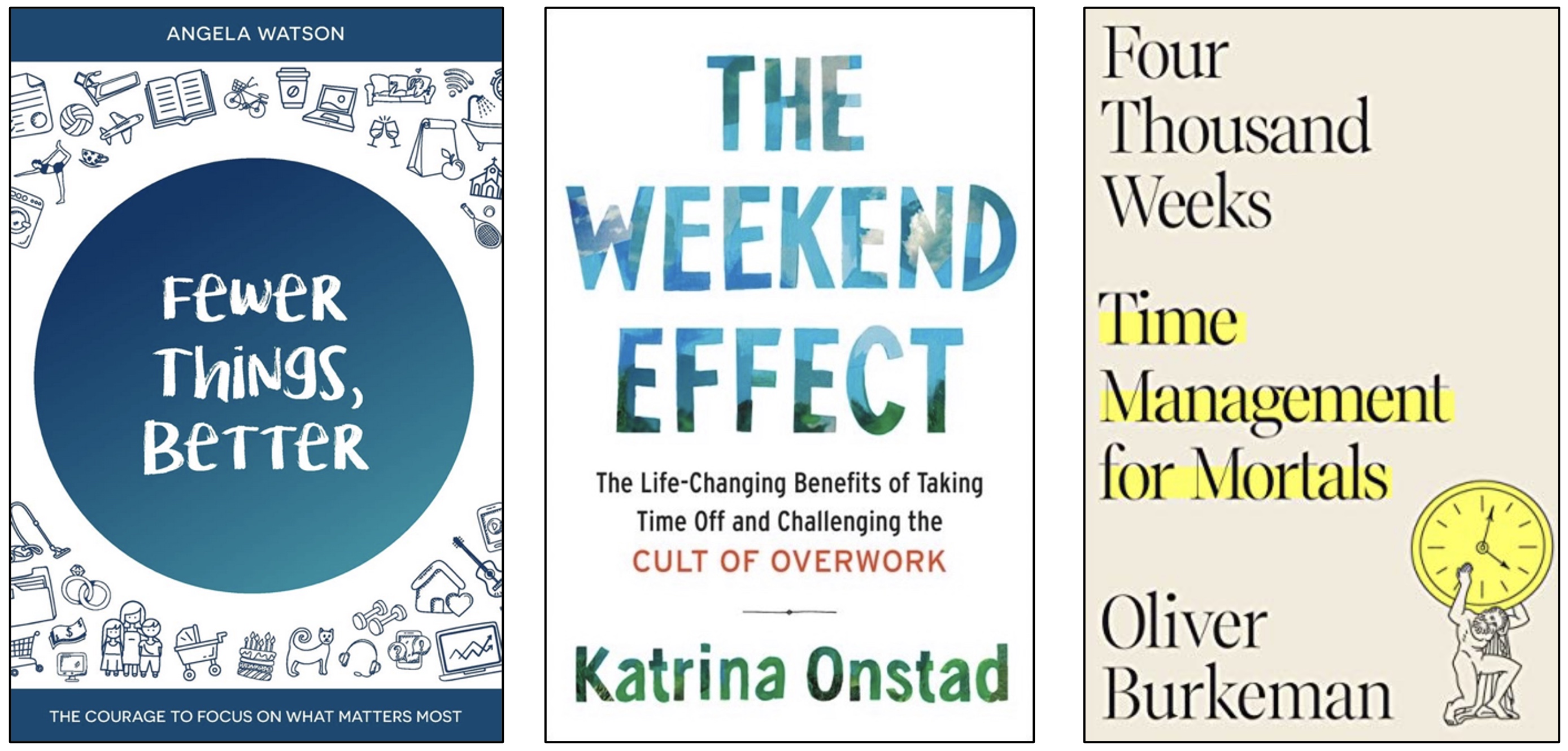
  • Fewer Things, Better by Angela Watson (2019)
  • The Happy Teacher Habits by Michael Linsin, JME Publishing (2016)
  • Love the Job, Lose the Stress: Successful Social and Emotional Learning in the Modern Music Classroom by Lesley Moffat (2022)
  • Positive Mindset Habits for Teachers by Grace Stevens, Red Lotus 2018
  • Rekindle Your Professional Fire – Powerful Habits for Becoming a More Well-Balanced Teacher by Mike Anderson, ASCD (2024)
  • The Teacher’s Guide to Self-Care – Build Resilience, Avoid Burnout, and Bring a Happier and Healthier You to the Classroom by Sarah Forst, The Designer Teacher (2020)
  • The Teacher’s Guide to Self-Care – The Ultimate Cheat Sheet for Thriving Through the School Year by Melanie J. Pellowski, Skyhorse Publishing (2020)
  • Upbeat – Mindset, Mindfulness, and Leadership in Music Education and Beyond by Matthew Arau (GIA Publications (2022)
  • The Weekend Effect: The Life-Changing Benefits of Taking Time Off and Challenging the Cult of Overwork by Katrina Onstad, HarperOne (2024)

Sample Websites

PKF

© 2025 Paul K. Fox

Teachers – Take Charge of Your Wellness

The Five C’s of Self-Care

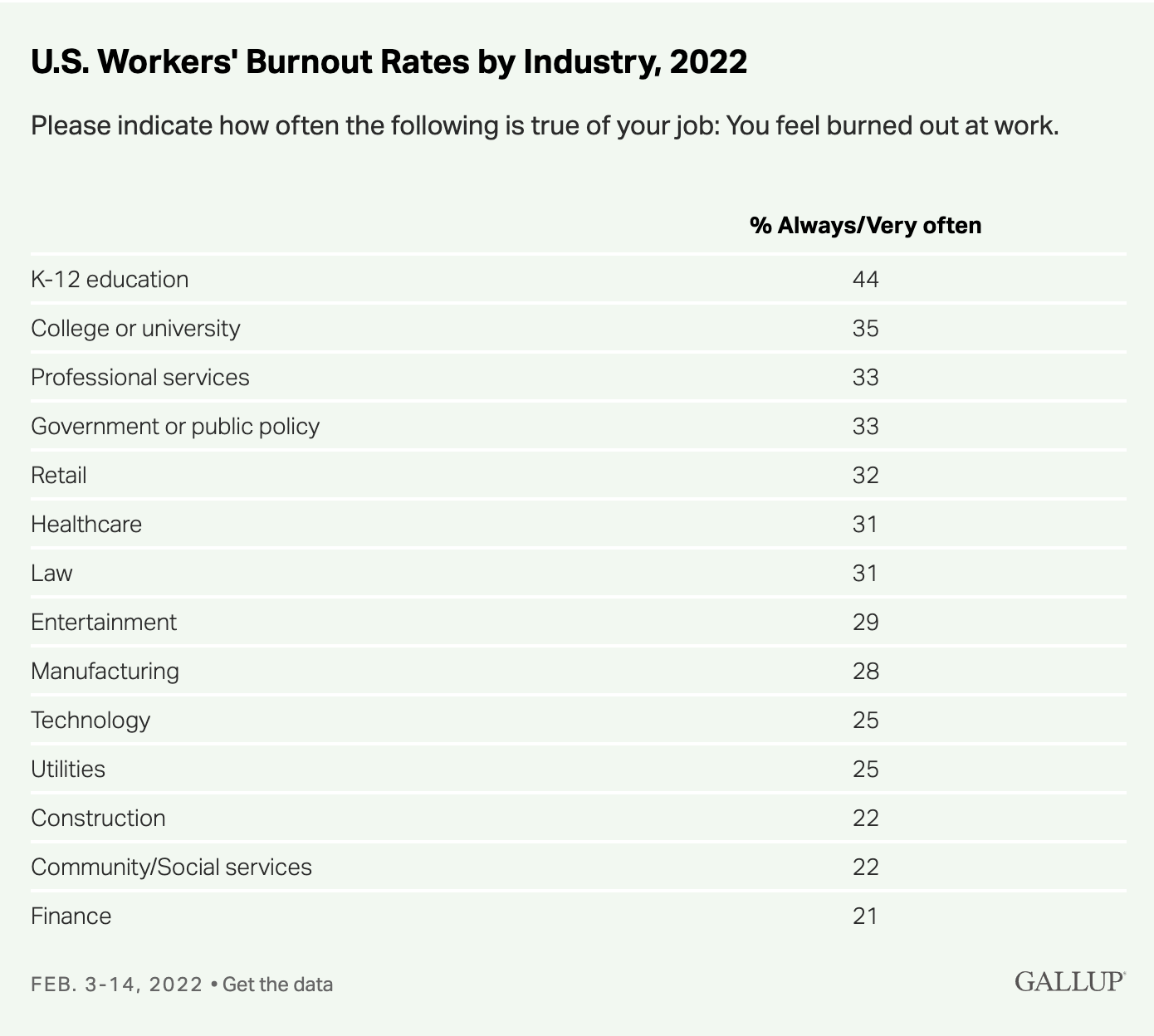
What profession has the highest rates of stress and burnout?

The answer is… educators of grades K to 12. NO FOOLIN’ ⏤ yes, even though today is April Fool’s Day!

The Crisis

Citing a 2022 Gallup Poll at Purdue Global’s website here, “K-12 teachers are the most burned out profession in the U.S.” They go on to say:

In fact, teachers have higher-than-average stress levels compared to other client-facing professionals. This kind of stress can lead to physical and mental health concerns for teachers and negatively affect students’ well-being and achievement.

“Being an educator requires so much of us,” says Carol Laman, faculty member at Purdue Global. “It is emotionally, physically, and mentally demanding.”

Self-care practices can help. According to the National Comprehensive Center, self-care can aid educators in both improving their overall wellness and being more effective for their students. ⏤ https://www.purdueglobal.edu/blog/education/self-care-for-educators-guide/

According to the National Education Association, we have a MAJOR problem!

A study by the advocacy group, Alliance for Excellent Education, reports that 40-50% of new teachers leave within their first five years on the job. Many factors contribute to the high dropout rate, a severe lack of work-life balance and the inevitable high stress levels teachers feel on the job, to name a few. Because of this, self-care is extremely important for teachers. However, it’s hard for teachers to take care of themselves when their career is taking care of students. ⏤ https://www.nea.org/professional-excellence/student-engagement/tools-tips/importance-self-care-teacher

This statistics are overwhelming, as documented in the Teacher Wellbeing Survey by Panorama Education.

Teacher wellness has a significant impact on school climate and student learning. Yet teacher stress and burnout continue to present retention and turnover challenges in districts: 85 percent of teachers have reported that work-life imbalance affects their ability to teach. More than one in five new teachers leave the profession within their first five years of teaching—and this attrition is substantially worse in high-poverty schools. ⏤ https://www.panoramaed.com/products/surveys/teacher-well-being-survey

The Concern – What is “Self-Care?”

The online Oxford dictionary defines “self-care” as “the practice of taking action to preserve or improve one’s own health,” or “the practice of taking an active role in protecting one’s own well-being and happiness, in particular during periods of stress.”

The National Institute of Mental Health (NIMH) provides even more clarification:

Self-care means taking the time to do things that help you live well and improve both your physical health and mental health. This can help you manage stress, lower your risk of illness, and increase your energy. Even small acts of self-care in your daily life can have a big impact.
https://www.nimh.nih.gov/health/topics/caring-for-your-mental-health.

The National Wellness Institute (NWI) further defines wellness as a “conscious, self-directed, and evolving process of achieving one’s full potential… [It] is positive, affirming, and contributes to living a long and healthy life.” NWI addresses six dimensions of wellness, the combination of which “enables us to thrive amidst [life’s] challenges.”

  • Emotional
  • Physical
  • Intellectual
  • Occupational
  • Spiritual
  • Social

In our profession, the defining concerns also involve other major “C’s” within the school workplace – climate and culture – and that “actions speak louder than words!” Edutopia dove into this topic in their blog, “Leaders Must Address Teacher Well-Being With Action, Not Just Self-Care Talk” here.

By listening to educators and building supports that reflect their genuine needs and concerns, these leaders are shifting school cultures in ways that go beyond lip service.
https://www.edutopia.org/article/leaders-teacher-wellbeing-action

The Causes

That leads us to THE WHY – why is this such a crisis?

In my educator self-care workshops (e.g., this example), I bring up the research of Paul Murphy from his book Exhausted – Why Teachers Are So Tired and What They Can Do About It. Consider his litany of possible culprits that may cause burnout in some teachers:

  • Lack of autonomy
  • Dysfunctional work environment
  • Inadequate social support
  • Extremes of activity
  • Poor work/life balance

Another excellent read on the subject is Demoralized – Why Teachers Leave the Profession They Love and How They Can Stay. Author Doris Santoro takes a closer look at these issues:

  • Teachers feel frustrated from accomplishing good work that benefits students, communities, and the profession.
  • Problem is external and does not indicate a “weakness” or lie within the individual teachers themselves.
  • Dissatisfaction in education is due to moral and ethical conflicts.

Only by addressing the moral sources of teacher’s anguish might we stem the tide of teacher exodus. ⏤ “The Problem with Stories About Teacher Burnout” by Doris Santoro in Kappan December 2019/January 2020

What are the symptoms of “burnout?” From the Mayo Clinic and other sources, we learn the following. Do you display any of these on a regular basis?

  • Disillusionment over the job
  • Cynicism at work
  • Impatience with co-workers, administrators, and students
  • Lack of satisfaction in accomplishments
  • Dragging themselves to work and trouble getting started once they’re there
  • Lack of energy
  • Unexplained aches/pains 
  • Self-medicating with food, drugs, or alcohol
  • Changes in sleep/eating patterns

Are these striking close to home? If you said, “Yes, that’s me!” more than a couple times, it is time to seek help. Please consider this a “wake-up call” to visit your health care professional.

The Courses-of-Action

If you Google search “teacher self-care” in your browser, the following comes up from the (experimental?) Google-generative AI Overview, otherwise a good starting point summarizing possible solutions for stress remediation and improving over teacher mental health.

Key Self-Care Strategies for Teachers

Paul Murphy added these “remedies” for improving teacher time management, promoting better work/personal life balance, and de-stressing:

  • Work less/fewer hours
  • Realize that time before school is worth more than twice as much as time after school (so plan accordingly)
  • Use class time to check work
  • Leverage technology
  • Don’t grade everything
  • Stop assigning things

The Courage to Change!

The bottom line – We are our own worst enemies!

Our negative thoughts, self-doubt, and destructive behaviors often hinder our own progress and happiness, making us our own biggest obstacles. ⏤ Google Generative AI and other sources including https://lorimilner.medium.com/the-art-of-being-your-own-worst-enemy-c393e9032d27, https://markmanson.net/when-you-are-your-own-worst-enemy, and https://letherspeakusa.org/why-are-we-our-own-worst-enemies/.

The research suggests that many “bad habits” may disrupt our ability to take care of ourselves and seek change, such as these:

  • Self-Sabotage
  • Negative Self-Talk
  • Lack of Self-Compassion

My insightful Washington-state music teaching colleague Lesley Moffat has written an excellent book, I Love My Job But It’s Killing Me – The Teacher’s Guide to Conquering Chronic Stress and Sickness, and in my opinion, she hits the nail squarely on the head embracing Shakespeare’s “to thine own self be true” in a renewed motivation on self-help:

You must take care of yourself first. This is the hardest lesson of all, yet it is so important. Chances are you got where you are because you ran yourself ragged taking care of other people’s needs. I bet you never said no to requests to be on one more committee, drive carpool, watch a friend’s kids, and every other favor someone made of you, yet I’d also bet there’s a good chance you never take the time to take care of your own needs. When was the last time you read a book for fun? Or went to a movie you wanted to see? Or pursued a creative endeavor that made you happy? Or any one of a million things you want to do? I bet it’s been a long time. ⏤ Lesley Moffat   

It is time to take the plunge towards better personal health, wellness, and balance in your life. There are plenty of resources out there for you to peruse, but don’t just sit there and read them! DO THEM!

Get started today!

PKF

© 2025 Paul K. Fox

Bookends – Part 3

As summer draws to a close and schools begin to reopen, we look forward to the coming autumn season (and hopefully some relief from the scorching weather). After all, tomorrow will be the first day of classes at my former place of employment (and the dress rehearsal for Friday’s marching band senior show). Soon we’ll enjoy one of my favorite transitions of the year! In Western Pennsylvania, deciduous trees will gradually change color (some bright red, orange and yellow) and then shed their leaves… the perfect metaphor for the final sections of my “Bookends” series.

(Yes, fall is a month away… but, as you can see, the stores are way ahead in anticipation of the changing seasons!)

Autumn is a season of harvest, a time to reap the rewards of our hard work and reflect on the blessings in our lives. The Fall Equinox is a reminder for us to assess our accomplishments instead of our shortcomings.

www.inspiringactions.com

We return to a discussion first introduced last October in Bookends – Part One – The Life Cycle of a Successful and Happy Music Educator, exploring:

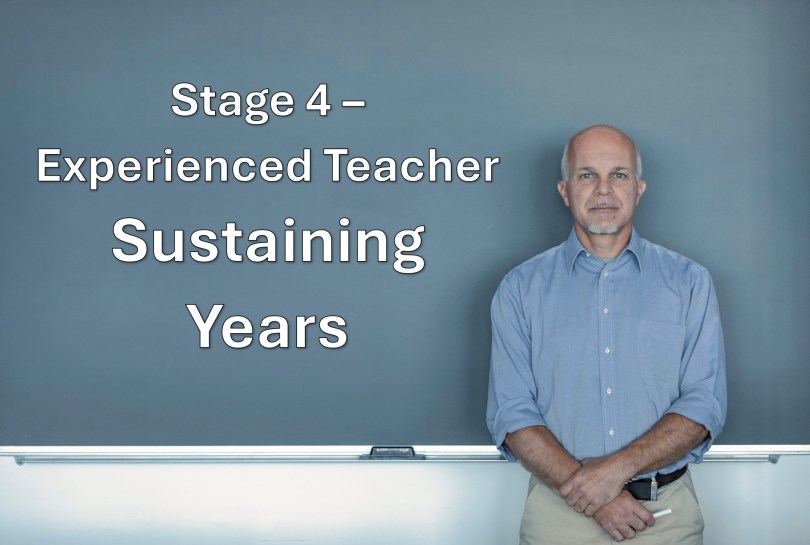
  • Stage 4: Veteran/Sustaining Years (this blog)
  • Stage 5: Next Chapter/Living the Dream (future blog)

When do we become “experts” in our field? When are we “master teachers?” Do we ever reach the apex of our achievements, the crowning glory of our career, or the pinnacle of our profession?

Never! You snooze, you lose. If you stop expanding on your knowledge and skills, forgo exploring new ideas, methods, and media, or become stagnant and settling into a rut at work, you might as well RETIRE (“Stage 5”). Instead, I direct you to revisit “Stage 3” in Bookends II here. As dedicated educators, the focus must be on constant retooling… reviewing/revising “best practices,” setting new goals, and building on the existing networks and engagement in the profession. These have always been the essential elements of a true professional.

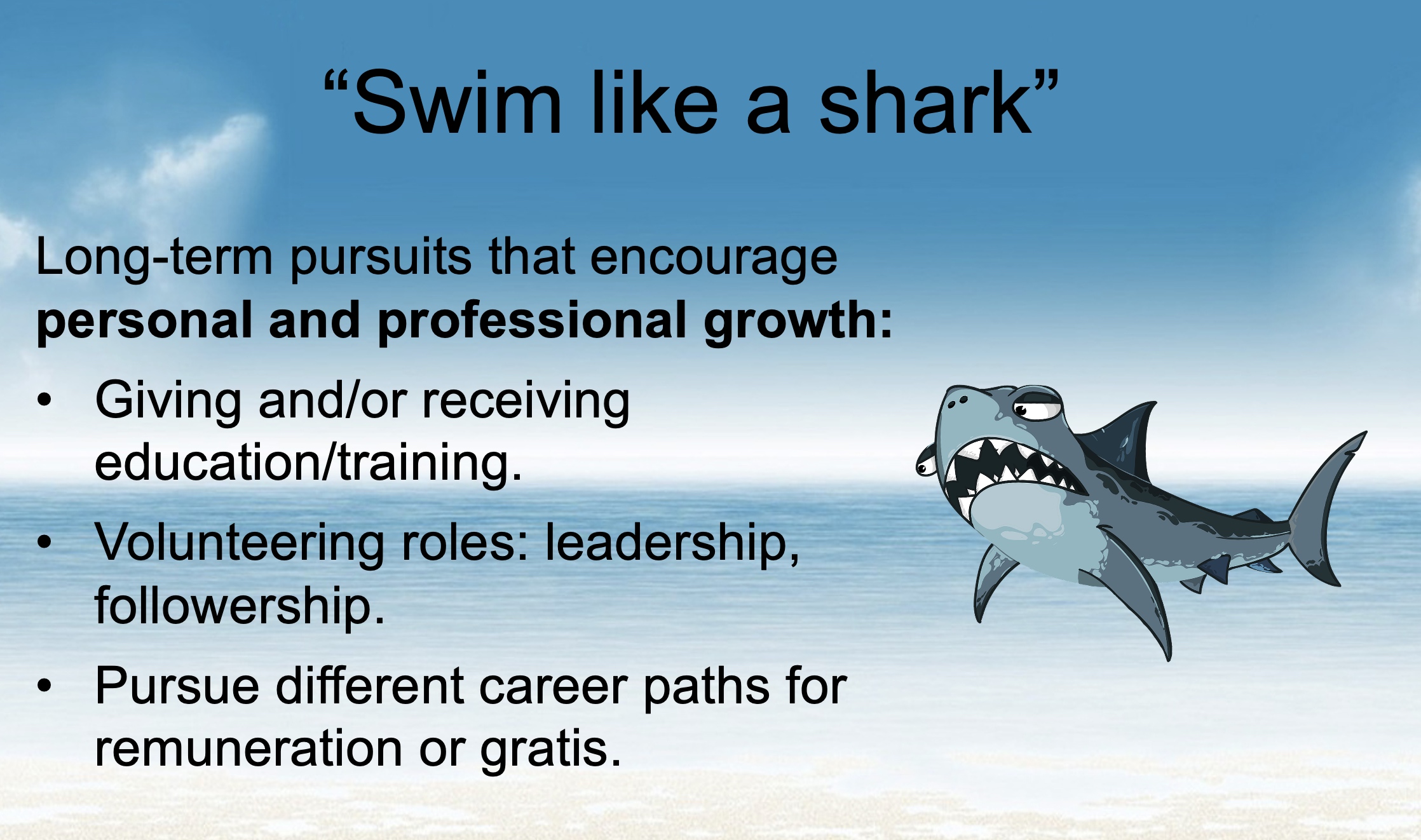
Now I should mention that during our middle-years, we sometimes return to education, get advanced degrees, new certifications or teaching specialties, apply for new job assignments, etc. When my PMEA colleague and fellow music teacher retiree John D’Ascenzo left full-time teaching, he went on to pursue a doctorate degree. Also appropriate for our next Bookends section, I have often quoted his analogy for all career stages to “swim like a shark” (since a shark never stops moving, even when it is sleeping). Sage advice for us all!

During my whirlwind of more than five decades in the field of music education, I went through several “first-year-of-teaching” passages, such as accepting my first job in general music at Edgewood School District (1978-1980), then being hired to direct strings (grades 6-12) at Upper St. Clair School District in 1979 followed by a 16-year appointment to the USCHS choral program of over 200 singers in 1980 on… transitions requiring massive job retraining and revitalized professional development. I may have not appreciated the stress of these “hurry up and relearn” periods at the time, but these periodic challenges made me GROW. In the end, I “lived” and embraced Robert Frost’s poem, “The Road Not Taken.” It may have not been the initial pathway I imagined for myself when I started in music education, but “I took the one less traveled by, And that has made all the difference.”

To this day, this violist and orchestra director has NO REGRETS teaching so many years outside of his so-called “specialty” or emphasis! It comes back to me every time I run into former choral or musical students, those I taught in those early years of being a vocal novice (at times when I felt less prepared). My past instrumentalists/singers/actors reminisce a little and literally rave about their musical experiences and what they meant to them.

My emphasis to foster success in our “veteran years” is also on teacher self-care: health and wellness, burnout prevention or remediation, stress and time management, and personal life and work balance.

Let’s start with examining the probable causes of STRESS in TEACHERS:

  • Overwhelming workload, long hours, and/or challenging classroom situations
  • Lack of administrative or social supports
  • Feeling a lack of respect, loss of job autonomy, or not being valued or appreciated in the organization or assignment
  • Dysfunctional or hostile work environment
  • Inconsistent hydration and consumption of a balanced diet and healthy quantities (length, depth, and frequency) of rest and sleep
  • Irregular amounts of daily aerobic physical exercise
  • Misuse of the voice at work and inadequate hearing conservation and protection from over-exposure to sound
  • Deficient scheduling of opportunities for mindfulness, meditation, and/or reflection
  • Deprivation of personal outlets for creative self-expression (not related to job) and the lack of time to explore hobbies, interests, and socialization with family and friends
  • Infrequent use of sick days or vacations even when they are needed for restorative health

We all have experienced at least a few of these “bumps along the road” (but hopefully NOT most of them). Although I generally had very supportive administrators throughout my years in the public schools (and no one would claim I exhibited any symptoms of “burnout”), I did model a few of the inconsistent habits of personal health (diet, sleep, etc.) and an unbalanced work/personal life schedule. And, perhaps it could be said that I did some of my best work totally exhausted!

As I have written in past blogs (especially here in “Burned Out or Bummed Out”), the best book I know on “teacher exhaustion” is by Paul Murphy (2017), and subtitled Why Teachers Are Do Tired and What They Can Do About It. I strongly recommend it as “a required read” for all new AND veteran teachers.

Besides being aware of your “body chemistry” (especially what the challenges of constant willpower, deferred gratification, and relentless scheduling can do to lower your blood glucose levels later in the day), to quote Murphy, some of his suggestions for remediation are NOT so easy to follow:

  • Work less/fewer hours
  • Time before school is worth more than twice as much as time after school
  • Use class time to check work
  • Leverage technology
  • Don’t grade everything
  • Stop assigning things

Sorry! My wife and I modeled the behavior of “more-than-full-time” music teachers with after-school rehearsals of marching bands, musicals, community orchestras, chamber ensembles, private lessons, music festival preparation, etc. How in the world do you work fewer hours? Also, since most music teachers do not assign “paper” homework requiring teacher correction, “checking for understanding” and in-class formative assessment could improve efficiency. Sometimes we are own worst enemies… We should “keep it simple” and focus on the priorities. That brings us to time management.

My favorite strategies for organizing our time and fostering a better work/life balance involve these resources (click on links below to past blogs at this site). PLEASE STUDY THESE!

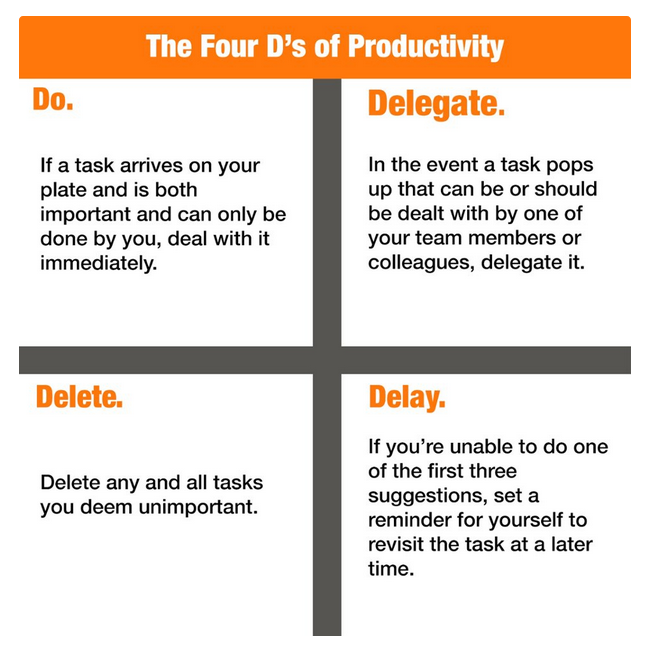
I return to the “Four D’s” concepts several times in past writings, and the “system” can be applied digitally as well… as long as you make a concerted effort to take the necessary time (10-20 minutes) every day to manage the up-front decision-making to “do immediately,” file, or weed out most of the “voluminous noise” (distractions) you get in email, texts, voicemail, snail-mail, etc. Get ready to push the “delete” button… over and over again!

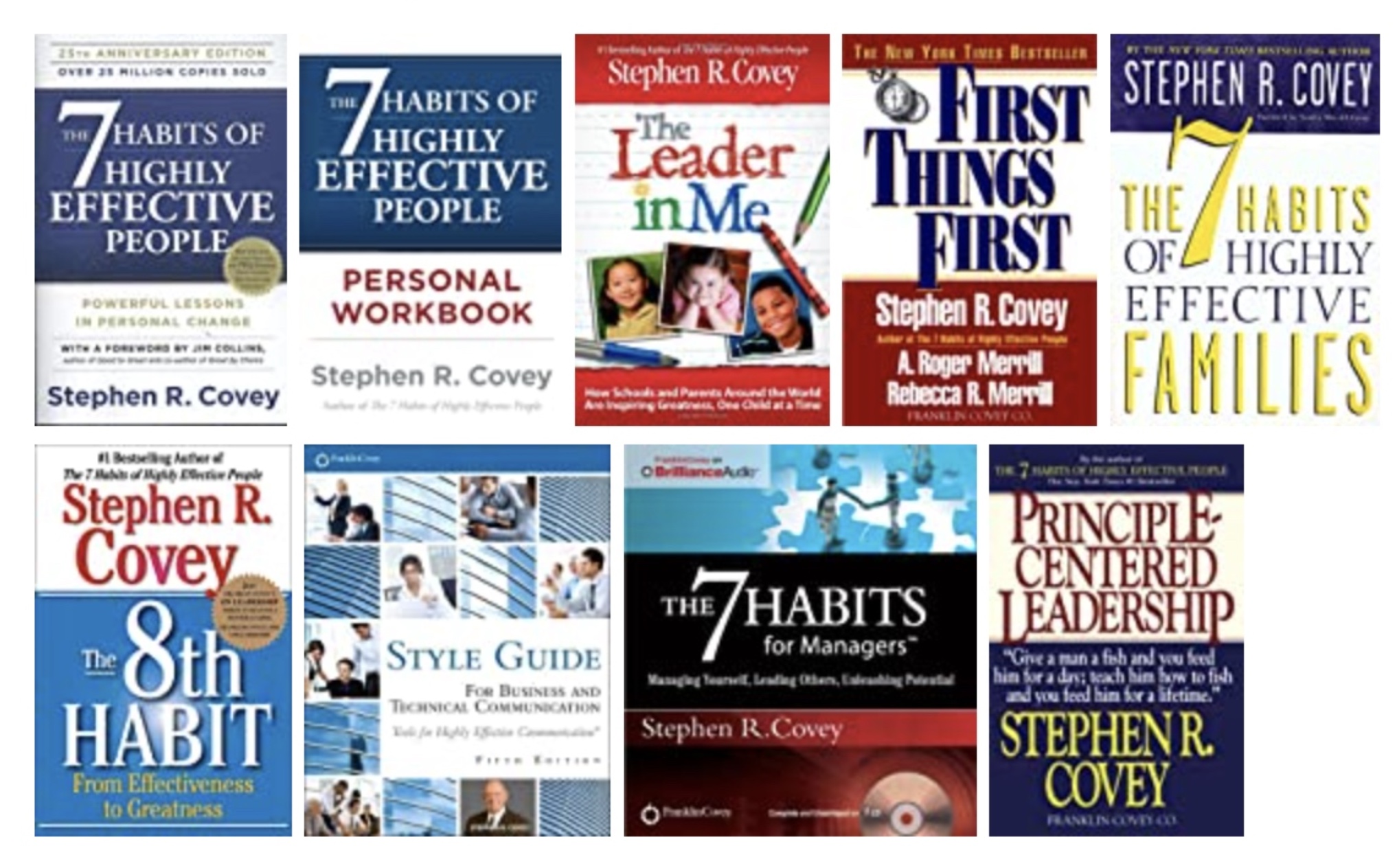
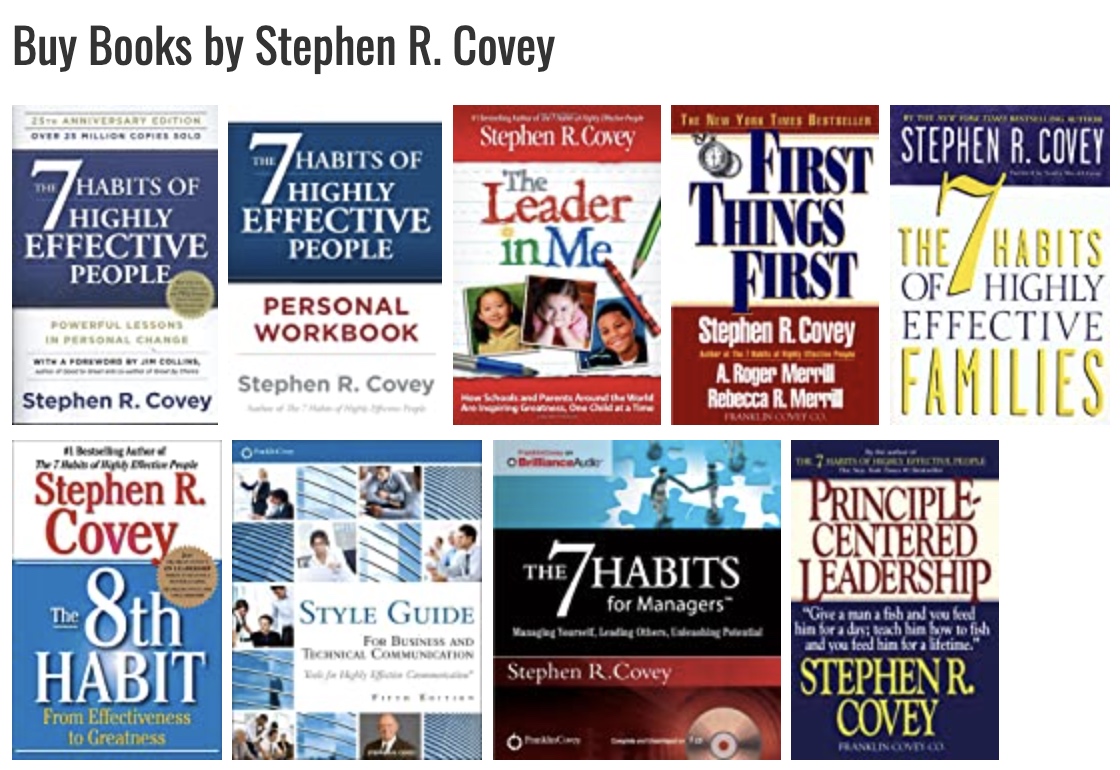
Then there are a few more ideas in “Top Ten Organizing Tips…” and any of the books by Stephen Covey (below). I particularly like the philosophy/demonstration attributed to him re: “start with the big rocks!”

Also, if you are a member of NAfME (National Association for Music Education), search their vast library of related blogs here, several articles to which I was fortunate to have contributed.

Final thoughts for the “sustaining years” of your profession and to avoid any touches of BURNOUT is to develop a self-care plan. My first go-to for building meaningful wellness habits comes from “What Self-Care Is and What it Isn’t.” In past health and wellness workshops, I echo these “basics.”

  • Promote a nutritious, healthy diet, and hydrate often.
  • Get enough sleep.
  • Exercise.
  • Follow-up with medical care.
  • Use relaxation exercises and/or practice meditation.
  • Spend enough time with loved ones.
  • Do at least one relaxing activity every day, whether it’s taking a walk or spending 30 minutes unwinding.
  • Do at least one pleasurable activity every day, from going to the cinema, cooking, or meeting with friends.
  • Find opportunities to laugh.

Self-care can take many forms, such as physical, spiritual, and emotional self-care. It’s an important factor in maintaining health and well-being.

Self-care might range from a hot soak and yoga to everyday activities like preparing meals you want to eat or dressing in your choice of style.

Self-care is not an indulgence. The WHO recognizes it as a crucial aspect of health maintenance.

Tailoring self-care for your budget, season in life, and personal needs for whole body wellness, inside and out, can be energizing and exciting in itself.

https://psychcentral.com/blog/what-self-care-is-and-what-it-isnt

Veteran full-time educators: To sustain and nurture success in the middle to twilight years of your career (Stage 4), seek to understand and practice personal wellness and work/life balance while continuing your pursuits in self-motivation, self-assessment, self-energizing, self-(re)invention, and “growing” personally and professionally, and if it becomes necessary, promote the diagnosis, prevention and self-remediation of debilitating stress and burnout.

PKF

© 2024 Paul K. Fox
Hacks to Help Music Teachers Organize

Tips, Tricks, & Techniques for Time & Task Management

Image by Mohamed Hassan from Pixabay

“Hack” – hæk – noun – various definitions

  • “a usually creatively improvised solution to a computer hardware or programming problem or limitation” (Merriam-Webster)
  • “one who works hard at boring tasks” OR “a mediocre and disdained writer” (vocabulary.com)
  • “a strategy or technique for managing one’s time or activities more efficiently” (Google)
  • “someone who does work that is not important or original” (Britannica Dictionary)
  • “an illegal attempt to gain access to a computer network” (Wiktionary)
  • “a clever tip or technique for doing or improving something” (Merriam-Webster)

Is “hack” really a bad word? Consider this modern-day etymology in the article “A 125-Year-Old Letter Dives Into the True Meaning Of the Word Hack by Robert McMillan posted on SLATE:

If you walk through the heart of Facebook’s headquarters in Menlo Park, California, you’ll find a rather imposing two-story mural painted by artist Brian Barnecio. It looks like a massive totem pole filled with abstract shapes that resemble lips and eyeballs and boxes of ping-pong balls, and in the middle of it all, there’s a single word: hack.

In the late ’80s and on into the ’90s and early 2000s, hack was a dirty word. It evoked danger and criminal activity. It was all about breaking into computer systems, telephone networks, and other vulnerable technology. People who knew their computer history disagreed, but the negative connotation took hold in the mainstream. But over the past decade, hacker has been rehabilitated. Today, it seems, everyone wants to be a hacker. Facebook has gone a long way towards renovating the word, building its massive successful company around the idea that hacking is a good thing, a way of transforming technologies into something better.

Referring to only positive interpretations of “hack,” we turn to the World Wide Web and our colleagues in collaboration to explore unique ways to streamline and make more efficient our personal organization, day-to-day routines, and management of our office and music teaching “best practices” in time/task management. Peruse through these insights “borrowed” from professionals in the field. Some may resonate within you and solve problems you may have; others may inspire you to create other “hacks” towards success.

If you haven’t done so already, please consult my past blog posts on similar topics at this site:

First, I will revisit and expand on one of my favorite “systems” called Priority Management.

The Four D’s

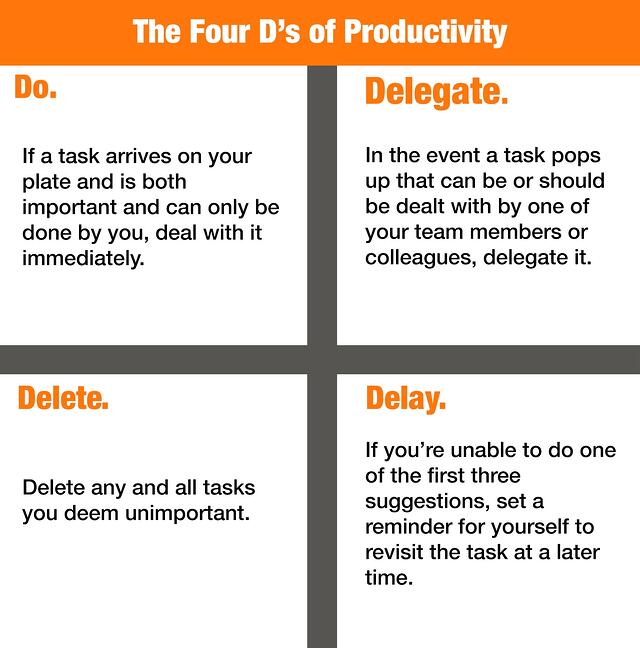
Ever heard of Priority Management (PM)? Trolling the Internet, there are a lot discussions and resources that extol the virtues of “the four D’s” – DO IT, DELETE IT, DELAY IT, or DELEGATE IT:

It may at first seem like a novel way to clean off your desk and desktop. But, in my opinion, it goes to the root of our problem in time management – PRIORITIZE and give rid of the (another “D”) DISTRACTIONS!

PM’s “WorkingSm@rt method” promises to help you “gain control over your day, find balance, prioritize your work, and reach your goals,” giving you time to focus on the tasks that are important to you. The bottom line – every digital or printed post-it-note, piece of mail, receipt, publication, email or other communication – must be “put in its place” on the spot – either completed instantly, deferred to another time, given to someone else to do, or THROWN OUT!

You could reverse the order of the D’s to make the workflow go even faster… “start with the end in mind” as Stephen Covey would say, and DELETE unnecessary “stuff” first. This “habit” is particularly suitable for email: clear out the spam and TRASH duplicate messages and things that do not need your response.

Consider these PM Hacks:

  1. In advance, set-up file folders labeled by months, weeks, or days, and one each of these: in-basket, out-basket, and (very important) PRO-TIME tray.
  2. Designate a “PM Period” every day when you go through your in-basket of unsorted (e)mail and delete unnecessary stuff/tasks, date/delay for another time, delegate to others (out-basket), or…
    DO THEM NOW!
  3. As part of your “delay file,” place journals, catalogs, or other professional readings in a professional read tray (PRO-TIME), but regularly schedule daily/weekly time to do “silent and sustained reading.”
  4. Allow NO unsorted pieces of paper to ever infiltrate the surface of your desk.

How does PRO-TIME look for a music educator? We should intentionally focus on fostering our own creative self-expression, artistry, and professional development:

  1. Read an article in a professional journal or digital newsletter.
  2. Write your own article or blog post for a professional e-publication.
  3. “Keep up your chops” on your instrument or voice. Practice every day!
  4. Keep up with your “musicianship training” like ear training, sight-reading, and score reading. Pull out a copy of Elementary Training for Musicians by Hindemith and practice exercises that make you sing in syllables, tap a different rhythm independently with your left hand, conduct the beat pattern with your right hand, and beat your foot to the pulse. OR revisit your college solfeggio assignments, and of course, sight-singing or playing-at-sight anything new-to-your-eyes is most beneficial.
  5. Take time to compose or arrange your own “Mr. Holland’s Opus.”
  6. Perform or improvise on the piano or guitar, rotating weekly to different musical styles and forms.
  7. Is it time to learn a new instrument? When was the last time you crossed the break on the clarinet, drilled in paradiddles on the snare drum, OR shifted to third position on the violin? Can you play as well as your beginning students?
  8. If you’re not a piano wizard or an accomplished accompanist, try your hand at sight reading several different voice parts simultaneously from choral octavos. OR can you transpose and play “at-sight” a musical phrase from a full score? (Those French Horn parts always challenged this violist!)

Besides committing to regular scheduled PRO-TIME, you have to systemize your D-PLANNING by going over your DELAY files during your daily designated “PM Period.” (Yes., this will take discipline!) In addition, once a month (or whatever frequency you choose), you must to review and move things from longer-term goals to short-term or immediate action. Being conscientious and meticulous in the use of your very-limited planning time and scheduling what author of Fewer Things, Better Angela Watson targets for your “non-flexibles” is paramount for “taming the time tiger!” Her “aligning priorities” approach to time management echoes the philosophy of PM and First Things First by Stephen Covey:

  1. Identify your non-flexibles
  2. List your top priorities that you want to uncover more time for
  3. Specify what life would look like if you prioritized these things
  4. Add top priorities to the unallocated time in your schedule
  5. Identify/schedule the in-betweens

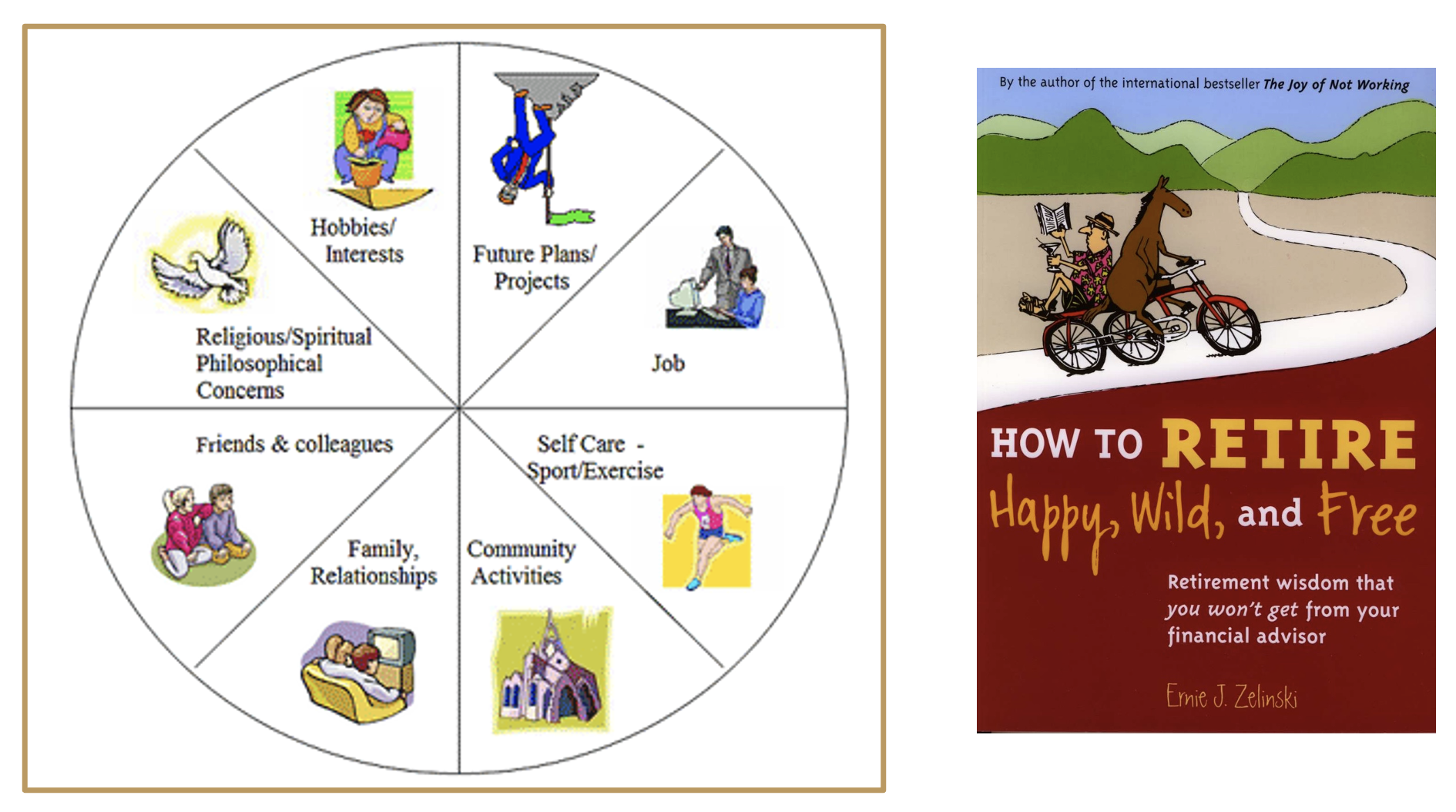
From How to Retire Happy, WIld and Free by Ernie Zelinski

Setting Priorities – How’s Your Work/Life Balance?

If you have been following this site, you know this blogger has retired from full-time public school music teaching. However, “preaching to the choir,” we all know how busy our schedules have become and how unbalanced things can get – no matter who you are – college music education majors, fully active music educators, even retirees. In fact, we should all be taking the advice of author Ernie Zelinski in his book How to Retire Happy, Wild and Free to set priorities and find equilibrium in our daily, weekly, monthly work/life to-do lists and tasks. How do your pie slices look (above)? Do you spend more time thinking of your school/job than your more pressing personal commitments. Do you commit adequate time for your own self-care?

Angela Watson helps us engineer “a plan” that will foster balance. Or, if you have a few moments, visit the website(s) of the late great Stephen Covey, author of the book and series Seven Habits of Highly Effective People, in many ways one of the most renown experts on time management. I would start with this clever YouTube video excerpt of him hosting a workshop on the merits of “finding the big rocks” in your life: https://youtu.be/zV3gMTOEWt8. He summed it up with the quote: “The key is not to prioritize what’s on your schedule, but to schedule your priorities.”

The next step might be to consume Covey’s First Things First book and corresponding website here.

Summer Reading

Before you get started with planning your 2022-23 school year, we recommend taking a “time out,” pulling up a comfortable lawn chair or Lazy-Boy, and diving into these personal tutors – “gems.”

Also, if you want to taste more of the vision and work of Stephen Covey, check out his many books.

Coming Soon…

Part 2 – More Hacks to Help Music Teachers Organize

In our next blog-post, we will next share more insights – music educator to music educator – hopefully helpful hints thanks to these very inspiring sources:

  • Band Directors Talk Shop
  • Clever Music Teachers Hacks by Wendy Higdon
  • 9 Time-Saving Tools… for Busy Music Teachers by Ashley Danyew
  • Band Room Hacks on Pinterest by Julia Arenas

NOTE: This blog-site has a “comment” button at the top. If you would like to “come to the party” and offer up a little wisdom of your own, send in your own “hack” for a future posting.

HELP… Yes, there are ways to help clear up the clutter and GET ORGANIZED!

PKF

© 2022 Paul K. Fox
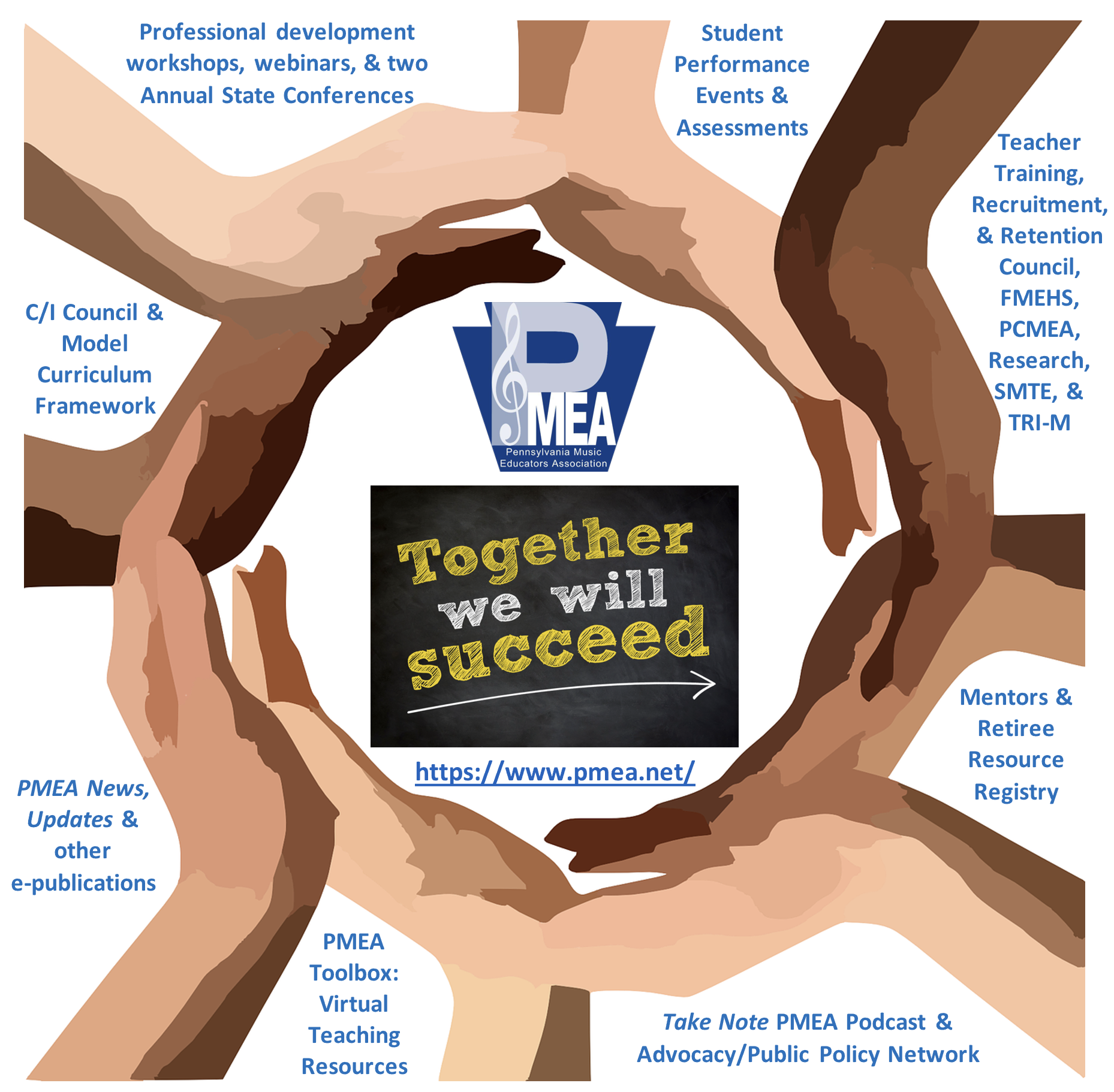
New Year’s Resolutions for Retirees

Do you believe in formulating annual goals or drafting a couple “New Year’s Resolutions?”

THE STATS DON’T LIE

Every year around this time, the web highlights many so-called experts touting the benefits of making personal improvement plans… and is just as quick to admonish us for breaking them. The statistics are not encouraging:

Success/Failure rates over the first 6 months

  • Of those who make a New Year’s resolution, after 1 week, 75% are still successful in keeping it.
  • After two weeks, the number drops to 71%.
  • After 1 month, the number drops again to 64%.
  • And after 6 months, 46% of people who make a resolution are still successful in keeping it.
  • In comparison, of those people who have similar goals but do not set a resolution, only 4% are still successful after 6 months.

Overall success/failure rates

  • According to a 2016 study, of the 41% of Americans who make New Years resolutions, by the end of the year only 9% feel they are successful in keeping them.
  • An earlier study in 2007 showed that 12% of people who set resolutions are successful even though 52% of the participants were confident of success at the beginning.

Reasons for failure

  • In one 2014 study, 35% of participants who failed their New Year’s Resolutions said they had unrealistic goals.
  • 33% of participants who failed didn’t keep track of their progress.
  • 23% forgot about their resolutions.
  • About one in 10 people who failed said they made too many resolutions.

https://discoverhappyhabits.com/new-years-resolution-statistics/

Of course, it does not have to be this way! Last year, yours truly made a promise to “practice what music teachers preach” and “make meaningful music” at least a little every day on his instrument. How did it go? Success! I made it to the middle of July without missing a day (until I sprained my left hand). But the goal led me to playing better than I have for decades, more self-confidence, a lot of fun polishing off movements from my favorite sonatas and concertos, and even the purchase of a new viola. Now? It is time for me to find a tuba, dive into my past “brass flame,” and join a community band! 

As we succeed in everything else for our lives, the process of setting aside time to analyze our personal pathways, assessing our needs, and making new goals is healthy. For the eternal pursuit of happiness and self-fulfillment in retirement, I found these secrets to a ”winning” set of New Year’s Resolutions in the “Top-10 List” by the UAB School of Medicine:

  1. Start with specific micro-goals. (Keep them small, simple, and easy to accomplish.)
  2. Set resolutions for the right reasons. (Choose what is important to you, not someone else’s expectations.)
  3. Document your progress. (Write it down.)
  4. Practice patience and forgiveness. (No one is perfect. Just keep at it despite the curve balls thrown at you.)
  5. Schedule time to achieve goals. (Dedicate the necessary resolve and resources to accomplish them.)
  6. Embrace the buddy system. (Share in collaborating on group goals. You don’t have to achieve them alone!)
  7. Consider your budget. (Finances may play a role. Stay within your means.)
  8. Slow down and meditate. (Breathe, refocus, and be mindful.)
  9. Reward yourself for achievements. (No matter how big or small, treat yourself for reaching your targets.)
  10. Ask others to keep you accountable. (Publicize your intentions. They might help you achieve your goals.)

https://www.uabmedicine.org/-/10-secrets-of-people-who-keep-their-new-year-s-resolutions

SAMPLE RESOLUTIONS

You probably do not need someone to suggest things-to-do in 2022 or ways to self-improve. Effective goals and action plans must come from within yourself. However, there are countless advisors “out there” offering ideas to motivate you:

  • Keep a Positive Mindset
  • Commit to at least 10 Minutes of Exercise Daily
  • Make Better Dietary Choices
  • Stay Young-at-Heart – Surround Yourself with Young People
  • Stimulate Your Mind
  • Get Enough Sleep
  • Reach Out to Old Friends and Make New Ones
  • Kick Your Bad Habits
  • Maintain Your Purpose in Life as You Age
  • Give Back – Explore New Volunteer Opportunities

— Example sites: https://www.luthermanor.org/new-years-resolutions-for-seniors/ and https://www.healthinaging.org/tools-and-tips/tip-sheet-top-10-healthy-new-years-resolutions-older-adults 

Pennsylvania Music Educators Association (PMEA)

ENGAGEMENT, ADVOCACY, & ASSOCIATION IN MUSIC EDUCATION

Modeling PROFESSIONALISM, these terms promote the power of “collaboration” and connections among music education colleagues and stakeholders (music students, parents, and the general public). To foster a broader picture and devise “bigger than self” New Year’s Resolutions, we should embrace forming partnerships throughout our pre-service, in-service, and retirement years with enhanced goals of active engagement, advocacy, and support of our professional associations.

In many past blog posts here and articles in PMEA News, Retired Member Network eNEWS, and NAfME Music in a Minuet, we have addressed ways that retirees can share their awesome “musical gifts,” know-how, and perspective to promote creative self-expression. If you are looking to adopt a 2022 New Year’s Resolution to “make a difference” in the music education profession, revisit this free archive here: https://www.pmea.net/wp-content/uploads/2021/09/PMEA-Retired-Member-Network-eNEWS-s090721.pdf and also peruse this link: https://paulfox.blog/2021/11/10/giving-back-to-the-association/.

On a personal note, besides getting back to my viola practice and resuming my love of playing the tuba, I resolve to continue a focus on “giving back” whenever possible to my local community, PMEA, and the music education profession. How will I do this in 2022? By bestowing the gifts of SERVICE:

  • Chair of the PMEA Council for Teacher Training, Recruitment, and Retention
  • Coordinator of PMEA Retired Members
  • Artistic Director of the South Hills Junior Orchestra
  • Trustee and Communications Director of the Community Foundation of Upper St. Clair
  • Volunteer Escort for the St. Clair Health
  • Author, clinician, and workshop presenter on the topics of educator ethics, interviewing and job search, professional standards, retirement, and self-care

Additional blog posts on the topic of New Year’s Resolutions and helping others in retirement:

PKF

© 2021 Paul K. Fox
iStockphoto.com graphic: Merry Christmas and Happy New Year by Tasha Art

Pixabay.com graphics:

Merry Christmas and Happy New Year from the Fox Household!

Do You Have a “Side Gig?”

4 Tips for Artists Seeking an Extra Income Stream

by Ed Carter

Editor’s Note: This month’s blog will feature guest writer Ed Carter, a retired financial planner. (See his website here.) His piece intrigued me, and also made me reflect on the numerous music educators who do freelance work. Even for retired music educators, it is important to continue our active involvement in the field of “creative self-expression” – (what inspired us to go into music in the first place?) – regardless of whether it is for pay or pro bono and now part-time: private teaching, church directing or accompanying, performing in or conducting music ensembles or musical theater, adjudicating festivals, coaching, composing, or arranging for school groups, teaching in higher education, or serving in the music industry. How are you “making music” today?

Research shows that about 45 percent of Americans have a side gig, and they do this for many reasons. It’s obviously a great way to ease financial strain, but it’s also a chance to delve deeper into something that you enjoy, hone skills, and change up your network.

Artists, who often experience economic instability, are one party that might find themselves supplementing revenue from their artwork with a secondary job. On the flip side, you might be considering flexing your creative muscles by engaging in an artistic moonlighting opportunity.

If you need or are interested in earning extra cash while pursuing art, a side hustle may be the way to go. Here are four tips to help you get started. 

1. Do a Cost-Benefit Analysis

There are many profitable avenues you can pursue on the side, from blogging and data entry to making balloon animals at parties and walking dogs. A number of gigs even allow you to express your creative side while making a profit and leaving time for you to practice the art that is your main passion, such as selling items on Etsy. You need to pick a job that meets three criteria:

  • You get what you need from it
  • You can do it, and
  • You have what you need to do it.

List the options that appeal to you the most. Research startup costs, competition and markets. Look at each potential gig and ask yourself a few questions:

  • Does this give you enough flexibility?
  • Is the initial time and money investment something you can afford?
  • Do you have the skills and ability to keep doing the work long enough for it to pay off?
  • Is there enough profit potential to justify the effort, not just physically but emotionally and mentally?
  • What are the risks?

Tally up the costs and benefits and decide if the side gig is worth it. 

2. Start With a Trial Run 

If you are still inclined to take a chance on a side hustle after reviewing the above-mentioned aspects, don’t immediately throw everything you have into it. Do a test run instead; offer services for a limited period or only produce a set amount of product to see if your plan is feasible and if you enjoy it enough to stick with it. 

3. Don’t Underestimate the Importance of Organization

Keep your side gig details separate from other parts of your life. Use a different email, different files, and possibly even a different bank account. As the source Company Bug points out, the latter helps with filing taxes and looking professional.

Check out automation for bookkeeping and invoicing purposes. Keep detailed records with online backups, and consider adding an app that makes it easy to stay on top of your finances and share data with your accountant.

4. Manage Your Energy Efficiently

Everyone has a finite amount of energy. Managing your time and energy carefully helps you be more effective and happier as you go about your daily tasks. As Todoist recommends, write down a to-do list each morning and schedule out blocks of time so that you can stay abreast of your obligations. Consider planning ahead by weeks and months as well. If you need a break, though, be sure to take it to avoid burnout and waning motivation. 

Doing your art for art’s sake is one thing, and doing it as a business is another. When starting a side gig, it is important to make sure you understand what you are getting into and that you have the resources to do it. Being aware of the risks and costs, organizing and doling out energy cautiously can help you secure success. 

© 2021 Paul K. Fox

Photo from Pexels by MART PRODUCTION 
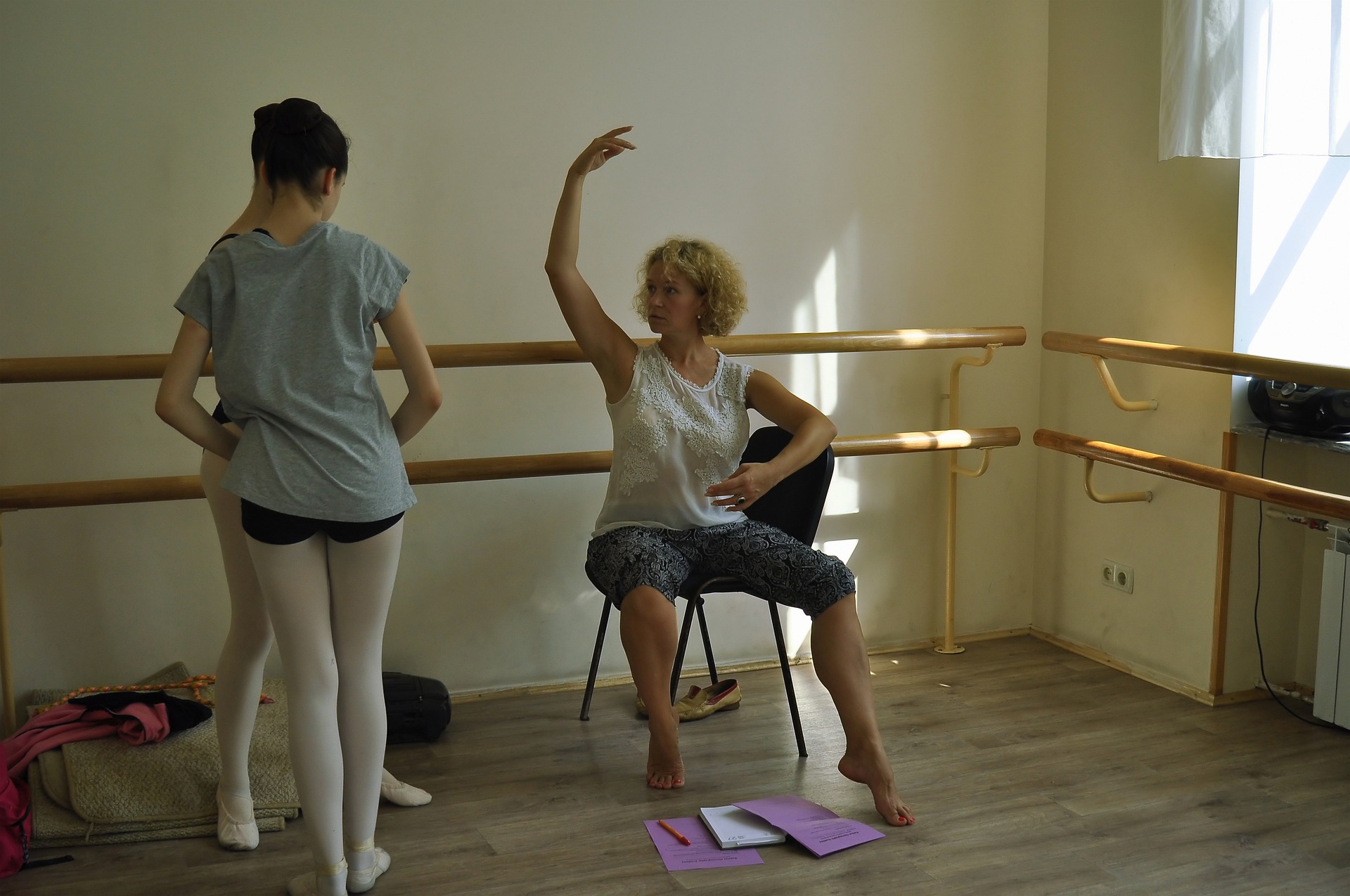
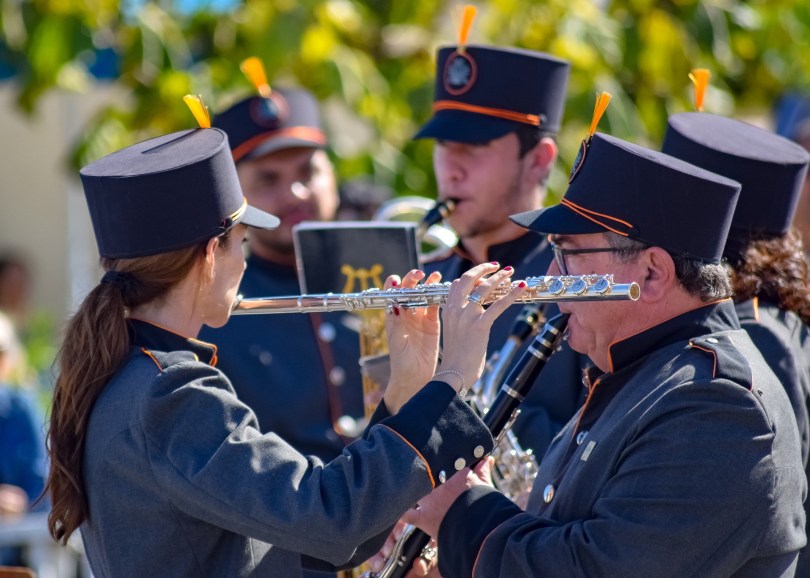
Images from Pixabay by Brenda Geisse (flute), artesitalia (conductor), Vlad Vasnetsov (guitar teaching), and Светлана Бердник (dance lesson)

Success = How Many Hours?

Fox’s Fireside article for adult learners


What Does It Take to Master Your Craft?

Practice with your fingers and you need all day. Practice with your mind and you will do as much in 1 1/2 hours. — Leopold Auer

Mastering music is more than learning technical skills. Practicing is about quality, not quantity. Some days I practice for hours; other days it will be just a few minutes. Practicing is not only playing your instrument, either by yourself or rehearsing with others — it also includes imagining yourself practicing. Your brain forms the same neural connections and muscle memory whether you are imagining the task or actually doing it. — Yo-Yo Ma

If I don’t practice for a day, I know it. If I don’t practice for two days, the critics know it. And if I don’t practice for three days, the public knows it. — Louis Armstrong

It is a mistake to think that the practice of my art has become easy to me. I assure you, dear friend, no one has given so much care to the study of composition as I. There is scarcely a famous master in music whose works I have not frequently and diligently studied. — Wolfgang Amadeus Mozart


practice-615657_1920_johnhain

How much practice is enough? 2 hours? 4 hours? More or less? What constitutes too much practicing?

To grasp this essential question, a tug-a-war of time vs. attentiveness, Noa Kageyama quotes Arthur Rubinstein, Leopold Auer, Jascha Heifetz, Donald Weilerstein and others in his article “How Many Hours a Day Should I Practice?” He centers around the basic premise that deliberate practice is more efficient, engaging, and builds self-confidence.

When it comes to understanding expertise and expert performance, psychologist Dr. K. Anders Ericsson is perhaps the world’s leading authority. His research is the basis for the “ten-year rule” and “10,000-hour rule” which suggest that it requires at least ten years and/or 10,000 hours of deliberate practice to achieve an expert level of performance in any given domain — and in the case of musicians, often closer to 25 years in order to attain an elite international level. Note that the real key here is not the amount of practice required (as the exact number of hours is debatable) but the type of practice required to attain an expert level of performance. In other words, just practicing any old way doesn’t cut it.Kageyama

recycle-1000785_1920_johnhainThe famous “10,000 Hour Rule” was described in the book Outliers: The Story of Success written by Malcolm Gladwell, Based on studies in elite performance, Gladwell contended that it’s “an extraordinarily consistent answer in an incredible number of fields… you need to have practiced, to have apprenticed, for 10,000 hours before you get good.”

Gladwell’s message — “people aren’t born geniuses, they get there through effort” — was seized upon by popular culture.

There is a lot of confusion about the 10,000 rule that I talk about in Outliers. It doesn’t apply to sports. And practice isn’t a SUFFICIENT condition for success. I could play chess for 100 years and I’ll never be a grand-master. The point is simply that natural ability requires a huge investment of time in order to be made manifest. Unfortunately, sometimes complex ideas get oversimplified in translation.Gladwell

View his explanation on YouTube about his “metaphor for the extent of commitment that’s necessary for cognitive-complex fields” (how long mastery takes) here: https://www.youtube.com/watch?v=1uB5PUpGzeY.

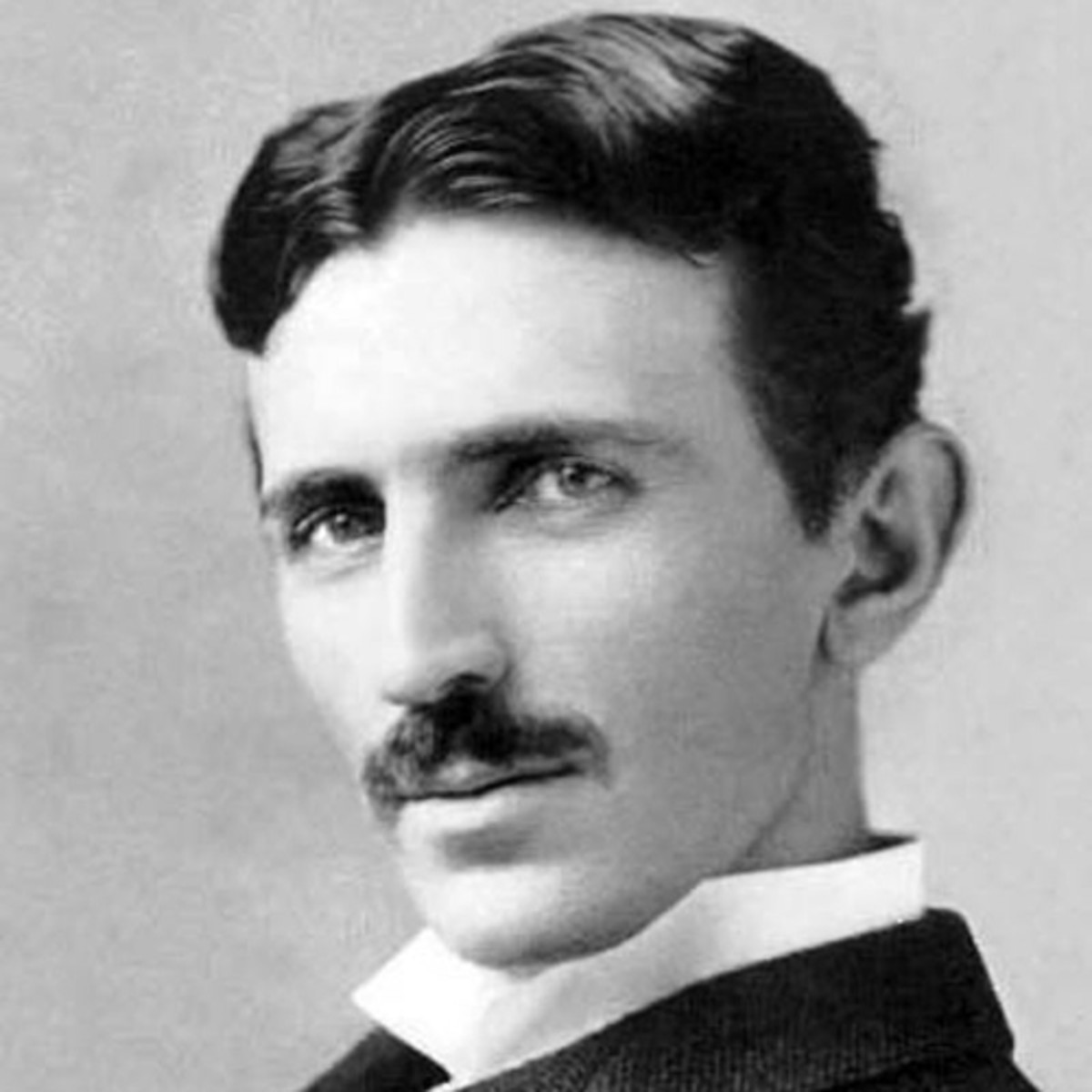
nikola_tesla_napoleon-sarony-public-domain-via-wikimedia-commonsThe 10,000 hour rule was also cited in a book by Sean Patrick: Nikola Tesla – Imagination and the Man That Invented the 20th Century:

The rule’s premise is that, regardless of whether one has an innate aptitude for an activity or not, mastery of it takes around ten thousand hours of focused, intentional practice. Analyzing the lives of geniuses in a wide range of intellectual, artistic, and athletic pursuits confirms this concept. From Mozart to Bobby Fischer to Bill Gates to the Beatles, their diverse journeys from nothing toward excellence in their respective fields shared a common denominator: the accumulation of ten thousand hours of unwavering “exercise” of their crafts. — Patrick


orchestra-2817188_1920_ernestoeslava

To be fair, many have taken exception to the 10,000 hour rule, in articles like “The Great Practice Myth: Debunking the 10,000 Hour Rule” by Michael Miller.

According to Ryan Branstetter in his November 2019 “The Ultimate Guide to Teaching Habits of Mind,” creating or reforming “patterns of thinking” and habits may instead take anywhere from 21 days to a year:

Have you ever heard someone tell you that it takes 21 days to form (or break) a habit? Well, scientific studies have found that to be unfounded. When it comes to something easy, such as grabbing a coffee at your local Starbucks on your way to school, it might take only a few days for a habit to form. But if it is a habit that is challenging, studies have shown that the 21-day myth may actually more like 66 days. Or for very challenging habits, it could take up to a year!Branstetter

drummers-642540_1920_skeeze2.jpg

How about translating this prescription of 1-10 years to a weekly figure of five hours? With reading being the major focus for any stellar success in a profession, review the blog-post by Michael Simmons in Accelerated Intelligence: “Bill Gates, Warren Buffett, and Oprah All Use the 5-Hour Rule”

If 10,000 hours isn’t an absolute rule that applies across fields, what does it really take to become world class in the world of work?

…I’ve explored the personal history of many widely-admired business leaders like Elon Musk, Oprah Winfrey, Bill Gates, Warren Buffett and Mark Zuckerberg in order to understand how they apply the principles of deliberate practice.

…Many of these leaders, despite being extremely busy, set aside at least an hour a day (or five hours a week) over their entire career for activities that could be classified as deliberate practice or learning. Simmons

piano-286036_1920_crystalleHere are the “three buckets” (principles) of Simmon’s 5-hour rule:

  1. Read
  2. Reflect
  3. Experiment

Specific to number one above, apparently billionaire entrepreneurs like to read a lot, quantities of time, frequency, and number of sources (quoted in the article):

guitar-869217_1920_RyanMcGuire

By the way, how many books do YOU read a month? What publications do you have sitting on the coffee table or bed stand awaiting to be started/finished? A quick glance at my own collection of recent nonfiction acquisitions includes these titles:

  • Fewer Things Better – The Courage to Focus on What Matters Most by Angela Watson (Due Season Press and Educational Services, 2019)
  • UnSelfie – Why Empathetic Kids Succeed in Our All-About-Me World by Michele Borna (Touchstone, 2016)
  • The 100-Year Life – Living and Working in an Age of Longevity by Lynda Gratton and Andrew Scott (Bloomsbury, 2016)
  • The Microbiome Solution – A Radical New Way to Heal Your Body from the Inside Out by Robyn Chutkan (Penguin Random House, 2015)
  • The Weekend Effect – The Life-Changing Benefits of Taking Time Off and Challenging the Cult of Overwork by Katrina Onstad (Harper Collins Publishers, 2017)

(You see, I do not exclusively survey the current best-sellers or today’s fads/trends… ideas, insights, and innovations can come from anywhere and any time frame. Now that I am retired, I can “catch-up!”)

singer-1047531_1920_quimuns

Back to musical preparation. You may have heard that saying “practice makes perfect,” generally debunked in several of my “Fox’s Firesides” for music students. I revise this concept to “perfect practice makes perfect performance” promoting “the ten times rule” in applying focus, problem solving, and repetitive drill. Check these out:

Finally, citing the initial reference in this blog-post by Noa Kageyama, here are five tips for deliberate practice by which we should all abide:

  1. Keep practicing limited to a duration that allows you to stay focused.
  2. Utilize times during the day when you tend to have the most energy.
  3. Write down and keep track of your performance goals and what you discover during your practice sessions.
  4. Work smarter, not harder.
  5. Apply various techniques of problem-solving to practicing.

He also recommends this 6-step general “problem-solving model” as adapted from various problem solving processes online:

  1. problem solving chart
    asq.org

    Define the problem (what do I want this note/phrase to sound like?)

  2. Analyze the problem (what is causing it to sound like this?)
  3. Identify potential solutions (what can I tweak to make it sound more like I want?)
  4. Test the potential solutions to select the most effective one (what tweaks seem to work best?)
  5. Implement the best solution (make these changes permanent)
  6. Monitor implementation (do these changes continue to produce the results I’m looking for?)

More ideas can be researched by reading The Talent Code by Daniel Coyle or The Practice of Practice by Andrew Mason, or visit these links for further study:

saxophone-546303_1280_schuetz-mediendesign

The bottom line? Working “brainlessly” does not promote significant improvement. However, use of sufficient repetition, exploration, problem solving, and mindful and deliberate practice will stimulate your success in the pursuit of anything worthwhile… especially the self-realization of creative self-expression.

PKF


Photo credits (in order) from Pixabay.com:

wooden-train-2066492_1920_

© 2019 Paul K. Fox

Cultivating a Precious Gem: Engagement

What do SHJO, Gerardo Parra and the “Baby Shark” theme, and the concepts of collaboration and teamwork have in common?


FoxsFiresides

[Artistic Director’s message spoken at the fall concert of the South Hills Junior Orchestra on November 10, 2019… appropriate to all performers, teachers, and parents.]


Have you had a reason to ask yourself recently, “What am I thankful for?”

Hopefully you can reflect on many things… Your family, friends, health, success, and happiness may instantly come to mind.

How about the privilege of membership in a “musical team” – valuable enrichment provided by both your school program (in which all of our pre-college students should participate) and community groups, like the South Hills Junior Orchestra (SHJO).

One does not have to look far to confirm the benefits of music education and fulfillment of personal creative self-expression. Numerous articles and statistics point to the rewards of “making music” and regular collaboration in a performing ensemble:

I even tried “wrapping my arms” around a definition of this “calling” (one that I have spent my entire life sharing) in a blog-post which features a community TV interview of me by SHJO musician Sam D’Addieco: https://paulfox.blog/2019/06/16/the-importance-of-music-education/.

I do feel thankful! I am grateful to have been granted this opportunity of conducting SHJO and interacting, teaching, and learning alongside our gifted and enthusiastic instrumentalists! These experiences and memories are “priceless” and “fragile,” just like a rare jewel or crystal. I complain for more members (we’re small and turnout has not always been good), but I am also reminded of a comment from my own inspirational school orchestra and string teacher, Mr. Eugene Reichenfeld, who was often heard to say: “Our orchestra may be small, but it is precious – just like a diamond!”

I say, we must cultivate the future of this special musical experience!

Don’t take it for granted! This unique “mosaic of members and music, where all musicians learn, grow, and lead” will only continue if YOU commit consistent time, focus, attendance, and practice. Success relies on your full engagement to SHJO. We need the players, booster officers, parents, and other adult volunteers to join forces!

CBS Good MorningThe other day, I watched on CBS This Morning an interview of World Series Champion Washington National’s star outfielder Gerardo Parra (https://www.cbsnews.com/video/gerardo-parra-on-how-baby-shark-became-the-nationals-anthem/) who is credited for helping to turn things around for the team. Although he may be remembered more for giving the Nationals a new anthem, “Baby Shark,” (chosen by his baby daughter), Parra discussed why he was concerned that the other players on the team did not seem “engaged” and stay afterwards in the clubhouse (some paraphrased below):

  • Parra: “Wow, what a team we have,” and referring to the regular season, “But, even after we won, no one was there to celebrate in the clubhouse.”
  • Anthony Mason: “A lot of people credited you for turning around the team culture.”
  • Parra: “It’s more important for my team that we start in the clubhouse… we dance in the clubhouse.”
  • Gayle King: “But you started that hurrah. You said everybody used to leave and then you said no, everybody, let’s stay! One person came, then one person came, and another person came…”
  • Parra: “Everybody like family. We’re one team, not 25 men.”

When he joined the team in May, Washington was a team with a losing record of 33-38 and 8½ games out of first place in the National League East. Parra himself was mired in a 0-for-22 slump. That’s when he chose “Baby Shark” and got his team motivated! In their last 100 games, the Nationals won 75. Sure, they have amazingly gifted and hardworking players, but what was the cornerstone of their victory? Their teamwork, “power of collaboration,” empathy for each other, and unified sense of purpose! This is just what the doctor ordered for the 37th season of SHJO, and all similar youth or community groups. We need to develop more teamwork, collaboration, and engagement, too!

Thanks, kudos, and bravos go to all musical caregivers and participants for caring, giving, and sharing, and especially uniting together as a team. What really matters to me the most? As I told Sam in the interview, I truly cherish those “ah-ha” moments of realization we see in our musicians’ eyes when they “get it” and reach a new pinnacle of success or mastery of their artistry! I also love observing many peers-helping-peers, multi-generational teamwork, partnerships of musical leaders and followers in the ensemble, and numerous “random acts of kindness” every Saturday morning.

“My” SHJO remains the single most motivating and meaningful event of my week!

Let’s all celebrate a Happy Thanksgiving!

PKF


hi-res logo 2018The mission of South Hills Junior Orchestra, which rehearses and performs at the Upper St. Clair High School in Pittsburgh, PA, is to support and nurture local school band and orchestra programs, to develop knowledge, understanding, performance skills, and an appreciation of music, to increase an individual member’s self-esteem and self-motivation, and to continue to advance a life-long study of music. Members of the Orchestra learn, grow, and achieve positions of leadership to serve their fellow players.

(For more information about SHJO, please visit www.shjo.org.)

This and all Fox’s Fireside blog-posts are free and available to share with other music students, parents, directors, and supporters of the arts.

Click here for a printable copy of Cultivating a Precious Gem – Engagement.

Other “Fox Firesides” are available at https://paulfox.blog/foxs-firesides/.


© 2019 Paul K. Fox
Photo credit from Pixabay.com: “Pumpkin” by Lolame

Reference Letters: What To Do?

Reprinted from “A View from the Podium” (Upper St. Clair High School, 2015) for current South Hills Junior Orchestra members and other students seeking recommendation letters from their music teachers.

foxsfiresides

If you are requesting a letter of recommendation from any teaching staff member, administrator, minister, coach, or activity sponsor for college entrance, scholarships, awards, or job placement, please follow the instructions of your school counselor AND review/complete the steps below.

Do you have an updated “me-file” on your computer’s desktop? Maintain a bulleted list of accomplishments with dates. Scan archives of awards, programs, commendations, special honors, and significant assessments. This will become the basis for the creation of résumés or portfolios, and background for your college or employment essays.

In person, ask the teacher from whom you want the letter if he/she is willing to do this. This should be an adult in whom you have a great deal of trust and with whom you have had frequent contact. If you have any doubt or misgivings like “Does this professional like me?” or “Will he/she give me a fair rating?” – then you should ask someone else. If you are a current member of SHJO, anyone asking Mr. Fox should have no fear. He will tell you immediately if there is any problem in writing a positive letter.

In my opinion, if you choose the right person to do your letter, you can sign-off your rights to see it before submission to the institution. A student checking “yes” to waiving his/her access to/examination of the reference may look better to the evaluator. Although not required, some may send you a copy of it for your files. That is my standard practice.

Know your deadlines. BY WHEN do you need the reference letters or common app teacher recommendations?

seriestoshare-logo-01As a courtesy to the writer (and modeling good preparation on your part), give at least two to three weeks’ notice (more is better). Remember: “Lack of planning on your part does not constitute an emergency on the teacher’s part.” It would also be polite to “gently remind” the staff member about the final deadline of the recommendation (at least one weekend’s notice). For SHJO, one Saturday ahead of the final deadline would be ideal.

Unless it is an online application or digital reference, the individual requesting the recommendation should provide in advance a pre-stamped self-addressed envelope to be signed, sealed, and mailed directly to any school or organization.

To facilitate “anecdotal references” and confirm accurate data/details, email a mini-résumé of your achievements, particularly those things that can be mentioned in the letter. Try to complete as many of these as possible:

  1. When did you first begin your musical (or other academic specialty) study? When did you join SHJO or other music group?
  2. What classes, ensembles, and/or productions have you participated at school?
  3. What music or academic leadership positions have you served (give specific dates)?
  4. What are your outside activities?
  5. What have you done as community service?
  6. How are you unique? Describe yourself in three to five words.
  7. What qualities or strengths have you exhibited that the staff member, from working with you, could corroborate in the letter?
  8. Can you remember any funny or significant class or rehearsal anecdote that demonstrated growth in your musical technique, expressiveness, student leadership, “team” or ensemble building, or the 21st Century learning skills of creativity, communications, critical thinking, collaboration, and global understanding?
  9. What is your planned major or minor in college, and how did your association with the staff member (his/her classes or activities) help you gain the experience, insight, or confidence to go into this field?

Good luck! PKF  Revised 3/18/19

hi-res logo 2018

The mission of South Hills Junior Orchestra, which rehearses and performs at the Upper St. Clair High School in Pittsburgh, PA, is to support and nurture local school band and orchestra programs, to develop knowledge, understanding, performance skills, and an appreciation of music, to increase an individual member’s self-esteem and self-motivation, and to continue to advance a life-long study of music. Members of the Orchestra learn, grow, and achieve positions of leadership to serve their fellow members.

(For more information about SHJO, please visit www.shjo.org.)

This and all Fox’s Fireside blog-posts are free and available to share with other music students, parents, directors, and supporters of the arts.

Click here for a printable copy of Reference Letters: What to Do?

Other “Fox Firesides” are available at https://paulfox.blog/foxs-firesides/.


© 2019 Paul K. Fox
 

Photo credit from Pixabay.com: “Fireside” by pixeldust


WHEN Should You Retire?

The Skills and Models of a Happy Retirement

[Portions reprinted from the state journal of the Pennsylvania Music Educators Association, PMEA News, Spring 2019 issue – All rights reserved.]


man-2546107_1920_geralt

Is It TIME to Retire?

This is a personal question that no one but YOU can answer… not even your PMEA Retired Member Coordinator! By the time you read this article in the Spring edition of PMEA News, this choice may be uppermost in your mind, especially if you are within a couple years of that so-called “retirement age.” Most school districts require advance notification of an employee’s plan to retire in order to retain full benefits and exit bonuses, and to allow planning for the job replacement search and screening process. (Check your teacher’s contract!)

In music educator conference sessions, director meetings at festivals, and printed in PMEA News and the online e-publication Retired Member Network eNEWS, much has pmeabeen discussed about the “what,” “how,” and most recently, “where” of retirement, even issues of “privacy” regarding your decision. For a review of these areas and a bibliography of resources, please visit:

The “why” of retirement is also relevant. There may be a lot of influences for someone to consider leaving their full-time career:

  1. Boredom or lack of stimulation in the current job
  2. Changing employment status or responsibilities
  3. Health problems (yours or other members of your family)
  4. Spouse retiring
  5. Your or family member’s desire to relocate
  6. Needs for caregiving (grandchildren, parents, or elderly family members)
  7. Travel opportunities
  8. Acceptance of a new position or the start or expansion of an “encore career” (higher education, music industry, travel/tour planning, or another field)

Other involuntary or more negative motivations may “encourage” you to resign your position:

  • Music and/or staff are eliminated from the curriculum or building in which you teach.
  • You are experiencing a decline in music program enrollment or participation.
  • You feel unappreciated, unsupported, devalued, or ignored as a professional.
  • You conclude you must retire early to avoid losing existing contractual benefits.

elderly-lady-4025995_1920_MabelAmber

However, the most important reflection on WHEN to retire should begin with the question, “Are you ready for retirement?” and…

Do You Have What It Takes for a Happy Retirement?

A successful retirement is not “all about the money.” Certainly, you are well-advised to make an appointment with an estate planner, elder attorney, and/or financial advisor (probably all three). Bring a copy of your bank and investment statements, annual reports on your pension, social security, annuities, and insurance documents. Make sure you have the “big picture” of your net worth and accomplish the following (https://www.fisherinvestments.com/en-us):

  • Determine your goals, objectives and time horizon;
  • Make key distinctions between income and cash flow;
  • Develop a basic plan to help achieve your retirement goals.

However, probably even more important, experts say there are many other requirements that foster preparedness to enjoying your post-full-time employment years. For example, proposed by the editorial team of the NewRetirement website, there are eight essential keys to a potential retiree’s “happy transition.” (Read the entire article for a greater perspective at https://www.newretirement.com/retirement/8-skills-you-need-for-best-retirement/.)

  1. A Knack for Dealing with Uncertainty
  2. Resilience: Can You Overcome Adversity?
  3. Capability to Maintain a Set of Friends
  4. Cash Flow Mastery
  5. Ability to Set Your Own Schedule and Stay Motivated
  6. Can You Relax?
  7. Capacity to Have a Purpose and Follow Passions
  8. Do You Know How to Manage an Overall Retirement Plan?

senior-2642041_1920_RitaE2

These concepts are supported by the book Happy Retirement: The Psychology of Reinvention by Kenneth S. Shultz (DK Publishing, 2015) which focuses on the question, “Are you psychologically prepared to retire?”

  1. How important is your job when it comes to getting a sense of life satisfaction?
  2. How many non-work activities do you have that  give you a sense of purpose?
  3. How do you imagine your life to be once you stop working?
  4. How do you think retirement will affect your relationship with family and friends?
  5. How much energy for work do you have these days?

Being “psyched” for the “big day” also involves learning personal coping skills, modeling these characteristics of good mental health (from the book The Psychology of Retirement: Coping with the Transition from Work by Derek Milne, 2013):

  • Being able to use your talents and energy productively
  • Enjoying challenges and gaining pleasure from accomplishing tasks
  • Being capable of sustaining a meaningful love relationship
  • Finding meaning in belonging and contributing to your community
  • Being responsive, sensitive, and empathic to other people’s needs and feelings
  • Appreciating and responding to humor
  • Coming to terms with painful experiences from the past
  • Being comfortable and at ease in social situations;
  • Being energetic and outgoing
  • Being conscientious and responsible.


woman-3186741_1920_silviarita

Should I or Shouldn’t I Go Now?

No, this won’t be an easy decision… but, you knew that, right? There seems to be a plethora of free advice “out there” to help (?) you deliberate. (Well, you get what you pay for!) A few samples from the Internet:

7 Signs It Is Time (http://www.plannersearch.org/financial-planning/7-signs-its-time-to-retire)

  1. Your bank accounts
  2. Your bucket lists
  3. Your health
  4. The markets
  5. Health care benefits
  6. Social Security benefits
  7. Your spouse

10 Signs It Is Not Time (https://www.investopedia.com/articles/personal-finance/021716/10-signs-you-are-not-ok-retire.asp)

  1. Struggling to pay bills
  2. You have lots of debt
  3. Have major expenses
  4. Don’t know your SS benefits?
  5. Need monthly financial plan
  6. Need long term financial plan
  7. What about the effects of inflation?
  8. Need to re-balance portfolio
  9. Retirement worries you
  10. You love your job

old-couple-2435629_1920_MonicaVolpin_

Happy retirement = busy retirement. We keep going back to what PMEA MIOSM Chair Chuck Neidhardt said about venturing into retirement – also the perfect bumper-sticker: “Have a plan!” In almost every case study, retiring music teachers must “move on” to an equally engaging and active life style, finding new purpose and meaning in their “senior years!” Considering that many professionals are “addicted to achievement” and the sudden cessation from work may cause some emotional turmoil (Sydney Lagier in US News and World Report, July 20, 2010), we should study examples of those who have happily “Crossed the Rubicon” ahead of us into “retirement bliss.”

Leaving your school employment does not mean you won’t continue doing what you have always enjoyed… personal music (or dance or drama) making, performing in or conducting an ensemble, composing, accompanying, etc. The PMEA Retiree Resource Registry – the proverbial “directory of past leaders in PA music programs” – lists many retired members who continue to offer their talents and experience to help others in the profession. This is a good place to start for asking “advice from the experts” on just about any topic… perhaps even tips on deciding WHEN to retire: https://www.pmea.net/retired-members/.

How about a couple more “models and mentors” who made this “change of life” adjustment and explored new directions towards self-reinvention in retirement?

ben-franklin-3589235_1920_ericdunham

Ben Franklin, Founding Father
“Having worked as a successful shopkeeper with a keen eye for investments, Franklin had earned his leisure, but rather than cultivate the fine art of indolence, ‘retirement,’ he said, was ‘time for doing something useful.’ Hence, the many activities of Franklin’s retirement were: scientist, statesman, and sage, as well as one-man civic society for the city of Philadelphia. His post-employment accomplishments earned him the sobriquet of ‘The First American’ in his own lifetime, and yet, for succeeding generations, the endeavor that was considered his most ‘useful’ was the working life he left behind when he embarked on a life of leisure….”

https://www.theatlantic.com/business/archive/2015/09/how-america-lost-track-of-benjamin-franklins-definition-of-success/400808/

2000 – “The Year of Retirement?” for two musical superstars
Barbra Streisand, singer, songwriter, actress, and filmmaker
Garth Brooks, country-music singer and songwriter
“In 2000, Barbra Streisand performed four farewell concerts to mark her retirement from performing live. At the time, she was 58 years old and wanted to focus more on acting, directing and recording albums, reported ABC News.”

“Her retirement ended in 2016 when she returned to the stage for her The Music… The Mem’ries… The Magic! tour, which grossed $53 million over 16 performances, according to Billboard.”

“Garth Brooks shocked fans in October 2000 when he announced his plan to retire to Oklahoma until the youngest of his three daughters graduated from high school, reported Billboard. The country music superstar was 42 years old when he began his early retirement.”

“During his semi-retirement, he did a few sold-out stints at arenas and a 186-show Las Vegas residency with wife Trisha Yearwood, according to Billboard, but he largely stayed out of the spotlight. Brooks returned to touring in September 2014 and continued until December 2017, performing a total of 390 shows, reported Billboard. Forbes cited his 2017 earnings as $60 million. Together, Brooks and Yearwood are one of the richest celebrity couples.”

https://www.gobankingrates.com/net-worth/celebrities/celebrities-who-came-out-of-retirement/

grandma-736004_1920_fujidreams_

“If money can buy you happiness,” supposedly these ten athletes were financially more successful after retirement, as opposed to the total earnings they generated during their original sports careers:

  • Muhammad Ali
  • Jim Brown
  • Oscar De La Hoya
  • Lenny Dykstra
  • George Foreman
  • Dwayne Johnson (“The Rock”)
  • Magic Johnson
  • Michael Jordan
  • Nolan Ryan
  • Dave Whelan

https://www.complex.com/sports/2012/01/10-athletes-who-made-more-money-after-retiring/


Agatha Christie, British writer
Finally, to answer the question, “What would Agatha Christie do in retirement?” best-selling author Ernie Zelinski quoted in his The Retirement Cafe website the following list of activities proposed to be “her favorite things” from the publication Agatha Christie: An Autobiography (Dodd, Mead & Co., 1977).

  • Sunshine
  • Apples
  • Almost any kind of music
  • Railway trains
  • Numerical puzzles and anything to do with numbers
  • Going to the sea
  • Bathing and swimming
  • Silence
  • Sleeping
  • Dreaming
  • Eating
  • The smell of coffee
  • Lilies of the valley
  • Most dogs
  • Going to the theatre

Ernie concluded, “This list of activities and things that Christie loved may trigger some of the stuff that turns you on and which you can use for an active retirement. This will go a long way towards conquering retirement boredom.”

http://www.retirement-cafe.com/Fun-Things-to-Do-When-You-Retire.html

fisherman-1624704_1920_paulbr75_

Is the time ripe for you to retire? Again, only YOU can answer that!

When it becomes the right moment for you to make that “big plunge” to “living your dreams…” KUDOS and BEST WISHES on your rebirth as you explore your own pursuit of retirement self-reinvention and post-employment “freedom!”

PKF

© 2019 Paul K. Fox


Photo credits in order from Pixabay.com: “old” by dietcheese, “man” by geralt, “elderly lady” by mabelamber, “senior” by ritae, “woman” by silviarita, “old couple” by monicavolpin, “ben-franklin” by ericdunham, “Fisherman” by paulbr75, “grandma” by fujidreams, and “wooden-train-toys-train-first-class” by Couleur.

wooden-train-2066492_1920_Couleur