Tips for Retirees on Managing Stress During the Coming Winter Celebrations

Sometimes the most important thing in a whole day is the rest we take between two deep breaths. – Etty Hillesum http://www.huffingtonpost.com/2010/12/05/holiday-stress-quotes-the-11-best_n_791925.html

snowman-1383597It used to be that the coming winter recess of seven or more days off from full-time public school music teaching mostly meant catching up on much-needed sleep, tackling a few of those deferred household chores, performing or conducting a couple holiday concerts, visiting family and friends, and “pigging out” at a few gigantic holiday feasts.

Now that we are retired, one could argue that “every day is a vacation” and our lives are always “a bed of roses.”

However, holiday stress is a real problem for full-time workers and pensioners alike. No matter the setting or stage of your life, it is something that needs to be addressed!

According to Alexandra Ossola (Popular Science) at http://www.popsci.com/why-are-families-particularly-stressful-during-holidays, “It may have more to do with your expectations than the annual meltdown over the turkey.” She comments, “For most people, colourful-festival-muffins-1317770family gatherings during the holidays are rarely stress-free… Sometimes these situations are small, unpleasant blips in otherwise enjoyable celebrations. But for some, the feelings go deeper—many people dread the holidays, becoming stressed or anxious in the weeks leading up to a family get-together.”

She concludes with research from Terri Orbuch, a relationship expert and sociology professor at Oakland University. “We think this should be a perfect time, the food will be perfect, and our conversations will be respectful. But when our realities don’t match that, we get frustrated,”

xmas-tree-1360371So, here is some timely advice to bring down your anxiety levels and cope with the changing season.

First up, the American Heart Association advocates being “heart-healthy” in all dealings with holiday stress at http://www.heart.org/HEARTORG/GettingHealthy/StressManagement/FightStressWithHealthyHabits/Holiday-Stress-Try-These-5-Tips-for-a-Heart-Healthy-Holiday-Season_UCM_433252_Article.jsp#.

  1. Think ahead and carefully outline a consistent “30 minutes of physical activity per day.”
  2. Avoid the perils of party foods (overeating of high-fat, sugary, or salty treats).
  3. Stay active… but not too active (enjoy the added exercise, but don’t overbook yourself).
  4. Layout a plan for January and beyond.

Several ideas for handling your Christmas, Hanukkah, Kwanzaa, and/or New Year galas come from WebMD at http://www.webmd.com/balance/stress-management/tc/quick-tips-reducing-holiday-stress-get-started.

  1. bag-1-1443662Know your spending limit (set a budget and stick to it).
  2. Retirement usually means being on a fixed income. Share gifts that are meaningful and personal, but not necessarily extravagant or expensive.
  3. Organize your appointments and to-do lists.
  4. Share the responsibility (you don’t have to do everything yourself).
  5. Learn to say “no!”
  6. Be realistic. “Try not to put pressure on yourself to create the perfect holiday for your family. Focus instead on the traditions that make holidays special for you.”

To avoid the predictable “serious conversation alert” or a downturn of the mood at any family gathering, Talya Stone urges the infusion of humor to lessen your holiday stress at http://stress.lovetoknow.com/Humor_for_Holiday_Stress.

  1. reindeer-1-1419910Tell jokes, like “Why do reindeer stop for coffee on their Christmas run? Because they’re Santa’s star bucks.” A whole collection of quick one-liners are available at her website, which she says are guaranteed to add humor to your holiday and de-stress awkward episodes.
  2. Avoid becoming Scrooge. Don’t take yourself so seriously! Laugh at your own foibles and boo-boos!
  3. Create happy memories and find laughter in every day
  4. Watch humorous movies of “side-splitting moments fueled by mistakes, failures, and blunders, allowing you to laugh in the face of any holiday stress.” Suggestions by Stone include A Christmas Story, National Lampoon’s Christmas Vacation, Elf, The Santa Clause, Jingle All the Way, Bad Santa, and my personal favorite Home Alone.
  5. Organize a harmless holiday prank to help diffuse some of the stress that comes with being so preoccupied during the holiday season. How many times can you gift-wrap a small present in progressively larger boxes? Stone gives other examples.
  6. Don’t forget to bring the games! Several inter-generational ideas for entertainment are Christmas Bingo, Pin the Nose on Rudolph, and Snowball Toss, but almost anything can increase the “festiveness” of every festivity.
christmas_hornIf your stress is made worse mostly due to the transition of a recent retirement, there are numerous resources to help you through this “significant life passage.” First of all, you should know it is not unusual to feel this way. In his book, The Retiring Mind, Dr. Robert P. Delamontagne estimates that “50% of retirees will suffer some form of acute emotional distress.” Now all we have to do is learn how to deal with this change… sounds easy?

Dr. Amit Sood, author of The Mayo Clinic Guide to Stress-Free Living, writes “This a time of enormous change. You are leaving your job and friendships with colleagues and finding new things to do.” Sood recommends many christmas-stocking-1443217stress-reduction strategies: “Realize that your brain’s reward center likes variety, so give yourself a variety of experiences.”

He adds, “Let your best friends not be the TV, refrigerator or couch. Let your best friends be real people, books and sports shoes.”

“Treat your first year in retirement as if you are ‘interning’ to give yourself time to readjust and set new expectations,” he concludes. “Find meaning in new passions, including possibly using your work skills in a new job or volunteer work.”

For retired music teachers on this subject, I have written other blogs (see the link “Retirement Resources” at the right), and there are additional materials at the PMEA website: http://www.pmea.net/retired-members/. Please explore these numerous links/books/articles.

Finally, always prolific, The Huffington Post offers a couple dozen articles on the subject of “Holiday Stress Management,” everything from financial advice to mediation to dealing with a difficult person at family visit or party. Go to http://www.huffingtonpost.com/news/holiday-stress-management/.

DCF 1.0

From my family to yours – best wishes for the attainment of all of the “R’s” during the coming season – a refreshing, restful, reawakening, reviewing, recreating, reviving, rejuvenating, replenishing, and re-invigorating New Year!

PKF

© 2015 Paul K. Fox

What I Have Learned from My Dogs… in Retirement

fox pups posing 051115It was one of the first things I did when I retired from more-than-full-time music teaching and serving as the Performing Arts Curriculum Leader of my excellent school system (Upper St. Clair School District/Western Pennsylvania). Start looking for a dog.

The incredibly hectic non-stop schedule of a husband and wife, both string teachers with a variety of responsibilities, music class assignments, after-school rehearsals, and concerts across numerous buildings, serving as spring musical directors, active music festival and conference participants in our professional groups (PMEA/ASTA), and co-director (wife) or assistant (me) of the marching band – totally precluded having a dog. I think it would have been considered animal abuse. We were never home, except to crawl into bed to fall sleep. That’s the “calling” of a devoted music educator, especially if he/she is passionate about and focused on inspiring and bringing creative self-expression to the students, willingly committing him/herself to countless hours of extra-curricular activities. We are proud of those opportunities that affected so many lives! (Do you remember the theme of that final scene in the movie “Mr. Holland’s Opus?”)

dogs_nopretender_IMG_1565It was quite by accident that we “found” our two puppies. (Actually, as most dog owners would attest, they chose us!) We visited the area pet stores, just to peruse all of the animal habitats, beds, toys, treats, and the like… and did not know that one chain store in our area actually sold dogs! Gracie, a pure-bred bichon frise selected my wife, and a yorky-poo we named Brewster picked me! The rest is history… at a high cost (the premium price for the dogs plus two of everything, including duplicate crates, dishes, bags of food, treats, and even toothbrushes). With lots of surprises in store for us, we rescued them from Petland!

dogs_scolded_IMG_1564After 35 years of having to run in and out of the house to travel and fulfill appointments, errands, practices, and performances, all at once I had a reason to stay home and share the unconditional love of owning not one but two “good dogs.”

New retiree “pet chores” were doled out. My wife was in charge of feeding and grooming. I did the lion-share of walks. We both attended “owner training” (they called it “dog training,” but we were the ones who needed to learn how to control our dogs).

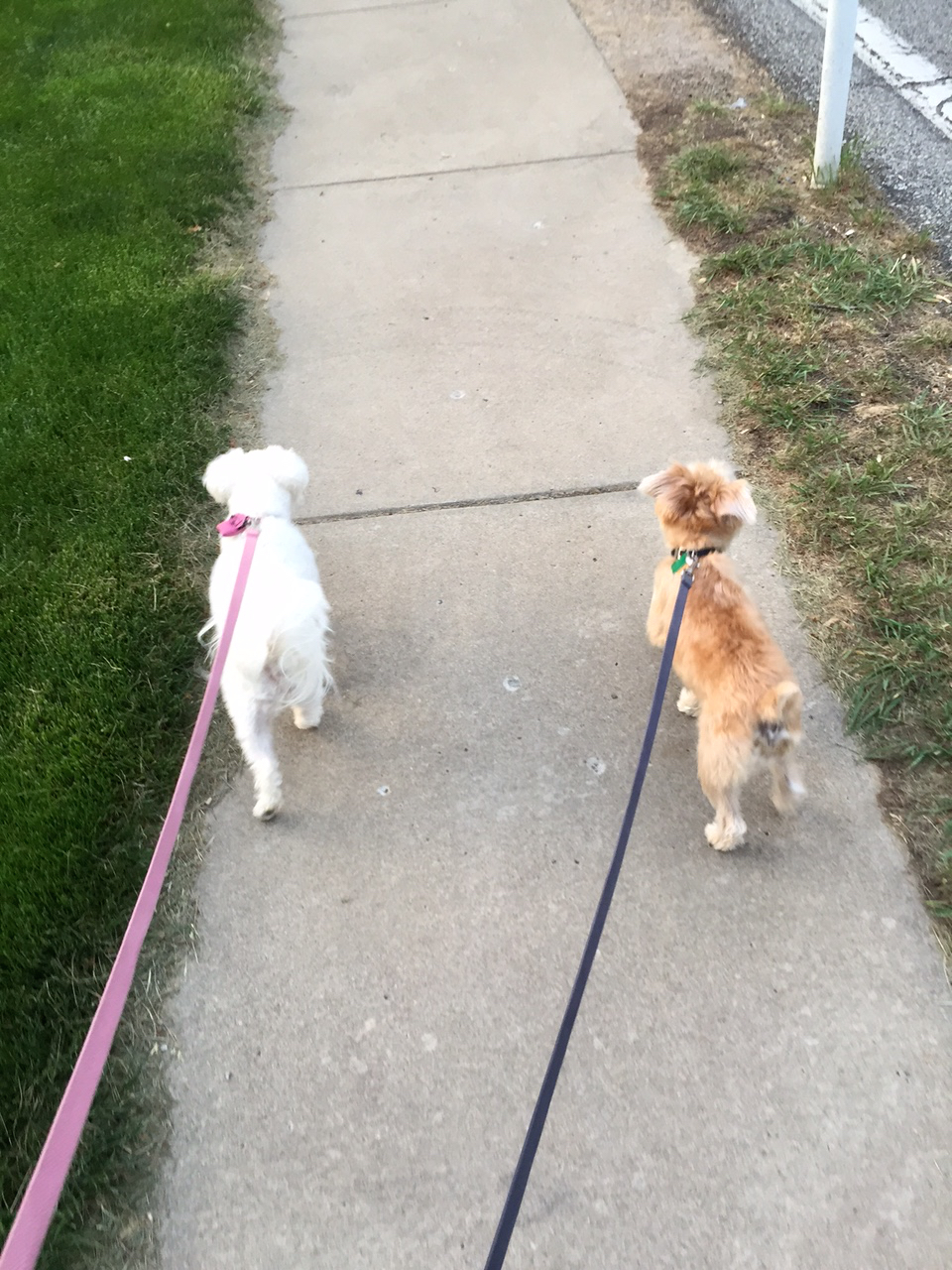
For me, walking the dogs has become the most amazingly peaceful and reflective activity. It has improved my disposition, calmed my nerves, sharpened my senses, increased my dogs_walk_IMG_1782capacity for patience and tolerance, and lowered my blood pressure! Yes, between volunteer escorting patients at our local hospital several days a week and exercising the dogs at least four times daily, we add up a lot of mileage… an average of 15,000 steps or 5-7 miles a day!

Something I would never have predicted before my retirement:  I am now getting up as early as 5:30 most mornings… which is before the alarm would go off when I was employed! Of course, this is every day, every week, every season, rain or shine, with few exceptions. Who needs sleep anyway?

You really ought to try taking two warm bundles of fur to bed with you to hug and cuddle. Gracie and puppy moment3Brewster only have temporary residence on the top of our blankets and bedspread, and must later go back to their playpens in the game-room (our former music studio) once we decide to go to sleep. (My dogs are small… I don’t want to “squash them” when I roll over!)

So, who’s the teacher now? The following are a few of the “life’s lessons” I have learned from close observation of my dogs. Consider this a helpful guide for all retired people.

  1. Live enthusiastically in the “here and now.”
  2. Forgive unequivocally and immediately.
  3. Life is all about taking a long walk, smelling the roses (and everything else), bamboozling another treat from “daddy,” and getting my ears scratched or belly rubbed.
  4. dogs_fringe_IMG_1990Whenever possible, fearlessly explore the fringe (almost beyond the reach of the leash).
  5. Relax and snuggle with someone you love as often as possible.
California attorney Mike Vaughn posted several additional “bits of wisdom,” a map for happy and healthy retired living, on his Maritime Law Center website: http://maritimelawcenter.com/html/things_i_learned_from_my_dog.html
  • When loved ones come home, always run to greet them.
  • If what you want lies buried, dig until you find it.
  • Never pretend to be something you are not.
  • No matter how often you are scolded, don’t buy into the guilt thing and pout… run right back and make friends.
dogs_IMG_1860doggie_heaven_ - 32Tara Mullarkey summed up a few more of the important ones on her blog “7 Life Lessons I’ve Learned from My Dog” (http://www.mindbodygreen.com/0-7561/7-life-lessons-ive-learned-from-my-dog.htm):
  • We need to play (every day).
  • Love is all there isl

Attention all recently retired persons: If you do not already own a dog or other pet, I strongly encourage you to consider the option of adopting or rescuing a dog! It may be one of the best decisions of your life!

PKF

© 2015 Paul K. Fox

Retirement = Reflection + Renewal + Altruism

“We make a living by what we get, but we make a life by what we give.” – Winston Churchill

Attention all wordsmiths! Here’s a new word to add to your vocabulary: eleemosynary, an adjective that means generous, benevolent, charitable, gratuitous, or philanthropic.

Also, according to dictionary.com, the first definition of reflection is “the act of reflecting, as in casting back a light or heat, mirroring, or giving back or showing an image; the state of being reflected in this way.”

Assimilating both of these concepts, simply put, retirement is a time for both reflection and giving back.

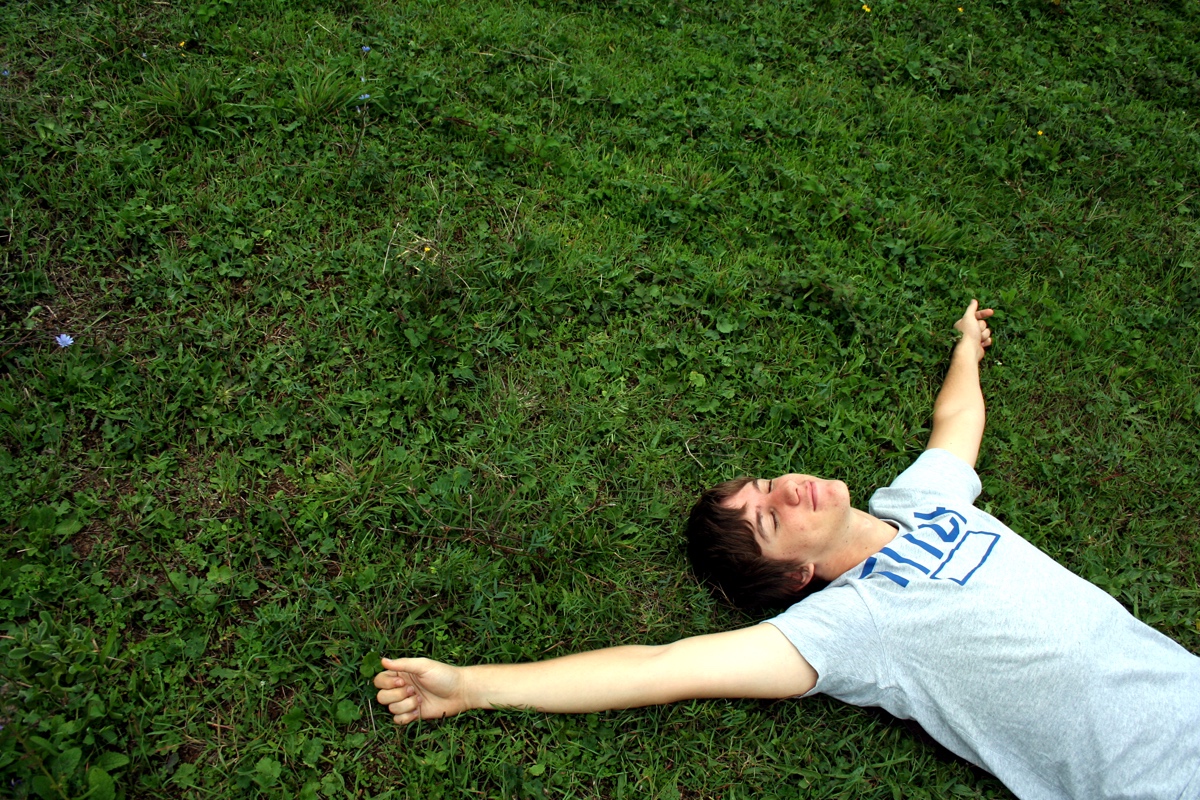
on-green-1362995Do you remember as a kid lying down on your grass and looking up to the clouds imagining that you see animals or faces or Medieval dragons? Did you relax and let your thoughts wander to make up stories or scenarios to “play” in your mind? What new ideas or visions came to mind? This process of daydreaming or brainstorming can be the perfect vehicle for a little self-reflection, a calm moment to refresh your outlook, reconcile your feelings, review and revise personal goals, and basically re-energize your passions!

For once in your life, you don’t have to accept the demanding “hustle and bustle” of a very stressful workday schedule. Now you have more of life’s most precious commodity – TIME!

This new freedom gives you the chance to spend some time with your family, friends, acquaintances, even former coworkers when they have breaks. I hate to admit it that, as a full-time music teacher, I could not give you the names of my neighbors on my street, and now that I walk dogs daily, I have become much more “neighborly” and make every effort getting to know them.

OLYMPUS DIGITAL CAMERA

Of course, one of the most important directions you can go is to revisit your “creativity roots,” the reason you got involved in music and music education in the first place. One of your first priorities when you retire from full-time employment in music education should be to pull that instrument out of the closet, brush it off, warm up on it a little, and begin restarting your regime of training those chops (or vocal skills) once more. Go out and join a community band, orchestra, or choir (subject of a future blog).

Seize the day (as they say) and embrace opportunities for volunteering, possibly going back to the school and offering your professional services on a “very” part-time basis. Perhaps a local music program could use your expertise in setting up new technology, playing the piano, helping conduct large ensembles or coaching sectionals or chamber groups, organizing or chaperoning music trips, repairing instruments, composing or arranging music for the ensembles, or assisting on the rehearsals or designing the field show for the marching band, dance team, or drum line.

In addition, the “passage to retirement” allows a re-examination of ourselves and discovery of new interests, conceivably some non-music volunteer activities. Select a project or two that will help satisfy your need to help others and “wheelchair-1576246nurture your soul.” My personal favorite (besides retaining my “conductor chops” by directing a youth orchestra on Saturdays) is to serve as a volunteer escort at our local hospital. In addition to walking dogs several times a day, pushing wheelchairs several days a week is good physical exercise, but more importantly, it is a big help to the efficient and economical operation of any mid- to large-sized medical facility.

What’s that inspiring quote? “I thought I was poor because I had no shoes, until I met a man who had no feet.” My wife and I get a lot of personal satisfaction helping people who are less fortunate than we are, especially those who are much more senior to us, and by now (after two years plus of retirement), I believe we are now nearly expert “wheelchair jockeys.” At the hospital, you meet many wonderful people, the majority of whom are undergoing a (hopefully temporary) life challenge… surgery, treatment, observation, rehabilitation, etc. It has to be said that we have found that “patients are the most patient,” and individuals with the most serious conditions are usually the most appreciative and display the sweetest dispositions. Of course, our favorite wheelchair trip is to the family birth center, where the majority of the time, we get to escort a mother with her new baby to the car.

pet-adoption-1360761
Other volunteer activities? Lists of needy programs are numerous (here are a few examples):
  • Walk dogs or care for pets at the local animal shelter
  • Serve in charitable fund-raising projects (man phones, etc.)
  • Offer to translate/interpret foreign languages
  • Assist food banks and meals-on-wheels agencies
  • Enlist as a “court appointed special advocate” for abused or neglected children
  • Work as a hospice volunteer
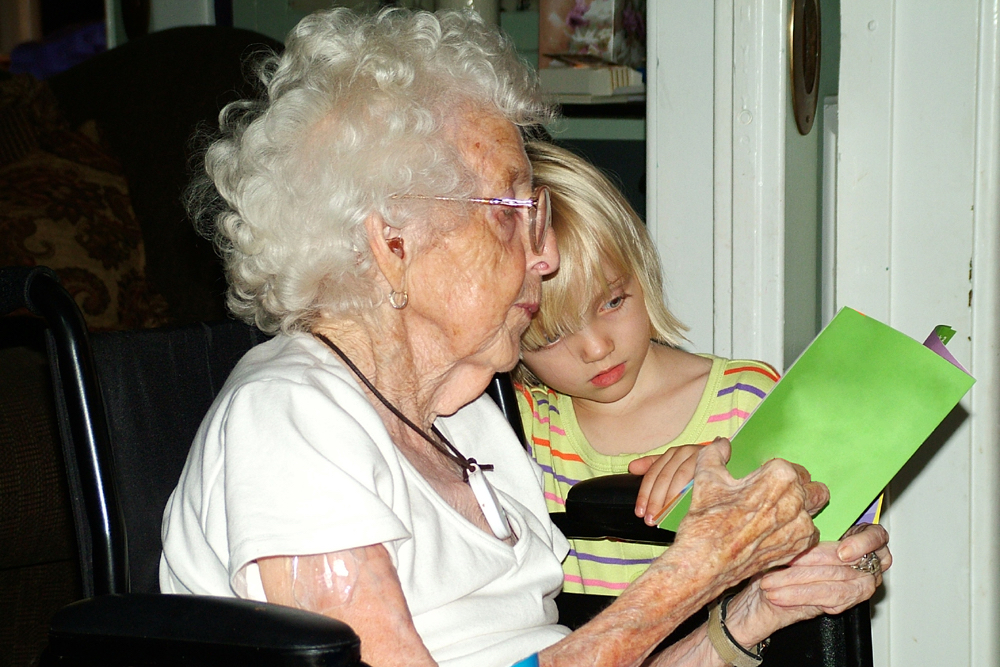
  • reading-with-grandmother-in-wheelchair-1432646Join Elder Helpers or other organizations to help needy seniors
  • Run a school club or activity (share your unique hobby)
  • Help maintain parks, trails, nature habitats, or recreation centers
  • Collate/file/sort/catalog libraries of sheet music or books
  • Host an international student
  • Become a youth director, mentor, or scout leader
  • Register new citizens to vote at citizenship ceremonies
  • Clean-up vacant lots, cemeteries, playgrounds, etc.
  • Apply office management and clerical skills to benefit nonprofit associations
  • Teach summer school or Fine/Performing Arts classes
  • Give guided tours or lectures as a “docent” at a local museum

people-listening-1239292

Check it out! Today, 3,281 volunteer opportunities in or near Pennsylvania were posted at: http://www.volunteermatch.org/search/?l=pennsylvania

Volunteer some of this new-found time that you have on your hands, and I promise, you will never regret it!

PKF

© 2015 Paul K. Fox

Happy Trails, Retirees! PMEA Retired Members Rock-On!

Have You Heard These?

  • Old composers never die, they just decompose.
  • Old performers never die, they just go out of tune.
  • Old musicians never die, they just go from bar to bar.
  • Old musical producers never die, they just make a big production out of it.
  • Old band nerds never die, they just leave after halftime.
  • Old music teachers never die, they just lose their class.
  • Old rockers never die, they just shake, rattle, and roll.
  • Old lighting directors (or sound engineers) never die, they just fade away.
  • Old singers never die, they just perform another encore. 
  • Old conductors never die, they just lose their place.
  • Old string players never die, they just get strung out.
  • Old jazz artists never die, they just play on and on.

“The trouble with retirement is that you never get a day off.” – Abe Lemons

Filling Up and Fulfilling Bucket Lists

Retirement is a journey, offering another roadway towards self-realization. You would expect to see any retired person enjoying the fruits of his/her career-long labor by “taking a break” – exploring travel, sightseeing, fitness training, sports, gardening, home improvements, reading, babysitting grandchildren, rescuing a pet, volunteering, attending concerts/musicals/movies, discovering and developing new hobbies/skills/talents, hanging out with former coworkers – you name it! Retired music educators are no different! However, one advantage of being in the profession of teaching creative self-expression is that it was never “just a job.”

And the music goes on and on…

pmea
Many Pennsylvania Music Educators Association (PMEA) retired members remain active after they leave their full-time public/private school teaching positions. Numerous opportunities inspire retirees to continue making significant contributions to music and education. If you can actually catch-up with a former music teacher (they are usually very busy), he or she might be in the middle of participating in any number of Performing Arts or educational activities:
  1. PMEA state or local leadership position such as council representative or elected office.
  2. Full or part-time higher education instructor in music education methods, or supervisor of student teaching.
  3. Assistant director, guest conductor, or section coach for marching or concert bands, orchestras, choirs, chamber groups, jazz ensembles, dance or drama productions.
  4. Soloist, accompanist, and/or performer in community instrumental or choral ensembles at local community events, businesses, senior centers, and other venues.
  5. Music judge, clinician and/or director of PMEA adjudications, PMEA performance festivals, or commercial contests or competitions.
  6. Representative for local music store assisting on rentals and repairs of band and orchestra instruments.
  7. Private or class instructor of voice, instrument, or dance.
  8. Composer, accompanist, or music arranger for school music ensembles and concerts.
  9. Workshop presenter, clinician, presiding chair, sergeants-of-arm, registration aide, or volunteer at state and local music conferences.
  10. Writer of articles for local and state music publications, blogs, or other media.
  11. Advocate for arts education and the importance of creative self-expression, contacting local decision-makers and state legislators.
  12. Informal adviser and consultant assisting other music educators in the field, facilitated by joining the PMEA Retiree Resource Registry.

r3_logo

PMEA Retiree Resource Registry

Unveiled in February 2015 and based on PMEA Retired Members’ online survey responses, the Retiree Resource Registry (R3) and R3 Help Index archive a comprehensive record of music teacher retirees’ present and past job assignments, history of career achievements and awards, current professional music and music education activities, and special talents and interests. The registry serves as a “who’s who” directory of past leaders in PA music programs, as it documents the amazing contributions of some of the still most active albeit retired PMEA members. The R3 shares this vast wealth of the PMEA Retired Member experiences and expertise in order to offer the entire PMEA membership access to a list of very willing and capable informal advisers or consultants if anyone needs “free” (but priceless) help on a specific topic.

RVolunteer Areas

Help categories on survey (see R3 Help Index): accompanist, adjudications, arts advocacy, assessments, auditions, band, booster groups, chamber music, chaperoning, choral, choreography/dance, coaching, community ensembles, composing/arranging, core arts standards, curriculum writing, Dalcroze/eurhythmics, early childhood/pre-school, festival preparation, fund-raising, general music, guest conducting, guest lecturing, higher education, hosting a festival, instrument repair, instrument sales, jazz, Kodaly, leadership training, marching band, music appreciation, music theory, musicals, Orff, panel discussions, PCMEA/teacher training/mentoring, professional development, research, strings, technology, traveling/tours, voice, webinars, world drumming, and writing for PMEA News.

RStatistics

As of April 20, 2105, the R3 has the following statistics:

  • Number of Retired Members in Registry = 101
  • Expertise/interest in vocal music = 40%
  • Expertise/interest in instrumental music = 75%
  • Expertise/interest in classroom music = 46%
  • Expertise/interest at elementary level = 69%
  • Expertise/interest at middle school level = 76%
  • Expertise/interest at high school level = 78%
  • Expertise/interest at higher education level = 31%

Making Use of the Registry

To take advantage of this service, go to the retired member section of the PMEA state website and download the current R3 and R3 Help Index, both documents being updated periodically to reflect new/changed data received: http://www.pmea.net/retired-members/. Start with the R3 Help Index to peruse possible candidates. To help match your needs with potential retired “go‐to people,” the index is sorted by volunteer subject areas. Look up these names in the alphabetical main registry to find the retirees’ specific details, contact information, personal focus and specialties, and subjects they would be willing to provide assistance.

PMEA Retired Members: If you have retired from full‐time teaching, are willing to stay involved in PMEA, and want to join this prestigious list, please go to the PMEA website or this direct link: https://pmea.wufoo.com/forms/pmea-retiree-resource-survey/.

Freedom! It’s Doesn’t Get Much Better Than This!

The skies are the limit! Retirement provides the time for retirees to pursue their passions! Examine your “expressive roots!” What inspired you to choose a career in music? Refocus on some aspect of the creative realm, such as singing or playing your major instrument, or something new! What are you waiting for? Go out and realize your dreams!

PKF

© 2015 Paul K. Fox

Advice from Music Teacher Retirees to Soon-To-Be Retirees

Tips and Resources on Bridging That Transition to Retirement

“Your problem is to bridge the gap which exists between where you are now and the goal you intend to reach.” – Earl Nightingale

Retirement is a life-changing event, perhaps the most significant “final transition” in our lives involving an ongoing process of emotional adjustment.

The research of counseling psychologist Dr. Nancy K. Schlossberg is worth reading. She identified the following ways in which people approach retirement, as quoted at http://www.apa.org/research/action/retire.aspx:

  • Continuers who continued using existing skills and interests;
  • Adventurers who start entirely new endeavors;
  • Searchers who explore new options through trial and error;
  • Easy Gliders who enjoy unscheduled time letting each day unfold;
  • Involved Spectators who care deeply about the world, but engage in less active ways;
  • Retreaters who take time out or disengage from life.

Soon after being appointed to the position of Pennsylvania Music Educators Association (PMEA) State Retired Member Coordinator, I realized that we have three types of PA music teacher retirees responding to the challenge of this time-honored passage:

  • People who do not see themselves as retired, just leaving a full-time job in music education, and moving on to new goals, employment, and/or volunteer work.
  • People who are relieved from the stress of day-to-day employment, and now feel ready to fill and complete new “bucket lists,” spend more time with family, travel, and hobbies, and perhaps even explore several new areas/levels/skills in music and education.
  • People who are happy to leave the profession and want nothing to do with any part of music education or PMEA.

With the exception of the latter group, it is worth repeating the message I wrote in my Winter 2015 article in PMEA News:

“PMEA has a lot to offer, and, in return, we retirees can ‘give back’ in a way that is both meaningful and beneficial to our professional association. It comes to no surprise that PMEA retirees have filled numerous district and state officer, committee chair, council, and ex-officio positions. You know what they say – What we know in our little pinkies….”

There are numerous opportunities to “lend a hand” or “keep our feet wet” in our profession:

  • Sign up for the PMEA Retired Members’ Retiree Resource Registry (R3) to share your vast wealth of teaching experiences and expertise, archiving your special skills, interests, awards, and past professional assignments, and being willing to be called upon to serve as an informal adviser or go-to person for help. Complete the survey at https://pmea.wufoo.com/forms/pmea-retiree-resource-survey/.
  • Volunteer to serve as presiding chair or member of the planning or listening committees for the PMEA In-Service Conference.
  • Participate as a guest lecturer or panel discussion member at a conference or workshop.
  • Judge PMEA adjudication festivals.
  • Offer to help plan or manage a local PMEA festival or workshop.
  • Accompany, coach or guest conduct music festivals or local school ensembles.
  • Call up the local music teacher and offer your help in music technology, instrument repair, etc.
  • Submit articles to PMEA News.

Additional suggestions from successfully retired members were sent and shared in PMEA News (Summer 2015) :

  1. To prepare yourself for retirement, have something in place to do – private teaching, performing, traveling, and/or volunteering.
  2. Have a plan! Figure out some idea of what you want to do with the rest of your life after teaching.
  3. Build your social network of friends, colleagues, and people with which you want to continue spending time. Relationships are important in retirement.
  4. Stay involved in music – somehow. Once retired, you can revisit your roots in creative self-expression (the things that inspired you to become a music teacher in the first place), while avoiding the day-to-day stress and routine of your former job assignments.
  5. Do not micromanage or “try to help” the new guy appointed to your position. If (and only if) your replacement asks, perhaps you can meet for breakfast or lunch to “pass on the baton,” offering to share with him/her where are the closets (if not the skeletons), and information for smooth transition such as the location of the music library database, curriculum guide, classroom instruments, etc. However, keep in mind it is not your responsibility nor is it appropriate to give the newcomer philosophy, methodology, or minute details on how or what to do in your former job. The new professional is not you (and probably will make many mistakes), and will have to find his/her own way to realize success in the position.
  6. Travel to those places that you always wanted to see but never had the time. Try a warm sunny place in the winter and see what your students always enjoyed while you were stuck in the classroom during January and February.
  7. Get involved in advocacy, either for music education or something else that is important to you.
  8. For assistance in making the smooth transition to retirement, read the Fall 2013 PMEA News article “Retirement – Now What?” archived on the Retired Member section of the State PMEA website (http://www.pmea.net/wp-content/uploads/2014/10/Retirement-Now-What-in-PMEA-News-Fall-2013.pdf). Also review the other links posted on the same site.

Be sure to read the other retirement blogs on this site, “Are You Ready? Thoughts on Retirement for Music Teachers” (July 2, 2015) and “Retirement, Exercise, and Balance” (July 6, 2015).

Finally, peruse the following links and books which analyze the psychology and stages of retirement, and provide thoughtful recommendations for happiness and fulfillment after a career of full-time employment. Happy trails, retirees!

Sample of Online Links

Honey I Am Home – for Good – Ohio State University Extension (by Kirk Bloir): http://ohioline.osu.edu/hyg-fact/5000/5159.html

Stages of Retirement – Ohio State University Extension (by Christine Price): http://ohioline.osu.edu/ss-fact/0201.html

3 Ways to Successfully Transition into Retirement – U.S. News and World Report Money (by Dave Bernard): http://money.usnews.com/money/blogs/on-retirement/2012/12/07/3-ways-to-successfully-transition-into-retirement

Journey Through the Six Stages of Retirement – Investopedia (by Mark P. Cussen): http://www.investopedia.com/articles/retirement/07/sixstages.asp

Transition into a Healthy Retirement – SPARKPEOPLE (by Rebecca Pratt): http://www.sparkpeople.com/resource/wellness_articles.asp?id=396

25 Things to Do When You Retire – U.S. News and World Report Money (by Phil Taylor): http://money.usnews.com/money/blogs/on-retirement/2011/02/11/25-things-to-do-when-you-retire

Emotional Stages of Retirement – Ameriprise Financial: https://www.ameriprise.com/retire/planning-for-retirement/retirement-ideas/emotional-stages.asp

Life After Retirement – What Do I Do Now? – Forbes (by Mike Lewis): http://www.forbes.com/sites/mikelewis/2013/10/22/life-after-retirement/

Thinking About Retirement? Time to Think About Your Psychological Portfolio – American Psychological Association: http://www.apa.org/research/action/retire.aspx

Behavioral and Psychological Aspects of the Retirement Decision – U.S. Social Security Administration: http://www.ssa.gov/policy/docs/ssb/v71n4/v71n4p15.html

Psychological Effects of the Transition to Retirement – University of Alberta (by John W. Osborne): http://files.eric.ed.gov/fulltext/EJ969555.pdf

Recommended Books to Read

How to Retire Happy, Wild and Free by Ernie Zelinski

How to Love Your Retirement: The Guide to the Best of Your Life by Barbara Waxman

The Joy of Retirement: Finding Happiness, Freedom, and the Life You’ve Always Wanted by David Borchard

The Joy of Not Working: A Book for the Retired, Unemployed and Overworked by Ernie Zelinski

65 Things to Do When You Retire by Mark Evan Chimsk

PKF

© 2015 Paul K. Fox