

Retirement… and the Seasons of Change
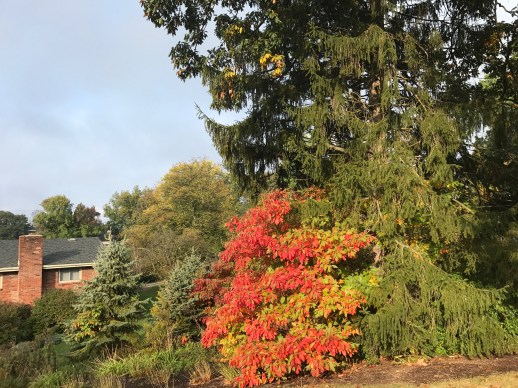
As I walk my two energetic dogs near our local school and park today, I noticed that the leaves are “holding on for dear life,” most have not fallen nor started their usual color transformations. This is Western Pennsylvania in mid-October. What is happening? What forces are disrupting our cycle of the seasons… from the normal spring re-awakening of our senses, to the heat and glory of summer, to the falling temperatures and brilliance of color in the autumn, just before everything shuts down for winter? Global warming? (Well, it was a balmy 75-degrees today!) Or, nature’s way of holding on to the past… and living every moment to its fullest?
Well, one thing is for sure. You can smell that change is in the air… and in our lives as we take on the great trek to retirement – a process, like the unpredictable and evolving seasons, which can self-empower and lead us to creative ways to self-reinvent and thrive.

If you stop to think about it, full-time retirement embraces many of the analogies we use for our changing seasons. If those early years of education, staff orientation and induction, job training, in-service programs, conferences, etc. stand for rapid growth and the budding months of spring, perhaps summer symbolizes our career accomplishments and professional journey towards harvesting our special skills, experiences, and interests in early fall. One may accurately depict the onset of a gloomy late autumn and stormy winter weather as our release from the employment routine, the sudden free-fall of retirement, retooling and coping with the emotional turmoil of momentous life-style changes, possibly even a short hibernation (rest, reflection, and a less frenzied schedule of activities), but eventually planting the seeds of new goals, habits, perspectives, and expectations… which leads us back to spring – the season of renewed hopes, revitalized rebirths, and new beginnings.
“Retirement is the last opportunity for individuals to reinvent themselves, let go of the past, and find peace and happiness within.” – Ernie J. Zelinski
Research suggests that, as wonderful as the retirement “voyage” is for some, many do not find it “clear sailing!” Dr. Robert P. Delamontagne wrote in his book Retiring Mind (Fairview Imprints, 2010), “50% of retirees will suffer some form of acute emotional distress. This is potentially a very large problem given the fact that 10,000 people are becoming eligible for Social Security every day for the next 20 years in the US alone.”
In the event your job was cut or downsized, or you were forced into “early retirement,” you may even be in the partial grips of post-traumatic stress disorder, or experiencing some of the stages of grief and loss (http://www.webmd.com/mental-health/mental-health-coping-with-grief):
 Denial
- Bargaining
- Depression
- Anger
- Acceptance
At the very least, the passage to post-employment boils down to coping with a few of these very common emotional “bumps” along the way:
- Loss of professional identity
- Loss of goals, daily routine, and purposeful activity
- Loss of social network and interaction with co-workers
“The greater part of our happiness or misery depends on our dispositions, and not our circumstances.” – Martha Washington
- Prior to retiring, prepare for “life after work.” Cultivate interests outside the job, lead a healthier life-style, revitalize family relationships, and nurture friendships.
- Stay engaged! Understand many “high achievers” never fully retire.
- Take a break and self-reflect on trying new and fulfilling quests of work/life balance.
- Find purposeful activities to do during your retirement.
- Focusing on your talents and abilities, and set some new goals regarding how you want to spend your free time.
- Because your brain’s reward center likes variety, give yourself an assortment of new or unique experiences.
- Treat your first year of retirement as if you are interning.
- Reprogram yourself to be less addicted to achievement (or linking your self-identity or self-worth to a job).
- Limit your television viewing time (less than two hours a day!)
- Plan some regular physical activity.
- Revisit your creative roots and enjoy personal moments of “making music” – singing, dancing, playing instruments, composing, doing drama, writing, painting, sewing, woodworking, etc. – in short, CREATING SELF-EXPRESSION!
“If you were planning to spend the rest of your life in another country, you would want to learn as much about it as possible. You would read books about the climate, people, history, and architecture. You would talk to people who had lived there. You might even learn a bit of its language. Old age is like another country. You’ll enjoy it more if you have prepared yourself before you go.” – F. Skinner and Margaret Vaughn in TIPS Retirement for Music Educators, MENC 1989
If you ask the average retired music teacher, “Let’s get together for lunch. When are you free?” you’ll probably witness the retiree whipping out his smartphone to check his calendar app. Retirement does mean freedom, but it often also induces a very busy schedule of new commitments, perhaps even related “encore career pursuits” involving music and education such as student teacher supervision, private tutoring, coaching sectionals or small ensembles, assisting local music industry in organizing music tours/trips or delivering rental or repaired instruments, babysitting grand children or others, care-taking for an elderly loved one, etc.
“There is no pleasure in having nothing to do; the fun is having lots to do and not doing it.” – John W. Raper
A lot of our retired members enjoy part-time positions in guest conducting, teaching or presenting at the college level, providing private lessons, serving in state MEAs or the National Association for Music Education (NAfME), or other consultant services like the special interest categories on the PMEA State Retired Resource Registry Index. Many of these jobs can be started before retirement, just expanded to fit your new-found flexibility of fewer conflicts or time constraints.
The best advice I can give to newbie retirees is to learn from your peers and the successes of others who have come before you. Read everything you can get your hands on from these online “gurus” of retirement:
- Dave Bernard http://lovebeingretired.com/
- Ken Dychtwald and others at AgeWave http://agewave.com/
- Dave Hughes http://retirefabulously.com/
- Kathy Merlino https://kathysretirementblog.com/
- Jean Potuchek https://stepintofuture.wordpress.com/
- Barbara Torris http://www.retireinstyleblog.com/
- Ernie Zelinski http://www.retirement-cafe.com/
Check out other articles at this blog (click on “Retirement Resources” at the right), and peruse my two blog-posts at Edutopia:
- http://www.edutopia.org/discussion/advice-music-teacher-retirees-soon-be-retirees
- http://www.edutopia.org/discussion/surviving-and-reveling-retirement
Finally, if you are a NAfME member and want to see a little of Atlantic City next spring, come to my session, “Living the Dream – Survival and Celebration of Retirement” at the 55th Biennial Eastern Division Conference April 5-8, 2017 (I believe I am presenting on Thursday.) Join us, retirees! It will be FUN!
PKF
© 2016 Paul K. Fox

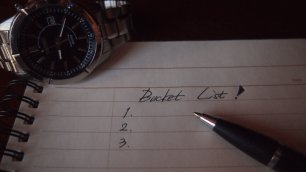 Nope. I cannot accept these archaic definitions! My translation for what it means to face this life-style shift of changing perspectives and expectations, “Crossing the Rubicon” into retirement, is finding alternative but purposeful pursuits, fulfilling “bucket lists,” and reshaping fresh new goals leading to creative ways to self-reinvent and thrive.
 five stages of retirement that he predicts most people go through after leaving their full-time job.
  “The Five Top Stressors in Retirement and How to Cope” by Nanci Hellmich (2014) at USA TODAY

 y engaged man. One example, he transformed his backyard by moving a truckload of large rocks around his garden when he was 80 years old. I attended his 100th birthday party where he played an hour-plus recital with three generations of the Reichenfelds. He always told prospective teachers, “Surround yourself with young people and you’ll never grow old.” The comment I wrote in memory of Eugene Reichenfeld in the online guest book (legacy.com) came from the heart: “With our mentor’s passing, orchestra music and education in our area will never be the same. However, thankfully, Maestro Reichenfeld’s legacy is that he ‘passed on the baton’ and inspired so many future teachers to follow in his footsteps… sharing his love of and skill in strings for eternity! The music lives on!”


 Take a deep breath, find an easy chair, ignore your cell phone’s texts/calls, and plunge into her full website:
  As a music educator, this last title peaked my interest. We urge every retiree to revisit their creativity roots and seek renewed opportunities to enjoy music as a lifelong pursuit. (We have already posted reprints of several of my articles on this subject from PMEA News, the state journal of the Pennsylvania Music Educators Association, including
  Generally, I am not much in favor of perusing commercial websites on planning for retirement, especially those by investment counselors, but Ernie Zelinski (author of bestsellers like How to Retire Happy, Wild, and Free) sent me this link:
  The final entry at goldretiree.com, AARP is worth mentioning here
  p Guides,”

 Updates to my presentation “Surviving and Reveling in Retirement” for the PMEA Summer 2016 Conference are posted on the PMEA retired members website:

 I submit there are basically three ways to learn something new by reading about it. One is the tutorial format, a.k.a. an instrument of “programmed learning.” Another approach is the comprehensive reference manual or user guide. Finally, many people prefer a narrative story, perhaps a fictitious account that features characters exploring and revealing insights on the topic you are studying.
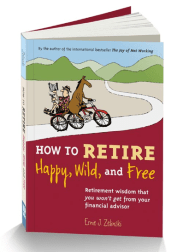 If you were looking for the reference manual, I recommend Ernie Zelinski’s How to Retire Happy, Wild, and Free (2016). The chapters are laid out by general concepts you need to understand. However, as in many user guides, you could turn to almost any page in the volume, jump around (in any order) to specific areas on which to focus, e.g. tips on travel (page 165) to health/wellness (page 109), and not lose the overall meaning.
 The contents of It’s Never Too Late to Begin Again are divided into a weekly course of study:
 The fictitious “Larry and Janice Sparks” share anecdotes of their experiences, modeling potential opportunities of retirees enhancing their relationships, stimulating their minds, revitalizing their bodies, growing spiritually… basically rekindling passion in every area of their lives.
 You will notice that all three texts cover many of the same subjects, but are vastly different in methodology, style/design, and overall structure.
 at the Seven Springs Mountain Resort in Pennsylvania on July 11-13, 2016.
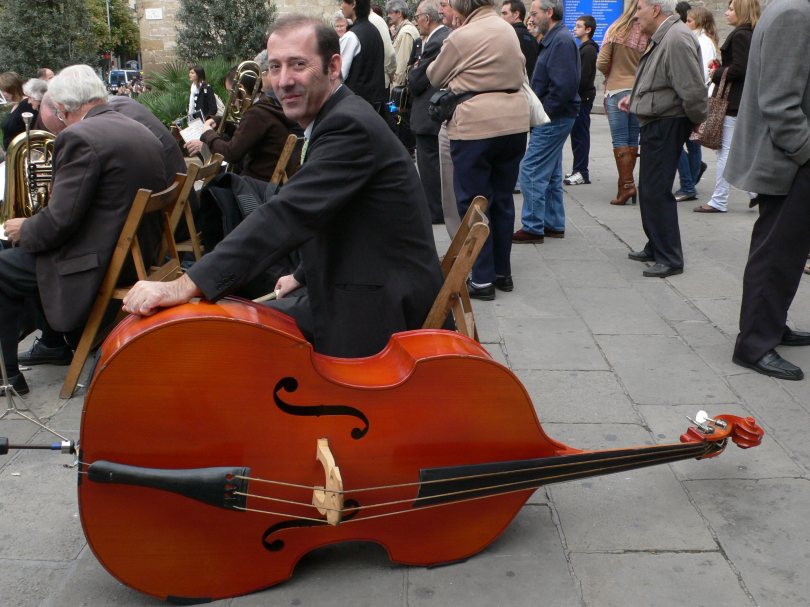
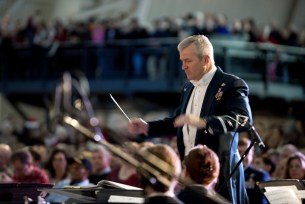 Do music teachers ever retire? Not really!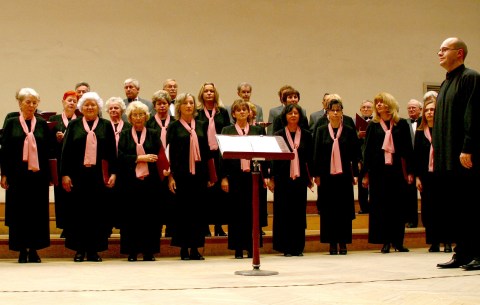

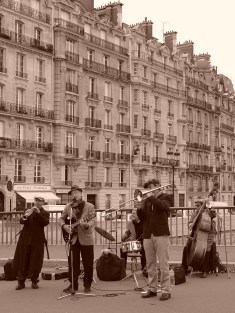 Practice and go out on a few gigs with your own jazz, rock, Barbershop, or chamber music group
 education? Of course, the best part of retirement is that you get to pick what you want to do every day for the rest of your life. So go ahead and say yes to those extra conducting gigs, writing/publishing your own “Mr. Holland’s Opus,” working with the church or community choir, accompanying a handful recitals, volunteering to help your favorite local marching band or civic theater, serving as an adjudicator for a music festival, supervising student teachers or teaching college music education methods classes, etc.
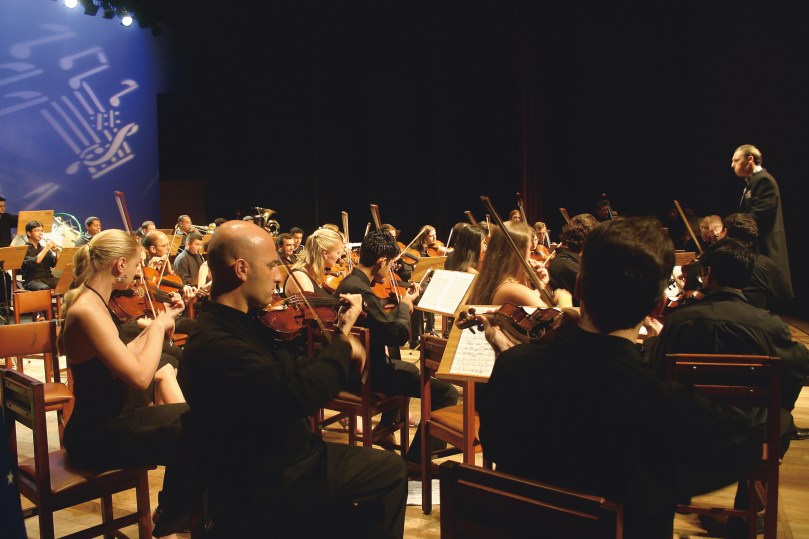 As long as I am alive, I will continue to inspire in others that music makes a difference!
 Reprinted from the Spring 2016 issue of PMEA News, the state journal of the Pennsylvania Music Educators Association.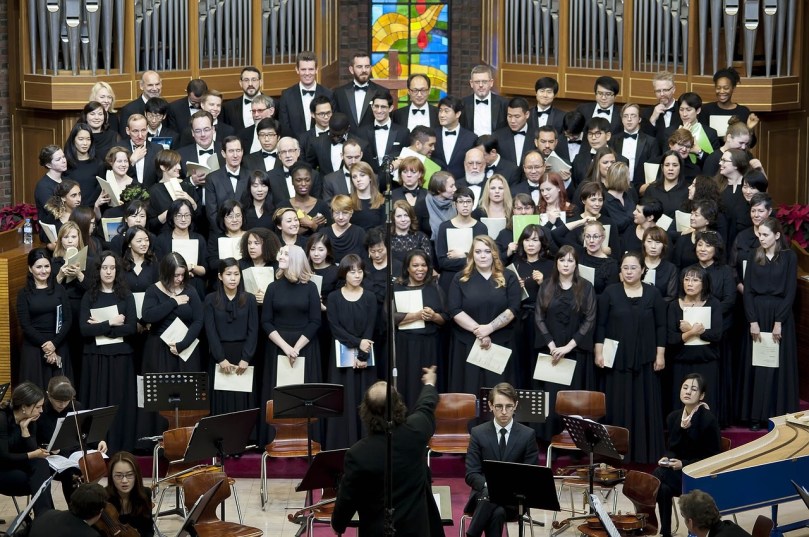
 If you’ve ever been in a choir, you’ve probably been told that the proper way to sing is from your belly.
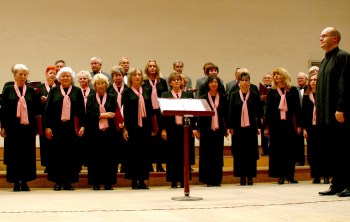
 As the popularity of group singing grows, science has been hard at work trying to explain why it has such a calming yet energizing effect on people. What researchers are beginning to discover is that singing is like an infusion of the perfect tranquilizer, the kind that both soothes your nerves and elevates your spirits.
 Regular exercising of the vocal cords can even prolong life, according to research done by leading vocal coach and singer Helen Astrid, from The Helen Astrid Singing Academy in London. “It’s a great way to keep in shape because you are exercising your lungs and heart.”
 Colette Hiller, director of Sing The Nation, is convinced that singing builds social confidence by helping individuals connect to each other, and to their environment. “Think of a football stadium with everyone singing,” she says. “There’s an excitement, you feel part of it, singing bonds people and always has done. There’s a ‘goosebumpy’ feeling of connection.”
  Studies have linked singing with a lower heart rate, decreased blood pressure, and reduced stress, according to Patricia Preston-Roberts, a board-certified music therapist in New York City. She uses song to help patients who suffer from a variety of psychological and physiological conditions.
 The seniors involved in the chorale (as well as seniors involved in two separate arts groups involving writing and painting) showed significant health improvements compared to those in the control groups. Specifically, the arts groups reported an average of:
 Okay, besides that crack about “elderly” in that last article (we’re not “old,” yet!), the evidence seems conclusive! For our general health, feelings of well-being, improved social connections, and “just having fun,” we should all be motivated TODAY to go out and find a community choir and start singing regularly in a group. Enough said?
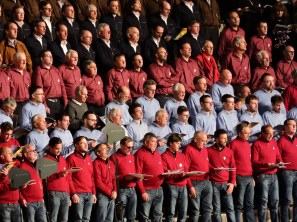 For both the instrumental and choral groups, we are most thankful to the contributions of our “dream team” of PMEA researchers and editors (as of April 13, 2016): Jan Burkett, Craig Cannon, Jo Cauffman, Deborah Confredo, Susan Dieffenbach, Timothy Ellison, Paul Fox, Joshua Gibson, Rosemary Haber, Estelle Hartranft, Betty Hintenlang, Ada Jean Hoffman, Thomas Kittinger, Chuck Neidhardt, Sarah Riggenbach, Ron Rometo, Joanne Rutkowski, Marie Weber, Lee Wesner, and Terri Winger-Wittreich. We are especially grateful to the efforts of Director of Member Engagement Joshua Gibson who located the counties and e-mail addresses in the choir directory.

 On the subject of music teachers exiting the job market, one area we have not ventured into with these blogs on “retirement resources” is the most difficult to handle – having to face a forced resignation or involuntary leave.
 Depression
 Evaluate your response to stress since you were summarily eliminated from your district. It is worth reviewing the definition of PTSD and see if it should be applied to your behavior and the emotional upheaval you are feeling (from the online blog of the Dr. Oz Show at
  It’s time to “dust off your chops” (join a community band/orchestra)


 Take up a new hobby. Now that you have the time, go exploring… and the skies the limit! But don’t forget, anything worth doing “engages the mind!”
 If you have not read a previous blog of mine, “Advice from Music Teacher Retirees to Soon-To-Be Retirees,” check out the reprinted version on the Edutopia website:
  Just like a rehearsal – start off with a mind warm-up! Go to the website
  Leo the Tech Guy program and site at
  Finally, hobbyist websites are a wonderful resource. Examples: photography
  health is all about nurturing our skills/talents, exploring new pathways, facing new challenges, engaging our minds, and enjoying the “good life” after full-time employment. Nothing is stopping you from starting a new career, learning a new language, writing a book (or reading everything you always wanted to at the library), learning (better) how to act/dance/sing/play a new instrument, taking a trip to a new country (or city in the US) or journey to your backyard with a camera, and modeling the essence of the Robert Frost message, “I took the road less traveled by…. and, that has made all the difference.”
 I write these blogs to “get things off my chest.” Fair warning! Unlike other articles on this site, I may project a little negative attitude in this piece, griping in response to what I consider is unfair public opinion.
 While on this rant, I would also like to complain that I am tired of hearing how teachers only work nine months a year. Someone’s math is really bad when you look at the calendar. Most schools in Pennsylvania start by the fourth week in August for teacher in-service days (definitely before Labor Day) and end by the second week in June, depending on how many snow days or vacation breaks are scheduled in the school year. Closer to ten months?
 There will always be criticism and negative comments about the value of our teachers. Part of this is due to the fact we have all been there. Everyone knows a “bad teacher” who modeled laziness, incompetency, or neglect of duty. You may have had one of these “rotten apples,” or perhaps were forced to endure an educator or coach who demonstrated “abuse of power.”
 “practice” our job, applying different techniques to each unique situation, focusing on the needs of our “charges,” constantly re-assessing ourselves, retraining and updating our skills, and solving problems.
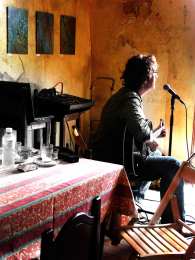 No one goes into education to make a lot of money. With the same level of post-graduate work, nearly every other entry-level job or even being self-employed will fetch much more compensation.This is why it has been hard finding math and science teachers in some localities. They would have to accept major pay-cuts declining jobs in engineering, chemistry, computer science, and the technology industry as opposed to becoming a first-year teacher.
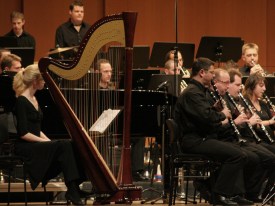 At least, we are doing something we love, and we can take “the joy of making music” to the grave!
 great potential and one for whom you have spent much time and effort helping. It was always a crushing blow to hear “Johnny wants to give up playing,” “he is bored,” or “now we will try something new like (ahem) intramural tiddly-winks.” Parents/guardians conceded that it was hard to “make him practice.” My initial response (if I have the guts to say it, but by then, it was usually too late): “Who is in charge here? Do you make your kids brush their teeth or do their math homework?”
 I was relieved that, during a time of state and local budget crunches (when many school districts were not filling retired staff positions), my administration and school directors were true to their mission statement: “Developing lifelong learners and responsible citizens for a global society is the mission of the Upper St. Clair School District, served by a responsive and innovative staff who in partnership with the community provides learning experiences that nurture the uniqueness of each child and promote happiness and success.” When I retired, they hired excellent replacements for all of my former positions: Secondary Orchestra/String Teacher, Grades 1-12 Performing Arts Curriculum Leader, and Spring Musical/Fall Play Director/Producer.
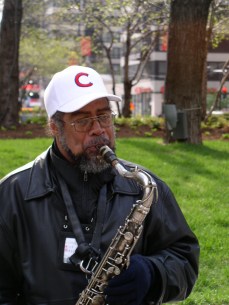 Now we can “catch-up” on travel, pets, hobbies, volunteer work, gardening, home improvements, and revisiting our “creativity roots” which got us started in the first place towards a career in music and education.
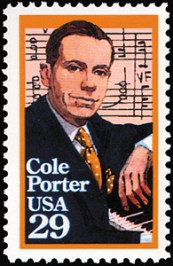 There is nothing worse than feeling that your father does not approve of who you are or what you want to do with the rest of your life. Of course, I am not alone in having this kind of parental disapproval. American composer and songwriter Cole Porter (who wrote Anything Goes) experienced a similar problem. At the insistence of his rich maternal grandfather for whom he was named after, he entered Yale University and then the Harvard Law School to become a lawyer. However, his true love was music. While at Yale (and secretively from his family), he wrote 300 songs and the words and music to six full-length student shows. Eventually he switched to studying harmony and counterpoint with the Harvard music faculty… the rest is history!
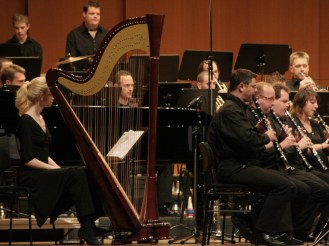 Why choose education? Well, the status of a teacher in some cultures is at the pinnacle of the society’s most cherished and respected. In fact, in some Asian countries, tradition dictates that the eldest rules the entire family, and is often considered a master teacher. The career of a teacher is on the top of the spectrum. The merchant is at the bottom. This is exactly the opposite for today’s Western countries… a worship of wealth, stockbrokers, millionaires, “things,” etc. (Of course, it should be mentioned that, using this analogy, Asian musicians are also at the bottom… considered to be nearly useless in lower socioeconomic agrarian societies.)

 The Romans giving tribute to the god Janus, for whom the month of January is named.
 my top-ten recommendations to help you “grow” and enjoy a glorious 2016!
 grandchildren (your own or adopted ones), enjoy them! Not only is your generous super-competent babysitting services providing ever-so-essential care-taking of your love-ones, “playing with the kids” is wonderful for your own mood and mental health. “Keep around young people and you will stay forever young!” However, invest your time wisely. You deserve a life of your own and unstructured time off. It is easy to be taken advantage of, so don’t let this childcare schedule dominate everything you do in your retirement.
 The single most satisfying pastime for all of us is to be or do something creative. With few exceptions, every day you need to find venue(s) to express yourself. This could mean pulling out your instrument or singing, with a renewed focus on exploring your musicianship, interpretation, composition, or improvisational skills. Creating new musical works, like adding to your own “Mr. Holland’s Opus,” can “make your day!” Other projects in creativity could involve conducting, acting, dancing, creating two or three-dimensional artworks, sewing, gardening, and my personal favorite, writing. Whether it is fiction or nonfiction, articles, books, poems, letters-to-editors – the activity is very personal – and possibly profitable? Try to assemble in words your long-practiced insights and experiences acquired working as a teacher. I am particularly inspired by the prospects of creating and posting blogs on just about any subject that motivates or moves me. Check out the opportunities that WordPress.com can give you. (I am not too shy to refer you to my own website, showing off my articles and “pet peeves” on the subjects of creativity in education, marketing professionalism, and retirement resources:
  Every week for the rest of your life, spend some time “giving back!” Volunteer or share your hobbies, interests, or expertise helping out wherever it is most needed… in local churches, hospitals, charitable organizations, schools, pet sanctuaries, or senior care centers. I never understood why some enterprising entrepreneur does not buy a large piece of land to build a combined animal shelter, childcare center, and assisted-living facility, connected with easy access to each other… mutually beneficial opportunities for needy children, lonely seniors, and rescued pets for interaction with each other! That’s a “win-win-win!”
 Stay involved in PMEA. Help new or recently transferred music teachers by joining the PMEA Retiree Resource Registry, the free (but priceless!) adviser/ consultant service

 paulfox.blog