Wander with Whiskers

How to Become a Digital Nomad With a Pet in Tow

Written by Ed Carter – Featured “black cat” photo by Ruca Souza (Pexels)

Editor’s Note: We welcome yet another blog by guest author Ed Carter on a subject near and dear to my heart. It was not until I retired before I discovered the joy, responsibilities (and challenges) of pet ownership. I have two little doggies (one bichon frise named “Gracie” and a yorkie-poo named “Brewster”) who keep me engaged and occupied throughout the day. “Daddy, I’m hungry.” “Can I have a bone?” “It’s time to go out…” Those frequent walks are good for me and part of this retiree’s long term wellness plan! But, pets may also restrict the flexibility of your schedule and limit travel. You cannot necessarily “drop everything” at the last minute and take a cruise or long car trip. (I’m not putting my “kids” in a pet jail, aka a kennel!) Planning is essential. Ed shares new perspectives on merging the demands of your digital job (encore career, business or retirement pursuit) with the needs of your sometimes fussy furry family members. PKF

Deciding to pack up and chase the digital nomad dream isn’t as easy when you have a pet depending on you. But it’s not impossible. You’ll just need a different kind of strategy—one that balances your professional goals with your animal companion’s comfort and safety. If you’re ready to take your work on the road without leaving your dog, cat, or other furry friend behind, here’s how to make it happen and thrive.

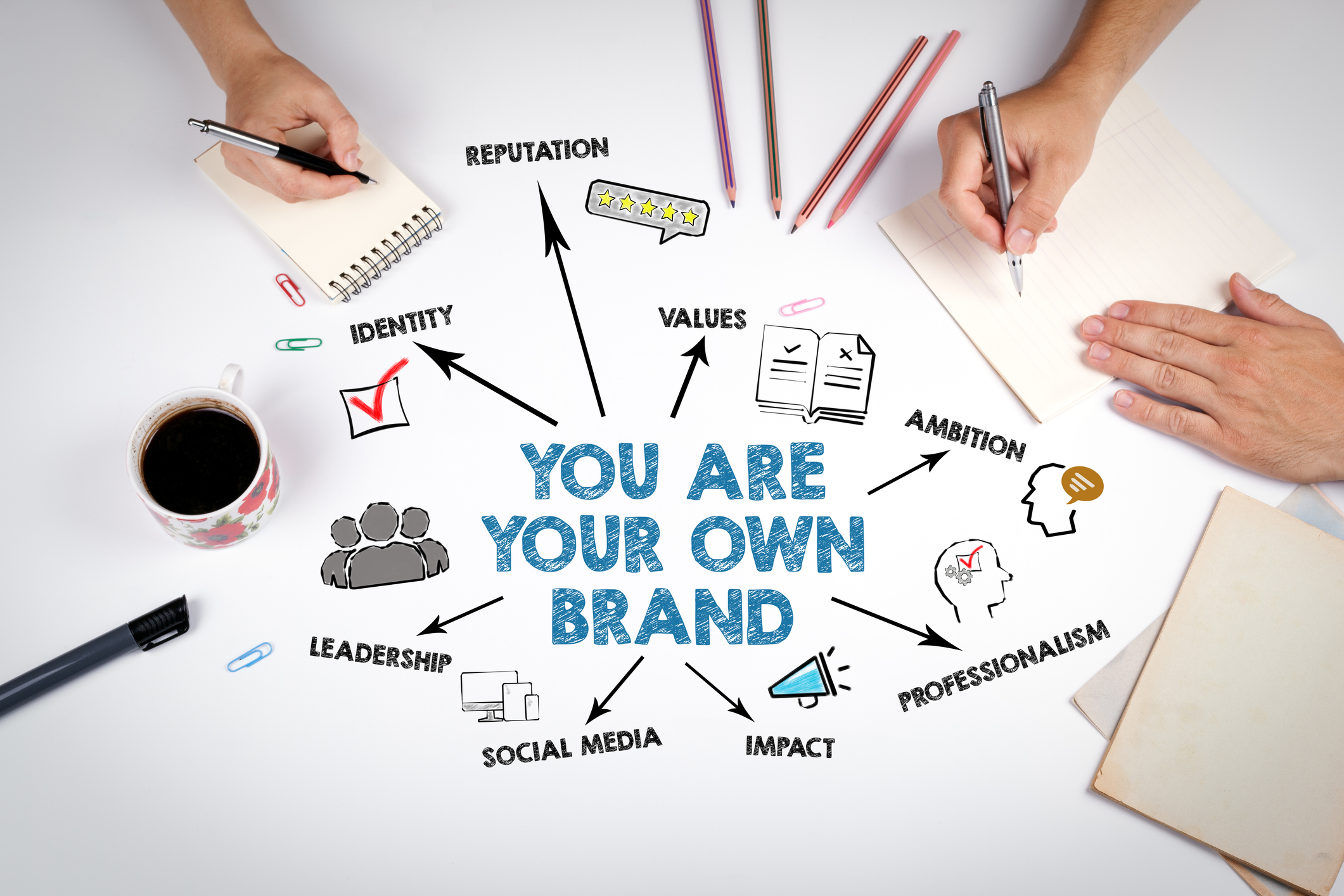
You Are the Brand—Market Like It

You’ve probably heard this before, but now it’s even more true: your personal brand matters. When your lifestyle is non-traditional, clients and employers want reassurance that you’re still professional and reliable. Build an online presence that highlights your experience, your skills, and the unique flavor you bring to the table. Whether it’s a clean portfolio website, a LinkedIn page with testimonials, or social proof via Twitter threads or TikToks, you’ll want your digital footprint to reflect someone who gets the job done—dog barking in the background or not.

How Education Can Reboot Your Career Path

If you’re feeling stuck in your current role or ready to transition into something more dynamic, going back to school can be the smartest move you make. For instance, by exploring a Bachelor of Science in Computer Science, you’ll open the door to new opportunities in tech, where the demand for problem-solvers and creative thinkers never slows down. Also, learning online means you’ll have the flexibility to pursue your degree at your own pace, so you can continue working while you build your future.

Pick a Job That Gives You Breathing Room

Not all remote jobs are built equally, especially when you’ve got a pup tugging at your sleeve or a cat trying to walk across your laptop. Jobs with flexible hours or asynchronous communication are a goldmine here. Think virtual assistance, freelance writing, UI/UX design, social media management, or coding—anything that lets you pause when you need to and doesn’t expect you to be online at 9:00 a.m. sharp in someone else’s time zone. It’s also worth considering pet-focused work like blogging about your travels together or offering online pet training consultations if you’ve got the skillset.

Stretching the Budget Is an Art

Moving around with a pet in tow doesn’t just cost more—it requires creative budgeting. Flights often come with extra fees for animals, and not every country has affordable vet care. To save, consider slow travel, staying in each spot for at least a month to cut down on housing costs. Sign up for loyalty programs, travel with collapsible gear to avoid bulky luggage fees, and always build an emergency buffer for unexpected pet expenses.

Downtime for You, Uptime for Them

You’ve got Zoom calls and deadlines, but your pet doesn’t care. Their boredom can quickly become your stress. To keep them occupied, build routines they can count on—morning walks, midday playtime, and evening snuggles. Fun pet toys, lick mats, and interactive feeders are your new best friends. If you’re in a location for a while, look into local pet daycare options or even trusted pet-sitters who can help when your calendar’s packed.

Communication Is Still the Currency

When your lifestyle is flexible, your communication needs to be rock solid. Clients shouldn’t have to guess if you’re off-grid or just ignoring their messages. Use tools like Slack, Notion, or Trello to keep everyone aligned. Set expectations upfront about your availability, stick to response time windows, and always double-check your time zone math before scheduling meetings. Transparency builds trust, and it’s the one thing you can’t afford to fumble when you’re juggling time zones, Wi-Fi hiccups, and a restless Labrador.

Get Paid Without the Headache

No matter where you’re working from, you still need to get paid like a pro. Skip the international wire transfer chaos and set yourself up with services like Wise, Payoneer, or Deel that cater to global freelancers. These platforms help cut down on currency conversion fees, and many now offer debit cards linked to your earnings. Just make sure you’re still handling taxes back home—yes, even if you’re on a beach in Bali.

Plug Into the Right Tools

Your tech stack can make or break your setup, especially when your “office” might be a hammock or a hostel lounge. A reliable VPN keeps your data secure on public Wi-Fi, while apps like Clockify help you track billable hours. Backup power banks and a universal adapter are non-negotiables, and a noise-canceling headset can turn a chaotic café into a client-ready zone. For pet tracking, consider a GPS collar if your dog has wanderlust, or a camera you can check from your phone to ease any separation anxiety.

Taking your life and career on the road with a pet isn’t going to be flawless. There’ll be missed trains, barking during meetings, and that one time your cat jumped on your keyboard mid-presentation. But with some intentional planning, the right tools, and a healthy dose of flexibility, the rewards far outweigh the bumps. You’re not just choosing freedom for yourself—you’re creating a life where your companion gets to come along for the adventure.

Check out other articles by Guest Author Ed Carter at this blog site:

© 2025 by Paul K. Fox and Ed Carter

Rising Educators Conference

June 28-July 1, 2024
Marriott Marquis – Washington D.C

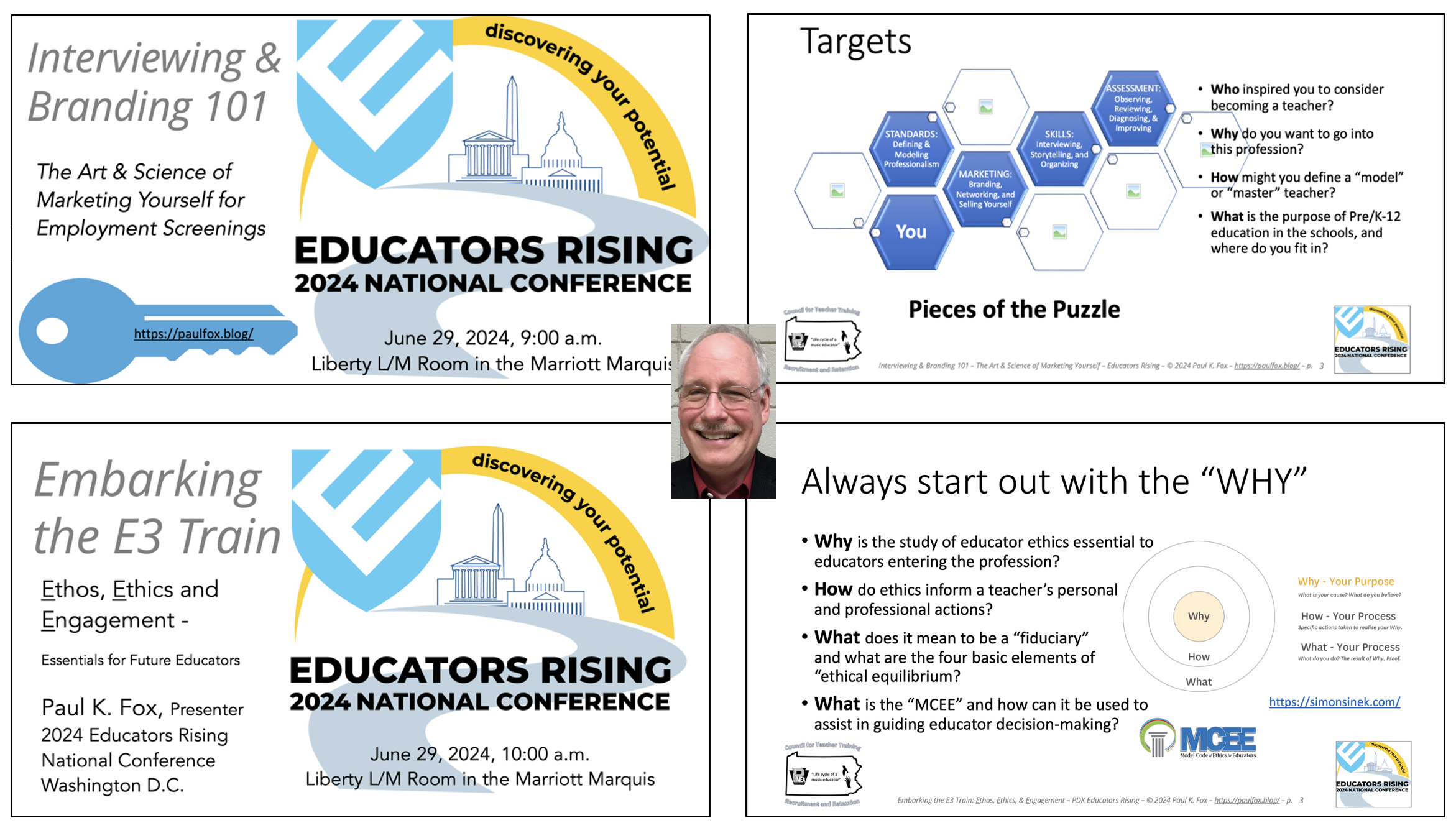
It is my pleasure to be invited to present two sessions at the Educators Rising Conference on June 29, 2024 in the Liberty L/M Room of the Marriott Marquis in Washington D.C.

This is a very unique venue, something in which I encourage other educators and clinicians to consider participating. The event brings together prospective future educators, middle to high school and college education majors, with veteran practitioners and experienced educators in the profession. This is from their website:

Each year, Educators Rising hosts a national conference to convene our network of rising educators and teacher leaders. It’s a unique opportunity for students and their teacher leaders to:

  • Connect and learn from each other through more than 40 breakout sessions;
  • Network with other members from across the country;
  • Compete for national titles in competitive events designed to allow students to develop and showcase their teaching skills; and
  • Be inspired by keynote presentations from national education leaders

Want to learn more about what you can look forward to for 2024? Check out the 2023 National Conference Program Book, 2023’s Conference Daily, and our conference highlight video to see what current and future educators experienced last year.

An outline of the conference schedule may be viewed here. Additional information may be found at the conference website here. You can still register for the event.

My two offerings will not come as a surprise to anyone who has been following my work at this site:

GETTING A JOB

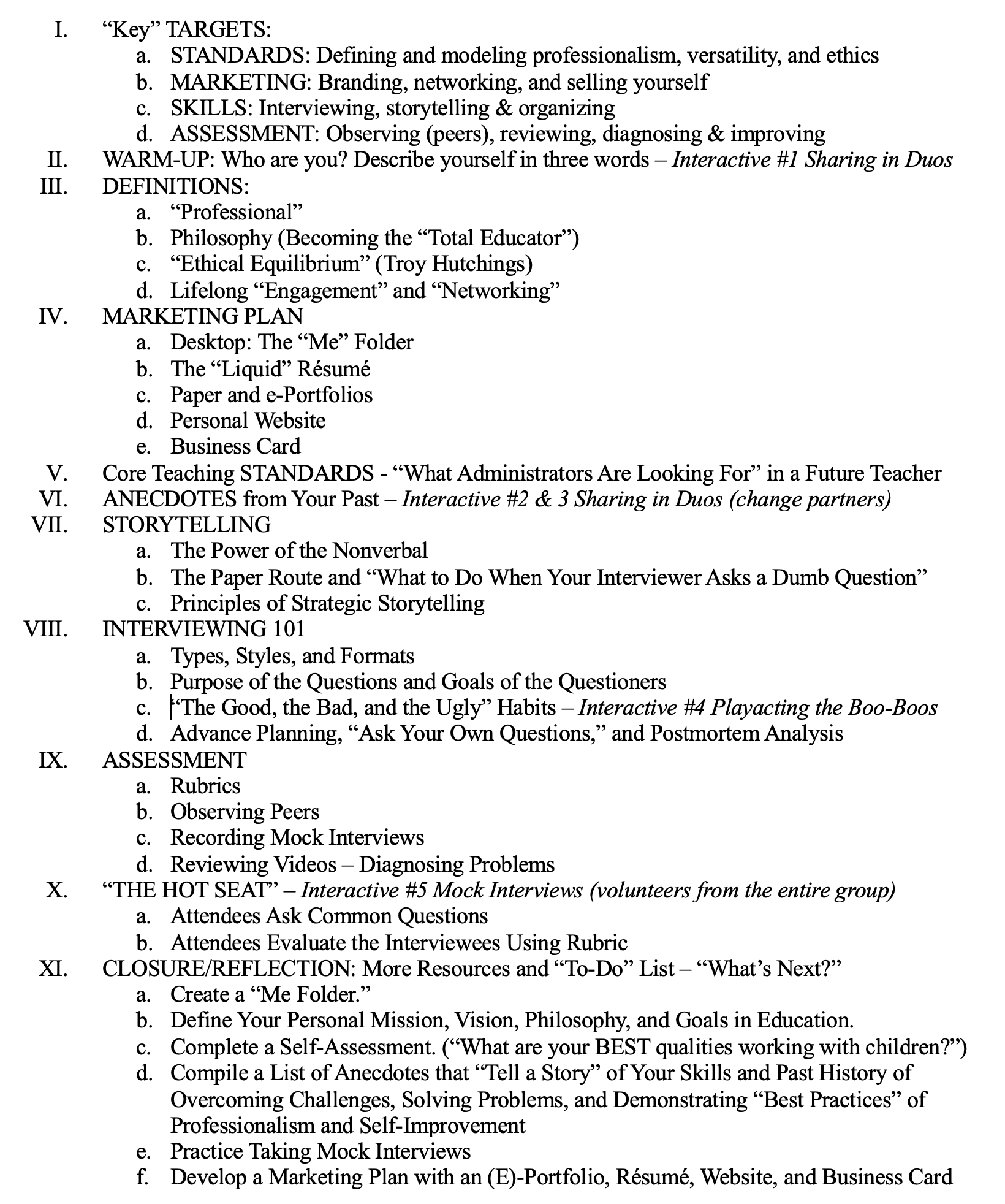
My first workshop, “Interviewing & Branding 101” (Saturday, June 29 at 9 a.m.) will provide an overview of important definitions (e.g., “professional,” “total educator,” etc.) and dive into interactive exercises to exploring the basic building blocks of personal self-assessment, building “a brand” and “marketing plan” for the job search, practicing networking and storytelling skills, and analyzing and “playacting” better interviewing techniques. Although I will need to shorten the presentation to fit in the 45-minute time block allotted and provide more focus on the interactive partner and small group exercises, this was the initial outline that was accepted by the Rising Educators Conference Session Selection Committee:

My favorite candy, Hershey Symphony bars, will be distribute as incentives for the more “brave” attendees who volunteer themselves to serve as good (as well as bad) models of the mock interviews.

In conclusion, this is “the session” I wish someone would have provided me before I went out into the labor market! We will have some fun connecting with each other, learning something new about our core values, goals, and strengths – especially those areas we want to broadcast to future employers – building a marketing plan of the essentials to promote ourselves in future employment screenings, and breaking-out into “duos” and small groups to “practice-practice-practice!” The branding and interviewing exercises and suggestions may be applied to finding any job, but will definitely be a big help for landing “the one” teaching position you always wanted.

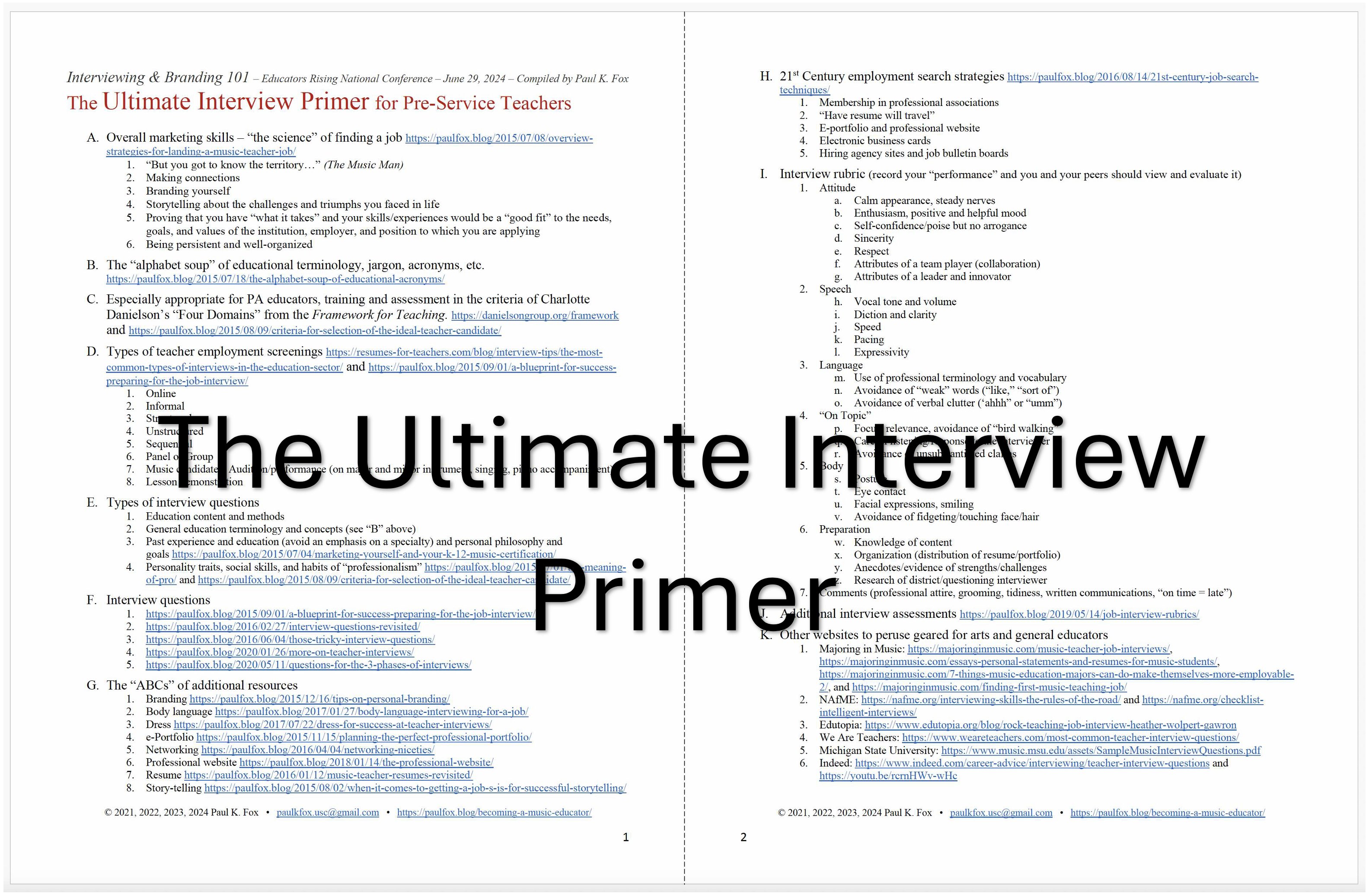
For the participants who attend my session (facsimile of slides available after June 28), here are links to the printed handouts and other supplemental materials:

EDUCATOR ETHICS

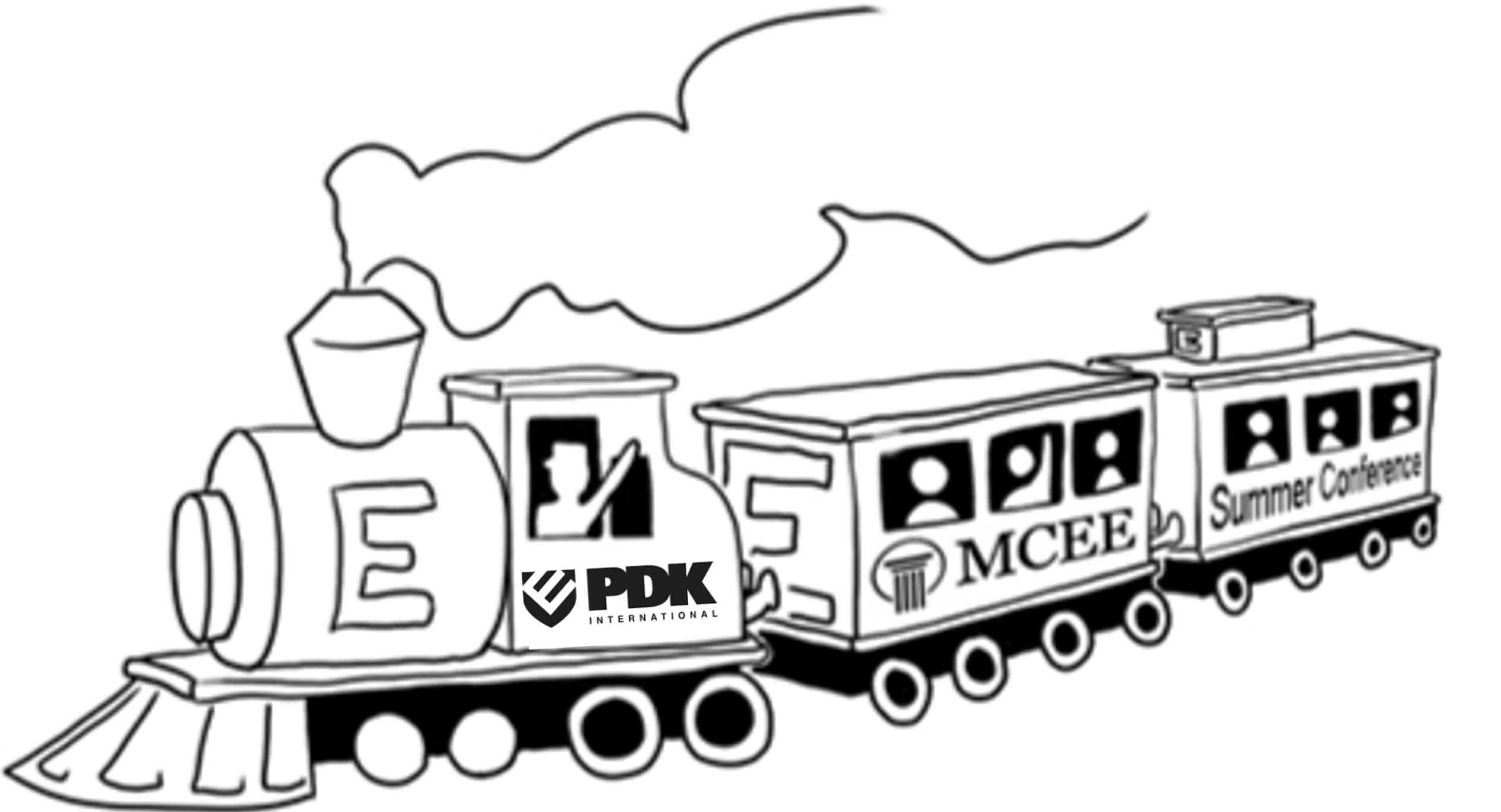
My second workshop (offered one hour later), “Embarking the E3 Train – Ethos, Ethics, & Engagement,” brings to fruition my passion for the preparation of future educators to embrace the essential ethical standards of our profession. Again, back in 1977, no college methods course nor student teaching prep covered the meaning behind such terms as “fiduciary,” “ethical equilibrium,” “moral professionalism,” etc. To be fair to my college professors, Pennsylvania had not yet written its Code of Professional Practice and Conduct which now “governs” the educators in our Commonwealth, nor had the National Association of State Directors of Teacher Education and Certification facilitated the creation of the amazing document called The Model Code of Ethics for Educators. It was not until 2017 (four years after I retired) when I was asked to research and present my first educator ethics session for PMEA District 7 did I “discover” the need for interactive, open, peer discussion of these core questions:

  • How do ethics inform a teacher’s personal and professional actions?
  • Why is the study of educator ethics essential for all educators entering the profession?
  • What does it mean to be a “fiduciary” and “moral exemplar” in the community?
  • What is the difference between a “Code of Conduct” and a “Code of Ethics?” Is one more important than the other?
  • How do you avoid any action and/or appearance of impropriety, and prevent the “slippery slope” of inappropriate student-teacher relationships, and other ethical problems?

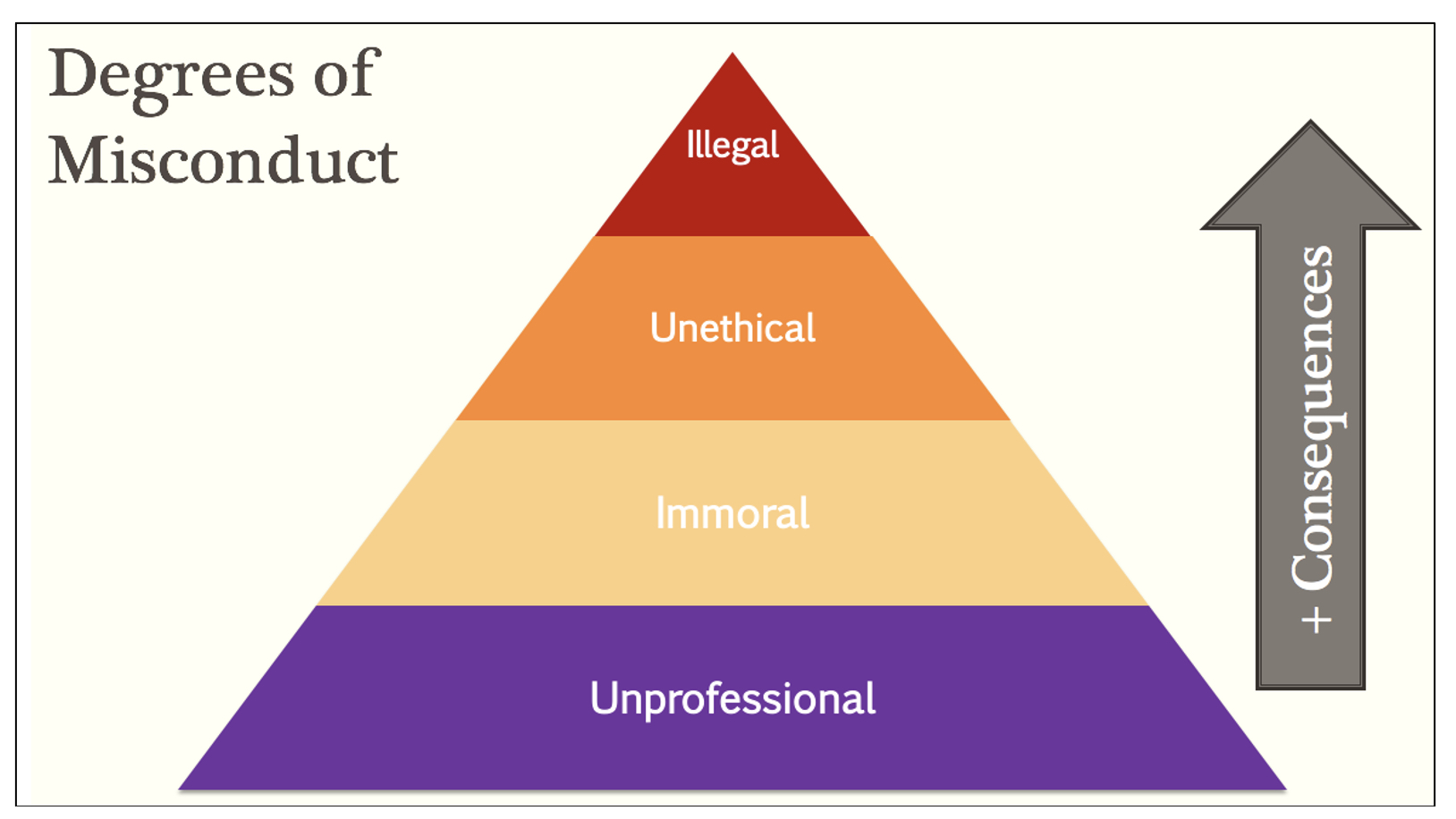
During this presentation on Saturday, June 29 at 10 a.m., we will discuss the thousands of daily rapid-fire decisions (many snap judgments) of teachers and evaluate the potential effects of any who “stray” – “levels of misconduct + consequences.” Furthermore, we will unpack and review a portion of the five principles, 18 sections, and 86 standards in the Model Code of Ethics for Educators. Fostering open and interactive discussion, we will empanel a mock “ethics jury” (volunteers from the attendees) to assess fictitious “fact scenarios” of potential ethical issues, hazardous choices or vulnerabilities, and even tackle a few “conundrums” or problems in educator decision-making. Our jurors will receive our thanks and an Educators Rising Mock Jury t-shirt for their “willingness to serve as guinea-pigs.”

Admittedly, some of our past material on ethics was “for mature audiences only” resulting in the need for adjustments to be made to some of the hypothetical case studies (serious infractions) for group analysis. However, the majority of my work on educator ethics is available for review on this site (in reverse chronological order) by clicking here.

Here are additional case studies for group discussions of ethical dilemmas.

For the participants who attend my Washington D.C. session on June 29, 2024, a facsimile of “Embarking the E3 Train” slides are available. (CLICK HERE.)

PKF

© 2024 Paul K. Fox

Bookends – Part Two

The Life Cycle of a Successful and Happy Music Educator

Joyous Holidays, Season Greetings, and Happy New Year from “The Foxes!” This is a time for reflection and gratitude… and we feel blessed for all the opportunities allowing us to share our insights, gifts and experiences with other music education professionals.

We hope to inspire YOU and literally model the concepts in this blog series. We continue with our discussion first introduced a month ago in Bookends – Part One – The Life Cycle of a Successful and Happy Music Educator, exploring:

  • Stage 3: Inservice/Growing Years (this blog)
  • Stage 4: Veteran/Sustaining Years (future blog)
  • Stage 5: Next Chapter/Living the Dream (future blog)

This article is an abstract from a session presented to Seton Hill University music education student teachers on October 17, 2023. Click on this link to download the slide summary in PDF format.

“I have written a lot of articles in support of these topics… now compiling them for your easy access. Depending on your current status and interests, feel free to peruse the checklists (links) in this series. It is possible a few of the resources contained within these blogs have gone inactive, but I believe enough are there for you to gain the insight, tools and motivation to achieve professional development for life.”

– Paul Fox

Stage 3 – Inservice/Growing Years

[ ] 8. Becoming a Music Educator: For a review of Bookends – Part One, take a step backward and revisit what you have done to “get ready” for your “rookie years.” Take special note on the things-to-do list (“secrets”) as a first-year educator (perhaps completed during your student teaching semester):

  • Subscribe to a discounted NAfME + PMEA first-year membership (If you are a recent college graduate in your first year of teaching, or if you are the spouse of a current or retired NAfME member, contact NAfME at 800-336-3768 or email memberservices@nafme.org) to find out if you qualify for a reduced rate.
  • Hook up to PMEA Mentor or other state’s MEA support program for new teachers.
  • Look into finding an informal advisor in the PMEA Retiree Resource Registry for PA music teachers.
  • Need to fill in a few gaps missing from your college courses in skills and knowledge? Continue your “enrichment” viewing PMEA Webinars and the exhaustive video library in the NAfME Academy.
  • Take advantage of earning professional development credits just for reading an article in the NAfME Music Educators Journal
  • At some point you will be writing/editing curriculum, so research the awesome resource of Model Curriculum Framework (Have to be a PMEA member)
  • Too busy to participate in the PMEA Annual Conference or NAfME national events? Look into going to a PMEA summer conference (usually at a lower-cost!). Check out your own state’s MEA discounts and offers for collegiate members and new teachers!
  • Numerous free and timely blog posts from NAfME Music in a Minuet and here (paulfox.blog).

[ ] 9. The Care & Feeding of Your Principal: Although not covered in any detail during the Seton Hill University presentation, it is recommended that you read in its entirety “The New Teacher’s Guide to Fostering Positive Relations and Good Interactions with School Administrators” offering a wealth of excellent recommendations from these trustworthy sources:

A favorite question I pose to college music ed seniors is, “In what professional associations are you a member and actively involved?” For the price of consuming one fewer Starbucks latte a week, you can open up the Wonderful World of “C’s” – Contacts, Coachings, and other Connections, including research and resources that will benefit your Continuing Education. You can’t afford NOT to join groups like these.

To help “nail down” a few related definitions critical to personal growth and career development in our profession, especially “engagement,” “professionalism,” “collaboration,” and “networking,” please take a little time to travel and consume the following archived blog postings.

[ ] 10. The Meaning of PRO: This is one of the oldest articles at the paulfox.blog site. How about a little soul searching? Are you truly a professional? Do you have the skills, habits, and attitudes of a professional in the field of education?

[ ] 11. Transitioning from Collegiate to Professional (Part II): New teachers have to move away from “book learning” or higher education research and emphasize “practical application,” and at the same time, assess the precise areas needed for immediate (re-)training… everything from new exposure to specialized teaching areas and grade level focus for the job to which you have been assigned, to the enhanced skills of classroom management, student assessment, curriculum writing, class or ensemble warm-up materials, music repertoire and programming, etc.

While we are on the subject, it is important to intentionally seek out mentors or consultants in your early years of becoming an educator. PMEA offers a mentoring program (read all about it here) and PMEA Retired Members are also an excellent resource to “phone a friend” for advice as needed (see their section on the PMEA website here). That leads us to the next most essential “habit” of attending professional conferences… #12 below.

[ ] 12. Getting the Most Out of Music Conferences: Our PMEA Annual Conference sites are cyclical. This article, written on March 5, 2017, showcased that year’s event at the Erie Bayfront Convention Center – coincidentally the same location for this year’s PMEA Annual Conference: April 17-20, 2023. For a sneak peek at the proposed sessions and guest performers, click here.

There are a myriad of conferences offered every year… something for everybody in just about every state. Make plans to go, “recharge your batteries,” and pick up new state-of-the-art ideas, lessons, music, technology, etc. Again, you cannot afford NOT to attend… or becoming stale in your teaching or “stuck in a rut!” Besides, going to your state’s or national conferences and regional workshops are FUN places to meet other like-minded, inspiring colleagues! This is how professionals network, collaborate, and share their “latest and greatest!

A couple upcoming events:

What are you waiting for? It’s time to DIVE INTO your customized career development!

Coming Soon…

Bookends Part Three – Stages 4 & 5

PKF

© 2023 Paul K. Fox

Monetizing Our Skills & Passions

Creative Ways for Musicians to Make Money Beyond Gigs

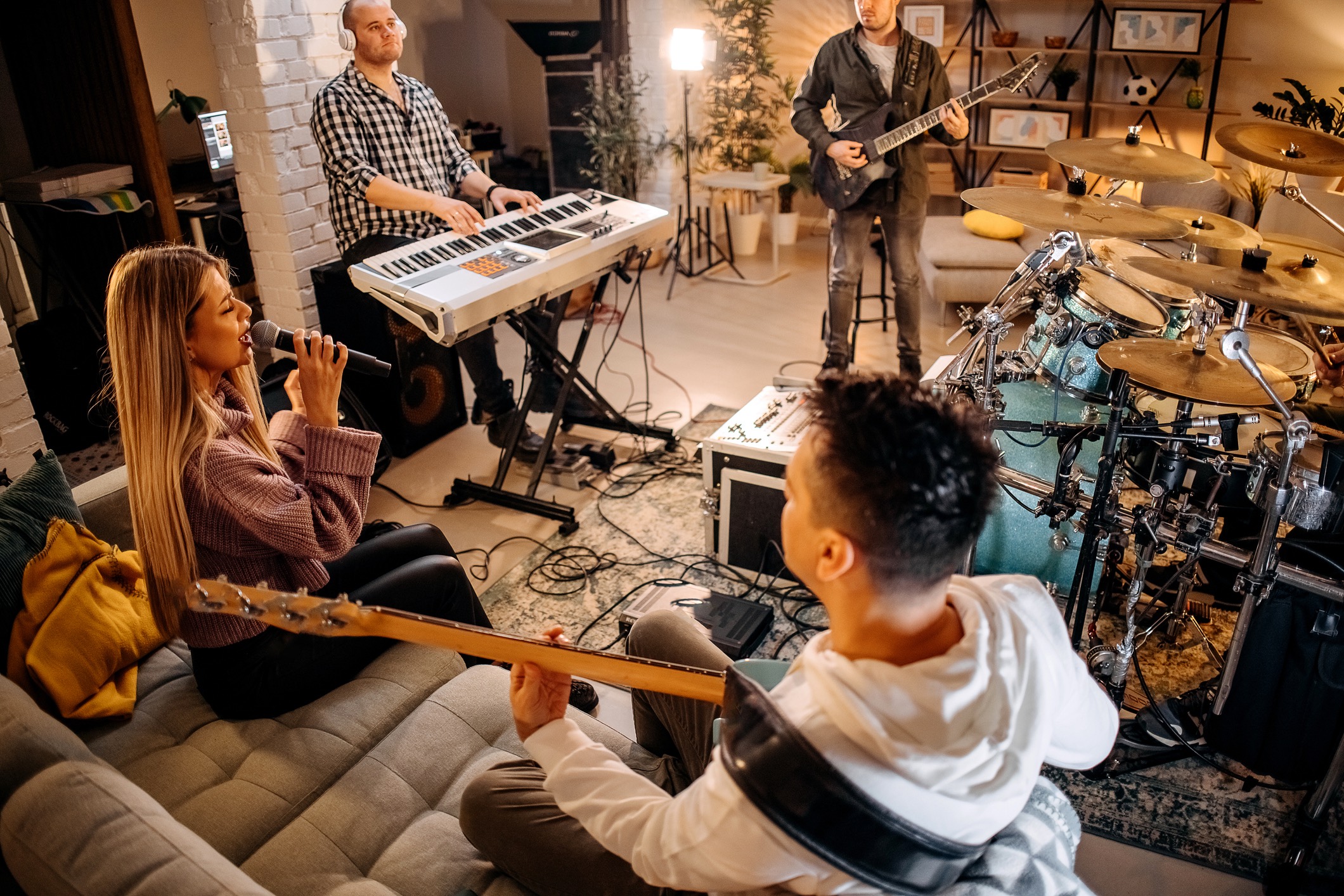
Most of us who chose becoming music educators were motivated by our own experiences in creative self-expression and playing or singing in ensembles, and inspired by our incredibly dedicated school and private music teachers and ensemble directors. The “calling” of entering this profession was due to wanting to share this joy of making music! The best part of all of these musical experiences and training? Most of us retain these skills throughout our careers and even in retirement — many participating in community bands, orchestras, choirs, or jazz combos — some for hire!

Guest blogger Ed Carter reminds us that there are many ways to literally “cash in” our musicianship and supplement our income.

Article by Ed Carter

As a musician, making money can be challenging, especially when starting out. However, there are unique and unconventional ways through which musicians can earn extra money. Here are some ideas worth considering.

Live Streaming

Live streaming has become a popular way to reach audiences, especially because of its convenience and cost-effectiveness. As a musician, you can leverage this platform by hosting online concerts, meet-and-greet sessions, and private performances. To earn money from these events, consider using these platforms.

Selling Merchandise

Merchandise sales are a great way to promote yourself while creating extra income.
Consider offering merch such as hats, stickers, or even signed t-shirts. The key is to make your offerings unique and appealing to your fans. To ensure maximum exposure and sales, consider selling your merchandise at live events and through your website or social media channels.

Starting a YouTube Channel

YouTube has proven to be a powerful platform for musicians to gain exposure, build their fan base, and earn money. You can create a channel hosting content such as behind-the-scenes clips, tutorials, or even live performances. To earn money through YouTube, consider joining the YouTube Partner Program or utilizing sponsored content. Additionally, use other forms of social media platforms to promote your channel and gain more subscribers.

Tutoring

By sharing skills and experience, musicians can earn money through teaching. Consider offering lessons to beginners or those looking to advance their skills. To ensure consistent income, you can offer both in-person and online lessons. Creating a lesson plan, setting a reasonable rate, and marketing your services online will help you attract students.

Networking

Getting involved in your local music scene is essential to connecting with other musicians and growing your fan base. Consider attending open mics, local concerts or festivals, joining a band or musical group, or even volunteering. By building relationships with other musicians, you can collaborate on projects, gain valuable experience, and increase your exposure.

Playing Gigs

Playing for events is a great way to not only earn extra money but also gain exposure to potential fans. Consider contacting event planners, wedding coordinators, and event organizers to offer your services. To succeed in this avenue, be reliable, punctual, and consistently produce quality music. By offering a unique musical experience, you will earn more referrals and increase your client base.

Composing

If you have experience in musical arrangement and composition, there is a high demand for those skills. Consider working with bands, orchestras, and other musical groups to create unique arrangements. To get started, create a portfolio of past arrangements, market your services online, and network with other musicians in your community.

Striking a First Impression

If you are a musician, having an engaging and memorable business card can help you stand out from the crowd and promote yourself. One solution to create professional and visually appealing cards is to use online tools. You can include your contact information, social media handles, and music style description on your card and distribute them at events, live performances, and networking opportunities. This may be a solution to help you make a lasting impression and expand your fanbase.

As a musician, there are various ways to earn extra money while building your career. By leveraging different platforms and services, such as live streaming, YouTube, and
merchandise sales, you can increase your revenue and grow your brand. Remember,
consistent quality and hard work are key to achieving success in the music industry.

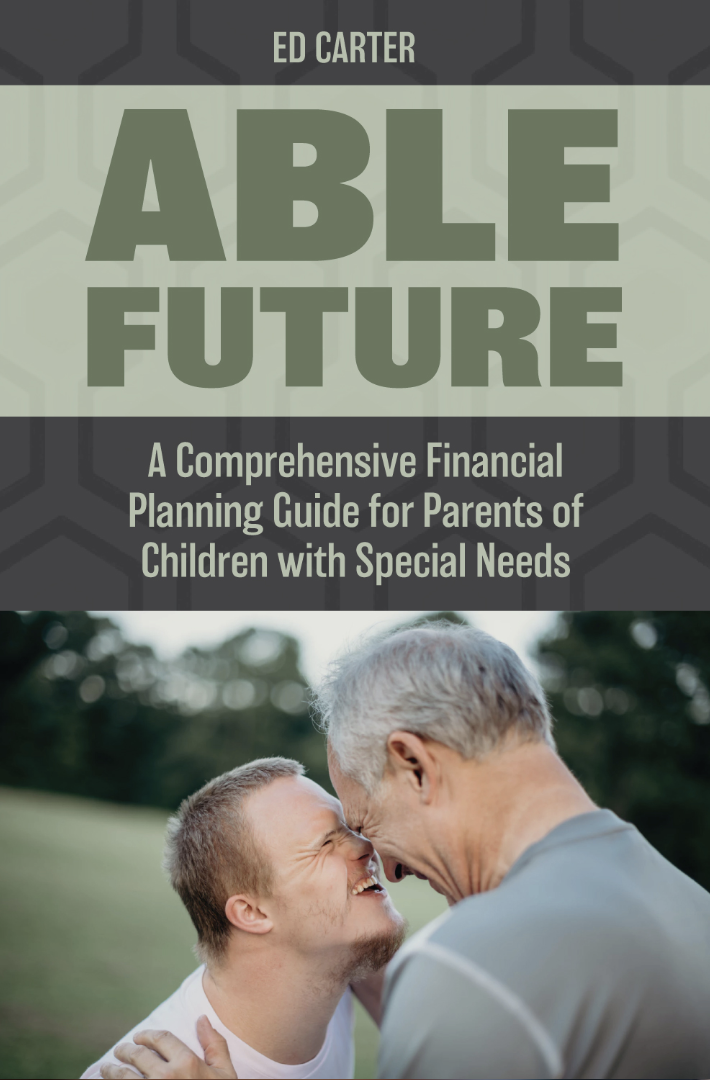
Book by Ed Carter

About Ed Carter, Guest Blogger

I’m Ed Carter, and I am a retired financial planner. Over the years, I’ve worked with clients of all ages, backgrounds and incomes. About 10 years into my career, I saw a need for financial planners who specialize in helping individuals and families living with disabilities. Regardless of their nature or how long they’ve affected someone, physical and mental limitations often cause stress and confusion when it comes to financial planning. Many people are unaware of just how many options they have when it comes to financial assistance and planning, so it’s an honor to offer my experience and change people’s lives for the better.

Now that I’m retired, I’m committed to continuing my services, even though I work on a broader scale than when I was working 9 to 5. I now spend my free time writing financial literacy articles for people to share on their blogs, collecting resource links for people to share on their websites, and collaborating with like-minded folks who want to make a difference.

From Ed Carter’s website

© 2023 Paul K. Fox

Interviews

READY TO HIRE: Strategies to Land a Job

For all future music teachers everywhere, especially members of a PCMEA or NAfME collegiate chapter, we post these handouts from past NAfME and PMEA music teacher conference sessions, all moderated by Scott Sheehan, Immediate Past President of NAfME Eastern Division and Past State President of PMEA.

As a tradition at the annual state conference, the session “Ready to Hire: Interviewing Strategies to Land a Job” has offered “tried & true tips to assist promising music education majors with developing interviewing skills to successfully land their dream job.” One of the features of the clinic is the set-up of a “hot seat” where volunteer candidates are put through one or more questions in a “mock interview,” and then assessed on their “performance.” The guest panelists often distribute a “takeaway” with valuable tips on interview techniques and questions, and developing personal branding, networking, and marketing skills.

These suggestions are offered as a way to “practice” taking employment interviews.

Best wishes on your job search. Now go out there and “nail” the interview!


NAfME Logo_eastern_division

NAfME Biennial Eastern Division/PMEA State Spring Conference

April 4-7, 2019 in Pittsburgh, PA


Sheehan: Interview Session Handout

Metelsky: Interview Worksheet

Pearlberg: Ready to Hire Interview Strategies

Fox: Job Interview Playbook


PMEA conferences.png

Pennsylvania Music Education Association Annual Spring Conference

(various years)


Basalik: Ready-Set-Interview

Baxter: Music Interviews

Fox: A to Z Job Interview Checklist

Fox: Marketing Your Professionalism


pcmea

Additional Resources

PMEA Job Board

NAfME:

Sullivan Interview Strategies that Work

Older blog-posts at this site:


Acknowledgments:

  • Sue Basalik
  • Howard Baxter
  • Marc Greene
  • Susan Metelsky
  • Alicia Mueller
  • Henry Pearlberg
  • Kathy Sanz
  • Scott Sheehan
  • Jill Sullivan
  • Lucy White

Image by Tumisu from Pixabay


© 2019 Paul K. Fox

All rights reserved by the individual authors of this material

Transitioning from Collegiate to Professional – Part III

The Final Leap from Pre-Service to In-Service:

The Metamorphosis and Integration of Philosophy, Maturity, and Teacher Preparation

trumpet-1495108_1920_congerdesignTo “wrap-up” our final segment, we will review the development of a professional “marketing plan.” This is blog #3 out of 3. (Be sure to also check out #1 and #2, too.)

These are three critical skills you need to foster in the search for a school music position, marketing yourself, interviewing, and landing a “good” job:

  • Personal branding (who are you, what makes you unique, and what do you have to offer?)
  • Story telling (anecdotes) of your positive attributes and personal brand, including a record of your habits of “engagement” in music education, and
  • Networking (associating with other professionals and getting your positive stories “out there”).


skills-3262172_1920_diwou

branding

Personal Branding

“Personal branding is the practice of people marketing themselves and their careers as brands. While previous self-help management techniques were about self-improvement, the personal-branding concept suggests instead that success comes from self-packaging… Personal branding is essentially the ongoing process of establishing a prescribed image or impression in the mind of others about an individual, group, or organization.”

– Wikipedia: https://en.wikipedia.org/wiki/Personal_branding

What is the difference between marketing and branding? According to some, “marketing is what you do, branding is what you are.” (www.tronviggroup.com/the-difference-between-marketing-and-branding/)

phone-2840244_1920_RobinWiggins13Shama Hyder posted “7 Things You Can Do to Build an Awesome Personal Brand” at http://www.forbes.com/sites/shamahyder/2014/08/18/7-things-you-can-do-to-build-an-awesome-personal-brand/, including the following outlined summary:

  1. Start thinking of yourself as a brand
  2. Audit your online presence
  3. Secure a personal website
  4. Find ways to produce value
  5. Be purposeful in what you share
  6. Associate with other strong brands
  7. Reinvent

During these waning months for college music education seniors, now is the time to finalize the preparations for personal branding and beginning the employment search! Personal branding is critical to help you “stand above the rest,” showing that you have what it takes and would be a major asset to a prospective employer, and defining and marketing your own unique qualities that would make you “a good fit” for the specific job openings.

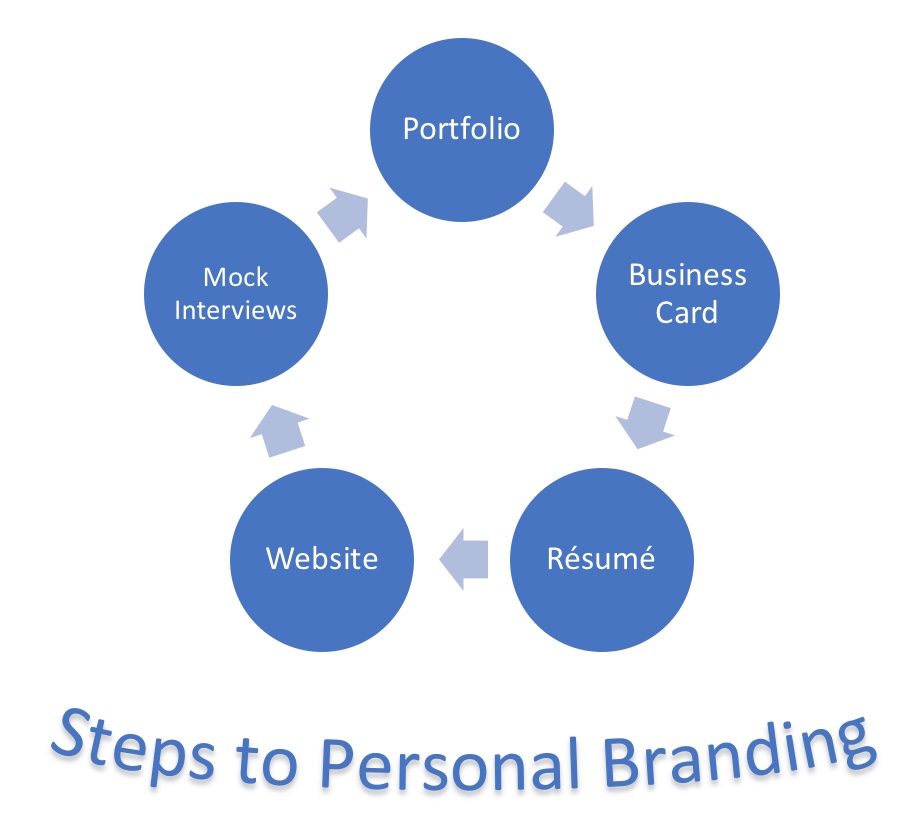
Steps to Personal BrandingThe branding process involves first developing your philosophy of music education, archiving your awards and accomplishments, documenting your grades and ok-3061659_1920_RobinHiggins12experiences, and collecting stories/personal anecdotes of your strengths. The next steps include the creation of a written and electronic portfolio, business card, resume, and website. Finally, you must compile/assemble everything together and practice (and self-assess) your “story-telling skills” to answer those important questions at well-rehearsed “mock interviews.”

You will likely not have enough time to complete all of these tasks during methods classes or student teaching seminars. That’s okay. If you are serious about prepping yourself to find a great music teaching job, the valuable links (see below) and articles are out there… just manage your time and start reading.

feedback-2990424_1920_geralt

networking

Networking

According to the article “Network Your Way to Secure a Teaching Job” at https://resumes-for-teachers.com/job-search-help/teacher-network/, many people are unaware of the basics of networking and how to use them it to their advantage in securing a job:

“Networking simply refers to finding job-related contacts. Most teachers who are just beginning their careers may feel that they have few, if any, networking contacts in the teaching field. It is important to consider the many different areas of networking as you create your own group of networking contacts to help you secure a teaching job. It is interesting to note that many of the teaching positions that are filled each year are filled by those who came to the attention of personnel managers by recommendation.”

“Always think about adding to your teaching network. When meeting new people, be certain to add them to your network. Talk to them about your skills, education, experience, and learn about their jobs. Make sure that you always ask for a business card.”

Do you have a business card? Is your résumé updated and available online on your professional website?

young-3061653_1920As I laid out in a previous blog “Networking Niceties: The ‘How-To Schmooze’ Guide for Prospective Music Teachers” at https://paulkfoxusc.wordpress.com/2016/04/04/networking-niceties/, the concept of networking is two-way communications. Just like collective sets of nerve synapses, two-way connections are expected to fire repeatedly in all directions. That’s actually the science behind memory. For professional networking, it is your “charge” to create multiple pathways to/from school HR managers and secretaries, administrators, music supervisors and department heads, and music teachers… and YOU – your skills, accomplishments, unique qualities, experience, education, and personality traits.

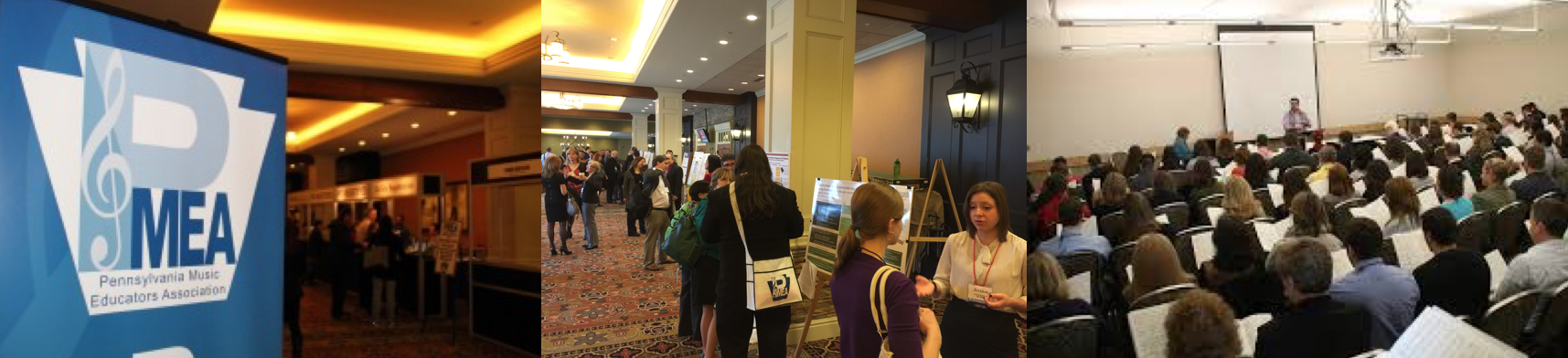
pcmeaThe above blog-post also explores setting up a good organizational system to manage your professional contacts.

If you are a Pennsylvania collegiate member (PCMEA), I heartily recommend the article “Networking 101” by Dr. Kathleen Melago, PCMEA State Advisor and Associate Professor of Music Education at Slippery Rock University, published in the Summer 2017 issue of the state journal PMEA News (pages 40-42). Here are several quotes from her work:

“One of the most common ways music educators can plan to network is at conventions. First, try to avoid interacting only with people from your school or people you already know from other schools. Go to sessions that interest you and look for opportunities to meet people there. Before the session starts, introduce yourself to people sitting around you. Use your social skills to assess whether they seem like they want to engage in a conversation or not. After the session, go up and meet the presenter.”

“Of course, social media is another great way to build your network. Networking with professionals already in the field can help you see what they are doing and help you build ideas of what you would like to do in your program someday.”

“Sometimes, you might find yourself networking unexpectedly. For example, you might go into school to work with their clarinet section during band camp and just happened to meet the choir teacher. That is networking!”

“To help your networking be most effective you need to have good communication skills. When interacting with others in a networking situation, be sure to focus on the person with whom you are speaking. Avoid looking off into the distance as if you were to anticipating someone else more important coming by. But your cell phone away and be present to the conversation.”

“Be yourself in your networking interactions. If you pretend that you are someone you are not, you will either end up unhappy or you’ll be discovered is someone who is not genuine.”

Dr. Melago goes on to provide a myriad of excellent examples of networking skills and opportunities.

Another resource specifically for networking at music teachers conferences is posted at https://nafme.org/getting-music-conferences/.


music-1237358-2 ricardo vasquez


engagement

Engagement

Here is an excellent definition of “professional engagement” from “Domains of Teaching” of the Australian Institute for Teaching and School Leadership at https://www.aitsl.edu.au/teach/understand-the-teacher-standards/domains-of-teaching.

Teachers model effective learning. They identify their own learning needs and analyze, evaluate and expand their professional learning, both collegially and individually.

Teachers demonstrate respect and professionalism in all their interactions with students, colleagues, parents/carers and the community. They are sensitive to the needs of parents/carers and can communicate effectively with them about their children’s learning.

Teachers value opportunities to engage with their school communities within and beyond the classroom to enrich the educational context for students. They understand the links between school, home and community in the social and intellectual development of their students.

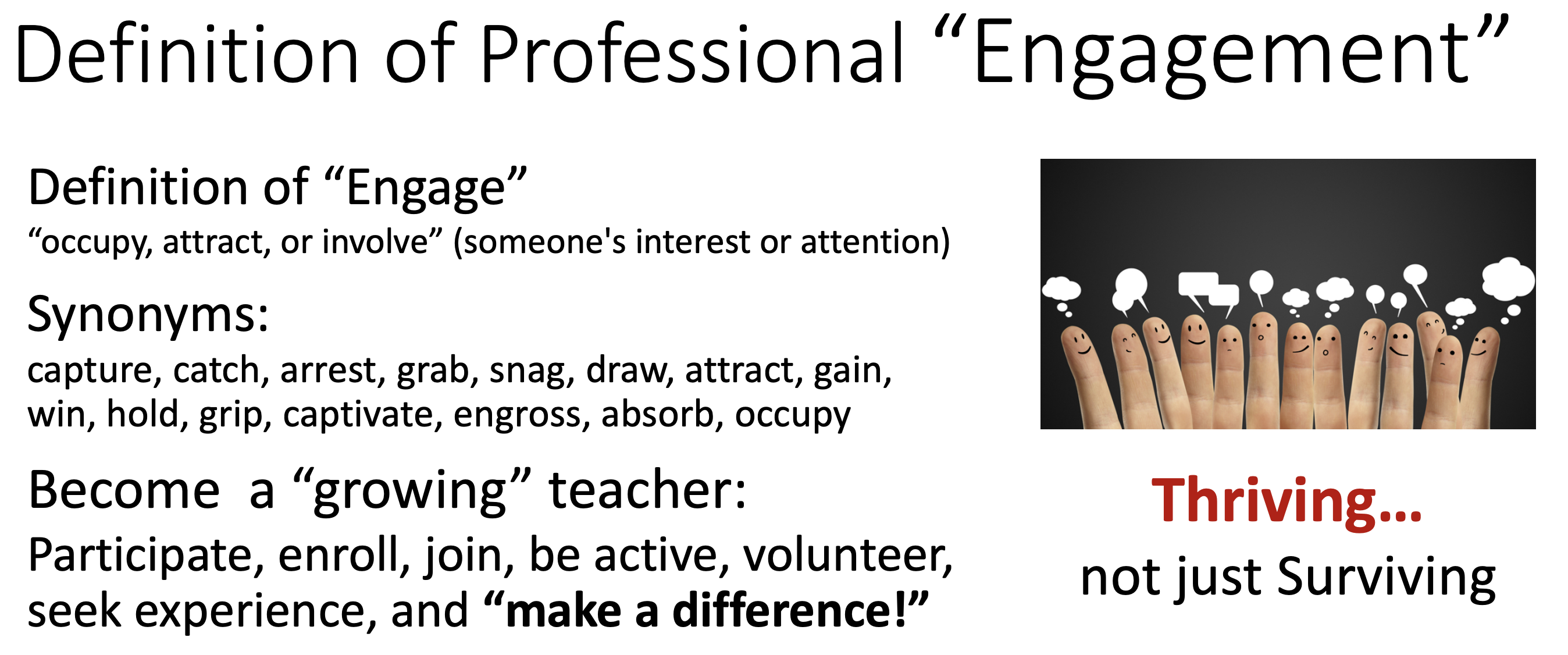
Engagement for prospective music teacher may include synonyms like “participate,” “enroll,” “join,” “be active,” “volunteer,” “seek experience,” and “make a difference!”

Are you a member of your professional music education associations?

  • NAfME National Association for Music Education
  • PCMEA Pennsylvania Collegiate Music Educators Association, or another state’s local NAfME collegiate chapter
  • pmeaPMEA Pennsylvania Music Educators Association, or another state’s NAfME-affiliated MEA
  • ACDA American Choral Directors Association
  • ASTA American String Teachers Association
  • NBA National Band Association

Did (or will) you attend your state music teachers’ conference and local workshops on music education and professional development?

To prove you are “professionally engaged,” I would expect to see a consistent record of modeling in the following areas:

  1. excited-3126449_1920_RobinHiggins9Self-reflection of the professional’s teaching practices and modification of these as needed to match changes in the environment and circumstances
  2. Self-assessment of the professional’s methods and approaches, as well as the progress of the students’ learning, using both formative and summative methods for constant and ongoing improvement
  3. Identification and planning of professional learning needs.
  4. Unsupervised (or unplanned by school administration) goal-setting and self-guided implementation of opportunities for professional development
  5. Association with professional learning communities, school and community meetings, and other collaborative projects
  6. Volunteer service in music and music education
  7. Membership and subscription to music education journals and participation in online professional community discussion groups

Many have said that aspiring to be a music educator is a lot like a calling. One school superintendent I know said he expected prospective new recruits to show high energy, enthusiasm, sense of purpose, and dedication during the interview… even a supposed willingness to “lay down in front of a school bus” or “do what ever it takes” to make the students (and the educational program) successful. That’s engagement!

classical-music-1838390_1920_Pexels

In summary, becoming a music educator is about finding your inner confidence, a mindset that you know what you’re doing, and that you’re ready for that real world experience. You’ve learned those essential skills in conducting, piano accompaniment, arranging, student behavior modification and discipline, music diagnosis and remediation, and even how to market your professionalism. Now… drum roll, please! Here’s… a master music teacher!

target-3306771_1920_geralt

In closing, here are supplementary materials to help you to “get your feet wet,” all free and available online. The following lists, although not comprehensive, are a good place to start (courtesy of https://www.pmea.net/wp-content/uploads/2012/10/Collegiate-Communique-No11-022218-2.pdf):

Good luck!


Personal Branding, Marketing, and Networking

Business Cards

Résumés

Portfolios and Websites

Interview Questions, Techniques, and Skills of “Story-Telling”


PKF

© 2018 Paul K. Fox


Photo credits (in order) from Pixabay.com: “tutor” by nrjfalcon1, “trumpet” by congerdesign, “skills” by diwou, “phone” by Robin-Higgins, “OK” by Robin-Higgins, “feedback” by geralt, “young” by Robin-Higgins, “music” by ricardo-vasquez, “excited” by Robin-Higgins, and “classical-music” by pexels.

The PMEA State Conference Primer

Getting the Most Out of Music Conferences… Suggestions for First-Time Attendees or New Teachers

Music conferences offer students as well as seasoned musicians a wealth of professional opportunities. They are motivating and help recharge your battery. They even help set future goals. Consider music conferences an essential component of your training and career…

CLICK HERE TO READ MORE – The original release of this article is at http://majoringinmusic.com/music-conferences/

Education’s purpose is to replace an empty mind with an open one. – Malcolm Forbes

The greatest benefits of attending an academic or professional conference are the opportunities to build your network and increase your awareness of new trends happening in your area of interest. – Emad Rahim http://www.coloradotech.edu/resources/blogs/june-2013/professional-conference

Networking with others in the field, getting new and innovative ideas, self-reflection and re-thinking of previous methods, and improving communication skills are just a few of the ways professionals can grow and develop.  – Conferences and Professional Development by the Grand Canyon University Center for Innovation in Research and Teaching https://cirt.gcu.edu/research/developmentresources/research_ready/presentationready/prof_develop

For professional networking, it is your “charge” to create multiple pathways to/from school administrators, HR managers and secretaries, music supervisors and department heads, and music teachers… and you – your skills, accomplishments, unique qualities, experience, education, and personality traits. Paul K. Fox https://paulkfoxusc.wordpress.com/2016/04/04/networking-niceties/

pcmea

Welcome to the annual state conference! For Pennsylvania Collegiate Music Education Association (PCMEA) members and soon-to-be-hired music educator prospects, this guide will help you get the most out of attending the 2017 Pennsylvania Music Educators Association (PMEA) Spring Conference (and future professional development events).

Reasons to “drop everything” and attend an in-service conference:

  1. Conferences “grow” your professional network and opportunities for future collaboration.
  2. Conferences build your knowledge base: to hear about potential job openings, stay current in the field, learn new ideas, music literature, classroom materials, curriculum initiatives, research, technology, and unique approaches to problems, and to see “state-of-the-art” (“model”) performances of student and professional music ensembles.
  3. Conferences expand your resources.
  4. Conference motivate (a.k.a. “recharge batteries”) and help you plan future goals.

People in academics cultivate exceptional resources—and they’re excited to share them with like-minded colleagues. During the conference, I had an opportunity to test out new technology, review upcoming publications, share teaching tools and techniques and obtain samples of textbooks, software and mobile applications. Conferences are full of people promoting new ideas, vendors selling new products, and consultants teaching new methodologies. I always take advantage of this opportunity to fill up my academic tool-shed with new techniques and technology to improve my career. – Emad Rahim

bayfront1_highThe annual PMEA Spring Conference will be held on April 19-22, 2017 at the Erie Bayfront Convention Center. These sessions may be “perfect for PCMEA!”

  • Opening General Session with Tim Lautzenheiser Thursday 8:30 a.m.
  • PCMEA meetings Thursday 10:30 a.m. and Friday 11:15 a.m.
  • Getting the Most Out of Your Student Teaching Experience Thursday 1:30 p.m.
  • Cracking the Graduate School Code: When, Where, Why, How, & How Much Thursday 3 p.m.
  • Starting with the End in Mind – or – You’ve Got Four Years, Use Them Wisely Thursday 4:30 p.m.
  • Music Education & Gaming: Interdisciplinary Connections for the Classroom Friday 8:15 a.m.
  • Ready for Hire! Interview Strategies to Land a Job Friday 9:45 a.m.
  • Planning Strategies to Develop a Responsive Teaching Mindset Friday 2:15 p.m.
  • Final General Session with NAfME Eastern Division President Scott Sheehan Friday 3:45 p.m.

For a complete conference schedule, consult PMEA News or this web-link: http://www.pmea.net/wp-content/uploads/2017/01/2017-PMEA-Annual-Conference-Schedule-for-Winter-News.pdf.

pmeaFirst things first! Prepare yourself in advance. Grab your winter or spring issue of PMEA News. Review the program of sessions which is usually laid out in chronological order and also by content strands (e.g. advocacy, choral, classroom music, collegiate, curriculum development/assessment, higher education research, instrumental, music technology, World Music, and special interest topics), as well as the list of keynote speakers, guest clinicians, showcase (music industry) demonstrations, association meetings (like PCMEA), and performances. Using an “old-fashioned” 20th century tool, mark up the conference schedule with two different colors of highlighter marking pens, first targeting “high interest” areas in yellow, and then “must attend” events in hot pink or other favorite color.

Next, download the PMEA Conference App (usually from Core-Apps.com). This is the 21st Century technique for setting up your conference schedule (“where to go and what to do”), reading the bios of the presenters, locating the session rooms and exhibit booths, finding out who is attending, taking and storing your notes, and learning about last minute changes. Here is the picture of the 2016 PMEA app:

pmea-app

More DO’s and DON’Ts for effective conference attendance:

  1. DON’T remain in your “comfort zone” by sitting exclusively with your friends or college buddies at every session and concert. DO socialize with your peers at meals, and DO attend meetings of your PCMEA. However, if you are trying to take advantage of networking opportunities, to get to know other professionals, possible job screeners, administrators, etc., DON’T just sit with people you know at every other event.
  2. SONY DSCDON’T focus exclusively on attending sessions or concerts in your specialty or most proficient areas, such as band if you’re a woodwind, brass or percussion major, orchestra if you are a string player, general music/choral if you are a vocalist or pianist. DO go to sessions that are not directly related to your major. You might be surprised at the connections you discover or the new interests that arise. Imagine “they” want to hire you next year as the next middle school jazz coach, HS marching band show designer, choreographer for the elementary musical, conductor of the string orchestra, teacher of AP music theory, etc. Could you select music for an elementary band (or choral) concert, create a bulletin board display for a middle school general music unit, set-up a composition project, or lead folk dancing at the kindergarten level?
  3. DO stay at (or near to) the hotel where the conference is being held… to see and DO more!
  4. Learn and DO the best practices of networking, personal branding, business card creation and distribution, and record-keeping of conference notes, job openings, and contact information. DO read my blog-post on Networking Niceties: The “How to Schmooze Guide” for Prospective Music Teachers at https://paulkfoxusc.wordpress.com/2016/04/04/networking-niceties/.
  5. playing-harp-1563567DON’T be shy! A conference is no place for being timid or afraid to start up a discussion with a more experienced music teacher. PMEA is all about circulating and introducing yourself, exhibiting your “charming self,” exploring resources and who are the experts/leaders in music education, getting the “lay of the land,” and adding as many names and emails to your professional contact data base as possible. Of course, DO follow-up with anyone who suggests that there may be a future employment posting from their school district!
  6. DO attend both general sessions, one usually scheduled on Thursday morning and the other on Friday afternoon. These will feature the keynote speakers and a special performance or award presentation. Since it is free and another opportunity to network, DO attend the Saturday morning awards breakfast and general membership meeting.
  7. DON’T be the first person to leave a session, and definitely DON’T “hop around” from one clinic or concert to another. Many attendees consider leaving early disruptive and rude, and it does not allow you to get the “whole picture” of the presentation. DON’T run in and grab the handouts… they will not have much meaning unless you attend the entire one-hour workshop. DO interact with the clinicians and conductors. If someone gave a talk, introduce yourspiano-and-laptop-1508835elf and ask a thoughtful question on some issue about which you are curious or found interesting.
  8. DO attend (and participate in) at least one panel discussion, music reading workshop, and technology session. DO search for special sessions held for college students on interviewing and landing a job. DO visit the displays of the PMEA Research Forums and the Exhibits.
  9. DON’T expect to get a lot of sleep at the conference. DON’T miss the interesting concerts to attend at night as well as early morning breakfast meetings and evening receptions. But, whatever you do, DO have FUN at your first music teacher conference!

Actually, PMEA represents only one of a series of outstanding music education conferences offered to school music teachers. In addition, you should look at:nafme

Hopefully, these tips on networking and taking advantage of the many professional benefits for attending an in-service conference will assist your successful pursuit for “landing” a job, discovering your own “calling” in the field of music education, and contributing a lifetime of meaningful work to our profession. See you in Erie!

Suggested Additional Readings:

  • Caffarella, R. S., & Zinn, L. F. (1999). Professional development for faculty: A conceptual framework of barriers and supports. Innovative Higher Education, 23(4), 241-254.
  • Guskey, T. R., & Huberman, M. (1995). Professional development in education: New paradigms and practices. Teachers College Press, 1234 Amsterdam Avenue, New York, NY 10027 (paperback: ISBN-0-8077-3425-X; clothbound: ISBN-0-8077-3426-8).
  • Guskey, T. R. (2000). Evaluating professional development. Corwin Press.
  • Snow-Gerono, J. L. (2005). Professional development in a culture of inquiry: PDS teachers identify the benefits of professional learning communities. Teaching and teacher education, 21(3), 241-256.
  • Sunal, D. W., Hodges, J., Sunal, C. S., Whitaker, K. W., Freeman, L. M., Edwards, L., … & Odell, M. (2001). Teaching science in higher education: Faculty professional development and barriers to change. School Science and Mathematics, 101(5), 246-257.

PKF

© 2017 Paul K. Fox

Photo credits: saxophone 24youphotography, harpist Gerrit Prenger, and computer/music keyboard LeslieR at FreeImages.com

Networking Niceties

The “How to Schmooze” Guide for Prospective Music Teachers

key-to-success-1307591Do you have a business card, e-portfolio, resume, and professional website?

There are three critical skills you need to foster searching for a school music position, marketing yourself, interviewing, and landing a job:

  • Personal branding (who are you, what makes you unique, and what do you have to offer?)
  • Story telling (anecdotes) of your positive attributes and personal brand, and
  • Networking (associating with other professionals and getting your stories “out there”).
In previous articles posted in this blog series, we have discussed the essential need for the development and constant revisions of a professional e-portfolio, resume, and website. If you have not read them, click on the following:

connected-people-1165937Merriam-Webster defines “networking” (noun) as “the exchange of information or services among individuals, groups, or institutions; the cultivation of productive relationships for employment or business.”

The concept of networking is two-way communications. Just like collective sets of nerve synapses, two-way connections are expected to fire repeatedly in all directions. That’s actually the science behind memory. For professional networking, it is your “charge” to create multiple pathways to/from school administrators, HR managers and secretaries, music supervisors and department heads, and music teachers… and you – your skills, accomplishments, unique qualities, experience, education, and personality traits.

Business Cards – One of the Earliest Known Methods of Networking

Do you know the history of the business card? How long ago was it introduced?

You might have guessed it was first “kicked-off” in the 1980s, the decade that corporations expanded on the adoption of the 3.5 by 2-inch rectangle business card format we know today.

However, according to Design Float Blog [Source: “A Brief History of Business Cards” posted at http://www.designfloat.com/blog/2012/04/02/history-business-cards/], its origin can be traced back to 15th century China. They were first known as “visiting cards” and used to announce one’s intention of meeting with another individual.

king-louis-at-versailles-1553663During the 17th century, especially during the reign of Louis the 14th, the “calling card” made its heyday in Europe. “…An individual’s success or failure in society often depended on the strength of their personal promotion.”

Etiquette was involved in the deployment of “acquaintance cards” in the 17-18th century.

“…A strict protocol existed to ensure that calling cards were employed correctly. If a gentleman wished to call on a lady, he had a lot to think about. On making a first call, he had to make sure there is a separate card for each lady of the household. Alternatively, he could fold his card down the middle to indicate it was meant for all members of the household. Cards had to be left with the servant; admission to the house would only be permitted after the hostess had examined the card. Calling cards were to be collected on a small tray kept in the hallway, which would be presented by a servant on the palm of his left hand. While a gentleman may carry his cards loose in his pocket, a lady should use a card case. If the gentleman received no acknowledgement of his card, he had to accept that there would be no continuation of the acquaintance. And on no account was it ever acceptable to sneak a peak at cards that had been left by other callers.”

Later in the 17th century, London merchants used “trade cards.” At a time when street numbers were not in popular use, these cards were crucial in promoting the business and hands-3-hand-holding-a-card-1440323informing customers of its location and services available.

So how do you collect and distribute your business cards? What methods do you use to record and store the contacts you meet on a daily basis? How is your contact information given out to every professional you meet, especially at conferences, mass employment screenings, or job fairs?

Business Card Basics

Today’s professionals still exchange this “old-fashioned invention” called a business card as part of employment and business networking. (Who knows? Maybe someday we will be doing this electronically. Perhaps, our new “super-smart phones” will automatically talk to one another and seamlessly pass on our contact information.)

According to Ivan Misner, contributor to the online Entrepreneur website (http://www.entrepreneur.com/article/159492), “The business card is the most powerful single business tool – dollar for dollar – you can invest in. It’s compact, energy-efficient, low-cost, low-tech, and keeps working for you hours, weeks and even years after it leaves your hands!”

He outlines what it does in support of person-to-person networking:

  • The business card tells people your name and the name of your business.
  • It provides prospects a way to contact you.
  • business-card-1525590It gives others a taste of your work, style and personality.
  • It can be so unusual or attractive or strange or charming or funny that it tends to stick in the memory of the prospective employer like a great radio or television ad.
  • It can be reused, passes from person to person, giving the same message to each person who comes in contact with it.

What data should be shared  on a business card? The quick (and obvious) answer is your name, mailing address (street, city, state, zip), cell phone (and if you still have a landline telephone number), email address, and extremely important – a link to your professional website (and password if needed).

Your Personal Brand Displayed on a Piece of Cardboard

Huffington Post provides some insightful recommendations on the design of business cards (see http://www.huffingtonpost.com/2011/11/12/designing-a-business-card_n_997449.html):

  1. Your card should look professional and project your image.
  2. Do not use clip art.
  3. Consider printing a QR code with direct access to your webpage.
  4. Resist a cluttered business card layout.
  5. Do not try to save money and buy cheap business cards.

Like it or not, your business card will convey (accurately or inaccurately) your image – possibly an instant snapshot of your professionalism, proficiency, and personality – to potential HR people and the decision-makers that hire future staff. What do you want to business-card-1237839display… traits of artistry, collaboration, commitment, discipline, even temperament, goal-minded, initiative, leadership, mastery of music and music education, organization, positive outlook, style, tact, and/or teamwork… or just the opposite?

Check out the unique examples and design elements (size, shape, color, style, materials, effects, printing methods, etc.) at http://www.webdesignerdepot.com/2010/06/how-to-design-your-business-card/. A wooden business card? How crazy do you want to be? Just remember, educational leaders are generally very “conservative” in the search for filling teaching positions in the public schools.

Readability and clarity are important (#4 above). After retirement, I had a lot of fun designing a new business card. Many retirees (myself included) lean towards putting more information than what is generally needed on their card. I was also guilty of printing a hodgepodge of all of my past school positions. Ironic, isn’t it? The business card is not really the device to archive past successes, especially for a retiree who is not trying to find PaulFox_Logoa new full-time job!

I even went as far as to hire a professional layout artist to create a new personal logo. Can you tell my focus areas and favorite composer from the image to the right?

The Act of Sharing

When you meet someone for the first time, the unspoken code/decorum of networking and professionalism directs you to flash your most charming smile, look the person in the eye, introduce yourself (“hi, my name is…”), and offer/give a firm handshake. Repeat his/her name (place it permanently in your memory), and use it to strike up a short conversation to familiarize/update each other about where he/she works, and where you have most recently graduated or been employed.

First impressions mean a lot. Experts say that early judgments about you are made in the business-man-modified-1241003first ten seconds, and after four minutes, it’s all over. For employment consideration, others have written that you are evaluated by 7% what you say, 38% by your vocal tone, and 55% by your facial expressions.

Be very positive and be sure to closely listen to the other professional, responding to his/her questions or topics. Be outgoing and energetic (but not pushy) and friendly (but not overly personal). My former superintendent commented on a music teacher interview he experienced that did not go very well. The potential candidate did not seem to show personal initiative or self-direction, and lacked any overt displays of excitement or energy. Administrators want to see that you are truly committed to making a music program successful (“will go that extra mile”), have creative ideas to help “grow the program,” and love to work with children.

Before you close your “network connection,” be sure to swap business cards (have yours handy – nothing slows things down more than fumbling in your wallet or coat pocket), and make a promise to touch base with him/her again.

Gathering Data from Your End

One of the most important concepts about networking is how you use the information you collect. You need to “tag” or catalog the names of individuals with whom you come in contact, to help sort and create an easy-access index of professional resources.

stocking-for-business-1240257After the opportunity presents itself to exchange business cards, you need to save and organize his/her data in a way to be able to place/find the acquaintance for future reference. Why was this professional important to you to remember his or her name? How, when, and where did you meet? Reference the subjects you may have discussed, school affiliation, title, and locality of the contact, so at some point, you can lay your fingers on the name in your file; just search on the “key” word or phrase like “choral director” or “XYZ School District.”

As soon as possible, copy the new contact’s name, information, and subject areas into your smartphone’s (and computer’s) contact app. If he/she was a potential administrator, department head, or teacher in the district, you are well within your rights to follow-up with an e-mail. “Do you know of any possible future music positions (or retirements) in your district?” “Should I send a letter to the superintendent for his consideration?”

Now Get Out There and “Meet and Greet!”

According to Devora Zack in her blog “Ten Tips for People Who Hate Networking” (a great read, see http://www.careerealism.com/hate-networking-tips/), “…Real networking is about establishing mutually beneficial, lasting connections, one person at a time… This new and improved definition of networking means being true to you, capitalizing on your strengths, and tossing aside ‘rules’ that don’t match your temperament.” She proposes several unique “rules for the road” for making positive peer connections from the book Networking for People Who Hate Networking (Berrett-Koehler 2010):

  1. Be true to you
  2. Realize less is more
  3. interview-607713_1920Plan your first impression
  4. Volunteer
  5. Get in line
  6. Set challenging yet achievable networking goals
  7. Show, don’t tell
  8. Research
  9. Listen
  10. Follow-up, or forget about it

Another good resource for quiet/unassuming personality types is the online article “Twelve Tips for Shy People” by Meredith Levinson: http://www.cio.com/article/2437488/relationship-building-networking/how-to-network–12-tips-for-shy-people.html.

Conclusion

Take advantage of any chance you have to present your personal brand, “sell yourself,” and connect with colleagues in the field of music education. Practice a few “schmoozing” techniques, but really try to be open, positive, true to yourself, and well-organized. The business card helps you to “call on” and make a lasting impression to potential employers. Good luck, and happy job hunting!

business-card-1238267

Sources for this article and additional hints on the use of business cards and networking may be found at the following sites. Here’s YOUR homework for further reading!

PKF

© 2016 Paul K. Fox

Tips on Personal Branding

OLYMPUS DIGITAL CAMERA

Prospective Music Teachers: Why Personal Branding Might Help You Land a Job!

“A brand is anything—a symbol, design, name, sound, reputation, emotion, employees, tone, and much more—that separates one thing from another.”

– Neil Patel and Aaron Agius

optimism-1241418Quick – Who are you? Define yourself in three words!

This is one of the most common job interview questions. In my past blogs on the subject of getting a music teaching job (see https://paulkfoxusc.wordpress.com/category/marketing-professionalism/), we explored preparing for interviews, planning portfolios, developing stories/personal anecdotes of your strengths, defining criteria for the ideal music teacher candidate, and understanding the term “professionalism” as it applies to music education. Now to wrap-up your “marketing plan,” it is time to dive into “personal branding” as it is presented by quite a few experts in the field.

business-card-1238267What is Personal Branding? Google defines it as “essentially the ongoing process of establishing a prescribed image or impression in the mind of others about an individual, group or organization.”

Branding is critical to help you “stand above the rest,” showing you have what it takes and would be a major asset to a prospective employer, and marketing your own unique qualities that would make you “a good fit” for the specific job opening. But you don’t have to take my word on this… a quick search on the Internet yields numerous articles on branding and marketing yourself.

The question is no longer IF you have a personal brand, but whether you choose to guide and cultivate the brand or to let it be defined (or assumed) by others on your behalf.

According to Shama Hyder, bestselling author of The Zen of Social Media Marketing, “The term branding has long been relegated to companies, but today almost every individual has a personal brand. Not many of us have consciously cultivated these brands, but they exist nonetheless. A digital footprint in the sands of time and space crowd sourced by friends, colleagues, and bosses. According to an AVG study, 92 percent of children under the age of two already have a digital footprint.”

At http://www.forbes.com/sites/shamahyder/2014/08/18/7-things-you-can-do-to-build-an-awesome-personal-brand/, Hyder posted “7 Things You Can Do to Build an Awesome Personal Brand,” including the following outlined summary. (Take a look – you won’t be sorry!)
  1. A young caucasian woman outdoors in a meadow, working on her computerStart thinking of yourself as a brand

  2. Audit your online presence
  3. Secure a personal website
  4. Find ways to produce value
  5. Be purposeful in what you share
  6. Associate with other strong brands
  7. Reinvent

You can learn something about branding from an accountant. In “Five Tips on Branding Yourself” (by the American Institute of CPAs) at http://www.aicpa.org/InterestAreas/YoungCPANetwork/Resources/Career/Pages/FiveTipsToBrandingYourself.aspx, steps are offered to help build a positive image and promote your professionalism. Branding helps “to remain current in your field, opens doors for you, and creates a lasting impression…”

  1. Define your brand and become an expert.
  2. Establish a presence.
  3. Generate brand awareness through networking.
  4. Remember the 3 Cs of brandingclarity, consistency, constancy.
  5. Get feedback from those who know you best—at work, at home, anywhere.

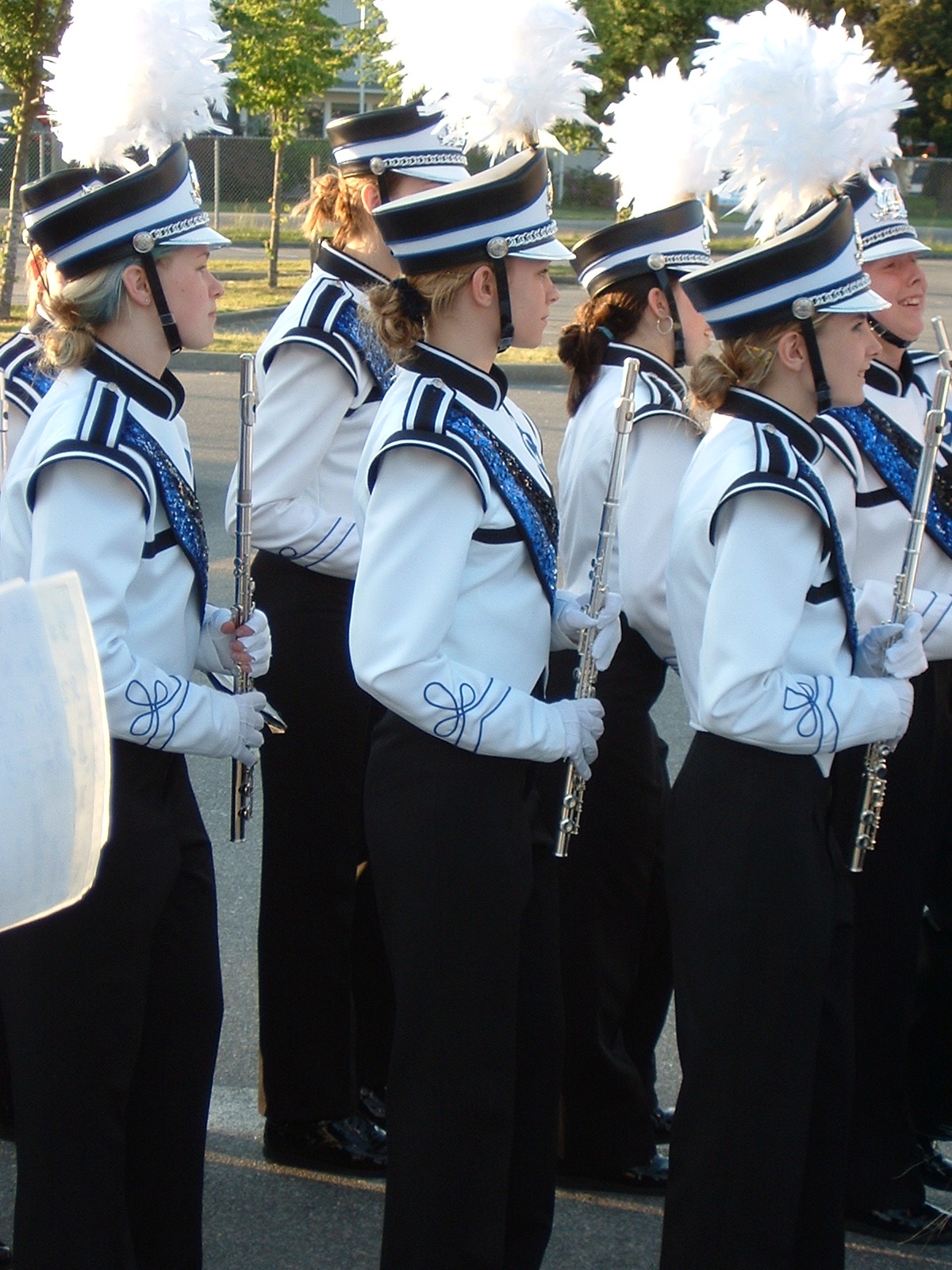
marching-band-1440110-1For #1 above, hopefully you have already read my epistle (see https://paulkfoxusc.wordpress.com/2015/07/04/marketing-yourself-and-your-k-12-music-certification/) on not limiting your options or selling yourself short as a music specialist (e.g. band director or elementary vocal teacher). If you want a job with a Pennsylvania Music K-12 Instructional certificate or equivalent, you have to be “expert” on all types and grade levels of public school music.

The music curriculum leader/department chair/lead teacher involved in the employment screening will want to know your mastery of creating lessons in everything from the foundations of “steady beat” and “matching pitch” to developing advanced technique and musicianship in any/all instrumental and vocal ensembles, including jazz improvisation, a cappella singing, and string chamber music.

However, principals, HR staff, and other administrators will likely care more about your classroom management skills, ability to communicate and work with others, personal initiative and willingness to work after school and in the evenings, record of consistent attendance (low incidence of absenteeism or tardiness re: college classes and other work history), and other personality characteristics. Believe it or not, at more than one interview, I was asked, “Since you call yourself trained as a musician, are you temperamental?”

The single most comprehensive publication on branding (and it looks like it is provided as a free service!) is The Complete Guide to Building Your Personal Brand by Neil Patel and Aaron Agius” at https://www.quicksprout.com/the-complete-guide-to-building-your-personal-brand/.

According to them, the greatest rationale for building your personal brand is that it opens up more professional opportunities. “Creating a vision for your future and implementing that vision can lead to a better job…” You should take time to read the guide’s chapters in detail:
  • your-brand-new-website-1-1058679How to Create Your Personal Brand Vision
  • How to Define Your Target Audience
  • How to Build Up Your Online and Offline Assets
  • How to Build Your Brand Through Outreach
  • How to Get Free Press Coverage
  • How to Connect with Mentors
  • How to Monitor your Brand
  • Be Yourself Because Everyone Else Is Taken

After you peruse all of the above material on personal branding, here are my top ten “takeaways” specific to every budding music teacher.

  1. Your personal brand is everything about you – your values, attitudes, integrity, initiative, work ethic, skills, and personality traits.
  2. Remember, a career in public/private school education is based on very conservative values. Be cognizant of what you say, how you look and act, and the overall image you portray. “Everything you say and do (or have ever said or done) may be used against you…”
  3. In this profession, there’s no place for too much levity or a lack of respect for conformity, longstanding traditions, and the orthodox. At my first job interview, I carelessly made a crack about signing an outdated “loyalty” oath (“I promise I am not a communist and will not try to overthrow the government…”), the result of which the superintendent gave me a major tongue-lashing and a 20-minute lecture on patriotism (but, somehow I still got the job!).
  4. shame-1431469Clean up your social media sites (Facebook, etc.). A photo of you and your college buddies drinking “adult beverages” in bathing suits at a beach may be misinterpreted. Google your name to see what comes up. How would you define the content you see of yourself online?
  5. Create a personal website to warehouse the elements of your “professional brand,” including your philosophy of music education, mission, goals, and a digital resume of your education,  experience, and accomplishments. If your college/university does not set you up with a free online site, explore “doing-it-yourself” with WordPress, Wix, or Weebly.com.
  6. The only social medium I can recommend without reservation is LinkedIn. Create and optimize your professional identity on LinkedIn, everything from getting an excellent photo of yourself to providing copious samples of your references, writing, hands-on teaching experiences, etc.
  7. If you have personal essays on your educational philosophy and vision, share your priorities as they relate to music curriculum, lesson targets, concert programming, assertive discipline, collaborative projects, and professional development, and always be ready for the most commonly asked interview questions (beat them to the punch by posting in writing your thoughts): Why is music essential to a child’s education? Why did you choose to become a music educator? Who had the greatest influence on you and why? What are your greatest strengths and weaknesses in this field?
  8. PaulFox_LogoIf you have time, design a personal logo, a symbol of you wherever you go on websites, e-mail footer, digital and printed portfolios, business cards, etc. Although I retired in 2013, I created the illustration at the above right. It implies that I am “a happy fox” (my last name), involved in music, and especially love a certain Beethoven symphony, reinforcing that I am an orchestral musician.
  9. Better than providing quick one or two-sentence answers to the interviewers’ questions, try to assemble a collection of personal anecdotes that dramatically illustrate your musical and teaching skills, critical thinking and problem solving, personality traits like patience, compassion, self-control, and thoughtfulness, and past successes. (For more information on developing story-telling skills, go to https://paulkfoxusc.wordpress.com/2015/08/02/when-it-comes-to-getting-a-job-s-is-for-successful-storytelling/).
  10. Whenever possible, archive your student teaching and other field experiences. “A picture says a thousands words!” Post short online video, audio, and photo examples of your positive interactions in music and with students in all kinds of settings.

One final thought. The best advice I have learned about branding is that it is all about “work in progress.” According to Adii Pienaar in “How to Build Your Personal Brand: The Next Step to Anything” (http://thenextweb.com/entrepreneur/2013/08/18/your-personal-brand-the-next-step-to-anything/), “Your brand is a living organism just like you are as a human and it needs to mirror the same kind of progression, evolution and maturation that you experience in your own mac-stuff-4-1500018life. Whilst legacy is important (as it gives context to your brand), continuous improvement and change should be part of how you shape your brand over time.”

He adds, “Your brand should make mistakes and you should have the opportunity to learn from them.” Just like a model college-entrance essay relating how you have persevered and adapted to life’s challenges and solved problems, your online presence should reveal your dedication to and steps towards self-improvement.

Finally, I echo Pienaar’s conclusion that there is no time like the present to get to work on personal branding: “Start today and brand shamelessly.”


PKF

© 2015 Paul K. Fox