

Unraveling “the Puzzle” of Landing a Music Teacher Job

Assembling the pieces: Interview Questions and Assessment Criteria
Soon it will be the season of new school district postings of employment openings and opportunities to be hired! Hurray! At long last, college music education majors have made it through all of the music and methods courses, recitals and concerts, competency exams, field observations, student teaching, and Praxis testing. Or, perhaps you are a veteran teacher looking to relocate and find a new job? You’ve come to the right place!
With rumors of retirements, sabbaticals, teacher shortages, and HR staff and administrators scrambling to find people to fill positions, NOW is the time to “bone up” on marketing yourself and practicing your interviewing skills – to get together with your friends and fellow “rookies” and schedule mock interview sessions to interrogate and evaluate each other. Record your mock interviews and sit back, watch, critique, and learn.
A large number of past blog-posts within this “jobs/training” section were provided to assist prospective new or transferring music educators in preparing for the often-stressful job search process. Scroll down for a summary of “the basics” to help you gain the tools, knowledge, competence, and confidence to succeed at your next interview!
Good luck! PKF
Let’s put the pieces together to ace those employment screenings!

How would YOU respond to these interview questions?
Special thanks to Michigan State University: https://www.music.msu.edu/assets/SampleMusicInterviewQuestions.pdf
- Tell us something about your professional strengths, challenges, and goals for the future.
- Who had the greatest influence on you becoming a music teacher and why?
- What are the most important qualities of an outstanding music educator?
- Describe a successful lesson plan you have developed and how did you assess the learning?
- How will you accommodate students with special needs or varied interests in your music program?
- How would you recruit/encourage students and “grow” interest and participation in the music program?
- Why is it important for students to be actively engaged in the performing arts?
- What is the role of sacred music in the school choral program?
- Describe the ultimate choral program in your school – types and make-up of ensembles.
- You are meeting a middle school student for the first time How would you convince him to join your _____ (band, strings, choir)?
- There’s a guidance counselor who is not a supporter of the ___. He discourages students from including music in their schedule. How would you try to improve the situation?
- How important are competitions and festivals to you?
- How do you select soloists, leadership positions, or rank seating in your ensemble?
- Discuss your approach for teaching improvisation for the first time.
- Discuss your background in Orff, Kodaly, Gordon, Suzuki, and Dalcroze.
- Give some examples of materials you would use to build a diverse repertoire.
- Discuss the process you use in developing the singing voice.
- How do teach a group of 5th graders who are having trouble mastering dotted note values?
- Describe your classroom management procedures. What kind of discipline do you require?
- What personal qualities do you have that would make you an effective leader… team member?
- If offered the job, how do you see your involvement in our district (both music and nonmusic)?
- Name 3 vital emphases in your teaching. What is most important: content, outcome, or process?
- How would your students describe you? How would your friends and/or colleagues?

What are the interviewers looking for?
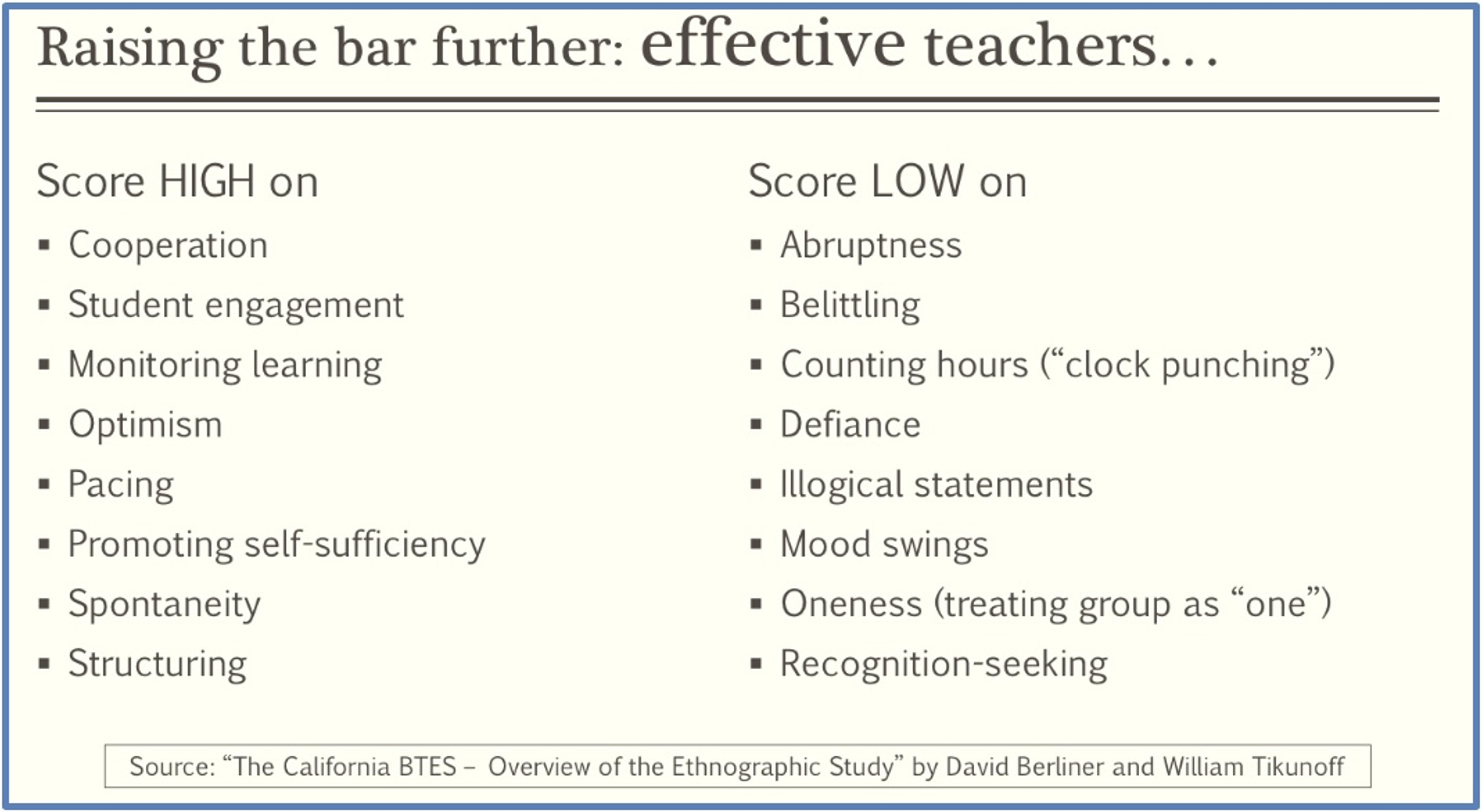
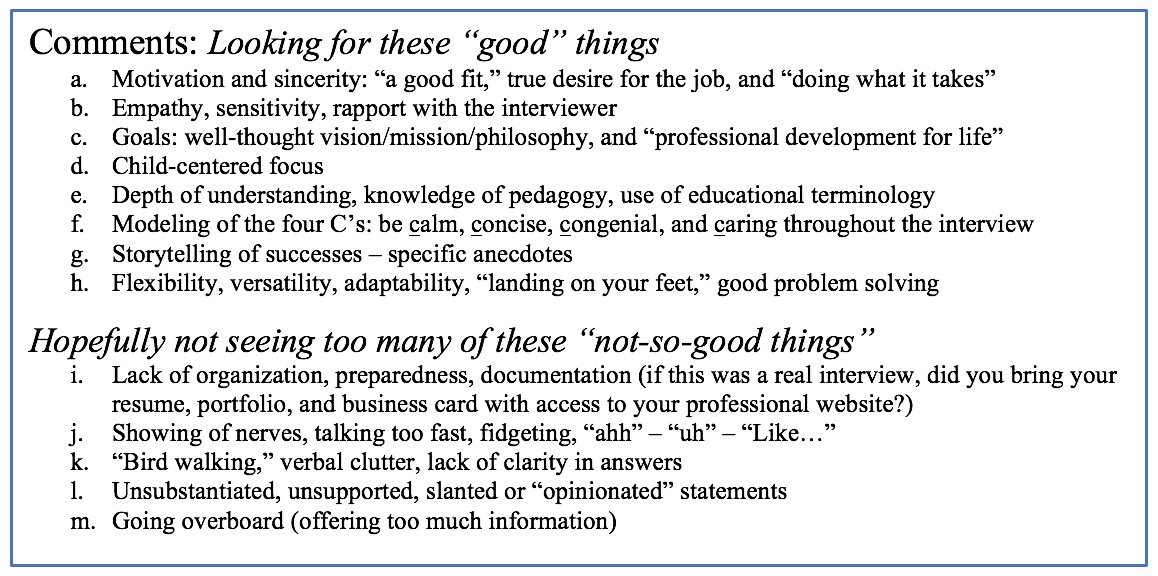
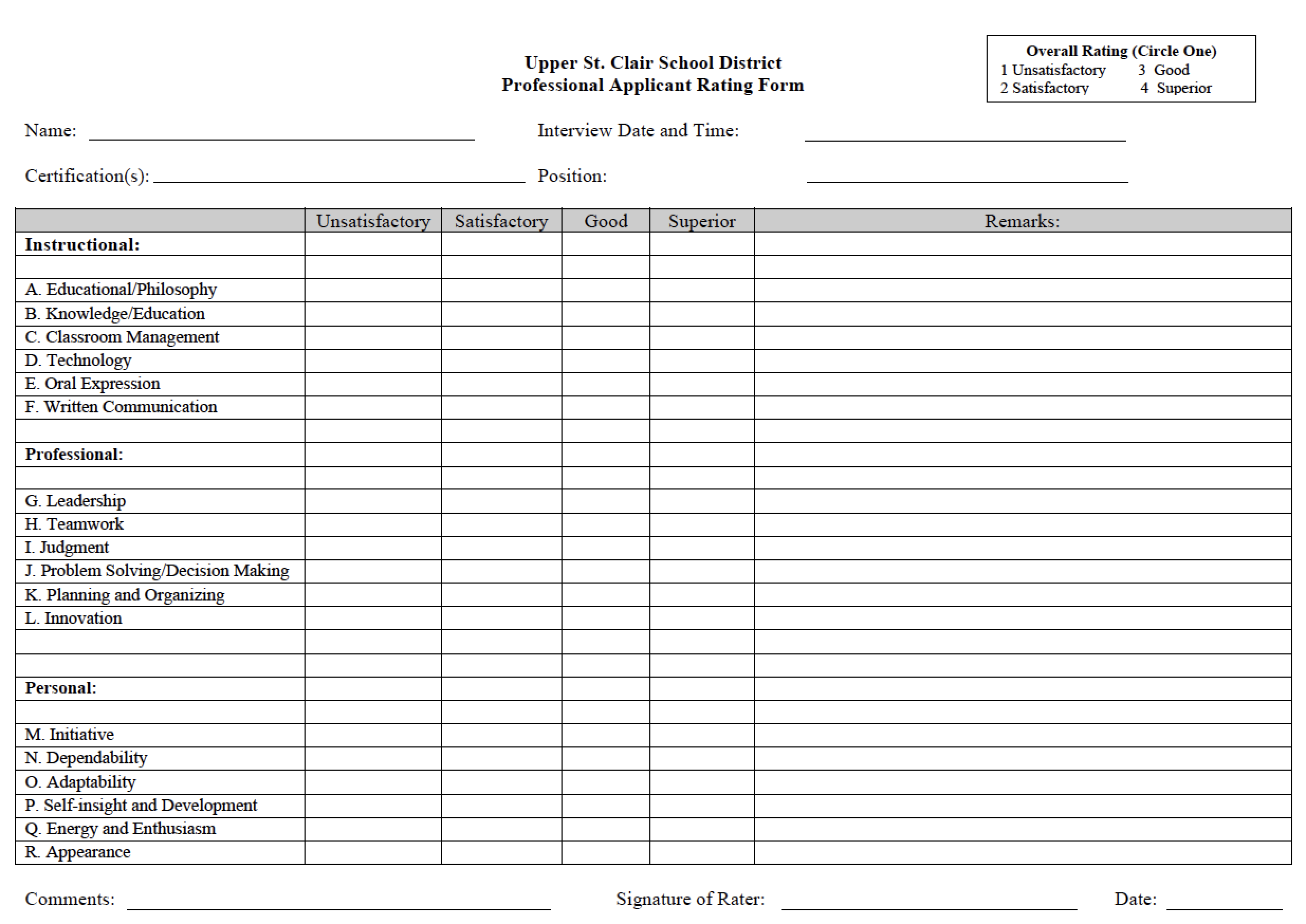
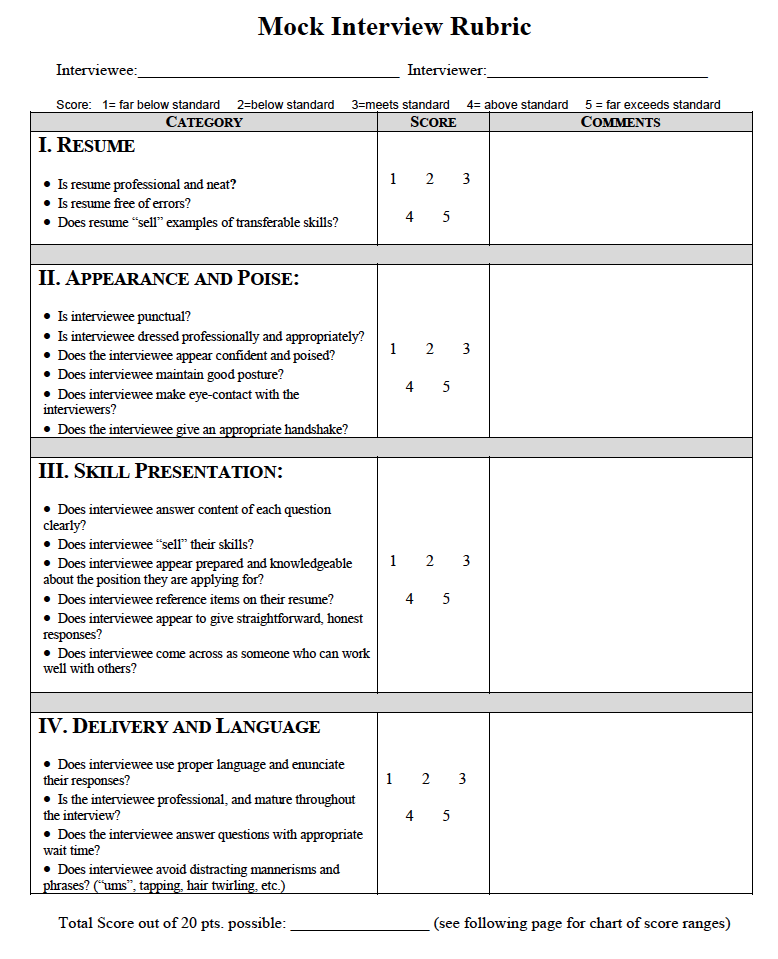
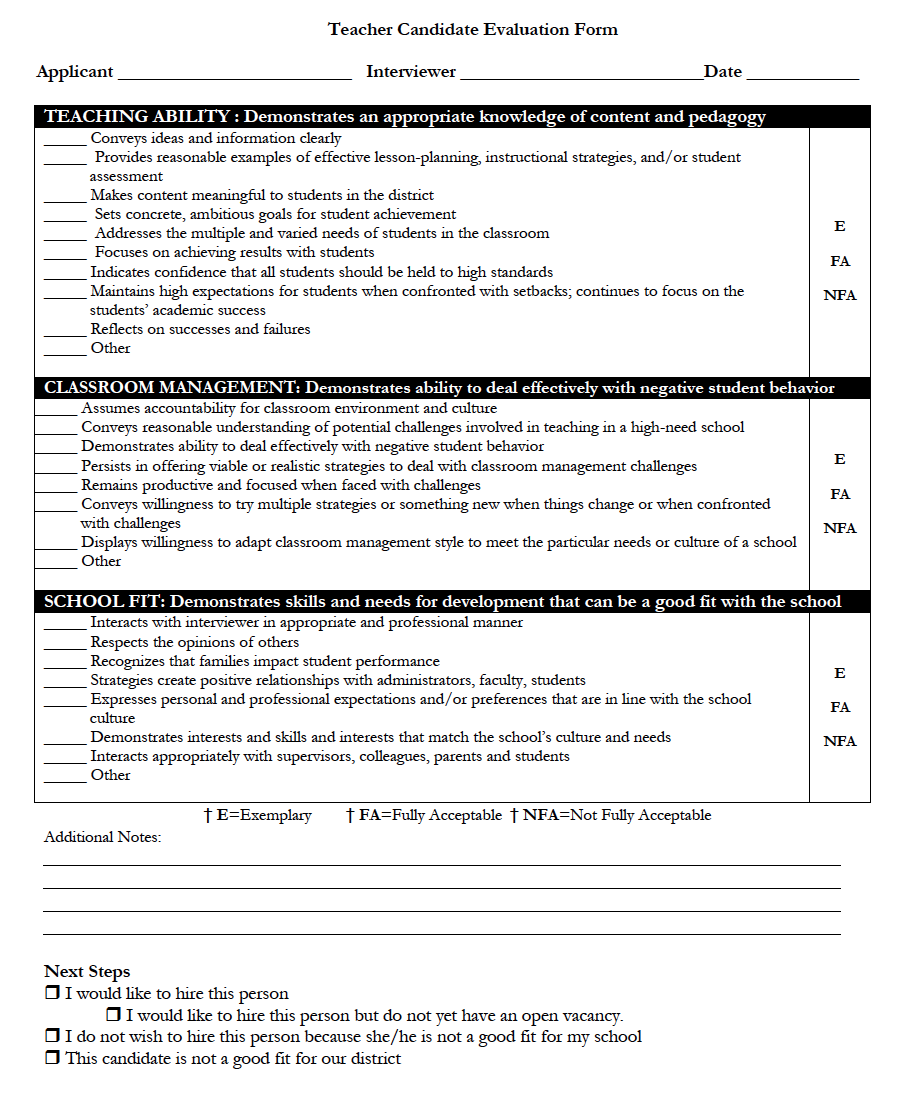
Actual sample candidate rating form
This form was used at the school district from which the author retired:
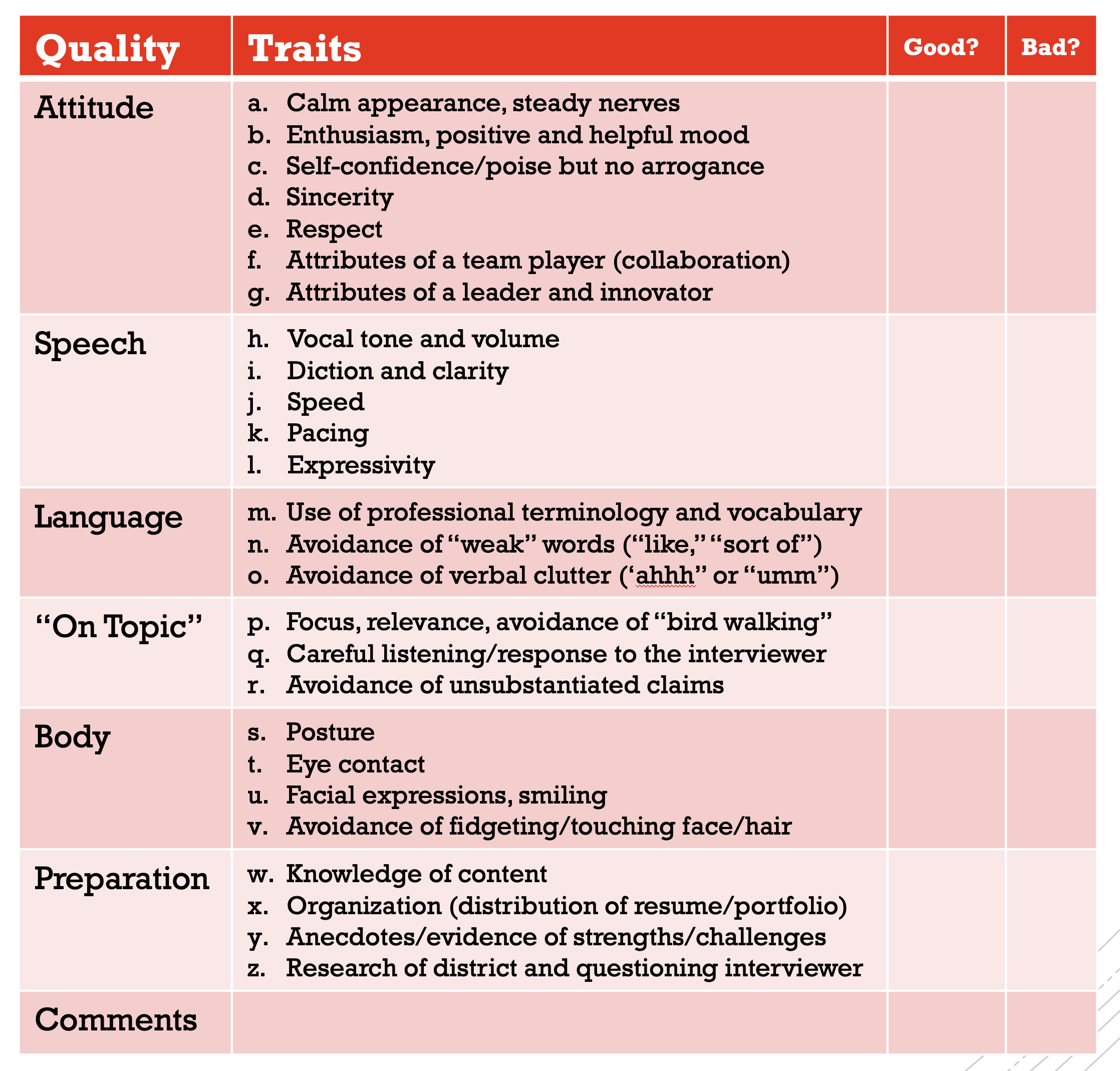
During the mock sessions, here’s an assessment tool you (and those observing your “performance”) can use. For emphasis, place the letter of the criteria under either the “good” or “bad” column.
Are you missing any more pieces of the puzzle?

TOP-TEN LIST:
The ultimate outline interview primer for pre-service music teachers
- Overall marketing skills – “the science” of finding a job https://paulfox.blog/2015/07/08/overview-strategies-for-landing-a-music-teacher-job/
- “But you got to know the territory…” (The Music Man)
- Making connections
- Branding yourself
- Storytelling about the challenges and triumphs you faced in life
- Proving that you have “what it takes” and your skills/experiences would be a “good fit” to the needs, goals, and values of the institution, employer, and position to which you are applying
- Being persistent and well-organized
- The “alphabet soup” of educational terminology, jargon, acronyms, etc. https://paulfox.blog/2015/07/18/the-alphabet-soup-of-educational-acronyms/
- In PA, training and assessment in the criteria of Charlotte Danielson’s “Four Domains” from the Framework for Teaching. https://danielsongroup.org/framework and https://paulfox.blog/2015/08/09/criteria-for-selection-of-the-ideal-teacher-candidate/
- Types of music teacher employment screenings https://resumes-for-teachers.com/blog/interview-tips/the-most-common-types-of-interviews-in-the-education-sector/ and https://paulfox.blog/2015/09/01/a-blueprint-for-success-preparing-for-the-job-interview/
- Online
- Informal
- Structured
- Unstructured
- Sequential
- Panel or Group
- Audition/Performance (on major and minor instrument, singing, piano accompaniment)
- Lesson Demonstration
- Types of interview questions
- Music and music education content and methods
- General education terminology and concepts (see #2 above)
- Past experience and education (avoid an emphasis on a specialty) and personal philosophy and goals https://paulfox.blog/2015/07/04/marketing-yourself-and-your-k-12-music-certification/
- Personality traits, social skills, and habits of “professionalism” https://paulfox.blog/2015/07/01/the-meaning-of-pro/ and https://paulfox.blog/2015/08/09/criteria-for-selection-of-the-ideal-teacher-candidate/
- Interview questions
- https://paulfox.blog/2015/09/01/a-blueprint-for-success-preparing-for-the-job-interview/
- https://paulfox.blog/2016/02/27/interview-questions-revisited/
- https://paulfox.blog/2016/06/04/those-tricky-interview-questions/
- https://paulfox.blog/2020/01/26/more-on-teacher-interviews/
- https://paulfox.blog/2020/05/11/questions-for-the-3-phases-of-interviews/
- The “ABCs” of additional employment marketing topics
- Branding https://paulfox.blog/2015/12/16/tips-on-personal-branding/
- Body language https://paulfox.blog/2017/01/27/body-language-interviewing-for-a-job/
- Dress https://paulfox.blog/2017/07/22/dress-for-success-at-teacher-interviews/
- e-Portfolio https://paulfox.blog/2015/11/15/planning-the-perfect-professional-portfolio/
- Networking https://paulfox.blog/2016/04/04/networking-niceties/
- Professional website https://paulfox.blog/2018/01/14/the-professional-website/
- Resume https://paulfox.blog/2016/01/12/music-teacher-resumes-revisited/
- Story-telling https://paulfox.blog/2015/08/02/when-it-comes-to-getting-a-job-s-is-for-successful-storytelling/
- 21st Century employment search strategies https://paulfox.blog/2016/08/14/21st-century-job-search-techniques/
- Membership in PCMEA/PMEA and other professional associations
- “Have resume will travel”
- E-portfolio and professional website
- Electronic business cards
- Hiring agency sites and job bulletin boards
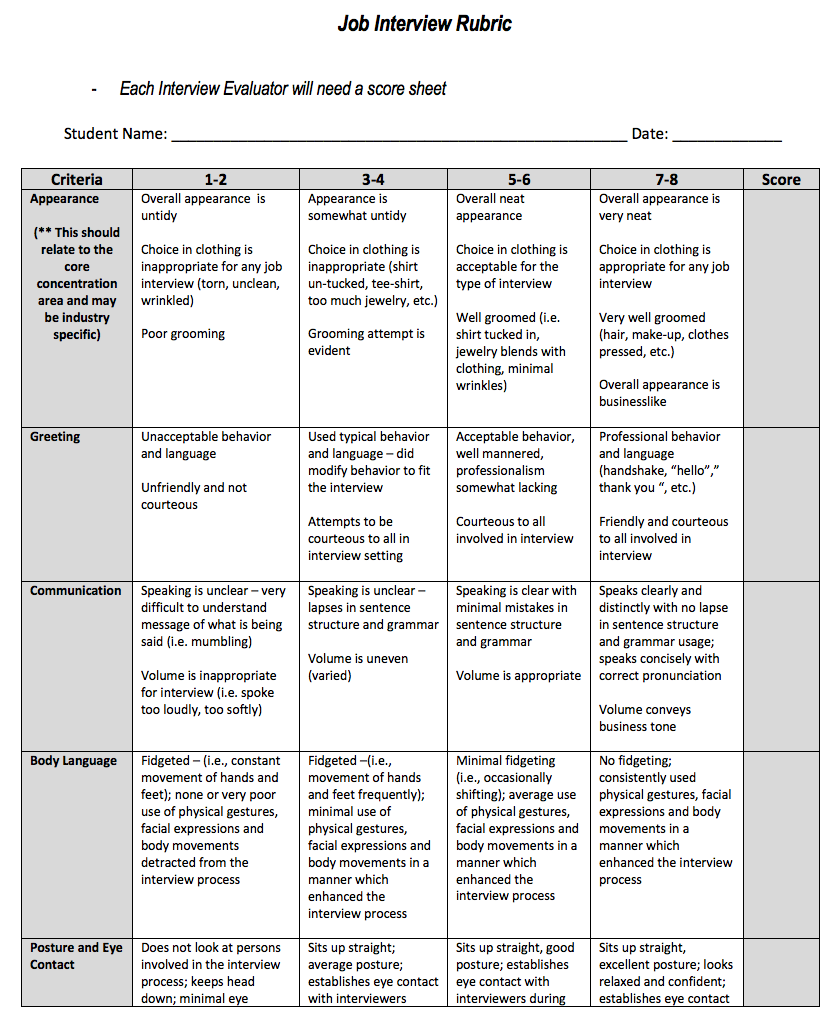
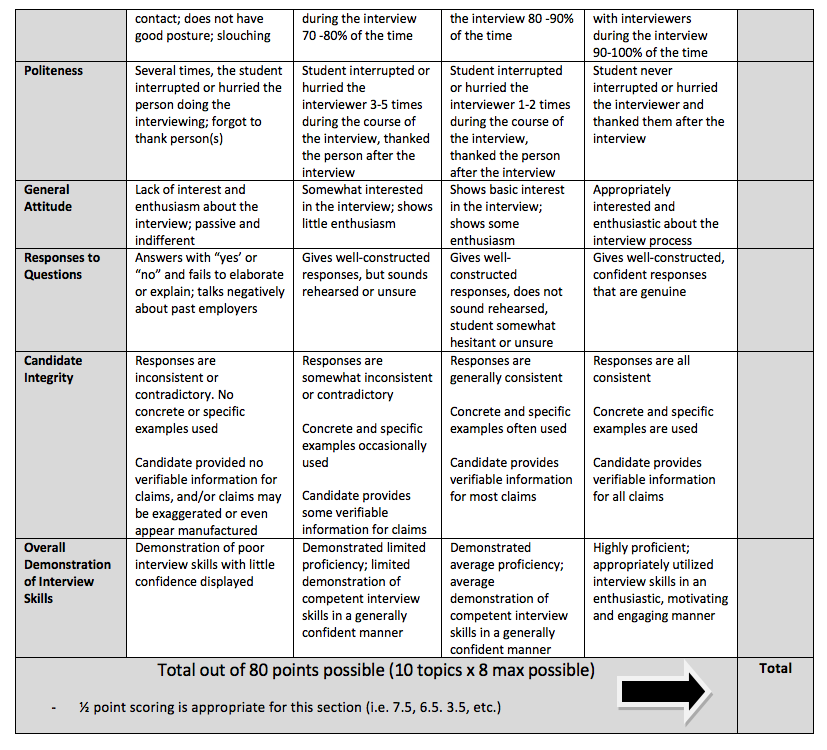
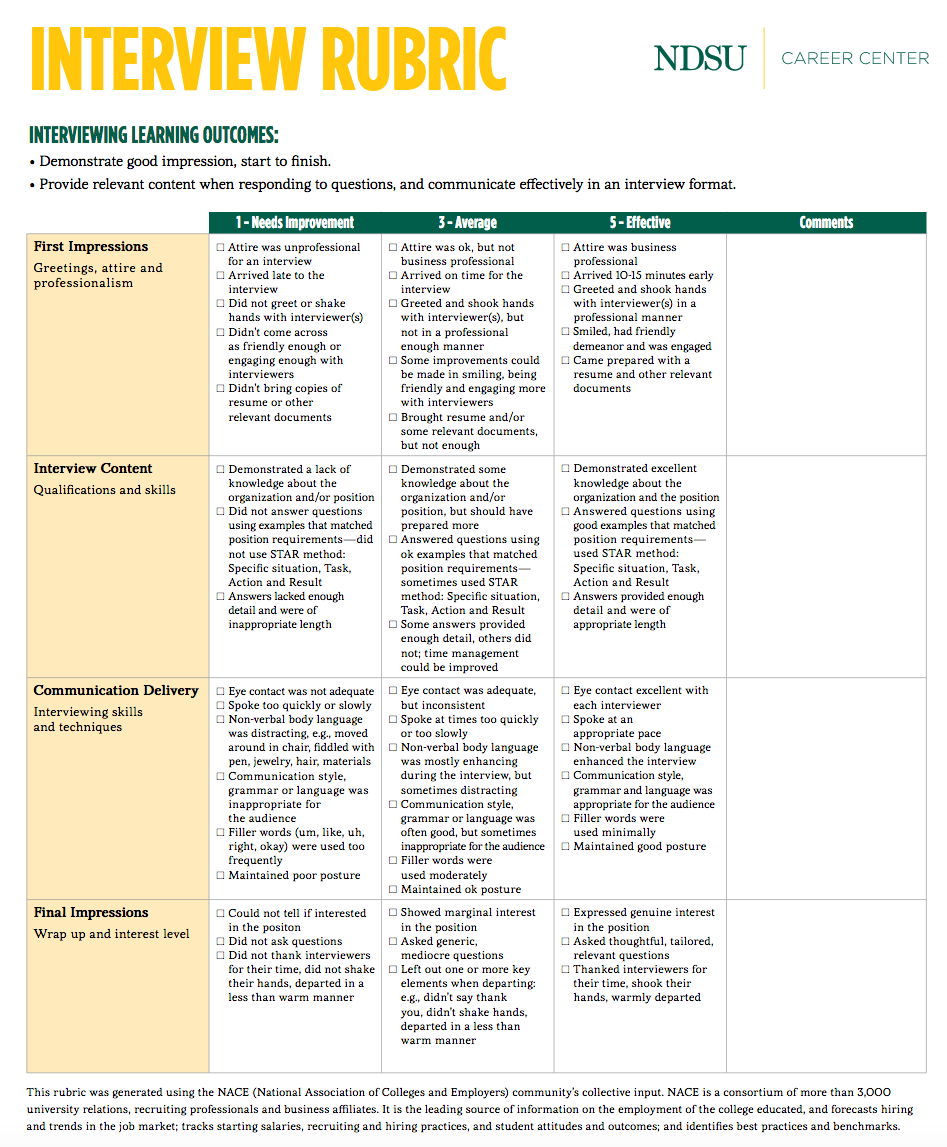
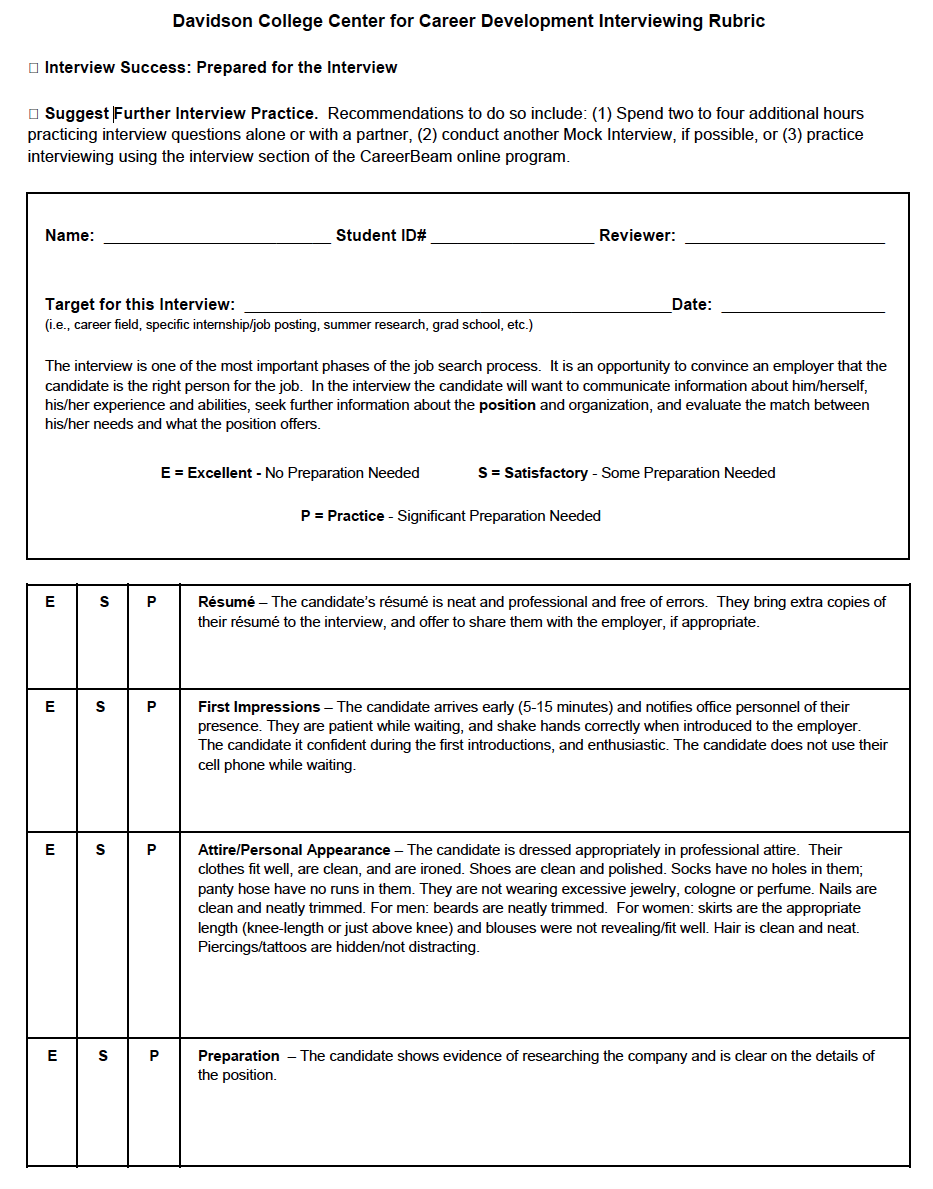
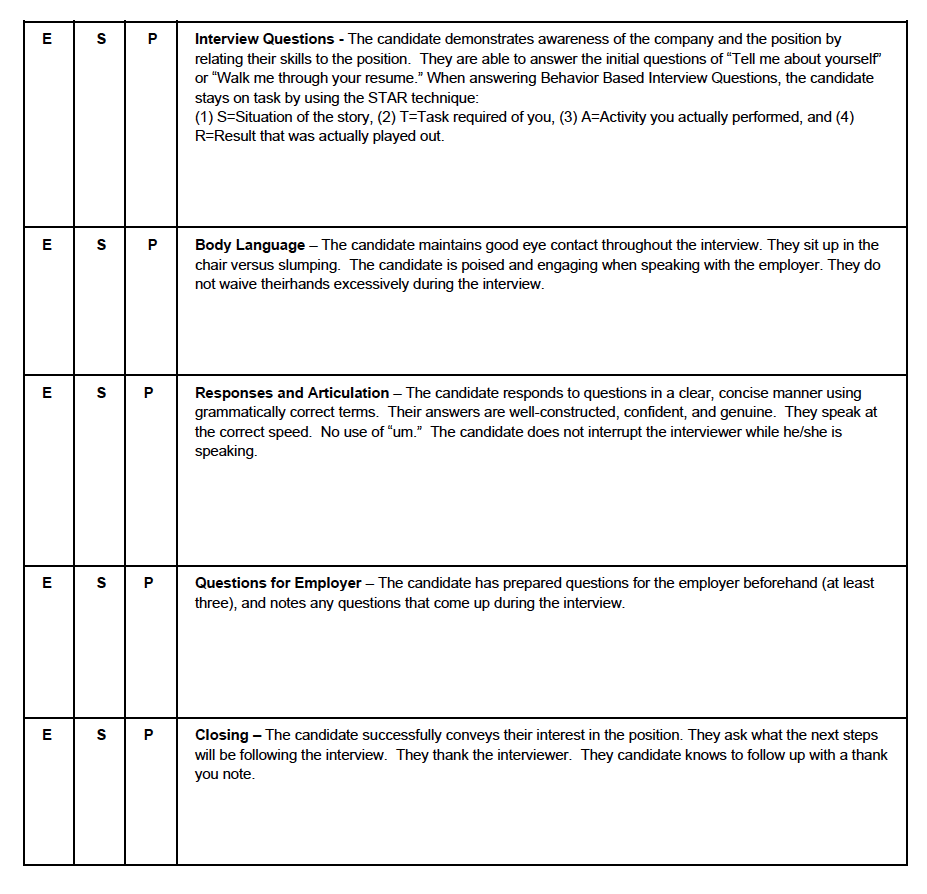
- Additional interview assessments https://paulfox.blog/2019/05/14/job-interview-rubrics/
- Other websites to peruse
- Majoring in Music: https://majoringinmusic.com/music-teacher-job-interviews/, https://majoringinmusic.com/essays-personal-statements-and-resumes-for-music-students/, https://majoringinmusic.com/7-things-music-education-majors-can-do-make-themselves-more-employable-2/, and https://majoringinmusic.com/finding-first-music-teaching-job/
- NAfME: https://nafme.org/interviewing-skills-the-rules-of-the-road/ and https://nafme.org/checklist-intelligent-interviews/
- Edutopia: https://www.edutopia.org/blog/rock-teaching-job-interview-heather-wolpert-gawron
“You can take it with you…” The above list is available here as an easy-to-print PDF file.
© 2021 Paul K. Fox



 How many class periods (not counting lunch) are structured for the academic day? Are specific grade levels or buildings organized in block scheduling, “period 0” and/or before/after-school curricular or co-curricular classes, lesson pullouts, period rotations or A/B weeks, etc.?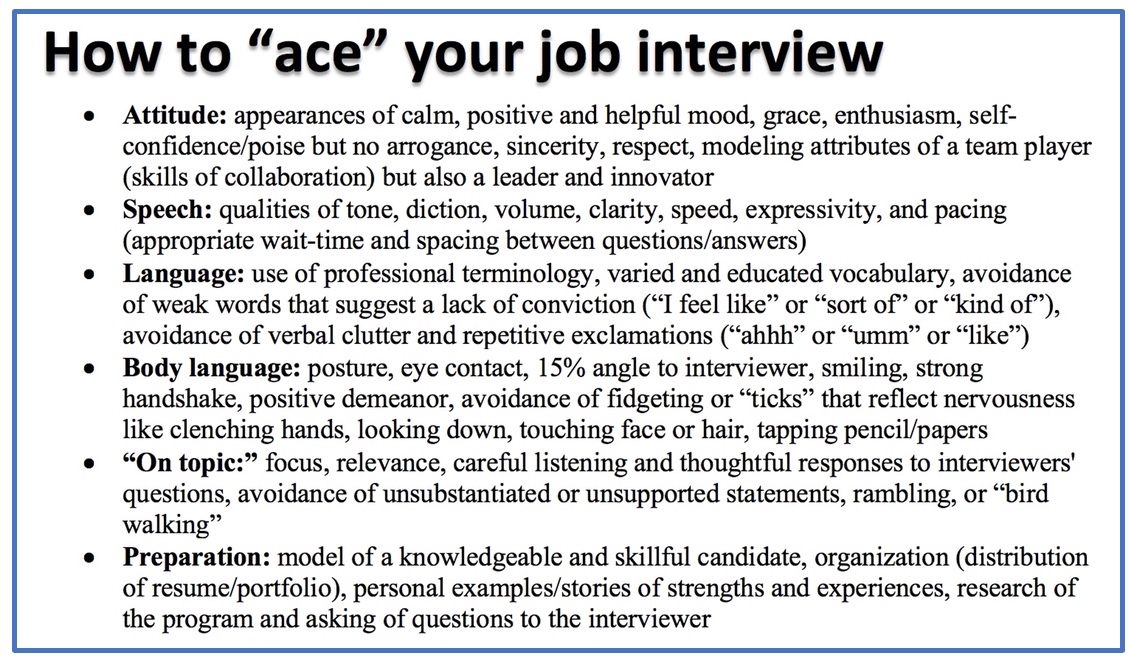
 Describe your approach to introducing a musical concept: singing matching pitches, keeping a steady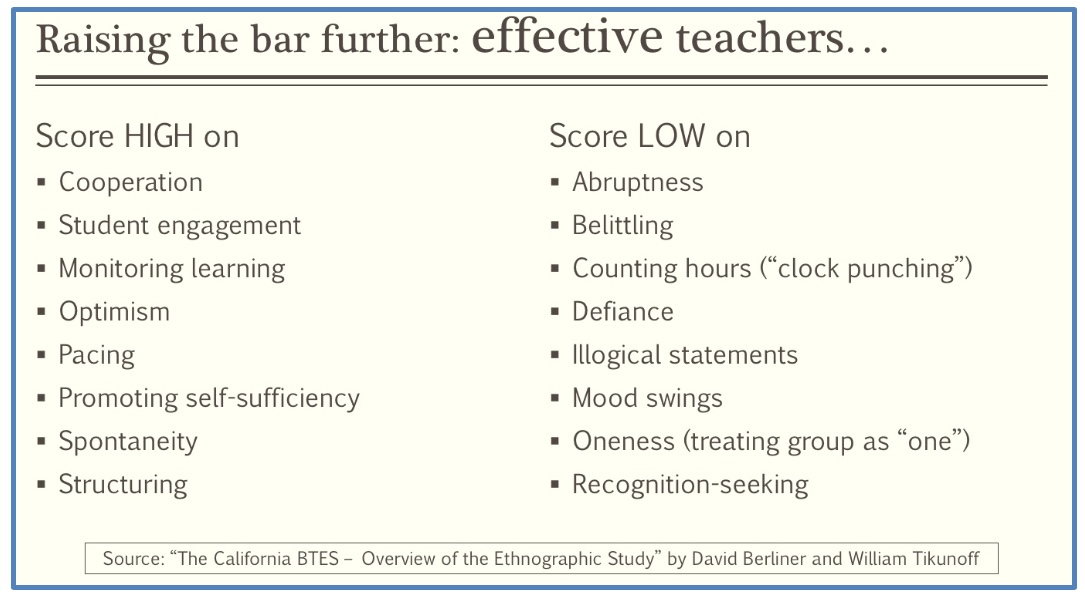
 Are you telling me it’s time to bring up more questions? Yep, to finalize your interview’s “postmortem,” reflect on these queries, which will become your focal points in preparation of your next job screening.
 IEPs – Individualized Education Program, including IDEA (disabilities), 504 plans, accommodations for special needs, differentiated and customized learning, etc.
 Did you respond to the interviewer’s questions “on topic” with clear, concise, and substantiated statements, supported by specific anecdotes/stories or examples of your skills or experiences?







 What are your greatest weaknesses?
 Because we all have weaknesses but rarely want to admit to them, it’s best to begin with a truthful answer and build your script from there. Select an answer that a hiring manager would not consider to be essential qualities or skills for the position as well as qualities that you are actively improving.
 Example weakness: Difficulty with an area of expertise
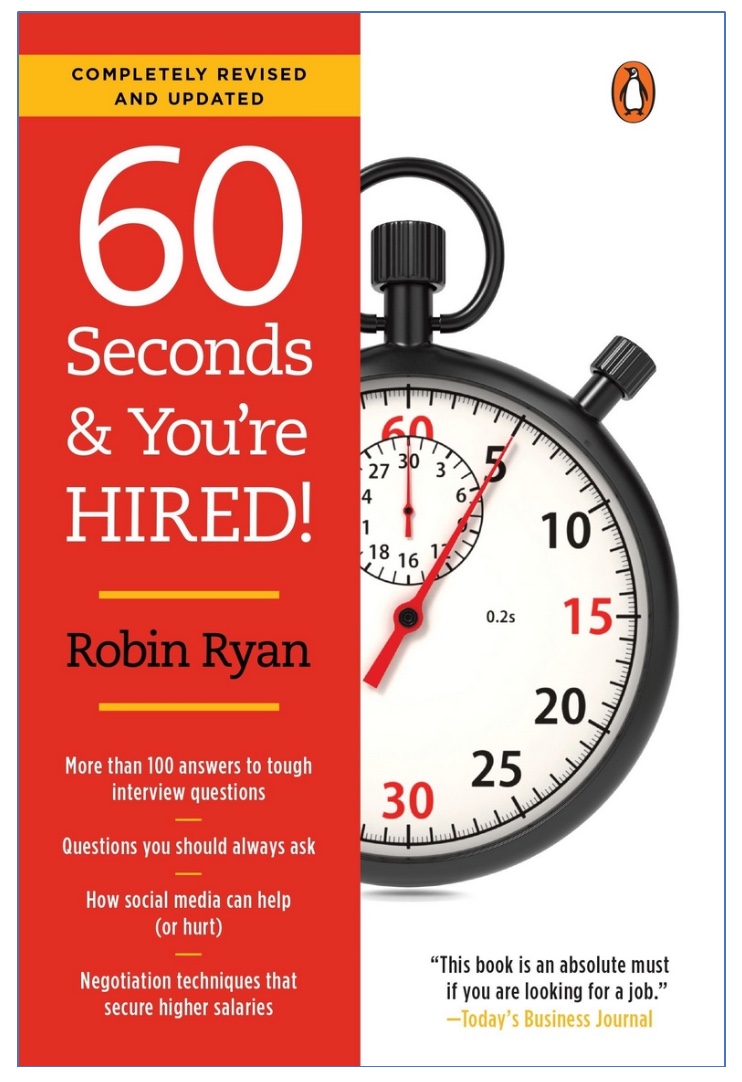 Focusing on Robin Ryan’s “interview tools” such as “the five-point agenda” and “60-second sell,” her book 60 Seconds and You’re Hired ” is inspiring and provides much greater depth (76 pages!) on answering those “thorny” interview questions. Nearly all of the sample questions above are also analyzed, offering easy-to-understand comments and recommendations for specific career paths. For example, Robin Ryan also weighs in on that inquiry “What is your greatest weakness?” – first offering to joke about it “I cannot resist chocolate!” and then, if it is reiterated, endorsing a strategy to share a work habit problem (like being a “Type-A” person) on which you are currently improving but is not critical for the position they are seeking to fill.



 Discounted NAfME + PMEA first-year membership: only $90. (If you are a recent college graduate in your first year of teaching, or if you are the spouse of a current or retired NAfME member, contact NAfME at 800-336-3768 or email
 Bring to any employment screening your resume, business card, and an e-portfolio referencing a professional website which archives everything in #1 and #2 above.
 Clean-up and curate your social media sites, treating your Facebook pages as another “personal branding resource.” Experts recommend that “your profile information should reflect integrity and responsibility… You should expand or add content that projects a professional image, shows a friendly, positive personality, demonstrates that you are well-rounded with wide range of interests, and models… great communication skills.”










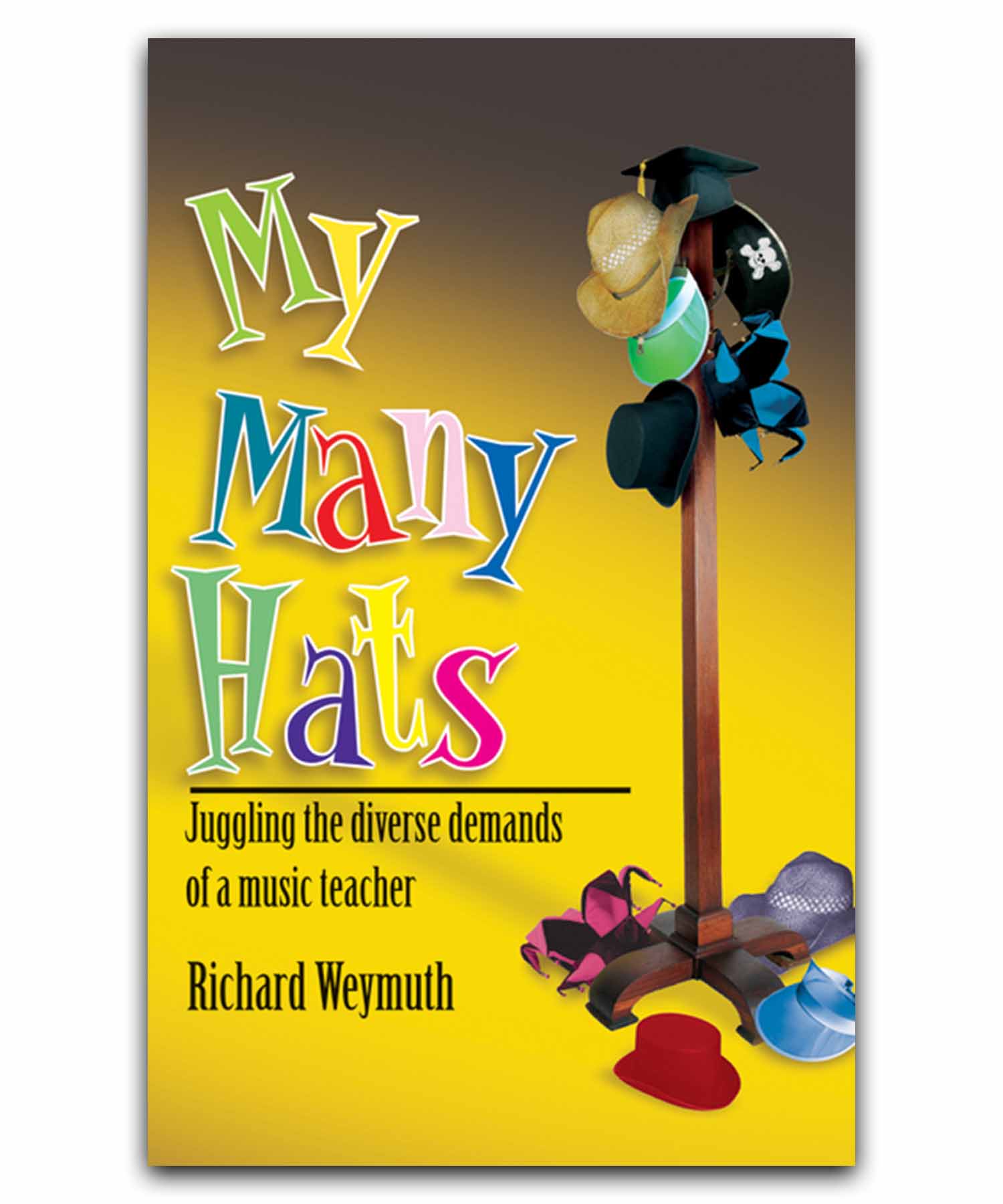 In the category of “things I wishes someone would have told me before I was hired to be a school music educator,” the inspirational book, My Many Hats: Juggling the Diverse Demands of a Music Teacher by Richard Weymuth, is a recommended “first stop” and easy “quick-read.” Published by Heritage Music Press (2005), the 130-page paperback serves as an excellent summary of the attributes (or “hats”) of a “master music teacher.” Based on the photos in his work (great “props”), I would have loved to have seen Weymuth’s conference presentations in person as he donned each hat symbolizing the necessary skill-set for a successful educator.
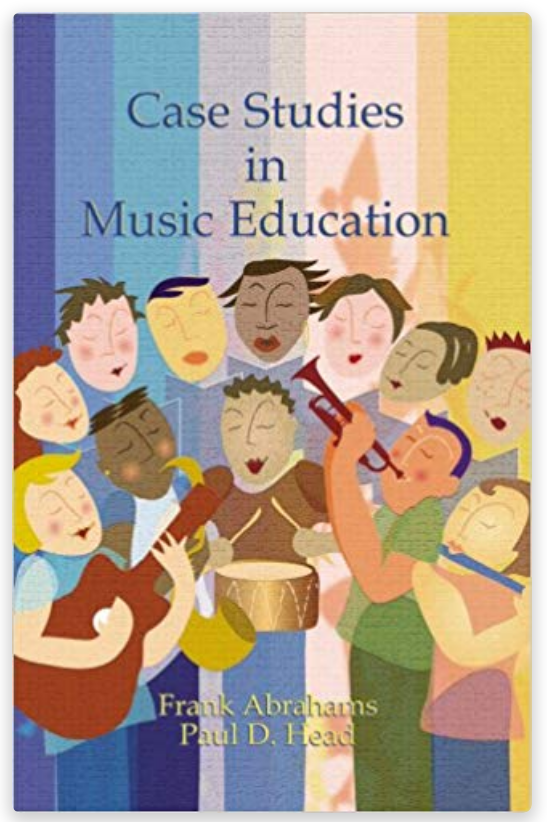 Next, I would like to direct pre-service and new music teachers to Case Studies in Music Education by Frank Abrahams and Paul D. Head. This would be an invaluable aid to “facilitate dialogue, problem posing, and problem solving” from college students (in methods classes?) and “rookie” teachers to veteran educators.
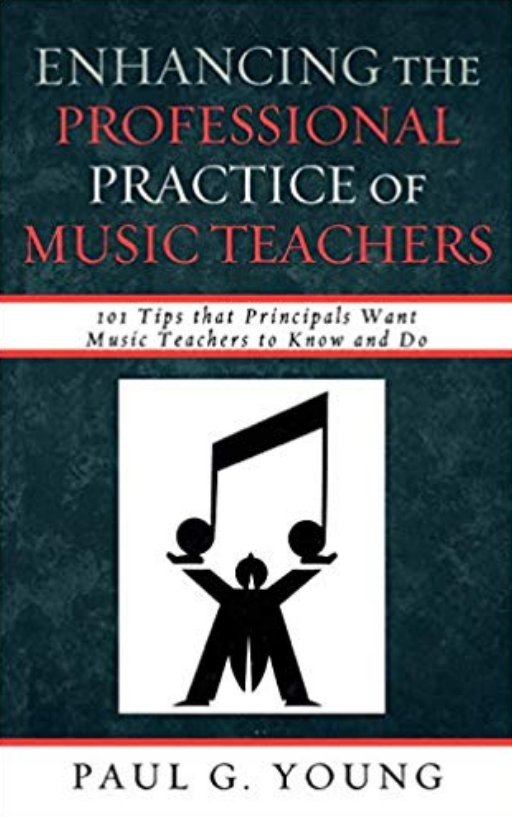 His chapters are organized into six tips:
 The first thing I want you to do (and you don’t even have to be a member of NAfME yet, although you should be!) is to take at least a half-hour, scroll down, and read through numerous NAfME “Music in a Minuet” blog-posts, bookmarking any you want to return to at a later date. Go to




 now would be the perfect time to explore supplemental resources and get a “head-start” on additional pre-service training for next fall. These tips are especially valuable to anyone entering his/her senior or final year as a music education major, finely honing in and marketing your skills as a professional in order to be prepared for finding and succeeding at your first job.


 Mix and mingle to improve your networking opportunities

 Understanding specific educational jargon and the latest approaches, applications, and technologies in the profession (e.g. Backwards Design, The Common Core, Whole Child Initiatives, Multiple Intelligences, Depth of Knowledge and Higher Order of Thinking Skills, Formative, Summative, Diagnostic, and Authentic Assessment, etc. – Do you know the meaning of these terms?)
 You need to ask yourself the question, “What are my greatest weaknesses in music education?” Or, to put it another way, “What school assignments would I feel the least confident to teach? After earning your state’s all-essential credential, your certificate will likely be general and only say “music Pre-K to Grade 12.” Administrators will expect you can “do it all” – introducing jazz improvisation at the middle school, accompany on the piano or guitar all of the songs in the grades 1-6 music textbook series, directing the marching band at the high school or the musical at the middle school, starting an elementary string program, etc.
 Since music teachers are all “fiduciaries” (do you know the meaning of the word?) and legally responsible for our “charges,” wouldn’t it be a good idea to review our state’s regulations and code of conduct, and hear about the challenges and pitfalls of ethical decision-making before we jump in and get “over our heads,” so-to-speak?
 ask your cooperating teacher (or his/her supervisor’s) permission. Some school districts have “do not photo” rosters. (However, in my district, only a few elementary students were “on the list” and most defaulted to a “permissible” status unless the parent opted out. The principal’s secretary had a record of all exceptions.) It is also suggested that you focus your camera mostly on YOU and not the students, from the back of the classroom or rehearsal facility (possibly from afar), so that the student faces are not clearly discernible. To respect their privacy, in the recorded excerpts, do not use any segment announcing the names of your students.


 To “wrap-up” our final segment, we will review the development of a professional “marketing plan.” This is blog #3 out of 3. (Be sure to also check out
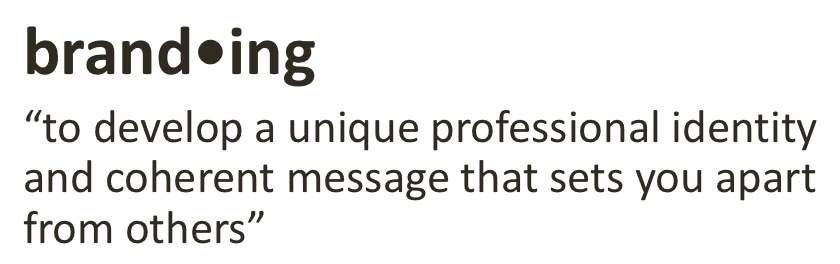
 Shama Hyder posted “7 Things You Can Do to Build an Awesome Personal Brand” at
 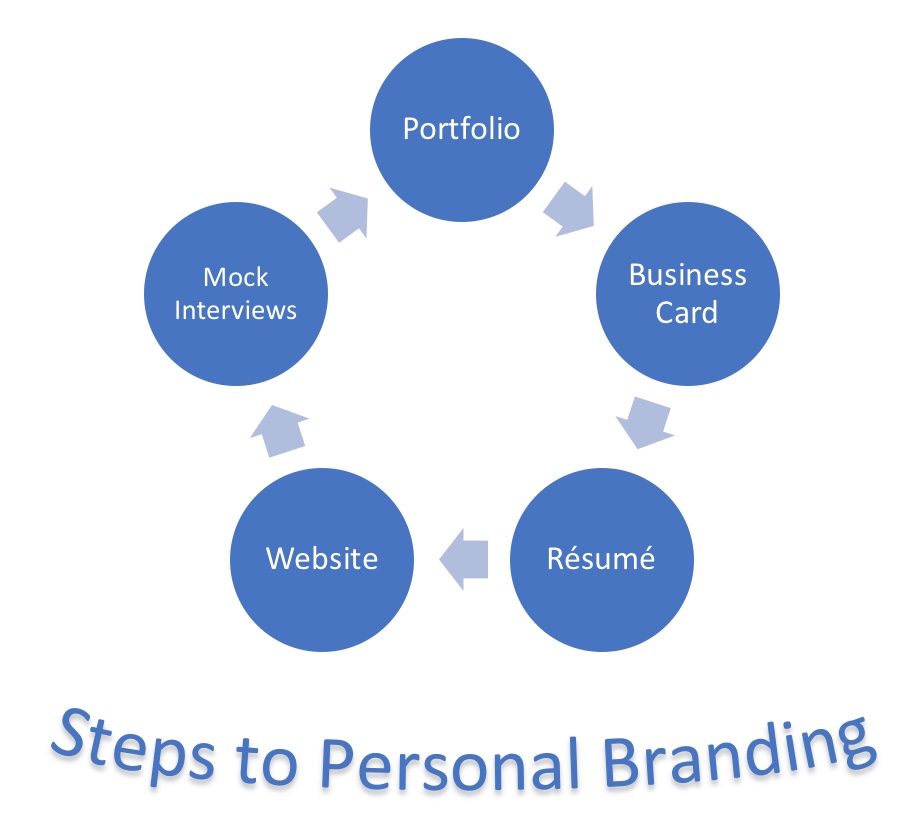 The branding process involves first developing your philosophy of music education, archiving your awards and accomplishments, documenting your grades and
  experiences, and collecting stories/personal anecdotes of your strengths. The next steps include the creation of a written and electronic portfolio, business card, resume, and website. Finally, you must compile/assemble everything together and practice (and self-assess) your “story-telling skills” to answer those important questions at well-rehearsed “mock interviews.”

 As I laid out in a previous blog “Networking Niceties: The ‘How-To Schmooze’ Guide for Prospective Music Teachers” at
 Self-reflection of the professional’s teaching practices and modification of these as needed to match changes in the environment and circumstances


 competence, and responsibility, and should probably error on the side of more formal attire rather than day-to-day casual.
 Suits are always a good choice.
 My view? Teaching is still among the most conservative of occupations. That is how it is viewed by the general public, parents of school-aged children, School Boards, administrators, and interview panels. You can certainly exercise your right to wear whatever you want and show-off numerous body piercings or tattoos… but, like it or not, the school districts are within their rights to choose someone else.
 paulfox.blog