
 Once the COVID-19 emergency was declared and universally all schools and outside activities were cancelled (for who knows how long?), the 37th spring season of my community youth (of all ages) orchestra was also “clobbered!” Up to this time, the Western PA-based South Hills Junior Orchestra (SHJO) regularly met on Saturdays from 10:30 a.m. to 12:30 p.m. at the school from where I retired: Upper St. Clair High School.
It immediately became apparent I must reach-out to my instrumentalists and keep them “at it” to continue their music practice and artistic enrichment. How should we stimulate our music students and embrace those activities most of us “traditional” music teachers may be less skilled/experienced in approaching:
- digital
- virtual
- remote
- alternative or
- distance music learning?
First, using a free-version of Mailchimp, a software tool that helps generate and send out group emails, we messaged our ensemble players, trying to inspire “re-connections” and independent learning, and giving them “pep talks” like this one on March 30, 2020: https://mailchi.mp/129b1cfdc54e/music-and-artistic-enrichment-3922957.
Then, it was time to research the wonderful world of online music education, such as this huge collection of ideas from “professionals in the know.” (See my last blog-post at https://mailchi.mp/129b1cfdc54e/music-and-artistic-enrichment-3922957 OR this regularly updated link on the PMEA Council for Teacher Training, Recruitment, and Retention website.)
The results of all of this are the following SHJO.clips, being distributed to our SHJO families several times a week. This is an ongoing process, and we welcome YOUR COMMENTS – questions, concerns, and new suggestions, too.
[All of these and future posts are available as PDF files at http://www.shjo.org/clips.]
CLIP #1
Inspire: Have you ever tried the “experiments” in Chrome Music Lab?
What can you create?
https://musiclab.chromeexperiments.com/Experiments
Listen: Critique this YouTube recording of the Fugue in G Minor
https://www.youtube.com/watch?v=QmZURoUJQe0
Questions for self-reflection:
- What are a few of the strengths or positive attributes of this performance?
- Generally, how were the quarter notes articulated? Legato, marcato, staccato? In your opinion, how should they have been played?
- What improvements would you offer for the posture of the performers?
- What sections in the music did the ensemble “hang together” and when did they “fall apart?”
Practice: Select and play your favorite major key…
…performing a scale up and down on your instrument:
- Long tones (quarter notes), focusing on good tone and intonation. Quarter note = 60
- Four eighth notes per pitch in a legato articulation (same tempo).
- Two eight notes per pitch (same tempo)
- One eighth note per pitch (same tempo)
Every day you practice, change the key (start on a different note).

CLIP #2
Listen: Easy Guide to Appreciating Classical Music
https://www.youtube.com/watch?v=v11OJNEdIn8
Sit back (wash your hands and pass the popcorn) and enjoy this introductory video for listening to Classical Music.
Did you know the definitions of opus, fugue, subject, recap?
How was the nickname “Moonlight” assigned to Beethoven’s famous Piano Sonata?
How many different periods of Classical music does the moderator mention? Could you name them?
Inspire: Are you a little bored staying home from school?
Just for fun, here are a few online music games your parents would approve of you playing to review terminology, composers, and notation.
- Music Expressions and Terms Hangman http://www.musictechteacher.com/music_quizzes/hp_quiz_hangman002_musicexpressions/hangman002_musicexpressions.htm
- Treble and Bass Note Name Space Invaders http://www.musictechteacher.com/music_quizzes/cg_quiz_invaders_music_note_names.htm
- Composer Concentration (easy) http://www.musictechteacher.com/music_quizzes/quiz_concentration_composers_easy/quiz_composer_concentration001_easy.htm
- Composer Concentration (hard) http://www.musictechteacher.com/music_quizzes/quiz_concentration_composers_adv/quiz_composer_concentration.htm
Practice: “The Ladder of Music Achievement”
Ever wonder how a music teacher knows what and when to teach a specific musical concept? Here’s the “rubric!” Start at the bottom and work yourself up “step by step.” Take a passage from our music. How high can you go?
- Level 12: I played expressively.
- Level 11: I played with self-confidence.
- Level 10: I played with phrasing.
- Level 9: I played with the dynamics as marked.
- Level 8: I played with characteristic tone (with vibrato).
- Level 7: I played with the correct bowing style (legato/detaché, staccato/martelé, or spiccato).
- Level 6: I played with the correct articulation (legato, marcato, or staccato).
- Level 5: I played the bowings (down and up) and slurs correctly.
- Level 4: I played the pitches with accurate intonation.
- Level 3: I played the correct fingerings and pitches.
- Level 2: I played the rhythm accurately.
- Level 1: I held a steady beat.

CLIP #3
Create: Learning to Hear & Compose Harmony for Our Favorite Theme
Score: https://www.noteflight.com/scores/view/f7c3185d04f2c9307dff1114e7ad6596eb46da3c
Website for Noteflight: https://www.noteflight.com/home
Not sure if SHJO members have access to Noteflight, a free program for generating sheet music, but just watching the video, you can learn a lot about creating harmony. If you are interested in “jumping into” learning Noteflight, go to their website above (ask for permission to sign-up – purchasing the premium version is not needed).
Listen: “Warren Music” series
Although focused on “popular” music and at times a bit repetitious, WARRENMUSIC provides a library of music theory and ear-training (even play-by-ear) lessons, enough to keep you busy for hours! Do you play guitar? You’ll love Warren! See samples below. If you want to “hit the street running,” peruse #5 and then videos #9 on.
https://www.youtube.com/watch?v=7wAux1hh9wU&list=PLz4ee9SDzhrpJ1v-o5VSqHSyMC3-rXjtP&index=1
https://www.youtube.com/watch?v=GWD5-xmSovo&list=PLz4ee9SDzhrpJ1v-o5VSqHSyMC3-rXjtP&index=5
https://www.youtube.com/watch?v=v7l6Y6fTPDw&list=PLz4ee9SDzhrpJ1v-o5VSqHSyMC3-rXjtP&index=9
Practice: “The Ladder of Music Achievement – Part 2”
Now let’s assess your practice. Pick out a passage from the SHJO folder or any excerpt (several measures or lines) from other challenging solo/ensemble repertoire. Play the same section every day for a week. Create a journal with the date, problem solving observations, other comments, and rate your daily achievement using this meter:
- Level 12: I played expressively. _______________________________________
- Level 11: I played with self-confidence. _______________________________________
- Level 10: I played with phrasing. _______________________________________
- Level 9: I played with the dynamics as marked. _______________________________________
- Level 8: I played with characteristic tone (with vibrato). _______________________________________
- Level 7: I played with the correct bowing style (legato/detaché, staccato/martelé, or spiccato). _______________________________________
- Level 6: I played the correct articulation (legato, marcato, staccato). _______________________________________
- Level 5: I played bowings (down/up) & slurs correctly. _______________________________________
- Level 4: I played the pitches with accurate intonation. _______________________________________
- Level 3: I played the correct fingerings and pitches. _______________________________________
- Level 2: I played the rhythm accurately. _______________________________________
- Level 1: I held a steady beat. _______________________________________
Inspire: 126+ More Musical Games and Quizzes!
http://www.musictechteacher.com/music_quizzes/music_quizzes.htm
Check the above link of MusicTechTeacher’s entire collection! You can review concepts while having fun GAMING!


CLIP #4
Inspire: “A Message from The Foxes’ Favorite Master Motivator”
“Dr. Tim!”
Did you sit down and view “A Message from Dr. Tim Lautzenheiser” we sent out in the last Mailchimp newsletter? If you do nothing else today, this should be your number one priority! (Share this with your family members.)
Here is the link: https://www.youtube.com/watch?v=4MwWVkBBREw
Think about trying one or two of the things he suggested for helping yourself and others during this break.
Listen: Pittsburgh Symphony “Extraordinary Measures”
We are always looking for more SHJO.clips, and Mackenzie Cloutier researched and found this link of five videos! Even live performances of the PSO have been cancelled, but they are playing “on the web” just for you! Go to:
https://pittsburghsymphony.org/pso_home/web/extraordinary-measures
Practice: “The Wheel of Fortune”
SHJO Practice Spinner
Do you need help deciding on WHAT TO PRACTICE? How about going tech with an online SPINNER to SELECT what you should work on? Mrs. Fox found this cool website: https://pickrandom.com/random-wheel/.
Spin to cover at least 3 categories a day. Use the setting that removes the number after you spin it (no repeats).
- Zero = WARMUPS
- One = SCALES
- Two = ETUDES
- Three = SOLOS
- Four = ENSEMBLE MUSIC
- Five = MEMORIZE A TUNE
- Six = SIGHT-READ SOMETHING NEW
- Seven = “OLDIES”
- Eight = RECORD A SELECTION
- Nine = PLAY A DUET WITH YOURSELF
- Ten = PERFORM FOR SOMEONE
Share: We’re looking for more online games…
…that review music theory, history, notation, terms, etc.
Did you try all of these? http://www.musictechteacher.com/music_quizzes/music_quizzes.htm
Sometimes music learning can be a lot like GAMING! Mr. Fox found another website with which to experiment:
Ultimate List of Online Music Games: https://cornerstoneconfessions.com/2012/08/the-ultimate-list-of-online-music.html
If you find something interesting – any game, recording, or website – share it by emailing Mr. Fox at pfox@shjo.org.
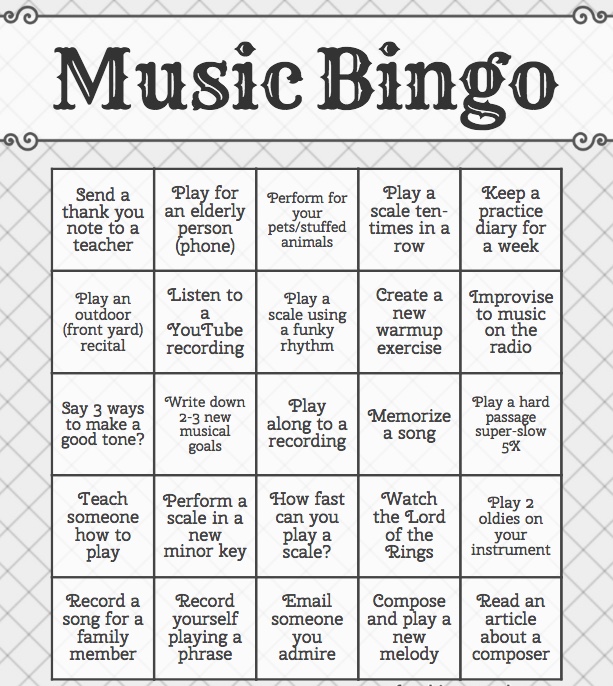
Create: BINGO CARD!
We are also looking for someone to design a fun practice card like this one: https://christina-yunghans.squarespace.com/s/Music-Bingo-Cards-sample.pdf.
Send a single copy to pfox@shjo.org.
CLIP #5
Share: “On the Ear” News Reporter
Broadcast your own music review!
For this activity, you will need a device with voice recording capabilities, and a different device to listen to music selections, such as a radio or a record player, CD player, tape recorder, Music Choice channels on cable TV, or a computer on which you can view a YouTube selection, etc. Listen to an orchestral music selection or a recording of a selection for the instrument you play. (Examples: Bach Fugue in G minor, “The Lesser” or Haydn Trumpet Concerto, and so on.) As you listen to the music on one device, have you voice recorder ready to make running comments, just like a music reviewer or “play by play” sports event reporter. Download all of the instructions here: http://www.shjo.org/s/Music-Reporter-032620.pdf
Inspire: “The Musicologist”
Free music theory review, courtesy of musictheory.net
We learned a lot last year using our Alfred Music Theory series. How much of it can you recall defining the “fundamentals of music notation?” (You do not have to purchase their Tenuto app as advertised on the website, although it is a reasonably priced option for further study! If you are a serious musician, Mr. Fox recommends it.)
Complimentary online instruction is available at https://www.musictheory.net/lessons.
To test your knowledge, here is the free link: https://www.musictheory.net/exercises.
Listen: “How Bad Can It Get?”
Classical music “fails” – just for fun!
Do you need a good laugh… conductors losing batons, concert disruptions, and much more? If you can get past the hideously out-of-tune and badly played introduction, see if you can find a violist making fun of a cell phone going off during his recital: https://www.youtube.com/watch?v=vPA31kvEUyY
Practice: “Mr. Fox’s Music Bingo”
A few ideas to keep on practicing and “give back” your music!
If you want to print your own copy of the card or re-arrange the order of the activities, download from this link: https://christina-yunghans.squarespace.com/s/Music-Bingo-Cards-sample.pdf.
Practice: “Mr. Sheehan’s Practice Guide”
If you prefer a more cerebral plan, download/read/apply the excellent manual “What to Do When You Practice” written by the band director from Hollidaysburg Area Senior High School (PA), and the new President-Elect of the National Association for Music Education: http://www.shjo.org/s/What-to-Do-When-You-Practice-Booklet.pdf
CLIP #6
Share: “Easy Classical Music Games”
Teach a younger sibling or neighbor the “basics of music!”
SHJO has a membership of all ages. Some of these clever activities are pretty easy, so “show your stuff” to a friend or family member: https://www.classicsforkids.com/games.html
Inspire: “Budding Composers: How to Avoid Getting Sued”
Mr. Fox’s latest YouTube video “find!”
How many Classical music themes seemed to be “borrowed” in popular music? A few tips on copyright law, too! Closer to home, do you remember SHJO’s playing of “Aura Lee?” Do you know the origins of the tune, who originally wrote the lyrics and music, and what popular piece/group used the melody? (Hint: Elvis Presley)
“14 Songs That Rip Off Classical Music” from the UK https://www.youtube.com/watch?v=yknBXOSlFQs
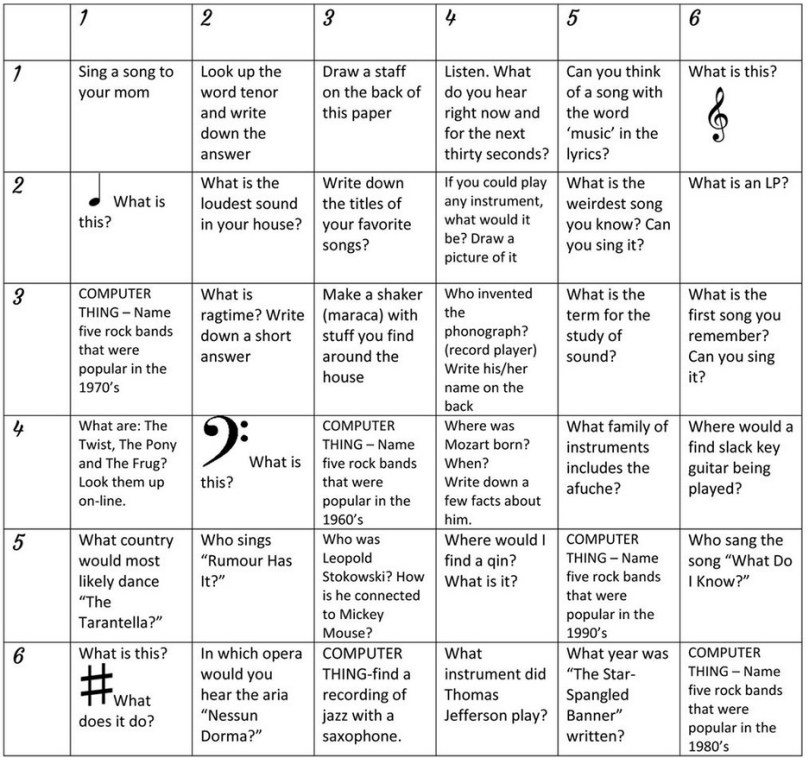
Practice: “Musical Dice”
A roll of the dice can lead to different pathways of music learning.
If you don’t have a dice, use this random number generator: https://www.random.org/dice/
Start off with a “scavenger hunt” of researching music. First roll is the row, second is the column. (SEE ABOVE GRAPHIC)
Then, try a simpler dice game for individual practice on your instrument, rolling only once:
- Major or minor (alternate) scale and arpeggio
- A band or orchestra warmup (long tones, tuning, etc.)
- Slow lyrical section from your SHJO music (alternate)
- Favorite piece (solo, school ensemble, or SHJO)
- Fast passage from your SHJO music
- Section of a memorized piece (solo, school or SHJO) OR play along with a recording
Create: “Musical Dice II”
This time, YOU create-your-own practice game with the dice!
Write down and number six musical objectives you have, short school or SHJO sections, technical exercises, or solo pieces you want to learn. Divide up each “goal” into gradually more challenging success levels – focus on different excerpts, more measures, faster speeds, add dynamics, phrasing, articulations, etc.
CLIP #7
Listen: “YouTube Kids Playlist”
Discover new online music videos!
Parents: Did you know you can set up a free account for “completely safe viewings” of YouTube media? Go to https://www.youtubekids.com/. Mr. Fox took an entire afternoon off perusing these recordings, a little something for everyone (a flute player, cellists, sax quartet, etc. who will “knock your socks off!”) The marble machine is just for fun… one link is a machine, the other a live band. What is “looping?” Registration may be required to access links:
- Carnegie Hall 360 Video featuring The Philadelphia Orchestra https://www.youtubekids.com/watch?v=YERHP5wp_zw
- 2CELLO Pirates of the Caribbean https://www.youtubekids.com/watch?v=Xj3gU3jACe8
- Foo Fighters Meets 70’s Bobby Caldwell – Live Looping Mashup by Elise Trouw https://www.youtubekids.com/watch?v=Gl9GtO_vQxw
- Shake It Off – Taylor Swift | From the Top & Time for Three Classical Cover https://www.youtubekids.com/watch?v=HlzEHobggRs
- Wintergatan – Marble Machine (music instrument using 2000 marbles) https://www.youtubekids.com/watch?v=IvUU8joBb1Q and the LIVE Band Version https://www.youtubekids.com/watch?v=F22DCvJ24Eg
- Let It Go (Disney’s “Frozen”) Vivaldi’s Winter – The Piano Guys https://www.youtubekids.com/watch?v=6Dakd7EIgBE
- Battle of the Alpine Horns https://www.youtubekids.com/watch?v=YEoFgDGuThY
- The Rev Saxophone Quartet: Watermelon Man https://www.youtubekids.com/watch?v=OQq-trsg0W8 and J.S. Bach https://www.youtubekids.com/watch?v=q6lfdkBUmS0
- Alex Christensen & The Berlin Orchestra – What Is Love feat. Carlotta Truman https://www.youtubekids.com/watch?v=B3zIhU4X4O0
- Fanny joue “Badinerie” & “Le vol du bourdon” à la flûte traversière https://www.youtubekids.com/watch?v=8aUfQw6N1Vc
- UCLA Marching Band Walk-through (start at the beginning for student leadership interviews, 13:13 for “a walk through the band sections”) https://www.youtubekids.com/watch?v=U4Ap2c7xigc
Share: “Whack-a-Note”
Name these notes… fast!
http://artsedge.kennedy-center.org/interactives/steprightup/whackanote/
Like “Easy Classical Music Games” in CLIP #6, teach someone basic notation… or just have fun with it yourself.
Create: “Song or Music Writing”
A Few “Basics” for Getting Started with Composing (sample websites)
- Level 1: Writing a Melody https://www.musictheoryacademy.com/composing-music/writing-a-melody/
- Level 2: How to Write a Song in 10 Steps https://mysongcoach.com/write-a-song-in-ten-steps/
- Level 3: Composition for Dummies https://www.dummies.com/art-center/music/music-composition-for-dummies-cheat-sheet/
- Level 3: 15 Ways to Create Musical Ideas & Crush Creative Block https://www.edmprod.com/15-ways-to-generate-ideas/
Inspire: “Music Exploration and Reflections”
Maintain a journal to keep track of your work.
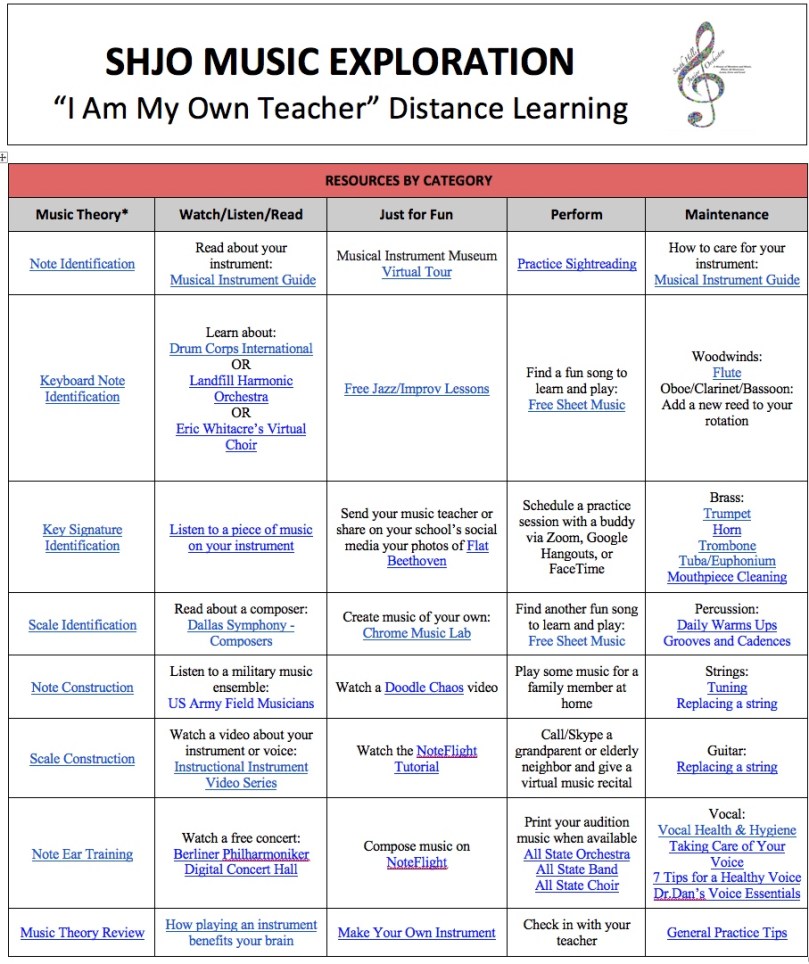
(SEE ABOVE GRAPHIC – Special thanks to the Greeley-Evans Weld County School District 6 for sharing their music grades 6-12 materials.)
First, download the original, full-size two-page document (so that the links will work with “click and go”) from the SHJO.clips page: http://www.shjo.org/clips. (Word file is best so you can write on it; if needed, this PDF version is also available: SHJO Music Exploration).
The grid on the second page will allow you to write down your progress, time spent, and reflections.
You act as your own music teacher – seeking out ways to enrich yourself with new knowledge of music.
© 2020 Paul K. Fox








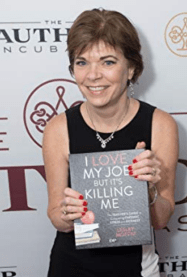 Now in her fourth decade as a high school band director, Lesley Moffat has worked with thousands of people, helping them not only achieve musical goals (including repeated performances at Carnegie Hall, Disney Theme Parks, Royal Caribbean cruise ships, and competitions and festivals all over the US and Canada), but also teaching them how to develop the long-term life skills they need to be successful in the world.


 Introduction: Striving for the New
 Drone Improvisation
 In a more recent release of EdNote (July 2018),
 inventors vs. imitators


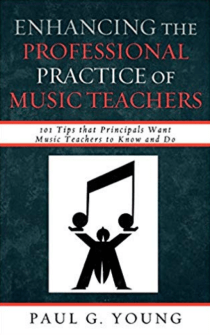
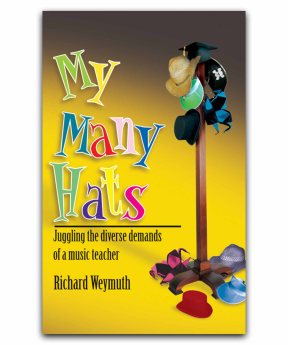 In the category of “things I wishes someone would have told me before I was hired to be a school music educator,” the inspirational book, My Many Hats: Juggling the Diverse Demands of a Music Teacher by Richard Weymuth, is a recommended “first stop” and easy “quick-read.” Published by Heritage Music Press (2005), the 130-page paperback serves as an excellent summary of the attributes (or “hats”) of a “master music teacher.” Based on the photos in his work (great “props”), I would have loved to have seen Weymuth’s conference presentations in person as he donned each hat symbolizing the necessary skill-set for a successful educator.
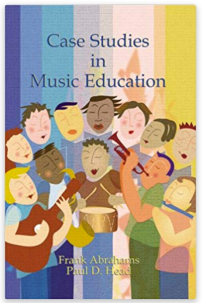 Next, I would like to direct pre-service and new music teachers to Case Studies in Music Education by Frank Abrahams and Paul D. Head. This would be an invaluable aid to “facilitate dialogue, problem posing, and problem solving” from college students (in methods classes?) and “rookie” teachers to veteran educators.
 His chapters are organized into six tips:
 The first thing I want you to do (and you don’t even have to be a member of NAfME yet, although you should be!) is to take at least a half-hour, scroll down, and read through numerous NAfME “Music in a Minuet” blog-posts, bookmarking any you want to return to at a later date. Go to


 now would be the perfect time to explore supplemental resources and get a “head-start” on additional pre-service training for next fall. These tips are especially valuable to anyone entering his/her senior or final year as a music education major, finely honing in and marketing your skills as a professional in order to be prepared for finding and succeeding at your first job.

 Mix and mingle to improve your networking opportunities
 Understanding specific educational jargon and the latest approaches, applications, and technologies in the profession (e.g. Backwards Design, The Common Core, Whole Child Initiatives, Multiple Intelligences, Depth of Knowledge and Higher Order of Thinking Skills, Formative, Summative, Diagnostic, and Authentic Assessment, etc. – Do you know the meaning of these terms?)
 You need to ask yourself the question, “What are my greatest weaknesses in music education?” Or, to put it another way, “What school assignments would I feel the least confident to teach? After earning your state’s all-essential credential, your certificate will likely be general and only say “music Pre-K to Grade 12.” Administrators will expect you can “do it all” – introducing jazz improvisation at the middle school, accompany on the piano or guitar all of the songs in the grades 1-6 music textbook series, directing the marching band at the high school or the musical at the middle school, starting an elementary string program, etc.
 Since music teachers are all “fiduciaries” (do you know the meaning of the word?) and legally responsible for our “charges,” wouldn’t it be a good idea to review our state’s regulations and code of conduct, and hear about the challenges and pitfalls of ethical decision-making before we jump in and get “over our heads,” so-to-speak?
 ask your cooperating teacher (or his/her supervisor’s) permission. Some school districts have “do not photo” rosters. (However, in my district, only a few elementary students were “on the list” and most defaulted to a “permissible” status unless the parent opted out. The principal’s secretary had a record of all exceptions.) It is also suggested that you focus your camera mostly on YOU and not the students, from the back of the classroom or rehearsal facility (possibly from afar), so that the student faces are not clearly discernible. To respect their privacy, in the recorded excerpts, do not use any segment announcing the names of your students.


 According to the above study by Peter Webster, Scholar-in-Residence at the Thornton School of Music, University of Southern California in Los Angeles, “good music teaching” involves the practice and observation of three types of musical behaviors:
 Peter Webster’s definition of “creativity in music” is succinct: “the engagement of the mind in the active, structured process of thinking in sound for the purpose of producing some product that is new for the creator.” Furthermore, this is a thought process and “we are challenged, as educators, to better understand how the mind works in such matters — hence the term creative thinking.” (Webster, 1987)
 A heighten interest in the young child and invented music notation and their discussion of it as a window to understanding the child’s knowledge (Barrett, Gromko, MacGregor)
 Related to this are the issues of teacher control: when do we step in to change something or suggest a new path.

 The Common Core
 Behavior management, disciplinary procedures (especially preventive practices) and posting class or ensemble rules
 However, in the methods classes that come later (perhaps in the second through fourth year?), the basics of “how-to teach” will come. Of course, as you sit in a class teaching you to “cross the break” on a clarinet or play a scale on the flute with good tone, you must also absorb (and remember) the finite steps required in the lesson to pass on this knowledge and skill, not just honk or squeak a few times to master the proficiency exam for yourself.
 Of course, these are “trick questions.” The answer should be “I want to teach music,” or even better, “I want to teach children.” In most of the school districts across the country (with a few exceptions in the Midwest and places that accept teaching specialty certification by grade level or subject area), you are licensed to teach music in grades Pre-K to 12. At no point in any conversation with a potential administrator (or colleague who may become a member of the screening committee for a music opening) do you want to be “pigeon-holed,” or give the impression “I can only teach_____.”
 Accompany, direct/teach the drama, and choreograph the middle school musical.
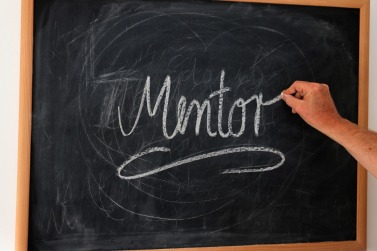 Ego and arrogance has no place in the teaching profession. Where did I hear this saying? “The more you think you know, the less you actually know.” Joining a mentoring program or finding a formal or informal veteran teacher “buddy” will go far to insuring your professional success and dodging those first-year teacher “pot holes” (dumb but common blunders) and “rookie blues.”

 Retired music teachers are another excellent resource. For example, if you live or work in Pennsylvania, many post-employed PMEA members have placed their name and contact information on the Retiree Resource Registry to serve as willing, capable, and informal consultants for pre-service, novice, or other members recently transferred into a non-major specialty “outside their comfort zone.”
 Please feel free to comment on this blog-post. What are your thoughts?
 Before long, you will shed the label and function of a “college student” (although still remaining a life-long learner… and never stop the quest for new knowledge and self-improvement!). The focus will shift from YOU to YOUR STUDENTS. The prerequisites for a career in education are unique and do not resemble the same challenges as success in business, manufacturing, retail, service industry, or becoming an entrepreneur, blue-collar worker, or even a composer or professional musician. The sooner you realize these are world’s apart, the better, and now is the time to finish your major and life-changing transformation to… a professional music educator.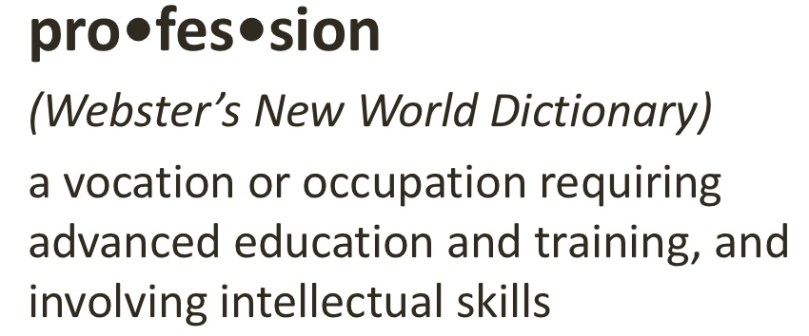
 Updates self with “constant education” and retooling
 Cooperation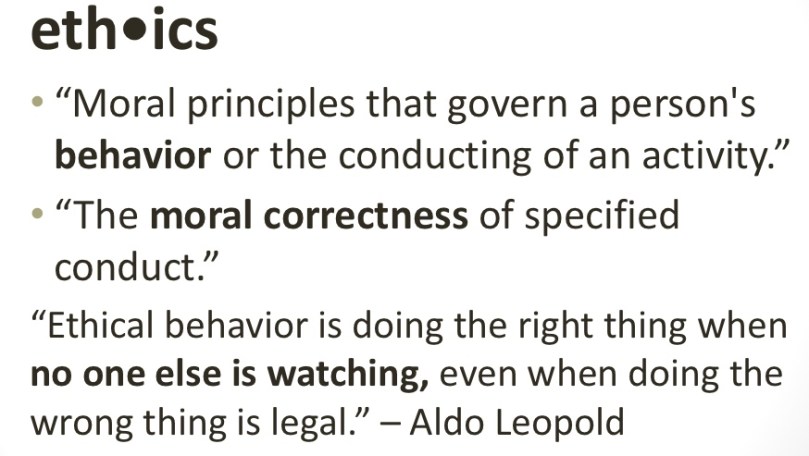
 National Association of State Directors of Teacher Education and Certification proposes these principles:
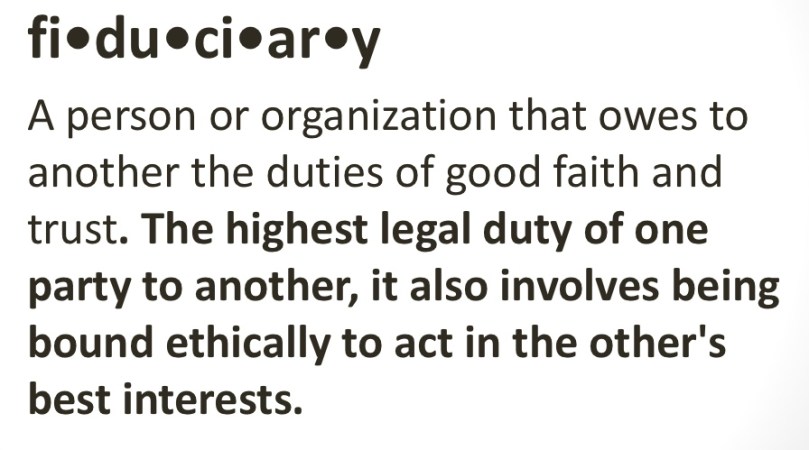 Here’s another query. What five groups of people are both “professionals” and “fiduciaries…” and have a legal responsibility to serve the best interests of their “clients?” The answer is… doctors/nurses, lawyers, counselors (both mental health and investment), the clergy, and… teachers.
  Although teachers seem to be the only one of these who DO NOT have formal pre- or in-service ethics training, and our “charges” represent a “captive audience,” our duty is clear: to act as a fiduciary for our students’ best interest, and to create and maintain a safe environment for them at all times.
 What do you believe about teaching?
 Take time to peruse these and others. Most of these sites also offer excellent examples of personal branding and marketing of the prospective job hunters’ experiences, skills, and achievements… material for our next blog on this topic.

 It can’t get any better than this! Probably the most comprehensive one-stop vault of articles and “friends of NRN” sources for further study, the NCN provides an extensive collection of creativity tools: news stories (still current as of the week of April 7, 2017), quotes, webinars, blog-posts, past competitions like the USA Creative Business Cup, and a Board of Directors from across North America including many “giants in the field” like one of my heroes Sir Ken Robinson (California), along with George Tzougros (Wisconsin), Margaret Collins (North Carolina), Steve Dahlberg (Connecticut), Carrie Fitzsimmons (Massachusetts), Peter Gamwell (Ottawa, Canada), Jean Hendrickson (Oklahoma), Wendy Liscow (New Jersey), Susan McCalmont (Oklahoma), Robert Morrison, Scott Noppe Brandon, David O’Fallon (Minnesota), Andrew Ranson, Susan Sclafani (Washington D.C.), and Haley Simons (Alberta, Canada).
 According to their website,
 Spark local, regional, state and provincial, and national movements to create environments—in homes, schools, workplaces, communities and public offices—where every person is inspired to grow creatively.
 paulfox.blog