Leaders Flush!

Leadership lessons for the classroom or staff development

This blog is a follow-up resource for my Empowering Educator and Student Leadership presentation at the PA Department of Education SAS INSTITUTE state conference on December 9, 2025 and provides a “fill-in-the-gap” narrative about many of the concepts we have already presented at this blog site:
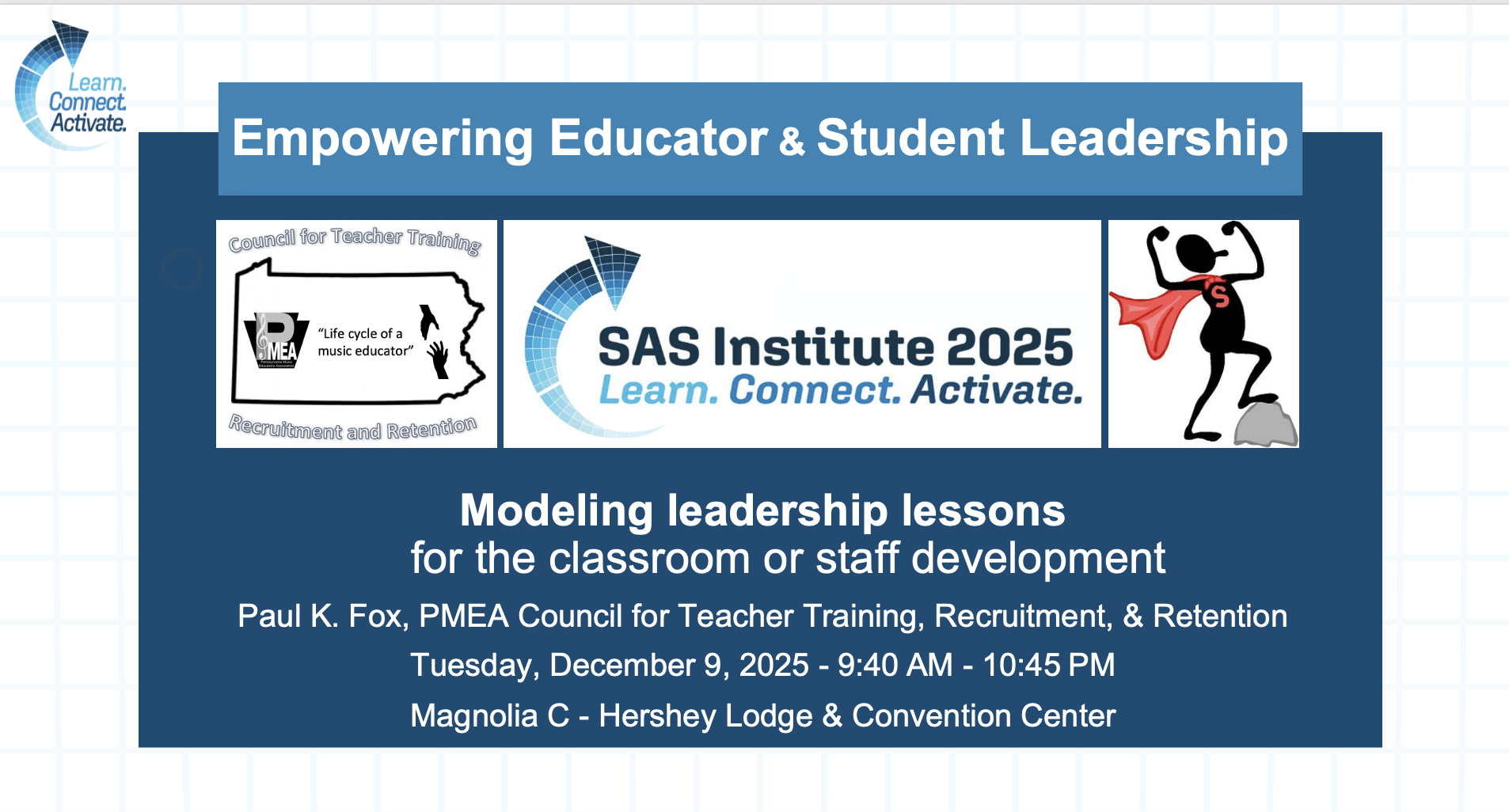
If you would like to review my PDF slide summary from the SAS INSTITUTE, click here.

Did the main title (above) get your attention? What on earth could “leaders flush” have to do with this topic? In teaching (and modeling) leadership skills to my students, we discuss what it means to Faire sans Dire or “do without saying,” the English translation to this crest:

Heraldry coat of arms emblem: Earl of Ilchester

In other words, if you see something that needs to be done (flush the toilet?), don’t assume it’s someone else’s job. A true leader embraces the philosophy Carpe Diem (“seize the day”), identifies the problem and its solution, rolls up his/her sleeve, and “gets it done!”

Why teach leadership in the curriculum & extracurricular activities?

“Leadership is an essential skill that extends beyond the classroom, shaping how students engage with the world around them. Whether leading a group project, organizing an event, or voicing their opinions in discussions, leadership skills empower students to take initiative and make meaningful contributions. These abilities are not only beneficial during school years but also serve as the foundation for lifelong personal and professional success.”
Bloomster

In the past, I have used a multitude of opportunities and settings to teach these life skills in summer leadership camps, section leader and student conductor seminars, drum major and marching band captain auditions, student director, producer, and musical crew head staff meetings, and for 25+ years, preparing student counselors for a comprehensive, six-day, grades 8-12 Township String Camp program.

To sum it up, teaching leadership in Grades K-12 and college settings will:

  • Develop communication skills
  • Build confidence & self-awareness
  • Enhance problem-solving abilities
  • Encourage teamwork & collaboration
  • Shape future success

Why teach leadership to educators?

My December session at SAS Institute was geared to school/system leaders, department heads, and other administrators, but actually the focus on leadership as a skill set necessary for school/staff/individual professional improvement is essential for all educators and school support staff.

From district administrators and school principals to instructional coaches and curriculum coordinators, leaders in education have a direct impact on the learning outcomes of all students. According to UNESCO, educational leadership is considered one of the most influential factors on student outcomes, falling just behind engaging teaching. As a result, leadership training for educators has become an essential part of the professional development experience for teachers at all levels of education.
“Building Leadership Skills – From Classroom Teacher to Educational Leader”

School improvement rarely occurs without effective leadership, and school leadership is only second to classroom teaching in its influence on student achievement. A new evidence review report from Global School Leaders paints a complex and ever-changing picture of school leaders, with their roles, responsibilities, and impact varying around the world.
3 Reasons Why School Leadership Is Vital to Teacher Success”
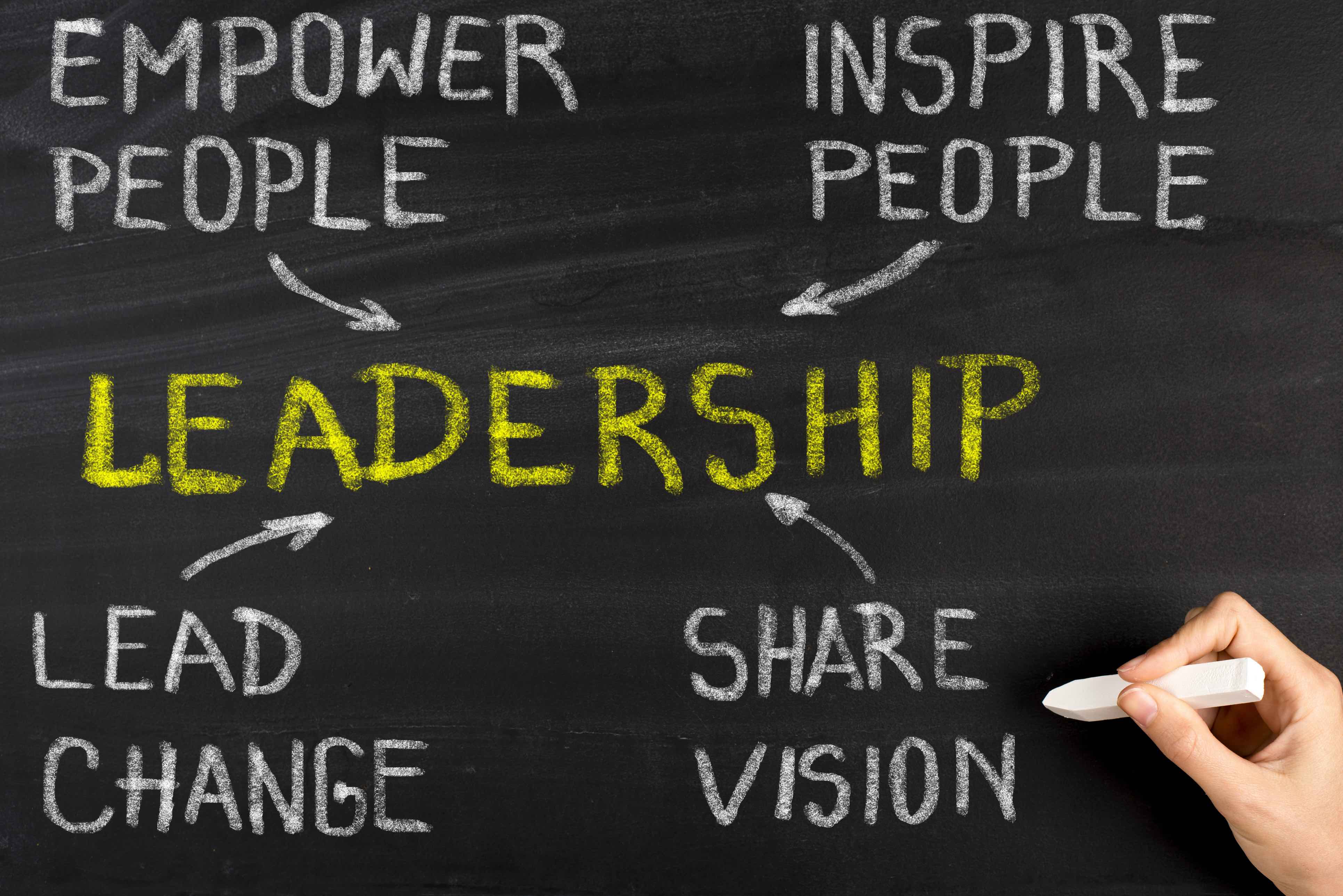
The literature suggests that empowering educators with leadership training will:

  • Improve student achievement
  • Empower and retain teachers
  • Support new staff members
  • Drive innovation and adaptability
  • Bridge the gap between instruction and administration
  • Build/model a positive attitude
  • Enhance strategic thinking and decision-making
  • Promote a positive and collaborative school climate
  • Develop soft skills such as communication, conflict resolution, and building trust… both in and outside the classroom

Leadership assessments

“A leadership skills assessment is a formal evaluation used to identify and measure a person’s leadership potential and competencies, such as communication, decision-making, and emotional intelligence. These assessments can be used by organizations to evaluate current leaders, identify high-potential candidates for promotions, and inform hiring decisions. Common methods include personality tests, scenario-based assessments, and 360-degree feedback, with tools like CliftonStrengths, Hogan Assessments, and DISC being popular examples.” 
“Leadership Assessment Test – A Complete Guide 2025”

There is a large body of information out there, especially commercial resources, for evaluating the leadership quotient and achievement of corporate managers, CEOs, CFOs, etc. I was impressed with the scope and depth of the research, including these sample firms advertising the availability of third-party consultants and advisors.
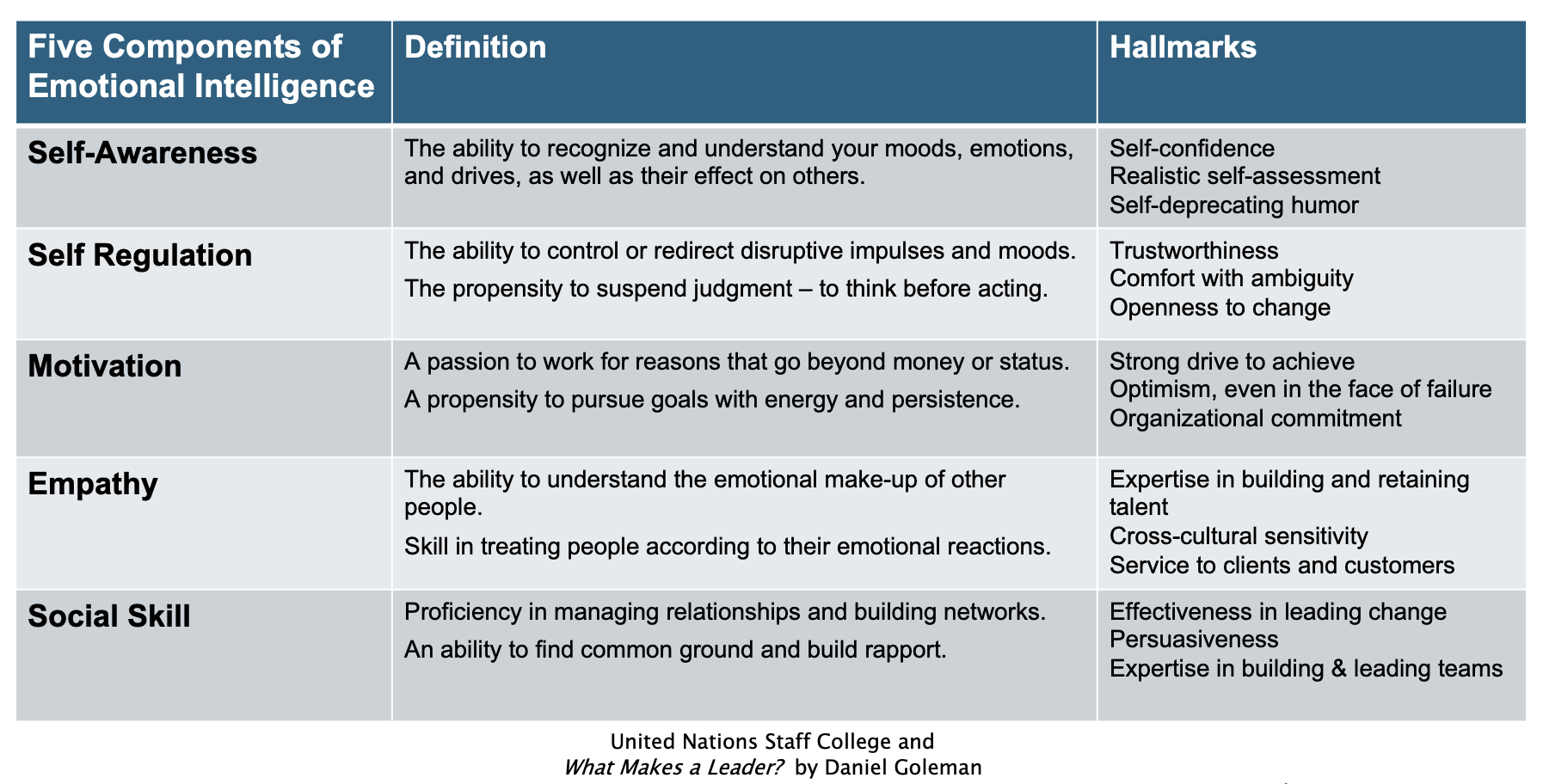
One night I randomly scanned through a handful of YouTube reels of company fraud and mismanagement (e.g., “Revenge of the Coffee Pot,” “Revenge with Karen,” and “Silent Revenge”), painting (fictitious) stories of bosses stealing intellectual property or assuming credit for the innovations/achievements of their subordinates, patent infringement, nepotism or incompetent hirings… all with arrogance, lack of professionalism, the total disregard of employee morale, and blatant patterns of poor executive decision-making, communication, emotional intelligence, strategic thinking, and the ability to influence and guide a team. “Emotional intelligence” (as defined above by Daniel Goleman in What Makes a Leader? also attributed to the United Nations Staff College) should include the “best practices” of self-awareness, self regulation, motivation, empathy, and social skills. Added to these YouTube (fake) scripted deficiencies are the mitigating effects of corporate politics, inconsistent application of compliance or HR policies, unclear contract language, and problems in the chain of command… with the eventual result of the boss receiving a fall from grace, termination, and other legal consequences. Most of these episodes imply only the Board of Directors evaluates the top executives (like school superintendents?), and even with the inclusion of employee satisfaction surveys, staff retention data, third-party auditors, and whistle-blower protections in some instances, the catastrophic actions of these leaders nearly destroy the businesses. For these videos, it seems that leadership assessments and goals are never ongoing, the benchmarks are seldom reviewed, and nothing is PROACTIVE… and therefore not preventive. Therefore, for the school district and corporate worlds alike, we need to intentionally provide formative assessments of our leaders (and ourselves). Exactly what do we need to know and do to improve?
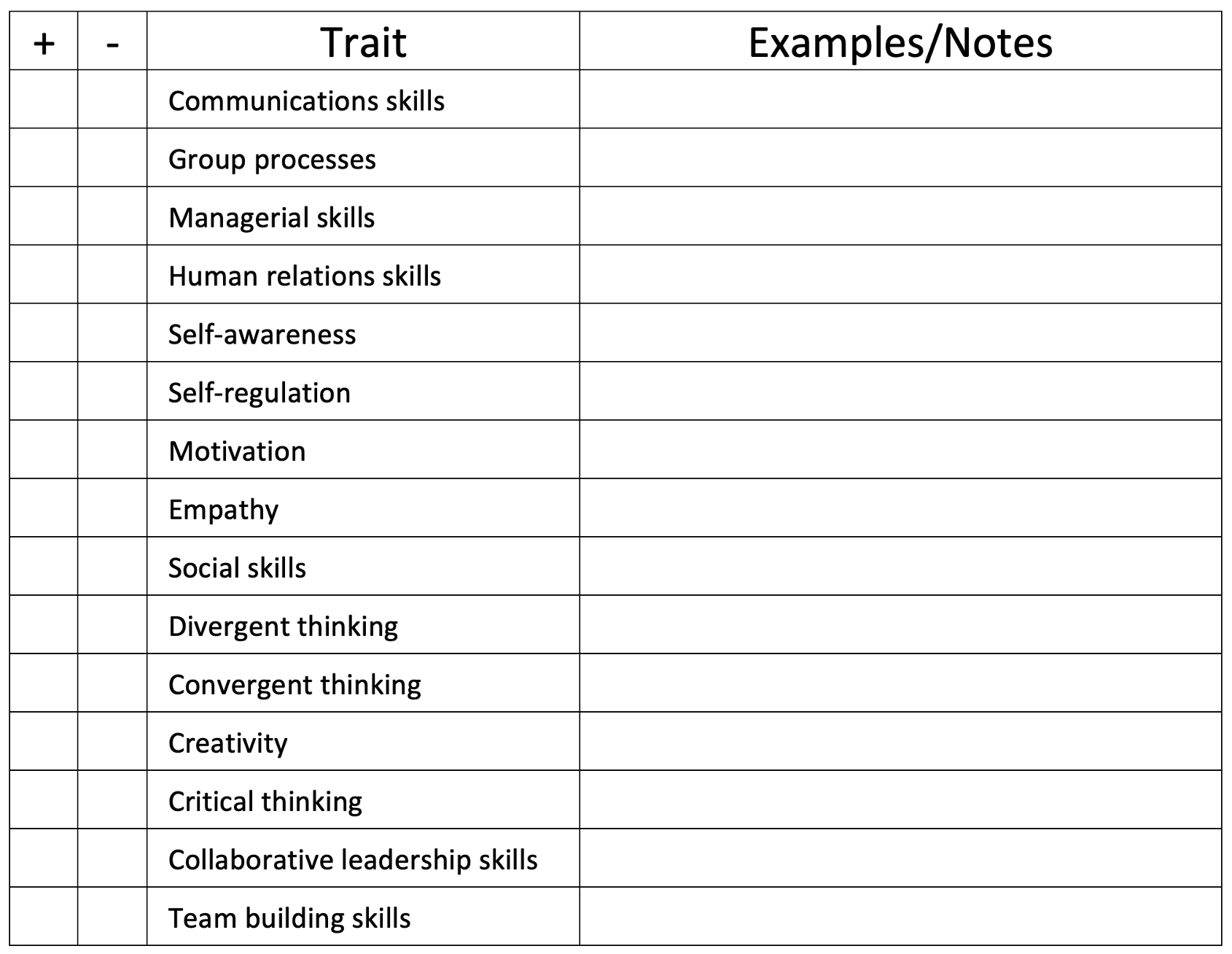
In my blog Growing Student Leaders and the SAS Institute 2025 presentation, I offered the above image as an informal personal checklist to evaluate leadership traits. Coincidentally, while I was writing this article, a scholarship committee of the Community Foundation of Upper St. Clair (for which I serve as Communications Director and Arts Chair) was developing an assessment rubric for ranking applications of a new student leadership scholarship. Although still under development, here are a few of the categories being considered:

  • Communication: Includes listening skills, clarity in speaking, and the ability to make others feel heard.
  • Integrity: Acting ethically, being trustworthy, and aligning actions with words.
  • Accountability: Taking ownership of actions and commitments.
  • Collaboration: Working effectively with others, valuing different perspectives, and resolving conflicts.
  • Self-awareness: Understanding one’s own strengths, weaknesses, and biases.
  • Drive/Initiative: A bias for action and the ability to move projects forward.
  • Courage: The bravery to speak truthfully, admit shortcomings, and make difficult decisions.
  • Humility: Recognizing the contributions of others and remaining a lifelong learner.
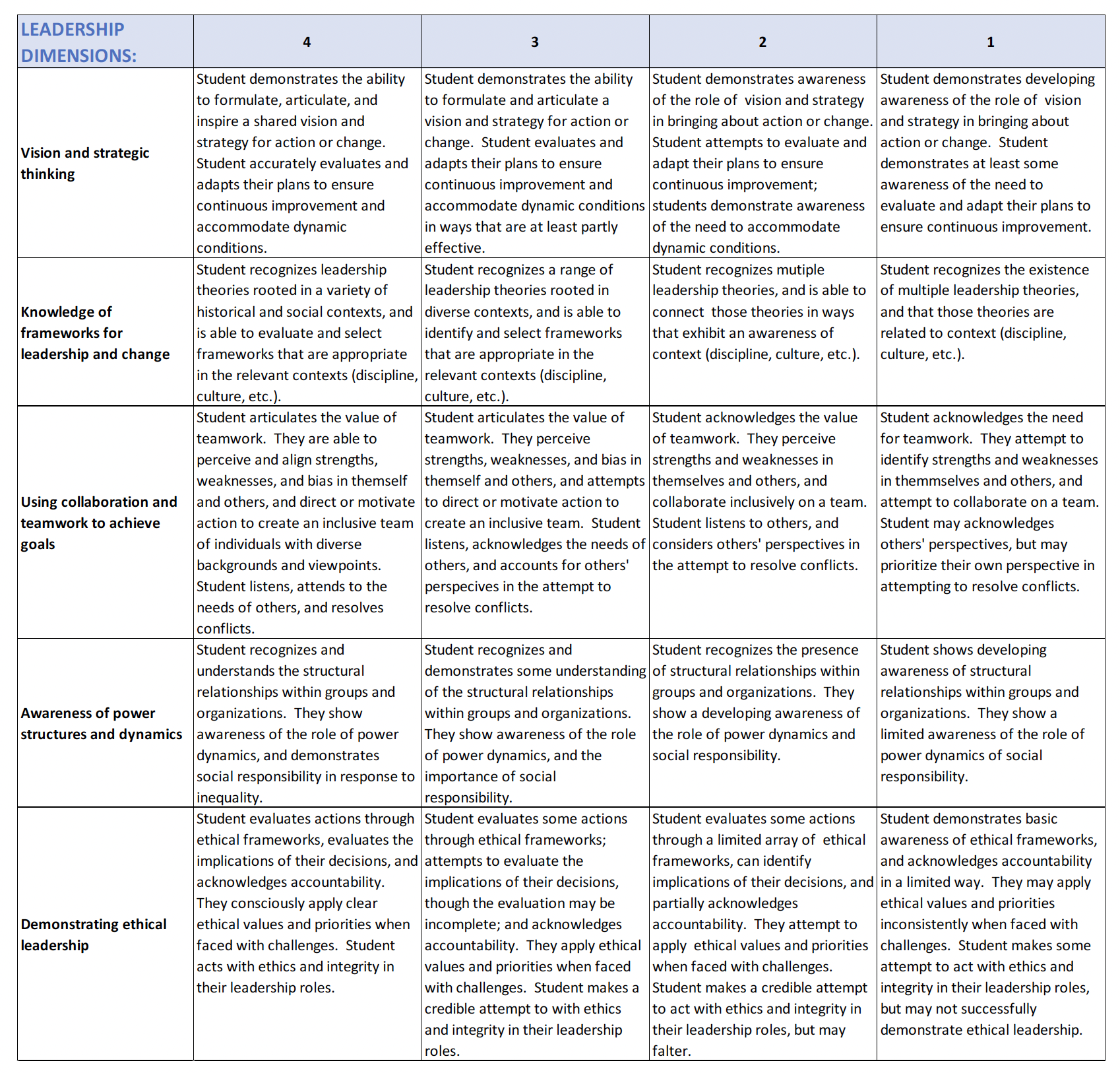
The University of Massachusetts Lowell developed the above rubric for their River Hawk Experience Distinction Leadership Program, defining specific criteria with a clear description of what each trait should look like at different performance levels, in order to provide a standardized way of measuring and assessing leadership skills
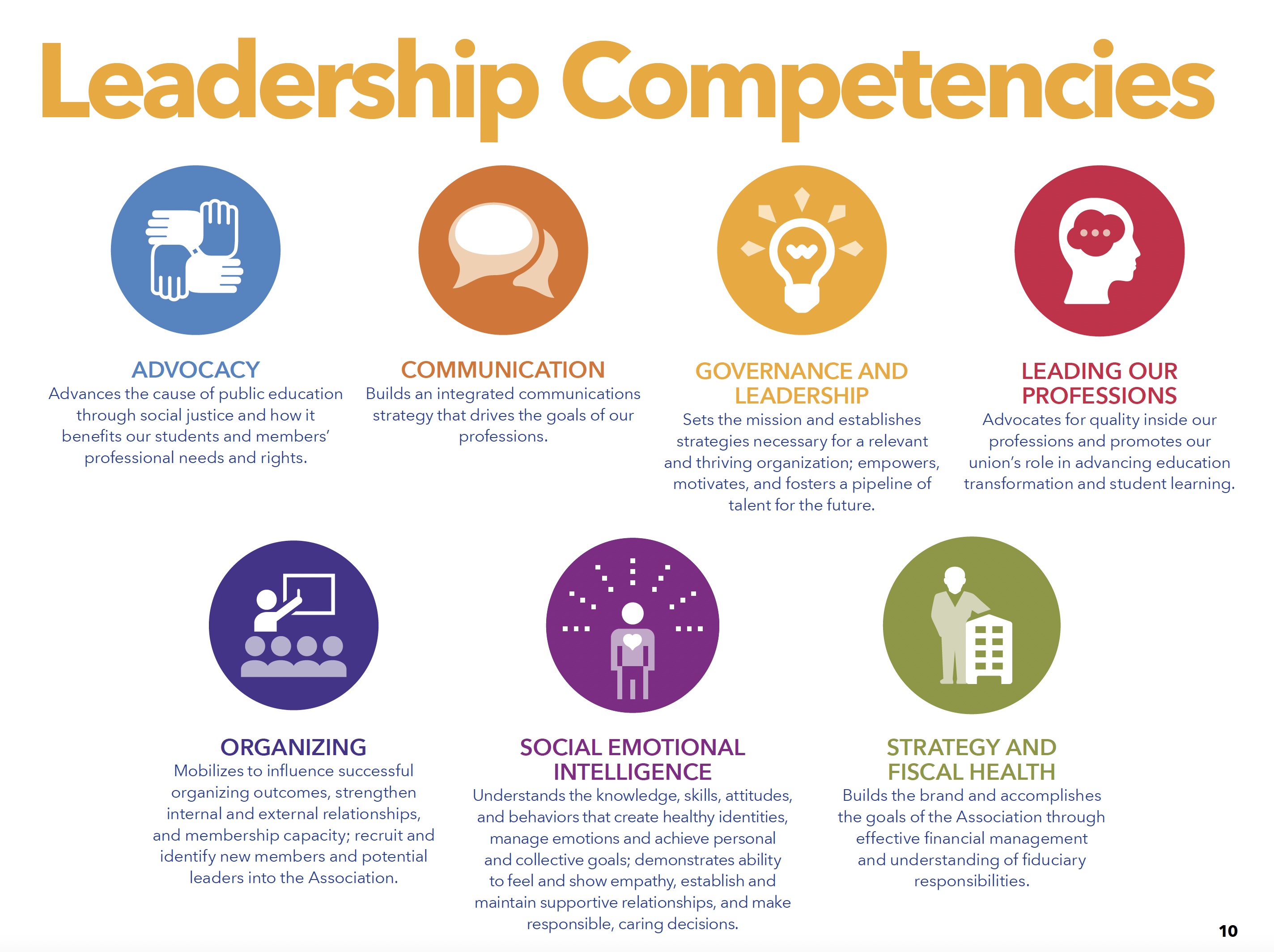
In addition, the National Education Association has created the above NEA Leadership Competency Guide worth downloading.

My favorite inspirational speaker Simon Sinek has also weighed in on this topic of “What Makes a Great Leader?” refining/simplifying it to just three traits:

  • Courage
  • Integrity
  • Communication

Additional resources

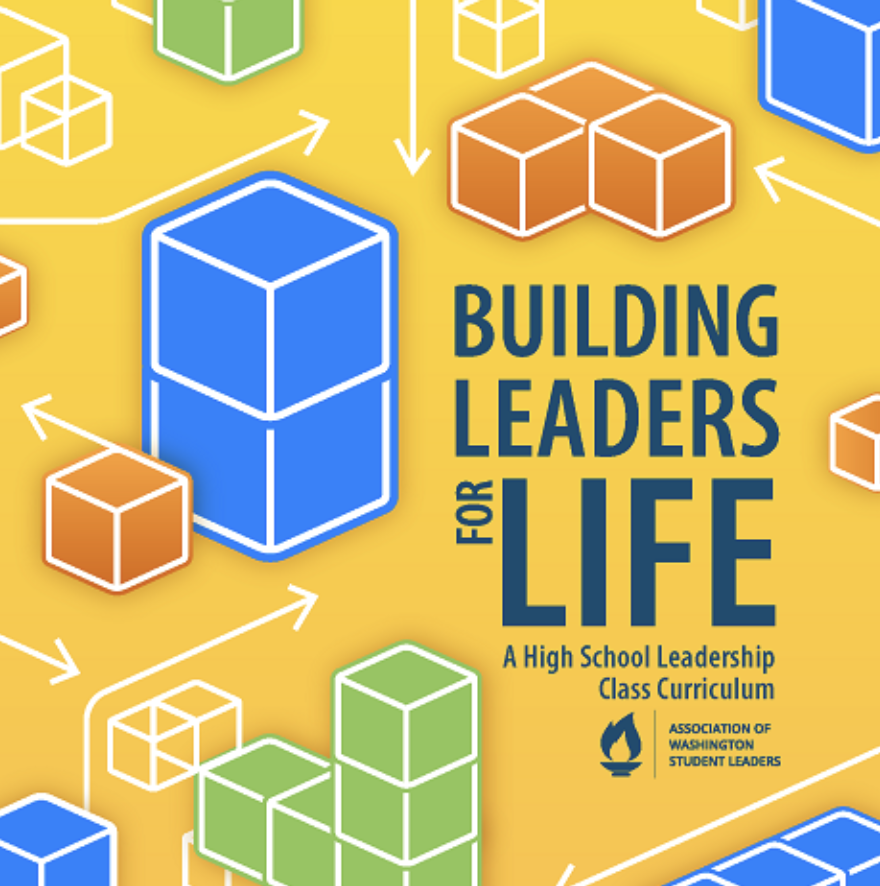
If you are an educator looking for supplemental material on developing leadership skills in your students, besides these SAS INSTITUTE 2025 slides (of which the original PowerPoint file is available to download for free in order to adapt for your classroom – please email me), I recommend perusing the full-blown “Building Leaders for Life” (second edition) curriculum (94 lessons in five subject areas, 355 pages of lesson materials, 137 student handouts) created by the Association of Washington Student Leaders (a division of the Washington School Principals’ Education Foundation). Click here to view their website. They also have a middle school and elementary series!

If you attend my SAS INSTITUTE workshop on December 9, 2025 (starting at 9:40 a.m. in Magnolia C, Hershey Lodge & Convention Center), ask me to see sample materials from their high school course of study.

Finally, here is the “homework for future leaders” I provided at the SAS INSTITUTE and during a 2024 summer camp at Upper St. Clair High School, providing additional links to many inspiring minds. Enjoy!


Leadership is not about being in charge. It is about taking care of those in your charge. — Simon Sinek

A leader is one who knows the way, goes the way, and shows the way. — John C. Maxwell

Do not follow where the path may lead. Go instead where there is no path and leave a trail.
— Ralph Waldo Emerson

The greatest leader is not necessarily the one who does the greatest things. He is the one who gets people to do the greatest things. — Ronald Reagan

What you do has far greater impact than what you say. — Stephen Covey

PKF

© 2025 Paul K. Fox

Retirement Transitioning Advice from AI?

Season Greetings and Happy New Year from your Pennsylvania Music Educators Association State Retired Member Coordinator. Best wishes for a happy, healthy, and prosperous 2025!

First, on Christmas Eve, here are a few announcements geared to PA music educators… those who have retired from full-time teaching and anyone considering retirement over the next one to five years.

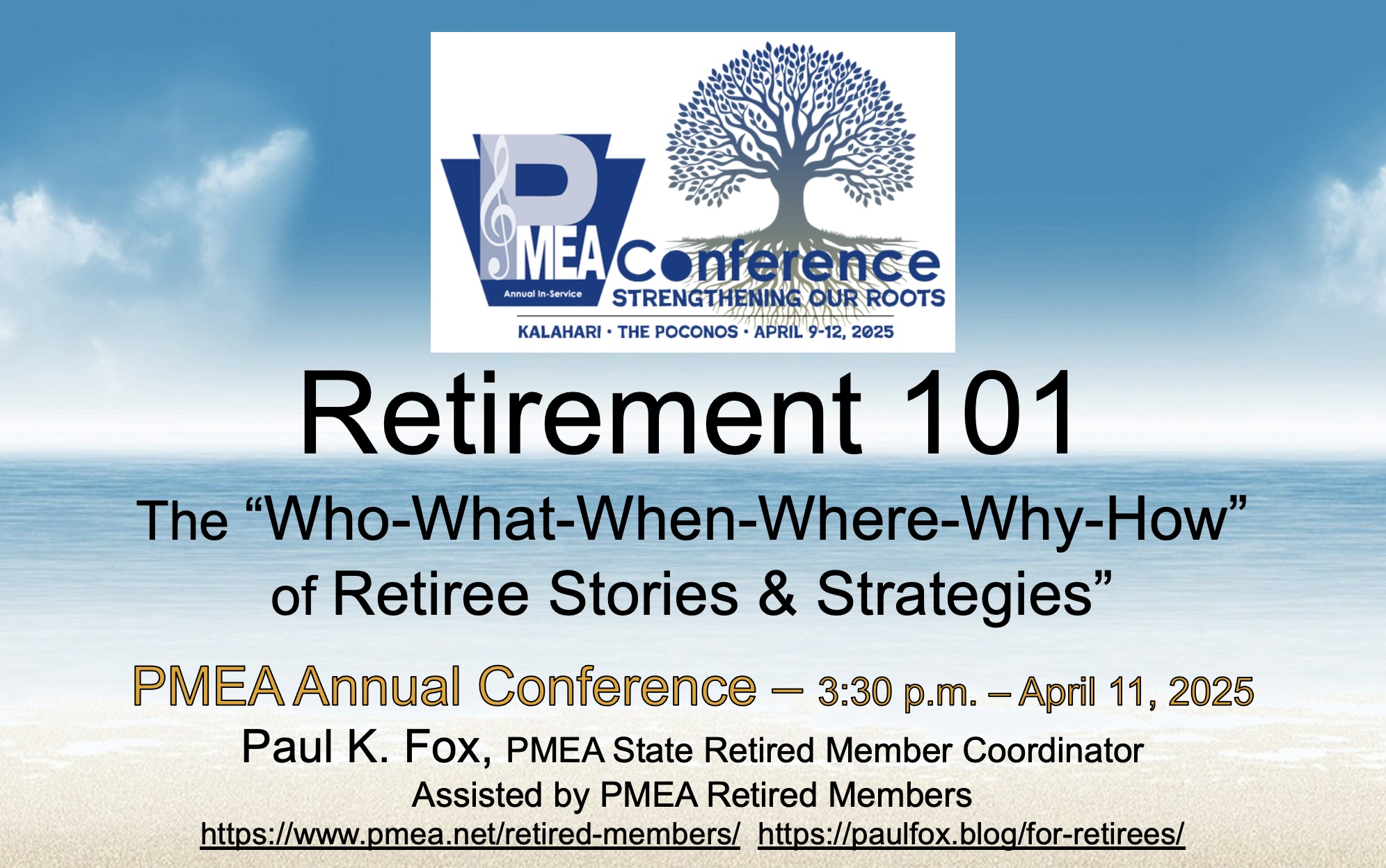
Back by popular demand (or is that just ego and in my head?), we will offer the session “Retirement 101 – the Who, What, When, Where, Why and How of Retiree Stories & Strategies” on Friday, April 11, 2025 (3:30 p.m.) during the PMEA Annual Conference at the Kalahari Resort in the Poconos. A guest panel of PMEA Retired Members will assist and offer their advice answering key questions like the following:

  1. How have you found happiness and success in retirement?
  2. What “new” hobbies, volunteer projects, trips, family connections, and encore careers have you been exploring?
  3. What did you do to reinvent yourself and how did you satisfy those essential “big three” goals of post-full-time employment: finding purpose, structure, and community?
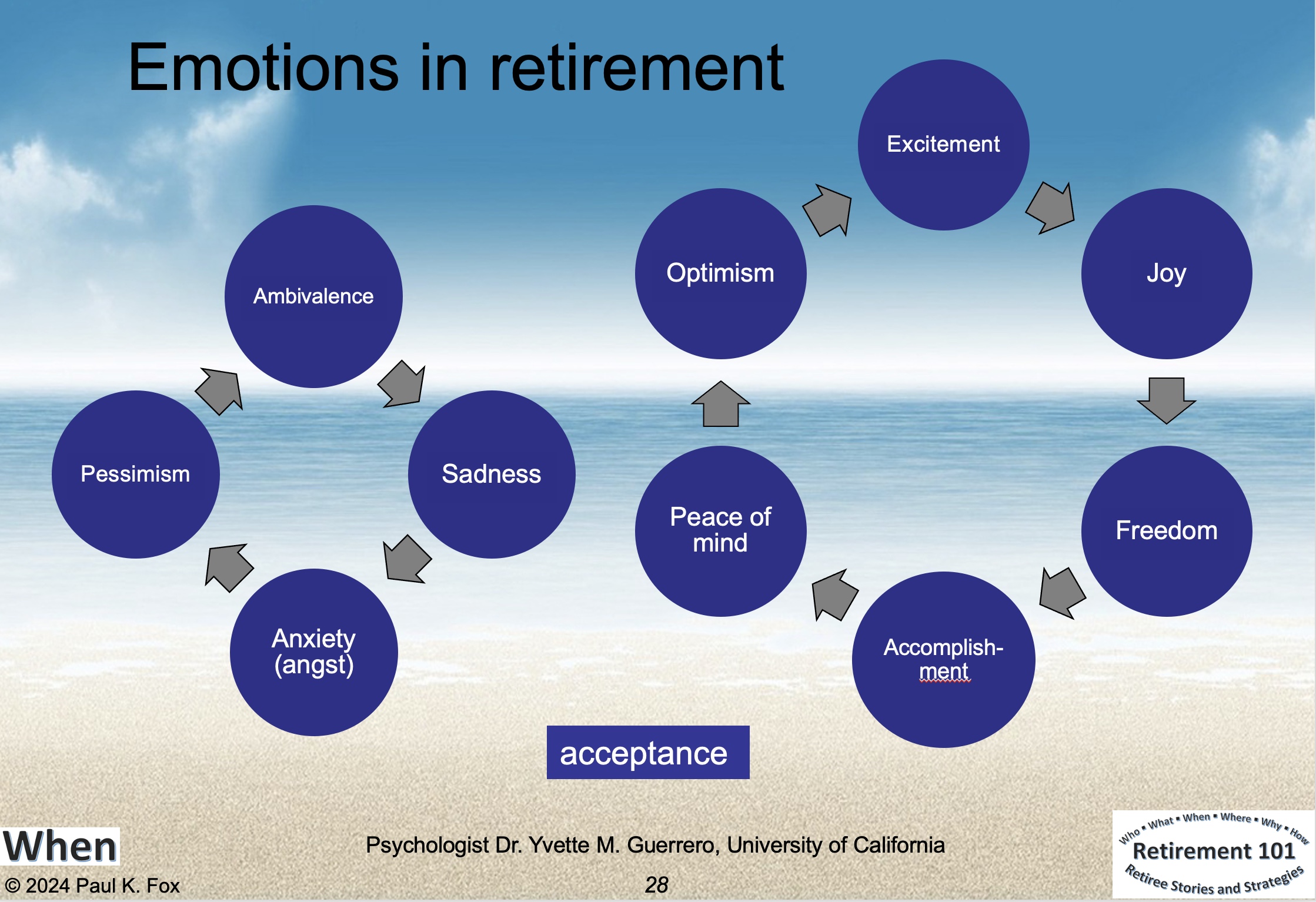
  4. How did you navigate the early phases of retirement? imagination, anticipation, liberation, etc.
  5. What were some of the transitional “ups and downs” you experienced and how did you cope with them?
  6. What are you still doing in music and education?

We are looking for more PMEA retiree volunteers who are planning to attend the conference to join “expert panelists” Rick Coulter, Jeffrey Dent, Dan Klingbeil, Chuck Neidhardt, Louise Victor, and Rich Victor. (Just email me if you’re interested.)

Retired Members are a valuable resource to PMEA. Many of us already serve on PMEA Councils and in District or State official positions. All of us in the profession benefit from the sharing of their extensive “boots-on-the-ground” experiences and wisdom. At the upcoming conference, Retired Members can serve as Presiding Chairs and introduce a session/concert or two. In addition, plans are also underway to sponsor (possibly on Thursday, April 9) a “coffee & conversation” corner or an “ask the expert” lounge. Spaces and the schedule are packed, but if it is possible, Executive Director Abi Young is trying to fit in an informal sitting area with retirees and mentors as “friendly folks” to serve as “gurus” for PCMEA members, newcomers to a music education specialty, or recent transfers to the field. Won’t you join us?

A longstanding tradition, we will be treated to a PMEA Retired Member Breakfast on Friday morning. (Just check the box on the registration form if you are coming… and, by the way, the conference fee is only $20 for Retired Members! What a deal!)

Why Attend the PMEA Annual Conference?

“For some of us, it’s a just chance to catch-up with our colleagues, see our friends, and socialize. Others are more focused and take advantage of the near-perfect opportunity to network with other professionals, perhaps seeking new working relationships, partnerships, or even employment. Many are on a look-out for newly published music, that perfect music lesson or teaching strategy, technology tools, fund-raisers, advance educational venues, or much-needed equipment to purchase for our ensembles or classrooms. Most come to hear/see the “state of the art” in music education – concerts, demonstrations, keynote speeches, panel discussions, exhibits, research presentations, and workshops. PMEA’s PD Council would likely submit that the primary purpose of a conference is for professional self-improvement… What did Stephen Covey call it? His Habit #7 of “sharpening the saw” – to build a balanced program of self-renewal in the four areas of your life: physical, social/emotional, mental, and spiritual. Covey would insist we embrace “the process that empowers us to move on an upward spiral of growth and change, of continuous improvement.” So, in short, conferences help us “grow” – to revive, re-inspire, re-energize, rejuvenate, re-direct, and re-motivate all of us – pre-service, active in-service, and retired teachers towards making successful new connections, updating our knowledge & skills, and forming new goals.”  – PMEA Retired Member Network eNEWS Winter 2024

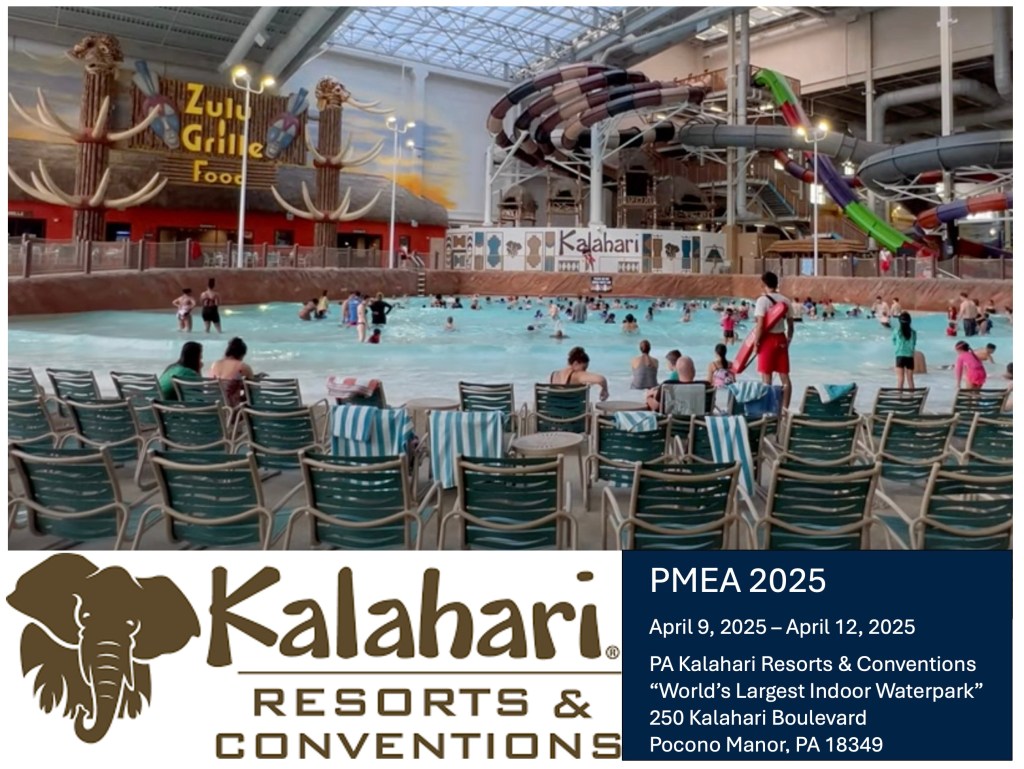
In addition, Kalahari Resort boasts “the world’s largest indoor water park,” the perfect place to bring family members to enjoy… especially (grand)children, (grand)nieces/nephews, etc.

Next month’s retirement blog by guest author Sierra Powell

One final announcement: In several weeks at this blog-site, we plan to feature a new guest blog entitled “Five Things You Need for a Comfortable Retirement” by Sierra Powell, along with updates of other resources for “living the dream!” See you next year?

OK, What is that “AI Thing?”

This 69-year old educator who has spent more than five decades in fostering creative self-expression in his students is fervently opposed to artificial intelligence. Actually, I thought I was allergic to “AI!” Every time I receive an Apple iPhone update or some new download for my computer, I complain, “Why have they moved that button? It doesn’t look or work the same! Why does everything have to change every month?” Slow down, techies!

However, to dabble in this new technology everyone’s talking about, I printed in my last PMEA Retired Member Network eNEWS on page one a sample article (click here for the Winter issue) compiled by AI Overview (Google). I shared this with an adult violin student from my Saturday orchestra who decided to show me the power of AI (not the old AI I am more familiar with – artistic intelligence!). She used her subscription to a ChatGPT to process my brief outline on the topic “retirement transitioning.” Below is the result generated from a few of my random notes. Created in the first person, AI matched my writing style, a chatty/informal letter printed for soon-to-retire colleagues along with research citations. Frankly, it scares me how close this sounds like something I could have composed! Can you tell it was artificially generated? Does this mean we will we have to teach this old dog (fox) new tricks?

Check out these valuable retirement hints courtesy of ChatGPT!

The Retiree Life: Navigating the Art of Reinvention & Emotional Balance

Here with some reflections, tips, and maybe even a little nudge for us all as we continue this grand adventure called retirement. Whether you’re still finding your rhythm or already feel like a pro at this, there’s always room to reflect, grow, and laugh along the way.

This week, let’s talk about something near and dear to every retiree’s journey: reinventing yourself and coping with the emotional ups and downs that come with this new chapter.

Reinventing Yourself: A Second Act Worth Applauding

Remember when we taught our students to embrace creativity and adapt to change? Turns out, retirement demands the same skills. It’s no longer just about what you did—it’s about who you are.

Reinvention isn’t about completely overhauling your identity. Think of it as expanding your repertoire. Studies show that retirees who actively pursue new interests or roles report higher life satisfaction (Wang et al., 2011). Whether it’s picking up the instrument you haven’t touched in decades, volunteering, traveling, or even starting a small business, the key is to stay engaged.

Here’s a thought experiment: What did you always wish you had time to do but never could because of lesson planning, rehearsals, or concerts? Now’s your chance. I’ve recently heard about retirees dabbling in everything from watercolor painting to writing mystery novels. One retiree even became a beekeeper—talk about a sweet second act!

(From past blogs, the Retirement 101 session, and Retired Member Network eNEWS reviews)

The Emotional Journey: Ups, Downs, and Everything in Between

Let’s not sugarcoat it: retirement is a mixed bag. There’s the freedom (hooray!), but also the occasional pang of loss—of identity, routine, or the camaraderie we had in our teaching careers.

The good news? You’re not alone. Research by Pinquart and Schindler (2007) highlights how important it is to acknowledge these feelings rather than sweep them under the rug. Adjusting to retirement is a process, and it’s okay to feel a little off-balance at times.

Here are a few tried-and-true strategies to help you navigate the emotional terrain:

  • Stay Connected: Loneliness can creep in when you least expect it. Keep up with PMEA activities, or start a retirees’ coffee group. Who better to laugh with about the time your marching band got rained out?
  • Practice Mindfulness: Before you roll your eyes, hear me out! Even just five minutes of quiet reflection a day can reduce stress and boost mood (Chopra et al., 2020).
  • Find Meaning: Volunteering or mentoring can give you a sense of purpose that’s deeply fulfilling. You’ve got a wealth of wisdom—share it!

AI of the future?

The Bottom Line

Retirement isn’t a destination; it’s a journey. And like any good road trip, it comes with unexpected detours, scenic overlooks, and, yes, the occasional pothole. The trick is to embrace it all with curiosity and a sense of humor.

If you’re struggling, remember: reinventing yourself doesn’t happen overnight. Take it one day at a time, and don’t be afraid to reach out for support—whether it’s from family, friends, or your fellow PMEA retirees.

Let’s keep the conversation going. What’s your “second act”? Have you discovered a new hobby or way to cope with the emotional shifts of retirement? Shoot me an email or share your story at our next meeting. Together, we’ll continue to learn, grow, and make this chapter one to remember.

Until next time, keep smiling and stay curious!

References:

Wang, M., Henkens, K., & van Solinge, H. (2011). Retirement adjustment: A review of theoretical and empirical advancements. American Psychologist, 66(3), 204–213.

Pinquart, M., & Schindler, I. (2007). Changes of life satisfaction in the transition to retirement: A latent-class approach. Psychology and Aging, 22(3), 442–455.

Chopra, A., Anthonisen, S., & Reeves, A. (2020). The role of mindfulness in retirement satisfaction. Mindfulness in Aging Journal, 7(4), 312–320.

PKF

© 2024 Paul K. Fox

RECAP – Retirement Resources

A Treasure Chest of Tips for Living the Dream!

Are you retiring soon? Thinking about “taking the plunge” and “Crossing the Rubicon” into your “second beginnings” or “next chapter” of senior life?

No matter how busy you are now, you need to “take five” from your work or personal to-do’s and review the following recommendations from past blog posts at this site. Consider this a personal toolbox for the retired and soon-to-retire professional… and assigned HOMEWORK!

A good starting point would be to pick-up “The Myths of Retirement” and “Three Exit Lanes to Self-Help Retirement Guides,” or if you prefer to tackle everything at once, check out the omnibus “monster” resource guide posted here.

Now the top-ten list – a well-balanced collection of online essays. The more you read, the better you will be able to embrace a healthy transition through this major life passage!

1. Plan ahead for retirement: “It’s Not Only About the Money”

Read the entire article here.

It is agreed that a period of adjustment will occur during the first years of “interning” as a retiree, especially critical during the “pre-retirement” stage (believe-it-or-not, as many as six to ten years prior to “taking the big leap” to FREEDOM!). The solution to a smooth transition is to be prepared: communicate your intentions with your family members, and reflect on the vast considerations of the “who, what, when, where, how, and why” of retirement. This prep to your “golden years” is the perfect time for a little self-assessment and self-reinvention in finding new purpose, meaning, and fulfillment in your life.

2. Identify and take steps to alleviate the stress of leaving your job:
“The Good, The Bad, and The Ugly”

Read the entire article here.

The phases of retirement are discussed in greater depth here, as well as different departure scenarios and the usual post-employment “cycles of emotions.” This piece is particularly good if you have ever felt pushed into early retirement or experienced being unappreciated, disrespected, uninspired, unsupported, or “burned out” in your career.

3. Are you really ready? “Signs it is time to retire… OR “Signs is NOT okay.”

Read the entire article here.

This “countdown to retirement” article poses the essential question “Are you psychologically (or emotionally) prepared to retire?” and offers a “road map” of seven easy steps towards closure for prospective music teacher retirees.

For more insight, you should also peruse “When Should You Retire.”

4. Determine your retirement destination:
“Do you know where you’re going to…?”

Read the entire article here.

This early blog post proposed several factors to consider for the choice of where you want to live in retirement… both geography and floor plans. Another good source to read on this topic is the book that was published two years later by the retirement guru and former PMEA session presenter Dave Hughes: The Quest for Retirement Utopia – How to Find the Retirement Spot That’s Right for You.

5. Maintain your professional associations:
“Ask not what PMEA can do for you, but what you can do for PMEA!”

Read several articles:

A retired educator is a valuable resource. If you care about the profession, there are many ways you can continue to contribute your experience and wisdom, albeit less stressful and time-consuming moments, but still assist your colleagues who continue to “fight the good fight” in the field.

6. Acquire a more carefree attitude: “It’s Not Your Sandbox”

Read the entire article here.

It may be at times a challenge to surrender your urge to continue as “an agent of change” or, as E.A. Wynne has written in “The Moral Dimension of Teaching” (Teaching: Theory into Practice, 1995), habits of “moral professionalism.” Learn how chill out and NOT to stress out over someone else’s supposedly poorly run “sandbox” and limit the need to provide unsolicited advice or major problem-solving for other organizations. 

7. Make music: “Dust off your chops” and 8. “Sing your heart out…”

Read the both articles here and here.

What led you to select a career in (and the “calling” of) music education? Retirement is the perfect place and time to expand on your love and skills in creative self-expression. When a music educator retires, among the many joys and fruits of his/her career in the arts is a sudden life-style change – the glorious transformation of being set free from those things you no longer want nor need to do (routine day-to-day drudgery, paperwork, meetings, etc.), embarking on new journeys to explore and embrace revised personal goals – hopefully including a renewed refocus on making your own music!

9. Explore mind-stimulating engagements: “Have you fed your brain today?”

Read the entire article here.

The mind is a terrible thing to waste, even during retirement. Discover something new every day! Maximize your “brain health” with a host of these ideas to consider for your bucket list.

10. Take time to “give back” and volunteer:
“What does it mean to be eleemosynary?”

Read both of these articles here and here.

In the scheduling our free time in retirement, it is important to feel “needed” and find activities that foster “mattering” to promote a positive self-esteem, good mental health, and stable life balance. Are you making choices to contribute to the musical and personal success and welfare of others? For the realization of the mission of this blogger’s retirement pastime: “I refuse to sit idle, binge-watch movies on Netflix, or view hours of boring TV.” To quote the song’s lyrics, this “senior citizen” will never lament…

Life is so unnerving
For a servant who’s not serving
He’s not whole without a soul to wait upon
Ah, those good old days when we were useful
Suddenly those good old days are gone
Ten days we’ve been rusting
Needing so much more than dusting
Needing exercise, a chance to use our skills
Most days we just lay around the castle
Flabby, fat, and lazy
You walked in and oops-a-daisy!

– “Be Our Guest” from Beauty and the Beast

Stay Connected with PA Music Education

PMEA Annual Conference April 6-9, 2022 at the Kalahari Resort (Poconos)

PMEA retired members, please take note of these special events especially geared to YOU:

  • Free Retired Member Breakfast Meeting (including take-away gifts) on April 8 at 8 a.m.
  • Retirement 101 session on April 8 at 11:30 a.m. – Retired music teachers are encouraged to participate on the guest panel to “tell your own story” to help any interested soon-to-retire colleagues.
  • Three keynote speakers will join this year’s event: Dr. Tim Lautzenheiser, Lesley Moffat, and David Wish.
  • The U.S. Army Band “Pershing’s Own” will be featured on Thursday evening (April 7).
  • See last month’s blog for more details on the conference, tentative session schedule and exhibitors, AND the PMEA website.

PKF

© 2022 Paul K. Fox

Graphics from Pixabay.com:

The Myths of Retirement

Dispelling Five Common Misconceptions Involving One of Life’s Greatest Transitions – Perspectives from Gerontologists, Psychologists, Authors, and Other “Retiree Gurus”


Throughout my travels presenting at music educator conferences and local workshops, I discover soon-to-retire music teachers and other professionals have many preconceived notions about retirement. I hear the general acceptance of many “myths,” including these five Five Mythsthat seem to be the most prevalent:

  1. You retire FROM something.
  2. It’s an easy transition.
  3. It takes little time to prepare.
  4. It’s completely different from anything you’re doing now.
  5. Retirement is the time to downsize and move.

Let’s “troll the Internet” a little and check-in with a few leading authorities on retirement planning.

knit-869221_1920_Foundry


1

You should retire to, not from, something.

“Most people today view retirement as an opportunity to begin a new chapter in their lives, ‘not a time to wind down and move off the playing field,’ says gerontologist Ken Dychtwald, 64, the CEO of Age Wave, a research think-tank on aging issues.”

“They are trying to figure out new ways to be productive. ‘Many are wondering: What can I do with this stage of my life that is perhaps my highest purpose?’ says Dychtwald, who is also a psychologist. He has written 16 books on aging, health, and retirement issues.”

— “How to Reinvent Yourself in Retirement” by Nanci Hellmich, USA TODAY: https://www.usatoday.com/story/money/personalfinance/2014/10/12/five-stages-of-retirement/16975707/

grandma-736004_1920_fujidreams

quote

“You really should retire to something, not just retire from something… Having a notion of what you are retiring to is also a necessary early retirement planning activity. One that everyone should complete.”

“I would say that I just want the freedom to do whatever I want to do. To spend time in the garden, exercise, travel, pursue opportunities that interested me, learn new things, meet new people, etc. I had done the necessary steps of making sure that I had budgeted for my hobbies and our travel wishes. I thought that was enough. However that wasn’t going to occupy all of my retirement days.”

“Now I do want and enjoy free time where there are no obligations just as much as the next guy, but I needed to look at what I was really retiring to so I wouldn’t end up one of those unfortunate retirees who say they are bored and wished they had never retired. That is why you should plan to retire to something, not just retire from something.”

— “Retire To Something,” Leisure Freak Tommy: https://www.leisurefreak.com/non-financial-aspects-of-early-retirement/retire-to-something/

senior-2642013_1920_RitaE

quote

“Throughout your working years, you have probably viewed your retirement as a destination. It is a goal you are saving for and will hopefully reach one day. But once you reach this destination, then what? ”

“The perception of retirement as a destination may be why some people approach retirement with dread rather than anticipation. They view retirement as a finish line or as the end of the road.”

“But retirement is simply a milestone you pass on your journey. It’s like crossing the border from one state to the next. The road will continue to unfold before you.”

“Your life has changed in countless ways from the time you graduated from school and entered the full-time work force until the present. You have probably changed jobs and perhaps changed careers. You may have lived in numerous places, gotten married and raised a family. Friends have come and gone, your hobbies and interests have evolved and your body has changed.”

“Your retirement could easily last two or three decades. It won’t be a one-dimensional, stagnant state of being. Your life will continue to evolve in many ways after you retire. You may move, the people in your life will continue to shift and you will probably travel to new places and engage in new activities.”

— “Your Retirement is a Journey, Not a Destination” by Dave Hughes, RetireFabulously: http://retirefabulously.com/2017/05/15/your-retirement-is-a-journey-not-a-destination/


2

For many, retirement may not be an easy transition.

“50% of retirees will suffer some form of acute emotional distress. This is potentially a very large problem given the fact that 10,000 people are becoming eligible for Social Security every day for the next 20 years in the US alone.”

— Dr. Robert P. Delamontagne in Retiring Mind, Fairview Imprints, 2010: http://www.theretiringmind.com/

fisherman-1624704_1920_paulbr75

quote

“For some people, retirement planning conjures up images of languid days free from the demands of the daily grind, but for others the prospect of leaving the workforce may be a daunting or even frightening transition.”

“For most, this major milestone will elicit a mixture of emotions that fall somewhere between anticipation and apprehension. Retirement is, in fact, a complex experience for almost everyone, characterized by gains and losses and tremendous shifts in identity and routines.”

“Unless those challenges are addressed and dealt with, the so-called ‘golden years’ can be tarnished,” says Irene Deitch, PhD, psychologist and professor emeritus at the College of Staten Island, City University of New York. “Even those who may have thought they were prepared can find that the transition is tougher once they’re actually in the throes of it.”

—”Eight Ways to Ease into Retirement” by Katherine Lee, Everyday Health: https://www.everydayhealth.com/longevity/future-planning/happy-retirement.aspx

3

Preparation to retirement is essential for you and your family members.

“Most gerontologists agree that a period of adjustment will occur during the first years of “interning” as a retiree. Even more crucial is the “pre-retirement” or “imagination” stage of retirement, involving your preparation six to ten years prior to “taking the big leap” to FREEDOM!”

“Have you considered a few ‘terms of transformation’ below that are all-to-common to soon-to-be-retirees undergoing that life-changing transition to ‘living their dream?’ How should you unravel these “conundrums” or mysteries of transitioning to retirement?

  • Self-Identity and Change
  • Free Time
  • Energy and Fortitude
  • Losing Control and Perpetual Care”

“The only solution to ‘softening the blow’ of the possible turmoil and incongruity brought on at this time is to follow the Boy Scout rule… BE PREPARED.”

“According to TIPS Retirement for Music Educators by Verne A. Wilson (MENC 1989), at least three years before you leave your full-time employment:
  1. Sit down with your spouse if you are married (and other family members) and plan ahead carefully.
  2. Decide when you want to retire. Estimate as accurately as possible what your economic situation will be after you retire.
  3. Decide where you want to live after you retire. This means not just the neighborhood, city, or state, but also the kind and style of residence… retirement community, one-floor ranch, apartment, etc.
  4. Set some goals regarding how you want to spend your retirement time. Focus on your talents and abilities instead of looking at the handicaps that may come with the aging process.
  5. Be prepared for “change” and learn how to accept it, and be willing to embrace new opportunities for personal growth, flexibility, and adaptability.
  6. Be sure your intentions are clearly stated in writing (wills, power of attorneys, living wills, etc.)”

— “New Dreams and Horizons” by Paul K. Fox and other sources: https://paulkfoxusc.wordpress.com/2017/08/03/new-dreams-and-horizons/

old-couple-2435629_1920_MonicaVolpin

quote

“Prior to retiring, you should make a concerted effort to prepare for ‘life after work,’ including:

  • Cultivate interests outside work
  • Lead a healthier lifestyle
  • Revitalize family relationships
  • Spend more time with spouse
  • Embrace spirituality or meditation
  • Nurture friendships and make new friends”

— “Retire Happy: What You Can Do Now to Guarantee a Great Retirement” by Richard Stim and Ralph Warner, USA TODAY/Nolo Series: https://www.amazon.com/dp/141330835X/ref=rdr_ext_tmb


4

Retirement may or may not be completely different to what you are doing right now.

“Many people want to continue to work. In fact, 72% of pre-retirees, age 50 and older, say they want to keep working after they retire, according to a recent survey sponsored by Merrill Lynch in partnership with Age Wave. Almost half (47%) of current retirees either are working, have worked, or plan to work in retirement, the survey found.”

— “Work in Retirement: Myths and Motivations,” by Merrill Lynch in partnership with Agewave: https://agewave.com/wp-content/uploads/2016/07/2014-ML-AW-Work-in-Retirement_Myths-and-Motivations.pdf

trumpet-player-8455_1920_Hans

quote

“Planning for retirement may require a focus on self-management throughout a person’s career, according to a model of career development by psychologist Harvey Sterns, PhD, the director of the Institute for Life-Span Development and Gerontology at the University of Akron.

“No two retirees are the same and multiple pathways exist to get from work to retirement.”

“There is no right way to retire,” Sterns says. “Many people think retirement is wonderful, and for people who want to retire, that’s the right thing to do. If they don’t want to, that’s the right thing, too.”

“After 26 years as a counseling psychology professor at the University of Maryland, Nancy K. Schlossberg, EdD, was ready to retire. But she was hardly ready to slow down. She looked forward to having more flexibility and freedom in her schedule to explore other interests. Still, there was the question of what her new identity would be…”

“Retirement can take many forms, Schlossberg notes. In fact, she identified the following six based on her interviews with about 100 retirees:

  • Continuers stay connected with past skills and activities, but modify them to fit retirement, such as through volunteering or part-time work in their former field.
  • Adventurers start new activities or learn new skills not related to their past work, such as learning to play the piano or taking on an entirely new job.
  • Searchers learn by trial and error as they look for a niche; they have yet to find their identity in retirement.
  • Easy gliders enjoy unscheduled time and like their daily schedule “to go with the flow.”
  • Involved spectators maintain an interest in their previous field of work but assume different roles, such as a lobbyist who becomes a news junkie.
  • Retreaters become depressed, retreat from life and give up on finding a new path–the only negative path in Schlossberg’s classification.”

“The path retirees choose after retirement isn’t necessarily the path they stay on either, Schlossberg says.”

“It’s an evolving part of your career development,” Schlossberg explains. “And the longer you live, the more your path will shift and change.”

— “A New Face to Retirement” by Melissa Dittman, American Psychological Association: http://www.apa.org/monitor/nov04/retirement.aspx

fashion-985556_1920_skeeze

quote

“After the last school bell rings, retired teachers have a leg up. Opportunities cut a broad swath from tutoring to substitute teaching to jobs a little further afield, such as fitness training.”

“Teachers have a combination of tools in their kit that many retirees don’t — solid degree credentials, expertise in a specific field and a passion for helping people learn something new.”

— “Great Jobs for Retired Teachers” by Kerry Hannon, AARP: https://www.aarp.org/work/working-after-retirement/info-04-2011/jobs-for-retired-teachers.1.html

violin-374096_1920_niekverlaan

quote

“Most teachers spend their first year of “retirement” decompressing from the full-time teaching gig. It’s that special time you’ve looked forward to for years. You do some traveling, catch up on all those books you never had time to read, and just relax. Your days are free of ringing bells and reports. Plus, you get to spend a much larger part of your day in your pajamas. Yay! You earned it. You know you’ve arrived when Labor Day stops feeling like D-Day.”

“After a year or so, however, you may start to realize you actually miss working. Not that you miss the standardized tests, parent conferences and grade reports. But something in that work stimulated you in a way nothing else comes close to doing. Perhaps you miss the pleasure you felt creating learning units, or the joy of introducing students to a new author, or the collaborative bonds with fellow teachers. These were true enjoyments and now they are gone.”

“Once you’ve decompressed sufficiently, you might want to consider doing a career redesign. Unlike many other careerists, retired teachers have the freedom and the financial ability to put together a ‘second-act’ career, tailored to the life they want. Keep in mind, U.S. pension policies have restrictions on post-retirement income, so keep a close check on those caps.”

“If you’re feeling ready to begin again, here are ten opportunities you should definitely consider.

  1. Tutoring
  2. Specialized Test Prep
  3. College Application Support
  4. College Adjunct Teaching
  5. Career and Life Coach
  6. Tour Guide
  7. Writing and Editing
  8. Educational Consulting
  9. Translator
  10. International Schools”

— “Ten Great Encore Careers for Retired Teachers” by Peter Spellman, Nextcalling: https://nextcalling.org/wp-content/uploads/2018/01/10-Great-%E2%80%98Encore-Careers%E2%80%99-for-Retired-Teachers.pdf

artist-463959_1920_imaginart

quote

“We were fortunate to have Dr. John V. D’Ascenzo join the PMEA Retired Member Coordinator at the PMEA Summer Conference, assisting on the session “Retirement 101 – Retiree Stories and Strategies,” which was held on July 17-18, 2018 at the Red Lion Hotel in Harrisburg, PA.”

“John provided a lot of interesting perceptions and coping tips for the “soon-to-retire!” He shared new segments for consideration with references.”

“The evaluating of personal and professional paths prior to and at the time of retirement leads to behavioral changes that promote positive outcomes (Krawulski, de Oliviera Cruz, Medina, Boehs & de Toledo, 2017). Activities would include:

  • Giving and/or receiving education/training.
  • Volunteering roles: leadership, followership
  • Pursue different career paths for remuneration or gratis.”

Retired Member Network eNEWS, August 2, 2018: https://www.pmea.net/wp-content/uploads/2018/07/Retired-Member-Network-eNEWS-080218.pdf


5

Retirement may or may not be the time to pull-up stakes and move from your current residence.

“The US Census Bureau reports that 49 out of 50 people over the age of 65 stay right where they are when they retire.”

“If your current hometown is affordable, close to friends and family, and near activities and entertainment you most enjoy, why move for the sake of moving? Instead, consider whether the need for change can be satisfied through more frequent brief vacations, or by purchasing an inexpensive weekend getaway home.”

— “Fine Out Where You Should Retire” by Melissa Phipps, The Balance: https://www.thebalance.com/where-should-i-retire-2894254

guitarist-407212_1920__SplitShire

My next blog for this “Retirement Resources” forum will investigate this subject more closely and pose the questions, “Where Should I Retire?” and “What are the three most important factors to consider before choosing your retirement destination?”

Retirees: Do you have YOUR favorite “myth in retirement?” Please share. (Click on “comment” near the top of this article.) We would love to hear from you!

Otherwise, stay tuned for additional thoughts and tips on preparing a happy transition to retirement. You are also invited to revisit past blog-posts at this site: https://paulkfoxusc.wordpress.com/for-retirees/.

PKF

© 2018 Paul K. Fox

Photo credits (in order) from Pixabay.com: “emotional” by werner22brigitte, “knit” by foundry, “grandma” by fujidreams,”senior” by RitaE, “fisherman” by paulbr75, “old couple” by MonicaVolpin, “trumpet-player” by Hans, “fashion” by skeeze, “violin” by niekverlaan, “artist” by imaginart, “guitarist” by SplitShire, and “cottage” by MonikaDesigns.


cottage-1550083_1920_MonikaDesigns

New Dreams and Horizons

“Self-Realization” ― The Key to Resolving Retirement “Conundrums”

Most gerontologists agree that a period of adjustment will occur during the first years of “interning” as a retiree. Even more crucial is the “pre-retirement” or “imagination” stage of retirement – (see https://www.usatoday.com/story/money/personalfinance/2014/10/12/five-stages-of-retirement/16975707/ or http://www.investopedia.com/articles/retirement/07/sixstages.asp…) involving your preparation six to ten years prior to “taking the big leap” to FREEDOM!

Have you considered a few “terms of transformation” below that are all-to-common to soon-to-be-retirees undergoing that life-changing transition to “living their dream?” How should you unravel these “conundrums” or mysteries of transitioning to retirement?

  • Self-Identity and Change
  • Free Time
  • Energy and Fortitude
  • Losing Control and Perpetual Care

The only solution to “softening the blow” of the possible turmoil and incongruity brought on at this time is to follow the Boy Scout rule… BE PREPARED.

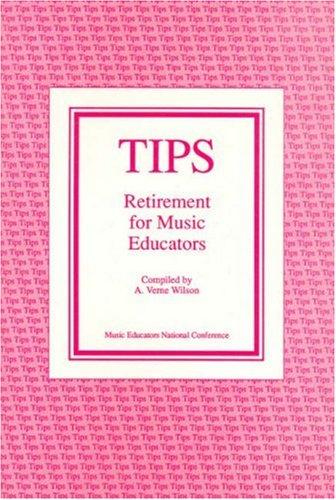
Tips Retirement for Music EducatorsThat means, according to TIPS Retirement for Music Educators by Verne A. Wilson (MENC 1989), at least three years before you leave your full-time employment:

  1. Sit down with your spouse if you are married (and other family members) and plan ahead carefully.
  2. Decide when you want to retire. Estimate as accurately as possible what your economic situation will be after you retire.
  3. Decide where you want to live after you retire. This means not just the neighborhood, city, or state, but also the kind and style of residence… retirement community, one-floor ranch, apartment, etc.
  4. Set some goals regarding how you want to spend your retirement time. Focus on your talents and abilities instead of looking at the handicaps that may come with the aging process.
  5. Be prepared for “change” and learn how to accept it, and be willing to embrace new opportunities for personal growth, flexibility, and adaptability.
  6. Be sure your intentions are clearly stated in writing (wills, power of attorneys, living wills, etc.)

Now, to define your “life’s goals” and anticipate several of the “big issues,” read on!

SELF-IDENTITY & CHANGE: Who am I?

The prep and passage to your “golden years” is the perfect time to a little self-reinvention based on self-assessment towards finding purpose, meaning, fulfillment in your life. There are many publications that promote personality and interest surveys to point you in the right direction and help synchronize your goals with your spouse, “significant other,” other family members.

the_retiring_mind_coverRobert Delamontagne writes in detail about using the enneagram as an evaluative tool in Honey, I’m Home: How to Prevent or Resolve Marriage Conflicts Caused by Retirement (Fairview Imprints, 2011) and The Retiring Mind: How to Make the Psychological Transition to Retirement (Fairview Imprints, 2010).
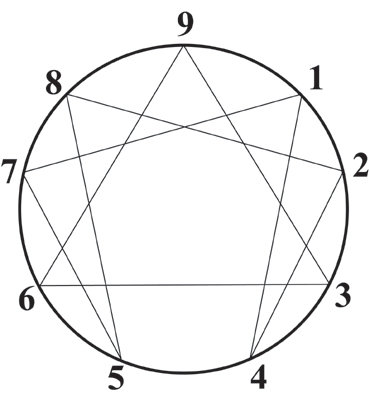
The definition of enneagram is “a system of classifying personality types that is based on a nine-pointed star-like figure inscribed within a circle in which each of the nine points represents a personality type and its psychological motivations (such as the need to be right or helpful) influencing a person’s emotions, attitudes, and behavior.” And now, the essential question: Are you and your spouse or significant-other “compatible” and facing your retirement future “on the same page?”

I have come to learn that different people process life-changing events in various ways, depending on their personality type. You slam a hard-charging personality type with an achievement addiction into an unplanned, downsized retirement life and you won’t see stress like this unless you invested your retirement money with Bernie Madoff.

― Robert Delamontagne in The Retiring Mind: How to Make the Psychological Transition to Retirement

enneagramDelamontagne labels the characteristics of each E-Type. After reading his book, which ones are closest to resembling you and your spouse?

  • E-Type 1: The Master
  • E-Type 2: The Enchanter
  • E-Type 3: The Star
  • E-Type 4: The Drama Queen
  • E-Type 5: The Solitary Mystic
  • E-Type 6: The Closet Rebel
  • E-Type 7: The Cruise Director
  • E-Type 8: The Conquistador
  • E-Type 9: The Harmonizer

Approaching it from an individual retiree’s quest for self-reinvention in their book Shifting Gears to Your Life & Work After Retirement (New Cabady Press, 2013), Dr. Carolee Duckworth and Dr. Marie Langworthy offer self-assessments and analyses with the four-letter personality type code in Chapter 6: “Reinvent Yourself” (see the Myers-Briggs Personality/Cognitive Style Inventory Test at http://www.personalitypathways.com/type_inventory.html and TypeLogic Profiles at http://typelogic.com/index.html) followed by the Interest Profiler in Chapter 7: “Rediscover Your Work” (see https://www.cacareerzone.org/ip).

shifting gears bookcoverOn their book jacket, Duckworth and Langworthy promote their work as “a call to action on your own behalf” to:

  • Jump start your newly invented personal and professional retirement ― your Next Phase life and work.
  • Create your own custom road-map to how Baby Boomer YOU will live your last and BEST personal opus, with vitality, enthusiasm, and enjoyment.

These sections from their reading were also very interesting to review: the 10-point Retirement Countdown, 7 “What Comes Next” Pathways, a 5-Step Process to Create Your Retirement, and 5 Major Types of Retirement Work Options.

In a similar fashion, before you finish the first three dozen pages of The Joy of Retirement, authors David C. Borchard and Patricia A. Donahoe introduce the Life Vitality Assessment and a Transition Readiness – Change Aversion vs. Attraction poll to assist in your self-analysis.

The book develops the “Core Themes for Your New Life,” with the hopes to assist you in re-creating a new life involving the following four phases:

  1. Envisioning the nature of the kind of future you desire.
  2. Articulating that picture into the written word.
  3. Claiming your passion once you are clear about what it is.
  4. Developing a plan or a map for getting where you want to go and for achieving who you want to be.

Joy of Retirement bookcoverLife Themes Profiler, a comprehensive assessment tool developed by David Borchard and laid out initially in Chapter 4, will help you understand and graph the retirement themes and “your intentions for the next chapter of your life.”

They say that 50 is the new 40. If you’re over 50, chances are you feel more vital, energetic, and passionate than ever. While you may be ready to retire, you may not be ready to stop working entirely. These days, life after work no longer conjures up images of couples wandering the malls, playing golf, and taking endless Caribbean cruises. As baby boomers reach their 50s and 60s, they are re-defining what it means to retire. What they want is joy, vitality, and meaning in their lives.

― Back cover of The Joy of Retirement

At the very least, these book resources may open-up new pathways to define your values, personality, temperament, and what may “float your boat” in selecting future service projects, “encore careers,” and hobbies.

Now, get busy on these and “the rest of your life!”


FREE TIME: Where do all of our hours go?

There’s never enough time to do all the nothing you want.

― Bill Watterson, Calvin and Hobbes

It’s a good thing I have that Calendar app on my phone, or I would never remember all of the unique, non-repetitive, and less predictable appointments that I make as a retiree.

ZelinskiObviously, fulfilling your “bucket lists” and goals will influence the structure of your daily/weekly schedule.  According to Ernie Zelinski, with or without “a job,”  you need to find a “work-life balance” and devote equal time to these essential priorities:
  • Job or Volunteer Work
  • Family, Relationships
  • Friends and Colleagues
  • Community Activities
  • Self Care – Sports/Exercise
  • Religious/Spiritual Philosophical Concerns
  • Hobbies/Interests
  • Future Plans/Projects

In his book, How to Retire Happy, Wild and Free (Ten Speed Press 2016), Zelinski lays out his “plan” for finding purpose (and prioritize time) in his life:

  • To make a difference in people’s lives
  • To make a contribution
  • To find creative expression
  • To take part in discovery and challenge
  • To help preserve the environment
  • To accomplish or achieve a challenging task
  • To improve health and well-being

Design Your Dream Retirement Cover-slanted-with-shadowDave Hughes echoes these sentiments with his “four essential ingredients for a balanced life” in the book Design Your Dream Retirement: How to Envision, Plan for, and Enjoy the Best Retirement Possible (2015):

  1. Physical activity
  2. Mental stimulation
  3. Social interaction
  4. Personal fulfillment

Watch out for what I will call “the caretaker’s anchor.” One of the greatest things you can do in retirement is to surround yourself with young people… As many wise people have said, “They will keep you forever young!” However, unless you want it to be the primary focus of your life, your babysitting duties should not take over your entire retirement schedule. It is easy for your love ones to assume that since you no longer have a full-time job, you can assume the responsibility of serving as the “safety net” or even the number one full-time caregiver for your grandchildren and grandnieces.

Several additional time management tips:

  1. If you are married, synchronize your schedule with your spouse.
  2. Set aside at least 30-45 minutes a day for sustained physical activity.
  3. Avoid watching more than an hour and a half of television per day. Experts say this is not healthy.
  4. shiny-brain-1150907-1Do something every day that will expand your mind, stimulate your intellect, or increase your curiosity quotient.
  5. Hobbies that focus on self-expression or other creative pursuits are best enjoyed in the morning when you are fresh. You might consider doing your music warmups, practicing, composing, writing, painting, etc. ― anything that requires firing up your artistic “right brain”― before lunch and prior to your appointments, chores, and shopping. Besides, if it’s something you really look forward to doing, it will help motivate you to get out of bed early in the morning.
  6. Get enough sleep. Believe it or not, many retirees have re-occurring bouts of insomnia. Check out “Retirement Insomnia” by Claire N. Barnes at HUFFPOSThttp://www.huffingtonpost.com/claire-n-barnes-ma/retirement-insomnia_b_6395998.html.

It’s 3 a.m. and I’m awake! How many of you boomers have this experience? As the Inspirement journey continues, I have been surprised to learn how common insomnia is among retirees. Forget all the advice suggesting that when you retire, you can sleep more (or longer…. or later). The practical reality is a large percentage of retirees experience insomnia or sleep difficulties.

whatever clockAlthough the exact number of boomers and seniors who experience sleep problems is hard to pinpoint, a national study of our aging population suggests nearly 42 percent of those surveyed have sleep difficulties. That figure is beyond an epidemic.
― Claire N. Barnes


ENERGY & FORTITUDE: What happened to my stamina and endurance?

Participating in several extra-curricular programs (marching band, fall play, after-school strings, spring musical, etc.), my hectic music teacher weekday work routine began at school around 6:30 a.m., and often I did not make it home until after 9:30 p.m. Since retiring in 2013, I volunteer at the hospital several days a week pushing patients in wheelchairs (with some of our discharges weighing over 300 pounds!). Considering that 15 hours use to be my daily norm, I keep asking myself: “What’s up with my needing to take a ‘power nap’ after only three hours of a moderate physical activity?”

Aerobic activities, strength training and flexibility exercises can help retirees preserve muscle and bone mass, feel young and be better able to do the activities of daily living, such as putting items on shelves and even holding the grand-kids.

― Felicia Stoler, registered dietitian and exercise physiologist in Holmdel, N.J.

running-in-the-morning-1538848 Patrick NijhuisRegular physical activity is a must. Quoting from a future article I plan to submit to the state journal of Pennsylvania Music Educators Association PMEA News: “The definition of ‘exercise,’ especially in order to receive cardiovascular benefits, is to raise your heart rate for 30 minutes or more. Leaving your La-Z-Boy to let the dogs out or looking for the remote does not count!”

Actually, taking the dogs out for a long walk may be a good idea, but you need to move at a fast pace. Stopping to talk to the neighbors down the street or allowing the pups to slow down and sniff every bush, may not bring the health benefits you desire.

The best tip prior to adopting an exercise program in retirement is to see your doctor.

Here are a few Internet resources:


LOSING CONTROL & PERPETUAL CARE:  Should we expect our children to take care of us in our old age?

helping-the-elderly-1437135 melodi2This final category of “pre-retirement planning” has everything to do with living with independence and security as we grow older. Many Baby Boomers just starting their retirement journey may not actually see this as “a big deal” right now. However, developing a long term “backup plan” for maintaining our health care, mobility, and comfortable living is critical. Again… we must think ahead!

As a “senior” with no children, nephews, or nieces, I again seek the advice of experts.

First, visit Kathy Merlino’s recent blog for a good introduction on this subject, especially as it applies to your children becoming the adult caregivers: https://kathysretirementblog.com/2017/07/23/should-your-kids-take-care-of-you/.

She is very eloquent in her “independent-living manifesto”― being actively involved in her children’s lives but NOT leaving them the ultimate chore of “taking care of mom!”

The primary reason for my planning for independence is my children. I’d like for them to live unfettered with my care. They have their own lives, spouses, children and now, my oldest daughter, has her very first grandchild. Taking care of myself is the best gift I can give them…

We, as parents, should never expect our kids to resign from their lives to care for us. It is up to us to care for us. We owe it to our children to stay physically active, to eat a healthy diet, to pursue our passions, to stay mentally sharp, to develop a community of friends of our own, to stay spiritually true to ourselves. And, if necessary, live in an assisted living community. That is the best legacy we can leave them.

― Kathy Merlino

Consumer Reports offers an excellent online article “Healthy Aging in Your 80s and Beyond – 5 Tips to a Long, Healthy Life,” recapping the above advice on physical fitness and offering a few recommendations on how to live independently:  https://www.consumerreports.org/cro/magazine/2014/06/healthy-aging-into-your-80s-and-beyond/index.htm.

Consumer Reports logoFifty-five percent of our respondents wanted to stay in their own homes, with help as needed, as they got older and required more care. But a recent AARP survey revealed that only about half of older adults thought their homes could accommodate them “very well” as they age; twelve percent said “not well” or “not well at all.”

“The time to think about your housing options is when you first retire and are relatively healthy and young,” said Linda Fodrini-­Johnson, a geriatric-care manager in Walnut Creek, Calif. “You need to think realistically about the things that might happen over the next 20 years.”

Consumer Reports, June 2014 issue

I like a few additional resources on the web:

romanticism-1309299 Claudia Meyer

CONCLUSION ― Food for Thought!

Gerontologists like Ken Dychtwald and Robert Atchley contribute loads of research and recommendations for the “imagination” (pre-retirement), “anticipation,” and “liberation” stages of retirement. They provide the basis for all the concern and rush to reflect on senior self-realization and dodge anticipated problems we may encounter during this period. One quote from TIPS Retirement for Music Educators by Verne A. Wilson sums up the need for a concerted effort in “advance planning” to enjoy and find meaning in your post-employment “new dreams and horizons!” Conquer your own retiree “conundrums!”

If you were planning to spend the rest of your life in another country, you would want to learn as much about it as possible. You would read books about the climate, people, history, and architecture. You would talk to people who had lived there. You might even learn a bit of its language. Old age is like another country. You’ll enjoy it more if you have prepared yourself before you go.

― B. F. Skinner and Margaret Vaughn in TIPS Retirement for Music Educators


PKF

© 2017 Paul K. Fox

Photo credits from FreeImages.com (in order): “Sunset Years” by Bill Davenport, “Shiny Brain” by artM, “Running in the Morning” by Patrick Nijhuis, “Helping the Elderly” by Melodi2, and “Romanticism” by Claudia Meyer