
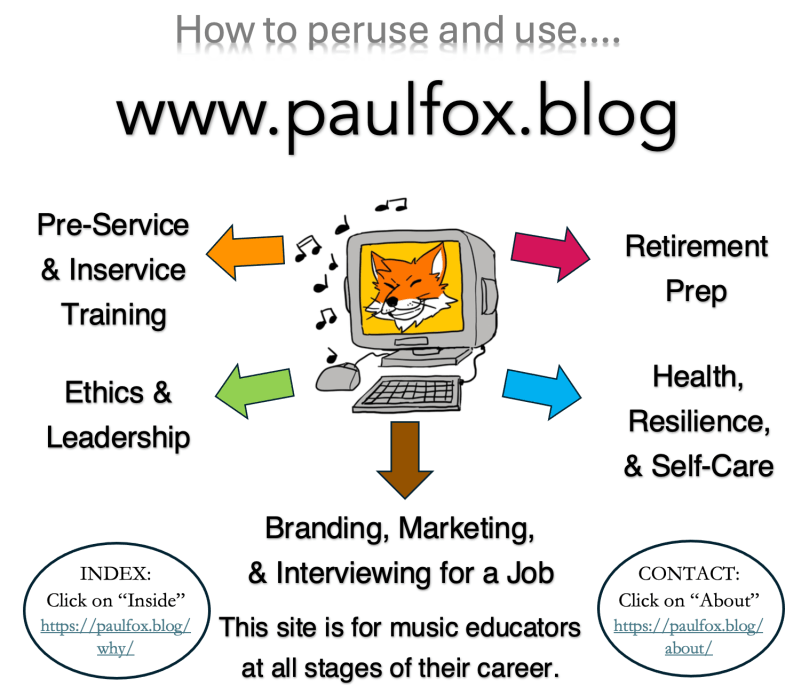
A Guide for Music Educators at All Stages of their Career

It’s time for a celebration! Since its creation in July 2015, this represents the 217th blog-post at this WordPress website!
My apologies to first-time visitors who may find themselves a bit overwhelmed at the incredible volume of submissions posted to this library.
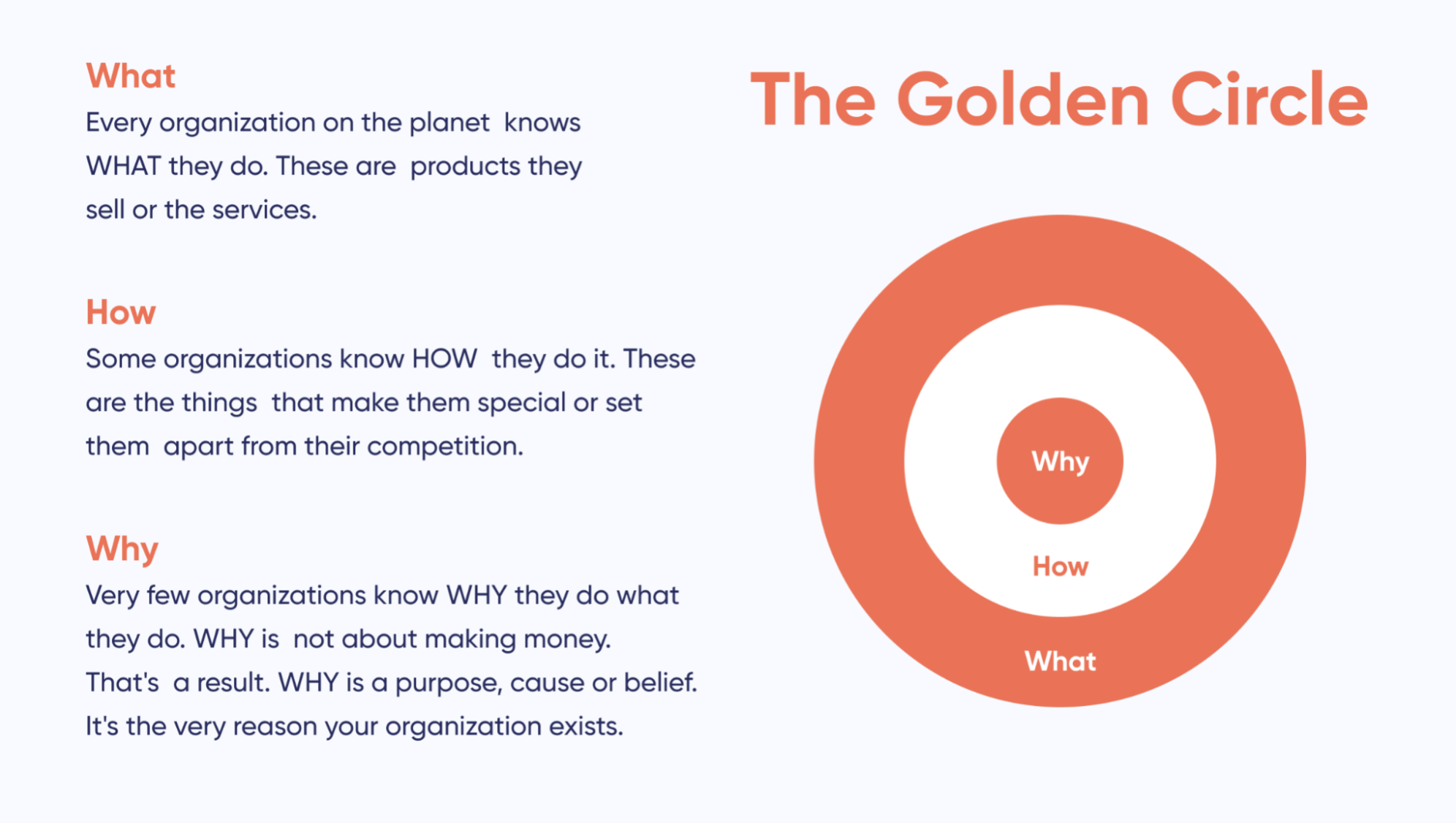
The purpose of this project after my retirement from public school music in June 2013 was to archive my writings and organize them in one convenient location. As Simon Sinek would emphasize at one of his keynote speeches, the essential “WHY” and rationale for http://www.paulfox.blog is the value I hope my articles could serve to prospective music teachers “in the trenches.” Many of us retirees just want to feel needed and seek opportunities to offer the benefits of our “boots on the ground” to future professionals. We seek to “matter” throughout our retirement and stay active in our post-employment years. The mission and goal of this website is to “make a difference” and share a legacy of more than five decades in the profession, providing the supports of hard-earned lessons learned, anecdotes shared, short cuts developed, perspectives observed, and additional research and practical tips found applicable to the field of music education and creative self-expression.
I write for myself, not to earn credit or receive validation from any external source. But, of course, I hope somewhere out these someone eventually finds these “creations,” reads them, and actually puts some the material to work for them in their job.
Unraveling the Maze of Menus
Articles posted at most blog-sites are published in chronological order… formatted to what computer programmers would term as “sequential.” This structure is similar to a tutorial, directing the reader to consume the contents from beginning to end (Introduction, Chapter 1, Chapter 2, etc.), reading “in sequence” earlier posts for full comprehension. This is the same basic format of paulfox.blog.
However, for academic or research study, my articles may be viewed in any order, similar to the “random access” format of a reference manual. (Go to the specific relevant section you are seeking information.) Everything is digitally stored under these categories (also accessible from links printed inside the right panel):
- Boosters
- Care (also Health, Wellness, Resilience, and Burnout Avoidance)
- Creativity
- Ethics
- Fox’s Firesides
- Interviewing
- Leadership
- Marketing Professionalism (also Branding and Networking)
- Pets
- Retirement Resources
- Training (Pre- or In-Service Prep for Music Educators)

A reader might prefer to skim through an outline of potential reading material by clicking on the menu bar at the top of the page:
- About: My contact information, curriculum vitae, recent workshop or conference presentations, professional brochure, and printer-friendly catalogs of articles and presentations
- Inside: A frequently updated index (by subject) of all blog-posts at this site
- Training/Jobs: Listings of articles and online resources (in chronological order) and past workshop/conference slide summaries and handouts (in reverse chronological order – most recent first) on the topics of pre- and inservice training in music education, ethics, building professionalism, and techniques for marketing, interviewing, and landing a job.
- Care: Presentations, recommended books, and website resources on health, wellness, and burnout/stress remediation, and developing a self-care plan
- Retirees: Alphabetical reference to articles and other resources on retirement preparation, mostly on post-employment self-reinvention and truly “living the dream” in our senior years
- Creativity: My three-part series on creativity in education plus a short list of creativity geniuses/educational gurus and their books
- Firesides: Tips for the enrichment of musicians of all ages, including practice hacks/hints and a collection of PDFs presented in the South Hills Junior Orchestra Online Academy
Explore the Links, But Beware!
Thousands of hours has been spent writing these “epistles,” and whenever possible, I try to reference background information, attributions, follow-ups or research sources. The Internet is an amazing tool, but it should not come as a surprise to anyone that some of the links in my older blogs may have broken connections or return errors. This is best explained by Google AI:
“Links on the internet become inactive, known as link rot, when a website owner deletes a page, changes the URL structure, or shuts down a domain entirely. Over time, servers go offline, companies close, and paid web hosting plans expire, which breaks the digital path to the original content.” [1, 2, 3, 4, 5]
Copyrighted material may be taken down as the authors move on to other pursuits or decide to restrict it to print-publish their work. A case in point, one of my favorite “experts” on creativity and author of Instructional Strategies for Thinking, Collaboration, and Motivation, Dr. Curtis Bonk from the Indiana University of Bloomington removed his amazing graduate course handouts and PowerPoints referred to in several of my creativity blogs. I still lament the fact that his “Best of Bonk” website is gone!
Whenever possible, I “nail down” a snapshot of the data, context, and clarifications with supportive PDF files and copies of my slide decks. At the time of their creation, the links were active. However, it has become necessary to update many of my more recent versions of commonly-repeated presentations, e.g., Retirement 101, Interview Clinic, Take the E-Train (Ethics), etc. The older the conception of the work, the more likely that something in it has become inactive.
If you find something is “broken,” please give me a holler. Send me an email describing the problem to paulkfox.usc@gmail.com.
Comments Welcomed!
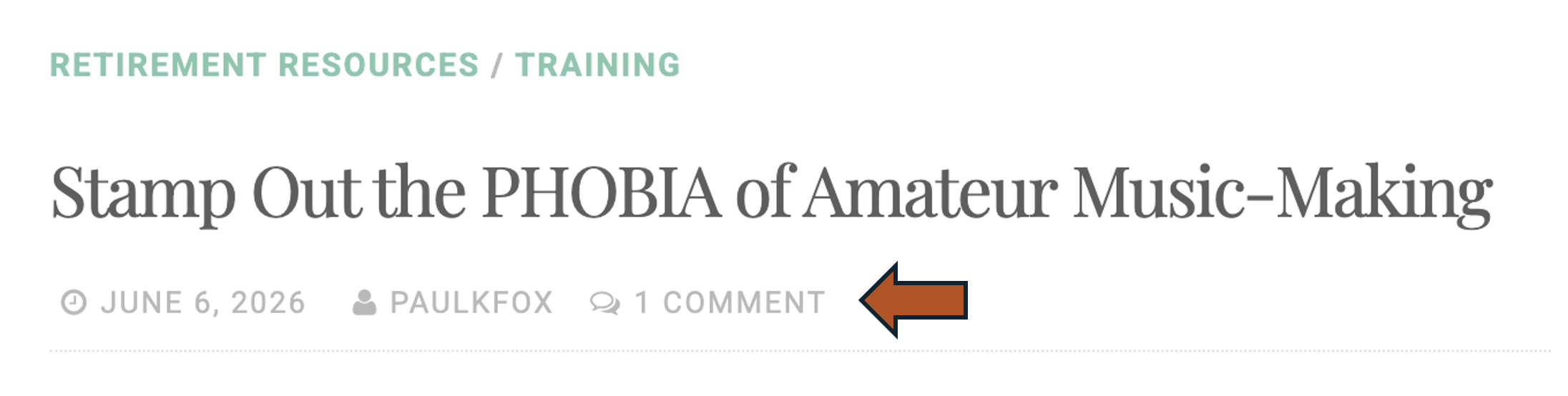
Directly under the title of each blog are printed the date of its creation, my signature, and a small symbol with the text “Leave a Comment.” CLICK ON THIS! I encourage feedback! Share your perspective. Add your own experiences, thoughts, or sources of information. I fervently hope I am not needlessly shouting in a wind storm trying to reach an audience who cannot hear me but could perhaps be best served by this open, two-way communications and divergent opinions.
Some of the posts receive significant initial and repeat traffic. I’ve noticed especially for those blogs on marketing professionalism and interview tips/questions, things pick-up in early spring, perhaps when graduating music education majors may be completing preparations for employment screenings. (Believe-it-or-not, one of the highest rated blogs last month was Dress for Success at Teacher Interviews!) So, if you have anything to add to help pre-service colleagues (soon-to-become teachers), click on the comment symbol or send me an email and share your advice! I would be happy to post your insights in a future blog!
Highlights
These might be my “top ten” blogs (in alphabetical order) to get a good idea what is available for further research.
- 52 Creative Tips to Supercharge the School Musical
- Creativity in Education
- Ethics Follow-up with links to all four parts of a general discussion on school ethics)
- The Five Cs of Self-Care – Teachers Take Charge of Your Wellness
- Get a Job Toolbox
- The Importance of Music Education
- Job Interview Rubrics
- Leaders Flush
- RECAP – Retirement Resources – A Treasure Chest of Tips for “Living the Dream!”
- Transitioning from Collegiate to Professional – Part 3 with links to all three parts on career preparation)
Just for fun, on occasion I voiced several “rants and raves” (yes, I am opinionated) and ventured into new topics unrelated to a career in education, such as pets (e.g. In Defense of Dogs, Pet Citizenship, Unconditional Love – Dogs!) and book bucket lists (For Book-Lovers – Retired or Not and Summer Reading).
I still recommend perusing the index (“Inside”) for a more in depth chronological discovery of these topics, or click on the other links in the top menu bar. (Some of these sections offer alphabetical listings of the titles to facilitate a thorough examination.)
Go explore! Happy hunting!
Guest Bloggers
I would be amiss if I did not recognize several talented guest authors who have contributed meaningful articles to this forum.
Ed Carter
- Bigger Dreams, Bigger Home
- Creating a Home Recording Studio
- Creative Ways Musicians Can Earn Extra Income
- Do You Have a Side Gig?
- How Musicians Can Grow Their Audience with Storytelling and Consistency
- Learning New Skills and Hobbies
- Monetizing Our Skills and Passions
- Music and Literacy Skills
- Returning to the Classroom in Retirement
- Unleashing Your Sound: A Musicians Guide to Making Waves and Gaining Fans
- Wander with Whiskers
Katherine Langford
- The Four R’s of Music Education
- The New Model of Modern Music Education
- COMING SOON (August 27, 2026):
Why Senior Travel Projects Centered on Local Music Scenes Boost Well-Being

Booking Speaking Engagements
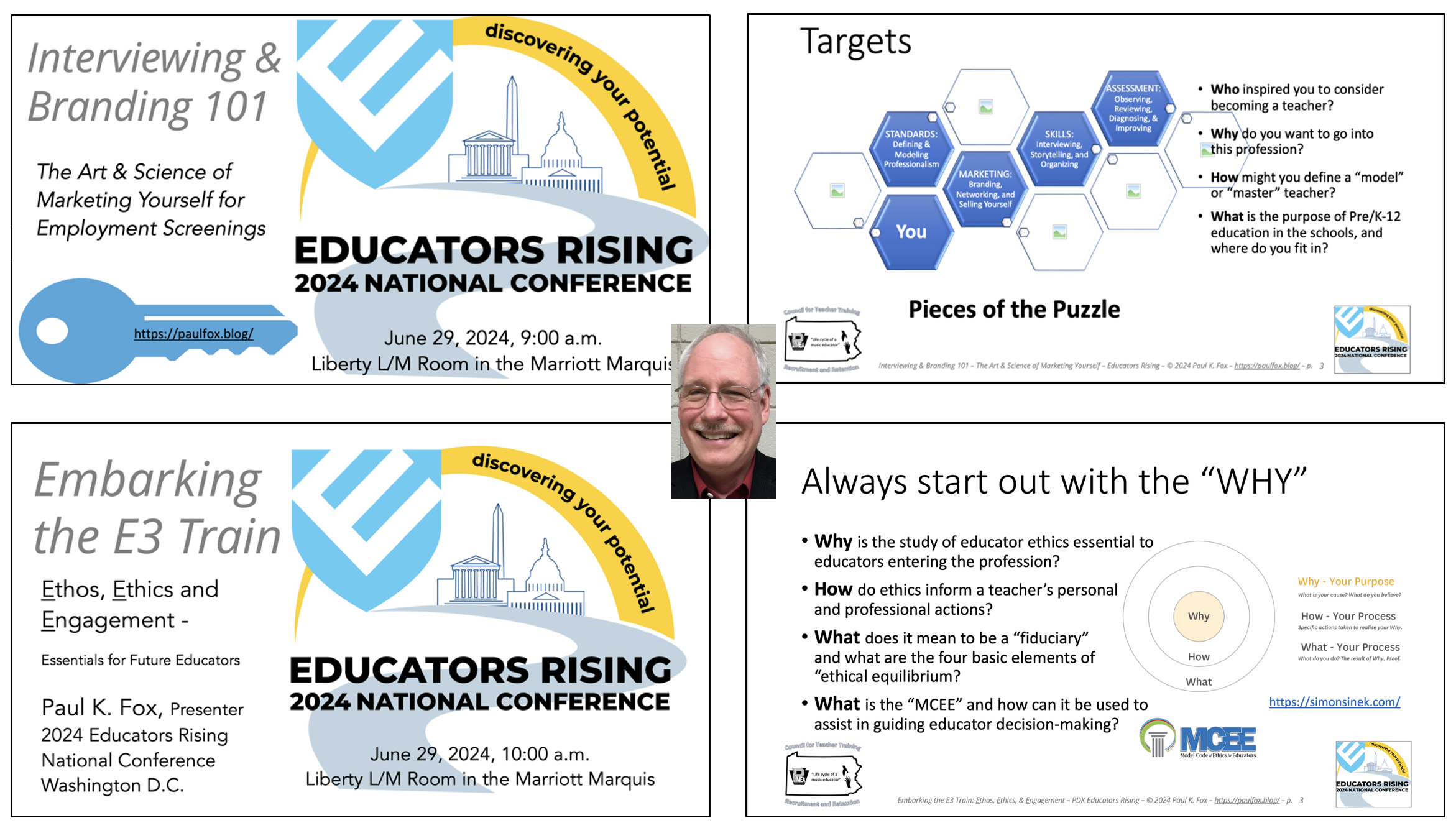
Conferences and workshops have become a “retirement hobby” for me. Please visit my “About” section for a history of my most recent educational presentations. Contact me if you would like more information on availability. The following represent my most-requested sessions, many of which have sample slide summaries within this blog site for you to download and review:
- Bookends – The Life Cycle of a Successful & Happy Music Educator
- Catch the E3-Train – Essential Ethics for the Educator
- Empowering Educator & Student Leadership
- Hands-on Conducting
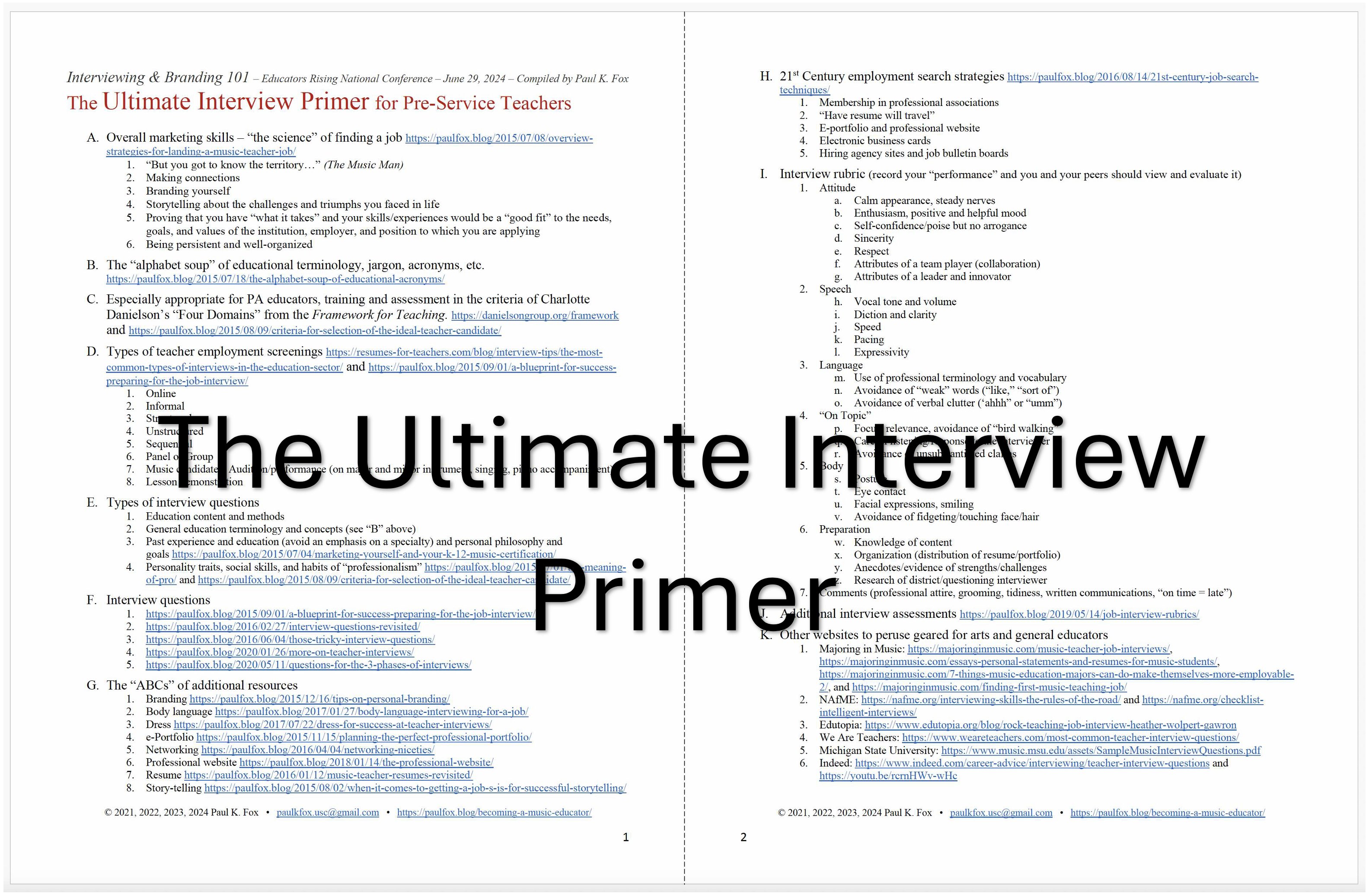
- The Interview Clinic – Exercises to Improve Your Performances at Employment Screenings
- Retirement 101 – It’s NOT All About the Money
- Self-Care Cookbook – Recipes and Resources for Teachers
- Social Media – Boon or Nemesis?
- Supercharge the School Musical
Keep Connected! – Looking Forward to Read YOUR Feedback!
PKF
© 2026 Paul K. Fox















 Discounted NAfME + PMEA first-year membership: only $90. (If you are a recent college graduate in your first year of teaching, or if you are the spouse of a current or retired NAfME member, contact NAfME at 800-336-3768 or email
 Bring to any employment screening your resume, business card, and an e-portfolio referencing a professional website which archives everything in #1 and #2 above.
 Clean-up and curate your social media sites, treating your Facebook pages as another “personal branding resource.” Experts recommend that “your profile information should reflect integrity and responsibility… You should expand or add content that projects a professional image, shows a friendly, positive personality, demonstrates that you are well-rounded with wide range of interests, and models… great communication skills.”


 To “wrap-up” our final segment, we will review the development of a professional “marketing plan.” This is blog #3 out of 3. (Be sure to also check out
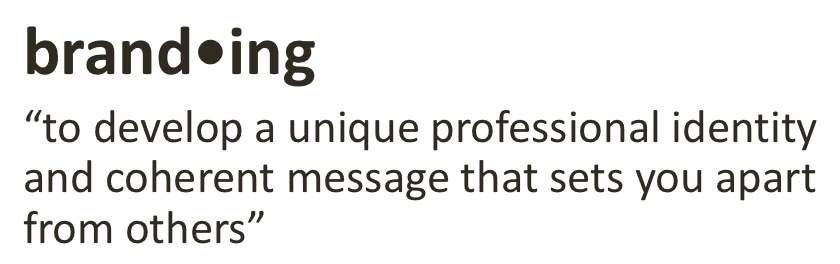
 Shama Hyder posted “7 Things You Can Do to Build an Awesome Personal Brand” at
 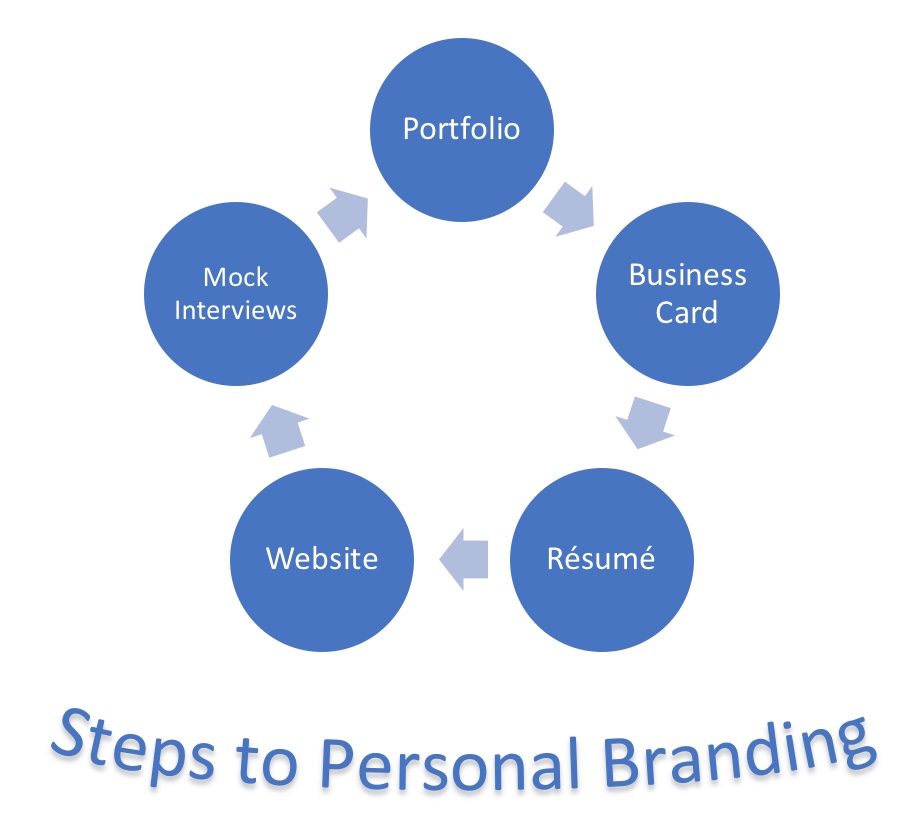 The branding process involves first developing your philosophy of music education, archiving your awards and accomplishments, documenting your grades and
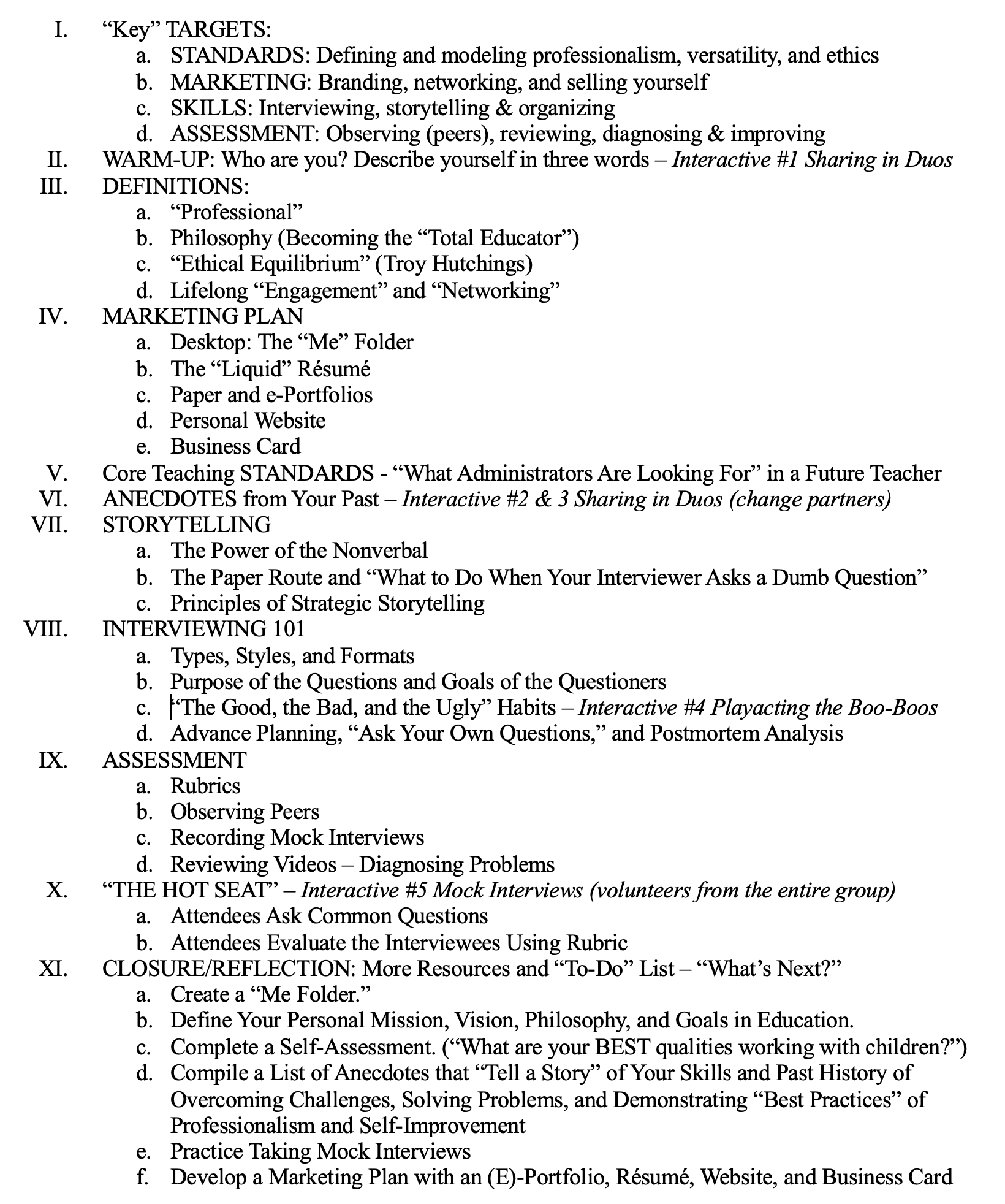
  experiences, and collecting stories/personal anecdotes of your strengths. The next steps include the creation of a written and electronic portfolio, business card, resume, and website. Finally, you must compile/assemble everything together and practice (and self-assess) your “story-telling skills” to answer those important questions at well-rehearsed “mock interviews.”

 As I laid out in a previous blog “Networking Niceties: The ‘How-To Schmooze’ Guide for Prospective Music Teachers” at
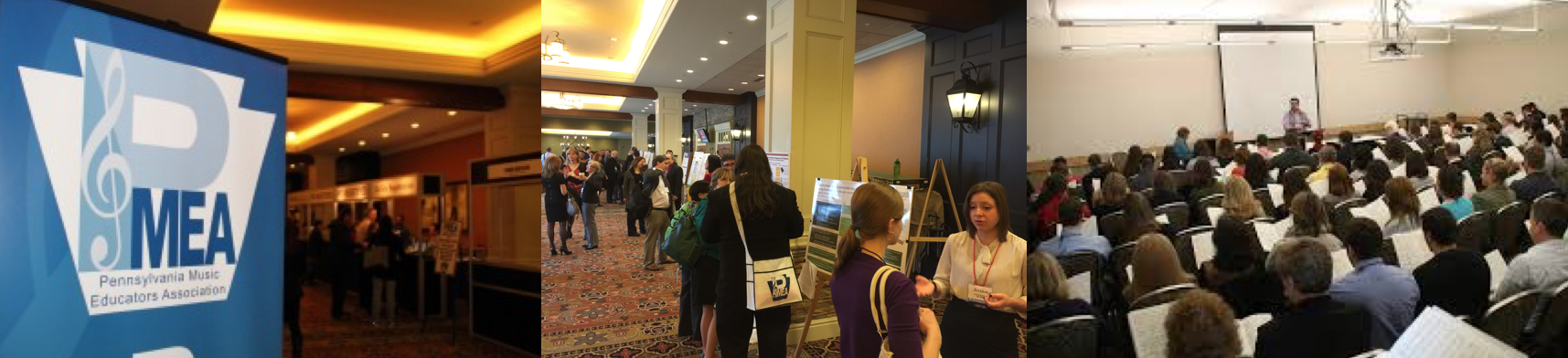
 PMEA Pennsylvania Music Educators Association, or another state’s NAfME-affiliated MEA
 Self-reflection of the professional’s teaching practices and modification of these as needed to match changes in the environment and circumstances




 musical or athletic events, coaching or working with children in a coaching capacity, as a leader and role model.”
 If you can afford it, purchasing a simple domain name like your first and last name (something easy to remember) would be a great idea. Prospective employers will not have to write down a bunch of numbers, know your birthday, learn your nickname, etc. to find your e-portfolio. If you have an unique middle name or surname, you might luck out and be able to snag (and register) the perfect domain name. This was not possible for me! Do you know how many Paul Fox’s (even Paul K. Fox) are “out there” already taken?
 To create your web site’s identity, WordPress will remove the dots and add their company’s moniker “.wordpress.com” at the end of your email name. That is how
 Showing your versatility, try to assemble a collection of still photos, audio examples, and videos that ideally represent all specialties in music education: choral, dance, general music, concert band and string instrumental, marching band, jazz, theater, etc., and demonstrate your proficiency in multiple settings at all grade levels.

 Your “travel document” (paper copy you bring to the interview or “one-of-kind” attachment in response to email application) should be easy-to-modify based on the specific job posting to which you are applying. Your philosophy, goals, education, and teaching experience should focus on and reflect your competencies in alignment with the requirements for the music position. Your professional website and online resume should be more “general” and not rule out being considered for employment assignments outside your major. The PA teaching certificate states you are licensed to teach music in grades pre-K to 12… which means you should be qualified for any opening in elementary, middle, and high school general music, band, choir, jazz, keyboard lab, and strings, right?
 band for a year, conducting a small instrumental ensemble to accompany your youth church choir, giving a few summer lessons to the bell players in the local drum line where you live, etc. In addition, prior to the first employment screening and mock lesson at the interviews, you could “bone up” on your instrumental methods, suitable middle and elementary band warmups/literature, the meaning/concept of “middle school education,” and perhaps even pull out and brush up playing a few scales on that flute (or whatever) in your closet.



 Depending on the structure of the interview, the hiring procedures of the institution, and the type of session (whether it is a general screening prior to any job opening, or the first round, second round, demonstration lesson, final round with the superintendent, etc. in order to fill a specific position), you will be exposed to many different kinds of questions.
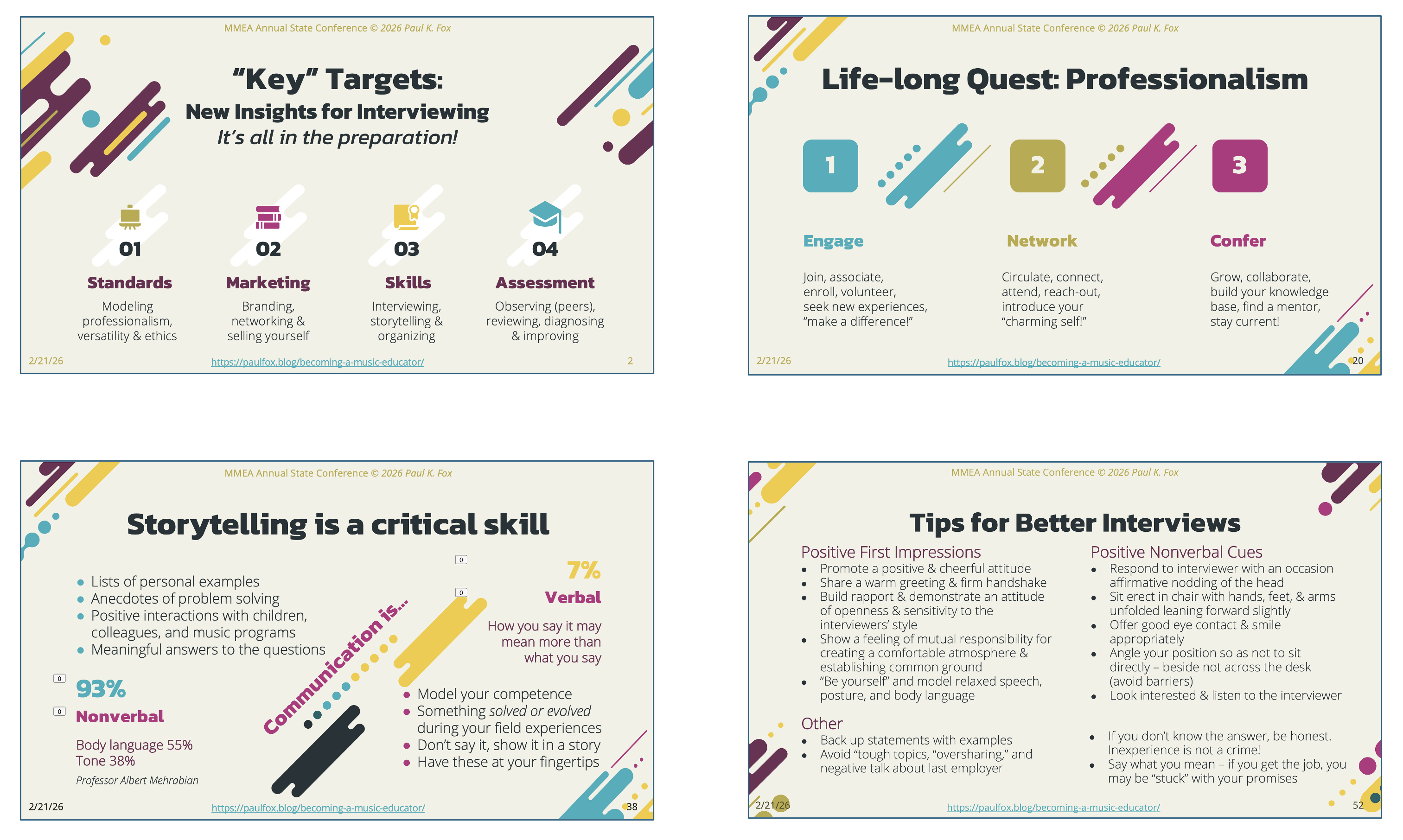
 As I go out to help at job fairs and mock interviews for music education majors, I advise the soon-to-be candidates to practice their storytelling skills and recall relevant personal anecdotes in order to satisfy the interviewers’ questioning, promote an image of competency and self-confidence, “show that you have what it takes” and would be a “good fit” for their school district, and ultimately “ace” the examination.
 you are, adoption of “customer-first” philosophy and habits, a savvy business sense, focused motivation, and a strong work ethic. Narrate an anecdote rather than list facts. Plan (and dress rehearse) something like this script: “My route was small, so I surveyed my existing customers, asked about their needs, desires, and their definition of a ‘perfect paper delivery,’ and how I could help them. I tagged and followed-up on their unique requests, like ‘hiding the pile of papers that end up accumulating during vacation periods’ (advertising to the world that homeowner is out-of-town), and ‘when NOT to place the paper in the screen door early in the morning so as to avoid waking up the dogs and the whole household.’ I also solicited business from non-subscribers, asking them how I could be of assistance. Pretty soon, word got around, and my enhanced customer-care translated into almost doubling the number of the people on my route.”
 settings) and form your responses. View and assess your performances. What are your strengths and weaknesses, and what improvements could be recommended? Besides the content and clarity of your answers, monitor and evaluate your body language, eye contact, and posture, vocal tone and projection, and those intangibles like “charm,” “attitude,” and “first impressions.” If you do this in a group (roommates, collegiate music education chapter, methods class, etc.), request feedback from your “critics.”
 “stress interviews” are still conducted by some institutions. You’ll know immediately if for some reason you are thrown into one of these seemingly “hostile environments.” No matter what you say or how you respond to a question, the interviewer(s) will exhibit a negative attitude, look disinterested, inattentive, unimpressed, or disappointed, or even act angry, belligerent, or argumentative. Talk about “playing to a dead crowd!” Actually, their sole purpose is to evaluate your behavior during artificially-induced tension or conflict. Your only strategy? Play the game! Stay calm, cool, and collected.
 like, “I haven’t had the pleasure of teaching long enough to totally comprehend what I would do in that situation.” Or perhaps, “I am not to familiar with that term/method/philosophy, but I am willing to research it, ask my building principal or supervisor for his/her advice,” etc.
 What is your view of the teacher’s role in the classroom? (Educational Philosophy)
 What role does the Common Core have in general music (or music ensembles)? (Written Expression)
 How would you structure a general music (or ensemble rehearsal) classroom of the future? (Innovation)
 How would you improve the intonation/tone quality/bow technique of a string players? [STRINGS]

