

A Quick Update from the MMEA Annual State Conference
Today (February 21, 2026) it was my pleasure to present at the Maryland Music Educators Association (MMEA) Annual State Conference in the Baltimore Convention Center.
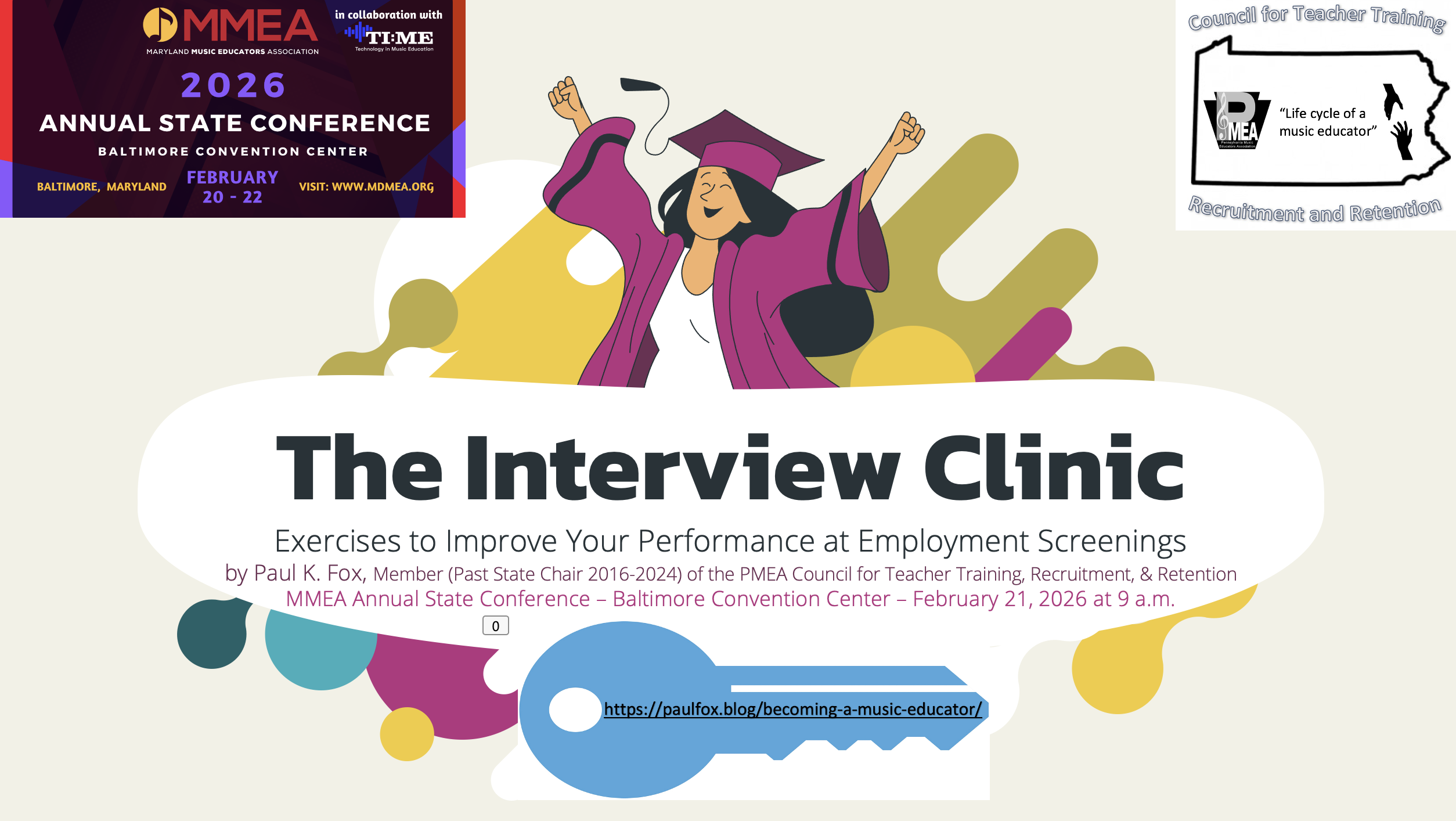
The session was revised from past workshops at PMEA Annual and NAfME Eastern Division Conferences. Feel free to share these materials with fellow music education majors and NAfME college chapters… even hold meetings with them to sponsor group demonstrations of mock interviews to provide an audience and feedback for your practice sessions.

To-Do’s for Future Educators Seeking Employment
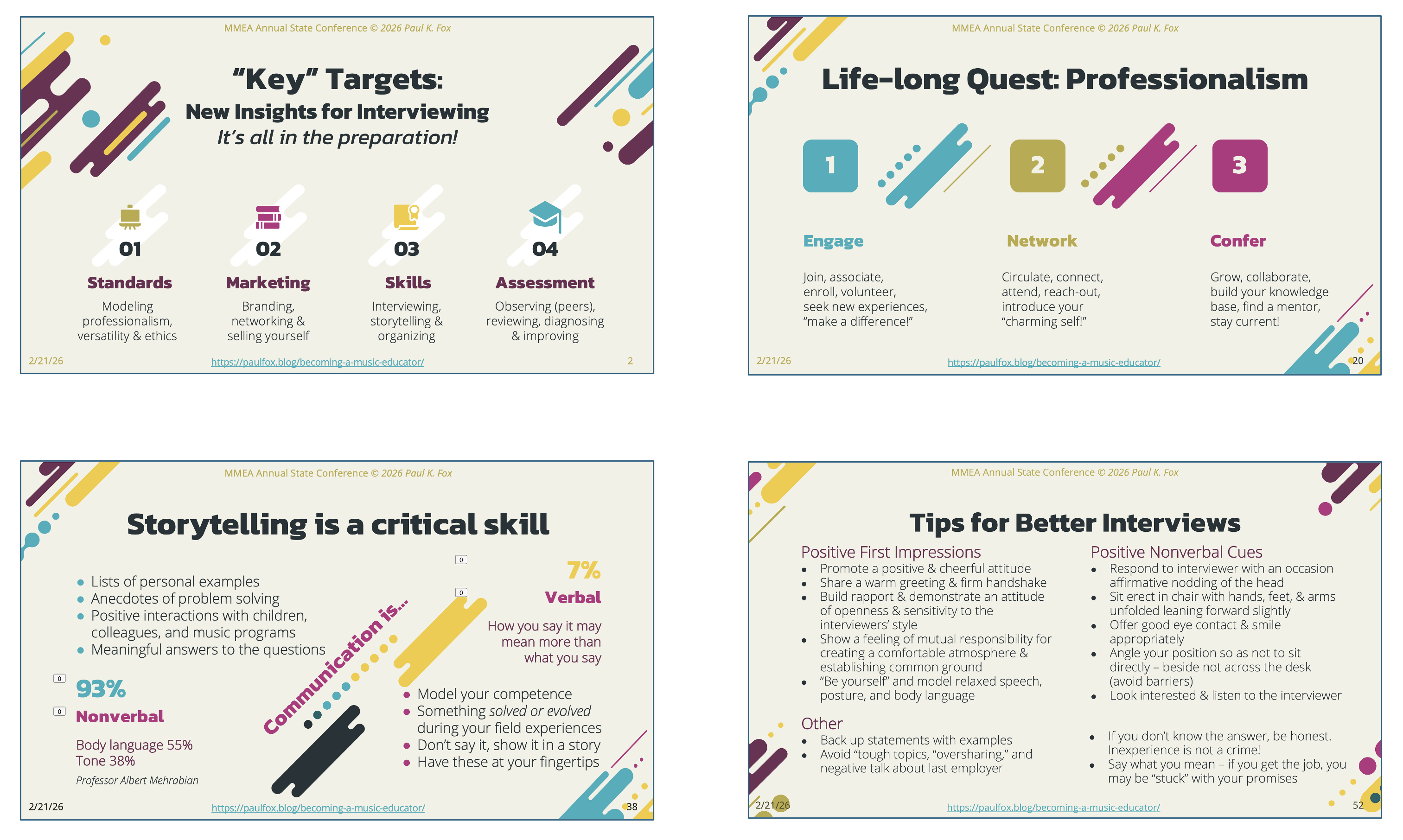
We have covered a lot of the concepts of “the art and science” of interviewing. As a review, here’s recap homework for anyone interested in developing better marketing, branding, and networking techniques, skills in storytelling at interviews, and improving their performance at employment screenings:
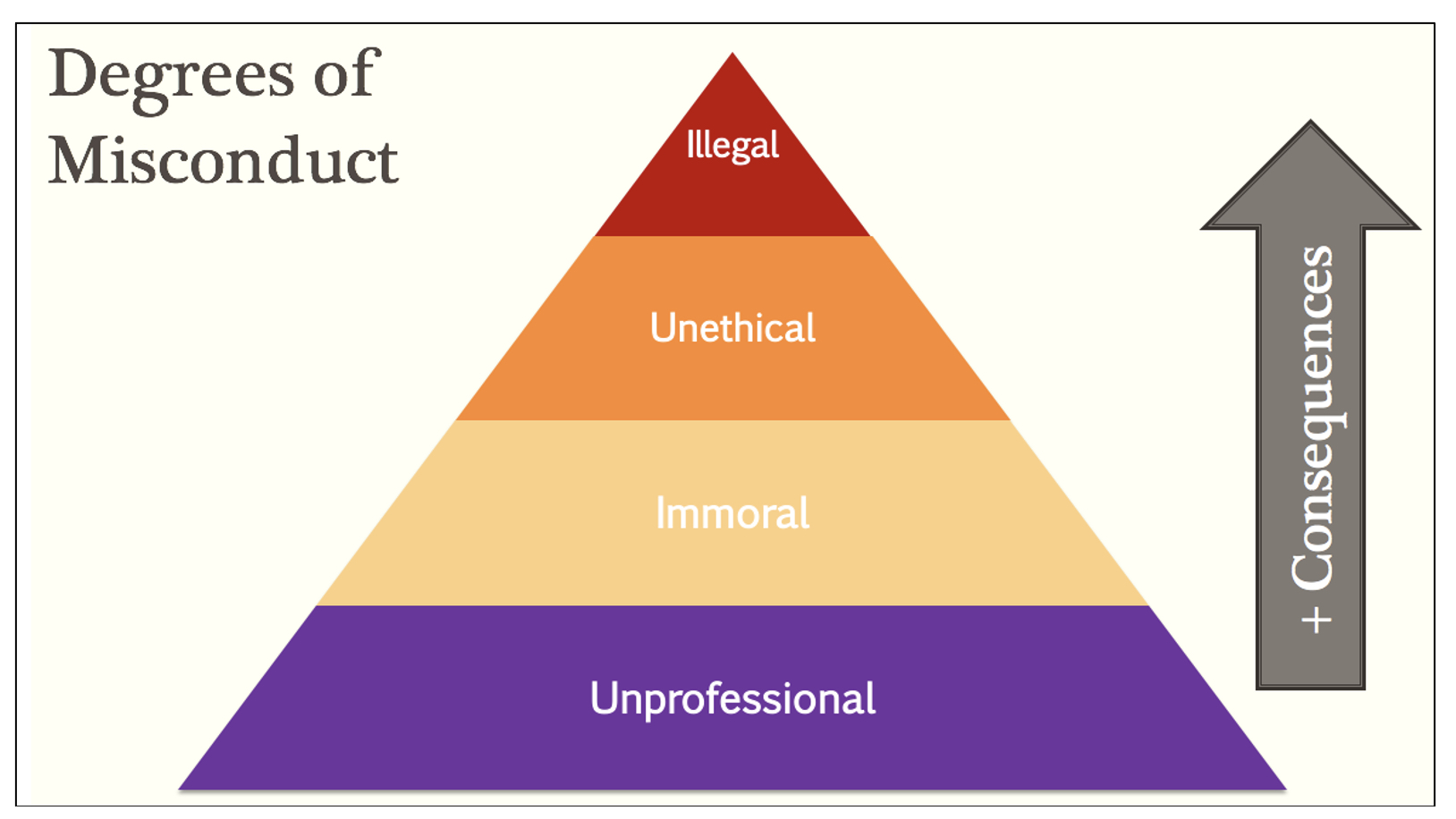
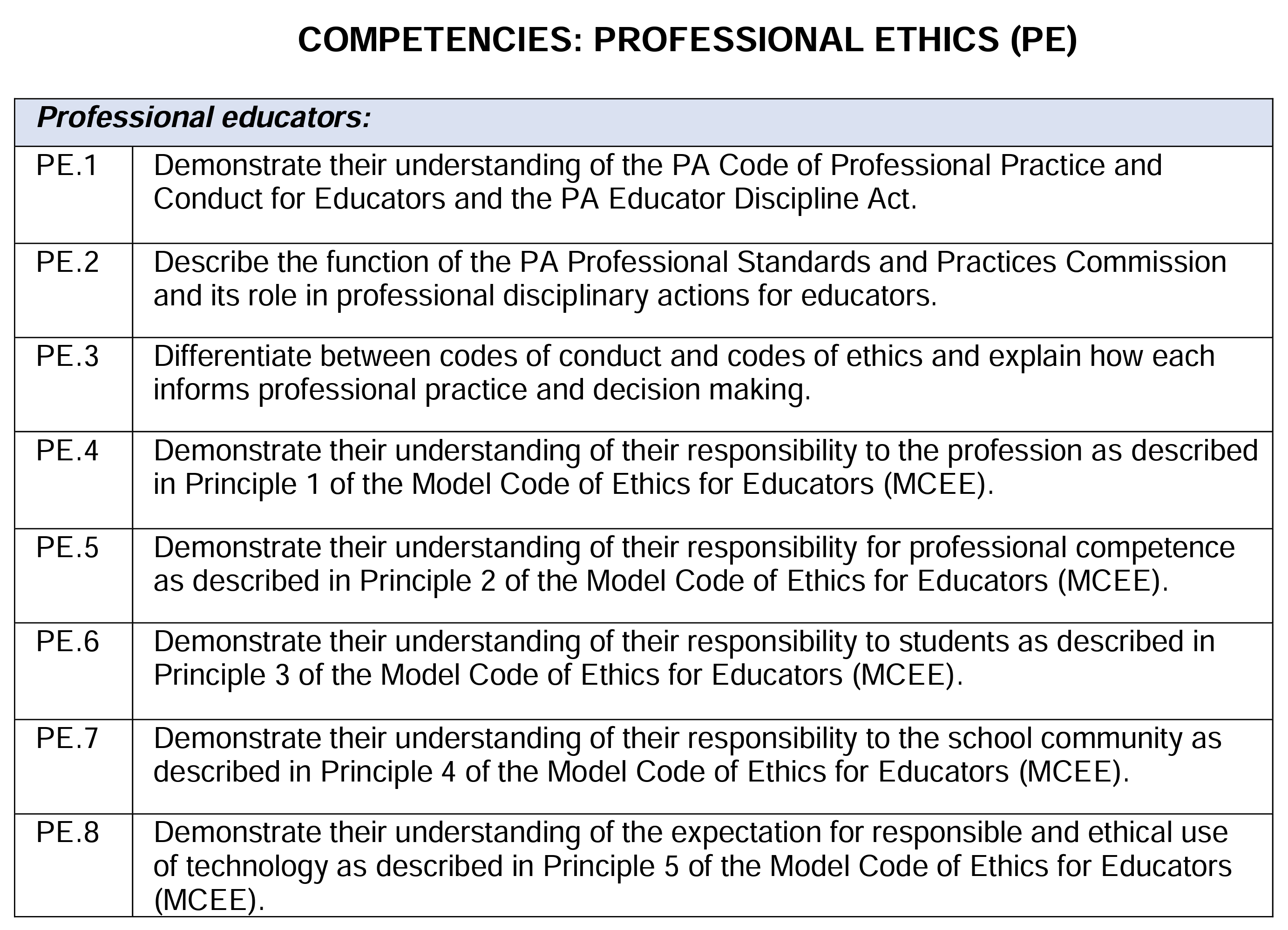
Standards: Define your personal mission, goals, and philosophy for teaching music, modeling the highest ideals of professionalism, ethics, and becoming the “total music educator.” Have you read the Model Code of Ethics for Educators brochure?
Marketing: Design and distribute a “state-of-the-art” résumé, e-portfolio, website, and business card.
Skills: Compile a list of anecdotes and true stories of you overcoming challenges, solving problems, and demonstrating “best practices” of professionalism and self-improvement.
Assessment: Practice, record, and evaluate yourself answering behavioral & typical job interview questions
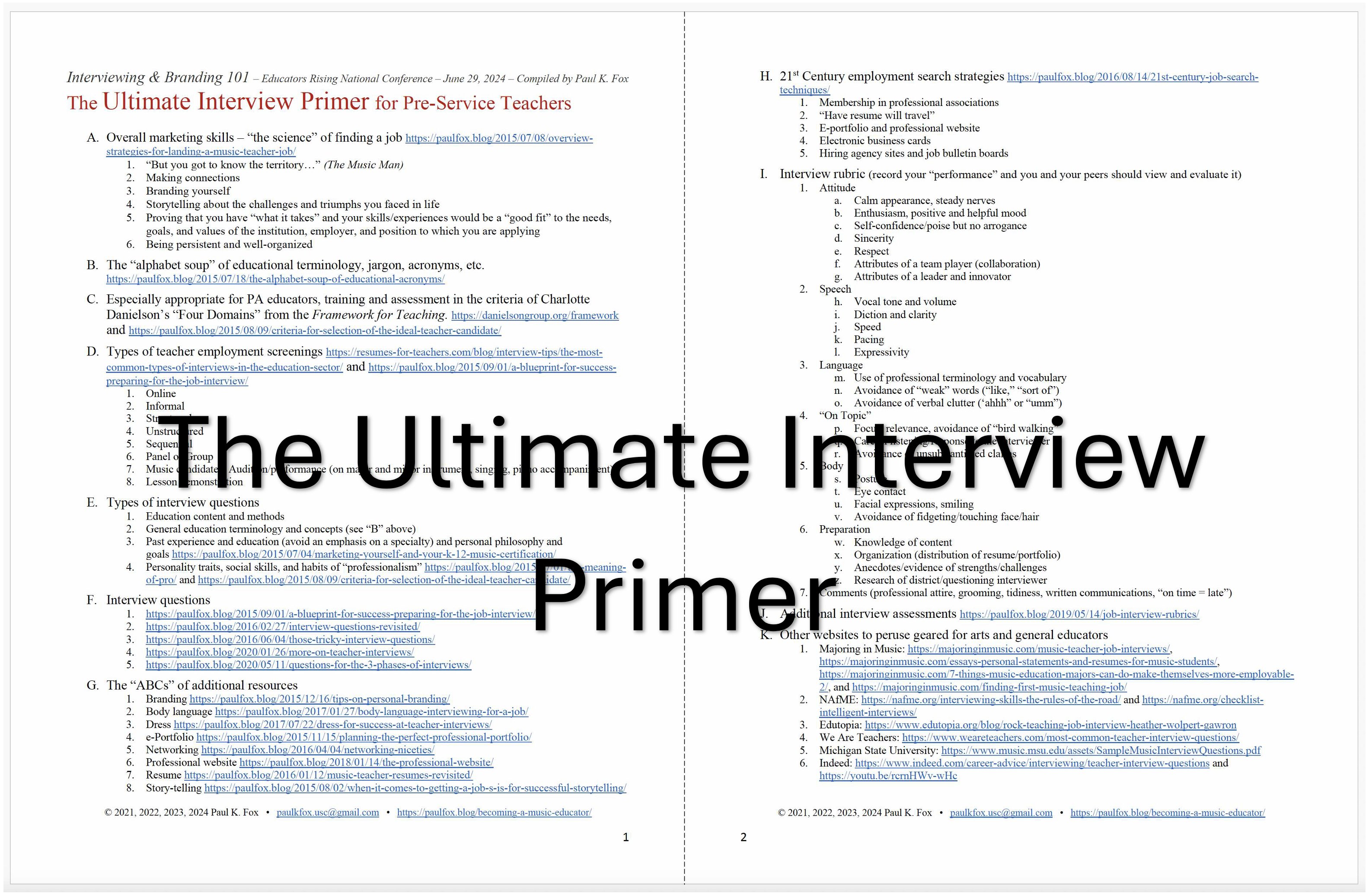
Review all the links here and this updated Ultimate Interview Primer handout and slide summary from the MMEA Annual State Conference.
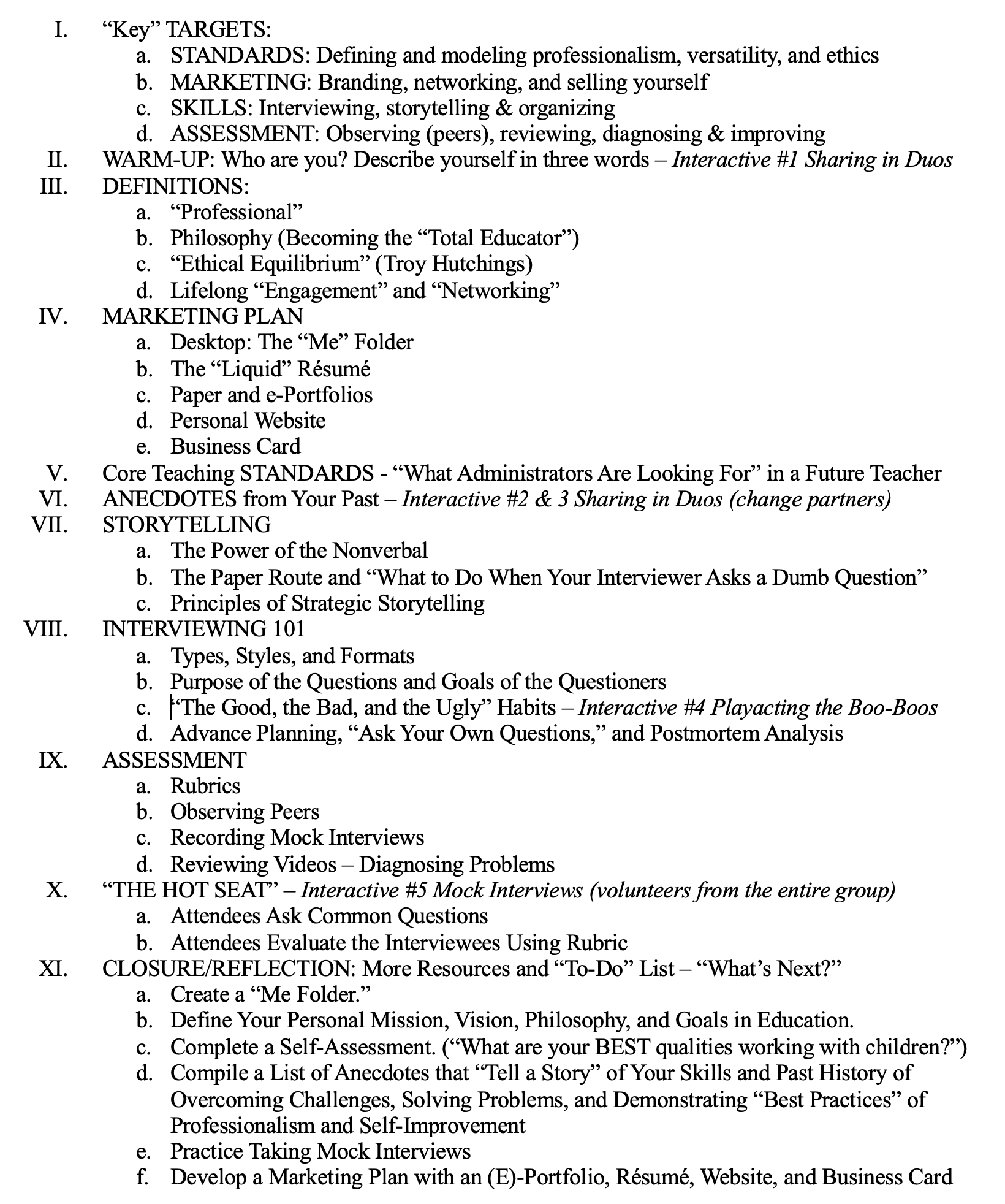
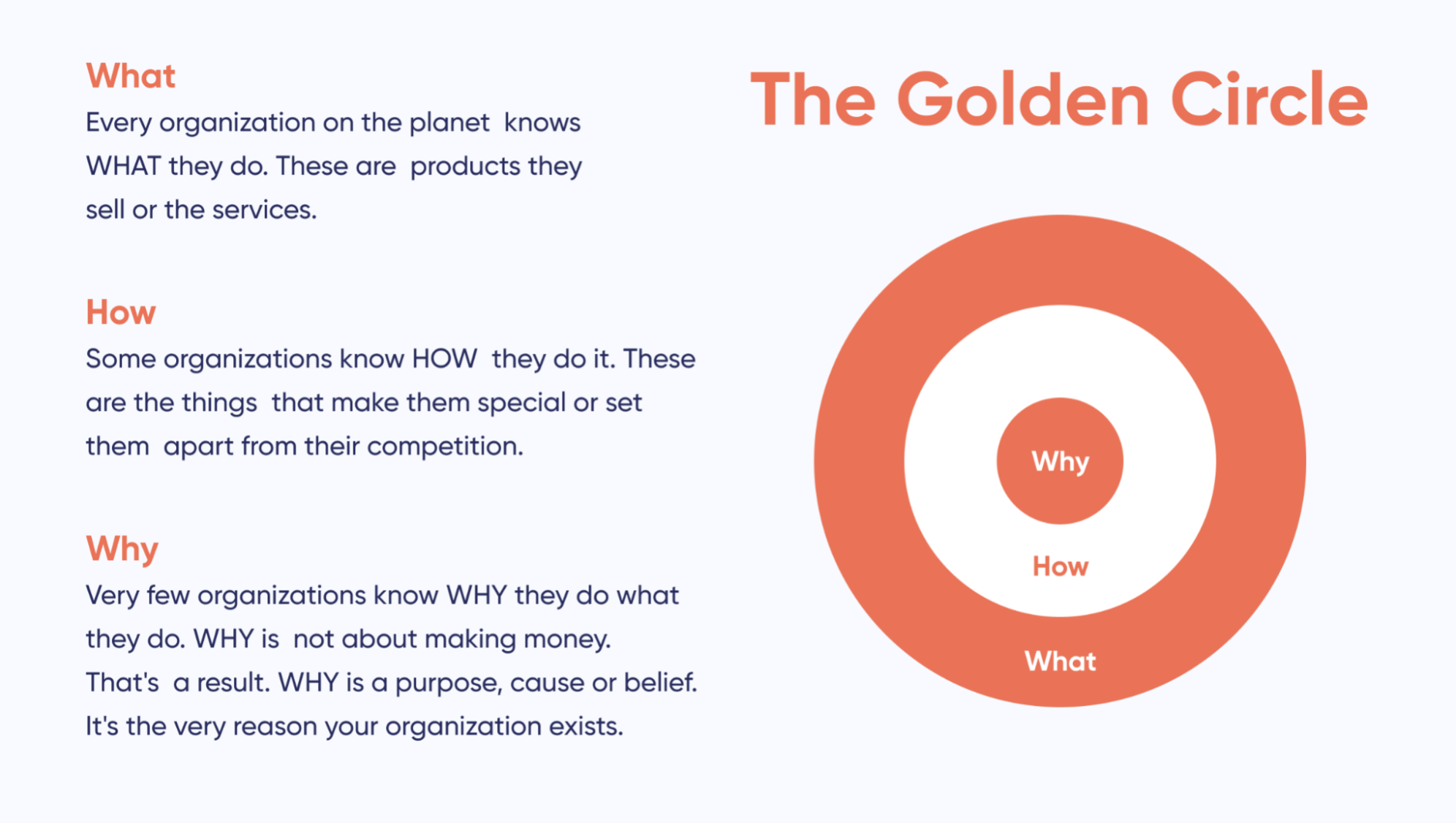
Sample Slides
Click here for the entire slide summary.

Follow-up Reflections — The Top Ten!
Be ready to answer these in depth and with supportive evidence and sincerity at interviews:
- What is your philosophy for the study of music and the arts in the public schools?
- Why do you want to become a teacher? What motivates you to pursue this career path?
- What should be the most important emphasis in school curriculum — the mastery of content, outcome, or process?
- What is your personal mission, goals, and planned career trajectory?
- What are your most unique and essential personality characteristics and core values? (What matters to you most?)
- What are your most unique and essential professional habits that would equip you in becoming an effective educator?
- What is your proudest professional accomplishment? Why is this important to you? How would this relate to your teaching?
- What stories about your past positive interactions with children in education settings would demonstrate you modeled care, competence, compassion, and problem solving?
- How have you evolved in becoming a qualified educator during your pre-service field experiences?
- How and when have you “collected” and practiced responses to a large number of interview questions, including S.T.A.R. (Situation/Task/Action/Results) behavioral inquiries, and then recorded and assessed yourself doing these in a mock interviews or sessions of peer reviews?

One-Stop Help
In conclusion, about a year ago, I posted this Get-a-Job Toolbox blog. Please revisit the article, scroll down below the toolkit graphic, and follow in sequence as many of the published eighteen steps as possible.
High in the Himalayan mountains lived a wise old man. Periodically, he ventured down into the local village to entertain the villagers with his special knowledge and talents. One of his skills was to psychically tell the villagers the contents in their pockets, boxes, or minds. A few young boys from the village decided to play a joke on the wise old man and discredit his special abilities. One boy came up with the idea to capture a bird and hide it in his hands. He knew of course, the wise old man would know the object in his hands was a bird. The boy devised a plan. Knowing the wise old man would correctly state the object in his hands was a bird, the boy would ask the old man if the bird was dead or alive. If the wise man said the bird was alive, the boy would crush the bird in his hands, so that when he opened his hands the bird would be dead. But, if the wise man said the bird was dead, the boy would open his hands and let the bird fly free. So no matter what the old man said, the boy would prove the old man a fraud. The following week, the wise old man came down from the mountain into the village. The boy quickly caught a bird and cupping it out of sight in his hands, walked up to the wise old man and asked, “Old man, old man, what is it that I have in my hands?” The wise old man said, “You have a bird, my son.” And he was right. The boy then asked, “Old man, old man, tell me: Is the bird alive or is it dead?” The wise old man looked at the boy, thought for a moment and said, “The bird is as you choose it to be. It’s destiny is in your hands.”
— Larry Broughton (also attributed to the Unitarian Universalist Association parable and Indian folk tale)
Indeed, regards to the preparation and practice of taking employment interviews and landing your “ideal job,” YOUR DESTINY IS IN YOUR HANDS.
A Plethora of Additional Resources
- Interviewing Boo-Boos
- Storytelling – Part 2
- Mock Interviews – Unraveling the Puzzle of Landing a Music Teacher Job
- Model Code of Ethics for Educators
- Questions for the Three Phases of Interviews
- More on Teacher Interviews
- Job Interview Rubrics
- Interviews
- The Professional Website
- Dressing for Success at Teacher Interviews
- inteREVIEWING the situation… and jobs
- Body Language & Interviewing for a Job
- 21st Century job search techniques
- Those tricky interview questions
- Networking niceties – the how-to schmooze guide
- Interview questions revisited
- Hints for the job search process
- All eyes on the job resume/music teacher resumes revisited
- Tips on personal branding
- The “alphabet soup” of current educational jargon – terms, acronyms, and trends
- S is for storytelling at interviews
- Criteria for selection of the “ideal” school teacher candidate
- A blueprint for success – Preparing for the job interview
- The do’s and don’ts of interviewing
- Planning the “perfect” professional portfolio
© 2026 Paul K. Fox










 Discounted NAfME + PMEA first-year membership: only $90. (If you are a recent college graduate in your first year of teaching, or if you are the spouse of a current or retired NAfME member, contact NAfME at 800-336-3768 or email
 Bring to any employment screening your resume, business card, and an e-portfolio referencing a professional website which archives everything in #1 and #2 above.
 Clean-up and curate your social media sites, treating your Facebook pages as another “personal branding resource.” Experts recommend that “your profile information should reflect integrity and responsibility… You should expand or add content that projects a professional image, shows a friendly, positive personality, demonstrates that you are well-rounded with wide range of interests, and models… great communication skills.”



 To “wrap-up” our final segment, we will review the development of a professional “marketing plan.” This is blog #3 out of 3. (Be sure to also check out
 Shama Hyder posted “7 Things You Can Do to Build an Awesome Personal Brand” at
 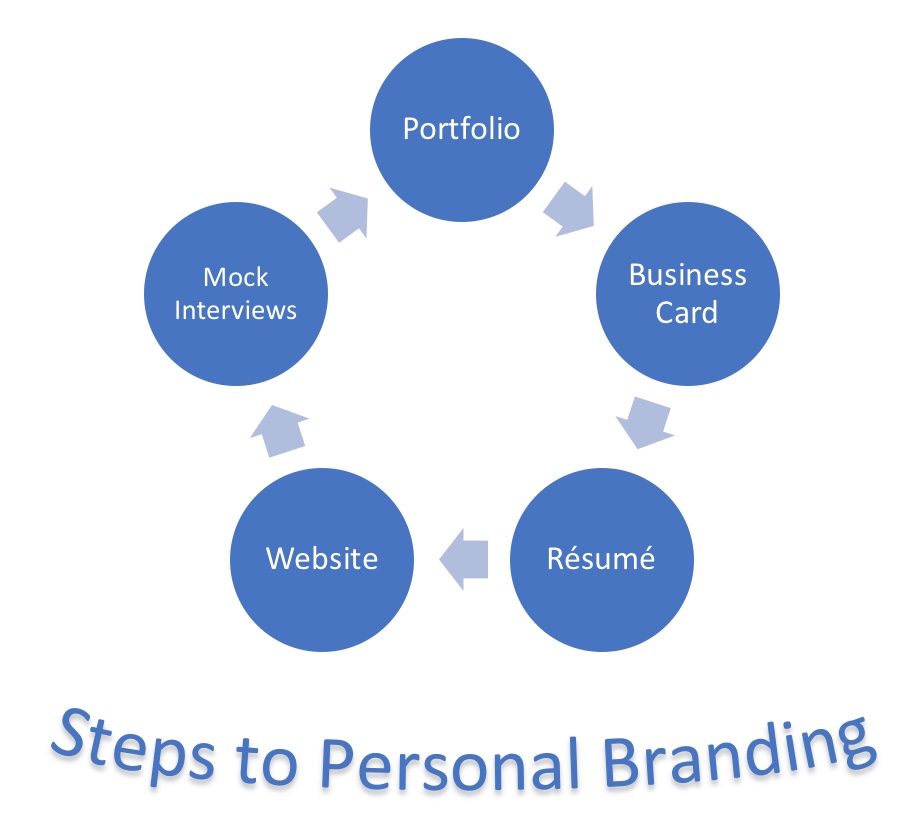 The branding process involves first developing your philosophy of music education, archiving your awards and accomplishments, documenting your grades and
  experiences, and collecting stories/personal anecdotes of your strengths. The next steps include the creation of a written and electronic portfolio, business card, resume, and website. Finally, you must compile/assemble everything together and practice (and self-assess) your “story-telling skills” to answer those important questions at well-rehearsed “mock interviews.”

 As I laid out in a previous blog “Networking Niceties: The ‘How-To Schmooze’ Guide for Prospective Music Teachers” at
 PMEA Pennsylvania Music Educators Association, or another state’s NAfME-affiliated MEA
 Self-reflection of the professional’s teaching practices and modification of these as needed to match changes in the environment and circumstances




 musical or athletic events, coaching or working with children in a coaching capacity, as a leader and role model.”
 If you can afford it, purchasing a simple domain name like your first and last name (something easy to remember) would be a great idea. Prospective employers will not have to write down a bunch of numbers, know your birthday, learn your nickname, etc. to find your e-portfolio. If you have an unique middle name or surname, you might luck out and be able to snag (and register) the perfect domain name. This was not possible for me! Do you know how many Paul Fox’s (even Paul K. Fox) are “out there” already taken?
 To create your web site’s identity, WordPress will remove the dots and add their company’s moniker “.wordpress.com” at the end of your email name. That is how
 Showing your versatility, try to assemble a collection of still photos, audio examples, and videos that ideally represent all specialties in music education: choral, dance, general music, concert band and string instrumental, marching band, jazz, theater, etc., and demonstrate your proficiency in multiple settings at all grade levels.

 Your “travel document” (paper copy you bring to the interview or “one-of-kind” attachment in response to email application) should be easy-to-modify based on the specific job posting to which you are applying. Your philosophy, goals, education, and teaching experience should focus on and reflect your competencies in alignment with the requirements for the music position. Your professional website and online resume should be more “general” and not rule out being considered for employment assignments outside your major. The PA teaching certificate states you are licensed to teach music in grades pre-K to 12… which means you should be qualified for any opening in elementary, middle, and high school general music, band, choir, jazz, keyboard lab, and strings, right?
 band for a year, conducting a small instrumental ensemble to accompany your youth church choir, giving a few summer lessons to the bell players in the local drum line where you live, etc. In addition, prior to the first employment screening and mock lesson at the interviews, you could “bone up” on your instrumental methods, suitable middle and elementary band warmups/literature, the meaning/concept of “middle school education,” and perhaps even pull out and brush up playing a few scales on that flute (or whatever) in your closet.



 Depending on the structure of the interview, the hiring procedures of the institution, and the type of session (whether it is a general screening prior to any job opening, or the first round, second round, demonstration lesson, final round with the superintendent, etc. in order to fill a specific position), you will be exposed to many different kinds of questions.
 As I go out to help at job fairs and mock interviews for music education majors, I advise the soon-to-be candidates to practice their storytelling skills and recall relevant personal anecdotes in order to satisfy the interviewers’ questioning, promote an image of competency and self-confidence, “show that you have what it takes” and would be a “good fit” for their school district, and ultimately “ace” the examination.
 you are, adoption of “customer-first” philosophy and habits, a savvy business sense, focused motivation, and a strong work ethic. Narrate an anecdote rather than list facts. Plan (and dress rehearse) something like this script: “My route was small, so I surveyed my existing customers, asked about their needs, desires, and their definition of a ‘perfect paper delivery,’ and how I could help them. I tagged and followed-up on their unique requests, like ‘hiding the pile of papers that end up accumulating during vacation periods’ (advertising to the world that homeowner is out-of-town), and ‘when NOT to place the paper in the screen door early in the morning so as to avoid waking up the dogs and the whole household.’ I also solicited business from non-subscribers, asking them how I could be of assistance. Pretty soon, word got around, and my enhanced customer-care translated into almost doubling the number of the people on my route.”
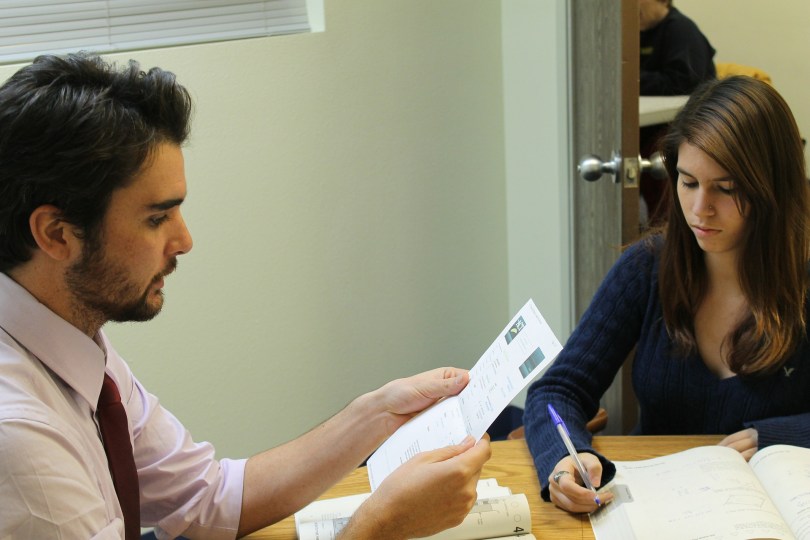
 settings) and form your responses. View and assess your performances. What are your strengths and weaknesses, and what improvements could be recommended? Besides the content and clarity of your answers, monitor and evaluate your body language, eye contact, and posture, vocal tone and projection, and those intangibles like “charm,” “attitude,” and “first impressions.” If you do this in a group (roommates, collegiate music education chapter, methods class, etc.), request feedback from your “critics.”
 “stress interviews” are still conducted by some institutions. You’ll know immediately if for some reason you are thrown into one of these seemingly “hostile environments.” No matter what you say or how you respond to a question, the interviewer(s) will exhibit a negative attitude, look disinterested, inattentive, unimpressed, or disappointed, or even act angry, belligerent, or argumentative. Talk about “playing to a dead crowd!” Actually, their sole purpose is to evaluate your behavior during artificially-induced tension or conflict. Your only strategy? Play the game! Stay calm, cool, and collected.
 like, “I haven’t had the pleasure of teaching long enough to totally comprehend what I would do in that situation.” Or perhaps, “I am not to familiar with that term/method/philosophy, but I am willing to research it, ask my building principal or supervisor for his/her advice,” etc.
 What is your view of the teacher’s role in the classroom? (Educational Philosophy)
 What role does the Common Core have in general music (or music ensembles)? (Written Expression)
 How would you structure a general music (or ensemble rehearsal) classroom of the future? (Innovation)
 How would you improve the intonation/tone quality/bow technique of a string players? [STRINGS]
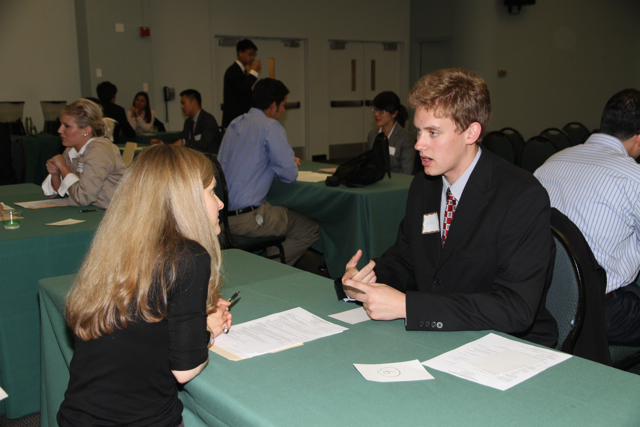
 I will probably never tire writing articles for new or prospective music educators seeking a public school position. I am subject to a flash of inspiration – epiphanies or revelations – at any moment, many of which come while I am walking the dogs or driving the car. Here are some random loose-ends I have not covered before, the results of recent bouts of brainstorming and mind wandering! Hopefully, they will provide you additional insight towards success in the job hunt process. Good luck!
 their school administration in the months of February, March or April to receive some of their “golden handshake” benefits. For the school district, it helps them plan for future hiring. For you, it should focus your attention and organize your work at a time when the jobs are just becoming available. (Don’t wait for summer vacation!)
 PA-educator.com which broadcast data on the pool of candidates. Regardless, I sent a custom-designed letter to every superintendent of school “in my hot zone” announcing that I was interested, met all education and certification requirements, and was available for immediate employment consideration. You should prominently share the name/location of your professional website. In addition, this would be the perfect place to mention if you student-taught or served as a private teacher, coach, summer camp counselor, or marching band/musical assistant in their area. For me, this meant a lot of extra work (looking-up the names/addresses, and you can’t just send a blanket form-letter “To Whom It May Concern”), but it seemed to give me a little edge, a foot in the door so-to-speak, and the opportunity to place follow-up calls later to the HR department to confirm they received the letter and did not need anything to add to the file (transcripts/portfolio, etc.). If you’re not restricted to a specific geographic area, saturation this way would probably not be feasible.
 domain name (something simple like yourname.edu or .com). Graduating this year from West Virginia University, my former student David Dockan
  anything trendy, mod, or “cool,” and guys, this means you wear a tie and a jacket. Unkempt or unusual length/coloring of hair, extra body piercings, and visible tattoos will not help project the classic corporate image of “conservatism” which most administrators seek in teachers. Sure, you do have the right to be “unconventional,” “artsy,” “one-of-kind” or “make a statement,” but you also have the right never to get a public school job!
 n your portfolio. This would look particularly good fulfilling Charlotte Danielson’s Domain 4c “Communicating with Families” in
  When Facing the Job Market” at http://majoringinmusic.com/7-things-music-education-majors-can-do-make-themselves-more-employable-2/,
 employment search process and preparation for interviews. For examples, you already have many lists of employment screening questions:
  paulfox.blog