The Get-a-Job Toolbox

Preparing for Those Upcoming Employment Screenings
So much of what I do at this blog-site is to archive articles offering advice on a host of topics:

Surveying my past blogs, I feel like I had to repeat (repackage) the content until my readers reached that particular stage in their career. Once they experience first-hand that sometimes tumultuous “passage,” they would be ready to reflect on this information. But, I doubt they would closely examine it until then. As an example, for more than a decade as the PMEA Retired Member Coordinator, these past articles I wrote for PMEA News and the PMEA Annual Conference’s session Retirement 101 revisit the voluminous insight of gerontologists exploring the “who, what, when, where, and why” of retirement. Regardless at how often it is presented, you tend not to consume advice on coping with post-employment until you feel you are “ready” to retire. This is the same issue for soon-to-graduate collegiates and those transitioning to a new job; who wants to read about branding, marketing, and interviewing until they are in the middle of seeking first-time (or new) employment?

Please click on the “plethora” of links throughout this article to be redirected to these past writings. My apologies in advance to what may seem like to be a lot of duplication!

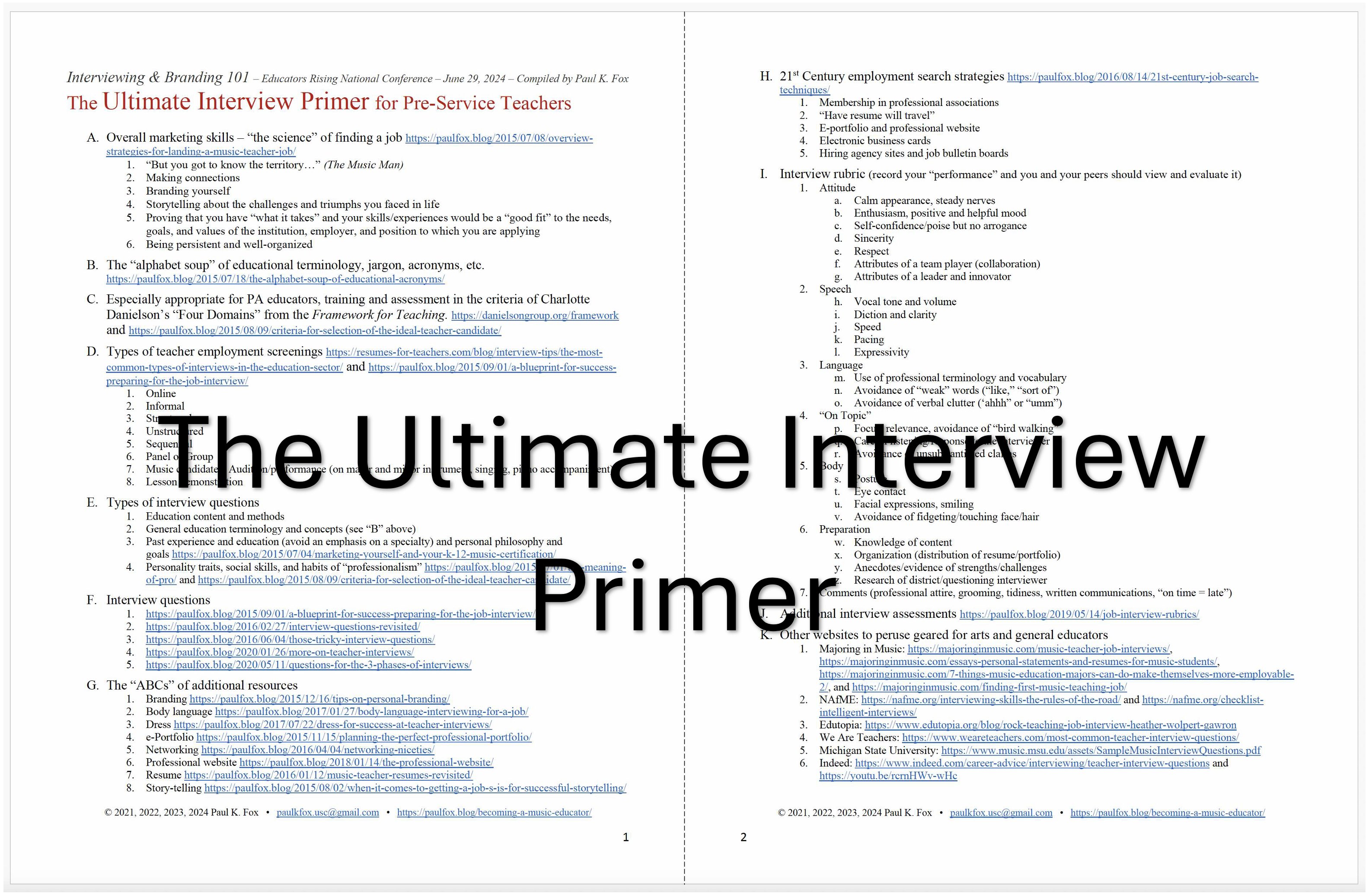
I went as far as updating the most comprehensive and “perfect” PowerPoint for collegiates: Bookends – The Life Cycle of a Successful and Happy Music Educator – portions of which I have presented several times to Professor Jessica Vaughan-Marra’s Seton Hill University music student teachers. This slide handout starts with the material from the first three bullets in the first paragraph above and then adds information about teacher health and wellness, time management, and retirement. We offer Bookends… to preservice music educators in their junior, senior, or graduate years and “rookies” to the profession. I encourage you to download this resource, visit the PCMEA website (click here/scroll down) to read past issues of Collegiate Communique, and the paulfox.blog posts. While you’re at it, acquire your own copy of the Ultimate Interview Primer. Click away before these links become inactive.
Soon it will time for graduates to enter the workforce… and boy, do we need you! By most accounts in PA and the surrounding states, we are experiencing a teacher shortage. School districts are seeking quality candidates to apply for their open positions. But, much of what happens in the job screening process seems to be influenced by chance. Collegiates, ask yourself: Are you truly prepared to market your experiences and abilities, share your brand and stories of your interactions with children in educational programs, and relate positive anecdotes of your teaching, problem solving skills, and other professional attributes? I may have been a little Type-A when I first applied for those music teaching positions back in 1978, focused on saturation publicity and persistence, and organized with a large paper portfolio of past experiences, but I was clueless in responding to those tricky interview questions and what administrators actually wanted to see in prospective new members of their staff.
One more piece advice for first-year and recent transfers to music education: Seek out a PMEA mentor and/or a member of the Retired Resource Registry (access from the PMEA Retired Member focus area after you login to your member portal)… both are groups of volunteers willing and able to help “newbies.”

Have a question about selecting music for your ensemble, a dynamic lesson plan, classroom management issue, interviewing, curriculum innovation, or a conducting tip? Stop by the “coffee and conversations” informal lounge at the PMEA Annual Conference on April 10 and “sit-a-spell” with us!

In conclusion, the following is a sequential outline – a “to-do in this order” list – a preservice toolbox of past posts and other resources for you to assemble a marketing plan. Take time to sort through these “nuts and bolts” (all links in this blog), process the information, save anything you want to read further, and then “practice, practice, practice!” This “gift” to PCMEA and music education majors embraces my best wishes for successfully finding the job you always wanted and preparing yourself for the greatest “calling” of your life – an enriching and satisfying lifelong career in music education! Good luck!
Using the Collegiate Toolbox – A Roadmap for Becoming a Music Educator

  1. Peruse everything in this and past paulfox.blog postings.
  2. Download the PDF documents to your hard drive. Review a portion of them each week!
  3. On your computer, create a “ME” file documenting your accomplishments, awards, experiences interacting with children, etc. – a library of the things you may wish to include in your future resume, professional website, and (e-)portfolio. Add to this folder throughout your college years.
  4. To reflect on your perceived strengths and weaknesses, complete a self-assessment of YOU from a typical professional evaluation form, these ideal effective teacher attributes and more criteria
  5. Prioritize what you think you need most. Write down your goals! Pobody is nerfect!
  6. While you are still attending college, work on shoring up any weak content areas or specialty skills (e.g., how is your “piano chops,” knowledge of specific methods, grade level repertoire, etc.?)
  7. Write a philosophy of school music education (overview) and your mission statement: “Why do you want to teach?”
  8. Be ready to answer the question (and defend your response), “What is your vision of the role of music education in the schools?”
  9. Be ready to define your “brand.” What are your professional attributes? What makes you unique? Why would you be a good candidate for a school music position?
  10. Begin to assemble a list of stories that would “show not tell” your positive attributes.
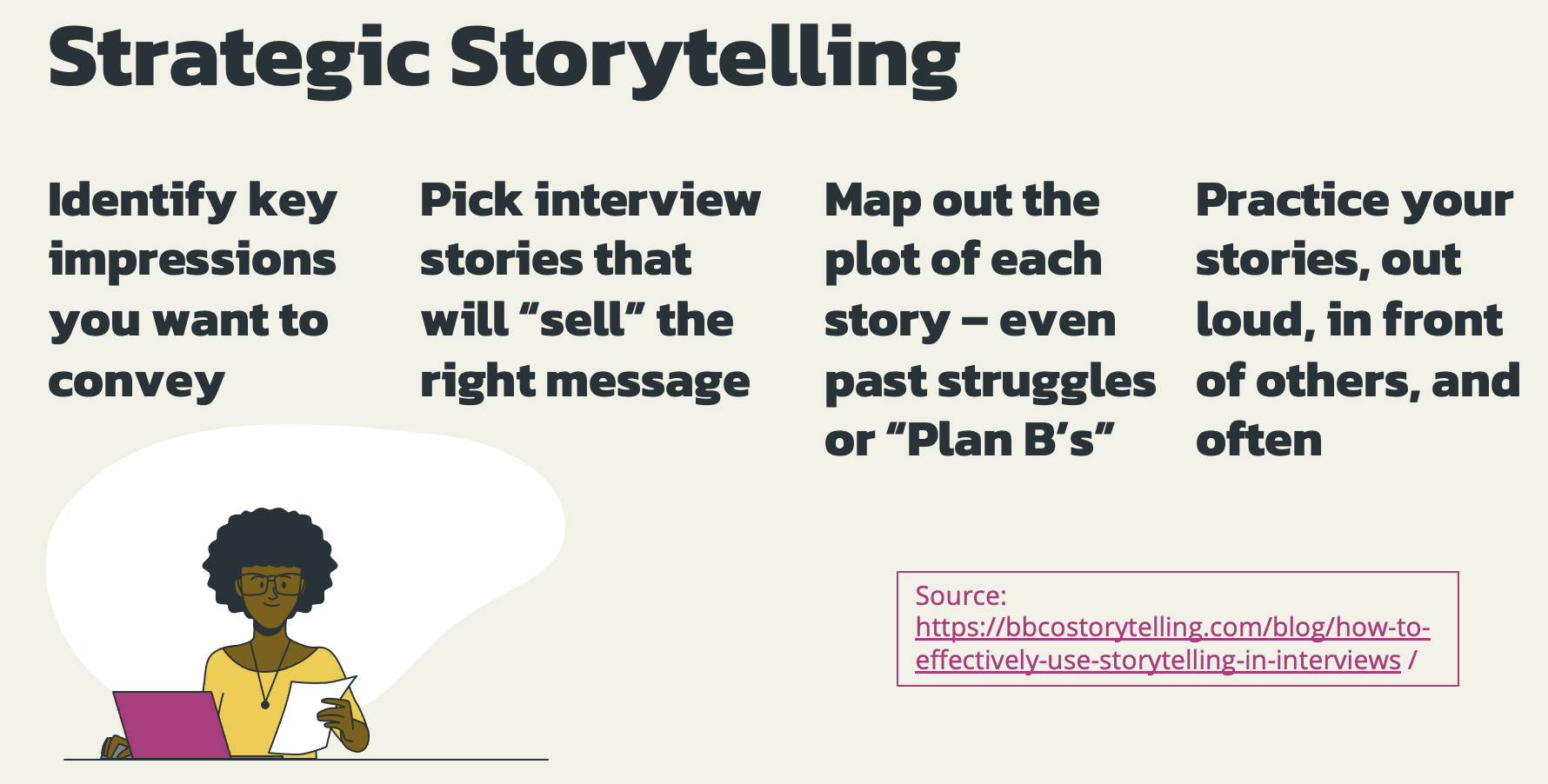
  11. Identify the impressions you want to “sell” yourself, and practice strategic storytelling.
  12. Practice answering interview questions and use a rubric to evaluate your performance. If you can, share all of this with your peers and sponsor mock interview sessions. Record/assess yourself.
  13. Get started on drafting the marketing tools you will need (e.g., your professional website, resume, portfolio, etc.)
  14. Review educational acronyms, jargon, and terminology such as this list plus these recent additions: CR-SE (Culturally Relevant & Sustaining Education), DEIB (Diversity, Equity, Inclusion, Belonging), and SEL (Social-Emotional Learning). These terms may come up at your next interview.
  15. Read cover-to-cover your PA code of conduct (CPPC) and the Model Code of Ethics for Educators.
  16. Practice ethical decision-making (with your peers) by reviewing these mock scenarios, first deciding what level of misconduct (if any) is reached in each case study, and then more discussion on the incident’s effect on the students, parents, staff, and community, and what proactive steps may be taken to remediate the situation.
  17. Join and become active in appropriate music education professional organizations (renew your memberships and add new ones): ACDA, AOSA, ASTA, NAfME, NBA, PMEA, etc. to name a few.
  18. Attend a conference of your professional association(s) and network with other colleagues. For PA colleagues, register for the PMEA Annual Conference (April 9-12) at the Kalahari Resort (Poconos).

Feel free to leave comments about this blog. (See the link just below the title.) How did you use these tools? What was particularly beneficial? What suggestions would you have for future music teacher applicants?

To PCMEA chapter officers/members, music education majors, and college instructors: I am available to present Bookends or other online or in-person workshops for college students. Send me an email.

© 2025 Paul K. Fox

Rising Educators Conference

June 28-July 1, 2024
Marriott Marquis – Washington D.C

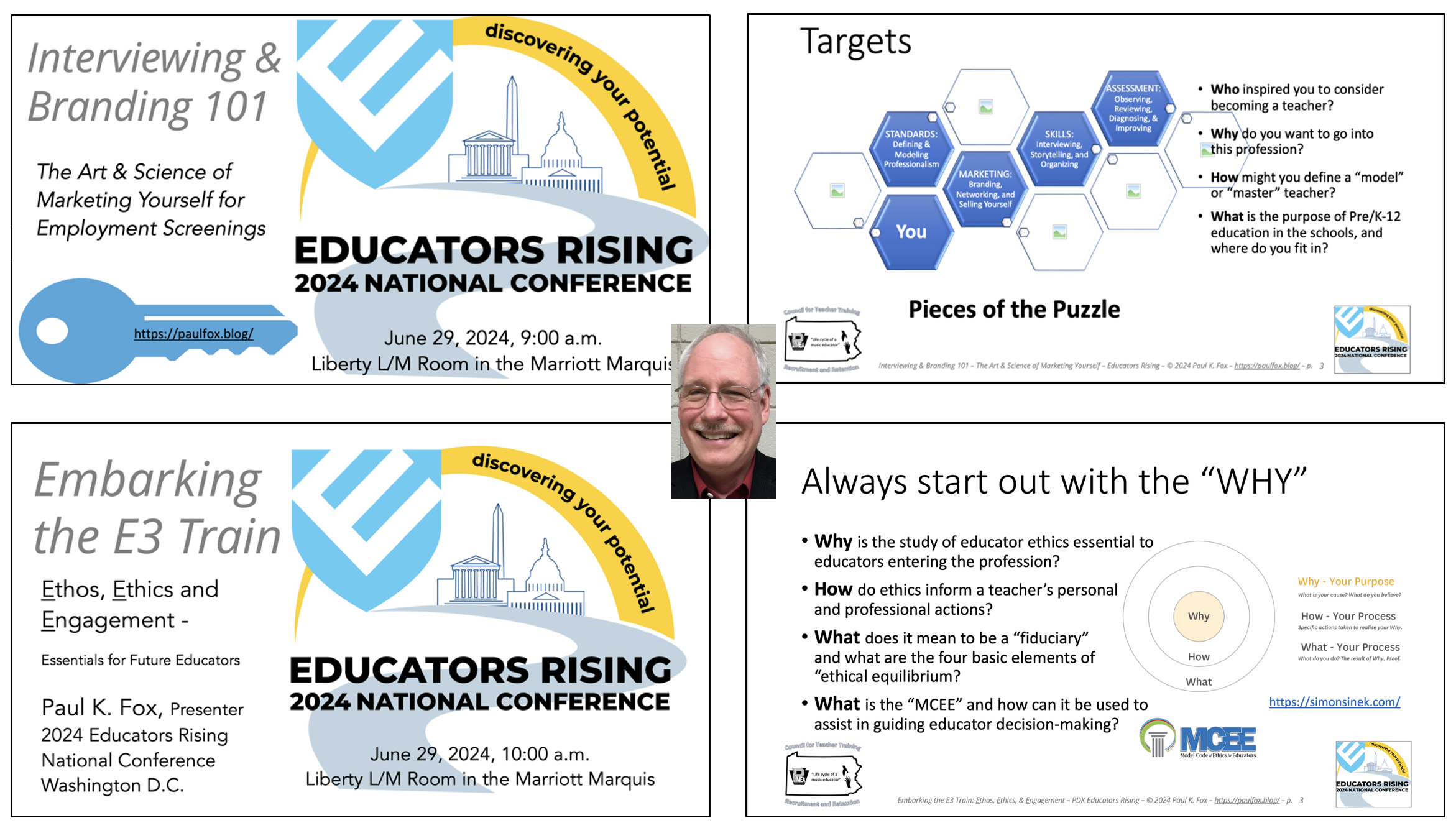
It is my pleasure to be invited to present two sessions at the Educators Rising Conference on June 29, 2024 in the Liberty L/M Room of the Marriott Marquis in Washington D.C.

This is a very unique venue, something in which I encourage other educators and clinicians to consider participating. The event brings together prospective future educators, middle to high school and college education majors, with veteran practitioners and experienced educators in the profession. This is from their website:

Each year, Educators Rising hosts a national conference to convene our network of rising educators and teacher leaders. It’s a unique opportunity for students and their teacher leaders to:

  • Connect and learn from each other through more than 40 breakout sessions;
  • Network with other members from across the country;
  • Compete for national titles in competitive events designed to allow students to develop and showcase their teaching skills; and
  • Be inspired by keynote presentations from national education leaders

Want to learn more about what you can look forward to for 2024? Check out the 2023 National Conference Program Book, 2023’s Conference Daily, and our conference highlight video to see what current and future educators experienced last year.

An outline of the conference schedule may be viewed here. Additional information may be found at the conference website here. You can still register for the event.

My two offerings will not come as a surprise to anyone who has been following my work at this site:

GETTING A JOB

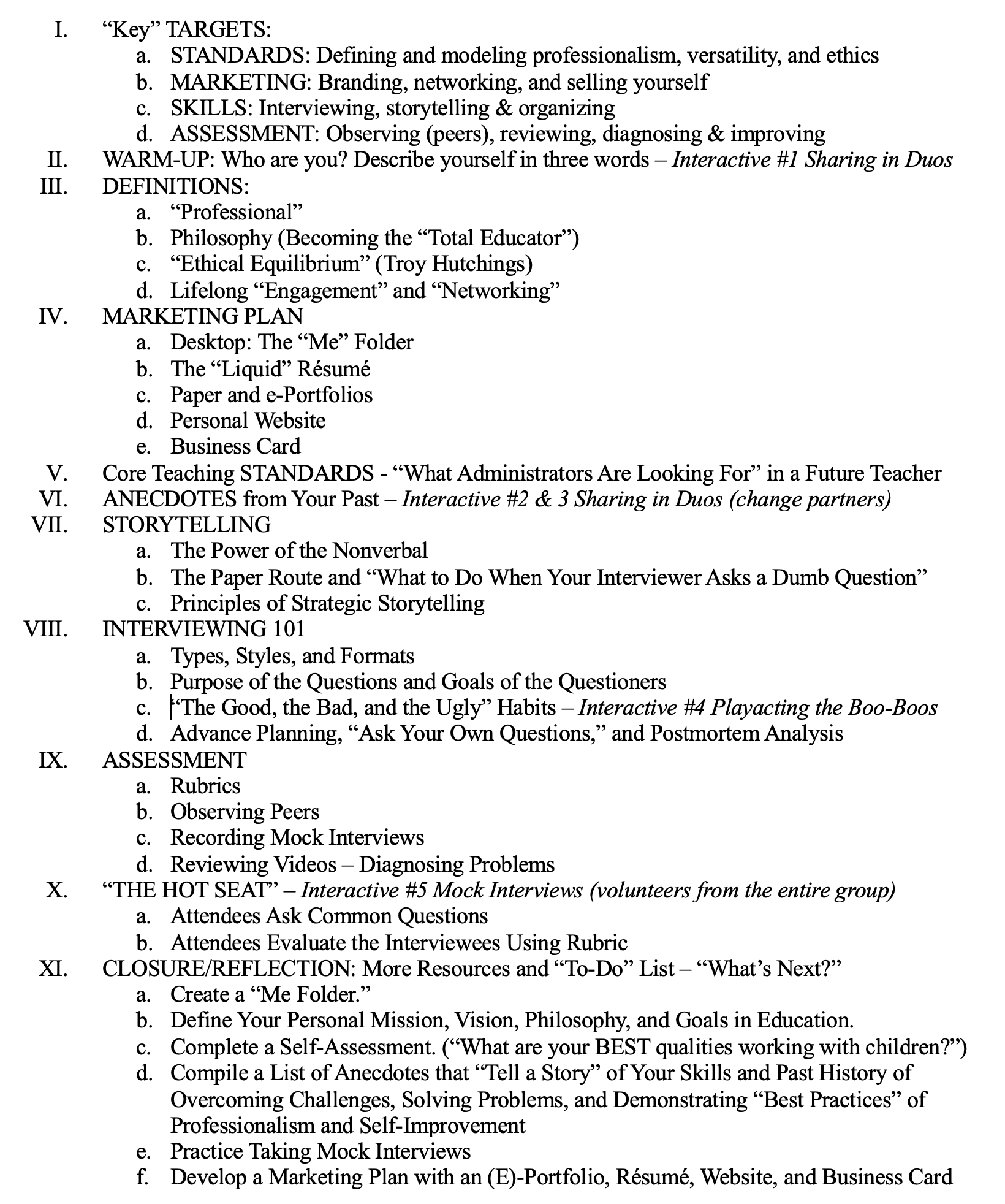
My first workshop, “Interviewing & Branding 101” (Saturday, June 29 at 9 a.m.) will provide an overview of important definitions (e.g., “professional,” “total educator,” etc.) and dive into interactive exercises to exploring the basic building blocks of personal self-assessment, building “a brand” and “marketing plan” for the job search, practicing networking and storytelling skills, and analyzing and “playacting” better interviewing techniques. Although I will need to shorten the presentation to fit in the 45-minute time block allotted and provide more focus on the interactive partner and small group exercises, this was the initial outline that was accepted by the Rising Educators Conference Session Selection Committee:

My favorite candy, Hershey Symphony bars, will be distribute as incentives for the more “brave” attendees who volunteer themselves to serve as good (as well as bad) models of the mock interviews.

In conclusion, this is “the session” I wish someone would have provided me before I went out into the labor market! We will have some fun connecting with each other, learning something new about our core values, goals, and strengths – especially those areas we want to broadcast to future employers – building a marketing plan of the essentials to promote ourselves in future employment screenings, and breaking-out into “duos” and small groups to “practice-practice-practice!” The branding and interviewing exercises and suggestions may be applied to finding any job, but will definitely be a big help for landing “the one” teaching position you always wanted.

For the participants who attend my session (facsimile of slides available after June 28), here are links to the printed handouts and other supplemental materials:

EDUCATOR ETHICS

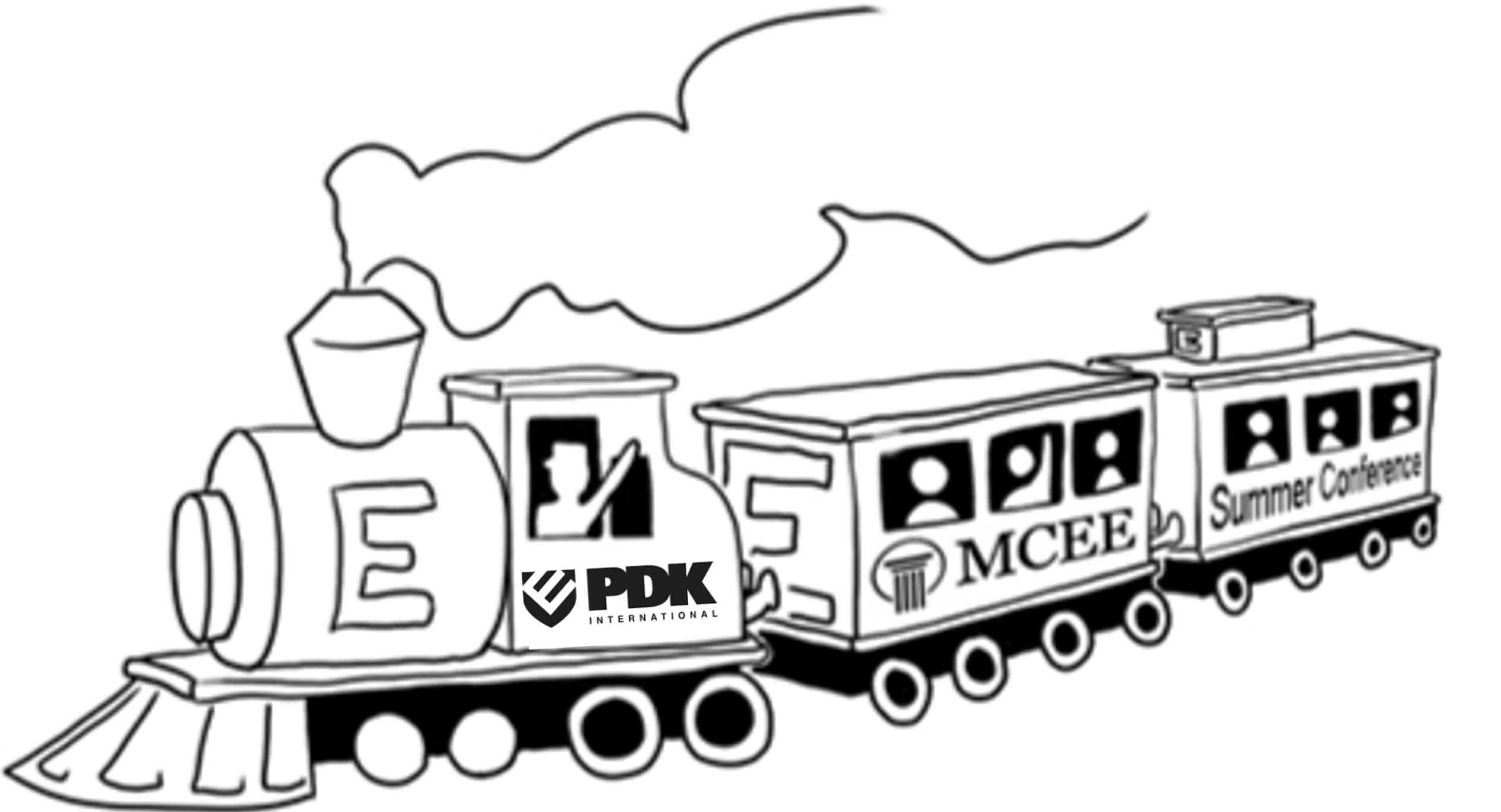
My second workshop (offered one hour later), “Embarking the E3 Train – Ethos, Ethics, & Engagement,” brings to fruition my passion for the preparation of future educators to embrace the essential ethical standards of our profession. Again, back in 1977, no college methods course nor student teaching prep covered the meaning behind such terms as “fiduciary,” “ethical equilibrium,” “moral professionalism,” etc. To be fair to my college professors, Pennsylvania had not yet written its Code of Professional Practice and Conduct which now “governs” the educators in our Commonwealth, nor had the National Association of State Directors of Teacher Education and Certification facilitated the creation of the amazing document called The Model Code of Ethics for Educators. It was not until 2017 (four years after I retired) when I was asked to research and present my first educator ethics session for PMEA District 7 did I “discover” the need for interactive, open, peer discussion of these core questions:

  • How do ethics inform a teacher’s personal and professional actions?
  • Why is the study of educator ethics essential for all educators entering the profession?
  • What does it mean to be a “fiduciary” and “moral exemplar” in the community?
  • What is the difference between a “Code of Conduct” and a “Code of Ethics?” Is one more important than the other?
  • How do you avoid any action and/or appearance of impropriety, and prevent the “slippery slope” of inappropriate student-teacher relationships, and other ethical problems?

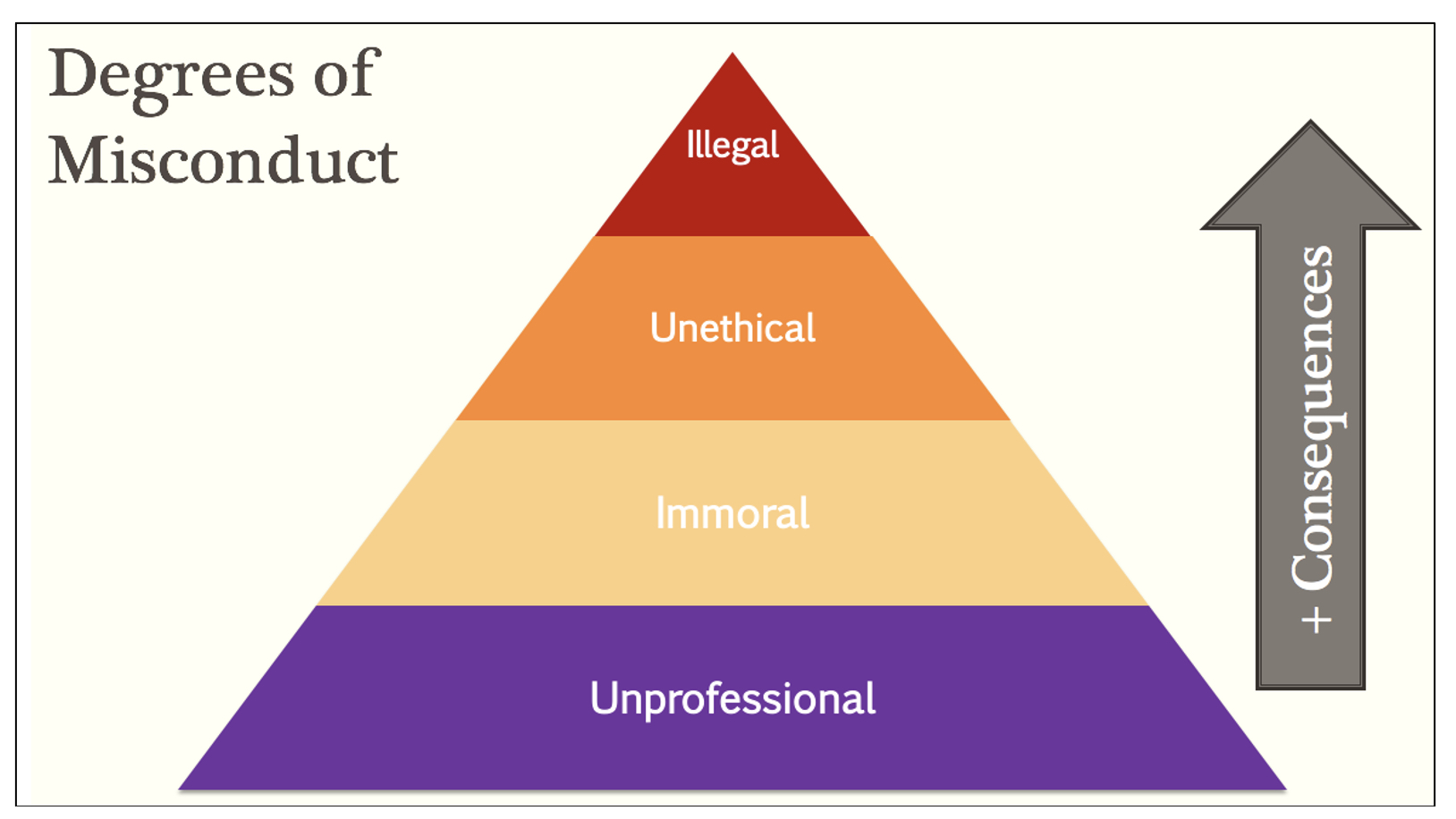
During this presentation on Saturday, June 29 at 10 a.m., we will discuss the thousands of daily rapid-fire decisions (many snap judgments) of teachers and evaluate the potential effects of any who “stray” – “levels of misconduct + consequences.” Furthermore, we will unpack and review a portion of the five principles, 18 sections, and 86 standards in the Model Code of Ethics for Educators. Fostering open and interactive discussion, we will empanel a mock “ethics jury” (volunteers from the attendees) to assess fictitious “fact scenarios” of potential ethical issues, hazardous choices or vulnerabilities, and even tackle a few “conundrums” or problems in educator decision-making. Our jurors will receive our thanks and an Educators Rising Mock Jury t-shirt for their “willingness to serve as guinea-pigs.”

Admittedly, some of our past material on ethics was “for mature audiences only” resulting in the need for adjustments to be made to some of the hypothetical case studies (serious infractions) for group analysis. However, the majority of my work on educator ethics is available for review on this site (in reverse chronological order) by clicking here.

Here are additional case studies for group discussions of ethical dilemmas.

For the participants who attend my Washington D.C. session on June 29, 2024, a facsimile of “Embarking the E3 Train” slides are available. (CLICK HERE.)

PKF

© 2024 Paul K. Fox

Storytelling, etc. – Part 2

More on Developing Employment Marketing Skills

If you have not read it, as a warm-up, check out our first blog-post: “When It Comes to Getting a Job, ‘S’ is for Successful Storytelling.”

Since posting a plethora of resources on the job search, interview preparation and questions, branding, and networking, we came upon a few more perspectives, tips, and hands-on exercises you can use to “practice – practice – practice” landing gainful employment as a school music teacher – especially on building your capacity to “tell your own story,” who you have become, what unique qualities you bring to the mix, and how/why you have chosen music education as your “calling!”

Probably the most extensive set of links ever compiled on the subject can be downloaded from here:

But, be warned! It may take you days to read and absorb all of these past blog-posts and articles! They represent the ideal prerequisite – knowledge is power! Before going any further, take the afternoon off, find an easy chair, and focus your attention on creating a successful “action plan” for handling your upcoming employment screenings.

The Exercises

In a recent session for the Pennsylvania Music Educators Association Annual Conference in Kalahari/Poconos, we explored the following reflective/interactive activities. These work best in pairs or small groups, but you can adapt/individualize them for self-study:

  1. Close your eyes. Who had the greatest influence on you becoming a music educator? (Do you see his/her face?) What did your “model” musician or music educator have or exhibit… name at least three attractive personality or professional traits he/she had and that you would desire to develop in yourself? WRITE THEM DOWN – LIST #1. In a group setting, share at least one of these with your neighbor. (Swap!)
  2. Now it’s time to turn the attention on YOU. On a separate piece of paper, WRITE DOWN (LIST #2) YOUR three most redeeming qualities, unique professional/personal traits that any employer would be proud to know about you. Again, in a group setting, share at least one of these with your neighbor.
  3. For now, put these lists aside. There are no RIGHT or WRONG answers, but in past interview workshops, these terms often get repeated (for both Lists #1 and #2): Charisma, Creativity, Dedication, Dynamo, Excitement, Expertise, Humor, Intuition, Kindness, Leadership, Musicianship, Problem-Solver, Sensitivity, Tirelessness, Versatility, Virtuosity, and Visionary. On another piece of paper, add 1-3 more of these you may not have originally thought were among your positive attributes – WRITE THEM DOWN ON LIST #3.
  4. According to “The California BTES – Overview of the Ethnographic Study” by David Berliner and William Tikunoff, effective teachers (the ones for whom HR/employers are searching) score high on these skill sets/characteristics: Accepting, Adult Involvement, Attending, Consistency of Message, Conviviality, Cooperation, Student Engagement, Knowledge of Subject, Monitoring Learning, Optimism, Pacing, Promoting Self-Sufficiency, Spontaneity, Structuring. Do a self-assessment and apply these to yourself. WRITE DOWN 3-4 OF THESE ON LIST #4. Pick new ones you have not mentioned in #1 through #3.
  5. Now comes the FUN part. It’s time to generate stories about past experiences you have had that would model these terms. For this exercise, we recommend writing down at least one unique anecdote from each list which would “show not say” your ability, new learning, or achievement. The “plot” of your story should be concise, focused on the one trait, and when told out loud, not take longer than a minute. Instead of “bragging” you are a problem-solver or adaptable, tell that story of how you had to instantly initiate a “plan b” lesson when it was obvious that the students needed more work on a concept you thought they had already mastered. Remember how you handled your first discipline problem or a child in crisis? If you feel you have the qualities of a leader or a team player, share specific examples of your interactions with children in high school, college, field observations/student teaching, church or community groups, volunteer jobs, etc. If you have trouble coming up with these, try to remember the funny or surprising moments, or even the challenging miscues or big boo-boo’s – all okay to share as long as you resolved the situation positively, created a solution that resolved the problem, or learned a new insight or skill to handle future episodes. No one expects perfection from a new teacher, just enthusiasm, professionalism, willingness to self-assess, and commitment to the cause.
  6. Now you should have a library of stories ready to practice on your roommate, friends and fellow collegiates. You cannot bring the scripts with you, so these have to be at your fingertips: memorized, well-rehearsed, short and sweet (and if you can make them humorous, go for it!).
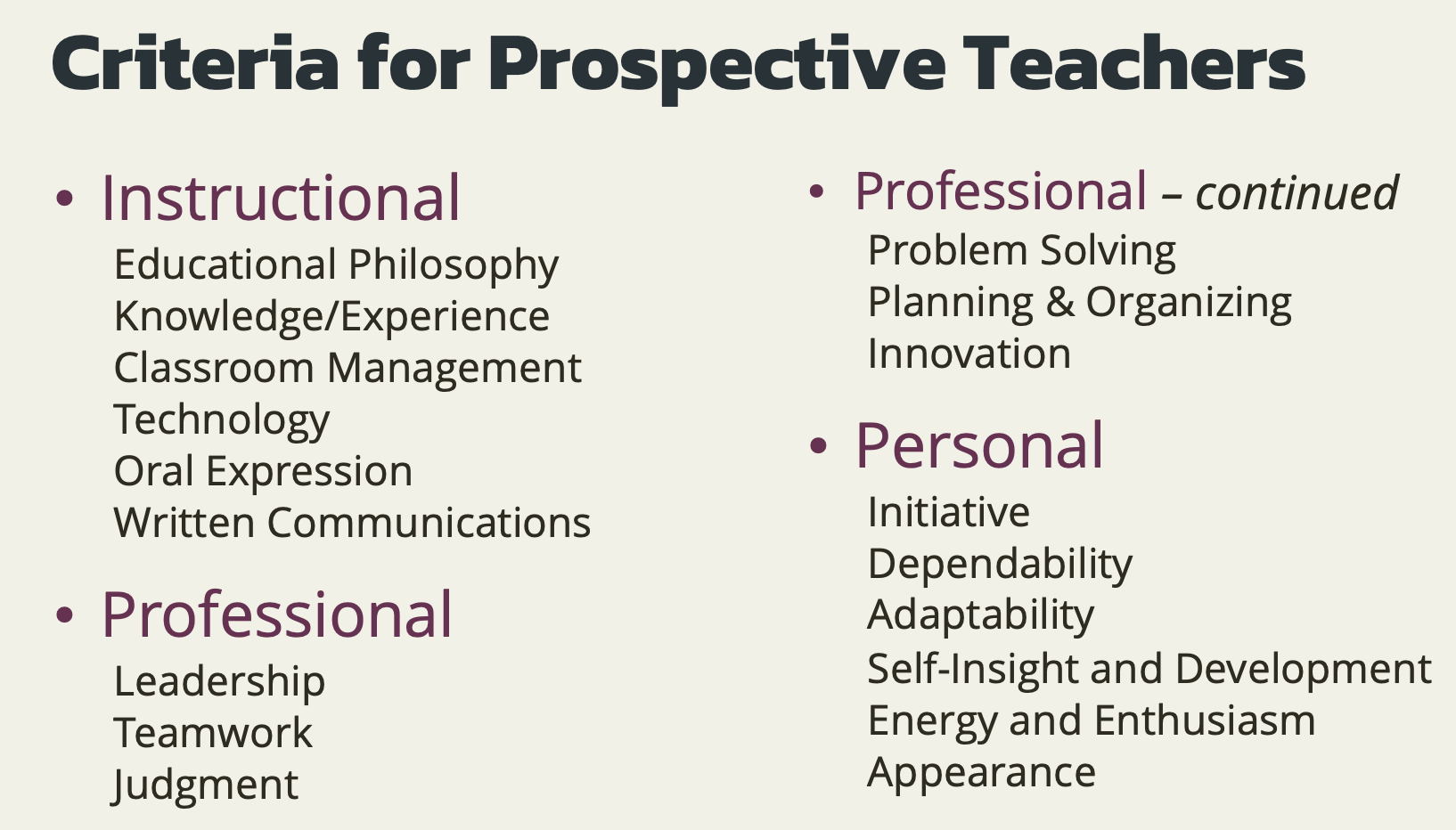
  7. Every week from now through the job search process, add new stories to your collection. Scan your (e-)portfolio for more ideas. These are the criteria used by my former school district (from where I retired) to evaluative prospective candidates. Ideally, you should have anecdotes that cover each area:

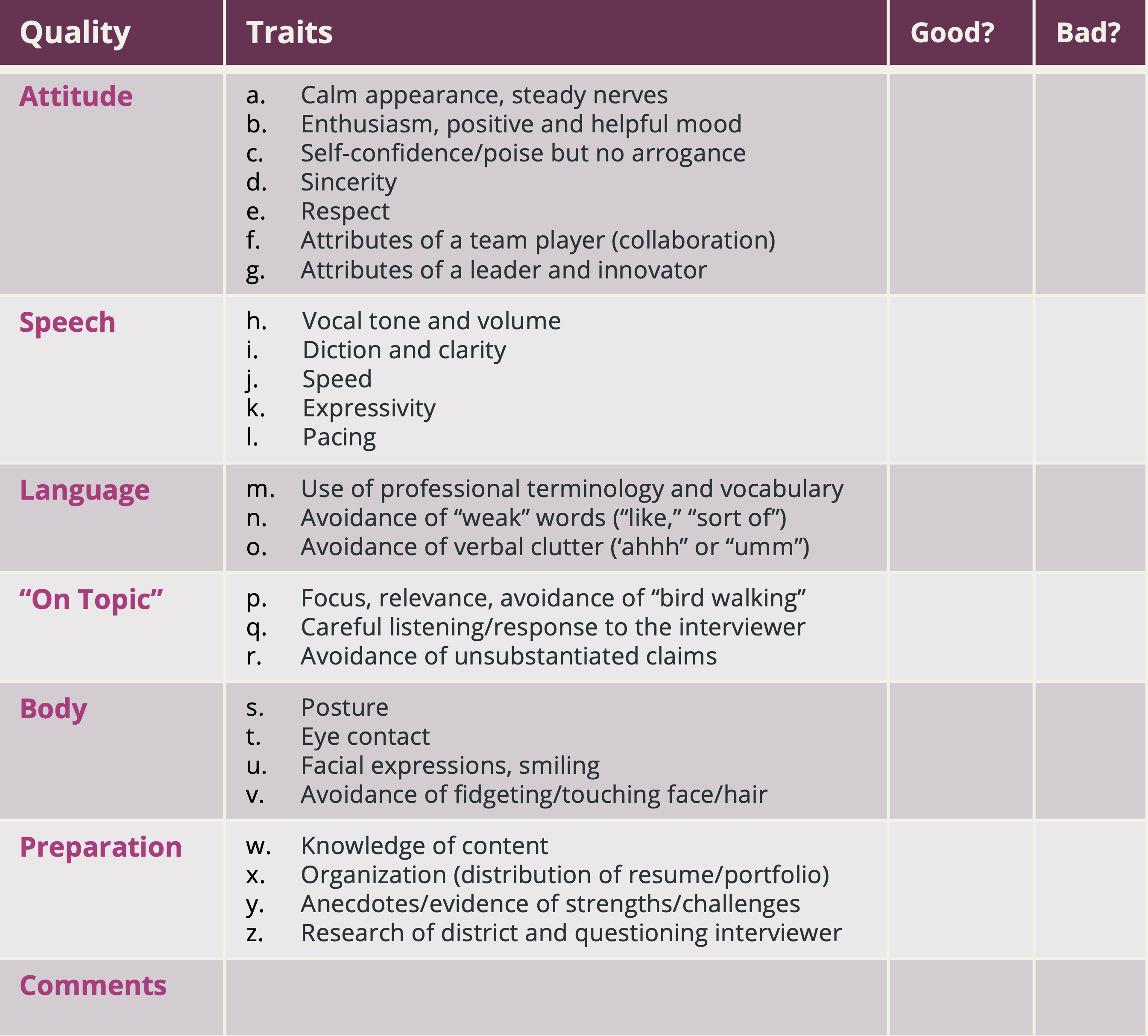
My Favorite Rubric

At some point, you are going to have to “face the music” and practice swapping these stories with family members, friends, and/or fellow job seeking students. We’re all in this together! At your next college chapter of NAfME, music education methods class, or student teachers’ wrap-up meeting, try to schedule some “down time” to appoint each other to serve as interviewers/ees. At first, it may not be easy. Using randomly selected questions from the Ultimate Interview Primer above (pull numbers out of a hat), tell a story or two to exemplify your past history, competencies, and professional traits. Your “buddy” (who will be on the hot seat next) could evaluate your performance using the following rubric. Apply the Oreo cookie format (something good first/top cookie, something needing improvement/cream in the center, and end with something positive/bottom cookie) to avoid crushing anyone’s ego. Consider recording your mock interviews for future assessment. Here is a copy of the form with sample questions.

More Odds and Ends on Storytelling

These outside sources focus on the essential skill of storytelling, the whole point of the above exercises. After reading these, you may be able to assemble more meaningful anecdotes that truly model your positive qualities and experiences by telling “short stories” – and “actions do speak louder than words!”

We found this excellent website “How to Effectively Use Storytelling in Interviews” by Bill Baker on “strategic storytelling” that is worth your perusal. It sums up everything above nicely.

On the Media from NYC Public Radio offered an interesting radio show, coincidentally aired during my 5.5 hour drive back from the 2022 PMEA Annual Conference in Kalahari/Poconos. They dove into the geometric shapes of stories… and what they have to do with reporting on the pandemic AND perhaps (my perspective) considerations for telling better narratives (including ups and downs) at job interviews: https://www.wnycstudios.org/podcasts/otm/segments/kurt-vonnegut-and-shape-pandemic2

Even the popular website indeed advises us on interview stories: “10 Storytelling Interview Questions With Sample Answers.” This STAR approach is discussed with specific examples of questions and anecdotes:

  • Situation: Describe a situation you experienced in the workplace relevant to the question.
  • Task: Mention a task you had to complete in this situation.
  • Action: Summarize the actions you took to complete the task.
  • Result: Discuss the outcome of your actions.

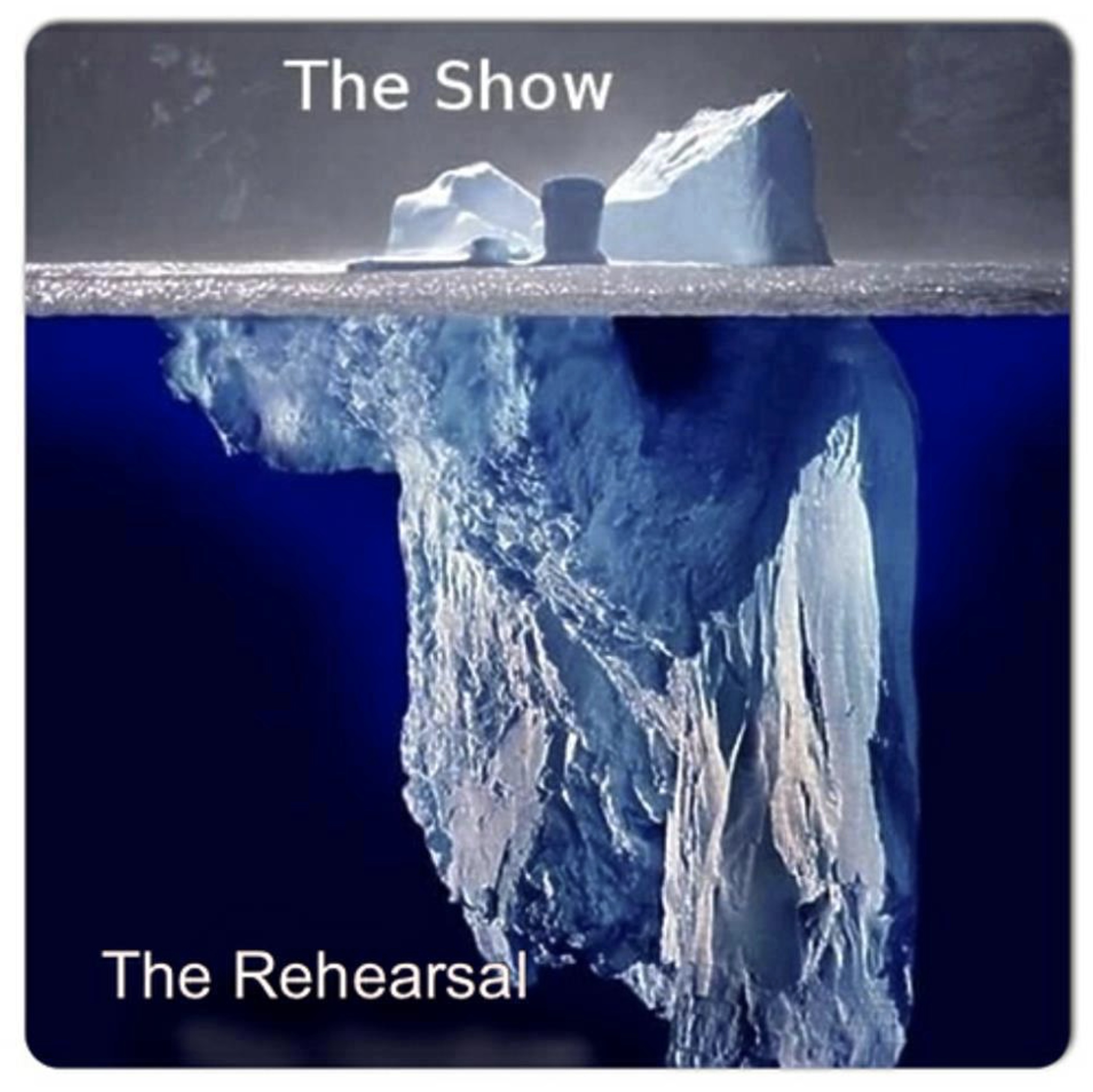
Finally, here are a handful of YouTube videos… just the tip of the iceberg. Remember that iceberg metaphor? The part that you see above the ocean is the performance, the show, the interview, the product… while the mandatory practice, rehearsals, preparations, and planning take up much more space and are almost never seen. ARE YOU READY TO TELL YOUR STORIES?

Enjoy! Now the ball is in YOUR court!

PKF

© 2022 Paul K. Fox

Becoming a School Music Educator

[A quick summary, portions reprinted from the April 17, 2019 posting on LinkedIn: https://www.linkedin.com/pulse/becoming-school-music-teacher-paul-fox/]

One of my goals after retiring from 35 years as an educator and administrator in the public schools was to reach-out to college music education majors and offer some tips and techniques for preparing for this honorable career.

I have assembled a library of blog-posts on a variety of topics at my website (https://paulfox.blog/), and invite you to peruse the section “Becoming a Music Educator” at https://paulfox.blog/becoming-a-music-educator/.

If you are a junior or senior in college, assigned to field experiences or student teaching, or a recent graduate or transfer looking for a job or otherwise unemployed, I hope I can help you!

Please review the following categorized outlines of links to articles and other resources.

big-band-1608691_1920_KeithJJ


Student Teaching

First stop: Tips on Student Teaching.

Also check out these past issues of PMEA Collegiate Communique:


“Secrets” for that First Year

  1. maestro-3020019_1920_mohamed_hassanDiscounted NAfME + PMEA first-year membership: only $90. (If you are a recent college graduate in your first year of teaching, or if you are the spouse of a current or retired NAfME member, contact NAfME at 800-336-3768 or email memberservices@nafme.org) to find out if you qualify for a reduced rate.
  2. PMEA Mentor or other state’s MEA support program for new teachers.
  3. R3 = Retiree Resource Registry for PA music teachers.
  4. PMEA Webinars.
  5. NAfME Academy of numerous videos (only a $20 annual subscription).
  6. Professional development credits just for reading an article in NAfME Music Educators Journal
  7. Model Curriculum Framework (Have to be a PMEA member)
  8. What a deal! PMEA summer conference  as little as $30/person. Check out your own state’s MEA discounts and offers for collegiate members and new teachers!
  9. Numerous helpful blog posts from NAfME Music in a Minuet and paulfox.blog.


logo 2

Everything… Including the Kitchen Sink

Check out the online resources on the PMEA Council for Teacher Training, Recruitment, and Retention website, free/open to all music teachers. Especially take note of the supplemental links on a variety of topics posted here.


Job Seekers

A summary of my re-occurring themes on marketing your professionalism and a few “pet peeves” include the following:

  1. Create a multi-media digital portfolio, video recording excerpts of your memorable solo, chamber, and ensemble performances, teaching experiences, and other opportunities you have had in working with children of all ages. To the interviews, bring both a printed version and jump drive (the latter to leave with the screening committee) of these artifacts and a list of your other activities, awards, accomplishments, mission/vision, transcripts, music education and class management philosophies, recommendations, etc.
  2. Take the time to assemble “the stories of your life, work, and teaching experiences” (both successes and the “glitches” or “snags” along the way which you had to resolve) that demonstrate your competencies, relationships with students, personality traits, acquired skills, problem-solving, and maturity.
  3. woman-613309_1920_jsotoBring to any employment screening your resume, business card, and an e-portfolio referencing a professional website which archives everything in #1 and #2 above.

  4. Avoid one-word responses or short answers to most interview questions. Instead, seek ways to incorporate the anecdotes you have made ready at your fingertips (#1 above) that model those characteristics a prospective employer is seeking in a music teacher.
  5. If you want to be the one “in control” of the possible jobs that may come your way, avoid marketing your skills as a “music specialist” (e.g. band director or elementary music teacher). Most degree programs prepare the students for teaching certification in “Music Grades Pre-K to 12.” If you are looking to expand your opportunities, don’t limit your capabilities or options upfront. You CAN teach all forms and levels of music!
  6. music-818459_1920-thedanwClean-up and curate your social media sites, treating your Facebook pages as another “personal branding resource.” Experts recommend that “your profile information should reflect integrity and responsibility… You should expand or add content that projects a professional image, shows a friendly, positive personality, demonstrates that you are well-rounded with wide range of interests, and models… great communication skills.” Source: https://paulfox.blog/2019/03/01/collegiates-clean-up-your-social-media/.
  7. How to your get to Carnegie Hall? Practice, practice, practice! How do you ace your interview? Practice, practice, practice! Put yourself through “mock interviews” and record and later assess your “performance.” Sample questions are posted at my blog-site.

choir-458173_1920_intmurr

 Collegiates, welcome to the profession!

“Break a leg” at your employment interviews!

PKF


Photo credits in order from Pixabay.com:


wooden-train-2066492_1920_Couleur

© 2019 Paul K. Fox