
Boost Your Health and Outlook on Life with Brain Stimulating Activities!

Have you fed your brain today? The mind is a terrible thing to waste, retired or not! How do you maximize your brain health and have fun doing it?
Intentionally Energize Your Mind
According to Dr. Angela K. Troyer in her August 2014 Psychology Today blog , “One great way is to find leisure activities that challenge and engage you, and to participate in them often.”
Dr. Troyer says the research is clear. “In recent years, there has been accumulating evidence that participating in activities that make you think hard and learn new things is good for your brain health. People with such active, engaged lifestyles tend to do better on memory and other cognitive tests than people who are less engaged. Even more encouraging is research showing these same individuals are less likely to develop dementia – such as Alzheimer’s disease – than those with less active lifestyles.”
She summarizes her top 6 ways to engage your brain with advice for new and challenging learning. She concludes, “It’s important to pick something that makes you think a bit.”
- Nurture your inner artist. You have heard me rant about this before. Music educators, go back to your “creativity roots” which inspired you to enter into this profession and “make your own music.”
 Take up a new hobby. Now that you have the time, go exploring… and the skies the limit! But don’t forget, anything worth doing “engages the mind!”
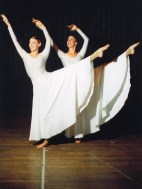
- Explore cultural activities. Near or far, this is a no-brainer! We are talking about the very things we love and have experienced most of our lives: the symphony, ballet, theater, opera, museums, etc.
- Do old activities in new ways. How creative are you? Dr. Troyer asks, “If you already have some favorite activities, think about how you could ‘shake them up’ and make them into novel, challenging activities.”
- Learn something new, just for the fun of it. How courageous are you? What are you waiting for? You should have an extensive to-do list of things to try for the first time.
- Take the ultimate “formal learning” challenge. Enroll in a course at the local community college, community center, or library, or sign-up to volunteer in a new organization doing something you have never done before.
 Curiosity does not kill the cat… or the retired person either!
Do you know the differences among IQ (intelligence quotient), EQ (emotional quotient), and CQ (curiosity quotient)?
Citing issues of solving the complexity of life (ever try to set-up a new printer?), the article “Curiosity is as Important as Intelligence” of The Harvard Business Review (see https://hbr.org/2014/08/curiosity-is-as-important-as-intelligence/), touches on the value of the curiosity quotient. “CQ… concerns having a hungry mind. People with higher CQ are more inquisitive and open to new experiences. They find novelty exciting and are quickly bored with routine. They tend to generate many original ideas…”
Author Tomas Chamorro-Premuzic makes two important conclusions.
- Knowledge and expertise (like experience) translate complex situations into familiar ones, so CQ is the ultimate tool to produce simple solutions for complex problems.
- Although IQ is hard to coach, EQ and CQ can be developed. As Albert Einstein famously said: ““I have no special talents. I am only passionately curious.”
Although we no longer have to spend our lives at school solving “complex problems” and motivating students to study and appreciate music, being passionately curious is exactly what all retirees should strive to be and do every day!
How do retirees face the tumultuous passage of leaving full-time employment?
 If you have not read a previous blog of mine, “Advice from Music Teacher Retirees to Soon-To-Be Retirees,” check out the reprinted version on the Edutopia website: http://www.edutopia.org/discussion/advice-music-teacher-retirees-soon-be-retirees. The act of retirement is a very stressful transition, and what would be worse is sitting around mindlessly watching television or allowing your brain to “atrophy!” In the article, I refer to Dr. Amit Sood’s writings, author of The Mayo Clinic Guide to Stress-Free Living: “This a time of enormous change. You are leaving your job and friendships with colleagues and finding new things to do.” He recommends, “Find meaning in new passions, including possibly using your work skills in a new job or volunteer work.”
My own ideas on stimulating our brains have more to do with a journey into the unknown… to steal a quote from Star Trek, “to boldly go where no one has gone before!” If you have not experienced any of these, take a gander. However, you should customize (and frequently revise) your own unique list.
One retiree’s bucket list of “brainy engagements!” Not enough hours in the day…
 Just like a rehearsal – start off with a mind warm-up! Go to the website https://curiosity.com/. You will be amazed to read topics from the sublime to the ridiculous – examples like “Cats and Dogs Drink Very Differently” to “How Does Memory Work in Your Brain.”
- Have you perused the awesome coursework and lectures in iTunes University? Download the app to your smartphone… it’s free and you won’t be sorry!
- You need to visit the “Best of Bonk” website about creativity and critical thinking in education, hosted by a modern-day genius Dr. Curtis J. Bonk from the Indiana University of Bloomington: http://www.indiana.edu/~bobweb/cv_hand.html. Almost makes you wish you were still teaching?
- Also, don’t forget to sample the inexhaustible iTunes library of free video and audio podcasts on nearly every subject in the world.
- In a thousand years, one could never consume all of the material available from Ted (the famous “Ted Talks” either online at http://www.ted.com/ or the TED Radio Hour hosted by Guy Raz) and YouTube.
 Leo the Tech Guy program and site at www.twit.tv and www.tech guylabs.com offer an extensive archive of broadcasts solving problems and recommending purchases of computers, software/apps, smartphones, cameras, home theater, and other devices.
- Here are a few more “very educational” and “mind nourishing” websites and television channels, many with online versions of full length episodes and videos: The Discovery Channel http://www.discovery.com/, National Geographic Channel http://channel.nationalgeographic.com/, The History Channel http://www.history.com – to name a few.
- Believe it or not, there are many free brain-games websites, such as http://www.games.com/brain-games and http://www.brainbashers.com/. I cannot vouch for their educational value, but word games, Sudoku, and logic puzzles can be… stimulating.
- If you miss being a teacher and creating tests (did we ever enjoy assessments?), there is a even website for taking and sharing quizzes: http://www.quibblo.com/.
 Finally, hobbyist websites are a wonderful resource. Examples: photography Flickr, Shutterbug, and Tips from the Top Floor; family history research programs www.ancestry.com, www.familylink.com, and https://www.myheritage.com/; sewing http://www.sewingsupport.com/general-sources/sewing-websites.html; woodworking http://www.highlandwoodworking.com/highland-woodworking-links-woodworking.aspx and http://www.woodworkers-online.com/p/top-100-woodworking-sites.html; gardening http://www.gardenguides.com/ and http://www.garden.org/; cooking http://www.epicurious.com/, http://www.bestcookingsites.com/, and http://online-recipe-websites.no1reviews.com/cooking-websites.html.
Blogs are all about sharing ideas. Comments to this site are welcome! You are invited to “join in the fun” and submit your own “engaging mind” resources!
Make it a point in your life to discover something new every day. Happiness and good  health is all about nurturing our skills/talents, exploring new pathways, facing new challenges, engaging our minds, and enjoying the “good life” after full-time employment. Nothing is stopping you from starting a new career, learning a new language, writing a book (or reading everything you always wanted to at the library), learning (better) how to act/dance/sing/play a new instrument, taking a trip to a new country (or city in the US) or journey to your backyard with a camera, and modeling the essence of the Robert Frost message, “I took the road less traveled by…. and, that has made all the difference.”
Additional Resources:
- http://www.huffingtonpost.ca/2012/10/15/brain-exercises_n_1966861.html
- http://www.prevention.com/health/brain-games/play-brain-games-stimulate-your-mind
- http://www.livestrong.com/article/343823-exercises-to-stimulate-the-left-side-of-the-brain/
- http://www.prevention.com/health/brain-health/stimulate-brain-cell-growth
- http://www.lifehack.org/articles/productivity/10-simple-ways-to-increase-your-brain-power.html
- http://www.everydayhealth.com/longevity/mental-fitness/brain-exercises-for-memory.aspx
- http://www.boomers-with-elderly-parents.com/elderly-parents-mind-brain-stimulation.html
PKF
© 2016 Paul K. Fox
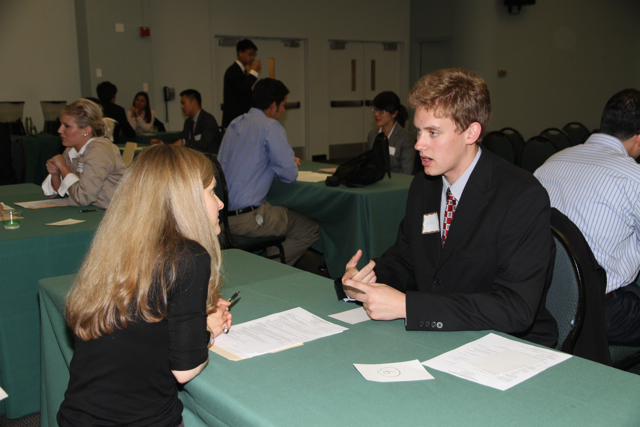
 I will probably never tire writing articles for new or prospective music educators seeking a public school position. I am subject to a flash of inspiration – epiphanies or revelations – at any moment, many of which come while I am walking the dogs or driving the car. Here are some random loose-ends I have not covered before, the results of recent bouts of brainstorming and mind wandering! Hopefully, they will provide you additional insight towards success in the job hunt process. Good luck!
 their school administration in the months of February, March or April to receive some of their “golden handshake” benefits. For the school district, it helps them plan for future hiring. For you, it should focus your attention and organize your work at a time when the jobs are just becoming available. (Don’t wait for summer vacation!)
 PA-educator.com which broadcast data on the pool of candidates. Regardless, I sent a custom-designed letter to every superintendent of school “in my hot zone” announcing that I was interested, met all education and certification requirements, and was available for immediate employment consideration. You should prominently share the name/location of your professional website. In addition, this would be the perfect place to mention if you student-taught or served as a private teacher, coach, summer camp counselor, or marching band/musical assistant in their area. For me, this meant a lot of extra work (looking-up the names/addresses, and you can’t just send a blanket form-letter “To Whom It May Concern”), but it seemed to give me a little edge, a foot in the door so-to-speak, and the opportunity to place follow-up calls later to the HR department to confirm they received the letter and did not need anything to add to the file (transcripts/portfolio, etc.). If you’re not restricted to a specific geographic area, saturation this way would probably not be feasible.
 domain name (something simple like yourname.edu or .com). Graduating this year from West Virginia University, my former student David Dockan
  anything trendy, mod, or “cool,” and guys, this means you wear a tie and a jacket. Unkempt or unusual length/coloring of hair, extra body piercings, and visible tattoos will not help project the classic corporate image of “conservatism” which most administrators seek in teachers. Sure, you do have the right to be “unconventional,” “artsy,” “one-of-kind” or “make a statement,” but you also have the right never to get a public school job!
 n your portfolio. This would look particularly good fulfilling Charlotte Danielson’s Domain 4c “Communicating with Families” in
  When Facing the Job Market” at http://majoringinmusic.com/7-things-music-education-majors-can-do-make-themselves-more-employable-2/,
 employment search process and preparation for interviews. For examples, you already have many lists of employment screening questions:
 I write these blogs to “get things off my chest.” Fair warning! Unlike other articles on this site, I may project a little negative attitude in this piece, griping in response to what I consider is unfair public opinion.
 While on this rant, I would also like to complain that I am tired of hearing how teachers only work nine months a year. Someone’s math is really bad when you look at the calendar. Most schools in Pennsylvania start by the fourth week in August for teacher in-service days (definitely before Labor Day) and end by the second week in June, depending on how many snow days or vacation breaks are scheduled in the school year. Closer to ten months?
 There will always be criticism and negative comments about the value of our teachers. Part of this is due to the fact we have all been there. Everyone knows a “bad teacher” who modeled laziness, incompetency, or neglect of duty. You may have had one of these “rotten apples,” or perhaps were forced to endure an educator or coach who demonstrated “abuse of power.”
 “practice” our job, applying different techniques to each unique situation, focusing on the needs of our “charges,” constantly re-assessing ourselves, retraining and updating our skills, and solving problems.
 No one goes into education to make a lot of money. With the same level of post-graduate work, nearly every other entry-level job or even being self-employed will fetch much more compensation.This is why it has been hard finding math and science teachers in some localities. They would have to accept major pay-cuts declining jobs in engineering, chemistry, computer science, and the technology industry as opposed to becoming a first-year teacher.
 At least, we are doing something we love, and we can take “the joy of making music” to the grave!
 great potential and one for whom you have spent much time and effort helping. It was always a crushing blow to hear “Johnny wants to give up playing,” “he is bored,” or “now we will try something new like (ahem) intramural tiddly-winks.” Parents/guardians conceded that it was hard to “make him practice.” My initial response (if I have the guts to say it, but by then, it was usually too late): “Who is in charge here? Do you make your kids brush their teeth or do their math homework?”
 I was relieved that, during a time of state and local budget crunches (when many school districts were not filling retired staff positions), my administration and school directors were true to their mission statement: “Developing lifelong learners and responsible citizens for a global society is the mission of the Upper St. Clair School District, served by a responsive and innovative staff who in partnership with the community provides learning experiences that nurture the uniqueness of each child and promote happiness and success.” When I retired, they hired excellent replacements for all of my former positions: Secondary Orchestra/String Teacher, Grades 1-12 Performing Arts Curriculum Leader, and Spring Musical/Fall Play Director/Producer.
 Now we can “catch-up” on travel, pets, hobbies, volunteer work, gardening, home improvements, and revisiting our “creativity roots” which got us started in the first place towards a career in music and education.
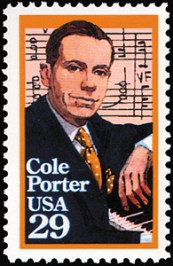 There is nothing worse than feeling that your father does not approve of who you are or what you want to do with the rest of your life. Of course, I am not alone in having this kind of parental disapproval. American composer and songwriter Cole Porter (who wrote Anything Goes) experienced a similar problem. At the insistence of his rich maternal grandfather for whom he was named after, he entered Yale University and then the Harvard Law School to become a lawyer. However, his true love was music. While at Yale (and secretively from his family), he wrote 300 songs and the words and music to six full-length student shows. Eventually he switched to studying harmony and counterpoint with the Harvard music faculty… the rest is history!
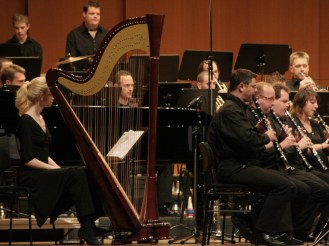 Why choose education? Well, the status of a teacher in some cultures is at the pinnacle of the society’s most cherished and respected. In fact, in some Asian countries, tradition dictates that the eldest rules the entire family, and is often considered a master teacher. The career of a teacher is on the top of the spectrum. The merchant is at the bottom. This is exactly the opposite for today’s Western countries… a worship of wealth, stockbrokers, millionaires, “things,” etc. (Of course, it should be mentioned that, using this analogy, Asian musicians are also at the bottom… considered to be nearly useless in lower socioeconomic agrarian societies.)


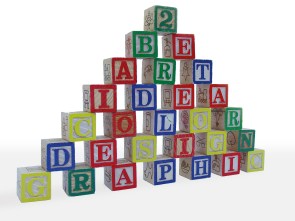 Any discussion about creativity in education should begin with a thorough look at defining what it means to be innovative and original. As stated by the Partnership for 21st Century, essential factors in creativity are demonstrating originality and inventiveness in work, being open and responsive to new and diverse perspectives, developing, implementing, and communicating new ideas to others, and acting on creative ideas to make a tangible and useful contributions to the domain in which innovation occurs.
 Another fantastically in-depth resource is the website of Linda Naiman, founder of “Creativity At Work” and a pioneer of arts-based learning as a catalyst for developing creativity, innovation, and collaborative leadership in organizations.
 What Is Creativity?
  Land’s statistics concluding with “non-creative behavior is learned” show that the longer a student is in school, the lower he/she scores on a creativity tests. We teach our children “not to risk being wrong” and don’t go “all out” in finding an unique solution to a problem… only respond with “the one correct answer!” This reminded me of a insightful Sir Ken Robinson TedTalks video, filmed in 2006, with more than 36 million viewers:
  brings us to our next stop for a more penetrative discussion of creativity in education! Usher asks, “How do we jump start our creative process as adults? What does it mean to be a creative person? How do we follow through with our ideas and turn them into tangible outcomes?” These are the fundamental questions with which we must grapple in order to enhance the creative potential and self-expression of our students.
 “Understanding By Design,” Grant Wiggins, who proposed a revolutionary framework for improving student achievement. Emphasizing the teacher’s critical role as a designer of student learning, UbD™ works within the standards-driven curriculum to help teachers clarify learning goals, devise revealing assessments of student understanding, and craft effective and engaging learning activities. Since his death in May 2015, I have noticed numerous postings (and variations) of his creative rubric: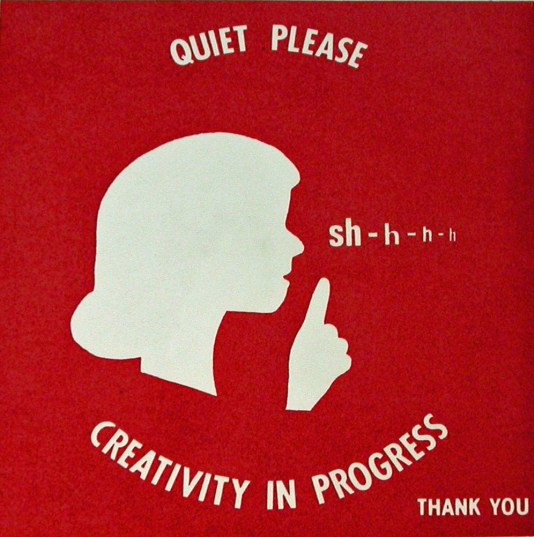
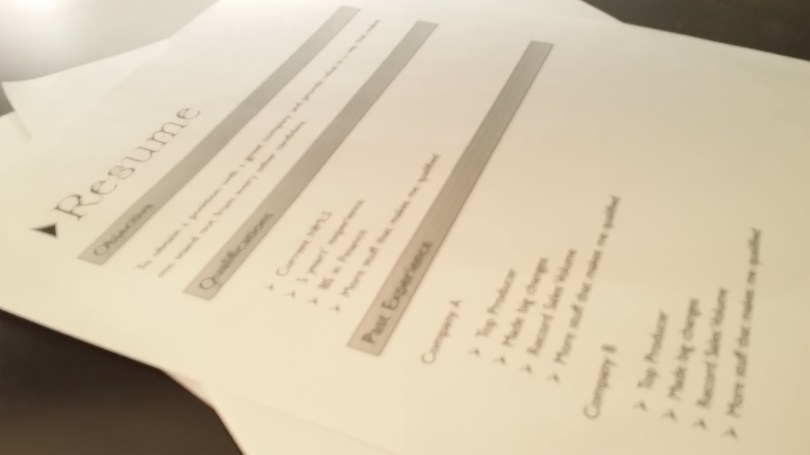
 The walking document of “everything you always wanted to know about you” is your professional resume.
 is the “Prepare Your Materials” section of the Institute for Music Leadership, Eastman School of Music (ESM)/University of Rochester, Careers and Professional Development
  “Professional resume writers urge their clients to first try to trim their resumes down to a maximum of two pages.” One exception for a three-pager might be if the job seeker was to transition from one field to another, having to cover both sets of the candidate’s skills, qualities, and experiences.
 and easy-to-read fonts in your collection. “Your goal is not to make your resume beautiful to your eyes… it’s to make it extremely readable to the people doing the screening and hiring.”
 behind the job assignments, field experiences, or awards… is better. What did you do in each situation, what did you learn, and how did you grow? Check out author Diana in NoVa’s ideas at
 conventions of grammar, punctuation, style, and order of presentation. For example, for new music educators entering the field, it is generally recommended that you list your experience, education, and achievements chronologically starting with the most recent at the top of each section. According to
  singing, etc. However, from an administrator’s perspective, it may be more important to know about the prospective music teacher’s field experiences and previous employment working with children, classroom management skills, professional development goals and initiative (would you be interested in coaching or directing extracurricular activities?), teamwork and leadership skills, personality traits like patience/even temperament/self-discipline, and knowledge of a few “buzz words” of educational terminology and acronyms (like The Common Core, DOK/HOTS, IEP, PLC, RTI, UBD, formative/summative assessments, etc. You are welcome to review some of these completing a crossword puzzle at
  Among her other suggestions are writing “an objective statement” which summarizes your goals to being employed at the school district, “support skills sets with problem solving examples” (see #4 above), and “proofread, proofread, proofread” for accuracy and to enhance your image. Sloppy resumes with typos or misspellings project the wrong message to prospective employers.


 The Romans giving tribute to the god Janus, for whom the month of January is named.
 my top-ten recommendations to help you “grow” and enjoy a glorious 2016!
 grandchildren (your own or adopted ones), enjoy them! Not only is your generous super-competent babysitting services providing ever-so-essential care-taking of your love-ones, “playing with the kids” is wonderful for your own mood and mental health. “Keep around young people and you will stay forever young!” However, invest your time wisely. You deserve a life of your own and unstructured time off. It is easy to be taken advantage of, so don’t let this childcare schedule dominate everything you do in your retirement.
 The single most satisfying pastime for all of us is to be or do something creative. With few exceptions, every day you need to find venue(s) to express yourself. This could mean pulling out your instrument or singing, with a renewed focus on exploring your musicianship, interpretation, composition, or improvisational skills. Creating new musical works, like adding to your own “Mr. Holland’s Opus,” can “make your day!” Other projects in creativity could involve conducting, acting, dancing, creating two or three-dimensional artworks, sewing, gardening, and my personal favorite, writing. Whether it is fiction or nonfiction, articles, books, poems, letters-to-editors – the activity is very personal – and possibly profitable? Try to assemble in words your long-practiced insights and experiences acquired working as a teacher. I am particularly inspired by the prospects of creating and posting blogs on just about any subject that motivates or moves me. Check out the opportunities that WordPress.com can give you. (I am not too shy to refer you to my own website, showing off my articles and “pet peeves” on the subjects of creativity in education, marketing professionalism, and retirement resources:
  Every week for the rest of your life, spend some time “giving back!” Volunteer or share your hobbies, interests, or expertise helping out wherever it is most needed… in local churches, hospitals, charitable organizations, schools, pet sanctuaries, or senior care centers. I never understood why some enterprising entrepreneur does not buy a large piece of land to build a combined animal shelter, childcare center, and assisted-living facility, connected with easy access to each other… mutually beneficial opportunities for needy children, lonely seniors, and rescued pets for interaction with each other! That’s a “win-win-win!”
 Stay involved in PMEA. Help new or recently transferred music teachers by joining the PMEA Retiree Resource Registry, the free (but priceless!) adviser/ consultant service





 Start thinking of yourself as a brand


 If you have time, design a personal logo, a symbol of you wherever you go on websites, e-mail footer, digital and printed portfolios, business cards, etc. Although I retired in 2013, I created the illustration at the above right. It implies that I am “a happy fox” (my last name), involved in music, and especially love a certain Beethoven symphony, reinforcing that I am an orchestral musician.


 Two years ago, I wrote a three-part series on the critical need, rationale of, and techniques for developing skills in teaching creativity as well as teaching more creatively. I based my compilations on the February 2013 issue “Creativity Now!” of the ASCD Educational Leadership magazine, and passed on the research and insight of creativity experts, self-expression advocates, and/or self-proclaimed ”right-brain” educational gurus
  The continued fixation on “error-free” convergent thinking, a priority of the one-answer-only mentality, baffles me. 1+1+1 does not always equal three. I can give you at least two alternative answers: 11 or 1 (the sum in a binary system for the former and the result of drawing the Roman numeral “I” with one vertical line and two horizontal lines for the latter). This is an example of divergent thinking (“process or method used to generate creative ideas by exploring many possible solutions”), and sits at the top of the charts for higher order of thinking skills (HOTS) and depth of knowledge (DOK). Use of divergent thinking is much more valued in higher education circles, future employment, and especially research and development in a host of careers from medicine to engineering to technology innovation to consumer markets… probably the foundation of future success in our whole economy.
 My next blog on the subject of creativity in education will explore additional resources, including new websites and books on the subjects of innovation, ingenuity, originality, and self-expression released over the last several years.
 It used to be that the coming winter recess of seven or more days off from full-time public school music teaching mostly meant catching up on much-needed sleep, tackling a few of those deferred household chores, performing or conducting a couple holiday concerts, visiting family and friends, and “pigging out” at a few gigantic holiday feasts.
 family gatherings during the holidays are rarely stress-free… Sometimes these situations are small, unpleasant blips in otherwise enjoyable celebrations. But for some, the feelings go deeper—many people dread the holidays, becoming stressed or anxious in the weeks leading up to a family get-together.”
 So, here is some timely advice to bring down your anxiety levels and cope with the changing season.
 Know your spending limit (set a budget and stick to it).
 Tell jokes, like “Why do reindeer stop for coffee on their Christmas run? Because they’re Santa’s star bucks.” A whole collection of quick one-liners are available at her website, which she says are guaranteed to add humor to your holiday and de-stress awkward episodes.
 If your stress is made worse mostly due to the transition of a recent retirement, there are numerous resources to help you through this “significant life passage.” First of all, you should know it is not unusual to feel this way. In his book, The Retiring Mind, Dr. Robert P. Delamontagne estimates that “50% of retirees will suffer some form of acute emotional distress.” Now all we have to do is learn how to deal with this change… sounds easy?
 stress-reduction strategies: “Realize that your brain’s reward center likes variety, so give yourself a variety of experiences.”