“Creativity” Would Join “Literacy” and “Logic” as the Top Three Educational Priorities

“Passion is one great force that unleashes creativity, because if you’re passionate about something, then you’re more willing to take risks.” – Yo-Yo Ma
One of the advantages of teaching and learning in the state of Pennsylvania is that many aspects of specific curriculum and instruction is under local control. We do not have a  unified county or state system. “Big Brother” does not dictate all aspects of what is taught.
Of course, the immediate disclaimer is that the local school boards cannot decide everything. You would hear complaints from superintendents about the many federal and state mandates (often unfunded). In addition, I would add my voice against the politics and obsessive focus on standardized testing, coursework with the sole goal of achieving high scores, and the hysterical single-mindedness on providing learning experiences to develop convergent thinking (as opposed to divergent thinking), recently made even worse by the Common (and much more limited) Core movement and curriculum. In some places, this has caused a significant de-emphasis (and in some cases elimination) of the arts, a strategy that fails to meet the needs of “The Whole Child” nor nurtures the development of the 21st Century skills of creativity, critical thinking, communication, and collaboration.
However, in my experience as a teacher and Curriculum Leader, each individual school district has some autonomy and can devise their own mission/vision and educational plan. This can include the customization and individualization of their academic programs with a new, comprehensive, and actively engaging curriculum, taking into account the special  needs of a very diversified clientele.
I saw this in action when teachers and administrators designed the K-12 Technology Curriculum at Upper St. Clair School District. Care was taken to include elements of creativity (not originally placed in the first draft). After several revisions, the curriculum committee was proud to publish the competency target “I can apply creative thinking to the creation of original works using technology” under the Grades K-12 strand Creativity and Innovation. Perhaps small steps towards our goal, but for a big purpose!
As Daniel Pink points out, we have already moved away from the total reliance and dominance of the Agricultural Age and Industrial Age, and now even the Information Age that superseded them. One of my favorite quotes from his book A Whole New Mind: Why Right Brainers Will Rule the World is, “The era of ‘left brain’ dominance, and the Information Age that it engendered, are giving way to a new world in which ‘right brain’ qualities – inventiveness, empathy, meaning – predominate.” Referring to the Conceptual Age (creators and empathizes) as the current fourth stage, students need to acquire the tools  for success in today’s higher education and jobs. Sure, we want our children to excel at reading, writing, understanding and solving math problems, but now more than ever, we need to place higher priority and greater amounts of time and resources to the goal of teaching students to create and express themselves, and to learn originality, inventiveness, personal innovation, initiative, self-direction, flexibility, adaptability, openness to new and diverse perspectives, and ambiguity.
So, with my “thinking cap on” and the unbridled enthusiasm and freedom to fantasize the creation of a “perfect school,” here are eight ideas from a retired music teacher imagining he accepted the position as “superintendent for a year.” (No one has ever dared to give me this kind of “power!” Besides, I would spend too much money!)
“To raise new questions, new possibilities, to regard old problems from a new angle, requires creative imagination and marks real advance in science.” – Albert Einstein
1. Staff training
 My first act as superintendent would be the planning and institution of several new teacher in-service programs.
ASCD (formerly the Association for Supervision and Curriculum Development) has recently released a new online course based on the readings and ideas from Patti Drapeau’s book Sparking Student Creativity: Practical Ways to Promote Innovative Thinking and Problem Solving. Six professional development modules will teach integration of creativity into content to meet and extend curriculum standards. ASCD promises that the participants will use a “creativity road map” to plan instruction, and develop strategies to enhance creative tasks and assess creativity lessons:
- Module 1: Intentional Creativity
- Module 2: Practical Creativity
- Module 3: Creativity and Standards
- Module 4: Creativity and Imagination
- Module 5: Innovation and Creative Problem Solving
- Module 6: Creativity and Assessment
For the opening day keynote speaker, barring having the necessary funding (reputed to be unbelievably high) to bring in creativity-in-education expert Sir Ken Robinson, I would invite Daniel Pink to address the staff and share the importance of designing curriculum and instruction around his six “senses” or aptitudes:
- Design – Moving beyond function to engage the sense.
- Story – Narrative added to concepts, products, and services – not just argument. Best of the six senses.
- Symphony – Adding invention and big picture thinking (not just detail focus).
- Empathy – Going beyond logic and engaging emotion and intuition.
- Play – Bringing humor and light-hardheartedness to education, business, consumer products, and… life, in general.
 Meaning – the purpose is the journey, giving more meaning to life from inside yourself.
Sponsoring future workshops (spring semester) on what I call “the meat and potatoes” of teaching more creatively and teaching creativity, we would be inspired to have Dr. Curtis Bonk (Indiana University of Bloomington) unpack many of his pedagogical strategies with hands-on breakout sessions for the teachers exploring (his terms) brainstorming and reverse brainstorming, metaphoric thinking, checkerboarding, wet inking/free writing, simulations, semantic webbing or mapping, role playing, etc. (See http://www.indiana.edu/~bobweb/cv_hand.html).
“We are the facilitators of our own creative evolution.” – Bill Hicks
2. Staffing
 Taking a page from the leadership philosophy of the current superintendent (Dr. Patrick O’Toole) for the Upper St. Clair School District, my former employer, I would install new administrative positions that foster creative self-expression and educational innovation. Our “customization” tagline (logo to the right) is ambitious, unique for most public schools, and articulates the USC organization’s core functions, culture and mission. However, I believe it needed the intentional assignment of extra managerial manpower and flexible foresight in staffing in order to fulfill the school district mission statement: “Developing lifelong learners and responsible citizens for a global society is the mission of the Upper St. Clair School District, served by a responsive and innovative staff who in partnership with the community provides learning experiences that nurture the uniqueness of each child and promotes happiness and success.”
Copying from Dr. O’Toole’s HR playbook, for my imaginary school district in the first year, I would hire a new Supervisor of Customized and Online Learning and an Associate Principal of Program Planning and Innovation, and have both of them report directly to me (the superintendent) every month.
“I believe this passionately: that we don’t grow into creativity, we grow out of it. Or rather, we get educated out if it.” – Sir Ken Robinson
3. Improving the climate for risk-taking
 Sir Ken Robinson says the studies show the longer students stay in school the less creative they become. It is all about the willingness to accept risk, instead of seeking conformity or the “one right answer.” We need to venture out from our “comfort zone,” be different, try new ideas or angles, and even fail miserably once in awhile along the way.
Peter Dewitt wrote an interesting blog on the climate of school risk-taking from the perspective of a principal: http://blogs.edweek.org/edweek/finding_common_ground/2012/10/does_your_school_culture_encourage_risk-taking_or_rule_following.html.
I also recommend reading the article “The Keys to Inquiry (Section II): Big Messages to Communicate Around Learning from Experience” by Tina Grotzer (Harvard Graduate School of Education): http://hea-www.harvard.edu/ECT/Inquiry/inquiry2text.html.
 In our society, at times we do value risk taking. Steven E. Landsburg, author of Armchair Economist: Economics and Everyday Life says that the reason we pay CEOs so much money (in the millions plus stock options and golden parachutes) is to provide enough security for the company executive to take more chances and find new ways to make even more money. Quoted from his book:
“Why are executive salaries so high? Remember that stockholders want executives to take more risks. One way to encourage a person to take risks is to make him wealthy. Other things being equal, multimillionaires are a lot mellower about losing their jobs than people who are worried about how to put their children through college. If you want your corporate president to be receptive to the rocket-powered running shoe project, you need to encourage that kind of mellowness. A high salary helps a lot in that direction.”
 Speaking of balancing “risk and rules,” just how creative are YOU? Have you heard about Chindogu, the Japanese concept that combines ingenuity and inventiveness with the absurb? (See http://www.weirdworm.com/10-bizarre-japanese-inventions/.) Created by amateur inventor Kenji Kawakami in the 1980s, “…a chindogu must be both useless and useful at the same time” and have a real purpose (other than making people laugh) but “also be completely unusable.” According to weirdworm.com, “A real prototype of the invention must be made for it to be called chindogu. Unfortunately, the rules also state that chindogu are not to be sold. Once used for commercial gain, the artifact would no longer be chindogu, but a commercially viable product. Chindogu are also not to be patented, but are instead to be considered a gift to the world. Fortunately, many chindogu have been sold, albeit as novelty items, but they are rarely patented.”
“Creativity requires the courage to let go of certainties.” – Erich Fromm
4. Generating a daily/weekly lesson target of divergent thinking
 To improve the instruction, both in learning creativity and more creative teaching, let’s move towards practicing more divergent thinking. Teachers would be asked to post in front of their class the “innovative idea of the week” or “creative target for the day.”
Monthly faculty meetings would offer the chance to share some of these “aha” moments and new teaching/learning techniques. This also means we will make a concerted effort to share the creative work of our students. Regarding the education profession, whoever said, “It’s not the sage on the stage, but the guide on the side,” was absolutely right!
My best example of approaching a problem “outside the box” is the nine-dot-puzzle and puzzle solutions. How about a math lesson that asks how many different ways a student could solve the problem 1 + 1 + 1 = , or how to justify these answers: 3 (the sum, the obvious response), 11 (binary), 1 (drawing the Roman Numeral I in three strokes)? Additional examples for teachers of all subjects is about “inventions” and comes from TeacherVision: https://www.teachervision.com/inventions/teacher-resources/6636.html.
“But the person who scored well on an SAT will not necessarily be the best doctor or the best lawyer or the best businessman. These tests do not measure character, leadership, creativity, and perseverance.” – William Julius Wilson
5. Adjusting for balance
We have to re-examine our historic emphasis on summative assessments and final grades vs. providing meaningful feedback using formative assessments. Personally, I have never learned a thing or improved my knowledge or skill from a standardized test. Alternative  assessments, often called authentic, comprehensive, or performance assessments, are usually designed by the teacher to gauge students’ understanding of material. Examples of these measurements are open-ended questions, written compositions, oral presentations, projects, experiments, and portfolios of student work.
I believe that assessment for learning (formative) is preferable and should occur more often than assessment of learning (summative). Yes, we need both, and must print something on the report card. But, classroom activities should model our lives outside… fostering all of the words with “self” prefixes: self-motivation towards self-discovery for self-improvement and self-sufficiency. Creativity is all about “life long learning.”
“Art in the classroom not only spurs creativity, it also inspires learning.” – Mickey Hart
6. Requiring daily instruction in the arts for every student regardless of grade level
 Day one, there would be more rigorous high school graduation requirements of four years of music or art courses for every student enrolled at the high school. Yes, that would mean hiring a few more teachers… but the payoffs would be instantly evident and promote exponential growth in the creative quotient of every student!
You cannot expect a true understanding of the artistic process without creating your own original work in art or music. Some students try to go through four years of high school, four or more years in a college or university, and another 2-4 years in postgraduate courses, never experiencing a single “goosebump” moment in personal self-expression.
In addition, I was also amazed to find so many building principals and curriculum supervisors who themselves have never completed a single hands-on arts course in high school or college.
Really, this is as silly as not expecting every educator to be computer literate, having advance reading and writing skills, or capable of doing math (grading exams), etc.
 Every administrator and teacher in my buildings would be expected to “practice what we preach” and develop their own artistry by participating in an instrumental ensemble, chorus, classes in painting or drawing, pottery or jewelry making, sewing, woodworking, acting, dancing, etc. Sure, as “the boss,” I would even allow some of this during school time. Can you imagine the positive effect it would have on the ensemble programs in all buildings if the teachers, principals, and other school staff also explored singing, playing in the band or orchestra, or performing on stage in the musicals?
“Art is permitted to survive only if it renounces the right to be different, and integrates itself into the omnipotent realm of the profane.” – Theodor Adorno
7. Expanding arts integration in all classes and disciplines
My hypothetical school district would embrace the definition of “arts integration” from the Kennedy Center’s Changing Education Through the Arts (CETA) Program: “Arts Integration is an APPROACH to TEACHING in which students construct and demonstrate UNDERSTANDING through an ART FORM. Students engage in a CREATIVE PROCESS, which CONNECTS an art form and another subject area and meets EVOLVING OBJECTIVES in both.”
 According to CETA, “This approach to teaching is grounded in the belief that learning is actively built, experiential, evolving, collaborative, problem-solving, and reflective. These beliefs are aligned with current research about the nature of learning and with the Constructivist learning theory.” CETA outlined the following “best practices” of this theory that align with arts integration:
- Drawing on students prior knowledge;
- Providing active hands-on learning with authentic problems for students to solve in divergent ways;
- Arranging opportunities for students to learn from each other to enrich their understandings;
- Engaging students in reflection about what they learned, how they learned it, and what it means to them;
- Using student assessment of their own and peers’ work as part of the learning experience;
- Providing opportunities for students to revise and improve their work and
- Building a positive classroom environment where students are encouraged and supported to take risks, explore possibilities, and where a social, cooperative learning community is created and nurtured.
“The arts, quite simply, nourish the soul. They sustain, comfort, inspire. There is nothing like that exquisite moment when you first discover the beauty of connecting with others in celebration of larger ideals and shared wisdom.” – Gordon Gee
8. Bringing creativity to the Common Core
 A lot more (ahem) innovative research is needed to merge both creativity and the Common Core (and other so-called “new” educational initiatives when they inevitably come down the pike). Below are a few additional resources. In my “administration,” it would be common practice to share these at faculty and staff meetings… and look for more ways to intentional bring creativity skill instruction to the forefront.
TEACHHUB.com “Creativity Within the Common Core State Standards” http://www.teachhub.com/creativity-within-common-core-state-standards
Just ASK “Creativity and the Common Core” www.justaskpublications.com/just-ask-resource-center/e-newsletters/mccca/creativity-and-the-common-core/
The Arts Education Collaborative has the best bibliography exploring the Common Core and the Arts (http://www.aep-arts.org/resources-2/common-core-and-the-arts/):
Special Report on Education 2012: Arts Education at the Core (December 2013) – A report based on the findings of the Theatre Communications Group’s 2012 Education Survey discussing the impact of Common Core on arts education.
Art and the Common Core (February 2013) – A PowerPoint presentation from an Education Week webinar about arts integration within the Common Core, featuring Susan M. Riley and Lynne Munson, and moderated by Erik Robelen.
The Arts and the Common Core (December 2012) – A report prepared by the College Board  for NCASS on connections between the CCSS and the Next Generation Arts Standards.
Use Arts Integration to Enhance Common Core (November 2012) – This post by Susan Riley from Edutopia’s Education Trends blog discusses arts integration as a means to enhance the Common Core.
Guiding Principles for the Arts: Grades K-12 – Developed by David Coleman, this is a discussion on the ways in which arts education intersects with the Common Core areas.
The Arts and the Common Core Curriculum Mapping Project – A guide utilizing the arts in a Common Core curriculum.
Creativity, Critical Thinking, and the New Common Core State Standards (March 2012) – A symposium co-hosted by the Los Angeles Unified School District Arts Education Branch and the Museum of Contemporary Art, bringing together school leaders, teachers, and educators from arts organizations to discuss the impact of the Common Core on their work.
“I have come to believe that a great teacher is a great artist and that there are as few as there are any other great artists. Teaching might even be the greatest of the arts since the medium is the human mind and spirit.” – John Steinbeck
My aforementioned school superintendent, a definite arts advocate who “puts his money where his mouth is” in the funding and staffing of an excellent Fine and Performing Arts program at Upper St. Clair, would probably laugh me out of his office for these zany ideas. With the possible exception of a new start-up charter or cyber school or private institution, it is unlikely any elected School Board would ever have the courage to support a total creativity-based curriculum. At least, my wild imagination and arts perspective may have started you thinking on a few improvements that can be considered instead of the cookie-cutter, one-size-fits-all schooling. Please stay tuned for more “lessons on creativity,” revisit my past blogs on creativity in education, and feel free to comment on anything!
PKF
© 2016 Paul K. Fox


 My “soapbox” in this forum has always been that we need to do things in education intentionally – in the classrooms, written/posted weekly lesson targets, and curriculum. In school, we have spent an inordinate amount of time developing convergent thinking, a.k.a. one-answer-only principles/laws/inarguable facts.What is needed is MORE divergent thinking – multiple solutions or pathways to the resolution of a problem, open-ended “out-of-the-box” proposals – generating fresh views and novel solutions. Best practices in education would be a combination of both convergent and divergent thinking techniques – the ultimate role of our profession – mastery of the essential 21st century learning skill of critical thinking.
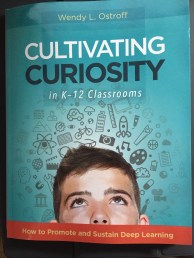 I stumbled on a free ASCD webinar for July 28, 2016 that will “detail ways to foster student curiosity through novelty and play; questioning and critical thinking; and experimenting and problem solving.” Based on Dr. Wendy Ostroff’s book, Cultivating Curiosity in K–12 Classrooms: How to Promote and Sustain Deep Learning, the online session will dive into the concept of a structured, student-centered environment that allows for openness and surprise, where inquiry guides authentic learning. “When a classroom is grounded in curiosity, teachers have the unique opportunity to mine students’ deepest held wonder, making their engagement natural and effortless and allowing them to fully open up to learning.” For more information on the workshop, go to http://ascd.org/professional-development/webinars.aspx.
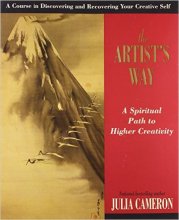 The “power” of journal writing and brainstorming is so essential to the creative process. Author and educator Julia Cameron has written a series of books on the subject of “unblocking your inner artist.” The Artist’s Way, the title of one of her international best-sellers, has been transformed into a movement of artists helping other artists, a program she says is “used in hospitals, prisons, universities, human potential centers, and often among therapist doctors aids groups in battered woman’s programs, not to mention fine art studios, theological programs, and music conservatories.”
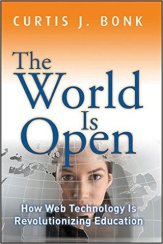 One of my “heroes” on the subject of instructional strategies in creativity, critical thinking, motivation, and collaboration is Professor Curtis J. Bonk, Indiana University (Bloomington) School of Education and author of The World is Open: How Web Technology Is Revolutionizing Education. His course materials and creativity exercises are amazing, and he has been very generous in sharing the slide presentations of his classes. If you have not already done so, you should peruse his “Best of Bonk” website at http://www.indiana.edu/~bobweb/r546/index.html (click on the creativity module), and find out the meaning of these terms:
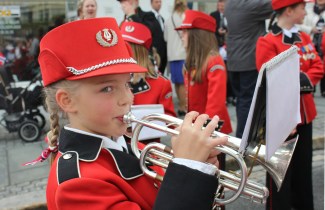 For school music directors, I would suggest to offer a weekly “create a warm-up” opportunity run by student conductors. Many well-intentioned “school maestros” are guilty of setting up the rigid format of a “benevolent dictatorship” (“my way or the highway”) and not allowing the individual participants to share any input in running practices or interpreting the music. For the first five minutes of the rehearsal, ask student volunteers to choose the articulation or key of a scale, and even create a drill from the challenging rhythmic motives introduced by the music in the folder. Variations on tempo and dynamics can be lead by the student leaders.
 As quoted on the back cover of the Cultivating Curiosity in K-12 Classrooms, “We learn by engaging and exploring, asking questions and testing out answers. Yet our classrooms are not always places where such curiosity is encouraged and supported.” As important as literacy and logic, how can we nurture creativity in the schools? For this forum, can you share your thoughts on additional lessons in creativity?
 I submit there are basically three ways to learn something new by reading about it. One is the tutorial format, a.k.a. an instrument of “programmed learning.” Another approach is the comprehensive reference manual or user guide. Finally, many people prefer a narrative story, perhaps a fictitious account that features characters exploring and revealing insights on the topic you are studying.
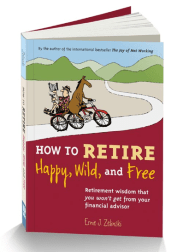 If you were looking for the reference manual, I recommend Ernie Zelinski’s How to Retire Happy, Wild, and Free (2016). The chapters are laid out by general concepts you need to understand. However, as in many user guides, you could turn to almost any page in the volume, jump around (in any order) to specific areas on which to focus, e.g. tips on travel (page 165) to health/wellness (page 109), and not lose the overall meaning.
 The contents of It’s Never Too Late to Begin Again are divided into a weekly course of study:
 The fictitious “Larry and Janice Sparks” share anecdotes of their experiences, modeling potential opportunities of retirees enhancing their relationships, stimulating their minds, revitalizing their bodies, growing spiritually… basically rekindling passion in every area of their lives.
 You will notice that all three texts cover many of the same subjects, but are vastly different in methodology, style/design, and overall structure.
 at the Seven Springs Mountain Resort in Pennsylvania on July 11-13, 2016.

 Be prepared for anything, and don’t slip up on “interview potholes” – any of these “terrifying, treacherous, tricky, and troubling” inquiries or potentially hot topics like…
 According to Lee E. Miller at
  Instead of a traditional interview (like most of the above) stating opinions about yourself, you may be faced with a behavioral interview. This type of employment screening requires job candidates to relate stories about how they handled challenges related to the skills and qualifications the company requires for the position. For this, you are encouraged to read “Acing the Behavioral Interview” by Jeanne Knight at
  In the unlikely event it gets asked, how would you respond to, “You say you are a musician? Are you temperamental?” Administrators want assurances and evidence that you are levelheaded, responsible, organized, reliable, and indeed NOT temperamental. Freelance singers and instrumentalists often have active performance calendars. Your principal may come out and ask if you will be available to “make the music” with your students after-school or evenings, and that your “gigs” and other non-district related activities will not interfere with school concerts, open houses, field trips, festivals, parent meetings, and other educational events for the growth and development of the total music program.
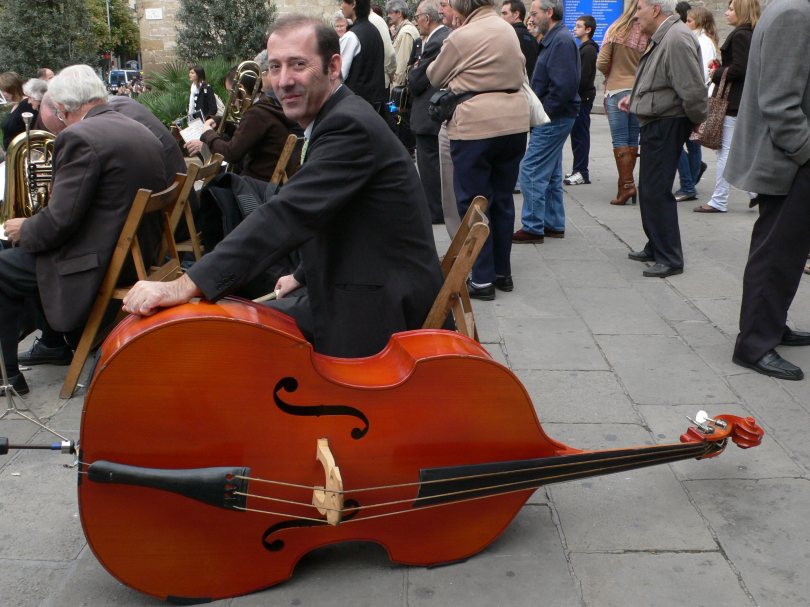
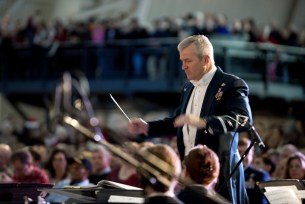 Do music teachers ever retire? Not really!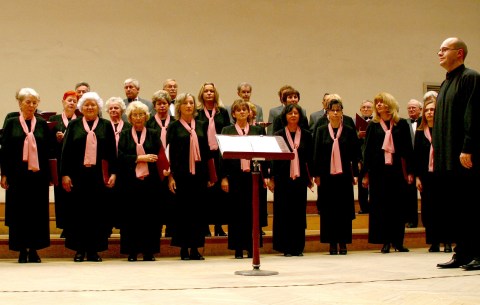

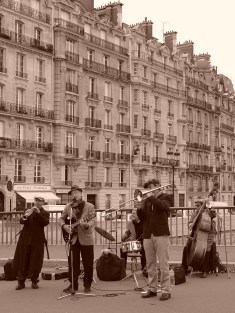 Practice and go out on a few gigs with your own jazz, rock, Barbershop, or chamber music group
 education? Of course, the best part of retirement is that you get to pick what you want to do every day for the rest of your life. So go ahead and say yes to those extra conducting gigs, writing/publishing your own “Mr. Holland’s Opus,” working with the church or community choir, accompanying a handful recitals, volunteering to help your favorite local marching band or civic theater, serving as an adjudicator for a music festival, supervising student teachers or teaching college music education methods classes, etc.
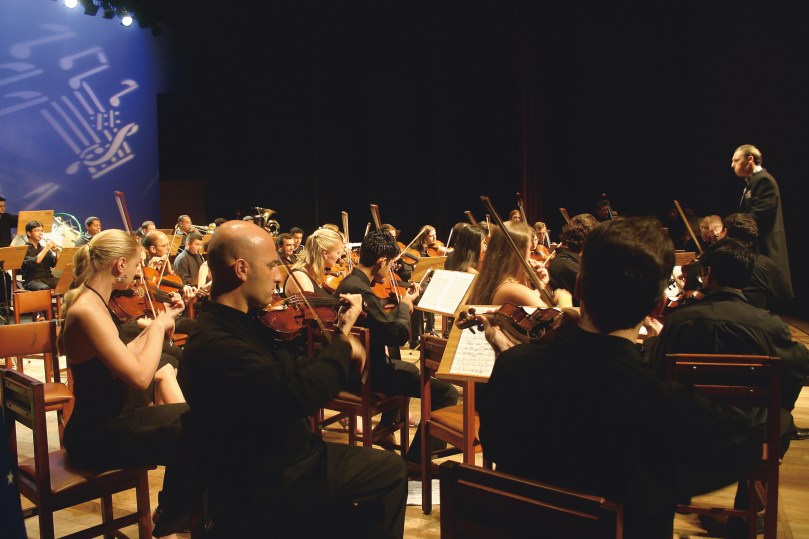 As long as I am alive, I will continue to inspire in others that music makes a difference!


 Randomly check out what’s happening in the arts’ scene on the World Wide Web:

 Curiosity
 Creativity is about getting curious.
 They take risks.
 As soon as I posted these wonderful resources, several new ones popped up. Also, please look up the following:


 Reprinted from the Spring 2016 issue of PMEA News, the state journal of the Pennsylvania Music Educators Association.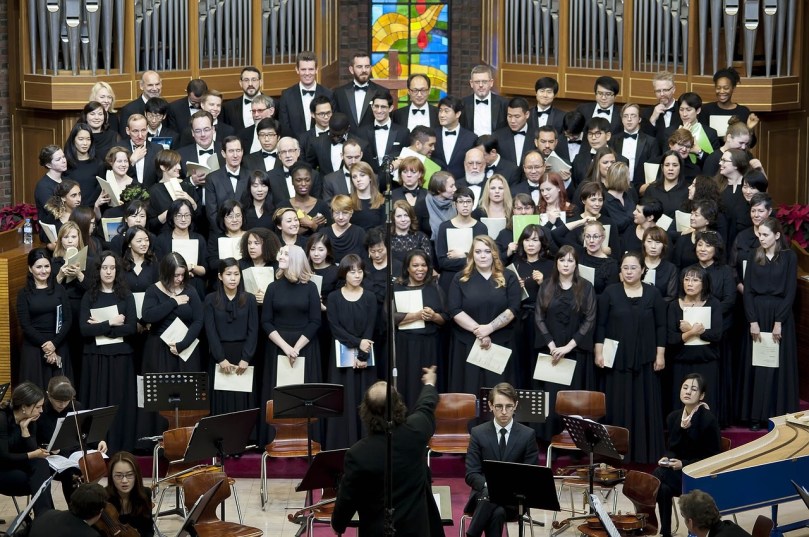
 If you’ve ever been in a choir, you’ve probably been told that the proper way to sing is from your belly.
 As the popularity of group singing grows, science has been hard at work trying to explain why it has such a calming yet energizing effect on people. What researchers are beginning to discover is that singing is like an infusion of the perfect tranquilizer, the kind that both soothes your nerves and elevates your spirits.
 Regular exercising of the vocal cords can even prolong life, according to research done by leading vocal coach and singer Helen Astrid, from The Helen Astrid Singing Academy in London. “It’s a great way to keep in shape because you are exercising your lungs and heart.”
 Colette Hiller, director of Sing The Nation, is convinced that singing builds social confidence by helping individuals connect to each other, and to their environment. “Think of a football stadium with everyone singing,” she says. “There’s an excitement, you feel part of it, singing bonds people and always has done. There’s a ‘goosebumpy’ feeling of connection.”
  Studies have linked singing with a lower heart rate, decreased blood pressure, and reduced stress, according to Patricia Preston-Roberts, a board-certified music therapist in New York City. She uses song to help patients who suffer from a variety of psychological and physiological conditions.
 The seniors involved in the chorale (as well as seniors involved in two separate arts groups involving writing and painting) showed significant health improvements compared to those in the control groups. Specifically, the arts groups reported an average of:
 Okay, besides that crack about “elderly” in that last article (we’re not “old,” yet!), the evidence seems conclusive! For our general health, feelings of well-being, improved social connections, and “just having fun,” we should all be motivated TODAY to go out and find a community choir and start singing regularly in a group. Enough said?
 For both the instrumental and choral groups, we are most thankful to the contributions of our “dream team” of PMEA researchers and editors (as of April 13, 2016): Jan Burkett, Craig Cannon, Jo Cauffman, Deborah Confredo, Susan Dieffenbach, Timothy Ellison, Paul Fox, Joshua Gibson, Rosemary Haber, Estelle Hartranft, Betty Hintenlang, Ada Jean Hoffman, Thomas Kittinger, Chuck Neidhardt, Sarah Riggenbach, Ron Rometo, Joanne Rutkowski, Marie Weber, Lee Wesner, and Terri Winger-Wittreich. We are especially grateful to the efforts of Director of Member Engagement Joshua Gibson who located the counties and e-mail addresses in the choir directory.

 Do you have a business card, e-portfolio, resume, and professional website?
 Merriam-Webster defines “networking” (noun) as “the exchange of information or services among individuals, groups, or institutions; the cultivation of productive relationships for employment or business.”
 During the 17th century, especially during the reign of Louis the 14th, the “calling card” made its heyday in Europe. “…An individual’s success or failure in society often depended on the strength of their personal promotion.”
 informing customers of its location and services available.
 It gives others a taste of your work, style and personality.
 display… traits of artistry, collaboration, commitment, discipline, even temperament, goal-minded, initiative, leadership, mastery of music and music education, organization, positive outlook, style, tact, and/or teamwork… or just the opposite?
 a new full-time job!
 first ten seconds, and after four minutes, it’s all over. For employment consideration, others have written that you are evaluated by 7% what you say, 38% by your vocal tone, and 55% by your facial expressions.
 After the opportunity presents itself to exchange business cards, you need to save and organize his/her data in a way to be able to place/find the acquaintance for future reference. Why was this professional important to you to remember his or her name? How, when, and where did you meet? Reference the subjects you may have discussed, school affiliation, title, and locality of the contact, so at some point, you can lay your fingers on the name in your file; just search on the “key” word or phrase like “choral director” or “XYZ School District.”
 Plan your first impression

 On the subject of music teachers exiting the job market, one area we have not ventured into with these blogs on “retirement resources” is the most difficult to handle – having to face a forced resignation or involuntary leave.
 Depression

 Evaluate your response to stress since you were summarily eliminated from your district. It is worth reviewing the definition of PTSD and see if it should be applied to your behavior and the emotional upheaval you are feeling (from the online blog of the Dr. Oz Show at
  It’s time to “dust off your chops” (join a community band/orchestra)


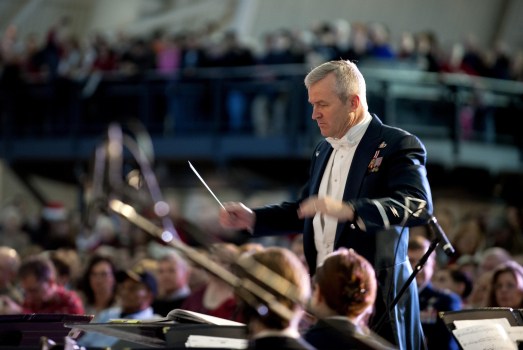
 Depending on the structure of the interview, the hiring procedures of the institution, and the type of session (whether it is a general screening prior to any job opening, or the first round, second round, demonstration lesson, final round with the superintendent, etc. in order to fill a specific position), you will be exposed to many different kinds of questions.
 As I go out to help at job fairs and mock interviews for music education majors, I advise the soon-to-be candidates to practice their storytelling skills and recall relevant personal anecdotes in order to satisfy the interviewers’ questioning, promote an image of competency and self-confidence, “show that you have what it takes” and would be a “good fit” for their school district, and ultimately “ace” the examination.
 you are, adoption of “customer-first” philosophy and habits, a savvy business sense, focused motivation, and a strong work ethic. Narrate an anecdote rather than list facts. Plan (and dress rehearse) something like this script: “My route was small, so I surveyed my existing customers, asked about their needs, desires, and their definition of a ‘perfect paper delivery,’ and how I could help them. I tagged and followed-up on their unique requests, like ‘hiding the pile of papers that end up accumulating during vacation periods’ (advertising to the world that homeowner is out-of-town), and ‘when NOT to place the paper in the screen door early in the morning so as to avoid waking up the dogs and the whole household.’ I also solicited business from non-subscribers, asking them how I could be of assistance. Pretty soon, word got around, and my enhanced customer-care translated into almost doubling the number of the people on my route.”
 settings) and form your responses. View and assess your performances. What are your strengths and weaknesses, and what improvements could be recommended? Besides the content and clarity of your answers, monitor and evaluate your body language, eye contact, and posture, vocal tone and projection, and those intangibles like “charm,” “attitude,” and “first impressions.” If you do this in a group (roommates, collegiate music education chapter, methods class, etc.), request feedback from your “critics.”
 “stress interviews” are still conducted by some institutions. You’ll know immediately if for some reason you are thrown into one of these seemingly “hostile environments.” No matter what you say or how you respond to a question, the interviewer(s) will exhibit a negative attitude, look disinterested, inattentive, unimpressed, or disappointed, or even act angry, belligerent, or argumentative. Talk about “playing to a dead crowd!” Actually, their sole purpose is to evaluate your behavior during artificially-induced tension or conflict. Your only strategy? Play the game! Stay calm, cool, and collected.
 like, “I haven’t had the pleasure of teaching long enough to totally comprehend what I would do in that situation.” Or perhaps, “I am not to familiar with that term/method/philosophy, but I am willing to research it, ask my building principal or supervisor for his/her advice,” etc.
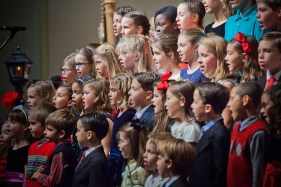 What is your view of the teacher’s role in the classroom? (Educational Philosophy)
 What role does the Common Core have in general music (or music ensembles)? (Written Expression)
 How would you structure a general music (or ensemble rehearsal) classroom of the future? (Innovation)
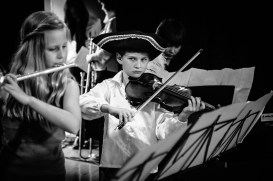 How would you improve the intonation/tone quality/bow technique of a string players? [STRINGS]