

PROfessional Development!

Hope you are enjoying the winter season and, for many of you, the anticipation of warmer weather returning soon! Sorry, skiers! I am sick of shoveling snow!!
Here’s a quick “catch-up” on things going on in educator professional development.
For PA School Administrators & Educators
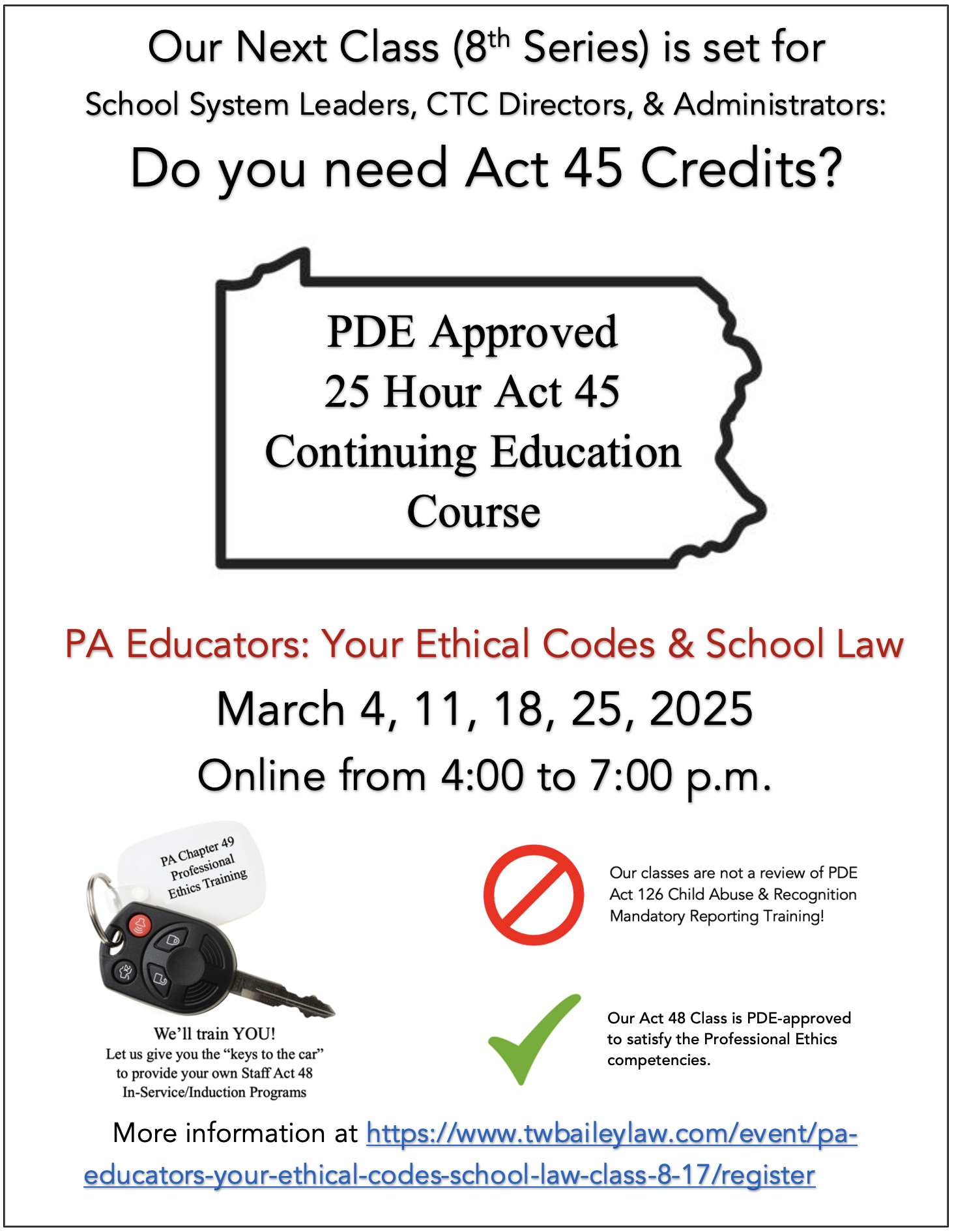
There is still time to register for the upcoming 25-hour, PDE-approved, Act 45 course, “PA Educators: Your Ethical Codes & School Law,” which will cover the recently mandated PA Title 22 Chapter 49 (Certification) Professional Ethics Competencies. The next online series of Act 45 classes will be held Tuesday afternoons in March, and provide “the keys to the car” planning for your own school district’s future continuing education and induction programs in ethics training as required by the PDE.
Now sponsoring our eighth series of classes, I am designated a “qualified instructor” in partnership with the course’s creator/facilitator, retired social studies teacher and attorney Thomas W. Bailey. For more information, please click on these links to his website:
- Registration for Act 45 Course on March 4, 11, 18, 25, 2025
- Act 45 Course Reviews and Written Reflections
- Act 48 Course Reviews
- School Law Blog Posts

In addition, since over the past year PDE revised their website (and changed most of the content links), I compiled a super-index of “places-to-go” and “things-to-read,” sites of supplemental resources on school ethics here. I recommend visiting this blog if you are interested in our library of links to the Pennsylvania Code of Professional Practice and Conduct, the Model Code of Ethics for Educators, the PA Educators Discipline Act, and research and citations from the PDE, PA Professional Standards and Practices Commission, Connecticut State Department of Education, and Iowa Board of Educational Examiners, among many others.
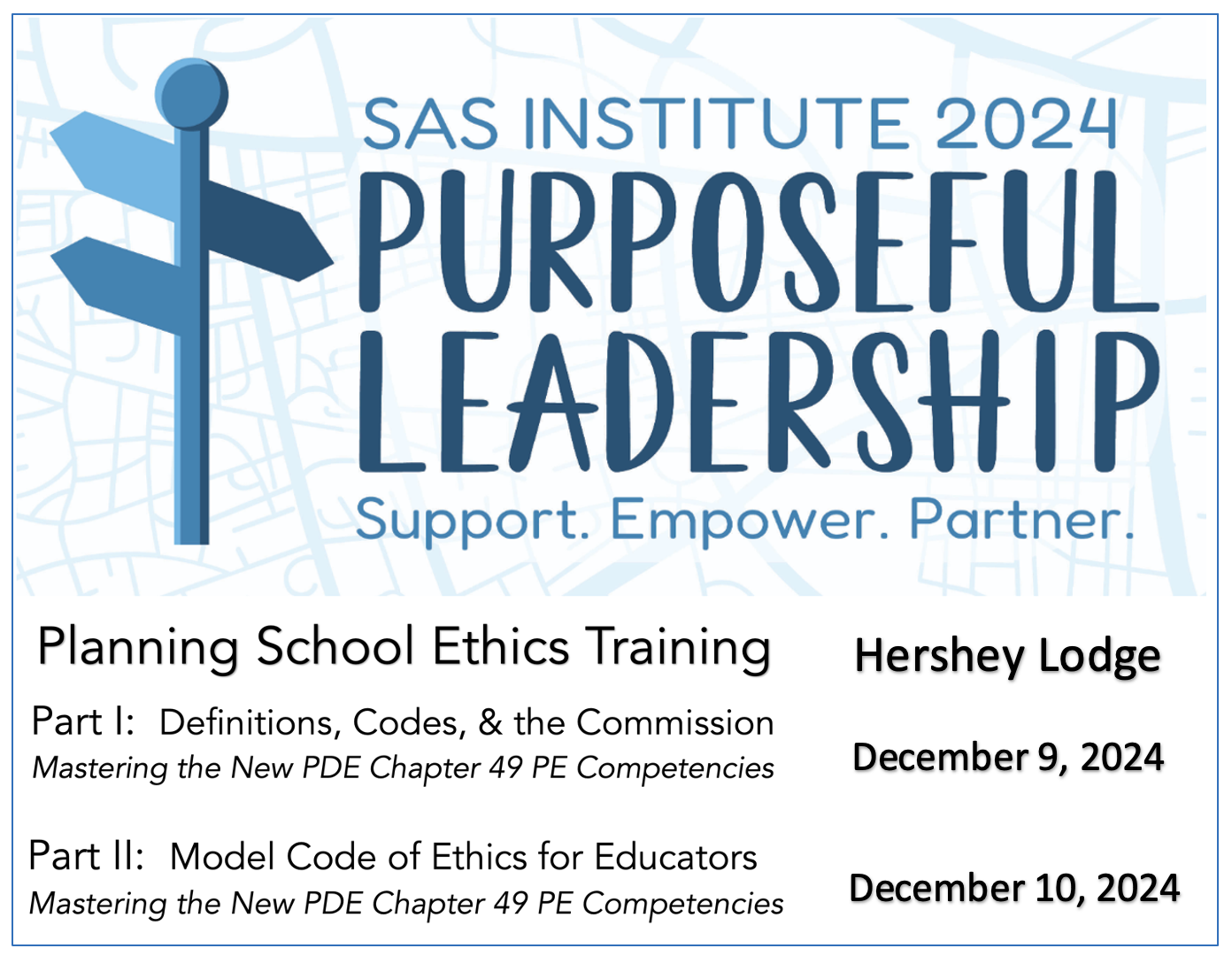
If you would like to see the kind of things we cover in these classes, take a look at the slide summaries I posted from my presentation at the PDE SAS Institute “Purposeful Leadership” state conference last December:
From Pre-Service to Veteran Music Teachers!
It’s that time of the year… again! The PMEA Annual Conference on April 9-12, 2025 will be held in the family-friendly, perfect-for-a-mini-vacation spot in northeastern PA: the Kalahari Resort in the Poconos.
There is still time to register! (Click here.) If you would like to see a summary of the sessions and performances, go to the PMEA website here or download this PDF brochure.
Why attend the conference? In my five-plus decades in education, I may have missed only two or three of the annual PMEA state events, and heartily recommend you remain actively involved in your professional association. This is what I wrote about it in a recent PMEA Retired Member Network eNEWS:
For some of us, it’s a just chance to catch-up with our colleagues, see our friends, and socialize. Others are more focused and take advantage of the near-perfect opportunity to network with other professionals, perhaps seeking new working relationships, partnerships, or even employment. Many are on a look-out for newly published music, that perfect music lesson or teaching strategy, technology tools, fundraisers, advance educational venues, or much-needed equipment to purchase for our ensembles or classrooms. Most come to hear/see the “state of the art” in music education – concerts, demonstrations, keynote speeches, panel discussions, exhibits, research presentations, and workshops. PMEA’s PD Council would likely submit that the primary purpose of a conference is for professional self-improvement… What did Stephen Covey call it? His Habit #7 of “sharpening the saw” – to build a balanced program of self-renewal in the four areas of your life: physical, social/emotional, mental, and spiritual. Covey would insist we embrace “the process that empowers us to move on an upward spiral of growth and change, of continuous improvement.” So, in short, conferences help us “grow” – to revive, re-inspire, re-energize, rejuvenate, re-direct, and re-motivate all of us – pre-service, active in-service, and retired teachers towards making successful new connections, updating our knowledge and skills, and forming new goals. This is how we “keep up” with all the new standards, benchmarks, and cutting-edge advances, and meet the “movers-and-shakers,” visionaries, and leaders in the profession!
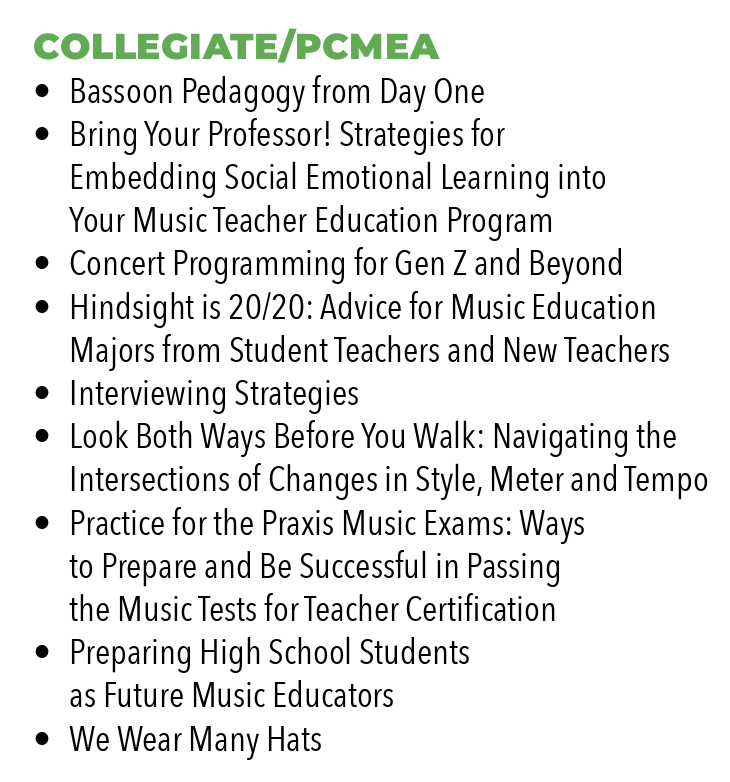
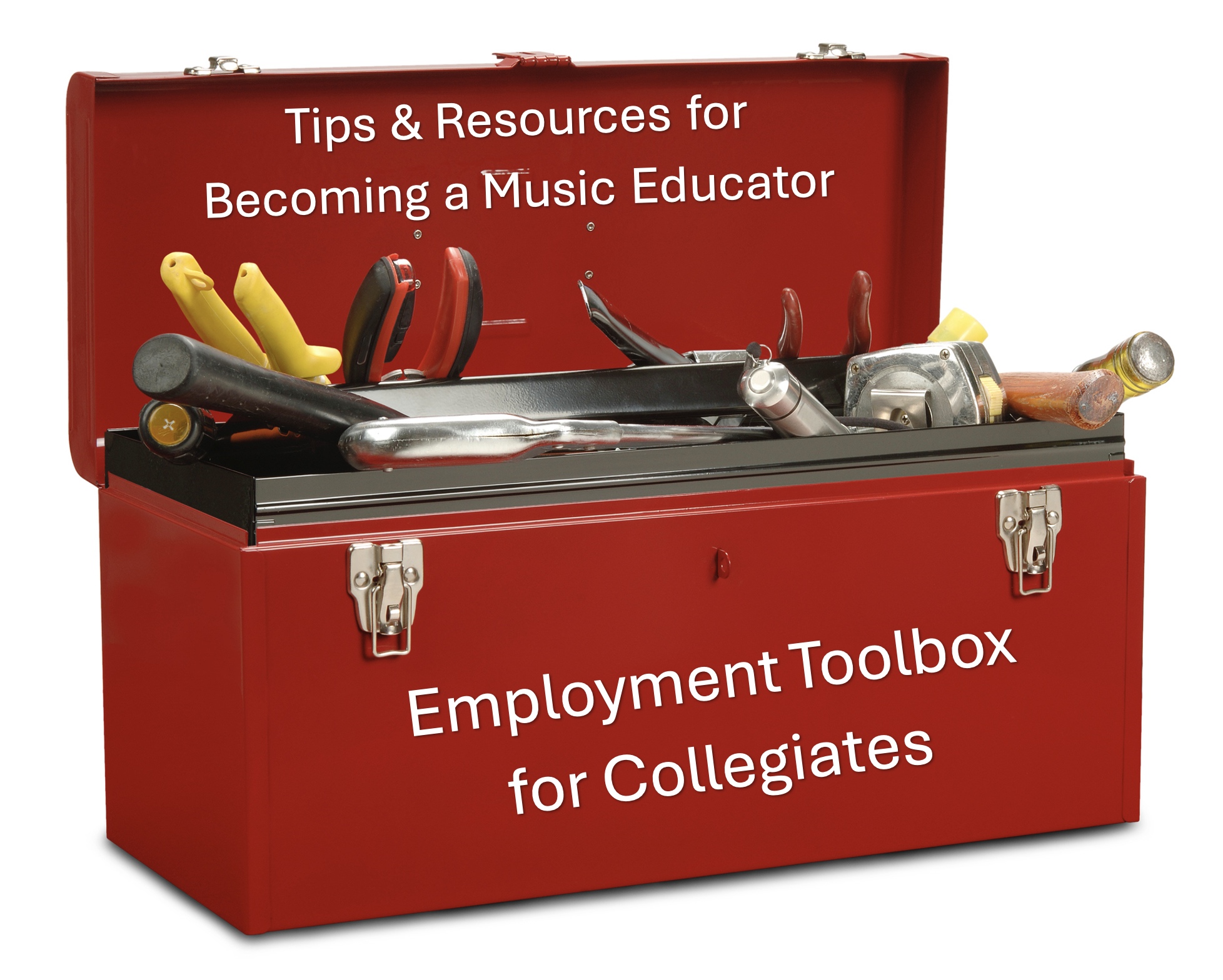
There’s a lot in store for college music education majors. Besides the aforementioned state meetings, concerts, clinics, and keynote addresses no one should miss, the music industry exhibits (new innovations in sheet music, instruments, technology, summer school and graduate programs, etc.), and the chance to introduce yourself to other music colleagues (aren’t some of you looking for a job soon?), there will be a “coffee and connections” informal lounge to ASK-AN-EXPERT on Thursday afternoon to pick-the-brains of PMEA mentors and retirees on any subject. Do you have a question about conducting technique, musical literature, lesson plan idea, classroom or time management tip, or teaching method? And, just take look these sessions the PMEA Professional Development Council has targeted specifically for YOU:
For Retirees… They are special, too!
PMEA Retired Members, consider this your personal invitation to join us at the Kalahari Resort in the Poconos for the chance to catch-up, connect, collaborate and communicate with other colleagues throughout the Commonwealth! (a plethora of “C’s!”)
As usual, we will “break bread” together Friday morning (April 11, 2025) with the annual retiree breakfast. Be sure to register soon for the PMEA Annual Conference (now only $25) and check the “yes” box that you will attend our meeting. Those in attendance will be treated to some “conference swag!”
Retirees are a valuable resource to PMEA! Our experienced retired members are among the best-trained (unofficial) mentors in PMEA. Facing many years of “boots on the ground,” we have at our fingertips numerous strategies to solve problems in education. Frankly, in my opinion, we have a lot to offer “the future of the profession!”
If you are a retired PA music educator, hopefully you have maintained your PMEA membership (dues significantly discounted), and have signed up for the Retired Member Resource Registry to help future “rookie” music educators. (To reach the R3, first login to your PMEA portal here.)
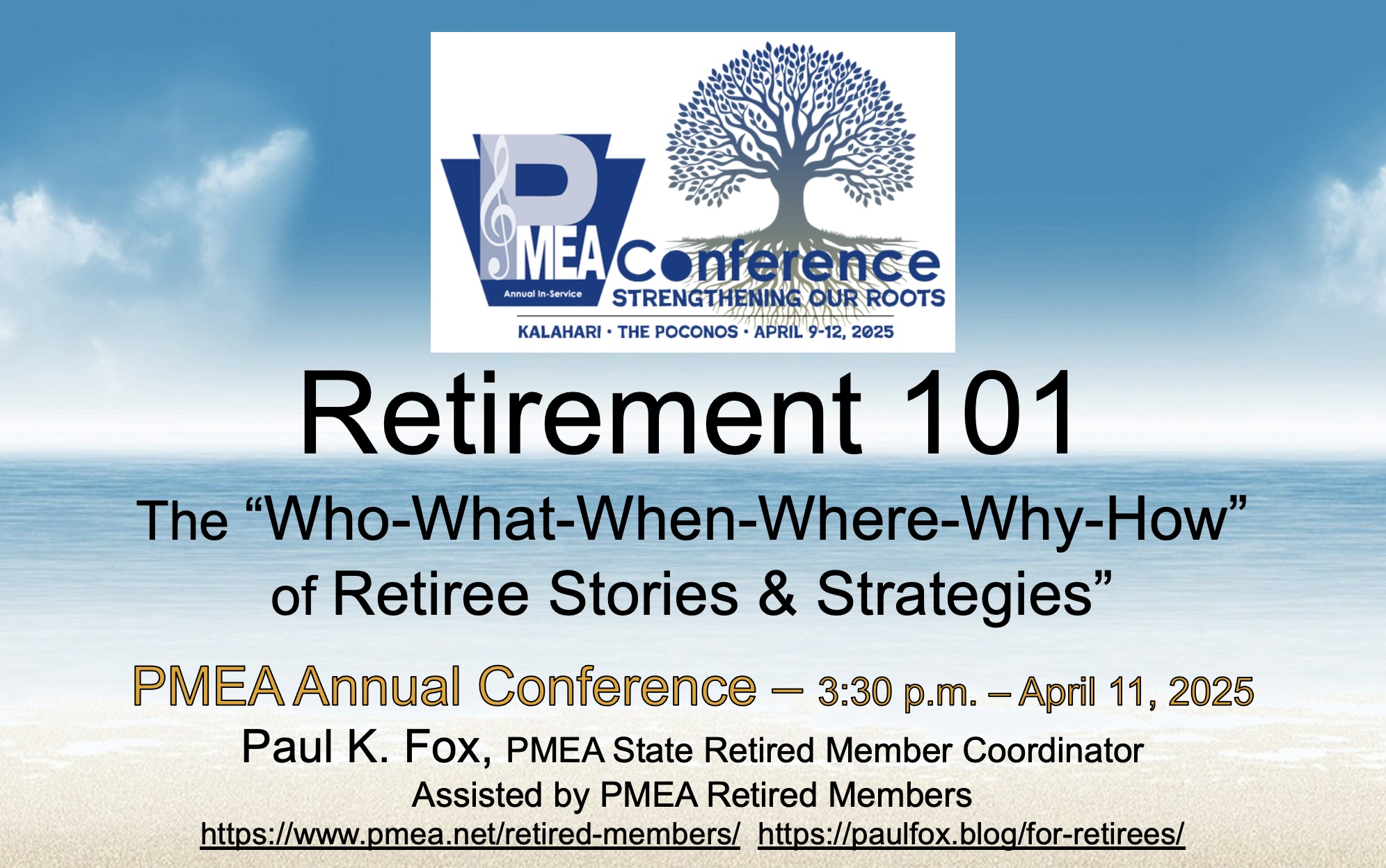
On Friday, April 11, at 3:30 p.m., we are offering a special sharing session for soon-to-retire teachers… the annual one-hour Retirement 101 workshop joined by a panel of experienced retirees: Rick Coulter, Jeffrey Dent, Sister Kathleen Doutt, Dan Klingbeil, Chuck Neidhardt, and Louise & Richard Victor. Active educators who plan to retire over the 1-5 years can learn valuable techniques from us for a smooth transition to post-full-time employment and successfully reinvent, reprogram, and “recharge” themselves to modifying those essential elements of purpose, structure, and community throughout their “golden years!”
My Professional Advertisement
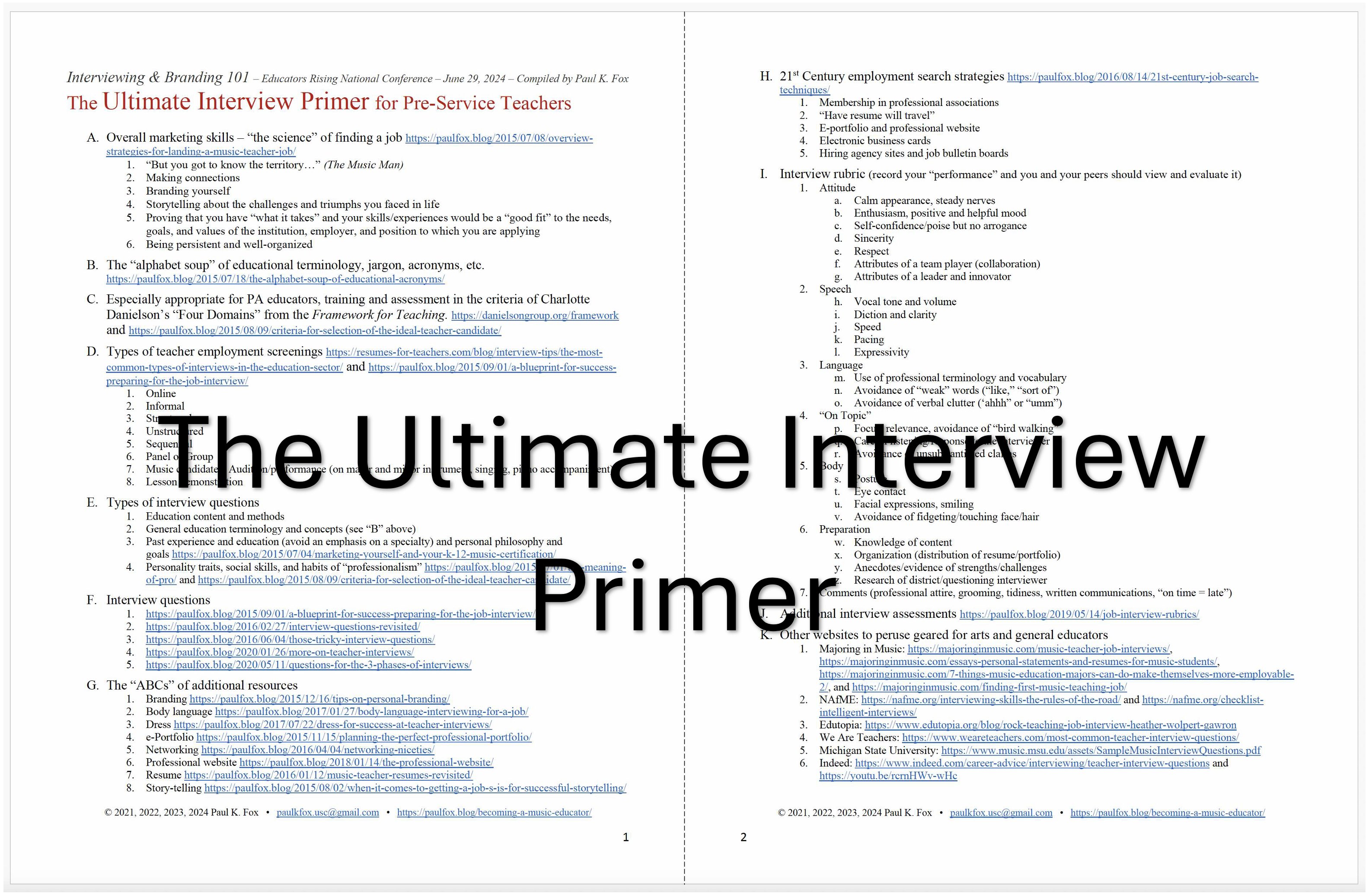
You may have noticed in my last blog-post an outline of past article topics archived at this site, and a complaint that I feel I must repeat myself (or repackage the material) to meet the changing personalized “bookends” – life cycles – specific passages of my readers. The earlier February post was mostly for job seekers. If you were not looking for employment or coming fresh out of college, it may have seemed irrelevant. The same goes for specialty articles on self-care, ethics training, or retirement transitioning… WHEN WOULD YOU BE MOTIVATED TO STUDY THESE?
I have decided to maintain a comprehensive index of my writings (see “Inside” link in the top menu bar). Please visit the sections of this blog-site that matter to you most… and, when things change, come back and look again. You may find something that “hits the spot” or satisfies the needs of your new journey in education or personal/professional life.
I remain willing and able (aka “very interested”) in doing in-person or online sessions for college methods classes, PCMEA chapter meetings, PMEA festival directors’ meetings, PMEA District or Regional PD workshops, or school district/department inservices. Just give me a call. My contact information can be found in the top “About” link. Please visit this section for catalogs of my presentations and articles. FYI, I created this trifold of some of my past work.
Best wishes on your future successes in career development and professional goal setting.
PKF
© 2025 Paul K. Fox


 paulfox.blog