Is Your Job Killing You?

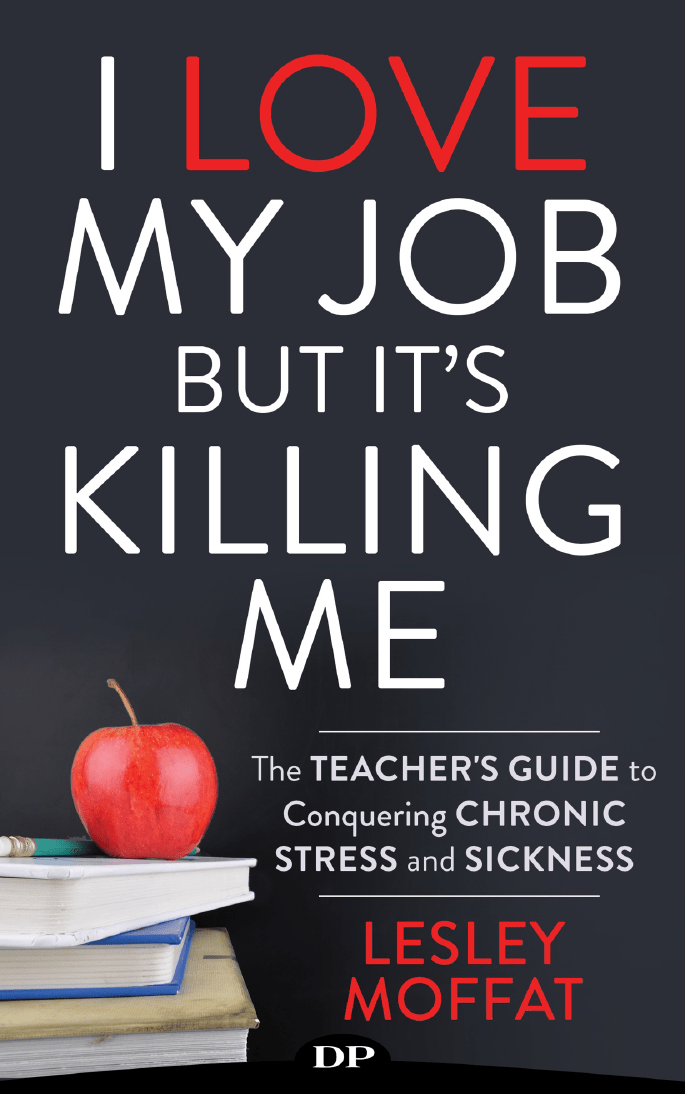
Book Review: I Love My Job But It’s Killing Me – The Teacher’s Guide to Conquering Chronic Stress and Sickness by Lesley Moffat

Have you read this “International Bestseller” written by a band director?

Where was this when I was still teaching full-time, managing a crazy 24/7 schedule of music teaching and administration, fulfilling a myriad of self-assigned extracurricular activities like band, choir, strings, fall play, spring musical, adjudications and festivals?
bloodshot-1294920_1280_OpenClipart-Vectors

How many of you struggle to

  • Fall and stay asleep?
  • Avoid “brain fog” and exhaustion brought on by stress?
  • Alleviate (or ignore) aches and pains or illnesses that interfere with your work?
  • Reclaim and maintain enough energy to support your work and family life.
  • Resolve feelings that your life is falling apart or you are “burned-out?”

Well, instead of sitting around and whining about your hectic schedule or other challenges in your life, ruining your health, mood, and relationships with your family, friends, and students, or “throwing in the towel” and giving up altogether… take a look at this comprehensive guide to walk you through the problem — “baby steps” towards a complete self-care plan — providing assessments and action plans towards better personal health and wellness.

This blog provides a few highlights from Lesley Moffat’s work.  You owe it to yourself to break down and buy this inexpensive and easy-to-read paperback! Although it is meant for individuals who are serious about starting a comprehensive self-improvement project, this book is not long nor laborious! With a supposed “read time” of 132 minutes (according to the back cover), I would devote probably a couple weeks to thoroughly consume it. For even more clarity, I have even taken to reading sections of it to my wife, also a retired music teacher! Both of us have “been there” in coping with many of the issues of job-related stress and life-style choices.
emergency-mask-159701_1280_OpenClipart-Vectors

The Why — Chapter 12: “Put on Your Own Oxygen Mask First” (Page 109)

After a quick scan of the first couple chapters, I recommend jumping to Chapter 12 to absorb the priority of “me first” in order to be able to care for others. I love the airline safety announcement analogy about “place the oxygen mask on yourself before helping others.”  The central focus of her book, this is something I ignored for 35+ years.

You must take care of yourself. First. You can’t give what you haven’t got.

This is perhaps the hardest lesson of all, yet it is so important. Chances are you got where you are because you ran yourself ragged taking care of other people’s needs. I bet you never said no to requests to be on one more committee, drive carpool, watch a friend’s kids, and every other favor someone made of you, yet I’d also bet there’s a good chance you never take the time to take of your own needs. When was the last time you read a book for fun? Or went to a movie you wanted to see? Or pursued a creative endeavor that made you happy? Or any one of a million things you want to do? I bet it’s been a long time. —  Lesley Moffat
 

Moffat2.png
Lesley Moffat’s website where you can order the book: https://squ.re/2TaXoAr

The Who — Chapter 3: “My Journey” (Page 15)

What an incredible story! Lesley Moffat gets personal and tells her own tale of total exhaustion, lack of mental focus (she calls ADHD), numerous aches and pains, arthritis, weight gain, bouts of illnesses like pneumonia, restless leg syndrome (a sleep disorder), and migraines, needed medical procedures like back surgery, hip replacement, bunion removal, etc. At times, her narratives are explicit and most graphic.

This profession is hard. Until my generation, women weren’t high school band directors, so there were no role models for me to look up to when I struggled with finding a balance between raising a family and having this career path. I had to learn things the hard way and make up my own solutions when there weren’t resources for me to use. My peer group is primarily men. How could my male band directing colleagues relate to my struggles? They may have kids, but they didn’t have to spend nine months making those babies while teaching (an exhausting combination that cost me a miscarriage during a band trip), and then pump breast milk during their planning periods to feed each of those babies for the first six months of their lives. And how many of them had to ask a spouse to make a ninety-minute drive with their newborn baby in the car behind the school buses where the band had to play for basketball playoffs so they could nurse the baby in the bathroom when they weren’t directing the band? — Lesley Moffat

The good news? Moffat reports that after a long and often discouraging search to restore her health and vitality and “to get back to the job I love,” today she has found peace, health, and happiness, and is back in the classroom with a renewed vigor, on her way to fulfilling her personal and professional goals.

 

checklist-1266989_1280_

The What — Chapter 4: “Let’s Get Started!” (Page 23)

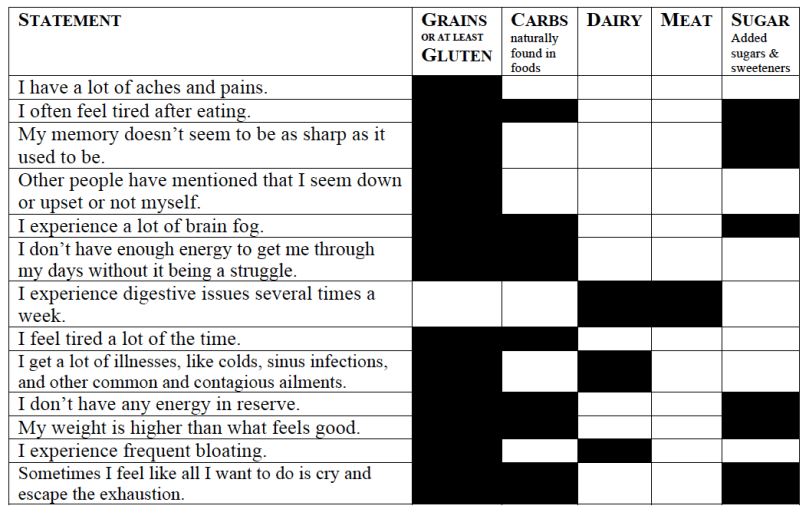
Lesley Moffat introduces her mPower Method (and a perfection alliteration) of four key components: meals, movement, music, and mindfulness. She says it all starts with administering a self-evaluation called the Mojo Meter (sample of the 40 questions below):

  1. I have a lot of aches and pains. T F
  2. I often feel tired after eating. T F
  3. My memory doesn’t seem to be as sharp as it used to be. T F
  4. Other people have mentioned that I seem down, upset, or not myself. T F
  5. I experience a lot of brain fog.* T F
  6. etc.

*She describes examples of “brain fog” more than a dozen times throughout the book. Do you experience any of these symptoms?

Brain fog isn’t a medical condition itself, but rather a symptom of other medical conditions. It’s a type of cognitive dysfunction involving:

  • memory problems
  • lack of mental clarity
  • poor concentration
  • inability to focus

Some people also describe it as mental fatigue. Depending on the severity of brain fog, it can interfere with work or school. But it doesn’t have to be a permanent fixture in your life. https://www.healthline.com/health/brain-fog

In her Mojo Meter assessment, if you answered “true” to 11 or more of these statements, then Moffat responds, “I know why you are here… It’s time to reclaim your health and energy, so get ready to amaze yourself.”

 

poster-316690_1280_PublicDomainPictures

The How — Chapter 9: “SNaP Strategies” (Page 79)

If you want to change your life, first change your mindset. You can’t find opportunity when you are looking for excuses. — Anonymous

Moffat’s “My SNaP Strategies” (Start Now and Progress) will give the reader examples of ways to develop new skills by changing habits one step at a time. Some of my favorites:

  • Take a break from social media.
  • Seek out opportunities to compliment others.
  • Allow someone to go ahead of you in line at the store.
  • Set your alarm for nine minutes earlier and use those nine minutes to listen to an inspiring song.
  • Turn off notifications on your phone.

In addition, she urges you to “do the homework” and dive into her Action Plans at the end of most chapters.
 

Mojo Meter on Meal Planning
I Love My Job But It’s Killing Me Page 47: “mPower Method Mojo Meter for Meals”

More Sneak Peeks

  • Using the observations you made in the self-administered Mojo Meter forms, the end of Chapter 5 offers an extensive “plan” for evaluating and removing the foods to which you may be allergic. (See above assessment form.)
  • I can heartily endorse her suggestion of using a food journal in Chapter 5, keeping track of every food choice and “how it makes you feel.” My wife discovered her sensitivity to gluten, and removing it from her diet has made all the difference!
  • One of her funniest anecdotes described her first-days participating in a yoga class! (Chapter 6)
  • Do you have on-hand and regularly use specific self-designed music playlists for meals, exercise sessions, and getting ready for bed? (Chapter 7)
  • A simple definition (but not so easy acquisition) of “mindfulness” — “being fully present in the here and now.” (Chapter 8)
  • Check out her “advice for driving during rush hour” (Chapter 11), tips for staying calm during all stressful moments: slow down, simplify, sense, surrender, self-care.
  • On Pages 9 and 10, there are amazing “before” and “after” photos of the author!

 

dialog-148815_1280_OpenClipart-Vectors.png

Coda: Summary of Advice for Better Self-Care (Chapter 10)

  1. Take deep breaths when you encounter speed bumps and stop signs during your daily commute.
  2. Write a cover page to your syllabus outlining appropriate times and methods for parents and students to contact you.
  3. Have a work space that is exclusively yours, including a “do not disturb” sign, closed door, and/or noise-cancelling headphones.
  4. Talk to your boss about reasonable expectations, including how many after-school and evening events are anticipated.
  5. Enlist the help of others (volunteers, boosters, etc.).
  6. Start your mornings in a way that charges you up for the day.
  7. Re-evaluate your work space and make changes changes that will be conducive for more efficiency.
  8. Plan meals and make time to eat them.
  9. Stay hydrated.
  10. Incorporate time to upgrade yourself.
  11. Ask yourself, “Does this choice align with who I am?”
  12. Come up with a self-care plan that is sustainable.
practice-615644_1920_johnhain


This is just the “tip of the iceberg” analyzing pathways for improved health and wellness. We are thankful that Lesley Moffat was so bold and open about sharing her own journey. Everyone can “take home” the causation of being “sick and tired of being sick and tired” and wrap their arms around implementing new strategies towards a happier living!


Author’s Bio (excerpts from the book)

Moffat authorNow in her fourth decade as a high school band director, Lesley Moffat has worked with thousands of people, helping them not only achieve musical goals (including repeated performances at Carnegie Hall, Disney Theme Parks, Royal Caribbean cruise ships, and competitions and festivals all over the US and Canada), but also teaching them how to develop the long-term life skills they need to be successful in the world.

Lesley has been a presenter at the National Association for Music Education (NAfME) and WMEA Conferences, served on the board for the Mount Pilchuck Music Educators Association, and has been an adjudicator and guest conductor in the Pacific Northwest.

After completing her undergraduate degree at Indiana University, she returned to her roots and moved back to the Pacific Northwest, where she and her husband, George, raised their three daughters, all of whom were students in her high school band program. Fun fact: Lesley, George, all three of their daughters, and Lesley’s dad have performed at Carnegie Hall.

PKF


Photo credits (in order) from Pixabay.com


© 2019 Paul K. Fox

Care of Music Teachers

Something New is a-Coming

You cry and you scream and you stomp your feet and you shout. You say, “You know what? I’m giving up, I don’t care.” And then you go to bed and you wake up and it’s a brand new day, and you pick yourself back up again.Nicole Scherzinger

Wellness seeks more than the absence of illness; it searches for new levels of excellence. Beyond any disease-free neutral point, wellness dedicates its efforts to our total well-being – in body, mind, and spirit. Greg Anderson


key-2114313_1920

What is that saying? “When you point at someone, there are three fingers pointing back at you.” Or if you prefer the biblical reference (Jesus), “Don’t focus on the speck in your brother’s eye while ignoring the log in your own eye.”

Increasingly common, I find that our colleagues in music education do not model habits of good health and work/personal life balance. All fingers point at both my wife and I, as when we were at the pinnacle of our full-time careers (prior to retiring in 2013), teaching strings grades 3-12 in multiple buildings, preparing for concerts and festivals, designing curriculum, producing musicals, running marching bands, etc. often felt like a “runaway train ride” — a stressful 24/7 schedule with the two of us squeezing in time to meet for dinner in between our after-school rehearsals, and later “falling into bed” to snatch 5-6 hours of sleep, three to four days per week, ten months a year.

That said, I “see” little research, pre-service, in-service, post-service training, or even online dialogue about the wellness problems associated with our profession:

  • Overwhelming workload, long hours, and challenging classroom situations
  • Inconsistent hydration and consumption of a balanced diet
  • Irregular amounts of daily aerobic physical exercise
  • Insufficient quantities (length, depth, and frequency) of rest and sleep
  • Infrequent use of sick days or vacations as needed for restorative health
  • Misuse of the voice at work
  • Inadequate hearing conservation and protection from over-exposure to sound
  • Deficient scheduling of opportunities for mindfulness, meditation, and/or reflection
  • Deprivation of personal outlets for creative self-expression (not related to the job)
  • Lack of time to explore hobbies, interests, and socialization with family, friends, and loved ones

With the simplistic title of “Care,” blogs archived within the new section of this blog-site here will dive into these issues, remedies towards fostering a better “life balance,” and suggestions for the development of a self-care plan. Quoting from the timely article in the June 2019 issue of NAfME Music Educators Journal, “Health and Wellness for In-Service and Future Music Teachers” by Christa Kuebel, “Those in our profession need to increase awareness of the prevalence of stress and mental health concerns in music education.” We need to address methods for reducing job-related depression, anxiety, stress, loneliness, feelings of impotency, and “burnout,” which can lead to negative student outcomes, lowered professional standards, absenteeism, illness, and teacher attrition.


model-pillow-sleep-sleepwalking_2373534_1920_Engin_Akyurt

Definitions of Wellness

A state of complete physical, mental, and social well-being, and not merely the absence of disease or infirmity. — The World Health Organization

A conscious, self-directed and evolving process of achieving full potential. — The National Wellness Institute

According to the Student Health and Counseling Services of the University of California, Davis Campus, “wellness” is an active process of becoming aware of and making choices toward a healthy and fulfilling life. Wellness is more than being free from illness; it is a dynamic process of change and growth.”

8 dimensions of wellness

Further elaboration of their eight dimensions of wellness is provided here:

  • Occupational
  • Emotional
  • Spiritual
  • Environmental
  • Financial
  • Physical
  • Social
  • Intellectual

They conclude: “Each dimension of wellness is interrelated with another. Each dimension is equally vital in the pursuit of optimum health. One can reach an optimal level of wellness by understanding how to maintain and optimize each of the dimensions of wellness.”


runner-1814460_1920_skeeze

It’s Time to Bring on the “Experts”

Even though I would have told you “I am loving every moment of it” during my 35+-year career in music education, I would be the last person anyone should turn to for helpful advice on self-care. I cannot say I ever “practiced what I preached” lectured to my music students on taking care of themselves physically, mentally, emotionally, and socially. So, for this forum, we will bring in leading authorities and even a few “frontier blazers” who have agreed to share new ideas in alleviating “the problem,” so well defined in the MEJ article by Christa Kuebel:

Music education has been shown to be a field in which stress and burnout are common. We must address this difficult realization in order to make changes for the health and success of our current and future teachers. Our concert seasons will continue to come and go, and our responsibilities will not decrease in number, but taking time to consider how to take care of ourselves may allow us to fulfill our responsibilities in safe and effective ways throughout our entire careers.

“Health and Wellness for In-Service and Future Music Teachers” by Christa Kuebel


breakfast-1804457_1920_Einladung_zum_Essen

Coming Soon…

Already, we have found a wealth of people who have perspectives and “prescriptions” that may help. We are anticipating future submissions from (or reviews of) the following self-care advisors:

  • Aforementioned MEJ article, teacher self-care assessment, and excellent bibliography by Christa Kuebel
  • Contributions by Lesley Moffat including her book I Love My Job, But It’s Killing Me and details about her Band Directors Boot Camp, “Music Teacher Mojo Meter,” and her website “Building Better Band Programs Without Burning Out”
  • Recommended by NAfME member Jennifer Dennett, the book Exhausted – Why Teachers Are So Tired and What They Can Do About It by Paul Murphy, who also has an extensive website and other books on “teacher habits”
  • Future wellness research and writings by Theresa Ducassoux, who has been accepted into the Google Innovator Academy, a program for teachers to work on tackling challenges in education
  • Survey of “prioritizing teacher self-care” articles posted by Edutopia
  • Other online sources


zumba-4333580_1920_arembowski

This is Where YOU Can Help!

If you find something interesting, please comment on it at this forum, or send an email to paulkfox.usc@gmail.com.

PKF


Photo credits (in order) from Pixabay.com


© 2019 Paul K. Fox

Unconditional Love (Dogs!)

Pets + Retirees… They Go Together!

dog-2729805_1280_gdjHappy Valentine’s Day to all of my readers. I could not think of a better way to “celebrate” our appreciation of “heart-day” with reflections on what our pets bring us… adulation, affection, attachment, companionship, devotion, enjoyment, good will, involvement, passion, stimulation, tenderness, understanding…

“The power of love!” They say that all you have to do is look at the face of a sleeping baby, or cuddle up next to a puppy or kitten, and it will slow down your respiration rate, lower your blood pressure, reduce cholesterol and triglycerides in your blood, and increase in your body the levels of serotonin and dopamine, two neurochemicals that play big roles in the promoting feelings of calm and well-being.

people-1749382_1920_herney

From personal experience, having two of the most adorable and loving dogs… If you’re contemplating retirement and you have never owned a pet, let me be the first to tell you:

“Pets can change your life.”

I invite you to peruse several other blogs I’ve written on this subject:

If you are almost ready to retire, or you’re going through your first couple years of your post-employment “internship,” there’s a good chance that psychologically it would be good for you to “get out of Dodge” as you adjust to your new status. This might be a good time for you to take a cruise, tour Europe, go ice fishing up north, or plan a long road trip out west. Pack up everything and takeoff. Celebrate all those years that you put your nose to the grind stone.

But eventually, you may want to come back “to nest,” and “taste” a little transitioning into things that seem to go well together, e.g. small doses of (human) babysitting, grandparent/child interaction, and/or rescuing a pet. Becoming a homebody may also suggest the consideration of planning small or large renovation projects: fix up your garden or backyard, design your ideal kitchen, remodel the bathrooms, do a garage remake, downsize and de-clutter, etc. After the first several years of simply resting and exploring the options of your self-reinvention, NOW might be the perfect moment to add a furry friend to your family!

animals-2198994_1920_gellinger

Why get a pet?

Goodnet (“Gateway to Doing Good”) summarizes nine reasons you should adopt a pet:

  1. Pets have their perks when it comes to your health. (More on that later.)
  2. A pet will love you unconditionally. (Thus the title of this blog!)
  3. Adopting a pet is easy on your wallet. (Pet rescue from a shelter is less expensive.)
  4. Adopting a pet means saving a life. (Millions of animals are euthanized per year.)
  5. By adopting a pet, you’re giving an animal a second chance. (Another go at life!)
  6. Pets keep you active. (Dog walking provides owner aerobic exercise.)
  7. Pets bring joy and fulfillment. (Pet care enhances a sense of purpose for retirees.)
  8. dog-3243734_1920_kandykandooPets boost your social life. (Research indicates pets decrease social isolation.)


  9. Besides, how could you possibly resist this face?


Medical benefits including psychological health

There’s an avalanche of online research that backs up claims that pet ownership is actually “good for you!”

Pet owners know how much their furry friend improves their quality of life. But it’s not all about unconditional love—although that actually provides a wellness boost, too. On an emotional level, owning a pet can decrease depression, stress and anxiety; health-wise, it can lower your blood pressure, improve your immunity, and even decrease your risk of heart attack and stroke.

— Alexandra Gekas


dog-3128192_1920_maja7777

Here are my “top dozen” reasons and resources to peruse:

  1. Having a pet decreases stress: Promises Treatment Centers
  2. Caring for a pet lowers your blood pressure: WebMD
  3. Owning a dog reduces cholesterol and triglyceride levels: Harvard
  4. Pets keep you fit and active: Gerontologist
  5. Daily dog walking helps you to lose weight: Healthy People
  6. Owning a dog can help detect, treat, and manage disease and injuries: HuffPost
  7. Pet therapy eases pain management and reduces anxiety: Loyola University
  8. Pets may reduce doctor’s visits: American Psychological Association PsycNet
  9. Having a dog may make you (at least feel) safer: LifeHack
  10. Pets help you build friendships and find social support: Harvard
  11. Dog owners are less prone to depression: GrandParents.com
  12. Pet ownership adds meaning and purpose: BestFriends


Believe it or not, pets can be the best medicine, especially when a person is dealing with chronic pain such as migraines or arthritis. Just like Valium, it reduces anxiety. The less anxiety, the less pain…

People who have pets are less harried; there’s more laughter in their life. When you come home, it’s like you’re George Clooney. You’re a star. This is a primary reason pets are used in various forms of therapy.

If you have a dog around, your blood pressure is lower. A lot of it goes back to reducing stress: You might lose your job, your house, your 401(k)—but you’ll never lose the unconditional love of your pet.

— Dr. Marty Becker, DVM, veterinary consultant for Good Morning America and author of the book Your Dog: The Owner’s Manual.


doggies 2017 to 2018 - 3

Increasing your regular habits of exercise

The experts say that physical activity promotes flexibility, muscle strength, stamina, and balance, and helps us to remain mobile into our 70s and 80s. Caring for a pet may help! For example, studies from the National Center for Biotechnology of the U.S. National Library of Medicine (like this one) indicate that older adults who walked dogs with frequent moderate to vigorous exercise are associated with lower body mass index and faced fewer limitations to their daily living activities.

Having trouble sticking to an exercise program? Research shows that dogs are actually Nature’s perfect personal trainers—loyal, hardworking, energetic and enthusiastic. And, unlike your friends, who may skip an exercise session because of appointments, extra chores or bad weather, dogs never give you an excuse to forego exercising.

In 2008, the U.S. Department of Labor reported that only 16 percent of Americans ages 15 and older exercised at all on an average day! This is where your canine personal trainer can help.

—Dawn Marcus

walking-2797219_1280_mohamed_hassanHow much exercise is enough? Well, according to the World Health Organization, the “best practices” of a good health and wellness program includes:


  • 60 minutes of moderate to vigorous activity daily for children 5 to 17 years old
  • 30 minutes of moderate-intensity exercise five days per week for adults 18 to 65 years old, plus strengthening exercises two days per week
  • 30 minutes of moderate-intensity exercise five days per week, with modifications as needed in seniors over 65 years old, plus flexibility and balance exercises.

The good news? From Bark, “Researchers at the University of Western Australia found that seven in every 10 adult dog owners achieved 150 minutes of physical exercise per week, compared with only four in every 10 non-owners.” We already know that grabbing that leash, whistling for the pup, going for a brisk walk, and getting out to see what’s going on in your neighborhood, may help to reduce stress, depression, lethargy, the risks of obesity, and many other medical problems.


dog-1027549_1920_haidi2002

The all-essential quest for “mattering” and “feeling needed”

In the past blog “Retiree Concepts,” I mentioned the book, Revitalizing Retirement: Reshaping Your Identity, Relationships, and Purpose by Nancy Schlossberg (definitely an excellent buy), and reviewed the issues of “marginality” (bad) and “mattering” (good). The essential question is worth repeating here: “Do you feel “needed” and that you “make a difference” to others?”

Caring for a pet does a great job of fulfilling our need to find in our retired lives the “purpose, community, and structure” referred to Ernie Zelinski in his book, How to Retire Happy, Wild and Free.

As we grow older—especially after we retire—it can be difficult to find structure and meaning day in and day out. Dogs take care of that.

— Kristen Sturt

They force people to continue to do things. So, even if you’re not feeling well emotionally or physically, the dog doesn’t care. I mean, they care, but they still want you to feed them and take them for a walk.”

— Kristi Littrell, Adoption Manager at Best Friends Animal Society in Utah

At Walter Reed Army Medical Center, they’re using dogs to help soldiers dealing with post-traumatic stress disorder. They’re finding the guys who have a pet are able to re-enter society a little bit easier. They’re showing a decreased suicide rate, one of the biggest health threats [veterans] face. These guys who have a pet have someone they’re responsible for, someone who cares about them. And they don’t have to explain what they’ve been through.

— Dr. Katy Nelson, associate emergency veterinarian at the VCA Alexandria Animal Hospital in Alexandria, Virginia


It’s not only about the tangibles – physical, medical, mental

It’s simple… every day, my pooches make me feel good!

Oh, we have all witnessed the “life-changing power of pets” (Psychology Today) and the tremendous social bond partnering a dog (or cat) with a human. We agree, “Pet owners have big hearts and bestow good feelings on both animals and people. Having a pet does not replace a human social network, but rather enhances and enlarges it. Cats, dogs, birds—and pets of all species, shapes, and sizes—bring wellness.”

our two pups 051216 - 1On personal observation, I can attest that walking my dogs in the neighborhood can be one of the most contemplative (almost meditative) experiences of the day. I commune with nature, let my imagination wander (dream “wide-awake”), notice things I have never before stopped to see, hear, or smell, and reflect on my life goals. I find the “pause” in my daily routine (or should I say “paws”) makes me feel refreshed, thoughtful, more calm, tolerant, and patient while at the same time more alert and focused, and always leaves me in a better mood.

Dr. John V. DiAscenzo, my talented friend and PMEA music education colleague with great background in research, would now demand of me, “Show me the specific studies that support your claim that walking dogs make people feel happy!” Got it! I found numerous references, including this article from the National Institutes of Health.


You can’t buy this kind of shared love… a snapshot

  • No matter how good or bad my day is, the moment of my return to home, stepping into “puppy heaven,” Gracie and Brewster rushing up in full gallop to lick (kiss) and welcome me, jumping up as if to say, “Oh, we’re so glad he’s back!”
  • The vigorous wagging of her tail and the “happy dance” Gracie does when I reach for her favorite bone
  • The “nesting” impulse of Brewster as he paws his towel on top of our bed, just before he curls up in a small ball, leaning into the small of my back (giving me great lumbar support) and falling asleep
  • Gracie pushing Brewster out of the way when jockeying position to receive pats on the head from a visitor
  • canine club 2Expert cuddlier Brewster flipping on his back so you rub his tummy, and when you are distracted, gently pawing at you begging you not to stop

  • Gracie’s “happy barks” and squeals of excitement when mommy brings in the supper dish
  • Gracie jumping up onto the extra desk chair to watch daddy type on his computer (we even had to buy her own chair)
  • Brewster winning a contest for the most puppy-pushups (up/sit/down) in dog (people) training classes
  • Having totally original “dog-o-nalities” and never failing to amaze me every day, being awakened by them at 6 a.m.
  • But, after going out, all three of us climbing into the La-Z-Boy® combo recliners and falling back to sleep, Gracie between my legs with her chin on my ankle, and Brewster on my left shoulder like a violin shoulder pad


Lowering the numbers of neglected pets in overcrowded sanctuaries

Finally, although perhaps not the most significant rationale for a retiree to go rescue a pet, these are estimated animal shelter statistics from the ASPCA and the American Pet Products Association (source):

  • Approximately 6.5 million companion animals enter U.S. animal shelters nationwide every year. Of those, approximately 3.3 million are dogs and 3.2 million are cats.
  • Each year, approximately 1.5 million shelter animals are euthanized (670,000 dogs and 860,000 cats).
  • pit-bull-2047469_1920_rescuewarriorApproximately 3.2 million shelter animals are adopted each year (1.6 million dogs and 1.6 million cats).

  • About 710,000 animals who enter shelters as strays are returned to their owners. Of those, 620,000 are dogs and only 90,000 are cats.
  • It’s estimated that 78 million dogs and 85.8 million cats are owned in the United States. Approximately 44% of all households in the United States have a dog, and 35% have a cat.
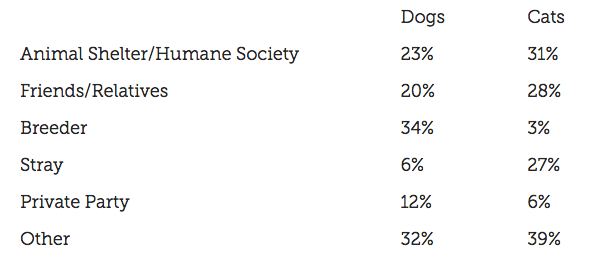
  • According to the APPA, these are the most common sources from which primary methods cats and dogs are obtained as pets:

appa stats

LiveScience posted “A Blueprint for Ending the Euthanasia of Healthy Animals.”

Do you have Kleenex handy? Read “10 Shelter Stories That Will Make you Smile.”

Simply put, if you have it in you to consider pet adoption, your action will probably save the life of a sheltered animal and give it (and you) a second chance!


dog-3108509_1920_groesswang

Additional resources

Do you need more research? Be sure to visit the final link in the bulleted list below, which also has an exhaustive bibliography worth viewing.


CODA: The “‘last words” as a recap and a final website for you to check out:

Studies have shown that owning a pet can be physically and mentally beneficial for people of all ages. In the case of senior citizens, just 15 minutes bonding with an animal sets off a chemical chain reaction in the brain, lowering levels of the fight-or-flight hormone, cortisol, and increasing production of the feel-good hormone serotonin. The result: heart rate, blood pressure and stress levels immediately drop. Over the long term, pet and human interactions can lower cholesterol levels, fight depression and may even help protect against heart disease and stroke.

— Seniors and Pets

But, you knew all about this, right? So, what are you waiting for?

For me, I gotta go… and take Gracie and Brewster out for another walk!

Have a Happy PET Valentine’s Day!

PKF

pretty-girl-2039181_1920_terric

© 2019 Paul K. Fox


dog-1517090_1280_leunert

Besides the numerous pictures of Gracie and Brewster, photo credits in order from Pixabay.com: “puppies” by kko699, “dog” by GDJ, “people” by Herney, “animals” by Gellinger, “dog” by kandykandoo, “dog” by maja7777, “walking” by mohamed_hassan, “dog” by haidi2002, “pit-bull” by RescueWarrior, “dog” by groesswang, “kitten” by creades, “pretty-girl” by TerriC, and “dog” by Leunert,