
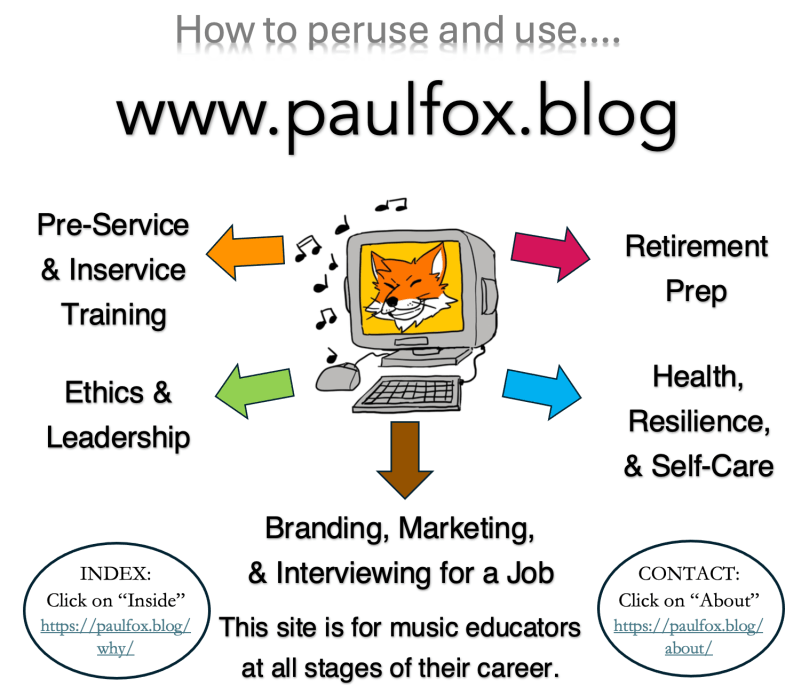
A Guide for Music Educators at All Stages of their Career

It’s time for a celebration! Since its creation in July 2015, this represents the 217th blog-post at this WordPress website!
My apologies to first-time visitors who may find themselves a bit overwhelmed at the incredible volume of submissions posted to this library.
The purpose of this project after my retirement from public school music in June 2013 was to archive my writings and organize them in one convenient location. As Simon Sinek would emphasize at one of his keynote speeches, the essential “WHY” and rationale for http://www.paulfox.blog is the value I hope my articles could serve to prospective music teachers “in the trenches.” Many of us retirees just want to feel needed and seek opportunities to offer the benefits of our “boots on the ground” to future professionals. We seek to “matter” throughout our retirement and stay active in our post-employment years. The mission and goal of this website is to “make a difference” and share a legacy of more than five decades in the profession, providing the supports of hard-earned lessons learned, anecdotes shared, short cuts developed, perspectives observed, and additional research and practical tips found applicable to the field of music education and creative self-expression.
I write for myself, not to earn credit or receive validation from any external source. But, of course, I hope somewhere out these someone eventually finds these “creations,” reads them, and actually puts some the material to work for them in their job.
Unraveling the Maze of Menus
Articles posted at most blog-sites are published in chronological order… formatted to what computer programmers would term as “sequential.” This structure is similar to a tutorial, directing the reader to consume the contents from beginning to end (Introduction, Chapter 1, Chapter 2, etc.), reading “in sequence” earlier posts for full comprehension. This is the same basic format of paulfox.blog.
However, for academic or research study, my articles may be viewed in any order, similar to the “random access” format of a reference manual. (Go to the specific relevant section you are seeking information.) Everything is digitally stored under these categories (also accessible from links printed inside the right panel):
- Boosters
- Care (also Health, Wellness, Resilience, and Burnout Avoidance)
- Creativity
- Ethics
- Fox’s Firesides
- Interviewing
- Leadership
- Marketing Professionalism (also Branding and Networking)
- Pets
- Retirement Resources
- Training (Pre- or In-Service Prep for Music Educators)

A reader might prefer to skim through an outline of potential reading material by clicking on the menu bar at the top of the page:
- About: My contact information, curriculum vitae, recent workshop or conference presentations, professional brochure, and printer-friendly catalogs of articles and presentations
- Inside: A frequently updated index (by subject) of all blog-posts at this site
- Training/Jobs: Listings of articles and online resources (in chronological order) and past workshop/conference slide summaries and handouts (in reverse chronological order – most recent first) on the topics of pre- and inservice training in music education, ethics, building professionalism, and techniques for marketing, interviewing, and landing a job.
- Care: Presentations, recommended books, and website resources on health, wellness, and burnout/stress remediation, and developing a self-care plan
- Retirees: Alphabetical reference to articles and other resources on retirement preparation, mostly on post-employment self-reinvention and truly “living the dream” in our senior years
- Creativity: My three-part series on creativity in education plus a short list of creativity geniuses/educational gurus and their books
- Firesides: Tips for the enrichment of musicians of all ages, including practice hacks/hints and a collection of PDFs presented in the South Hills Junior Orchestra Online Academy
Explore the Links, But Beware!
Thousands of hours has been spent writing these “epistles,” and whenever possible, I try to reference background information, attributions, follow-ups or research sources. The Internet is an amazing tool, but it should not come as a surprise to anyone that some of the links in my older blogs may have broken connections or return errors. This is best explained by Google AI:
“Links on the internet become inactive, known as link rot, when a website owner deletes a page, changes the URL structure, or shuts down a domain entirely. Over time, servers go offline, companies close, and paid web hosting plans expire, which breaks the digital path to the original content.” [1, 2, 3, 4, 5]
Copyrighted material may be taken down as the authors move on to other pursuits or decide to restrict it to print-publish their work. A case in point, one of my favorite “experts” on creativity and author of Instructional Strategies for Thinking, Collaboration, and Motivation, Dr. Curtis Bonk from the Indiana University of Bloomington removed his amazing graduate course handouts and PowerPoints referred to in several of my creativity blogs. I still lament the fact that his “Best of Bonk” website is gone!
Whenever possible, I “nail down” a snapshot of the data, context, and clarifications with supportive PDF files and copies of my slide decks. At the time of their creation, the links were active. However, it has become necessary to update many of my more recent versions of commonly-repeated presentations, e.g., Retirement 101, Interview Clinic, Take the E-Train (Ethics), etc. The older the conception of the work, the more likely that something in it has become inactive.
If you find something is “broken,” please give me a holler. Send me an email describing the problem to paulkfox.usc@gmail.com.
Comments Welcomed!
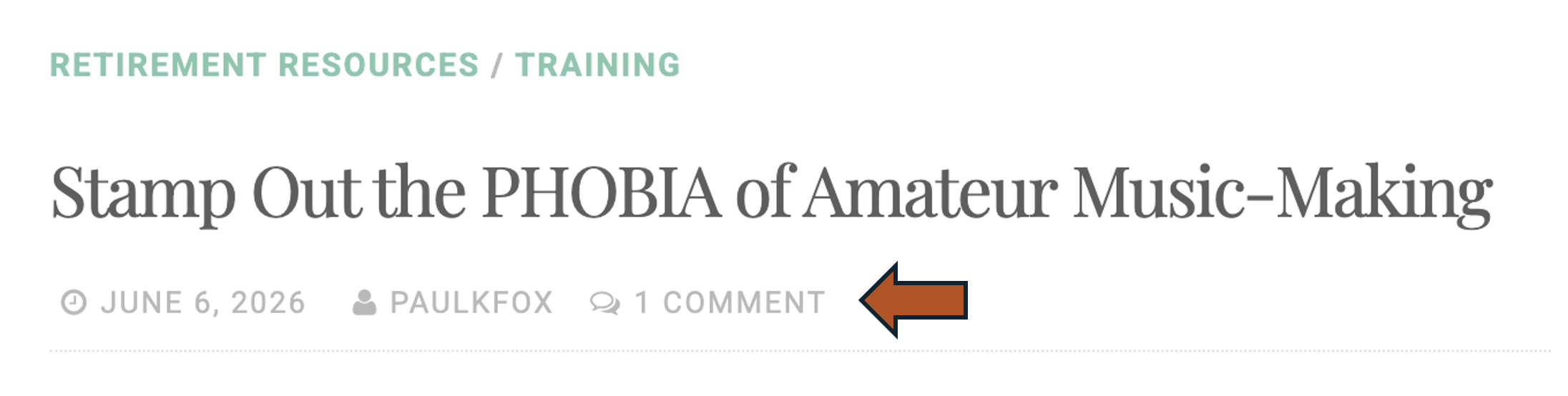
Directly under the title of each blog are printed the date of its creation, my signature, and a small symbol with the text “Leave a Comment.” CLICK ON THIS! I encourage feedback! Share your perspective. Add your own experiences, thoughts, or sources of information. I fervently hope I am not needlessly shouting in a wind storm trying to reach an audience who cannot hear me but could perhaps be best served by this open, two-way communications and divergent opinions.
Some of the posts receive significant initial and repeat traffic. I’ve noticed especially for those blogs on marketing professionalism and interview tips/questions, things pick-up in early spring, perhaps when graduating music education majors may be completing preparations for employment screenings. (Believe-it-or-not, one of the highest rated blogs last month was Dress for Success at Teacher Interviews!) So, if you have anything to add to help pre-service colleagues (soon-to-become teachers), click on the comment symbol or send me an email and share your advice! I would be happy to post your insights in a future blog!
Highlights
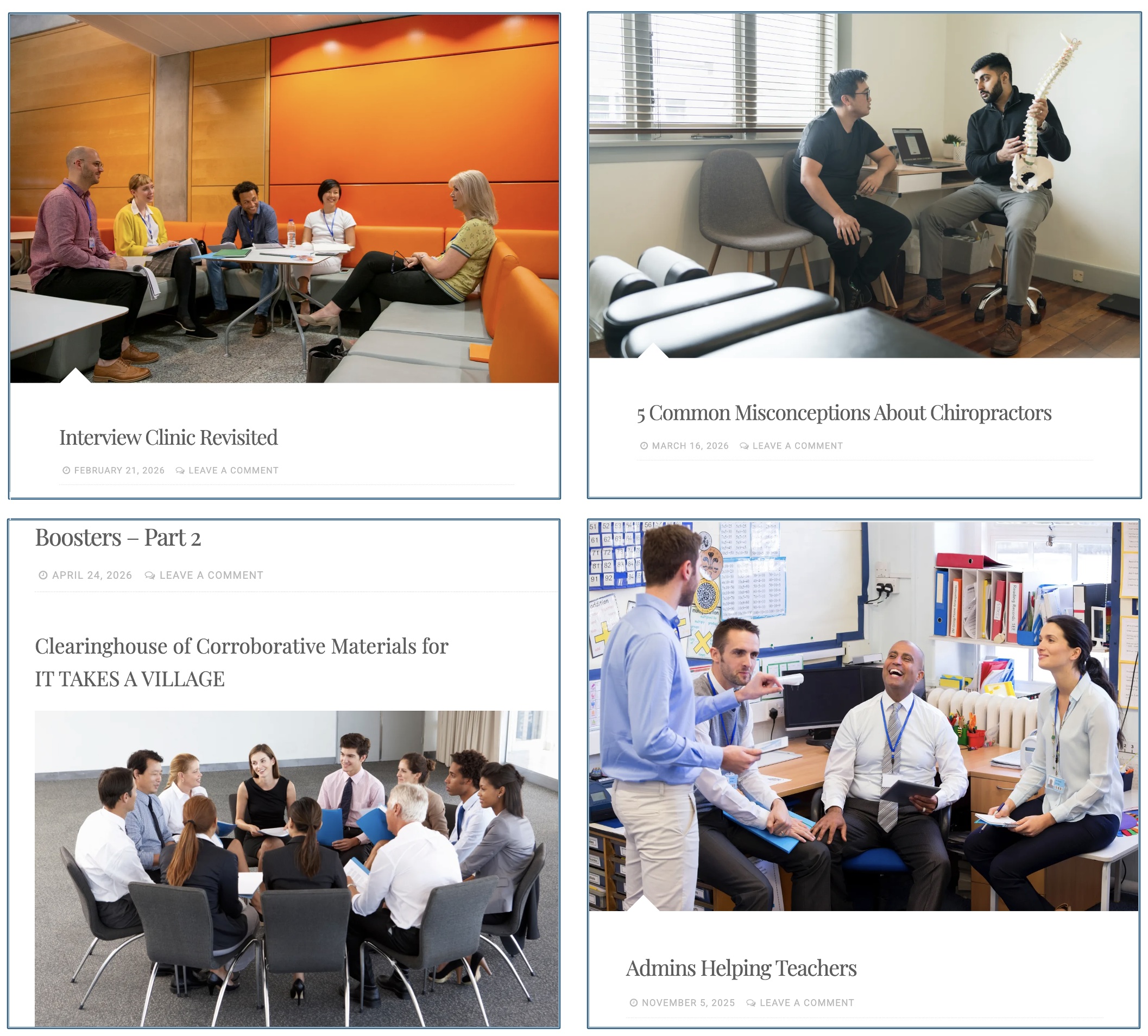
These might be my “top ten” blogs (in alphabetical order) to get a good idea what is available for further research.
- 52 Creative Tips to Supercharge the School Musical
- Creativity in Education
- Ethics Follow-up with links to all four parts of a general discussion on school ethics)
- The Five Cs of Self-Care – Teachers Take Charge of Your Wellness
- Get a Job Toolbox
- The Importance of Music Education
- Job Interview Rubrics
- Leaders Flush
- RECAP – Retirement Resources – A Treasure Chest of Tips for “Living the Dream!”
- Transitioning from Collegiate to Professional – Part 3 with links to all three parts on career preparation)
Just for fun, on occasion I voiced several “rants and raves” (yes, I am opinionated) and ventured into new topics unrelated to a career in education, such as pets (e.g. In Defense of Dogs, Pet Citizenship, Unconditional Love – Dogs!) and book bucket lists (For Book-Lovers – Retired or Not and Summer Reading).
I still recommend perusing the index (“Inside”) for a more in depth chronological discovery of these topics, or click on the other links in the top menu bar. (Some of these sections offer alphabetical listings of the titles to facilitate a thorough examination.)
Go explore! Happy hunting!
Guest Bloggers
I would be amiss if I did not recognize several talented guest authors who have contributed meaningful articles to this forum.
Ed Carter
- Bigger Dreams, Bigger Home
- Creating a Home Recording Studio
- Creative Ways Musicians Can Earn Extra Income
- Do You Have a Side Gig?
- How Musicians Can Grow Their Audience with Storytelling and Consistency
- Learning New Skills and Hobbies
- Monetizing Our Skills and Passions
- Music and Literacy Skills
- Returning to the Classroom in Retirement
- Unleashing Your Sound: A Musicians Guide to Making Waves and Gaining Fans
- Wander with Whiskers
Katherine Langford
- The Four R’s of Music Education
- The New Model of Modern Music Education
- COMING SOON (August 27, 2026):
Why Senior Travel Projects Centered on Local Music Scenes Boost Well-Being

Booking Speaking Engagements
Conferences and workshops have become a “retirement hobby” for me. Please visit my “About” section for a history of my most recent educational presentations. Contact me if you would like more information on availability. The following represent my most-requested sessions, many of which have sample slide summaries within this blog site for you to download and review:
- Bookends – The Life Cycle of a Successful & Happy Music Educator
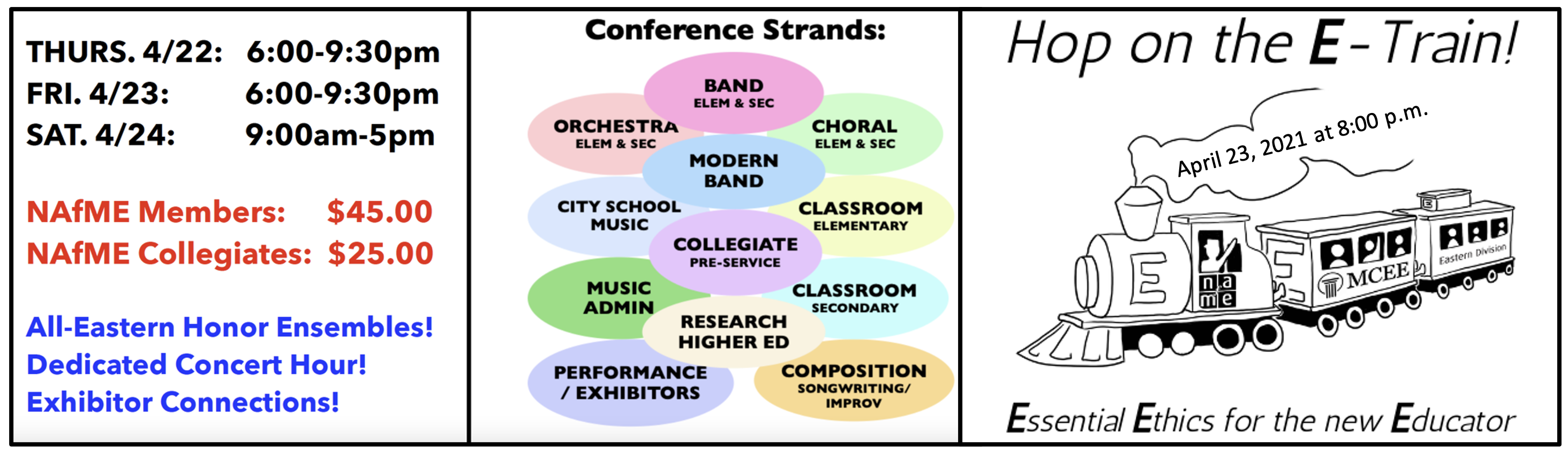
- Catch the E3-Train – Essential Ethics for the Educator
- Empowering Educator & Student Leadership
- Hands-on Conducting
- The Interview Clinic – Exercises to Improve Your Performances at Employment Screenings
- Retirement 101 – It’s NOT All About the Money
- Self-Care Cookbook – Recipes and Resources for Teachers
- Social Media – Boon or Nemesis?
- Supercharge the School Musical
Keep Connected! – Looking Forward to Read YOUR Feedback!
PKF
© 2026 Paul K. Fox








 How many class periods (not counting lunch) are structured for the academic day? Are specific grade levels or buildings organized in block scheduling, “period 0” and/or before/after-school curricular or co-curricular classes, lesson pullouts, period rotations or A/B weeks, etc.?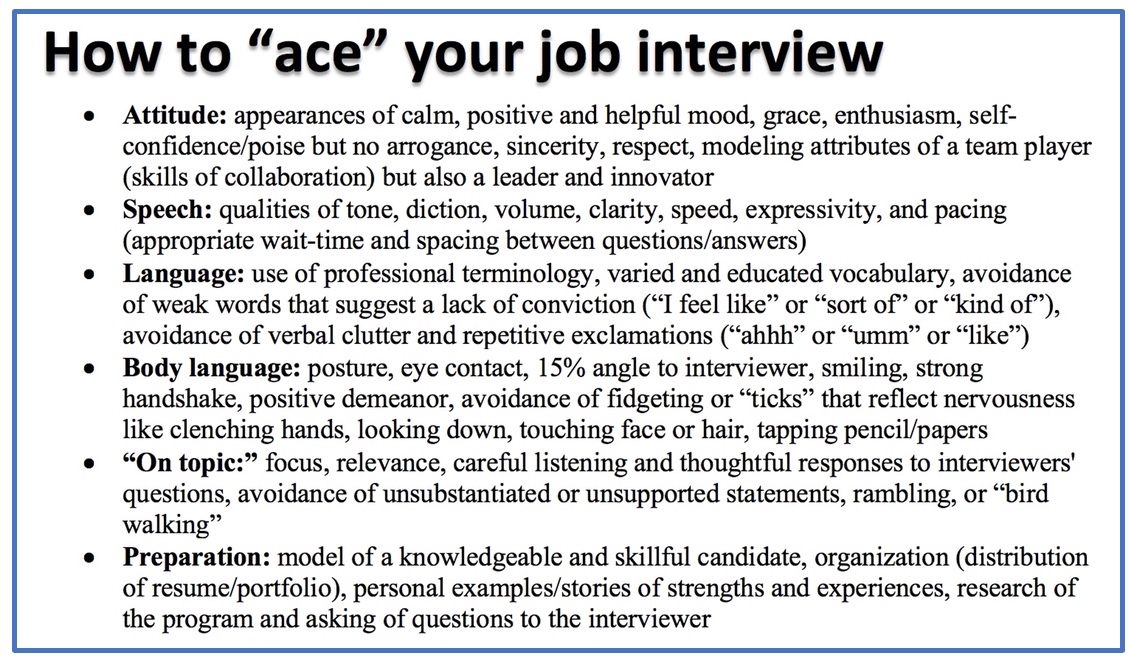
 Describe your approach to introducing a musical concept: singing matching pitches, keeping a steady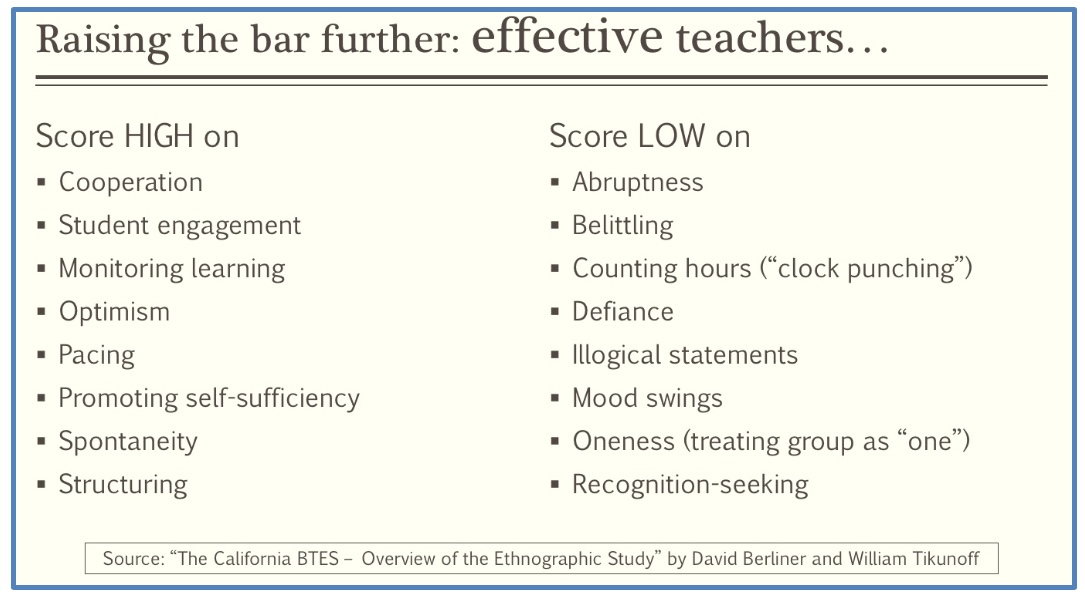
 Are you telling me it’s time to bring up more questions? Yep, to finalize your interview’s “postmortem,” reflect on these queries, which will become your focal points in preparation of your next job screening.
 IEPs – Individualized Education Program, including IDEA (disabilities), 504 plans, accommodations for special needs, differentiated and customized learning, etc.
 Did you respond to the interviewer’s questions “on topic” with clear, concise, and substantiated statements, supported by specific anecdotes/stories or examples of your skills or experiences?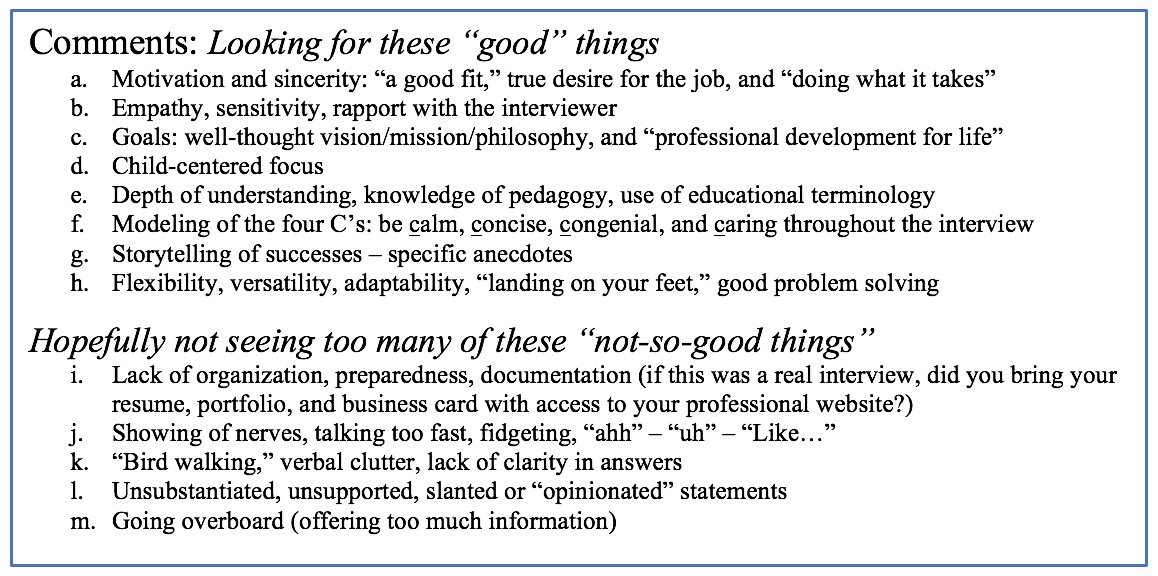

 now would be the perfect time to explore supplemental resources and get a “head-start” on additional pre-service training for next fall. These tips are especially valuable to anyone entering his/her senior or final year as a music education major, finely honing in and marketing your skills as a professional in order to be prepared for finding and succeeding at your first job.

 Mix and mingle to improve your networking opportunities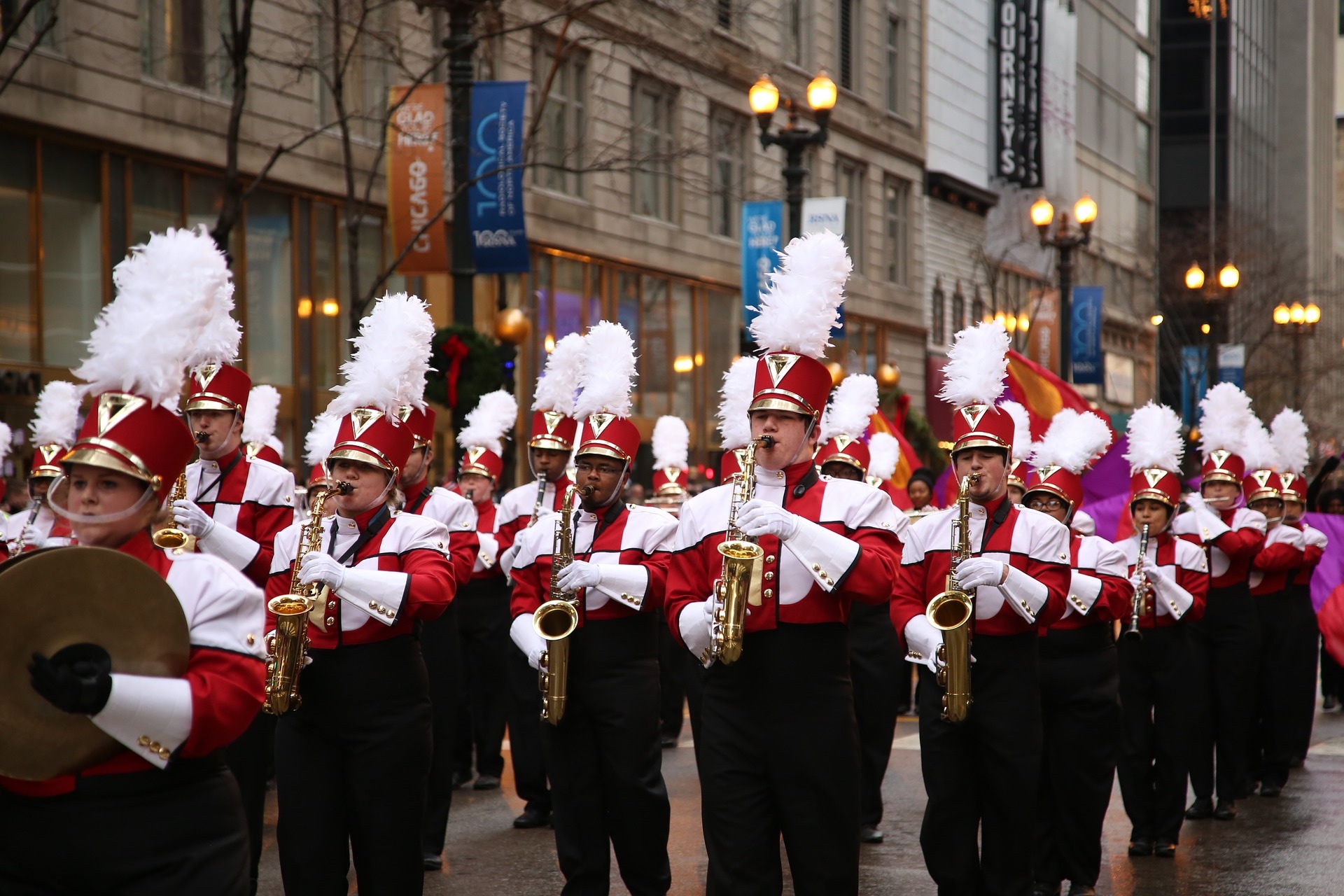

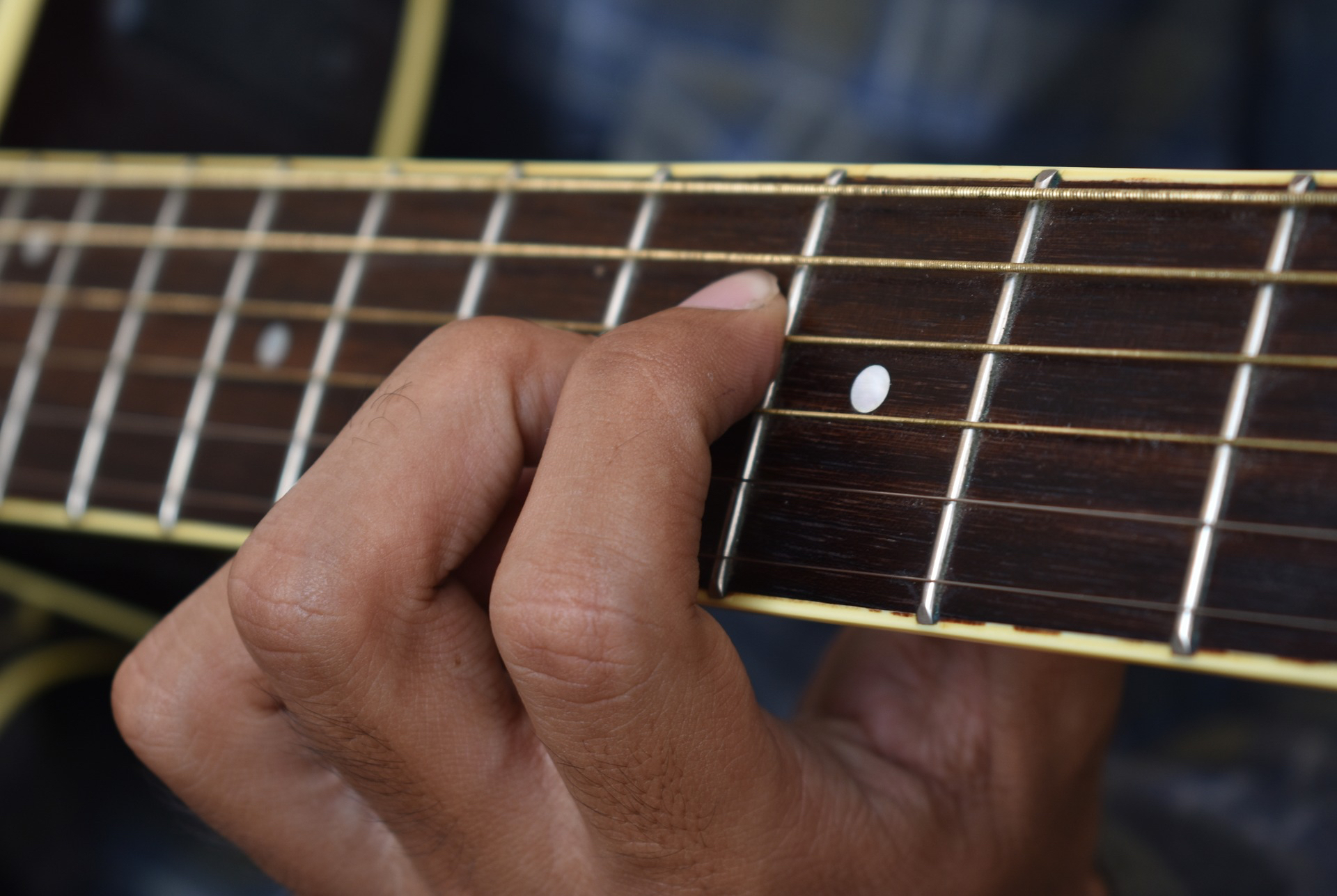
 Understanding specific educational jargon and the latest approaches, applications, and technologies in the profession (e.g. Backwards Design, The Common Core, Whole Child Initiatives, Multiple Intelligences, Depth of Knowledge and Higher Order of Thinking Skills, Formative, Summative, Diagnostic, and Authentic Assessment, etc. – Do you know the meaning of these terms?)
 You need to ask yourself the question, “What are my greatest weaknesses in music education?” Or, to put it another way, “What school assignments would I feel the least confident to teach? After earning your state’s all-essential credential, your certificate will likely be general and only say “music Pre-K to Grade 12.” Administrators will expect you can “do it all” – introducing jazz improvisation at the middle school, accompany on the piano or guitar all of the songs in the grades 1-6 music textbook series, directing the marching band at the high school or the musical at the middle school, starting an elementary string program, etc.
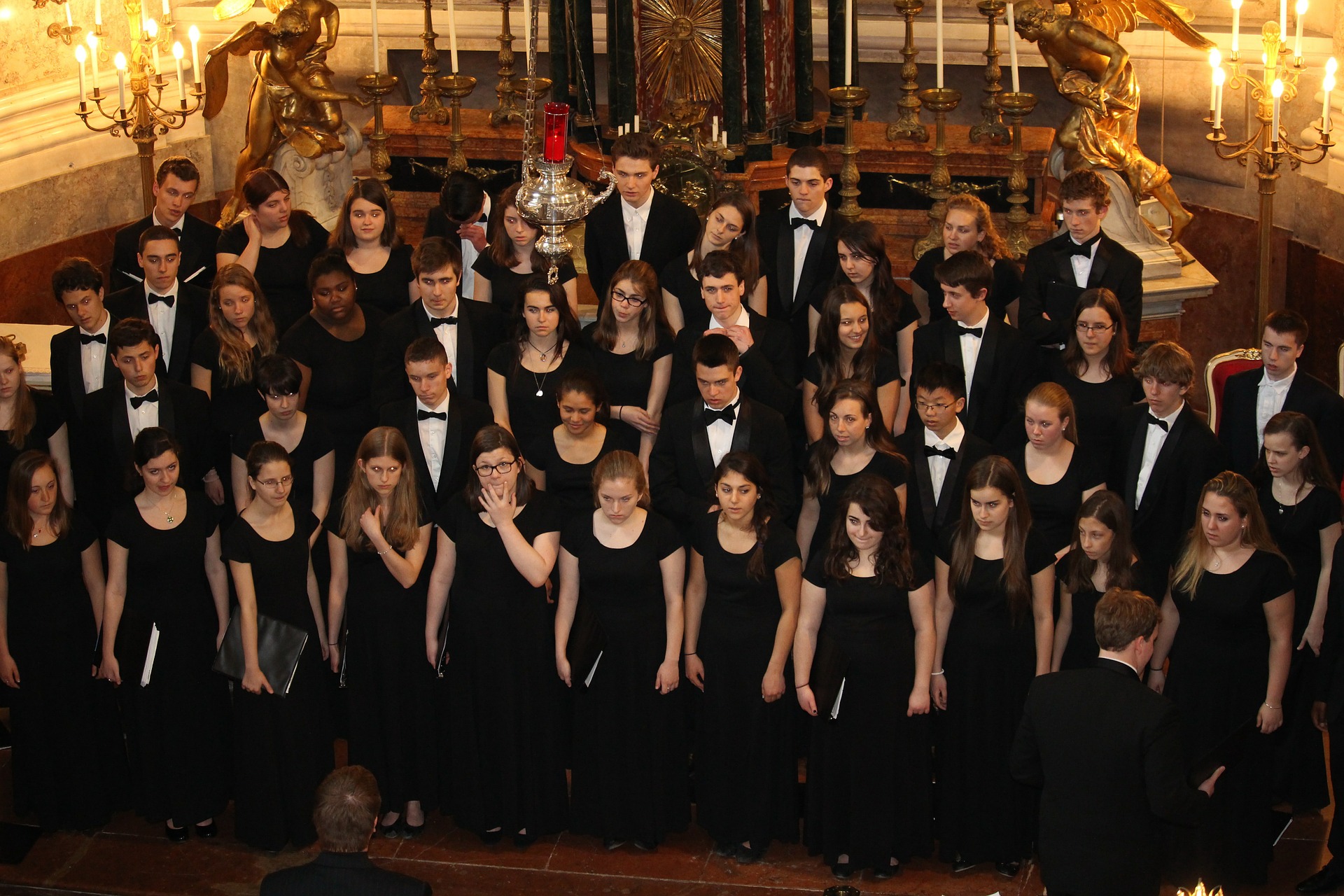 Since music teachers are all “fiduciaries” (do you know the meaning of the word?) and legally responsible for our “charges,” wouldn’t it be a good idea to review our state’s regulations and code of conduct, and hear about the challenges and pitfalls of ethical decision-making before we jump in and get “over our heads,” so-to-speak?
 ask your cooperating teacher (or his/her supervisor’s) permission. Some school districts have “do not photo” rosters. (However, in my district, only a few elementary students were “on the list” and most defaulted to a “permissible” status unless the parent opted out. The principal’s secretary had a record of all exceptions.) It is also suggested that you focus your camera mostly on YOU and not the students, from the back of the classroom or rehearsal facility (possibly from afar), so that the student faces are not clearly discernible. To respect their privacy, in the recorded excerpts, do not use any segment announcing the names of your students.
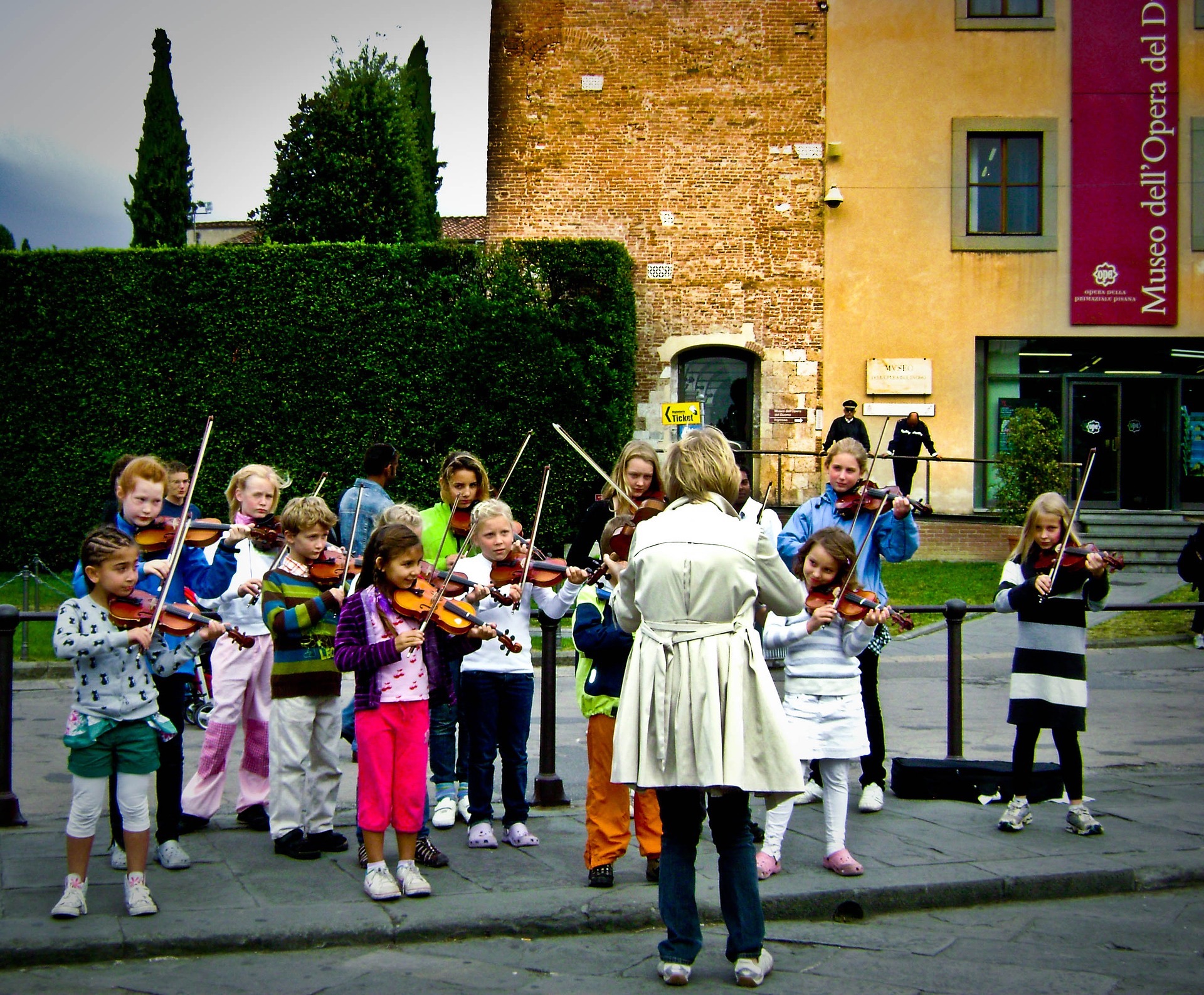


 According to the above study by Peter Webster, Scholar-in-Residence at the Thornton School of Music, University of Southern California in Los Angeles, “good music teaching” involves the practice and observation of three types of musical behaviors:
 Peter Webster’s definition of “creativity in music” is succinct: “the engagement of the mind in the active, structured process of thinking in sound for the purpose of producing some product that is new for the creator.” Furthermore, this is a thought process and “we are challenged, as educators, to better understand how the mind works in such matters — hence the term creative thinking.” (Webster, 1987)
 A heighten interest in the young child and invented music notation and their discussion of it as a window to understanding the child’s knowledge (Barrett, Gromko, MacGregor)
 Related to this are the issues of teacher control: when do we step in to change something or suggest a new path.




 It can’t get any better than this! Probably the most comprehensive one-stop vault of articles and “friends of NRN” sources for further study, the NCN provides an extensive collection of creativity tools: news stories (still current as of the week of April 7, 2017), quotes, webinars, blog-posts, past competitions like the USA Creative Business Cup, and a Board of Directors from across North America including many “giants in the field” like one of my heroes Sir Ken Robinson (California), along with George Tzougros (Wisconsin), Margaret Collins (North Carolina), Steve Dahlberg (Connecticut), Carrie Fitzsimmons (Massachusetts), Peter Gamwell (Ottawa, Canada), Jean Hendrickson (Oklahoma), Wendy Liscow (New Jersey), Susan McCalmont (Oklahoma), Robert Morrison, Scott Noppe Brandon, David O’Fallon (Minnesota), Andrew Ranson, Susan Sclafani (Washington D.C.), and Haley Simons (Alberta, Canada).
 According to their website,
 Spark local, regional, state and provincial, and national movements to create environments—in homes, schools, workplaces, communities and public offices—where every person is inspired to grow creatively.

 The annual PMEA Spring Conference will be held on April 19-22, 2017 at the Erie Bayfront Convention Center. These sessions may be “perfect for PCMEA!”
 DON’T focus exclusively on attending sessions or concerts in your specialty or most proficient areas, such as band if you’re a woodwind, brass or percussion major, orchestra if you are a string player, general music/choral if you are a vocalist or pianist. DO go to sessions that are not directly related to your major. You might be surprised at the connections you discover or the new interests that arise. Imagine “they” want to hire you next year as the next middle school jazz coach, HS marching band show designer, choreographer for the elementary musical, conductor of the string orchestra, teacher of AP music theory, etc. Could you select music for an elementary band (or choral) concert, create a bulletin board display for a middle school general music unit, set-up a composition project, or lead folk dancing at the kindergarten level?
 DON’T be shy! A conference is no place for being timid or afraid to start up a discussion with a more experienced music teacher. PMEA is all about circulating and introducing yourself, exhibiting your “charming self,” exploring resources and who are the experts/leaders in music education, getting the “lay of the land,” and adding as many names and emails to your professional contact data base as possible. Of course, DO follow-up with anyone who suggests that there may be a future employment posting from their school district!
 elf and ask a thoughtful question on some issue about which you are curious or found interesting.

 I will probably never tire writing articles for new or prospective music educators seeking a public school position. I am subject to a flash of inspiration – epiphanies or revelations – at any moment, many of which come while I am walking the dogs or driving the car. Here are some random loose-ends I have not covered before, the results of recent bouts of brainstorming and mind wandering! Hopefully, they will provide you additional insight towards success in the job hunt process. Good luck!
 their school administration in the months of February, March or April to receive some of their “golden handshake” benefits. For the school district, it helps them plan for future hiring. For you, it should focus your attention and organize your work at a time when the jobs are just becoming available. (Don’t wait for summer vacation!)
 PA-educator.com which broadcast data on the pool of candidates. Regardless, I sent a custom-designed letter to every superintendent of school “in my hot zone” announcing that I was interested, met all education and certification requirements, and was available for immediate employment consideration. You should prominently share the name/location of your professional website. In addition, this would be the perfect place to mention if you student-taught or served as a private teacher, coach, summer camp counselor, or marching band/musical assistant in their area. For me, this meant a lot of extra work (looking-up the names/addresses, and you can’t just send a blanket form-letter “To Whom It May Concern”), but it seemed to give me a little edge, a foot in the door so-to-speak, and the opportunity to place follow-up calls later to the HR department to confirm they received the letter and did not need anything to add to the file (transcripts/portfolio, etc.). If you’re not restricted to a specific geographic area, saturation this way would probably not be feasible.
 domain name (something simple like yourname.edu or .com). Graduating this year from West Virginia University, my former student David Dockan
  anything trendy, mod, or “cool,” and guys, this means you wear a tie and a jacket. Unkempt or unusual length/coloring of hair, extra body piercings, and visible tattoos will not help project the classic corporate image of “conservatism” which most administrators seek in teachers. Sure, you do have the right to be “unconventional,” “artsy,” “one-of-kind” or “make a statement,” but you also have the right never to get a public school job!
 n your portfolio. This would look particularly good fulfilling Charlotte Danielson’s Domain 4c “Communicating with Families” in
  When Facing the Job Market” at http://majoringinmusic.com/7-things-music-education-majors-can-do-make-themselves-more-employable-2/,
 employment search process and preparation for interviews. For examples, you already have many lists of employment screening questions:
