February Updates…

PROfessional Development!

Education, ethics, professionalism, and lifelong learning.

Hope you are enjoying the winter season and, for many of you, the anticipation of warmer weather returning soon! Sorry, skiers! I am sick of shoveling snow!!

Here’s a quick “catch-up” on things going on in educator professional development.

For PA School Administrators & Educators
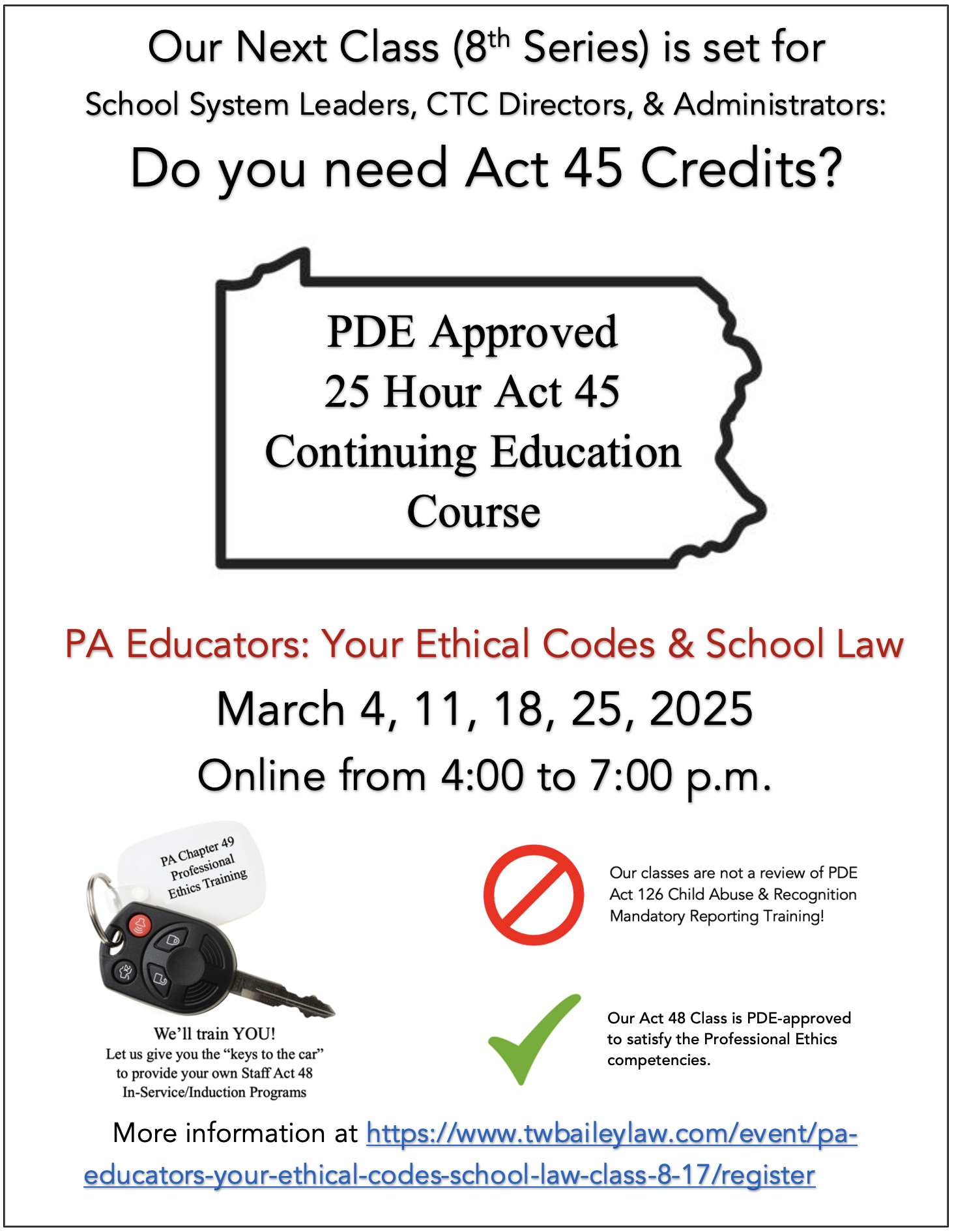
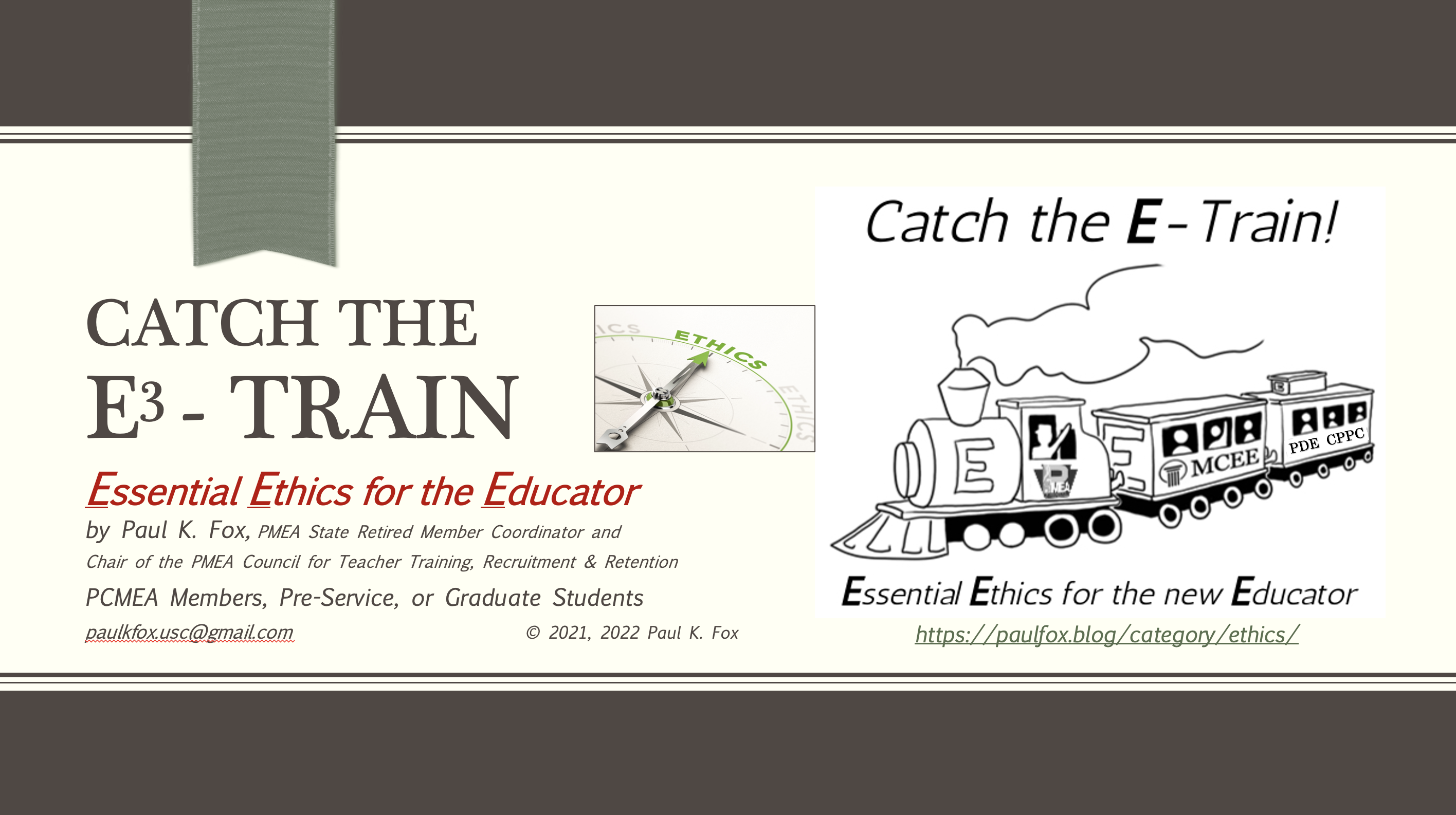
There is still time to register for the upcoming 25-hour, PDE-approved, Act 45 course, “PA Educators: Your Ethical Codes & School Law,” which will cover the recently mandated PA Title 22 Chapter 49 (Certification) Professional Ethics Competencies. The next online series of Act 45 classes will be held Tuesday afternoons in March, and provide “the keys to the car” planning for your own school district’s future continuing education and induction programs in ethics training as required by the PDE.

Now sponsoring our eighth series of classes, I am designated a “qualified instructor” in partnership with the course’s creator/facilitator, retired social studies teacher and attorney Thomas W. Bailey. For more information, please click on these links to his website:

In addition, since over the past year PDE revised their website (and changed most of the content links), I compiled a super-index of “places-to-go” and “things-to-read,” sites of supplemental resources on school ethics here. I recommend visiting this blog if you are interested in our library of links to the Pennsylvania Code of Professional Practice and Conduct, the Model Code of Ethics for Educators, the PA Educators Discipline Act, and research and citations from the PDE, PA Professional Standards and Practices Commission, Connecticut State Department of Education, and Iowa Board of Educational Examiners, among many others.
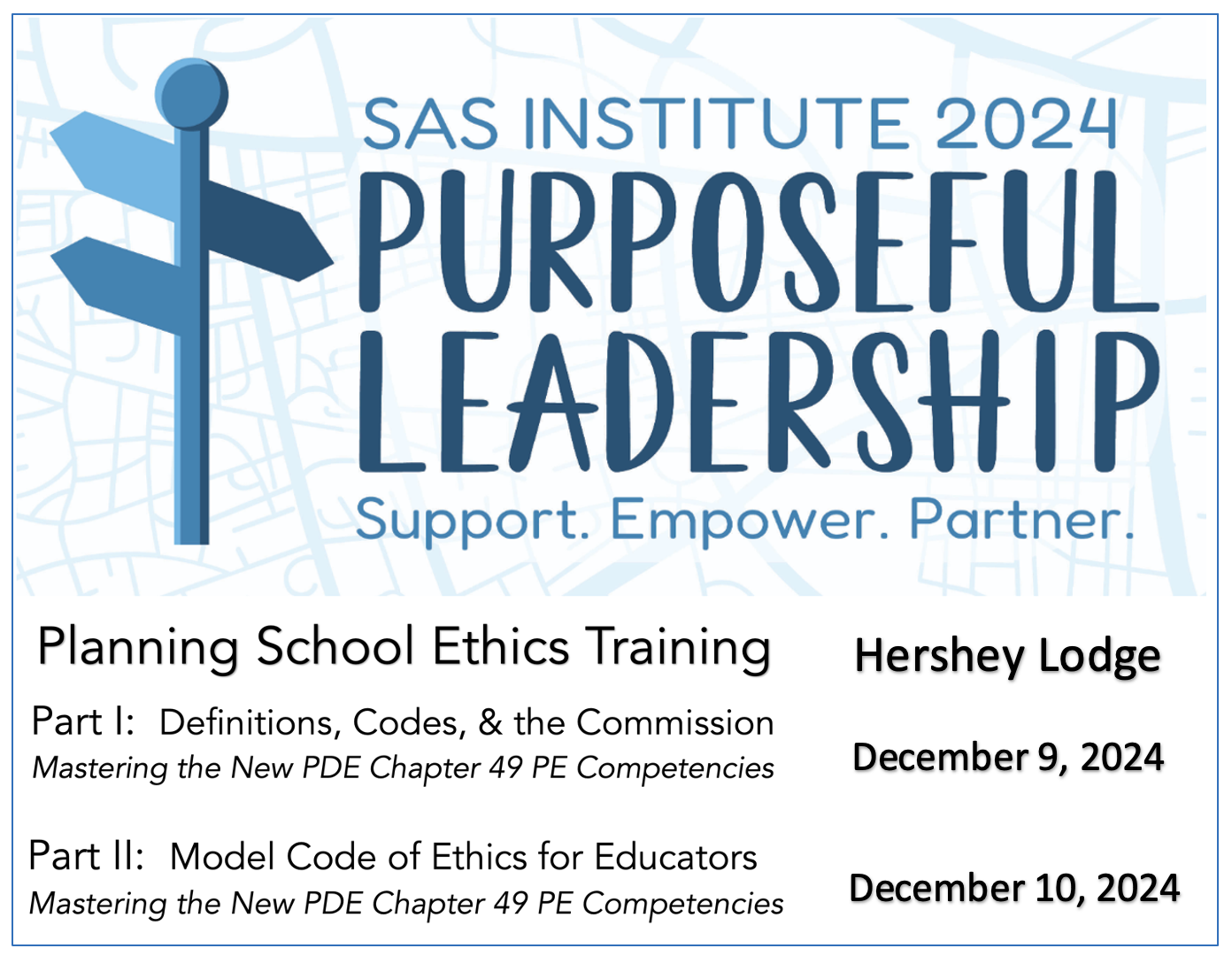
If you would like to see the kind of things we cover in these classes, take a look at the slide summaries I posted from my presentation at the PDE SAS Institute “Purposeful Leadership” state conference last December:

From Pre-Service to Veteran Music Teachers!
It’s that time of the year… again! The PMEA Annual Conference on April 9-12, 2025 will be held in the family-friendly, perfect-for-a-mini-vacation spot in northeastern PA: the Kalahari Resort in the Poconos.

There is still time to register! (Click here.) If you would like to see a summary of the sessions and performances, go to the PMEA website here or download this PDF brochure.

Why attend the conference? In my five-plus decades in education, I may have missed only two or three of the annual PMEA state events, and heartily recommend you remain actively involved in your professional association. This is what I wrote about it in a recent PMEA Retired Member Network eNEWS:

For some of us, it’s a just chance to catch-up with our colleagues, see our friends, and socialize. Others are more focused and take advantage of the near-perfect opportunity to network with other professionals, perhaps seeking new working relationships, partnerships, or even employment. Many are on a look-out for newly published music, that perfect music lesson or teaching strategy, technology tools, fundraisers, advance educational venues, or much-needed equipment to purchase for our ensembles or classrooms. Most come to hear/see the “state of the art” in music education – concerts, demonstrations, keynote speeches, panel discussions, exhibits, research presentations, and workshops. PMEA’s PD Council would likely submit that the primary purpose of a conference is for professional self-improvement… What did Stephen Covey call it? His Habit #7 of “sharpening the saw” – to build a balanced program of self-renewal in the four areas of your life: physical, social/emotional, mental, and spiritual. Covey would insist we embrace “the process that empowers us to move on an upward spiral of growth and change, of continuous improvement.” So, in short, conferences help us “grow” – to revive, re-inspire, re-energize, rejuvenate, re-direct, and re-motivate all of us – pre-service, active in-service, and retired teachers towards making successful new connections, updating our knowledge and skills, and forming new goals. This is how we “keep up” with all the new standards, benchmarks, and cutting-edge advances, and meet the “movers-and-shakers,” visionaries, and leaders in the profession!

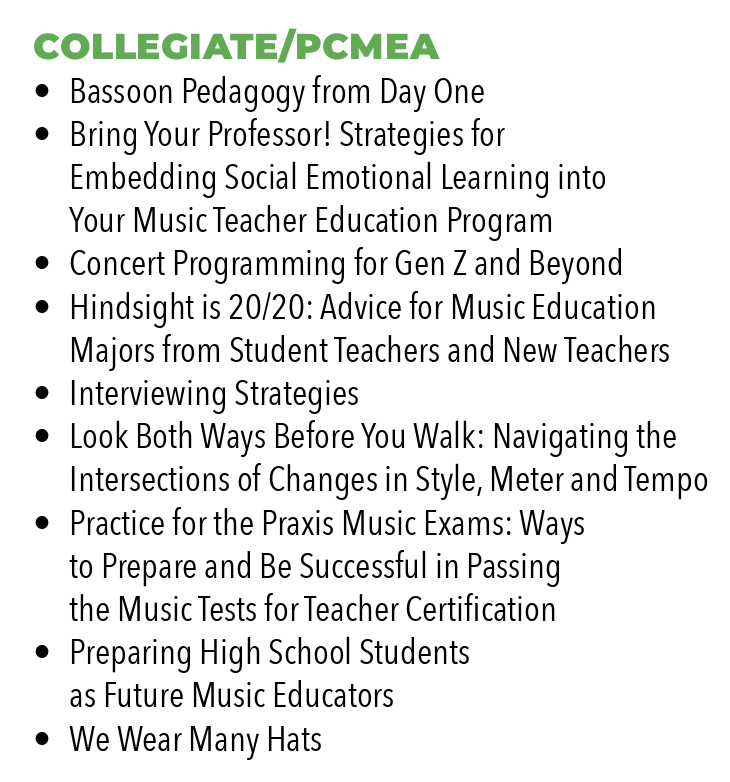
There’s a lot in store for college music education majors. Besides the aforementioned state meetings, concerts, clinics, and keynote addresses no one should miss, the music industry exhibits (new innovations in sheet music, instruments, technology, summer school and graduate programs, etc.), and the chance to introduce yourself to other music colleagues (aren’t some of you looking for a job soon?), there will be a “coffee and connections” informal lounge to ASK-AN-EXPERT on Thursday afternoon to pick-the-brains of PMEA mentors and retirees on any subject. Do you have a question about conducting technique, musical literature, lesson plan idea, classroom or time management tip, or teaching method? And, just take look these sessions the PMEA Professional Development Council has targeted specifically for YOU:
For Retirees… They are special, too!

PMEA Retired Members, consider this your personal invitation to join us at the Kalahari Resort in the Poconos for the chance to catch-up, connect, collaborate and communicate with other colleagues throughout the Commonwealth! (a plethora of “C’s!”)

As usual, we will “break bread” together Friday morning (April 11, 2025) with the annual retiree breakfast. Be sure to register soon for the PMEA Annual Conference (now only $25) and check the “yes” box that you will attend our meeting. Those in attendance will be treated to some “conference swag!”

Retirees are a valuable resource to PMEA! Our experienced retired members are among the best-trained (unofficial) mentors in PMEA. Facing many years of “boots on the ground,” we have at our fingertips numerous strategies to solve problems in education. Frankly, in my opinion, we have a lot to offer “the future of the profession!”
If you are a retired PA music educator, hopefully you have maintained your PMEA membership (dues significantly discounted), and have signed up for the Retired Member Resource Registry to help future “rookie” music educators. (To reach the R3, first login to your PMEA portal here.)
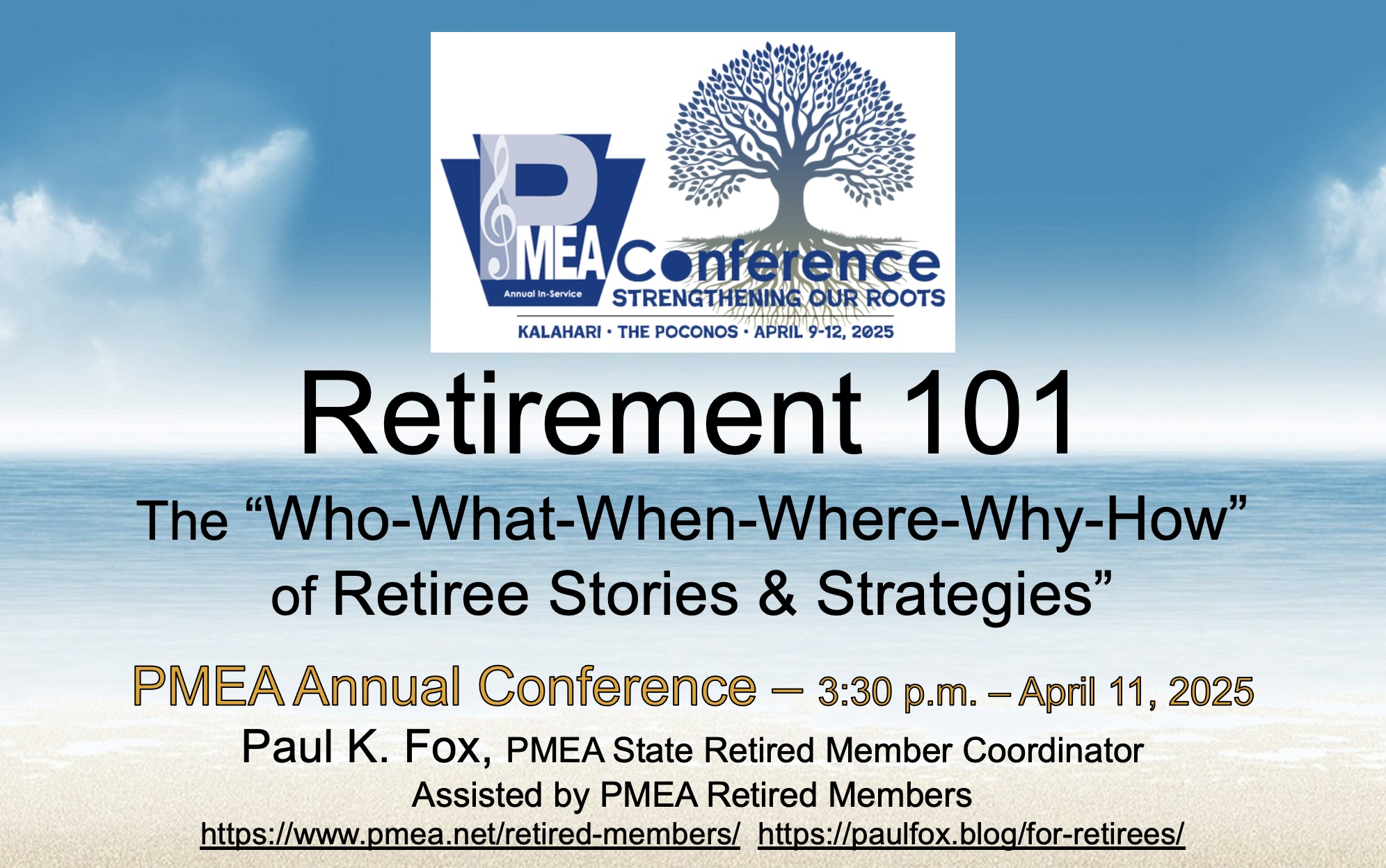
On Friday, April 11, at 3:30 p.m., we are offering a special sharing session for soon-to-retire teachers… the annual one-hour Retirement 101 workshop joined by a panel of experienced retirees: Rick Coulter, Jeffrey Dent, Sister Kathleen Doutt, Dan Klingbeil, Chuck Neidhardt, and Louise & Richard Victor. Active educators who plan to retire over the 1-5 years can learn valuable techniques from us for a smooth transition to post-full-time employment and successfully reinvent, reprogram, and “recharge” themselves to modifying those essential elements of purpose, structure, and community throughout their “golden years!”

My Professional Advertisement

You may have noticed in my last blog-post an outline of past article topics archived at this site, and a complaint that I feel I must repeat myself (or repackage the material) to meet the changing personalized “bookends” – life cycles – specific passages of my readers. The earlier February post was mostly for job seekers. If you were not looking for employment or coming fresh out of college, it may have seemed irrelevant. The same goes for specialty articles on self-care, ethics training, or retirement transitioning… WHEN WOULD YOU BE MOTIVATED TO STUDY THESE?

I have decided to maintain a comprehensive index of my writings (see “Inside” link in the top menu bar). Please visit the sections of this blog-site that matter to you most… and, when things change, come back and look again. You may find something that “hits the spot” or satisfies the needs of your new journey in education or personal/professional life.

I remain willing and able (aka “very interested”) in doing in-person or online sessions for college methods classes, PCMEA chapter meetings, PMEA festival directors’ meetings, PMEA District or Regional PD workshops, or school district/department inservices. Just give me a call. My contact information can be found in the top “About” link. Please visit this section for catalogs of my presentations and articles. FYI, I created this trifold of some of my past work.

Best wishes on your future successes in career development and professional goal setting.

PKF

© 2025 Paul K. Fox

In Case You’re Worried… the Status of “The Fox”

If you are a frequent visitor to this blog site, you may have noticed that, for some reason, I haven’t posted anything for almost two whole months. Cat got my tongue? Nothing to add? Busy with other things?

We have been doing what comes naturally! The most important “stuff!” Although hectic at times and in a frenzied pace, all is well! My wife and I are healthy, happy, actively engaged in the projects that matter to us, and mastering those all-essential ingredients in a healthy lifestyle (retired or not): “finding purpose, structure, and community” (reference to the book How to Retire Happy, Wild, and Free by Ernie Zelinski).

Well, I can tell you I am still vested in volunteering my expertise, experiences, and services on a number of fronts. Normally extremely verbal, I just have not had a couple hours to spare to write anything down or contribute to the voluminous material to what has become a massive archive of articles (editorials and how-to’s), links, and other resources.

What have I been doing lately?

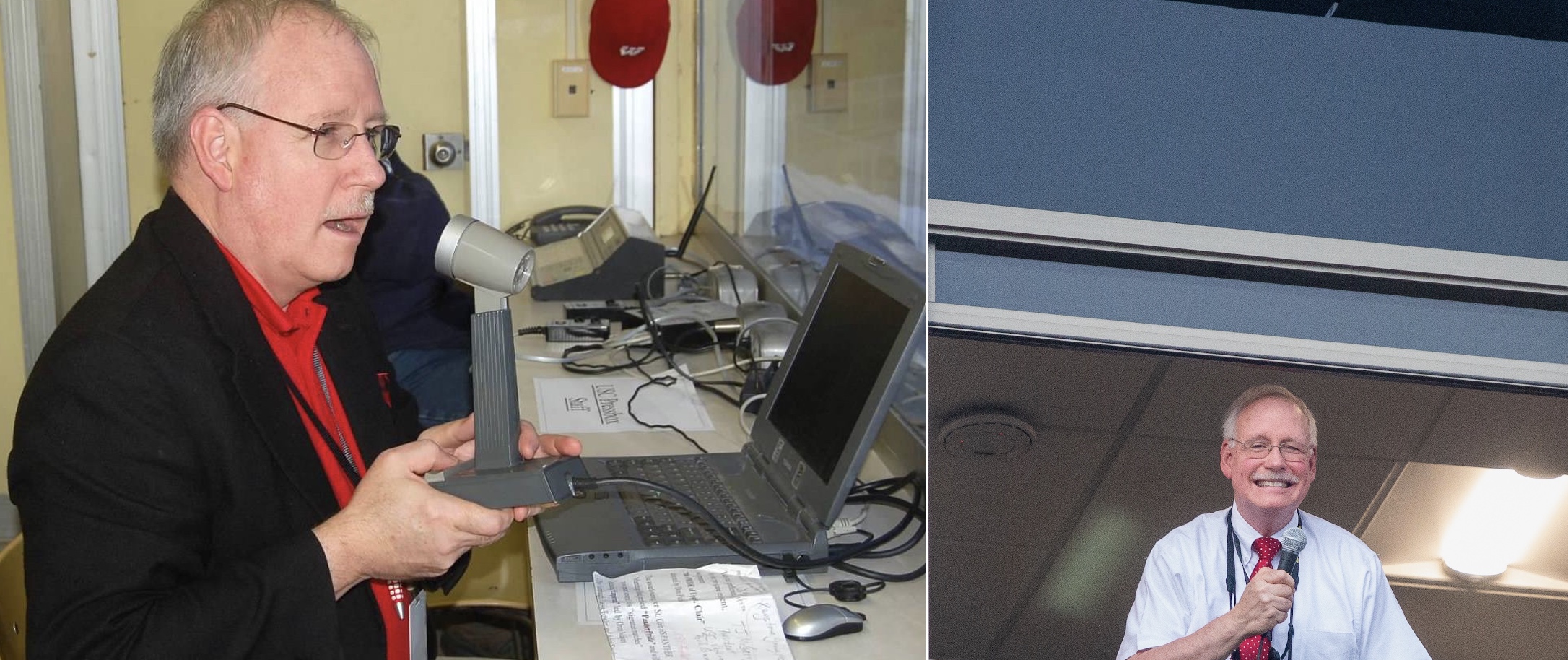
First off, we are just finishing up our marching band season. As the official admin and announcer for the “Pride of Upper St. Clair” Marching Band (I spend my time inside, not directing practices on the fields), I attend all rehearsals as attendance bookkeeper, forms manager, librarian, quasi-nurse, and when necessary, act as a sounding board or shoulder to lean on for “the band director.” This was our first year going “competitive,” participating in regional festivals of Pennsylvania Interscholastic Marching Band Association (PIMBA), and by all accounts, “we” achieved excellence. The band is unrecognizable from past years – the students are much more committed and focused – but we still have a ways to go!

Of course, all during this, our football team made it to the playoffs. On Friday, we will support our team in the “first round” WPIAL Class 5A match at Gateway HS. The extended season brings with it challenges of its own (keeping the band members on-task and embracing new goals), but the rewards outweigh the extra rehearsals. And, all through this, we are making plans (and building excitement) for the launch of the first-ever USCHS winter guard and drumline programs!

Funny thing! I’m now a part of the band’s “brand.” For 38+ years, I have been “the voice” announcing the pregame and halftime shows for Upper St. Clair High School. I’ve also emceed a couple dozen of the USCHS Marching Band Festivals, plus senior recognitions, USC Halls-of-Fame exhibitions in the stadium, and outside music invitationals. It is truly a joy to “cheerlead” our musicians… and my wife would tell you, I have a very loud broadcaster’s voice! And now, ladies and gentlemen…

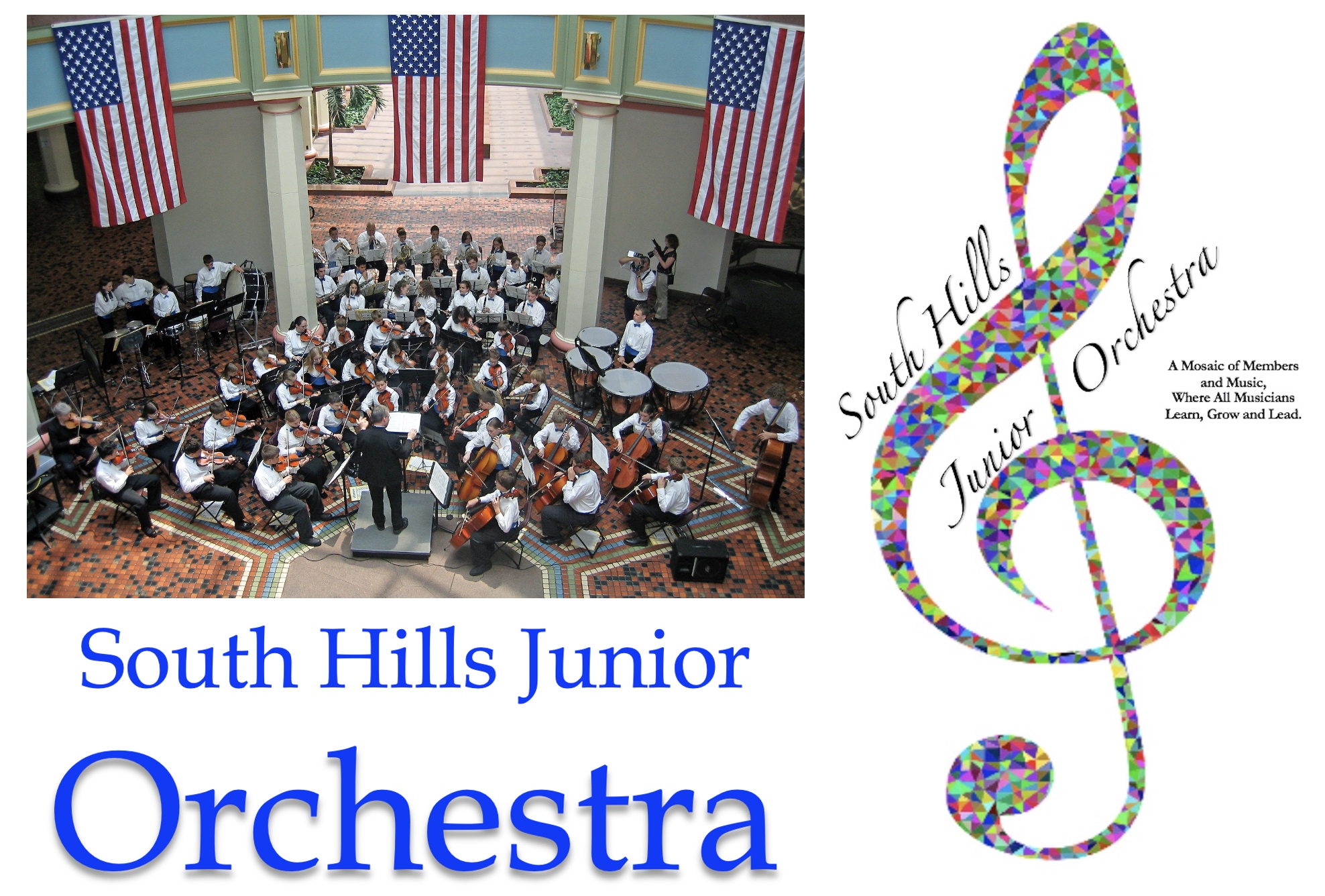
In two weeks, I will conduct the fall concert of our community ensemble South Hills Junior Orchestra, now in its 40th year. Although COVID did its best to wipe out our enrollments and recruitment efforts, our online academy kept things going, and we now support a small but dedicated chamber group. (Surprisingly, I have a good balance of instrumentation including sometimes rarely-found musicians on French Horn, bassoon, bass clarinet, electric bass, and piano, but one of my trumpet players is having to read clarinet parts.) Our theme is in support of Ukraine. We just “stumbled upon” several appropriate folk songs from the region, including the tribal tunes of Russian Fantasy (Robert Bennett Brown), the ever-popular Ukrainian Bell Carol, Dance of the Slave Maidens from “Prince Igor” (by Borodin, part of the “Russian Five”), and Slovakian Folk Songs (bordering Ukraine).

After this concert, we will prepare a holiday program for a nearby assisted-living facility with most of the SHJO members each taking a turn to conduct the sing-along of carols and seasonal favorites.

If interested, we warehoused a lot of our old SHJO Online Academy media and lessons here. (Use the password symphony.)

Staying involved in my professional associations, I am happy to report I was accepted to present at two conferences, the National Association for Music Education (NAfME) Eastern Division event in Rochester, NY on April 13-16, 2023 and the Pennsylvania Music Educators Association (PMEA) Annual In-Service at the Kalahari Resort/Poconos on April 20-22, 2023. I have been asked to do my interview clinic session at both conferences and a workshop for PMEA on music educator burnout remediation, self-care, health and wellness.

In the meanwhile, not to let any grass grow under my feet (or more leaves to fall on my head), locally I have been giving teacher ethics presentations at Slippery Rock University of Pennsylvania (a wonderful class of 44 freshman music education majors – the future looks good!) and Washington & Jefferson College undergraduate and graduate education majors.

I open my session offering to give a hundred dollar bill to the first student who can correctly name the exact title of their educator’s code of conduct (PA Code of Professional Practice and Conduct – CPPC) and identify the agency which enforces it (PA Professional Standards and Practices Commission – PSPC). No one ever guesses it. (I could also likely get away with this challenge at any school faculty meeting in the Commonwealth! Educators seldom receive formal ethics training in our state – that’s why I am sharing these recent updates from the PA Department of Education!) Now that I have publicized “the big question,” I guess I’d better put away that C-note for good!

A sampling of my slides and handouts are available for perusal from the top section of the “Training/Jobs” menu bar link here, or you can find past blogs on the subject of educator decision-making presented in reverse chronological order here.

In a similar vein (and with equal passion), I have teamed-up with retired social studies teacher and attorney-at-law Thomas Bailey to sponsor continuing education classes for both educators and administrators. I am inspired by Tom’s knowledge of the PA regulation framework and school law. We just finished an excellent 25-hour approved non-PDE Act 45 course for school system leaders. You should visit his informative website here, and especially check out his court case blog here. If you are a school superintendent or administrator, our next series of online classes will begin on November 29; register for the course here.

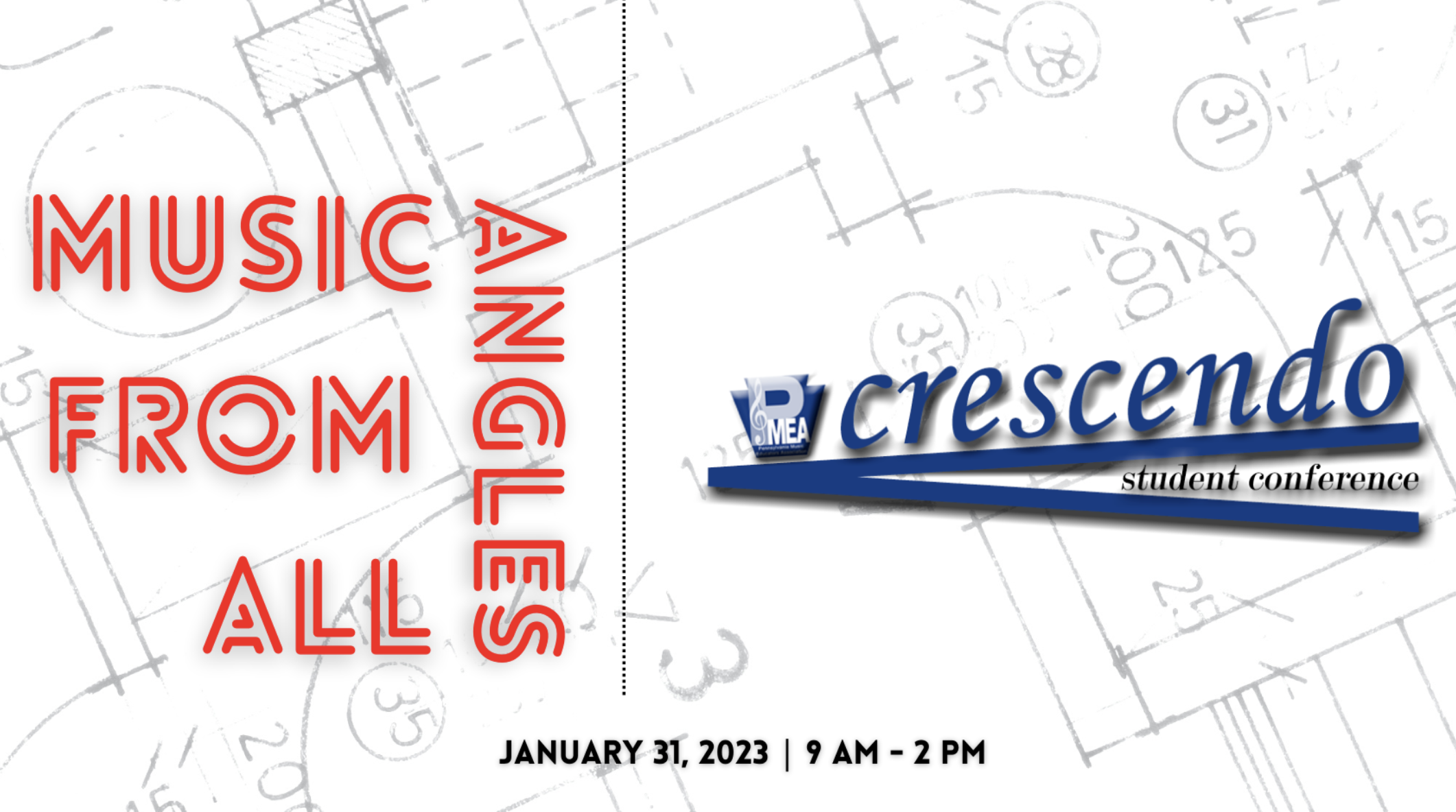
Additional future projects include assisting on the PMEA Strategic Planning committee for “member engagement,” planning for the PMEA CRESCENDO virtual student conference scheduled for January 31, 2023 (more info here), and serving on the PMEA Council for Teacher Training, Recruitment, and Retention (I am state chair) – “the life cycle of an educator.” A wealth of free information for music educators (which I try to revise frequently) is available on sections of the PMEA website: the Council TTRR focus area (click here) and Retired Members (click here).

Outside the scope of teaching profession, I have been active as Communications Director, Fine and Performing Arts Chair, and Trustee of the Community Foundation of Upper St. Clair (CFUSC). I publicize a weekly eUPDATE (samples on the website here) to announce our township events for donors and supporters, serve as “the duck maestro” – the mascot for the annual duck races on USC Community Day, and look forward to organizing “a really big party” in celebration of the CFUSC’s 30th anniversary on April 21, 2023 at the St. Clair Country Club… although I will be in the Poconos on the same date doing a PMEA workshop! The Fox calendar is bursting with a few overlapping dates!

Besides all of the above, I am still volunteering at the hospital several days a week, pushing wheelchairs to/from procedure rooms at St. Clair Health. One thing you realize helping out in your hometown (the place you taught all those years)… you will run into many of your former students now grown up with kids of their own. It is a real joy to see them again (albeit due to the need for a colonoscopy or surgical procedure), and catch up with all those memories, their life’s successes, and future dreams.

The only personal goal that remains unfinished is consideration on how I can better distribute (dare I say “promote”) the numerous blogs that remain timely and relevant at this website. It’s just a little too overwhelming (and dense) for some passersby. A few of the links in the earlier postings may have expired and need to be updated. However, a lot of my insight, hard earned perspective (with sweat and tears), and past experiences have been poured into these writings, and I could only hope many of them could become useful tools for college music education majors, the rookie educator, those feeling challenged by today’s post-COVID times, or anyone recently transferring into the profession. Here’s another list of menus… go ahead, sight-see and enjoy the journey!

As you can see, I am not really retired… perhaps a better term would be “refired” or “redirected” or “reinvented.” If you are already “living the dream” in your post-full-time employment years or anticipate this happening in the near future, that’s how it’s done. That’s what I wish for you, too! Do you want to live-it-up to Moses’ age – supposedly 120 years old? Then, you better plan to be physically and mentally active and engaged! After all, a mind is a terrible thing to waste!

PKF

© 2022 Paul K. Fox

The Myths of Retirement

Dispelling Five Common Misconceptions Involving One of Life’s Greatest Transitions – Perspectives from Gerontologists, Psychologists, Authors, and Other “Retiree Gurus”


Throughout my travels presenting at music educator conferences and local workshops, I discover soon-to-retire music teachers and other professionals have many preconceived notions about retirement. I hear the general acceptance of many “myths,” including these five Five Mythsthat seem to be the most prevalent:

  1. You retire FROM something.
  2. It’s an easy transition.
  3. It takes little time to prepare.
  4. It’s completely different from anything you’re doing now.
  5. Retirement is the time to downsize and move.

Let’s “troll the Internet” a little and check-in with a few leading authorities on retirement planning.

knit-869221_1920_Foundry


1

You should retire to, not from, something.

“Most people today view retirement as an opportunity to begin a new chapter in their lives, ‘not a time to wind down and move off the playing field,’ says gerontologist Ken Dychtwald, 64, the CEO of Age Wave, a research think-tank on aging issues.”

“They are trying to figure out new ways to be productive. ‘Many are wondering: What can I do with this stage of my life that is perhaps my highest purpose?’ says Dychtwald, who is also a psychologist. He has written 16 books on aging, health, and retirement issues.”

— “How to Reinvent Yourself in Retirement” by Nanci Hellmich, USA TODAY: https://www.usatoday.com/story/money/personalfinance/2014/10/12/five-stages-of-retirement/16975707/

grandma-736004_1920_fujidreams

quote

“You really should retire to something, not just retire from something… Having a notion of what you are retiring to is also a necessary early retirement planning activity. One that everyone should complete.”

“I would say that I just want the freedom to do whatever I want to do. To spend time in the garden, exercise, travel, pursue opportunities that interested me, learn new things, meet new people, etc. I had done the necessary steps of making sure that I had budgeted for my hobbies and our travel wishes. I thought that was enough. However that wasn’t going to occupy all of my retirement days.”

“Now I do want and enjoy free time where there are no obligations just as much as the next guy, but I needed to look at what I was really retiring to so I wouldn’t end up one of those unfortunate retirees who say they are bored and wished they had never retired. That is why you should plan to retire to something, not just retire from something.”

— “Retire To Something,” Leisure Freak Tommy: https://www.leisurefreak.com/non-financial-aspects-of-early-retirement/retire-to-something/

senior-2642013_1920_RitaE

quote

“Throughout your working years, you have probably viewed your retirement as a destination. It is a goal you are saving for and will hopefully reach one day. But once you reach this destination, then what? ”

“The perception of retirement as a destination may be why some people approach retirement with dread rather than anticipation. They view retirement as a finish line or as the end of the road.”

“But retirement is simply a milestone you pass on your journey. It’s like crossing the border from one state to the next. The road will continue to unfold before you.”

“Your life has changed in countless ways from the time you graduated from school and entered the full-time work force until the present. You have probably changed jobs and perhaps changed careers. You may have lived in numerous places, gotten married and raised a family. Friends have come and gone, your hobbies and interests have evolved and your body has changed.”

“Your retirement could easily last two or three decades. It won’t be a one-dimensional, stagnant state of being. Your life will continue to evolve in many ways after you retire. You may move, the people in your life will continue to shift and you will probably travel to new places and engage in new activities.”

— “Your Retirement is a Journey, Not a Destination” by Dave Hughes, RetireFabulously: http://retirefabulously.com/2017/05/15/your-retirement-is-a-journey-not-a-destination/


2

For many, retirement may not be an easy transition.

“50% of retirees will suffer some form of acute emotional distress. This is potentially a very large problem given the fact that 10,000 people are becoming eligible for Social Security every day for the next 20 years in the US alone.”

— Dr. Robert P. Delamontagne in Retiring Mind, Fairview Imprints, 2010: http://www.theretiringmind.com/

fisherman-1624704_1920_paulbr75

quote

“For some people, retirement planning conjures up images of languid days free from the demands of the daily grind, but for others the prospect of leaving the workforce may be a daunting or even frightening transition.”

“For most, this major milestone will elicit a mixture of emotions that fall somewhere between anticipation and apprehension. Retirement is, in fact, a complex experience for almost everyone, characterized by gains and losses and tremendous shifts in identity and routines.”

“Unless those challenges are addressed and dealt with, the so-called ‘golden years’ can be tarnished,” says Irene Deitch, PhD, psychologist and professor emeritus at the College of Staten Island, City University of New York. “Even those who may have thought they were prepared can find that the transition is tougher once they’re actually in the throes of it.”

—”Eight Ways to Ease into Retirement” by Katherine Lee, Everyday Health: https://www.everydayhealth.com/longevity/future-planning/happy-retirement.aspx

3

Preparation to retirement is essential for you and your family members.

“Most gerontologists agree that a period of adjustment will occur during the first years of “interning” as a retiree. Even more crucial is the “pre-retirement” or “imagination” stage of retirement, involving your preparation six to ten years prior to “taking the big leap” to FREEDOM!”

“Have you considered a few ‘terms of transformation’ below that are all-to-common to soon-to-be-retirees undergoing that life-changing transition to ‘living their dream?’ How should you unravel these “conundrums” or mysteries of transitioning to retirement?

  • Self-Identity and Change
  • Free Time
  • Energy and Fortitude
  • Losing Control and Perpetual Care”

“The only solution to ‘softening the blow’ of the possible turmoil and incongruity brought on at this time is to follow the Boy Scout rule… BE PREPARED.”

“According to TIPS Retirement for Music Educators by Verne A. Wilson (MENC 1989), at least three years before you leave your full-time employment:

  1. Sit down with your spouse if you are married (and other family members) and plan ahead carefully.
  2. Decide when you want to retire. Estimate as accurately as possible what your economic situation will be after you retire.
  3. Decide where you want to live after you retire. This means not just the neighborhood, city, or state, but also the kind and style of residence… retirement community, one-floor ranch, apartment, etc.
  4. Set some goals regarding how you want to spend your retirement time. Focus on your talents and abilities instead of looking at the handicaps that may come with the aging process.
  5. Be prepared for “change” and learn how to accept it, and be willing to embrace new opportunities for personal growth, flexibility, and adaptability.
  6. Be sure your intentions are clearly stated in writing (wills, power of attorneys, living wills, etc.)”

— “New Dreams and Horizons” by Paul K. Fox and other sources: https://paulkfoxusc.wordpress.com/2017/08/03/new-dreams-and-horizons/

old-couple-2435629_1920_MonicaVolpin

quote

“Prior to retiring, you should make a concerted effort to prepare for ‘life after work,’ including:

  • Cultivate interests outside work
  • Lead a healthier lifestyle
  • Revitalize family relationships
  • Spend more time with spouse
  • Embrace spirituality or meditation
  • Nurture friendships and make new friends”

— “Retire Happy: What You Can Do Now to Guarantee a Great Retirement” by Richard Stim and Ralph Warner, USA TODAY/Nolo Series: https://www.amazon.com/dp/141330835X/ref=rdr_ext_tmb


4

Retirement may or may not be completely different to what you are doing right now.

“Many people want to continue to work. In fact, 72% of pre-retirees, age 50 and older, say they want to keep working after they retire, according to a recent survey sponsored by Merrill Lynch in partnership with Age Wave. Almost half (47%) of current retirees either are working, have worked, or plan to work in retirement, the survey found.”

— “Work in Retirement: Myths and Motivations,” by Merrill Lynch in partnership with Agewave: https://agewave.com/wp-content/uploads/2016/07/2014-ML-AW-Work-in-Retirement_Myths-and-Motivations.pdf

trumpet-player-8455_1920_Hans

quote

“Planning for retirement may require a focus on self-management throughout a person’s career, according to a model of career development by psychologist Harvey Sterns, PhD, the director of the Institute for Life-Span Development and Gerontology at the University of Akron.

“No two retirees are the same and multiple pathways exist to get from work to retirement.”

“There is no right way to retire,” Sterns says. “Many people think retirement is wonderful, and for people who want to retire, that’s the right thing to do. If they don’t want to, that’s the right thing, too.”

“After 26 years as a counseling psychology professor at the University of Maryland, Nancy K. Schlossberg, EdD, was ready to retire. But she was hardly ready to slow down. She looked forward to having more flexibility and freedom in her schedule to explore other interests. Still, there was the question of what her new identity would be…”

“Retirement can take many forms, Schlossberg notes. In fact, she identified the following six based on her interviews with about 100 retirees:

  • Continuers stay connected with past skills and activities, but modify them to fit retirement, such as through volunteering or part-time work in their former field.
  • Adventurers start new activities or learn new skills not related to their past work, such as learning to play the piano or taking on an entirely new job.
  • Searchers learn by trial and error as they look for a niche; they have yet to find their identity in retirement.
  • Easy gliders enjoy unscheduled time and like their daily schedule “to go with the flow.”
  • Involved spectators maintain an interest in their previous field of work but assume different roles, such as a lobbyist who becomes a news junkie.
  • Retreaters become depressed, retreat from life and give up on finding a new path–the only negative path in Schlossberg’s classification.”

“The path retirees choose after retirement isn’t necessarily the path they stay on either, Schlossberg says.”

“It’s an evolving part of your career development,” Schlossberg explains. “And the longer you live, the more your path will shift and change.”

— “A New Face to Retirement” by Melissa Dittman, American Psychological Association: http://www.apa.org/monitor/nov04/retirement.aspx

fashion-985556_1920_skeeze

quote

“After the last school bell rings, retired teachers have a leg up. Opportunities cut a broad swath from tutoring to substitute teaching to jobs a little further afield, such as fitness training.”

“Teachers have a combination of tools in their kit that many retirees don’t — solid degree credentials, expertise in a specific field and a passion for helping people learn something new.”

— “Great Jobs for Retired Teachers” by Kerry Hannon, AARP: https://www.aarp.org/work/working-after-retirement/info-04-2011/jobs-for-retired-teachers.1.html

violin-374096_1920_niekverlaan

quote

“Most teachers spend their first year of “retirement” decompressing from the full-time teaching gig. It’s that special time you’ve looked forward to for years. You do some traveling, catch up on all those books you never had time to read, and just relax. Your days are free of ringing bells and reports. Plus, you get to spend a much larger part of your day in your pajamas. Yay! You earned it. You know you’ve arrived when Labor Day stops feeling like D-Day.”

“After a year or so, however, you may start to realize you actually miss working. Not that you miss the standardized tests, parent conferences and grade reports. But something in that work stimulated you in a way nothing else comes close to doing. Perhaps you miss the pleasure you felt creating learning units, or the joy of introducing students to a new author, or the collaborative bonds with fellow teachers. These were true enjoyments and now they are gone.”

“Once you’ve decompressed sufficiently, you might want to consider doing a career redesign. Unlike many other careerists, retired teachers have the freedom and the financial ability to put together a ‘second-act’ career, tailored to the life they want. Keep in mind, U.S. pension policies have restrictions on post-retirement income, so keep a close check on those caps.”

“If you’re feeling ready to begin again, here are ten opportunities you should definitely consider.

  1. Tutoring
  2. Specialized Test Prep
  3. College Application Support
  4. College Adjunct Teaching
  5. Career and Life Coach
  6. Tour Guide
  7. Writing and Editing
  8. Educational Consulting
  9. Translator
  10. International Schools”

— “Ten Great Encore Careers for Retired Teachers” by Peter Spellman, Nextcalling: https://nextcalling.org/wp-content/uploads/2018/01/10-Great-%E2%80%98Encore-Careers%E2%80%99-for-Retired-Teachers.pdf

artist-463959_1920_imaginart

quote

“We were fortunate to have Dr. John V. D’Ascenzo join the PMEA Retired Member Coordinator at the PMEA Summer Conference, assisting on the session “Retirement 101 – Retiree Stories and Strategies,” which was held on July 17-18, 2018 at the Red Lion Hotel in Harrisburg, PA.”

“John provided a lot of interesting perceptions and coping tips for the “soon-to-retire!” He shared new segments for consideration with references.”

“The evaluating of personal and professional paths prior to and at the time of retirement leads to behavioral changes that promote positive outcomes (Krawulski, de Oliviera Cruz, Medina, Boehs & de Toledo, 2017). Activities would include:

  • Giving and/or receiving education/training.
  • Volunteering roles: leadership, followership
  • Pursue different career paths for remuneration or gratis.”

Retired Member Network eNEWS, August 2, 2018: https://www.pmea.net/wp-content/uploads/2018/07/Retired-Member-Network-eNEWS-080218.pdf


5

Retirement may or may not be the time to pull-up stakes and move from your current residence.

“The US Census Bureau reports that 49 out of 50 people over the age of 65 stay right where they are when they retire.”

“If your current hometown is affordable, close to friends and family, and near activities and entertainment you most enjoy, why move for the sake of moving? Instead, consider whether the need for change can be satisfied through more frequent brief vacations, or by purchasing an inexpensive weekend getaway home.”

— “Fine Out Where You Should Retire” by Melissa Phipps, The Balance: https://www.thebalance.com/where-should-i-retire-2894254

guitarist-407212_1920__SplitShire

My next blog for this “Retirement Resources” forum will investigate this subject more closely and pose the questions, “Where Should I Retire?” and “What are the three most important factors to consider before choosing your retirement destination?”

Retirees: Do you have YOUR favorite “myth in retirement?” Please share. (Click on “comment” near the top of this article.) We would love to hear from you!

Otherwise, stay tuned for additional thoughts and tips on preparing a happy transition to retirement. You are also invited to revisit past blog-posts at this site: https://paulkfoxusc.wordpress.com/for-retirees/.

PKF

© 2018 Paul K. Fox

Photo credits (in order) from Pixabay.com: “emotional” by werner22brigitte, “knit” by foundry, “grandma” by fujidreams,”senior” by RitaE, “fisherman” by paulbr75, “old couple” by MonicaVolpin, “trumpet-player” by Hans, “fashion” by skeeze, “violin” by niekverlaan, “artist” by imaginart, “guitarist” by SplitShire, and “cottage” by MonikaDesigns.


cottage-1550083_1920_MonikaDesigns

Transitioning from Collegiate to Professional – Part III

The Final Leap from Pre-Service to In-Service:

The Metamorphosis and Integration of Philosophy, Maturity, and Teacher Preparation

trumpet-1495108_1920_congerdesignTo “wrap-up” our final segment, we will review the development of a professional “marketing plan.” This is blog #3 out of 3. (Be sure to also check out #1 and #2, too.)
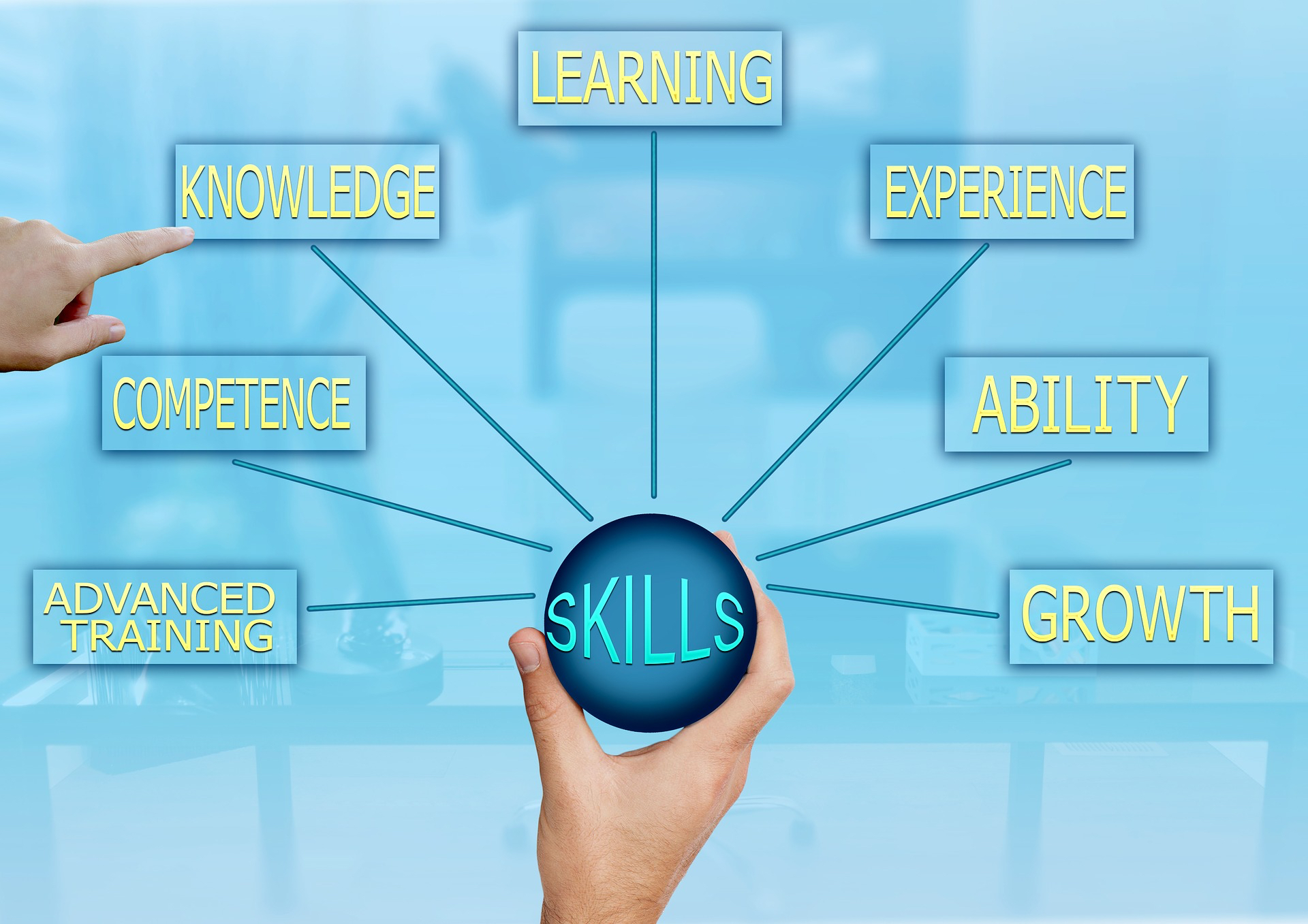
These are three critical skills you need to foster in the search for a school music position, marketing yourself, interviewing, and landing a “good” job:

  • Personal branding (who are you, what makes you unique, and what do you have to offer?)
  • Story telling (anecdotes) of your positive attributes and personal brand, including a record of your habits of “engagement” in music education, and
  • Networking (associating with other professionals and getting your positive stories “out there”).


skills-3262172_1920_diwou

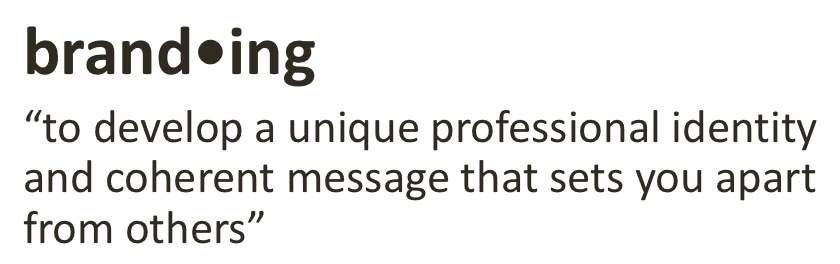
branding

Personal Branding

“Personal branding is the practice of people marketing themselves and their careers as brands. While previous self-help management techniques were about self-improvement, the personal-branding concept suggests instead that success comes from self-packaging… Personal branding is essentially the ongoing process of establishing a prescribed image or impression in the mind of others about an individual, group, or organization.”

– Wikipedia: https://en.wikipedia.org/wiki/Personal_branding

What is the difference between marketing and branding? According to some, “marketing is what you do, branding is what you are.” (www.tronviggroup.com/the-difference-between-marketing-and-branding/)

phone-2840244_1920_RobinWiggins13Shama Hyder posted “7 Things You Can Do to Build an Awesome Personal Brand” at http://www.forbes.com/sites/shamahyder/2014/08/18/7-things-you-can-do-to-build-an-awesome-personal-brand/, including the following outlined summary:
  1. Start thinking of yourself as a brand
  2. Audit your online presence
  3. Secure a personal website
  4. Find ways to produce value
  5. Be purposeful in what you share
  6. Associate with other strong brands
  7. Reinvent

During these waning months for college music education seniors, now is the time to finalize the preparations for personal branding and beginning the employment search! Personal branding is critical to help you “stand above the rest,” showing that you have what it takes and would be a major asset to a prospective employer, and defining and marketing your own unique qualities that would make you “a good fit” for the specific job openings.

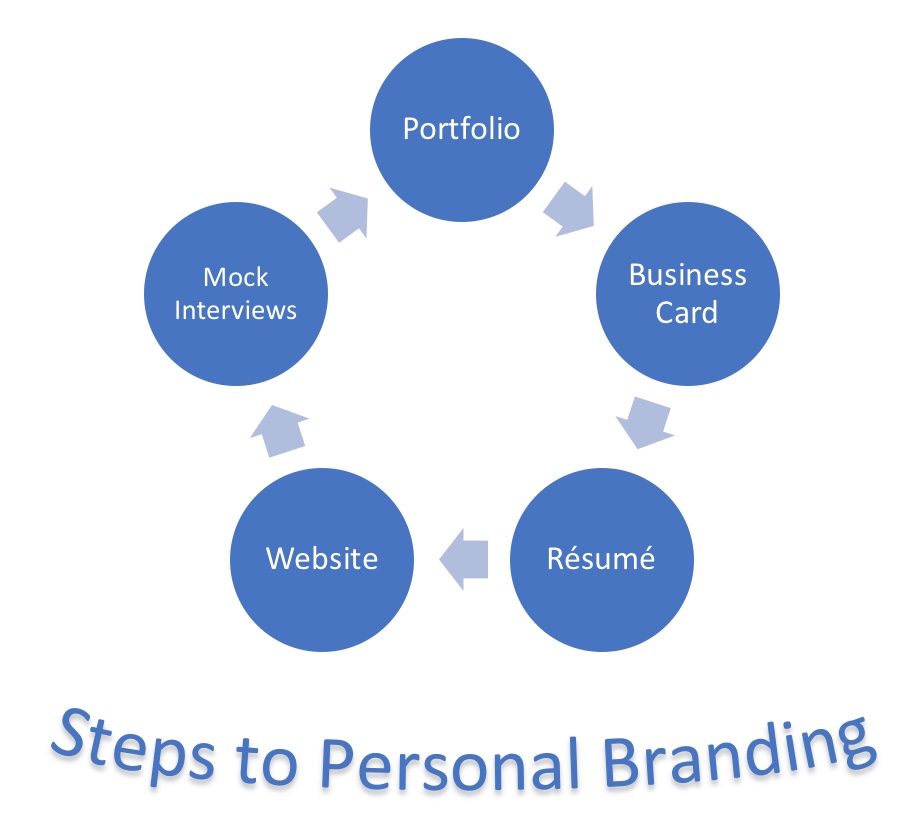
Steps to Personal BrandingThe branding process involves first developing your philosophy of music education, archiving your awards and accomplishments, documenting your grades and ok-3061659_1920_RobinHiggins12experiences, and collecting stories/personal anecdotes of your strengths. The next steps include the creation of a written and electronic portfolio, business card, resume, and website. Finally, you must compile/assemble everything together and practice (and self-assess) your “story-telling skills” to answer those important questions at well-rehearsed “mock interviews.”


You will likely not have enough time to complete all of these tasks during methods classes or student teaching seminars. That’s okay. If you are serious about prepping yourself to find a great music teaching job, the valuable links (see below) and articles are out there… just manage your time and start reading.

feedback-2990424_1920_geralt

networking

Networking

According to the article “Network Your Way to Secure a Teaching Job” at https://resumes-for-teachers.com/job-search-help/teacher-network/, many people are unaware of the basics of networking and how to use them it to their advantage in securing a job:

“Networking simply refers to finding job-related contacts. Most teachers who are just beginning their careers may feel that they have few, if any, networking contacts in the teaching field. It is important to consider the many different areas of networking as you create your own group of networking contacts to help you secure a teaching job. It is interesting to note that many of the teaching positions that are filled each year are filled by those who came to the attention of personnel managers by recommendation.”

“Always think about adding to your teaching network. When meeting new people, be certain to add them to your network. Talk to them about your skills, education, experience, and learn about their jobs. Make sure that you always ask for a business card.”

Do you have a business card? Is your résumé updated and available online on your professional website?

young-3061653_1920As I laid out in a previous blog “Networking Niceties: The ‘How-To Schmooze’ Guide for Prospective Music Teachers” at https://paulkfoxusc.wordpress.com/2016/04/04/networking-niceties/, the concept of networking is two-way communications. Just like collective sets of nerve synapses, two-way connections are expected to fire repeatedly in all directions. That’s actually the science behind memory. For professional networking, it is your “charge” to create multiple pathways to/from school HR managers and secretaries, administrators, music supervisors and department heads, and music teachers… and YOU – your skills, accomplishments, unique qualities, experience, education, and personality traits.
pcmeaThe above blog-post also explores setting up a good organizational system to manage your professional contacts.
If you are a Pennsylvania collegiate member (PCMEA), I heartily recommend the article “Networking 101” by Dr. Kathleen Melago, PCMEA State Advisor and Associate Professor of Music Education at Slippery Rock University, published in the Summer 2017 issue of the state journal PMEA News (pages 40-42). Here are several quotes from her work:

“One of the most common ways music educators can plan to network is at conventions. First, try to avoid interacting only with people from your school or people you already know from other schools. Go to sessions that interest you and look for opportunities to meet people there. Before the session starts, introduce yourself to people sitting around you. Use your social skills to assess whether they seem like they want to engage in a conversation or not. After the session, go up and meet the presenter.”

“Of course, social media is another great way to build your network. Networking with professionals already in the field can help you see what they are doing and help you build ideas of what you would like to do in your program someday.”

“Sometimes, you might find yourself networking unexpectedly. For example, you might go into school to work with their clarinet section during band camp and just happened to meet the choir teacher. That is networking!”

“To help your networking be most effective you need to have good communication skills. When interacting with others in a networking situation, be sure to focus on the person with whom you are speaking. Avoid looking off into the distance as if you were to anticipating someone else more important coming by. But your cell phone away and be present to the conversation.”

“Be yourself in your networking interactions. If you pretend that you are someone you are not, you will either end up unhappy or you’ll be discovered is someone who is not genuine.”

Dr. Melago goes on to provide a myriad of excellent examples of networking skills and opportunities.

Another resource specifically for networking at music teachers conferences is posted at https://nafme.org/getting-music-conferences/.


music-1237358-2 ricardo vasquez


engagement

Engagement

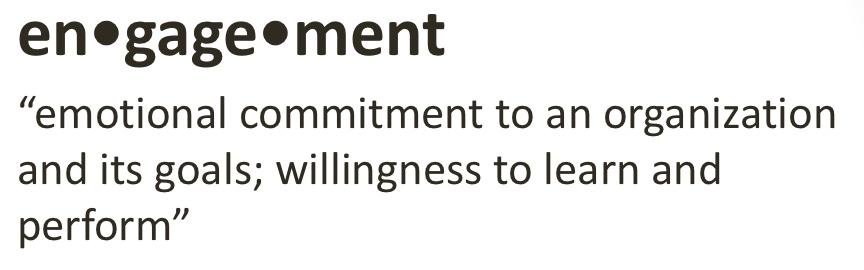
Here is an excellent definition of “professional engagement” from “Domains of Teaching” of the Australian Institute for Teaching and School Leadership at https://www.aitsl.edu.au/teach/understand-the-teacher-standards/domains-of-teaching.

Teachers model effective learning. They identify their own learning needs and analyze, evaluate and expand their professional learning, both collegially and individually.

Teachers demonstrate respect and professionalism in all their interactions with students, colleagues, parents/carers and the community. They are sensitive to the needs of parents/carers and can communicate effectively with them about their children’s learning.

Teachers value opportunities to engage with their school communities within and beyond the classroom to enrich the educational context for students. They understand the links between school, home and community in the social and intellectual development of their students.

Engagement for prospective music teacher may include synonyms like “participate,” “enroll,” “join,” “be active,” “volunteer,” “seek experience,” and “make a difference!”

Are you a member of your professional music education associations?

  • NAfME National Association for Music Education
  • PCMEA Pennsylvania Collegiate Music Educators Association, or another state’s local NAfME collegiate chapter
  • pmeaPMEA Pennsylvania Music Educators Association, or another state’s NAfME-affiliated MEA
  • ACDA American Choral Directors Association
  • ASTA American String Teachers Association
  • NBA National Band Association

Did (or will) you attend your state music teachers’ conference and local workshops on music education and professional development?

To prove you are “professionally engaged,” I would expect to see a consistent record of modeling in the following areas:

  1. excited-3126449_1920_RobinHiggins9Self-reflection of the professional’s teaching practices and modification of these as needed to match changes in the environment and circumstances

  2. Self-assessment of the professional’s methods and approaches, as well as the progress of the students’ learning, using both formative and summative methods for constant and ongoing improvement
  3. Identification and planning of professional learning needs.
  4. Unsupervised (or unplanned by school administration) goal-setting and self-guided implementation of opportunities for professional development
  5. Association with professional learning communities, school and community meetings, and other collaborative projects
  6. Volunteer service in music and music education
  7. Membership and subscription to music education journals and participation in online professional community discussion groups

Many have said that aspiring to be a music educator is a lot like a calling. One school superintendent I know said he expected prospective new recruits to show high energy, enthusiasm, sense of purpose, and dedication during the interview… even a supposed willingness to “lay down in front of a school bus” or “do what ever it takes” to make the students (and the educational program) successful. That’s engagement!

classical-music-1838390_1920_Pexels

In summary, becoming a music educator is about finding your inner confidence, a mindset that you know what you’re doing, and that you’re ready for that real world experience. You’ve learned those essential skills in conducting, piano accompaniment, arranging, student behavior modification and discipline, music diagnosis and remediation, and even how to market your professionalism. Now… drum roll, please! Here’s… a master music teacher!

target-3306771_1920_geralt

In closing, here are supplementary materials to help you to “get your feet wet,” all free and available online. The following lists, although not comprehensive, are a good place to start (courtesy of https://www.pmea.net/wp-content/uploads/2012/10/Collegiate-Communique-No11-022218-2.pdf):

Good luck!


Personal Branding, Marketing, and Networking

Business Cards

Résumés

Portfolios and Websites

Interview Questions, Techniques, and Skills of “Story-Telling”


PKF

© 2018 Paul K. Fox


Photo credits (in order) from Pixabay.com: “tutor” by nrjfalcon1, “trumpet” by congerdesign, “skills” by diwou, “phone” by Robin-Higgins, “OK” by Robin-Higgins, “feedback” by geralt, “young” by Robin-Higgins, “music” by ricardo-vasquez, “excited” by Robin-Higgins, and “classical-music” by pexels.