Stamp Out the PHOBIA of Amateur Music-Making

Expanded from “Recreational Music-Making,” published in the Fall 2024 UPPER ST CLAIR TODAY magazine.

The definition of a “phobia” is “an anxiety disorder involving excessive and persistent fear of a situation or object.” It is known that exposure to the source of the fear may trigger an immediate anxiety response. And, according to the National Institute of Mental Health, approximately 12.5% of adults in the U.S. will deal with a specific phobia in their lifetime.

Some of the most common phobias include arachnophobia (fear of spiders), acrophobia (fear of heights), aerophobia (fear of flying), claustrophobia (fear of enclosed spaces), mysophobia (fear of germs), and trypanophobia (fear of needles), to name a few.

But why on earth do we have a “fear of amateur music-making?”

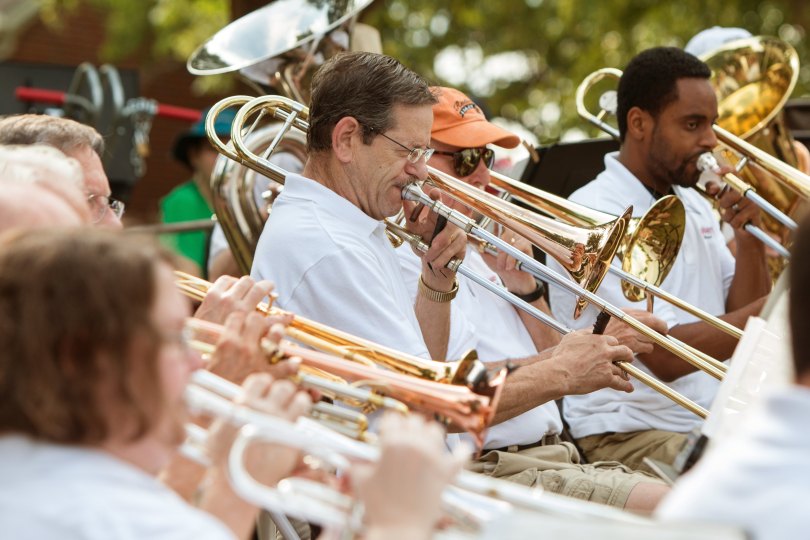
Okay, I doubt there is any true rational cause for anyone to be afraid of picking up an instrument or singing in a group, except for a touch of stage fright (if it’s in public) or that always-present “fear of failure” (possibly resisting the urge to make a fool of ourselves?). But, making music or opening ourselves up to creative self-expression is one of the greatest gifts we have to personally experience and share. No one hesitates to play a game of cards, catch a ball, or swim with the kids… even if “we are not all that good at it!” So, why are some adults so reticent about letting down their hair, finding and dusting off that old band or string instrument in the attic, warming up their “chops,” brushing up on the fundamentals, and playing a few notes? Remember all the fun you had in school music? (Sure, you might be more than a little rusty, but that’s understandable. Do you recall your music teacher’s instructions on how to hold the instrument, read the notes, and “find” the fingerings? It’s not too hard to re-orient and recapture those early steps.)
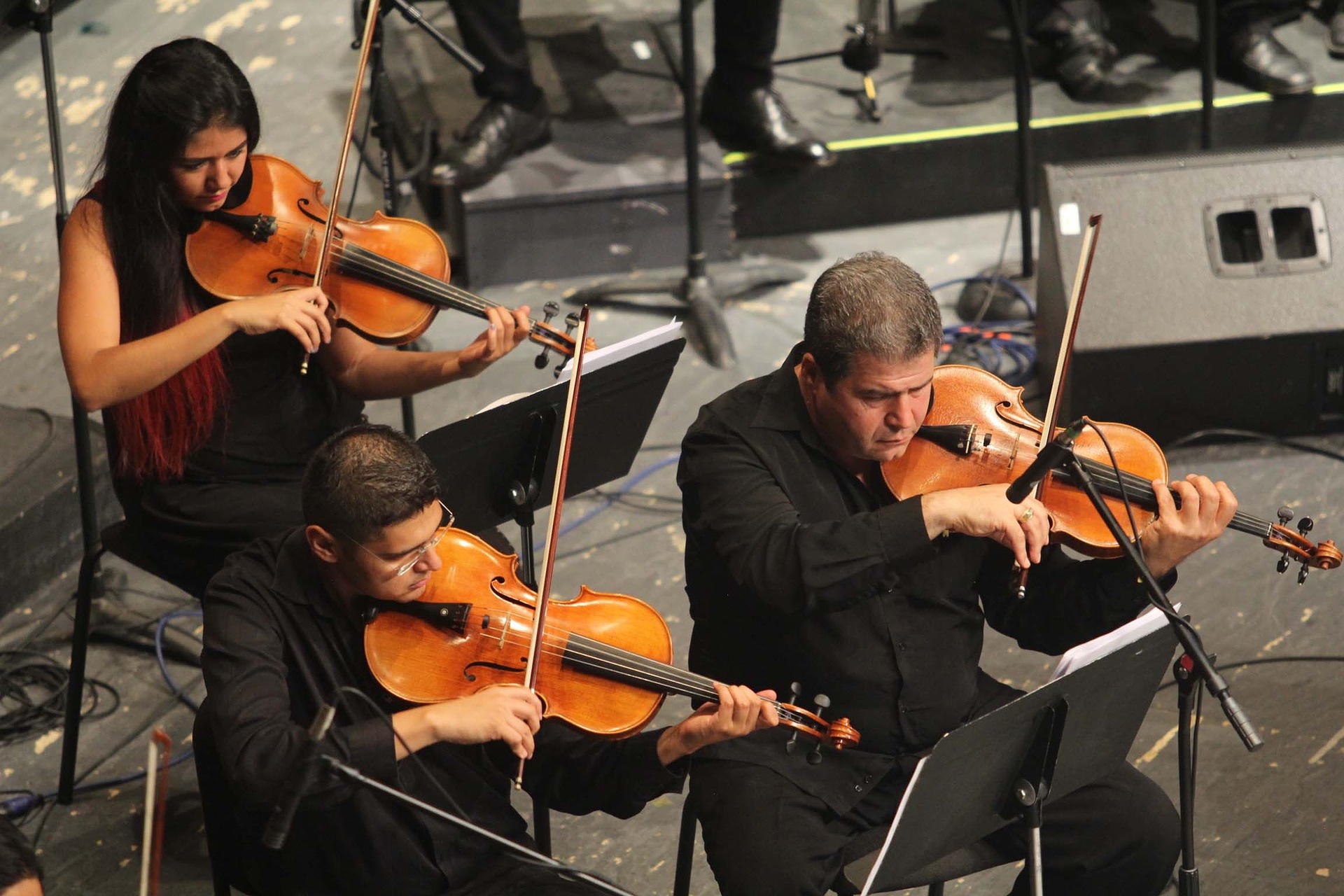
We can and should be inspired by those breathtaking performances of professional musicians, singers, dancers, and actors – their amazing artistry always looks and sounds so perfect! But are you telling me that art is only for the virtuosos, maestros, or experts? No, music is for everyone! It is timeless and does not discriminate by age. It offers meaningful life-long learning for all stages, past experiences, and ability levels.

As if you really need stats to prove the benefits of music, please peruse the NAMM Foundation website here: https://www.nammfoundation.org/articles/2014-06-01/Benefits-learning-and-playing-music-adults. They quote “the value of recreational music-making to be scientifically proven” to help the U.S. workplace by reducing employee stress, depression, burnout, and improving worker retention. In addition, as a music teacher and former school choral and orchestra director, I frequently share this quote by Don McMannis in “Use Music to Develop Kids’ Skill and Character” from the March 19, 2009 online post of Edutopia:

“Music has positive effects on people’s emotions and creativity. When we sing together, we synchronize our breathing and feel more connected. Music is also an effective, almost magical medium for learning and retaining information, [because] it activates three different centers of the brain at the same time: language, hearing, and rhythmic motor control. By inducing emotions, it also creates a heightened condition of awareness and mental acuity…”

As for “us seniors,” there are so many amazing benefits of music lessons throughout our “golden years!”

  1. Cognitive well-being (“reduce the risk of cognitive decline…”)
  2. Emotional resilience (“provide a powerful outlet for self-expression and emotional release…”)
  3. Physical benefits (“improve motor skills, enhance coordination, increase overall physical activity…”)
  4. Stress reduction (“therapeutic escape from daily worries… relax and unwind…”)
  5. Lifelong learning (“promote a sense of ongoing personal growth… the joy of learning and mastering new techniques…”)
  6. Social connection (“bringing people together… combat social isolation… and create a sense of belonging.”)

Check out additional information at the New York Musician’s Center blog here: https://nymcmusic.com/f/the-remarkable-benefits-of-music-lessons-for-senior-citizens

Truly, you have no valid excuses! I am guessing there are many community choral, jazz, band, and orchestra ensembles inside and outside the surrounding areas where you live. And don’t forget to consider visiting a local church to join their choir!

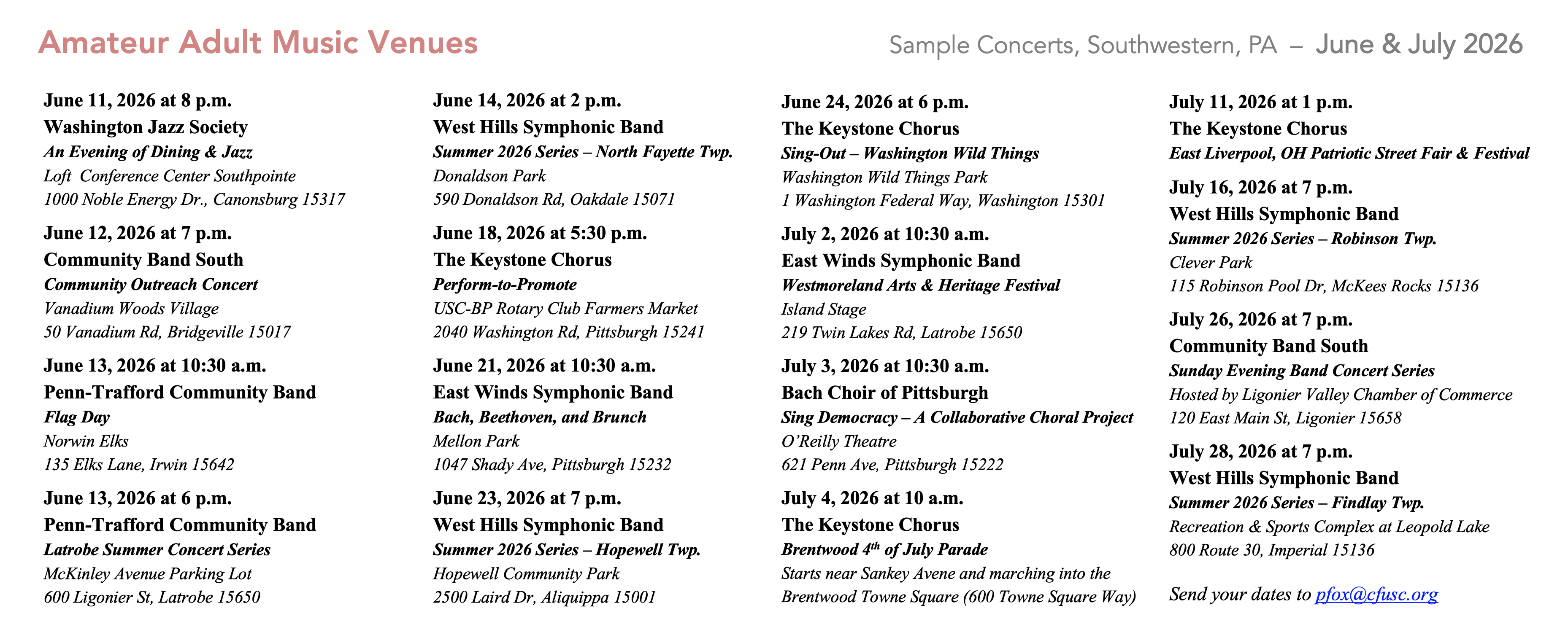
In the southwestern Pennsylvania area where I reside, there are numerous opportunities for getting involved in adult amateur music, art, dance, and drama venues. I have the links to 20 ensembles from the Greater Pittsburgh area alone on the Community Foundation of Upper St. Clair Arts page here. Take a look at a few of their upcoming June and July concerts below.
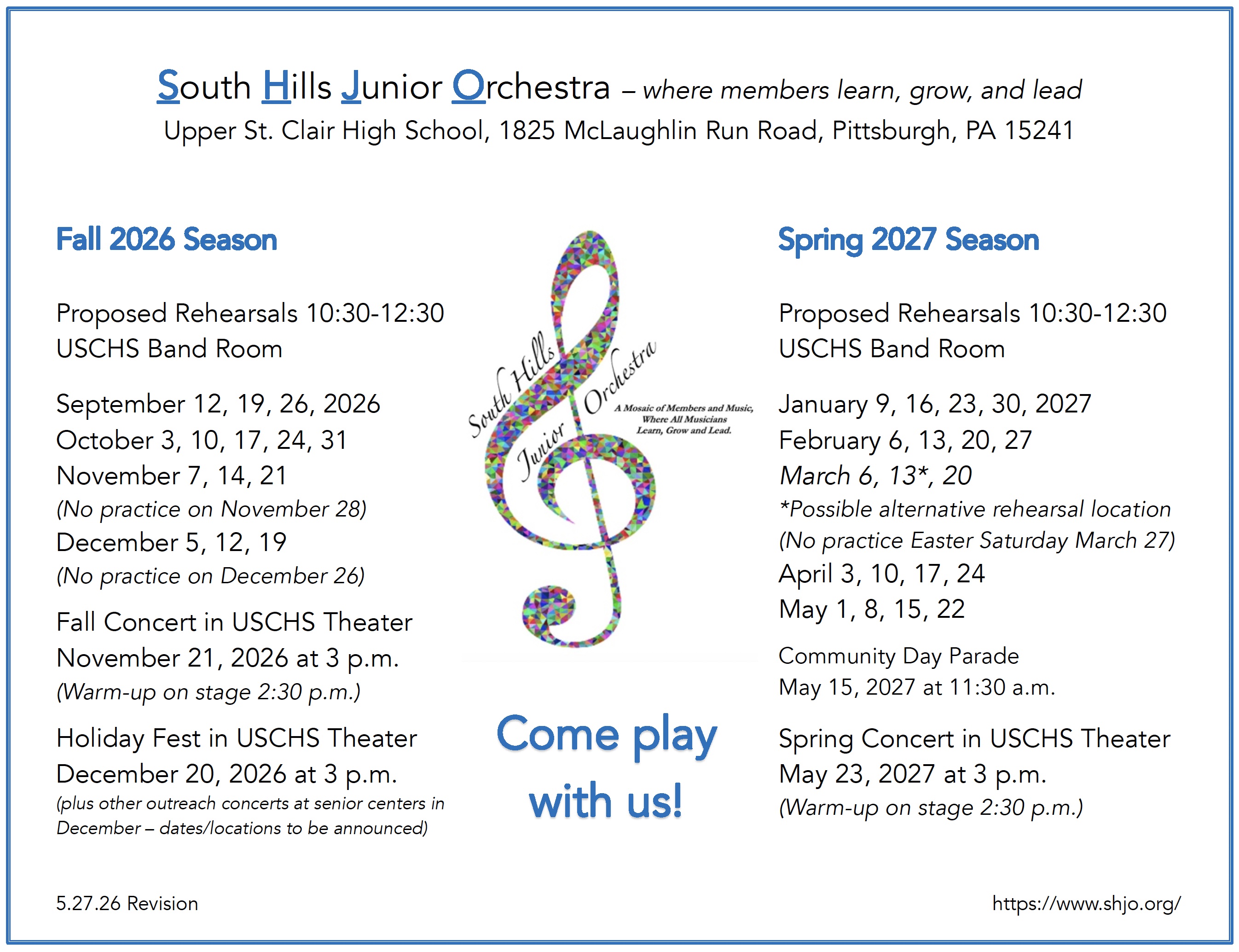
This fall, adults and “music lovers of all ages” should drop-in to several open, free-trial, no-obligation-to-join rehearsals of the South Hills Junior Orchestra (SHJO) on Saturdays from 10:30 a.m. to 12:30 p.m. in the Upper St. Clair High School (USCHS) Band Room. After the successes of SHJO’s annual spring concert on May 23 and a community outreach performance at the Paramount Senior Living Facility in Peters Township on May 30, we’re taking a break over the summer. But mark your calendars! Our next practice is scheduled for September 12, 2026. Here are our proposed dates for 2026-27:
If you live in the South Hills/Pittsburgh area, musicians are also invited to another group that rehearses at USCHS, the Community Band South (adults only). Directed by Max Gonano, CBS meets most Monday evenings at 7:30 p.m., even over the summer months! Bring your instrument!

The next time you host a dinner party, bring out that old song book or pick up your fiddle or flute! Gather around the piano and encourage your family and friends to join in a sing-along. Hopefully it does not take a few glasses of wine before everyone can shed their inhibitions and relax a little… and enjoy the incredible effects of communal music-making! What do you have to lose? There’s no time like the present!

Stamp out the phobia of amateur music-making!

PKF

© 2024, 2026 Paul K. Fox

WHERE Should You Retire?

This article was first released in the Fall 2018 state journal of the Pennsylvania Music Educators Association, PMEA News.


Do you know where you’re going to?
Do you like the things that life is showing you?
Where are you going to, do you know?
Do you get what you’re hoping for?
When you look behind you there’s no open door.
What are you hoping for, do you know?

Lyrics to “Do You Know Where You’re Going To?” and the “Theme from Mahogany” by Michael Masser and Gerald Goffin

Sung and recorded by Diana Ross, Mariah Carey, and Tina Arena


What are the three most important factors to consider before choosing your retirement destination?

  1. Location
  2. Location
  3. Location.


people-3217855_1920_MabelAmber

Much has already been discussed and archived here at this blog-site about definitions (“the what”) and strategies (“the how”) for a happy retirement. And deciding to retire (“the when”) is a very personal issue, something in which only you and perhaps your closest family members may have a voice at the appropriate time and setting.

Now, what about “the where?”

According to many advisors, including Melissa Phipps in her The Balance blog-post “Find Out Where You Should Retire” (https://www.thebalance.com/where-should-i-retire-2894254), your deliberation may be affected by a number of influences:

  • Personal preference: stay local or go elsewhere?
  • Housing
  • Mortgage?
  • Taxes
  • Your health and mobility
  • Proximity to family, children/grandchildren?
  • Human services, recreation, history/cultural attractions, shopping, and transportation

The US Census Bureau reports that 49 out of 50 people over the age of 65 stay right where they are when they retire. Phipps advises, “If your current hometown is affordable, close to friends and family, and near activities and entertainment you most enjoy, why move for the sake of moving? Instead, consider whether the need for change can be satisfied through more frequent brief vacations, or by purchasing an inexpensive weekend getaway home.”

early-morning-299735_1920_werner22brigitte

However, are there advantages to downsizing and leaving your current abode?

You may want to read “Should You Downsize in Retirement?” by Casey Dowd of Fox Business at https://www.foxbusiness.com/features/should-you-downsize-in-retirement. I also recommend https://www.newretirement.com/retirement/your-complete-guide-to-downsizing-for-retirement-12-tips-for-a-happily-ever-after/.

Posted on The Motley Fool is Christy Bieber’s article “Where Should You Retire? These 5 Factors Will Help You Decide” (https://www.fool.com/investing/2017/09/19/where-should-you-retire-these-5-factors-will-help.aspx). She focuses on that scary “e” word – economics.

polynesia-3021072_1920_Julius_Silver

“The world is your oyster once you no longer need to work – you could technically move anywhere. But there are, of course, practical considerations in deciding where you’ll live – and while dreaming about a mega-mansion on the beach may be enjoyable, it’s also important to make a viable plan. Your choice of location can affect how much you need to save, how long your money will last, and even what happens to your health and to your legacy.”

Most of the online retirement gurus recommend careful and comprehensive research, even spending time to visit and “live awhile” in the places on your “short list,” and educate yourself in these areas:

  • Population, economy, attractions, and general info (visit the Internet sites of the local Chamber of Commerce, Economic Development Agency, and visitor bureaus)
  • Climate (review interactive climate data tools from the National Climatic Data Center)
  • Cost of Living (see “cost of living comparison calculator” of the Council for Community and Economic Research)
  • Crime Rates (read the PBI’s annual “Crime in the United States: Uniform Crime Reports”)
  • Health Care (check out the U.S. News & World Report “Guide to the Best Hospitals” data base)

portugal-2423629_1920_larahcv

If you are looking for a book on the subject of “where to live in retirement,” there are many. At least, be sure to check out the 2007 revised edition of The New Retirement – The Ultimate Guide to the Rest of Your Life by Jan Cullinane and Cathy Fitzgerald (Rodale) with more than 30 new recommendations for specific communities to consider for retirement, plus updated home prices and cost-of-living figures for existing communities, new niche lifestyles including club living, spa living, communities that are also cities, and moving where there is free land, and an expanded section on second homes.

If you are still a little “unsettled on where to settle” and enjoy taking online quizzes, check out these links (to which, although fun, I cannot vouch for their validity):

Although geography may play a crucial role in this debate, so does your choice of floor plan. (One could argue that the other three most important factors in choosing a retirement destination are mobility, mobility, and mobility!) When I retired in 2013, I suffered severe pain in my Achilles heels requiring ten weeks of challenging physical therapy. During recovery, I walked my two puppies past numerous one-story ranch structures in my neighborhood, feeling a little jealous that I had to return to a split level with its multitude of stairs – four sets of five steps! The trend in our area for new construction for retirees is a one-floor patio home with a “great room” (kitchen, dining and family/game room areas) that incorporates the safety and ease of future “senior access” while accommodating the needs of multi-generational use of the residence, with these practical design elements:

  • Wheel chair access, especially in the bathrooms
  • Pull-out and pull-down shelving
  • Multi-level counters
  • Remote control blinds and windows
  • Slip resistance floors
  • Open floor plan
  • Bright, functional lighting
  • Flat-panel light switches

(Source: https://houseplans.co/articles/planning-for-retirement-house-plans-for-seniors/)

Miami panorama-2117310_1920_pixexid

Finally, this is too important an issue to “pull any punches” without a few more resources (below) for your consideration. Good luck, and happy trails, retirees!


PKF

© 2018 Paul K. Fox

venice-2476300_1920_kirkandmimi

Photo credits from Pixabay.com: “hands” by stokpic, “people” by MabelAmber, “early morning” by werner22brigitte, “polynesia” by Julius_Silver, “portugal” by larahcv, “panorama” by pixexid, and “venice” by kirkandmimi.