How to Peruse www.PaulFox.blog

A Guide for Music Educators at All Stages of their Career

It’s time for a celebration! Since its creation in July 2015, this represents the 217th blog-post at this WordPress website!

My apologies to first-time visitors who may find themselves a bit overwhelmed at the incredible volume of submissions posted to this library.

The purpose of this project after my retirement from public school music in June 2013 was to archive my writings and organize them in one convenient location. As Simon Sinek would emphasize at one of his keynote speeches, the essential “WHY” and rationale for http://www.paulfox.blog is the value I hope my articles could serve to prospective music teachers “in the trenches.” Many of us retirees just want to feel needed and seek opportunities to offer the benefits of our “boots on the ground” to future professionals. We seek to “matter” throughout our retirement and stay active in our post-employment years. The mission and goal of this website is to “make a difference” and share a legacy of more than five decades in the profession, providing the supports of hard-earned lessons learned, anecdotes shared, short cuts developed, perspectives observed, and additional research and practical tips found applicable to the field of music education and creative self-expression.

I write for myself, not to earn credit or receive validation from any external source. But, of course, I hope somewhere out these someone eventually finds these “creations,” reads them, and actually puts some the material to work for them in their job.

Unraveling the Maze of Menus

Articles posted at most blog-sites are published in chronological order… formatted to what computer programmers would term as “sequential.” This structure is similar to a tutorial, directing the reader to consume the contents from beginning to end (Introduction, Chapter 1, Chapter 2, etc.), reading “in sequence” earlier posts for full comprehension. This is the same basic format of paulfox.blog.

However, for academic or research study, my articles may be viewed in any order, similar to the “random access” format of a reference manual. (Go to the specific relevant section you are seeking information.) Everything is digitally stored under these categories (also accessible from links printed inside the right panel):

A reader might prefer to skim through an outline of potential reading material by clicking on the menu bar at the top of the page:

  • About: My contact information, curriculum vitae, recent workshop or conference presentations, professional brochure, and printer-friendly catalogs of articles and presentations
  • Inside: A frequently updated index (by subject) of all blog-posts at this site
  • Training/Jobs: Listings of articles and online resources (in chronological order) and past workshop/conference slide summaries and handouts (in reverse chronological order – most recent first) on the topics of pre- and inservice training in music education, ethics, building professionalism, and techniques for marketing, interviewing, and landing a job.
  • Care: Presentations, recommended books, and website resources on health, wellness, and burnout/stress remediation, and developing a self-care plan
  • Retirees: Alphabetical reference to articles and other resources on retirement preparation, mostly on post-employment self-reinvention and truly “living the dream” in our senior years
  • Creativity: My three-part series on creativity in education plus a short list of creativity geniuses/educational gurus and their books
  • Firesides: Tips for the enrichment of musicians of all ages, including practice hacks/hints and a collection of PDFs presented in the South Hills Junior Orchestra Online Academy

Explore the Links, But Beware!

Thousands of hours has been spent writing these “epistles,” and whenever possible, I try to reference background information, attributions, follow-ups or research sources. The Internet is an amazing tool, but it should not come as a surprise to anyone that some of the links in my older blogs may have broken connections or return errors. This is best explained by Google AI:

“Links on the internet become inactive, known as link rot, when a website owner deletes a page, changes the URL structure, or shuts down a domain entirely. Over time, servers go offline, companies close, and paid web hosting plans expire, which breaks the digital path to the original content.” [1, 2, 3, 4, 5]

Copyrighted material may be taken down as the authors move on to other pursuits or decide to restrict it to print-publish their work. A case in point, one of my favorite “experts” on creativity and author of Instructional Strategies for Thinking, Collaboration, and Motivation, Dr. Curtis Bonk from the Indiana University of Bloomington removed his amazing graduate course handouts and PowerPoints referred to in several of my creativity blogs. I still lament the fact that his “Best of Bonk” website is gone!

Whenever possible, I “nail down” a snapshot of the data, context, and clarifications with supportive PDF files and copies of my slide decks. At the time of their creation, the links were active. However, it has become necessary to update many of my more recent versions of commonly-repeated presentations, e.g., Retirement 101, Interview Clinic, Take the E-Train (Ethics), etc. The older the conception of the work, the more likely that something in it has become inactive.

If you find something is “broken,” please give me a holler. Send me an email describing the problem to paulkfox.usc@gmail.com.
Comments Welcomed!

Directly under the title of each blog are printed the date of its creation, my signature, and a small symbol with the text “Leave a Comment.” CLICK ON THIS! I encourage feedback! Share your perspective. Add your own experiences, thoughts, or sources of information. I fervently hope I am not needlessly shouting in a wind storm trying to reach an audience who cannot hear me but could perhaps be best served by this open, two-way communications and divergent opinions.

Some of the posts receive significant initial and repeat traffic. I’ve noticed especially for those blogs on marketing professionalism and interview tips/questions, things pick-up in early spring, perhaps when graduating music education majors may be completing preparations for employment screenings. (Believe-it-or-not, one of the highest rated blogs last month was Dress for Success at Teacher Interviews!) So, if you have anything to add to help pre-service colleagues (soon-to-become teachers), click on the comment symbol or send me an email and share your advice! I would be happy to post your insights in a future blog!
Highlights

These might be my “top ten” blogs (in alphabetical order) to get a good idea what is available for further research.

  1. 52 Creative Tips to Supercharge the School Musical
  2. Creativity in Education
  3. Ethics Follow-up with links to all four parts of a general discussion on school ethics)
  4. The Five Cs of Self-Care – Teachers Take Charge of Your Wellness
  5. Get a Job Toolbox
  6. The Importance of Music Education
  7. Job Interview Rubrics
  8. Leaders Flush
  9. RECAP – Retirement Resources – A Treasure Chest of Tips for “Living the Dream!”
  10. Transitioning from Collegiate to Professional – Part 3 with links to all three parts on career preparation)

Just for fun, on occasion I voiced several “rants and raves” (yes, I am opinionated) and ventured into new topics unrelated to a career in education, such as pets (e.g. In Defense of Dogs, Pet Citizenship, Unconditional Love – Dogs!) and book bucket lists (For Book-Lovers – Retired or Not and Summer Reading).

I still recommend perusing the index (“Inside”) for a more in depth chronological discovery of these topics, or click on the other links in the top menu bar. (Some of these sections offer alphabetical listings of the titles to facilitate a thorough examination.)

Go explore! Happy hunting!

Guest Bloggers

I would be amiss if I did not recognize several talented guest authors who have contributed meaningful articles to this forum.

Ed Carter

Katherine Langford

Booking Speaking Engagements

Conferences and workshops have become a “retirement hobby” for me. Please visit my “About” section for a history of my most recent educational presentations. Contact me if you would like more information on availability. The following represent my most-requested sessions, many of which have sample slide summaries within this blog site for you to download and review:

  • Bookends – The Life Cycle of a Successful & Happy Music Educator
  • Catch the E3-Train – Essential Ethics for the Educator
  • Empowering Educator & Student Leadership
  • Hands-on Conducting
  • The Interview Clinic – Exercises to Improve Your Performances at Employment Screenings
  • Retirement 101 – It’s NOT All About the Money
  • Self-Care Cookbook – Recipes and Resources for Teachers
  • Social Media – Boon or Nemesis?
  • Supercharge the School Musical

Keep Connected! – Looking Forward to Read YOUR Feedback!

PKF

© 2026 Paul K. Fox

Tis the Season for Musicals

Support and Participate in Your School Productions!

And now… a non-paid advertisement in support of MS/HS music drama programs… also perfect for celebrating “Music in Our Schools’ Month!” Please pass this on!

The coming springtime brings birds, flowers, bees, and… the magic of live theater! Lasting from early March to late May, the season of school musicals is now upon us! Here’s a friendly reminder from a retired public-school musical director/producer to attend one or more of your local shows! I guarantee it: You won’t be sorry! (For singers and instrumentalists already in a youth, church, or community ensemble, this is message is probably “singing to the choir!”)

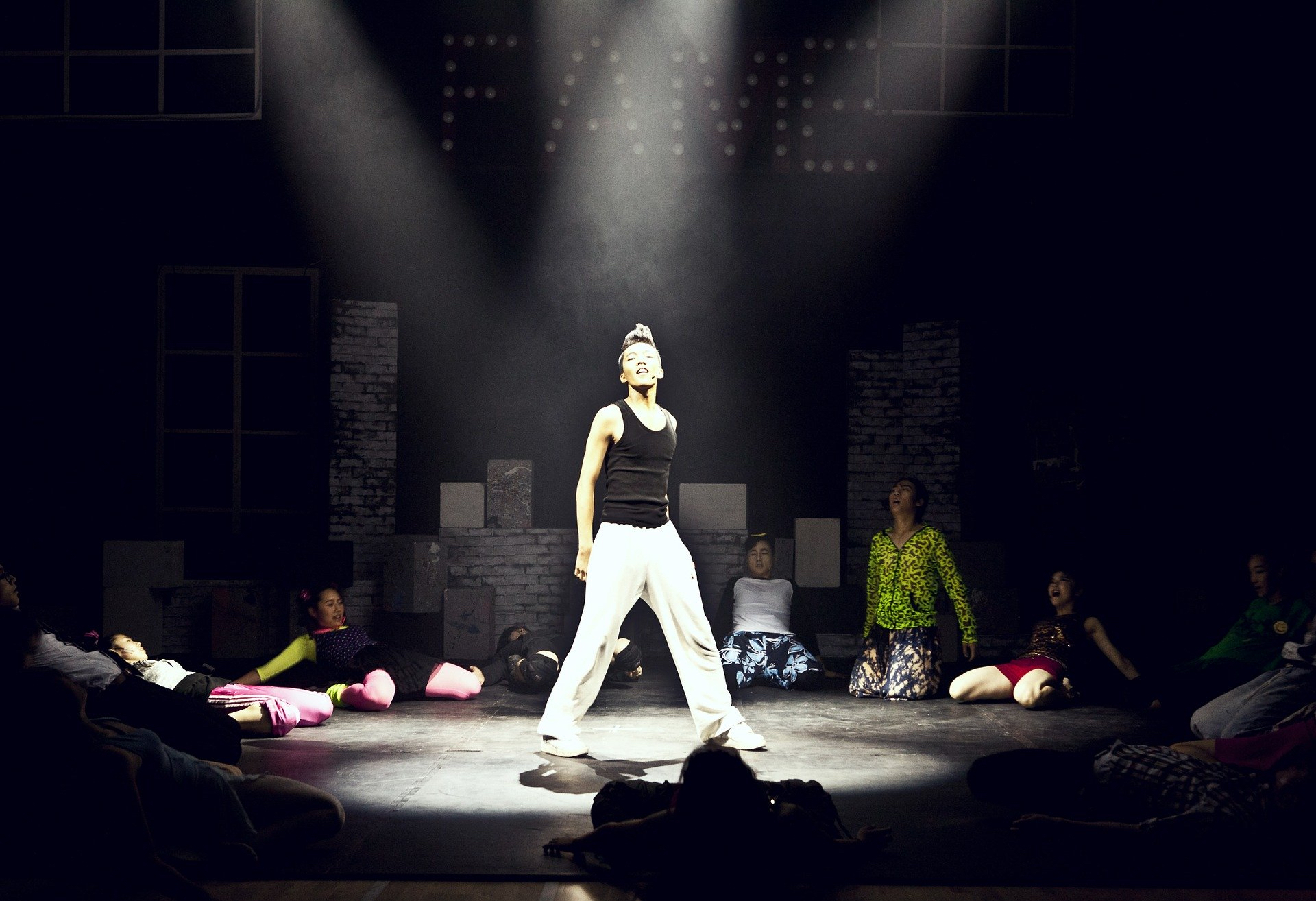
dance-430553_1920_ bigter choiThe school musical allows all of the Fine and Performing Arts the chance to collaborate, create, communicate, and “come together” in the presentation of a new transformed art form… everything from acting, dancing, choral, chamber, and solo singing, and instrumental accompaniment… to costumes, make-up, sets, props, lighting, sound, and special-effects. The music and stage crafts “make the magic” to stir your imagination for an evening or matinee of wonderful entertainment and enlightenment!

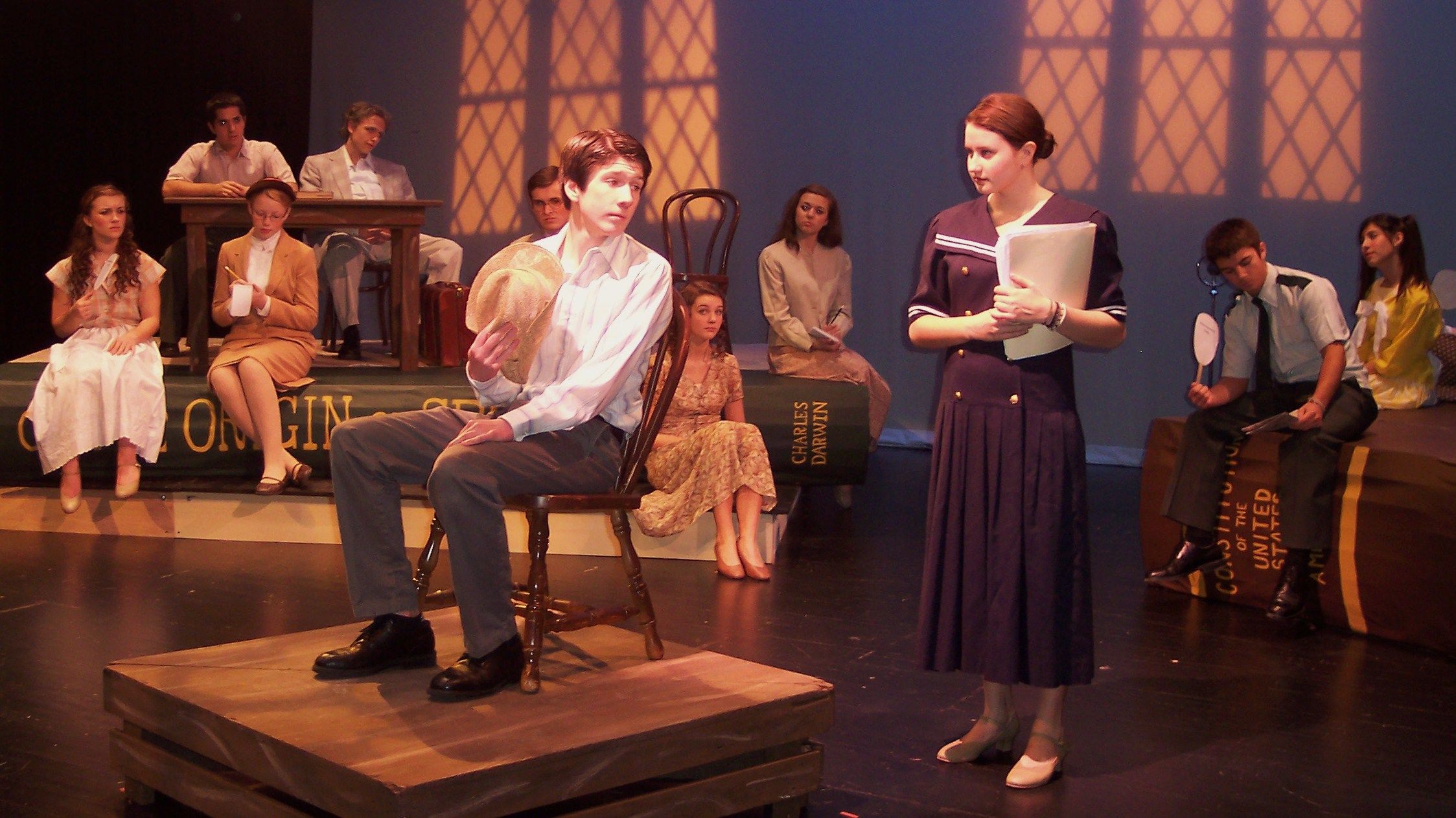
Many of our local high school musicals secure the rights for the same licensed productions that you see in downtown professional productions (like Pittsburgh Civic Light Opera and PNC Broadway series in my area) – one might say “professional grade” intended to be performed by seasoned professionals and not “watered down.” But, regardless of the incredibly challenging vocal ranges, dance steps and athleticism, virtuoso musical passages, and instant scene changes, the students always “rise to the occasion,” and perform amazingly artistic, realistic, funny, serious, romantic, thought-provoking, and inspiring numbers, providing a once-in-a-lifetime opportunity to share with your entire family!

supercharge the musical box
https://paulfox.blog/2015/08/18/52-creative-tips-to-supercharge-the-school-musical/

The scripts and scores for each show provide only the barest information on how to put everything together. The directors, choreographers, and set designers have to determine the selection and placement of the cast on the stage (defining their blocking and all entrances/exits) as well as the kind of backdrops, props, and platforms to build, position, and move (in and out) from scene to scene. Because of this, I can offer you the assurance that no two presentations of a single production will ever be the same. In addition, no two shows performed at different sites will even be remotely similar. The variety and unique talents of the leads, chorus, dancers, pit orchestra, and production crews, as well as the vision and leadership of the artistic staff, will assure that the audience will experience many surprises and excitement every time they come to the theater!

Support your talented musicians, singers, dancers, and production-crew members. Buy a ticket. Invite other members of your extended family, coworkers, and neighbors to escape their wintry doldrums and enjoy an outing. Do you love theater? Consider volunteering to help the musical, assisting in the peripheral such as sewing costumes, distributing posters, selling tickets, building sets, painting the scenery, buying a program advertisement or well-wisher announcement, or chaperoning the parties. Contact the school’s musical director or Performing Arts chairperson to find out additional ways to help “make a difference” in your school’s Performing Arts.

ShrekThe school district at which I am proud to have served for 33 years as music teacher, 30 years as HS producer, and 7 years as Performing Arts Curriculum Leader is putting on SHREK – The Musical. Their “grand opening” for two weeks of shows is March 6, 2020 at 7:30 p.m. in the Upper St. Clair HS Theater, 1825 McLaughlin Run Rd., Pittsburgh, PA 15241.
What else is happening in our southwestern PA area? At the time of this blog-post, we learned of a few of these upcoming HS musicals. (Be sure to check in with your local district to find out what is playing, dates, and times, and how to reserve show tickets. If all else fails and you cannot find the announcement on their school website, call the building principal’s secretary who usually knows “what’s going on!”)

Sampling of High School Spring Musicals

(Southwestern Pennsylvania from March 5 to May 9, 2020)

  • Ringgold HS: Thoroughly Modern Millie on March 5-7, 2020
  • Upper St. Clair HS: Shrek – The Musical! on March 6-8, 12-14
  • Thomas Jefferson HS Disney’s Newsies! on March 12-15
  • Bethel Park HS: Guys and Dolls on March 18-21
  • Bentworth HS: Shrek – The Musical on March 19-21
  • Peters Township HS: Big Fish on March 19-22
  • Chartiers Houston HS: Beauty and the Beast on March 20-22
  • West Allegheny HS: 9 to 5: The Musical on March 20-22, 27-28
  • West Mifflin HS: The Addams Family on March 26-29
  • South Park HS: Chicago: High School Edition on March 26-29
  • Baldwin HS: The Addams Family on April 1-4
  • Burgettstown MSHS: The Music Man, Jr. on April 2-4
  • Brentwood HS: Annie on April 2-4
  • Elizabeth Forward HS: Drowsy Chaperone on April 2-5
  • Mt. Lebanon HS: Once Upon a Mattress on May 7-9

PKF


hi-res logo 2018The mission of South Hills Junior Orchestra, which rehearses and performs at the Upper St. Clair HS in Pittsburgh, PA, is to support and nurture local school band and orchestra programs, to develop knowledge, understanding, performance skills, and an appreciation of music, to increase an individual member’s self-esteem and self-motivation, and to continue to advance a life-long study of music. Members of the Orchestra learn, grow, and achieve positions of leadership to serve their fellow players.


(For more information about SHJO, please visit www.shjo.org.)

This and all Fox’s Fireside blog-posts are free and available to share with other music students, parents, directors, and supporters of the arts.

Click here for a printable copy of Tis the Season for Musicals.

Other “Fox Firesides” are available at https://paulfox.blog/foxs-firesides/.


© 2020 Paul K. Fox


Photo credits from Pixabay.com: “Staging” by Mauricio Keller and “Dance” by bigter choi

A Collection of Collegiate “Treasures”

3 by 3: Essential Books + Websites for Music Ed Majors

By now, at least several weeks after the holiday/winter break, most of you have probably returned to school and are “back at it” fulfilling your studies in music and education methods. Welcome to the New Year (2019) and good luck on meeting your goals!

It has been my pleasure to present numerous workshops and conference sessions for pre-service, in-service, and retired music educators on a variety of topics: interviewing for a job, marketing professionalism, ethics, transitioning to retirement, supercharging the musical, etc., and have been asked on occasion, “Where do you find all of the information, research, and resources for your blog-posts and talks?

Well.. I’m glad you asked!

book-841171_1920_PourquoiPas

It would be hard to credit one or a few sources on reliable data, insights, and recommendations for career development. The following “gems” – a few ideas from someone who has taught music for more than 40 years – are just my New Year’s “gifts” to you… hopefully useful in your undergraduate or advance degree studies. Please enjoy!

This is probably the wrong time to suggest making a few “buys” for the sake of educational enrichment. College students are bombarded with many required readings of their (often expensive) textbooks and handouts from their comprehensive higher education courses of study. It is somewhat daunting to “cover all the bases,” especially when you may want specific advice and “answers” as a result of being recently thrown into “the real world” of field observations and student teaching. What else would a prospective music teacher need or have time to read? How can we better prepare you for the challenges of our profession?

Since you have to order books (or borrow them from a library), we’ll start with the printed publications. Here are my “top three” for your immediate consideration.


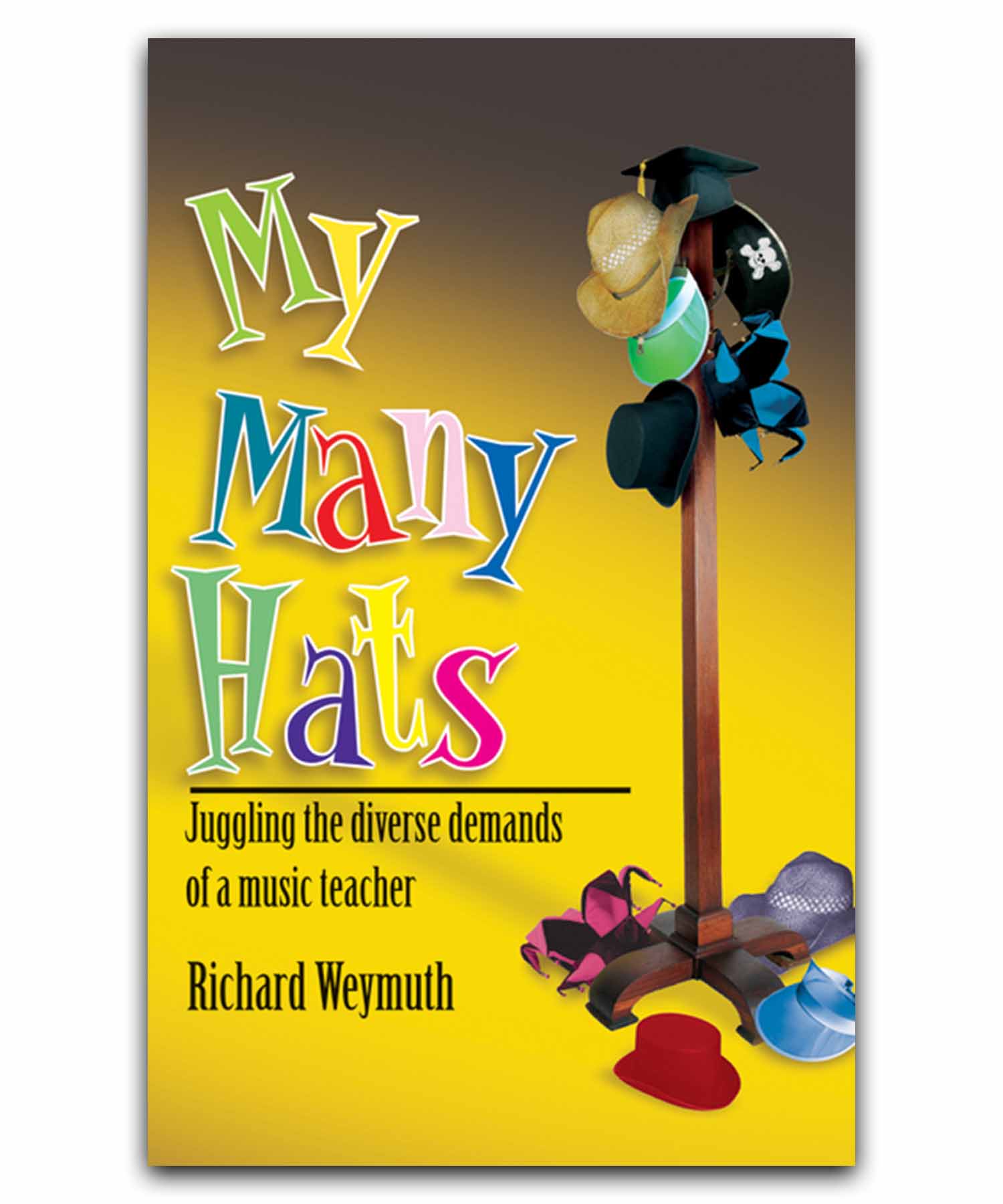
My Many Hats

My Many HatsIn the category of “things I wishes someone would have told me before I was hired to be a school music educator,” the inspirational book, My Many Hats: Juggling the Diverse Demands of a Music Teacher by Richard Weymuth, is a recommended “first stop” and easy “quick-read.” Published by Heritage Music Press (2005), the 130-page paperback serves as an excellent summary of the attributes (or “hats”) of a “master music teacher.” Based on the photos in his work (great “props”), I would have loved to have seen Weymuth’s conference presentations in person as he donned each hat symbolizing the necessary skill-set for a successful educator.

A quote from the author in his Introduction:

“I want my hats to put a smile on your face as you read this book, just as they do for the airport security guards as they go through my bags at the airport. They ask, “Are you a magician? A clown? An entertainer?” My answer is, “Yes, I am a teacher.”

His Table of Contents tells it all:

  1. The Hat of a Ringmaster: Managing your classroom and your time
  2. The Hat of a Leader: Setting the direction and tone of your classroom
  3. The Hat of a Scholar: Learning when “just the facts” are just fine, and when they aren’t
  4. The Hat of a Disciplinarian: The Three C’s: Caring, Consistency, and Control
  5. The Hat of an Eagle: Mastering your eagle eye
  6. The Hat of a Crab: Attitude is everything; what’s yours?
  7. The Hat of a Juggler: Balancing a complicated and demanding class schedule
  8. The Hat of a Banker: Fund raising and budgeting
  9. The Hat of an Artistic Director: Uniforms and musicals and bulletin boards, oh my!
  10. The Hat of a Lobster: Establishing the proper decorum with your students
  11. The Hat of a Pirate: Finding a job you will treasure
  12. The Hat of a Bear: Learning to “grin and bear it” in difficult situations
  13. The Hat of a Peacock: Having and creating pride in your program
  14. The Hat of Applause: Rewarding and recognizing yourself
  15. The Hat of a Flamingo: Sticking out your neck and flapping your wings

Here are a couple sections that should be emphasized if you are currently a junior or senior music education major.

All student or first-year teachers should focus on his/her three C’s of class discipline in Chapter 4: “Caring, Consistency, and Control.” In order to resolve problems and seek advice from local mentors (especially help from second and third-year teachers who may have just gone through similar conflicts), he poses these questions:

  • What is the specific discipline problem that is currently bothering you?
  • Who could you interview in your educational community to help with this problem?
  • How did they handle the problem?
  • What discipline solutions worked and what didn’t work?

girl-3718522_1920_nastya_gepp

Those getting ready for the job search and interviewing process this year must turn to Chapter 11 immediately! “Just like a pirate, you are searching for your treasure, or at least a job you will treasure.” Suggesting that first-year teachers should stay in their assignment for a minimum of three years (to show “you are a stable teacher and are dedicated to the district”), Weymuth offers guidance in these areas:

  • The Application Process
    • Cover Letter
    • Résumé
  • The Interview
    • Make a Good Impression
    • The First-Class Interview
    • Frequently Asked Questions
  • The Second Interview

The book is worth the $17.95 price alone for the interview questions on pages 85-88.

Once you “land a job” and are assigned extra-curricular duties like directing after-school ensembles, plays, and perhaps fund-raising for trips, shows, uniforms, or instruments, come back to Chapter 8 for “The Hat of a Banker” and Chapter 9 for “The Hat of an Artistic Director.” His guidelines for moneymaking and record-keeping include insightful sub-sections on:

  • Planning and Administering a Fund-Raising Activity
  • Possible Fund-Raisers
  • Motivating Students to Sell, Sell, Sell (Set Goals, Prizes, and Tracking)
  • Budgeting

Having previously posted a blog on “Supercharging the School Musical,”  I was impressed with his pages 65-69 on “Show and Concert Choir Dress” and The Musical,” and especially the “Appendix – Resources Books for Producing a Musical” in the back of the book.


Case Studies in Music Education

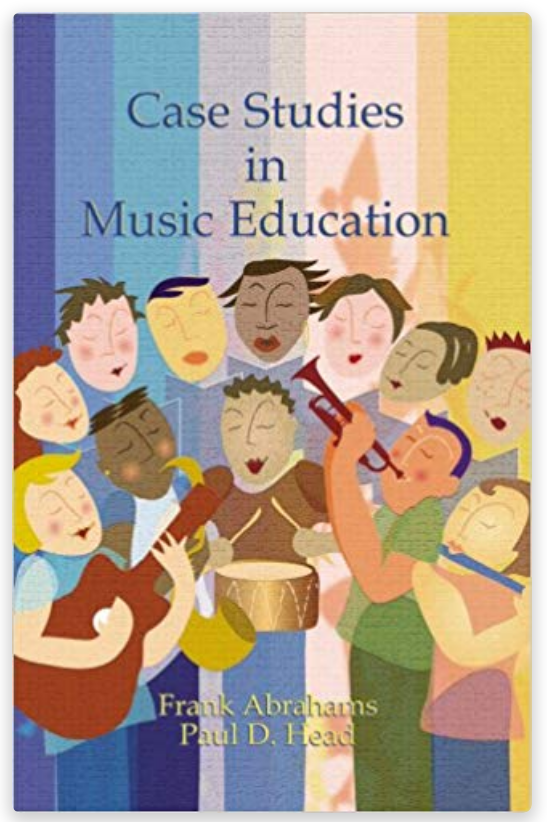
Case Studies in Music EducationNext, I would like to direct pre-service and new music teachers to Case Studies in Music Education by Frank Abrahams and Paul D. Head. This would be an invaluable aid to “facilitate dialogue, problem posing, and problem solving” from college students (in methods classes?) and “rookie” teachers to veteran educators.

Using the format of Introduction, Exposition, Development, Improvisation, and Recapitulation known by all music professionals, each chapter presents a scenario with a moral dilemma that many music educators face in the daily execution of their teaching responsibilities.


“How should a music teacher balance learning and performing? What is the best way to handle an angry parent? What are the consequences of the grades teachers assign? What are the best ways to discipline students? How should teachers relate to the administrators and to other teachers? The emphasis here is not on the solution, but on the process. There are many viable approaches to nearly every obstacle, but before any meaningful long-term solutions can be made, teachers must identify their own personal philosophy of music education and recognize those traits that are admirable in another’s style.”

―Excerpt from back cover of Case Studies in Music Education, Second Edition, by Frank Abrahams and Paul D. Head

Case Studies in Music Education provides a frank discussion about the critical real-world issues music teachers face but are rarely addressed in college courses:

  • Balancing the goals of learning and performing music
  • Communications and relationships with parents, administrators, and other staff
  • “Fair use” and other copyright laws

If you are seeking more reflection and peer review of ethical issues in the music education profession, good for you! Few music teachers ever talk about the “e” word. What’s important is not only becoming aware of your state’s/district’s statues on the “teacher’s code of conduct” and dress/behavior expectations, but developing your own ethical “compass” for all professional decision-making. A good companion to the Abrahams and Head book is to peruse my previous blogs on ETHICS (posted in reverse chronological order).


fatigued-1822678_1920_sasint

Enhancing the Professional Practice of Music Teachers

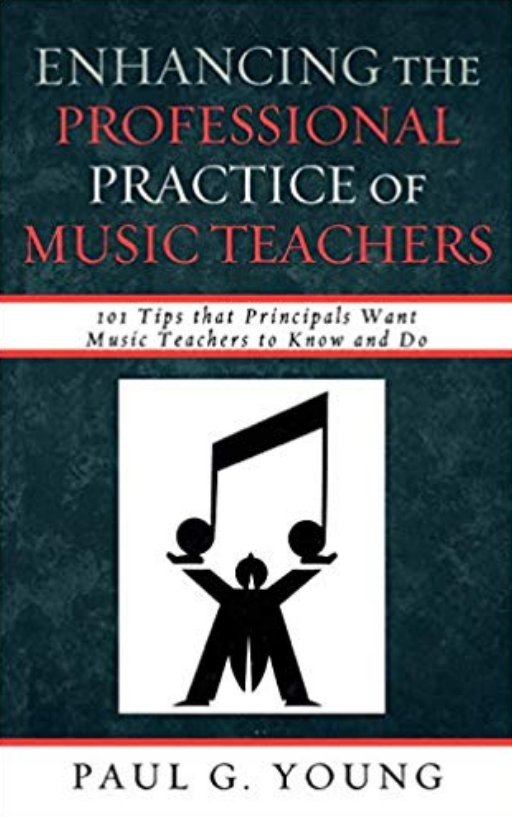
“Book number three” is probably the most expensive, and I could only wish you were already exposed to it in one of your music education courses. If you have not seen it, go ahead and “bite the bullet” in the purchase of Enhancing the Professional Practice of Music Teachers: 101 Tips that Principals Want Music Teachers to Know and Do by Paul G. Young, published by Rowman & Littlefield in 2009. [Note: Be sure to give them your NAfME membership number for a 25% discount!]

“If you want to improve your professional performance and set yourself apart from your colleagues—in any discipline—these tips are for you. If you desire anything less than achieving the very best, you won’t want this book. Rather than addressing research and theory about music education or the “how-to’s” of teaching, Enhancing the Professional Practice of Music Teachers focuses on common-sense qualities and standards of performance that are essential for success-everywhere. Whether you’re considering a career in music education, entering your first year of teaching, or nearing the end of a distinguished tenure, this advice applies to musicians in any setting. Affirming quality performance for experienced teachers and guiding, nurturing, and supporting the novice, Young outlines what great music teachers do. Easy to read and straightforward, read it from beginning to end or focus on tips of interest. Come back time and again for encouragement, ideas, and affirmation of your choice to teach music.”

– https://nafme.org/reading-list-music-educators/

ENhancing the Professional Practice of Music TeachersHis chapters are organized into six tips:
  • Tips That Establish Effective Practice with Students
  • Tips That Support Recruitment
  • Tips That Enhance Instruction
  • Tips That Enhance the Profession
  • Tips for Personal Growth
  • Tips for Professional Growth

Paul Young is a musician and band director who later became an elementary school principal. His book is derived from his experience as a music student, music teacher, and educational leader. The intent of the publication is to guide both new and experienced teachers in continued personal and professional growth. He uses his experience as an administrator to point out to music teachers the traits he has seen in individuals who have become successful in the profession.

Now that you ordered at least one of these for personal research and growth, I should point out other sources of book recommendations for the budding music educator, courtesy of NAfME:


Online Resources

Okay, now comes the “easy-peasy” part, and even more importantly, it’s mostly FREE!

NAfME blogThe first thing I want you to do (and you don’t even have to be a member of NAfME yet, although you should be!) is to take at least a half-hour, scroll down, and read through numerous NAfME “Music in a Minuet” blog-posts, bookmarking any you want to return to at a later date. Go to https://nafme.org/category/news/music-in-a-minuet/. Get ready to be totally immersed into the music education profession in a way no college professor can do, with articles like the following (just a recent sampling):

 

learn-868815_1920_geralt

Hopefully you did receive a little cash in your Christmas stocking… or something from grandma! Now is time to “belly up to the bar” and pay your dues. Every professional school music educator should be a member of their “national association…” NAfME!

Once you do this, get ready to reap countless benefits! First, besides offering a discounted rate for all collegiate members, you will be eligible for a significant price break for full active membership renewal during your first-year of teaching! Then, the doors will open wide to you for all of the many NAfME member services such as classroom resources, professional development, news and publications, special offers for members, etc.

Amplify

Once you are a NAfME member, open up your browser, and go immediately to the NAfME AMPLIFY community discussion platform, instructions posted here. Getting started on AMPLIFY is easy:

  • Go to community.nafme.org.
  • Edit your profile using your NAfME.org member username and personal password.
  • Control what information is visible on your profile.
  • Join/subscribe to communities of your choice – you will automatically be enrolled in Music Educator Central, our general community for all NAfME Members.
  • Control the frequency and format of email notifications from Amplify.

If you prefer, they have created a video or quick-start guide here to set-up your account’s profile, demonstrate the features, and provide some help navigating through the AMPLIFY menus.

Once you familiarize yourself with the forum, find the “Music Educator Central” and “Collegiate” discussion groups… and start reading. If you have a question, post it. AMPLIFY connects you with as many as 60,000 other NAfME members… a powerful resource for networking and finding out “tried and true” techniques, possible solutions to scenarios or problems in the varied settings of school music assignments, and the sharing of news, trends, perspectives, and more!

Try it… you’ll like it! When you feel comfortable with the platform, contribute your own posts, thoughtful responses to comments from the reflections of your “colleagues,” teaching anecdotes, personal pet-peeves, and ???  – you name it! The sky is the limit!

brass-3099922_1920_emkanicepic

Tooting My Own Horn… the “Paulkfoxusc” Website (now paulfox.blog)

Finally, if you have indeed “blown the budget” over family holiday purchases, I can suggest one freebie website that archives a comprehensive listings of blog-posts, links, and books. Under the category of “marketing professionalism,” you can search through blogs placed online in reverse chronological order at https://paulkfoxusc.wordpress.com/category/marketing-professionalism/ or you can “take everything in” from one super-site entitled “Becoming a Music Educator” at https://paulkfoxusc.wordpress.com/becoming-a-music-educator/.

Of course, I have a few “favorite” articles which may provide you a great start to your journey of self-fulfillment:

ipad-820272_1920_1_fancycrave1

Best wishes on you continuing your advancement and personal enrichment towards the realization of a wonderful career in music education!

PKF

© 2019 Paul K. Fox


Photo credits in order from Pixabay.com: “student” by geralt, “book” by PourquoiPas, “girl” by nastya_gepp, “fatigued” by sasint, “learn” by geralt, “brass” by emkanicepic, and “iPad” by fancycrave1


“Creativity Thinking” in Music Education

A Brief Taste of the Research of Peter R. Webster

Peter Webster

Portions reprinted from the chapter “Creative Thinking in Music: Advancing a Model” by Peter R. Webster at www.peterwebster.com/pubs/WillinghamBook.pdf and other sources. For more current research and resources, it is recommended you visit the homepage of Peter Webster, and especially peruse his slides at http://www.peterrwebster.com/Present/keynoteDesertSkies2017.pdf.


“When the history of music education is written many years from now, there will be mention made of the time period represented by the end of the 20th century and the beginning of the new millennium as a critical point in the profession’s history. It will be noted that practical, theoretical, and research-based writings focused attention on both product and process in the teaching and learning of music. Rather than just product (largely music performance), the processes involved in the creation of music are becoming import as well. In addition to the nurturing of fine solo and ensemble performances, a more comprehensive approach to music education is emerging which embraces the study of composition, improvisation, music listening, cultural context, and relationships to other arts. In the United States, this trend began in the sixties with the Comprehensive Musicianship Project and the Manhattanville curriculum project and continued by the Yale, Tanglewood, and Ann Arbor symposia in following years. In more recent times, the National Voluntary Standards in the Arts have come to mark a more comprehensive approach. In other countries such as the United Kingdom and Australia, attention to music composition as a curricula focus has been long established. It is clearly the case that no longer can a music teacher expect to be successful by only teaching children how to perform the music of others in a dictatorial fashion, paying little attention to the development of aesthetic decision-making and musical independence of students.”

“Creativity Thinking and Music Education: Encouraging Students to Make Aesthetic Decisions” by Peter R. Webster

sculpture-3365574_1920_CouleurAccording to the above study by Peter Webster, Scholar-in-Residence at the Thornton School of Music, University of Southern California in Los Angeles, “good music teaching” involves the practice and observation of three types of musical behaviors:

  • Listening (most common)
  • Composition (perhaps the least common)
  • Performance: reproduction of music written by others (common) and the creation of music “in the moment” (improvisation)

Several basic tenants are proposed and reviewed in his work:

  • “Music teachers design environments that help learners construct their personal understanding of music.”
  • “Teachers must teach for independent thought” and “…our students can make aesthetic decisions about music… and to develop a sense of musical independence.”
  • “Student decision-making is predicted on the ability to hear musical possibilities without the presence of the sound… think in sound.”

brain-20424_640_PublicDomainPicturesPeter Webster’s definition of “creativity in music” is succinct: “the engagement of the mind in the active, structured process of thinking in sound for the purpose of producing some product that is new for the creator.” Furthermore, this is a thought process and “we are challenged, as educators, to better understand how the mind works in such matters — hence the term creative thinking.” (Webster, 1987)

Creative thinking in literature reveals five common elements:

  1. A problem solving context
  2. Convergent and divergent thinking skills
  3. Stages in the thinking process
  4. Some aspect of novelty
  5. Usefulness of the resulting product

Webster states, “Studies in many disciplines have revealed that creative thinking generally progresses through stages: preparation, incubation, illumination and verification.”

brain-2062055_1920_ElisaRiva

In 1992, Webster reviewed literature on creative thinking in music education and cited nearly 200 writings. He organized the studies into three major categories:

  1. Theoretical (works based on philosophical or psychological arguments)
  2. Practical (writings designed to inform praxis but not based on empirical evidence)
  3. Empirical (studies of product and process across composition, performance/improvisation and listening, and studies that examined cause and effect and relationship

More recently, he has augmented his research with a bibliography of more than twice that size, including the following references with new trends:

  • violin-3182455_1920_DekoArt-GalleryA heighten interest in the young child and invented music notation and their discussion of it as a window to understanding the child’s knowledge (Barrett, Gromko, MacGregor)
  • New approaches to assessment, including 1. consensual techniques (Hickey), 2. peer assessment (Freed-Garrod), and 3. novice evaluation (Mellor)
  • Attention to the role of collaboration (Kashub, Wiggins, MacDonald/Miell
  • New speculation and experimentation on the role of music technology (Hickey, Stauffer, Ellis)
  • Emergent thinking on the pedagogy of composition teaching (Odam)
  • New work on cause/effect and relationship (Auh, Hagen, Fung)
  • Compositional strategies (Auh, Folkestad)
  • Thought processes while composing (Younker/Smith, Kennedy)
  • New studies on how various musical behaviors (composition/improvisation/listening) relate to one another (Swanwick/Franca, Savage/Challis, Burnard)
  • Developmental patterns of creative thinking (Marsh, Barrett, Younker, Swanwick)
  • Creative performance (Dalgarno)
  • New work on improvisation: 1. empirical (McMillan) and 2. conceptual (Elliott, Kratus, Booth)

banner-1005546_1920_geralt

A few of Webster’s thoughts for future considerations

  • We need more work on social context, particularly the role of popular music to frame compositional and improvisational work. Clearly certain popular idioms that are easy to grasp play a dominant role as entry points for compositional and improvisational thinking, but what is less clear is the path toward more sophisticated skills.
  • We need to study the revision process and how it functions in the teaching context. We need to earn how to go beyond the primitive gesturals to encourage kids to think in sound at a more sophisticated level.
  • treble-clef-1132378_1920_deidiRelated to this are the issues of teacher control: when do we step in to change something or suggest a new path.


  • Experimentation with open-ended vs. more closed-ended tasks for creative teaching and research deserves more study.
  • Experimental validity is an issue. How can we make the actual collection of data more realistic and deal more directly with the time constraints and contexts of “school” vs. out of school.
  • When do children start composing music with “meaning.” After age 9, or long before? What does it mean to compose with “meaning?”
  • When we ask children to compose or improvise or listen or perform “in school,” is the result different than if these behaviors were done out of school?
  • When children compose, are they working from a holistic perspective or are then working locally without a plan?
  • Is it fair or correct to evaluate the quality of children’s creative work with the eyes of adults?
  • Are there stages of creative development in children?
  • Is it really possible to study and define creative listening?


cranium-3244110_1280_GDJ.png

References

Csikszentmihalyi, M. (1997). Creativity: Flow and the psychology of discovery and invention . New York: Harper Collins.

Finke, R., Ward, T., & Smith, S. (1996). Creative cognition: Theory, research, and applications.

Cambridge, MA: MIT Press.

Gardner, H. (1991). The unschooled mind: How children think and how schools should teach. New York: Basic Books.

Gardner, H. (1997). Extraordinary minds: Portraits of exceptional individuals and an examination of our extraordinariness. New York: Basic Books.

Gardner, H. (1999). The disciplined mind : What all students should understand. New York: Simon & Schuster.

Guilford, J. (1950). Creativity. American Psychologist. 5, 444-454.

Guilford, J. (1967). The nature of human intelligence. New York: McGraw-Hill.

Kafai, Y., & Resnick, M. (Eds.). (1996). Constructionism in pracice: Designing, thinking, and learning in a digital world. Mahwah, NJ: Lawrence Erlbaum.

music-1924589_1920_ahkeemhopkins

Mark, M. (1996). Contemporary music education, (3rd ed.) New York: Schirmer Books.

Mayer, R. (1999). Fifty years of creativity research. In: Sternberg, R. (ed.). Handbook of creativity. New York: Cambridge University Press., 449-460.

National Standards for Arts Education. (1994) Reston, VA: Music Educators National Conference.

Sternberg, R. (1999). Handbook of creativity. New York: Cambridge University Press.

Sternberg, R. & Lubart, T. (1999) The concept of creativity: Prospects and paradigms. In: Sternberg, R. (ed.). Handbook of creativity. New York: Cambridge University Press., 3-15.

Wallas, G. (1926). The art of thought. New York: Harcourt, Brace.

Webster, P. (1990). Creativity as creative thinking. Music Educators Journal, 76 (9), 22-28.

Webster, P. (1987). Conceptual bases for creative thinking in music. In Peery, J., Peery, I. & Draper, T. (Eds). Music and child development, (pp. 158-174). New York: Springer-Verlag.

Webster, P. (1992). Research on creative thinking in music: The assessment literature. in R. Colwell (ed.), Handbook of research on music teaching and learning, 266-279. New York, Schirmer Books.

Williams, D., & Webster, P. (1999). Experiencing music technology. (2nd ed.). New York: Schirmer Books.

piano-1496056_1920_allyartist

PKF

© 2018 Paul K. Fox

Photo credits (in order) from Pixabay.com: “CD cover” by kellepics, (picture of Peter Webster from his website), “sculpture” by Couleur, “brain” by PublicDomainPictures, “brain” by ElisaRiva, “violin” by DekoArt-Gallery, “banner” by geralt,  “treble-clef” by deidi, “cranium” by GDJ, “music” by ahkeemhopkins, and “piano” by allyartist.

52 Creative Tips to “Supercharge” the School Musical

Building Student and Community Support and Appreciation of Theater

Several “Tricks of the Trade” that Have Worked for the Upper St. Clair High School Spring Musical in Pittsburgh, PA. Adaptation of my 1992 article published in PMEA News, the state journal of the Pennsylvania Music Educators Association.

GOALS OF THE BLOG: Food for Thought!
  1. Brainstorm “tried and true” techniques that build support for the school musical.
  2. Share shortcuts for adding pizzazz to your PR – better ways to market your show.
  3. Generate discussion and collaborate on ideas… everything from student recruitment to ticket sales.
INTRODUCTION: Let’s examine “WHO and WHY” before “HOW and WHAT”

Multiple-choice question (choose your best guess):

Primarily, for what group of people do you sponsor a musical production?

A) Music students already enrolled in the choral and instrumental classes (and if you have them, drama/dance courses), who are more qualified and deserve the musical as a “reward” for their hard work and loyalty to the Fine Arts program.

Supercharge 1 dancers2B) A small core of the most talented students from the music program, probably those who have studied voice, drama, instruments and/or movement privately outside the school, participated in Pittsburgh Civic Light Opera (CLO) Mini Stars, CLO Academy, or other local professional-caliber performing arts school, amateur theater, dance studios, etc. – the “cream of the crop” – many of whom will continue in theater or music as a career, but will achieve a higher degree of professionalism in performance, and thereby help the musical gain prestige and respect – not a “typical high school show!”

C) The general student body of non-music majors, e.g. a “class play,” which may help to draw some of them into the music program in the future (recruitment), while placing no emphasis on it for the students currently enrolled in music classes since they already have public venues for their self-expression.

D) Members of the community (parents, past drama alumni, amateur performers) alongside the students to share their more advanced skills and provide a higher level of performance and “taste” of realism, while filling the more difficult parts on stage, in the pit, and backstage – in short, building a support base community members by direct participation

E) All of the above with some limitation in using adults as actors

PHILOSOPHY: Sharing a Few Ground Rules for Improving Your Productions
  • Nonlinear problem solving – There are no “right” answers in this business, only ideas.
  • “One size does not fit all!”
  • No one uses “all of this” at one time.
  • Supercharge 1 levels1Focus on your needs and prioritize.
  • Take slow “baby-steps” towards trying a few new things every year, and discard any that do not work!
  • Maintain (and share) YOUR secrets.

Two approaches that drive Upper St. Clair musicals: “bigger is better” and “throw out the rule book!”

SUPER TIPS: Creativity, Marketing, and Professionalism

The following 52 ideas are submitted for your consideration (and adaptation), under the categories of:

  • Encouragement of Larger Numbers of Student Participants (#1-11)
  • Student Leadership and Enrichment Activities (#12-20)
  • Involvement of the Parents and Community (#21-28)
  • Professionalism and Quality Productions (#29-34)
  • Real Promotion of the Show (#35-52)
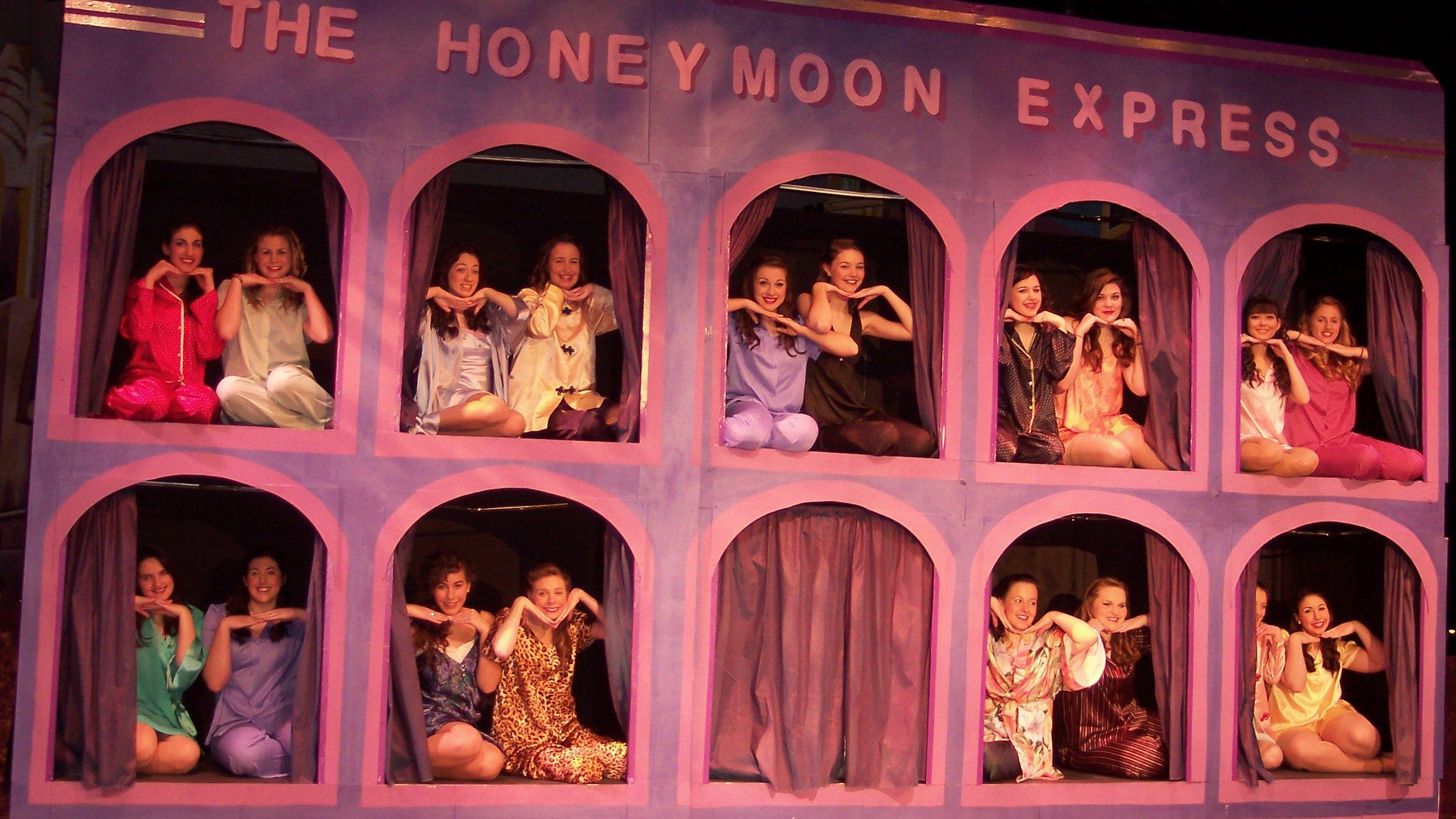
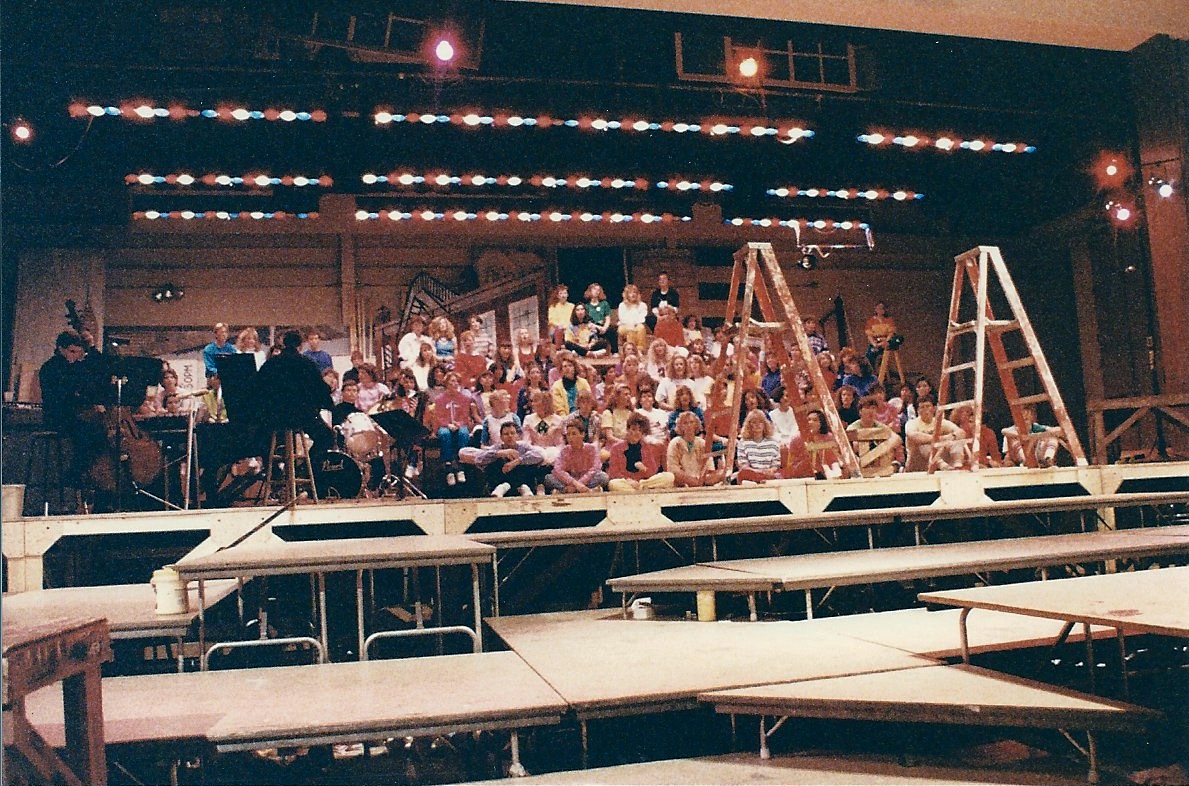
  1. Supercharge 1 levels3Select a show that allows for large numbers in the cast (e.g. Music Man, Fiddler on the Roof, etc.). Many schools select a maximum of 30-40 cast members, which can severely limit the size and scope of the production as well as the audience. In a few scenes, try to stage bigger groups (up to 100-150).
  2. Larger casts place greater demands on the staging director. Be creative in your blocking. Use the middle and side aisles, and build multi-level sets. (A two story set can support upwards of 150 singers for the “Iowa Stubborn” selection in Music Man! A second floor loft would be perfect for Oklahoma!)
  3. Bring the dramatic action on stage closer to the audience by constructing runways, pit ramps or other stage extensions. This also allows for staging a larger cast.
  4. A simpler solution to open up the space and add levels might be to construct a dozen large crates or benches. A low budget production could camouflage band risers.
  5. Supercharge 4 set projection31Adapt several of the song lyrics in the show for adding large choruses. (“Eloquence” from Hello Dolly, for example, can be expanded to have the entire cast enter and interact with the leads.)
  6. For even more color, choreograph these “encores” with a small ensemble of skilled dancers.
  7. Feel free to have the chorus sing several of the leads’ solo selections during the curtain calls.
  8. Be daring! Display your school’s (full size) marching band parading down the aisles for one scene in Music Man! Or use students in the 6th-8th Grade Chorus to sing “Food Glorious Food” in the opening scene of Oliver!
  9. Actively recruit students to try-out for the musical. Secure help from other school staff. For example, ask the football coach to mention the auditions to his players. Nothing will be more flashy (as well as hysterical) than a chorus line of football stars on the front thrust in Hello Dolly!
  10. Do not place limitations on student participation in the spring musical. Some school programs require the prerequisite of enrollment in choral or instrumental classes. The best recruitment of “outside” students to the Music Department may be their involvement and brief “taste” of a musical.
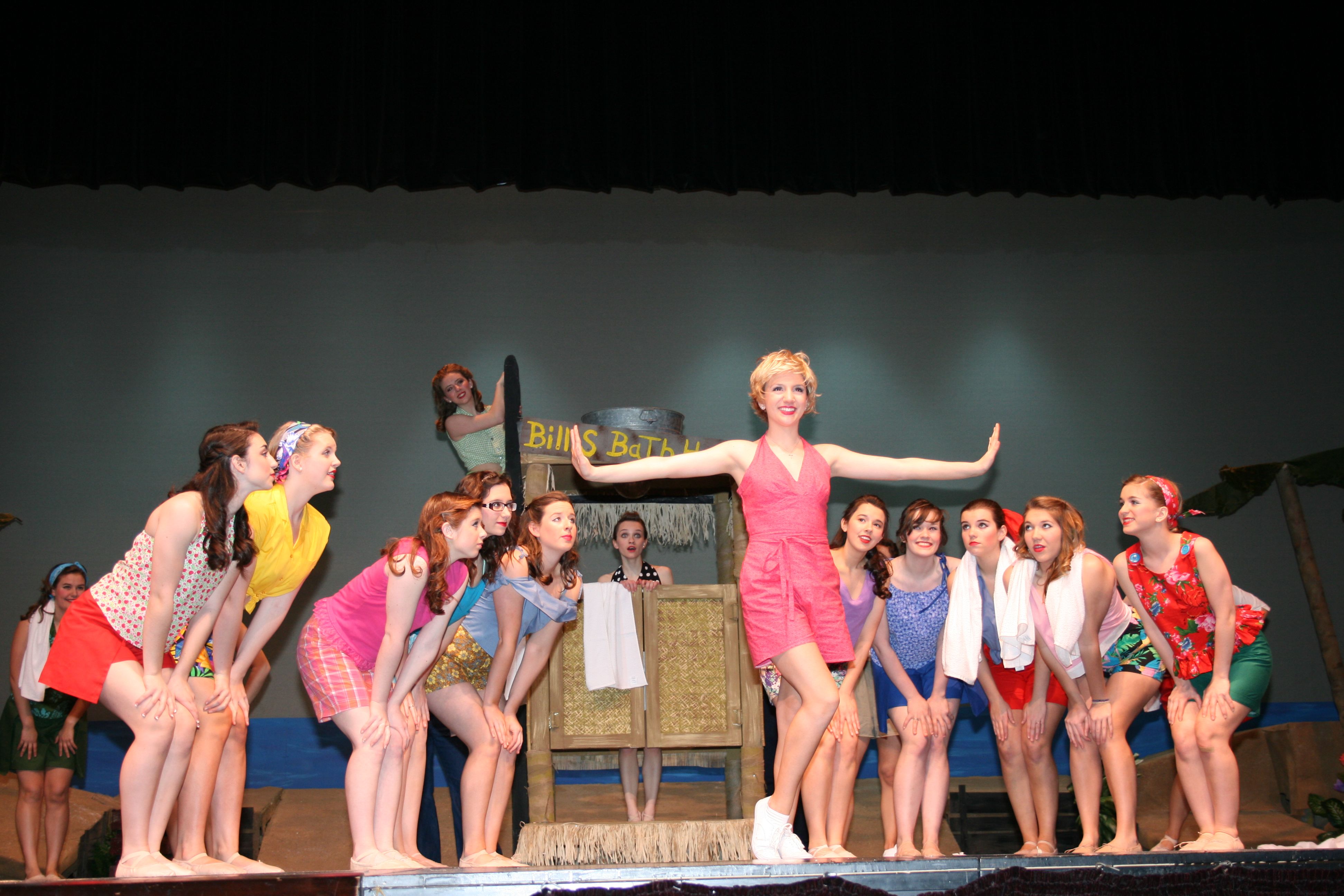
  11. Supercharge 4 south pacific scene1Offer pre-audition rehearsals on the required music, and/or simplify the try-out procedure as much as possible as to not “scare away” less confident students. Since the musical is geared for the entire student body (some of whom do not sing or act on a regular basis), make the try-outs a positive experience for all! Give the students a choice of songs and/or readings, as well as specifics on how to take an audition.
  12. Adopt an active and expanded Student Staff. The goal of quality education is to encourage students towards self-realization. In other words, the show should be “student run” – although selected, taught, and guided by adults. For example, once the scene changes have been rehearsed, the Student Stage Manager should actually call the cues.
  13. Persuade students who plan to major in communications, TV/radio, or theatre to join the student staff. Also, “get the word out” to other students who are not singers or instrumentalists that you have openings for carpenters (set construction), artists (painting), writers (publicity), seamstresses (costumes), etc.
  14. Develop comprehensive job descriptions for each student leadership position: Student Director, Producer, Rehearsal Assistant, Stage Manager, Crew Head, etc. Assign an adult sponsor for overall supervision of each area.
  15. Hold weekly student staff meetings, with student department reports, idea brainstorming, problem solving, and discussions on group morale. Get the students actively involved in the day-to-day operations of publicity, ticket sales, production schedules, etc.
  16. Supercharge 1 dancers3At all practices, Rehearsal Assistants should be placed at every exit (stage left, stage right, pit left, pit right, etc.), and should maintain script cues and warnings in order to call the actors and direct placement of props and sets.
  17. Present a leadership or motivational workshop for the entire company or the student staff alone. Two to three hour sessions are available on time management, teamwork, communications, personal initiative and leadership. Excellent clinicians in this area include Bill Galvin, Michael Kumer, Tim Lautzenheiser, etc.
  18. Announce a weekly S.M.I.L.E. award (“students most interested in leading effectively”) or other special recognition to spotlight extra achievement of individuals in the musical company. Display the winners (photograph and biographical information) on a public bulletin board.
  19. Reward the student cast and crews by sponsoring an all-night (“lock-in”) company party at the school or local restaurant after the final performance. This could turn out to be real incentive for future participation in the shows – a dance, late-night banquet, awards ceremony, swim party, bowling tournament, or a combination of all of these activities. Parents also appreciate a well chaperoned final celebration, instead of (in some cases) totally unsupervised house-to-house parties sponsored by individual students.
  20. Provide other perks for students. Plan field-trips around the community. Advertise the show by singing several selections at a local Women’s Club meeting or Rotary Club breakfast. Take the leads to the local TV/radio talk show, providing an audience for that thirty second “plug” of your show on the airwaves. Or sponsor an in-school theater production clinic (e.g. a make-up application session, underwritten by a local cosmetic firm).
  21. Try to fill your adult staff positions with school staff: shop, art, and English teachers, etc. Who is more knowledgeable and supportive of the students? You can encourage the integration of drama subjects in their curricula: scenery painting (art), costume design (home economics), set construction (wood shop), publicity (journalism/English), etc.
  22. Supercharge 3 costume angels1Establish a parent volunteer grouptheatre angels—to support the students in working on the production crews (costumes, painting, set construction, etc.). Grant the Angels special privileges (early ticket pre-sale) and “Honorary Thespian” status.
  23. Have the Angels man your box office to offer the public regular and varied hours for ticket sales.
  24. Utilize parents to set-up and supervise study halls for those long staging rehearsals. Set aside one room for absolute quiet and a separate waiting area for group study and socialization.
  25. Because of the large cast size, post hall monitors (parents) to assist during the night performances of the show (first aid, distribution of props, overall supervision, etc.).
  26. Hold sign-ups for the Angels during Open House or work through local PTA.
  27. On Saturdays, sponsor staff “cover dish” luncheons to give everyone the chance to interact socially.
  28. Invite a popular school administrator, public official, local actor, or other celebrity to narrate or assist in the show (e.g. the voice in How To Succeed in Business Without Really Trying).
  29. Set out to achieve the illusion of realism in the scenery. Utilize a large student and adult crew of carpenters and build substantial backdrops, wagons, and book pieces to support your larger cast.
  30. Supercharge 1 levels5Rent professional set drawings from theatrical houses (e.g. New Wilmington, PA firm Sceno Graphics).
  31. Ask for help from local professional theater companies (hand-me-down sets, props, or just advice).
  32. Always seek professionalism from the students on the stage. Are all of the actors consistently in character? Adolescents have short attention spans, and as a large chorus, must be coached in displaying real enthusiasm, self-discipline, and accurate characterizations one hundred percent of the time! Nothing is worse than an inanimate or lackluster chorus, talking on or backstage, or other noises that detract from the dramatic action portrayed by the leads.
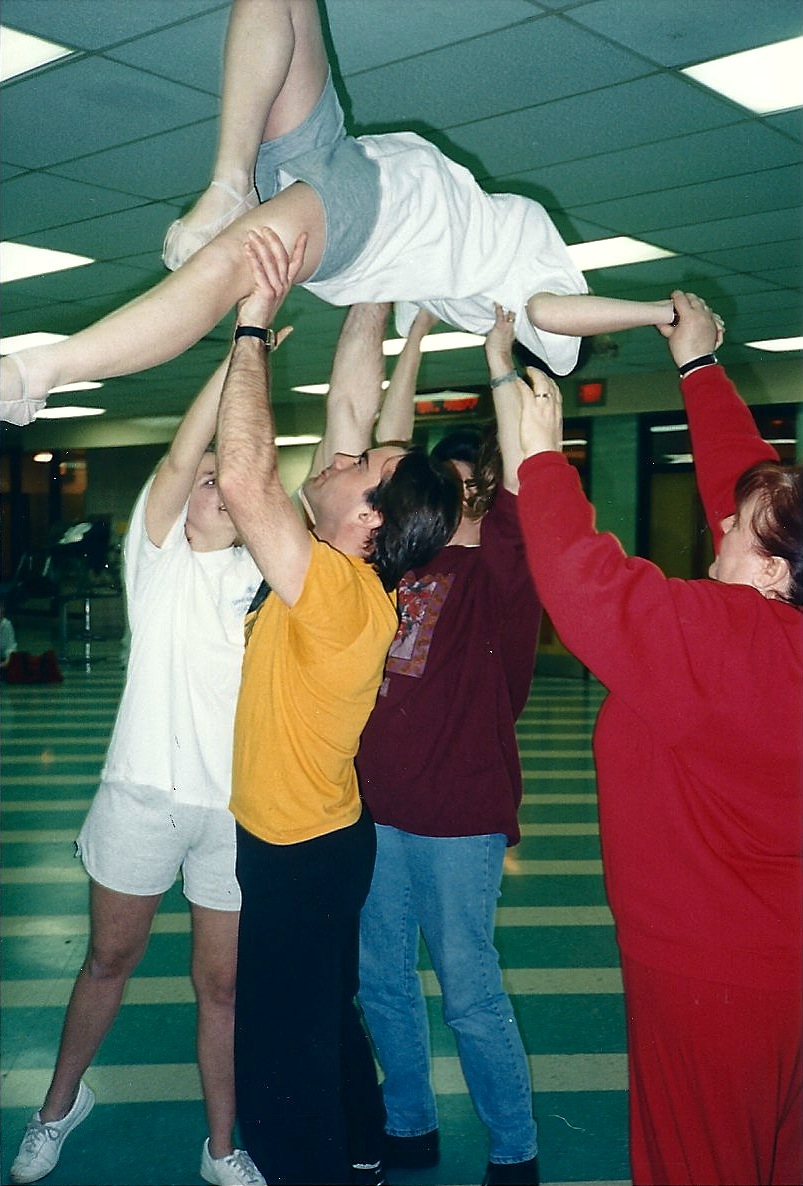
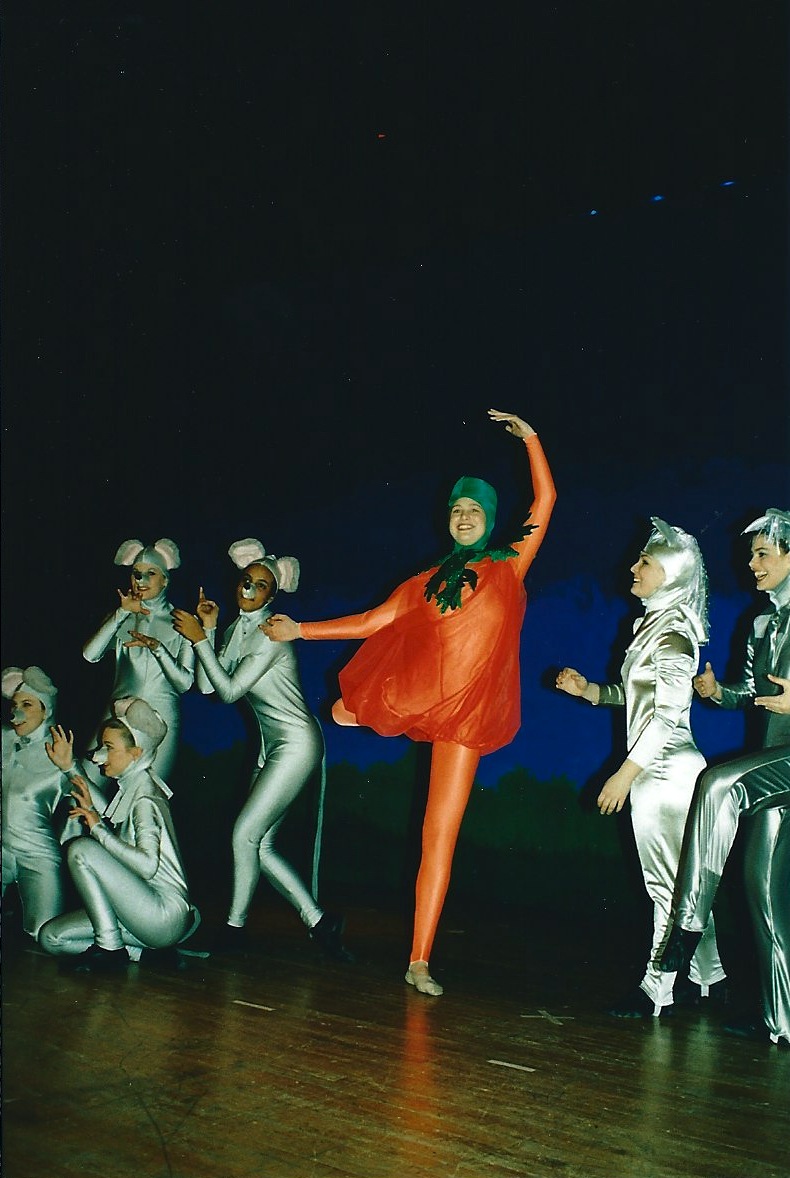
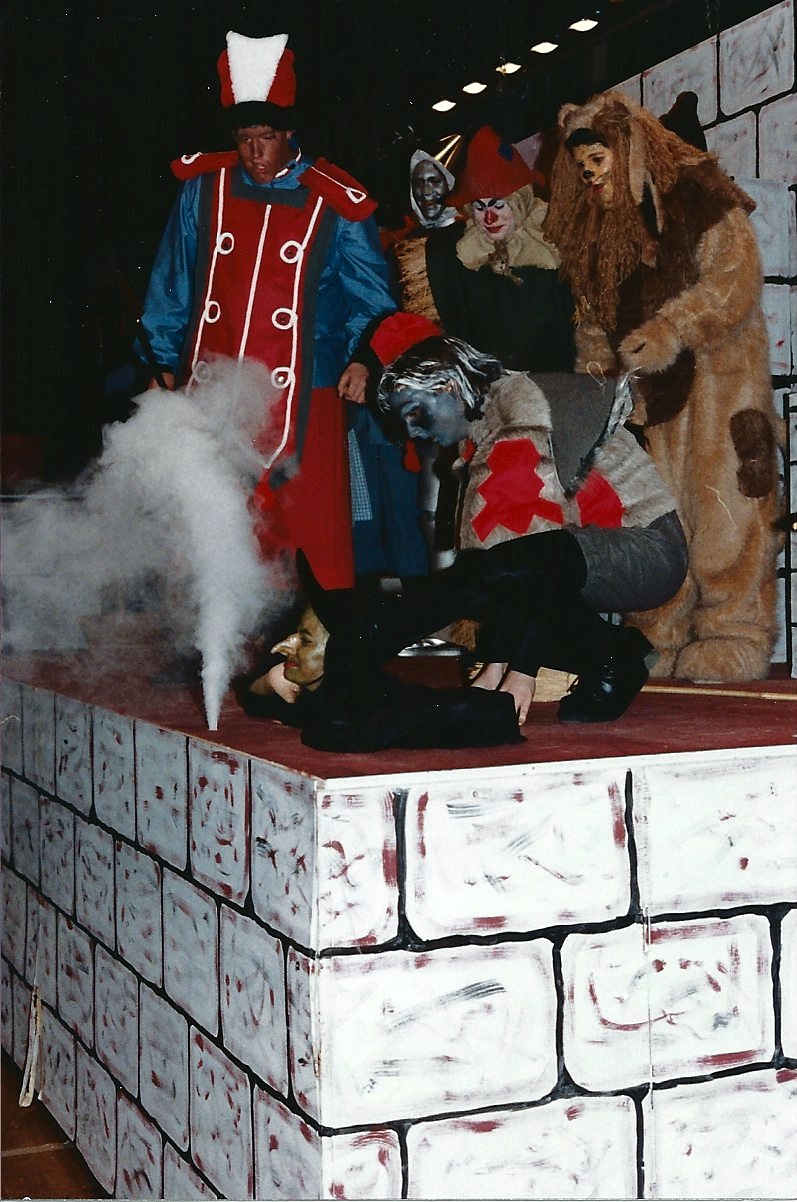
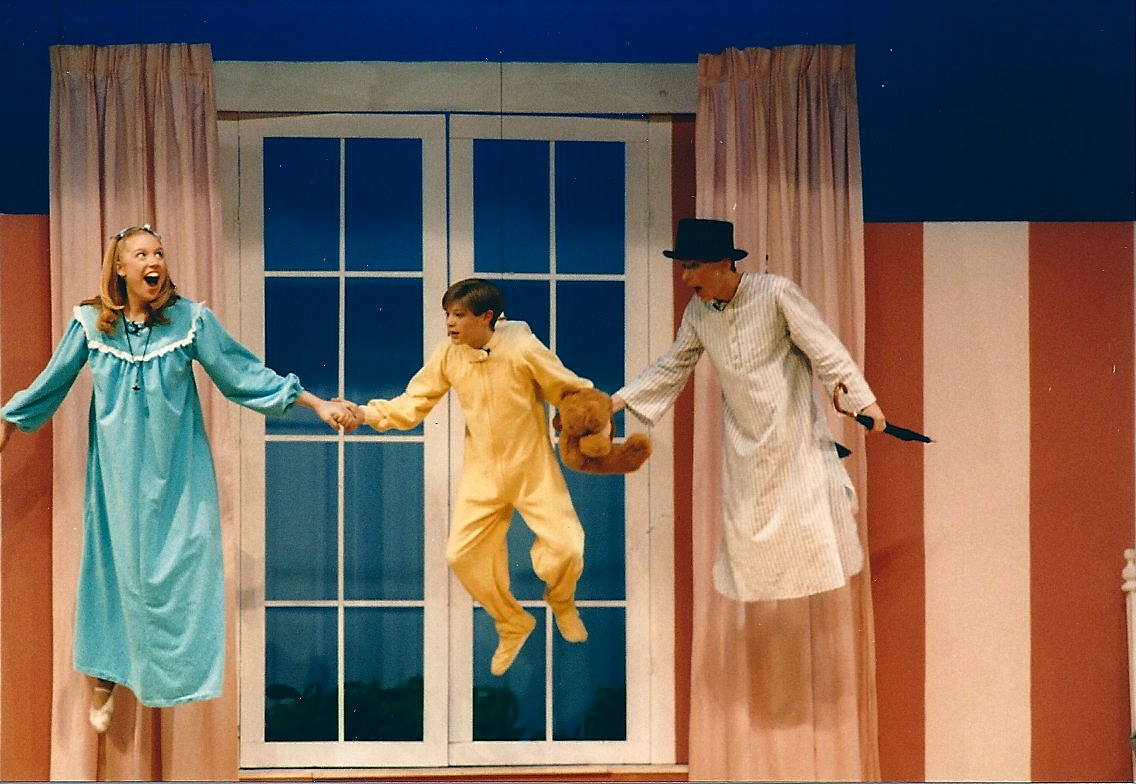
  33. Be imaginative with special effects! Melt a witch (Wizard of Oz) using a trap door and smoke effects. Exaggerate their sizes—a ten foot Fruma Sarah in Fiddler on the Roof can be created by putting your lightest girl on the shoulders of an athletic boy; use a ladder on wheels to present a 14 foot giant (Ghost of Xmas Present) in Scrooge—all hidden by the costume.
  34. Supercharge 4 melting witchSet a fast pace for the show. Avoid those periods of inertia, especially the Act II “doldrums!” Always execute smooth set changes and transitions. Never give the audience time to talk or lose their concentration.
  35. Use theater P.R. firms (e.g. Pioneer Drama Service) to buy official logos, posters, buttons and publicity packets.
  36. Design an official show t-shirt and button. Announce musical t-shirt days and give out random cash prizes to students who remember to wear their t-shirt and serve as a walking billboard!
  37. Sponsor a musical trivia contest. Create a crossword puzzle and publish it in the PTA newsletter.
  38. Type-set and distribute a special musical issue of the school newspaper (e.g. an “Anatevka Times” for Fiddler on the Roof) in order to devote space on the background of the play, local historical “splash-backs” in the time period of the musical, and a picture album of the cast and crews.
  39. Insert a theater flyer in the school district or PTA newsletter mailed home to residents. Print informative articles about the play (Hammerstein anecdotes for South Pacific or Oklahoma, etc.)
  40. Sponsor an elementary school art contest (e.g. draw your Little Orphan Annie).
  41. Supercharge 4 special effect smokeDevelop a partnership with your local merchants. Print pizza box advertisements, restaurant place mats, etc. Place messages on mall marquees, store magnetic signs, and in employee newsletters. In exchange for local business help in promoting your show, sponsor a special “employee discount” on tickets.
  42. Make clever P.A. announcements using the leads and adaptations of the script.
  43. Plan a pre-sale ticket lottery to determine the order students in the cast and crews can go to the box office to purchase their reserve seat admissions. This generates excitement and actually helps to sell additional tickets!
  44. Sponsor a school staff appreciation breakfast (donuts and coffee) thanking everyone for their support of the musical. At the breakfast, pass out ticket vouchers (two complimentary tickets) to the teachers.
  45. Help formulate creative school cafeteria menus using musical themes (e.g. “Wicked Witch” stew, “Jiggerbug Juice,” and “Toto’s Favorite Burgers”).
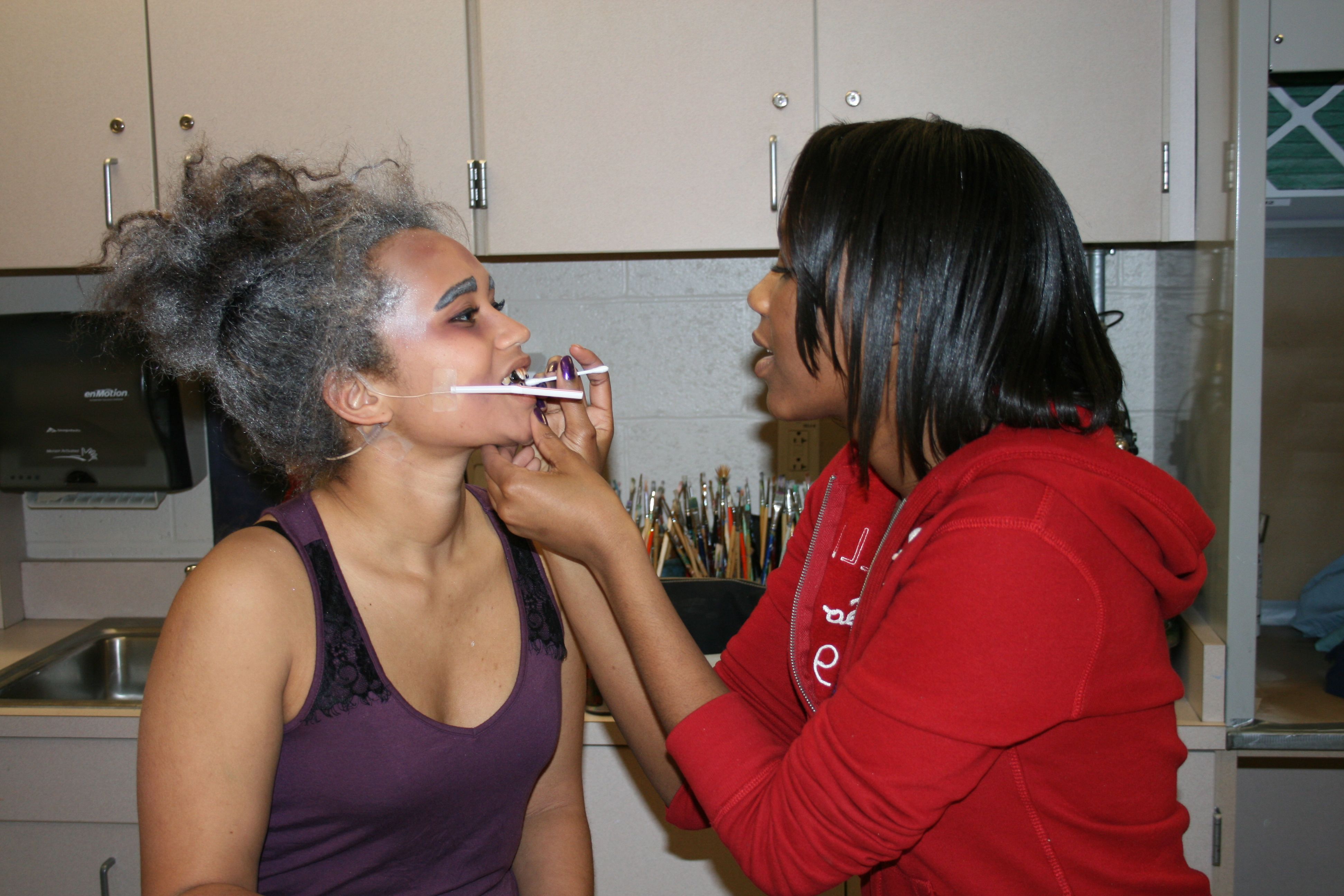
  46. Supercharge 4 makeup bloody mary1Schedule an in-school theatre education assembly for younger students. Give a short synopsis of the musical and demonstrate several scene changes, technical effects and lighting, application of character make-up, and several dances or songs from the current show (make sure you retain the rights to do a segment of the musical!).
  47. After the final dress rehearsal, sponsor a picture taking session for the parents. Actors can pose in costume and in front of the finished sets. The taking of photographs or audio/visual recording during the show is illegal!
  48. Construct an attractive hall display of cast and crew photographs, “Music In Our Schools Month” materials, etc. Always include a photographic history of the evolution of sets in construction, and the student names in the company.
  49. Designate one performance as children’s night. Offer it one hour earlier (on a school night), and provide a special discount for children ages 12 and under, as well as backstage tours of the scenery, spotlights, soundboard, costume room, autographs from the leads, etc.
  50. Dedicate each performance of the show to a special adult contributor to the school music and theatre program. Invite the Supercharge 4 special effect flyinghonored guest to the pre-show cast meeting, and send him/her several free tickets. Announce the dedication on the P.A. before the Overture, and post it on the hall display in the auditorium lobby.
  51. Find a P.R. “hook” – something that might interest the media – such as sponsoring Annie “dog auditions” or twins casted in dual roles. Send a new press release to the media every two weeks.
  52. Print the musical performance dates on the computerized student report cards and school district payroll checks. Use inter-office mail to send personal invitations to all of the teachers. Be sure to list the names of the cast – teachers will be interested in coming up to see their former students.
SUMMARY: Concepts to Consider—BUILD is the Operative Word!
  • Involvement of greater numbers of students and parents will build audiences and community support.
  • Presentation of a quality production with student leadership and supplemental activities will build student enthusiasm and appreciation of the inherent “value” of theatre in school.
  • Finding the confidence to take risks and build on your own creativity—go ahead and adapt the score, script, set designs and staging to utilize your schools’ resources.
  • The allocation of ample time to publicity and promotional activities will build community awareness, attendance and EXCITEMENT in support of the show!
SAMPLE RESOURCES: Companies, Books, Sites

PKF

© 2015 and 2020 Paul K. Fox