3 by 3: Essential Books + Websites for Music Ed Majors
By now, at least several weeks after the holiday/winter break, most of you have probably returned to school and are “back at it” fulfilling your studies in music and education methods. Welcome to the New Year (2019) and good luck on meeting your goals!
It has been my pleasure to present numerous workshops and conference sessions for pre-service, in-service, and retired music educators on a variety of topics: interviewing for a job, marketing professionalism, ethics, transitioning to retirement, supercharging the musical, etc., and have been asked on occasion, “Where do you find all of the information, research, and resources for your blog-posts and talks?
Well.. I’m glad you asked!

It would be hard to credit one or a few sources on reliable data, insights, and recommendations for career development. The following “gems” – a few ideas from someone who has taught music for more than 40 years – are just my New Year’s “gifts” to you… hopefully useful in your undergraduate or advance degree studies. Please enjoy!
This is probably the wrong time to suggest making a few “buys” for the sake of educational enrichment. College students are bombarded with many required readings of their (often expensive) textbooks and handouts from their comprehensive higher education courses of study. It is somewhat daunting to “cover all the bases,” especially when you may want specific advice and “answers” as a result of being recently thrown into “the real world” of field observations and student teaching. What else would a prospective music teacher need or have time to read? How can we better prepare you for the challenges of our profession?
Since you have to order books (or borrow them from a library), we’ll start with the printed publications. Here are my “top three” for your immediate consideration.
My Many Hats
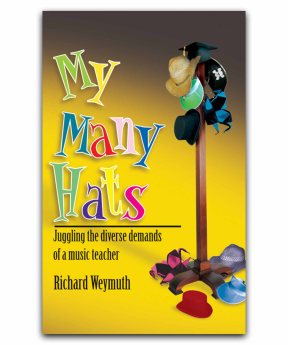 In the category of “things I wishes someone would have told me before I was hired to be a school music educator,” the inspirational book, My Many Hats: Juggling the Diverse Demands of a Music Teacher by Richard Weymuth, is a recommended “first stop” and easy “quick-read.” Published by Heritage Music Press (2005), the 130-page paperback serves as an excellent summary of the attributes (or “hats”) of a “master music teacher.” Based on the photos in his work (great “props”), I would have loved to have seen Weymuth’s conference presentations in person as he donned each hat symbolizing the necessary skill-set for a successful educator.
A quote from the author in his Introduction:
“I want my hats to put a smile on your face as you read this book, just as they do for the airport security guards as they go through my bags at the airport. They ask, “Are you a magician? A clown? An entertainer?” My answer is, “Yes, I am a teacher.”
His Table of Contents tells it all:
- The Hat of a Ringmaster: Managing your classroom and your time
- The Hat of a Leader: Setting the direction and tone of your classroom
- The Hat of a Scholar: Learning when “just the facts” are just fine, and when they aren’t
- The Hat of a Disciplinarian: The Three C’s: Caring, Consistency, and Control
- The Hat of an Eagle: Mastering your eagle eye
- The Hat of a Crab: Attitude is everything; what’s yours?
- The Hat of a Juggler: Balancing a complicated and demanding class schedule
- The Hat of a Banker: Fund raising and budgeting
- The Hat of an Artistic Director: Uniforms and musicals and bulletin boards, oh my!
- The Hat of a Lobster: Establishing the proper decorum with your students
- The Hat of a Pirate: Finding a job you will treasure
- The Hat of a Bear: Learning to “grin and bear it” in difficult situations
- The Hat of a Peacock: Having and creating pride in your program
- The Hat of Applause: Rewarding and recognizing yourself
- The Hat of a Flamingo: Sticking out your neck and flapping your wings
Here are a couple sections that should be emphasized if you are currently a junior or senior music education major.
All student or first-year teachers should focus on his/her three C’s of class discipline in Chapter 4: “Caring, Consistency, and Control.” In order to resolve problems and seek advice from local mentors (especially help from second and third-year teachers who may have just gone through similar conflicts), he poses these questions:
- What is the specific discipline problem that is currently bothering you?
- Who could you interview in your educational community to help with this problem?
- How did they handle the problem?
- What discipline solutions worked and what didn’t work?

Those getting ready for the job search and interviewing process this year must turn to Chapter 11 immediately! “Just like a pirate, you are searching for your treasure, or at least a job you will treasure.” Suggesting that first-year teachers should stay in their assignment for a minimum of three years (to show “you are a stable teacher and are dedicated to the district”), Weymuth offers guidance in these areas:
- The Application Process
- The Interview
- Make a Good Impression
- The First-Class Interview
- Frequently Asked Questions
- The Second Interview
The book is worth the $17.95 price alone for the interview questions on pages 85-88.
Once you “land a job” and are assigned extra-curricular duties like directing after-school ensembles, plays, and perhaps fund-raising for trips, shows, uniforms, or instruments, come back to Chapter 8 for “The Hat of a Banker” and Chapter 9 for “The Hat of an Artistic Director.” His guidelines for moneymaking and record-keeping include insightful sub-sections on:
- Planning and Administering a Fund-Raising Activity
- Possible Fund-Raisers
- Motivating Students to Sell, Sell, Sell (Set Goals, Prizes, and Tracking)
- Budgeting
Having previously posted a blog on “Supercharging the School Musical,” I was impressed with his pages 65-69 on “Show and Concert Choir Dress” and The Musical,” and especially the “Appendix – Resources Books for Producing a Musical” in the back of the book.
Case Studies in Music Education
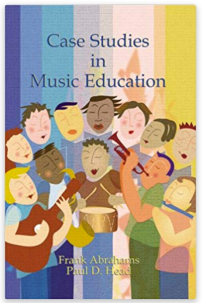 Next, I would like to direct pre-service and new music teachers to Case Studies in Music Education by Frank Abrahams and Paul D. Head. This would be an invaluable aid to “facilitate dialogue, problem posing, and problem solving” from college students (in methods classes?) and “rookie” teachers to veteran educators.
Using the format of Introduction, Exposition, Development, Improvisation, and Recapitulation known by all music professionals, each chapter presents a scenario with a moral dilemma that many music educators face in the daily execution of their teaching responsibilities.
“How should a music teacher balance learning and performing? What is the best way to handle an angry parent? What are the consequences of the grades teachers assign? What are the best ways to discipline students? How should teachers relate to the administrators and to other teachers? The emphasis here is not on the solution, but on the process. There are many viable approaches to nearly every obstacle, but before any meaningful long-term solutions can be made, teachers must identify their own personal philosophy of music education and recognize those traits that are admirable in another’s style.”
―Excerpt from back cover of Case Studies in Music Education, Second Edition, by Frank Abrahams and Paul D. Head
Case Studies in Music Education provides a frank discussion about the critical real-world issues music teachers face but are rarely addressed in college courses:
- Balancing the goals of learning and performing music
- Communications and relationships with parents, administrators, and other staff
- “Fair use” and other copyright laws
If you are seeking more reflection and peer review of ethical issues in the music education profession, good for you! Few music teachers ever talk about the “e” word. What’s important is not only becoming aware of your state’s/district’s statues on the “teacher’s code of conduct” and dress/behavior expectations, but developing your own ethical “compass” for all professional decision-making. A good companion to the Abrahams and Head book is to peruse my previous blogs on ETHICS (posted in reverse chronological order).

Enhancing the Professional Practice of Music Teachers
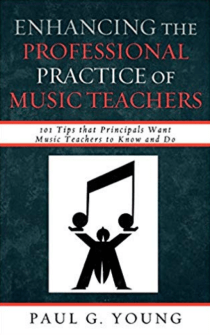
“Book number three” is probably the most expensive, and I could only wish you were already exposed to it in one of your music education courses. If you have not seen it, go ahead and “bite the bullet” in the purchase of Enhancing the Professional Practice of Music Teachers: 101 Tips that Principals Want Music Teachers to Know and Do by Paul G. Young, published by Rowman & Littlefield in 2009. [Note: Be sure to give them your NAfME membership number for a 25% discount!]
“If you want to improve your professional performance and set yourself apart from your colleagues—in any discipline—these tips are for you. If you desire anything less than achieving the very best, you won’t want this book. Rather than addressing research and theory about music education or the “how-to’s” of teaching, Enhancing the Professional Practice of Music Teachers focuses on common-sense qualities and standards of performance that are essential for success-everywhere. Whether you’re considering a career in music education, entering your first year of teaching, or nearing the end of a distinguished tenure, this advice applies to musicians in any setting. Affirming quality performance for experienced teachers and guiding, nurturing, and supporting the novice, Young outlines what great music teachers do. Easy to read and straightforward, read it from beginning to end or focus on tips of interest. Come back time and again for encouragement, ideas, and affirmation of your choice to teach music.”
– https://nafme.org/reading-list-music-educators/
 His chapters are organized into six tips:
- Tips That Establish Effective Practice with Students
- Tips That Support Recruitment
- Tips That Enhance Instruction
- Tips That Enhance the Profession
- Tips for Personal Growth
- Tips for Professional Growth
Paul Young is a musician and band director who later became an elementary school principal. His book is derived from his experience as a music student, music teacher, and educational leader. The intent of the publication is to guide both new and experienced teachers in continued personal and professional growth. He uses his experience as an administrator to point out to music teachers the traits he has seen in individuals who have become successful in the profession.
Now that you ordered at least one of these for personal research and growth, I should point out other sources of book recommendations for the budding music educator, courtesy of NAfME:
Online Resources
Okay, now comes the “easy-peasy” part, and even more importantly, it’s mostly FREE!
 The first thing I want you to do (and you don’t even have to be a member of NAfME yet, although you should be!) is to take at least a half-hour, scroll down, and read through numerous NAfME “Music in a Minuet” blog-posts, bookmarking any you want to return to at a later date. Go to https://nafme.org/category/news/music-in-a-minuet/. Get ready to be totally immersed into the music education profession in a way no college professor can do, with articles like the following (just a recent sampling):
Hopefully you did receive a little cash in your Christmas stocking… or something from grandma! Now is time to “belly up to the bar” and pay your dues. Every professional school music educator should be a member of their “national association…” NAfME!
Once you do this, get ready to reap countless benefits! First, besides offering a discounted rate for all collegiate members, you will be eligible for a significant price break for full active membership renewal during your first-year of teaching! Then, the doors will open wide to you for all of the many NAfME member services such as classroom resources, professional development, news and publications, special offers for members, etc.

Once you are a NAfME member, open up your browser, and go immediately to the NAfME AMPLIFY community discussion platform, instructions posted here. Getting started on AMPLIFY is easy:
- Go to community.nafme.org.
- Edit your profile using your NAfME.org member username and personal password.
- Control what information is visible on your profile.
- Join/subscribe to communities of your choice – you will automatically be enrolled in Music Educator Central, our general community for all NAfME Members.
- Control the frequency and format of email notifications from Amplify.
If you prefer, they have created a video or quick-start guide here to set-up your account’s profile, demonstrate the features, and provide some help navigating through the AMPLIFY menus.
Once you familiarize yourself with the forum, find the “Music Educator Central” and “Collegiate” discussion groups… and start reading. If you have a question, post it. AMPLIFY connects you with as many as 60,000 other NAfME members… a powerful resource for networking and finding out “tried and true” techniques, possible solutions to scenarios or problems in the varied settings of school music assignments, and the sharing of news, trends, perspectives, and more!
Try it… you’ll like it! When you feel comfortable with the platform, contribute your own posts, thoughtful responses to comments from the reflections of your “colleagues,” teaching anecdotes, personal pet-peeves, and ??? – you name it! The sky is the limit!
Tooting My Own Horn… the “Paulkfoxusc” Website (now paulfox.blog)
Finally, if you have indeed “blown the budget” over family holiday purchases, I can suggest one freebie website that archives a comprehensive listings of blog-posts, links, and books. Under the category of “marketing professionalism,” you can search through blogs placed online in reverse chronological order at https://paulkfoxusc.wordpress.com/category/marketing-professionalism/ or you can “take everything in” from one super-site entitled “Becoming a Music Educator” at https://paulkfoxusc.wordpress.com/becoming-a-music-educator/.
Of course, I have a few “favorite” articles which may provide you a great start to your journey of self-fulfillment:

Best wishes on you continuing your advancement and personal enrichment towards the realization of a wonderful career in music education!
PKF
© 2019 Paul K. Fox
Photo credits in order from Pixabay.com: “student” by geralt, “book” by PourquoiPas, “girl” by nastya_gepp, “fatigued” by sasint, “learn” by geralt, “brass” by emkanicepic, and “iPad” by fancycrave1



 Karaoke Hack – Play the passage in conjunction with your favorite recording of the piece.

 now would be the perfect time to explore supplemental resources and get a “head-start” on additional pre-service training for next fall. These tips are especially valuable to anyone entering his/her senior or final year as a music education major, finely honing in and marketing your skills as a professional in order to be prepared for finding and succeeding at your first job.

 Mix and mingle to improve your networking opportunities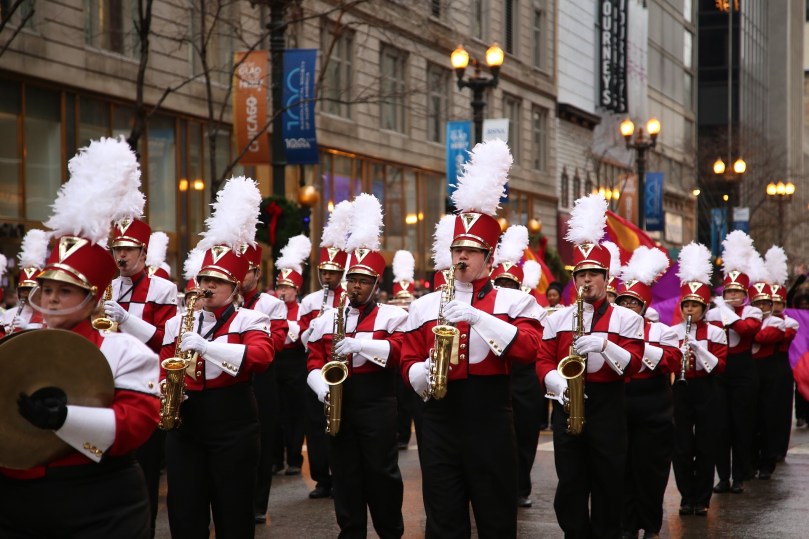
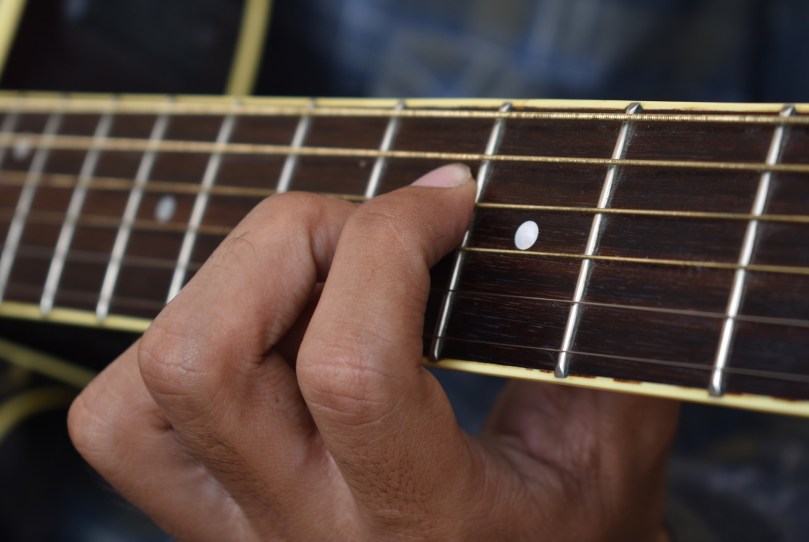
 Understanding specific educational jargon and the latest approaches, applications, and technologies in the profession (e.g. Backwards Design, The Common Core, Whole Child Initiatives, Multiple Intelligences, Depth of Knowledge and Higher Order of Thinking Skills, Formative, Summative, Diagnostic, and Authentic Assessment, etc. – Do you know the meaning of these terms?)
 You need to ask yourself the question, “What are my greatest weaknesses in music education?” Or, to put it another way, “What school assignments would I feel the least confident to teach? After earning your state’s all-essential credential, your certificate will likely be general and only say “music Pre-K to Grade 12.” Administrators will expect you can “do it all” – introducing jazz improvisation at the middle school, accompany on the piano or guitar all of the songs in the grades 1-6 music textbook series, directing the marching band at the high school or the musical at the middle school, starting an elementary string program, etc.
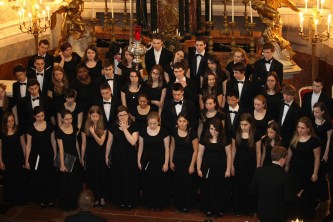 Since music teachers are all “fiduciaries” (do you know the meaning of the word?) and legally responsible for our “charges,” wouldn’t it be a good idea to review our state’s regulations and code of conduct, and hear about the challenges and pitfalls of ethical decision-making before we jump in and get “over our heads,” so-to-speak?
 ask your cooperating teacher (or his/her supervisor’s) permission. Some school districts have “do not photo” rosters. (However, in my district, only a few elementary students were “on the list” and most defaulted to a “permissible” status unless the parent opted out. The principal’s secretary had a record of all exceptions.) It is also suggested that you focus your camera mostly on YOU and not the students, from the back of the classroom or rehearsal facility (possibly from afar), so that the student faces are not clearly discernible. To respect their privacy, in the recorded excerpts, do not use any segment announcing the names of your students.

 Create four new scale variations every day and add them to your “journal.” Creative new variations should make playing scales more enjoyable. Some examples are unusual rhythms (pizza toppings, desserts, interesting proper names), more difficult slurs, scales in thirds, etc.
 Visit the local music store and browse. Explore new publications of Classical, pop, folk, fiddle/jazz, show tunes or other styles.
 Purchase a duet book for mix or matched instruments (such as Beautiful Music for 2 Stringed Instruments by Applebaum—Book I (easy), Book II (medium), Book III advanced). Team up with another musician (band or string) and share non-transposing parts (flute or oboe with violin, trombone with cello, etc.).
 Plan a vacation or academic break around an out-of-state music workshop or concert series.
 Read books or magazine articles about famous musicians, performers, conductors or composers.


 According to the above study by Peter Webster, Scholar-in-Residence at the Thornton School of Music, University of Southern California in Los Angeles, “good music teaching” involves the practice and observation of three types of musical behaviors:
 Peter Webster’s definition of “creativity in music” is succinct: “the engagement of the mind in the active, structured process of thinking in sound for the purpose of producing some product that is new for the creator.” Furthermore, this is a thought process and “we are challenged, as educators, to better understand how the mind works in such matters — hence the term creative thinking.” (Webster, 1987)
 A heighten interest in the young child and invented music notation and their discussion of it as a window to understanding the child’s knowledge (Barrett, Gromko, MacGregor)
 Related to this are the issues of teacher control: when do we step in to change something or suggest a new path.



 The Common Core
 Behavior management, disciplinary procedures (especially preventive practices) and posting class or ensemble rules
 However, in the methods classes that come later (perhaps in the second through fourth year?), the basics of “how-to teach” will come. Of course, as you sit in a class teaching you to “cross the break” on a clarinet or play a scale on the flute with good tone, you must also absorb (and remember) the finite steps required in the lesson to pass on this knowledge and skill, not just honk or squeak a few times to master the proficiency exam for yourself.
 Of course, these are “trick questions.” The answer should be “I want to teach music,” or even better, “I want to teach children.” In most of the school districts across the country (with a few exceptions in the Midwest and places that accept teaching specialty certification by grade level or subject area), you are licensed to teach music in grades Pre-K to 12. At no point in any conversation with a potential administrator (or colleague who may become a member of the screening committee for a music opening) do you want to be “pigeon-holed,” or give the impression “I can only teach_____.”
 Accompany, direct/teach the drama, and choreograph the middle school musical.
 Ego and arrogance has no place in the teaching profession. Where did I hear this saying? “The more you think you know, the less you actually know.” Joining a mentoring program or finding a formal or informal veteran teacher “buddy” will go far to insuring your professional success and dodging those first-year teacher “pot holes” (dumb but common blunders) and “rookie blues.”

 Retired music teachers are another excellent resource. For example, if you live or work in Pennsylvania, many post-employed PMEA members have placed their name and contact information on the Retiree Resource Registry to serve as willing, capable, and informal consultants for pre-service, novice, or other members recently transferred into a non-major specialty “outside their comfort zone.”
 Please feel free to comment on this blog-post. What are your thoughts?
 prioritize what’s the most important, and define several new “practice plans.”
 Your practice should have well-defined goals. What do you want to learn as a musician? Are there particular pieces of music, styles, or technical skills you would like to be able to play? Knowing what you want to accomplish will help you decide what work is needed and assist defining specific learning targets. If you have a private teacher, he/she will automatically prescribe objectives for you, based on your present strengths and weaknesses. But if you desire to join the local youth symphony, participate in a music festival, play in a pit orchestra, perform solos or chamber music, become a conductor, help coach your peers, or want to improve a specific technical skill or general musicianship, make sure your teachers know it! They may be able to share warm-ups, strategies, or practice materials that will help you improve and expand your knowledge, technique, expressiveness, sight-reading and ear training.
 When I was teaching full-time school orchestra music grades 5-12, the following conversation by students in my program may have been shared at the dinner table. “He wants me to spend time and listen to several outstanding players. I was a little embarrassed when he called on me in class and asked, ‘Who is your favorite violinist?’ and I could not identify a single principal string player or even the current Concertmaster of the Pittsburgh Symphony Orchestra!”
 Pittsburgh has a strong cultural base, providing a home for the world-class Pittsburgh Symphony Orchestra and Pops, the Pittsburgh Ballet and Pittsburgh Opera companies, and the Pittsburgh Civic Light Opera productions, to name a few venues. We are also most fortunate that many amateur or semi-professional groups such as the Pittsburgh Civic Orchestra, Washington Symphony, and River City Brass Band are local (some concerts presented conveniently next door in the Upper St. Clair HS Theatre). Professional soloists and chamber groups visit our city nearly every month, and opportunities to enjoy free concerts are limitless on cable/FiOS television and WQED.
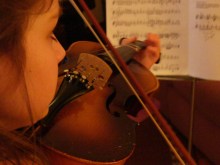
 Yes, practicing should be heard at home. It is NOT enough simply to play at school. The long-tested “success equation” is TIME + MAKING PROGRESS = FUN (encouraging more time, progress and fun). Practicing on a regular basis improves technique, musicianship, self-confidence, endurance, reading skills, and besides… playing better is a lot more FUN!

 Music is one of life’s greatest treasures!
 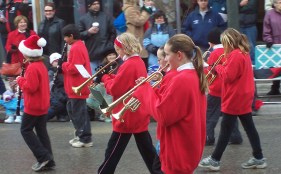 Your joy of creative self-expression and “making music” will sustain you through almost anything… and will transfer to your students’ success in life.
 r mistakes (and there will be many) will be forgiven. Besides, there are usually no “single right answers” in music and art – only opportunities for divergent and flexible thinking, adaptability, and personal expression.
 Music For All:
 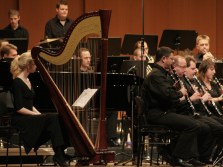 someone else, or sing solos at a local nursing home or senior center.
 Spend a lot of time sight-reading… especially on the piano. To take your ear-training training a step further, pull out your old folk-song sight-reading series or Hindemith’s Elementary Training for Musicians and practice musicianship exercises.