Where Are the Models, Mentors, and Motivators?

Photo credit: FreeImages.com, photographer Peter C.


Are You Listening to Solo, Chamber, and Orchestral Music?
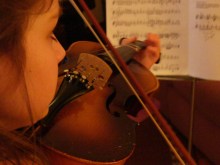
foxsfiresidesWhen I was teaching full-time school orchestra music grades 5-12, the following conversation by students in my program may have been shared at the dinner table. “He wants me to spend time and listen to several outstanding players. I was a little embarrassed when he called on me in class and asked, ‘Who is your favorite violinist?’ and I could not identify a single principal string player or even the current Concertmaster of the Pittsburgh Symphony Orchestra!”

I was dismayed that as many as 80% of my instrumentalists could not respond with the name of a famous classical musician who is currently playing their instrument! This brings the issue to the forefront of my greatest concern: DOES ANYONE LISTEN TO GOOD MUSIC ANYMORE?

Obviously, most people learning how to play golf, tennis, ballet, ice skating, gymnastics or any of the contact sports, could instantly name their “hero” and leading examples in their field. Can you imagine not watching a professional athlete model his/her technique? For example, if you wanted to learn how to be a high-diver or competitive swimmer, would you simply read a book on the subject, study the moves, take a few lessons, practice in the pool, and not once attend a local swim meet or watch the Olympic event when it appeared on TV?

seriestoshare-logo-01Pittsburgh has a strong cultural base, providing a home for the world-class Pittsburgh Symphony Orchestra and Pops, the Pittsburgh Ballet and Pittsburgh Opera companies, and the Pittsburgh Civic Light Opera productions, to name a few venues. We are also most fortunate that many amateur or semi-professional groups such as the Pittsburgh Civic Orchestra, Washington Symphony, and River City Brass Band are local (some concerts presented conveniently next door in the Upper St. Clair HS Theatre). Professional soloists and chamber groups visit our city nearly every month, and opportunities to enjoy free concerts are limitless on cable/FiOS television and WQED.

This revelation motivated me to bring my laptop computer to every music lesson and ensemble rehearsal to share musical examples. With truly “basic” technology, there is really no excuse for not exploring a sea of masterpieces, watching a virtuoso performing his craft up-close – thanks especially to online resources such as www.youtube.com. Here are just a few “totally free” audio examples:

Here is the musicianship prescription – tips on providing meaningful motivation, momentum, and exposure to GREAT works of art in order to become more culturally connected and musically literate:

  • Families: Take the music break and listen to Classical (all styles/eras), folk, pop/jazz music at least once a week.
  • Encourage your musician to regularly use his/her computer/tablet to watch performances on the web.
  • Choose several favorite soloists playing the same instrument you are studying, and follow them.
  • Buy CDs of music or download movements of concertos, sonatas, or symphonies from iTunes, etc.
  • Go to a live professional concert at least once a year – more often in the summer, if possible.

Take a trip to the South Hills Junior Orchestra website… Under “Resources,” check out the two sets of free “Series to Share…” additional “Fox’s Fireside” issues by Paul K. Fox, and “Music Enrichment Workshop” presentations by Donna Stark Fox. In particular, download and read the Listening Enrichment Session, the perfect companion to this article.

PKF

© 2017 Paul K. Fox

This “Series to Share” is brought to you by… the Founding Directors of the South Hills Junior Orchestra (SHJO), “A Community Orchestra for All Ages” based in Western Pennsylvania. Feel free to download a printable copy and distribute to music students, parents, teachers, and fellow amateur musicians.

SHJO rehearses most Saturdays in the band room of the Upper St. Clair High School, 1825 McLaughlin Run Road, Pittsburgh, PA 15241. New members are always welcome! For more information, please go to www.shjo.org.

Does Practice Make Perfect?

Photo credit: FreeImages.com, photographer Alexander Kalina


foxsfiresides

Tips on Developing Better Practicing Habits

Every good musician knows that regular practice is a must, but did you know that careless or inattentive practice can actually make you worse?

It is not necessary true that “practice makes perfect” – more likely that “perfect practice develops perfect playing.” Quality not quantity, you say? Your school music teachers will urge you to increase both the quality (focus, attention, goals/planning, etc.) as well as the number of minutes per week. Here are a few hints on improving practicing techniques. Read on… there are many additional resources for parents to guide their musicians to musical mastery!

  1. Designate a quiet place for practice at home
  2. Limit all distractions (TV, video games, computers, phones)
  3. Plan habits of consistent daily practice time(s) and weekly frequency
  4. Make practice goals (what do you hope to accomplish this week?)
  5. Take a few minutes to warm-up (scales, finger patterns, long tones, or lip slurs)
  6. Sandwich method (start at the bottom and work your way up)
    1. Review a song you already know (bottom slice of bread)
    2. Focus on a few “hard parts” (the meat in the middle of the sandwich)
    3. Sight-read something new (condiments, pickles or cheese)
    4. Review another well-prepared song (top slice of bread)
  7. Pizza slices
    1. Identify and prioritize the problems or hard sections
    2. Partition the entire song
    3. Focus on a “slice” of the music – a measure, phrase or line of music – at a time
    4. Drill (daily) on one or a few slices
    5. Next practice session, repeat then progress to next section
  8. Re-order the sections of a piece (scrambling)
  9. Target a difficult passage, play slow at first, then increase tempo gradually each time you play it
  10. Try patterns of instant slow/fast and then fast/slow
  11. Fire up different sections of the brain on a problem spot
    1. Say the letter names out loud (or sing them) – speech center
    2. Bow or tap the rhythms “in the air” – left-side psychomotor
    3. Finger the notes without the bow or mouthpiece – right-side psychomotor
    4. Combine a, b, and/or c on specific passages – all parts of the brain
  12. Create new rhythmic or articulation/bowing variations to challenge your playing of the passage
  13. To improve your musical batting average, implement the Ten-Times Rule (accurately in a-row)
  14. Always add expressive markings including dynamics, tempo and articulation changes, etc.

seriestoshare-logo-01Yes, practicing should be heard at home. It is NOT enough simply to play at school. The long-tested “success equation” is TIME + MAKING PROGRESS = FUN (encouraging more time, progress and fun). Practicing on a regular basis improves technique, musicianship, self-confidence, endurance, reading skills, and besides… playing better is a lot more FUN!

PARENTS: Here are several excellent websites on recommendations for developing better practice skills, but ask your school music director for more advice!

PKF

© 2017 Paul K. Fox

This “Series to Share” is brought to you by… the Founding Directors of the South Hills Junior Orchestra (SHJO), “A Community Orchestra for All Ages” based in Western Pennsylvania. Please feel free to download a printable copy (CLICK HERE) and distribute to music students, parents, teachers, and fellow amateur musicians.

SHJO rehearses most Saturdays in the band room of the Upper St. Clair High School, 1825 McLaughlin Run Road, Pittsburgh, PA 15241. New members are always welcome! For more information, please go to www.shjo.org.

Happy Thanksgiving, Newbies!

“I would teach children music, physics, and philosophy; but most importantly music, for the patterns in music and all the arts are the keys to learning.” — Plato

digital-spray-paint-1160577

Things for Which Prospective Music Teachers and Students Majoring in Music Education Should Be Thankful… and on Which to Reflect Over This Holiday Season!

Music educators and those training for this honorable career have many reasons to feel blessed. This Thanksgiving 2016 blog is another one of my “pep talks” and an ongoing goal to share resources for pre-service professional development. Lets begin with a classic “top-ten” list — the fruits and cornerstones of our profession:

  1. prospective-music-student-1440071-1Music is one of life’s greatest treasures!
  2. You will always have your music. Your future employment is also your hobby, and even after 35 or more years, you will inclined to continue your music throughout the “golden years” of retirement.
  3. There are so many ways you can make a difference in the lives of children with music. Whether it is singing, playing an instrument, composing, listening, feeling, or moving in response to music, music fills a basic need!
  4. Although music is an excellent vehicle for developing 21st Century learning skills (the four C’s of creativity, critical thinking, collaboration, and communication), participating in music for music’s sake is paramount. To find true meaning and personal artistry, you cannot review the arts without “doing” (or creating) the arts.
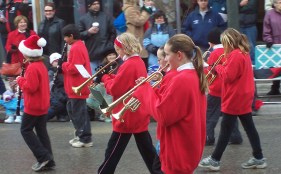
  5. parade-band-1421028Your joy of creative self-expression and “making music” will sustain you through almost anything… and will transfer to your students’ success in life.

  6. In many settings of school music courses and extra-curricular activities, your students make a conscious effort to choose you and the study of music in order to spend as much time together. “They may have to take math and English, but they also want their daily dose of music!”
  7. Newcomers to this field, you do not have to be right or perfect all the time in class. During your student teaching and early years on the job, if you are enthusiastic, dedicated, and respectful of the feelings of your students, youkids-singing-christmas-songs-1438089r mistakes (and there will be many) will be forgiven. Besides, there are usually no “single right answers” in music and art – only opportunities for divergent and flexible thinking, adaptability, and personal expression.

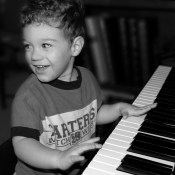
  8. You’ll never forget your students… and when you bump into them after graduation, they will remind you all about “those good times!” Don’t be surprised when they tell you were the best part of their education.
  9. Your band, orchestra, and/or choral director back home (school district and university) are rooting for you… and want you to succeed. If you have questions, go see them. They would appreciate you asking for their advice.unwritten-solo-2-1314639
  10. Good news! Help is on the way! On this blog-site, there is a single link to all of the articles, handouts, PowerPoint slides, etc., everything from branding yourself to a review of the interview questions you will need to answer at job screenings. To help you market your professionalism, develop a philosophy of music education, learn the basics of networking, dive into making a business card, professional website or e-portfolio, or practice taking interviews, go to the link above or https://paulkfoxusc.wordpress.com/becoming-a-music-educator/.

Why Music? Why Do You Want to Become  a Music Educator?

It never hurts to embrace and share the excellent voices of our music education advocates. Check out these interesting online sources:

Ten Goals for the Holiday Break

After you finish your fall semester finals, juries, concerts, writing assignments, and other projects, you may have several weeks before you have to return to full-time classes at the university. Besides catching up on your sleep and visiting your family and friends, how many of these enrichment activities can you accomplish?

  1. Share your gifts. Play your instrument, accompany concert-1435286someone else, or sing solos at a local nursing home or senior center.
  2. Sit in with a church or community choir, band, or orchestra. Just ask the conductor if you could participate in a few rehearsals over your break.
  3. Learn something new about music… a different instrument, recent releases in sheet music or recordings, unique composer/arranger in your major area, music education article from a professional journal, innovative music software or interactive online programs (often free trials are available to future teachers), etc. For example, have you perused SmartMusic and MusicFirst?
  4. OLYMPUS DIGITAL CAMERASpend a lot of time sight-reading… especially on the piano. To take your ear-training training a step further, pull out your old folk-song sight-reading series  or Hindemith’s Elementary Training for Musicians and practice musicianship exercises.

  5. To improve your score reading, take a choral arrangement and play the individual vocal parts at sight (soprano + bass, alto + tenor, soprano + tenor + bass, etc.). Or, perform on the piano 2-4 parts of a string quartet score.
  6. Volunteer to assist coaching a sectional or large ensemble at your local public school.
  7. Attend as many local concerts as you can: school, amateur adult, and professional.
  8. Compose or arrange a short holiday, folk, or classical song for unusual instrumentation (e.g. flute, viola, baritone sax, and tuba). Who knows? Someday you may have to conduct an ensemble with such unique membership.flute-player-1567317
  9. Record video/audio excerpts of your major instrument/voice for placement on your professional website. Begin preparations on or update your e-portfolio.
  10. Read all of the “marketing professionalism” articles on this blog-site. Take notes or print the things to which you want to refer back. Make a list of the possible interview questions, and put yourself through several “mock job screenings” (alone or with one or more college buddies) with you answering these randomized questions in front of a camera. Assess your performance. During your”free time” over the holiday break, assemble your “personal stories” – anecdotes revealing your skills, personality traits, teaching experiences, and accomplishments that could be shared at future employment interviews. Most important article on this subject? Look at thanksgiving-turkey-1521430https://paulkfoxusc.wordpress.com/2016/02/27/interview-questions-revisited/.

Best wishes for a healthy, peaceful and fulfilling holiday. Please enjoy lots of turkey with your loved ones, but if you can, “catch up” on your long term preparation for becoming a music educator. Make every day count over the recess. Reflect on why you are becoming a music educator, and be grateful for the multitude of benefits! Finally, never forget your own creative roots… make time for music every day!

PKF

© 2016 Paul K. Fox

Photos are licensed by FreeImages.com (all rights reserved)

An Engaged Mind Makes for a Happy Retiree

Boost Your Health and Outlook on Life with Brain Stimulating Activities!

shiny-brain-1150907-1

Have you fed your brain today? The mind is a terrible thing to waste, retired or not! How do you maximize your brain health and have fun doing it?

Intentionally Energize Your Mind

According to Dr. Angela K. Troyer in her August 2014 Psychology Today blog , “One great way is to find leisure activities that challenge and engage you, and to participate in them often.”

Dr. Troyer says the research is clear. “In recent years, there has been accumulating evidence that participating in activities that make you think hard and learn new things is good for your brain health. People with such active, engaged lifestyles tend to do better on memory and other cognitive tests than people who are less engaged. Even more encouraging is research showing these same individuals are less likely to develop dementia – such as Alzheimer’s disease – than those with less active lifestyles.”

She summarizes her top 6 ways to engage your brain with advice for new and challenging learning. She concludes, “It’s important to pick something that makes you think a bit.”

  1. Nurture your inner artist. You have heard me rant about this before. Music educators, go back to your “creativity roots” which inspired you to enter into this profession and “make your own music.”
  2. dancers-in-white-1440514Take up a new hobby. Now that you have the time, go exploring… and the skies the limit! But don’t forget, anything worth doing “engages the mind!”


  3. Explore cultural activities. Near or far, this is a no-brainer! We are talking about the very things we love and have experienced most of our lives: the symphony, ballet, theater, opera, museums, etc.
  4. Do old activities in new ways. How creative are you? Dr. Troyer asks, “If you already have some favorite activities, think about how you could ‘shake them up’ and make them into novel, challenging activities.”
  5. Learn something new, just for the fun of it. How courageous are you? What are you waiting for? You should have an extensive to-do list of things to try for the first time.
  6. Take the ultimate “formal learning” challenge. Enroll in a course at the local community college, community center, or library, or sign-up to volunteer in a new organization doing something you have never done before.

Read Dr. Troyer’s full article at https://www.psychologytoday.com/blog/living-mild-cognitive-impairment/201408/6-ways-engage-your-brain.

curious-cat-cutout-1405973Curiosity does not kill the cat… or the retired person either!

Do you know the differences among IQ (intelligence quotient), EQ (emotional quotient), and CQ (curiosity quotient)?

Citing issues of solving the complexity of life (ever try to set-up a new printer?), the article “Curiosity is as Important as Intelligence” of The Harvard Business Review (see https://hbr.org/2014/08/curiosity-is-as-important-as-intelligence/), touches on the value of the curiosity quotient. “CQ… concerns having a hungry mind. People with higher CQ are more inquisitive and open to new experiences. They find novelty exciting and are quickly bored with routine. They tend to generate many original ideas…”

Author Tomas Chamorro-Premuzic makes two important conclusions.

  1. Knowledge and expertise (like experience) translate complex situations into familiar ones, so CQ is the ultimate tool to produce simple solutions for complex problems.
  2. Although IQ is hard to coach, EQ and CQ can be developed. As Albert Einstein famously said: ““I have no special talents. I am only passionately curious.”

Although we no longer have to spend our lives at school solving “complex problems” and motivating students to study and appreciate music, being passionately curious is exactly what all retirees should strive to be and do every day!

How do retirees face the tumultuous passage of leaving full-time employment?

heart-in-your-hands-1311548.jpgIf you have not read a previous blog of mine, “Advice from Music Teacher Retirees to Soon-To-Be Retirees,” check out the reprinted version on the Edutopia website: http://www.edutopia.org/discussion/advice-music-teacher-retirees-soon-be-retirees. The act of retirement is a very stressful transition, and what would be worse is sitting around mindlessly watching television or allowing your brain to “atrophy!” In the article, I refer to Dr. Amit Sood’s writings, author of The Mayo Clinic Guide to Stress-Free Living: “This a time of enormous change. You are leaving your job and friendships with colleagues and finding new things to do.” He recommends, “Find meaning in new passions, including possibly using your work skills in a new job or volunteer work.”

My own ideas on stimulating our brains have more to do with a journey into the unknown… to steal a quote from Star Trek, “to boldly go where no one has gone before!” If you have not experienced any of these, take a gander. However, you should customize (and frequently revise) your own unique list.

One retiree’s bucket list of “brainy engagements!” Not enough hours in the day…

  1. face-questions-1567164Just like a rehearsal – start off with a mind warm-up! Go to the website https://curiosity.com/. You will be amazed to read topics from the sublime to the ridiculous – examples like “Cats and Dogs Drink Very Differently” to “How Does Memory Work in Your Brain.”

  2. Have you perused the awesome coursework and lectures in iTunes University? Download the app to your smartphone… it’s free and you won’t be sorry!
  3. You need to visit the “Best of Bonk” website about creativity and critical thinking in education, hosted by a modern-day genius Dr. Curtis J. Bonk from the Indiana University of Bloomington: http://www.indiana.edu/~bobweb/cv_hand.html. Almost makes you wish you were still teaching?  
  4. Also, don’t forget to sample the inexhaustible iTunes library of free video and audio podcasts on nearly every subject in the world.
  5. In a thousand years, one could never consume all of the material available from Ted (the famous “Ted Talks” either online at http://www.ted.com/ or the TED Radio Hour hosted by Guy Raz) and YouTube.
  6. computer-monitor-tablet-and-mobile-1241520Leo the Tech Guy program and site at www.twit.tv and www.tech guylabs.com offer an extensive archive of broadcasts solving problems and recommending purchases of computers, software/apps, smartphones, cameras, home theater, and other devices.
  7. Here are a few more “very educational” and “mind nourishing” websites and television channels, many with online versions of full length episodes and videos: The Discovery Channel http://www.discovery.com/, National Geographic Channel http://channel.nationalgeographic.com/, The History Channel http://www.history.com – to name a few.
  8. Believe it or not, there are many free brain-games websites, such as http://www.games.com/brain-games and http://www.brainbashers.com/. I cannot vouch for their educational value, but word games, Sudoku, and logic puzzles can be… stimulating.
  9. If you miss being a teacher and creating tests (did we ever enjoy assessments?), there is a even website for taking and sharing quizzes: http://www.quibblo.com/.
  10. chess-world-1415252Finally, hobbyist websites are a wonderful resource. Examples: photography Flickr,  Shutterbug, and Tips from the Top Floor; family history research programs www.ancestry.com, www.familylink.com, and https://www.myheritage.com/; sewing http://www.sewingsupport.com/general-sources/sewing-websites.html;  woodworking http://www.highlandwoodworking.com/highland-woodworking-links-woodworking.aspx and http://www.woodworkers-online.com/p/top-100-woodworking-sites.html; gardening http://www.gardenguides.com/ and http://www.garden.org/; cooking http://www.epicurious.com/, http://www.bestcookingsites.com/, and http://online-recipe-websites.no1reviews.com/cooking-websites.html.

Blogs are all about sharing ideas. Comments to this site are welcome! You are invited to “join in the fun” and submit your own “engaging mind” resources!

Make it a point in your life to discover something new every day. Happiness and good mark-learns-to-row-1468576health is all about nurturing our skills/talents, exploring new pathways, facing new challenges, engaging our minds, and enjoying the “good life” after full-time employment. Nothing is stopping you from starting a new career, learning a new language, writing a book (or reading everything you always wanted to at the library), learning (better) how to act/dance/sing/play a new instrument, taking a trip to a new country (or city in the US) or journey to your backyard with a camera, and modeling the essence of the Robert Frost message, “I took the road less traveled by…. and, that has made all the difference.”

Additional Resources:

PKF

© 2016 Paul K. Fox