

The Skills and Models of a Happy Retirement
[Portions reprinted from the state journal of the Pennsylvania Music Educators Association, PMEA News, Spring 2019 issue – All rights reserved.]

Is It TIME to Retire?
This is a personal question that no one but YOU can answer… not even your PMEA Retired Member Coordinator! By the time you read this article in the Spring edition of PMEA News, this choice may be uppermost in your mind, especially if you are within a couple years of that so-called “retirement age.” Most school districts require advance notification of an employee’s plan to retire in order to retain full benefits and exit bonuses, and to allow planning for the job replacement search and screening process. (Check your teacher’s contract!)
In music educator conference sessions, director meetings at festivals, and printed in PMEA News and the online e-publication Retired Member Network eNEWS, much has  been discussed about the “what,” “how,” and most recently, “where” of retirement, even issues of “privacy” regarding your decision. For a review of these areas and a bibliography of resources, please visit:
- The How-To-Retire-Guide (video) at https://www.youtube.com/watch?v=LluJ_0ctC4o.
- Past editions of our state journal at https://www.pmea.net/resources/pmea-news/,
- The Ultimate Retiree Resource Guide and
- Retired Member Network eNEWS archives: https://www.pmea.net/retired-members/.
The “why” of retirement is also relevant. There may be a lot of influences for someone to consider leaving their full-time career:
- Boredom or lack of stimulation in the current job
- Changing employment status or responsibilities
- Health problems (yours or other members of your family)
- Spouse retiring
- Your or family member’s desire to relocate
- Needs for caregiving (grandchildren, parents, or elderly family members)
- Travel opportunities
- Acceptance of a new position or the start or expansion of an “encore career” (higher education, music industry, travel/tour planning, or another field)
Other involuntary or more negative motivations may “encourage” you to resign your position:
- Music and/or staff are eliminated from the curriculum or building in which you teach.
- You are experiencing a decline in music program enrollment or participation.
- You feel unappreciated, unsupported, devalued, or ignored as a professional.
- You conclude you must retire early to avoid losing existing contractual benefits.

However, the most important reflection on WHEN to retire should begin with the question, “Are you ready for retirement?” and…
Do You Have What It Takes for a Happy Retirement?
A successful retirement is not “all about the money.” Certainly, you are well-advised to make an appointment with an estate planner, elder attorney, and/or financial advisor (probably all three). Bring a copy of your bank and investment statements, annual reports on your pension, social security, annuities, and insurance documents. Make sure you have the “big picture” of your net worth and accomplish the following (https://www.fisherinvestments.com/en-us):
- Determine your goals, objectives and time horizon;
- Make key distinctions between income and cash flow;
- Develop a basic plan to help achieve your retirement goals.
However, probably even more important, experts say there are many other requirements that foster preparedness to enjoying your post-full-time employment years. For example, proposed by the editorial team of the NewRetirement website, there are eight essential keys to a potential retiree’s “happy transition.” (Read the entire article for a greater perspective at https://www.newretirement.com/retirement/8-skills-you-need-for-best-retirement/.)
- A Knack for Dealing with Uncertainty
- Resilience: Can You Overcome Adversity?
- Capability to Maintain a Set of Friends
- Cash Flow Mastery
- Ability to Set Your Own Schedule and Stay Motivated
- Can You Relax?
- Capacity to Have a Purpose and Follow Passions
- Do You Know How to Manage an Overall Retirement Plan?

These concepts are supported by the book Happy Retirement: The Psychology of Reinvention by Kenneth S. Shultz (DK Publishing, 2015) which focuses on the question, “Are you psychologically prepared to retire?”
- How important is your job when it comes to getting a sense of life satisfaction?
- How many non-work activities do you have that give you a sense of purpose?
- How do you imagine your life to be once you stop working?
- How do you think retirement will affect your relationship with family and friends?
- How much energy for work do you have these days?
Being “psyched” for the “big day” also involves learning personal coping skills, modeling these characteristics of good mental health (from the book The Psychology of Retirement: Coping with the Transition from Work by Derek Milne, 2013):
- Being able to use your talents and energy productively
- Enjoying challenges and gaining pleasure from accomplishing tasks
- Being capable of sustaining a meaningful love relationship
- Finding meaning in belonging and contributing to your community
- Being responsive, sensitive, and empathic to other people’s needs and feelings
- Appreciating and responding to humor
- Coming to terms with painful experiences from the past
- Being comfortable and at ease in social situations;
- Being energetic and outgoing
- Being conscientious and responsible.

Should I or Shouldn’t I Go Now?
No, this won’t be an easy decision… but, you knew that, right? There seems to be a plethora of free advice “out there” to help (?) you deliberate. (Well, you get what you pay for!) A few samples from the Internet:
7 Signs It Is Time (http://www.plannersearch.org/financial-planning/7-signs-its-time-to-retire)
- Your bank accounts
- Your bucket lists
- Your health
- The markets
- Health care benefits
- Social Security benefits
- Your spouse
10 Signs It Is Not Time (https://www.investopedia.com/articles/personal-finance/021716/10-signs-you-are-not-ok-retire.asp)
- Struggling to pay bills
- You have lots of debt
- Have major expenses
- Don’t know your SS benefits?
- Need monthly financial plan
- Need long term financial plan
- What about the effects of inflation?
- Need to re-balance portfolio
- Retirement worries you
- You love your job

Happy retirement = busy retirement. We keep going back to what PMEA MIOSM Chair Chuck Neidhardt said about venturing into retirement – also the perfect bumper-sticker: “Have a plan!” In almost every case study, retiring music teachers must “move on” to an equally engaging and active life style, finding new purpose and meaning in their “senior years!” Considering that many professionals are “addicted to achievement” and the sudden cessation from work may cause some emotional turmoil (Sydney Lagier in US News and World Report, July 20, 2010), we should study examples of those who have happily “Crossed the Rubicon” ahead of us into “retirement bliss.”
Leaving your school employment does not mean you won’t continue doing what you have always enjoyed… personal music (or dance or drama) making, performing in or conducting an ensemble, composing, accompanying, etc. The PMEA Retiree Resource Registry – the proverbial “directory of past leaders in PA music programs” – lists many retired members who continue to offer their talents and experience to help others in the profession. This is a good place to start for asking “advice from the experts” on just about any topic… perhaps even tips on deciding WHEN to retire: https://www.pmea.net/retired-members/.
How about a couple more “models and mentors” who made this “change of life” adjustment and explored new directions towards self-reinvention in retirement?

Ben Franklin, Founding Father
“Having worked as a successful shopkeeper with a keen eye for investments, Franklin had earned his leisure, but rather than cultivate the fine art of indolence, ‘retirement,’ he said, was ‘time for doing something useful.’ Hence, the many activities of Franklin’s retirement were: scientist, statesman, and sage, as well as one-man civic society for the city of Philadelphia. His post-employment accomplishments earned him the sobriquet of ‘The First American’ in his own lifetime, and yet, for succeeding generations, the endeavor that was considered his most ‘useful’ was the working life he left behind when he embarked on a life of leisure….”
2000 – “The Year of Retirement?” for two musical superstars
Barbra Streisand, singer, songwriter, actress, and filmmaker
Garth Brooks, country-music singer and songwriter
“In 2000, Barbra Streisand performed four farewell concerts to mark her retirement from performing live. At the time, she was 58 years old and wanted to focus more on acting, directing and recording albums, reported ABC News.”
“Her retirement ended in 2016 when she returned to the stage for her The Music… The Mem’ries… The Magic! tour, which grossed $53 million over 16 performances, according to Billboard.”
“Garth Brooks shocked fans in October 2000 when he announced his plan to retire to Oklahoma until the youngest of his three daughters graduated from high school, reported Billboard. The country music superstar was 42 years old when he began his early retirement.”
“During his semi-retirement, he did a few sold-out stints at arenas and a 186-show Las Vegas residency with wife Trisha Yearwood, according to Billboard, but he largely stayed out of the spotlight. Brooks returned to touring in September 2014 and continued until December 2017, performing a total of 390 shows, reported Billboard. Forbes cited his 2017 earnings as $60 million. Together, Brooks and Yearwood are one of the richest celebrity couples.”
https://www.gobankingrates.com/net-worth/celebrities/celebrities-who-came-out-of-retirement/
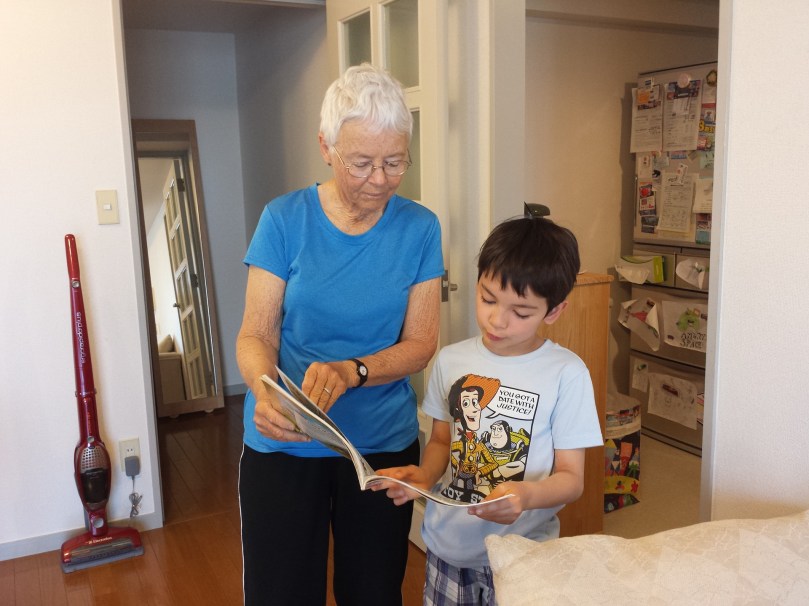
“If money can buy you happiness,” supposedly these ten athletes were financially more successful after retirement, as opposed to the total earnings they generated during their original sports careers:
- Muhammad Ali
- Jim Brown
- Oscar De La Hoya
- Lenny Dykstra
- George Foreman
- Dwayne Johnson (“The Rock”)
- Magic Johnson
- Michael Jordan
- Nolan Ryan
- Dave Whelan
https://www.complex.com/sports/2012/01/10-athletes-who-made-more-money-after-retiring/
Agatha Christie, British writer
Finally, to answer the question, “What would Agatha Christie do in retirement?” best-selling author Ernie Zelinski quoted in his The Retirement Cafe website the following list of activities proposed to be “her favorite things” from the publication Agatha Christie: An Autobiography (Dodd, Mead & Co., 1977).
- Sunshine
- Apples
- Almost any kind of music
- Railway trains
- Numerical puzzles and anything to do with numbers
- Going to the sea
- Bathing and swimming
- Silence
- Sleeping
- Dreaming
- Eating
- The smell of coffee
- Lilies of the valley
- Most dogs
- Going to the theatre
Ernie concluded, “This list of activities and things that Christie loved may trigger some of the stuff that turns you on and which you can use for an active retirement. This will go a long way towards conquering retirement boredom.”
http://www.retirement-cafe.com/Fun-Things-to-Do-When-You-Retire.html

Is the time ripe for you to retire? Again, only YOU can answer that!
When it becomes the right moment for you to make that “big plunge” to “living your dreams…” KUDOS and BEST WISHES on your rebirth as you explore your own pursuit of retirement self-reinvention and post-employment “freedom!”
PKF
© 2019 Paul K. Fox
Photo credits in order from Pixabay.com: “old” by dietcheese, “man” by geralt, “elderly lady” by mabelamber, “senior” by ritae, “woman” by silviarita, “old couple” by monicavolpin, “ben-franklin” by ericdunham, “Fisherman” by paulbr75, “grandma” by fujidreams, and “wooden-train-toys-train-first-class” by Couleur.



 can about “your champion!” Find out his/her goals, needs, and “pet-peeves,” and while you’ll at it, get off on the right foot with relations with all of your school supervisors.
 Williams shared the purpose of his case study: “to gain an understanding of school administrators’ thoughts on their school’s music program in regards to music’s role and value.” He documented the comments of five principals in their advocacy of the arts.
 Also, you should check out an even more recent NAfME blog,
  Learn what makes them tick! Is your principal a site-based manager? Is he/she a stickler for “chain of command.” I had an administrator who would go bonkers if he thought you back-copied a memo to the superintendent or called a central office manager first. Be sure you conform to the management style of your chief. This is a way of showing him/her respect and cooperation, which in all likelihood, will be returned to you in spades.
 looking for volunteers to help fulfill the overarching goals of the district. This might mean signing up for the strategic planning committee, Middle States accreditation evaluation team, school renovation planning meetings with the architect, etc.
 practice? Suggest a solution and a Plan B to an issue you would like to address. Upholding “moral professionalism,” tactfully but firmly point out what is not working (and why). But, do your homework first. Share the “facts and stats” and try to propose several different directions to consider (even a Plan C and a Plan D). You will impress the “head honcho” by modeling the traits of flexibility, creative problem solving, and sensitivity to the needs of other staff and programs.
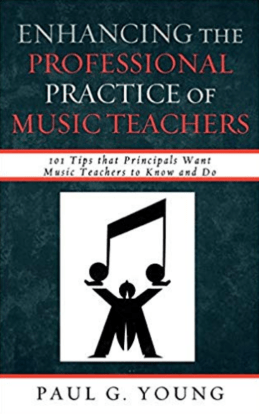 Finally, the most comprehensive manual I have ever read on this subject should be a “required read” for every music educator:
 To “wrap-up” our final segment, we will review the development of a professional “marketing plan.” This is blog #3 out of 3. (Be sure to also check out
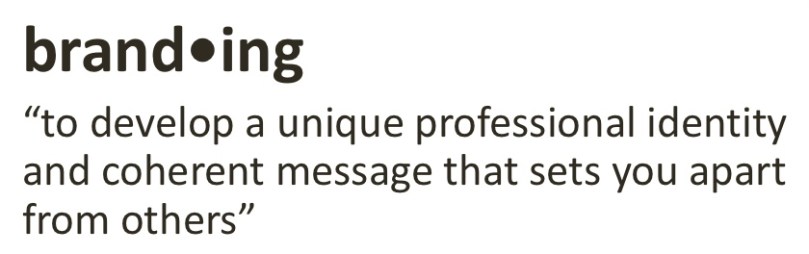
 Shama Hyder posted “7 Things You Can Do to Build an Awesome Personal Brand” at
 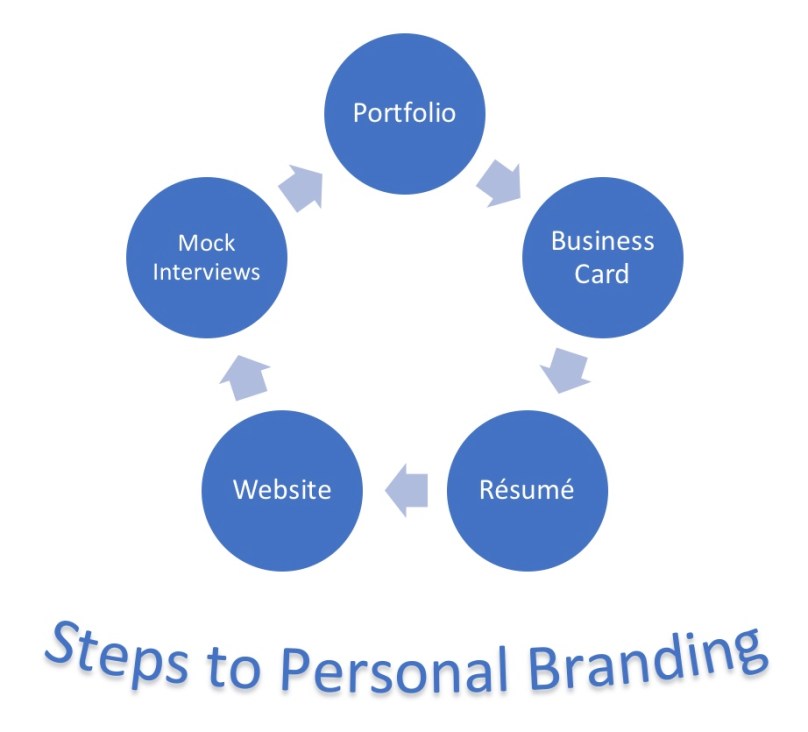 The branding process involves first developing your philosophy of music education, archiving your awards and accomplishments, documenting your grades and
  experiences, and collecting stories/personal anecdotes of your strengths. The next steps include the creation of a written and electronic portfolio, business card, resume, and website. Finally, you must compile/assemble everything together and practice (and self-assess) your “story-telling skills” to answer those important questions at well-rehearsed “mock interviews.”
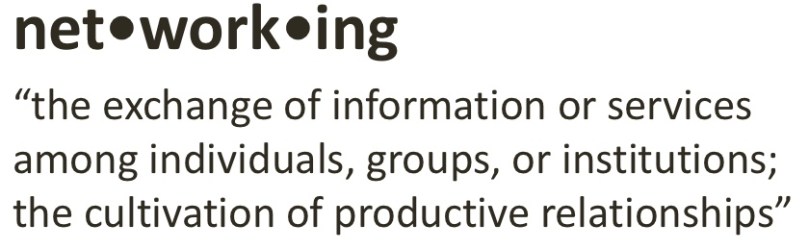
 As I laid out in a previous blog “Networking Niceties: The ‘How-To Schmooze’ Guide for Prospective Music Teachers” at
  The above blog-post also explores setting up a good organizational system to manage your professional contacts.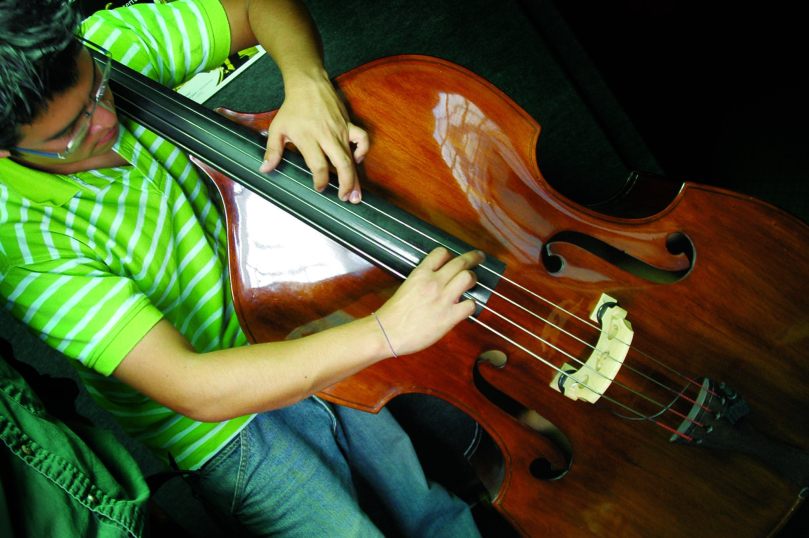
 PMEA Pennsylvania Music Educators Association, or another state’s NAfME-affiliated MEA
 Self-reflection of the professional’s teaching practices and modification of these as needed to match changes in the environment and circumstances

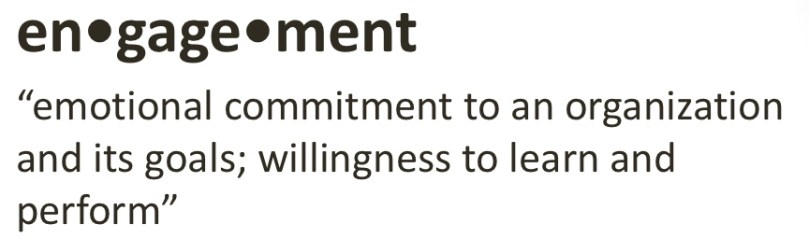
 This will sound like an advertisement (it is)… for retaining one’s professionalism, keeping involved albeit less active in the profession, supporting the future of music education, and on occasion lending a hand to PMEA throughout retirement! In return, the association will provide you opportunities to record and post your career accomplishments and position assignments (past and in the future), network with your friends and colleagues retired or still “in the trenches,” and nurture your personal quest for creative self-expression and artistry… everything from guest conducting or adjudicating ensembles to writing for PMEA publications or presenting sessions at the conferences. It is all about YOU!
 Research indicates that people either LOVE retirement or HATE it, and their journey to the blessed “golden years” can have many ups and downs, especially for type-A, peak-performing individuals who (used to) spend large amounts of time and personally identified with “the job…” like many music educators. Since retiring myself from the Upper St. Clair School District in June 2013, my goal has been to help others enjoy this life-changing passage, cope with life-style changes/altered expectations, and find creative new ways to self-reinvent and thrive. Objectives for retired members in 2016-18 are:
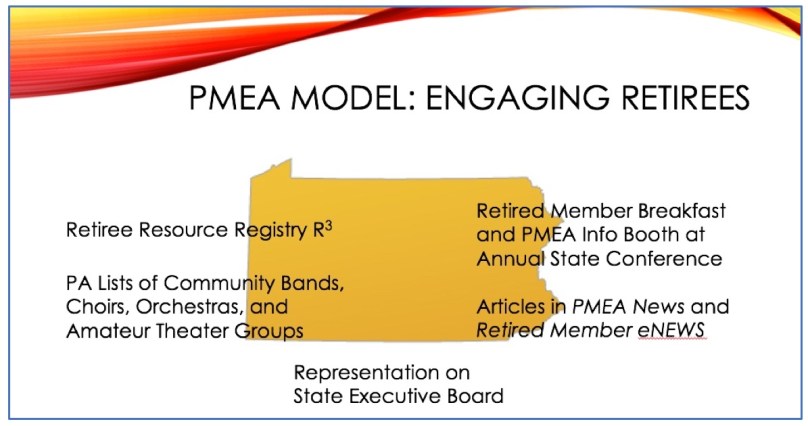
 Are you still willing to “lend a hand” on PMEA projects or share your expertise and provide a free (but priceless) consultant service to new/transferred PMEA members and officers? We constantly update and publish a Retiree Resource Registry
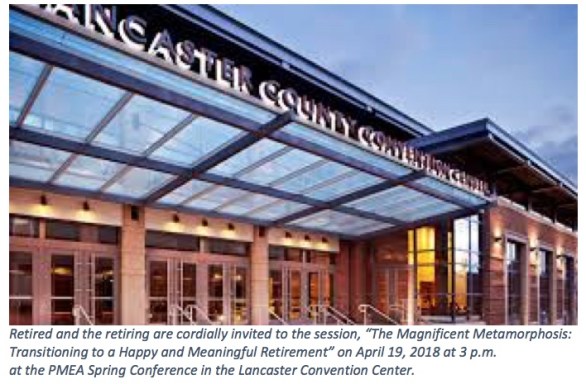
  In addition, retired member registration at the annual PMEA Spring Conference is… (drum-roll, please!) ONLY $10 early-bird! Our next spring conference will be held on April 19-21, 2018 at the Lancaster Marriott & Convention Center. Music teacher retirees get to enjoy some social time to “swap stories” with a FREE breakfast on Friday, April 20. In addition, we are looking for volunteers to help man the PMEA Info Booth… of course, “retired members to the rescue!” Invitations and more details will go out to current members next month, but check out this section on the PMEA website for more information about the conference:
  As a part of reflection and sharing of positive strategies for “Crossing the Rubicon” to a happy, healthy, and meaningful retirement, I have assembled a super-site of every website, article, book, publication, etc. of post-employment “gurus” that I could find. Visit the top menu link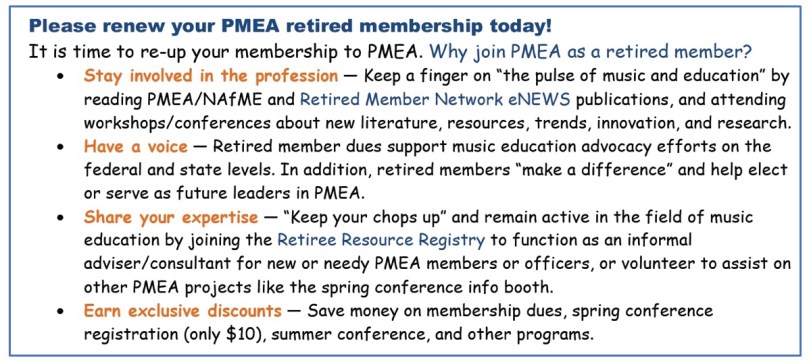

 The number one “tool” for finding a job is not a tool at all – it is all about modeling professionalism, networking with other college students and music teachers, and becoming actively engaged in your state/national music education associations (click on the acronyms to go to their websites) – National Association for Music Education
  Your “travel document” (paper copy you bring to the interview or “one-of-kind” attachment in response to email application) should be easy-to-modify based on the specific job posting to which you are applying. Your philosophy, goals, education, and teaching experience should focus on and reflect your competencies in alignment with the requirements for the music position. Your professional website and online resume should be more “general” and not rule out being considered for employment assignments outside your major. The PA teaching certificate states you are licensed to teach music in grades pre-K to 12… which means you should be qualified for any opening in elementary, middle, and high school general music, band, choir, jazz, keyboard lab, and strings, right?
 band for a year, conducting a small instrumental ensemble to accompany your youth church choir, giving a few summer lessons to the bell players in the local drum line where you live, etc. In addition, prior to the first employment screening and mock lesson at the interviews, you could “bone up” on your instrumental methods, suitable middle and elementary band warmups/literature, the meaning/concept of “middle school education,” and perhaps even pull out and brush up playing a few scales on that flute (or whatever) in your closet.
 Another great reason you should be a member of your professional association (PMEA or PCMEA) if you are looking for a job in PA is… the PMEA Job Board. Many PMEA members have relied on the Job Board for the most recent information when it comes to available PA music teacher positions.
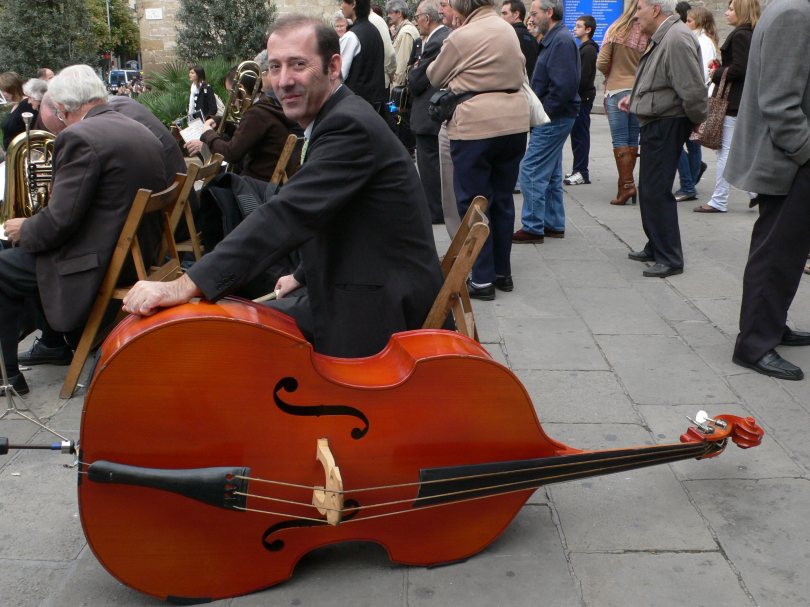
 Do music teachers ever retire? Not really!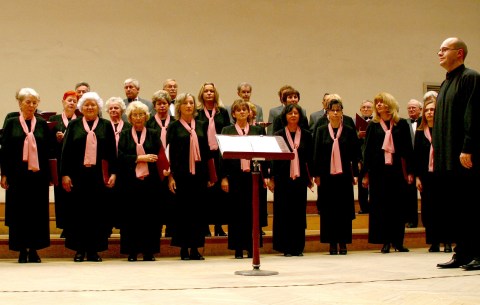

 Practice and go out on a few gigs with your own jazz, rock, Barbershop, or chamber music group
 education? Of course, the best part of retirement is that you get to pick what you want to do every day for the rest of your life. So go ahead and say yes to those extra conducting gigs, writing/publishing your own “Mr. Holland’s Opus,” working with the church or community choir, accompanying a handful recitals, volunteering to help your favorite local marching band or civic theater, serving as an adjudicator for a music festival, supervising student teachers or teaching college music education methods classes, etc.
 As long as I am alive, I will continue to inspire in others that music makes a difference!
 On the subject of music teachers exiting the job market, one area we have not ventured into with these blogs on “retirement resources” is the most difficult to handle – having to face a forced resignation or involuntary leave.
 Depression

 Evaluate your response to stress since you were summarily eliminated from your district. It is worth reviewing the definition of PTSD and see if it should be applied to your behavior and the emotional upheaval you are feeling (from the online blog of the Dr. Oz Show at
  It’s time to “dust off your chops” (join a community band/orchestra)

 Depending on the structure of the interview, the hiring procedures of the institution, and the type of session (whether it is a general screening prior to any job opening, or the first round, second round, demonstration lesson, final round with the superintendent, etc. in order to fill a specific position), you will be exposed to many different kinds of questions.
 As I go out to help at job fairs and mock interviews for music education majors, I advise the soon-to-be candidates to practice their storytelling skills and recall relevant personal anecdotes in order to satisfy the interviewers’ questioning, promote an image of competency and self-confidence, “show that you have what it takes” and would be a “good fit” for their school district, and ultimately “ace” the examination.
 you are, adoption of “customer-first” philosophy and habits, a savvy business sense, focused motivation, and a strong work ethic. Narrate an anecdote rather than list facts. Plan (and dress rehearse) something like this script: “My route was small, so I surveyed my existing customers, asked about their needs, desires, and their definition of a ‘perfect paper delivery,’ and how I could help them. I tagged and followed-up on their unique requests, like ‘hiding the pile of papers that end up accumulating during vacation periods’ (advertising to the world that homeowner is out-of-town), and ‘when NOT to place the paper in the screen door early in the morning so as to avoid waking up the dogs and the whole household.’ I also solicited business from non-subscribers, asking them how I could be of assistance. Pretty soon, word got around, and my enhanced customer-care translated into almost doubling the number of the people on my route.”
 settings) and form your responses. View and assess your performances. What are your strengths and weaknesses, and what improvements could be recommended? Besides the content and clarity of your answers, monitor and evaluate your body language, eye contact, and posture, vocal tone and projection, and those intangibles like “charm,” “attitude,” and “first impressions.” If you do this in a group (roommates, collegiate music education chapter, methods class, etc.), request feedback from your “critics.”
 “stress interviews” are still conducted by some institutions. You’ll know immediately if for some reason you are thrown into one of these seemingly “hostile environments.” No matter what you say or how you respond to a question, the interviewer(s) will exhibit a negative attitude, look disinterested, inattentive, unimpressed, or disappointed, or even act angry, belligerent, or argumentative. Talk about “playing to a dead crowd!” Actually, their sole purpose is to evaluate your behavior during artificially-induced tension or conflict. Your only strategy? Play the game! Stay calm, cool, and collected.
 like, “I haven’t had the pleasure of teaching long enough to totally comprehend what I would do in that situation.” Or perhaps, “I am not to familiar with that term/method/philosophy, but I am willing to research it, ask my building principal or supervisor for his/her advice,” etc.
 What is your view of the teacher’s role in the classroom? (Educational Philosophy)
 What role does the Common Core have in general music (or music ensembles)? (Written Expression)
 How would you structure a general music (or ensemble rehearsal) classroom of the future? (Innovation)
 How would you improve the intonation/tone quality/bow technique of a string players? [STRINGS]

 I write these blogs to “get things off my chest.” Fair warning! Unlike other articles on this site, I may project a little negative attitude in this piece, griping in response to what I consider is unfair public opinion.
 While on this rant, I would also like to complain that I am tired of hearing how teachers only work nine months a year. Someone’s math is really bad when you look at the calendar. Most schools in Pennsylvania start by the fourth week in August for teacher in-service days (definitely before Labor Day) and end by the second week in June, depending on how many snow days or vacation breaks are scheduled in the school year. Closer to ten months?
 There will always be criticism and negative comments about the value of our teachers. Part of this is due to the fact we have all been there. Everyone knows a “bad teacher” who modeled laziness, incompetency, or neglect of duty. You may have had one of these “rotten apples,” or perhaps were forced to endure an educator or coach who demonstrated “abuse of power.”
 “practice” our job, applying different techniques to each unique situation, focusing on the needs of our “charges,” constantly re-assessing ourselves, retraining and updating our skills, and solving problems.
 No one goes into education to make a lot of money. With the same level of post-graduate work, nearly every other entry-level job or even being self-employed will fetch much more compensation.This is why it has been hard finding math and science teachers in some localities. They would have to accept major pay-cuts declining jobs in engineering, chemistry, computer science, and the technology industry as opposed to becoming a first-year teacher.
 At least, we are doing something we love, and we can take “the joy of making music” to the grave!
 great potential and one for whom you have spent much time and effort helping. It was always a crushing blow to hear “Johnny wants to give up playing,” “he is bored,” or “now we will try something new like (ahem) intramural tiddly-winks.” Parents/guardians conceded that it was hard to “make him practice.” My initial response (if I have the guts to say it, but by then, it was usually too late): “Who is in charge here? Do you make your kids brush their teeth or do their math homework?”
 I was relieved that, during a time of state and local budget crunches (when many school districts were not filling retired staff positions), my administration and school directors were true to their mission statement: “Developing lifelong learners and responsible citizens for a global society is the mission of the Upper St. Clair School District, served by a responsive and innovative staff who in partnership with the community provides learning experiences that nurture the uniqueness of each child and promote happiness and success.” When I retired, they hired excellent replacements for all of my former positions: Secondary Orchestra/String Teacher, Grades 1-12 Performing Arts Curriculum Leader, and Spring Musical/Fall Play Director/Producer.
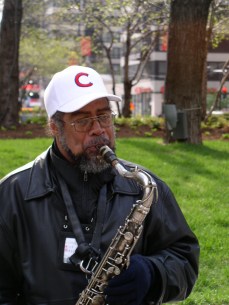 Now we can “catch-up” on travel, pets, hobbies, volunteer work, gardening, home improvements, and revisiting our “creativity roots” which got us started in the first place towards a career in music and education.
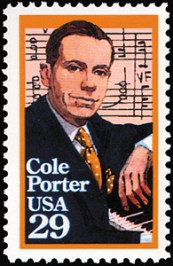 There is nothing worse than feeling that your father does not approve of who you are or what you want to do with the rest of your life. Of course, I am not alone in having this kind of parental disapproval. American composer and songwriter Cole Porter (who wrote Anything Goes) experienced a similar problem. At the insistence of his rich maternal grandfather for whom he was named after, he entered Yale University and then the Harvard Law School to become a lawyer. However, his true love was music. While at Yale (and secretively from his family), he wrote 300 songs and the words and music to six full-length student shows. Eventually he switched to studying harmony and counterpoint with the Harvard music faculty… the rest is history!
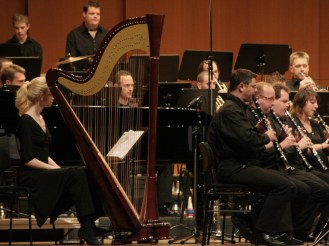 Why choose education? Well, the status of a teacher in some cultures is at the pinnacle of the society’s most cherished and respected. In fact, in some Asian countries, tradition dictates that the eldest rules the entire family, and is often considered a master teacher. The career of a teacher is on the top of the spectrum. The merchant is at the bottom. This is exactly the opposite for today’s Western countries… a worship of wealth, stockbrokers, millionaires, “things,” etc. (Of course, it should be mentioned that, using this analogy, Asian musicians are also at the bottom… considered to be nearly useless in lower socioeconomic agrarian societies.)

 The walking document of “everything you always wanted to know about you” is your professional resume.
 is the “Prepare Your Materials” section of the Institute for Music Leadership, Eastman School of Music (ESM)/University of Rochester, Careers and Professional Development
  “Professional resume writers urge their clients to first try to trim their resumes down to a maximum of two pages.” One exception for a three-pager might be if the job seeker was to transition from one field to another, having to cover both sets of the candidate’s skills, qualities, and experiences.
 and easy-to-read fonts in your collection. “Your goal is not to make your resume beautiful to your eyes… it’s to make it extremely readable to the people doing the screening and hiring.”
 behind the job assignments, field experiences, or awards… is better. What did you do in each situation, what did you learn, and how did you grow? Check out author Diana in NoVa’s ideas at
 conventions of grammar, punctuation, style, and order of presentation. For example, for new music educators entering the field, it is generally recommended that you list your experience, education, and achievements chronologically starting with the most recent at the top of each section. According to
  singing, etc. However, from an administrator’s perspective, it may be more important to know about the prospective music teacher’s field experiences and previous employment working with children, classroom management skills, professional development goals and initiative (would you be interested in coaching or directing extracurricular activities?), teamwork and leadership skills, personality traits like patience/even temperament/self-discipline, and knowledge of a few “buzz words” of educational terminology and acronyms (like The Common Core, DOK/HOTS, IEP, PLC, RTI, UBD, formative/summative assessments, etc. You are welcome to review some of these completing a crossword puzzle at
  Among her other suggestions are writing “an objective statement” which summarizes your goals to being employed at the school district, “support skills sets with problem solving examples” (see #4 above), and “proofread, proofread, proofread” for accuracy and to enhance your image. Sloppy resumes with typos or misspellings project the wrong message to prospective employers.
 paulfox.blog