5 Things You Need for a Comfortable Retirement

Editor’s Note: We are happy to post this retirement article by guest author Sierra Powell… concise and solid advice for all current and prospective retirees. Photo credit: https://www.pexels.com/photo/people-on-seashore-1377070/

Retirement is a new chapter– An opportunity to savor the results of years of diligence, to follow your interests, and to unwind, free from the demands of 9-to-5 employment. Reaching a comfortable retirement calls for careful decisions supporting your lifestyle and future requirements. Whether you desire to see the world, spend time with loved ones, or just enjoy a slower paced life, several essential components will enable you to have all you need for a safe, happy retirement.

Creating a Comprehensive Financial Plan

A good financial plan is the foundation of a comfortable retirement since it provides a clear road map for handling your money in the next few years. This approach covers forecasting your spending, figuring out revenue sources, and developing a plan for withdrawing money without quickly running out of savings. It goes beyond simple saving. First, project your monthly costs using the lifestyle you want. Add needs such as food, healthcare, and shelter; also include discretionary expenditures for entertainment, vacation, and hobbies. Knowing your planned costs helps you to decide if your revenue sources are adequate to meet them. You can also opt for a good local financial advisor. For example, if you live in Florida, seek a financial advisor in Tampa if you need guidance in selecting the best plan for yourself and your family.

Prioritizing Health and Wellness

Enjoying a nice retirement depends on keeping excellent health. It becomes difficult to enjoy your newly acquired independence without bodily well-being fully. Emphasize keeping active, following a healthy diet, and planning frequent doctor visits. Time spent in wellness not only improves your mood but also lowers your chance of chronic diseases that could affect your finances or quality of life. Think about adding pursuits that keep your body and mind active. Without taxing your joints too much, low-impact activities like yoga, swimming, or walking provide excellent advantages. Just as crucial is mental stimulation; consider picking up a pastime that tests your brain, acquiring a new skill, or club membership.

Building a Strong Social Network

A strong social life improves your retirement experience by offering company, encouragement, and chances to remain active. Retirement typically alters your daily schedule, particularly if most of your prior social life came from employment. By means of actions to establish and preserve a solid network of friends, family, and community ties, you may prevent emotions of isolation and loneliness, therefore influencing both mental and physical health. To meet new people and be active, join clubs, volunteer groups, or neighborhood organizations that fit your interests. To keep your social calendar full, get in touch with old pals, throw events, or schedule visits with loved ones.

Ensuring Housing Stability

Your degree of retirement comfort depends mostly on your choice of living environment. Your house should fit your way of life, be reasonably priced, and call for little upkeep. Downsizing to a smaller house, condo, or senior living complex provides the ideal balance for some between cost and convenience. Smaller spaces cut maintenance, decrease utilities and liberate resources for additional uses. Think about things like family, closeness to hospitals, and services supporting your everyday requirements. If you would like to keep your present house, think about implementing changes that would help keep aging in place. Simple adjustments that improve mobility and safety include adding grab bars in the restroom or substituting ramps for stairs.

Creating a Flexible Budget

Unexpected expenses might develop in retirement even with the finest financial preparation. Creating a flexible budget lets you negotiate these shocks without sacrificing your general financial situation. Set aside some of your savings, especially for unexpected vacation demands, house repairs, or medical bills. An emergency fund serves as a financial cushion so you may handle pressing needs without compromising your monthly income flow. Your budget should also contain a provision for discretionary expenditure for unplanned events such as family visits, holidays, or new interests. This adaptability lets you enjoy the advantages of retirement without feeling limited by your means.

Conclusion

Making decisions according to your beliefs and future vision can help you to create a comfortable retirement. Every component of your retirement plan supports your way of life and well-being, thereby enabling you to savor this new chapter with peace of mind. Accept the chance to live life on your terms, knowing that your careful planning has set a firm foundation for your next years.

Bookends – Part 3

As summer draws to a close and schools begin to reopen, we look forward to the coming autumn season (and hopefully some relief from the scorching weather). After all, tomorrow will be the first day of classes at my former place of employment (and the dress rehearsal for Friday’s marching band senior show). Soon we’ll enjoy one of my favorite transitions of the year! In Western Pennsylvania, deciduous trees will gradually change color (some bright red, orange and yellow) and then shed their leaves… the perfect metaphor for the final sections of my “Bookends” series.

(Yes, fall is a month away… but, as you can see, the stores are way ahead in anticipation of the changing seasons!)

Autumn is a season of harvest, a time to reap the rewards of our hard work and reflect on the blessings in our lives. The Fall Equinox is a reminder for us to assess our accomplishments instead of our shortcomings.

www.inspiringactions.com

We return to a discussion first introduced last October in Bookends – Part One – The Life Cycle of a Successful and Happy Music Educator, exploring:

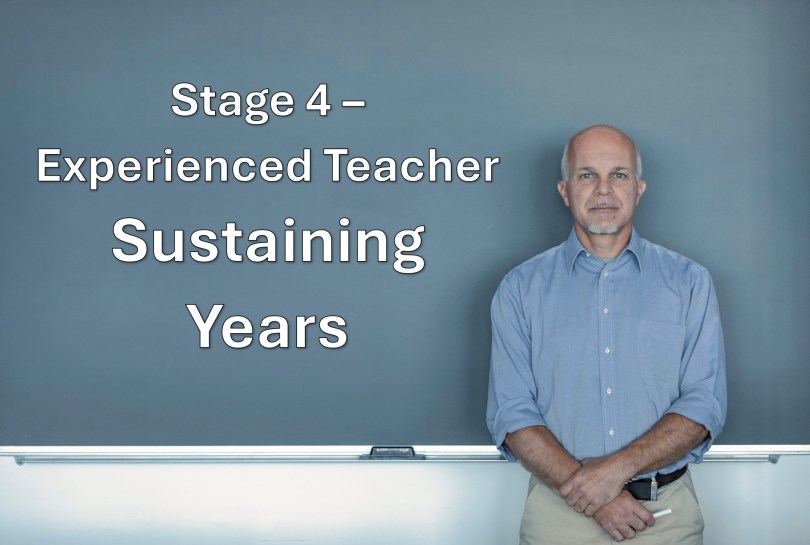
  • Stage 4: Veteran/Sustaining Years (this blog)
  • Stage 5: Next Chapter/Living the Dream (future blog)

When do we become “experts” in our field? When are we “master teachers?” Do we ever reach the apex of our achievements, the crowning glory of our career, or the pinnacle of our profession?

Never! You snooze, you lose. If you stop expanding on your knowledge and skills, forgo exploring new ideas, methods, and media, or become stagnant and settling into a rut at work, you might as well RETIRE (“Stage 5”). Instead, I direct you to revisit “Stage 3” in Bookends II here. As dedicated educators, the focus must be on constant retooling… reviewing/revising “best practices,” setting new goals, and building on the existing networks and engagement in the profession. These have always been the essential elements of a true professional.

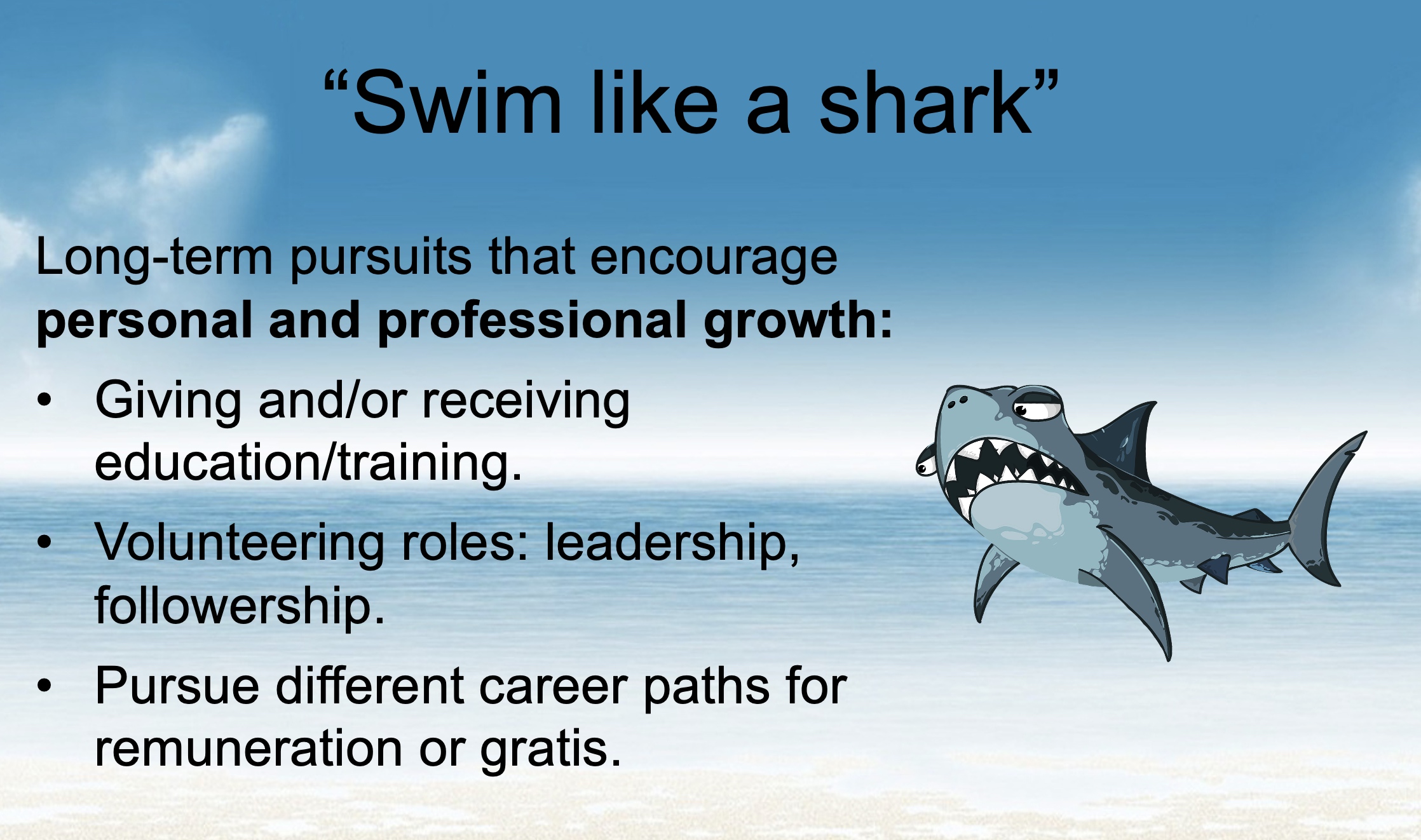
Now I should mention that during our middle-years, we sometimes return to education, get advanced degrees, new certifications or teaching specialties, apply for new job assignments, etc. When my PMEA colleague and fellow music teacher retiree John D’Ascenzo left full-time teaching, he went on to pursue a doctorate degree. Also appropriate for our next Bookends section, I have often quoted his analogy for all career stages to “swim like a shark” (since a shark never stops moving, even when it is sleeping). Sage advice for us all!

During my whirlwind of more than five decades in the field of music education, I went through several “first-year-of-teaching” passages, such as accepting my first job in general music at Edgewood School District (1978-1980), then being hired to direct strings (grades 6-12) at Upper St. Clair School District in 1979 followed by a 16-year appointment to the USCHS choral program of over 200 singers in 1980 on… transitions requiring massive job retraining and revitalized professional development. I may have not appreciated the stress of these “hurry up and relearn” periods at the time, but these periodic challenges made me GROW. In the end, I “lived” and embraced Robert Frost’s poem, “The Road Not Taken.” It may have not been the initial pathway I imagined for myself when I started in music education, but “I took the one less traveled by, And that has made all the difference.”

To this day, this violist and orchestra director has NO REGRETS teaching so many years outside of his so-called “specialty” or emphasis! It comes back to me every time I run into former choral or musical students, those I taught in those early years of being a vocal novice (at times when I felt less prepared). My past instrumentalists/singers/actors reminisce a little and literally rave about their musical experiences and what they meant to them.

My emphasis to foster success in our “veteran years” is also on teacher self-care: health and wellness, burnout prevention or remediation, stress and time management, and personal life and work balance.

Let’s start with examining the probable causes of STRESS in TEACHERS:

  • Overwhelming workload, long hours, and/or challenging classroom situations
  • Lack of administrative or social supports
  • Feeling a lack of respect, loss of job autonomy, or not being valued or appreciated in the organization or assignment
  • Dysfunctional or hostile work environment
  • Inconsistent hydration and consumption of a balanced diet and healthy quantities (length, depth, and frequency) of rest and sleep
  • Irregular amounts of daily aerobic physical exercise
  • Misuse of the voice at work and inadequate hearing conservation and protection from over-exposure to sound
  • Deficient scheduling of opportunities for mindfulness, meditation, and/or reflection
  • Deprivation of personal outlets for creative self-expression (not related to job) and the lack of time to explore hobbies, interests, and socialization with family and friends
  • Infrequent use of sick days or vacations even when they are needed for restorative health

We all have experienced at least a few of these “bumps along the road” (but hopefully NOT most of them). Although I generally had very supportive administrators throughout my years in the public schools (and no one would claim I exhibited any symptoms of “burnout”), I did model a few of the inconsistent habits of personal health (diet, sleep, etc.) and an unbalanced work/personal life schedule. And, perhaps it could be said that I did some of my best work totally exhausted!

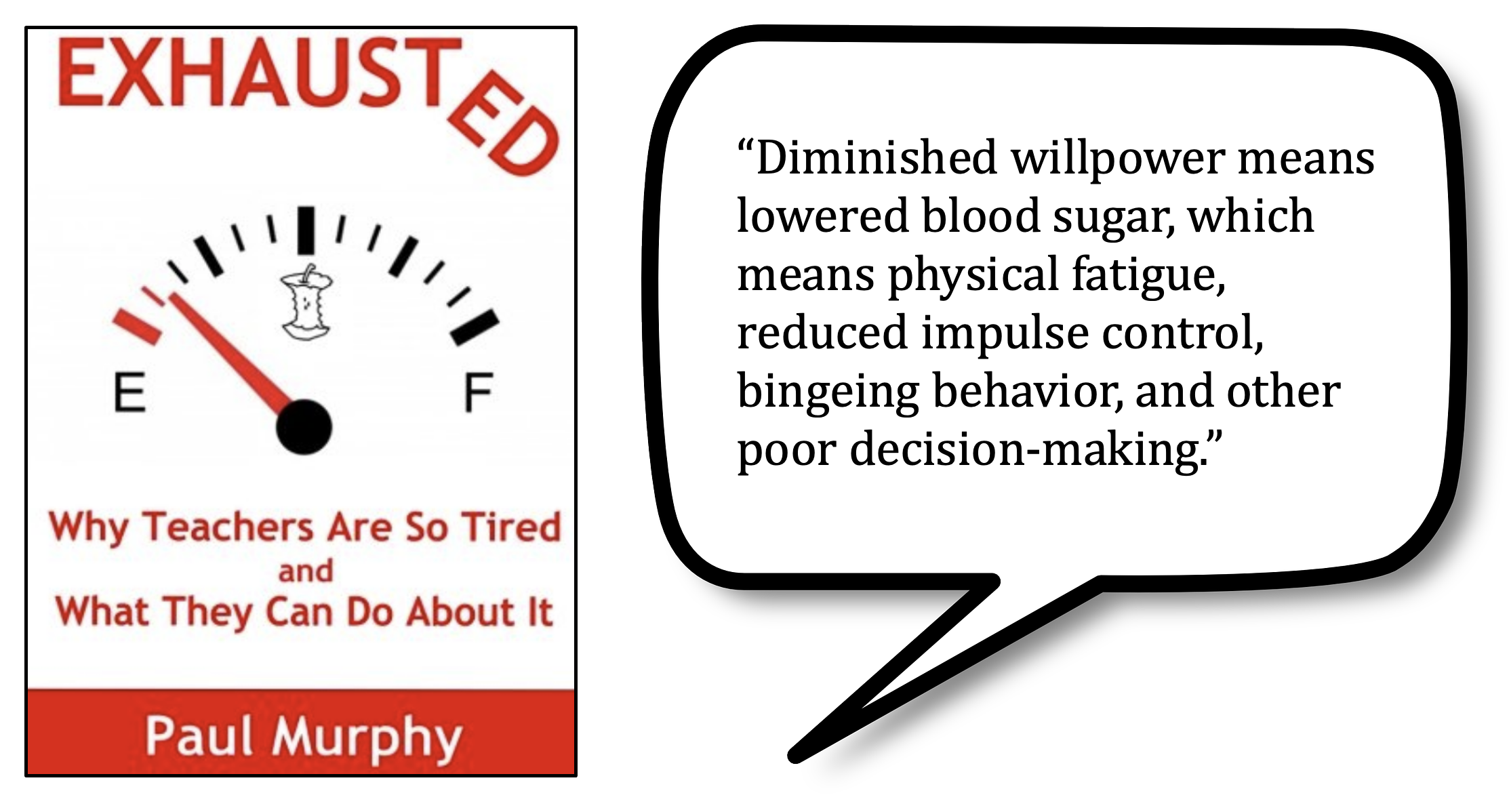
As I have written in past blogs (especially here in “Burned Out or Bummed Out”), the best book I know on “teacher exhaustion” is by Paul Murphy (2017), and subtitled Why Teachers Are Do Tired and What They Can Do About It. I strongly recommend it as “a required read” for all new AND veteran teachers.

Besides being aware of your “body chemistry” (especially what the challenges of constant willpower, deferred gratification, and relentless scheduling can do to lower your blood glucose levels later in the day), to quote Murphy, some of his suggestions for remediation are NOT so easy to follow:

  • Work less/fewer hours
  • Time before school is worth more than twice as much as time after school
  • Use class time to check work
  • Leverage technology
  • Don’t grade everything
  • Stop assigning things

Sorry! My wife and I modeled the behavior of “more-than-full-time” music teachers with after-school rehearsals of marching bands, musicals, community orchestras, chamber ensembles, private lessons, music festival preparation, etc. How in the world do you work fewer hours? Also, since most music teachers do not assign “paper” homework requiring teacher correction, “checking for understanding” and in-class formative assessment could improve efficiency. Sometimes we are own worst enemies… We should “keep it simple” and focus on the priorities. That brings us to time management.

My favorite strategies for organizing our time and fostering a better work/life balance involve these resources (click on links below to past blogs at this site). PLEASE STUDY THESE!

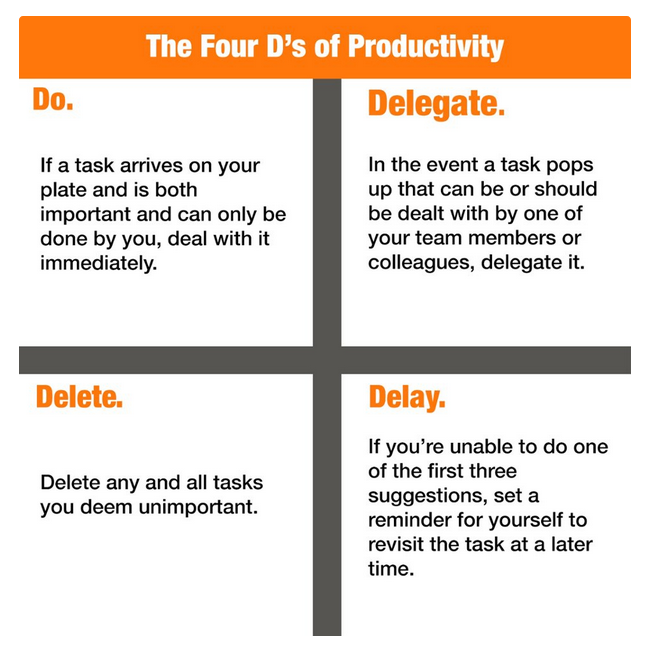
I return to the “Four D’s” concepts several times in past writings, and the “system” can be applied digitally as well… as long as you make a concerted effort to take the necessary time (10-20 minutes) every day to manage the up-front decision-making to “do immediately,” file, or weed out most of the “voluminous noise” (distractions) you get in email, texts, voicemail, snail-mail, etc. Get ready to push the “delete” button… over and over again!

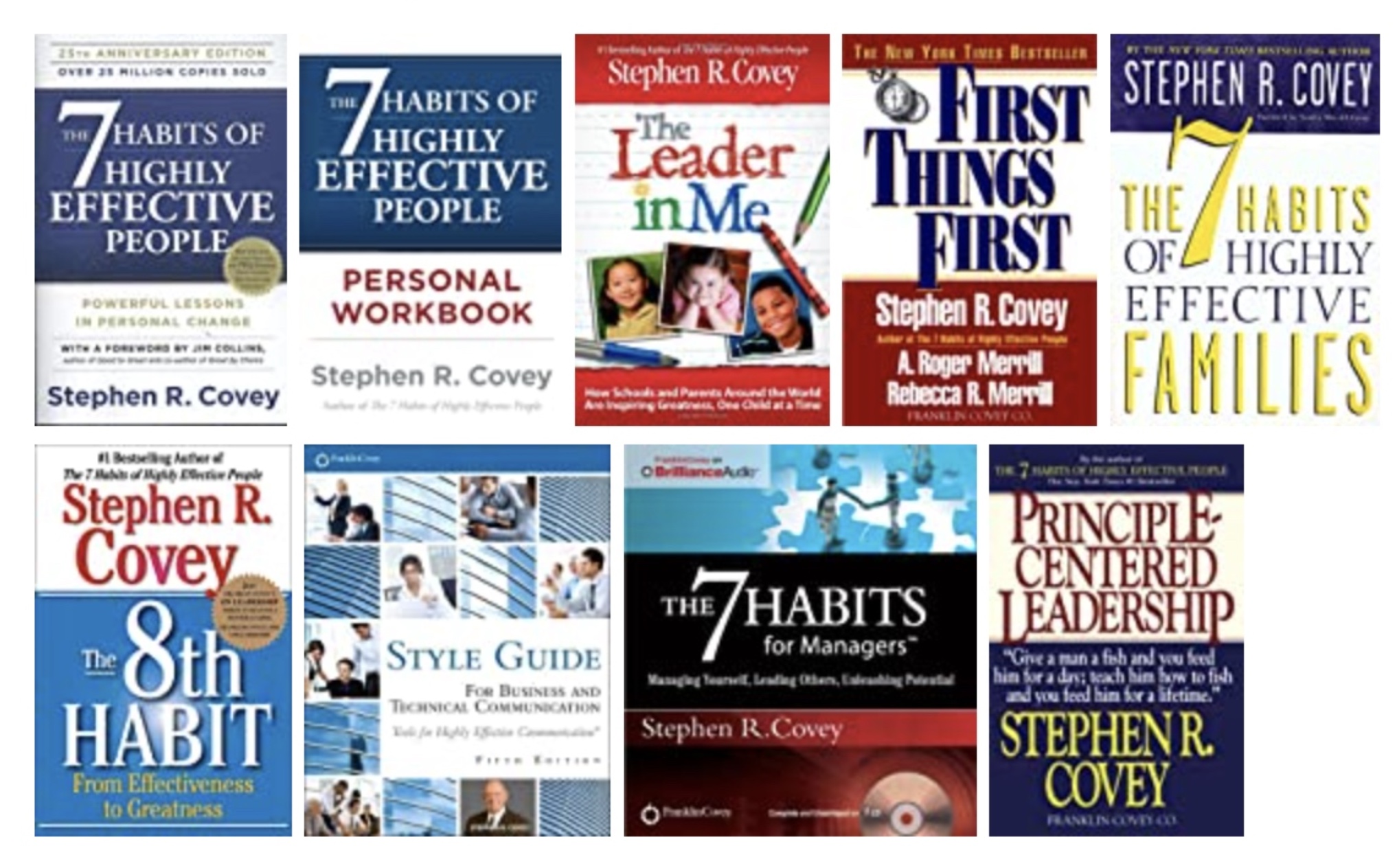
Then there are a few more ideas in “Top Ten Organizing Tips…” and any of the books by Stephen Covey (below). I particularly like the philosophy/demonstration attributed to him re: “start with the big rocks!”

Also, if you are a member of NAfME (National Association for Music Education), search their vast library of related blogs here, several articles to which I was fortunate to have contributed.

Final thoughts for the “sustaining years” of your profession and to avoid any touches of BURNOUT is to develop a self-care plan. My first go-to for building meaningful wellness habits comes from “What Self-Care Is and What it Isn’t.” In past health and wellness workshops, I echo these “basics.”

  • Promote a nutritious, healthy diet, and hydrate often.
  • Get enough sleep.
  • Exercise.
  • Follow-up with medical care.
  • Use relaxation exercises and/or practice meditation.
  • Spend enough time with loved ones.
  • Do at least one relaxing activity every day, whether it’s taking a walk or spending 30 minutes unwinding.
  • Do at least one pleasurable activity every day, from going to the cinema, cooking, or meeting with friends.
  • Find opportunities to laugh.

Self-care can take many forms, such as physical, spiritual, and emotional self-care. It’s an important factor in maintaining health and well-being.

Self-care might range from a hot soak and yoga to everyday activities like preparing meals you want to eat or dressing in your choice of style.

Self-care is not an indulgence. The WHO recognizes it as a crucial aspect of health maintenance.

Tailoring self-care for your budget, season in life, and personal needs for whole body wellness, inside and out, can be energizing and exciting in itself.

https://psychcentral.com/blog/what-self-care-is-and-what-it-isnt

Veteran full-time educators: To sustain and nurture success in the middle to twilight years of your career (Stage 4), seek to understand and practice personal wellness and work/life balance while continuing your pursuits in self-motivation, self-assessment, self-energizing, self-(re)invention, and “growing” personally and professionally, and if it becomes necessary, promote the diagnosis, prevention and self-remediation of debilitating stress and burnout.

PKF

© 2024 Paul K. Fox

Unconditional Love (Dogs!)

Pets + Retirees… They Go Together!

dog-2729805_1280_gdjHappy Valentine’s Day to all of my readers. I could not think of a better way to “celebrate” our appreciation of “heart-day” with reflections on what our pets bring us… adulation, affection, attachment, companionship, devotion, enjoyment, good will, involvement, passion, stimulation, tenderness, understanding…

“The power of love!” They say that all you have to do is look at the face of a sleeping baby, or cuddle up next to a puppy or kitten, and it will slow down your respiration rate, lower your blood pressure, reduce cholesterol and triglycerides in your blood, and increase in your body the levels of serotonin and dopamine, two neurochemicals that play big roles in the promoting feelings of calm and well-being.

people-1749382_1920_herney

From personal experience, having two of the most adorable and loving dogs… If you’re contemplating retirement and you have never owned a pet, let me be the first to tell you:

“Pets can change your life.”

I invite you to peruse several other blogs I’ve written on this subject:

If you are almost ready to retire, or you’re going through your first couple years of your post-employment “internship,” there’s a good chance that psychologically it would be good for you to “get out of Dodge” as you adjust to your new status. This might be a good time for you to take a cruise, tour Europe, go ice fishing up north, or plan a long road trip out west. Pack up everything and takeoff. Celebrate all those years that you put your nose to the grind stone.

But eventually, you may want to come back “to nest,” and “taste” a little transitioning into things that seem to go well together, e.g. small doses of (human) babysitting, grandparent/child interaction, and/or rescuing a pet. Becoming a homebody may also suggest the consideration of planning small or large renovation projects: fix up your garden or backyard, design your ideal kitchen, remodel the bathrooms, do a garage remake, downsize and de-clutter, etc. After the first several years of simply resting and exploring the options of your self-reinvention, NOW might be the perfect moment to add a furry friend to your family!

animals-2198994_1920_gellinger

Why get a pet?

Goodnet (“Gateway to Doing Good”) summarizes nine reasons you should adopt a pet:

  1. Pets have their perks when it comes to your health. (More on that later.)
  2. A pet will love you unconditionally. (Thus the title of this blog!)
  3. Adopting a pet is easy on your wallet. (Pet rescue from a shelter is less expensive.)
  4. Adopting a pet means saving a life. (Millions of animals are euthanized per year.)
  5. By adopting a pet, you’re giving an animal a second chance. (Another go at life!)
  6. Pets keep you active. (Dog walking provides owner aerobic exercise.)
  7. Pets bring joy and fulfillment. (Pet care enhances a sense of purpose for retirees.)

  8. dog-3243734_1920_kandykandooPets boost your social life. (Research indicates pets decrease social isolation.)
  9. Besides, how could you possibly resist this face?


Medical benefits including psychological health

There’s an avalanche of online research that backs up claims that pet ownership is actually “good for you!”

Pet owners know how much their furry friend improves their quality of life. But it’s not all about unconditional love—although that actually provides a wellness boost, too. On an emotional level, owning a pet can decrease depression, stress and anxiety; health-wise, it can lower your blood pressure, improve your immunity, and even decrease your risk of heart attack and stroke.

— Alexandra Gekas

 

dog-3128192_1920_maja7777

Here are my “top dozen” reasons and resources to peruse:

  1. Having a pet decreases stress: Promises Treatment Centers
  2. Caring for a pet lowers your blood pressure: WebMD
  3. Owning a dog reduces cholesterol and triglyceride levels: Harvard
  4. Pets keep you fit and active: Gerontologist
  5. Daily dog walking helps you to lose weight: Healthy People
  6. Owning a dog can help detect, treat, and manage disease and injuries: HuffPost
  7. Pet therapy eases pain management and reduces anxiety: Loyola University
  8. Pets may reduce doctor’s visits: American Psychological Association PsycNet
  9. Having a dog may make you (at least feel) safer: LifeHack
  10. Pets help you build friendships and find social support: Harvard
  11. Dog owners are less prone to depression: GrandParents.com
  12. Pet ownership adds meaning and purpose: BestFriends


Believe it or not, pets can be the best medicine, especially when a person is dealing with chronic pain such as migraines or arthritis. Just like Valium, it reduces anxiety. The less anxiety, the less pain…

People who have pets are less harried; there’s more laughter in their life. When you come home, it’s like you’re George Clooney. You’re a star. This is a primary reason pets are used in various forms of therapy.

If you have a dog around, your blood pressure is lower. A lot of it goes back to reducing stress: You might lose your job, your house, your 401(k)—but you’ll never lose the unconditional love of your pet.

— Dr. Marty Becker, DVM, veterinary consultant for Good Morning America and author of the book Your Dog: The Owner’s Manual.

 

doggies 2017 to 2018 - 3

Increasing your regular habits of exercise

The experts say that physical activity promotes flexibility, muscle strength, stamina, and balance, and helps us to remain mobile into our 70s and 80s. Caring for a pet may help! For example, studies from the National Center for Biotechnology of the U.S. National Library of Medicine (like this one) indicate that older adults who walked dogs with frequent moderate to vigorous exercise are associated with lower body mass index and faced fewer limitations to their daily living activities.

Having trouble sticking to an exercise program? Research shows that dogs are actually Nature’s perfect personal trainers—loyal, hardworking, energetic and enthusiastic. And, unlike your friends, who may skip an exercise session because of appointments, extra chores or bad weather, dogs never give you an excuse to forego exercising.

In 2008, the U.S. Department of Labor reported that only 16 percent of Americans ages 15 and older exercised at all on an average day! This is where your canine personal trainer can help.

—Dawn Marcus

walking-2797219_1280_mohamed_hassanHow much exercise is enough? Well, according to the World Health Organization, the “best practices” of a good health and wellness program includes:

  • 60 minutes of moderate to vigorous activity daily for children 5 to 17 years old
  • 30 minutes of moderate-intensity exercise five days per week for adults 18 to 65 years old, plus strengthening exercises two days per week
  • 30 minutes of moderate-intensity exercise five days per week, with modifications as needed in seniors over 65 years old, plus flexibility and balance exercises.

The good news? From Bark, “Researchers at the University of Western Australia found that seven in every 10 adult dog owners achieved 150 minutes of physical exercise per week, compared with only four in every 10 non-owners.” We already know that grabbing that leash, whistling for the pup, going for a brisk walk, and getting out to see what’s going on in your neighborhood, may help to reduce stress, depression, lethargy, the risks of obesity, and many other medical problems.

 

dog-1027549_1920_haidi2002

The all-essential quest for “mattering” and “feeling needed”

In the past blog “Retiree Concepts,” I mentioned the book, Revitalizing Retirement: Reshaping Your Identity, Relationships, and Purpose by Nancy Schlossberg (definitely an excellent buy), and reviewed the issues of “marginality” (bad) and “mattering” (good). The essential question is worth repeating here: “Do you feel “needed” and that you “make a difference” to others?”

Caring for a pet does a great job of fulfilling our need to find in our retired lives the “purpose, community, and structure” referred to Ernie Zelinski in his book, How to Retire Happy, Wild and Free.

As we grow older—especially after we retire—it can be difficult to find structure and meaning day in and day out. Dogs take care of that.

— Kristen Sturt

They force people to continue to do things. So, even if you’re not feeling well emotionally or physically, the dog doesn’t care. I mean, they care, but they still want you to feed them and take them for a walk.”

— Kristi Littrell, Adoption Manager at Best Friends Animal Society in Utah

At Walter Reed Army Medical Center, they’re using dogs to help soldiers dealing with post-traumatic stress disorder. They’re finding the guys who have a pet are able to re-enter society a little bit easier. They’re showing a decreased suicide rate, one of the biggest health threats [veterans] face. These guys who have a pet have someone they’re responsible for, someone who cares about them. And they don’t have to explain what they’ve been through.

— Dr. Katy Nelson, associate emergency veterinarian at the VCA Alexandria Animal Hospital in Alexandria, Virginia


It’s not only about the tangibles – physical, medical, mental

It’s simple… every day, my pooches make me feel good!

Oh, we have all witnessed the “life-changing power of pets” (Psychology Today) and the tremendous social bond partnering a dog (or cat) with a human. We agree, “Pet owners have big hearts and bestow good feelings on both animals and people. Having a pet does not replace a human social network, but rather enhances and enlarges it. Cats, dogs, birds—and pets of all species, shapes, and sizes—bring wellness.”
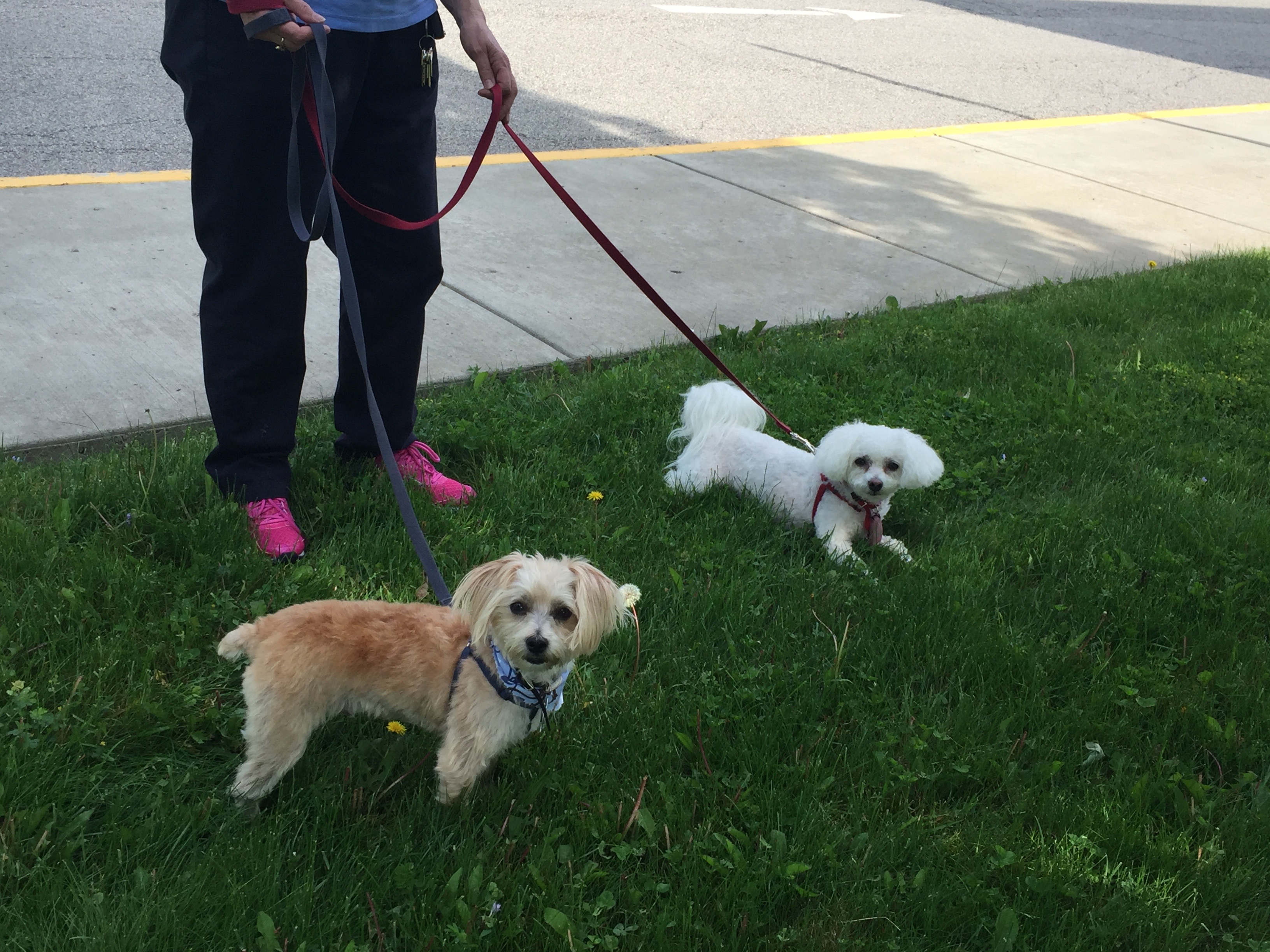
our two pups 051216 - 1On personal observation, I can attest that walking my dogs in the neighborhood can be one of the most contemplative (almost meditative) experiences of the day. I commune with nature, let my imagination wander (dream “wide-awake”), notice things I have never before stopped to see, hear, or smell, and reflect on my life goals. I find the “pause” in my daily routine (or should I say “paws”) makes me feel refreshed, thoughtful, more calm, tolerant, and patient while at the same time more alert and focused, and always leaves me in a better mood.

Dr. John V. DiAscenzo, my talented friend and PMEA music education colleague with great background in research, would now demand of me, “Show me the specific studies that support your claim that walking dogs make people feel happy!” Got it! I found numerous references, including this article from the National Institutes of Health.


You can’t buy this kind of shared love… a snapshot

  • No matter how good or bad my day is, the moment of my return to home, stepping into “puppy heaven,” Gracie and Brewster rushing up in full gallop to lick (kiss) and welcome me, jumping up as if to say, “Oh, we’re so glad he’s back!”
  • The vigorous wagging of her tail and the “happy dance” Gracie does when I reach for her favorite bone
  • The “nesting” impulse of Brewster as he paws his towel on top of our bed, just before he curls up in a small ball, leaning into the small of my back (giving me great lumbar support) and falling asleep
  • Gracie pushing Brewster out of the way when jockeying position to receive pats on the head from a visitor

  • canine club 2Expert cuddlier Brewster flipping on his back so you rub his tummy, and when you are distracted, gently pawing at you begging you not to stop
  • Gracie’s “happy barks” and squeals of excitement when mommy brings in the supper dish
  • Gracie jumping up onto the extra desk chair to watch daddy type on his computer (we even had to buy her own chair)
  • Brewster winning a contest for the most puppy-pushups (up/sit/down) in dog (people) training classes
  • Having totally original “dog-o-nalities” and never failing to amaze me every day, being awakened by them at 6 a.m.
  • But, after going out, all three of us climbing into the La-Z-Boy® combo recliners and falling back to sleep, Gracie between my legs with her chin on my ankle, and Brewster on my left shoulder like a violin shoulder pad


Lowering the numbers of neglected pets in overcrowded sanctuaries

Finally, although perhaps not the most significant rationale for a retiree to go rescue a pet, these are estimated animal shelter statistics from the ASPCA and the American Pet Products Association (source):

  • Approximately 6.5 million companion animals enter U.S. animal shelters nationwide every year. Of those, approximately 3.3 million are dogs and 3.2 million are cats.
  • Each year, approximately 1.5 million shelter animals are euthanized (670,000 dogs and 860,000 cats).

  • pit-bull-2047469_1920_rescuewarriorApproximately 3.2 million shelter animals are adopted each year (1.6 million dogs and 1.6 million cats).
  • About 710,000 animals who enter shelters as strays are returned to their owners. Of those, 620,000 are dogs and only 90,000 are cats.
  • It’s estimated that 78 million dogs and 85.8 million cats are owned in the United States. Approximately 44% of all households in the United States have a dog, and 35% have a cat.
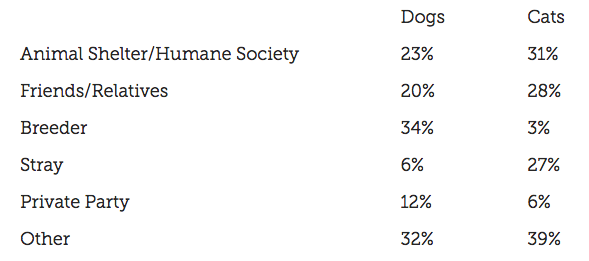
  • According to the APPA, these are the most common sources from which primary methods cats and dogs are obtained as pets:
appa stats

LiveScience posted “A Blueprint for Ending the Euthanasia of Healthy Animals.”

Do you have Kleenex handy? Read “10 Shelter Stories That Will Make you Smile.”

Simply put, if you have it in you to consider pet adoption, your action will probably save the life of a sheltered animal and give it (and you) a second chance!

 

dog-3108509_1920_groesswang

Additional resources

Do you need more research? Be sure to visit the final link in the bulleted list below, which also has an exhaustive bibliography worth viewing.


CODA: The “‘last words” as a recap and a final website for you to check out:

Studies have shown that owning a pet can be physically and mentally beneficial for people of all ages. In the case of senior citizens, just 15 minutes bonding with an animal sets off a chemical chain reaction in the brain, lowering levels of the fight-or-flight hormone, cortisol, and increasing production of the feel-good hormone serotonin. The result: heart rate, blood pressure and stress levels immediately drop. Over the long term, pet and human interactions can lower cholesterol levels, fight depression and may even help protect against heart disease and stroke.

— Seniors and Pets

But, you knew all about this, right? So, what are you waiting for?

For me, I gotta go… and take Gracie and Brewster out for another walk!

Have a Happy PET Valentine’s Day!

PKF

pretty-girl-2039181_1920_terric

© 2019 Paul K. Fox


dog-1517090_1280_leunert

Besides the numerous pictures of Gracie and Brewster, photo credits in order from Pixabay.com: “puppies” by kko699, “dog” by GDJ, “people” by Herney, “animals” by Gellinger, “dog” by kandykandoo, “dog” by maja7777, “walking” by mohamed_hassan, “dog” by haidi2002, “pit-bull” by RescueWarrior, “dog” by groesswang, “kitten” by creades, “pretty-girl” by TerriC, and “dog” by Leunert,




Unique Retiree Resources

It is always a privilege to receive email or comments from many of you regarding my past blog-posts at this site. I truly appreciate hearing from you – agree or disagree – and, whenever possible, I will “pass along” your recommendations and perspectives.

hospice-1793998_1920_unclelktThe “mission” is to help you with the transition to retirement and, when they are relevant, to communicate links to helpful sources of information. Many of these are not applicable to every retiring music teacher. However, if not issues for a family member, you might know of a friend, neighbor, colleague, or someone else who could use some direction in these eclectic topics:

  • Housing purchases/rentals, maintenance, and improvements
  • Personal security
  • Downsizing
  • Health care, eldercare, and physical fitness
  • Disabilities
  • Advance care planning
  • Medical Alert systems
  • Mattress purchase recommendations
  • Sleep guides and disorders
  • Grieving and coping with loss

We started this exposé with a previous blog, “Seniors Helping Seniors” at https://paulkfoxusc.wordpress.com/2017/05/28/seniors-helping-seniors/.

grandparents-1969824_1920_sylviebliss


Elmer George invited all of us to peruse his new website: elderville.org. It is called Resources for All Elders, and it shares lists of websites, blogs, and fact sheets on numerous senior-related themes – everything from “daily safety tips” to “volunteering.”

elderville.comSeveral great examples, his set of February 2018 articles (https://elderville.org/blog/) discuss “Five Ways Seniors Can Avoid Stress and Hassle During This Tax Season” and “Three Ways Seniors Can Get Healthy at Church.”

Specific to housing concerns, Elmer emailed me these additional avenues of help:


granny-1280445_1920_brenkee


Elizabeth Reynolds reached out to me with research on criteria for choosing the best medical alert system: https://www.reviews.com/medical-alert-systems/.  She said, “After hearing that there are 800,000 fall-related hospitalizations each year, our team created this resource in an effort to change that number.” Elizabeth added, “Our hope is that our guide may assist readers navigating their options to minimize this risk in the event of a fall.” At first, I thought her posting was a well-concealed advertisement for a particular company, until I explored her entire www.reviews.com website. Knowledge is power. Elizabeth has assembled a wide variety of resources in these areas worth further reading:

  • Reviews.comHome Services
  • Insurance
  • Financial Services
  • Home Products
  • Health and Fitness
  • Beauty
  • Pets


bed-1846251_1920_pexels


Speaking of reviews, something on which you would not probably seek advice is what mattress to purchase or finding other aids for improving your sleep. Well, if you know anyone who has had trouble getting to sleep or is seeking methods of being well-rested, let me be the first to recommend https://www.bestmattressreviews.com/, shared by Jenny Thompson. She claims her “team” has been researching the science behind sleep and reviewing sleep products to see if they really have the effects that the companies claim to have. I admit, her extensive online resource first sounded a lot like a very large commercial, but I have never known such detail and vast criteria could be involved in assessing the merits of different mattresses and sleep accessories:

  • Types: foam, innerspring, latex, and hybrid
  • Sleep position: side sleepers, back sleepers, stomach sleepers, couples
  • Other benchmarks: firm, soft, cooling, crib, organic, pain management, and user type (mattresses for pet owners, runners, people with disabilities, etc.)

It is definitely worth your time to examine the article section on specific sleeping guides:

  • bestmattressreviewsSleep disorders
  • New and expecting mothers
  • Advice for children, teenagers, and college students
  • Mental health and sleep
  • Sleep and anxiety
  • P.T.S.D. and other problems

We may all know someone who has suffered the effects of Alzheimer’s. This one recently hit home to me as I just discovered one of my long-time music teacher friends was enrolled in a memory unit.

dementia-3051832_1920_geralt

According to this website, “Alzheimer’s disease affects as many as 5 million Americans. Scientists still don’t know how to prevent, slow, or cure the disease. Meanwhile, the death rate has increased 55% over the past decade and a half, and with the silver tsunami on the horizon, the number of patients is expected to explode. Sleep problems and Alzheimer’s are interconnected. People living with Alzheimer’s experience difficulty sleeping, while people who have sleep issues earlier in life are at greater risk for developing the disease.” We should all be aware of this link for more information: https://www.bestmattressreviews.com/alzheimers-and-sleep/.


spiritfinderFinally, out of the blue, Jennifer Scott contacted me with “healthy ways to cope with a loss” with these resources to help grieving families:

Reaching out to those who may be suffering with anxiety and depression, her helpful hints will go far to alleviate stress. I found parts of her website, http://spiritfinder.org/, are also very illuminating. Thank you, Jennifer!

beach-2090091_1920_qimono


Bookmark the URL of this blog-post for future use. You never know when you might need some guidance on these miscellaneous subjects. Revisit past writings at https://paulkfoxusc.wordpress.com/for-retirees/.  Also, please stay “connected,” communicate your “views and news” in blog comments (click at the top of the page), submit your responses to the NAfME discussion platform Amplify (we have a special “retired member” community forum, or just send an email to paulkfox.usc@gmail.com.  As Tom Bodett said in commercials for a well-known motel chain: “We’ll leave the light on for you.”  

PKF

© 2018 Paul K. Fox

Photo credits (in order) from Pixabay.com: “countryside” by sasint, “hospice” by unclelkt, “grandparents” by sylviebliss, “granny” by brenkee, “bed” by pexels, “dementia” by geralt, and “beach” by qimono.