

The Skills and Models of a Happy Retirement
[Portions reprinted from the state journal of the Pennsylvania Music Educators Association, PMEA News, Spring 2019 issue – All rights reserved.]

Is It TIME to Retire?
This is a personal question that no one but YOU can answer… not even your PMEA Retired Member Coordinator! By the time you read this article in the Spring edition of PMEA News, this choice may be uppermost in your mind, especially if you are within a couple years of that so-called “retirement age.” Most school districts require advance notification of an employee’s plan to retire in order to retain full benefits and exit bonuses, and to allow planning for the job replacement search and screening process. (Check your teacher’s contract!)
In music educator conference sessions, director meetings at festivals, and printed in PMEA News and the online e-publication Retired Member Network eNEWS, much has  been discussed about the “what,” “how,” and most recently, “where” of retirement, even issues of “privacy” regarding your decision. For a review of these areas and a bibliography of resources, please visit:
- The How-To-Retire-Guide (video) at https://www.youtube.com/watch?v=LluJ_0ctC4o.
- Past editions of our state journal at https://www.pmea.net/resources/pmea-news/,
- The Ultimate Retiree Resource Guide and
- Retired Member Network eNEWS archives: https://www.pmea.net/retired-members/.
The “why” of retirement is also relevant. There may be a lot of influences for someone to consider leaving their full-time career:
- Boredom or lack of stimulation in the current job
- Changing employment status or responsibilities
- Health problems (yours or other members of your family)
- Spouse retiring
- Your or family member’s desire to relocate
- Needs for caregiving (grandchildren, parents, or elderly family members)
- Travel opportunities
- Acceptance of a new position or the start or expansion of an “encore career” (higher education, music industry, travel/tour planning, or another field)
Other involuntary or more negative motivations may “encourage” you to resign your position:
- Music and/or staff are eliminated from the curriculum or building in which you teach.
- You are experiencing a decline in music program enrollment or participation.
- You feel unappreciated, unsupported, devalued, or ignored as a professional.
- You conclude you must retire early to avoid losing existing contractual benefits.

However, the most important reflection on WHEN to retire should begin with the question, “Are you ready for retirement?” and…
Do You Have What It Takes for a Happy Retirement?
A successful retirement is not “all about the money.” Certainly, you are well-advised to make an appointment with an estate planner, elder attorney, and/or financial advisor (probably all three). Bring a copy of your bank and investment statements, annual reports on your pension, social security, annuities, and insurance documents. Make sure you have the “big picture” of your net worth and accomplish the following (https://www.fisherinvestments.com/en-us):
- Determine your goals, objectives and time horizon;
- Make key distinctions between income and cash flow;
- Develop a basic plan to help achieve your retirement goals.
However, probably even more important, experts say there are many other requirements that foster preparedness to enjoying your post-full-time employment years. For example, proposed by the editorial team of the NewRetirement website, there are eight essential keys to a potential retiree’s “happy transition.” (Read the entire article for a greater perspective at https://www.newretirement.com/retirement/8-skills-you-need-for-best-retirement/.)
- A Knack for Dealing with Uncertainty
- Resilience: Can You Overcome Adversity?
- Capability to Maintain a Set of Friends
- Cash Flow Mastery
- Ability to Set Your Own Schedule and Stay Motivated
- Can You Relax?
- Capacity to Have a Purpose and Follow Passions
- Do You Know How to Manage an Overall Retirement Plan?

These concepts are supported by the book Happy Retirement: The Psychology of Reinvention by Kenneth S. Shultz (DK Publishing, 2015) which focuses on the question, “Are you psychologically prepared to retire?”
- How important is your job when it comes to getting a sense of life satisfaction?
- How many non-work activities do you have that give you a sense of purpose?
- How do you imagine your life to be once you stop working?
- How do you think retirement will affect your relationship with family and friends?
- How much energy for work do you have these days?
Being “psyched” for the “big day” also involves learning personal coping skills, modeling these characteristics of good mental health (from the book The Psychology of Retirement: Coping with the Transition from Work by Derek Milne, 2013):
- Being able to use your talents and energy productively
- Enjoying challenges and gaining pleasure from accomplishing tasks
- Being capable of sustaining a meaningful love relationship
- Finding meaning in belonging and contributing to your community
- Being responsive, sensitive, and empathic to other people’s needs and feelings
- Appreciating and responding to humor
- Coming to terms with painful experiences from the past
- Being comfortable and at ease in social situations;
- Being energetic and outgoing
- Being conscientious and responsible.
Should I or Shouldn’t I Go Now?
No, this won’t be an easy decision… but, you knew that, right? There seems to be a plethora of free advice “out there” to help (?) you deliberate. (Well, you get what you pay for!) A few samples from the Internet:
7 Signs It Is Time (http://www.plannersearch.org/financial-planning/7-signs-its-time-to-retire)
- Your bank accounts
- Your bucket lists
- Your health
- The markets
- Health care benefits
- Social Security benefits
- Your spouse
10 Signs It Is Not Time (https://www.investopedia.com/articles/personal-finance/021716/10-signs-you-are-not-ok-retire.asp)
- Struggling to pay bills
- You have lots of debt
- Have major expenses
- Don’t know your SS benefits?
- Need monthly financial plan
- Need long term financial plan
- What about the effects of inflation?
- Need to re-balance portfolio
- Retirement worries you
- You love your job
Happy retirement = busy retirement. We keep going back to what PMEA MIOSM Chair Chuck Neidhardt said about venturing into retirement – also the perfect bumper-sticker: “Have a plan!” In almost every case study, retiring music teachers must “move on” to an equally engaging and active life style, finding new purpose and meaning in their “senior years!” Considering that many professionals are “addicted to achievement” and the sudden cessation from work may cause some emotional turmoil (Sydney Lagier in US News and World Report, July 20, 2010), we should study examples of those who have happily “Crossed the Rubicon” ahead of us into “retirement bliss.”
Leaving your school employment does not mean you won’t continue doing what you have always enjoyed… personal music (or dance or drama) making, performing in or conducting an ensemble, composing, accompanying, etc. The PMEA Retiree Resource Registry – the proverbial “directory of past leaders in PA music programs” – lists many retired members who continue to offer their talents and experience to help others in the profession. This is a good place to start for asking “advice from the experts” on just about any topic… perhaps even tips on deciding WHEN to retire: https://www.pmea.net/retired-members/.
How about a couple more “models and mentors” who made this “change of life” adjustment and explored new directions towards self-reinvention in retirement?

Ben Franklin, Founding Father
“Having worked as a successful shopkeeper with a keen eye for investments, Franklin had earned his leisure, but rather than cultivate the fine art of indolence, ‘retirement,’ he said, was ‘time for doing something useful.’ Hence, the many activities of Franklin’s retirement were: scientist, statesman, and sage, as well as one-man civic society for the city of Philadelphia. His post-employment accomplishments earned him the sobriquet of ‘The First American’ in his own lifetime, and yet, for succeeding generations, the endeavor that was considered his most ‘useful’ was the working life he left behind when he embarked on a life of leisure….”
2000 – “The Year of Retirement?” for two musical superstars
Barbra Streisand, singer, songwriter, actress, and filmmaker
Garth Brooks, country-music singer and songwriter
“In 2000, Barbra Streisand performed four farewell concerts to mark her retirement from performing live. At the time, she was 58 years old and wanted to focus more on acting, directing and recording albums, reported ABC News.”
“Her retirement ended in 2016 when she returned to the stage for her The Music… The Mem’ries… The Magic! tour, which grossed $53 million over 16 performances, according to Billboard.”
“Garth Brooks shocked fans in October 2000 when he announced his plan to retire to Oklahoma until the youngest of his three daughters graduated from high school, reported Billboard. The country music superstar was 42 years old when he began his early retirement.”
“During his semi-retirement, he did a few sold-out stints at arenas and a 186-show Las Vegas residency with wife Trisha Yearwood, according to Billboard, but he largely stayed out of the spotlight. Brooks returned to touring in September 2014 and continued until December 2017, performing a total of 390 shows, reported Billboard. Forbes cited his 2017 earnings as $60 million. Together, Brooks and Yearwood are one of the richest celebrity couples.”
https://www.gobankingrates.com/net-worth/celebrities/celebrities-who-came-out-of-retirement/
“If money can buy you happiness,” supposedly these ten athletes were financially more successful after retirement, as opposed to the total earnings they generated during their original sports careers:
- Muhammad Ali
- Jim Brown
- Oscar De La Hoya
- Lenny Dykstra
- George Foreman
- Dwayne Johnson (“The Rock”)
- Magic Johnson
- Michael Jordan
- Nolan Ryan
- Dave Whelan
https://www.complex.com/sports/2012/01/10-athletes-who-made-more-money-after-retiring/
Agatha Christie, British writer
Finally, to answer the question, “What would Agatha Christie do in retirement?” best-selling author Ernie Zelinski quoted in his The Retirement Cafe website the following list of activities proposed to be “her favorite things” from the publication Agatha Christie: An Autobiography (Dodd, Mead & Co., 1977).
- Sunshine
- Apples
- Almost any kind of music
- Railway trains
- Numerical puzzles and anything to do with numbers
- Going to the sea
- Bathing and swimming
- Silence
- Sleeping
- Dreaming
- Eating
- The smell of coffee
- Lilies of the valley
- Most dogs
- Going to the theatre
Ernie concluded, “This list of activities and things that Christie loved may trigger some of the stuff that turns you on and which you can use for an active retirement. This will go a long way towards conquering retirement boredom.”
http://www.retirement-cafe.com/Fun-Things-to-Do-When-You-Retire.html

Is the time ripe for you to retire? Again, only YOU can answer that!
When it becomes the right moment for you to make that “big plunge” to “living your dreams…” KUDOS and BEST WISHES on your rebirth as you explore your own pursuit of retirement self-reinvention and post-employment “freedom!”
PKF
© 2019 Paul K. Fox
Photo credits in order from Pixabay.com: “old” by dietcheese, “man” by geralt, “elderly lady” by mabelamber, “senior” by ritae, “woman” by silviarita, “old couple” by monicavolpin, “ben-franklin” by ericdunham, “Fisherman” by paulbr75, “grandma” by fujidreams, and “wooden-train-toys-train-first-class” by Couleur.



 Take a deep breath, find an easy chair, ignore your cell phone’s texts/calls, and plunge into her full website:
  As a music educator, this last title peaked my interest. We urge every retiree to revisit their creativity roots and seek renewed opportunities to enjoy music as a lifelong pursuit. (We have already posted reprints of several of my articles on this subject from PMEA News, the state journal of the Pennsylvania Music Educators Association, including
  Generally, I am not much in favor of perusing commercial websites on planning for retirement, especially those by investment counselors, but Ernie Zelinski (author of bestsellers like How to Retire Happy, Wild, and Free) sent me this link:
  The final entry at goldretiree.com, AARP is worth mentioning here
  p Guides,”

 Updates to my presentation “Surviving and Reveling in Retirement” for the PMEA Summer 2016 Conference are posted on the PMEA retired members website:

 Reprinted from the Spring 2016 issue of PMEA News, the state journal of the Pennsylvania Music Educators Association.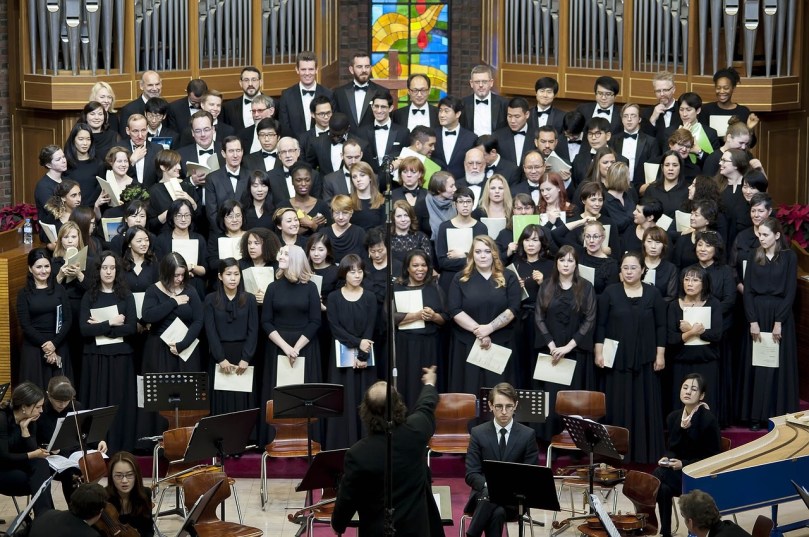
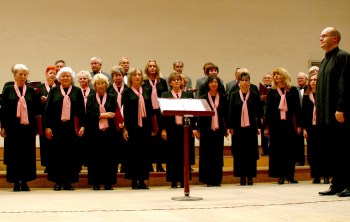
 If you’ve ever been in a choir, you’ve probably been told that the proper way to sing is from your belly.
 As the popularity of group singing grows, science has been hard at work trying to explain why it has such a calming yet energizing effect on people. What researchers are beginning to discover is that singing is like an infusion of the perfect tranquilizer, the kind that both soothes your nerves and elevates your spirits.
 Regular exercising of the vocal cords can even prolong life, according to research done by leading vocal coach and singer Helen Astrid, from The Helen Astrid Singing Academy in London. “It’s a great way to keep in shape because you are exercising your lungs and heart.”
 Colette Hiller, director of Sing The Nation, is convinced that singing builds social confidence by helping individuals connect to each other, and to their environment. “Think of a football stadium with everyone singing,” she says. “There’s an excitement, you feel part of it, singing bonds people and always has done. There’s a ‘goosebumpy’ feeling of connection.”
  Studies have linked singing with a lower heart rate, decreased blood pressure, and reduced stress, according to Patricia Preston-Roberts, a board-certified music therapist in New York City. She uses song to help patients who suffer from a variety of psychological and physiological conditions.
 The seniors involved in the chorale (as well as seniors involved in two separate arts groups involving writing and painting) showed significant health improvements compared to those in the control groups. Specifically, the arts groups reported an average of:
 Okay, besides that crack about “elderly” in that last article (we’re not “old,” yet!), the evidence seems conclusive! For our general health, feelings of well-being, improved social connections, and “just having fun,” we should all be motivated TODAY to go out and find a community choir and start singing regularly in a group. Enough said?
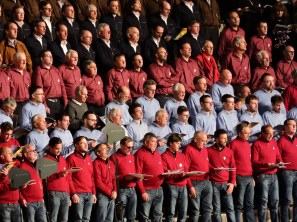 For both the instrumental and choral groups, we are most thankful to the contributions of our “dream team” of PMEA researchers and editors (as of April 13, 2016): Jan Burkett, Craig Cannon, Jo Cauffman, Deborah Confredo, Susan Dieffenbach, Timothy Ellison, Paul Fox, Joshua Gibson, Rosemary Haber, Estelle Hartranft, Betty Hintenlang, Ada Jean Hoffman, Thomas Kittinger, Chuck Neidhardt, Sarah Riggenbach, Ron Rometo, Joanne Rutkowski, Marie Weber, Lee Wesner, and Terri Winger-Wittreich. We are especially grateful to the efforts of Director of Member Engagement Joshua Gibson who located the counties and e-mail addresses in the choir directory.
 paulfox.blog