

Thoughts on Marketing Yourself and Sharing Personal Anecdotes at Employment Interviews for PCMEA and Prospective Music Teachers
This article was submitted for publication in PMEA News – the state journal of the Pennsylvania Music Educators Association.
 Many schools are implementing behavior-based interviews as the preferred method for screening and evaluating applicants. This approach seeks to highlight past performance, experiences, behaviors, knowledge, skills, and abilities that are job-related. Throughout this process, the concept of marketing oneself for employment consideration is based on two principal skill sets: branding yourself and storytelling. It is not about “bragging” or false modesty, although you cannot come on too strong or too weak at the interviews. However, it is everything about “getting noticed,” “making connections” with the interviewers, and demonstrating that you have “what it takes” and would be a “good fit” for their school district.
Not everybody is a good storyteller, but music educators are generally good performers. In preparation of their craft, musicians 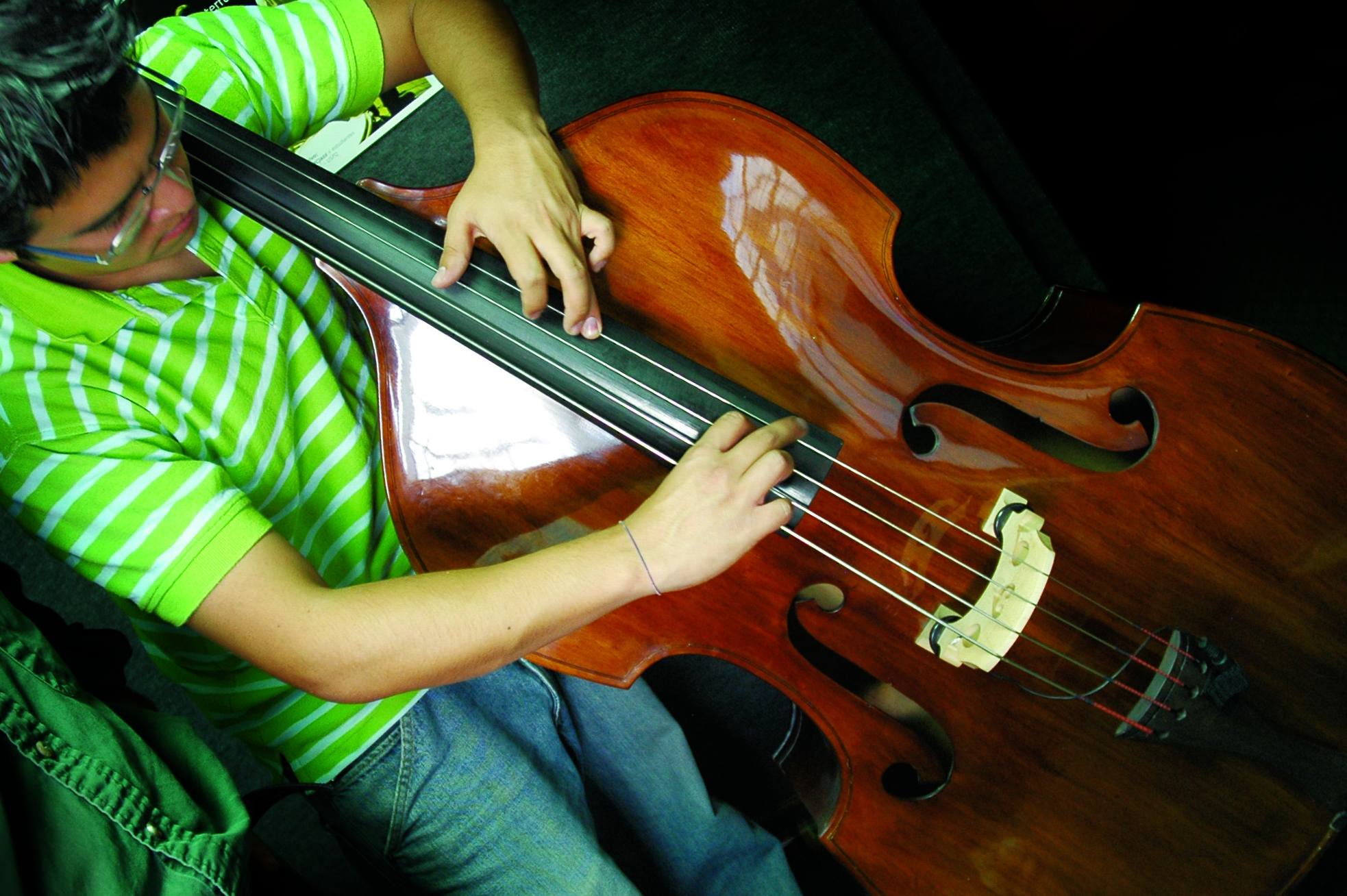 routinely model their knowledge of music making – poise, professionalism, and self-confidence in front of an audience, critical thinking, problem solving and repetitive drill towards a smooth, well-organized, and well-practiced performance, and all of those essential concepts of form and analysis, rhythms, articulations, tempos, phrasing (breathing!), dynamic contrasts, interpretation, and expressiveness… many skills inherently needed in the storytelling.
 According to Antigone Orfanos in “Interviewing Techniques: The Art of Storytelling” (http://therapycareers.about.com/od/JobHuntSkillsStrategies/a/Job-Interview-Techniques.htm), knowing the questions an interviewer may ask is much less important than mastering your storytelling skills. “Think of all of your past accomplishments. Try to create a list of the most important successes you have had in your career and personal life. These are the stories that you want to highlight when your employer meets with you. The most important successes are the ones that are most likely to make the biggest impression on a potential employer. Then, use metaphors, analogies, and humorous anecdotes to capture an employer’s attention.”
 It turns out that stories are a very powerful tool, as validated by Lily Zhang in “The Interview Technique You Should Be Using” (see https://www.themuse.com/advice/the-interview-technique-you-should-be-using#). Jennifer Aaker, professor of marketing at the Stanford Graduate School of Business, explains that “stories are up to 22 times more memorable than facts alone” and “we are wired to remember stories much more than data, facts, and figures.” Zhang expands on this. “Our brains are just more active when we’re listening to a story. In fact, if you can tell a good story, you can actually synchronize your listener’s brain with your own. You can literally share the experience with someone else. Talk about making a connection!”
Worth reading in depth, Zhang details in her article the steps towards better storytelling at interviews:
- Tell the punch line early.
- Give some context.
- Introduce the situation or challenge.
- Describe your specific actions.

In “Interview Story Telling – Personal Branding Blog – Stand Out in Your Career” (http://www.personalbrandingblog.com/interview-story-telling/), Kevin Monahan predicts that you will be asked to “Share a time when…” or “Provide an example where…” which provides the perfect opportunity to tell a story. He recommends that stories need to have a beginning that sets the stage (provide the setting), action items (what did you do?), and final outcome (how did you achieve the goal or influence an outcome?). He shares, “During one interview session, I was asked what my first job was. I could have told them in five seconds that my first job was a paper route when I was ten years old. Instead, I told a story.” He narrated a more detailed explanation on getting to know his customers, learning their individual preferences, and developing a connection with each of them… leading to better service and greater business generated.
Monahan concludes, “The key… is to connect the story to a desired skill set needed for the position. By relating the stories and examples back to the core competencies of the job, I communicated an image instead of just providing answers to questions.”
An available self-assessment of your storytelling performance skills is available at http://www.storyarts.org/classroom/usestories/storyrubric.html. Using Heather Forest’s rubrics on her website “Storytelling in the Classroom,” you could make and  then evaluate a video recording of a “mock interview,” asking yourself in front of a camera common questions like the following:
- What are your greatest personal strengths (and weaknesses)?
- What techniques would you use to motivate (or discipline) students?
- Describe your educational philosophy.
- How would you assess the learning in your classroom?
- Who had the greatest influence on you becoming a teacher and why?
- What are your career objectives?
During the panel discussion “Ready to Hire: Interview Strategies for Music Educators” at the 2013 PMEA Annual In-Service Conference in Erie, PA, colleagues Susan Basalik, J. Howard Baxter, Susan Metelsky, and moderator Scott Sheenan were generous in providing supplemental materials, including sample questions and other tips for excellent interview (and story) preparation. These handouts are still available online at http://www.uscsd.k12.pa.us/Page/6361.
One final thought comes from Beth Kuhel in “The Secret to a Successful Interview: Great Storytelling” in the April 17, 2014 online article of U.S. News and World Report. In a TED Talk, “Toy Story” movie co-writer Andrew Stanton says that “a great story comes from using what you know, capturing a truth from experiencing it, and from expressing values you feel deeply.” He suggests, “You allow the listener to make his own deductions about you from the story. That is, don’t come out and say you’re collaborative, adaptable or anything – you tell a story that convinces your listener you possess these traits.” Stanton concludes that a well-told tale grips, excites, and engrosses.
 In summary, it is important to apply your skill in storytelling to employment interviews. Provide thoughtful, professional, and firm answers in response to the interviewer’s questions. Back up your statements with specific examples. Share the outcome or solution to a specific problem. Summarize to emphasize your strengths. Make yourself “stand out” as you tell stories about the challenges and triumphs you faced in life. Interconnect and relate these anecdotes proving your skills and experiences to the needs, goals, and values of the institution, employer, and position for which you are applying.
PKF
© 2015 Paul K. Fox

 paulfox.blog