Rising Educators Conference

June 28-July 1, 2024
Marriott Marquis – Washington D.C

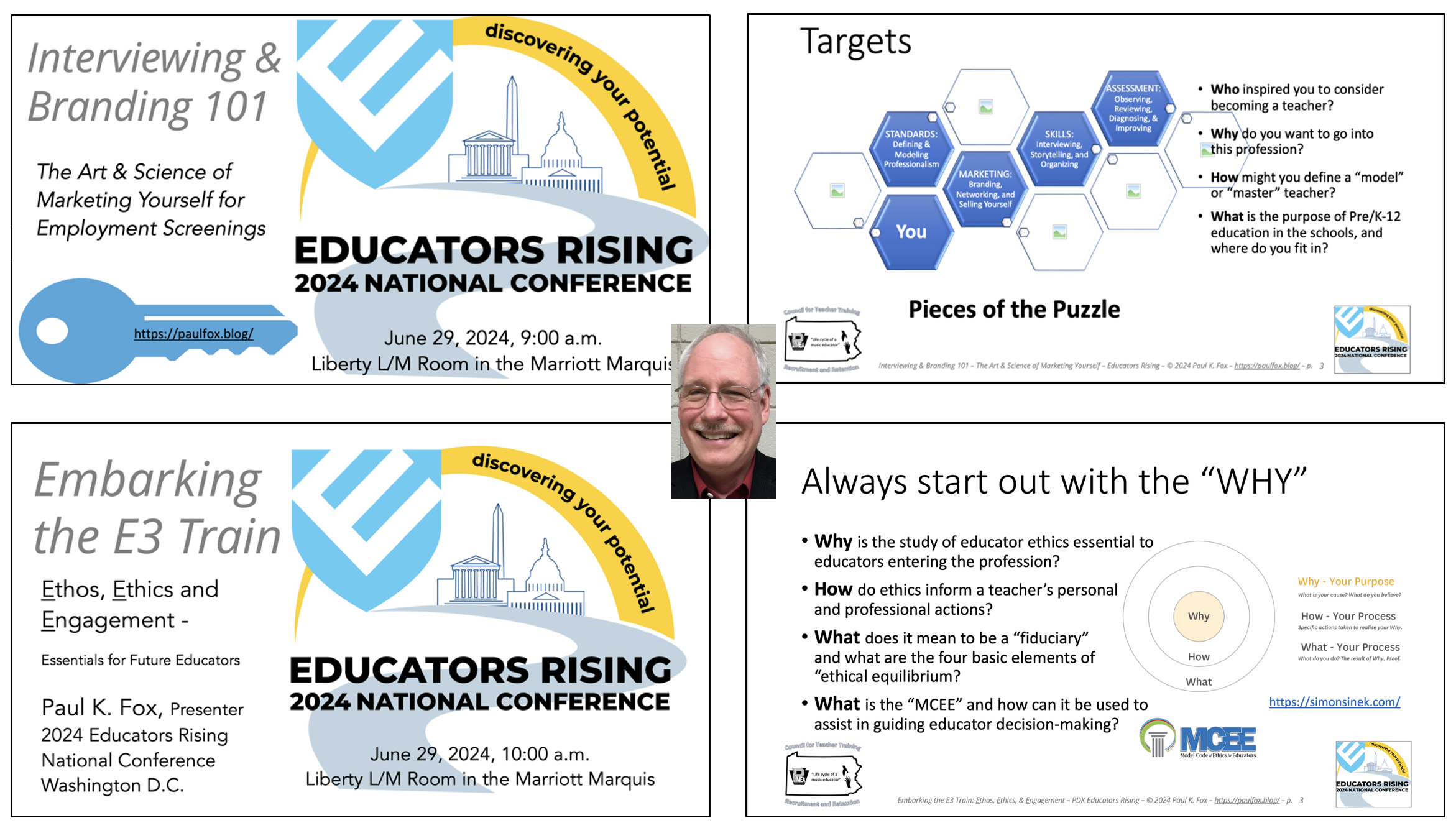
It is my pleasure to be invited to present two sessions at the Educators Rising Conference on June 29, 2024 in the Liberty L/M Room of the Marriott Marquis in Washington D.C.

This is a very unique venue, something in which I encourage other educators and clinicians to consider participating. The event brings together prospective future educators, middle to high school and college education majors, with veteran practitioners and experienced educators in the profession. This is from their website:

Each year, Educators Rising hosts a national conference to convene our network of rising educators and teacher leaders. It’s a unique opportunity for students and their teacher leaders to:

  • Connect and learn from each other through more than 40 breakout sessions;
  • Network with other members from across the country;
  • Compete for national titles in competitive events designed to allow students to develop and showcase their teaching skills; and
  • Be inspired by keynote presentations from national education leaders

Want to learn more about what you can look forward to for 2024? Check out the 2023 National Conference Program Book, 2023’s Conference Daily, and our conference highlight video to see what current and future educators experienced last year.

An outline of the conference schedule may be viewed here. Additional information may be found at the conference website here. You can still register for the event.

My two offerings will not come as a surprise to anyone who has been following my work at this site:
GETTING A JOB

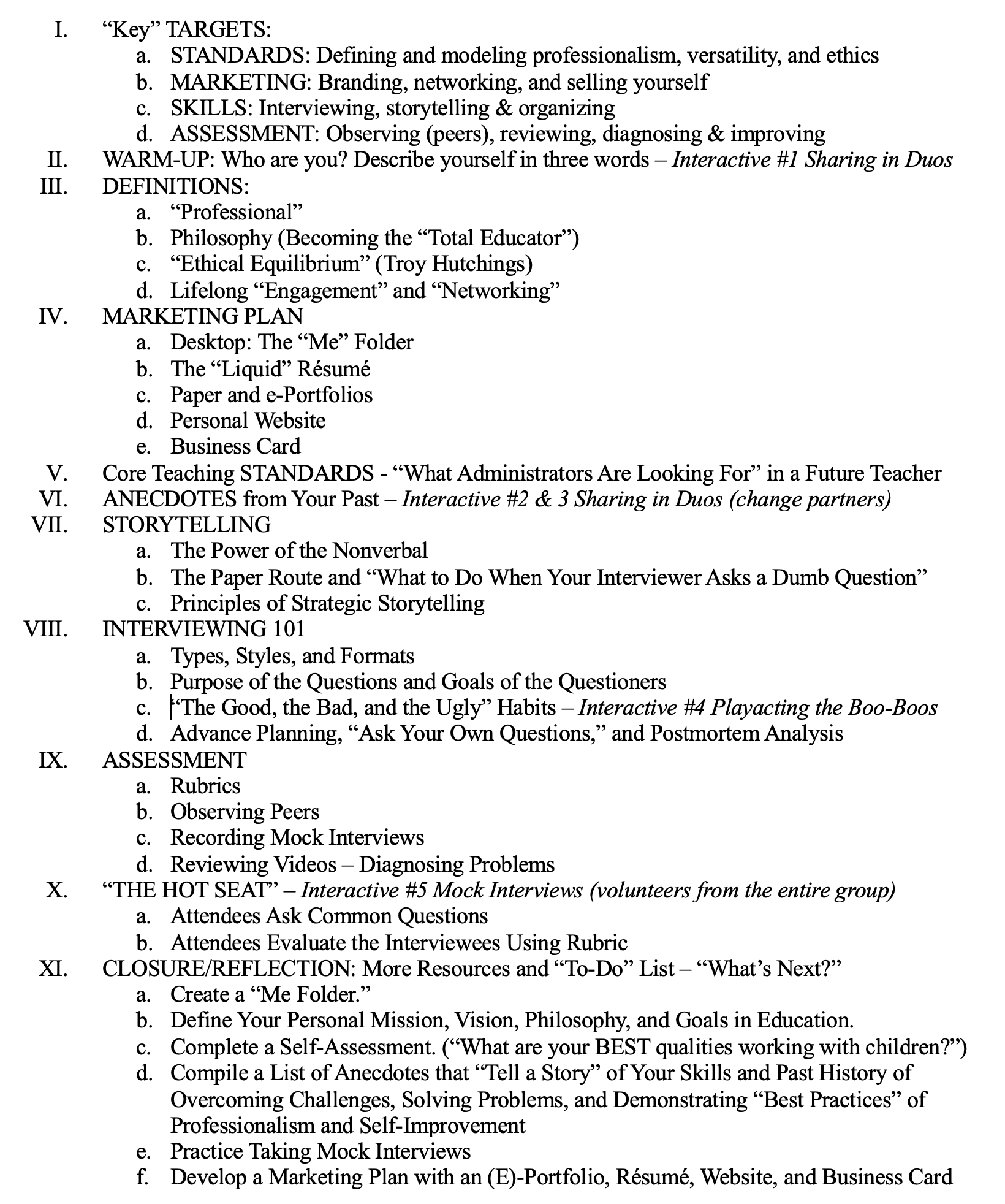
My first workshop, “Interviewing & Branding 101” (Saturday, June 29 at 9 a.m.) will provide an overview of important definitions (e.g., “professional,” “total educator,” etc.) and dive into interactive exercises to exploring the basic building blocks of personal self-assessment, building “a brand” and “marketing plan” for the job search, practicing networking and storytelling skills, and analyzing and “playacting” better interviewing techniques. Although I will need to shorten the presentation to fit in the 45-minute time block allotted and provide more focus on the interactive partner and small group exercises, this was the initial outline that was accepted by the Rising Educators Conference Session Selection Committee:

My favorite candy, Hershey Symphony bars, will be distribute as incentives for the more “brave” attendees who volunteer themselves to serve as good (as well as bad) models of the mock interviews.

In conclusion, this is “the session” I wish someone would have provided me before I went out into the labor market! We will have some fun connecting with each other, learning something new about our core values, goals, and strengths – especially those areas we want to broadcast to future employers – building a marketing plan of the essentials to promote ourselves in future employment screenings, and breaking-out into “duos” and small groups to “practice-practice-practice!” The branding and interviewing exercises and suggestions may be applied to finding any job, but will definitely be a big help for landing “the one” teaching position you always wanted.
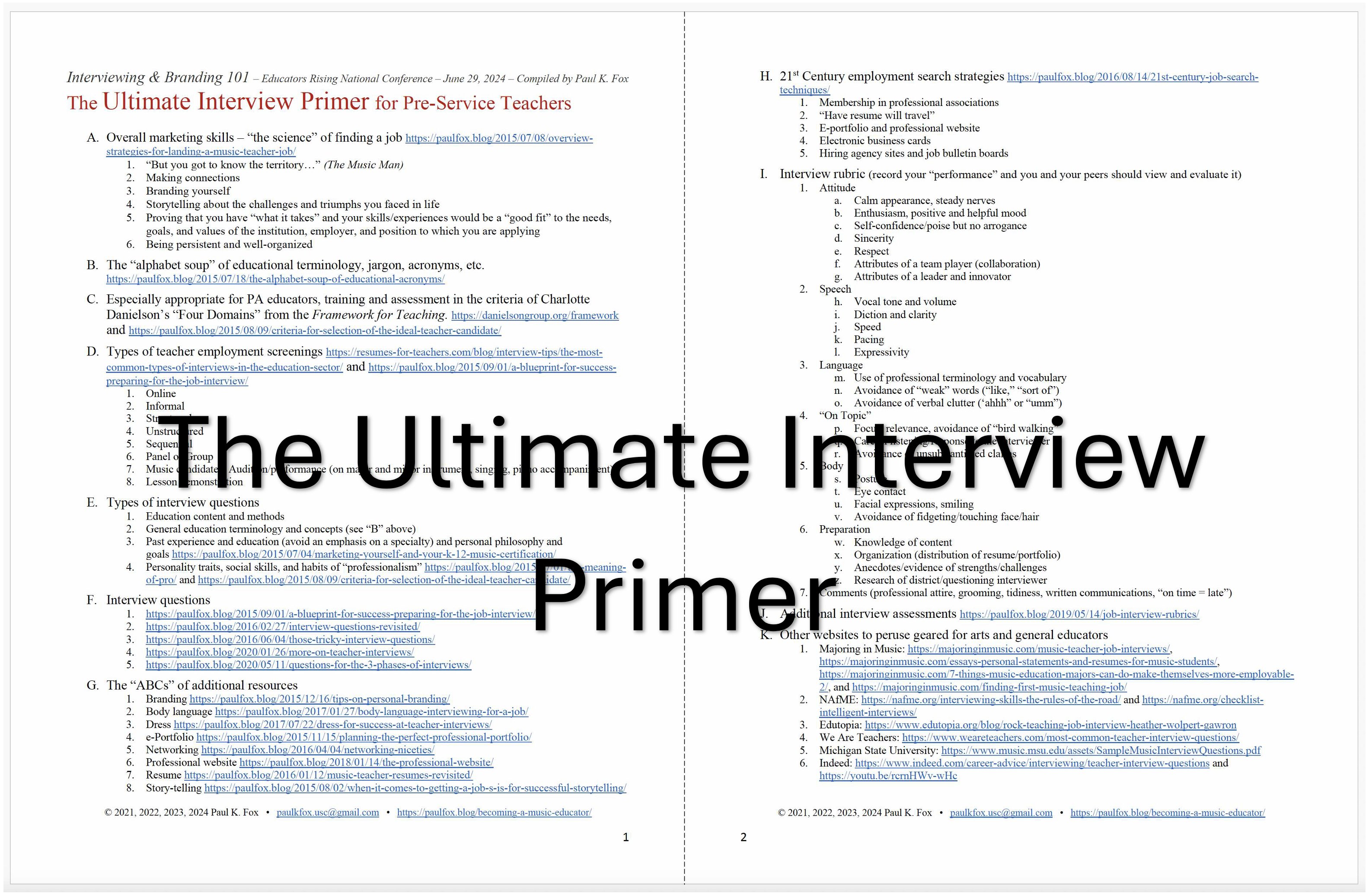
For the participants who attend my session (facsimile of slides available after June 28), here are links to the printed handouts and other supplemental materials:

EDUCATOR ETHICS

My second workshop (offered one hour later), “Embarking the E3 Train – Ethos, Ethics, & Engagement,” brings to fruition my passion for the preparation of future educators to embrace the essential ethical standards of our profession. Again, back in 1977, no college methods course nor student teaching prep covered the meaning behind such terms as “fiduciary,” “ethical equilibrium,” “moral professionalism,” etc. To be fair to my college professors, Pennsylvania had not yet written its Code of Professional Practice and Conduct which now “governs” the educators in our Commonwealth, nor had the National Association of State Directors of Teacher Education and Certification facilitated the creation of the amazing document called The Model Code of Ethics for Educators. It was not until 2017 (four years after I retired) when I was asked to research and present my first educator ethics session for PMEA District 7 did I “discover” the need for interactive, open, peer discussion of these core questions:

  • How do ethics inform a teacher’s personal and professional actions?
  • Why is the study of educator ethics essential for all educators entering the profession?
  • What does it mean to be a “fiduciary” and “moral exemplar” in the community?
  • What is the difference between a “Code of Conduct” and a “Code of Ethics?” Is one more important than the other?
  • How do you avoid any action and/or appearance of impropriety, and prevent the “slippery slope” of inappropriate student-teacher relationships, and other ethical problems?
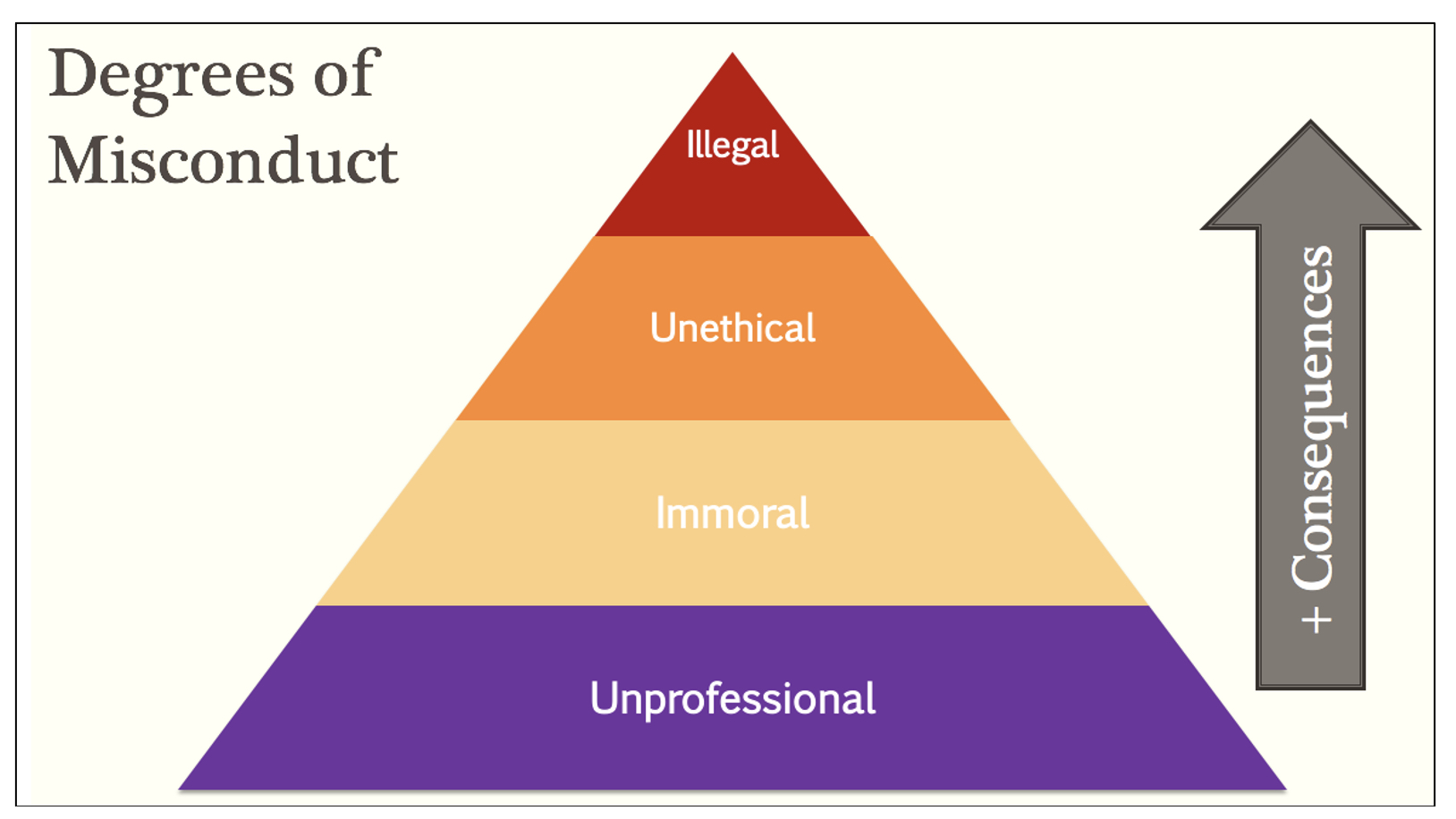
During this presentation on Saturday, June 29 at 10 a.m., we will discuss the thousands of daily rapid-fire decisions (many snap judgments) of teachers and evaluate the potential effects of any who “stray” – “levels of misconduct + consequences.” Furthermore, we will unpack and review a portion of the five principles, 18 sections, and 86 standards in the Model Code of Ethics for Educators. Fostering open and interactive discussion, we will empanel a mock “ethics jury” (volunteers from the attendees) to assess fictitious “fact scenarios” of potential ethical issues, hazardous choices or vulnerabilities, and even tackle a few “conundrums” or problems in educator decision-making. Our jurors will receive our thanks and an Educators Rising Mock Jury t-shirt for their “willingness to serve as guinea-pigs.”
Admittedly, some of our past material on ethics was “for mature audiences only” resulting in the need for adjustments to be made to some of the hypothetical case studies (serious infractions) for group analysis. However, the majority of my work on educator ethics is available for review on this site (in reverse chronological order) by clicking here.

Here are additional case studies for group discussions of ethical dilemmas.

For the participants who attend my Washington D.C. session on June 29, 2024, a facsimile of “Embarking the E3 Train” slides are available. (CLICK HERE.)

PKF

© 2024 Paul K. Fox

Body Language & Interviewing for a Job

More Sources to Prep You to Make a Good Impression at Employment Screenings

If you have been closely following this section of the https://paulkfoxusc.wordpress.com blog-site on “Marketing Professionalism,” you have consumed a lot of advice on numerous topics for preparing for the job search, developing your personal brand, and especially “conquering” employment interviews, such as:

body-language-3-1240767This article’s focus will be on the seemingly intangible… “body language!” Many say that during the interview, first impressions are critical — “the first ten seconds will create the interviewer’s first judgments about you, and then after four minutes, it’s all over.” The research also suggests that during the interview, the evaluation of your merit is based 7% on what you say, 38% on your voice or how you say it, and 55% on our facial expressions and non-verbal cues.

A good starting point to the introduction of “nonverbal communication” was posted by Jonathan Burston in his Interview Expert Academy website: http://www.interviewexpertacademy.com/body-language-the-3c-triangle/:

Using a triangle to symbolize his concepts, the “3Cs of Body Language” are:

  • Context of the situation/environment you are in… with friends (relaxed) or the boss (more stressed)
  • Clusters or groups of body language signals that you give off unconsciously
  • Congruence or links between what the person is saying, the tone of their voice, and the signals their body is giving off

He summarizes, “The 3C Triangle will help you understand the core parts of reading body language. Next time you’re with someone, either a friend, family member, work colleague or an interviewer, remember to use the 3C’s. Keep practicing.”

Probably one of the most unique presentations on this subject is a TED talk filmed in 2012: “Your Body Language Shapes Who You Are” by Amy Cuddy. Check out the transcript at http://www.ted.com/talks/amy_cuddy_your_body_language_shapes_who_you_are/transcript?language=en.

“Social psychologist Amy Cuddy shows how “power posing” — standing in a posture of confidence, even when we don’t feel confident — can affect testosterone and cortisol levels in the brain, and might even have an impact on our chances for success.”

Although some of her findings referenced in her talk are an ongoing debate among social scientists, Amy Cuddy’s research on body language reveals that we may be able to change other people’s perceptions — and even our own body chemistry — by simply changing body positions.

body-language-6-1240752Some of Cuddy’s assertions:

  • “When we think about nonverbal behavior, or body language — but we call it nonverbals as social scientists – it’s language, so we think about communication. When we think about communication, we think about interactions.”
  • “What are nonverbal expressions of power and dominance? …In the animal kingdom, they are about expanding. So you make yourself big, you stretch out, you take up space, you’re basically opening up.”
  • “What do we do when we feel powerless? We do exactly the opposite. We close up. We wrap ourselves up. We make ourselves small. We don’t want to bump into the person next to us.”
  • “We know that our minds change our bodies, but is it also true that our bodies change our minds? And when I say minds, in the case of the powerful, what am I talking about? …I’m talking about thoughts and feelings and the sort of physiological things that make up our thoughts and feelings, and in my case, that’s hormones.”
  • “Powerful people tend to be, not surprisingly, more assertive and more confident, more optimistic. They actually feel they’re going to win even at games of chance. They also tend to be able to think more abstractly…They take more risks.”
  • “Tiny tweaks can lead to big changes… Before you go into the next stressful evaluative situation, for two minutes, try doing this, in the elevator, in a bathroom stall, at your desk behind closed doors… Configure your brain to cope the best in that situation. Get your testosterone up. Get your cortisol down. Don’t leave that situation feeling like, oh, I didn’t show them who I am. Leave that situation feeling like, I really feel like I got to say who I am and show who I am.”

From Monster website, a very comprehensive article worth reviewing is “Body Language Can Make or Break a Job Interview” by Robert Ordona at https://www.monster.com/career-advice/article/body-language-can-make-or-break-a-job-interview-hot-jobs. He cites several body language experts. “You could be saying how great you are, but your body could be giving your true feelings away,” says Alison Craig, image consultant and author of Hello Job! How to Psych Up, Suit Up, & Show Up. Mark Bowden, author of Winning Body Language, agrees with Craig – and with the highly regarded Mehrabian communication study, which found that “if what’s coming out of your mouth doesn’t match what your body is saying, your audience is more likely to believe your body.”

Ordona’s blog-post sections provide the “nitty-gritty” of nonverbal communications:

  • Your “Great Entrance”
  • Showing your “good side”
  • First impressions
  • Handshakes
  • The walk to the interview
  • At the interview
  • The art of departing

Excerpts from Craig, Bowden, and Ordona’s work, here is a “top-ten list” of body language do’s (green) and don’ts (red):

  1. Be aware that the interview may start in the parking lot… you never know who may be observing you from a window or standing near you in the hallway. Regardless how you feel (inside yourself), model an attitude of outward calm, purpose, and confidence. This is no time to be frantically searching for your copies of your resume.
  2. The receptionist or secretary in the office may be informally assessing you (and the administrator may ask their opinion), so let them “observe you without letting on that you know they are watching.” Whenever possible, sit at right angles or offer your profile to them. “It makes them feel comfortable, and if they’re comfortable, they’re more likely to form a good impression.”
  3. While waiting, sit with good posture, back straight, and your chest open – additional signs you are “confident and assertive.” Don’t hunch your shoulders or tuck your chin into your chest, which may imply you are “closed off.” Don’t try to appear to comfortable or informal, for example “elongating your legs or throwing your arm across the back of the chair,” as it might make you look arrogant.
  4. If you can tell, try facing the direction from where the interviewer will come; “it’ll make the greeting more graceful.” Also, “don’t have so much stuff on your lap that you’re clumsily moving everything aside when you’re called.”
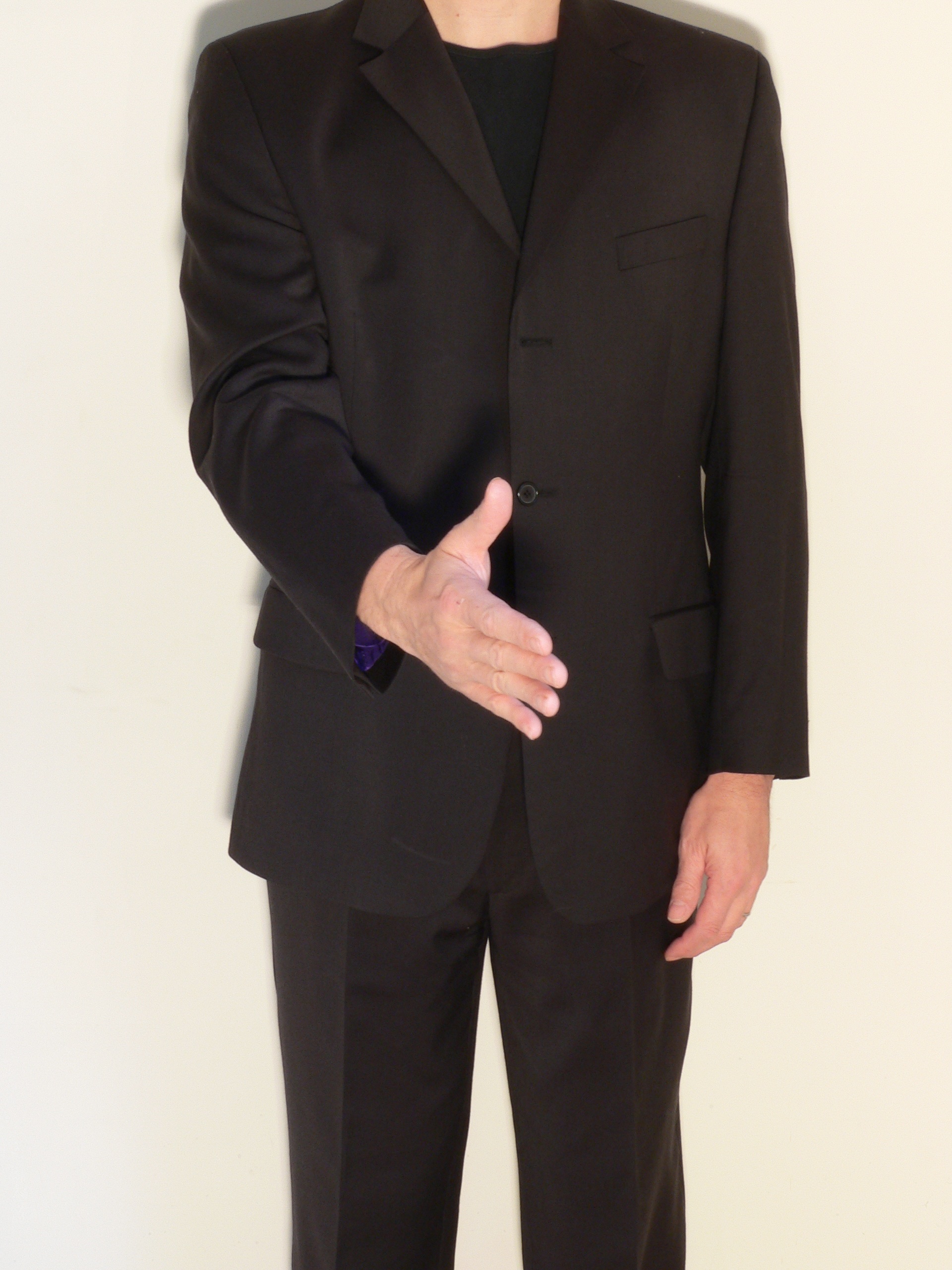
  5. body-language-5-1240757Practice handshaking with a friend before taking interviews. Avoid “the overly aggressive or death grip” as well as “the limp handshake.” Since you are going to shake with your right hand, arrange your belongings on your left side. “Offer your hand with you palm slightly up so that your interviewer’s hand covers yours,” a sign that “you’re giving them status.”
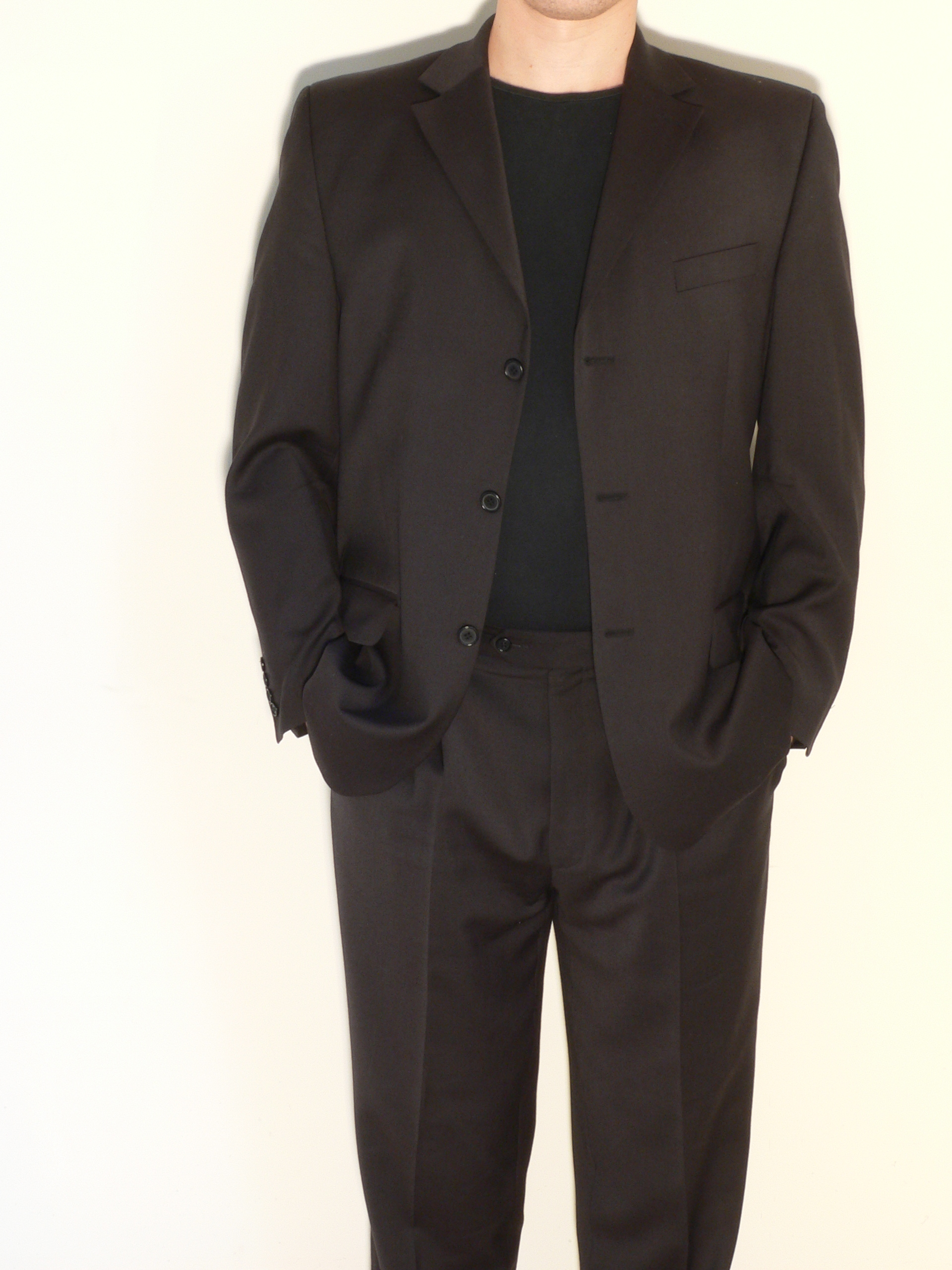
  6. Even the walk to the interview room is the perfect to time to use good body language: follow the hiring manager or assistant “to show you understand the protocol” (“I follow your lead”), mirroring that person’s tempo and demeanor, showing “you can easily fit into the environment.”
  7. Once in the interview room, it’s okay to place a slim portfolio on the table, “especially if you’ll be presenting its contents,” but place your other belongings on the floor beside you. “Holding a briefcase or handbag on your lap will make you seem as though you’re trying to create a barrier around yourself.” Again, it is recommended you sit a slight angle to offer your profile, avoiding creating a defensive barrier.
  8. Sit up straight and display your neck, chest, and stomach area, a signal to the interviewer that you’re open. “Avoid leaning forward, which makes you appear closed off.”
  9. Sit about a foot away from the table and keep hand gestures at a level above the desk (or slightly lower) and below your collarbone. Your goal is to communicate that “you’re centered, controlled, and calm – and that you want to help.”
  10. The final advice at the end of interview: “Gather your belongings calmly, rise smoothly, smile, and nod your head. If shaking hands with everyone in the room isn’t convenient, at least shake hands with the hiring manager and the person who brought you to the interview space.”

Another interesting online resource is Forbes, “10 Body Language Interview Mistakes” at http://www.forbes.com/pictures/lml45lide/10-body-language-interview-mistakes-2/#76cf48105767. Eleven slides illustrate suggestions about eye contact, the way you fix your hair, crossing your arms, and other “physical slip-ups in your next interview.”

Finally, Yohana Desta offers “9 Simple Body Language Tips for Your Next Job Interview” on Mashable at http://mashable.com/2014/11/17/body-language-job-interview/#UZoXdE1FEsqB.

“Job interviews are notorious tightrope walks. You want to be confident, but not obnoxious; intelligent but not a know-it-all. Trying to find a balance and also explain why you deserve a job is hard enough. But what if your body language could help you out?” – Yohana Desta

body-language-8-1240743Although “the experts” are not always in consensus, especially on the subjects of eye contact and leaning posture, Desta’s tips summarized below provide additional enlightenment on how to use body language to promote a positive image:

  1. Sit all the way back in your seat.
  2. Don’t go for direct eye contact.
  3. Use hand gestures while speaking.
  4. Show your palms.
  5. Plant your feet on the ground.
  6. Work on your walk.
  7. Nod your head while listening.
  8. Lean in.

In a challenging job market with limited openings for public/private school music educators in many geographical areas of the country, there is great competition in the screening and evaluation of the applicants. Hopefully these suggestions from “the experts on body language” will help you better prepare for employment interviews… and land that job you always wanted!

PKF

© 2017 Paul K. Fox

Picture credits: Photographers John Evans and Henk L. at http://www.freeimages.com