
The “E” in RETIREMENT is for Energy, Engagement, Excitement, and Endurance
This blog is all about how to stay young and vibrant – BECOMING A VOLUNTEER! Geared to those of us who have retired, this is very personal and unique to every individual, no matter what the age!
Do you remember the song, “Those Were the Days” performed by Mary Hopkins (1968), the Fifth Dimension (1969), and even Dolly Parton (2000)?
Those were the days my friend
We thought they’d never end
We’d sing and dance forever and a day
We’d live the life we choose
We’d fight and never lose
For we were young and sure to have our way.
La la la la
Those were the days, oh yes those were the days
In June 2021, I went back to work. Well, not exactly full-time… but it felt that way!
Remember the times as music educators we spent 15-18 hours a day or more thinking, planning, creating, teaching, problem-solving, schlepping stuff, sweating, and working out beyond the regular school day and during summer months with major music projects like the marching band, spring musical, music adjudication trip, etc.?
Asked by my friend and current Upper St. Clair School District performing arts curriculum leader/HS band director Dr. John Seybert, I signed on to the newly-expanded extracurricular activity (ECA) position as administrative assistant and announcer of the marching band for the school from which I had retired. Filling in the gaps, taking attendance, handling mounds of paperwork, interacting with a whole new generation of music students, and learning a few new software applications along the way like FamilyID, Canvas, Remind, and the district’s Blackboard website, I threw my hat in the ring, not just to continue to serve as the voice of the “Pride of Upper St. Clair” at football games halftime shows (now in my 36th year), but to manage the full schedule of rehearsals, meetings, performances, and blessedly (?) exhausting 24/7 week-long band camp. I forgot how it felt to get up at 6 a.m. and return home around 9:30 p.m.
It has been exhilarating. It has been exhausting!
On another stage, when the local COVID stats fell two months ago, I was invited back to our local community hospital to serve as a volunteer – discharging patients from their rooms or escorting them from the outpatient surgery or endoscopy units. Yes, I was called upon to somehow restore the physical demands I (used-to) place on my personal stamina. Fully fatigued and expended after a shift of 4-7 hours of driving my wheelchair taxis (sometimes carrying over-sized people even though we’re only supposed to move those weighing 250 pounds or less), I find myself yearning for a retiree “power-nap,” only to regroup for the next day’s challenging schedule and another early-morning wake-up.
The best part of these 8-15 hours per week? Choosing one of the finest medical facilities in our metropolitan area – St. Clair Hospital (now “Health”) – I have the chance to meet former music students (grown up), their kids, parents and grandparents, friends, and other acquaintances at their greatest need. And, there’s almost no finer escort “call” than going to the family birth center and bringing to the car a new mommy and two-day-old baby… sharing that special moment with an alum or school staff member!
It has been exhilarating. It has been exhausting!
WHAT
In past articles on a satisfying retirement, I often quote the book How to Retire Happy, Wild, and Free, the search for self-reinvention and new avenues for fulfilling those essential needs of “purpose, structure, and community” that employment had previously provided us. Author Ernie Zelinski’s definition of “purpose” are these goals:
- To make a difference in people’s lives
- To make a contribution
- To find creative expression
- To take part in discovery
- To help preserve the environment
- To accomplish or achieve a challenging task
- To improve health and well-being
We learn from Revitalizing Retirement: Reshaping Your Identity, Relationships, and Purpose by Nancy Schlossberg that for retirees it is important to feel “needed” and that pursuits that foster “mattering” are crucial to a positive self-esteem, good mental health, and stable life balance.
It has been suggested that one problem of retirement is that one no longer matters; others no longer depend on us…
The reward of retirement, involving a surcease from labor, can be the punishment of not mattering. Existence loses its point and savor when one no longer makes a difference.”
– Rosenberg and McCullough
The opposite of “mattering” is feeling “marginalized.” I would rather feel worn-out than useless/ignored/discarded!
In his book Design Your Dream Retirement, Dave Hughes recaps with his four essential ingredients of life balance:
- Physical activity
- Mental stimulation
- Social interaction
- Personal fulfillment
If you read my bio in the “about” tab above, I think all would agree: mission accomplished! I’ve made myself extremely busy. (Perhaps I “matter” a little too much?) “It’s a good thing I am retired… I would not have enough time to do all of these things if I still had a job!”
Yes, it FEELS good!
WHY
Now some rationale from the online pundits. First, review the article “Why Elderly People Should Volunteer.” According to the “experts,” volunteering is:
- Socially beneficial
- Good for mental cognition
- Giving back to the community
- Physically engaging
- An opportunity to learn something new
- Flexible
- A strategy to fill up your day
- The reason you get out of bed in the morning
Of course, one has to be careful and follow your doctor’s advice on what tasks will not overwhelm you! The CDC and other medical professionals urge adopting a “safe” routine of regular physical activity as a part of an older adult’s life. Check out websites like https://www.cdc.gov/physicalactivity/basics/activities-olderadults.htm and https://www.cdc.gov/mmwr/preview/mmwrhtml/00001482.htm. Besides keeping your mind active, increasing your physical activity as a volunteer while “living the dream” in retirement will:
- Reduce the risk of serious illnesses (heart disease, type II diabetes, and depression
- Help you manage a “healthy weight”
- Improve your balance and coordination
- Decrease the risk of falls or other injuries
Talk with your doctor to find out if your health condition limits, in any way, your ability to be active. Then, work with your doctor to come up with a physical activity plan that matches your abilities. If your condition stops you from meeting the minimum recommended activity levels, try to do as much as you can. What’s important is that you avoid being inactive.
– Centers for Disease Control and Prevention
Volunteering is all about being more eleemosynary (adjective defined as “generous, charitable, gratuitous, or philanthropic”). In my workshops on retirement transitioning, I frequently quote two gurus on the benefits of “giving back.”
With a frequently untapped wealth of competencies and experiences, older people have much to give. This fact, coupled with fewer requirements for their time, gives them unique opportunity to assume special kinds of helping roles.
– Mary Baird Carlsen – Meaning-Making: Therapeutic Processes in Adult Development
Our increased longevity and generally better health has opened our eyes to new and increased opportunities to contribute to the betterment of society through civic, social, and economic engagement in activities we believe in.
– Jo Ann Jenkins, CEO of AARP – Disrupt Aging

HOW
But you already knew all of this, right? There are so many ways to “bring it on” and “make a difference” in your “golden years.” (Wow – three cliches in a row!)
There are so many directions you can go to offer your free time to volunteer:
- Escort at local hospital or nursing home
- Walk dogs at animal shelter
- Serve in charitable fund-raising projects
- Assist food banks and meals-on-wheels agencies
- Enlist as special advocate for abused or neglected children
- Work as hospice volunteer
- Maintain parks, trails, nature habitats, or recreation centers
- Host an international student
- Become a youth director, mentor, or scout leader
- Teach summer school, night classes or Performing Arts workshops
- Give guided tours or lectures as a docent at a local museum
- Apply office management and clerical skills to benefit libraries and other nonprofit associations
- Run a school club (share your hobby)
As trained music educators, we can share our precious skills in creative self-expression :
- Accompany, coach, or guest conduct school/community groups, college ensembles, or music festivals.
- Run for office or chair a committee or council of your state or local MEA association
- Serve as presiding chair or member of the your state’s MEA planning committee or listening committees for the music in-service conferences
- Participate as guest lecturer or panel discussion member at a conference, workshop, or college methods program
- Judge adjudication festivals
- Help plan or manage a local festival or workshop
- Assist the local music teacher in private teaching, piano playing, marching band charting, sectional coaching, set-up of music technology, instrument repair, etc.
- Write for your professional organizations’ publications (like PMEA or NAfME)
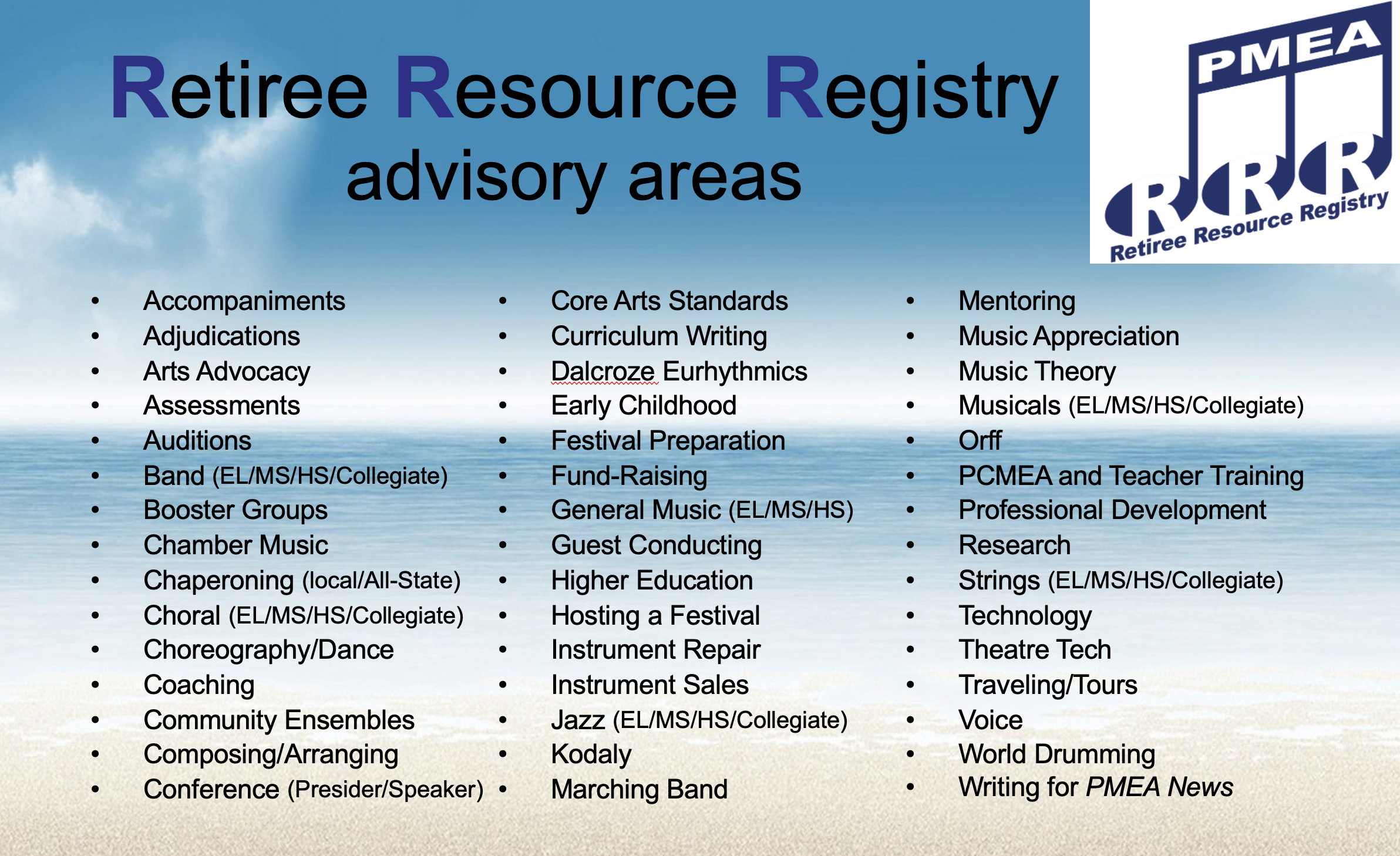
If you are a retired music teacher and member of PMEA, you could sign-up for the Retiree Resource Registry and serve as an informal consultant to others still “slugging it out” in the trenches. Go to the PMEA retired member focus area for more information.
More sources to peruse on this subject:
- https://sixtyandme.com/senior-volunteering/
- https://www.seniorliving.org/organization/volunteer/
- https://www.volunteermatch.org/
- https://www.gvicanada.ca/resources/over-50s-volunteering/
- https://www.aarp.org/health/healthy-living/info-2017/health-benefits-volunteering-seniors-fd.html
- https://www.bls.gov/news.release/volun.nr0.htm
- https://www.nationalservice.gov/vcla/national
- https://www.nationalservice.gov/pdf/healthbenefits_factsheet.pdf
- https://www.aarp.org/content/dam/aarp/aarp_foundation/2012_PDFs/AARP-Foundation-Isolation-Framework-Report.pdf
- https://www.aarp.org/health/healthy-living/info-2017/health-benefits-volunteering-seniors-fd.html
- https://gerontology.usc.edu/resources/infographics/necessity-exercise-physical-activity-and-aging/
- https://www.nationalservice.gov/programs/senior-corps
- https://www.nationalservice.gov/programs/senior-corps/senior-corps-programs/rsvp
Anyway, back to a little “bragging!” At least “yours truly” is holding his own and hopefully contributing what he can to the success and welfare of others! Are you? In my retirement pastime, I refuse to sit idle, binge-watch movies on Netflix, or view hours of boring TV. To quote another song’s lyrics, this “senior citizen” will never lament…
Life is so unnerving
– “Be Our Guest” from Beauty and the Beast
For a servant who’s not serving
He’s not whole without a soul to wait upon
Ah, those good old days when we were useful
Suddenly those good old days are gone
Ten days we’ve been rusting
Needing so much more than dusting
Needing exercise, a chance to use our skills
Most days we just lay around the castle
Flabby, fat, and lazy
You walked in and oops-a-daisy!
So, what’s your story?
PKF
iStock by Getty images:
- “children in singing group being encouraged by teacher” #472791114 by Highwaystarz-Photography
- “scales-work-and-life” #623438270 by Satenik_Guzhanina
Images from Pixabay:
- “volunteer” by Tumisu
- “volunteer-charity-cloud-community” by Mary Pahlke
- “school-board-music-blackboard” Image by Gerd Altmann
© 2021 Paul K. Fox



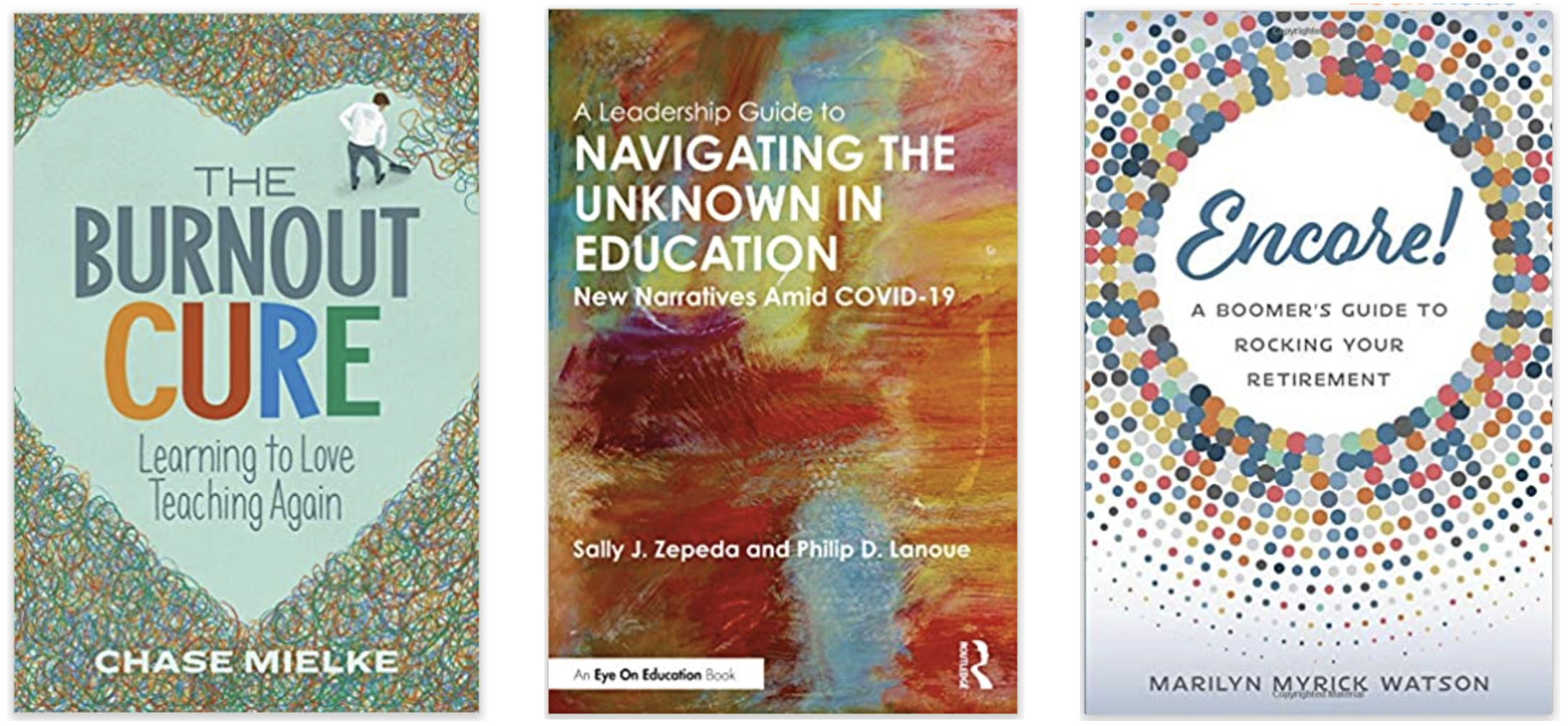
















 For some, this has made matters worse… an “overload of abundance!” The multitude of venues and opportunities (too many unexplored “new technologies” for many of us baby-boomers!) included information about virtual ensembles, YouTube libraries, music games, lessons plans and platforms for synchronous and asynchronous e-learning, video-conferencing techniques, hardware and software reviews, etc.
 Go ahead and sign-up for a webinar or planned learning community meeting or two. Many professional development workshops are provided with “no extra fees” right now, like the NAfME library
  Five tips for coaching overwhelm:


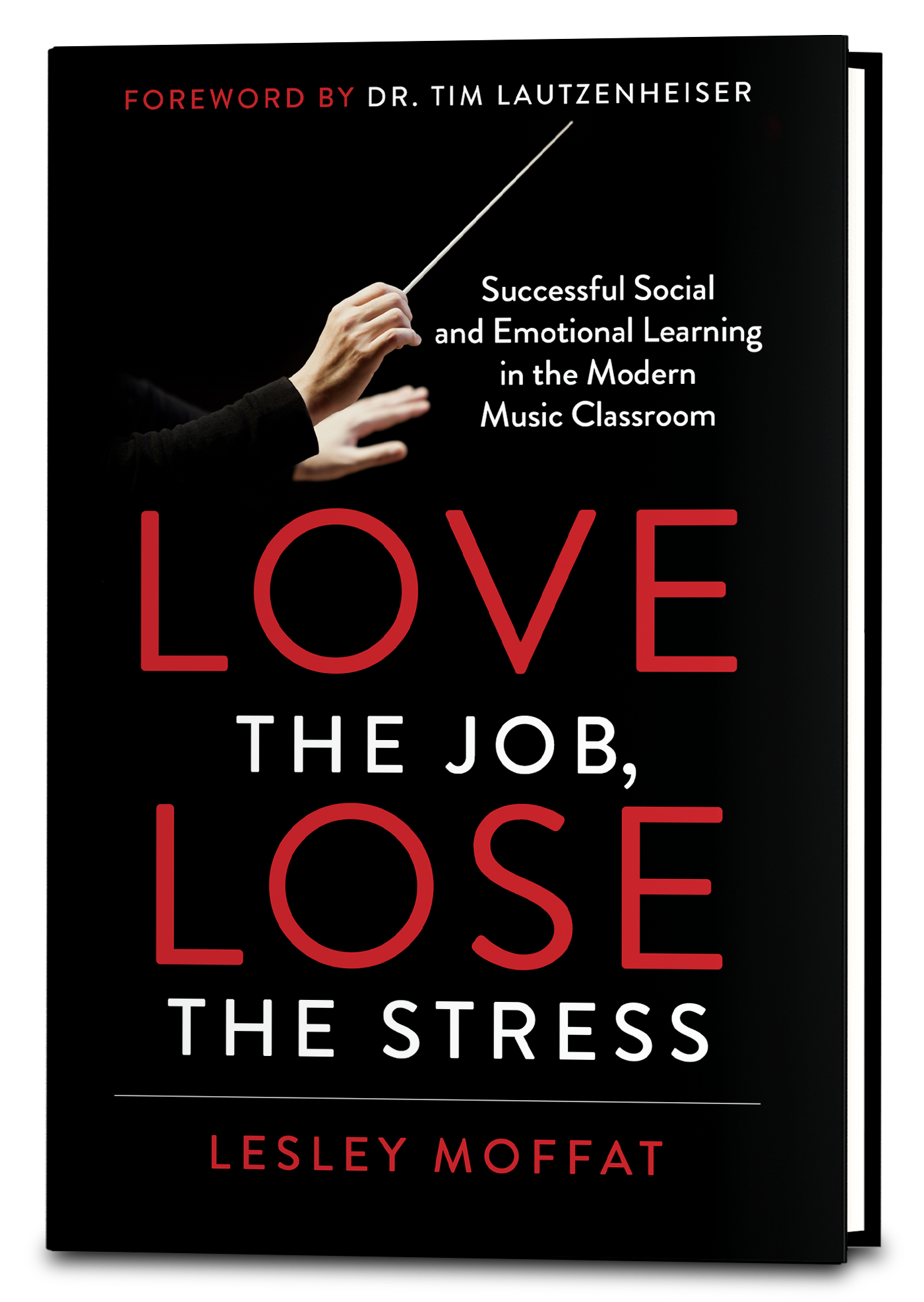
 “It’s hard to create a work-life balance when life is filled with work. Teachers are known for working long hours off-the-clock for no additional compensation. This is even more prevalent in music education. We add performances, competitions, musicals, individual lessons, fundraising, data entry, and even music composition and arranging to our task list.”

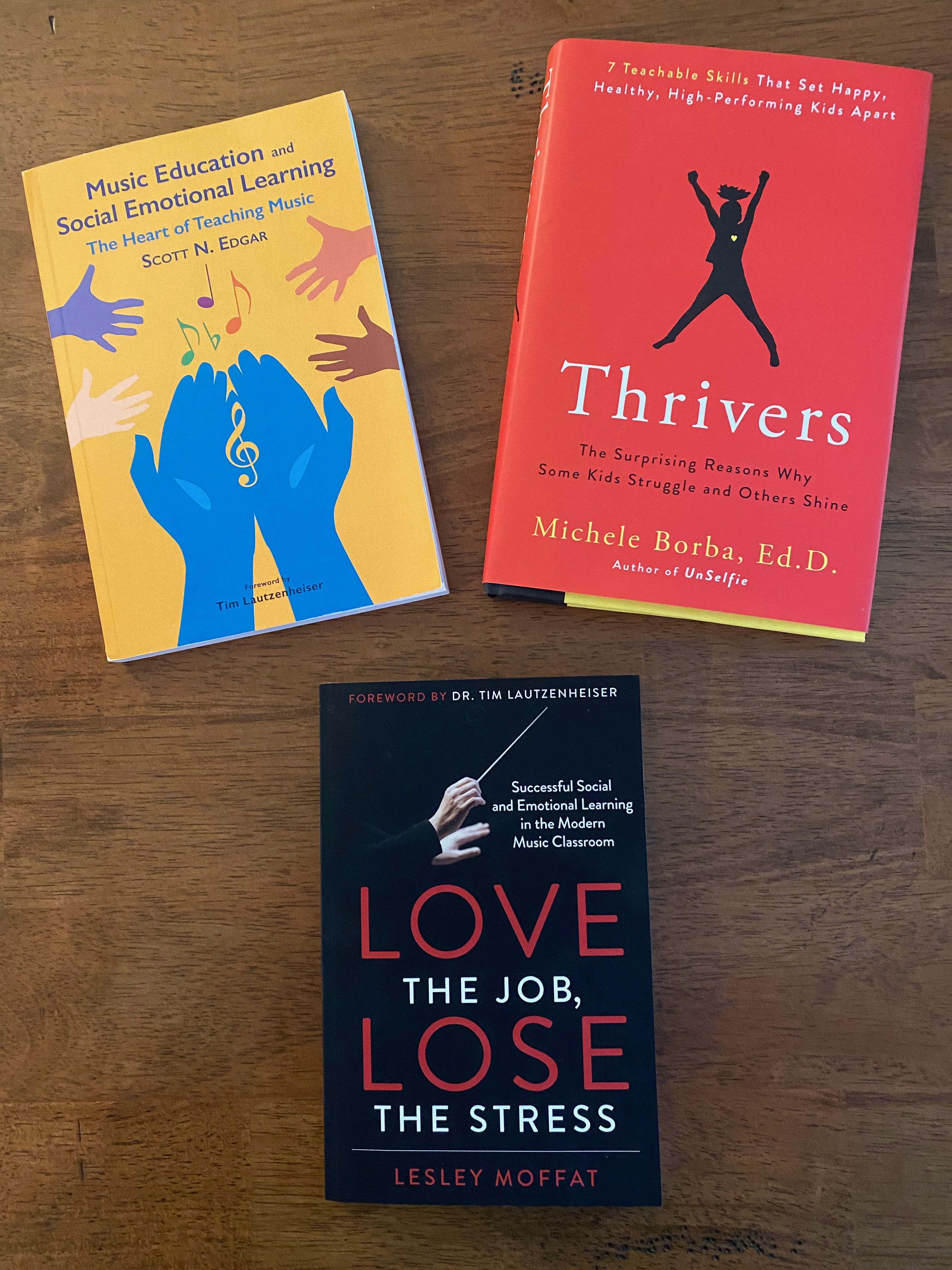
 Her book should be required reading for all music teachers, even retirees who want to remain active in the profession. (Read my previous review
  Make self-care PRIORITY ONE for YOU! I know, you have heard all of these before: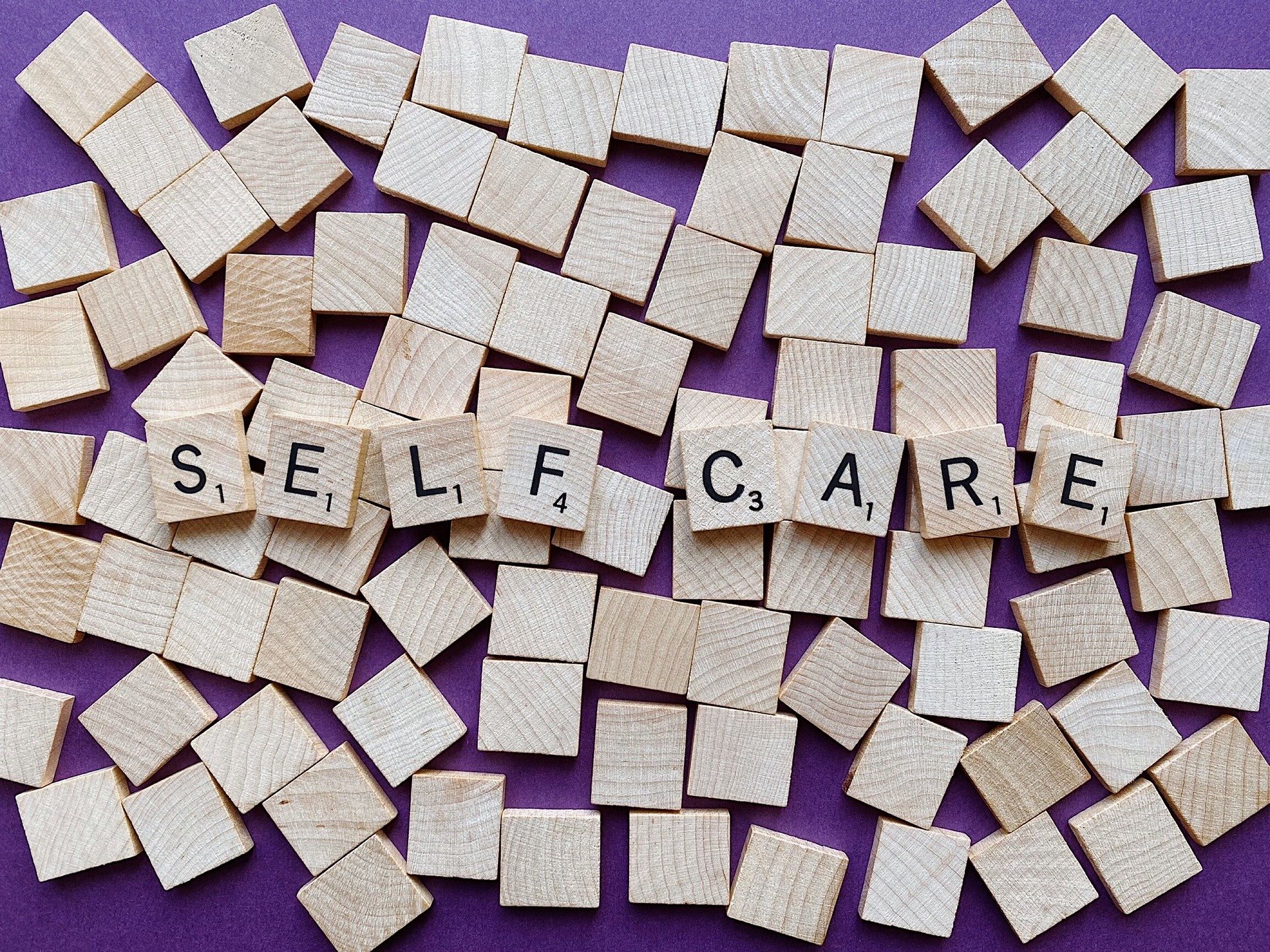









 Welcome back to our series on music teacher (and other professionals) self-care.
 Practice emotional first aid… Do you beat yourself up when you experience failure or make a mistake? [Find] ways to break the negative patterns of thought.
 twice as long as the length of the inhale. For example, inhale to the count of four, pause briefly, and exhale to the count of eight. Repeat three times.
 Her common examples of cognitive distortions include the following. Do any of these sound familiar?
 Learn something new.
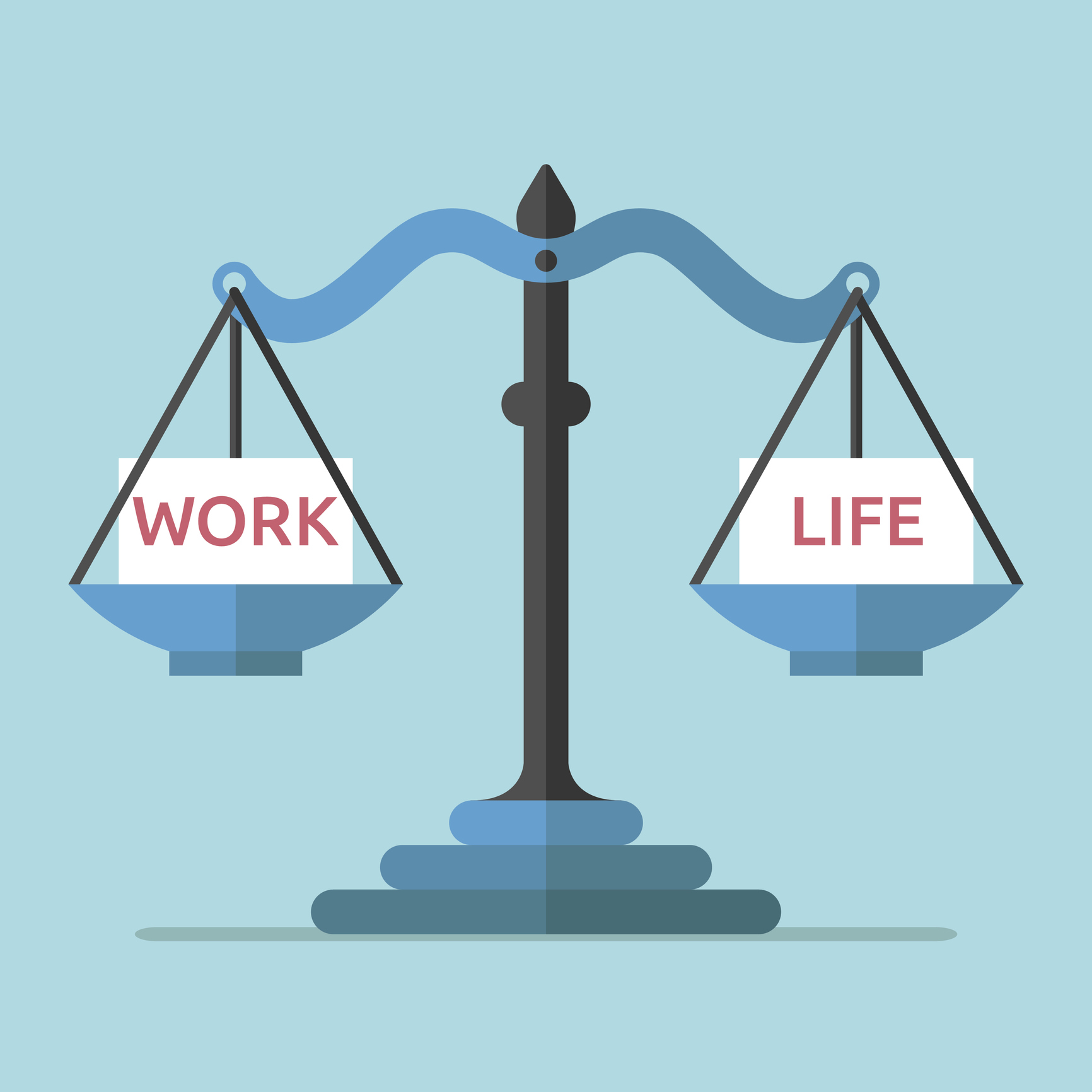
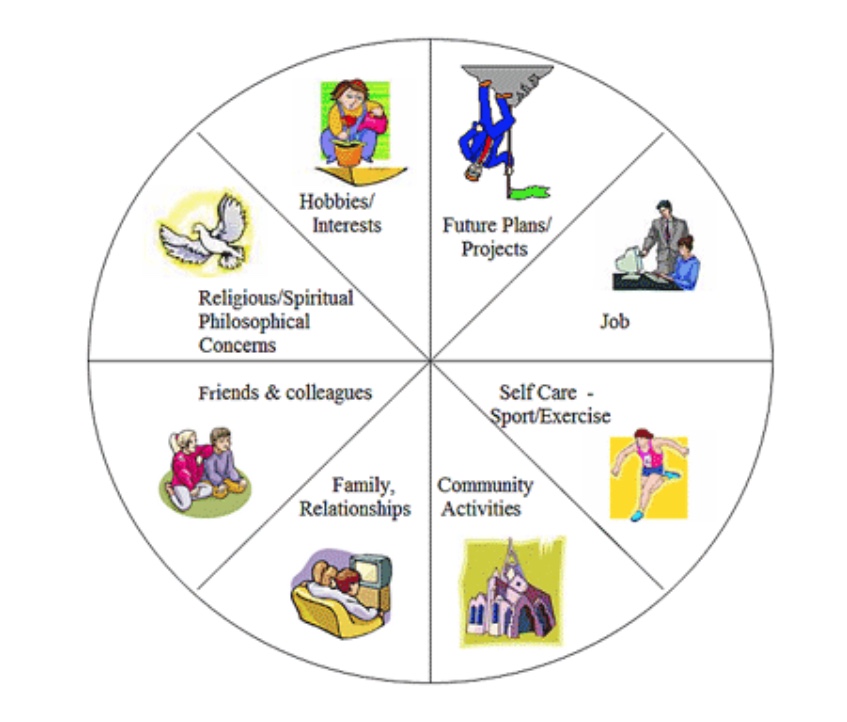 In almost every health and wellness article, we hear the emphasis of prioritizing and seeking a more equitable use of personal time, achieving what Ernie Zelinski, author of the best-selling book How to Retire Happy, Wild, and Free, refers to as “work/life balance.” Future blogs on samples of “super stress reducers” in “setting boundaries,” time management, and innovative organizational tools will be forthcoming.



 Focus
Focus

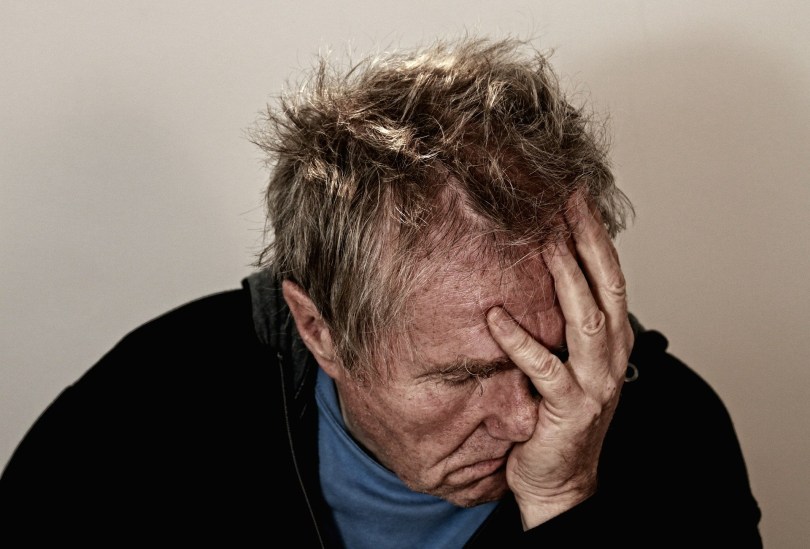
 Why even good days with your students leave you drained.



 But then a group of British and dutch researchers asked an interesting question. They wondered if everyone had it backwards. Did the discomfort of physical fatigue cause the runners to think negatively, like everyone assumed, or did the runners negative thoughts make them more physically tired and sore? It was a chicken and egg question.
 6:30 a.m. an hour of cardio
 sake of the music program, add a new ensemble, schedule after-school time to teach a solo or instrumental part, and plan more weekend and evening “learning activities” or events beyond the scope of most other academic subject teachers. It was not unusual for me to be at school by 6:45 a.m., eat lunch in my car on the way to my second or third assignment as an itinerant, stop for a quick “date” and dinner out with my wife, return to school for band, orchestra, or musical practices, and not get home until 9 or or 10 p.m. As a retiree, I now ask, “What ever happened to all of this stamina and endurance?” Pushing wheel chairs only four hours a day three times a week at a local hospital, I sometimes find myself wanting to take a “power nap” when I get home! Never you fear: the healthy “calendar of a retired music teacher” is as busy (and hectic) as full-time employment… We always say, “I wonder how I ever had the time to do all of these things and work at the same time!”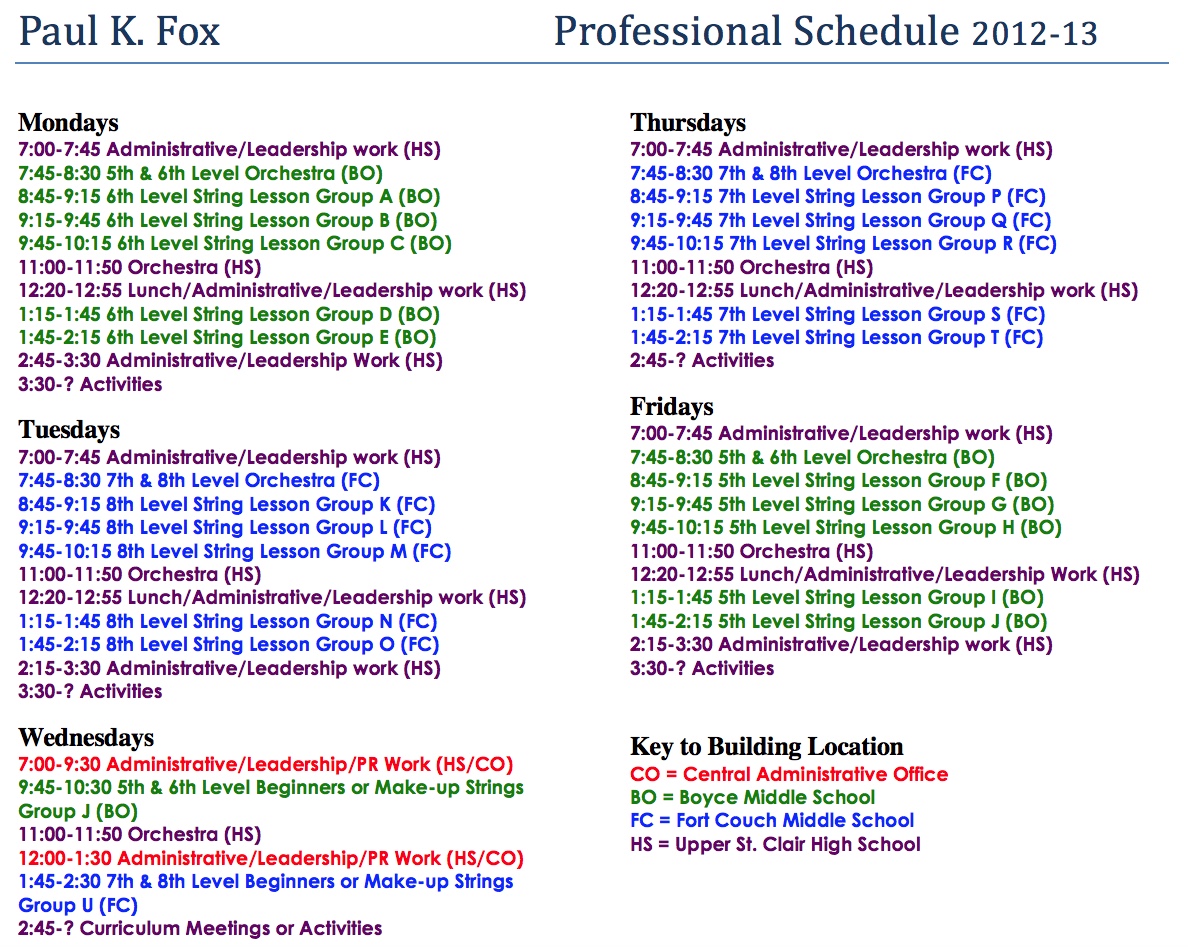

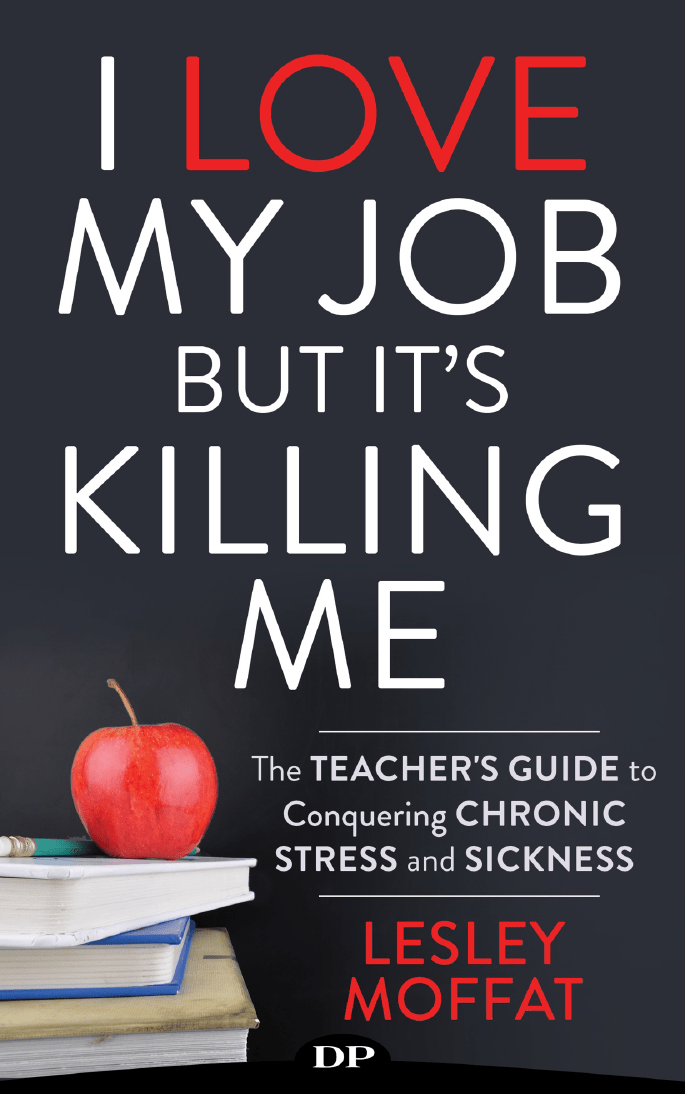
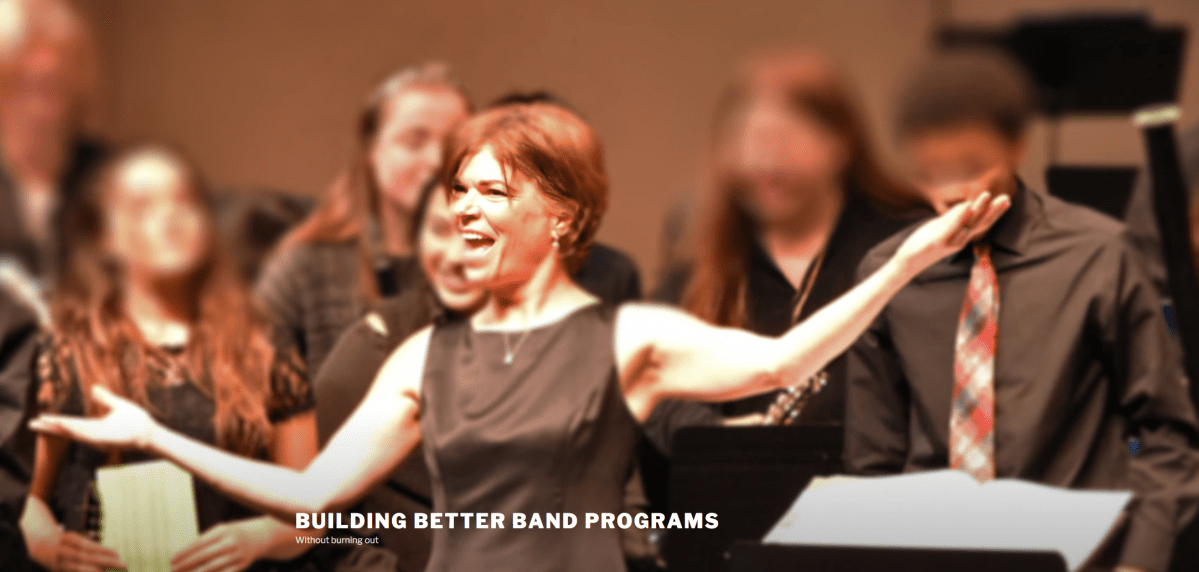


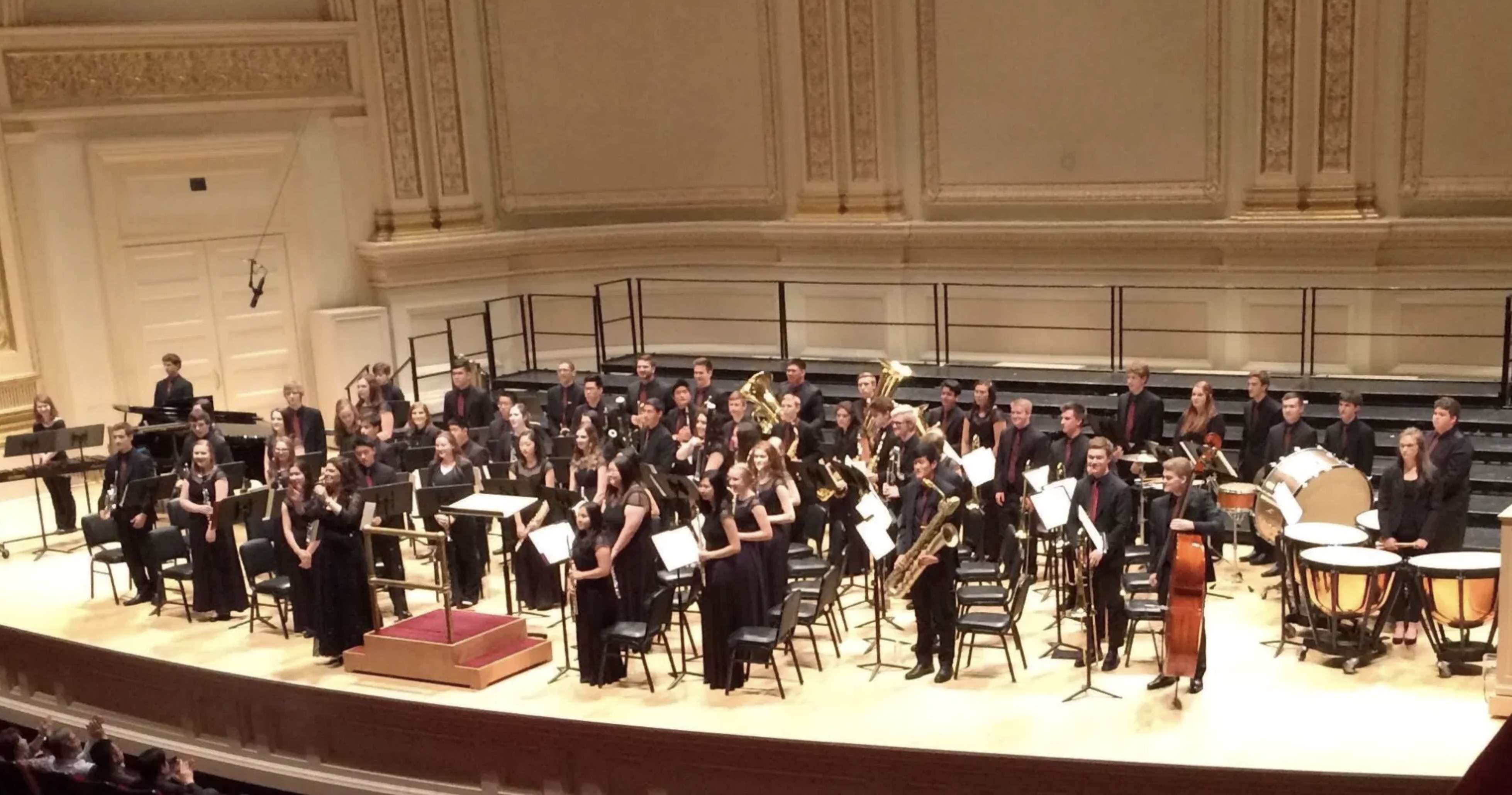
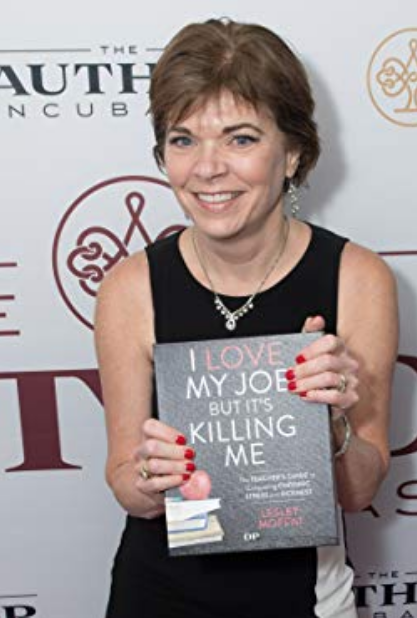 Now in her fourth decade as a high school band director, Lesley Moffat has worked with thousands of people, helping them not only achieve musical goals (including repeated performances at Carnegie Hall, Disney Theme Parks, Royal Caribbean cruise ships, and competitions and festivals all over the US and Canada), but also teaching them how to develop the long-term life skills they need to be successful in the world.

