Did You Take the Summer Off?

Rebuilding instrumental technique after a long break

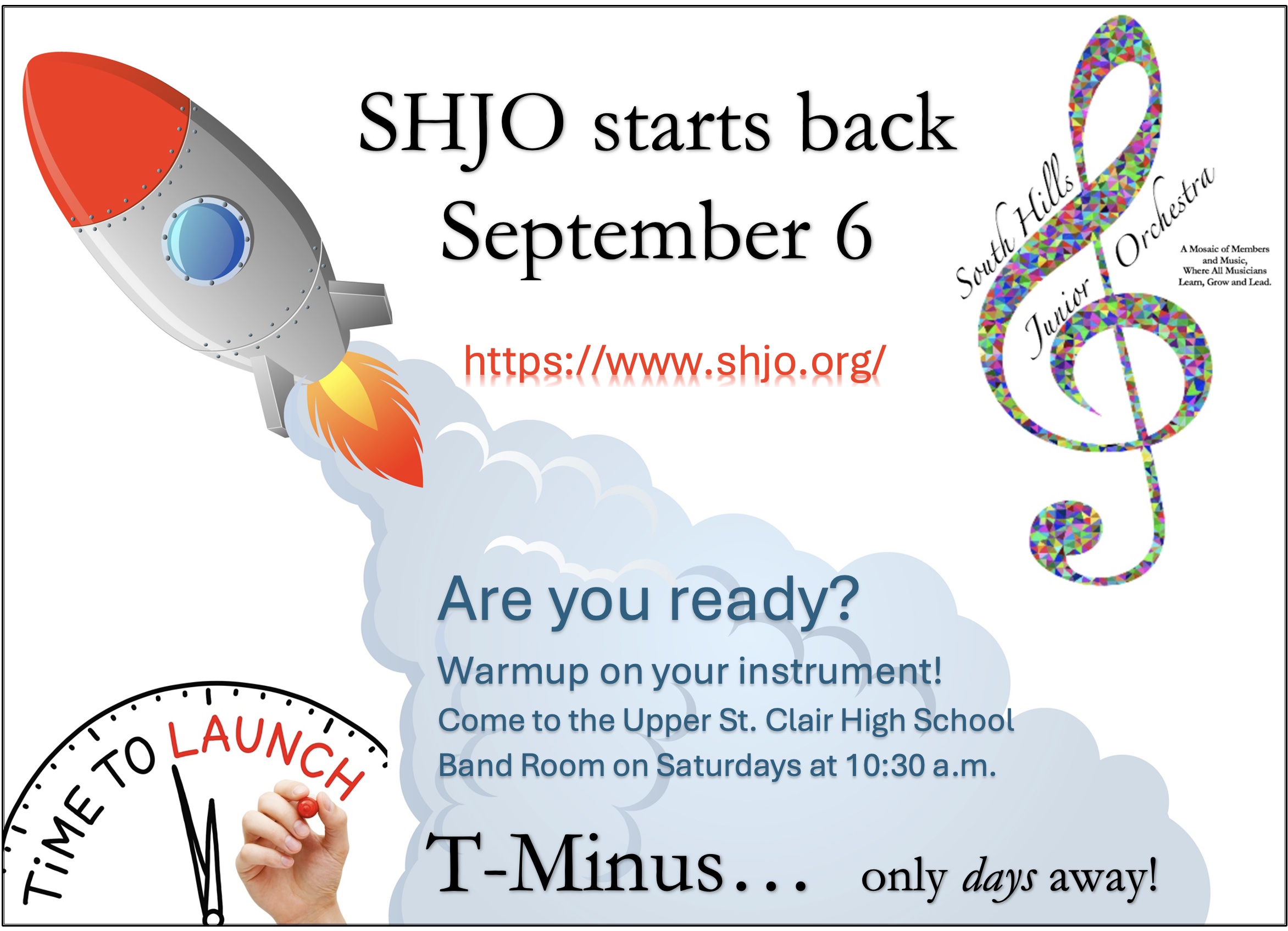
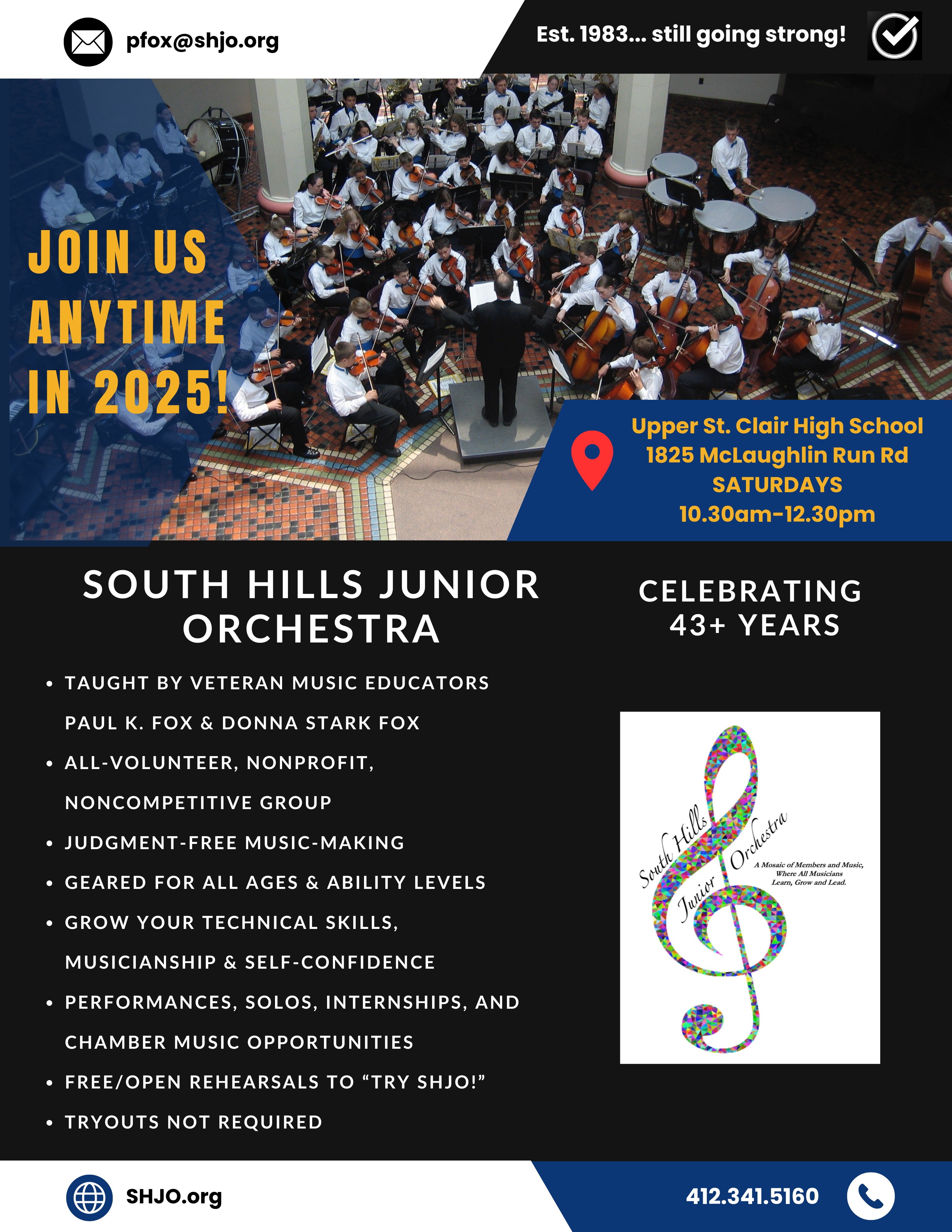
Director’s Note: This is the week to get ready for the return of the South Hills Junior Orchestra after all our vacations! If you live in the Southwestern PA area, we hope you will consider this a personal invitation to “TRY SHJO” and participate in several free and open rehearsals of our community orchestra – a totally “judgment-free” place for creative self-expression of all ages and ability levels. Practices are held in the Upper St. Clair High School Band (1825 McLaughlin Run Road, Pittsburgh, PA 15241) on Saturdays from 10:30 a.m. to 12:30 p.m.

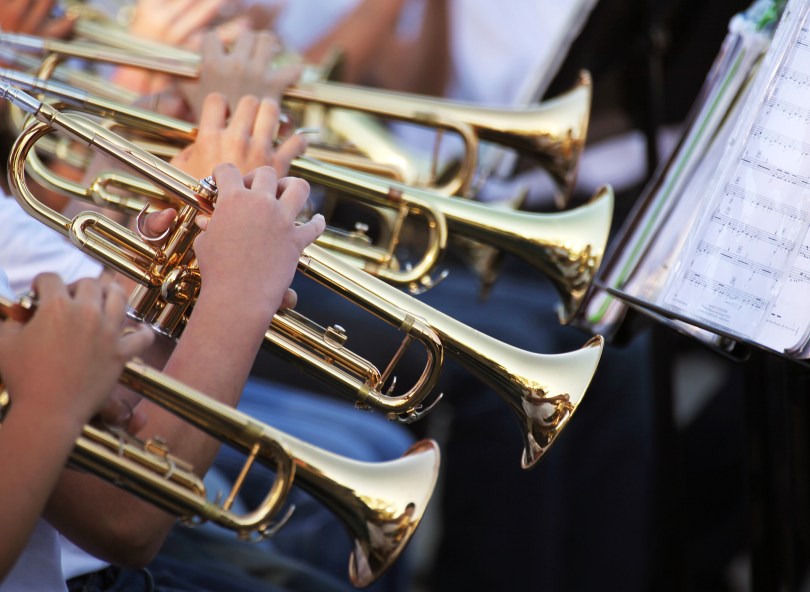
A Google search on my computer fetched the following “AI Overview,” a nearly perfect summary for wind players to recover their “chops” and bring back good tone, intonation, breath support, flexibility of the embouchure, key literacy, and practice habits. For players of all orchestral instrumental sections, I recommend revisiting other articles in the Fox’s Fireside Library to develop a “practice plan” and adopt new musical goals. PKF

To rebuild your brass and woodwind instrumental technique after a long break, focus on the following gradual, three-stage process: first, restore your tone and response, then regain flexibility and dexterity, and finally, rebuild range and endurance. Prioritize short, consistent practice sessions, and avoid pushing too hard too early to prevent injury and bad habits.

Stage 1: Restore tone and response

Your primary goal is to reacquaint your body with the fundamentals of playing by focusing on soft dynamics and your lowest register.

  • Breathing exercises: Start without your instrument. Practice deep, diaphragmatic breathing to re-engage your respiratory system and expand your lung capacity. You can use simple routines like inhaling for four counts and exhaling for eight, or try the “pinwheel” exercise to visualize steady airflow.
  • Buzzing: Brass players should spend time buzzing with just their mouthpiece to get their lips vibrating efficiently again.
  • Long tones: On your instrument, play sustained, steady notes at a soft volume in your lower-to-middle range. Focus on producing a clear, characteristic tone. Use a tuner to monitor your pitch stability.
  • Short practice sessions: Limit your initial sessions to 5–20 minutes, with plenty of rest in between. This prevents over-straining your facial muscles and embouchure.

Stage 2: Regain flexibility and dexterity

Once your tone and response feel stable, you can begin to expand your comfortable playing range and improve finger speed.

  • Scales and arpeggios: Practice basic scales and arpeggios at a slow, controlled tempo. This helps rebuild muscle memory for your fingers while keeping the focus on even, beautiful tone.
  • Slurred partials (brass) and lip slurs (woodwind): Practice smoothly transitioning between notes without using your tongue. This strengthens your embouchure and improves air control.
  • Simple music: Play easy, melodic pieces you know well. This helps you focus on phrasing and musicality without the pressure of a difficult score.
  • Increase session length gradually: Slowly add time to your practice sessions, perhaps moving to 15–30 minutes at a time. Continue to take frequent breaks.

Stage 3: Rebuild range and endurance

After re-establishing your fundamentals, you can begin to increase the intensity and duration of your playing to return to your previous level.

  • Expand your range: Gently start working your way into your upper and lower registers, but maintain a soft dynamic level. Only increase volume once you can play a note softly with a good tone.
  • Louder dynamics: Once your full range is accessible, begin practicing with louder dynamics. This is physically demanding, so continue to take frequent rests.
  • Articulation: Incorporate tonguing exercises. Start with basic single tonguing before adding more complex techniques like double and triple tonguing.
  • Listen to your body: Your body will be the ultimate guide. If you feel any pain or unusual fatigue, ease up and incorporate more rest into your routine.
  • Mental preparation and practical tips
  • Listen to music: Remind yourself of what inspires you and listen to your favorite players to reconnect with the joy of playing.
  • Record yourself: Objectively evaluate your progress by listening back to recordings. This helps you identify areas that need work and celebrate your improvements.
  • Revisit old notebooks: Look back at any old lesson journals for useful reminders and insight into your past tendencies.
  • Service your instrument: A leaky pad or sticky valve can make returning to your instrument unnecessarily difficult. Have a technician give your instrument a “clean, oil, and adjust” to ensure it’s in prime playing condition.
  • Be patient: You are not expected to be at your former playing level immediately. Trust that your muscle memory will return with consistent, smart practice.

Click here to download a printer-friendly copy of this article.

 Here are additional resources shared in the SHJO eUPDATE newsletter (August 30, 2025):

PKF

© 2025 Paul K. Fox

70 and Out?

Editor’s Note: Sorry! I don’t usually use this forum to rant or rave and complain… but, since I am almost flat on my back right now, I need to vent. Hopefully, other “seniors” who read this blog will find some benefits to this article and the research links below.

Keep up the “good fight” to maintain your own health and wellness! PKF

Mobility!

It’s the single most important thing in retirement! “If you ain’t got it, you’ve got nothing.”

There’s nothing worse than losing one’s ability to get around.

When I retired, I couldn’t imagine any limitation to my physical activities (with the exception of doing those ambitious squat thrusts of my youth or running a full gallop with my Yorkiepoo). Sure, as we age, many of us may experience more minor aches and pains caused by the effects slowly progressing arthritis, a touch of foot neuropathy or plantar fasciitis, overuse of our muscles in strenuous activity, lifting, or carrying heavy objects, or other issues, but these “challenges” don’t usually slow us down too much. And yes, I explored a few of those media-hyped over-the-counter topical remedies “everyone” claims will alleviate foot and muscular pain. How many of these do you recognize? Alphabetically I dabbled in Advil Targeted Relief, Aspercreme with Lidocaine, Blue Emu, IcyHot, Nervive, Penetrex, Salonpas, and Voltaren. I even bought several pairs of expensive shoes with custom insoles and orthotics. The foot pain has since mysteriously “gone away” (probably due to some excellent PT and regular bouts of stretching/flexing), which has led me to focus more on a new, annoying development – slight knee pain – for which the docs say may be early onset “bone-on-bone” (Knee Osteoarthritis).

Be proactive, Mr. Fox, I said!

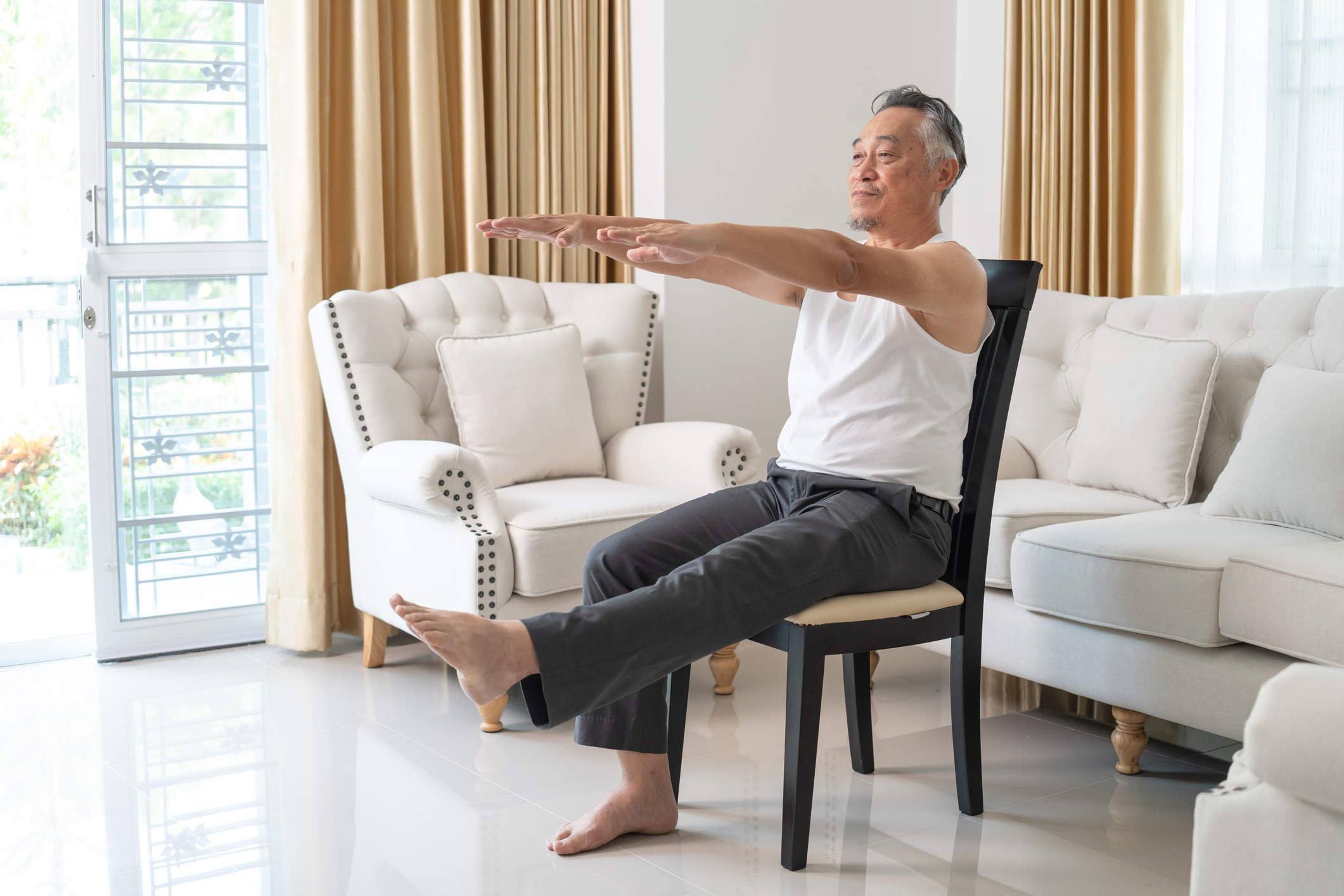
Get off your duff, stretch, and move around more. (At regular intervals, my loving wife and the Apple Watch on my arm continually nag me to stand, move, and exercise!) So I can brag I made a concerted effort to lose weight (down 30 pounds and no longer need blood pressure medicine) and even put myself on a regime of online “old man yoga/chair” exercises (an app costing $38/month – but, after some progress in “core tightening” over several months, I abandoned them!). I’ve sought the services of a good physical therapist to help me through what will eventually be knee replacement surgery (but, if I do their daily prescriptions to build my leg muscles, perhaps the cutting won’t be needed for another decade or two! By the way, musicians/music teachers make good patients of PT because we know the importance of practicing regularly – even on the day of the lesson!) I have a good orthopedic surgeon in my back pocket, and during my last visit with him, I was able to say “no” to cortisone injections. Things seemed to be getting better!

But, all of this came to a crashing halt.

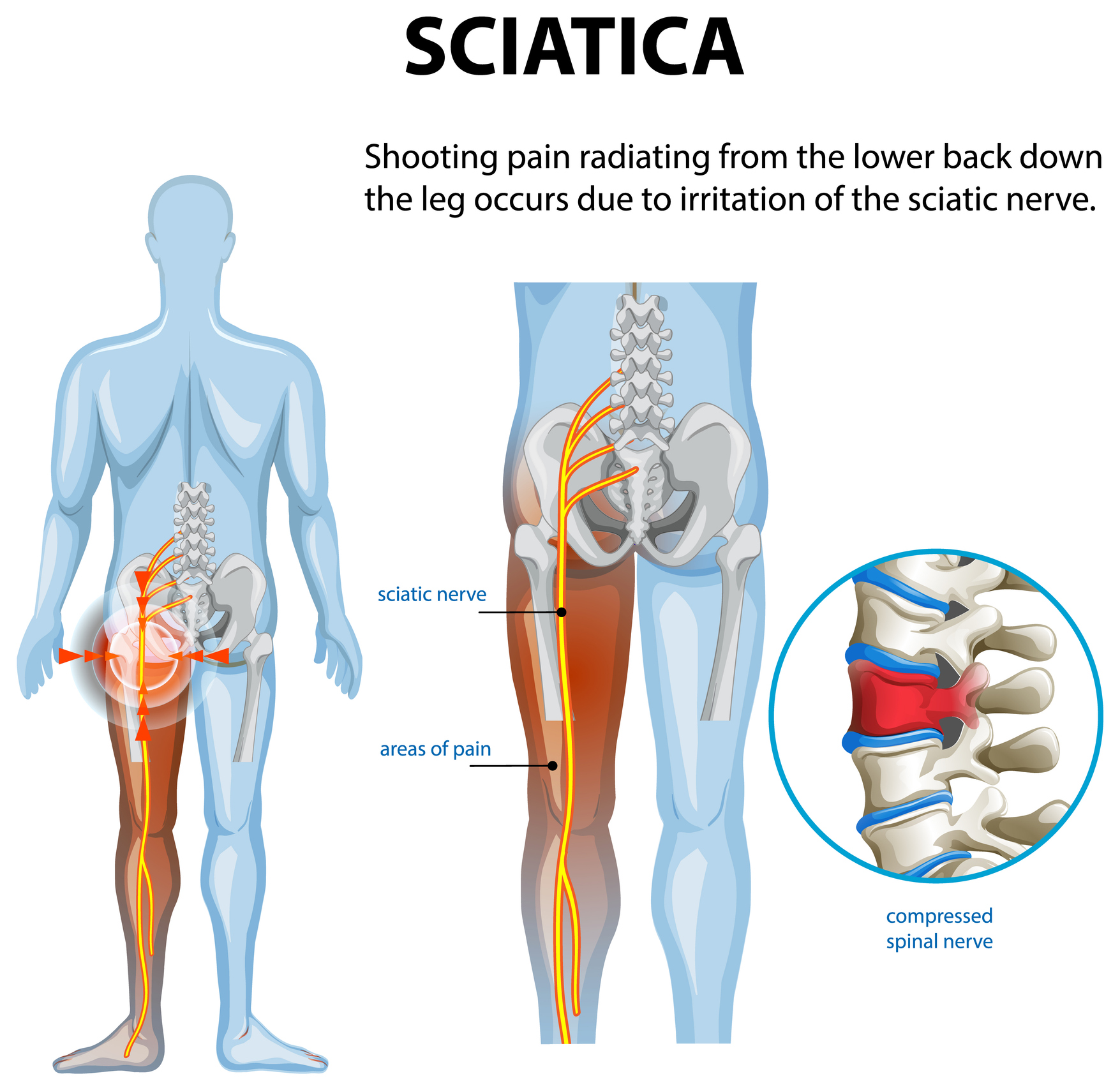
Several weeks ago, I struggled to raise a very heavy conductor’s stand (to which I will eventually chew-out the manufacturer of a poorly designed/awkward-positioned height adjustment screw). After my first dose of extra-strength Advil wore off, I felt like I had pulled a muscle in my back. It went away in a day or two, so I didn’t think much of it. But, five days later, when I woke up and climbed out of bed, suddenly any pressure I placed on my right leg gave me excruciating pain. I have been told this is probably sciatica or a “pinched nerve.” The pain is so bad that when I first get up or stand for even a few minutes on my right foot, I double-over and cannot move. I use any object around me to support myself such as countertops, tables, desks, shelving, etc., and feeling helpless literally “hobble around” trying to get from place to place. Even rolling over in bed the wrong way can cause an extreme surge of this pain which radiates down the entire leg. It has slowed down my activity to a crawl.

The timing could not have been more perfect!

Last week, I attended our state music teachers’ conference. After the five-and-a-half hour trip to the other end of the state (which everyone says with sciatica, you are never supposed to sit that long!), I planted myself in an electric wheelchair to get from place to place, fulfilling my normal PMEA duties such as taking candid photographs of the events and running a session or two. The (level 9) intense pain seems to come and go and I have gone to a doctor to receive a new script for physical therapy including an analysis to pinpoint the exact location of this unhappy nerve and what exercises may help. X-rays so far have shown only a little arthritis of the spine; apparently no herniated disks. (Is this what we all have to look forward to – “a little arthritis” – as we mature?) If it does not get better soon, I may consider going to a chiropractor. Have you had your first introduction to a cane? At the conference, I went to the local Rite Aid and bought one (along with a “TENS-machine,” although I have not unwrapped it yet and will need help setting up the “Transcutaneous Electrical Nerve Stimulation” device). Thank God for the Internet, because I even needed to search for instructions on which hand to use the cane and how to adjust its length (my physical therapist checked it). It does provide some stability so that I can walk around without knocking books off shelves or outside, but it’s not a long-term solution.

I wish I could tell you I have some good news to report, but… as of today, we have not figured out the cause or location of the problem. I am on prednisone and it is only slightly alleviating the pain. Sitting in my office chair (right now) gives me a dull pain (number 2-3). Weight bearing can raise that number up to 8-9. My wife (who is a saint) has been waiting on me hand-and-foot (and she has a few of her own aches and pains!). My doggies are unhappy because they are receiving fewer long walks and they were kicked out of the bed so I can stretch (and so my restlessness would not keep them up all night). I have had to postpone my hospital volunteer work (I can’t push wheelchairs) and curtail a lot of other scheduled activities. With several concerts coming up for our local community orchestra, I am considering conducting in a chair from the podium… and I may have to miss marching in the annual Community Day Parade on May 17 when I usually serve as the “duck maestro” for the Community Foundation of Upper St. Clair’s GREAT DUCK RACE fundraiser.

I’m turning 70 next week!

Several weeks ago, I would have told you I am CELEBRATING the big 7-0! I revel in the freedom of retirement, the joy of “refiring” or “rewiring” myself to explore new projects, refocusing energy on favorite past hobbies and “mindful” pursuits, catching up with former students and colleagues, helping others as a music educator mentor, presenting workshops on teacher self-care, ethics training, interviewing, and retirement transitioning (take a look at my latest professional brochure here), subscribing to the retiree doctrine “it’s not my sandbox anymore” avoiding the jobs/tasks I no longer want to do, and literally… “living the dream.”

Now, I must face these new challenges head-on, and I will! I will not allow myself to “retire” (that old definition to “withdraw” or “resign”). I will fight any acquiescent acceptance of increasing disability, disengagement, depression, unnecessary significant medical intervention, or long-term advanced pain management! Yes, this is a SELF TALK: They say most recovery from sciatica is very slow! If you share this condition, don’t get discouraged!

Mobility.

I want it back! I want to return to modeling what author Ernie Zelinski says in his book How to Retire Happy, Wild and Free are the essential ingredients for a meaningful and satisfying retirement and life passage to self-reinvention, renewing the quest of finding “purpose, structure, and community” throughout our golden years.

Sample Additional Research on Sciatica

https://pmc.ncbi.nlm.nih.gov/articles/PMC1895638/

https://my.clevelandclinic.org/health/diseases/12792-sciatica

https://www.health.harvard.edu/blog/taming-pain-sciatica-people-time-heals-less-2017071212048

PKF

© 2025 Paul K. Fox

Teachers – Take Charge of Your Wellness

The Five C’s of Self-Care

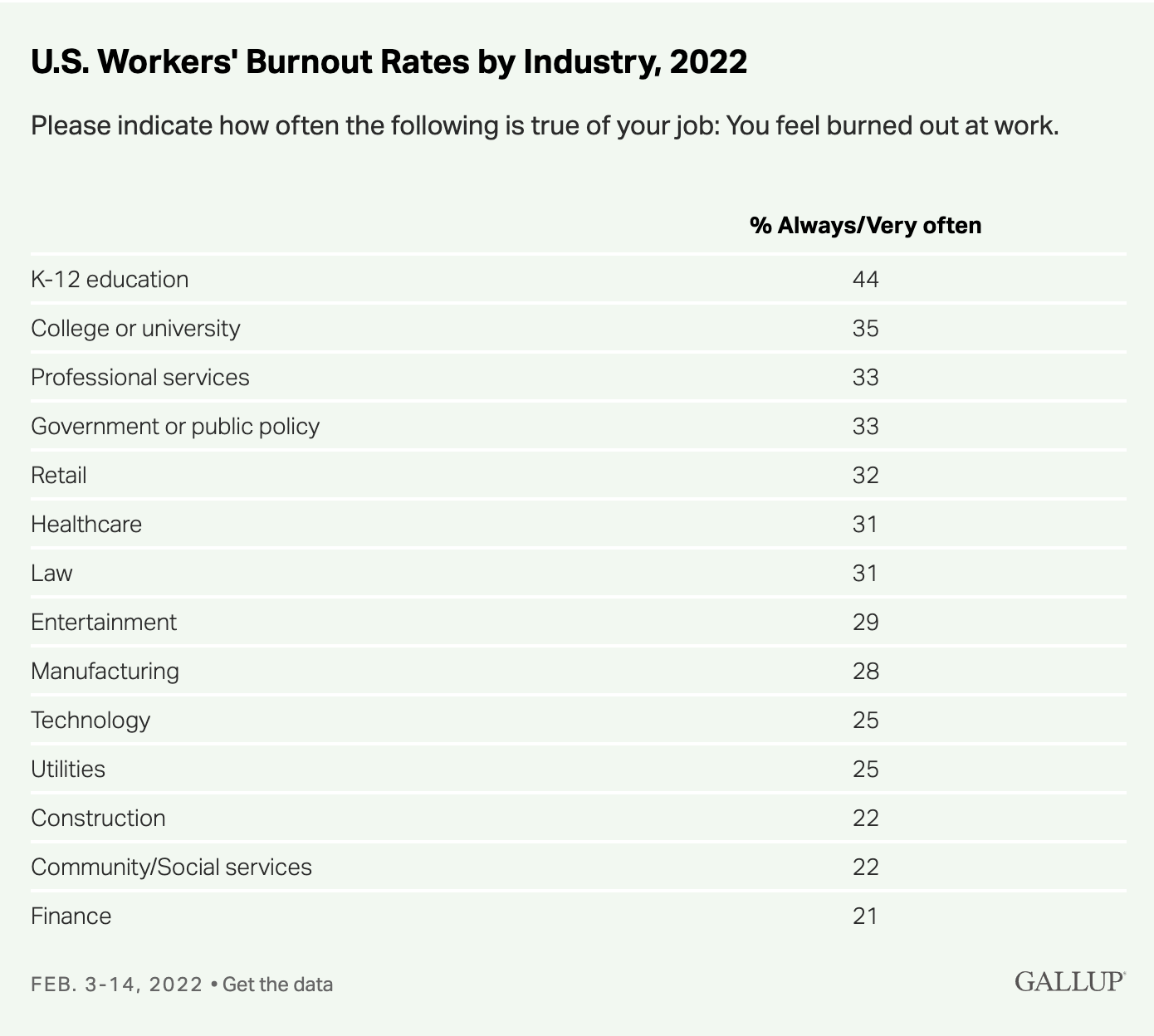
What profession has the highest rates of stress and burnout?

The answer is… educators of grades K to 12. NO FOOLIN’ ⏤ yes, even though today is April Fool’s Day!

The Crisis

Citing a 2022 Gallup Poll at Purdue Global’s website here, “K-12 teachers are the most burned out profession in the U.S.” They go on to say:

In fact, teachers have higher-than-average stress levels compared to other client-facing professionals. This kind of stress can lead to physical and mental health concerns for teachers and negatively affect students’ well-being and achievement.

“Being an educator requires so much of us,” says Carol Laman, faculty member at Purdue Global. “It is emotionally, physically, and mentally demanding.”

Self-care practices can help. According to the National Comprehensive Center, self-care can aid educators in both improving their overall wellness and being more effective for their students. ⏤ https://www.purdueglobal.edu/blog/education/self-care-for-educators-guide/

According to the National Education Association, we have a MAJOR problem!

A study by the advocacy group, Alliance for Excellent Education, reports that 40-50% of new teachers leave within their first five years on the job. Many factors contribute to the high dropout rate, a severe lack of work-life balance and the inevitable high stress levels teachers feel on the job, to name a few. Because of this, self-care is extremely important for teachers. However, it’s hard for teachers to take care of themselves when their career is taking care of students. ⏤ https://www.nea.org/professional-excellence/student-engagement/tools-tips/importance-self-care-teacher

This statistics are overwhelming, as documented in the Teacher Wellbeing Survey by Panorama Education.

Teacher wellness has a significant impact on school climate and student learning. Yet teacher stress and burnout continue to present retention and turnover challenges in districts: 85 percent of teachers have reported that work-life imbalance affects their ability to teach. More than one in five new teachers leave the profession within their first five years of teaching—and this attrition is substantially worse in high-poverty schools. ⏤ https://www.panoramaed.com/products/surveys/teacher-well-being-survey

The Concern – What is “Self-Care?”

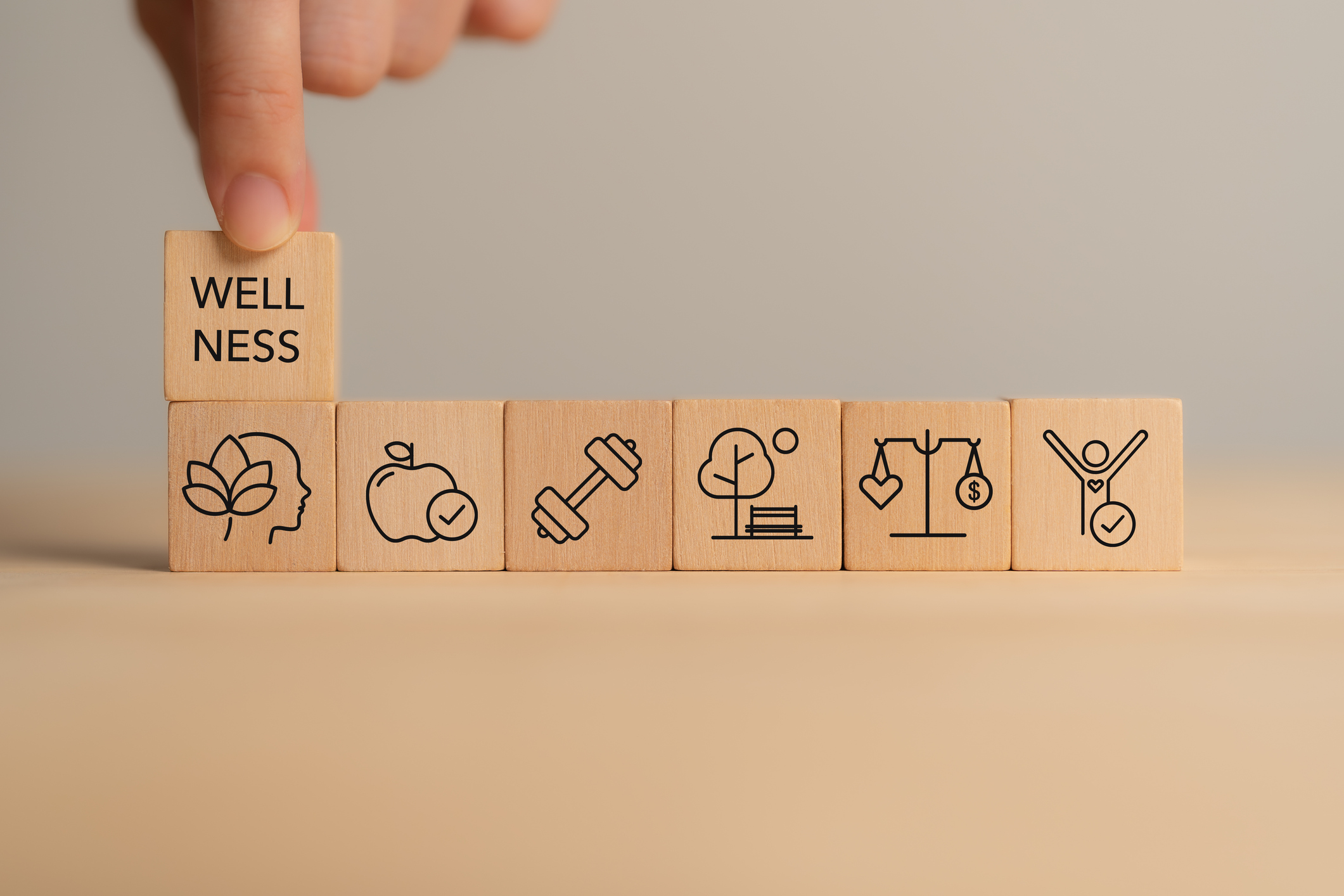
The online Oxford dictionary defines “self-care” as “the practice of taking action to preserve or improve one’s own health,” or “the practice of taking an active role in protecting one’s own well-being and happiness, in particular during periods of stress.”

The National Institute of Mental Health (NIMH) provides even more clarification:

Self-care means taking the time to do things that help you live well and improve both your physical health and mental health. This can help you manage stress, lower your risk of illness, and increase your energy. Even small acts of self-care in your daily life can have a big impact.
https://www.nimh.nih.gov/health/topics/caring-for-your-mental-health.

The National Wellness Institute (NWI) further defines wellness as a “conscious, self-directed, and evolving process of achieving one’s full potential… [It] is positive, affirming, and contributes to living a long and healthy life.” NWI addresses six dimensions of wellness, the combination of which “enables us to thrive amidst [life’s] challenges.”

  • Emotional
  • Physical
  • Intellectual
  • Occupational
  • Spiritual
  • Social

In our profession, the defining concerns also involve other major “C’s” within the school workplace – climate and culture – and that “actions speak louder than words!” Edutopia dove into this topic in their blog, “Leaders Must Address Teacher Well-Being With Action, Not Just Self-Care Talk” here.

By listening to educators and building supports that reflect their genuine needs and concerns, these leaders are shifting school cultures in ways that go beyond lip service.
https://www.edutopia.org/article/leaders-teacher-wellbeing-action

The Causes

That leads us to THE WHY – why is this such a crisis?

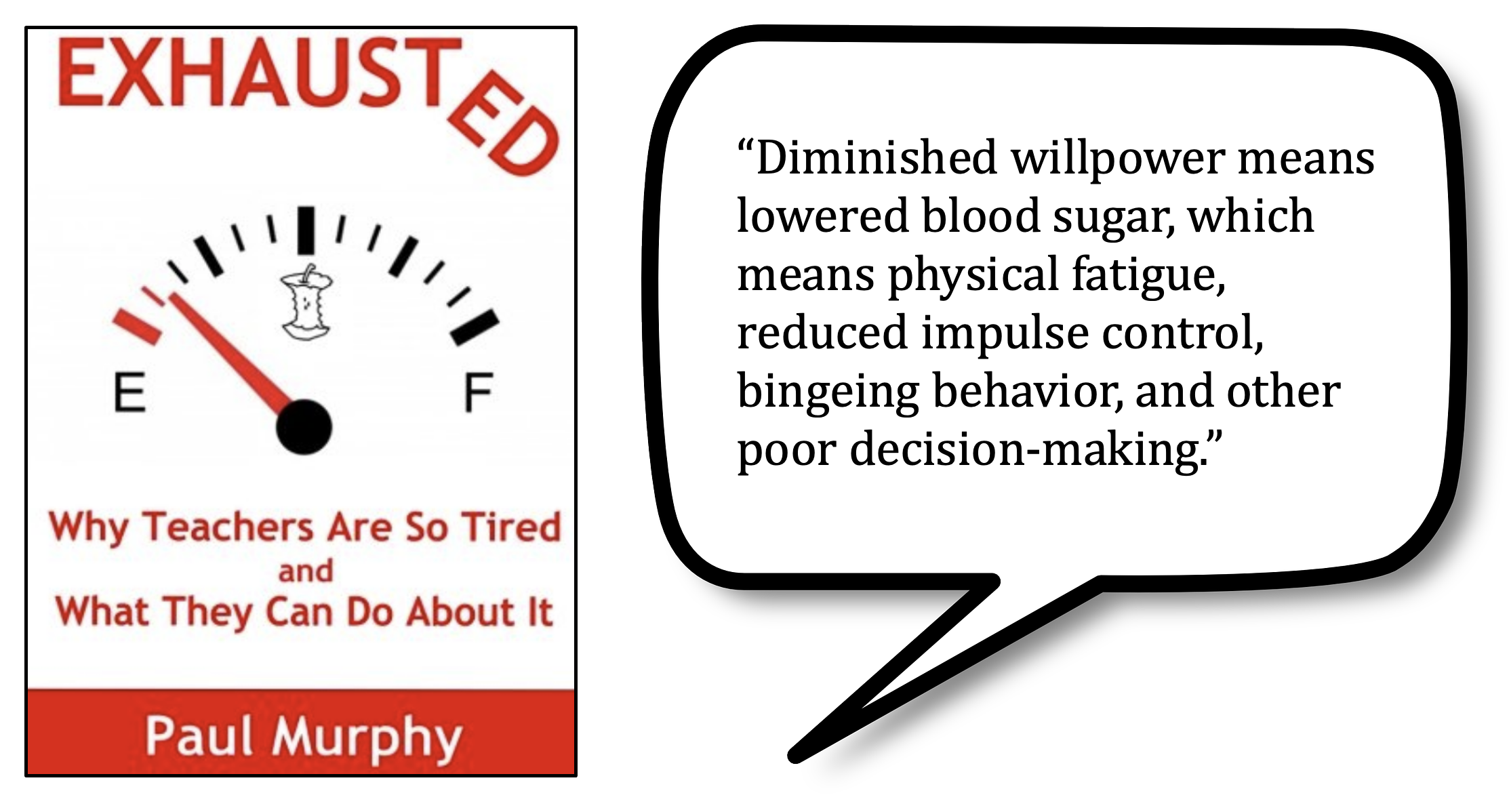
In my educator self-care workshops (e.g., this example), I bring up the research of Paul Murphy from his book Exhausted – Why Teachers Are So Tired and What They Can Do About It. Consider his litany of possible culprits that may cause burnout in some teachers:

  • Lack of autonomy
  • Dysfunctional work environment
  • Inadequate social support
  • Extremes of activity
  • Poor work/life balance

Another excellent read on the subject is Demoralized – Why Teachers Leave the Profession They Love and How They Can Stay. Author Doris Santoro takes a closer look at these issues:

  • Teachers feel frustrated from accomplishing good work that benefits students, communities, and the profession.
  • Problem is external and does not indicate a “weakness” or lie within the individual teachers themselves.
  • Dissatisfaction in education is due to moral and ethical conflicts.

Only by addressing the moral sources of teacher’s anguish might we stem the tide of teacher exodus. ⏤ “The Problem with Stories About Teacher Burnout” by Doris Santoro in Kappan December 2019/January 2020

What are the symptoms of “burnout?” From the Mayo Clinic and other sources, we learn the following. Do you display any of these on a regular basis?

  • Disillusionment over the job
  • Cynicism at work
  • Impatience with co-workers, administrators, and students
  • Lack of satisfaction in accomplishments
  • Dragging themselves to work and trouble getting started once they’re there
  • Lack of energy
  • Unexplained aches/pains 
  • Self-medicating with food, drugs, or alcohol
  • Changes in sleep/eating patterns

Are these striking close to home? If you said, “Yes, that’s me!” more than a couple times, it is time to seek help. Please consider this a “wake-up call” to visit your health care professional.

The Courses-of-Action

If you Google search “teacher self-care” in your browser, the following comes up from the (experimental?) Google-generative AI Overview, otherwise a good starting point summarizing possible solutions for stress remediation and improving over teacher mental health.

Key Self-Care Strategies for Teachers

Paul Murphy added these “remedies” for improving teacher time management, promoting better work/personal life balance, and de-stressing:

  • Work less/fewer hours
  • Realize that time before school is worth more than twice as much as time after school (so plan accordingly)
  • Use class time to check work
  • Leverage technology
  • Don’t grade everything
  • Stop assigning things

The Courage to Change!

The bottom line – We are our own worst enemies!

Our negative thoughts, self-doubt, and destructive behaviors often hinder our own progress and happiness, making us our own biggest obstacles. ⏤ Google Generative AI and other sources including https://lorimilner.medium.com/the-art-of-being-your-own-worst-enemy-c393e9032d27, https://markmanson.net/when-you-are-your-own-worst-enemy, and https://letherspeakusa.org/why-are-we-our-own-worst-enemies/.

The research suggests that many “bad habits” may disrupt our ability to take care of ourselves and seek change, such as these:

  • Self-Sabotage
  • Negative Self-Talk
  • Lack of Self-Compassion

My insightful Washington-state music teaching colleague Lesley Moffat has written an excellent book, I Love My Job But It’s Killing Me – The Teacher’s Guide to Conquering Chronic Stress and Sickness, and in my opinion, she hits the nail squarely on the head embracing Shakespeare’s “to thine own self be true” in a renewed motivation on self-help:

You must take care of yourself first. This is the hardest lesson of all, yet it is so important. Chances are you got where you are because you ran yourself ragged taking care of other people’s needs. I bet you never said no to requests to be on one more committee, drive carpool, watch a friend’s kids, and every other favor someone made of you, yet I’d also bet there’s a good chance you never take the time to take care of your own needs. When was the last time you read a book for fun? Or went to a movie you wanted to see? Or pursued a creative endeavor that made you happy? Or any one of a million things you want to do? I bet it’s been a long time. ⏤ Lesley Moffat   

It is time to take the plunge towards better personal health, wellness, and balance in your life. There are plenty of resources out there for you to peruse, but don’t just sit there and read them! DO THEM!

Get started today!

PKF

© 2025 Paul K. Fox

Bookends – Part 3

As summer draws to a close and schools begin to reopen, we look forward to the coming autumn season (and hopefully some relief from the scorching weather). After all, tomorrow will be the first day of classes at my former place of employment (and the dress rehearsal for Friday’s marching band senior show). Soon we’ll enjoy one of my favorite transitions of the year! In Western Pennsylvania, deciduous trees will gradually change color (some bright red, orange and yellow) and then shed their leaves… the perfect metaphor for the final sections of my “Bookends” series.

(Yes, fall is a month away… but, as you can see, the stores are way ahead in anticipation of the changing seasons!)

Autumn is a season of harvest, a time to reap the rewards of our hard work and reflect on the blessings in our lives. The Fall Equinox is a reminder for us to assess our accomplishments instead of our shortcomings.

www.inspiringactions.com

We return to a discussion first introduced last October in Bookends – Part One – The Life Cycle of a Successful and Happy Music Educator, exploring:

  • Stage 4: Veteran/Sustaining Years (this blog)
  • Stage 5: Next Chapter/Living the Dream (future blog)

When do we become “experts” in our field? When are we “master teachers?” Do we ever reach the apex of our achievements, the crowning glory of our career, or the pinnacle of our profession?

Never! You snooze, you lose. If you stop expanding on your knowledge and skills, forgo exploring new ideas, methods, and media, or become stagnant and settling into a rut at work, you might as well RETIRE (“Stage 5”). Instead, I direct you to revisit “Stage 3” in Bookends II here. As dedicated educators, the focus must be on constant retooling… reviewing/revising “best practices,” setting new goals, and building on the existing networks and engagement in the profession. These have always been the essential elements of a true professional.

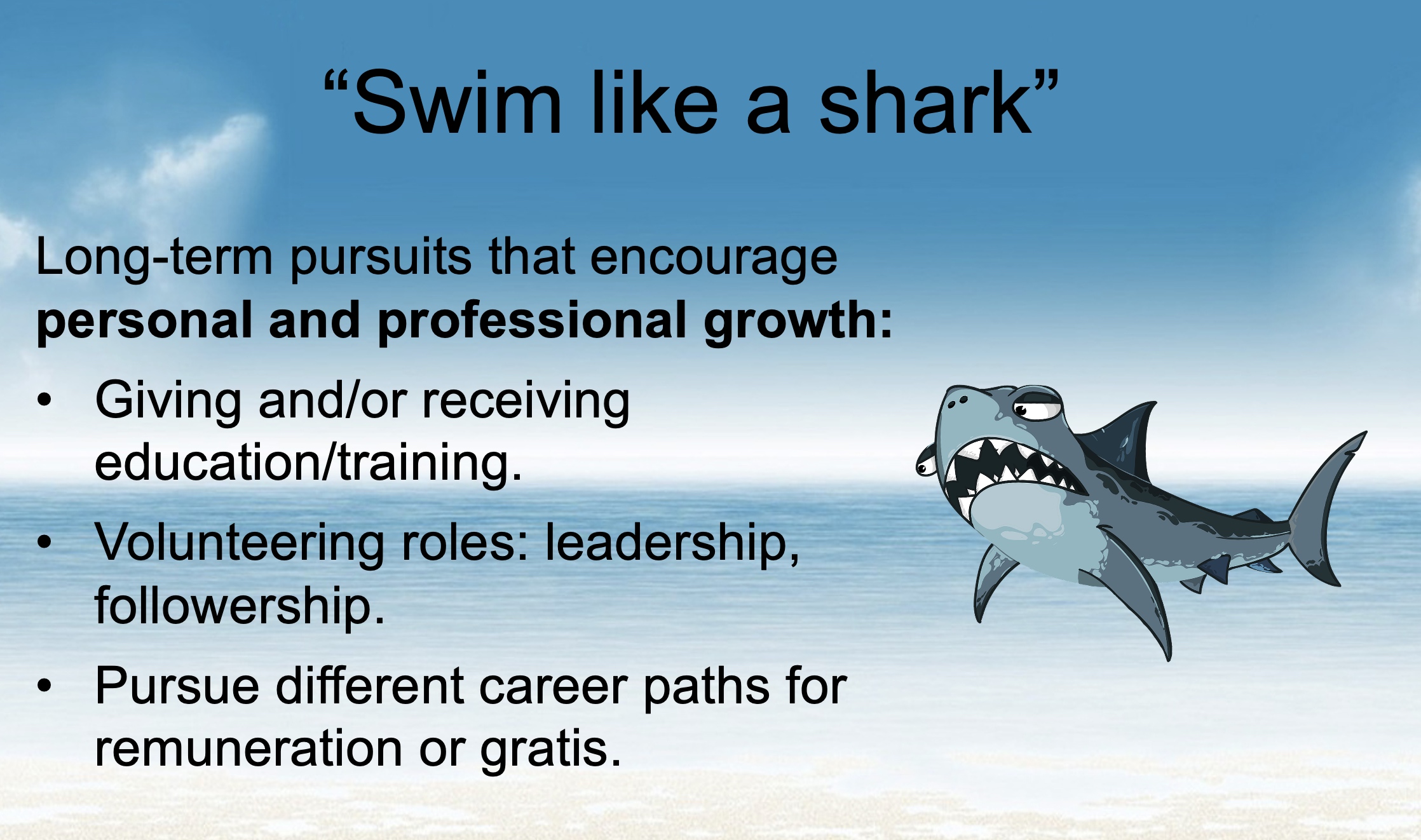
Now I should mention that during our middle-years, we sometimes return to education, get advanced degrees, new certifications or teaching specialties, apply for new job assignments, etc. When my PMEA colleague and fellow music teacher retiree John D’Ascenzo left full-time teaching, he went on to pursue a doctorate degree. Also appropriate for our next Bookends section, I have often quoted his analogy for all career stages to “swim like a shark” (since a shark never stops moving, even when it is sleeping). Sage advice for us all!

During my whirlwind of more than five decades in the field of music education, I went through several “first-year-of-teaching” passages, such as accepting my first job in general music at Edgewood School District (1978-1980), then being hired to direct strings (grades 6-12) at Upper St. Clair School District in 1979 followed by a 16-year appointment to the USCHS choral program of over 200 singers in 1980 on… transitions requiring massive job retraining and revitalized professional development. I may have not appreciated the stress of these “hurry up and relearn” periods at the time, but these periodic challenges made me GROW. In the end, I “lived” and embraced Robert Frost’s poem, “The Road Not Taken.” It may have not been the initial pathway I imagined for myself when I started in music education, but “I took the one less traveled by, And that has made all the difference.”

To this day, this violist and orchestra director has NO REGRETS teaching so many years outside of his so-called “specialty” or emphasis! It comes back to me every time I run into former choral or musical students, those I taught in those early years of being a vocal novice (at times when I felt less prepared). My past instrumentalists/singers/actors reminisce a little and literally rave about their musical experiences and what they meant to them.

My emphasis to foster success in our “veteran years” is also on teacher self-care: health and wellness, burnout prevention or remediation, stress and time management, and personal life and work balance.

Let’s start with examining the probable causes of STRESS in TEACHERS:

  • Overwhelming workload, long hours, and/or challenging classroom situations
  • Lack of administrative or social supports
  • Feeling a lack of respect, loss of job autonomy, or not being valued or appreciated in the organization or assignment
  • Dysfunctional or hostile work environment
  • Inconsistent hydration and consumption of a balanced diet and healthy quantities (length, depth, and frequency) of rest and sleep
  • Irregular amounts of daily aerobic physical exercise
  • Misuse of the voice at work and inadequate hearing conservation and protection from over-exposure to sound
  • Deficient scheduling of opportunities for mindfulness, meditation, and/or reflection
  • Deprivation of personal outlets for creative self-expression (not related to job) and the lack of time to explore hobbies, interests, and socialization with family and friends
  • Infrequent use of sick days or vacations even when they are needed for restorative health

We all have experienced at least a few of these “bumps along the road” (but hopefully NOT most of them). Although I generally had very supportive administrators throughout my years in the public schools (and no one would claim I exhibited any symptoms of “burnout”), I did model a few of the inconsistent habits of personal health (diet, sleep, etc.) and an unbalanced work/personal life schedule. And, perhaps it could be said that I did some of my best work totally exhausted!

As I have written in past blogs (especially here in “Burned Out or Bummed Out”), the best book I know on “teacher exhaustion” is by Paul Murphy (2017), and subtitled Why Teachers Are Do Tired and What They Can Do About It. I strongly recommend it as “a required read” for all new AND veteran teachers.

Besides being aware of your “body chemistry” (especially what the challenges of constant willpower, deferred gratification, and relentless scheduling can do to lower your blood glucose levels later in the day), to quote Murphy, some of his suggestions for remediation are NOT so easy to follow:

  • Work less/fewer hours
  • Time before school is worth more than twice as much as time after school
  • Use class time to check work
  • Leverage technology
  • Don’t grade everything
  • Stop assigning things

Sorry! My wife and I modeled the behavior of “more-than-full-time” music teachers with after-school rehearsals of marching bands, musicals, community orchestras, chamber ensembles, private lessons, music festival preparation, etc. How in the world do you work fewer hours? Also, since most music teachers do not assign “paper” homework requiring teacher correction, “checking for understanding” and in-class formative assessment could improve efficiency. Sometimes we are own worst enemies… We should “keep it simple” and focus on the priorities. That brings us to time management.

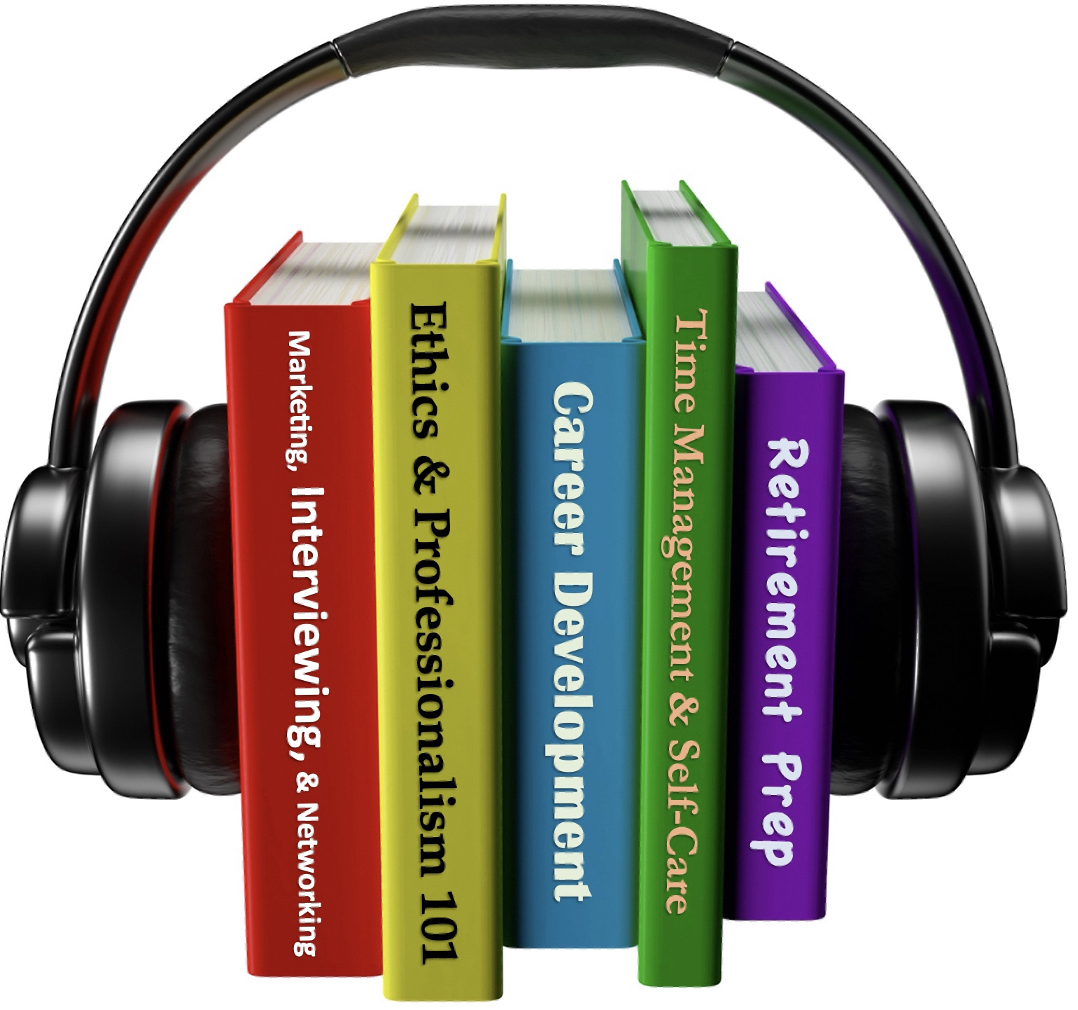
My favorite strategies for organizing our time and fostering a better work/life balance involve these resources (click on links below to past blogs at this site). PLEASE STUDY THESE!

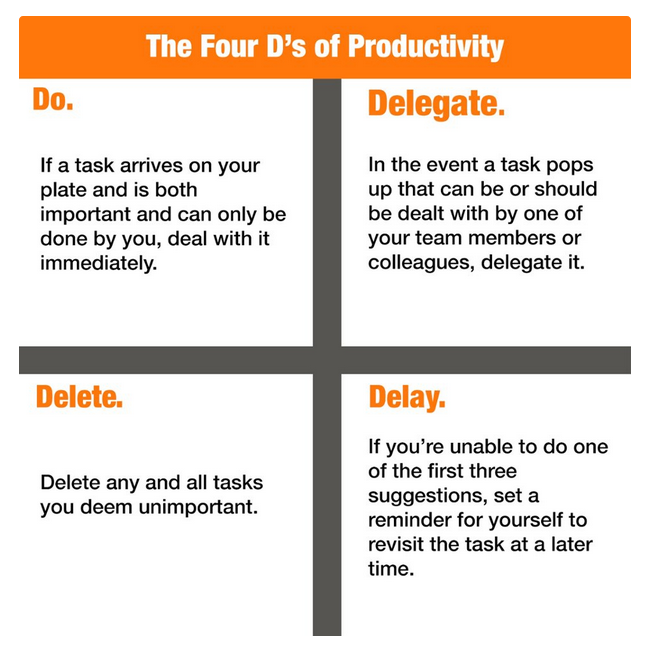
I return to the “Four D’s” concepts several times in past writings, and the “system” can be applied digitally as well… as long as you make a concerted effort to take the necessary time (10-20 minutes) every day to manage the up-front decision-making to “do immediately,” file, or weed out most of the “voluminous noise” (distractions) you get in email, texts, voicemail, snail-mail, etc. Get ready to push the “delete” button… over and over again!

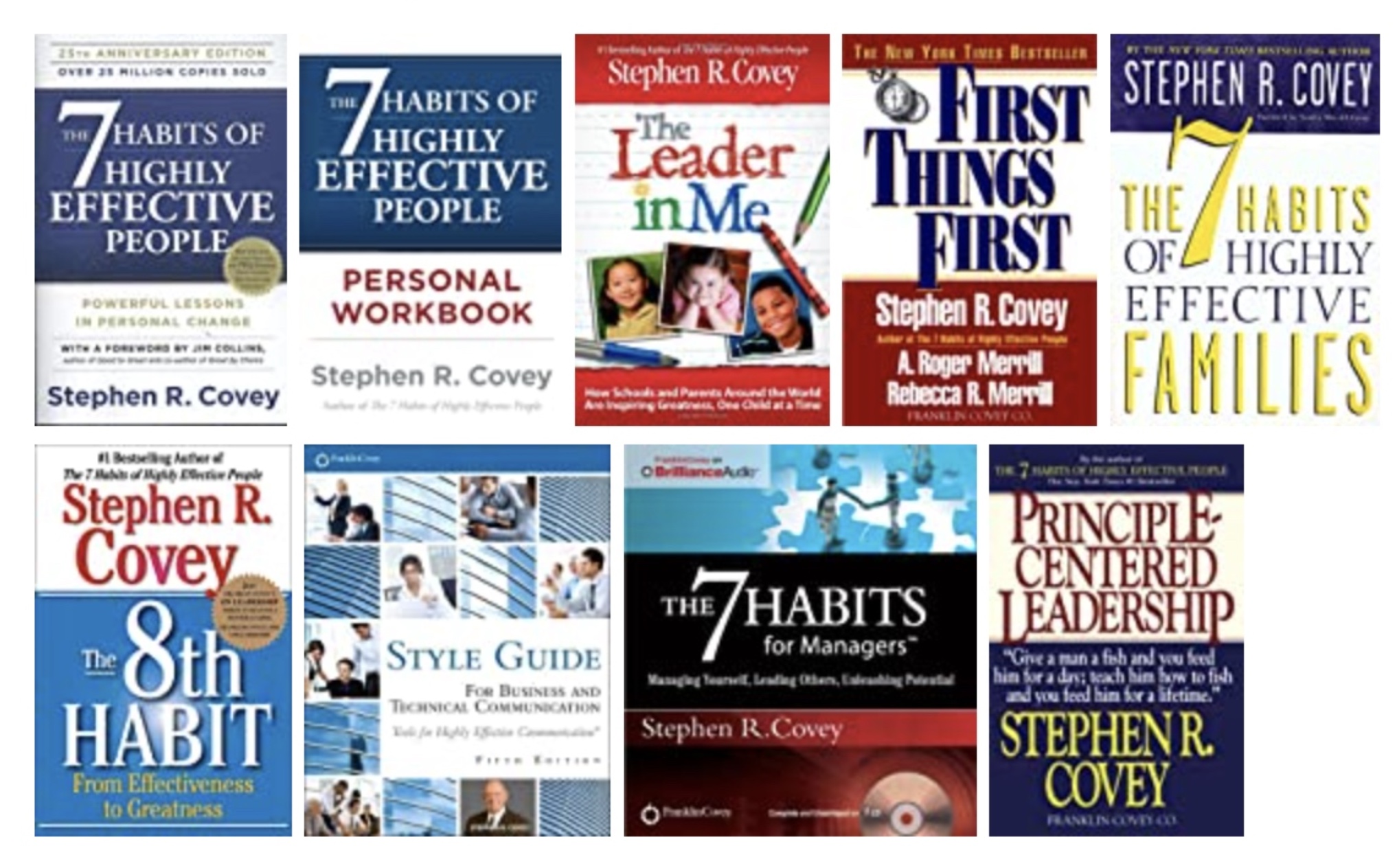
Then there are a few more ideas in “Top Ten Organizing Tips…” and any of the books by Stephen Covey (below). I particularly like the philosophy/demonstration attributed to him re: “start with the big rocks!”

Also, if you are a member of NAfME (National Association for Music Education), search their vast library of related blogs here, several articles to which I was fortunate to have contributed.

Final thoughts for the “sustaining years” of your profession and to avoid any touches of BURNOUT is to develop a self-care plan. My first go-to for building meaningful wellness habits comes from “What Self-Care Is and What it Isn’t.” In past health and wellness workshops, I echo these “basics.”

  • Promote a nutritious, healthy diet, and hydrate often.
  • Get enough sleep.
  • Exercise.
  • Follow-up with medical care.
  • Use relaxation exercises and/or practice meditation.
  • Spend enough time with loved ones.
  • Do at least one relaxing activity every day, whether it’s taking a walk or spending 30 minutes unwinding.
  • Do at least one pleasurable activity every day, from going to the cinema, cooking, or meeting with friends.
  • Find opportunities to laugh.

Self-care can take many forms, such as physical, spiritual, and emotional self-care. It’s an important factor in maintaining health and well-being.

Self-care might range from a hot soak and yoga to everyday activities like preparing meals you want to eat or dressing in your choice of style.

Self-care is not an indulgence. The WHO recognizes it as a crucial aspect of health maintenance.

Tailoring self-care for your budget, season in life, and personal needs for whole body wellness, inside and out, can be energizing and exciting in itself.

https://psychcentral.com/blog/what-self-care-is-and-what-it-isnt

Veteran full-time educators: To sustain and nurture success in the middle to twilight years of your career (Stage 4), seek to understand and practice personal wellness and work/life balance while continuing your pursuits in self-motivation, self-assessment, self-energizing, self-(re)invention, and “growing” personally and professionally, and if it becomes necessary, promote the diagnosis, prevention and self-remediation of debilitating stress and burnout.

PKF

© 2024 Paul K. Fox

Storytelling, etc. – Part 2

More on Developing Employment Marketing Skills

If you have not read it, as a warm-up, check out our first blog-post: “When It Comes to Getting a Job, ‘S’ is for Successful Storytelling.”

Since posting a plethora of resources on the job search, interview preparation and questions, branding, and networking, we came upon a few more perspectives, tips, and hands-on exercises you can use to “practice – practice – practice” landing gainful employment as a school music teacher – especially on building your capacity to “tell your own story,” who you have become, what unique qualities you bring to the mix, and how/why you have chosen music education as your “calling!”

Probably the most extensive set of links ever compiled on the subject can be downloaded from here:

But, be warned! It may take you days to read and absorb all of these past blog-posts and articles! They represent the ideal prerequisite – knowledge is power! Before going any further, take the afternoon off, find an easy chair, and focus your attention on creating a successful “action plan” for handling your upcoming employment screenings.

The Exercises

In a recent session for the Pennsylvania Music Educators Association Annual Conference in Kalahari/Poconos, we explored the following reflective/interactive activities. These work best in pairs or small groups, but you can adapt/individualize them for self-study:

  1. Close your eyes. Who had the greatest influence on you becoming a music educator? (Do you see his/her face?) What did your “model” musician or music educator have or exhibit… name at least three attractive personality or professional traits he/she had and that you would desire to develop in yourself? WRITE THEM DOWN – LIST #1. In a group setting, share at least one of these with your neighbor. (Swap!)
  2. Now it’s time to turn the attention on YOU. On a separate piece of paper, WRITE DOWN (LIST #2) YOUR three most redeeming qualities, unique professional/personal traits that any employer would be proud to know about you. Again, in a group setting, share at least one of these with your neighbor.
  3. For now, put these lists aside. There are no RIGHT or WRONG answers, but in past interview workshops, these terms often get repeated (for both Lists #1 and #2): Charisma, Creativity, Dedication, Dynamo, Excitement, Expertise, Humor, Intuition, Kindness, Leadership, Musicianship, Problem-Solver, Sensitivity, Tirelessness, Versatility, Virtuosity, and Visionary. On another piece of paper, add 1-3 more of these you may not have originally thought were among your positive attributes – WRITE THEM DOWN ON LIST #3.
  4. According to “The California BTES – Overview of the Ethnographic Study” by David Berliner and William Tikunoff, effective teachers (the ones for whom HR/employers are searching) score high on these skill sets/characteristics: Accepting, Adult Involvement, Attending, Consistency of Message, Conviviality, Cooperation, Student Engagement, Knowledge of Subject, Monitoring Learning, Optimism, Pacing, Promoting Self-Sufficiency, Spontaneity, Structuring. Do a self-assessment and apply these to yourself. WRITE DOWN 3-4 OF THESE ON LIST #4. Pick new ones you have not mentioned in #1 through #3.
  5. Now comes the FUN part. It’s time to generate stories about past experiences you have had that would model these terms. For this exercise, we recommend writing down at least one unique anecdote from each list which would “show not say” your ability, new learning, or achievement. The “plot” of your story should be concise, focused on the one trait, and when told out loud, not take longer than a minute. Instead of “bragging” you are a problem-solver or adaptable, tell that story of how you had to instantly initiate a “plan b” lesson when it was obvious that the students needed more work on a concept you thought they had already mastered. Remember how you handled your first discipline problem or a child in crisis? If you feel you have the qualities of a leader or a team player, share specific examples of your interactions with children in high school, college, field observations/student teaching, church or community groups, volunteer jobs, etc. If you have trouble coming up with these, try to remember the funny or surprising moments, or even the challenging miscues or big boo-boo’s – all okay to share as long as you resolved the situation positively, created a solution that resolved the problem, or learned a new insight or skill to handle future episodes. No one expects perfection from a new teacher, just enthusiasm, professionalism, willingness to self-assess, and commitment to the cause.
  6. Now you should have a library of stories ready to practice on your roommate, friends and fellow collegiates. You cannot bring the scripts with you, so these have to be at your fingertips: memorized, well-rehearsed, short and sweet (and if you can make them humorous, go for it!).
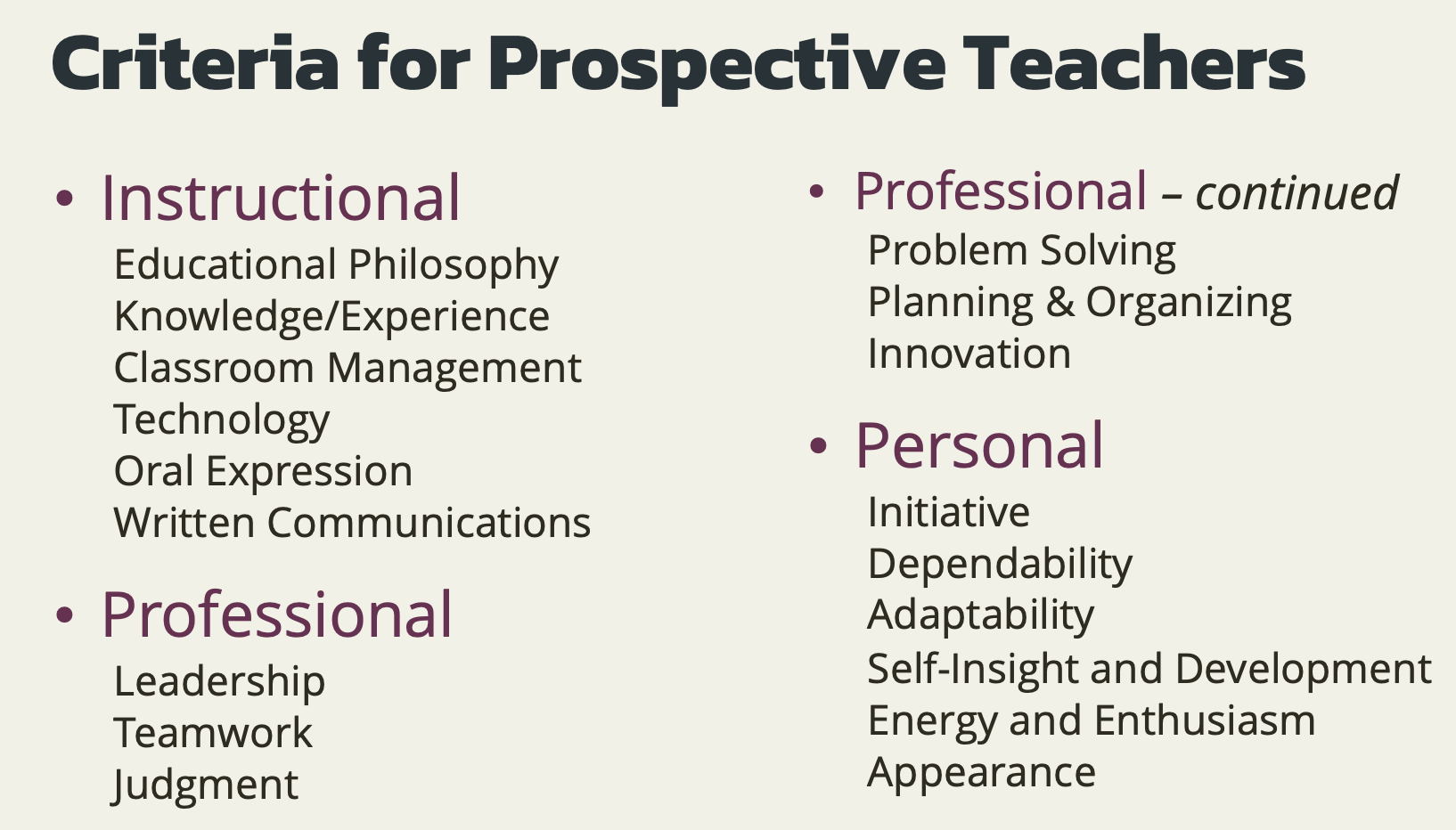
  7. Every week from now through the job search process, add new stories to your collection. Scan your (e-)portfolio for more ideas. These are the criteria used by my former school district (from where I retired) to evaluative prospective candidates. Ideally, you should have anecdotes that cover each area:

My Favorite Rubric

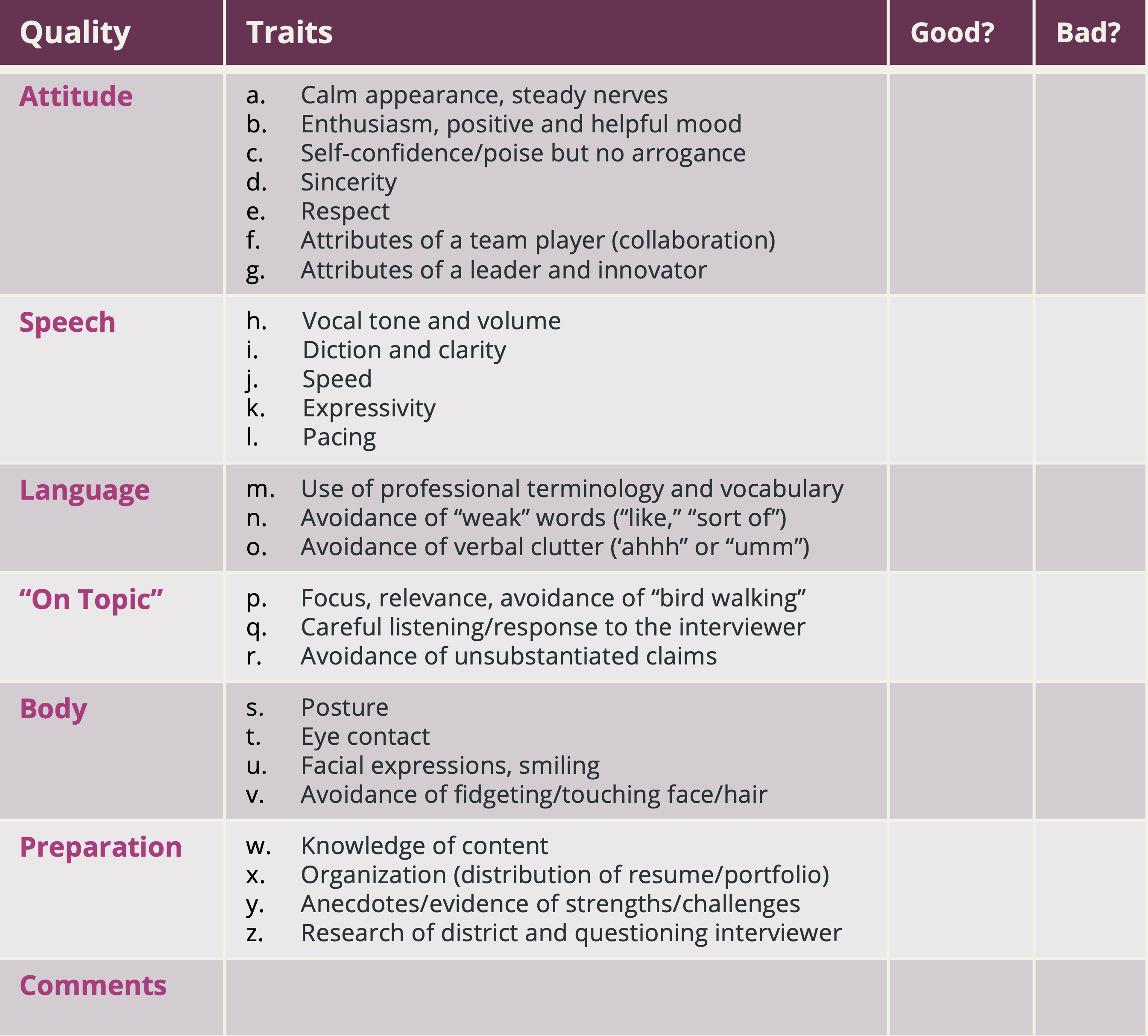
At some point, you are going to have to “face the music” and practice swapping these stories with family members, friends, and/or fellow job seeking students. We’re all in this together! At your next college chapter of NAfME, music education methods class, or student teachers’ wrap-up meeting, try to schedule some “down time” to appoint each other to serve as interviewers/ees. At first, it may not be easy. Using randomly selected questions from the Ultimate Interview Primer above (pull numbers out of a hat), tell a story or two to exemplify your past history, competencies, and professional traits. Your “buddy” (who will be on the hot seat next) could evaluate your performance using the following rubric. Apply the Oreo cookie format (something good first/top cookie, something needing improvement/cream in the center, and end with something positive/bottom cookie) to avoid crushing anyone’s ego. Consider recording your mock interviews for future assessment. Here is a copy of the form with sample questions.

More Odds and Ends on Storytelling

These outside sources focus on the essential skill of storytelling, the whole point of the above exercises. After reading these, you may be able to assemble more meaningful anecdotes that truly model your positive qualities and experiences by telling “short stories” – and “actions do speak louder than words!”

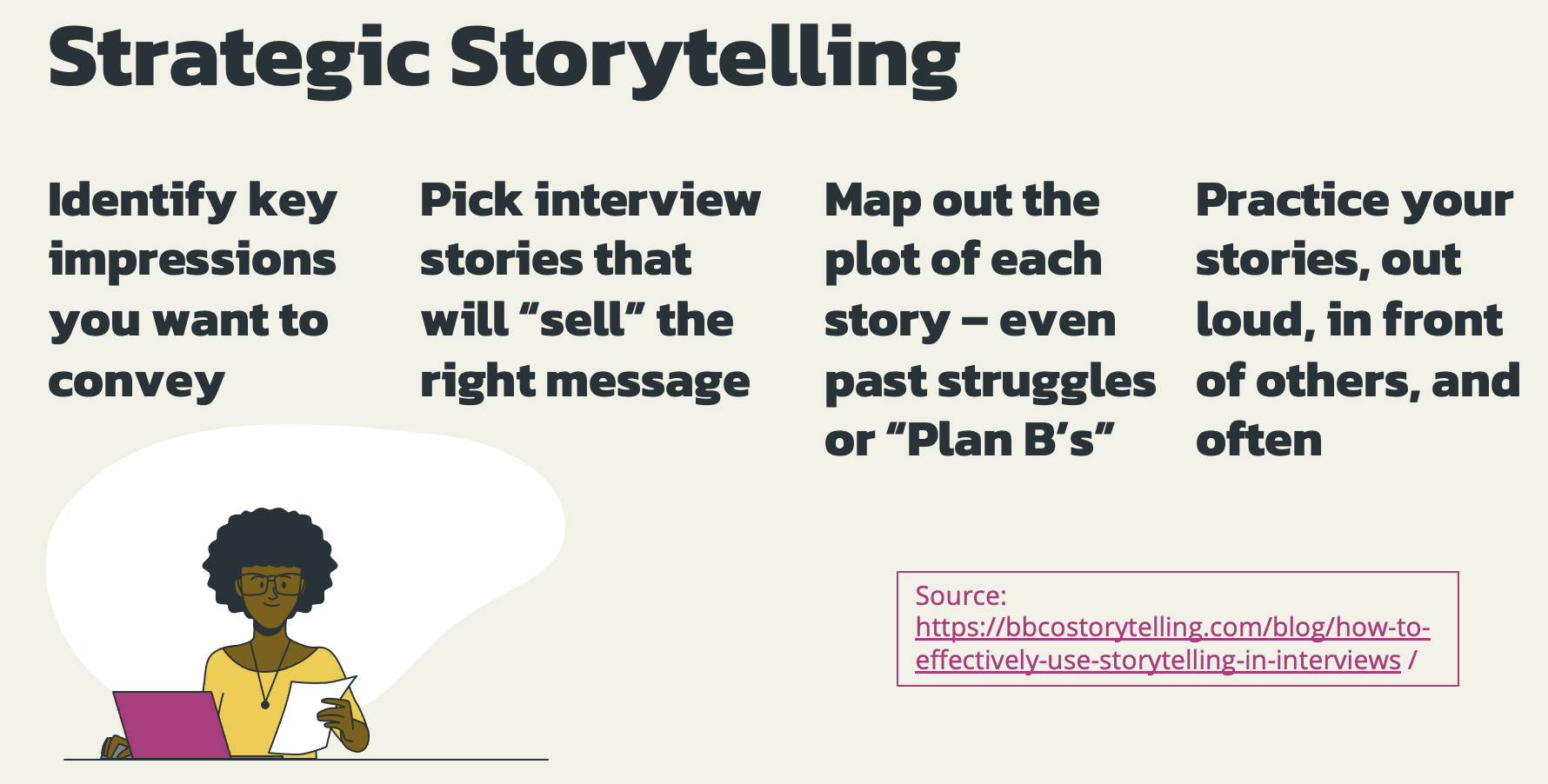
We found this excellent website “How to Effectively Use Storytelling in Interviews” by Bill Baker on “strategic storytelling” that is worth your perusal. It sums up everything above nicely.

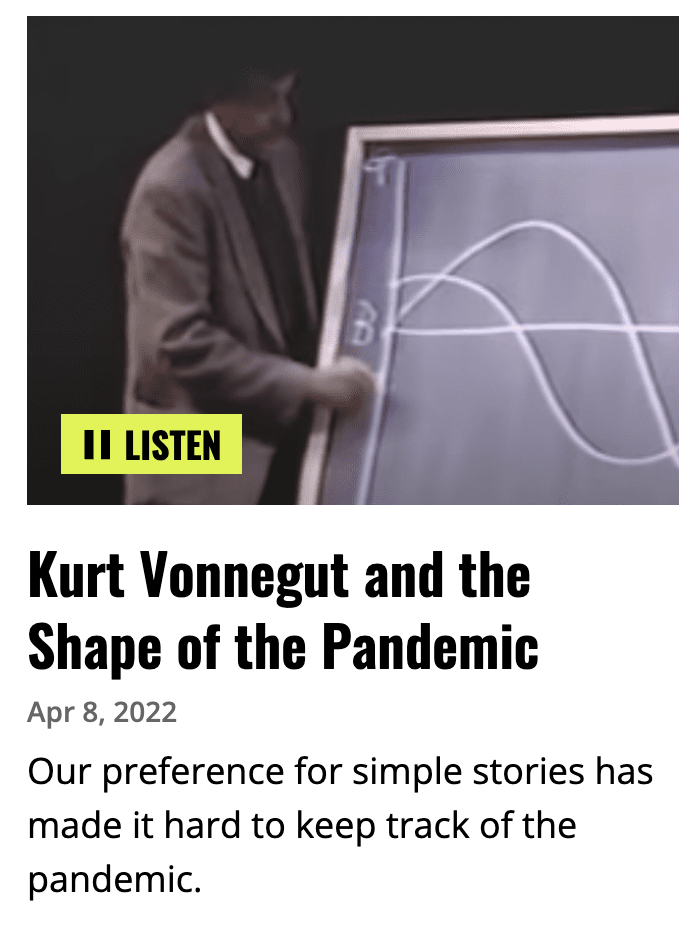
On the Media from NYC Public Radio offered an interesting radio show, coincidentally aired during my 5.5 hour drive back from the 2022 PMEA Annual Conference in Kalahari/Poconos. They dove into the geometric shapes of stories… and what they have to do with reporting on the pandemic AND perhaps (my perspective) considerations for telling better narratives (including ups and downs) at job interviews: https://www.wnycstudios.org/podcasts/otm/segments/kurt-vonnegut-and-shape-pandemic2

Even the popular website indeed advises us on interview stories: “10 Storytelling Interview Questions With Sample Answers.” This STAR approach is discussed with specific examples of questions and anecdotes:

  • Situation: Describe a situation you experienced in the workplace relevant to the question.
  • Task: Mention a task you had to complete in this situation.
  • Action: Summarize the actions you took to complete the task.
  • Result: Discuss the outcome of your actions.

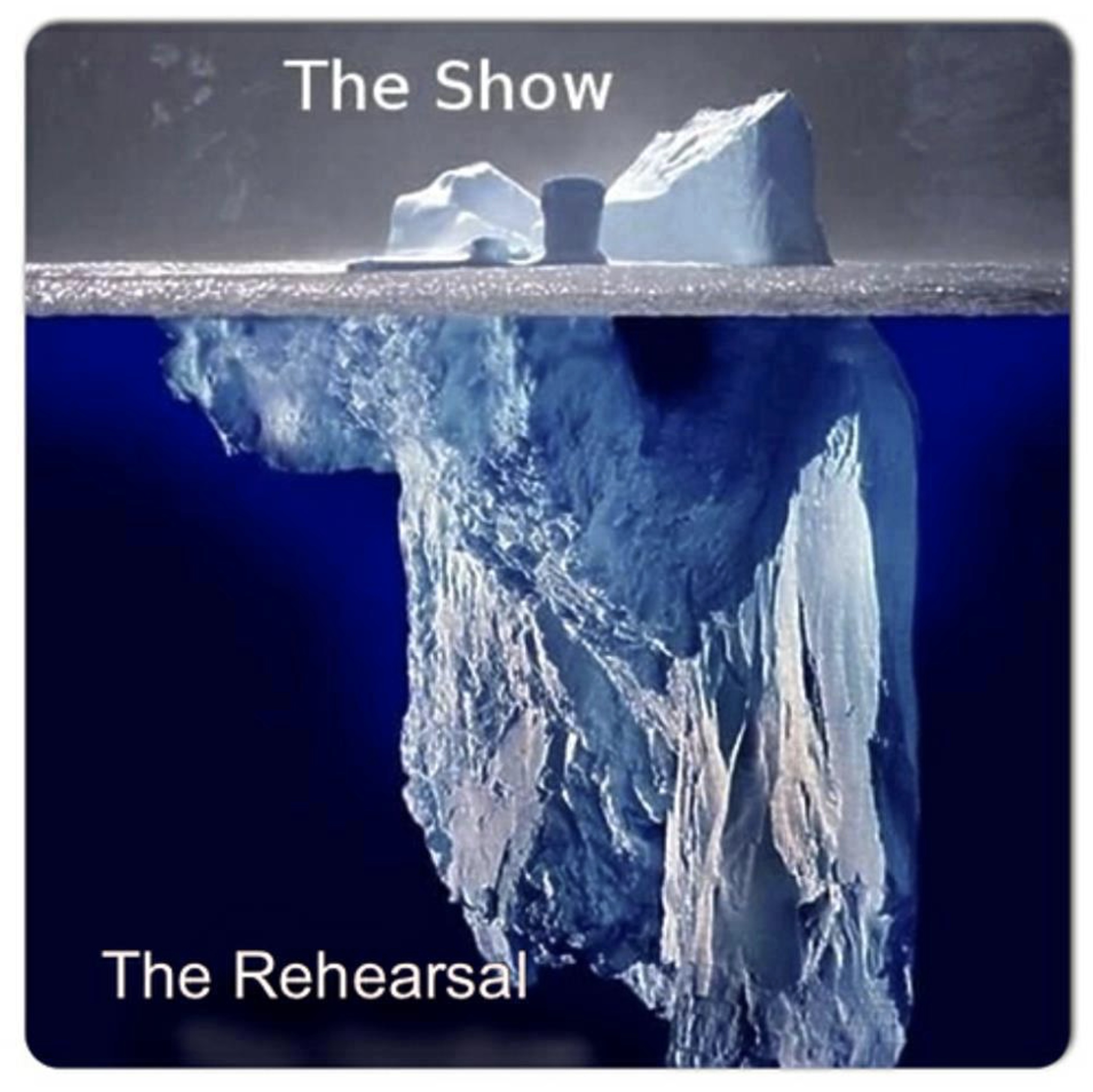
Finally, here are a handful of YouTube videos… just the tip of the iceberg. Remember that iceberg metaphor? The part that you see above the ocean is the performance, the show, the interview, the product… while the mandatory practice, rehearsals, preparations, and planning take up much more space and are almost never seen. ARE YOU READY TO TELL YOUR STORIES?

Enjoy! Now the ball is in YOUR court!

PKF

© 2022 Paul K. Fox

COVID-19 vs. New Year’s Resolutions?

How to “Make a Difference” in 2021

Of those who make a New Year’s resolution, after 1 week 75% are still successful in keeping it. After two weeks, the number drops to 71%. After 1 month, the number drops again to 64%. And after 6 months, 46% of people who make a resolution are still successful in keeping it. In comparison, of those people who have similar goals but do not set a resolution, only 4% are still successful after 6 months.

New Year’s Resolutions Statistics (Updated 2020) from Discover Happy Habits

Although we may be seeing the first signs of “the light at the end of the tunnel” with the distribution of the vaccines, coronavirus still has its grip on us… off-the-chart infection rates, record-breaking hospital admissions, schedule disruptions, restrictions on restaurants and small businesses, mandatory mask wearing, social distancing, precautionary self-isolation, etc. By all accounts, mindfulness, self-care, patience, and a positive outlook for the future are keys to making personal and professional goals as the pandemic rages on…

This article spotlights an age-old but usually neglected perspective – “think first” before you formulate any New Year’s Resolutions! For this to really work, you need a little research and reflection… and then COMMIT TO YOUR GOALS! Read on!

Start Out by Being S.M.A.R.T.

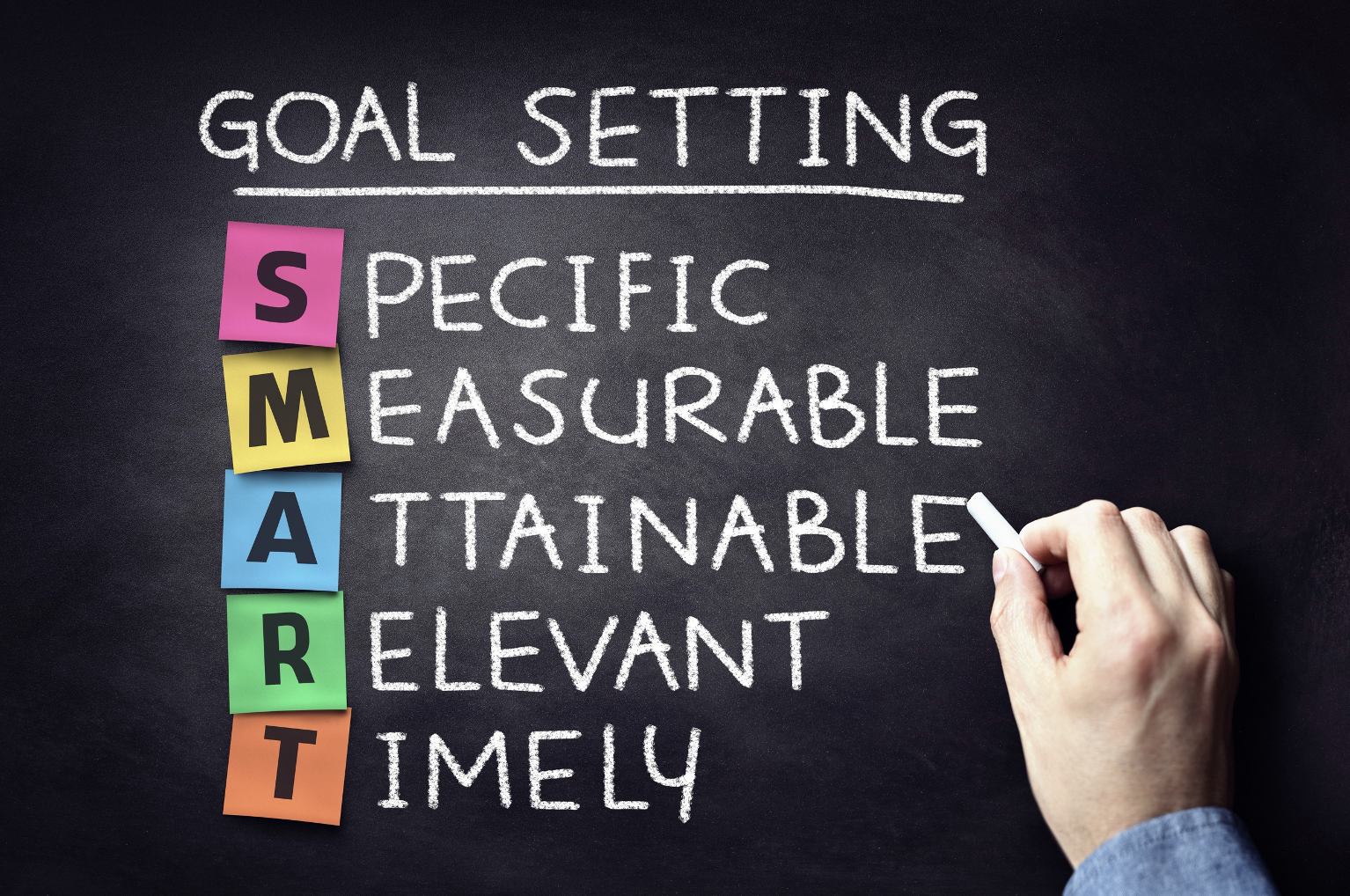
Admittedly, 44+ years in teaching has affected how I view goal-setting – “make it intention!” Adopt the often published S.M.A.R.T. approach to any plan. Make goals that are…

  • Specific
  • Measurable
  • Achievable
  • Relevant
  • Time-Bound

What goals do you want to satisfy in 2021? “Keep it simple” and S.M.A.R.T. Like lesson plans, write your resolution(s) in behavioral terms… “by the end of this class, the students will…” For example, the easiest way to limit the intake of fried food in your diet is to write on a post-it note, “I will not eat anything fried this week” and place it on your bathroom mirror.

A lot of these resolutions fail because they’re not the right resolutions. And a resolution may be wrong for one of three main reasons: 1) It’s a resolution created based on what someone else (or society) is telling you to change. 2) It’s too vague. 3) You don’t have a realistic plan for achieving your resolution.

How to Make and Keep a New Year’s Resolution by Jen A. Miller (New York Times)

Review the Usual Ones…

According to Brad Zomick in his GoSkills blog, these are the most common New Year’s Resolutions:

  • Exercise more
  • Lose weight
  • Get organized
  • Learn a new skill or hobby 
  • Live life to the fullest
  • Save more money / spend less money
  • Quit smoking
  • Spend more time with family and friends
  • Travel more
  • Read more

Just as important to WHAT you choose is HOW you approach it. In his article, Zomick provides a “how-to” roadmap to success, if you follow his steps:

  1. Mentally prepare for change.
  2. Set a goal that motivates you.
  3. Limit resolutions to a manageable amount.
  4. Be specific.
  5. Break up big goals into smaller goals.
  6. Write down your goals.
  7. Share your resolutions with others.
  8. Automate when possible.
  9. Review your resolution regularly.
  10. If you fall off track, get back on quick.

Do these recommendations sound familiar? They should if you are a disciple of the aforementioned S.M.A.R.T plan. Also, the concept of “writing down your goals” should ring a bell if you recall the supposed 1979 Harvard Business School MBA Study on Goal Setting (urban legend?) reviewed by Wanderlust Worker here:

Have you set written goals and created a plan for their attainment? Prior to graduation, it was determined that 84% of the entire class had set no goals at all. 13% of the class had set written goals but had no concrete plans. 3% of the class had both written goals and concrete plans. The results? Well, you’ve likely somewhat guessed it. 10 years later, the 13% of the class that had set written goals but had not created plans, were making twice as much money as the 84% of the class that had set no goals at all. However, the apparent kicker is that the 3% of the class that had both written goals and a plan, were making ten times as much as the rest of the 97% of the class. 

The Harvard MBA Study on Goal Setting from Wanderlust Worker

Whether the Harvard (or Yale) study is fact or faction is probably irrelevant. The point here is that to improve the odds for accomplishing our goals, we need to take the time to write them down, announce our intentions (your spouse or significant-other), and define the details with “action plans.”

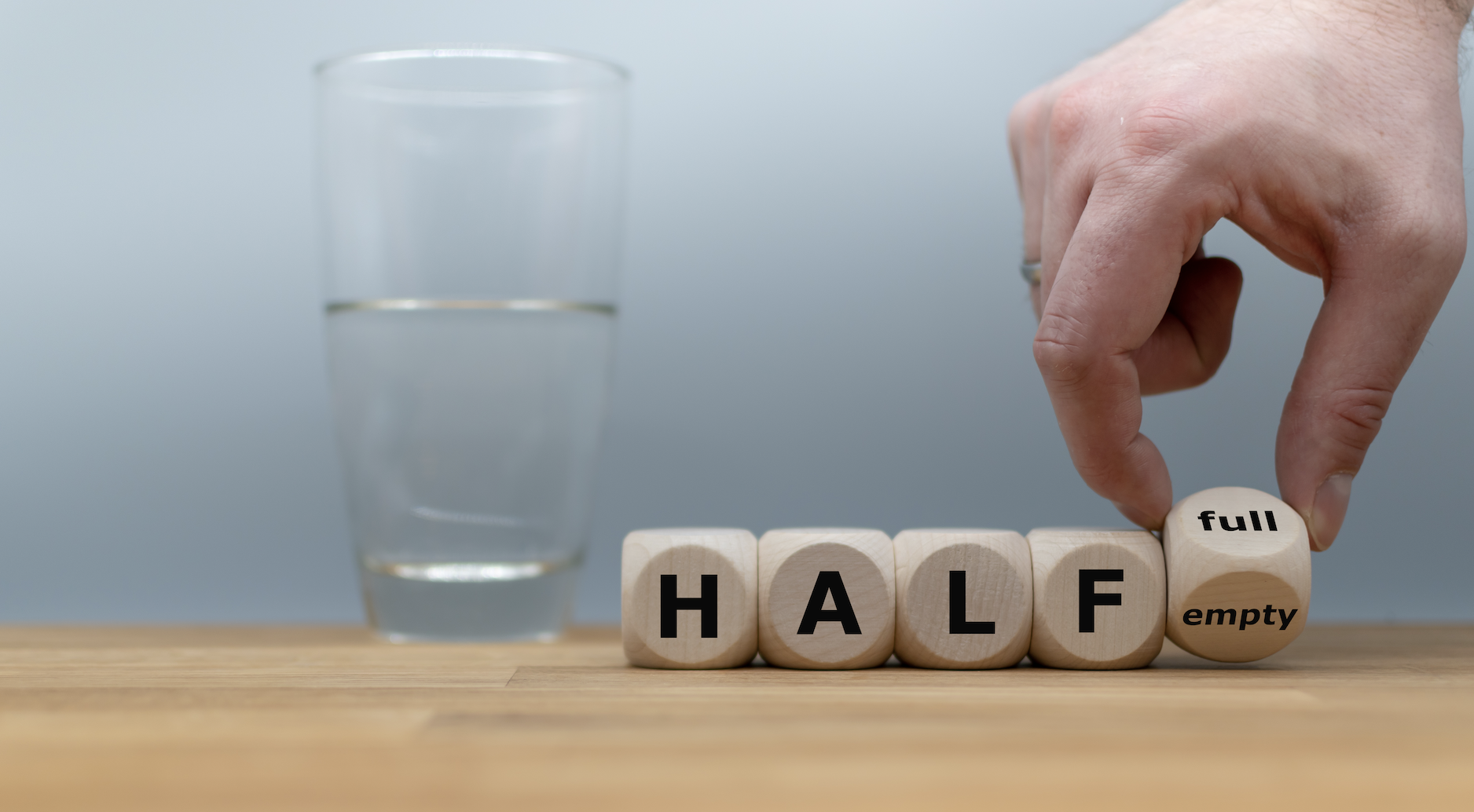
The Glass Is Half Full

Have you heard the joke about the identical twins, one an optimist and the other a pessimist?

A psychiatrist has one son who is a total pessimist, and another who is a complete optimist.  He decides on an experiment.  For Christmas he fills the pessimist’s room with hundreds of beautifully wrapped gifts, and dumps a heap of horse manure in the optimist’s room. On Christmas morning he sees the pessimist boy sitting motionless at the center of his room, eyeing his gifts suspiciously. But over in the optimist’s room he sees his boy filled with joy, digging happily in the odorous pile. He asks the kid what he’s doing and he answers:  “Daddy, with all this horse dung, there’s gotta be a pony in here someplace.”

The Center for Optimism

It’s time to cheer-up, look to the future, and embrace HOPE for tomorrow!

Are you kidding? You want me to “put on a happy face” after all the pandemic has done? YES!

One remedy for “losing the blue funk” is to reject all “blame and complain” speech or behavior! It is so easy to get caught up in negativity… family adversity or “challenges” of a medical or employment nature, or simply being forced to remain distant from each other, daily news media reports about COVID-19, political dissension and the polarization of viewpoints, angry rants on social media, etc. literally fanning the flames of an unprecedented perpetual global “bad mood!” I even found myself in the throes of periodic bouts of public distemper, griping on Facebook about a Dial for Men product that made my hair dry (my FB friends responded, “Thanks for the heads-up” – ha, ha!), or grumbling about the roll-out of new revisions of WordPress and Constant Contact program editors that are not backwards-compatible nor fail to support the “look and feel” of previous versions. The effect of exposure to or expression of all of these “B” words (badmouth, beef, bellyache, bemoan, bicker, b*tch) is to make you even more bitter… not fostering the “can-do’s” for taking steps towards helping others, self-renewal, or an optimistic attitude.

Do you find your emotions swinging rapidly from sadness to elation to anger or fear during the lockdown? If your mood is all over the place at the moment, that’s completely understandable. This is not a normal situation. It’s a hugely disruptive, sudden change to our daily lives that nobody was prepared for. It isn’t surprising that many people are experiencing unpredictable moods. “It is going to affect everyone’s mood in many, and sometimes unexpected, ways,” reveals psychotherapist Mark Bailey. “Whether it’s worry, anxiety, feeling overwhelmed, discombobulated, angry and even perhaps unexpected emotions like relief as we accept some of our current situation, it’s useful to know that as we experience one emotion it doesn’t nullify or negate another.”

COVID-19: How to Manage Mood Swings... by Natalie Healey

Get Inspired by Good Role Models and “Positive Gurus”

Many music educators attend the keynote addresses at state MEA/NAfME conferences to “recharge their batteries.” A few of my favorite “master motivators” are Tim Lautzenheiser, Peter Boonshaft, and Fran Kick. As a sample, check out this video (sponsored by MusicFirst) that featured “Dr. Tim” – One Person Can Make a Difference!

Who can have a positive influence on us or serve as a “catalyst for change” to help us realize our resolutions? Practically anyone! I bumped into this provocative article by Professor Dr Ger Graus: Good Role Models – How Has COVID-19 Changed Pupils’ Career Aspirations? He relates these criteria “to elevate a person or profession to role model status” (at least in the eyes of a child) – possibly an excellent framework for creating your plan.

  1. Demonstrate passion for what you do and have the capacity to infect others with it.
  2. Show a clear set of values and live them in their world. Lead by example. Children admire people who act in ways that support their beliefs. It helps them understand how their own values are part of who they are and how they might seek fulfilling roles as adults.
  3. Demonstrate commitment to community. Be others-focused as opposed to self-focused. Freely give your time and talents to benefit people.
  4. Show selflessness and acceptance of others who are different to you. Be fair.
  5. Demonstrate the ability to overcome obstacles. Young people admire those who show them that success is possible.

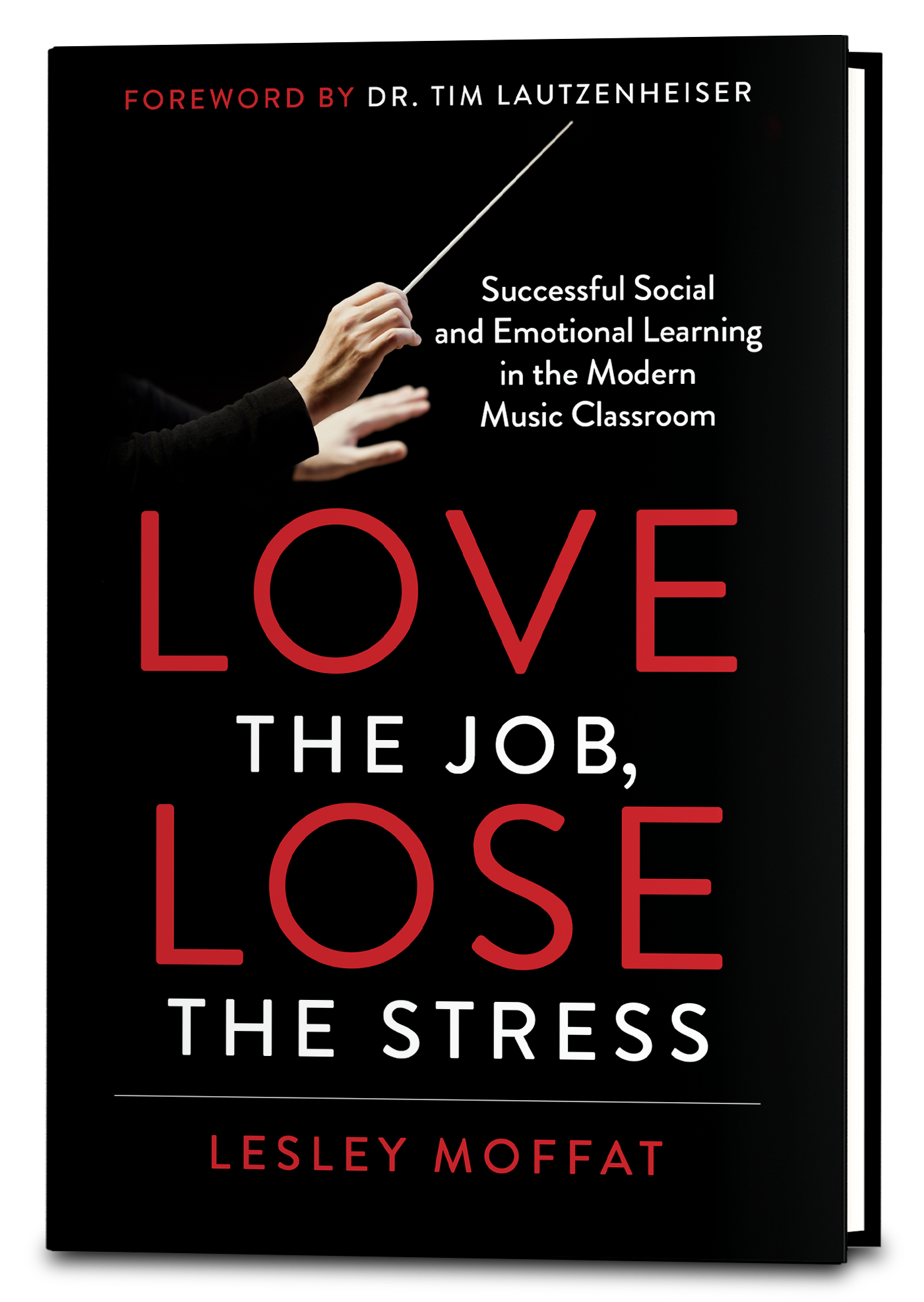
Someone who has recently become inspirational to me is the wonderfully uplifting Lesley Moffat, probably an expert on the search for “mindfulness” in personal life and even during her band warmups. In my opinion, her transformative stories provide the blueprint for happiness and wellbeing! She now has two published books (you need to read both) – I Love My Job But It’s Killing Me, and Love the Job, Lose the Stress, and if you are still teaching music full-time, you need to peruse her website: https://mpowerededucator.com/. For a good laugh, view her recent “rap” – Moffat’s HamJam for Band – for which she performed for her music students.

Apply the concepts of social and emotional learning (SEL), EMPATHY, and “corona kindness” to yourself and loved-ones! Seek out advice from a few of these experts: Manju Durairaj, Scott N. Edgar, Bob Morrison, and Edward Varner.

Social and emotional learning (SEL) is the process through which children and adults acquire and effectively apply the knowledge, attitudes, and skills necessary to understand and manage emotions, set and achieve positive goals, feel and show empathy for others, establish and maintain positive relationships, and make responsible decisions. The key components of SEL are self-awareness, social awareness, responsible decision-making, self-management, and relationship skills.

Finding Sanctuary – Social and Emotional Learning and Visual and Performing Arts by Edward Varner

Sum it Up – Fox’s “Top-Ten Tips”

  1. Renew your efforts to intentionally reach-out, connect, and engage with people, albeit virtually for now.
  2. Focus on the things you can control.
  3. Remind yourself about the good things in your life and your personal resilience.
  4. Start small and change one behavior at a time.
  5. Don’t beat yourself up when things get a little rocky
  6. Don’t be afraid to ask for help.
  7. Seek creative new ways to reduce your stress.
  8. Exercise, meditate, go outside, and plan better meals.
  9. Share your experiences with family and friends.
  10. Implement one or two S.M.A.R.T. goals and embrace the “spirit” of self-improvement.

It’s easy to become an idealist when the new year rolls around, but it’s important to remember that New Year’s resolutions are ultimately a tool to help you grow into the person you want to be. Take some time this New Year’s Eve to really consider who you want to be in the future, and then employ S.M.A.R.T. goals to help you fulfill your vision. Making a resolution to live your life with purpose and passion is a beautiful and exciting thing, not something to dread.

How to Keep Your New Year’s Resolutions by Using S.M.A.R.T. Goals by Mary McCoy

PKF

© 2020 Paul K. Fox

Resources

Credits:

iStock.com photos (in order): “2021” #1280953227 by phototechno, “SMART Goals” #1134658098 by BrianAJackson, “New Years Goals List 2021” #1266648329 by Olena Sakhnenko, “Half Empty to Half Full” #1128990168 by Fokusiert, “Lead by Example” #849367144 by Michail_Petrov-96, and “2021 Happy New Year” #1273431483 by Weedezign

“Happy Face” VectorStock.com/467693 

Burned Out or Bummed Out?

More on Teacher Self-Care: Diagnosis and Remediation

This is Part VI in a series of articles on educator health and wellness, following “Stressed Out!” and “Teacher Self-Care During the Pandemic.”

burnout-90345_1920_geralt

Do you recognize these signs of burnout experienced  by yourself, a coworker, neighbor, or someone you love?

  • Physical: tired, lowered immunity, illnesses, aches and pains, loss of appetite or sleep
  • Emotional: sense of self-doubt, failure, helplessness, loneliness, cynicism, loss of satisfaction/motivation
  • Behavioral: withdrawal, isolation, skipping work, procrastination, frustration, overuse of food, drugs, alcohol

By the time it gets to that third bullet, probably everyone would be aware of the trouble.

You may be on the road to burnout if:

  • Every day is a bad day.
  • Caring about your work or home life seems like a total waste of energy.
  • You’re exhausted all the time.
  • The majority of your day is spent on tasks you find either mind-numbingly dull or overwhelming.
  • You feel like nothing you do makes a difference or is appreciated.

Burnout Prevention and Recovery by Melinda Smith, M.A., Jeanne Segal, Ph.D., and Lawrence Robinson


star-5031540_1920_geralt

Gregory S. Perkins and Angela M. Guerriero, licensed Music Therapists from the Tempo! Music Therapy Services, provided much more detailed definitions of self-care in a session at the PMEA 2020 Virtual Summer Conference. (PMEA members may continue to register and view a video of this workshop until mid-September 2020.) You should know and be on the lookout for these terms:

The United Nations defines self-care as the actions that individuals take in order to develop, protect, maintain, and improve their own health and well being. Self-care involves a personal investment in maintaining physical, psychological and spiritual health, and pursuing a fulfilling, well-rounded life.

Brownout: “A practitioner essentially gives up or performs in a perfunctory manner when confronted with too much stress and too little gratification.” Guy, J. & Norcross, J. (2007). Leaving it at the office: a guide to psychotherapist self-care. New York, NY: Guilford Publications, Inc.

Burnout: “A syndrome of physical exhaustion including a negative self-concept, negative job attitude, and loss of concern and feelings.” Keidel, G. (2002). Burnout and compassion fatigue among hospice caregivers. American Journal of Hospice and Palliative Care, 19(3), 200-205

Recognizing the Need: Self-Care for Music Educators by Gregory S. Perkins, MT-BC, and Angela M. Guerriero, PhD, MT-BC

The Mayo Clinic offers numerous symptoms of “burnout.” How many of these have you “felt” too or noticed in someone else’s demeanor or behavior?

  1. Disillusionment over the job
  2. Cynicism at work
  3. Impatience with co-workers, administrators, and students
  4. Lack of satisfaction in accomplishments
  5. Dragging yourself to work and trouble getting started once you’re there
  6. Lack of energy
  7. Unexplained aches/pains
  8. Self-medicating with food, drugs, or alcohol
  9. Changes in sleep/eating patterns


despair-1235582_1920_geralt

Education Week adds many more danger signs. Are any of these striking close to home?

Exhaustion. This is a fatigue so deep that there’s no way to “turn it off,” no matter how badly you want to. It’s deep in your bones. The kind of tired where you just want to ooze into your bed and disconnect from life.

Extreme graveness. Realizing you go hours without smiling or laughing, or days without a belly laugh.

Anxiety. The constant, nagging feeling that you can and should do more, while simultaneously realizing you need to unplug and spend more time with your family. But there are so many things to do.

Being overwhelmed. Questioning how they can possibly add one more task, expectation, or mandate to your plate. Compromising your values of excellence just so you can check-off 15 more boxes to stay in compliance. All the while knowing it still won’t be enough.

Seeking. Losing your creativity, imagination, patience, and enthusiasm for daily challenges. Craving reflection time and productive collaboration rather than group complaining.

Isolation. Wanting to head for the deepest, darkest cave where no one will see your vulnerability. A place where your limits are unseen and unquestioned and all is quiet.

— Six Signs of and Solutions for Teacher Burnout by Wendi Pillars 


autonomy-298474_1920_geralt

What about the causes of burnout or brownout? Where should we place the blame?

According to Paul Murphy in his book, Exhausted – Why Teachers Are So Tired and What They Can Do About It, the stress of a few problems may stand out as leading culprits at your place of employment:

  1. Lack of autonomy
  2. Dysfunctional work environment
  3. Inadequate social support
  4. Extremes of activity
  5. Poor work/life balance

But, you have no one else but yourself to blame! You must take responsibility for your own health and welfare. Most of the sources in this blog-post (including a few mentioned in past articles from this “care” category) suggest solutions to better self-care, many of which offer answers to address the issue and CAN BE DONE RIGHT NOW.

Here are a few more self-care tips from PsychCentral:

  • Create a “no” list, with things you know you don’t like or you no longer want to do. Examples might include: Not checking emails at night, not attending gatherings you don’t like, not answering your phone during lunch/dinner.
  • Promote a nutritious, healthy diet.
  • Get enough sleep. Adults usually need 7-8 hours of sleep each night.
  • Exercise. In contrast to what many people think, exercise is as good for our emotional health as it is for our physical health. It increases serotonin levels, leading to improved mood and energy. In line with the self-care conditions, what’s important is that you choose a form of exercise that you like!
  • Follow-up with medical care. It is not unusual to put off checkups or visits to the doctor.
  • Use relaxation exercises and/or practice meditation. You can do these exercises at any time of the day.
  • Spend enough time with your loved ones.
  • Do at least one relaxing activity every day, whether it’s taking a walk or spending 30 minutes unwinding.
  • Do at least one pleasurable activity every day; from going to the cinema, to cooking or meeting with friends.
  • Look for opportunities to laugh!

What Self-Care Is and What It Isn’t by Raphailia Michael, MA


successful-2668386_1920_geralt

We should also review “Five Tips for Avoiding Teacher Burnout” by Mary Beth Hertz, an Edutopia blog (read the entire article for greater depth and clarity):

  1. Maintain your “other” life.
  2. Be a stakeholder when changes are made.
  3. Find lessons and opportunities in everything.
  4. Nurture peer connections.
  5. Keep it light.

Edutopia, from the George Lucas Educational Foundation, is a wonderful resource. Most recently, three valuable “streams” of articles have been released on coping with the preparations and stress in the reopening of schools for the 2020-2021 year:

I also recommend this blog-post of the Regional Education Laboratory Program which describes “teacher well being” as “the reaction to the individual and collective physical, environmental, and social events that shape how educators respond to their students and colleagues.” They discuss how three prominent human behavior frameworks— Maslow’s Hierarchy of Needs, the Five Stages of Grief and Loss, and the Concerns-Based Adoption Model (CBAM)— can be used to address the challenges that teachers face when adapting to change and identify approaches to support teacher well being.


help-4955863_1920_geralt

In addition, the following perspectives come from a variety of self-proclaimed practitioners:

“One of Leonardo da Vinci’s seven essential elements of genius is known as Sfumato, Italian for ‘smoked,’ or ‘going up in smoke.’ This principle is the ability to embrace uncertainty, the unknown, and the unknowable. In my interpretation, it’s also an ability to ‘let go’ of everything that’s left undone when you know you’ve done your best. Embrace Sfumato.”  — Wendy Pillars

“Self-care needs to be something you actively plan, rather than something that just happens. It is an active choice and you must treat it as such.” — Raphailia Michael

“Remember that example about putting on your own oxygen mask before helping others? This is where that analogy really comes in to play. It’s time for you to take a good hard look at your self-care versus your care for others and decide if you are in a place where you have a good balance or if you need to make this a priority… Why is self-care… such a critical component of your physical and mental health? Because in order for you to function at your peak, you need to meet the needs your body and mind have for rejuvenation, relaxation, and rebirth. If you are constantly putting out efforts toward other people and events but never taking time to refuel yourself, then you will run out of steam and it will manifest in your body as an illness, weight gain, acne, joint pain – you know the drill – again.” — Lesley Moffat in I Love My Job But It’s Killing Me

“It’s estimated that teachers make about 1,500 decisions every school day. When you combine those decisions with all the necessary self-regulation involved with teaching kids, it’s no wonder our willpower is gone by five o’clock. We are exhausted.” — Paul Murphy

The term “unprecedented times” has become a hallmark for describing the context in which leaders must respond to changing needs during the COVID-19 pandemic. Effective responses in education are dependent upon teachers as the front-line workers in classrooms, so it’s essential that administrators take care of teachers. When they do so, they also take care of students.

When teachers don’t have the resources they need, and especially when sustained job demands are high, teachers experience chronic stress — and eventually burnout.

Teachers who are burned out are less effective as teachers, have less supportive relationships with students and, in turn, the students they teach have lower academic and social outcomes.

How to Prevent Teacher Burnout During the Coronavirus Pandemic by Laura Sokal, Jeff Babb, and Leslie Eblie Trudel


man-4957154_1920_geralt

We should all read the above blog-post from The Conversation, which offers these conclusions based on a national Canadian education survey conducted in May 2020:

  1. Teachers’ concern for vulnerable students is one of the most stressful aspects of their jobs right now.
  2. Teachers are seeing magnified inequities.
  3. When giving teachers initial resources, less is more.
  4. Perceived support matters to teachers’ resiliency.
  5. Teachers are concerned about effectively engaging students through remote learning, and professional collaboration can help.

Finally, we’ll end this epistle on “things to do to avoid burnout” with a timely and practical article from Carlee Adams found on the We Are Teachers site: 15 Smart Ways to Prevent Teacher Burnout That Really Work. Repeating many of the suggestions above, these “find these” remedies resonated with me:

  • “Find someone you can be vulnerable with…”
  • “When you feel hopeless, find perspective…”
  • “Find your own voice and allow it to change over time…”
  • “Find your people; they get you!”

The bottom line? If you “feel” consistent periods of burnout, brownout, or being bummed out in your career as negative influences to your “calling” as a teacher, you cannot sit back and let things continue “as is!” Most professionals cannot self-diagnose this problem (but, perhaps a family member may clue you in!). If you notice that you are continually having trouble sleeping, difficulty with relationships or communicating your thoughts to others, or find yourself feeling significantly depressed or lethargic, it may be time to visit your health care professional.

PKF


Photo credits (in order) from Pixabay.com by Gerd Altmann


© 2020 Paul K. Fox

Sleep and Retirement

Are you getting enough (or too much) rest?

Saying goodbye to work life can mean a change in your sleep schedule. Learn how to sleep well during this new stage of life.

“Sleep, and the Workplace” at Sleep.org

cartoon what time do you want to get up

Did you know there really exists a National Sleep Foundation? Now that we are retired from full-time music teaching and the day-to-day stress of managing classes and a busy music program, do you think we need it? Can’t we sit back and enjoy “living the life of Riley” without experiencing any work-related tension or fears for the future?

Maybe not! What is that old Chinese proverb? “The gem cannot be polished without friction, nor man perfected without trials.” After all, as humans, we all seek new and unique challenges to grow (and that brings on stress), and sleep is a complicated issue!

But, no worries! Several someones have “our back” (or should I say “our pillow!”). Here is a collection of insightful resources on promoting better sleep habits and relaxation techniques from a variety of research-based and/or medical authorities.

bed-2932284_1280_naobim

I didn’t set an alarm for four months. I quickly learned that one of my favorite times of the day was 30 minutes after I first woke up. For the first time in decades, there wasn’t a rush to get out of bed. I’d let myself fade in and out of sleep several times, savoring the fact that I could let myself fall back into the hazy sleep rather – into the shower to wake myself for the morning drive. I’d gotten up at 5:30 AM for years the found that about 7:15 AM was a natural time for my body to wake up. The dogs seem to enjoy this new routine as well. We have four dogs, all of whom compete for space on the bed. Which ever one happen to be near my hand would nozzle under my fingers when they felt me start to wake up, being content to enjoy our laziness together as a new way to start our new days.

The Keys to a Successful Retirement by Fritz Gilbert

The perks of retirement are many, including the “freedom” to do new things and spend more time with family and friends as well as on travel, personal music-making, hobbies, babysitting loved-ones (or care-giving our elderly relatives), volunteering, and other projects or pursuits of “self-reinvention” suggested by “retiree gurus” like Dave Hughes, Robin Ryan, Kenneth Schultz, Hyrum Smith, and Ernie Zelinski.

Another benefit of post-employment? MORE sleep! According to Sleep.org, “people sleep approximately 20 minutes longer at night after retirement. Those who skimped on sleep the most during their working years see the biggest gains, increasing their nightly sessions by around 45 minutes compared to pre-retirement.”

The National Sleep Foundation website also offers articles on the “science of sleep.”

  • Sleep Cycles – Stages of Sleep
  • Circadian Rhythms
  • What Is Microsleep?
  • How to Fall Asleep Fast
  • What is the Sleep-Wake Cycle?

as well as mattress reviews and life style choices that may affect our sleep.

newspaper-149623_1280


The “serious stuff” for serious sleep issues

Experts do believe that “normal aging” brings on some changes to sleep… Basically, older adults tend to get sleepy earlier in the evening, and tend to sleep less deeply than when they were younger.

So it’s probably not realistic to expect that as you get older, you’ll sleep as long or as soundly as when you were younger.

That said, although aging by itself does change sleep, it’s also quite common for older adults to develop health problems that can cause sleep disturbances. So when your older relatives say they aren’t sleeping well, you’ll want to help them check for these. Figuring out what’s going on is always the first step in being able to improve things.

Better Health While Aging blogs by Dr. Leslie Kernisan here and here

The definitions, causes, and treatments of sleep disruption are described in great detail by Leslie Kernisan, M.D., authoring “5 Top Causes of Sleep Problems in Aging and Proven Ways to Treat Insomnia” outlined here:

  1. Underlying medical problems
  2. Sleep-related breathing disorders (snoring, sleep apnea, etc.)
  3. Restless leg syndrome (RLS)
  4. Periodic limb movements (PLM)
  5. Insomnia

Painful nighttime leg cramps may also interrupt sleep, as referenced by the American Family Physician, Mayo Clinic and WebMD.

Dr. Kernisan advises us against using sleeping pills or other sedatives. She prefers the following remedies which have shown great promise, backed up by published research:

  1. Cognitive behavioral therapy: New York Times and Mayo Clinic
  2. Brief behavioral treatment: Journal of Clinical Sleep Medicine and National Institute of Health
  3. Mindfulness meditation: Journal of the American Medical Association and Mindfulness Awareness Research Center at UCLA
  4. Exercise: Science Direct, National Institute of Health, and New York Times

The Division of Sleep Medicine at the Harvard Medical School also offers these “Twelve Simple Tips to Improve Your Sleep.”

  1. Avoid caffeine, alcohol, nicotine, and other chemicals that interfere with sleep.
  2. Turn your bedroom into a sleep-inducing environment.
  3. Establish a soothing pre-sleep routine.
  4. Go to sleep when you are truly tired.
  5. Don’t be a night-time clock-watcher.
  6. Use light to your advantage.
  7. Keep your internal clock set with a consistent sleep schedule.
  8. Nap early, or not at all.
  9. Lighten up on evening meals.
  10. Balance fluid intake.
  11. Exercise early.
  12. Follow-through.

Another “sleep checklist” worth a quick examination is available from WebMD.

cat-30689_1280


Should we take cat naps? The jury is out.

At first glance, the National Sleep Foundation basically says NO! Napping during the day may “throw your body clock off and keep you awake at night.”

However, the truth may be more about how long to doze off during the daylight hours…

You may think that taking a catnap will make you feel more tired than skipping it altogether, but that’s not necessarily true.

The key to waking up refreshed from a nap is all about timing. Just 20 minutes is all you need to get the benefits of napping, such as improved alertness, enhanced performance, and a better mood. Naps of that length keep you in the lightest stage of non-REM sleep, making it easier for you to get up and go after your snooze session. Be sure to set an alarm so you don’t snooze for too long and wake up all groggy.

Nap for 30 to 60 minutes and you’ll hit the deeper stages of sleep, where your brain waves slow down, making you feel groggy (as if you have a sleep hangover) when you wake up…

It might not be worth it to nap at all if you’re going to nap for this amount of time because you’ll likely come out of your shuteye feeling less alert than before.

“How Long Is an Ideal Nap” at Sleep.org

The benefits and drawbacks of napping are further examined by the Mayo Clinic and even TIME magazine.

camping-32112_1280

Can too much sleep be bad for you?

According to new research carried out by Online Opinions, over-60s need to make sure that they are not in fact getting too much sleep once they are retired, as this can actually have an adverse effect on health.

According to the National Sleep Federation, the optimum amount of sleep for adults aged up to 64 to get each night is between seven and nine hours, while for over-64s, between eight and nine hours is deemed to be best.

You need to remember that your body isn’t as young as it once was and needs a decent amount of rest, but not too much, but the organization warns that more than ten hours’ sleep a night could be stopping people from using their bodies and brains as much as they need to in order to keep them active and hold on to their cognitive functions. In other words, too much sleep could carry a small extra risk of dementia development.

But there’s no need to worry too much; as long as you get plenty of exercise, keep your brain ticking, and lead a healthy lifestyle during the hours that you’re awake, there shouldn’t be too much cause for concern.

Just Group

WebMD warns that oversleeping has been linked to a host of medical problems, including diabetes, heart disease, depression, and increased risk of death.” The article “Physical Side Effects of Oversleeping” delineates the causes and effects of too much sleep, and points to an online “sleep habits assessment” to help you evaluate your needs.

This research seems to be supported by several other sources:

The amount of sleep you need varies significantly over the course of your lifetime. It depends on your age and activity level as well as your general health and lifestyle habits. For instance, during periods of stress or illness, you may feel an increased need for sleep. But although sleep needs differ over time and from person to person, experts typically recommend that adults should sleep between 7 and 9 hours each night.

WebMD

meditation-4674442_1280

More on retirement and “mindfulness”

From the author of one of my favorite “teacher self-care books,” I Love My Job But It’s Killing Me by Lesley Moffat, I personally recommend trying the “M-Power Method” of mindfulness practice during meals, movement, music, and what Lesley describes as the “5 S’s of clearing,” cited by the website dailyom.com:

  • Slowing Down
  • Simplifying
  • Sensing
  • Surrendering
  • Self-care

Jason Ong, a sleep psychologist at the Rush University Medical Center, offers these reminders of “Seven Tips for Falling Asleep” based on mindful practices of health and wellness (visit his site here to study these more in depth):

  1. Beginner’s mind
  2. Non-striving
  3. Letting go
  4. Non-judging
  5. Acceptance
  6. Trust
  7. Patience

Finally, if you want to immerse yourself in a comprehensive “mindfulness journey,” visit the blogs of Cindy’s Mindful Retirement to peruse “Mindfulness After Sixty: 21 Practices.”

moon-4546977_1280_ArtsyBee

Can you “trick” your brain into going to sleep?

One last interesting resource I stumbled on… how to “drum yourself to sleep” if you are having difficulty in calming the thoughts swirling around in your mind at night. This technique intrigued me enough to include it as one of the digital SHJO.clips for my community orchestra musicians sent out as a remote learning opportunity:

CLIP #22C: View and try the techniques in this YouTube “How to Trick Your Brain into Falling Asleep” by Jim Donovan (TEDtalk) using a simple 2 to 3-minute rhythm tapping and breathing “cool-down.”

https://www.youtube.com/watch?v=A5dE25ANU0k

Now, although anticipated, I am not necessarily looking forward to website comments or emailed responses from mattress and sleep accessory manufacturers, sending me their advertisements, recommendations, and industry reviews. Regardless, one thing is true: “What you sleep on has a major effect on achieving a quality rest!” I can confirm this fact “living it” with a recent replacement upgrade to our master bedroom. If you are in this situation, you need to take ample time to explore all of your options in any new purchase of beds, adjustable or nonadjustable bases, mattresses, bedding, and pillows. Essential in education; here, too: you need to personalize and customize everything to meet your needs!

Just to stave off a few of these companies, here are a few websites to visit if you are in the market to buy a new bed, mattress, pillow, or other bedding:

asleep-1296292_1280

The final word? If you prefer a few “more heady” academic studies and statistics on retirement + sleep, look up “Sleep Before and After Retirement” from the National Institute of Health, the “Reduction in Sleep Disturbances at Retirement” dissertation from Cambridge University Press, or review the case studies discussed by Health.Talk.org in “Sleep Problems Later in Life.”

Have a good night!

PKF


© 2020 Paul K. Fox


Photo credits (in order)

From Pixabay.com

Teacher Self-Care During the Pandemic

We thought our next article in this series on music teacher health and wellness was going to center around burn-out. But then… COVID-19 struck (was this really only 3-4 months ago?), we were forced into self-isolation, and all “brick and mortar” schools closed. In the ensuing panic, we all scurried about seeking solutions to reconnect and engage our students from afar in compliance with strict shelter-in-place restrictions.

“Seemingly overnight, the world changed. Teachers and school leaders have had to revamp their entire instructional systems with, in many instances, only a day’s notice. To say many of us are experiencing whiplash, disorientation, and anxiety is an understatement.”

virus-4928021_1920_HoagyPeterma“Our students are feeling it too. Typically, nationwide, one in three teenagers has experienced clinically significant anxiety in their lifetime (Merikangas et al., 2010). It’s probable that during a pandemic that heavily impacts everyday life, levels of anxiety in children and teens are even higher, and the possibility of subsequent trauma greater.”

“In these unprecedented times, teachers are rising to the occasion creatively and quickly to shift to remote learning amidst school closures. Even in a traditional classroom, it can be a challenge to support students with anxiety and trauma histories to stay calm and learn. With distance learning, this difficulty is magnified. However, there is much teachers can do to reduce anxiety in students even while teaching remotely. During this crisis, we need to prioritize students’ mental health over academics. The impact of trauma can be lifelong, so what students learn during this time ultimately won’t be as important as whether they feel safe.”

“Maintaining Connections, Reducing Anxiety While School Is Closed” by Jessica Minahan in ASCD Educational Leadership, Summer 2020

My opinion? The Internet and other forms of media can be a godsend or a contributing factor to our feelings of malaise. The 24/7 nature and immediacy of news programs and web posts updating the statistics of new coronavirus cases, hospital admissions, deaths, shortages of personal protection equipment and respirators, unemployment numbers, and the stock market’s roller-coaster ride, have added fear, stress, and “noise” to the real problem… our ability to cope with the ramifications of this pandemic!

Well, at least a lot of dialogue has been generated “out there” about recommended remediation and “success stories.” The purpose of this blog-post is to share some of this “advice from the experts.” Many of you (I hope) may say, “This is just common sense.” True, but however “common” it is, more people than you think are not applying these principles to their own personal lives. And like the one online post that caught my eye the other day, “Teachers Are Breaking” by Jessica Lifshitz, all of us should share our anecdotes… the trials, internal struggles, and tribulations… to make it through this emergency.

Together, we are stronger!

books-4843726_1920_Myriams-Fotos

I have been accused of being a little too emotional and I should not “feed into the negativity,” as one reader complained in reaction to one of my blogs. However, according to this article by Christina Cipriano and Marc Brackett, “emotions drive effective teaching and learning, the decisions educators make, classroom and school climate, and educator well-being.”

“At the end of March, our team at the Yale Center for Emotional Intelligence, along with our colleagues at the Collaborative for Social Emotional and Academic Learning, known as CASEL, launched a survey to unpack the emotional lives of teachers during the COVID-19 crisis.”

“In the span of just three days, over 5,000 U.S. teachers responded to the survey. We asked them to describe, in their own words, the three most frequent emotions they felt each day.”

“The five most-mentioned feelings among all teachers were: anxious, fearful, worried, overwhelmed and sad. Anxiety, by far, was the most frequently mentioned emotion.”

Navigating Uncertain Times: How Schools Can Cope With Coronavirus

Almost in unison, the strategies that seem to be echoed most often by medical and mental health professionals, educators on the front line, and even technology specialists, are outlined by this “wellness map of to-do’s!”

  1. Don’t obsess. Calm yourself. Set priorities.
  2. Connect and communicate often with your family members and your students.
  3. Set and maintain boundaries.
  4. Practice mindfulness.
  5. Take the necessary steps to maintain your own physical and mental health!
burnout-4778253_1920_Tumisu

Avoiding Becoming Overwhelmed

As a retiree, I “only” lost the spring season of my community youth orchestra to this crisis. In my position as state chair of the PMEA Council Teacher Training, Recruitment, and Retention (PMEA Council TTRR), I tried to soothe the “hysteria” of many of my still-working friends and colleagues who were grappling with the instantaneous roll-out of distance learning. After researching online music education resources, we were able to place countless links on the PMEA Council TTRR website (here). After 7+ weeks, one of our “omnibus Google Docs” has grown to 15+ pages and more than 225 separate sources of virtual, remote, and alternative music learning media and methods.

computer-768608_1920_free-photosFor some, this has made matters worse… an “overload of abundance!” The multitude of venues and opportunities (too many unexplored “new technologies” for many of us baby-boomers!) included information about virtual ensembles, YouTube libraries, music games, lessons plans and platforms for synchronous and asynchronous e-learning, video-conferencing techniques, hardware and software reviews, etc.

Take a deep breath! Focus! Prioritize your goals. What are you trying to accomplish? Don’t try to consume all of the available resources “out there,” nor use every application or online lesson that you find on Facebook groups like https://www.facebook.com/groups/mecol/. What was it my mother used to say at the dinner table? “Sip and chew slowly… don’t gulp!” Take away what might help your situation, but approach anything brand new in moderation!

online-5059831_1920_TumisuGo ahead and sign-up for a webinar or planned learning community meeting or two. Many professional development workshops are provided with “no extra fees” right now, like the NAfME library here, the aforementioned Facebook group and others, and if you already have a membership in PMEA, this website.

BUT… plan to take away ONLY one or two new “teaching tools” from each session… maybe consider trying-out one new app or lesson idea every other week?

As if to anticipate our needs, more than a year ago, Elena Aguilar published the in-depth piece “How to Coach the Overwhelmed Teacher” in Education Week blog, summarizing excellent stress-reduction treatments. (Share these if you think they will help you or some else! Read the entire article for more detail!)

desperate-5011953_1920_Peggy_MarcoFive tips for coaching overwhelm:

  1. Describe it.
  2. Recall previous experiences.
  3. Identify one tiny next step.
  4. Listen.
  5. Plan for action.

“When coaching someone experiencing strong emotions, it’s important to know the signs and indicators of depression and anxiety disorders. Emotions can turn into moods, and if moods hang around long enough, they may become depression or an anxiety disorder. People who feel overwhelmed a great deal may be experiencing depression, whereas those who are ‘stressed’ a lot may be experiencing anxiety. This resource, AppD Depression_Anxiety.pdf, can be offered to your coachees or used to consider whether someone may need professional help.”

“When coaching any strong emotion, it’s useful to remember that emotions can be guides to self-understanding. They are a normal part of being a human being, and strong emotions show up to get us to pay attention to what’s going on. We can welcome strong emotions—in ourselves and in our coachees—and explore them to gain insight into ourselves and humans and educators.” — Elena Aguilar

coronavirus-4991979_1920_enriquelopezgarre

Making Connections

Your loved-ones and friends probably need you now more than ever!

And, a myriad of research supports the assertion that social connections significantly improve our own physical and mental health and emotional well-being, such as published by the “Center of Compassion & Altruism Research & Education” of the Stanford Medical School:

“Strong social connection leads to a 50% increased chance of longevity, strengthens your immune system (research by Steve Cole shows that genes impacted by loneliness also code for immune function and inflammation), helps you recover from disease faster, [and] may even lengthen your life!”

“People who feel more connected to others have lower levels of anxiety and depression. Moreover, studies show they also have higher self-esteem, greater empathy for others, are more trusting and cooperative and, as a consequence, others are more open to trusting and cooperating with them. In other words, social connectedness generates a positive feedback loop of social, emotional and physical well-being.” — Dr. Emma Seppala

There’s even evidence that “human touch” and close connections with other people increase our body’s levels of the beneficial hormones serotonin and cortisol.

Just more common sense? Right? Probably!

human-2944064_1920_geralt

The first thing I did during that initial announcement of school/activity closures was to reach-out to my “musical kids.” Many music directors told me they quickly sponsored a Zoom/Google Hangout meeting of their ensemble members, mostly just to check-in with their players or singers and get everyone “on board” for future online interactions.

Perhaps COVID-19 has made me a better “citizen,” too. Much more frequently, I now call or text a friend, colleague, volunteer co-worker, or neighbor to see how they are doing. It’s terrible to admit that it took a world disaster to improve my interpersonal communications skills!

Finally, here’s a good “recap.” In spite of the need for social distancing, these examples of “safe connections” are suggested by Jennifer Wickham from The Mayo Clinic:

  • Use electronics to stay in contact with friends, neighbors and loved ones. This could include using video-conference programs, making voice calls instead of sending texts, or talking with a neighbor through windows while maintaining a safe distance.
  • Spend quality time with the people you live with, such as playing board games or completing an indoor project.
  • Make a family meal or dessert recipe that reminds you of friends or family you are unable to visit, and then call them to tell them about it. This way, you get an experience of internal and external connection.
  • Write in a journal about your experiences during this time of social distancing. Not only will this help you sort out what you are thinking and feeling, but also it can be shared going forward as a way for future generations to connect with the past.

timetable-2467247_1920_Comfreak

Setting Boundaries

Something else I admit to NOT doing!

“Going Google,” “exploring e-learning,” or “doing digital” –  it is easy to get carried away and not notice you just spent 12 hours in-a-row of “screen time” participating in online meetings or creating new remote learning opportunities for your music students. Exactly when are your classroom and office hours? You are likely pushing yourself too hard, even in your pajamas! This insane pace will only promote other health concerns!

The foresight of Elisa Janson Jones was evident for writing this in her blog “7 Self-Care Strategies to Prevent Burnout” back in September 2018 before the pandemic:

bulletin-board-3233653_1920_geralt“It’s hard to create a work-life balance when life is filled with work. Teachers are known for working long hours off-the-clock for no additional compensation. This is even more prevalent in music education. We add performances, competitions, musicals, individual lessons, fundraising, data entry, and even music composition and arranging to our task list.”

“We may find pride in saying we worked 60 hours this week, flaunting to our friends that we got to school in the dark and left in the dark. Perhaps we find self-importance in their pity and admiration.”

“However, to thrive in our profession, we must remember that teaching music is our career, not our entire life. Hobbies, families, volunteering, and other ways we contribute to our communities and our homes are also aspects of who we are.”

“Setting clear boundaries between when we are working for our paycheck and when we are working for ourselves helps us carve out space where we offer ourselves time to be free of obligations and burdens of our career. Whether it’s a few hours per day, a full day per week, or both, setting strict boundaries for when you’re on-the-clock and when you’re off is essential.” — Elisa Janson Jones
yoga-4595164_1920_laurajuarez

Mindfulness and “Living” in the Present

Another concept that Elisa Janson Jones covered in her Smartmusic blog: mindfulness.

Now is the time for a little nonjudgmental “free reflection,” or what the psychologists call the best practice of “mindfulness” – a focus with full attention on your thoughts, feelings, and sensations “in the moment.” I think the “Teaching with Orff” website really nailed it in the article “7 Self Care Tips for Quarantined Music Teachers.”  Read co-author Zoe Kumagai’s examples of affirmations: “How do I want to feel today?”

  • I allow myself time and space to reflect.
  • My mind is aware of the present.
  • My heart feels compassionate and is full of love.
  • My mind is stimulated by books, stories, art, scholarly articles, music that inspire me to be my best self.
  • I maintain boundaries with technology and intake of the news.
  • My body is free to dance.
  • My voice is clear to sing, laugh and converse authentically.

According to this Harvard Medical HelpGuide, the habits and techniques of mindfulness can improve well-being, physical health, and mental health:

“There is more than one way to practice mindfulness, but the goal of any mindfulness technique is to achieve a state of alert, focused relaxation by deliberately paying attention to thoughts and sensations without judgment… Allow thoughts to come and go without judgment and return to your focus on breath or mantra.” — HelpGuide

Band director, best-selling author, and acclaimed clinician Lesley Moffat devoted an entire chapter to mindfulness in her book I Love My Job But It’s Killing Me. You know what they say, “What’s good for the goose is good for the gander.” After learning the techniques for herself, she adopted mindfulness practice at the beginning of each band rehearsal for her students, a 4-5 minute routine of guided breathing and relaxation exercises leading up to the daily warmup chorale.

 

snowglobes-437383_1920_jojokejohn

I love the symbolism in her “snow globe” analogy:

“Just like a snow globe that’s been shaken up, it takes time for your mind and body to settle down. If you try to get the snow globe to settle down while you’re still holding it and carrying on with your regular activities, the snow may fall slower, but it won’t completely stop and allow you to see the objects in the snow globe. You must allow it to be completely still long enough for the water to stop swirling and the glitter to follow the pull of gravity and settle on the bottom. It only takes a matter of minutes until it settles, revealing the magical scene inside, and the very glitter that was covering up the view when it was moving around has become a lovely blanket of snow that grounds the scene in the snow globe. But without a few minutes of stillness, it is impossible for it to become completely settled. So it goes with a mindfulness practice. Your mind and body needs time to go from hyper-speed to a pace that serves you well, a place where you have space to think – and space to not think. That begins by bringing stillness to your body and to your mind. Easy to say – hard to do… until you practice it every day and it becomes habit.” Lesley Moffat

Love the Job, Loss the StressHer book should be required reading for all music teachers, even retirees who want to remain active in the profession. (Read my previous review here.) It serves as a true treasure-house of practical applications for de-stressing and re-centering your life. Her “mPower Method of Meals, Movement, Music, and Mindfulness” may be the solution to improving your situation.

FYI, her next book, Love the Job, Lose the Stress, is on the way. You can request an advance e-copy here.


“Do as I Say… Don’t Do as I Do!”

The worst part of this? We seldom take our own advice. Hey teacher, “heal thyself,” and “practice what you preach.” Taking care of our children or elderly relatives, we are probably the last to comply with the tenets of our own sermons on health and wellness.

Lesley Moffat also devoted a chapter in her book to the airline safety bulletin “Put On Your Own Oxygen Mask First.” You cannot take care of someone else (your family members or your music students) unless you first take care of yourself!

salad-374173_1920_stevepbMake self-care PRIORITY ONE for YOU! I know, you have heard all of these before:

  • Eat a balanced diet.
  • Hydrate.
  • Get enough sleep.
  • Exercise daily.
  • “Flex your brain.”

The latter “exercising your mind” is referenced in the Teaching with Orff website, and is a frequent emphasis on my blog-site (with examples here, here, and here). Pursue your own avenues of creative self-expression, and grow and learn something new every day!

According to charitable organization Waterford.org, the definition of “self-care” is “any action that you use to improve your health and well-being.” They cite extensive research from the National Institute of Mental Illness (NAMI), corroborating the statement that there are six elements to self-care:

  • Physical
  • Psychological
  • Emotional
  • Spiritual
  • Social
  • Professional

self-care-4899284_1920_Wokandapix

And, as explained in the article “Why Teacher Self-Care Matters, and How to Practice Self-Care in Your School,” self-care is not about selfishness.

“Self-care is an important component of a teacher’s mental health, but there are misconceptions about what it is. It’s common for educators to dismiss the self-care movement as ‘selfish’ or ‘superficial.’ But for teachers, self-care is so much more than breakfast in bed or treating yourself to a spa day. It’s about taking care of your health so that you’re prepared to be the best teacher you can be for yourself and your students.”

Waterford.org

These endorsements probably represent just “the tip of the iceberg!” Peruse all of the resources listed below. In addition, perhaps we should take a close look at Alex Wiggin’s ASCD article,  “A Brave New World: A Teacher’s Take on Surviving Distance Learning” (Educational Leadership, Summer 2020), considering the adoption of these four lessons learned from the past four months:

  1. Relying on a team reduces work and stress.
  2. Connecting with students boosts morale.
  3. Learning new technology isn’t so bad.
  4. Model being a life-long learner

I predict that the hardest part, coming to the end of May and the completion of our first-ever “virtual spring semester,” is coming to grips with our “fear of the unknown!” At the date of this writing, no one really knows when “we” are going back to “in person” schools, how we will resume large group music instruction like band, choir, or orchestra rehearsals, and what will the “new normal” look like to successfully “move on!”

Summer break is just around the corner… a good time to stop and reflect! And yes, we will make it through this.

Please stay safe! PKF

park-5040260_1920_Queven


References


© 2020 Paul K. Fox


Photo credits (in order)

From Pixabay.com


One Happy But Solitary Retiree


concerns-4944455_1920_Larsgustav

The corona-virus crisis has created a new stay-at-home environment for all of us. With the exception of healthcare appointments, grocery pick-ups, and mail deliveries (as well as a few other essential services), we have been banished to indoors for the most part, allowing only an occasional excursion to go get take-out or walk the dogs.

And, many of us feel a bit claustrophobic and worried about the future!

Do not underestimate the cognitive and emotional load that this pandemic brings, or the impact it will have on your productivity, at least in the short term. Difficulty concentrating, low motivation and a state of distraction are to be expected. Adaptation will take time. Go easy on yourself. As we settle into this new rhythm of remote work and isolation, we need to be realistic in the goals we set, both for ourselves and others in our charge.

— Desiree Dickerson at https://www.nature.com/articles/d41586-020-00933-5

The purpose of this blog is to reflect on the measures we can bolster our sense of well being, stimulate new directions of personal growth, and endure the unpredictable “ups and downs” of this period of mandatory confinement.

yoga-3053488_1920_lograstudio

Self-Care and COVID-19

According to mental health providers and experts in wellness such as Geisinger Health, it is important to your overall health to make time for personal self-care.

From watching the news every hour to scrolling social media a little too much, it’s easy to get lost in the noise of what’s going on around us.

And you’re not alone in this.

If you’ve found yourself in an extended state of self-quarantine, there are some simple steps you can take to protect your mental health, in addition to your physical health.

— Geisinger Health at https://www.geisinger.org/health-and-wellness/wellness-articles/2020/03/18/17/56/self-care-during-quarantine

Geisinger recommends these practices of self-care during a quarantine:

  1. Make time to unwind.
  2. Exercise to promote good health.
  3. Be mindful to support your immune system.
  4. Take breaks from the news.
  5. Remind yourself why you are in isolation.

Here are a few more websites that might help if you are feeling depressed, confused, or just not coping well with all the “corona chaos…” (like us all):

score-4947840_1920_sweetlouise

What Are You Waiting For? Just Make Music!

If truth be told, as a writer and a musician, I personally don’t mind having all of this extra time to focus on creative self-expression.

Think about it…

  • What have you always wanted to explore… play… sing… compose… record… conduct… create?
  • When will you finish your own “Mr. Holland’s Opus,” prepare the parts, and eventually have it taught, performed, and/or recorded?
  • When are you going to publish your next song, article, book, warm-ups, instrumental method, essays on pedagogy, musical, drumline feature or halftime show… or write your personal memoirs?

Well, what’s stopping you from devoting yourself to it RIGHT NOW?

As retired music teachers, we have an advantage… avoiding most of the stress that our still-employed colleagues are experiencing, suddenly having to “catch-up” with the technology, search for online music learning tools and lessons for their classes, and facing even more mostly unanswered challenges:

  • How can I care for my music students and the school program from home?
  • What essential learning can/should I offer during the school/activity closures?
  • How can I rehearse my music ensembles?
  • How can we provide meaningful feedback? Should we assess their work?
  • How do I motivate my students to continue their practice or music enrichment?
  • How will I find the mental, emotional, and physical stamina to serve my students during this lock-down without becoming overwhelmed?

covid-19-4940638_1920+geralt

Costs and Risks Associated with All of This “Social Distancing”

Yes, we have ways to stay in touch electronically via text, email, videoconferencing, and social media, but it is not the same. In fact, many studies indicate that the more time we spend on social media, the less happy, less empathetic, and more envious we are.

The very act of meeting face-to-face, making eye-contact, and physically touching nourishes us but also exposes us to the coronavirus. We all know of the infant mortality research that shows babies deprived of physical touch experience development limitations. It is no different for adults. The Atlantic quotes Tiffany Field, the founder of the Touch Research Institute at the University of Miami, in describing the power of physical touch:

“…any pressure or movement on the skin helps increase the activity of the Vagus nerve, which connects to every major organ in the human body. Touch from another human slows down the heart. It goes to the GI tract and helps digestion. It helps our emotional expressions—our facial expressions and our vocal expressions. It enhances serotonin, the natural antidepressant in our system. That vagal activity can also lower a body’s levels of the stress hormone cortisol; cortisol is known to harm the ‘natural killer cells’ that can fight viral, bacterial, and cancer cells.”

Field concludes that as people are now especially stressed over the consequence of the virus, they have even greater need of these valuable effects of touch, now that they are afraid to hug or shake hands as usual.

— Robert Hall at https://ifstudies.org/blog/avoiding-a-relationship-pandemic

Indeed, what I do miss most is the human interaction… the ability to share two-way verbal and musical communication in an ensemble. I long for sharing music with the players in my community orchestra – the South Hills Junior Orchestra – who before the outbreak, rehearsed every Saturday for two hours at my former employment placement, the Upper St. Clair High School. I have to settle for sending them more of my “how-to” music articles (Fox’s Firesides) and basically low-tech “distance learning opportunities” discussed in my last blog here.

meeting-1019875_1920_Peggy_Marco


Go-To-Meeting, Google Hangouts/Meeting, or Zoom.com

Zoom is not a great vehicle for a “free and easy” exchange of ideas or being able to “monitor and adjust” the learning of a group of students. We use it, and other choices like Go-To-Meeting and Google Hangouts, because we have to use them. It’s better than nothing. It’s important to at least “check in” with the members of your community, church, or school band, orchestra, or choral ensemble, and give them a chance to talk to one another, if only by allowing the use of the chat feature or unmuting all of their mikes at once. (But, get ready for a loud cacophony of sound!)

Zoom is offering a package that is free as long as you stay under 40 minutes for your virtual meetings of more than two people. The sound (delayed and designed for voice not music) is not great,  and you will need to do a quick study of how to adjust the technology to fit your needs. Several websites offer some advice on adaptations for music educators:

If you are thinking about holding online private music lessons, take a look at my string colleague Susanna Sonnenberg’s article. 

wood-3119970_1920_Alexas_Fotos

Don’t Become a “Couch Potato!” Get Active and Stay Active!

What we don’t want to do during this emergency is to spend most of our time watching television. Besides being totally unhealthy, sitting in your easy chair like a lump and watching hours upon hours of generally, in my opinion, totally uninspiring programming, will drain the gray matter from your brain. I don’t know if I could stand watching another PBS broadcast rerun, National Geographic episode, or “Nature” program.

The bottom line: being solitary is not being alone. And even if you are left alone at a given moment, you should not be bored!

“Boredom isn’t good or bad,” said John Eastwood, who runs the Boredom Lab at York University in Canada and is co-author of Out of My Skull, a forthcoming book on boredom. “It’s what we do with that signal.”

That’s a confusing moment, especially amid the pandemic, with news outlets and social media publishing endless lists of things to do with all the newfound time, from the juiciest TV to downloading hours of podcasts — a digital bounty that Newton, thankfully, didn’t encounter.

“When you don’t have a lot going on, you might say, ‘Wow, I’m going to binge watch Netflix. This is perfect,’ ” Eastwood said. “That will get rid of the feeling in the short term. But treating yourself like an empty vessel to fill with a compelling experience makes you more ripe for boredom down the road.”

Why?

“Because what you’ve done,” Eastwood said, “is you’ve failed to become the author of your own life.”

— Michael S. Rosenwald at https://www.washingtonpost.com/local/these-are-boom-times-for-boredom-and-the-researchers-who-study-it/2020/03/27/0e62983a-706f-11ea-b148-e4ce3fbd85b5_story.html

sunset-485016_1920_95C

A Top-Ten List for Retired Music Teachers

So, here are my ten things-to-do when stranded at home during any period of forced inactivity or voluntary self-quarantine:

  1. Use Skype, FaceTime, Zoom, etc. to “call” several loved ones, friends, coworkers, or neighbors in your life, and “check in” with them to see how they’re doing. They would appreciate hearing from you!
  2. Feeling lonely or a little down yourself? Reach out to someone. Studies show that when we connect with someone, we release the hormone oxytocin, a chemical that can actually help repair your heart. Simply talking about our problems and sharing our emotions (positive and negative) with someone you trust can be profoundly healing—reducing stress, strengthening our immune system, and reducing physical and emotional distress.
  3. Practice. No matter your choice of instrumental or vocal self-direction, or exposure to the self-exploration of other art forms like painting, drawing, sculpture, sewing, woodworking, photography, or writing, now is the perfect time to develop greater levels of personal artistry, proficiency, and self-confidence… even to establish new goals/pursuits. I have found that mornings work best for me with anything that requires creativity. (Brainstorming for this blog occurred at 8:20 AM one morning, after sleeping in a little, watching the news, and having my breakfast and coffee).
  4. Go outdoors and exercise. Get your body moving… a little every day! If you are lucky to have a furry pet or two, venture into the neighborhood with them… of course, maintaining “safe social distancing” (even the dogs have to stay 6 feet apart from the two-legged mammals) and adhere to the essential rules of pet walking etiquette and citizenship (mentioned here).
  5. Return to those “old fashioned” leisure activities: listen to your favorite music or read a book. Revisit something from that Hornblower (C. S. Forester) or Tom Clancy series (my frequent “gems”). When I needed a break in college (100+ years ago?), I took the afternoon off, ordered myself a medium pizza (yes – I ate it all!), and then walked to the Oakland branch of Carnegie Library to sit in those wonderfully comfortable high-back leather chairs and pull out one of my “old friends” to read.
  6. In other sections of this blog site (here and here), I have already discussed avenues for developing the right side of the brain, mainly our innate creativity and curiosity quotient. Visit these notable sites: https://nationalcreativitynetwork.org/, https://curiosity.com/, Sir Ken Robinson, Odyssey’s 9 Useful and Inspiring Websites for Creative People, Dr. Curtis Bunk’s old “Best of Bunk” site, and the “pinkcasts” and eBooks of Daniel Pink.
  7. Puzzle doing or making can be a relaxing pastime. Some people like to create them (I drew mazes when I was in grade school), while others try to solve them. My wife can sit for hours completing crossword puzzles or assembling the pieces of a virtual jigsaw puzzle on her iPad. If you like making word games, look at websites like http://puzzlemaker.discoveryeducation.com/ or https://www.puzzle-maker.com. 
  8. If you are in a “tidy mood,” now would be a great time to reorganize, de-clutter, or sort through your closets, cupboards, or drawers. Put aside unused or unneeded clothing for Goodwill or the Salvation Army. Have you indexed your record/CD/DVD collection? One year I alphabetized (by author) and reordered the entire collection of sea books on the shelves in my library (100’s of fiction and nonfiction editions). Do librarians or data base managers get bored easily?
  9. If you are lucky enough to be a pensioner and can rely on a somewhat safe monthly income coming in, you might be surprised that this might be a good opportunity to save money. My wife and I have suddenly stopped going out to our favorite restaurants, which was our usual practice 3-5 times a week. Cooking and eating at home, although raising our grocery budget, has brought down our overall food expenses. Put away a little green every month while eating those healthy greens! And, if you can tolerate the stock market doing it’s “roller coaster ride,” consider planning a few new long-term investments if/when you decide the prices are low or discounted enough during the economic crisis.
  10. Finally, schedule a virtual field trip. During our careers and now retirement, my wife and I were never much into traveling around the country or the world. Professional responsibilities (string camp, music workshops, youth orchestra tours, and the extended marching band season) usually precluded taking cruises or long vacations. There are a lot of places on the planet to which we have not journeyed. One thing a lot of people have discovered during these shelter-in-place restrictions is the amazing number of FREE online resources that transport us to museums, galleries, architecture “wonders of the world,” online films of Met operas and Broadway musicals, etc. Plan to take a handful of these wonderful “Internet trips.” (Special thanks for the advance “legwork” of many of these destinations done by Andrea Romano at https://www.travelandleisure.com/attractions/museums-galleries/museums-with-virtual-tours).

virtual tours

pieces-of-the-puzzle-592798_1920_Hans

More websites with suggestions about conquering boredom or avoiding becoming too sedentary during the COVID-19 “stay-at-home” orders:

This article and researching the links above took 4-5 hours, and were the things I did to pass the time TODAY! So, now it’s your turn.

The world is your oyster. Get out there and crack it!

Best wishes for your continued good health, safety, happiness, and finding a little music and meaning in every day!

PKF


Photo credits (in order)

Shutterstock_1660879444

From Pixabay.com

  • concerns-concerned-about-the-anxiety-4944455 by Larsgustav
  • yoga-exercise-fitness-woman-health-3053488 by lograstudio
  • score-music-piano-guitar-melody-4947840 by sweetlouise
  • covid-19-coronavirus-distance-4940638 by geralt
  • meeting-relationship-business-1019875 by Peggy_Marco
  • wood-couch-potatoes-funny-potatoes-3119970 by Alexas_Fotos
  • sunset-island-mar-dusk-brain-485016 by 95C
  • pieces-of-the-puzzle-mix-hands-592798 by Hans
  • wooden-train-toys-train-first-class by Couleur

wooden-train-2066492_1920_


© 2020 Paul K. Fox