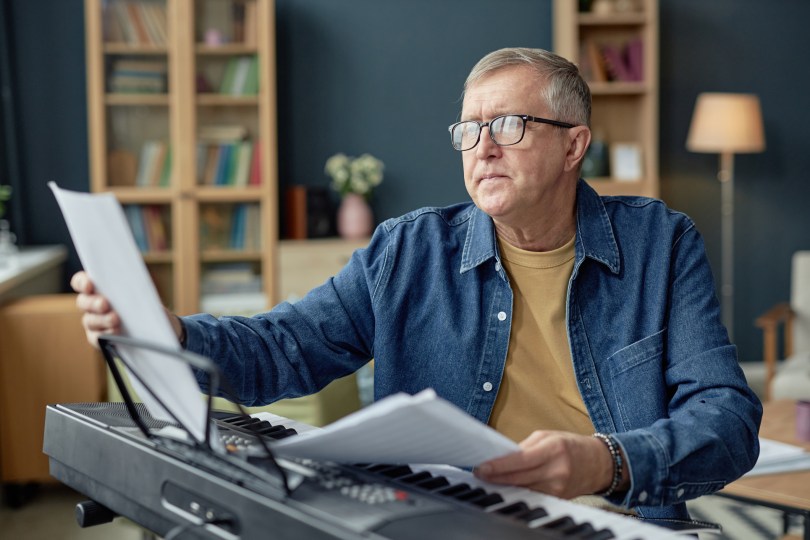
Engaging Retiring/Retired Educators

Ask not what NAfME or your state MEA can do for you, but what YOU, a retiree, can do for your professional association and music education.
An adaptation of the famous excerpt from the 35th U.S. President John F. Kennedy’s inaugural address of January 20, 1961.
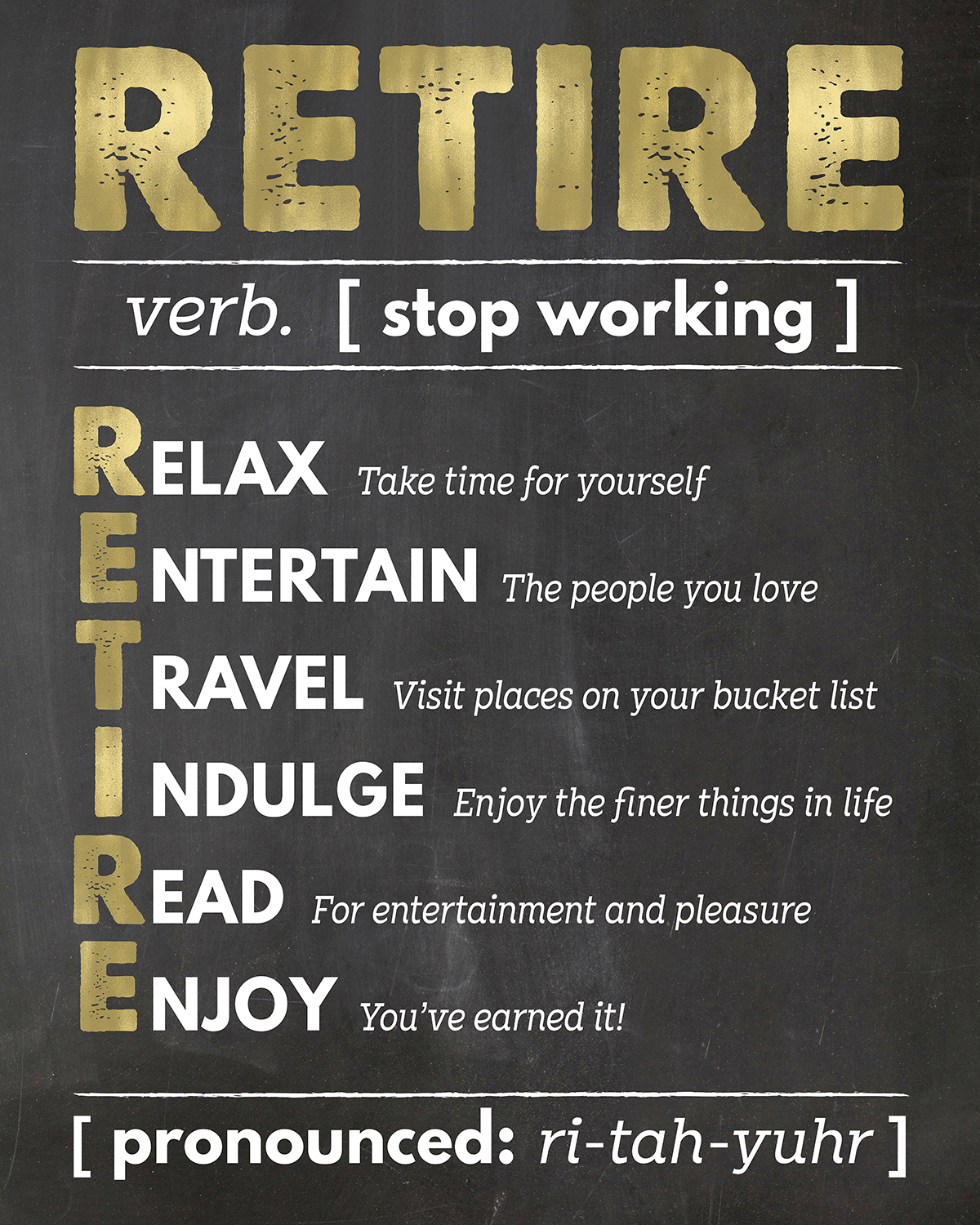
Surfing the ‘Net, I found an appropriate acronym for R.E.T.I.R.E. by Tangled Tulip Designs in pinterestRelax, Entertain, Travel, Indulge, Read and Enjoy! Most retirees would probably agree! The cessation of full-time employment may offer a great release from the day-to-day stress and drudgery of the job and the freedom to venture out, self-reinvent, make future goals, nurture relationships, and explore new personal growth opportunities.

Many attribute embracing a career in music education as “a calling” as opposed to just a form of employment or livelihood. From my experience, I have witnessed that most music educators are passionate for the cause of fostering creative self-expression in their students, more of a 24/7 mission, bringing intense focus and dedication to their lifework.

More to the point: Do we ever truly retire from making music ourselves and fostering this love in others?

THE “WHY!” Retirees matter and are critically needed!

One of my favorite inspirational speakers (Simon Sinek) would say, “start with the WHY!” WHY is this discussion on professional engagement of retired educators so important today?

  1. Their need: An informal poll of my former local educators and administrators revealed that half of them “hate retirement!” According to Dr. Robert P. Delamontagne in his book Retiring Mind (Fairview Imprints), “50% of retirees will suffer some form of acute emotional distress. This is potentially a very large problem given the fact that 10,000 people are becoming eligible for Social Security every day for the next 20 years in the US alone.” Remember this statistic the next time a senior citizen cuts you off on the road or bangs a shopping cart into your leg at the checkout!
  2. Our need: We are facing shortages of qualified teaching candidates across the country with unfilled openings in public school music positions and the critical need of training/mentoring the new hires.
  3. Society’s need: All of our voices should be combined to support the advocacy of music education, actively promoting access to school music by sharing its academic and social benefits with decision-makers, building relationships with administrators and policymakers, and utilizing resources from organizations like NAfME and the NAMM Foundation.

Despite its proven benefits, music education is often the first program to face budget cuts in schools. This is especially concerning in underserved communities, where access to music programs can be life-changing. Now more than ever, we must advocate for music education to ensure that every child has the opportunity to experience its benefits. Investing in music education is an investment in the future of our communities — helping to cultivate the next generation of creative, resilient, and innovative leaders. 
“Why Music Education Matters More Now Than Ever” by Music Will, February 2025

For eleven years (and counting), I serve as the Pennsylvania Music Educators Association (PMEA) Retired Member State Coordinator, as well as the Past State Chair (current member) of the PMEA Council for Teacher Training, Recruitment and Retention. I believe my responsibility to the state association is two-fold:

  • Assist soon-to-retire professionals in achieving a smooth transition to a happy and satisfying retirement; to help them cope with the commonly-experienced emotional ups-and-downs of this life passage, wrestling with the question “what do you want to be or do when you grow up?” and making new life lesson plans and personal goals.
  • Reach out to and build meaningful connections with retirees in order to fully engage them towards becoming active in their professional association; to recount, represent, and revitalize the activities of our post full-time employed music educators.

This article proposes a roadmap of crucial pathways to help music teachers approach “retirement bliss” while tapping into their hard-earned knowledge, strengths, and experiences by cultivating the benefits of their renewed participation in our professional associations.

What can NAfME and State MEAs offer retirees?

You have devoted your entire life to inspiring the development of personal artistry and “ah-ha” musical moments in others. Now it is your turn to reap the benefits (and privileges) of this commitment to the profession. NAfME and your MEAs can provide the resources and motivation of “sharing and caring,” directing retirees “places to go, people to meet, and things to do” for fulfilling that “next chapter” or (perhaps better terms) the “refirement” or “rewirement” of senior living.

Do you feel “needed” and know you “make a difference?” Research has shown that the one of the most important motivators for involvement in a professional association is that its members recognize that they are essential to its success. This quote is from Revitalizing Retirement: Reshaping Your Identity, Relationships, and Purpose by Nancy Schlossberg, attributed to Rosenberg/McCullough:

 “It has been suggested that one problem of retirement is that one no longer matters; others no longer depend on us… The reward of retirement, involving a surcease from labor, can be the punishment of not mattering. Existence loses its point and savor when one no longer makes a difference.”

Most people who are one to five years away from “pulling their pin” and putting in their walking papers “do not know what they do not know.” Experts agree: “Retirement preparation is not only about the money!” Our silver-haired colleagues who have already Crossed the Rubicon and are now “living the dream” in retirement can share their trials, tribulations, and (more importantly) numerous success stories about coping with this transition!
NAfME, PMEA and this paulfox.blog/for-retirees site have archived an exhaustive number of self-help articles. Check out this omnibus NAfME blog “Retirement Prep Top-Ten Treasures.”

The benefits of retired MEA membership are numerous. Besides providing helpful transitioning advice, these advantages also come to mind:

  1. Answers to questions like “What have you always wanted to sing, compose, play, record, conduct, write, publish or present?” and “Where can I share my hard-won expertise and help others in the field?”
  2. Networks and contacts to help you develop “encore careers” in other musical or educational arenas (e.g., higher education, music industry, festival organization, travel/tour planning, composition, guest conducting, private studio teaching, church music, etc.)
  3. Opportunities to “rekindle your expressiveness” by participation in adult community or full/part time performance groups (playing “gigs”)
  4. Places to go/things to see/hear: NAfME/MEA conferences, workshops, and concerts
  5. Exclusive discounts and other benefits (reduced dues and registration fees)
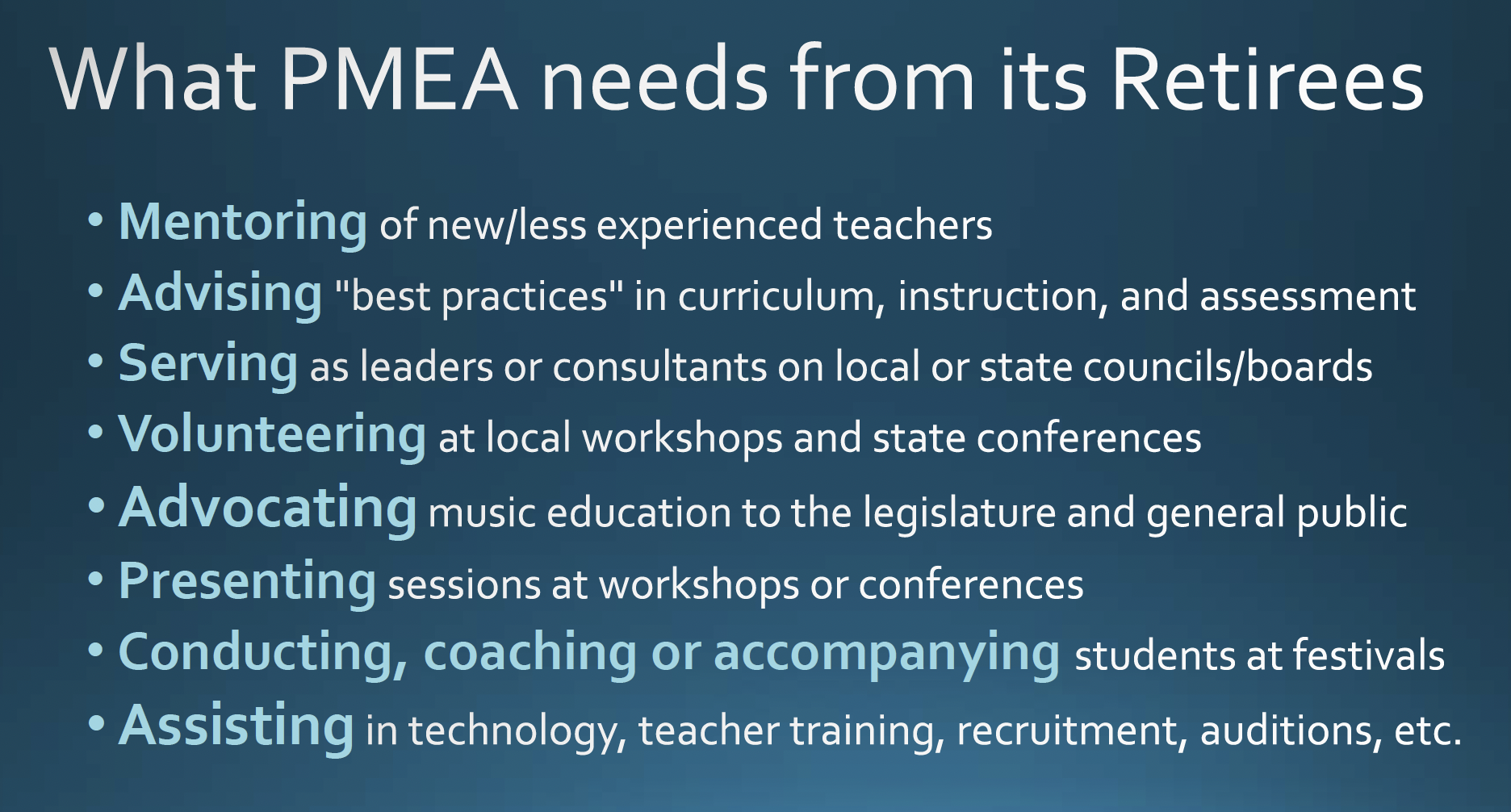
What can retirees offer NAfME and their state MEA?

The relationship of active and retired membership in our MEAs is symbiotic. We know from the history of our associations, “giving back to the profession” remains a high priority with most retirees. This may come in many forms and settings:

  • Leadership or membership in local, state, or national MEA/NAfME office, staff, advisor, or council/committee position
  • Advocates for the promotion of music education to local and state government officials
  • Service as presiding chair or member of the conference or workshop planning committee
  • Service as evaluator of performance groups, conference sessions, or articles for publication
  • Judges of local/state MEA adjudication or commercial festival
  • Accompanists, coaches, arrangers, or guest conductors for festivals or school/community groups
  • Services to the local music teacher in private teaching, piano playing, marching band charting, sectional coaching, choreography, music technology, instrumental repair, stage tech, etc.
  • Writers for state MEA and NAfME publications and blog sites
  • Contributors to online music education forums or the NAfME Connections
  • Donors to and/or fund-raisers of music education charitable projects, scholarship initiatives, etc.
The PMEA Model of Retired Member Participation
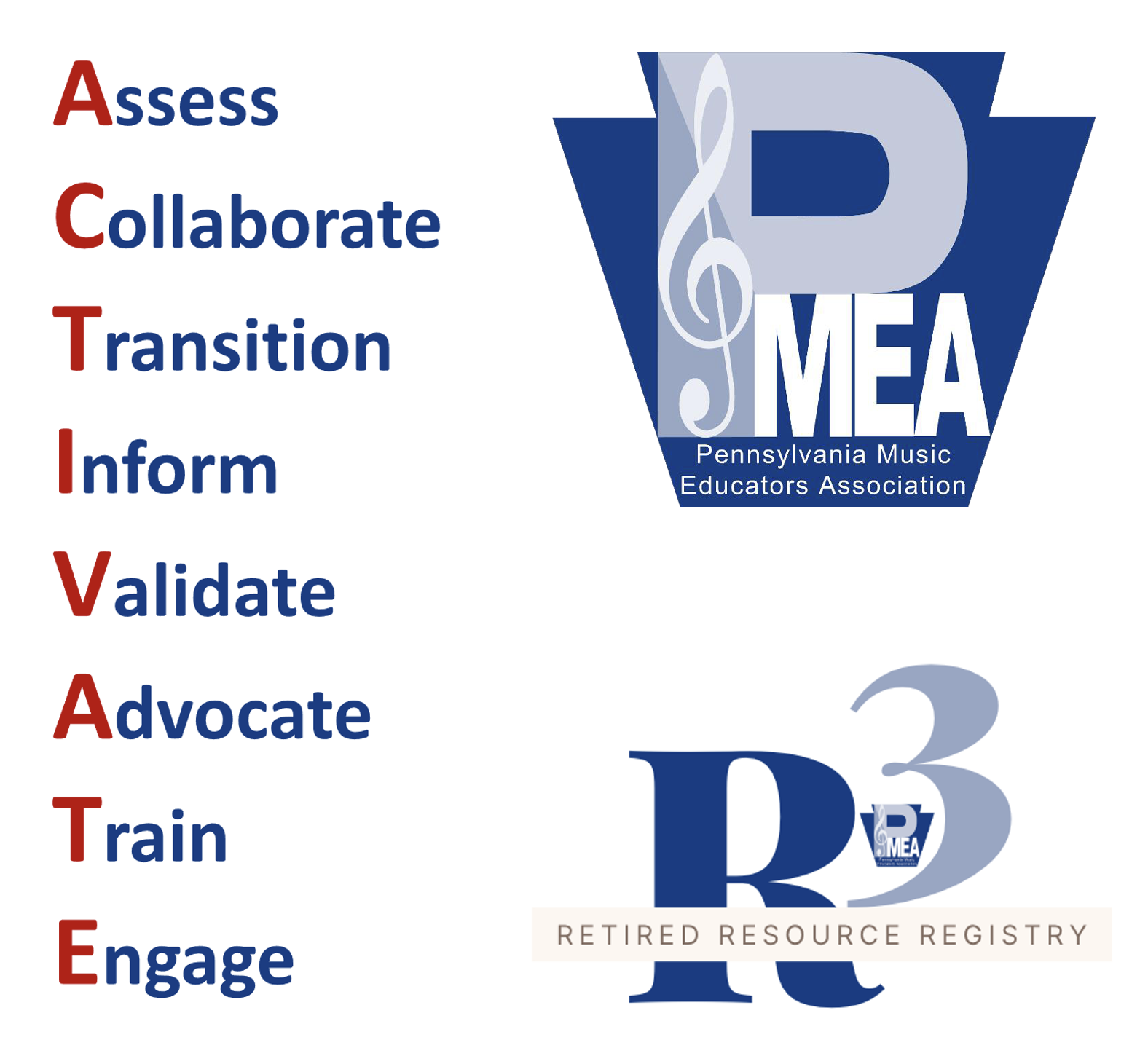
PMEA values the vast wealth of experience and contributions of our retired members. We’re proud of the many programs we offer to retirees and invite you to visit our website to peruse additional information and sample digital newsletters and articles.

Retired members in Pennsylvania are involved in:

  • PMEA elected and appointed offices, staff, committee chairs, and membership on councils
  • PMEA Strategic Plan and Bylaws, Conference Planning, and other state/regional committees
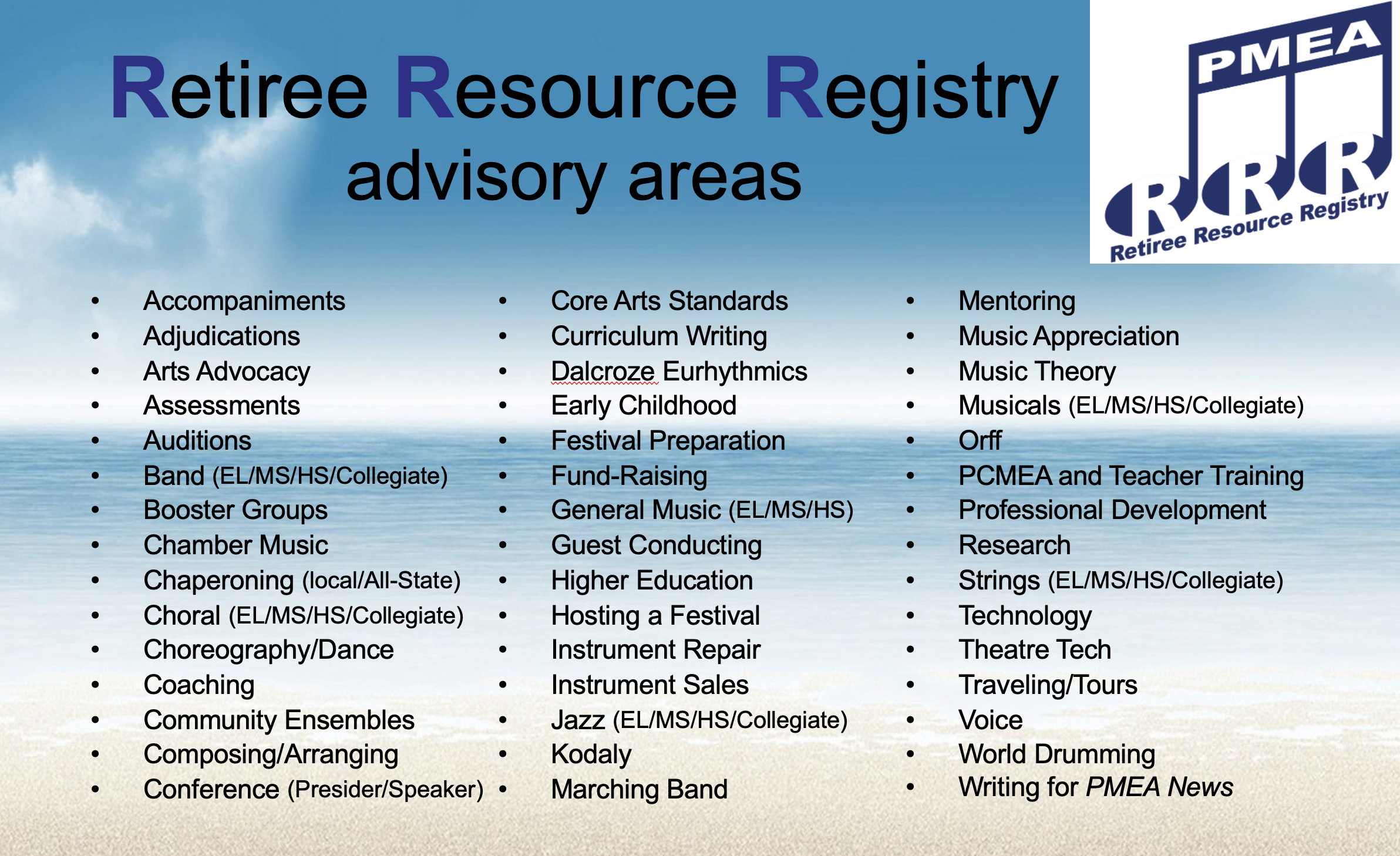
  • Retired Resource Registry* (informal mentoring for new teachers and transfers)
  • How-to-Retire Webinar, Prepping for Retirement, and the Ultimate Retiree Resource Guide
  • Retired Member Breakfast at PMEA Annual Conference
  • Retirement 101 (The Who, What, When, Where, Why, and How) session at PMEA Annual Conference (training for all members retiring or soon-to-retire)
  • Maintenance of PA Community Band, Chorus, Orchestra, and Theater group catalogs
  • Maintenance of PMEA member compositions library
  • Mock Job Interview Committee for music education majors
  • Coffee & Conversations informal “ask an expert” lounge at PMEA Annual Conference
  • Volunteering as presiding chairs for sessions and registration aides at conferences/workshops
  • Pool of conference clinicians, guest lecturers, and members on discussion panels
  • Participation in “Sponsor a Collegiate to Attend the Conference” campaigns
  • All-State Program Patron, or contributor to the annual Irene Christman Scholarship or Margaret Bauer Grant programs.
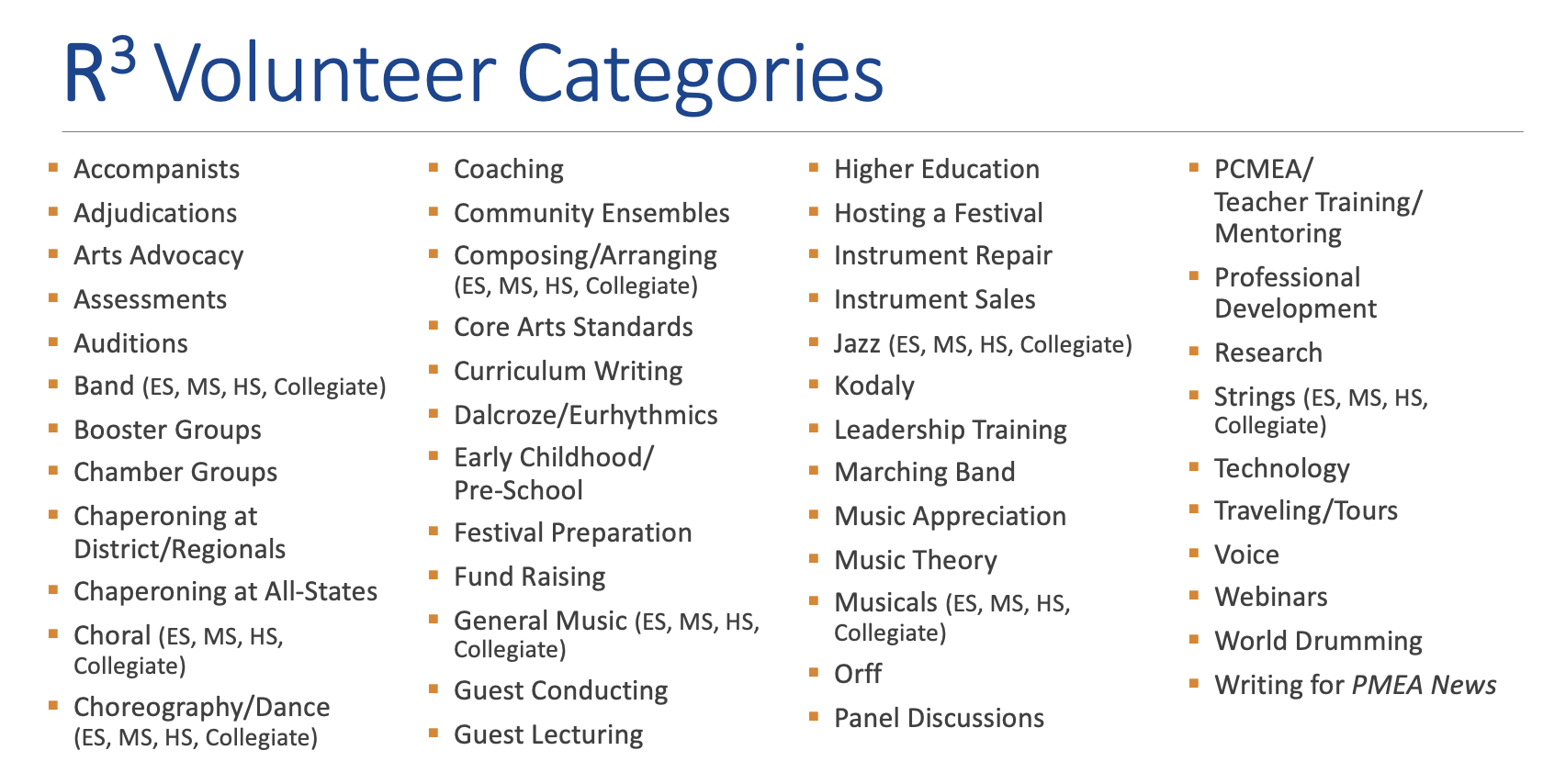
As of October 1, 2025, there are 61 advisors in the PMEA Retired Resource Registry.

*During their annual membership registration, PMEA Retired Members may choose to sign-up for the R3 Retired Member Registry (above volunteer categories) to become available to informally offer advice to college music education majors, new hires, transfers, and newcomers to any music specialty. R3 members may handle inquiries like “What warm-up would you recommend for my middle school choir?” OR “Do you have an idea for an elementary string ensemble concert opener?” OR “How do you teach improvisation… steady beat… breath support?”

The other option with more time commitment is that Retired Members can be officially “trained” as a PMEA Mentor and be assigned to specific individuals who request assistance in their early career assignments.

Coda

How can we help?

What is the future of retired music educator professional engagement? In a word: connections!

Last month, I reached out to Elizabeth Welsh Lasko, NAfME Assistant Executive Director for Membership, Organizational Development, and Marketing Communications and “volunteered” OUR assistance. I suggested that, in keeping with the NAfME 2022 Vision Statement “…an association where all people are heard, seen, and feel they belong throughout their lifelong experiences in music” we should all intentionally recruit more hands-on involvement of our retirees. I pointed out that in the late 1980s, we had a Music Educators National Conference (MENC) Committee for Retired Members led by a National Chairman who served on the NAfME National Assembly. (An excellent booklet, TIPS: Retirement for Music Educators, Copyright © 1989 MENC, was compiled by A. Verne Wilson, then the Past National Chairman of the MENC Committee for Retired Music Educators.)

Ms. Lasko encouraged me to “reach out to retirees” beginning with this article. At the next NAfME Eastern Division Conference, I plan to hold a meeting of retired members, and also connect with all state MEA retired member coordinators (those states who have them). We’re available and on the move! Let’s collaborate and share our resources!
Finally, just for fun, I recently posted the blog “For Book Lovers – Retired or Not” on NAfME Connections (formerly called Amplify). There are already 1,810 members in the NAfME “Retired Members Community.” Please JOIN US! Using this forum, get in touch with me, and respond with YOUR OWN retirement stories, strategies, perspectives on this “life passage,” and more ideas to grow the professional engagement of our music teacher retirees.

Happy trails!

© 2025 Paul K. Fox

Social Media – Revisited

Before you begin reading this article, please take a moment and peruse these past blog posts:

Although several of the cited research links may have expired (for example, PA Department of Education modified most of their website’s URLs), these provided the foundations of background information and references for the presentation I prepared for the DCMEA Virtual Conference in 2020 (during COVID) and serve as the starting point for the workshop I will share in-person at the DCMEA Winter Conference in January 2026. This blog provides updates and additional perspectives. Taken in combination with the above sources, you will be able to identify the benefits, positive models, precautions, and dangers of social media, social networks, professional learning networks, and sample emerging technologies as they apply to teachers’ professional development and education of students.


“THE WHY”

Before every clinic or publication I develop, I always try to spotlight the theme of “THE WHY” as preached by one of my favorite authors and motivational speakers – Simon Sinek! According to him, for organizations and individuals alike, “THE WHY” (rationale and priority) is more important than “THE WHAT” and “THE HOW.” (See this video.)

WHY is a collaborative discussion on social media essential? Why now?

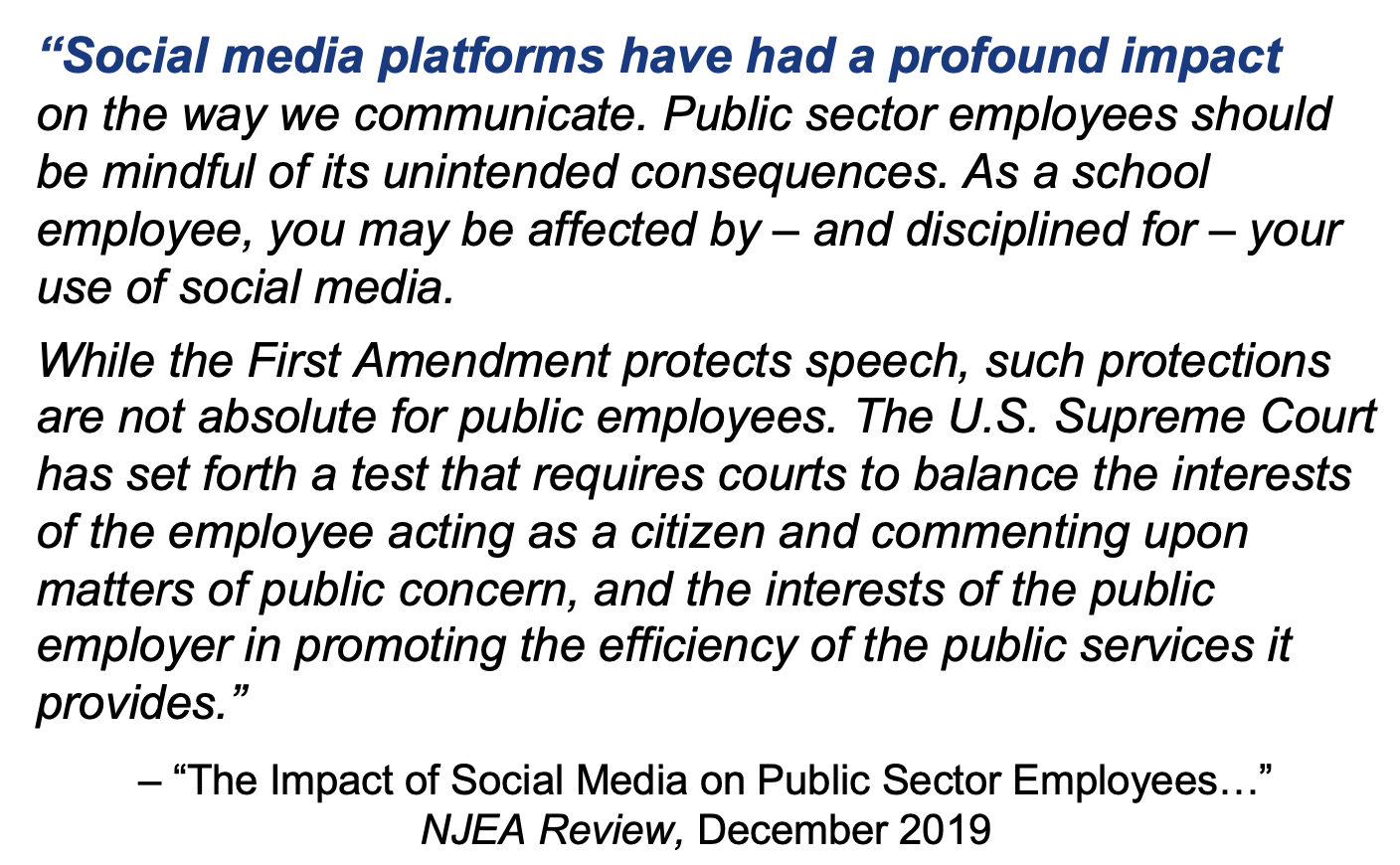
 ”There’s a growing body of evidence suggesting that educators are facing increasing scrutiny regarding their social media use. Concerns include unprofessional conduct, inappropriate interactions with students, and the potential for cyberbullying and other negative impacts on student well-being.”

“Educators are increasingly concerned about how social media influences students’ social-emotional development and their interactions with others.” 
NEA Member Polling on Social Media…
NEA Impact on Social Media and Personal Devices on Mental Health
HHS Youth Mental Health and Social Media

Frankly, there is still a lot of confusion about the dangers of social media, social networking, and other technology integrations into education. In Social Media – Boon or Nemesis, we mentioned that teachers should “debunk the free speech myth.” We demonstrated how the improper application of social media could get educators in trouble. Check out these sites for more info and corroborative stats:
Teacher Student Misconduct and the Critical Role of Social Media Screening
NCBA Social Media for School Employees
Social Media Hazards and Tips for Teachers

As always, our goal is to promote ethical practices in maintaining professionalism in the digital world.


“THE WHAT” Review of Definitions

“Social Media”

Social media are “websites and applications that enable users to create and share content or to participate in social networking.”
— Oxford Lexico.com online dictionary

“Social Network”

A social network is, 1. a network of social interactions and personal relationships.; 2. a dedicated website or other application which enables users to communicate with each other by posting information, comments, messages, images, etc.
— Oxford Lexico.com online dictionary

Professional Learning Community” (PLC)

A PLC is “a group of educators who meet regularly…” (usually in-person) “…to strategically enhance their teaching skills and improve student outcomes.”

versus “Professional Learning Network” (PLN)

A PLN is “a group of educators who gather more informally…” (usually in online communications) “…to problem-solve and generate ideas to enhance classroom practices. A PLN… often takes the form of an open forum, where participants can ask and answer questions based on their experiences.”
https://edtechmagazine.com/k12/article/2024/08/pln-vs-plc-perfcon


“THE HOW” Ethos of Care

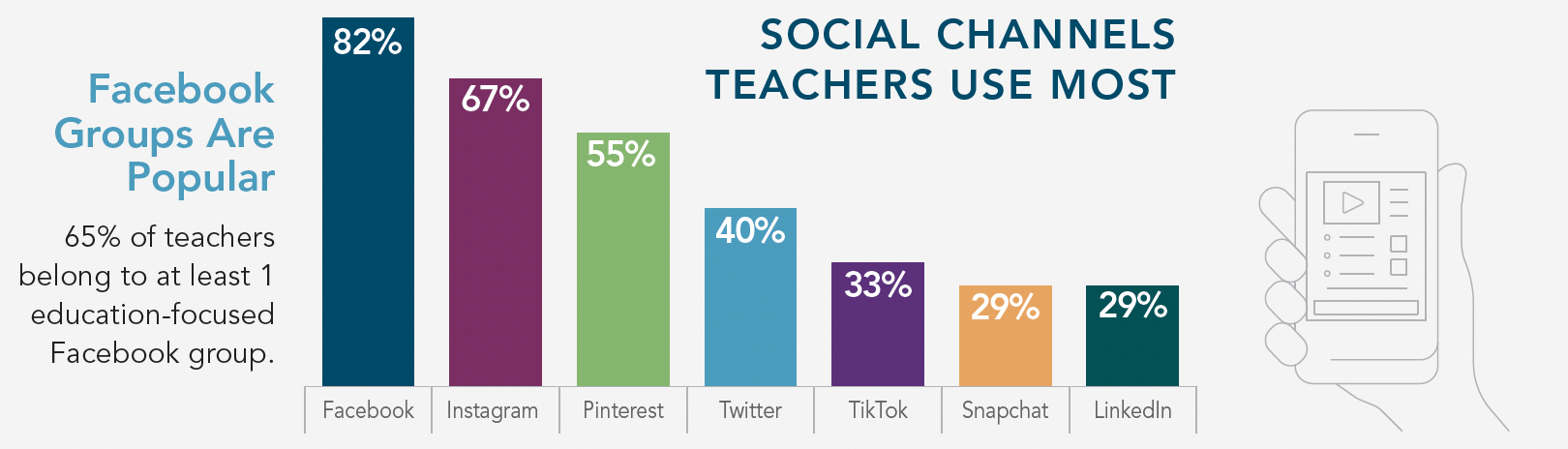
Teachers use social media to…

  • Get inspired with new teaching ideas
  • Find resources for the classroom
  • Connect with other educators
  • Stay on top of trends and news
  • participate in an online community
  • Find teacher discounts and deals
  • Follow education companies and organizations

How Teachers Use Social Media
Teachers Social Media Use

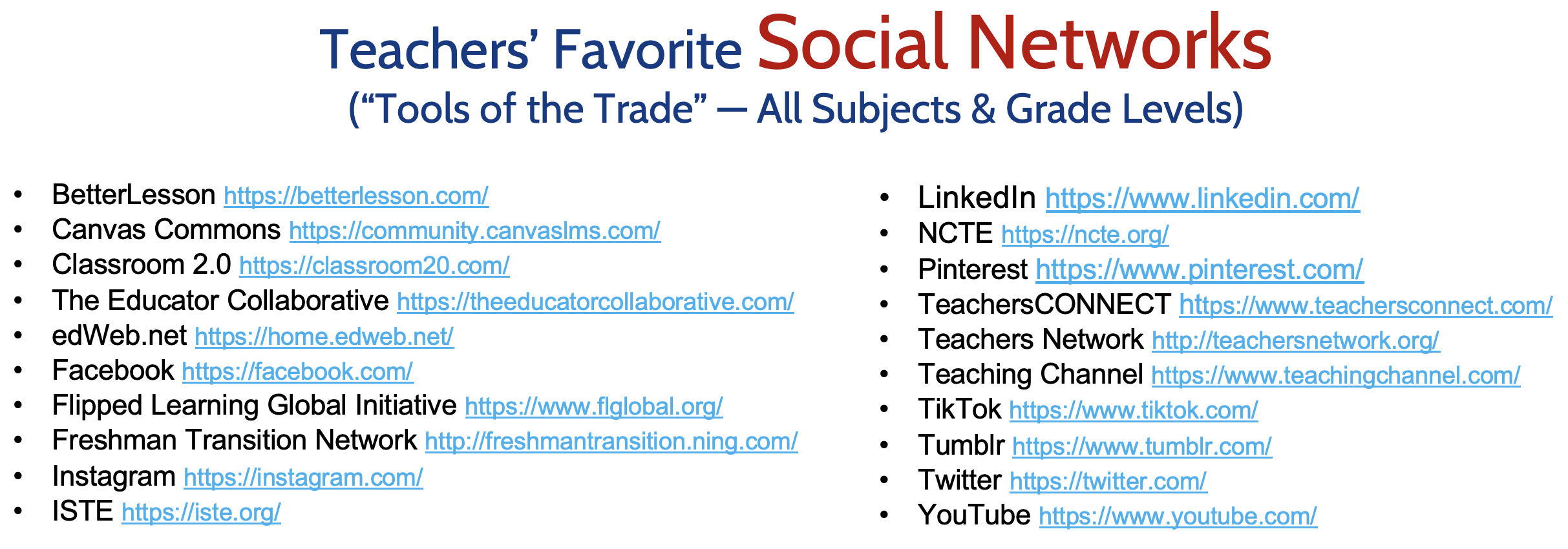
Social Networks for Teachers

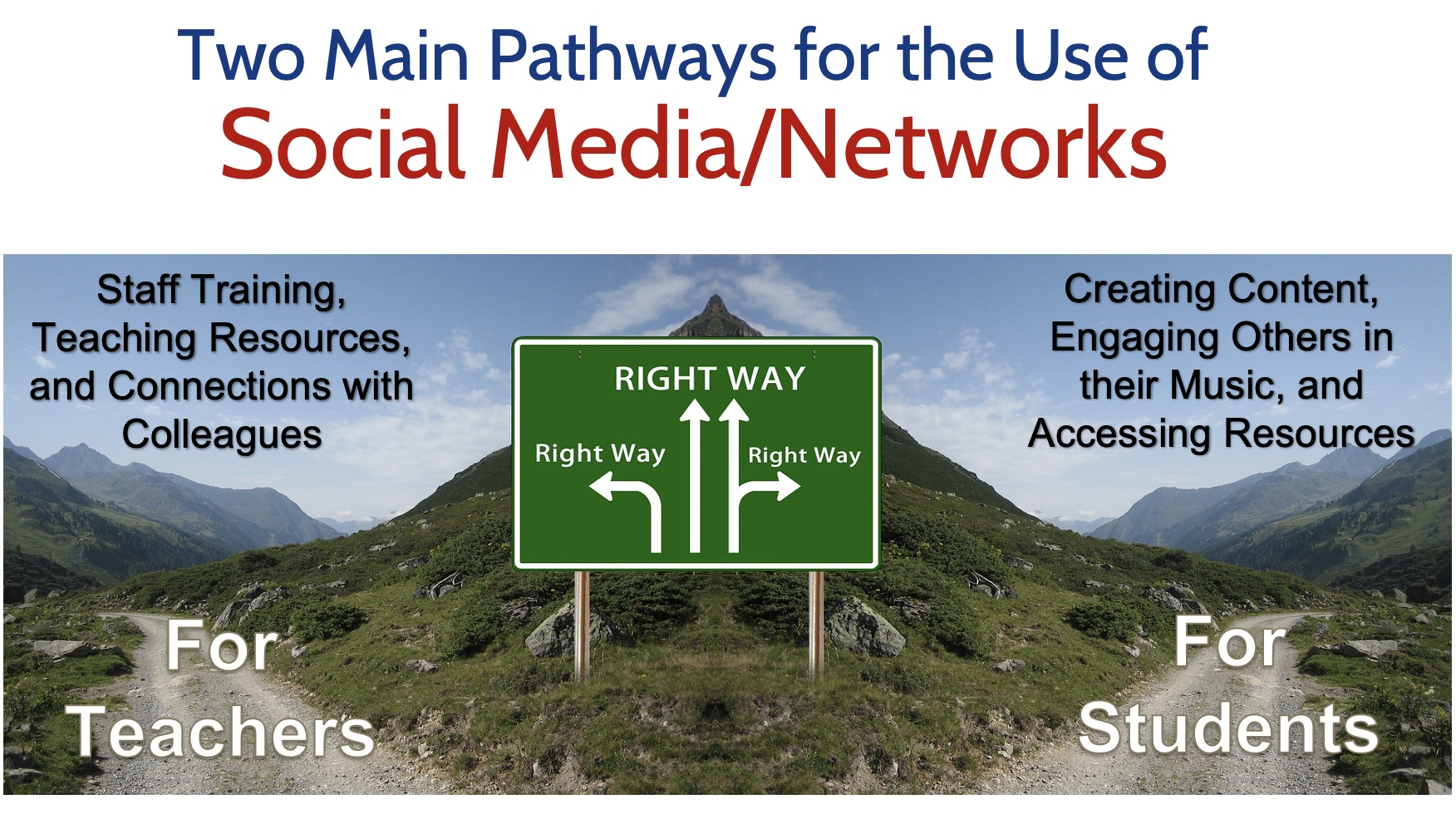
We acknowledge that the benefits of social networking for educators are numerous by promoting professional collaboration and connections, including:

  1. Acquiring information to enhance understanding
  2. Keeping informed about latest developments in education
  3. Enhancing communications with students, parents, and the school community
  4. Fostering connections with colleagues in the field to expand an educator’s professional network.

Benefits of Social Media as an Educator

However, educators must exercise “sound judgment” and proper professional boundaries when using social media/networks with students. While the introduction of new technology provides many opportunities for teaching and learning, it is important to establish clear rules for appropriate student-teacher communication. In order to promote safety and appropriate boundaries while transitioning to a virtual teaching and learning environment, the Pennsylvania Professional Standards and Practices Commission offers suggestions to help educators protect themselves and their students.

  1. All technological resources and applications should be school entity-approved and only used in the manner prescribed. Ensure that you are familiar with the tools you are using in order to use them properly. 
  2. Communication with students should occur at designated times, consistent with traditional school day hours. Maintain transparency and protect yourself by keeping a record of all communications with students. 
  3. Clearly communicate when and how students should contact you and provide a timeframe for when students should expect responses to questions. 
  4. Avoid one-to-one interactions with students in chatrooms, FaceTime, Skype, or any other online space. School psychologists, school counselors and others providing one-to-one services to students should consult with school administration about the best mode of communication. 
  5. Use approved forms of communication by your school entity to connect with students and parents (i.e. Remind), use only your school email to communicate, and copy administration when communicating with parents or students. 
  6. When creating content or interacting in an online space with students, conduct yourself as you would if you were in school. If appearing on camera, dress professionally and be mindful of your surroundings and the camera’s view. 
  7. Do not “friend” or follow students on social media and do not allow students to “friend” or follow you on your personal social media. Remember, you do not have a “social” relationship with your students. 
  8. Keep your personal and professional lives separate. Do not share overly personal information about yourself with students.

PSPC Digital Tips for Educators

While exercising responsibility to maintain a respectful, safe, online environment, there are many benefits for the application of social media for students in the classroom:

  • Real-time communications can increase student engagement, collaboration, communication and overall participation
  • Many students may find it easier to participate in online discussions that in the classroom
  • Students can easily ask each other or their teacher questions about assignments outside of class
  • Students & teachers can quickly share resources at any time.
  • Teachers can easily share class announcements.
  • Social media can provide a contingency plan for last minute remote learning scenarios.
  • Students can organize school events with each other or with the help of a teacher.
  • Teachers can augment an online-only class by establishing a social media page or account simply for building community.
  • Students can practice using social platforms responsibly, including maintaining a respectful online discourse.
  • Teachers can communicate directly with parents as needed, and parents can stay informed of school news via a convenient, easily accessible platform.

However, please watch out for these potential drawbacks:

  • Social media can be a major distraction, especially if students are accessing their personal accounts independently.
  • If students primarily use social platforms to participate in class discussions, they can miss out on practicing face-to-face conversations and respectful in-person discourse.
  • Some students may see social media assignments as an opportunity to cyberbully their classmates, and there is always a risk of someone posting inappropriate content or language.

Social Media in Education


“THE WHAT” Several Success Stories

Balancing the positives and negatives and taking into account all of these precautions in order to maintaining professional boundaries, the integration of new technology into the classroom may offer excellent enrichment and increase student motivation for advanced learning. This may take many forms. Here are a few interesting models.

Prior to preparing for the DCMEA online session in 2020, I stumbled upon a truly inspiring post from Derek Muller, a gifted teacher, physicist, filmmaker, and founder of the YouTube channel Vertiasium which has captured millions of subscribers. He offers one of the BEST models of using social media to enrich the understanding of learning math and science (applicable to all fields of study), while at the same time, provides warnings against unbridled use of so-called “innovation for innovation’s sake.”

“I feel like people over the years are invariably drawn to use these words:  revolutionize and education. And there’s this sort of amnesia that we’ve had a hundred years’ worth of these predictions, worth of really groundbreaking technologies that have transformed other areas in our lives but have failed to fundamentally change the way we do education. So, I stand here today as a voice of caution, to think that the future of education is not one of revolutions…”

You need to watch this: How is Social Media Transforming the Future of Education? (2016)
Derek Muller

Say what you want about how COVID significantly disrupted our educational programs, evidence of learning loss, problems in socio-emotional development, decline of student engagement and self-motivation, rise in mental health struggles, decreased instructional time, and the effects of a new digital divide of under-served students (Annie E. Casey Foundation), happily there were surprisingly a few positive advancements the results of exploring new tools and methodologies we had to employ to tread water and cope with the catastrophe. (“When life hands you lemons, make lemonade!”)

As one example, in the middle of preparing music for my community orchestra, we were shut down in 2020. No in-person rehearsals at the school. I then pivoted to creating my own online platform called SHJOOLA (South Hills Junior Orchestra Online Academy) in 2021 using MusicFirst. For a nominal yearly subscription fee, I was able to continue my Saturday morning classes (synchronous) as well as asynchronous (on-their-own time) learning using excellent applications in a virtual environment: MusicFirst Classroom, Focus on Sound, PracticeFirst, Sight-Reading Factory, Musition, Auralia, a web-based music notation program, and a huge library of method books and ensemble music. Several past blogs showed how we rolled out SHJOOLA:

The latter link above also provided a comprehensive list of supplementary resources (at the time) for online music education. Please peruse these even though some of them may have now gone inactive. We will provide supplemental links at the bottom of this article.

Another direction accented by the onslaught of the pandemic was digital streaming performances, incorporating technology in both the solo and ensemble settings. The following are two of my favorite examples of these to be viewed on YouTube:

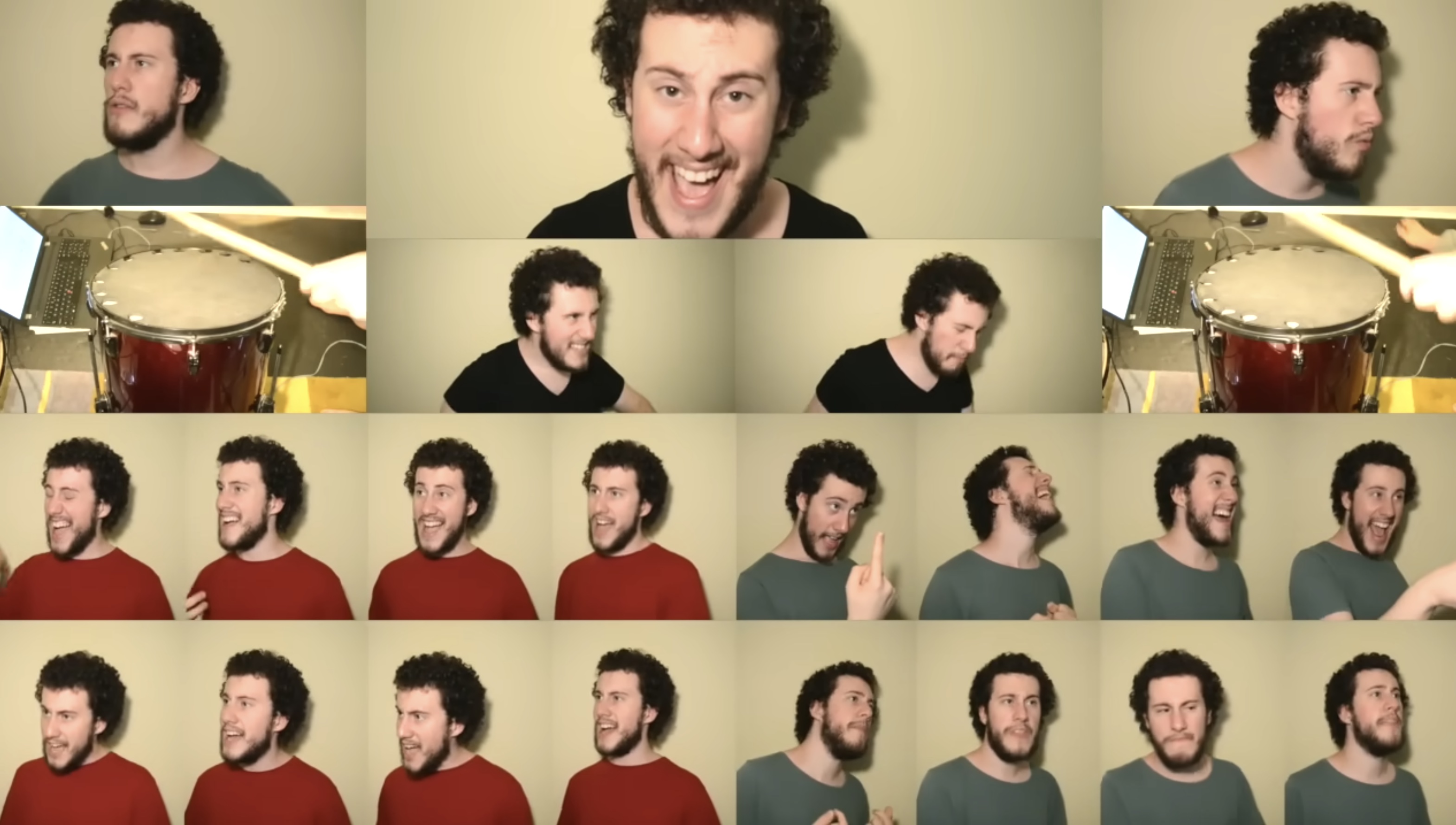
Circle of Life from Disney’s Lion King (2015-18) by Sam Robson, arranger, innovator and performer using multitrack recording of a single performer mixing as many as 50 voices at one time.

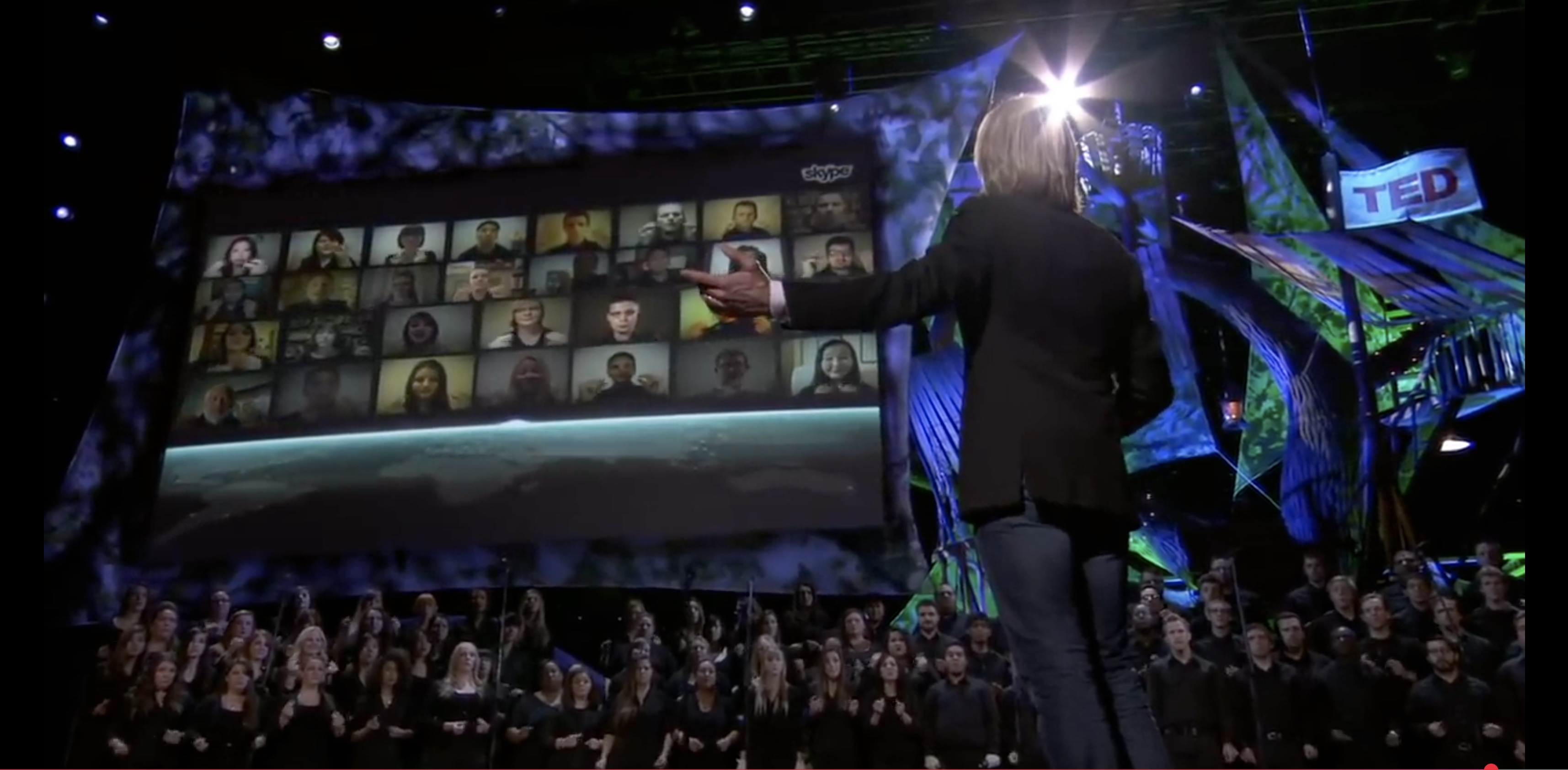
Cloudburst, a Virtual & Live Choir and TEDTALK (2013) by Eric Whitacre

Well… sorry this blog has grown to be so large! If you admit to understanding the potential hazards of and precautions for integrating social media, social networks and other technologies into education, we’ll close with the following bibliography of additional resources for further study. If that is not enough to whet your curiosity, stop back in several months to download a copy of my slide summary for the session I will present at the DCMEA Winter Conference on January 30, 2026.

Be careful stay safe and professionalbut ENJOY!

Sample Blogs

Several Major Platforms

Examples of Music Applications/Websites

PKF

© 2025 Paul K. Fox
Rising Educators Conference

June 28-July 1, 2024
Marriott Marquis – Washington D.C

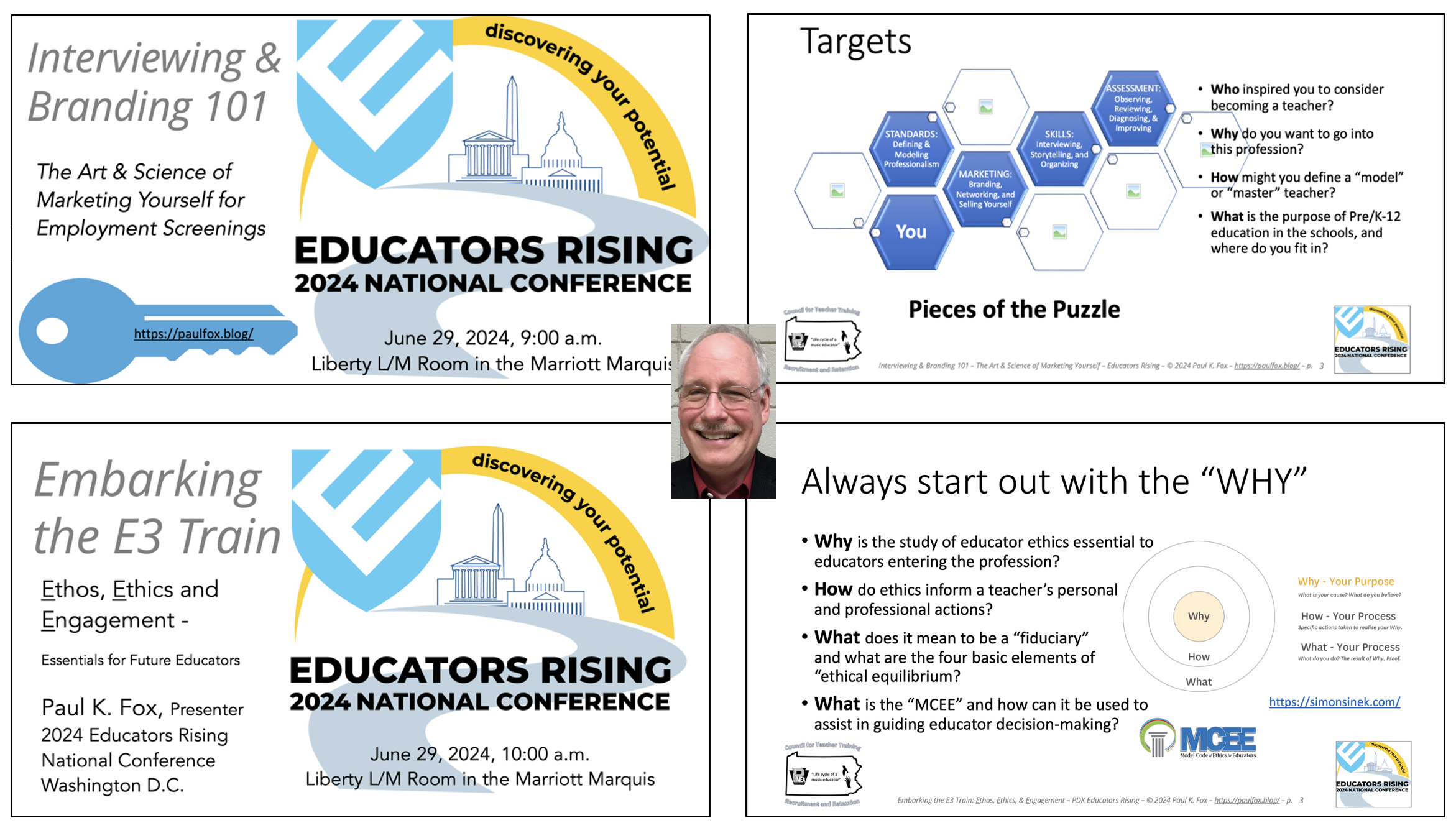
It is my pleasure to be invited to present two sessions at the Educators Rising Conference on June 29, 2024 in the Liberty L/M Room of the Marriott Marquis in Washington D.C.

This is a very unique venue, something in which I encourage other educators and clinicians to consider participating. The event brings together prospective future educators, middle to high school and college education majors, with veteran practitioners and experienced educators in the profession. This is from their website:

Each year, Educators Rising hosts a national conference to convene our network of rising educators and teacher leaders. It’s a unique opportunity for students and their teacher leaders to:

  • Connect and learn from each other through more than 40 breakout sessions;
  • Network with other members from across the country;
  • Compete for national titles in competitive events designed to allow students to develop and showcase their teaching skills; and
  • Be inspired by keynote presentations from national education leaders

Want to learn more about what you can look forward to for 2024? Check out the 2023 National Conference Program Book, 2023’s Conference Daily, and our conference highlight video to see what current and future educators experienced last year.

An outline of the conference schedule may be viewed here. Additional information may be found at the conference website here. You can still register for the event.

My two offerings will not come as a surprise to anyone who has been following my work at this site:

GETTING A JOB

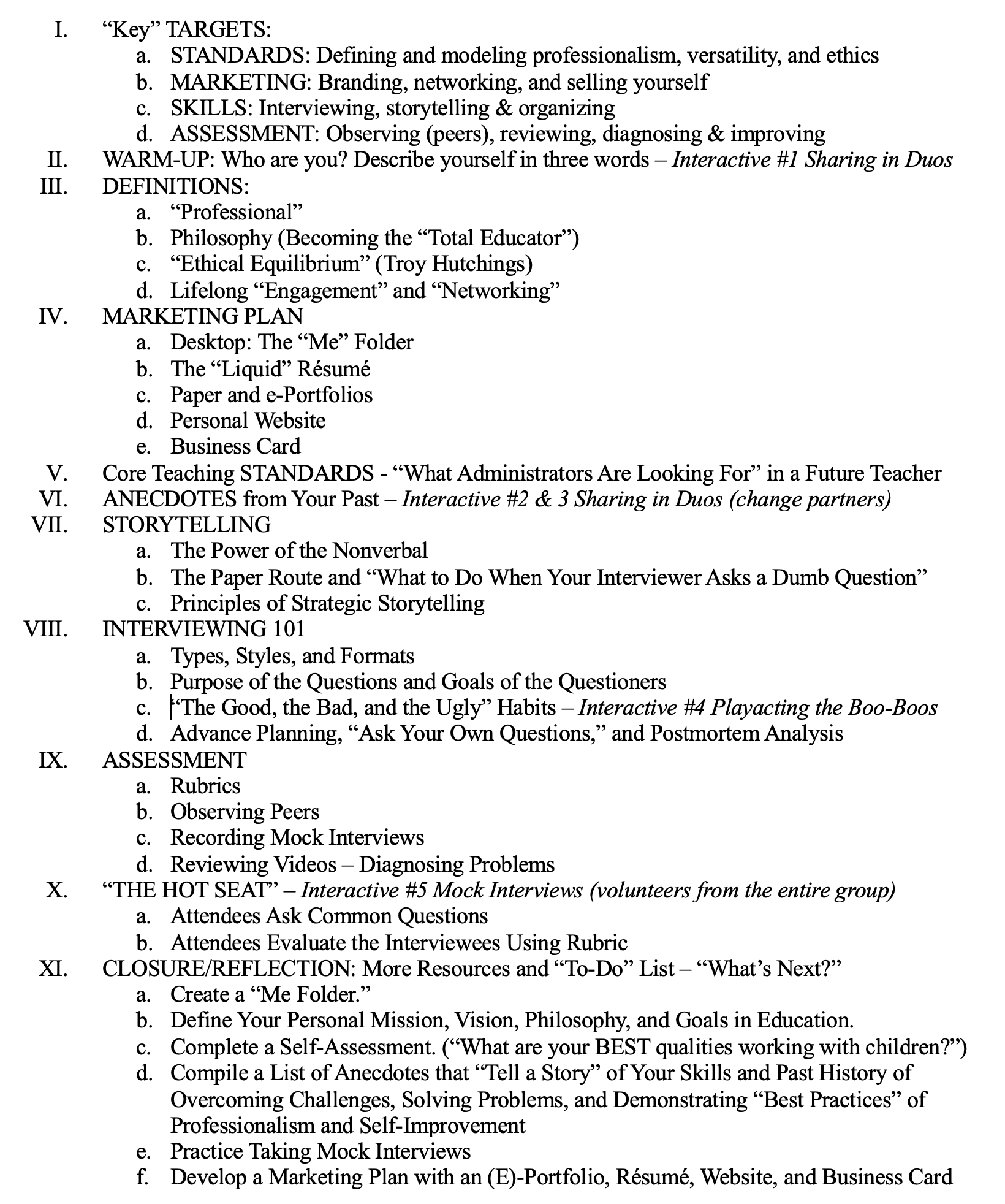
My first workshop, “Interviewing & Branding 101” (Saturday, June 29 at 9 a.m.) will provide an overview of important definitions (e.g., “professional,” “total educator,” etc.) and dive into interactive exercises to exploring the basic building blocks of personal self-assessment, building “a brand” and “marketing plan” for the job search, practicing networking and storytelling skills, and analyzing and “playacting” better interviewing techniques. Although I will need to shorten the presentation to fit in the 45-minute time block allotted and provide more focus on the interactive partner and small group exercises, this was the initial outline that was accepted by the Rising Educators Conference Session Selection Committee:

My favorite candy, Hershey Symphony bars, will be distribute as incentives for the more “brave” attendees who volunteer themselves to serve as good (as well as bad) models of the mock interviews.

In conclusion, this is “the session” I wish someone would have provided me before I went out into the labor market! We will have some fun connecting with each other, learning something new about our core values, goals, and strengths – especially those areas we want to broadcast to future employers – building a marketing plan of the essentials to promote ourselves in future employment screenings, and breaking-out into “duos” and small groups to “practice-practice-practice!” The branding and interviewing exercises and suggestions may be applied to finding any job, but will definitely be a big help for landing “the one” teaching position you always wanted.

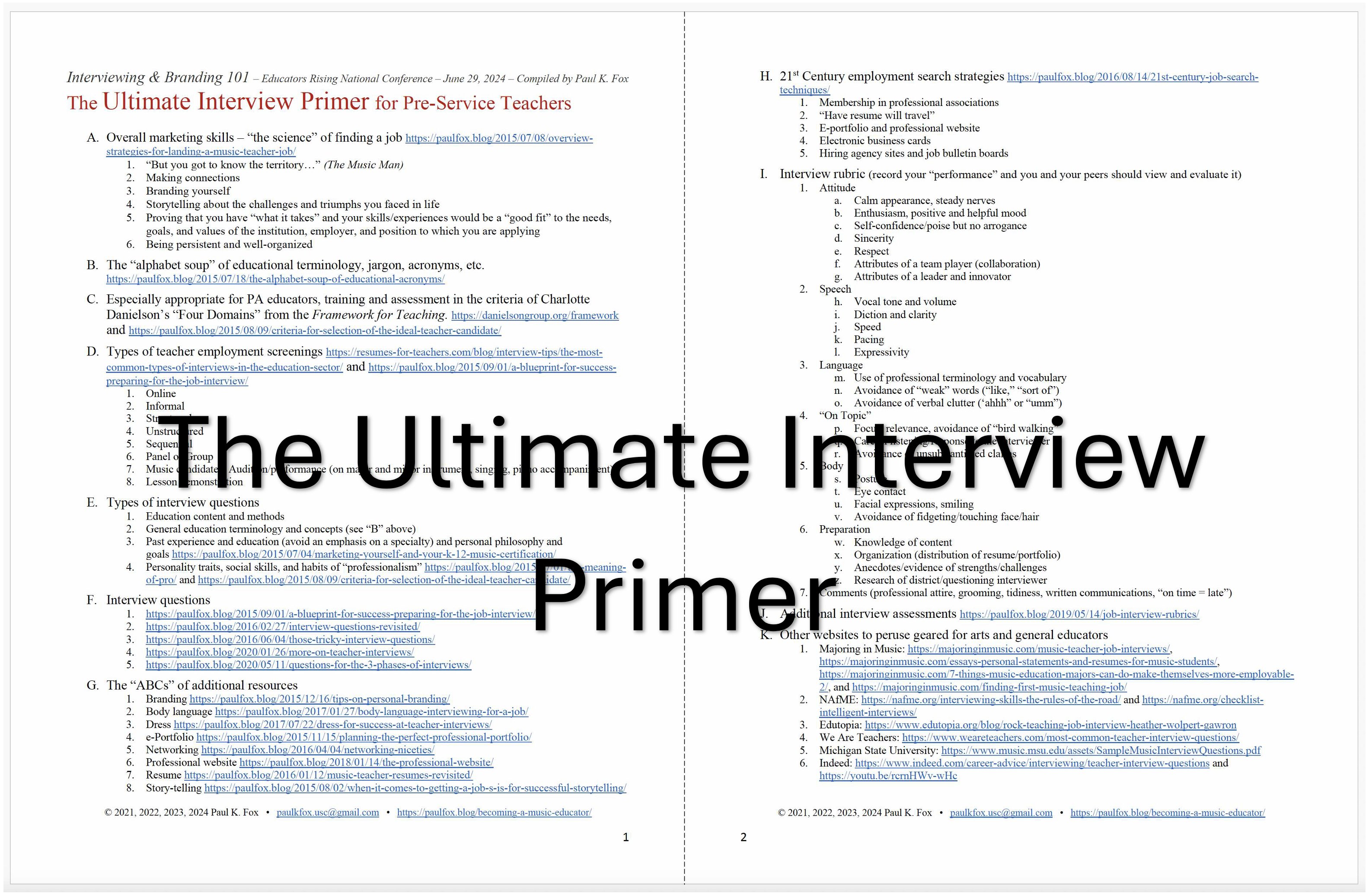
For the participants who attend my session (facsimile of slides available after June 28), here are links to the printed handouts and other supplemental materials:

EDUCATOR ETHICS

My second workshop (offered one hour later), “Embarking the E3 Train – Ethos, Ethics, & Engagement,” brings to fruition my passion for the preparation of future educators to embrace the essential ethical standards of our profession. Again, back in 1977, no college methods course nor student teaching prep covered the meaning behind such terms as “fiduciary,” “ethical equilibrium,” “moral professionalism,” etc. To be fair to my college professors, Pennsylvania had not yet written its Code of Professional Practice and Conduct which now “governs” the educators in our Commonwealth, nor had the National Association of State Directors of Teacher Education and Certification facilitated the creation of the amazing document called The Model Code of Ethics for Educators. It was not until 2017 (four years after I retired) when I was asked to research and present my first educator ethics session for PMEA District 7 did I “discover” the need for interactive, open, peer discussion of these core questions:

  • How do ethics inform a teacher’s personal and professional actions?
  • Why is the study of educator ethics essential for all educators entering the profession?
  • What does it mean to be a “fiduciary” and “moral exemplar” in the community?
  • What is the difference between a “Code of Conduct” and a “Code of Ethics?” Is one more important than the other?
  • How do you avoid any action and/or appearance of impropriety, and prevent the “slippery slope” of inappropriate student-teacher relationships, and other ethical problems?

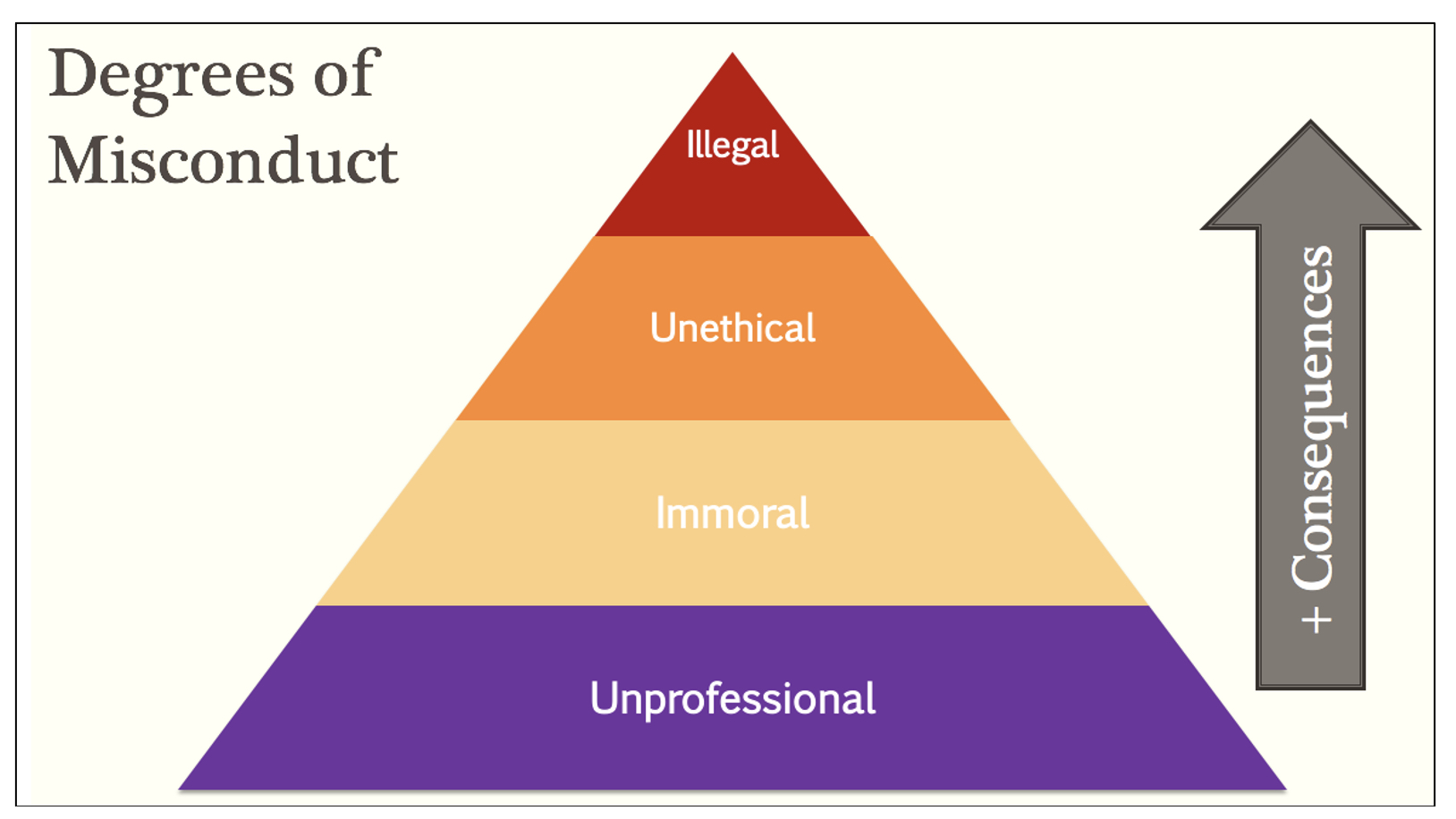
During this presentation on Saturday, June 29 at 10 a.m., we will discuss the thousands of daily rapid-fire decisions (many snap judgments) of teachers and evaluate the potential effects of any who “stray” – “levels of misconduct + consequences.” Furthermore, we will unpack and review a portion of the five principles, 18 sections, and 86 standards in the Model Code of Ethics for Educators. Fostering open and interactive discussion, we will empanel a mock “ethics jury” (volunteers from the attendees) to assess fictitious “fact scenarios” of potential ethical issues, hazardous choices or vulnerabilities, and even tackle a few “conundrums” or problems in educator decision-making. Our jurors will receive our thanks and an Educators Rising Mock Jury t-shirt for their “willingness to serve as guinea-pigs.”

Admittedly, some of our past material on ethics was “for mature audiences only” resulting in the need for adjustments to be made to some of the hypothetical case studies (serious infractions) for group analysis. However, the majority of my work on educator ethics is available for review on this site (in reverse chronological order) by clicking here.

Here are additional case studies for group discussions of ethical dilemmas.

For the participants who attend my Washington D.C. session on June 29, 2024, a facsimile of “Embarking the E3 Train” slides are available. (CLICK HERE.)

PKF

© 2024 Paul K. Fox

Giving Back to the Association

A Pep Talk for Teachers to Become “Team Members!”

I found myself this past Monday morning with a few extra minutes checking my almost empty “to-do” list and, with the exception of planning to watch the Pittsburgh Steelers football game and the endless chore of raking leaves in my yard (I immediately rejected the latter), I discovered I had very few professional or personal priorities to focus on this week! Wow! Some additional “free time!” Shh… don’t tell anyone!

Down time? As I mentioned in a previous blog-post, since the summer, things had been a little hectic for “this retiree.” When I accepted the position of “admin” to the marching band of the school from where I retired, I discovered how fast we can fill up our schedules with meetings, rehearsals, and performances… to the point that it is hard to imagine how I could possibly have done all of this unless I retired from the regular job! My wife jokingly said, “Those were the days!” (perhaps a little unsympathetically?) as she watched me takeoff for band camp, parent salute nights, late night away football games, etc., while she remained cozy at home. “Been there. Done that! Not anymore!”

Only one professional association got me through more than five decades in music education and 35+ years of full-time directing, equipping me to handle the twists and turns of an ever-changing career (e.g., becoming a choral director even though I had never sang in a high school or college choir), and even attending music festivals as a viola and tuba student for four years in the Penn Hills school district. Who do I credit for giving me this “life force,” “teacher chops,” and music mastery? PMEA. We are so fortunate to have this priceless “collaboration of our colleagues,” numerous resources for the benefit of our own professional development, and services we provide to our music students. Cut me and I bleed PMEA blue!

How Are YOU Feeling?

This blog’s “call to action” is necessary because of the turmoil the pandemic has left the arts education community, new school health and safety mandates, re-prioritization of district resources (in some places away from the arts in spite of the need for more not less social emotional learning), reports of the drop in music participant enrollments, decrease in membership renewals, and teacher shortages.

The crush of COVID-19 and all of the program delays, suspensions, (and hopefully not) permanent losses have made this one of the most challenging times I can ever recall. The only way we can get through this is “together…” and frankly, “if you’re not part of the solution, you’re part of the problem!” This is NO TIME to let your membership and involvement lapse! PMEA and other professional music education organizations (like NAfME, ACDA, ASTA) need your “dedication to the cause,” willingness to help “the team” and one other,  and active participation.

Collegiate members, full active members, and retired members – all of us joining forces – can truly “make a difference!” No matter how busy or stressed you are and how much you feel you are “slugging it out in the trenches” alone, we all need to become partners and devote time for and dedication to the associations we are blessed to have right now that support music educators in the Commonwealth, the nation, and the profession.

The Essential Role of Associations

It does not matter which profession you have chosen! You NEED an ASSOCIATION!

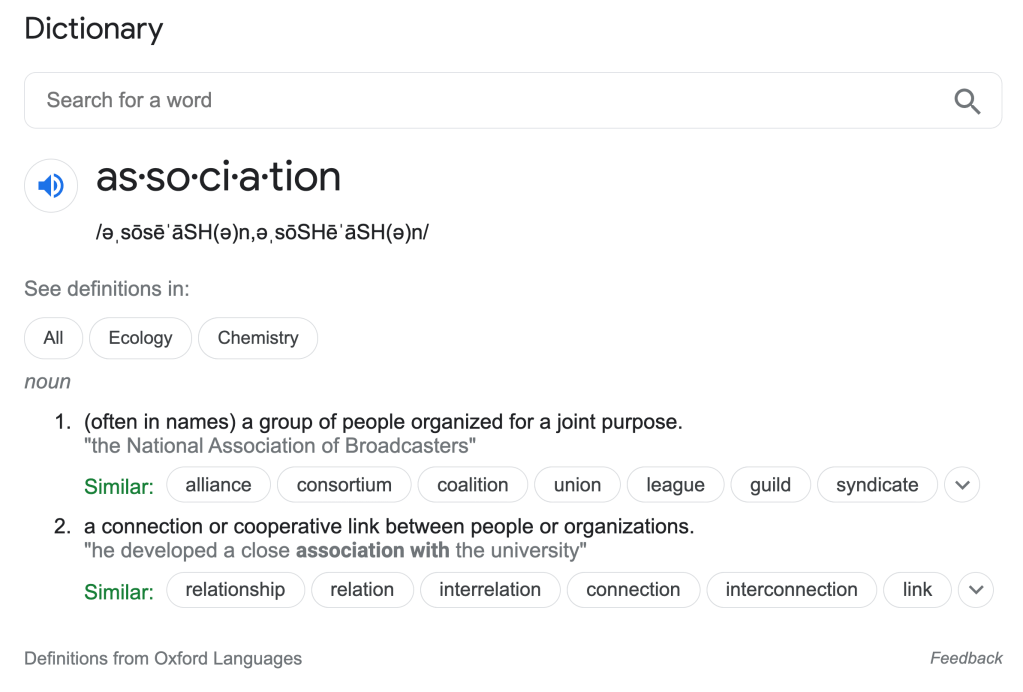
Google English Dictionary provided by Oxford Languages

The architects may have defined “this essential bond” best:

Membership in the relevant professional organization is one of the things that separates a profession from a conventional job. It is a key element that defines a professional. Membership in one’s professional organization is expected of all professionals. It is important to support the advancement of one’s profession, and becoming a member of the professional organization is a part of that advancement.

Involvement with a professional society will afford the participant an opportunity to network with other colleagues in industry and practice. Making connections with others who have similar interests reinforces why one has chosen this career. It enables new professionals to associate with senior members of the profession and learn from them. Joining a professional organization is critical in keeping abreast of the latest knowledge and practices locally, regionally, and globally. It helps the professional to stay abreast of current issues and opportunities and will also assist in personal advancement for the member who becomes involved.

Many professional organizations offer continuing education, seminars, and lectures along with other opportunities for learning. An active participant will have the opportunity to serve in professional development. Working with people outside of one’s own firm and volunteering will build leadership skills. Opportunities for working with the community for the betterment of society and the local economy will be available. There will be possibilities for making real contributions to the human condition through projects the professional organization may take on as a part of giving back to the community. There are events that will call for public speaking skills and professional visibility which will assist in moving one’s career to another level by connecting with other professions and local leaders in the area. The profession will benefit from members’ service and the members will be rewarded in return by such things as personal fulfillment, professional enrichment, and building a stronger resume as a result.

Further definition of the professional responsibilities and ethical practices will come in part from the professional organization. It is a central core for regulation, education, revitalization, networking and service. Joining a professional organization provides occasions and experiences to renew one’s enthusiasm for the practice of interior design. The interaction can be both inspirational and enlightening. Being a member of a professional organization is a symbiotic relationship between the organization and the member that will benefit them both.

Alabama Board for Registered Interior Designers

My “top-ten” benefits for membership in a professional association like PMEA are:

  1. Development and sharing of the standards and best practices of the profession
  2. Student festivals and music performance assessments
  3. Professional development and career advancement opportunities: workshops, conferences, and publications
  4. Leadership training
  5. Collaborative projects such as health and wellness seminars, ethics training, library of online resources, etc.
  6. Networking opportunities
  7. Models and resources for curriculum writing
  8. Coaching and mentoring resources
  9. Resources in job hunting and interviewing techniques
  10. Advocacy of music education and “a voice” (more political “clout”) in defining future government public policy

So, What’s in it for Me?

Review a few of the synonyms of “association” mentioned above: “alliance,” “consortium,” “coalition,” “connection,” etc. I am sure you’ve heard the saying: “TEAM stands for Together Everyone Achieves More.” Or, to quote the philosopher Aristotle: “the whole is greater than the sum of its parts.”

The easiest way for me to show the value of joining PMEA and becoming more active, engaged, and successful in your teaching assignment (no matter what the primary specialty – general music, vocal, band, strings, jazz, music theory, technology, etc) is to take a snapshot of the benefits displayed on the www.pmea.net website. Why try to reinvent the wheel? You might be surprised the extent of the HELP that is available just around the corner! Go ahead… click away! Take a peek at what you may be missing!

On a personal note, PMEA has provided me the insight, inspiration, and opportunities for substantial career growth, “places to go and people to meet” to fill-in-the-gaps of the skill training I may have felt were missing, for example methods and media for teaching a high school choral program for more than 16 years and directing/producing 37+ musicals. In addition, PMEA and NAfME have been the sole institutions that I have turned to for more than 50 years for their sponsorship of choral and orchestral music festivals and other enrichment that have provided my students new and highly motivating musical challenges and countless state-of-the-art once-in-a-lifetime experiences.

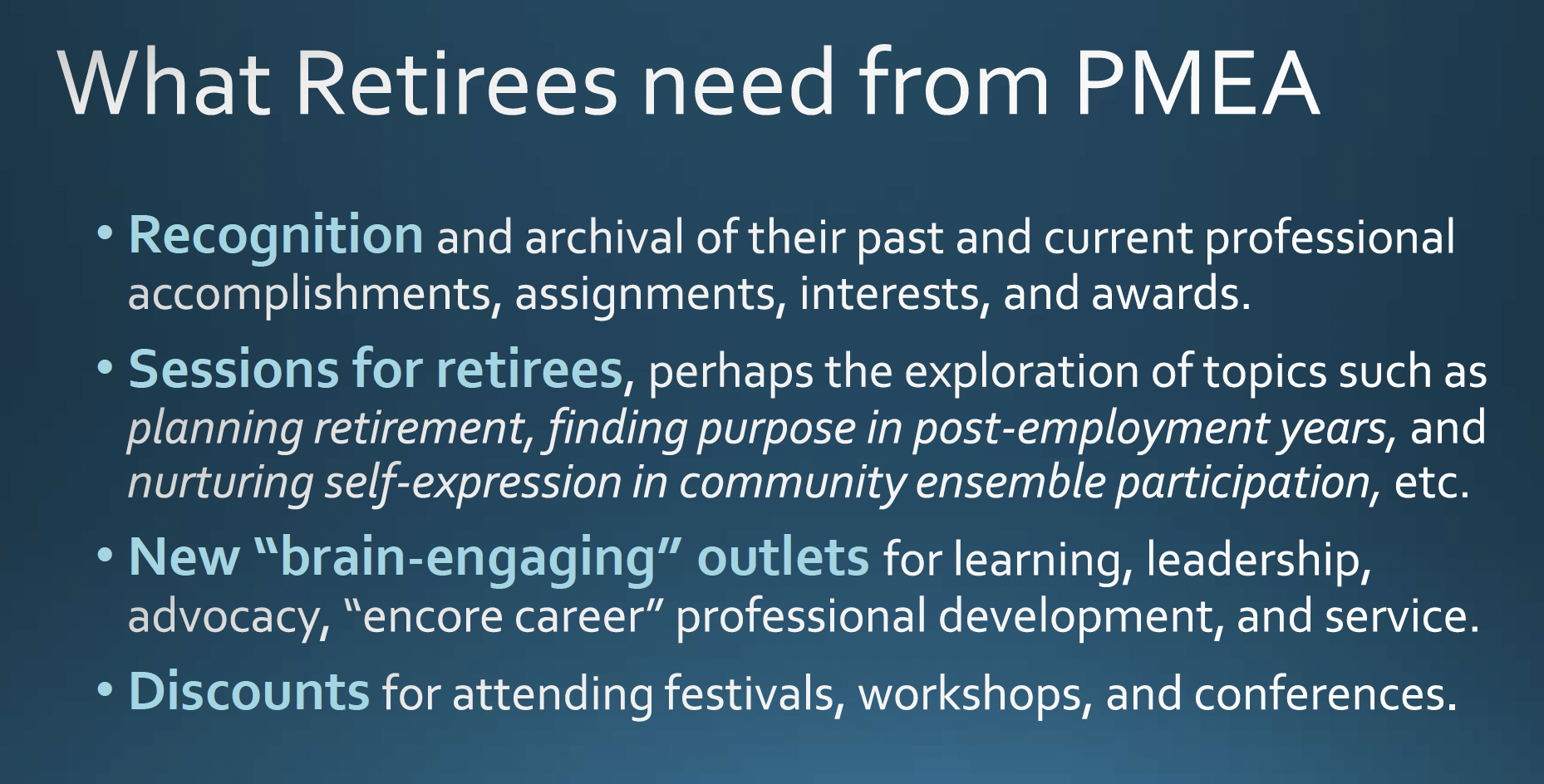
So now, reflect on the title of this blog! It is essential to give back to our association – to help it achieve its mission: “to advance comprehensive and innovative music education for all students through quality teaching, rigorous learning, and meaningful music engagement.” We’re all in this together, and together we can make it better! Slide #6 at the bottom of the retired members’ webpage proposes what PMEA needs from all members (not just retirees):

The number one thing you can do for ANY association is to pay your annual dues, attend its meetings, be active and HELP OUT! In return, PMEA can assist you in finding and sustaining your passions! What are you waiting for? If you have not renewed for the 2021-2022 year, please visit this PMEA membership webpage.

PKF

© 2021 Paul K. Fox

Pictures from Pixabay.com by artist Augusto Ordóñez

Those Were the Good Ol’ Days

The “E” in RETIREMENT is for Energy, Engagement, Excitement, and Endurance

This blog is all about how to stay young and vibrant – BECOMING A VOLUNTEER! Geared to those of us who have retired, this is very personal and unique to every individual, no matter what the age!

Do you remember the song, “Those Were the Days” performed by Mary Hopkins (1968), the Fifth Dimension (1969), and even Dolly Parton (2000)?

Those were the days my friend
We thought they’d never end
We’d sing and dance forever and a day
We’d live the life we choose
We’d fight and never lose
For we were young and sure to have our way.
La la la la
Those were the days, oh yes those were the days

In June 2021, I went back to work. Well, not exactly full-time… but it felt that way!

Remember the times as music educators we spent 15-18 hours a day or more thinking, planning, creating, teaching, problem-solving, schlepping stuff, sweating, and working out beyond the regular school day and during summer months with major music projects like the marching band, spring musical, music adjudication trip, etc.?

Asked by my friend and current Upper St. Clair School District performing arts curriculum leader/HS band director Dr. John Seybert, I signed on to the newly-expanded extracurricular activity (ECA) position as administrative assistant and announcer of the marching band for the school from which I had retired. Filling in the gaps, taking attendance, handling mounds of paperwork, interacting with a whole new generation of music students, and learning a few new software applications along the way like FamilyID, Canvas, Remind, and the district’s Blackboard website, I threw my hat in the ring, not just to continue to serve as the voice of the “Pride of Upper St. Clair” at football games halftime shows (now in my 36th year), but to manage the full schedule of rehearsals, meetings, performances, and blessedly (?) exhausting 24/7 week-long band camp. I forgot how it felt to get up at 6 a.m. and return home around 9:30 p.m.

It has been exhilarating. It has been exhausting!

On another stage, when the local COVID stats fell two months ago, I was invited back to our local community hospital to serve as a volunteer – discharging patients from their rooms or escorting them from the outpatient surgery or endoscopy units. Yes, I was called upon to somehow restore the physical demands I (used-to) place on my personal stamina. Fully fatigued and expended after a shift of 4-7 hours of driving my wheelchair taxis (sometimes carrying over-sized people even though we’re only supposed to move those weighing 250 pounds or less), I find myself yearning for a retiree “power-nap,” only to regroup for the next day’s challenging schedule and another early-morning wake-up.

The best part of these 8-15 hours per week? Choosing one of the finest medical facilities in our metropolitan area – St. Clair Hospital (now “Health”) – I have the chance to meet former music students (grown up), their kids, parents and grandparents, friends, and other acquaintances at their greatest need. And, there’s almost no finer escort “call” than going to the family birth center and bringing to the car a new mommy and two-day-old baby… sharing that special moment with an alum or school staff member!

It has been exhilarating. It has been exhausting!

WHAT

In past articles on a satisfying retirement, I often quote the book How to Retire Happy, Wild, and Free, the search for self-reinvention and new avenues for fulfilling those essential needs of “purpose, structure, and community” that employment had previously provided us. Author Ernie Zelinski’s definition of “purpose” are these goals:

  • To make a difference in people’s lives
  • To make a contribution
  • To find creative expression
  • To take part in discovery
  • To help preserve the environment
  • To accomplish or achieve a challenging task
  • To improve health and well-being

We learn from Revitalizing Retirement: Reshaping Your Identity, Relationships, and Purpose by Nancy Schlossberg that for retirees it is important to feel “needed” and that pursuits that foster “mattering” are crucial to a positive self-esteem, good mental health, and stable life balance.

It has been suggested that one problem of retirement is that one no longer matters; others no longer depend on us…

The reward of retirement, involving a surcease from labor, can be the punishment of not mattering. Existence loses its point and savor when one no longer makes a difference.”   

– Rosenberg and McCullough

The opposite of “mattering” is feeling “marginalized.” I would rather feel worn-out than useless/ignored/discarded!

In his book Design Your Dream Retirement, Dave Hughes recaps with his four essential ingredients of life balance:

  1. Physical activity
  2. Mental stimulation
  3. Social interaction
  4. Personal fulfillment

If you read my bio in the “about” tab above, I think all would agree: mission accomplished! I’ve made myself extremely busy. (Perhaps I “matter” a little too much?) “It’s a good thing I am retired… I would not have enough time to do all of these things if I still had a job!”

Yes, it FEELS good!

WHY

Now some rationale from the online pundits. First, review the article “Why Elderly People Should Volunteer.” According to the “experts,” volunteering is:

  • Socially beneficial
  • Good for mental cognition
  • Giving back to the community
  • Physically engaging
  • An opportunity to learn something new
  • Flexible
  • A strategy to fill up your day
  • The reason you get out of bed in the morning

Of course, one has to be careful and follow your doctor’s advice on what tasks will not overwhelm you! The CDC and other medical professionals urge adopting a “safe” routine of regular physical activity as a part of an older adult’s life. Check out websites like https://www.cdc.gov/physicalactivity/basics/activities-olderadults.htm and https://www.cdc.gov/mmwr/preview/mmwrhtml/00001482.htm. Besides keeping your mind active, increasing your physical activity as a volunteer while “living the dream” in retirement will:

  • Reduce the risk of serious illnesses (heart disease, type II diabetes, and depression
  • Help you manage a “healthy weight”
  • Improve your balance and coordination
  • Decrease the risk of falls or other injuries

Talk with your doctor to find out if your health condition limits, in any way, your ability to be active. Then, work with your doctor to come up with a physical activity plan that matches your abilities. If your condition stops you from meeting the minimum recommended activity levels, try to do as much as you can. What’s important is that you avoid being inactive.

Centers for Disease Control and Prevention

Volunteering is all about being more eleemosynary (adjective defined as “generous, charitable, gratuitous, or philanthropic”). In my workshops on retirement transitioning, I frequently quote two gurus on the benefits of “giving back.”

With a frequently untapped wealth of competencies and experiences, older people have much to give. This fact, coupled with fewer requirements for their time, gives them unique opportunity to assume special kinds of helping roles.

– Mary Baird Carlsen – Meaning-Making: Therapeutic Processes in Adult Development

Our increased longevity and generally better health has opened our eyes to new and increased opportunities to contribute to the betterment of society through civic, social, and economic engagement in activities we believe in.

– Jo Ann Jenkins, CEO of AARP – Disrupt Aging

HOW

But you already knew all of this, right? There are so many ways to “bring it on” and “make a difference” in your “golden years.” (Wow – three cliches in a row!)

There are so many directions you can go to offer your free time to volunteer:

  • Escort at local hospital or nursing home
  • Walk dogs at animal shelter
  • Serve in charitable fund-raising projects
  • Assist food banks and meals-on-wheels agencies
  • Enlist as special advocate for abused or neglected children
  • Work as hospice volunteer
  • Maintain parks, trails, nature habitats, or recreation centers
  • Host an international student
  • Become a youth director, mentor, or scout leader
  • Teach summer school, night classes or Performing Arts workshops
  • Give guided tours or lectures as a docent at a local museum
  • Apply office management and clerical skills to benefit libraries and other nonprofit associations
  • Run a school club (share your hobby)

As trained music educators, we can share our precious skills in creative self-expression :

  • Accompany, coach, or guest conduct school/community groups, college ensembles, or music festivals.
  • Run for office or chair a committee or council of your state or local MEA association
  • Serve as presiding chair or member of the your state’s MEA planning committee or listening committees for the music in-service conferences
  • Participate as guest lecturer or panel discussion member at a conference, workshop, or college methods program
  • Judge adjudication festivals
  • Help plan or manage a local festival or workshop
  • Assist the local music teacher in private teaching, piano playing, marching band charting, sectional coaching, set-up of music technology, instrument repair, etc.
  • Write for your professional organizations’ publications (like PMEA or NAfME)

If you are a retired music teacher and member of PMEA, you could sign-up for the Retiree Resource Registry and serve as an informal consultant to others still “slugging it out” in the trenches. Go to the PMEA retired member focus area for more information.

More sources to peruse on this subject:

Anyway, back to a little “bragging!” At least “yours truly” is holding his own and hopefully contributing what he can to the success and welfare of others! Are you? In my retirement pastime, I refuse to sit idle, binge-watch movies on Netflix, or view hours of boring TV. To quote another song’s lyrics, this “senior citizen” will never lament…

Life is so unnerving
For a servant who’s not serving
He’s not whole without a soul to wait upon
Ah, those good old days when we were useful
Suddenly those good old days are gone
Ten days we’ve been rusting
Needing so much more than dusting
Needing exercise, a chance to use our skills
Most days we just lay around the castle
Flabby, fat, and lazy
You walked in and oops-a-daisy!

“Be Our Guest” from Beauty and the Beast

So, what’s your story?

PKF

iStock by Getty images:

Images from Pixabay:

© 2021 Paul K. Fox
Cultivating a Precious Gem: Engagement

What do SHJO, Gerardo Parra and the “Baby Shark” theme, and the concepts of collaboration and teamwork have in common?


FoxsFiresides

[Artistic Director’s message spoken at the fall concert of the South Hills Junior Orchestra on November 10, 2019… appropriate to all performers, teachers, and parents.]


Have you had a reason to ask yourself recently, “What am I thankful for?”

Hopefully you can reflect on many things… Your family, friends, health, success, and happiness may instantly come to mind.

How about the privilege of membership in a “musical team” – valuable enrichment provided by both your school program (in which all of our pre-college students should participate) and community groups, like the South Hills Junior Orchestra (SHJO).

One does not have to look far to confirm the benefits of music education and fulfillment of personal creative self-expression. Numerous articles and statistics point to the rewards of “making music” and regular collaboration in a performing ensemble:

I even tried “wrapping my arms” around a definition of this “calling” (one that I have spent my entire life sharing) in a blog-post which features a community TV interview of me by SHJO musician Sam D’Addieco: https://paulfox.blog/2019/06/16/the-importance-of-music-education/.

I do feel thankful! I am grateful to have been granted this opportunity of conducting SHJO and interacting, teaching, and learning alongside our gifted and enthusiastic instrumentalists! These experiences and memories are “priceless” and “fragile,” just like a rare jewel or crystal. I complain for more members (we’re small and turnout has not always been good), but I am also reminded of a comment from my own inspirational school orchestra and string teacher, Mr. Eugene Reichenfeld, who was often heard to say: “Our orchestra may be small, but it is precious – just like a diamond!”

I say, we must cultivate the future of this special musical experience!

Don’t take it for granted! This unique “mosaic of members and music, where all musicians learn, grow, and lead” will only continue if YOU commit consistent time, focus, attendance, and practice. Success relies on your full engagement to SHJO. We need the players, booster officers, parents, and other adult volunteers to join forces!

CBS Good MorningThe other day, I watched on CBS This Morning an interview of World Series Champion Washington National’s star outfielder Gerardo Parra (https://www.cbsnews.com/video/gerardo-parra-on-how-baby-shark-became-the-nationals-anthem/) who is credited for helping to turn things around for the team. Although he may be remembered more for giving the Nationals a new anthem, “Baby Shark,” (chosen by his baby daughter), Parra discussed why he was concerned that the other players on the team did not seem “engaged” and stay afterwards in the clubhouse (some paraphrased below):

  • Parra: “Wow, what a team we have,” and referring to the regular season, “But, even after we won, no one was there to celebrate in the clubhouse.”
  • Anthony Mason: “A lot of people credited you for turning around the team culture.”
  • Parra: “It’s more important for my team that we start in the clubhouse… we dance in the clubhouse.”
  • Gayle King: “But you started that hurrah. You said everybody used to leave and then you said no, everybody, let’s stay! One person came, then one person came, and another person came…”
  • Parra: “Everybody like family. We’re one team, not 25 men.”

When he joined the team in May, Washington was a team with a losing record of 33-38 and 8½ games out of first place in the National League East. Parra himself was mired in a 0-for-22 slump. That’s when he chose “Baby Shark” and got his team motivated! In their last 100 games, the Nationals won 75. Sure, they have amazingly gifted and hardworking players, but what was the cornerstone of their victory? Their teamwork, “power of collaboration,” empathy for each other, and unified sense of purpose! This is just what the doctor ordered for the 37th season of SHJO, and all similar youth or community groups. We need to develop more teamwork, collaboration, and engagement, too!

Thanks, kudos, and bravos go to all musical caregivers and participants for caring, giving, and sharing, and especially uniting together as a team. What really matters to me the most? As I told Sam in the interview, I truly cherish those “ah-ha” moments of realization we see in our musicians’ eyes when they “get it” and reach a new pinnacle of success or mastery of their artistry! I also love observing many peers-helping-peers, multi-generational teamwork, partnerships of musical leaders and followers in the ensemble, and numerous “random acts of kindness” every Saturday morning.

“My” SHJO remains the single most motivating and meaningful event of my week!

Let’s all celebrate a Happy Thanksgiving!

PKF


hi-res logo 2018The mission of South Hills Junior Orchestra, which rehearses and performs at the Upper St. Clair High School in Pittsburgh, PA, is to support and nurture local school band and orchestra programs, to develop knowledge, understanding, performance skills, and an appreciation of music, to increase an individual member’s self-esteem and self-motivation, and to continue to advance a life-long study of music. Members of the Orchestra learn, grow, and achieve positions of leadership to serve their fellow players.

(For more information about SHJO, please visit www.shjo.org.)

This and all Fox’s Fireside blog-posts are free and available to share with other music students, parents, directors, and supporters of the arts.

Click here for a printable copy of Cultivating a Precious Gem – Engagement.

Other “Fox Firesides” are available at https://paulfox.blog/foxs-firesides/.


© 2019 Paul K. Fox
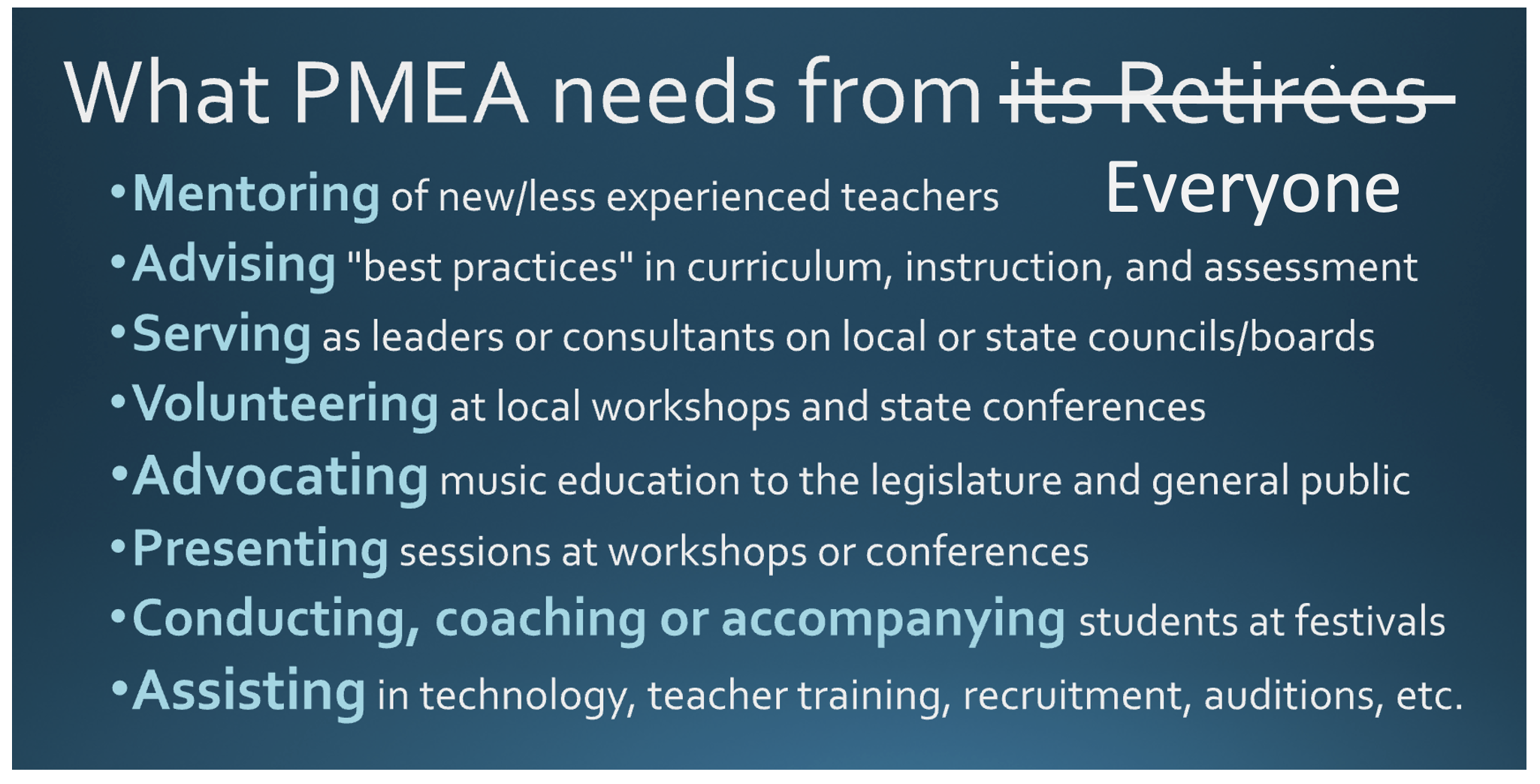
Photo credit from Pixabay.com: “Pumpkin” by Lolame

Summertime Prep for Music Ed Majors

Collegiates: You snooze, you lose!

After a well-deserved break from your academics and other college or work deadlines, music-2674872_1920_kevinbismnow would be the perfect time to explore supplemental resources and get a “head-start” on additional pre-service training for next fall. These tips are especially valuable to anyone entering his/her senior or final year as a music education major, finely honing in and marketing your skills as a professional in order to be prepared for finding and succeeding at your first job.

Actually I hate to admit it, I enjoy assigning college students a little “homework!” But, most of this you can do from the comfort of your patio, beach blanket, swimming pool lounge chair, or couch in the game room. With the exception of “getting your feet wet” and diving into enriching music teaching field experiences and a summer workshop or two, all you need is a pencil to take notes and a device with access to the Internet.

There’s a lot to-do right now, and you only have the rest of July and August. Please try to “keep your eyes on the target” and squeeze in a few of these self-improvement plans around your vacation trips (seven lessons – see sections below) :

  1. Summer practicum
  2. Conferences
  3. Online research
  4. Skill gap-filling
  5. Ethics training
  6. Digital archiving
  7. Interview prep


orchestra-2496505_1920_HeungSoon


1. Are you really ever “on vacation” from music education?

Most veteran music educators would respond with “NEVER!” We maintain our professionalism by participating in workshops, reading teacher journals and online articles, perusing lesson materials and new music, practicing and advancing our personal musicianship, undergoing technology “tune-ups,” and focusing on other career development. This is a 12-month, even 7-day process, and academic breaks when they appear on our calendar allow us to “double-down” in areas we need the most help.

“Hands-on” training not only “fills-up your resume” with primary employment/volunteer sources, but more importantly, exposes you to realistic opportunities to expand your skills and knowledge of the “best practices” in music education and leadership training, while building techniques for handling student motivation and discipline best learned from “the school of hard knocks.”music-3090204_1920_brendageisse

These placements don’t always come “knocking at your door.” Go out and seek a little adventure! For leads, talk to your high school band, string, or choir director. Your purpose is to find something that allows you some contact with children… free (usually) or paid, in or outside the field of music and the arts. Here are a few ideas:

  • Coach summer band sectionals, field rehearsals, marching or dance practices, etc.
  • “Put up your shingle” and teach private or small class music lessons.
  • Offer to arrange music or or provide choreography for local school drum-lines, marching bands and/or auxiliary units, or theater groups.
  • Sing in a community or church choir, and offer to help accompany, vocal coach, or conduct.
  • Sign-up to assist in local youth ballet, modern dance, or drama programs.
  • Sing, play, or teach solo or chamber music for summer religion or music camps, childcare facilities, hospitals, or senior citizen centers.
  • Volunteer (in almost any capacity) at a preschool or daycare center.


kids-1093758_1920_klimkin


2. The tools of the trade – CONFERENCES!

Summer is a GREAT time to grow your network of valuable opportunities for future collaboration, do a little goal setting, and “push the envelope” with professional development of the “latest and greatest” and “state of the art” music and methods.  The primary source for professional development is the education conference. There still may be time for you to find one close to you, perhaps in conjunction with a little sightseeing or visits with friends and relatives in the same city, like the following:

Thanks to www.takeflyte.com/reasons-to-attend-conferences, we know that attending workshop sessions are “good for you!” Participating in a conference helps you to…

  • Sharpen the saw (sharpen your skills – Stephen Covey’s seventh habit of highly effective people)
  • Meet experts and influencers face-to-face
  • pmeaMix and mingle to improve your networking opportunities
  • Find new tools and innovations
  • Learn in a New Space
  • Break out of your comfort zone
  • Be exposed to new tips and tactics
  • Relearn classic techniques with greater focus
  • Share experiences with like-minded individuals
  • Discover the value of the serendipity in a random workshop
  • Invest in yourself
  • Have fun!

If you really need any additional rationale for spending the money, click on the blog-post “Getting the Most Out of Music Conferences” at https://majoringinmusic.com/music-conferences/.

Finally, believe-it-or-not, you can bring the conferences to YOU! For the annual $20 subscription fee, you can view NAfME Academy professional development videos on almost any topic you can imagine. Check out the NAfME library of webinars: https://nafme.org/community/elearning/.


marching-band-1404489_1920_sam99929


3a. A winning website

The aforementioned Majoring in Music website is an excellent place to visit. It is amazingly extensive. You should read these articles for your “final year of prep.”


3b. These “awesome” resources are brought to you by NAfME

Besides the broad-based music subject matter and specific teaching skills, here’s some valuable advice, including how to “run a music program” (first link). I hope I am not stating the obvious: You should become a member of this national association for the advancement of music education.


Amplify

I also want to point you to the community discussion social media platform called Amplify, a benefit of NAfME membership. We are stockpiling a lot articles for college music education students, as well as sharing dialogue on everything from pedagogical issues to music equipment purchasing recommendations in both the collegiate member group and “music education central.” Go to https://nafme.org/introducing-amplify-largest-community-music-educators-country/.


guitar-2922536_1920_sunawang


4. “Filling in the gaps”

Your music education methods courses and other college classes were never expected to provide 100% of the necessary tools to become a competent teacher in every setting. This spotlights the need for professionalism. Once you land a job, you will have to “catch-up” and seek additional training to improve those areas in which you feel inadequate or unfamiliar. You can begin NOW to explore a few of these areas while enjoying your less stressful off-campus schedule:

  • child-621915_1920_skeezeUnderstanding specific educational jargon and the latest approaches, applications, and technologies in the profession (e.g. Backwards Design, The Common Core, Whole Child Initiatives, Multiple Intelligences, Depth of Knowledge and Higher Order of Thinking Skills, Formative, Summative, Diagnostic, and Authentic Assessment, etc. – Do you know the meaning of these terms?)
  • Teaching outside your “major” area or specialty (e.g. instrumental music for voice students, etc.)
  • Comprehending behavior management techniques and suggestive preventive disciplinary procedures
  • Mastering the use of valid assessments (e.g. can you give specific examples of diagnostic, authentic, formative, and summative assessments?) as well as a variety of music rubrics and evaluative criteria
  • Knowing the provisions of the Family Educational Rights and Privacy Act and other confidentiality statutes, Individual Education Plans and service agreements, and accommodating students with disabilities

flute-2245032_1920_congerdesignYou need to ask yourself the question, “What are my greatest weaknesses in music education?” Or, to put it another way, “What school assignments would I feel the least confident to teach? After earning your state’s all-essential credential, your certificate will likely be general and only say “music Pre-K to Grade 12.” Administrators will expect you can “do it all” – introducing jazz improvisation at the middle school, accompany on the piano or guitar all of the songs in the grades 1-6 music textbook series, directing the marching band at the high school or the musical at the middle school, starting an elementary string program, etc.

Figure out and face your greatest fears or worse skill areas. Work on them now! Take a few lessons, join a new ensemble of the “uncomfortable specialty,” ask help from your peers, etc.

More about this was printed in a previous post: https://paulkfoxusc.wordpress.com/2018/03/11/transitioning-from-collegiate-to-professional-part-ii/.


microphone-1804148_1920_klimkin2


5. The ABC’s of professional ethics

So far, have you been given any ethics training in college? Most pre-service educators only receive a cursory introduction to such things as codes of conduct, moral professionalism, guidelines to avoid conflicts in relationships with students, use of social media, confidentiality regulations, copyright infringement, pedagogical and economic decision-making, etc.

Now in my 46th year working in the field of music education (although retired from the public schools in 2013), I unblushingly admit I never had a full-blown course in ethics. Music colleagues have confirmed to me that it was barely (or not at all) touched-on in music methods classes, introduction to student teaching, school district orientation or induction sessions, or back-to-school in-service programs. choir-458173_1920-intmurrSince music teachers are all “fiduciaries” (do you know the meaning of the word?) and legally responsible for our “charges,” wouldn’t it be a good idea to review our state’s regulations and code of conduct, and hear about the challenges and pitfalls of ethical decision-making before we jump in and get “over our heads,” so-to-speak?

I can offer you two ways to immerse yourself into music education ethics. If you are a PCMEA or PMEA member and an “auditory learner,” you might prefer the FREE PMEA online webinar video (two-part) plus handouts at https://www.pmea.net/webinars/. Otherwise, visual learners and others may like this five-part blog series:


band-1850616_1920_Pexels


6. “A picture says a thousand words” in marketing yourself

Have you been archiving your last several year’s of field assignments? Have you recorded numerous moments of teaching, music directing, performing, and working with students? Are you prepared for the coming year’s student teaching, getting ready to take still photos, audio samples, and video excerpts?

“We cannot emphasize the power of pictures enough when it comes to portfolios. During interviews, committee members are trying to get to know you and trying to envision you teaching. Don’t trust their imaginations to do so, give them pictures… photos or newspaper articles of you teaching students in the classroom, with students on field trips, learning excursions or outside class activities, with children while you are serving in adviser roles, with your students at musical or athletic events, coaching or working with children in a coaching capacity, as a leader and role model.” – http://www.theeduedge.com/top-five-must-haves-top-five-could-haves-your-teacher-interview-portfolio/

As I mentioned in a previous blog, be careful to obtain permission in advance to video record students for your e-portfolio. During your field experiences or student teaching, little-girl-3043324_1920_Atlantiosask your cooperating teacher (or his/her supervisor’s) permission. Some school districts have “do not photo” rosters. (However, in my district, only a few elementary students were “on the list” and most defaulted to a “permissible” status unless the parent opted out. The principal’s secretary had a record of all exceptions.) It is also suggested that you focus your camera mostly on YOU and not the students, from the back of the classroom or rehearsal facility (possibly from afar), so that the student faces are not clearly discernible. To respect their privacy, in the recorded excerpts, do not use any segment announcing the names of your students.

What would be ideal to place on/in your website/e-portfolio? Show a wide spectrum of experience and training: elementary and/or middle school general music, band, choral and string ensembles (all grades), marching band, musicals, dance, music technology, piano and guitar accompanying, Dalcroze eurhythmics, Orff instruments, etc. Competency, versatility, and being well-rounded are the keys here.


boy-273279_1920_Silberfuchs


7. Teacher interviews – “practice makes perfect”

I have written a lot on the subjects of assembling a collection of your teaching anecdotes and stories, marketing your “personal brand,” and preparing for the employment screening process. (Have you wandered through the comprehensive listing at https://paulkfoxusc.wordpress.com/becoming-a-music-educator/?)

However, I recently came upon several new-to-me online articles that summarize the basics. Please take a look at these:

After reading all of these (and compile your own list of interview questions), you should get together informally with your fellow juniors and seniors and hold mock interviews, record them, and jointly assess the “try out” of your interviewing skills to land a job.

Finally, have you recently updated your resume, and created (or revised) your professional business card, website, and e-portfolio?

children-2685070_1920_mochilazocultural


Okay, I admit it. I got a little carried away. You would need TEN SUMMERS to cover everything above. What’s that saying? “There’s never enough hours in a day…”

Hopefully these resources  and recommendations are helpful “food for thought!” You cannot accomplish anything by procrastination… or just “sleeping in!”


Many have said that aspiring to be a music educator is a lot like a “calling.” Using your summer “free time” is all about “professional engagement.” One of my superintendents said he expected prospective new music teacher recruits to show high energy, enthusiasm, sense of purpose, and dedication during the interview… even a supposed willingness to “lay down in front of a school bus” or “do whatever it takes” to make the students (and the educational program) successful. Regardless of the hyperbole, that’s engagement!

So, what are you waiting for? Pass the sunscreen and the ice tea. Then, after a quick swim, jog, round of golf, or game of tennis, get started on your summer assignments!

PKF


piano-78492_1920_nightowl


© 2018 Paul K. Fox
 

Photo credits (in order) from Pixabay.com: “music” by ArtsyBee, “music” by KevinBism, “orchestra” by HeungSoon, “music” by brendageisse, “kids” by klimkin, “marching band” by sam99929, “guitar” by sunawang, “child” by skeeze, “flute” by congerdesign, “microphone” by klimkin, “choir” by intmurr, “band” by Pexels, “little girl” by Atlantios, “boy” by Silberfuchs, “children” by mochilazocultural, and “piano” by nightowl.

Transitioning from Collegiate to Professional – Part III

The Final Leap from Pre-Service to In-Service:

The Metamorphosis and Integration of Philosophy, Maturity, and Teacher Preparation

trumpet-1495108_1920_congerdesignTo “wrap-up” our final segment, we will review the development of a professional “marketing plan.” This is blog #3 out of 3. (Be sure to also check out #1 and #2, too.)

These are three critical skills you need to foster in the search for a school music position, marketing yourself, interviewing, and landing a “good” job:

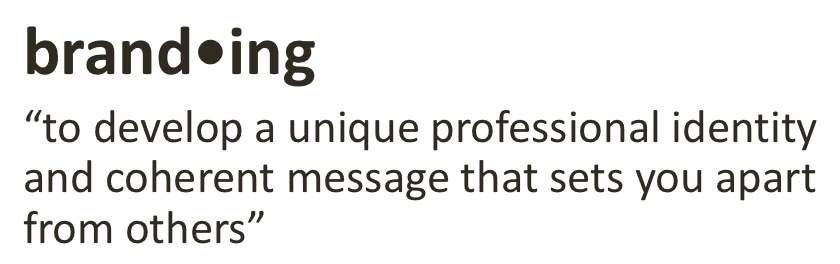
  • Personal branding (who are you, what makes you unique, and what do you have to offer?)
  • Story telling (anecdotes) of your positive attributes and personal brand, including a record of your habits of “engagement” in music education, and
  • Networking (associating with other professionals and getting your positive stories “out there”).


skills-3262172_1920_diwou

branding

Personal Branding

“Personal branding is the practice of people marketing themselves and their careers as brands. While previous self-help management techniques were about self-improvement, the personal-branding concept suggests instead that success comes from self-packaging… Personal branding is essentially the ongoing process of establishing a prescribed image or impression in the mind of others about an individual, group, or organization.”

– Wikipedia: https://en.wikipedia.org/wiki/Personal_branding

What is the difference between marketing and branding? According to some, “marketing is what you do, branding is what you are.” (www.tronviggroup.com/the-difference-between-marketing-and-branding/)

phone-2840244_1920_RobinWiggins13Shama Hyder posted “7 Things You Can Do to Build an Awesome Personal Brand” at http://www.forbes.com/sites/shamahyder/2014/08/18/7-things-you-can-do-to-build-an-awesome-personal-brand/, including the following outlined summary:

  1. Start thinking of yourself as a brand
  2. Audit your online presence
  3. Secure a personal website
  4. Find ways to produce value
  5. Be purposeful in what you share
  6. Associate with other strong brands
  7. Reinvent

During these waning months for college music education seniors, now is the time to finalize the preparations for personal branding and beginning the employment search! Personal branding is critical to help you “stand above the rest,” showing that you have what it takes and would be a major asset to a prospective employer, and defining and marketing your own unique qualities that would make you “a good fit” for the specific job openings.

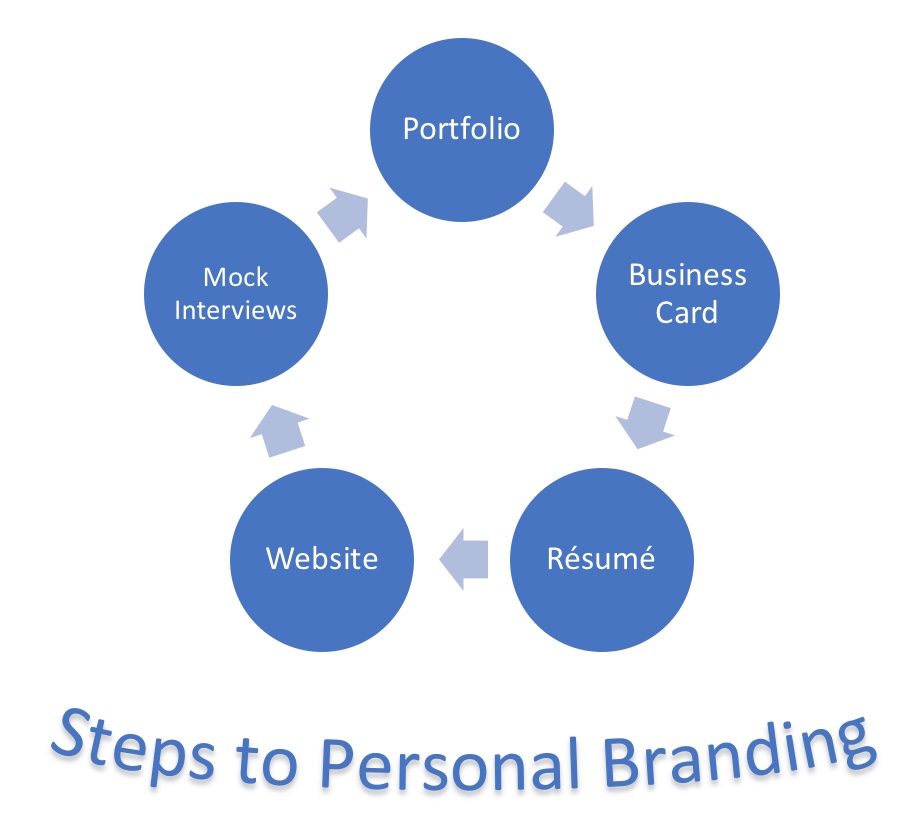
Steps to Personal BrandingThe branding process involves first developing your philosophy of music education, archiving your awards and accomplishments, documenting your grades and ok-3061659_1920_RobinHiggins12experiences, and collecting stories/personal anecdotes of your strengths. The next steps include the creation of a written and electronic portfolio, business card, resume, and website. Finally, you must compile/assemble everything together and practice (and self-assess) your “story-telling skills” to answer those important questions at well-rehearsed “mock interviews.”

You will likely not have enough time to complete all of these tasks during methods classes or student teaching seminars. That’s okay. If you are serious about prepping yourself to find a great music teaching job, the valuable links (see below) and articles are out there… just manage your time and start reading.

feedback-2990424_1920_geralt

networking

Networking

According to the article “Network Your Way to Secure a Teaching Job” at https://resumes-for-teachers.com/job-search-help/teacher-network/, many people are unaware of the basics of networking and how to use them it to their advantage in securing a job:

“Networking simply refers to finding job-related contacts. Most teachers who are just beginning their careers may feel that they have few, if any, networking contacts in the teaching field. It is important to consider the many different areas of networking as you create your own group of networking contacts to help you secure a teaching job. It is interesting to note that many of the teaching positions that are filled each year are filled by those who came to the attention of personnel managers by recommendation.”

“Always think about adding to your teaching network. When meeting new people, be certain to add them to your network. Talk to them about your skills, education, experience, and learn about their jobs. Make sure that you always ask for a business card.”

Do you have a business card? Is your résumé updated and available online on your professional website?

young-3061653_1920As I laid out in a previous blog “Networking Niceties: The ‘How-To Schmooze’ Guide for Prospective Music Teachers” at https://paulkfoxusc.wordpress.com/2016/04/04/networking-niceties/, the concept of networking is two-way communications. Just like collective sets of nerve synapses, two-way connections are expected to fire repeatedly in all directions. That’s actually the science behind memory. For professional networking, it is your “charge” to create multiple pathways to/from school HR managers and secretaries, administrators, music supervisors and department heads, and music teachers… and YOU – your skills, accomplishments, unique qualities, experience, education, and personality traits.

pcmeaThe above blog-post also explores setting up a good organizational system to manage your professional contacts.

If you are a Pennsylvania collegiate member (PCMEA), I heartily recommend the article “Networking 101” by Dr. Kathleen Melago, PCMEA State Advisor and Associate Professor of Music Education at Slippery Rock University, published in the Summer 2017 issue of the state journal PMEA News (pages 40-42). Here are several quotes from her work:

“One of the most common ways music educators can plan to network is at conventions. First, try to avoid interacting only with people from your school or people you already know from other schools. Go to sessions that interest you and look for opportunities to meet people there. Before the session starts, introduce yourself to people sitting around you. Use your social skills to assess whether they seem like they want to engage in a conversation or not. After the session, go up and meet the presenter.”

“Of course, social media is another great way to build your network. Networking with professionals already in the field can help you see what they are doing and help you build ideas of what you would like to do in your program someday.”

“Sometimes, you might find yourself networking unexpectedly. For example, you might go into school to work with their clarinet section during band camp and just happened to meet the choir teacher. That is networking!”

“To help your networking be most effective you need to have good communication skills. When interacting with others in a networking situation, be sure to focus on the person with whom you are speaking. Avoid looking off into the distance as if you were to anticipating someone else more important coming by. But your cell phone away and be present to the conversation.”

“Be yourself in your networking interactions. If you pretend that you are someone you are not, you will either end up unhappy or you’ll be discovered is someone who is not genuine.”

Dr. Melago goes on to provide a myriad of excellent examples of networking skills and opportunities.

Another resource specifically for networking at music teachers conferences is posted at https://nafme.org/getting-music-conferences/.


music-1237358-2 ricardo vasquez


engagement

Engagement

Here is an excellent definition of “professional engagement” from “Domains of Teaching” of the Australian Institute for Teaching and School Leadership at https://www.aitsl.edu.au/teach/understand-the-teacher-standards/domains-of-teaching.

Teachers model effective learning. They identify their own learning needs and analyze, evaluate and expand their professional learning, both collegially and individually.

Teachers demonstrate respect and professionalism in all their interactions with students, colleagues, parents/carers and the community. They are sensitive to the needs of parents/carers and can communicate effectively with them about their children’s learning.

Teachers value opportunities to engage with their school communities within and beyond the classroom to enrich the educational context for students. They understand the links between school, home and community in the social and intellectual development of their students.

Engagement for prospective music teacher may include synonyms like “participate,” “enroll,” “join,” “be active,” “volunteer,” “seek experience,” and “make a difference!”

Are you a member of your professional music education associations?

  • NAfME National Association for Music Education
  • PCMEA Pennsylvania Collegiate Music Educators Association, or another state’s local NAfME collegiate chapter
  • pmeaPMEA Pennsylvania Music Educators Association, or another state’s NAfME-affiliated MEA
  • ACDA American Choral Directors Association
  • ASTA American String Teachers Association
  • NBA National Band Association

Did (or will) you attend your state music teachers’ conference and local workshops on music education and professional development?

To prove you are “professionally engaged,” I would expect to see a consistent record of modeling in the following areas:

  1. excited-3126449_1920_RobinHiggins9Self-reflection of the professional’s teaching practices and modification of these as needed to match changes in the environment and circumstances
  2. Self-assessment of the professional’s methods and approaches, as well as the progress of the students’ learning, using both formative and summative methods for constant and ongoing improvement
  3. Identification and planning of professional learning needs.
  4. Unsupervised (or unplanned by school administration) goal-setting and self-guided implementation of opportunities for professional development
  5. Association with professional learning communities, school and community meetings, and other collaborative projects
  6. Volunteer service in music and music education
  7. Membership and subscription to music education journals and participation in online professional community discussion groups

Many have said that aspiring to be a music educator is a lot like a calling. One school superintendent I know said he expected prospective new recruits to show high energy, enthusiasm, sense of purpose, and dedication during the interview… even a supposed willingness to “lay down in front of a school bus” or “do what ever it takes” to make the students (and the educational program) successful. That’s engagement!

classical-music-1838390_1920_Pexels

In summary, becoming a music educator is about finding your inner confidence, a mindset that you know what you’re doing, and that you’re ready for that real world experience. You’ve learned those essential skills in conducting, piano accompaniment, arranging, student behavior modification and discipline, music diagnosis and remediation, and even how to market your professionalism. Now… drum roll, please! Here’s… a master music teacher!

target-3306771_1920_geralt

In closing, here are supplementary materials to help you to “get your feet wet,” all free and available online. The following lists, although not comprehensive, are a good place to start (courtesy of https://www.pmea.net/wp-content/uploads/2012/10/Collegiate-Communique-No11-022218-2.pdf):

Good luck!


Personal Branding, Marketing, and Networking

Business Cards

Résumés

Portfolios and Websites

Interview Questions, Techniques, and Skills of “Story-Telling”


PKF

© 2018 Paul K. Fox

 

Photo credits (in order) from Pixabay.com: “tutor” by nrjfalcon1, “trumpet” by congerdesign, “skills” by diwou, “phone” by Robin-Higgins, “OK” by Robin-Higgins, “feedback” by geralt, “young” by Robin-Higgins, “music” by ricardo-vasquez, “excited” by Robin-Higgins, and “classical-music” by pexels.

Lessons in Creativity III

More Resources on Creativity and Online Learning

painter-1522795.jpgHere is your next installment (part three) on a collaborative exploration of “teaching more creatively and teaching creativity.”

Touching briefly on the research, thoughts, and works of my heroes and gurus in this field (like Sir Ken Robinson, Dr. Curtis Bonk, and Daniel Pink), check out the other “creativity in education” articles at this site. Please click on one or more of the following links:

Thanks to the generosity and inspiration of Indiana University Professor of Education Dr. Curtis Bonk, today we have a new book list and additional “free” materials with a focus on improving online learning.

More for Your Library on Creativity

Have you read any of these? (Thanks to Amazon.com, who would love to sell you these, a short description is included… mostly copied from a part of their web marketing.)

imagination-1199071Catmull, Ed (2014). Creativity, Inc.: Overcoming Unseen Forces in Way of Inspiration. Random H. From Ed Catmull, co-founder (with Steve Jobs and John Lasseter) of Pixar Animation Studios, the Academy Award–winning studio behind Inside Out and Toy Story, comes an incisive book about creativity in business and leadership.

Shenk, J. W. (2014). Powers of Two: Finding the Essence of Innovation in Creative Pairs. HMH. Weaving the lives of scores of creative duos—from John Lennon and Paul McCartney to Marie and Pierre Curie to Steve Jobs and Steve Wozniak—Joshua Wolf Shenk identifies the core qualities of that dizzying experience we call “chemistry.” Revealing the six essential stages through which creative intimacy unfolds, Shenk draws on new scientific research and builds an argument for the social foundations of creativity—and the pair as its primary embodiment.

McArdle, Megan (2014). The Up Side of Down: Why Failing Well is the Key to Success. Viking. Most new products fail. So do most small businesses. And most of us, if we are honest, have experienced a major setback in our personal or professional lives. So what determines who will bounce back and follow up with a home run? If you want to succeed in business and in life, Megan McArdle argues in this hugely thought-provoking audiobook, you have to learn how to harness the power of failure.

Brown-Martin, Graham (2014). Learning Re-imagined. Bloomsbury Qatar Foundation. Learning Reimagined takes its readers on a journey in search of innovation in the way we learn and teach. Filled with case studies and interviews, the book invites the reader to join the author as he travels the world to investigate the challenges that today’s educators face.

Wagner, T. (2012). Creating Innovators: Making of Young People Who Change World. Scribner. From a prominent educator, author, and founder of Harvard’s Change Leadership Group comes a provocative look at why innovation is today’s most essential real-world skill and what young people need from parents, teachers, and employers to become the innovators of America’s future.

Martinez & Stager (2013). Invent to Learn: Making, Tinkering, & Engineering in the Classroom. There’s a technological and creative revolution underway. Amazing new tools, materials and skills turn us all into makers. Using technology to make, repair or customize the things we need brings engineering, design and computer science to the masses. Fortunately for educators, this maker movement overlaps with the natural inclinations of children and the power of learning by doing. The active learner is at the center of the learning process, amplifying the best traditions of progressive education. This book helps educators bring the exciting opportunities of the maker movement to every classroom.

musician-1436958Robinson, Sir Ken (2013). Finding Your Element: How to Discover Your Talents and Passions.   The Element gives readers an inspirational and practical guide to self-improvement, happiness, creativity, and personal transformation, introducing the concept of self-fulfillment through the convergence of natural talents and personal passions. Among the questions that the book dives into include:
  • How do I find out what my talents and passions are?
  • What if I love something I’m not good at?
  • What if I’m good at something I don’t love?
  • What if I can’t make a living from my Element?
  • How do I do help my children find their Element?

The E-Learning Revolution

Before I retired in 2013, I noticed a growing trend of assigning web-based or online assisted classes to music teachers, especially for the Fine and Performing Arts subjects of music and art appreciation, music history, music theory, and composition. For example, two of the industry leaders in the field of interactive music learning software are MusicFirst, the Digital Education Division of the Music Sales Group (https://www.musicfirst.com/) and SmartMusic (MakeMusic, Inc.) at https://www.smartmusic.com/. General music and instrumental teachers are now taking advantage of innovative and fresh new enrichment tools offered by the web.

On his travelinEdMan website, Dr. Curtis Bonk gave an abstract of the talk he made in Seoul, Korea on September 21, 2016 (see http://travelinedman.blogspot.com/), providing an excellent history and perspective of the origin and “revolution” of online learning:

The Fourth Industrial Revolution Meets the Fourth E-Learning Revolution
Over the past few centuries, humankind has entered and exited a series of industrial ages from the age of steam and water power to the immense benefits of electricity and efficient assembly line workers to the tremendous life enhancements from computers and pervasive automation. Now we are on the cusp of the fourth industrial age related to cyber physical systems with extensive physical, biological, digital, and educational implications. It is in this age that we now are witnessing hyper-accelerating advancements in robotics, mobile super-computing, artificial intelligence, drone technology, autonomous vehicles, and much more. Similarly, in education, after just two decades of Web-based learning, we have entered the fourth phase or wave of e-learning. Interesting, each of the four waves of e-learning have come exactly seven years apart. First was the establishment of Web browsers and learning portals, brought about by Web search companies like Netscape which was founded on April 4, 1994. Seven years to the day later, MIT announced the OpenCourseWare (OCW) movement on April 4, 2001 and the age of open education was spawned. Another seven year span resulted in the first massive open online courses (MOOCs) in 2008. Now we enter the fourth phase of e-learning involving the personalization of e-learning. This is the age where mentors, tutors, experts, colleagues, and instructors can appear instantaneously on a mobile device. As with the fourth wave of the industrial revolution, there is immense change around the world today related to new forms of learning typically involving technology in the fourth phase of e-learning. In fact, there are three mega-trends related to learning technology today: (1) technologies for engagement; (2) technologies for pervasive access; and (3) technologies for the personalization and customization of learning. To better understand these new forms of learning delivery, Professor Bonk will discuss these three megatrends as well as his recent research on the personalization of e-learning. Along the way, insights will be offered into where the fourth industrial revolution bumps into and fuels the fourth e-learning revolution.
– Dr. Curtis Bonk

TEC-VARIETY

For those of you who design or teach web courses, download a copy of Adding Some TEC-VARIETY: 100+ Activities for Motivating and Retaining Learners Online, by Curtis Bonk and Elaine Khoo.

dancers-in-white-1440514-1The authors have made an online version of this work available under a Creative Commons Attribution-Noncommercial-Share Alike 3.0 License. For details, go to
http://creativecommons.org/licenses/by-nc-sa/3.0/us/. The e-book PDF can be accessed through the book homepage at http://tec-variety.com.

Bonk and Khoo introduce a new acronym called the TEC-VARIETY, with the goal to assist those new to online learning or seeking additional support, and to present many stories, examples, and ideas to enhance online instruction. “The resource synthesizes the varied ways for enhancing Web pedagogy into a few principles or ideas that, when combined, can powerfully boost the chances for online learning success.” However, instead of targeting four aspects of learning—reading, reflecting, displaying, and doing—this framework addresses different aspects of learner motivation:
  1. Tone/Climate: Psychological Safety, Comfort, Sense of Belonging
  2. Encouragement: Feedback, Responsiveness, Praise, Supports
  3. Curiosity: Surprise, Intrigue, Unknowns
  4. Variety: Novelty, Fun, Fantasy
  5. Autonomy: Choice, Control, Flexibility, Opportunities
  6. Relevance: Meaningful, Authentic, Interesting
  7. Interactivity: Collaborative, Team-Based, Community
  8. Engagement: Effort, Involvement, Investment
  9. Tension: Challenge, Dissonance, Controversy
  10. Yielding Products: Goal Driven, Purposeful Vision, Ownership

Cognitive Flexibility

Released on July 22, 2016 by Edutopia.org., I came upon this blog-post by Dr. Judy Willis: “Building Students Cognitive Flexibility” (http://www.edutopia.org/blog/building-students-cognitive-flexibility-judy-willis).

Is this article promoting 21st Century learning skills… something involving creativity or critical thinking? Yes! Absolutely! Bring them on!

Her opening premise:

In today’s world, the skillsets of cognitive flexibility are more critical and valuable than ever before. These skillsets include:

  • Open-minded evaluation of different opinions, perspectives, and points of view
  • Willingness to risk mistakes
  • Consideration of multiple ways to solve problems
  • Engagement in learning, discovery, and problem solving with innovative creativity.

throwing-pots-1540316While she suggests new ways to “activate your students” developing neural networks of skill-sets for “cognitive flexibility,” she defines several new opposing concepts: “inattentional blindness” vs. open-minded vision, and divergent thinking vs. the factory model of education. She provides excellent examples of lesson activities as she sums up her thoughts on learning transfer: “When you provide learners with opportunities to transfer their learning to novel applications, you’re extending their cross-brain connections and creative potentials.”

I liked her concluding quote: “H.G. Wells predicted that our future would be a race between education and catastrophe.”

Revisiting “BobWeb – The Best of Bonk”

To close up this edition of sharing creativity resources for educators, we return to Curtis Bonk and my all-time favorite website (about which you have previously heard me rave!): http://www.indiana.edu/~bobweb/r546/index.html.

If you have not visited here before, go directly to one of his four modules:

  1. Motivational Strategies
  2. Creativity
  3. Critical Thinking
  4. Cooperative Learning

For your own edification, here are some things you can explore while enjoying the “wonderful world of BobWeb!”

  1. Select the “lecture presentation” menu link and view his week #3 Creative Thinking Techniques “Example of Metaphorical Thinking: Life on a Train.”
  2. Download and peruse his PowerPoint slides for “Week 2: Alternative Instructional Strategies – Active Learning, Motivation, and Creative Thinking Week 2 Lecture Presentation.” There is much to consume here. For example, one slide (#33) describes these principles of active learning (but watch out, slide #38 and 39 offers a teacher self-assessment on these best practices! How well did you do?):
    • Authentic/Raw Data
    • Student Autonomy/Inquiry
    • Relevant/Meaningful/Interests
    • Link to Prior Knowledge
    • Choice and Challenge
    • Teacher as Facilitator and Co-Learner
    • Social Interaction and Dialogue
    • Problem-Based & Student Gen Learning
    • Multiple Viewpoints/Perspectives
    • Collab, Negotiation, & Reflection
  3. Click on the menu link “Task Examples,” and download/read “Final Project: Creativity Unit Final Creativity Unit–Elementary students.”
  4. On the same web page, go to “Option A: Curriculum Brainstorm EXAMPLE 4 Reflection and Personal Exploration Activity.

OLYMPUS DIGITAL CAMERA

As a reminder to the fact that we ourselves live simultaneous both as teachers and life-long students, creativity is all about being willing to take risks. Check out these resources that will “spice up” your daily lessons, and focus on student inquisitiveness, ingenuity, inventiveness, flexibility of thought, and inquiry-based learning! It is worth repeating here: Bloom’s Taxonomy and Depth of Knowledge charts place creating at the top level of higher-order thinking. In “Creativity on the Brink” (2013), Alane Starko connected creativity to deep understanding: “If we want students to master the content, they must do something with it beyond simple repetition. They must use it in meaningful ways and make it their own.” Go ahead and use the above online tools as aids to classroom discovery and self-learning, but strive to truly engage the students in the subject matter, make it fun and intriguing, and build student autonomy, motivation, teamwork, and “purposeful vision” for further study.

What are your thoughts?

PKF

© 2016 Paul K. Fox