Transitioning from Collegiate to Professional – Part I

The Final Leap from Pre-Service to In-Service:

The Metamorphosis and Integration of Philosophy, Maturity, and Teacher Preparation

Are you ready to assume the role of a music teacher? Besides the completion of your coursework and field experiences, have you acquired the necessary attitude and personal skills? Do you “have what it takes” to become an ethical role-model, leader, and “fiduciary” responsible for the welfare and special needs of your students?
music-3090204_1920_brendageisseBefore long, you will shed the label and function of a “college student” (although still remaining a life-long learner… and never stop the quest for new knowledge and self-improvement!). The focus will shift from YOU to YOUR STUDENTS. The prerequisites for a career in education are unique and do not resemble the same challenges as success in business, manufacturing, retail, service industry, or becoming an entrepreneur, blue-collar worker, or even a composer or professional musician. The sooner you realize these are world’s apart, the better, and now is the time to finish your major and life-changing transformation to… a professional music educator.

This series for college music education majors will explore perspectives and definitions involving the evolution and (dare we say?) “modulation” to a productive and successful career in music teaching.
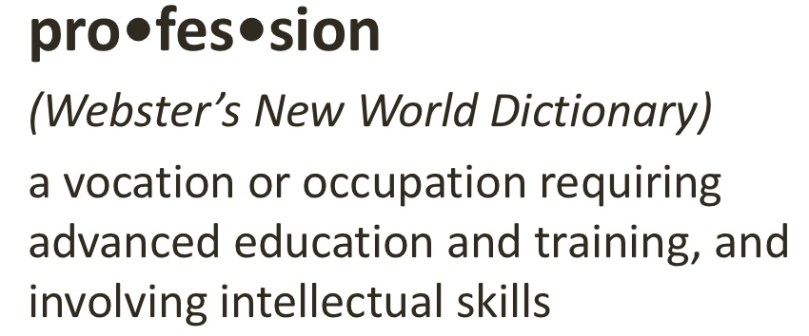
 

profession

Professionalism

What does a “professional educator” look like? Do you belong as a member of this group?

  • Succeeded in and continues to embrace “higher education”

  • idea-3082824_1920Updates self with “constant education” and retooling
  • Seeks change and finding better ways of doing something
  • Like lawyers/doctors, “practices” the job; uses different techniques for different situations
  • Accepts criticism (tries to self-improve)
  • Proposes new and better things “for the good of the order”
  • Can seemingly work unlimited hours (24 hours a day, 7 days per week?)
  • Is salaried (does not think in terms of hourly compensation, nor expects pay for everything)
  • Is responsible for self and many others
  • Allows others to reap the benefits and receive credit for something he/she does
  • Has obligations for communications, attending meetings, and fulfilling deadlines
  • Values accountability, teamwork, compromise, group goals, vision, support, creativity, perseverance, honesty/integrity, fairness, and timeliness/promptness
  • Accepts and models a very high standard of behavior, etiquette, appearance, language, and ethics.

In addition to mastery of their subject matter, skills in collaboration, communication, critical thinking (problem solving), and creativity (also known as “the four C’s”), according to “The California BTES – Overview of the Ethnographic Study” by David Berliner and William Tikunoff, effective teachers regularly demonstrate these traits:

  • Accepting
  • Adult involvement
  • Attending
  • Consistency of message
  • Conviviality
  • woman-3061656_1920_RobinHigginsCooperation
  • Engagement of students
  • Knowledge of subject
  • Monitoring learning
  • Optimism
  • Pacing
  • Promoting self-sufficiency
  • Spontaneity
  • Structuring

However, effective teachers DO NOT score high on the negative attributes of abruptness, belittling, clock punching or counting hours, defiance, illogical views or statements, mood swings, oneness (treating the whole group as “one”), or self-recognition. Human resource personnel and administrators look for candidates who model (and can confirm their history of) the habits of the first group, with no evidence of the latter behaviors.

The bar is raised even further. In addition to holding oneself up to the highest standards of the education profession, teachers also exemplify “moral professionalism” in their daily work. As cited in the chapter “The Moral Dimension of Teaching” in Teaching: Theory Into Practice by E.A. Wynne, teachers must

  • Come to work regularly and on time;
  • Be well informed about their students and subject content-matter;
  • Plan and conduct classes with care;
  • Regularly review and update instructional practices;
  • Cooperate with, or if necessary, confronting parents of underachieving students;
  • Cooperate with colleagues and observe school policies so the whole institution works effectively;
  • Tactfully but firmly criticize unsatisfactory school policies and propose constructive improvement.
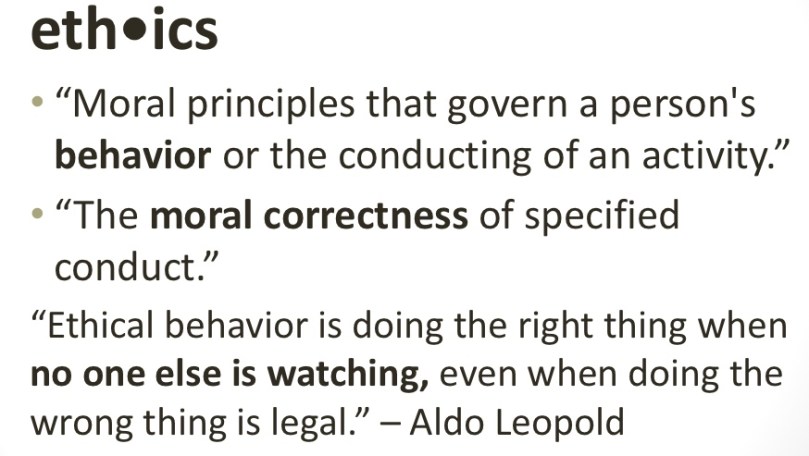
 

ethics


Ethics

Have you viewed your state’s teacher expectations, code of ethics, and code of conduct? It may surprise you that a number of seasoned professionals have never seen these documents. You may be ahead of the game if educator ethics were even mentioned briefly in a methods class, as indoctrination to student teaching, or orientation within the induction program of your first job.

The “code” defines the interactions between the individual educator, students, schools, and other professionals, what you can and cannot do or say, and the explicit values of the education profession.

No excuses! Better go look this stuff up. If you reside in Pennsylvania and plan to become employed there, go immediately to http://www.pspc.education.pa.gov/Pages/default.aspx. If your state does not have a code of ethics or state-specific conduct standards, download and consume this excellent reference: http://www.nasdtec.net/?page=MCEE_Doc. The young-3061652_1920_RobinHiggins2National Association of State Directors of Teacher Education and Certification proposes these principles:

  • Responsibility to the Profession
  • Responsibility for Professional Competence
  • Responsibility to Students
  • Responsibility to the School Community
  • Responsible and Ethical Use of Technology

After reading all of this, what would be on proverbial “ethics test?” Well, can you answer questions like these?

  • How do ethics inform a teacher’s personal and professional actions?
  • What does it mean to be a “moral exemplar” or “role model” in the community?
  • What are the professional expectations for working with diverse populations of students, parents, and colleagues?
  • How should teachers handle social media and other electronic interactions with students?
  • Do you see yourself as a potential “friend” or “confident” of the music students in your classes?
  • Is it okay to accept personal gifts from students, their parents, or music vendors who do business with your school… or to give presents to students for no educational reasons?

For the last two questions, the response should be a resounding NO!
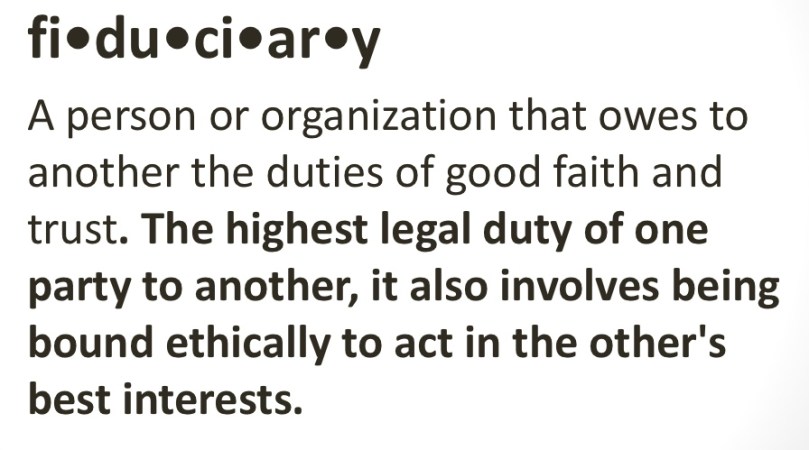
 

fiduciaryHere’s another query. What five groups of people are both “professionals” and “fiduciaries…” and have a legal responsibility to serve the best interests of their “clients?” The answer is… doctors/nurses, lawyers, counselors (both mental health and investment), the clergy, and… teachers.

singer-84874_1920_BEPAlthough teachers seem to be the only one of these who DO NOT have formal pre- or in-service ethics training, and our “charges” represent a “captive audience,” our duty is clear: to act as a fiduciary for our students’ best interest, and to create and maintain a safe environment for them at all times.

The keystone of “right or wrong” and what your mother always said was “behaving appropriately when no one is watching you” are all about professional ethical standards that guide decision-making. The work of Troy Hutchings (among other leaders in this field) helps to further clarify these sometimes-blurred definitions:

Personal Morality: “Personal values and beliefs derived from one’s life experiences… subjective and may/may not align with community mores.”
Regulations of Law: “Policies, statues, and judicial activity that articulate conduct absolutes.”
Professional Ethics: “Professional ethical standards that assist practitioners within situation and systemic contexts in choosing the best course-of-action.”
Professional Dispositions: “Agreed-upon professional attitudes, values, and beliefs to be held by educational practitioners.”

For a comprehensive review on “Ethics for Music Educators,” please visit these links:

All of these are available at https://paulkfoxusc.wordpress.com/category/ethics/.

At this point, if most of this makes you feel uneasy or uncertain, then perhaps it is time to switch majors and look into pursuing another line of work!

yin-yang-1410178_1920_Printoid.png

Philosophy

Have you written your personal philosophy of music education?

Regina Zona wrote in her article, “For Teachers: Writing a Music Teaching Philosophy Statement” that a music education philosophy statement is “a way to connect on a personal level to your students (current and potential) by stating who you are as a teacher (your beliefs and ideals), how you do what you do, and how that positively impacts the study of music.” If you have not completed your philosophy, here are her essential questions to guide your thoughts:

  • music-2323517_1920_davorkrajinovicWhat do you believe about teaching?
  • What do you believe about learning? Why?
  • How is that played out in your studio/class?
  • How does student identity and background make a difference in how you teach?
  • What do you still struggle with in terms of teaching and student learning?

She adds, “If you are having a hard time answering these questions, maybe because you haven’t been teaching very long, think on a teacher who made an impact on you (positive or negative), your education, your life. How did they communicate? Did they have passion for their work and if so, how did they express that passion? What were their methods of imparting the information?”

Read Zona’s entire blog-post at http://musiclessonsresource.com/writing-a-teaching-philosophy-statement.

Borrowed from the esteemed colleague and CEO of MusicFirst, Jim Frankel, is the introduction to many of his music education technology sessions, the foundation for teaching music in the schools:

  • What is your personal mission? Why?
  • What is the role of music in a child’s education?
  • Are we creating performers, theorists, teachers… or lifelong music lovers?

If you are looking for sample philosophical statements, there are many “out there” on the Web. Here are several of my favorites:

isolated-3061649_1920Take time to peruse these and others. Most of these sites also offer excellent examples of personal branding and marketing of the prospective job hunters’ experiences, skills, and achievements… material for our next blog on this topic.

Future blogs in this series will continue with a focus on these concepts:

  • Moving from “Book Learning” to “Practical Application”
  • Cultivating a Mentor or Two
  • Personal Branding
  • Engagement
  • Networking


orchestra-2770149_1920_ernestoeslava

PKF

© 2018 Paul K. Fox


Photo credits (in order) from Pixabay.com: “tutor” by nrjfalcon1, “music” by brendageisse, “idea” by RobinHiggins, “woman” by RobinHiggins, “young” by RobinHiggins, “singer” by BEP, “ying-yang” by Printoid, “music” by davorkrajinovic, “isolated” by RobinHiggins, and “orchestra” by ernestoeslava.

 

Ethics Follow-up


Part IV: More Perspectives and Resolving a Few “Loose Ends”

Prior to this article, I recommend reading the following:


ethics-cropped-2110605_1920-edman_eu

Just when you thought it was safe to read another of my blog-posts… you bump into another one on ethics and music education!

When my colleague and friend James Kimmel, PMEA District 7 Professional Development Chair, approached me to consider doing an “ethics workshop” for his annual in-service conference (October 9, 2017 at Ephrata Middle School), two questions immediately popped into my mind: “Why is this necessary?” and “Who would want to attend a session on ethics?”

Of course, being retired and having a little more unassigned time on my hands, I took it as a challenge and began some preliminary research.

The first thing I discovered is that almost no one in the public-school music education sector has had formal ethics training (myself included), unless you count a couple thirty-minute segments at a teacher induction or staff in-service program on sensitivity training, nondiscrimination and diversity awareness, anti-bullying or workplace sexual harassment policies, or a review of FERPA (family educational rights and privacy act) and HIPAA (health insurance portability and accountability act) as “ethics!”

Okay all you Pennsylvania music teachers: Before this blog series, did any of you ever see a copy of the Pennsylvania Code of Professional Practices and Conduct for Educators? Prior to working on this project, neither did I, nor did a single band director to whom I spoke at two large fall marching band festivals and several football games! Do you know that earning a teaching certificate from your state and becoming eligible to be hired as an educator means you automatically agree to be legally bound by the prevailing government’s “Code?” The ethical or discipline code of your state will define the proper interactions between the individual teacher, students, schools, and other professionals, and make explicit the values of the education profession as well as regional standards and expectations. Wouldn’t you agree that NOW would be a good time to learn the details of these inherent responsibilities?


What is a Fiduciary?

club-2492011_1920-qimonoEducators are among the singular professions which have a “fiduciary” responsibility. The term “fiduciary” can be defined as “a person or organization that owes to another the duties of good faith and trust, the highest legal duty of one party to another, and being bound ethically to act in the other’s best interests.” Joining doctors, lawyers, clergy, and mental health therapists, educators ascribe to the highest standards of training, moral decision-making (“code of ethics”), behavior (“code of conduct”), and self-regulation and assessment of the “best practices” regarding the mastery of skills and subject areas necessary to their field. However, unlike these other professionals, teachers do not receive regular and systematic pre- and in-service training on ethics, and our “clients” are a “captive audience.”  Regardless, the duty of all teachers is to act as a fiduciary in their students’ best interest and to create and maintain a safe environment for them at all times.


 

Ethics Violations in the News

You must have seen the news stories! In a word, the trending statistics of state and USA teacher ethics violations and misconducts are abominable! For example, according to the Pennsylvania Department of Education (PDE) where I taught and currently live, in the year 2015, there was a 200 percent increase in PA educator misconduct investigations (768 reports) compared to the number of complaints filed in 2011 (256). Within PDE disciplinary case resolutions in 2015, 41% resulted in job loss and a permanent revocation or surrender of the teaching certificate.

If your curiosity is a little on the morbid side, you can look up on the PDE website and find the names of more than 1740 educators (“offenders” and their “offenses”) who have violated their ethics and received discipline and/or criminal prosecutions or civil proceedings from March 2004 to June 2017.

Well, we don’t have to just pick on Pennsylvania “bad-boys” (and girls). According to https://www.washingtonpost.com/posteverything/wp/2015/01/20/more-teachers-are-having-sex-with-their-students-heres-how-schools-can-stop-them/?utm_term=.6ee23703b040, the following statistics give teachers everywhere a black eye from shore to shore!

  • Texas had a 27% increase over 2015-17 of alleged inappropriate teacher-student relationships
  • Kentucky schools reported more than 45 sexual relationships between teachers and students in 2011, up from 25 just a year earlier.
  • Alabama investigated 31 cases during the year ending July 2013, nearly triple the number it had investigated just four years earlier.

cube-cropped-2110612_1920-3dman_eu

Eric Simpson shared more bad news in the Journal of Music Teacher Education. His study, “An examination of the relationship of teacher certification area to sexual misconduct: Florida as a case study,” analyzed 383 samples of FL teacher discipline cases in 2007-2010 and their area(s) of certification, with these results:

  • Teachers with multiple-certifications = 35.51%
  • Music teachers ~5%
  • Most frequent offense = sexual misconduct 25.77%

But, 60% of the offending music teachers in the sample were disciplined for sexual misconduct!

Can the data get any worse? In 2004, the U.S. Department of Education released the results of the Shakeshaft national study by the American Association of University Women, with 9.6 percent of students reporting that they had suffered some form of sexual abuse during their school careers. According to http://www.slate.com/articles/news_and_politics/explainer/2012/02/is_sexual_abuse_in_schools_very_common_.html “the list of such conduct included lewd comments, exposure to pornography, peeping in the locker room, and sexual touching or grabbing. Around one in 10 students said they had been the victim of one or more such things from a teacher or other school employee, and two-thirds of those reported the incident involved physical contact.”

If these numbers are accurate and truly representative of the student population nationwide, 4.5 million students currently in grades K-12 have suffered some form of sexual abuse by an educator or school staff member.


Mandatory Reporting

Another area I did not dive into during the last three articles is our legal mandate to report colleagues who violate “The Code,” especially for sexual misconduct. My own state’s regulations (similar to most) are as follows:

“All educators who know of any action, inaction or conduct which may constitute sexual abuse or exploitation or sexual misconduct are now required to file a mandatory report with the Department and shall report such misconduct to his or her chief school administrator and immediate supervisor.”

― Pennsylvania Department of Education: http://www.pspc.education.pa.gov/Educator-Discipline-System-and-Reporting/Mandatory-Reporting/Pages/default.aspx


If you are an administrator, the statute is more wide-ranging:

“Specifically, whenever you believe that an educator is involved in misconduct that implicates his or her fitness to serve children in the schools of Pennsylvania, you should report the misconduct to the Department…”

“Reporting to PDE does not relieve [the administrator] of any other duty to report to either law enforcement and/or child protective services.”

― Pennsylvania Department of Education: http://www.pspc.education.pa.gov/Educator-Discipline-System-and-Reporting/Mandatory-Reporting/Pages/default.aspx

Another moral obligation is to simply look out for our student’s welfare and keep our eyes open for any unusual behavior, conflicts, or inconsistencies.

questions-2212771_1920-geralt_euAlways looking for the signs of…

  • Physical abuse
  • Self-abuse or thoughts of suicide
  • Sexual abuse
  • Signs of neglect
  • Patterns of abuse

Teachers are required to report any suspicions of child abuse, neglect, drug or alcohol use, and mental health problems.

Most school districts have an internal mechanism of reporting to school counselors or administrators any observations (or suspicions) of these issues… everything from falling asleep in class, being “accident-prone” (lots of unexplained injuries), confirming a high absentee rate, exhibiting mood swings (up and down), and coming to school with blurry or blood-shot eyes, etc. No accusations! You just handover your comments to the authorities, and report on what you see, not necessarily what your interpretations are for the causes of the problems.

Music teachers often work with students in close proximity before or after-school hours, and sometimes on weekends. As a marching band assistant, musical producer, festival chaperone, or trip sponsor, I always had the personal or cell phone number of my building principal in case I needed to reach out for help.


Confidentiality

These are the regulations on protecting student privacy rights, and violations of which (even unintentionally) are “breaking the law.” (Sources: www.pc3connect.org/otherdocs/confidentiality%20and%20the%20law.pdf and http://searchhealthit.techtarget.com/definition/HIPAA.)

  • Family Educational Rights and Privacy Act (FERPA) of 1974 sets parameters on accessibility and disclosure of students records.
  • Grassley Amendment (1994) details privacy of student participation in surveys, analysis, and evaluation.
  • confidential-cropped-1726367_1920-HypnoArtHealth Insurance Portability and Accountability Act (HIPAA) of 1996 provides data privacy and security provisions for safeguarding medical information.
  • Drug and alcohol treatment records of students kept by any institution receiving federal assistance are protected under Drug Abuse Office and Treatment Act (1976).
  • Records of students in special education are affected by the above laws plus Individuals with Disabilities Education Act (IDEA, 1997).

Here are few additional ethical “conundrums” on which to reflect:

  • Discussing student information in open or common areas
    • How many times have you walked through a busy hallway discussing news or concerns about a student with another colleague or family member?
    • Avoid inadvertently disclosing any personal information about students and staff members “in public.”
    • Also, one should resist speaking to students in these areas as it could become violation of student confidentiality if overheard.
  • Sharing information with other colleagues who are not directly related to the student’s situation.
    • You might be tempted to reveal interesting cases or anecdotes to colleagues… DON’T!
    • FERPA regulations state that school officials must have a “legitimate educational interest” when sharing information.
    • Just because someone is employed in the district with you does not mean they have lawful access to student info.
    • There is a great risk of others passing on this information… like gossip!
    • Rules of thumb: Ask yourself, “Why am I sharing this information?” and “How will it benefit the student?”
  • However, you should be aware of exceptions to student privacy concerns.
    • Reporting of physical abuse, sexual assault, sexual harassment, or sexual violence.
    • Suspicion of serious mental health issues that may result in danger to the student (such as suicide)
    • On the occasion when a staff member working with a student is unsure how to proceed (e.g. seeking advice on disability)


woman-441415_1920-geralt

The “Grandma Litmus Test”

We have talked about many principles in this series on “Ethics for Music Educators.” Here is something about the “process,” an “ethical decision-making model” based on…

  • “What would grandma think about my action, behavior, or decision” and
  • “How would I feel if my actions are tomorrow’s breaking news?”

Answer the following questions about the contemplated activity or decision:

  1. Is it legal?
  2. Is it consistent with the profession’s values?
  3. Is it consistent with the teacher’s code of conduct?
  4. Is it consistent with your district’s policies?
  5. Would you be comfortable if this decision was published online or in the newspaper (or made known to your “grandma”)?
  6. Does it feel right? (Is it the right thing to do?)

If you answered “NO” to any one of the questions (1, 3, and 5), do not engage in the contemplated activity and seek additional guidance.

If you answered “YES” to all of the questions (2, 4, and 6), then you may proceed with the contemplated activity. However, if you have any lingering doubts, do not hesitate to seek additional guidance.

http://www.royceassociates.com/the-grandma-litmus-test-for-ethical-behaviour/


Final Thoughts

“It’s easier to ask forgiveness than it is to get permission.”

– Rear Admiral Mary Brace Hopper, an early computer programmer

board-1848717_1920-geraltProponents of this belief will tell you to go ahead and stick your neck out, feel free to do something “for the good of the order,” and later “beg for forgiveness” if/when it goes south and your administrators say they do not approve.
This may or may not work, and I cannot label this orientation as “ethical!”

Music teachers are usually the “lone rider” in their building when it comes to doing their job. Music directors, especially those who are involved in extra-curricular activities, are deluged with making many decisions every day… sometimes even on the hour. Few people (models or mentors) will be there to help guide you in your content area.

My advice: Less experienced teachers, run everything through your fellow colleagues (informally) and principal (formally). Don’t fall back on the lame “oops” and “beg for forgiveness.” I may have felt differently when I had twice as many years of experience than the building administrators who were assigned to “supervise” me… but, even then, “venturing out without a paddle” usually did not serve the best interests of the students… There’s no reason to place “the teacher’s convenience” over the safety/welfare of the students, without first obtaining the legal and political “backup” of your bosses. “Better safe than sorry!” (I am running out of cliches!)

“Perception is reality.”

– Lee Atwater

Perceptions/appearances vs. motivation and reality: It means that your behavior and its results matter infinitely more than your intentions.

It is the responsibility of the teacher to control his or her “public brand” – how he or she wants to be perceived by students, parents, colleagues, and the public. One’s public brand can and does impact perceptions, which in turn can impinge upon effectiveness.

males-2110573_1920-3dman_euMy advice: “Forget your rights” and be more aware of your image and how your actions will look to the public. Reputations are hard to restore. Being an effective teacher is all about trust and integrity, and (sorry, one more cliche) “your actions speak louder than words!”

 

Teaching is the most honorable and rewarding career on this planet. The rewards far outweigh the challenges and additional responsibilities. “Making a difference” in the lives of our music students has always inspired me, and the fact we have to uphold the highest standards in moral professionalism and behavior does not phase me in the least.


The purpose of these blog-posts on ethics, sort of a “refresher” course to reflect on our internal decision-making compass, was to reinforce Lawrence Kohlman’s sixth stage of moral development – principles of conscience – and the “best practices” of professional attitudes, values, and beliefs that guide the problem-solving we face in their daily work. Hopefully this content will promote thought-provoking discussion about doing what’s right when no one is looking… because, your mother would say, “You know better!”

Please feel free to comment… I would appreciate hearing from you!

business-1753098_1280-Maialisa

PKF

© 2017 Paul K. Fox


Photo credits (in order): from FreeImages.com: “Ethics” by Olivier Le Moal; from pixabay.com “Ethics” by 3dman_eu, “Club” by qimono_eu, “Cube” by 3dman_eu, “Questions” by geralt_eu, “Confidential” by HypoArt, “Woman” by geralt_eu, “Board” by geralt_eu, “Males” by 3dman_eu, “Business” by Maialisa.

Dress for Success at Teacher Interviews

Tips for Modeling the “Proficient Professional” Look

“Make no mistake — you are being judged as soon as you walk into the room and the interviewer has made an initial impression of you in the first few seconds they see you based on how you look. That may not be fair but it is reality in many cases. An interviewer is expecting you to dress appropriately for the interview. If not, you are showing the interviewer that you don’t understand the basics of what it takes to be successful in the workplace. If this is the case, you already have one strike against you.”  —  Andy Teach, author of From Graduation to Corporation, http://www.amazon.com/From-Graduation-Corporation-Practical-Corporate/dp/1438930631

Trolling online for a consensus on what to wear to school employment screenings, I found repetitions of the words “professional,” “appropriate,” and “comfortable,” but no single standard of dress. Most agree that you must exhibit an image of confidence, optimism-1241418-1competence, and responsibility, and should probably error on the side of more formal attire rather than day-to-day casual.

Dressing appropriately for your teacher interview makes your critical first impression on the interview committee. Betsy Weigle from Classroom Connection explains in a YouTube video how to avoid common mistakes plus tells you what to bring along for success at https://www.youtube.com/watch?v=r1FvnI7Bivg.

  1. Dress comfortably but dressier than what you would wear teaching in a classroom.
  2. Your appearance should be professional and appropriate, and show that you really want to be considered for the job.
  3. The focus should be on you, not what you are wearing.
  4. Ladies should wear a skirt or slacks, blouse and a little sweater. A dress would be fine, too (but don’t be too dressy).
  5. Shoes and jewelry should be comfortable AND yet not be noisy or distracting.
  6. No perfume or cologne: Your presence should not enter the room before you do.
  7. For men, a collared shirt is recommended. Dress-up a little bit.
  8. Jeans are never appropriate for a job interview.
  9. For both men and women, adding a little color is a great choice.
  10. Do not wear a mini-skirt, t-shirt, shorts, or sport shoes.

Hannah Hudson shares six hints in “Real Teachers Spill: What to Wear to a Teacher Interview” from We Are Teachers. She provides good photographic examples of her thoughts maintaining style and comfort while exhibiting professionalism, so be sure to read the entire article at https://www.weareteachers.com/best-of-teacher-helpline-what-to-wear-to-a-teacher-interview/.

  1. sharp-dressed-breast-1241310Suits are always a good choice.
  2. If a suit isn’t an option, try a pair of dress pants or skirt with coordinating top and blazer or cardigan.
  3. Women, consider a black sheath dress.
  4. For men who don’t want to go the suit route, we advise a button-down shirt and pants.
  5. Don’t forget the footwear!
  6. Choose a fun accessory.

In a blog entitled “Teacher Interview Style” posted on Classy in the Classroom at http://classyinaclassroom.blogspot.com/2014/07/teacher-interview-style.html, a very upbeat Amy Disbrow personally models her professional attire with remarks on selecting specific styles and colors.

Pictures are also provided in “How to Dress for an Interview” by Alison Doyle from the balance. Start reading the entire blog-post at https://www.thebalance.com/how-to-dress-for-an-interview-2061163. Sample interview outfits and advice for men are posted at https://www.thebalance.com/interview-outfits-for-men-2061090 and for women at https://www.thebalance.com/interview-outfits-for-women-2061091.

Michigan State University’s Career Services Network “Dressing for Interviews” offers additional recommendations (some hopefully under the category of “common sense”) at https://edubirdie.com/blog/dressing-for-interviews

  1. It is rarely appropriate to “dress down” for an interview, regardless of company [or school district] dress code policy. When in doubt, go conservative.
  2. Avoid loud colors and flashy ties.
  3. Clothing should be neat, clean, and pressed. If you don’t have an iron, either buy one or be prepared to visit the dry-cleaner’s often.
  4. Shower or bathe the morning of the interview. Wear deodorant. Don’t wear cologne or aftershave. You don’t want to smell overpowering or worse, cause an allergic reaction.
  5. Make sure you have fresh breath. Brush your teeth before you leave for the interview, and don’t eat before the interview. Don’t smoke right before an interview.

Finally, it is probably worth reading excerpts regarding school institutional dress codes. Good examples include the following:

caring-teacher-1622554-1

  • From Education World at http://www.educationworld.com/a_admin/admin/admin422_a.shtml: “The staff policy prohibits jeans, see-through clothing, torn clothing, short or very tight-fitting clothing, sweat suits, shorts, hats, with exception of religious head-wear, thongs (flip flops), and sneakers or athletic shoes, although gym teachers are permitted to wear athletic shoes.”
  • From the Association for American Educators at https://www.aaeteachers.org/index.php/blog/802-teacher-dress-codes: “Litchfield Elementary School District in Arizona piloted a policy designed to prohibit rubber-sole flip-flops, visible undergarments, any visible cleavage, bare midriffs, clothes that are deemed too tight, too loose or transparent, bare shoulders, short skirts and exercise pants. Administrators in the district also suggested guidelines for natural hair color, limiting piercings, and covering tattoos — all of which can come across as unprofessional.”
  • From Teaching Community “What Teachers Should Never (Ever) Wear” at http://teaching.monster.com/careers/articles/8431-what-teachers-should-never-ever-wear: “How you choose to dress each morning reflects how you feel about your job — that you take your position seriously, that you are ready to work and that you pay attention to detail and know what you expect to encounter that day. You wouldn’t go to a construction site in your favorite four-inch stilettos, right? Of course not, you’d go in a hard hat, because it’s appropriate for the situation. Appearances matter!”
  • From Edutopia “How Should Teachers Dress” by Kevin Jarrett at https://www.edutopia.org/discussion/how-should-teachers-dress: “There is a LOT to consider between formal district dress code policies, personal taste and preference, teaching assignment, community norms, individual income levels, and even climate concerns. As a new teacher, you obviously are going to get your cues from the existing teaching staff, and will probably aim a tad higher, at least initially, while you get established. For most men, this will mean a long-sleeve dress shirt and tie, maybe even a sport coat too. A suit is not out of the question.”

Over the span of my 35+ years in education, I, too, have noticed a significant “slip” or shift to more casual and informal clothing. Some change was expected. After all, in the Rules for Teaching 1915 (see http://www.openculture.com/2013/09/rules-for-teachers-in-1872-1915-no-drinking-smoking-or-trips-to-barber-shops-and-ice-cream-parlors.html), these guidelines were strictly enforced (mostly for woman teachers):

  • You may not smoke cigarettes.
  • You may not dress in bright colors.
  • You may under no circumstances dye your hair.
  • You must wear at least two petticoats.
  • Your dresses may not be any shorter than two inches above the ankles.

interview-1238367-1My view? Teaching is still among the most conservative of occupations. That is how it is viewed by the general public, parents of school-aged children, School Boards, administrators, and interview panels. You can certainly exercise your right to wear whatever you want and show-off numerous body piercings or tattoos… but, like it or not, the school districts are within their rights to choose someone else.

In dealing with our most “treasured blessings” – the students and future hopes of mankind – educators’ ethics and code of professional practices should continue to reach for the highest standards of conduct and appearances. Why? Our kids deserve it!

Hope these online sources help to give you a balanced perspective! Check out the rest of my articles on “Becoming a Music Educator” (click here). PKF

© 2017 Paul K. Fox

Photo credits (in order) from FreeImages.com: Rita Mezzela, Michael Roach, Keith Syvinski, Heriberto Herrera, and Martin Boulanger