

Countdown to a Smooth and Satisfying Retirement

Are you retired, retiring this year or next, or thinking about “Crossing the Rubicon” to post-employment bliss over the next three or more years?
According to Ken Dychtwald, psychologist, gerontologist, and CEO of Age Wave, research on aging, health, and work issues defines five stages of retirement:
- Stage 1: Imagination (5 to 15 years before retirement)
- Stage 2: Anticipation (1 to 5 years before retirement)
- Stage 3: Liberation (first year of retirement)

- Stage 4: Re-engagement (1 to 15 years after retirement)
- Stage 5: Reconciliation (ages late 70s and early 80s)
As reported by USA TODAY at https://www.usatoday.com/story/money/personalfinance/2014/10/12/five-stages-of-retirement/16975707/, these first three stages provide opportunities to rethink, recharge, reinvent, and even retool new ways to redefine one’s life-purpose and meaning, become productive, and begin that new chapter in their lives. The studies emphasize the need for the famous Boy Scouts’ motto – “be prepared” – and you should start reflecting on “what you are going to be when you grow up” at least three years prior to “the big day!”
Many people want to continue to work. In fact, 72% of pre-retirees, age 50 and older, say they want to keep working after they retire, according to a recent survey sponsored by Merrill Lynch in partnership with Age Wave. Almost half (47%) of current retirees either are working, have worked, or plan to work in retirement, the survey found.
Many people also want to devote more time to their family and friends. Some want to continue to learn, and others want to enjoy their favorite hobbies and develop new ones…
— Ken Dychtwald
The bottom line is, as suggested in “Retire Happy – What You Can Do Now to Guarantee a Great Retirement” in the USA TODAY/Nolo Series by Ralph Warner and Richard Stim, prior to leaving the work force, you should make a concerted effort to anticipate “life after work,” including:
- Cultivate interests outside work
- Lead a healthier lifestyle
- Revitalize family relationships
- Spend more time with spouse
- Embrace spirituality or meditation
- Nurture friendships and make new friends.

FIRST THINGS FIRST
So, are YOU ready to retire from full-time music teaching? Are you sure?
For me, I cry out HURRAY for the FREEDOM, and enthusiastically take on exploring raising puppies, home improvements, more personal music making, conducting, writing, photography, community service, and volunteer work. And, as you can imagine, my calendar is as full as it has ever been!
However, not all of our newly retired colleagues feel the same way… at least, not at first. It should be said that not everyone may be ready to retire. Often heard employment complaints aside, “be careful for what you wish!” In general, few are ambivalent about this transition… leaving the day-to-day highly pressured, detailed, “rat-race” most music teachers embrace to jumping into the wide-open horizons of new vision, focus, and directions. Recent retirees either love or hate this “passage.”
— Paul K. Fox
If you are not sure of your current mental and financial preparation for retirement, checkout “7 Signs It’s Time to Retire” at http://www.plannersearch.org/financial-planning/7-signs-its-time-to-retire, and equally as important, “Ten Signs It’s Not Okay to Retire” at http://www.investopedia.com/articles/personal-finance/021716/10-signs-you-are-not-ok-retire.asp.
Have you seen this quote by Dr. Robert P. Delamontagne from his book Retiring Mind (Fairview Imprints, 2010), which provides statistics that are actually a little alarming?
50% of retirees will suffer some form of acute emotional distress. This is potentially a very large problem given the fact that 10,000 people are becoming eligible for Social Security every day for the next 20 years in the US alone.
— Dr. Robert P. Delamontagne
I also recommend taking the quiz, “Are You Psychologically Ready for Retirement?” at http://www.nextavenue.org/quiz-are-you-psychologically-ready-for-retirement/ from the book, Happy Retirement: The Psychology of Reinvention by Kenneth S. Shultz (DK Publishing, 2015), asking these five essential questions:
- How important is your job when it comes to getting a sense of life satisfaction?
- How many non-work activities do you have that give you a sense of purpose?
- How do you imagine your life to be once you stop working?
- How do you think retirement will affect your relationship with family and friends?
- How much energy for work do you have these days?

HAVE A PLAN
In the article “Are You Emotionally Ready to Retire?” published by the Wisconsin Medical Journal, Maureen E. Hansen illustrates the need for an “emotional retirement plan.” (Please visit https://www.wisconsinmedicalsociety.org/_WMS/publications/wmj/pdf/103/4/53.pdf).
The transition from a structured to an unstructured lifestyle can be unnerving if you are not prepared. When our clients retire, they often feel as if they are on vacation for the first month or so. After that, the realization that they are not returning to work starts to sink in. This is when anxiety can creep in. However, the process of adjusting can be far less stressful if you establish a plan well in advance.
— Maureen E. Hansen
She emphasizes that both financial and non-financial aspects of retirement need to be addressed. “Long before your going-away party at the office, you need to decide what you want for your retirement—leisure time, volunteer work, establishing a legacy?” Here are her several key issues to consider:
- Set lifestyle goals.
- Build a network.
- Consider your spouse’s feelings.
- Live your dream.
From Bankrate (http://www.bankrate.com/retirement/10-things-to-do-before-you-retire/), here is a checklist of considerations you should revisit as often as necessary before taking the retirement plunge:
- Prepare a balance sheet
- Get rid of debt
- Conduct a house check
- Assess life insurance needs
- Think about long-term care insurance
- Consider variable annuities
- Oversee estate planning
- Ditch college expenses
- Look at the big picture with a planner
- Prepare a budget
The Internet is deluged with a multitude of recommendations on retirement prep. Here are couple more to peruse at your leisure:
- https://www.forbes.com/pictures/eedg45fdhg/five-things-to-pay-for-before-you-retire/#3f00679847e8
- http://www.huffingtonpost.com/2014/10/20/planning-for-retirement_n_5955562.html
- http://www.kiplinger.com/slideshow/retirement/T047-S002-steps-to-take-in-the-year-before-you-retire/index.html

DOWN TO MORE SPECIFICS
In the August 26, 2017 PMEA Retired Member Network eNEWS, I shared the link to the AARP blog-post “10 Steps to Get You Ready for Retirement” at http://www.aarp.org/work/social-security/info-05-2011/10-steps-to-retire-every-day.html, with the following “executive summary” (but be sure to read the entire article for the detail):
- Step 1: Define Your Retirement
- Step 2: Take Stock of Your “Assets”
- Step 3: Evaluate Your Health – Now
- Step 4: Determine When to Collect Social Security
- Step 5: Network Through Social Media & Other Methods
- Step 6: Decide How Much You Want (or Need) to Work
- Step 7: Create a Retirement Budget
- Step 8: Find New Ways to Cut Your Expenses (Start Saving More)
- Step 9: Prepare for the Unexpected
- Step 10: Stick to Your Plan
I also offered my (now) “top-seven tips” for getting ready to “living the dream” for future PA music educator retirees:
- Download the Ultimate Retiree Resource Guide and peruse the myriad of contributions by “true experts in the field of retirement” posted on the PMEA retired member website: https://www.pmea.net/wp-content/uploads/2014/10/ultimate-retiree-resource-guide-111717.pdf.
- Scan through the plethora of other blog-posts at https://paulkfoxusc.wordpress.com/for-retirees/ and the official PMEA Retired Members’ website: https://www.pmea.net/retired-members/.
- Purchase a book or two by the “masters” of retirement transitioning (check out these authors and others from the sources above: David Borchard, Julie Cameron, Robert Delmontagne, Dave Hughes, Steven Price, Kenneth Shultz, Hyrum Smith, Verne Wilson, and Ernie Zelinski).
- Family Meeting: If you are married, sit down with your spouse (with no distractions) and map out the essential “who, what, when, where, and how” of retirement. Are you both ready to venture into your “golden years?” Are you and your wife/husband on the same page?
 PSERS (PA pension fund) Planning: 12 months or more away from your projected retirement date, attend a “Foundations for Your Future” program (even attend it more than once), and request a retirement estimate (form PSRS-151), after which you will need to schedule the all-important “Exit Counseling Session.”
- Make an appointment with an estate planner, elder attorney, and/or financial advisor (probably all three). Bring a copy of your bank and investment statements, PSERS reports, social security, annuities, and insurance documents. You may need help in determining which PSERS “plan” to adopt. While you’re at it, update your will and other legal documents.
- To stay “connected” with your professional associations (e.g. Pennsylvania Music Educators Association and National Association for Music Education), be sure to update your personal profile at “headquarters” with your personal (not school) email address. Continue to participate in music and education, and reap the benefits of significantly discounted retired membership dues and conference registration fees. See the blog-post “PMEA in Retirement – What’s in it for Me?” at https://paulkfoxusc.wordpress.com/2016/12/15/pmea-in-retirement-whats-in-it-for-me/.
Finally, if you have not done so, I encourage you to revisit my last retirement blog-post (https://paulkfoxusc.wordpress.com/2017/08/03/new-dreams-and-horizons/). Review those six essential things to do when you are a couple years “out” from making that “great leap to freedom,” solid advice from TIPS – Retirement for Music Educators book by Verne A. Wilson (MENC 1989), and to learn more about “nipping in the bud” those pesky retirement conundrums:
- Self-Identity and Change
- Free Time?
- Energy and Fortitude
- Losing Control and Perpetual Care
Yes, planning ahead makes all the difference. On this topic, our last inspiration also comes from TIPS – Retirement for Music Educators.
If you were planning to spend the rest of your life in another country, you would want to learn as much about it as possible. You would read books about the climate, people, history, and architecture. You would talk to people who had lived there. You might even learn a bit of its language. Old age is like another country. You’ll enjoy it more if you have prepared yourself before you go.
— B. F. Skinner and Margaret Vaughn
Best wishes for a happy retirement!

PKF
© 2017 Paul K. Fox

 Instrument lessons and orchestra practices provide opportunities for the music teacher to impart a few “tricks of the trade” in reading and then practicing music. I call these my “Craftsmen Tools” for successful musical construction… one note or one line of music at a time.
 At lessons, some music teachers refer to batting averages, and point out how a .333 baseball hitting average is outstanding in the Major Leagues (when big-league pitchers are throwing 90-mile hour balls at you), but terrible for a musician who plays one note right to two notes wrong. Since each practice session builds neural-connections across brain cells (physical “memory” to do the skill again), in order to “play it right” consistently, we have to repeat it accurately over and over again, thus “the Ten Times Rule.” Musicians have to achieve a .950 or better average, and practicing their challenging musical “slice” ten times in a row will do the most good. Cumulative effort over different sessions or days is also the key to success! If a hard passage is played 10-20 times today, repeated 10-20 times tomorrow, another set of 10-20 drills the next day, etc. until the part can be played perfectly “in a row” every time, the player will have NO WORRIES when it comes time to perform it at the concert.


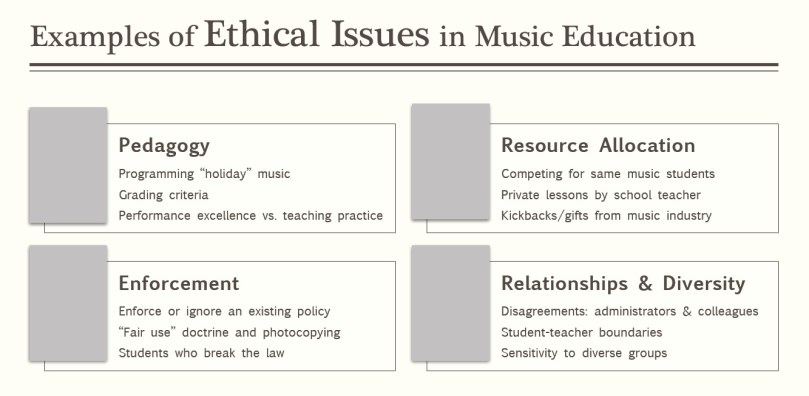
 Administrators, parents and public’s interpretation of “separation of church and state” or “perceived emphasis” on Holiday vs. Christmas music (with sacred text) at December concerts e.g. Handel’s Hallelujah Chorus, Hatikvah, and/or John Rutter’s Oh Come All Ye Faithful & Joy to the World as the finale
 Competition for the enrollment of the same students (band/string/choir) within the music department
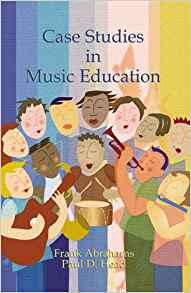 If you have not had the occasion to read Case Studies in Music Education by Frank Abrahams and Paul D. Head, it would be a valuable aid to “facilitate dialogue, problem posing, and problem solving” among pre-service (and current) music teachers. Using the format of Introduction, Exposition, Development, Improvisation, and Recapitulation known by all music professionals, each chapter presents a scenario with a moral dilemma that many music educators face in the daily execution of their teaching responsibilities.
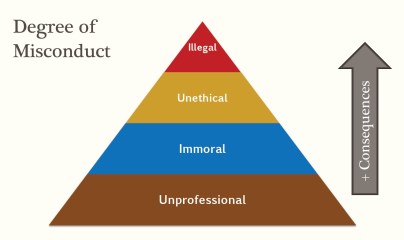 For additional examples of ethical issues in education, try these links. Personally, many of these fictional video reenactments are hardcore and very painful to view… but may shed some light in any discussion of teacher (mis)behavior: actions from simply inappropriate, unwise, or “bad for appearances” to a range (from bad to worst) of unprofessional, immoral, unethical, and illegal conduct. Some of these stories you will agree should be instantly labeled as the highest degree of unethical practice ― actual “crimes against children” and should invoke punishment if found guilty ― while others may lack clarity and make it difficult in arriving to a consensus.
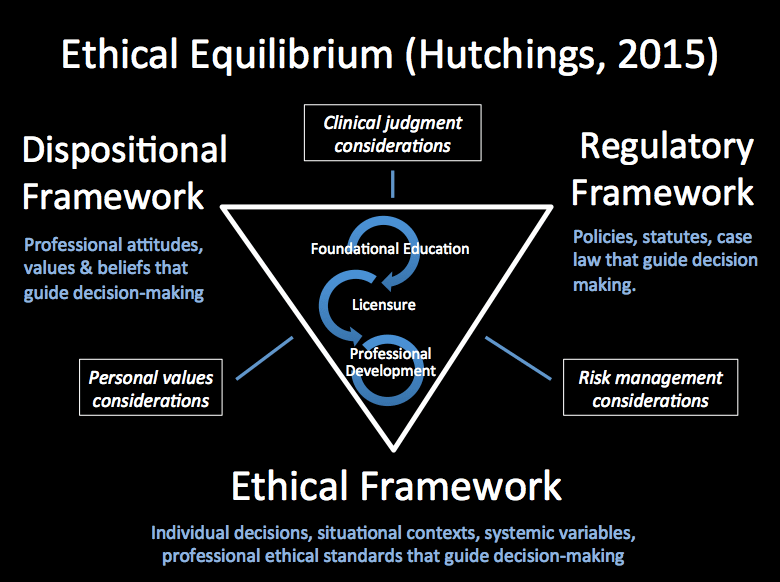



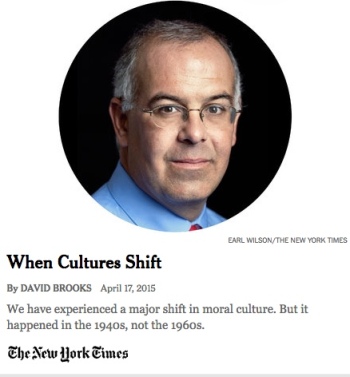 Many have suggested that there has been a decline in moral standards that have contributed to ethical disputes in modern society (and in the public schools). Some say that this is attributed to a breakdown or lessening of the influence of organized religion and family values. “When Cultures Shift,” an excellent article in the New York Times (April 17, 2015), David Brooks explores some of causes and effects of this “slip” to our value systems, ethics, and renewed focus on self:
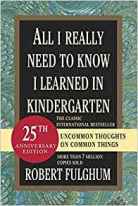 Do schools, not necessarily families, serve as the “safety net” for socializing its citizens, and teaching morality, manners, and the values of human relationships? Are teachers held to a higher standard of behavior in order to model these principles and charged with the responsibility of indoctrinating the meaning of “right and wrong” and how to get along with each other? Many would seem to agree, including sample codes of ethics for teachers and this from Robert Fulghum
  In Essays on Moral Development: The Philosophy of Moral Development (New York: Harper Collins 1981), Lawrence Kohlberg illustrates his “Six Stages of Moral Development” from ethical decisions based on adherence to rules/regulations and avoidance of punishment to acceptance of universal principles of justice and respect for human life.
 As I said in Part I of this blog series, one of the first acts of a new or transferred teacher upon being hired to a specific school district is to visit the website of his/her state’s education department, and make a thorough search on the topic of “code of ethics” or “code of conduct.” There is no defense for ignorance of the codes and statutes relevant to the state you are/will be employed.

 In addition, in almost every state education system, there are “mandatory reporting” regulations. Teachers are held responsible to ensure that their colleagues conform to the appropriate standards of ethical practice as well. In other words, if you know something is wrong and you do not report it to an administrator, you could also be liable and subject to hearings, discipline, and even prosecutions for negligence of your duty to protect the best interests, health, and safety of the student(s) involved.
 A sense of invulnerability
 It is the responsibility of the teacher to control his or her “public brand” – how he or she wants to be perceived by students, parents, colleagues, and the public. One’s public brand can and does impact perceptions, which in turn can impinge upon effectiveness.

 However, the disclaimer is that I am not an attorney, human resource manager, nor scholar on school ethics, nor was I ever trained in a single workshop, college class, teacher induction or in-service program on this subject. After reading this article, you should immediately visit the website of your state’s education department, and search on the topic of “code of ethics” or “code of conduct.” A few examples of the “real deal” are listed below, and yes, you must study “every word of” the entire document and applicable rules from the state you are/will be employed.
 According to Snopes
  Achievement of higher education, constant training and retooling, specific goals, and self-improvement
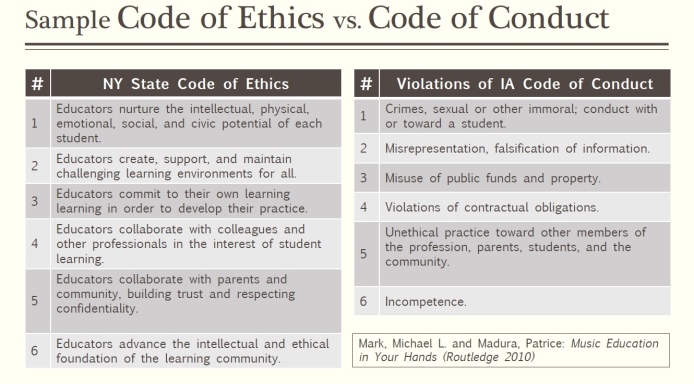
 a “violation of ethics” is usually associated with significant consequences or punishment, like charges of medical malpractice or lawyers facing an “ethics committee” hearing. Confirmed unethical behavior may result in censure, suspension of license or certification, or other discipline action. Most state education governing entities post legally-binding “educator discipline acts” or codes of professional standards, ethics, and/or behavior, with extensive penalties.
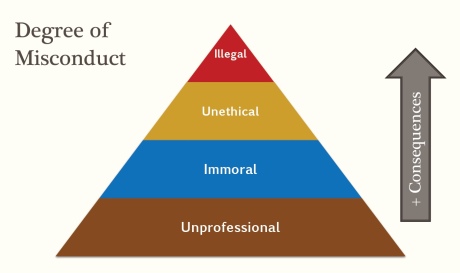 defines misconducts.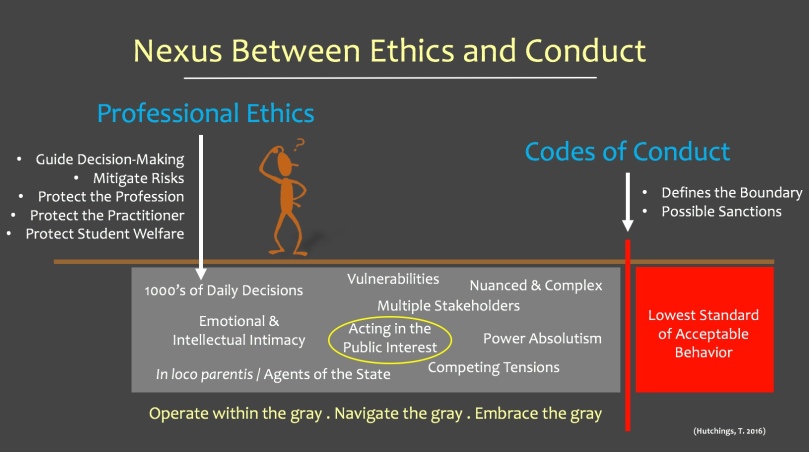
 One of the best examples endorsed by many states, college education methods programs, and other institutions, the National Association of State Directors of Teacher Education and Certification has published its

 That means, according to TIPS Retirement for Music Educators by Verne A. Wilson (MENC 1989), at least three years before you leave your full-time employment:
 Robert Delamontagne writes in detail about using the
 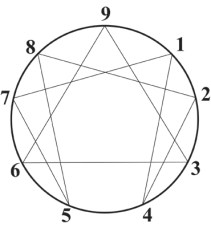 Delamontagne labels the characteristics of each E-Type. After reading his book, which ones are closest to resembling you and your spouse?
 On their book jacket, Duckworth and Langworthy promote their work as “a call to action on your own behalf” to:
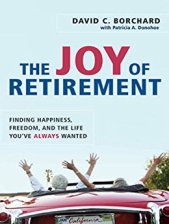 Life Themes Profiler, a comprehensive assessment tool developed by David Borchard and laid out initially in Chapter 4, will help you understand and graph the retirement themes and “your intentions for the next chapter of your life.”
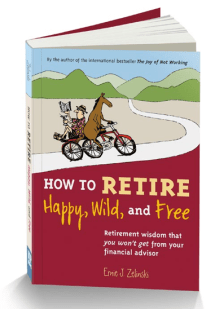 Obviously, fulfilling your “bucket lists” and goals will influence the structure of your daily/weekly schedule. According to Ernie Zelinski, with or without “a job,” you need to find a “work-life balance” and devote equal time to these essential priorities:
 Dave Hughes echoes these sentiments with his “four essential ingredients for a balanced life” in the book Design Your Dream Retirement: How to Envision, Plan for, and Enjoy the Best Retirement Possible (2015):
 Do something every day that will expand your mind, stimulate your intellect, or increase your curiosity quotient.
 Although the exact number of boomers and seniors who experience sleep problems is hard to pinpoint, a national study of our aging population suggests nearly 42 percent of those surveyed have sleep difficulties. That figure is beyond an epidemic.
 Regular physical activity is a must. Quoting from a future article I plan to submit to the state journal of Pennsylvania Music Educators Association PMEA News: “The definition of ‘exercise,’ especially in order to receive cardiovascular benefits, is to raise your heart rate for 30 minutes or more. Leaving your La-Z-Boy to let the dogs out or looking for the remote does not count!”
 This final category of “pre-retirement planning” has everything to do with living with independence and security as we grow older. Many Baby Boomers just starting their retirement journey may not actually see this as “a big deal” right now. However, developing a long term “backup plan” for maintaining our health care, mobility, and comfortable living is critical. Again… we must think ahead!
 Fifty-five percent of our respondents wanted to stay in their own homes, with help as needed, as they got older and required more care. But a recent AARP survey revealed that only about half of older adults thought their homes could accommodate them “very well” as they age; twelve percent said “not well” or “not well at all.”

 competence, and responsibility, and should probably error on the side of more formal attire rather than day-to-day casual.
 Suits are always a good choice.
 My view? Teaching is still among the most conservative of occupations. That is how it is viewed by the general public, parents of school-aged children, School Boards, administrators, and interview panels. You can certainly exercise your right to wear whatever you want and show-off numerous body piercings or tattoos… but, like it or not, the school districts are within their rights to choose someone else.





 As we progress through our “golden years,” you may have noticed you had to switch roles with your parents or other elderly relatives… you’re becoming more the parent, advisor or “boss,” and they are more needy and have reverted to being the “child!”


 prioritize what’s the most important, and define several new “practice plans.”
 Your practice should have well-defined goals. What do you want to learn as a musician? Are there particular pieces of music, styles, or technical skills you would like to be able to play? Knowing what you want to accomplish will help you decide what work is needed and assist defining specific learning targets. If you have a private teacher, he/she will automatically prescribe objectives for you, based on your present strengths and weaknesses. But if you desire to join the local youth symphony, participate in a music festival, play in a pit orchestra, perform solos or chamber music, become a conductor, help coach your peers, or want to improve a specific technical skill or general musicianship, make sure your teachers know it! They may be able to share warm-ups, strategies, or practice materials that will help you improve and expand your knowledge, technique, expressiveness, sight-reading and ear training.
 paulfox.blog