“Self-Realization” ― The Key to Resolving Retirement “Conundrums”
Most gerontologists agree that a period of adjustment will occur during the first years of “interning” as a retiree. Even more crucial is the “pre-retirement” or “imagination” stage of retirement – (see https://www.usatoday.com/story/money/personalfinance/2014/10/12/five-stages-of-retirement/16975707/ or http://www.investopedia.com/articles/retirement/07/sixstages.asp…) involving your preparation six to ten years prior to “taking the big leap” to FREEDOM!
Have you considered a few “terms of transformation” below that are all-to-common to soon-to-be-retirees undergoing that life-changing transition to “living their dream?” How should you unravel these “conundrums” or mysteries of transitioning to retirement?
- Self-Identity and Change
- Free Time
- Energy and Fortitude
- Losing Control and Perpetual Care
The only solution to “softening the blow” of the possible turmoil and incongruity brought on at this time is to follow the Boy Scout rule… BE PREPARED.
 That means, according to TIPS Retirement for Music Educators by Verne A. Wilson (MENC 1989), at least three years before you leave your full-time employment:
- Sit down with your spouse if you are married (and other family members) and plan ahead carefully.
- Decide when you want to retire. Estimate as accurately as possible what your economic situation will be after you retire.
- Decide where you want to live after you retire. This means not just the neighborhood, city, or state, but also the kind and style of residence… retirement community, one-floor ranch, apartment, etc.
- Set some goals regarding how you want to spend your retirement time. Focus on your talents and abilities instead of looking at the handicaps that may come with the aging process.
- Be prepared for “change” and learn how to accept it, and be willing to embrace new opportunities for personal growth, flexibility, and adaptability.
- Be sure your intentions are clearly stated in writing (wills, power of attorneys, living wills, etc.)
Now, to define your “life’s goals” and anticipate several of the “big issues,” read on!
SELF-IDENTITY & CHANGE: Who am I?
The prep and passage to your “golden years” is the perfect time to a little self-reinvention based on self-assessment towards finding purpose, meaning, fulfillment in your life. There are many publications that promote personality and interest surveys to point you in the right direction and help synchronize your goals with your spouse, “significant other,” other family members.
 Robert Delamontagne writes in detail about using the enneagram as an evaluative tool in Honey, I’m Home: How to Prevent or Resolve Marriage Conflicts Caused by Retirement (Fairview Imprints, 2011) and The Retiring Mind: How to Make the Psychological Transition to Retirement (Fairview Imprints, 2010).
The definition of enneagram is “a system of classifying personality types that is based on a nine-pointed star-like figure inscribed within a circle in which each of the nine points represents a personality type and its psychological motivations (such as the need to be right or helpful) influencing a person’s emotions, attitudes, and behavior.” And now, the essential question: Are you and your spouse or significant-other “compatible” and facing your retirement future “on the same page?”
I have come to learn that different people process life-changing events in various ways, depending on their personality type. You slam a hard-charging personality type with an achievement addiction into an unplanned, downsized retirement life and you won’t see stress like this unless you invested your retirement money with Bernie Madoff.
― Robert Delamontagne in The Retiring Mind: How to Make the Psychological Transition to Retirement
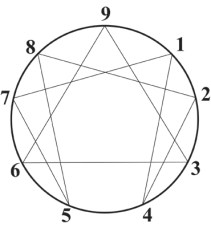 Delamontagne labels the characteristics of each E-Type. After reading his book, which ones are closest to resembling you and your spouse?
- E-Type 1: The Master
- E-Type 2: The Enchanter
- E-Type 3: The Star
- E-Type 4: The Drama Queen
- E-Type 5: The Solitary Mystic
- E-Type 6: The Closet Rebel
- E-Type 7: The Cruise Director
- E-Type 8: The Conquistador
- E-Type 9: The Harmonizer
Approaching it from an individual retiree’s quest for self-reinvention in their book Shifting Gears to Your Life & Work After Retirement (New Cabady Press, 2013), Dr. Carolee Duckworth and Dr. Marie Langworthy offer self-assessments and analyses with the four-letter personality type code in Chapter 6: “Reinvent Yourself” (see the Myers-Briggs Personality/Cognitive Style Inventory Test at http://www.personalitypathways.com/type_inventory.html and TypeLogic Profiles at http://typelogic.com/index.html) followed by the Interest Profiler in Chapter 7: “Rediscover Your Work” (see https://www.cacareerzone.org/ip).
 On their book jacket, Duckworth and Langworthy promote their work as “a call to action on your own behalf” to:
- Jump start your newly invented personal and professional retirement ― your Next Phase life and work.
- Create your own custom road-map to how Baby Boomer YOU will live your last and BEST personal opus, with vitality, enthusiasm, and enjoyment.
These sections from their reading were also very interesting to review: the 10-point Retirement Countdown, 7 “What Comes Next” Pathways, a 5-Step Process to Create Your Retirement, and 5 Major Types of Retirement Work Options.
In a similar fashion, before you finish the first three dozen pages of The Joy of Retirement, authors David C. Borchard and Patricia A. Donahoe introduce the Life Vitality Assessment and a Transition Readiness – Change Aversion vs. Attraction poll to assist in your self-analysis.
The book develops the “Core Themes for Your New Life,” with the hopes to assist you in re-creating a new life involving the following four phases:
- Envisioning the nature of the kind of future you desire.
- Articulating that picture into the written word.
- Claiming your passion once you are clear about what it is.
- Developing a plan or a map for getting where you want to go and for achieving who you want to be.
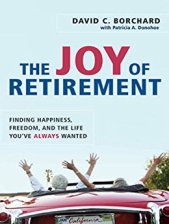 Life Themes Profiler, a comprehensive assessment tool developed by David Borchard and laid out initially in Chapter 4, will help you understand and graph the retirement themes and “your intentions for the next chapter of your life.”
They say that 50 is the new 40. If you’re over 50, chances are you feel more vital, energetic, and passionate than ever. While you may be ready to retire, you may not be ready to stop working entirely. These days, life after work no longer conjures up images of couples wandering the malls, playing golf, and taking endless Caribbean cruises. As baby boomers reach their 50s and 60s, they are re-defining what it means to retire. What they want is joy, vitality, and meaning in their lives.
― Back cover of The Joy of Retirement
At the very least, these book resources may open-up new pathways to define your values, personality, temperament, and what may “float your boat” in selecting future service projects, “encore careers,” and hobbies.
Now, get busy on these and “the rest of your life!”
FREE TIME: Where do all of our hours go?
There’s never enough time to do all the nothing you want.
― Bill Watterson, Calvin and Hobbes
It’s a good thing I have that Calendar app on my phone, or I would never remember all of the unique, non-repetitive, and less predictable appointments that I make as a retiree.
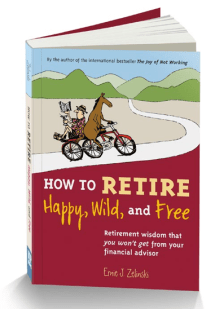 Obviously, fulfilling your “bucket lists” and goals will influence the structure of your daily/weekly schedule. According to Ernie Zelinski, with or without “a job,” you need to find a “work-life balance” and devote equal time to these essential priorities:
- Job or Volunteer Work
- Family, Relationships
- Friends and Colleagues
- Community Activities
- Self Care – Sports/Exercise
- Religious/Spiritual Philosophical Concerns
- Hobbies/Interests
- Future Plans/Projects
In his book, How to Retire Happy, Wild and Free (Ten Speed Press 2016), Zelinski lays out his “plan” for finding purpose (and prioritize time) in his life:
- To make a difference in people’s lives
- To make a contribution
- To find creative expression
- To take part in discovery and challenge
- To help preserve the environment
- To accomplish or achieve a challenging task
- To improve health and well-being
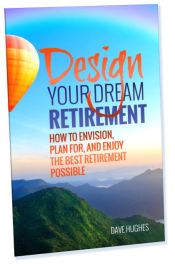 Dave Hughes echoes these sentiments with his “four essential ingredients for a balanced life” in the book Design Your Dream Retirement: How to Envision, Plan for, and Enjoy the Best Retirement Possible (2015):
- Physical activity
- Mental stimulation
- Social interaction
- Personal fulfillment
Watch out for what I will call “the caretaker’s anchor.” One of the greatest things you can do in retirement is to surround yourself with young people… As many wise people have said, “They will keep you forever young!” However, unless you want it to be the primary focus of your life, your babysitting duties should not take over your entire retirement schedule. It is easy for your love ones to assume that since you no longer have a full-time job, you can assume the responsibility of serving as the “safety net” or even the number one full-time caregiver for your grandchildren and grandnieces.
Several additional time management tips:
- If you are married, synchronize your schedule with your spouse.
- Set aside at least 30-45 minutes a day for sustained physical activity.
- Avoid watching more than an hour and a half of television per day. Experts say this is not healthy.
 Do something every day that will expand your mind, stimulate your intellect, or increase your curiosity quotient.
- Hobbies that focus on self-expression or other creative pursuits are best enjoyed in the morning when you are fresh. You might consider doing your music warmups, practicing, composing, writing, painting, etc. ― anything that requires firing up your artistic “right brain”― before lunch and prior to your appointments, chores, and shopping. Besides, if it’s something you really look forward to doing, it will help motivate you to get out of bed early in the morning.
- Get enough sleep. Believe it or not, many retirees have re-occurring bouts of insomnia. Check out “Retirement Insomnia” by Claire N. Barnes at HUFFPOST: http://www.huffingtonpost.com/claire-n-barnes-ma/retirement-insomnia_b_6395998.html.
It’s 3 a.m. and I’m awake! How many of you boomers have this experience? As the Inspirement journey continues, I have been surprised to learn how common insomnia is among retirees. Forget all the advice suggesting that when you retire, you can sleep more (or longer…. or later). The practical reality is a large percentage of retirees experience insomnia or sleep difficulties.
 Although the exact number of boomers and seniors who experience sleep problems is hard to pinpoint, a national study of our aging population suggests nearly 42 percent of those surveyed have sleep difficulties. That figure is beyond an epidemic.
― Claire N. Barnes
ENERGY & FORTITUDE: What happened to my stamina and endurance?
Participating in several extra-curricular programs (marching band, fall play, after-school strings, spring musical, etc.), my hectic music teacher weekday work routine began at school around 6:30 a.m., and often I did not make it home until after 9:30 p.m. Since retiring in 2013, I volunteer at the hospital several days a week pushing patients in wheelchairs (with some of our discharges weighing over 300 pounds!). Considering that 15 hours use to be my daily norm, I keep asking myself: “What’s up with my needing to take a ‘power nap’ after only three hours of a moderate physical activity?”
Aerobic activities, strength training and flexibility exercises can help retirees preserve muscle and bone mass, feel young and be better able to do the activities of daily living, such as putting items on shelves and even holding the grand-kids.
― Felicia Stoler, registered dietitian and exercise physiologist in Holmdel, N.J.
 Regular physical activity is a must. Quoting from a future article I plan to submit to the state journal of Pennsylvania Music Educators Association PMEA News: “The definition of ‘exercise,’ especially in order to receive cardiovascular benefits, is to raise your heart rate for 30 minutes or more. Leaving your La-Z-Boy to let the dogs out or looking for the remote does not count!”
Actually, taking the dogs out for a long walk may be a good idea, but you need to move at a fast pace. Stopping to talk to the neighbors down the street or allowing the pups to slow down and sniff every bush, may not bring the health benefits you desire.
The best tip prior to adopting an exercise program in retirement is to see your doctor.
Here are a few Internet resources:
LOSING CONTROL & PERPETUAL CARE: Should we expect our children to take care of us in our old age?
 This final category of “pre-retirement planning” has everything to do with living with independence and security as we grow older. Many Baby Boomers just starting their retirement journey may not actually see this as “a big deal” right now. However, developing a long term “backup plan” for maintaining our health care, mobility, and comfortable living is critical. Again… we must think ahead!
As a “senior” with no children, nephews, or nieces, I again seek the advice of experts.
First, visit Kathy Merlino’s recent blog for a good introduction on this subject, especially as it applies to your children becoming the adult caregivers: https://kathysretirementblog.com/2017/07/23/should-your-kids-take-care-of-you/.
She is very eloquent in her “independent-living manifesto”― being actively involved in her children’s lives but NOT leaving them the ultimate chore of “taking care of mom!”
The primary reason for my planning for independence is my children. I’d like for them to live unfettered with my care. They have their own lives, spouses, children and now, my oldest daughter, has her very first grandchild. Taking care of myself is the best gift I can give them…
We, as parents, should never expect our kids to resign from their lives to care for us. It is up to us to care for us. We owe it to our children to stay physically active, to eat a healthy diet, to pursue our passions, to stay mentally sharp, to develop a community of friends of our own, to stay spiritually true to ourselves. And, if necessary, live in an assisted living community. That is the best legacy we can leave them.
― Kathy Merlino
Consumer Reports offers an excellent online article “Healthy Aging in Your 80s and Beyond – 5 Tips to a Long, Healthy Life,” recapping the above advice on physical fitness and offering a few recommendations on how to live independently: https://www.consumerreports.org/cro/magazine/2014/06/healthy-aging-into-your-80s-and-beyond/index.htm.
 Fifty-five percent of our respondents wanted to stay in their own homes, with help as needed, as they got older and required more care. But a recent AARP survey revealed that only about half of older adults thought their homes could accommodate them “very well” as they age; twelve percent said “not well” or “not well at all.”
“The time to think about your housing options is when you first retire and are relatively healthy and young,” said Linda Fodrini-Johnson, a geriatric-care manager in Walnut Creek, Calif. “You need to think realistically about the things that might happen over the next 20 years.”
― Consumer Reports, June 2014 issue
I like a few additional resources on the web:

CONCLUSION ― Food for Thought!
Gerontologists like Ken Dychtwald and Robert Atchley contribute loads of research and recommendations for the “imagination” (pre-retirement), “anticipation,” and “liberation” stages of retirement. They provide the basis for all the concern and rush to reflect on senior self-realization and dodge anticipated problems we may encounter during this period. One quote from TIPS Retirement for Music Educators by Verne A. Wilson sums up the need for a concerted effort in “advance planning” to enjoy and find meaning in your post-employment “new dreams and horizons!” Conquer your own retiree “conundrums!”
If you were planning to spend the rest of your life in another country, you would want to learn as much about it as possible. You would read books about the climate, people, history, and architecture. You would talk to people who had lived there. You might even learn a bit of its language. Old age is like another country. You’ll enjoy it more if you have prepared yourself before you go.
― B. F. Skinner and Margaret Vaughn in TIPS Retirement for Music Educators
PKF
© 2017 Paul K. Fox
Photo credits from FreeImages.com (in order): “Sunset Years” by Bill Davenport, “Shiny Brain” by artM, “Running in the Morning” by Patrick Nijhuis, “Helping the Elderly” by Melodi2, and “Romanticism” by Claudia Meyer


 What is the moral to the final story of these two racers… the turtle and the rabbit?
 into the “TEAM.”


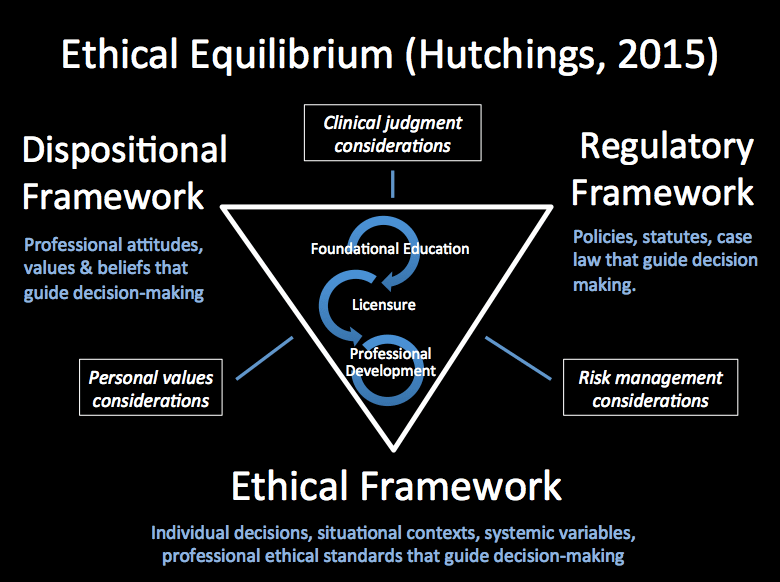
 Educators are among the singular professions which have a “fiduciary” responsibility. The term “fiduciary” can be defined as “a person or organization that owes to another the duties of good faith and trust, the highest legal duty of one party to another, and being bound ethically to act in the other’s best interests.” Joining doctors, lawyers, clergy, and mental health therapists, educators ascribe to the highest standards of training, moral decision-making (“code of ethics”), behavior (“code of conduct”), and self-regulation and assessment of the “best practices” regarding the mastery of skills and subject areas necessary to their field. However, unlike these other professionals, teachers do not receive regular and systematic pre- and in-service training on ethics, and our “clients” are a “captive audience.” Regardless, the duty of all teachers is to act as a fiduciary in their students’ best interest and to create and maintain a safe environment for them at all times.
 Always looking for the signs of…
 Health Insurance Portability and Accountability Act (HIPAA) of 1996 provides data privacy and security provisions for safeguarding medical information.
 Proponents of this belief will tell you to go ahead and stick your neck out, feel free to do something “for the good of the order,” and later “beg for forgiveness” if/when it goes south and your administrators say they do not approve.
 My advice: “Forget your rights” and be more aware of your image and how your actions will look to the public. Reputations are hard to restore. Being an effective teacher is all about trust and integrity, and (sorry, one more cliche) “your actions speak louder than words!”






 PSERS (PA pension fund) Planning: 12 months or more away from your projected retirement date, attend a “Foundations for Your Future” program (even attend it more than once), and request a retirement estimate (form PSRS-151), after which you will need to schedule the all-important “Exit Counseling Session.”

 Instrument lessons and orchestra practices provide opportunities for the music teacher to impart a few “tricks of the trade” in reading and then practicing music. I call these my “Craftsmen Tools” for successful musical construction… one note or one line of music at a time.
 At lessons, some music teachers refer to batting averages, and point out how a .333 baseball hitting average is outstanding in the Major Leagues (when big-league pitchers are throwing 90-mile hour balls at you), but terrible for a musician who plays one note right to two notes wrong. Since each practice session builds neural-connections across brain cells (physical “memory” to do the skill again), in order to “play it right” consistently, we have to repeat it accurately over and over again, thus “the Ten Times Rule.” Musicians have to achieve a .950 or better average, and practicing their challenging musical “slice” ten times in a row will do the most good. Cumulative effort over different sessions or days is also the key to success! If a hard passage is played 10-20 times today, repeated 10-20 times tomorrow, another set of 10-20 drills the next day, etc. until the part can be played perfectly “in a row” every time, the player will have NO WORRIES when it comes time to perform it at the concert.
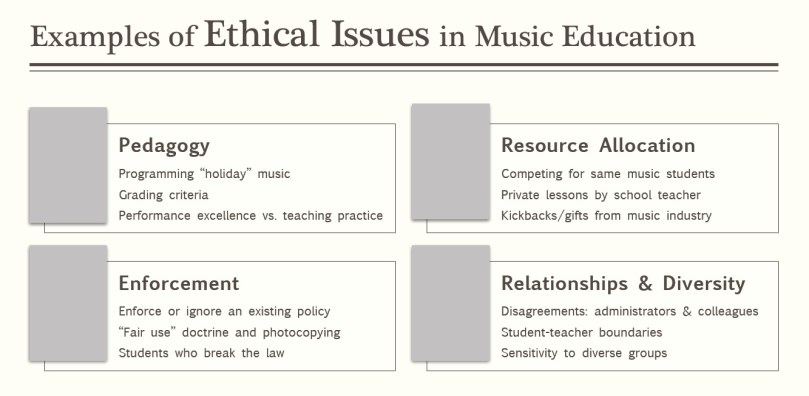
 Administrators, parents and public’s interpretation of “separation of church and state” or “perceived emphasis” on Holiday vs. Christmas music (with sacred text) at December concerts e.g. Handel’s Hallelujah Chorus, Hatikvah, and/or John Rutter’s Oh Come All Ye Faithful & Joy to the World as the finale
 Competition for the enrollment of the same students (band/string/choir) within the music department
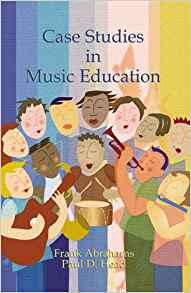 If you have not had the occasion to read Case Studies in Music Education by Frank Abrahams and Paul D. Head, it would be a valuable aid to “facilitate dialogue, problem posing, and problem solving” among pre-service (and current) music teachers. Using the format of Introduction, Exposition, Development, Improvisation, and Recapitulation known by all music professionals, each chapter presents a scenario with a moral dilemma that many music educators face in the daily execution of their teaching responsibilities.
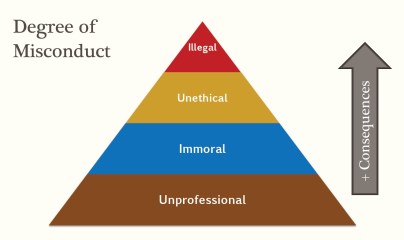 For additional examples of ethical issues in education, try these links. Personally, many of these fictional video reenactments are hardcore and very painful to view… but may shed some light in any discussion of teacher (mis)behavior: actions from simply inappropriate, unwise, or “bad for appearances” to a range (from bad to worst) of unprofessional, immoral, unethical, and illegal conduct. Some of these stories you will agree should be instantly labeled as the highest degree of unethical practice ― actual “crimes against children” and should invoke punishment if found guilty ― while others may lack clarity and make it difficult in arriving to a consensus.



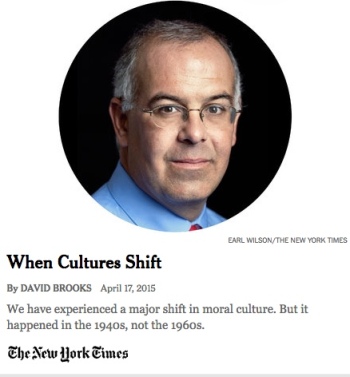 Many have suggested that there has been a decline in moral standards that have contributed to ethical disputes in modern society (and in the public schools). Some say that this is attributed to a breakdown or lessening of the influence of organized religion and family values. “When Cultures Shift,” an excellent article in the New York Times (April 17, 2015), David Brooks explores some of causes and effects of this “slip” to our value systems, ethics, and renewed focus on self:
 Do schools, not necessarily families, serve as the “safety net” for socializing its citizens, and teaching morality, manners, and the values of human relationships? Are teachers held to a higher standard of behavior in order to model these principles and charged with the responsibility of indoctrinating the meaning of “right and wrong” and how to get along with each other? Many would seem to agree, including sample codes of ethics for teachers and this from Robert Fulghum
  In Essays on Moral Development: The Philosophy of Moral Development (New York: Harper Collins 1981), Lawrence Kohlberg illustrates his “Six Stages of Moral Development” from ethical decisions based on adherence to rules/regulations and avoidance of punishment to acceptance of universal principles of justice and respect for human life.
 As I said in Part I of this blog series, one of the first acts of a new or transferred teacher upon being hired to a specific school district is to visit the website of his/her state’s education department, and make a thorough search on the topic of “code of ethics” or “code of conduct.” There is no defense for ignorance of the codes and statutes relevant to the state you are/will be employed.

 In addition, in almost every state education system, there are “mandatory reporting” regulations. Teachers are held responsible to ensure that their colleagues conform to the appropriate standards of ethical practice as well. In other words, if you know something is wrong and you do not report it to an administrator, you could also be liable and subject to hearings, discipline, and even prosecutions for negligence of your duty to protect the best interests, health, and safety of the student(s) involved.
 A sense of invulnerability
 It is the responsibility of the teacher to control his or her “public brand” – how he or she wants to be perceived by students, parents, colleagues, and the public. One’s public brand can and does impact perceptions, which in turn can impinge upon effectiveness.

 However, the disclaimer is that I am not an attorney, human resource manager, nor scholar on school ethics, nor was I ever trained in a single workshop, college class, teacher induction or in-service program on this subject. After reading this article, you should immediately visit the website of your state’s education department, and search on the topic of “code of ethics” or “code of conduct.” A few examples of the “real deal” are listed below, and yes, you must study “every word of” the entire document and applicable rules from the state you are/will be employed.
 According to Snopes
  Achievement of higher education, constant training and retooling, specific goals, and self-improvement
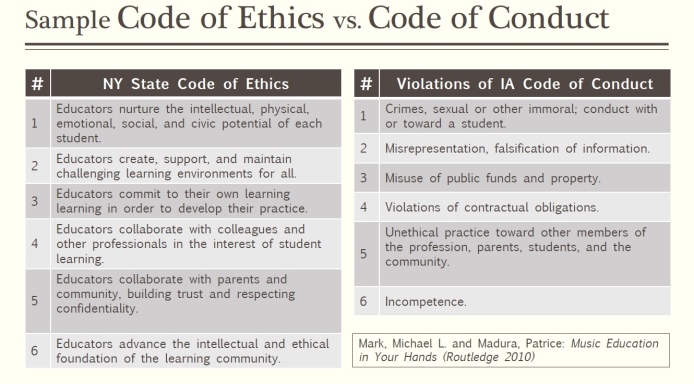
 a “violation of ethics” is usually associated with significant consequences or punishment, like charges of medical malpractice or lawyers facing an “ethics committee” hearing. Confirmed unethical behavior may result in censure, suspension of license or certification, or other discipline action. Most state education governing entities post legally-binding “educator discipline acts” or codes of professional standards, ethics, and/or behavior, with extensive penalties.
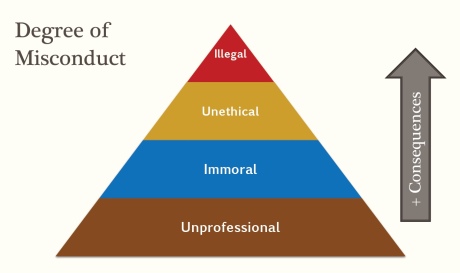 defines misconducts.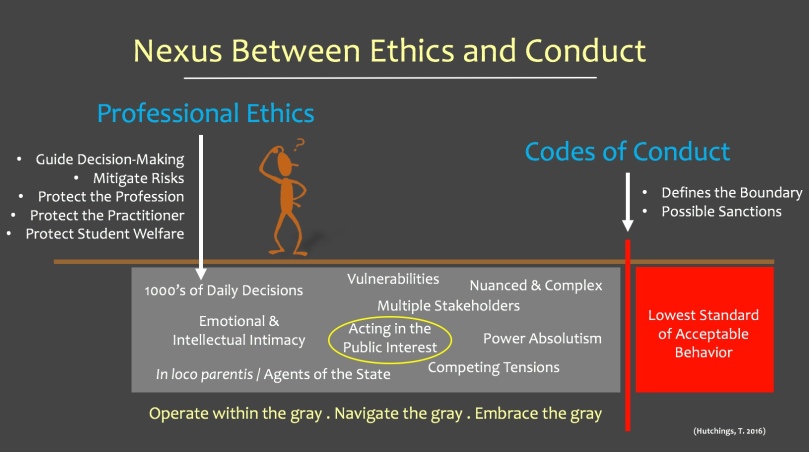
 One of the best examples endorsed by many states, college education methods programs, and other institutions, the National Association of State Directors of Teacher Education and Certification has published its


 competence, and responsibility, and should probably error on the side of more formal attire rather than day-to-day casual.
 Suits are always a good choice.
 My view? Teaching is still among the most conservative of occupations. That is how it is viewed by the general public, parents of school-aged children, School Boards, administrators, and interview panels. You can certainly exercise your right to wear whatever you want and show-off numerous body piercings or tattoos… but, like it or not, the school districts are within their rights to choose someone else.